
Art Nouveau, A New Art for a New Century
The Brief, Brilliant Movement That Reshaped Architecture, Furniture, and the Decorative Imagination
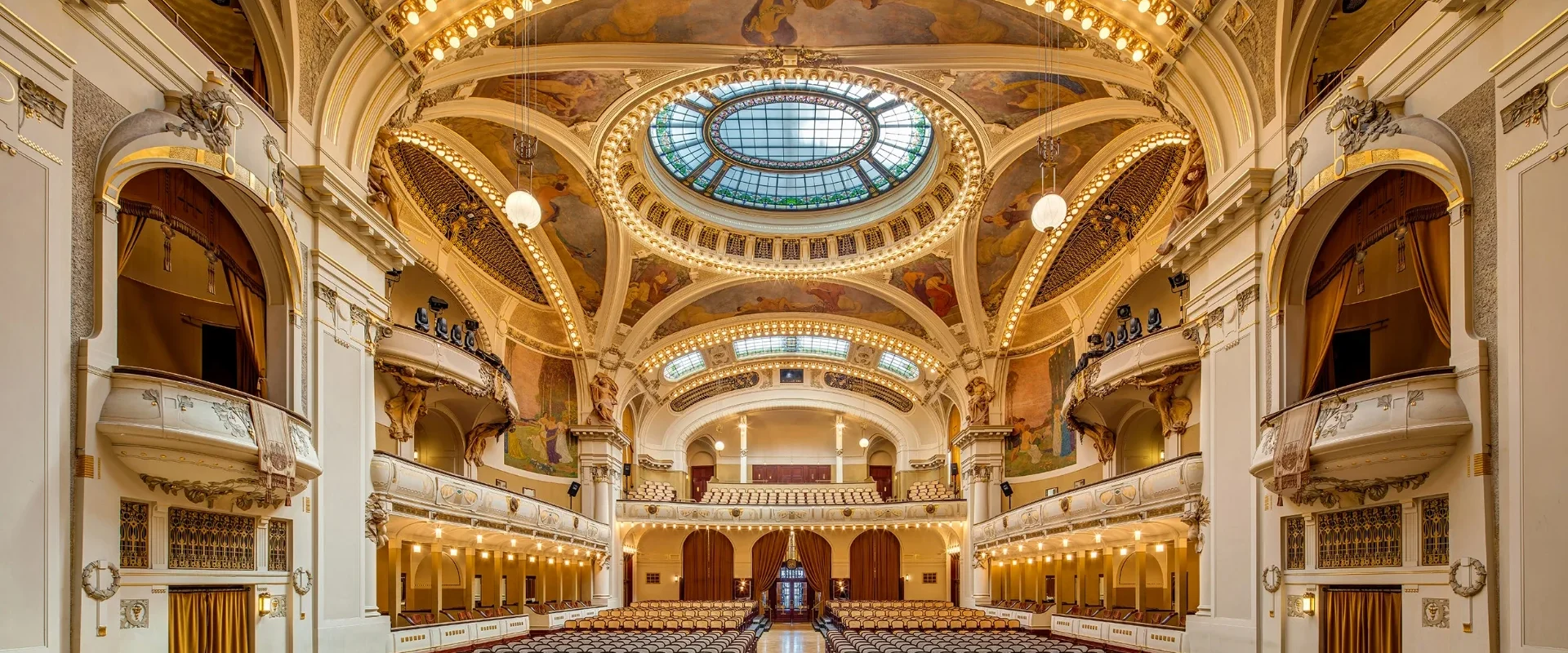
For roughly two decades on either side of 1900, a new visual language swept through Europe and across the Atlantic. It arrived in the form of curling iron railings, in vases that looked half-grown rather than made, in lamps shaped like flowering stems, in posters where actresses dissolved into ornament, and in furniture whose every surface seemed to breathe. The movement was called Art Nouveau in France and Belgium, Jugendstil in Germany, Stile Liberty in Italy, Modernismo in Catalan Spain, Sezessionstil in Vienna, and Tiffany Style in the United States. The names changed at every border, and the local expressions changed with them, but the underlying conviction held. The nineteenth century had grown too comfortable copying itself, the heavy historicism of the academies had nothing left to say, and the time had come for an art rooted in the present and drawn from the living world. The result was a brief but extraordinary period, lasting from roughly 1890 to 1914, during which architects, furniture makers, jewelers, glass blowers, sculptors, and graphic artists pursued a single ambition. They wanted to invent a modern style from the ground up, free of any obligation to the past, and they wanted that style to reach into every corner of daily life, from the façade of a building down to the handle of a teapot.


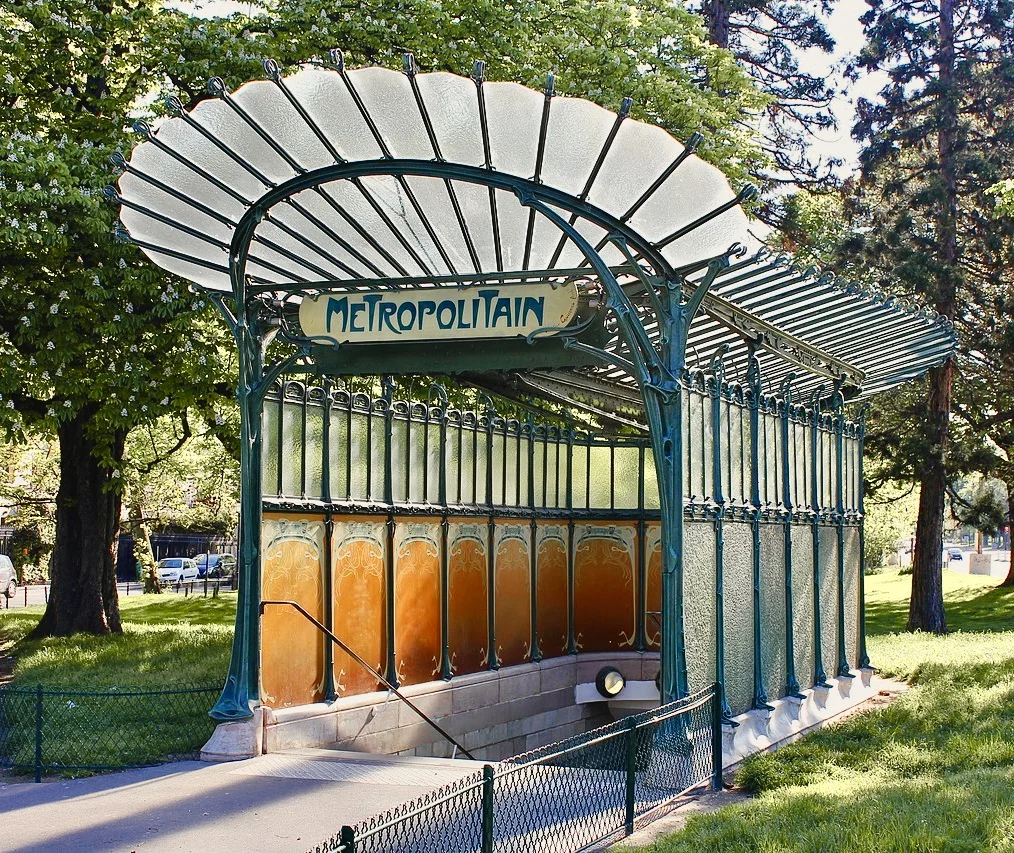
Left: Wisteria Table Lamp, Clara Driscoll for Tiffany Studios, 1902, Middle: Gismonda, Alphonse Mucha, 1894, Right: Porte Dauphine Métro entrance, Hector Guimard, Paris, 1900
The roots of the movement reached back several decades. In Britain, William Morris and the Arts and Crafts movement of the 1860s had already begun arguing that decorative work deserved the same respect as fine art, and that craftsmanship in textiles, furniture, and printing was a serious endeavor rather than a lesser one. In France, the architectural theorist Eugène Viollet-le-Duc had spent his career arguing for an architecture true to its materials and free of historical disguise, and in England, John Ruskin had carried similar ideas through his criticism. Then, in the 1860s and 1870s, a wave of Japanese woodblock prints flooded Europe, and artists across the continent absorbed a new vocabulary of flatness, line, and asymmetrical composition. Out of these gathering currents came the conviction that would define Art Nouveau: the distinction between the fine arts and the so-called decorative arts was an artificial inheritance and ought to be broken. A chair could be as serious as a painting. A vase could carry as much intent as a sculpture. A poster could be a work of art. A staircase railing could be the most lyrical thing in a room. The German term Gesamtkunstwerk, meaning the total work of art, captured the ambition. The whole interior, from carpet to ceiling, was meant to feel like a single composition, and the architects who built the first Art Nouveau houses designed not only the rooms but the furniture, the textiles, the silverware, and sometimes the clothing the residents wore inside them.


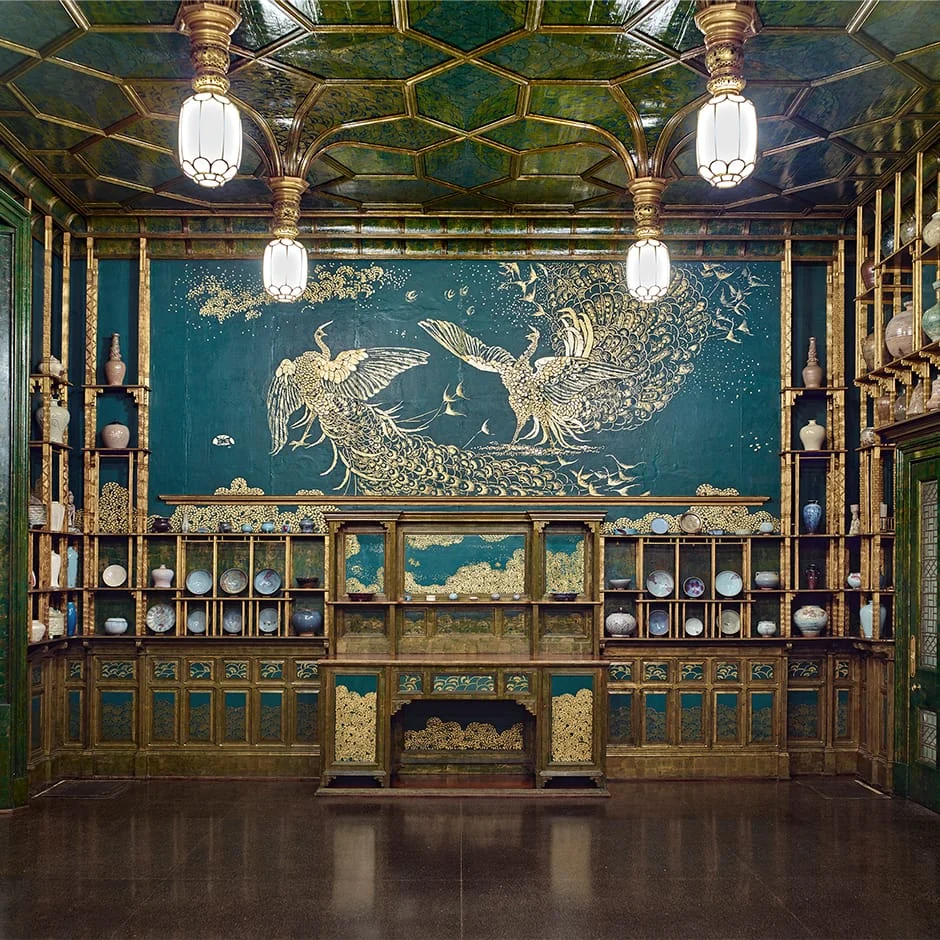
Left: Side chair, Arthur Heygate Mackmurdo, 1881, Middle: Red House, Philip Webb, Bexleyheath, 1859, Right: The Peacock Room, James McNeill Whistler, 1876
The architecture is where it all began. In Brussels in 1893, two houses went up that would change everything. Paul Hankar built his own residence with sgraffito murals on the façade and curling iron decoration on the balconies, the work of an architect who had trained as an ornamental sculptor and saw no real boundary between the two crafts. Down the street, Victor Horta completed the Hôtel Tassel for a scientist who lived on a narrow, deep lot, and what he made there became the most influential interior of the period. He opened the space into a fluid arrangement built around a wrought iron staircase that seemed to grow rather than rise, with mosaic floors and walls decorated in delicate arabesques, all bathed in light from a high skylight overhead. He followed it with the Hôtel Solvay, the Hôtel van Eetvelde, and the Maison and Atelier Horta, four townhouses now listed together as a UNESCO World Heritage Site. Henry van de Velde joined them in 1895 with the Villa Bloemenwerf, where he designed not only the house but the textiles, wallpaper, silverware, jewelry, and even the clothing worn inside it, the Gesamtkunstwerk made manifest. Young architects came from across Europe to study what was happening in Brussels. Hector Guimard came down from Paris to see the Hôtel Tassel under construction, and he later declared Horta the inventor of Art Nouveau. The Brussels International Exposition of 1897 announced the new style to the world, and within a few years its lessons had spread from the Belgian capital to every corner of the continent.
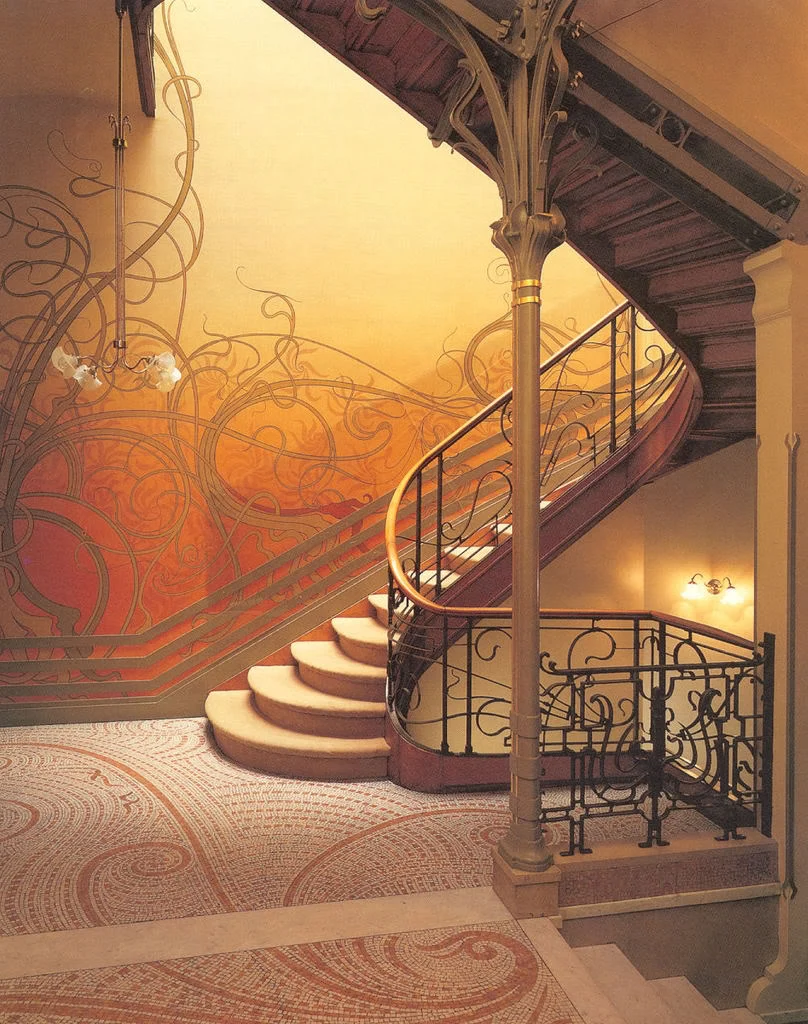

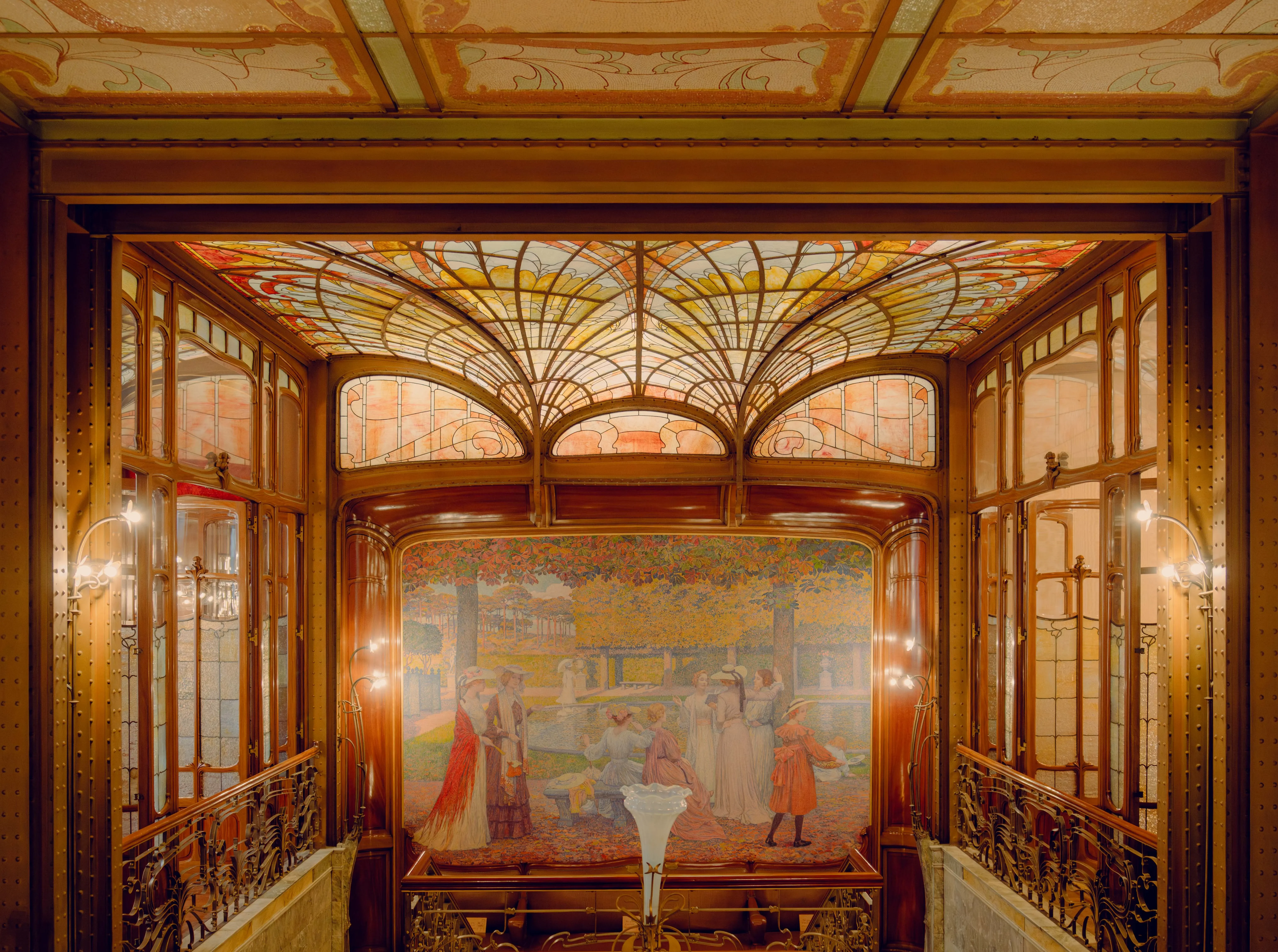
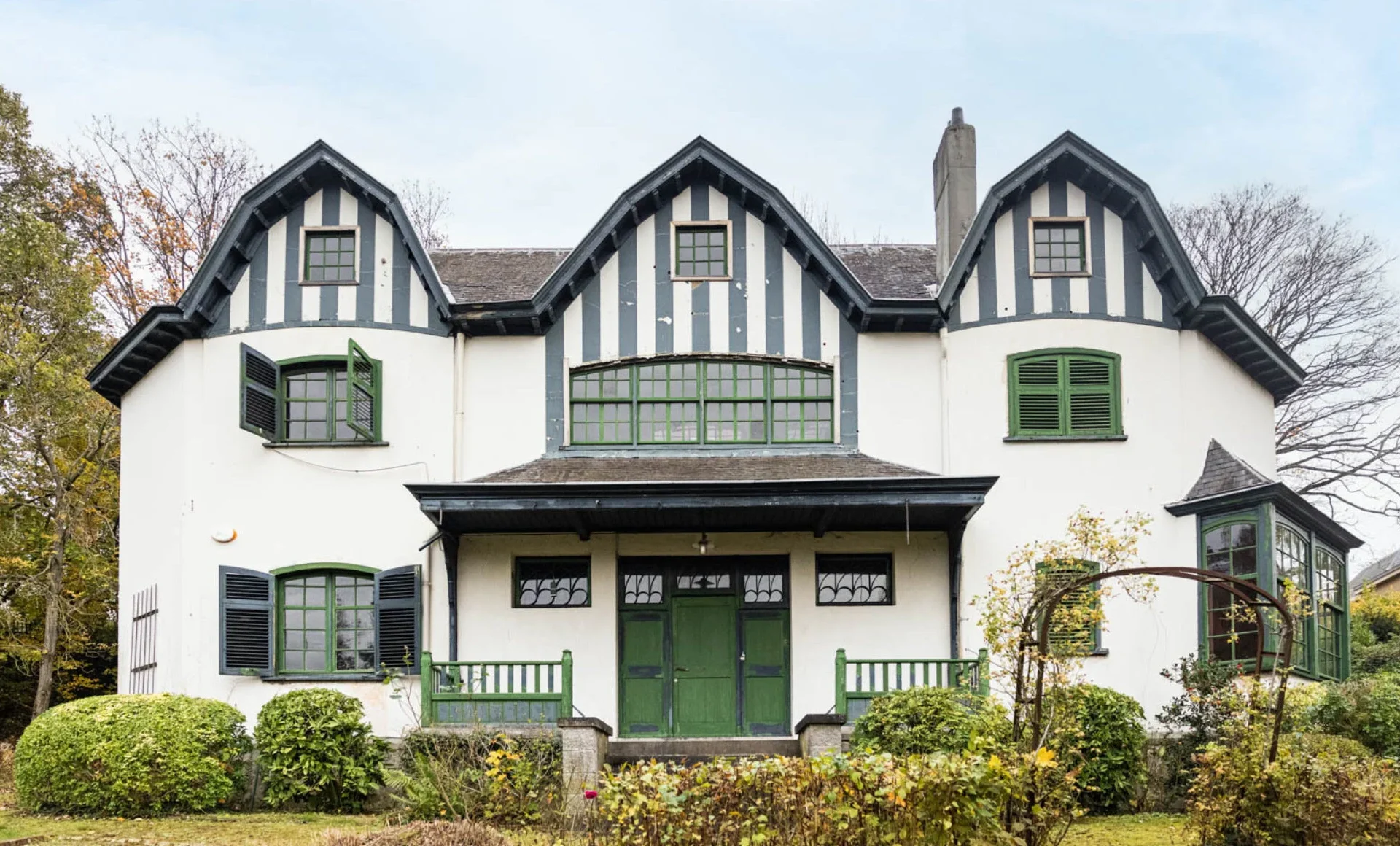
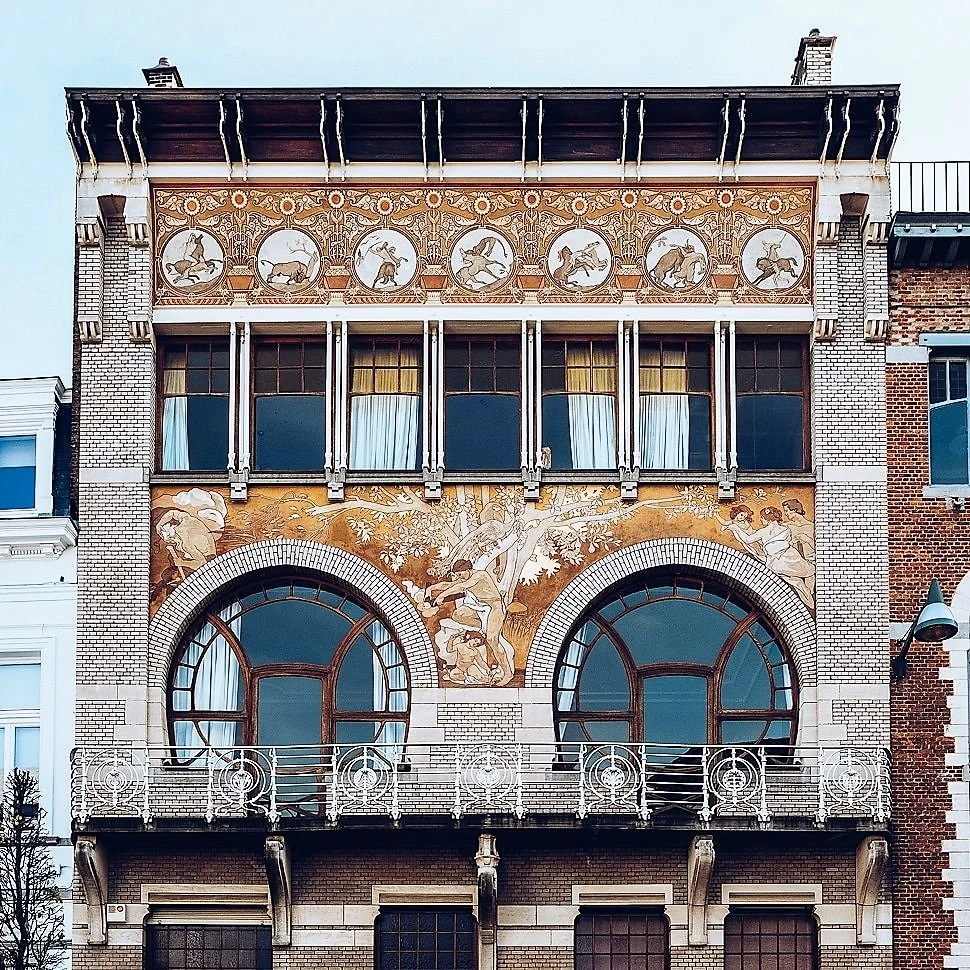
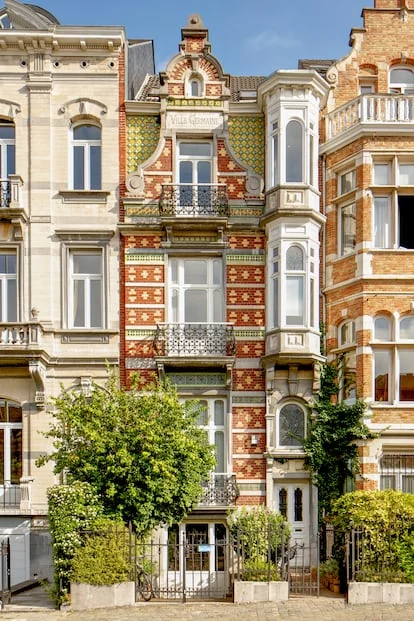
Top: Left: Hôtel Tassel staircase, Victor Horta, Brussels, 1893, Middle: Hôtel van Eetvelde interior, Victor Horta, Brussels, 1895, Right: Hôtel Solvay interior, Victor Horta, Brussels, 1895, Bottom: Left: Villa Bloemenwerf, Henry van de Velde, Brussels, 1895, Middle: Hôtel Albert Ciamberlani, Paul Hankar, Brussels, 1897, Right: Villa Germaine, Adrien Hamelin, Brussels, 1897
From Brussels the style traveled fast. In Paris, Hector Guimard built the Castel Béranger between 1895 and 1898 and then received the commission for the new Paris Métro, whose cast iron canopies became inseparable from the image of the city itself and were seen by the millions who came to the 1900 Exposition Universelle. In Barcelona, Antoni Gaudí worked in a register entirely his own, drawing on Catalan tradition, Gothic structure, and his own deep imagination to produce Casa Batlló, Casa Milà, Park Güell, and the still unfinished Sagrada Família. In Vienna, Joseph Maria Olbrich built the domed Secession Hall in 1898 as a showcase for the breakaway movement led by Gustav Klimt and Otto Wagner, and the style there moved toward the more geometric forms that would eventually carry into modernism. In Chicago, Louis Sullivan, founder of the Chicago School and teacher of Frank Lloyd Wright, framed the windows of his steel-framed skyscrapers with floral ornament so intricate it deserves to be considered alongside the European masters. No city in Europe, however, absorbed the movement more completely than Riga, where over 800 Art Nouveau buildings were raised between 1899 and 1914, and today roughly a third of all buildings in the city center carry the style, making it the city with the highest concentration of Art Nouveau architecture in the world. The two architects most responsible were Mikhail Eisenstein and Konstantīns Pēkšēns, who together designed nearly half of that stock. Eisenstein’s work along Alberta iela is among the most dramatic in the genre, covering façades with screaming masks, sphinxes, and sculpted maidens that transform ordinary apartment blocks into theatrical set pieces. The former Pēkšēns apartment on Alberta Street now houses the Riga Art Nouveau Center, offering visitors an immersive view of how the movement lived inside its own buildings. The movement also crossed the Atlantic: Buenos Aires, built along Parisian-style boulevards and shaped by Italian architects who brought Stile Liberty across the ocean, became home to the largest concentration of Art Nouveau buildings anywhere outside Europe. From Helsinki to Prague to Kraków, every aspiring capital built its own version, and in many of those cities, the Art Nouveau buildings still define the streets a century later.
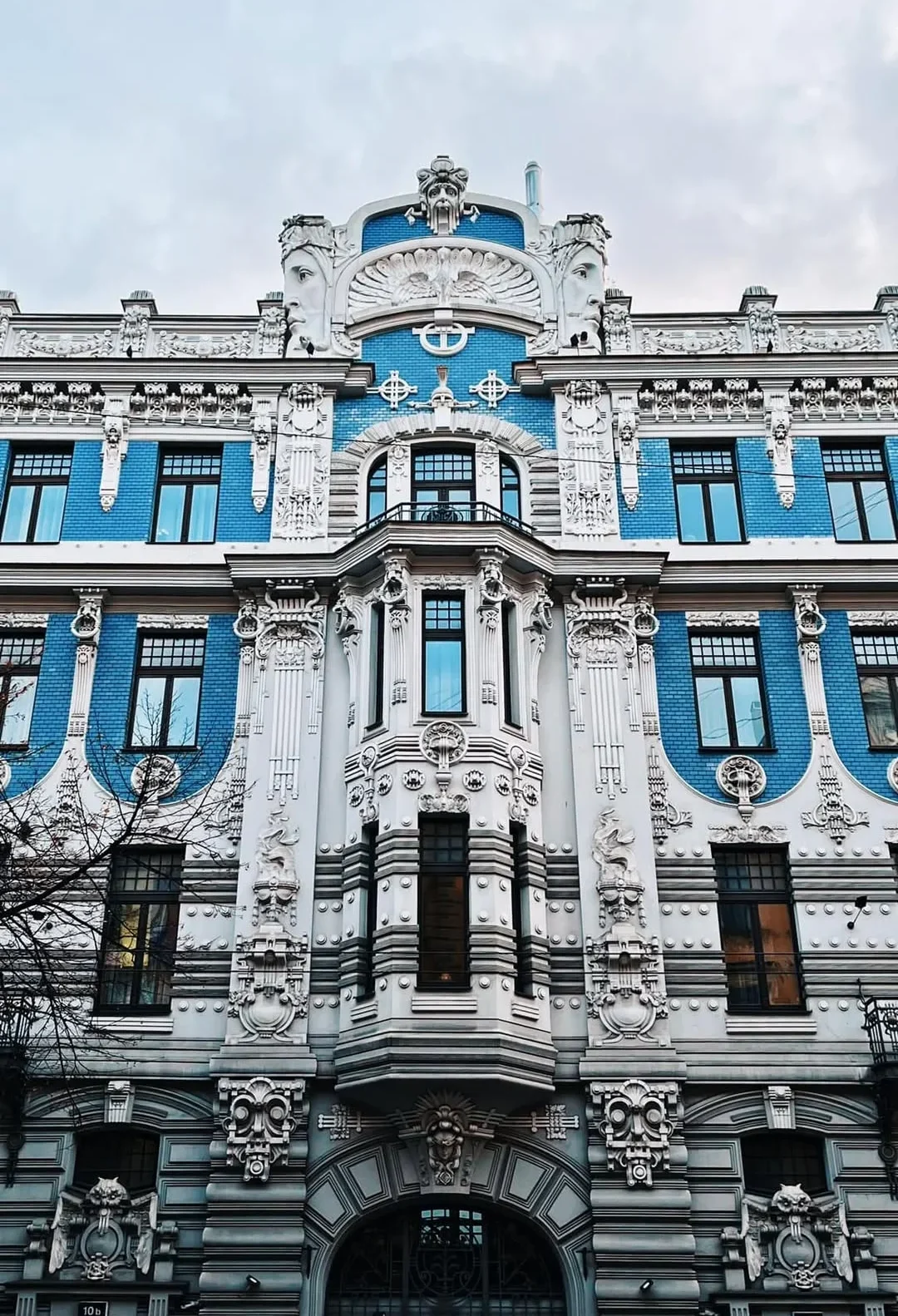
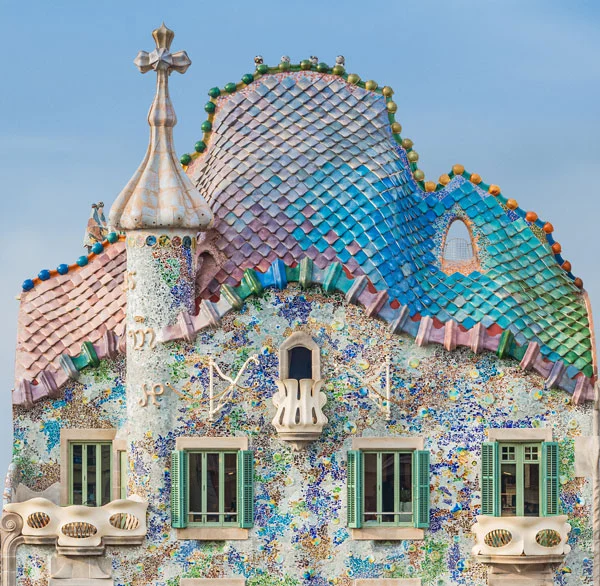

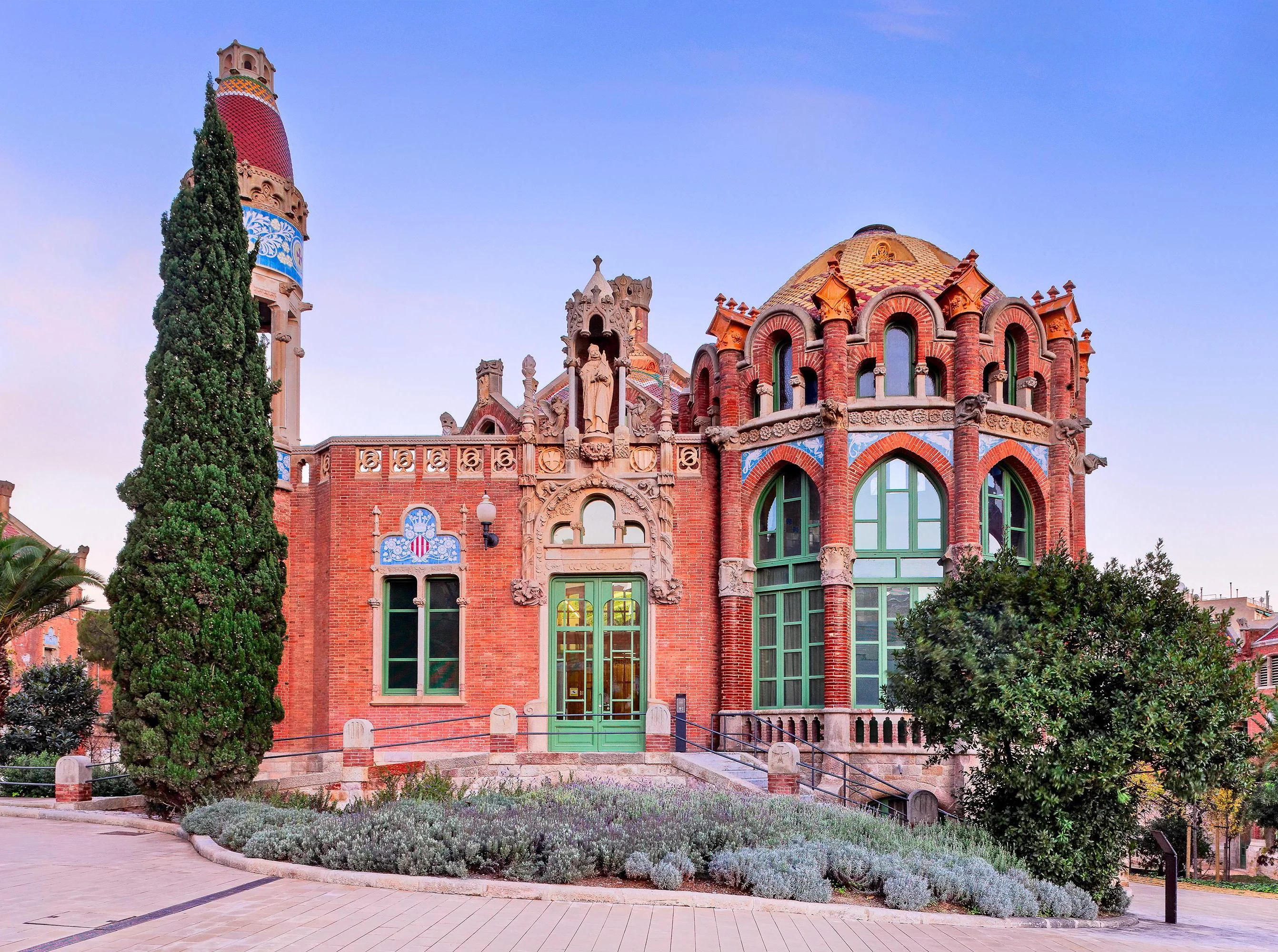

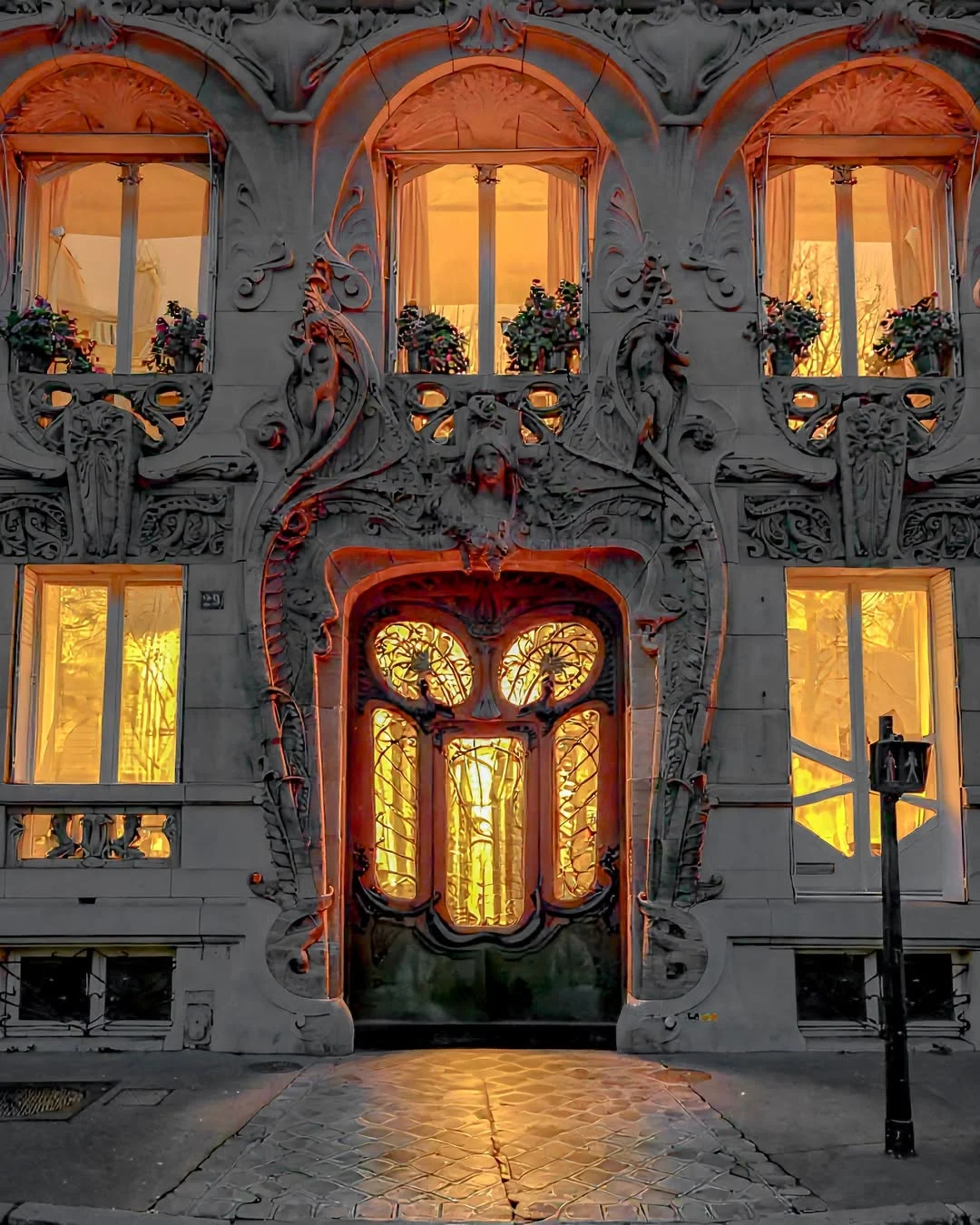
Top: Left: Elizabetes iela 10B, Mikhail Eisenstein, Riga, 1903, Middle: Casa Batlló, Antoni Gaudí, Barcelona, 1906, Right: Serpentine bench, Park Güell, Antoni Gaudí, Barcelona, 1900–1914, Bottom: Left: Hospital de Sant Pau, Lluís Domènech i Montaner, Barcelona, Middle: Sagrada Família, Antoni Gaudí, Barcelona, begun 1882, Right: Lavirotte Building, Jules Lavirotte, Paris, 1901
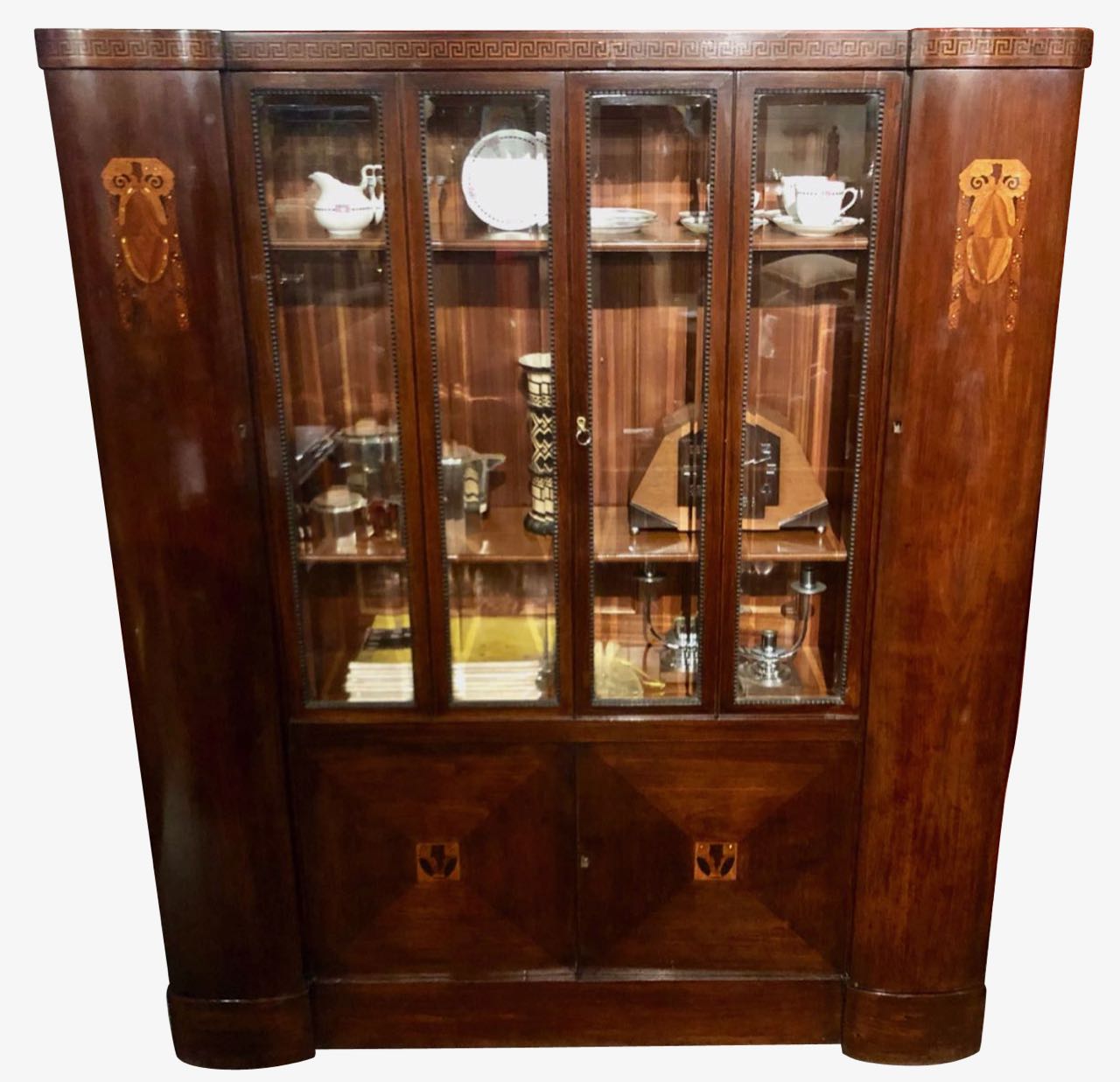
Inside those buildings, no domain produced more remarkable work than furniture. The city of Nancy, in the Lorraine region of eastern France, became the unofficial capital of Art Nouveau furniture, anchored by the School of Nancy and its two great figures, Émile Gallé and Louis Majorelle. Gallé, already famous for his glass, brought the same naturalism to his cabinets and tables, working with rich marquetry that depicted landscapes, flowers, and lines of poetry inlaid directly into the wood. His pieces are quiet and dreamlike, the surfaces almost paintings in themselves, and they remain among the most prized examples of nineteenth century furniture in any style. Louis Majorelle worked on a grander scale, using mahogany and exotic woods enriched with sculpted gilt bronze mounts cast in vegetal forms. Water lilies climbed the corners of his desks, orchid stems framed his cabinet doors, and the bronze itself was treated as sculpture rather than as hardware. The Villa Majorelle in Nancy, built in 1901 and 1902 as both his home and his showcase, remains one of the finest surviving expressions of how furniture, architecture, and ornament could be conceived together as one continuous gesture. Other designers worked alongside them in the School of Nancy, including Eugène Vallin and Émile André, both architects by training who designed furniture that closely followed the curving forms of plants and flowers. What united them was a shared commitment to materials, to craft, and to the principle that a chair or a cabinet should be no less considered than the building around it.
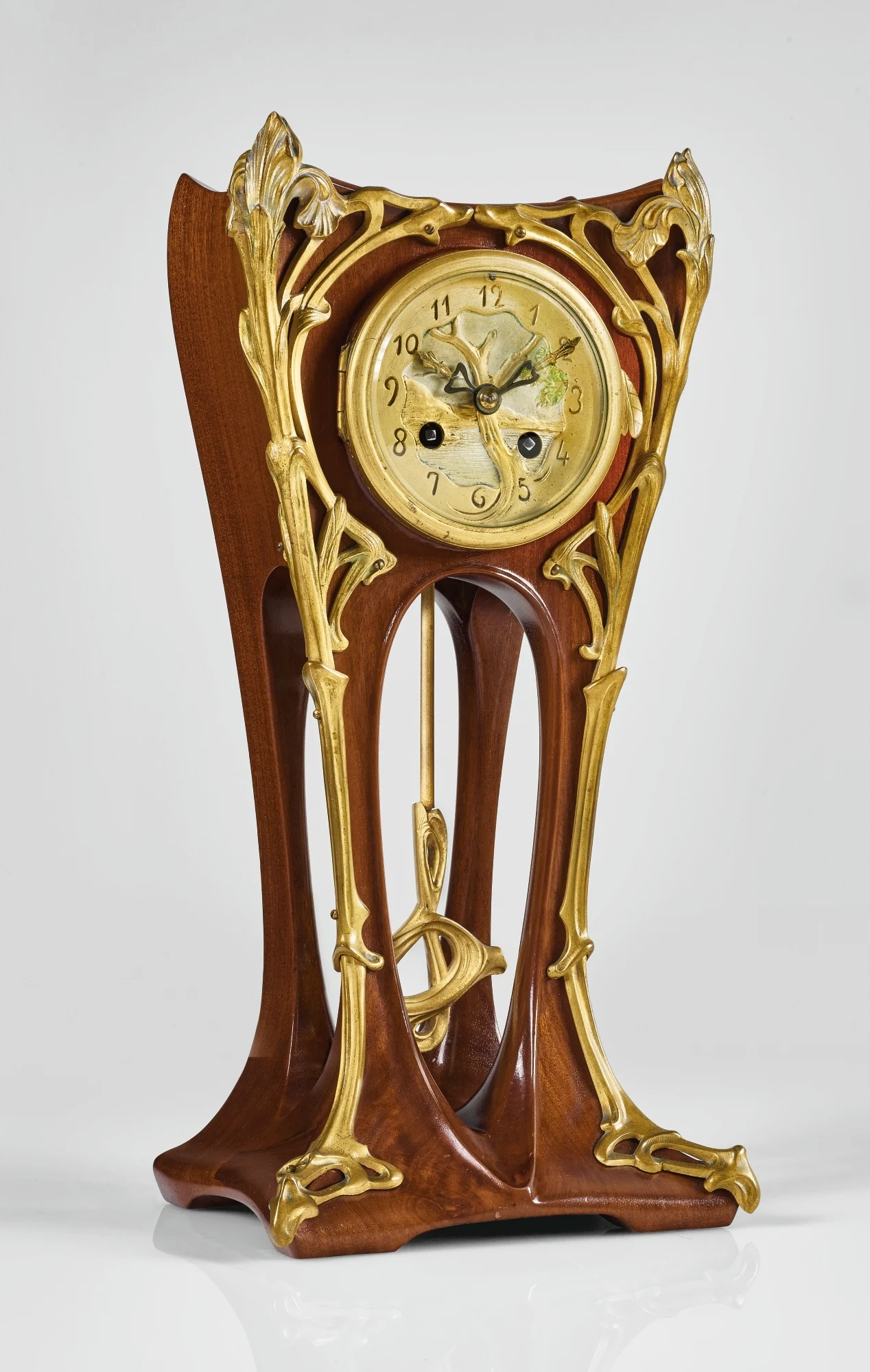
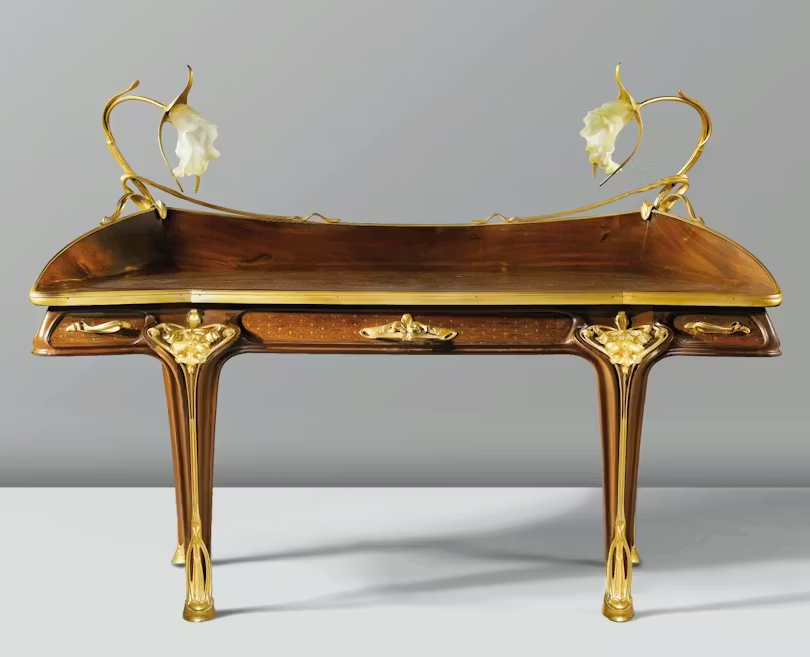
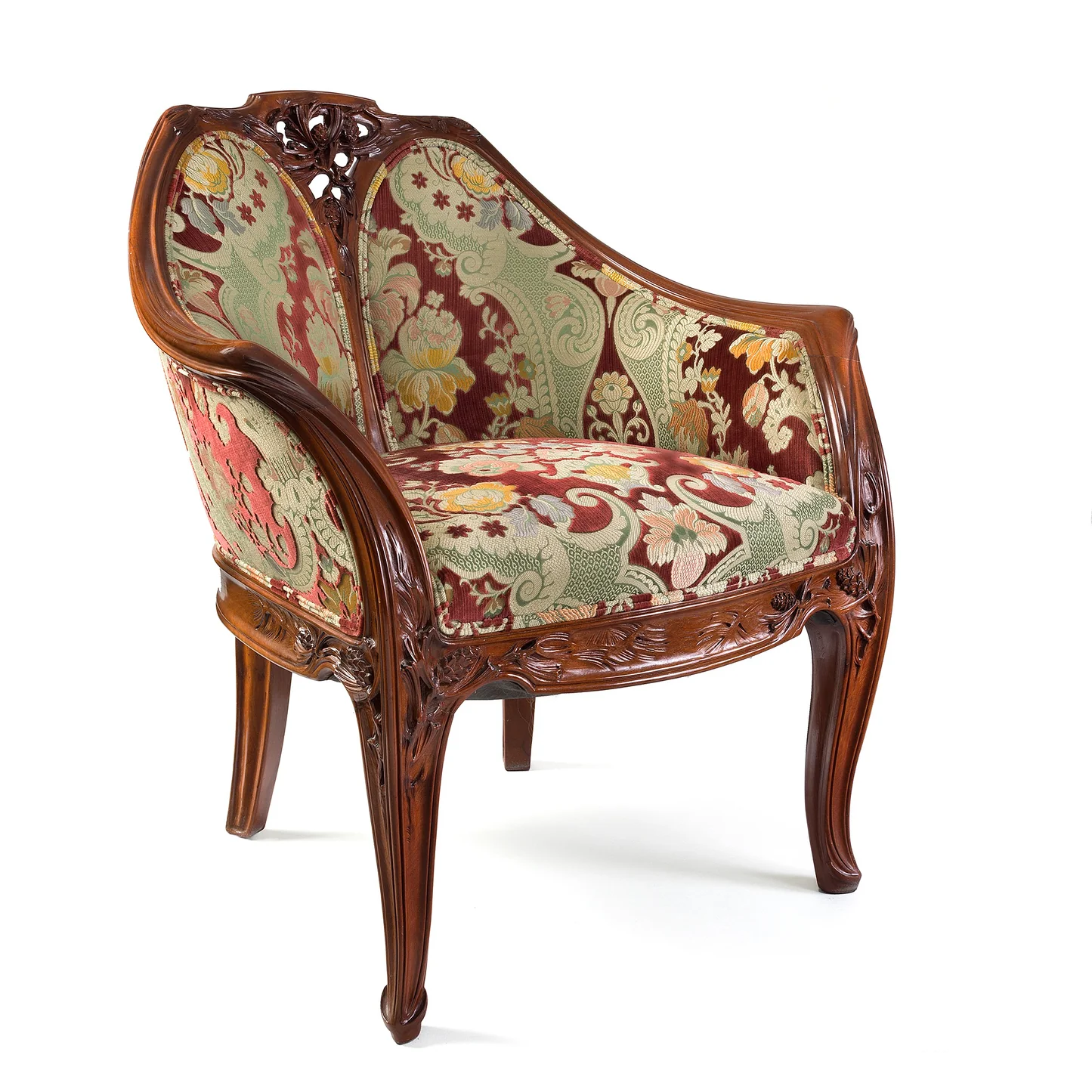

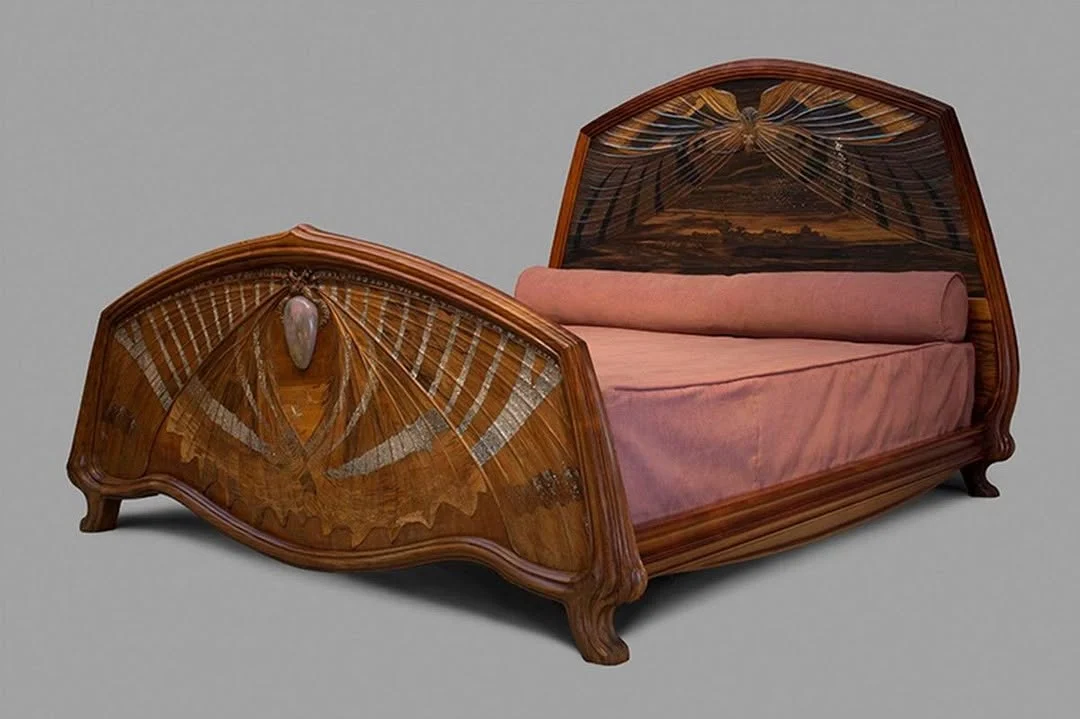
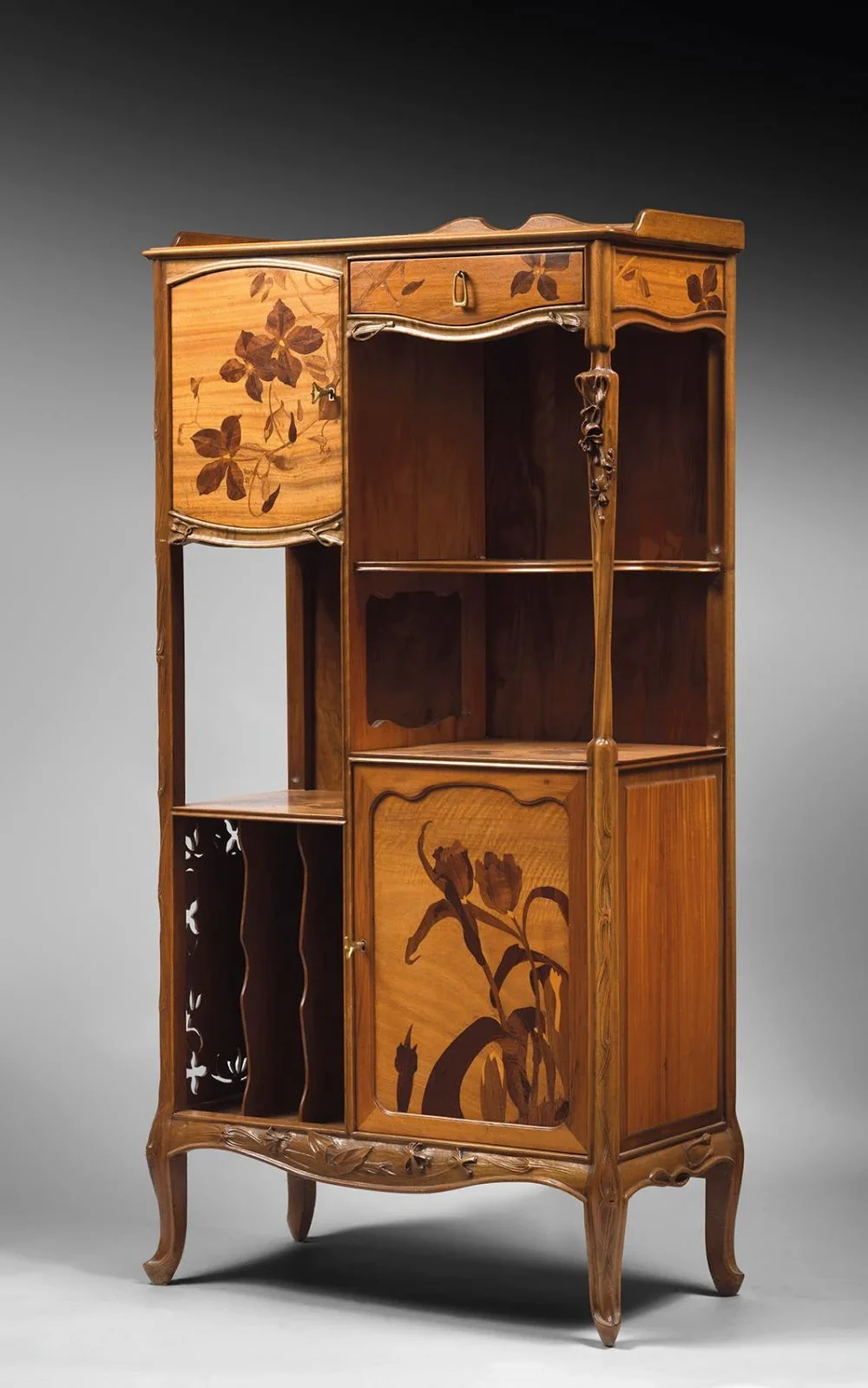
Top: Left: Mantel clock, Louis Majorelle, Nancy, circa 1900, Middle: Bureau aux orchidées, Louis Majorelle, Nancy, circa 1902, Right: Les Pins armchair, Louis Majorelle, Nancy, circa 1900, Bottom: Left: Vitrine, Émile Gallé, Nancy, circa 1900, Middle: Aube et Crépuscule bed, Émile Gallé, Nancy, 1904, Right: Étagère, Louis Majorelle, Nancy, circa 1900
Other countries took the same impulse in different directions. In Belgium, Victor Horta and Henry van de Velde designed chairs and tables with the same curving iron and wood vocabulary they used for the houses they built around them, and Gustave Serrurier-Bovy applied brass strips in flowing forms across his cabinetry, a more restrained adaptation of the same spirit. In Scotland, Charles Rennie Mackintosh and the Glasgow School took a very different path, stripping the curves down to long vertical lines, geometric grids, and stylized roses rendered as flat geometry rather than natural ornament. Where Nancy celebrated the organic and the sensuous, Mackintosh reached for an austere elegance that influenced Vienna far more than Paris, and that anticipated the design languages that would soon define Art Deco. In Austria, Josef Hoffmann, Koloman Moser, and the Wiener Werkstätte pushed further still, producing furniture and silver governed by crisp squares and grids that carried the decorative ambition of Art Nouveau into a vocabulary pointing directly toward modernism. In Italy, Carlo Bugatti made some of the most eccentric and theatrical furniture of the period, covering his pieces in painted parchment, copper, and ivory, including the famous Snail Chair shown at the Turin Exposition of 1902. In the United States, Charles Rohlfs in Buffalo carved oak furniture that mixed Celtic and Gothic motifs with Art Nouveau metal trim. Each of these national variations responded to its own traditions and its own preferences, and yet all of them recognized one another as part of a single movement, exhibiting together at the great international expositions of the period and learning from one another across borders.
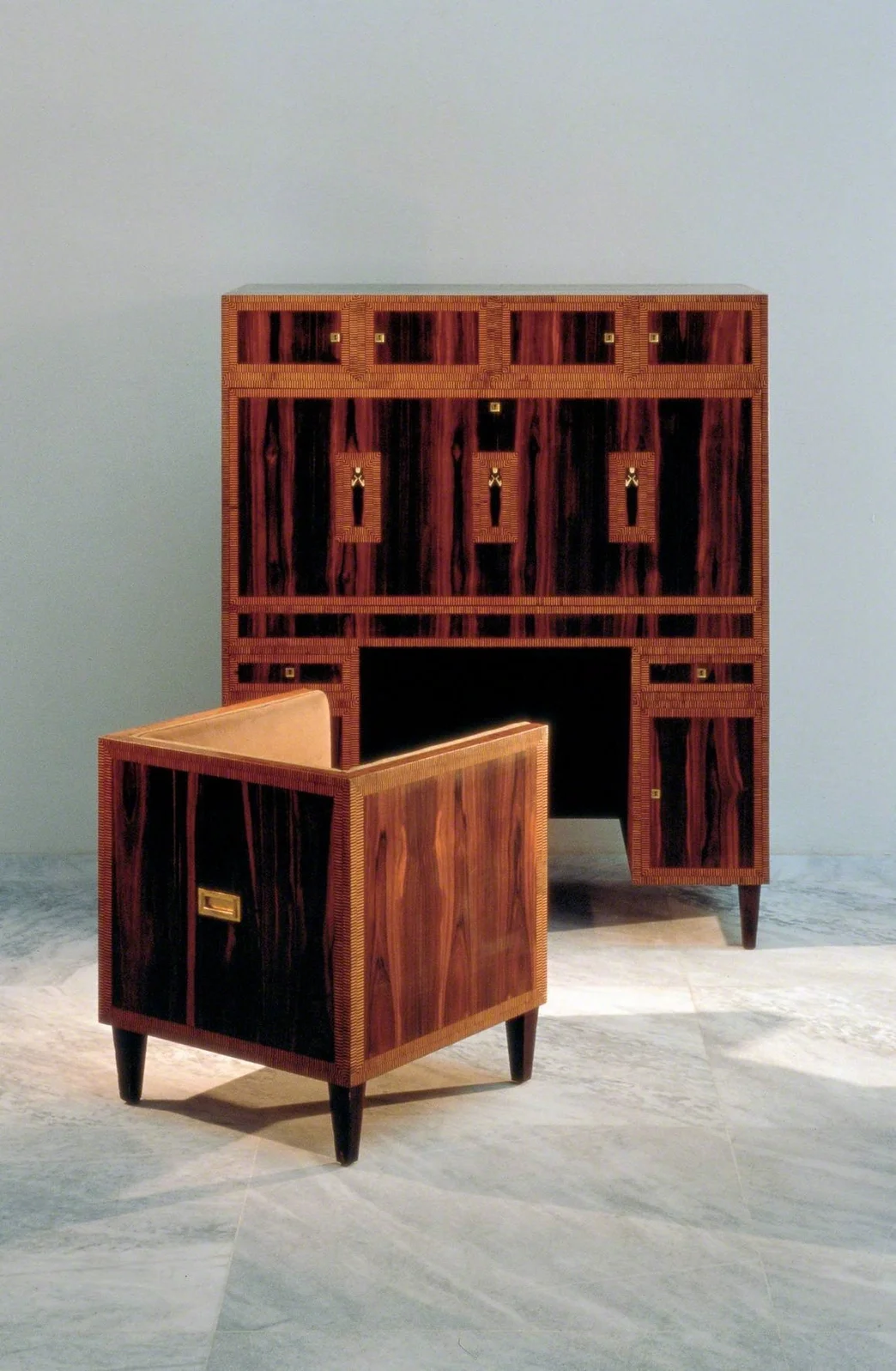

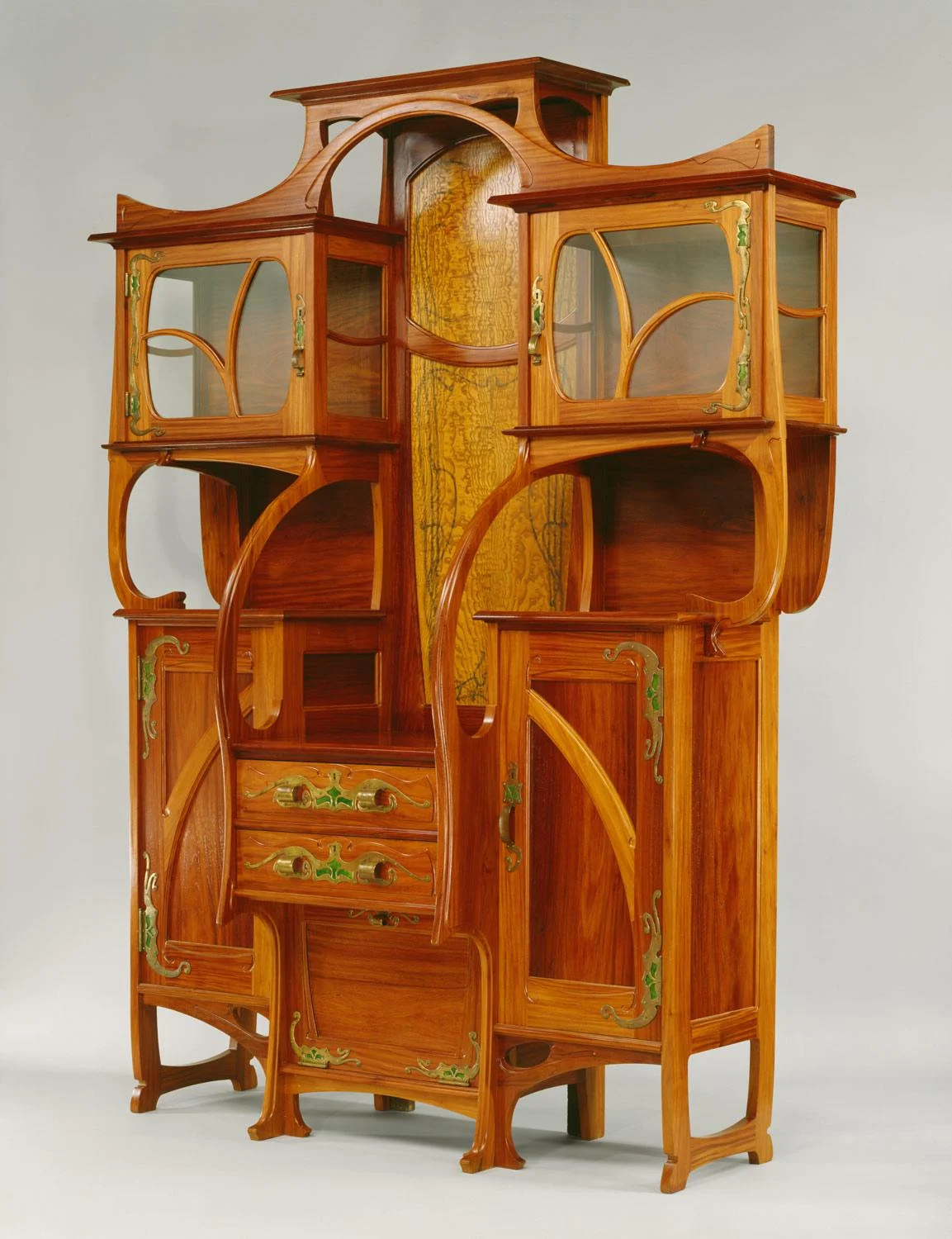


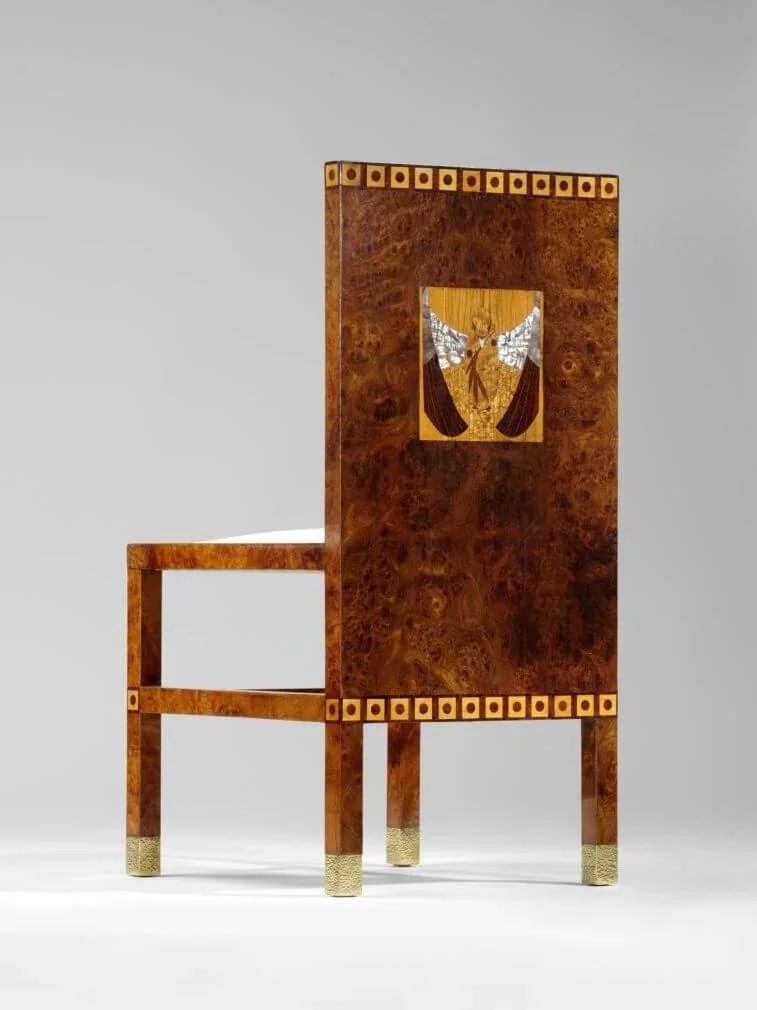
Top: Left: Writing cabinet and chair, Koloman Moser, Vienna, 1903, Middle: Orientalist corner cabinet, Carlo Bugatti and Eugenio Quarti, Turin, circa 1900, Right: Cabinet-vitrine, Gustave Serrurier-Bovy, Belgium, circa 1899, Bottom: Left: Throne chair, Carlo Bugatti, Turin, circa 1900, Middle: Hill House 1 chairs, Charles Rennie Mackintosh, Glasgow, 1902, Right: Side chairs, Koloman Moser, Vienna, 1904
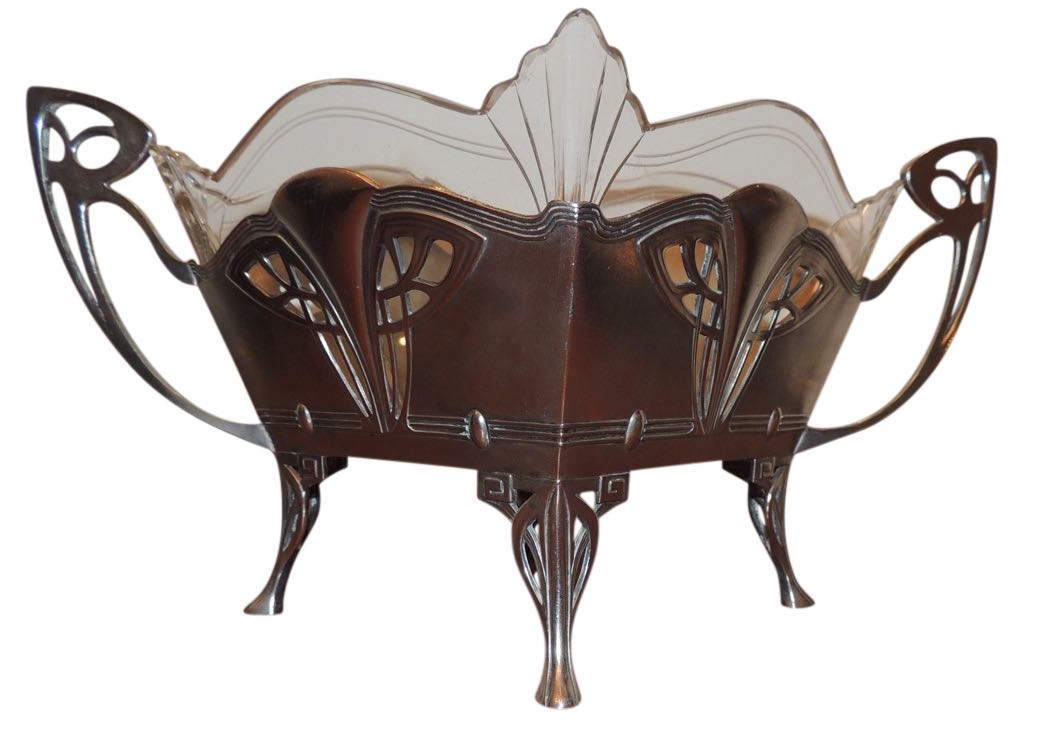
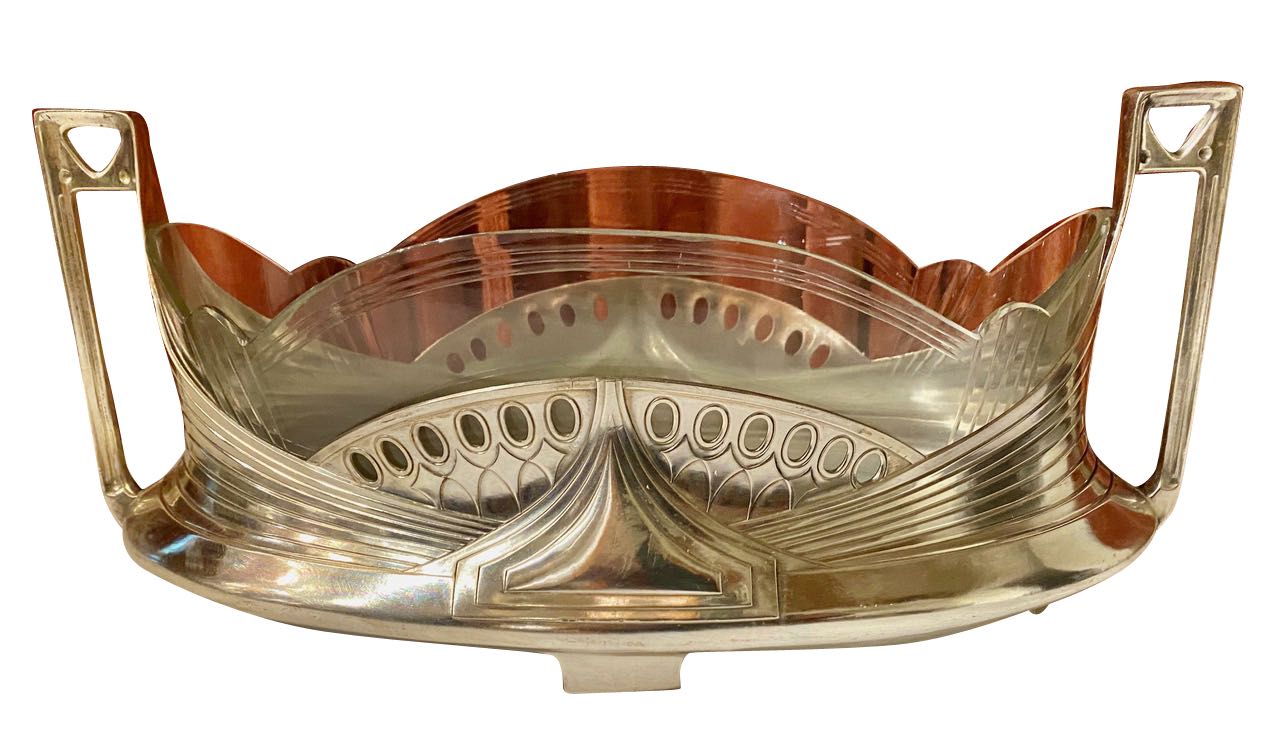
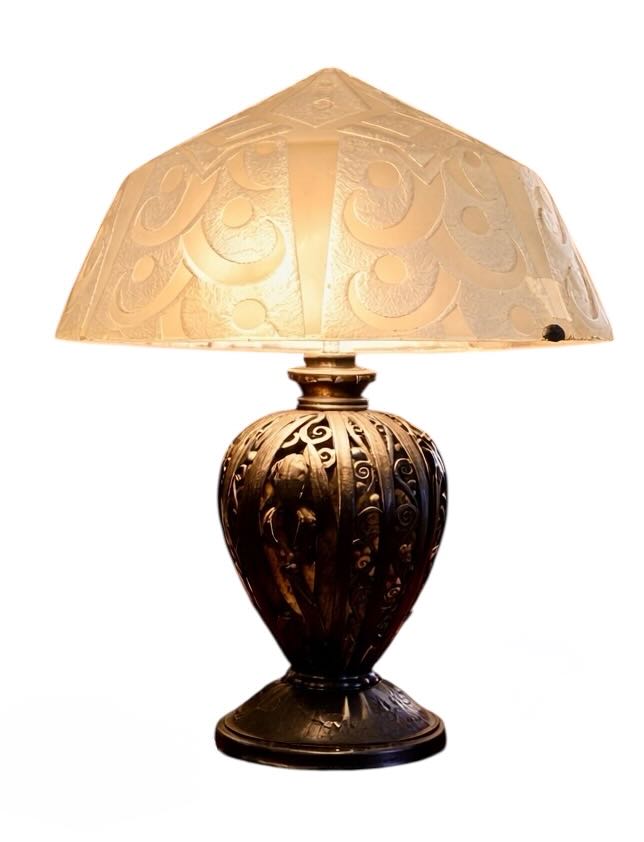
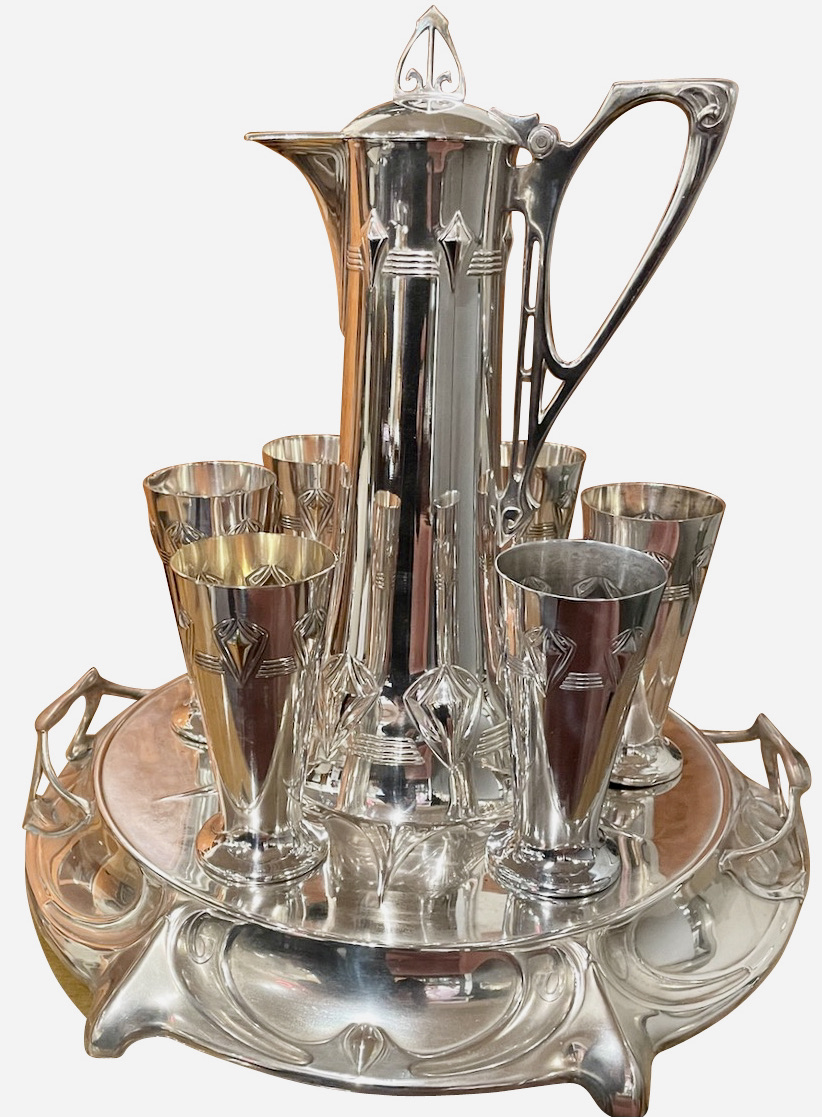
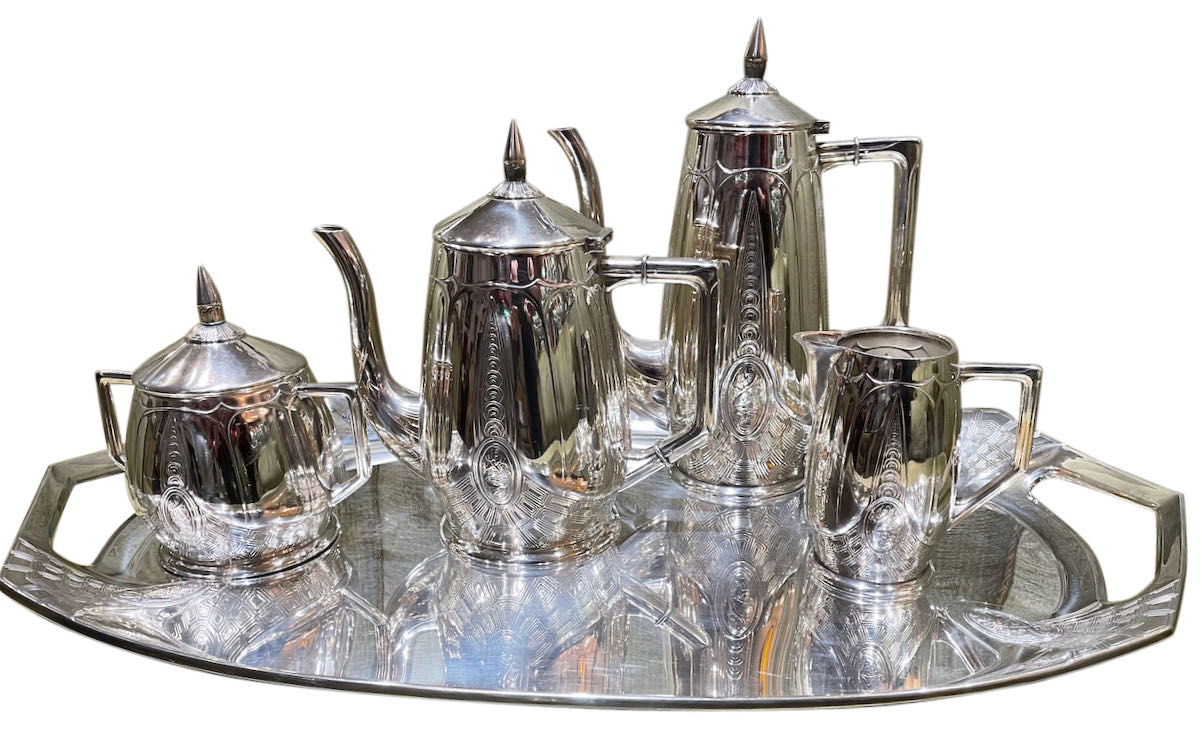
Beside the furniture stood an entire ecosystem of decorative objects, and glass led the way. Louis Comfort Tiffany in New York developed his patented Favrile process to produce iridescent surfaces that seemed to glow from within, and his leaded glass lampshades with their wisteria, dragonflies, and flowering trees became the icons of American Art Nouveau. In France, René Lalique moved from jewelry into glass, and Émile Gallé and the Daum brothers in Nancy developed layered cameo glass that read almost like watercolors. In Bohemia, the Loetz workshop pioneered iridescent finishes that rivaled Tiffany’s own. Ceramics moved with the same ambition. Alexandre Bigot in France supplied the polychrome architectural tiles that covered the façades of Paris apartment houses, the Zsolnay factory in Hungary introduced a frost-resistant eosin glaze used on small ceramics and on the rooftops of major civic buildings, and Antoni Gaudí developed his trencadís technique at Park Güell. Jewelry was transformed just as completely, with Lalique and Philippe Wolfers in Belgium reaching for opal, moonstone, horn, ivory, and plique-à-jour enamel in place of diamonds. In Germany, the firm WMF, short for Württembergische Metallwarenfabrik and founded in Geislingen an der Steige in 1853, brought the movement to the broadest possible audience. By 1900, WMF was the world’s largest exporter of household metalware, printing its catalog in twelve languages and maintaining branches in Vienna, Warsaw, London, and Buenos Aires. Working directly with Jugendstil artists, the firm translated the style into silverplate trays, tea services, vases, candlesticks, and table mirrors that the newly prosperous middle classes could actually afford. WMF pieces remain among the most widely collected Art Nouveau objects today, and they represent something the workshops of Paris and Nancy could not provide: the style made genuinely accessible.

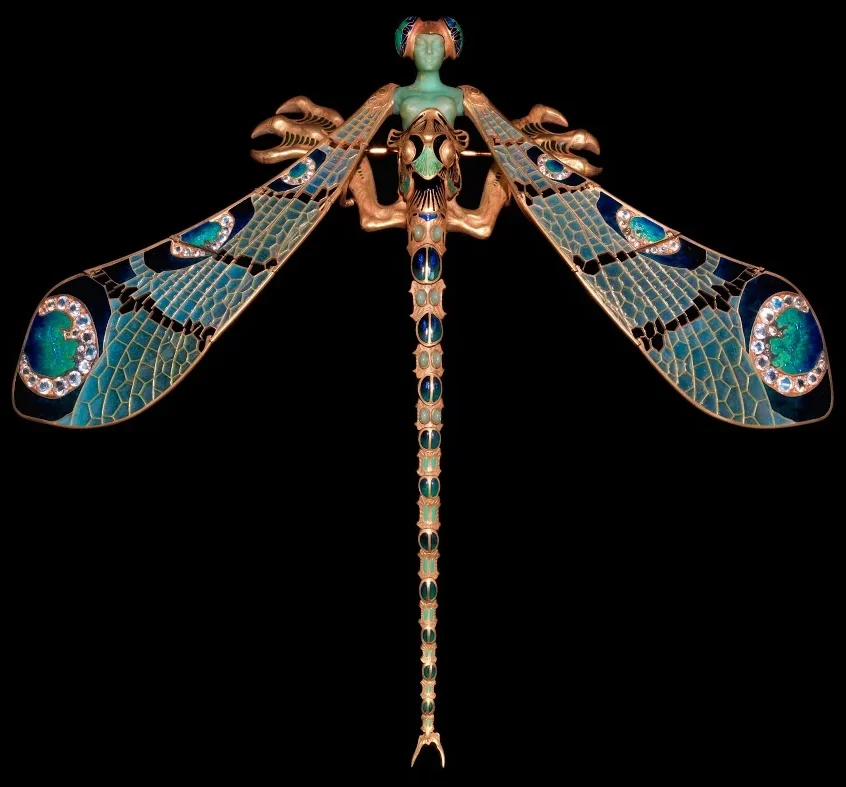

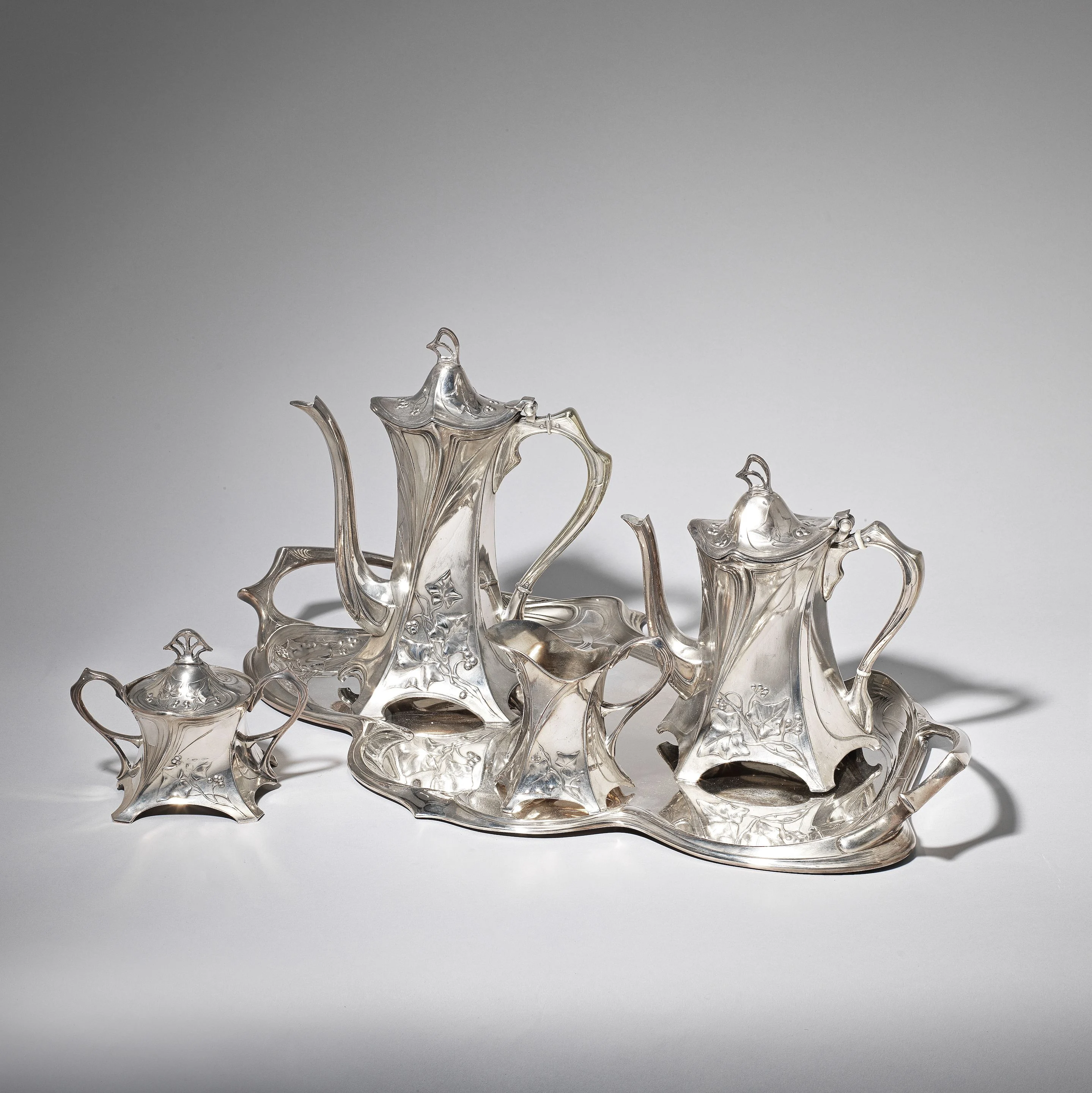
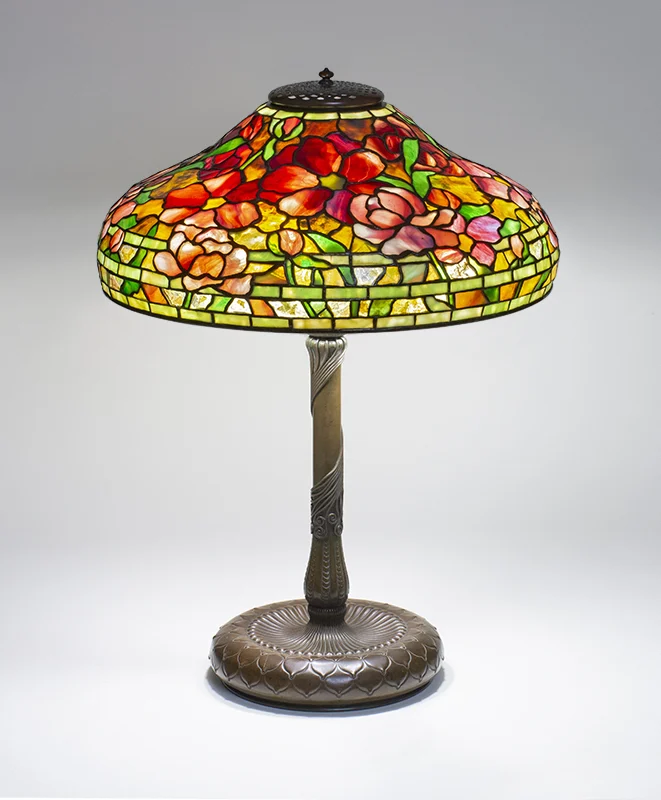

Top: Left: Favrile floriform vase, Louis Comfort Tiffany, circa 1900, Middle: Dragonfly-Woman corsage ornament, René Lalique, 1897–98, Right: Loïe Fuller lamp, François-Raoul Larche, Paris, circa 1900, Bottom: Left: Tea and coffee service, model 358, WMF, Germany, circa 1900, Middle: Peony Table Lamp, Tiffany Studios, circa 1900, Right: Table centerpiece, WMF, Germany, circa 1906
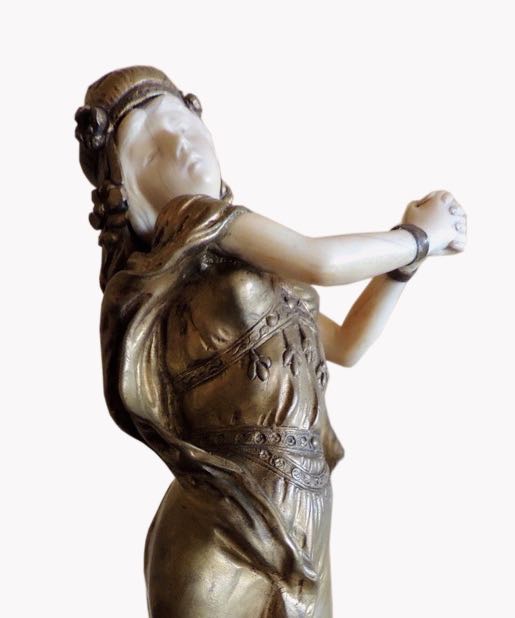
Sculpture in Art Nouveau occupied a position unlike any it had held before, dissolving the traditional boundaries between fine art, architectural ornament, and the decorative object. On building façades, sculpture was inseparable from the architecture itself, nowhere more so than on the Lavirotte Building in Paris, where the entrance and balconies were covered in carved stone faces, foliage, and figures from floor to cornice. In Belgium, sculptors worked alongside architects and jewelers in a shared decorative language. Philippe Wolfers moved fluidly between jewelry and free-standing sculpture, producing chryselephantine works that combined ivory, gold, and precious stones into pieces that were part ornament and part figurine, made possible in part by access to ivory from the Belgian Congo. George Minne, whose elongated, introspective figures became touchstones for the Belgian and Viennese Symbolist circles alike, was described in a 1902 letter by Mackintosh to the German architect Hermann Muthesius as the greatest living sculptor of the time, and his marble works were collected by the leading Viennese patrons of the era. Rembrandt Bugatti, son of the furniture designer Carlo, spent years working at the Antwerp Zoo sketching and sculpting animals from life, developing a bronze naturalism that carried the Art Nouveau spirit into three dimensions with unusual force. The porcelain figurines of Agathon Léonard and the gilt bronze Loïe Fuller lamps of François-Raoul Larche completed the picture at the Paris end, treating the dancer’s swirling drapery as a sculptural subject in its own right and demonstrating that in Art Nouveau, every craft aspired to the condition of sculpture.

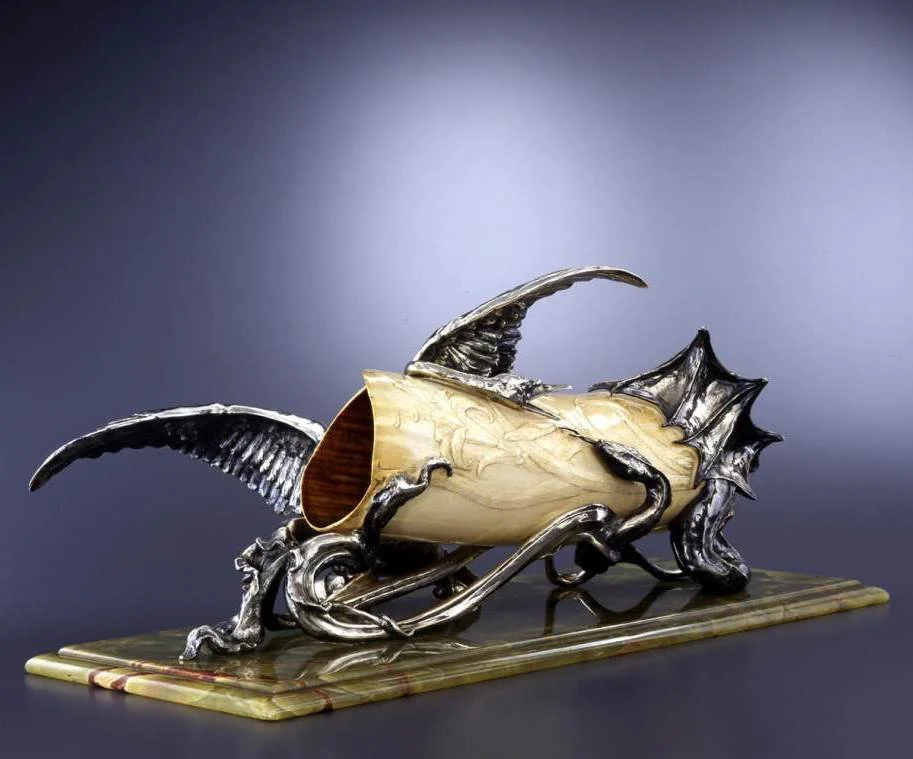
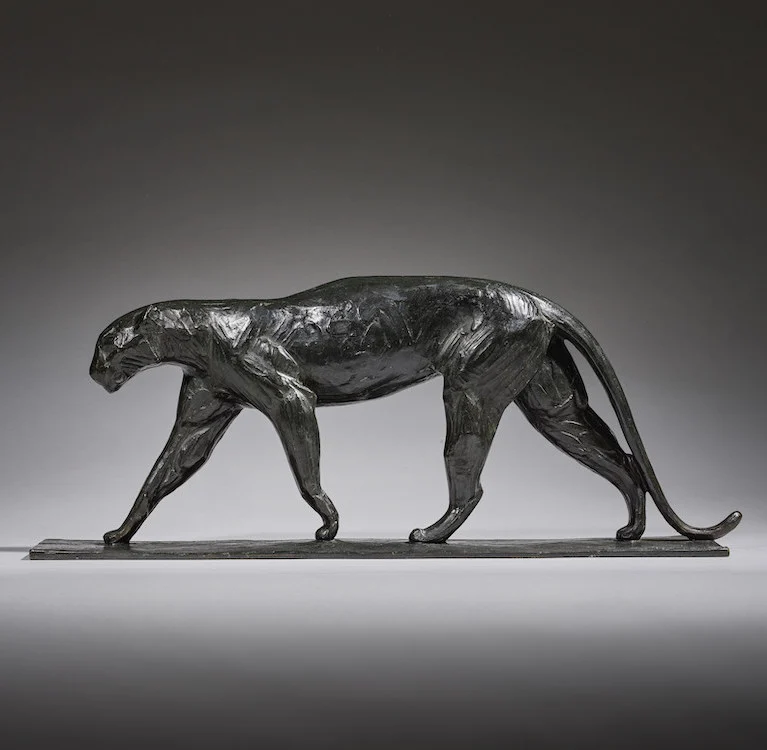
Left: Leda and the Swan, Jef Lambeaux, Middle: Civilisation et Barbarie, Philippe Wolfers, Brussels, 1897, Right: Petit léopard marchant, Rembrandt Bugatti, circa 1911
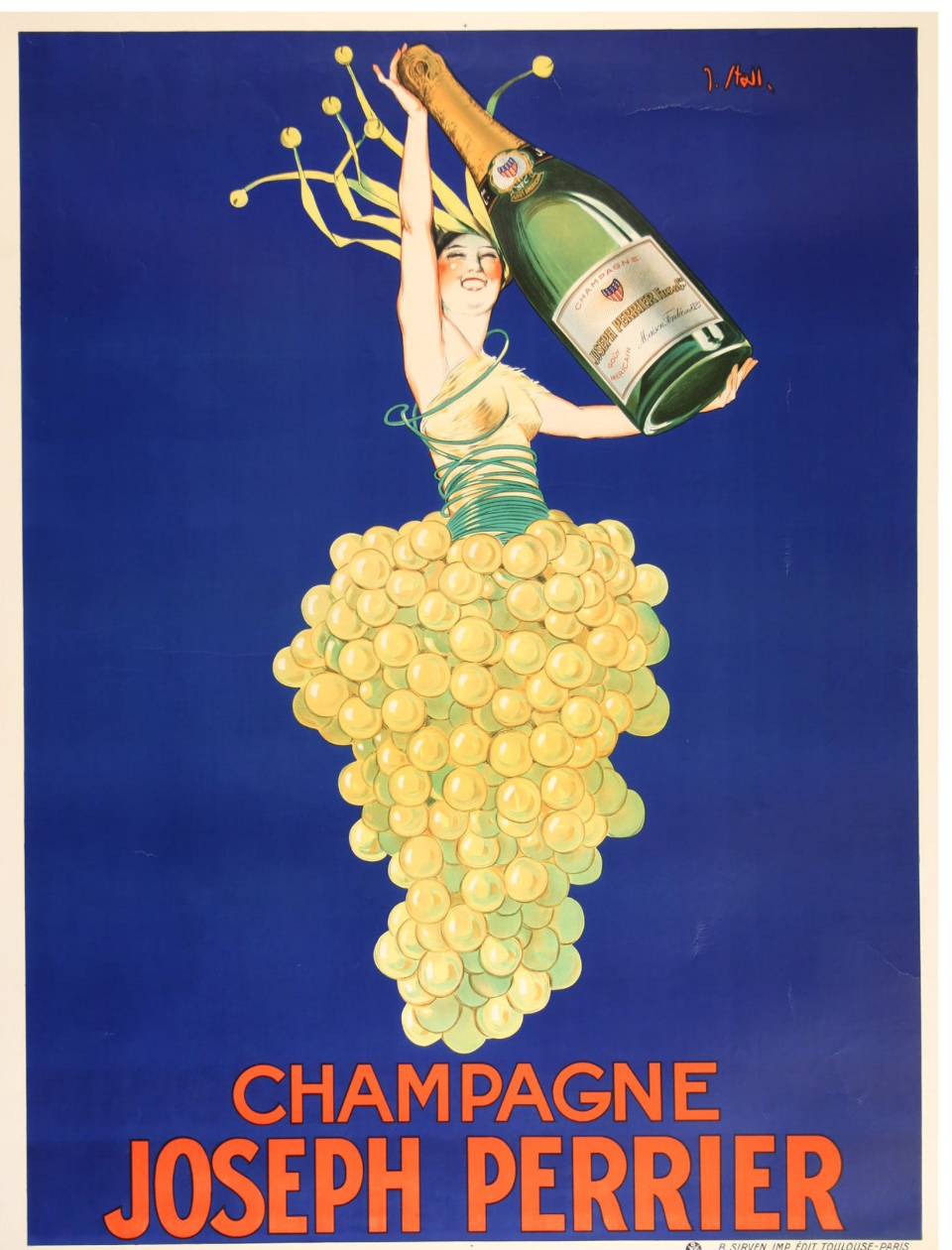
Painting and graphic arts served as the movement’s public face. Gustav Klimt in Vienna led the Secession and produced canvases of extraordinary ornamental density, gold leaf, and patterned robes pressing in around the figures, the boundary between painting and decoration deliberately erased. His murals for the Stoclet Palace in Brussels, designed by Josef Hoffmann between 1905 and 1911, are among the great achievements of late Art Nouveau and the closest the movement came to a complete realization of its founding ambition. In France, the painters known as the Nabis, including Pierre Bonnard, Édouard Vuillard, Maurice Denis, and Félix Vallotton, blurred the same lines between painting and decoration, producing canvases, screens, and panels drawn from Japanese composition and Symbolist color. Even more visibly, new techniques in color lithography put the movement directly onto the walls of Paris. Jules Chéret made posters for the dancer Loïe Fuller. Henri de Toulouse-Lautrec designed for the cabarets and dance halls of Montmartre. Aubrey Beardsley in England drew the black and white illustrations for Oscar Wilde’s Salomé that still define the decadent edge of the movement. And rising above them all in popular recognition stood Alphonse Mucha, the Czech artist whose 1894 poster for Sarah Bernhardt in Gismonda launched a career of producing serene, idealized women framed by halos of flowers, hair, and ornamental script. Mucha’s posters appeared on walls across Paris and were quickly torn down and collected, establishing for better and worse the most familiar visual shorthand for the entire movement. Original lithographs by Mucha, Chéret, and Toulouse-Lautrec remain the most broadly available Art Nouveau works on the collecting market today, and they represent the clearest entry point for anyone beginning to engage with the style seriously.


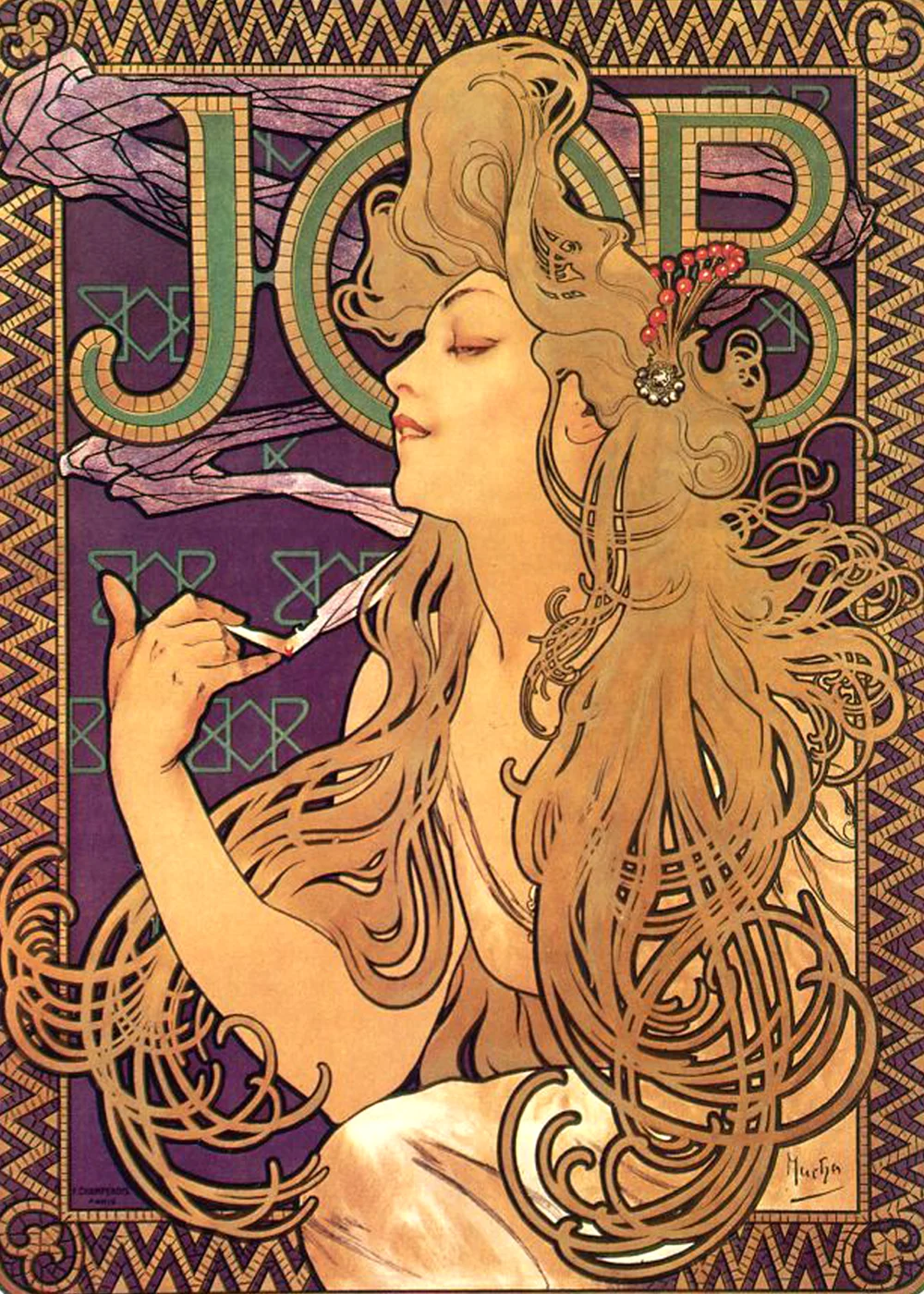

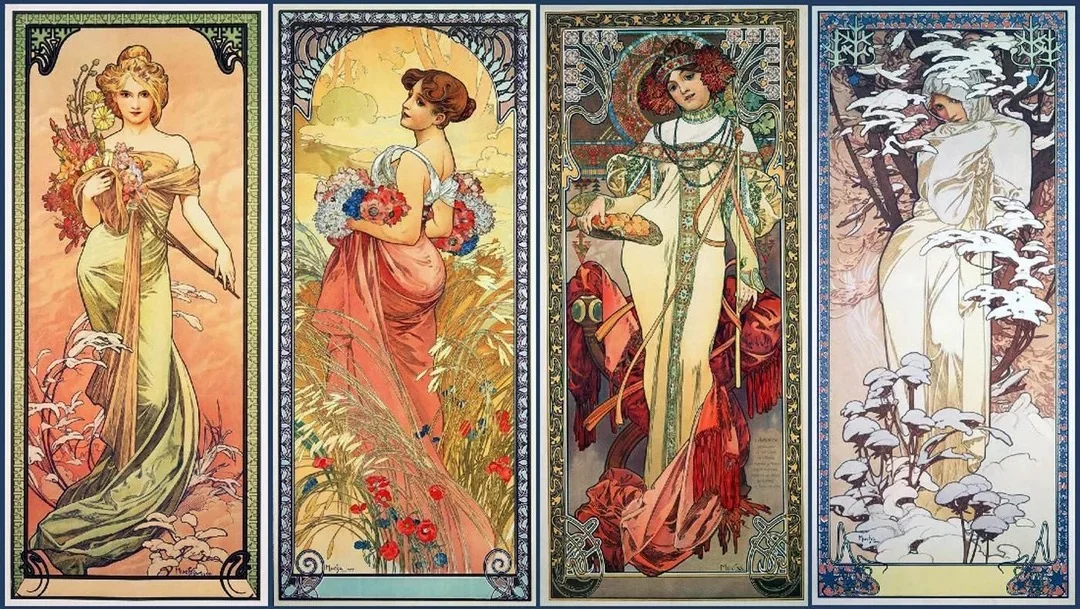
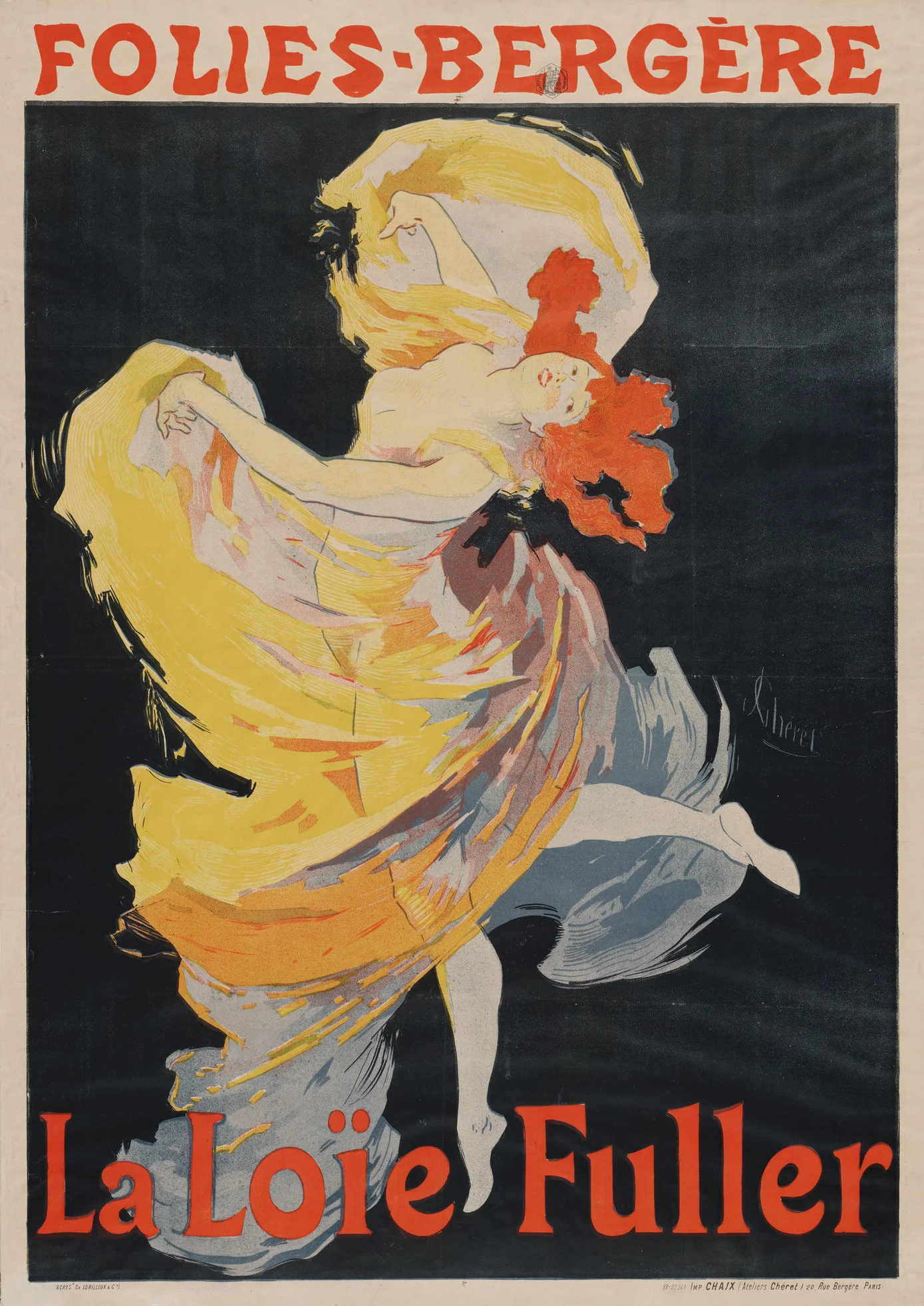
Top: Left: Jane Avril, Henri de Toulouse-Lautrec, 1893, Middle: The Kiss, Gustav Klimt, 1907–08, Right: JOB, Alphonse Mucha, 1896, Bottom: Left: Bières de la Meuse, Alphonse Mucha, 1897, Middle: The Four Seasons, Alphonse Mucha, 1896, Right: Folies-Bergère: La Loïe Fuller, Jules Chéret, 1893
The seeds of what would replace Art Nouveau were already growing inside it, and the chain of influence is traceable to a single event. In 1900, Mackintosh and the Glasgow Four were invited to exhibit at the eighth Vienna Secession exhibition, where their geometric furniture and square-based ornament stopped the Viennese in their tracks. Josef Hoffmann and Koloman Moser both later acknowledged a direct debt to what they saw there. Hoffmann traveled to Glasgow in 1902 specifically to study Mackintosh further, and scholars have noted that Mackintosh’s use of the square was taken up by the Austrians so thoroughly that it acquired the status of a leitmotif across their typographic and decorative work. When Hoffmann and Moser founded the Wiener Werkstätte in 1903, that geometric inheritance became the foundation of everything they made. The venture was made possible by Fritz Waerndorfer, a Viennese textile industrialist who had attended the 1900 Secession exhibition, commissioned Mackintosh’s celebrated Music Salon for his Vienna home, and served as the Werkstätte’s financer and commercial director until the enterprise consumed his personal fortune. Their metalwork, furniture, textiles, and ceramics replaced the sinuous line with crisp grids, angular forms, and a machine-like clarity that historians now recognize as a direct forerunner of Art Deco. The Stoclet Palace, completed in Brussels in 1911, made the transition visible: its interiors were governed by angularity and severity, with Klimt’s gold murals dissolving organic form into pure geometric pattern, a room that belonged more to what was coming than to what had been. After the First World War, those geometric languages moved to the center of European design, and the 1925 Exposition Internationale des Arts Décoratifs et Industriels Modernes in Paris drew sixteen million visitors and presented the new vocabulary to the world. René Lalique crossed from one movement to the other without interruption, carrying his mastery from Art Nouveau jewelry into Art Deco glass and becoming a defining voice of both.
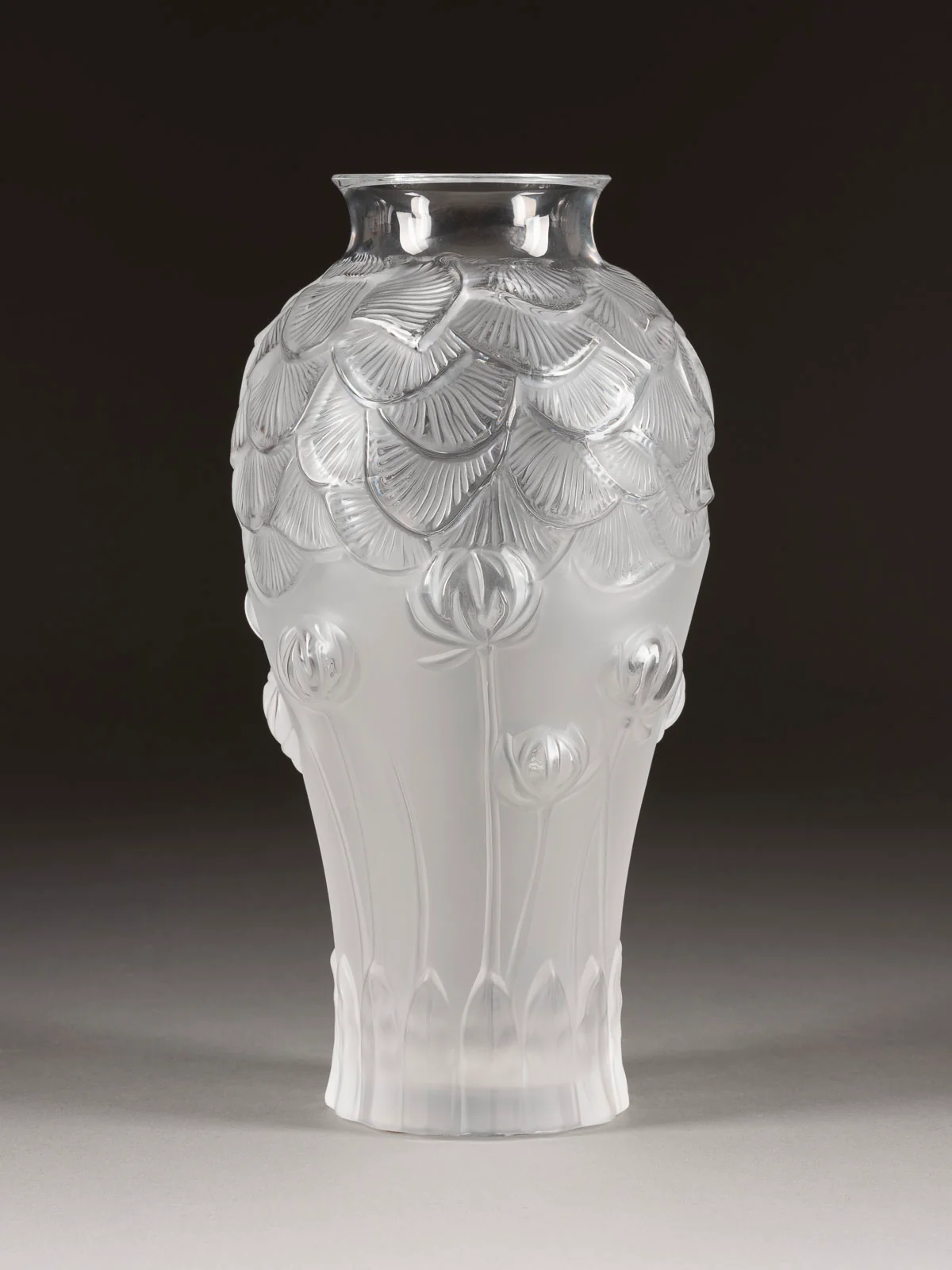
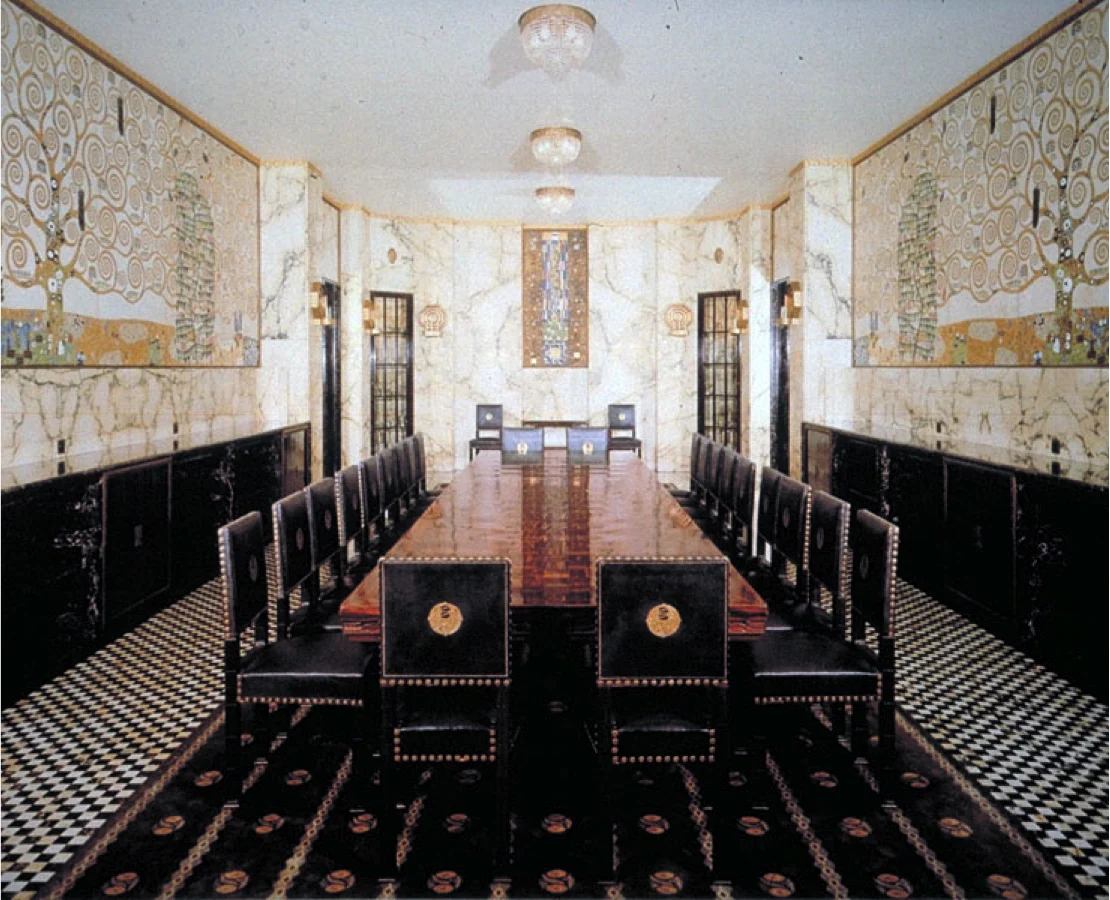

Left: Giverny vase, René Lalique, Middle: Dining room, Palais Stoclet, Josef Hoffmann, Brussels, 1911, Right: Purkersdorf armchair, Josef Hoffmann, Vienna, 1903
By 1914, with the outbreak of the First World War, the moment had passed. Art Nouveau was a luxury style, demanding the handwork of highly trained craftsmen, and it could not be cheaply mass-produced. Its sinuous forms came to feel dated, even decadent, beside the geometric clarity that would soon define Art Deco, the movement that replaced it in the 1920s and 1930s. Art Nouveau broke the grip of historicism and established the principle that the decorative arts could be a serious modern enterprise, and Art Deco took up that work and carried it forward in a sharper register. For decades after the war, Art Nouveau itself was treated as a passing fashion, often ignored in the major histories of twentieth-century design. It took until the late 1950s and 1960s, with major exhibitions at the Museum of Modern Art in New York in 1959 and the retrospective on Hector Guimard there in 1970, for the movement to be restored to its proper place. The flowing line and floral exuberance reappeared, surprisingly, in the psychedelic rock posters of San Francisco in the late 1960s and early 1970s, where artists like Wes Wilson and Stanley Mouse reached back through Mucha and Beardsley for a visual language of their own. Today, the major works are protected as world heritage, the furniture, glass, and jewelry are collected with the same seriousness as any other great moment in design, and the movement is recognized for what it was: the first sustained attempt in the modern era to make every object in a room a work of art.


Left: Tiffany Chapel, Louis Comfort Tiffany, 1893, Charles Hosmer Morse Museum of American Art, Middle: Palau de la Música Catalana interior, Lluís Domènech i Montaner, Barcelona, 1908, Right: Riga Art Nouveau Museum staircase, Konstantīns Pēkšēns, 1903
Recommended Reading
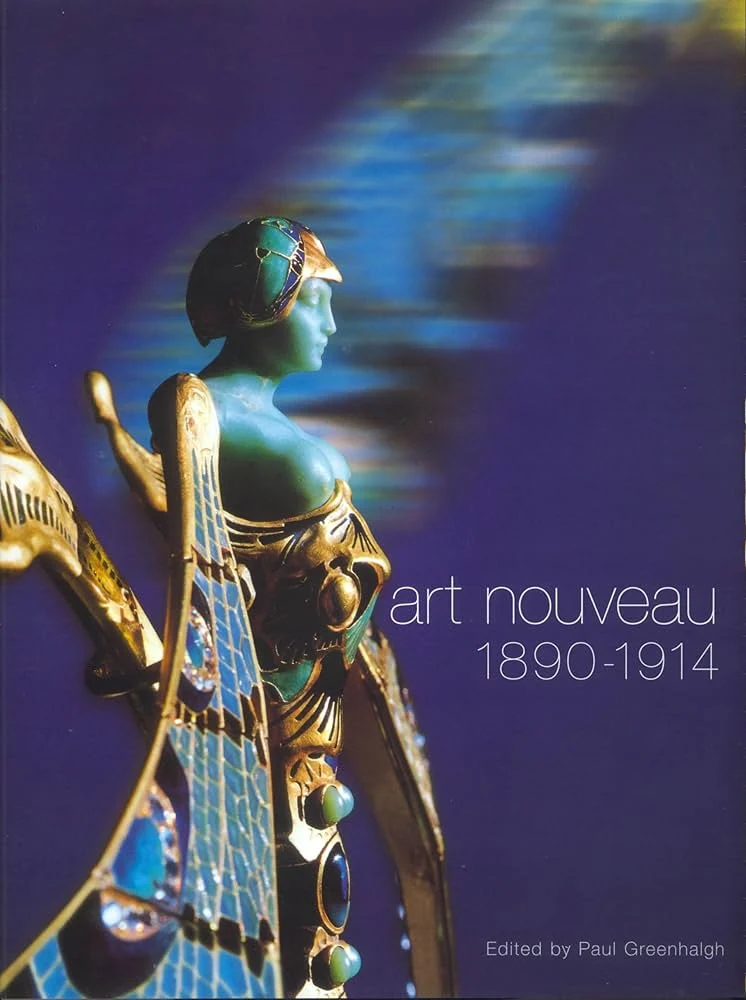
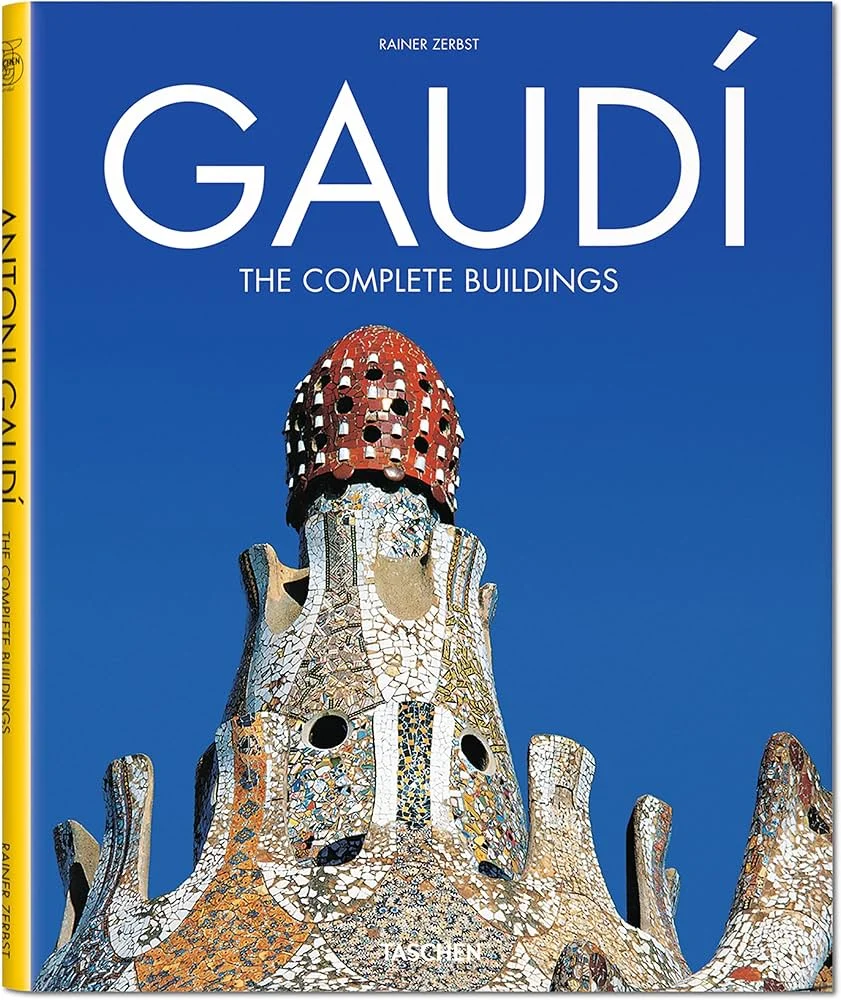
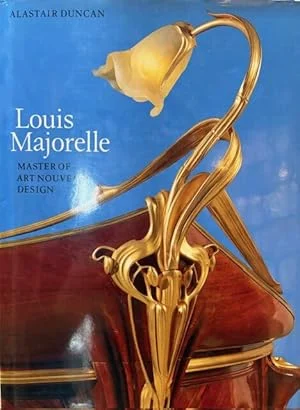
For those looking to explore Art Nouveau in greater depth, four books stand out as particularly worthwhile. Art Nouveau 1890-1914, edited by Paul Greenhalgh, is the comprehensive exhibition catalog from the Victoria and Albert Museum and the National Gallery of Art, and it remains the definitive scholarly survey of the movement across every major center and medium. Antoni Gaudí by Rainer Zerbst, published by Taschen, offers a thorough illustrated study of the movement’s most original architect, with detailed coverage of every major building from Casa Vicens to the Sagrada Família. Louis Majorelle: Master of Art Nouveau Design by Alastair Duncan is the definitive monograph on the Nancy School designer whose furniture and gilt bronze work defined the period’s ambition in the decorative arts. Vienna 1900 Complete by Christian Brandstätter, Daniela Gregori, and Rainer Metzger, published by Thames and Hudson, surveys the art, architecture, and cultural life of fin-de-siècle Vienna across nearly a thousand images, making the strongest case for understanding the Wiener Werkstätte and the Vienna Secession not just as regional variations on Art Nouveau but as the laboratories where the geometric vocabulary of Art Deco was first worked out. Together they offer a broad foundation for understanding how Art Nouveau took shape across architecture, furniture, and the wider world of design.


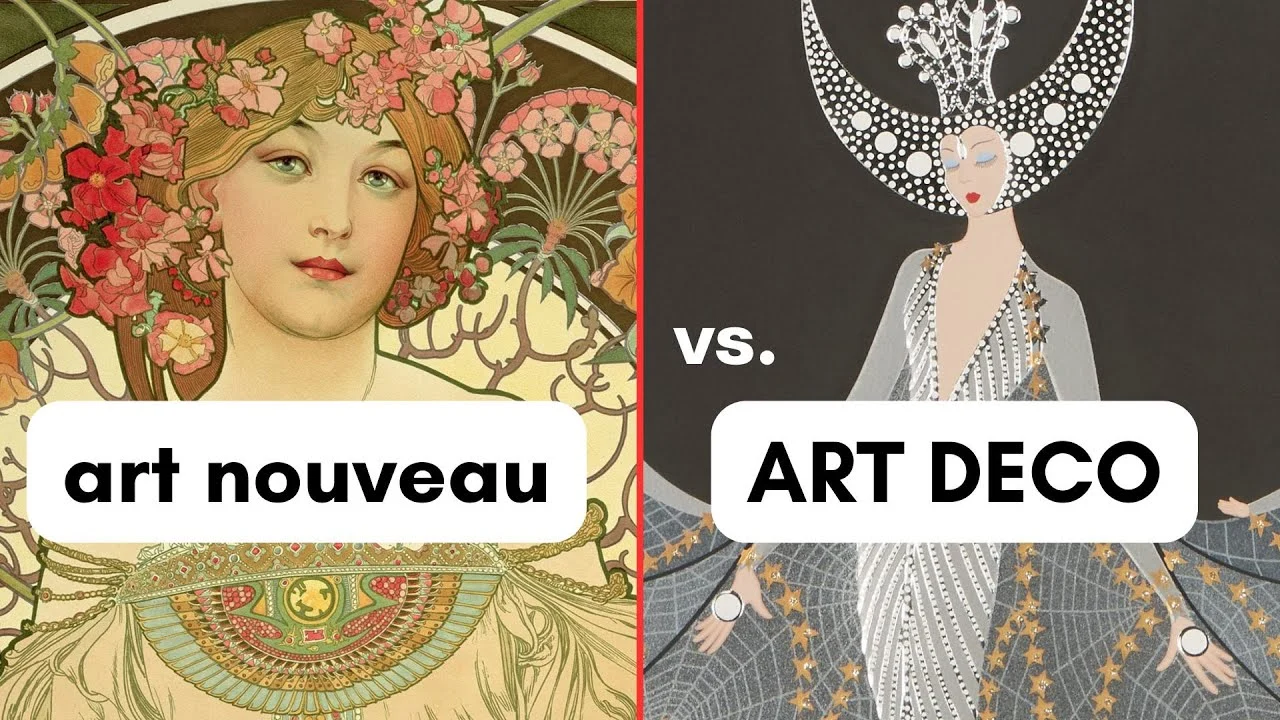
If you are interested in further stories of Art Deco design, collecting, and celebrating the artistry of early 20th Century:

Related Products from ArtDecoCollection.com