

Émile Gallé
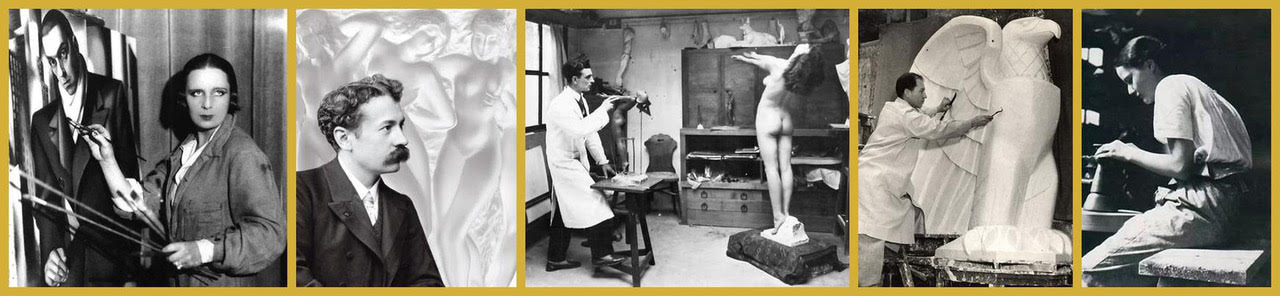
Émile Gallé was born on May 4, 1846, in Nancy, France, the son of Charles Gallé, a merchant of glassware and ceramics who also managed a faience factory. He studied philosophy and natural science at the Lycée Impérial in Nancy and became an accomplished botanist, studying under the director of Nancy’s Botanical Gardens and collecting plants from across France, Italy, and Switzerland. From 1862 to 1866, he continued his studies in Weimar, then served an apprenticeship at the glassworks of Burgun and Schwerer in Meisenthal to prepare himself for the family business. After the Franco-Prussian War, in which he enlisted and was demobilized following France’s defeat, he visited London and Paris to study ancient Egyptian art, Roman glassware, early Islamic enameled glass, and Japanese decorative arts, all of which deeply influenced his later work. In 1877, his father turned the family business over to him, and he reorganized it, eventually employing nearly 300 artisans. He founded the École de Nancy in 1901 with Antonin Daum, Louis Majorelle, Victor Prouvé, and Eugène Vallin as its first president. He was an active humanist who supported the defense of Alfred Dreyfus, organized evening schools for workers, and publicly defended Romanian Jews and Irish Catholic nationalists. Gallé died of leukemia on September 23, 1904, in Nancy.
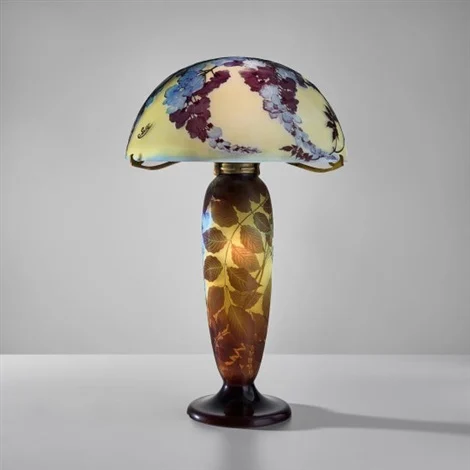
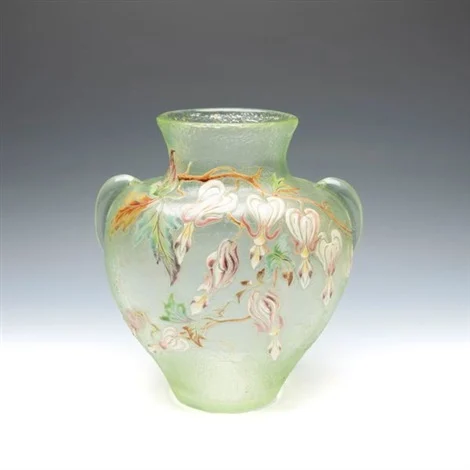
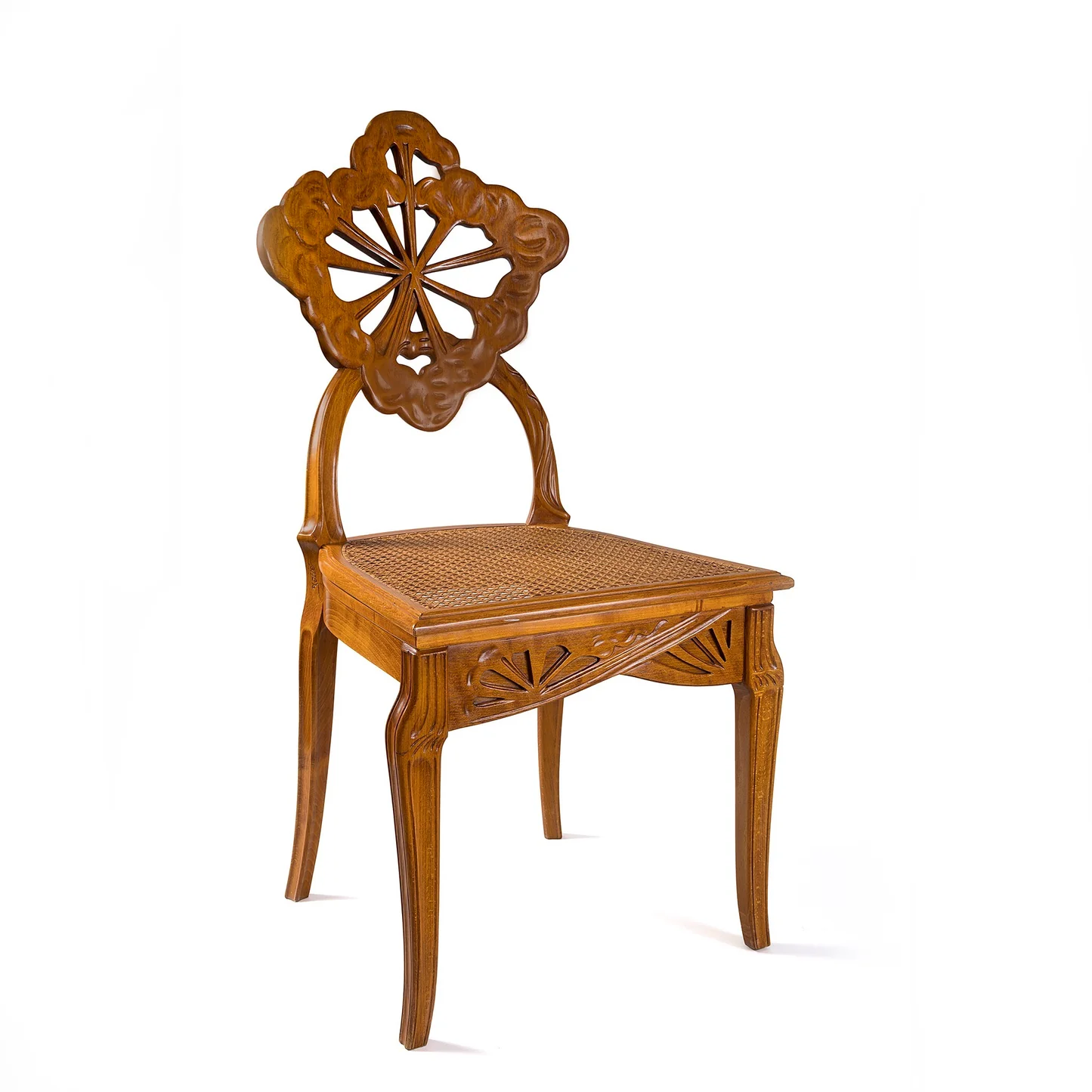
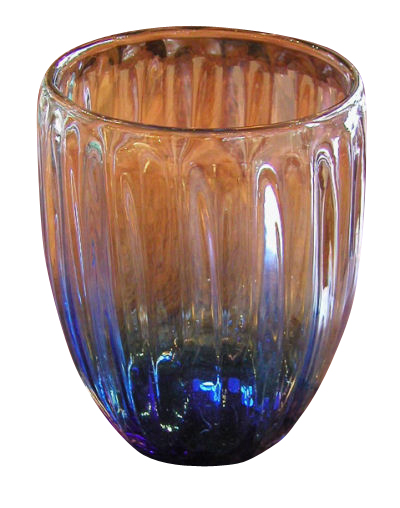
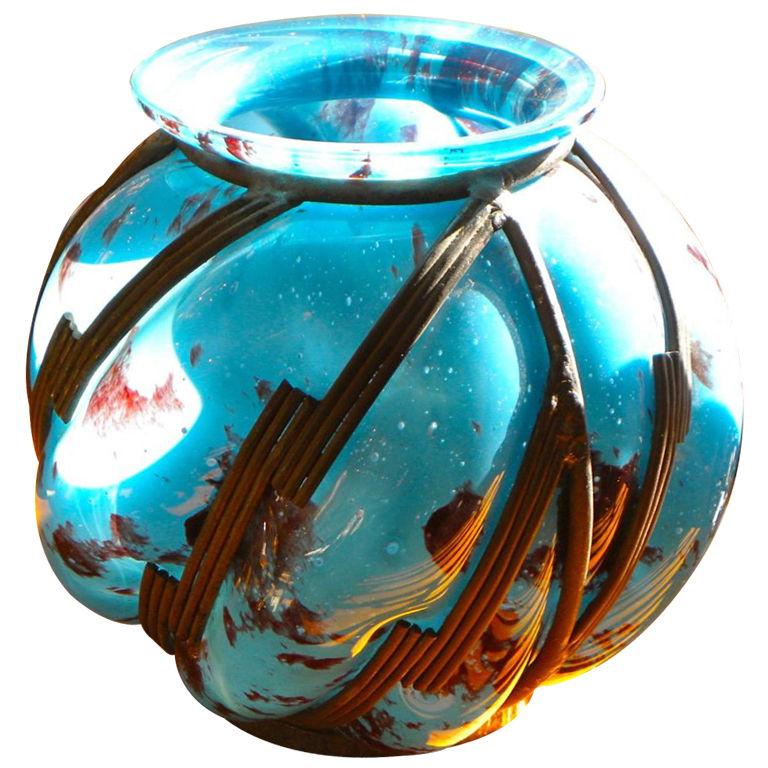
Gallé’s early glasswork was executed in clear glass decorated with enamel, but he soon developed the use of deeply colored, almost opaque glass in heavy masses, layered in several thicknesses and carved or etched to form plant motifs. His work was a great success at the Paris Exhibition of 1878 and made an even greater impression at the Paris Exposition of 1889. He pioneered glass marquetry, attaching thin sheets of colored glass onto hot glass objects and adding layer upon layer, as well as patinated glass, which turned accidental imperfections such as bubbles and contaminations into deliberate decorative effects. His color innovations were equally significant, including his famous Clair de lune sapphire tone made with cobalt oxide, peacock blue from copper and iron, and a deep violet produced with manganese. He also developed furniture from 1885 onward, creating a workshop employing carpenters, sculptors, and marquetry specialists, and collecting six hundred varieties of wood to achieve the precise colors and grain he required. His celebrated meubles parlants, or talking furniture, incorporated inlaid quotations from Symbolist writers such as Maurice Maeterlinck and Paul Verlaine. At the 1900 Paris Exposition Universelle, his work was rewarded with two Grand Prizes, a gold medal, and appointment as a commander in the Legion of Honor.
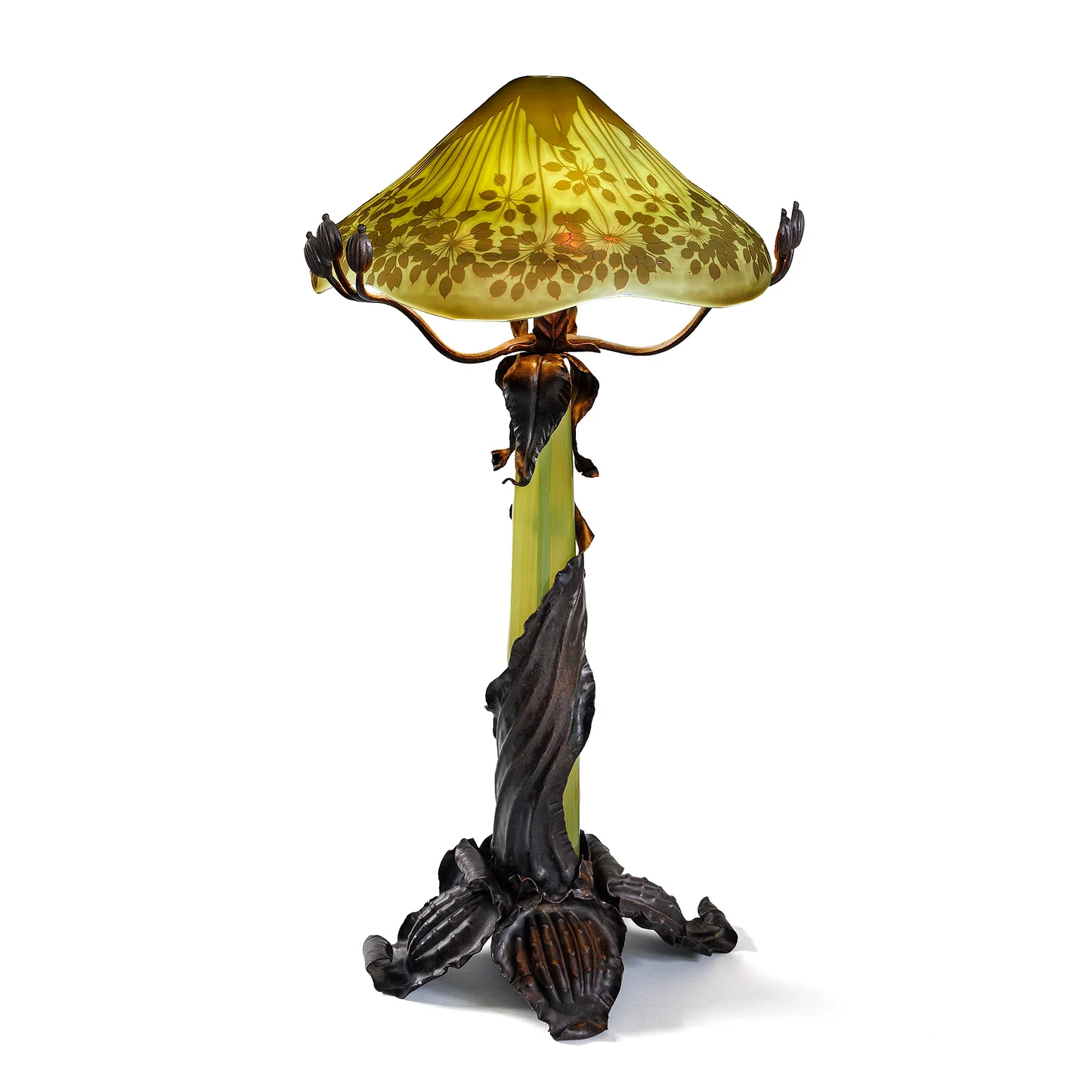
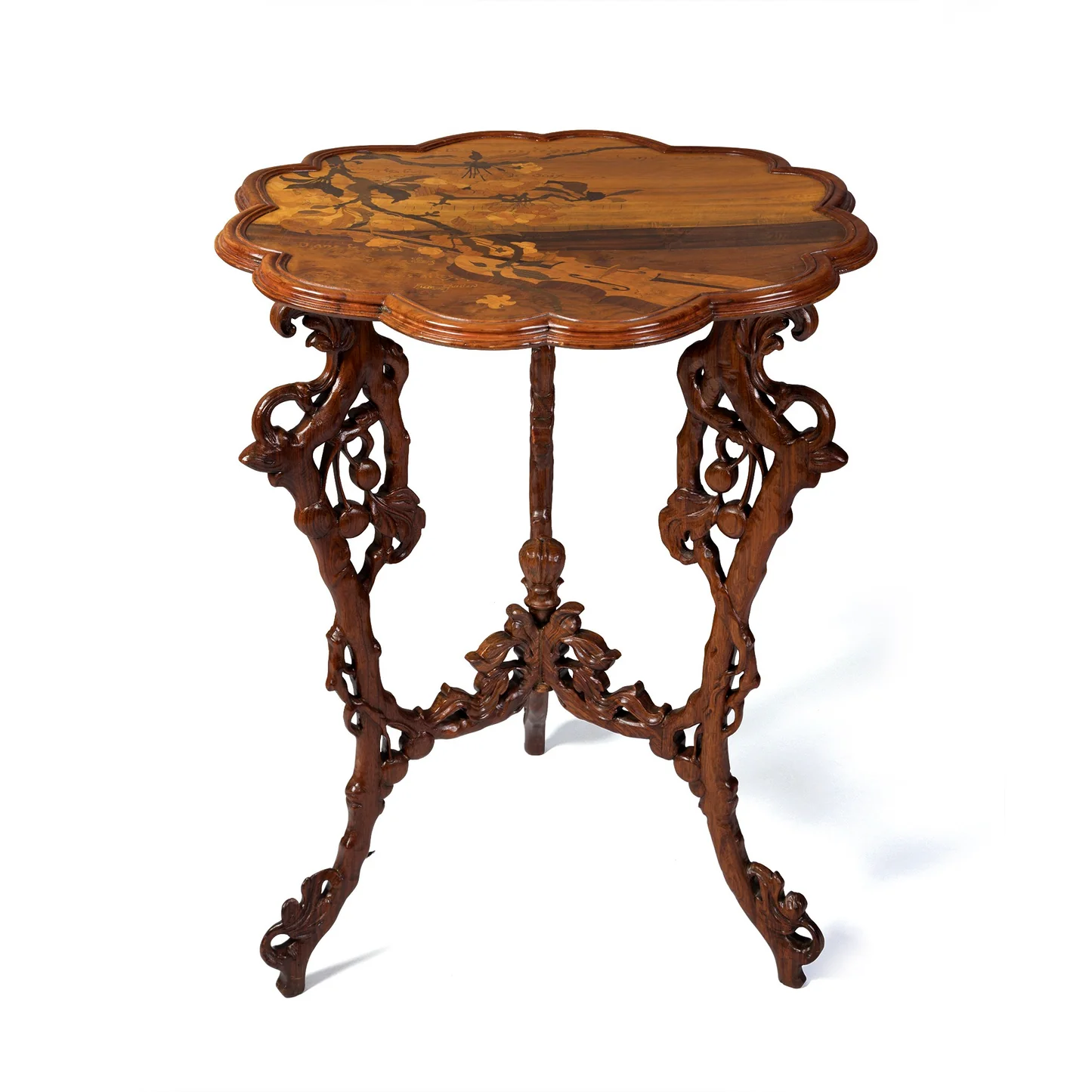
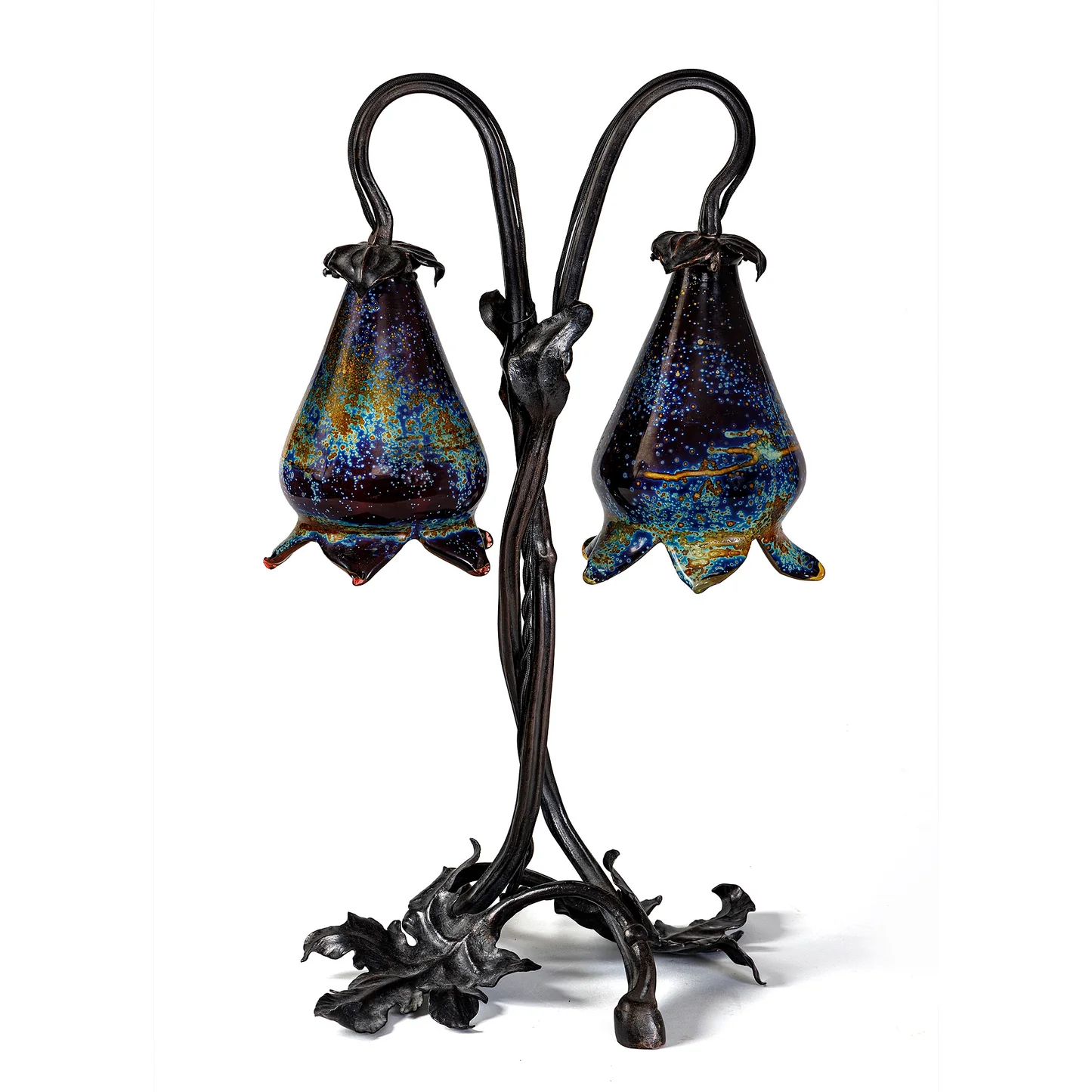

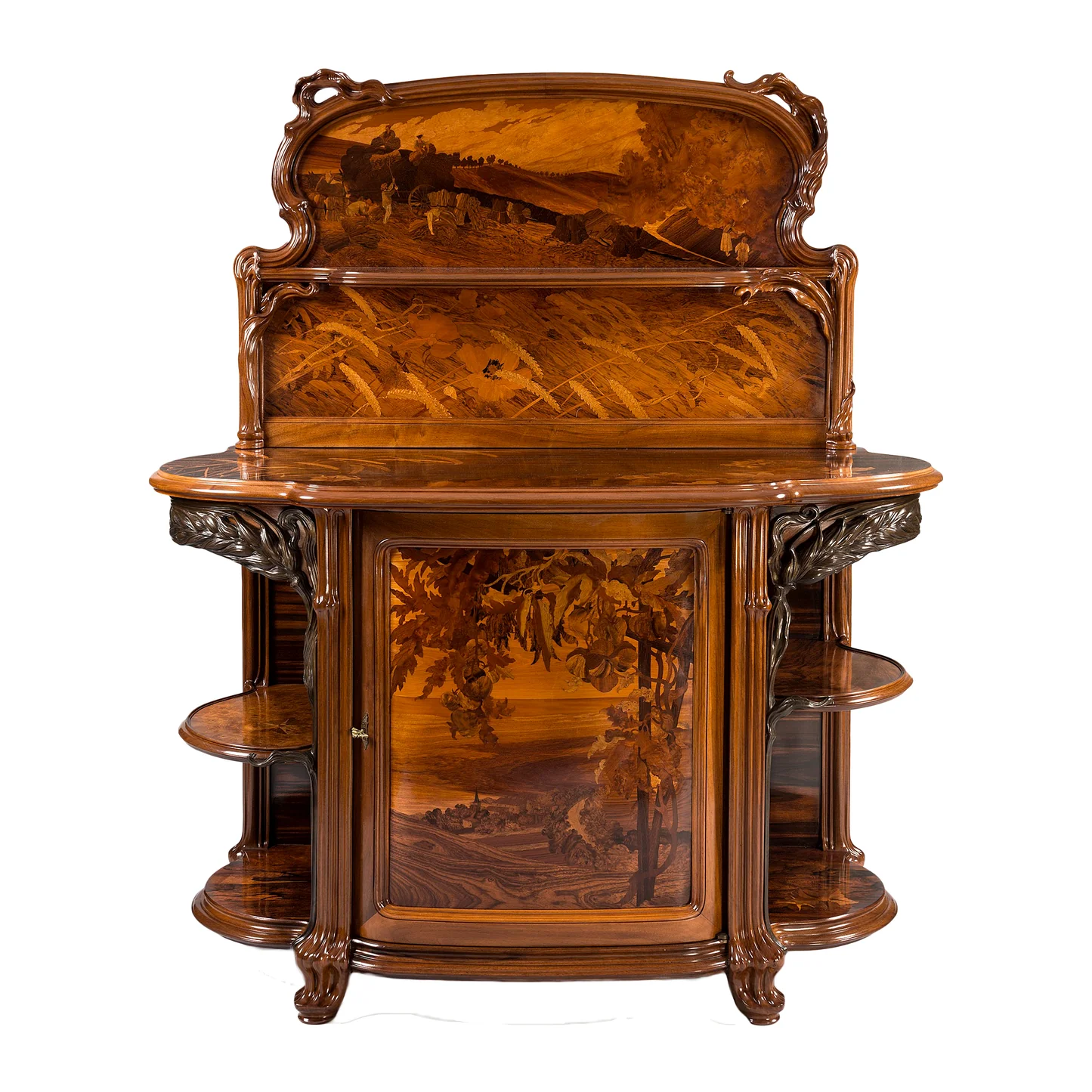
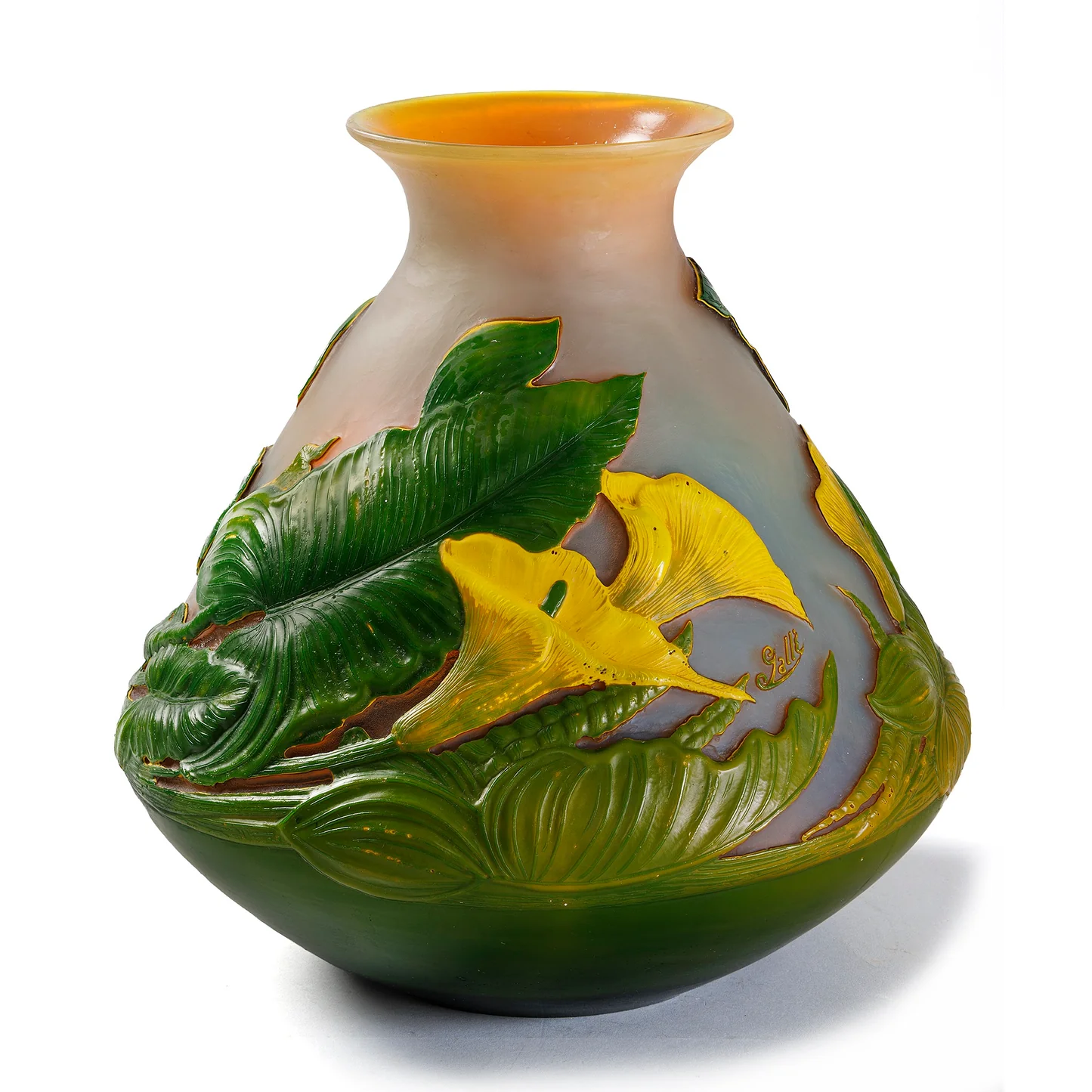
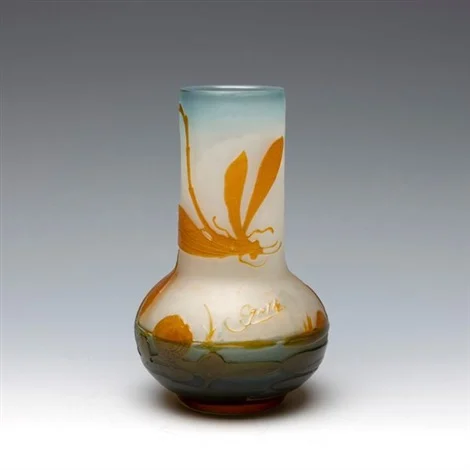
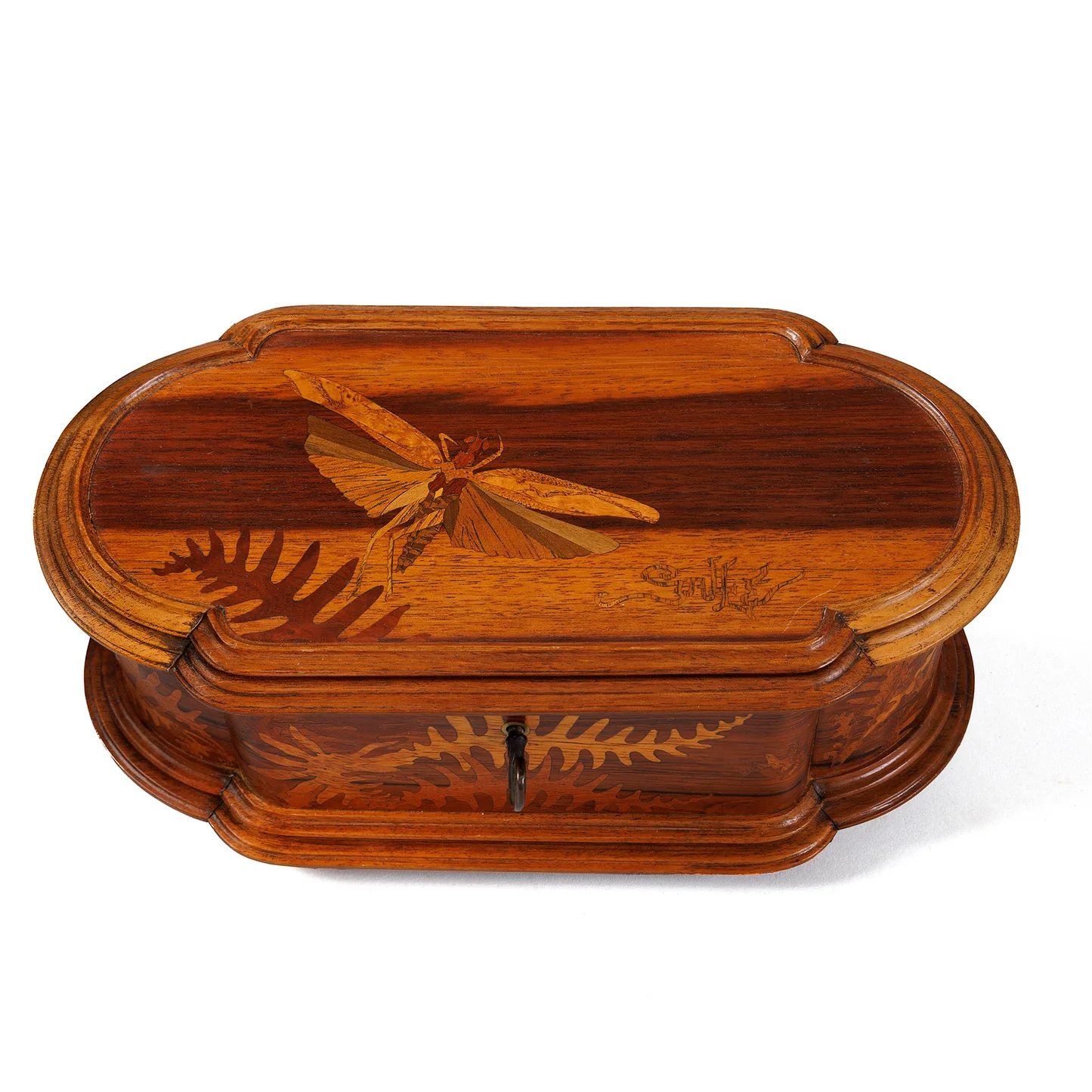
Gallé’s work was rooted entirely in nature, and he required his designers to use real plants and flowers as their models, insisting that the natural world should serve as a launch pad from which to reach personal expression rather than a template to imitate slavishly. His glass and furniture shared a common vocabulary of flowers, insects, marine creatures, and forest scenes rendered in layered, carved, and etched materials of extraordinary chromatic richness. A strong Symbolist current ran through his work as well, expressed through embedded poetic inscriptions and a recurring preoccupation with the threshold between light and dark, life and death.
Key Influences
- Art Nouveau Glass: His innovations in cameo glass, glass marquetry, and patinated glass established the technical and artistic foundations of French Art Nouveau glasswork and were widely imitated across Europe.
- École de Nancy: As founder and first president, he was the central creative force behind the movement that made Nancy a European capital of decorative arts.
- Japonisme: His engagement with Japanese art’s asymmetric naturalism contributed directly to the organic aesthetic that came to define Art Nouveau internationally.
- Talking Furniture: His meubles parlants pioneered the integration of literary text into decorative objects, establishing a model for the unity of poetry and craft in the Symbolist decorative arts.
- Craft and Industry: His workshop of nearly 300 artisans demonstrated that handcraft quality and large-scale production were not mutually exclusive, shaping how subsequent decorative arts studios approached the tension between the two.
If you are interested in further stories of the artists who shaped Art Deco, return to our artists page to browse the full directory.
Related Products from ArtDecoCollection.com