
Alphonse Mucha
Alfons Maria Mucha was born on July 24, 1860, in Ivančice, a small provincial town in Moravia in the Austrian Empire, now part of the Czech Republic, the son of a court usher. In 1871 he became a chorister at the Cathedral of St. Peter and Paul in Brno, where he received his secondary education and had his first encounter with the richness of Baroque art, an experience that would shape his artistic sensibility for life. During his years there he formed a close friendship with Leoš Janáček, who would become the greatest Czech composer of his generation. He began his artistic career designing decorations for a Moravian theater company, and after successfully completing a commission painting scenery for Count Karl Khuen at Hrušovany Emmahof Castle, the count sponsored his formal training at the Munich Academy of Fine Arts from 1885 to 1887. He then moved to Paris, regarded as the mecca of the arts, supporting himself with small commissions for book and newspaper illustrations while studying under various teachers, and for a time shared a studio with Paul Gauguin and practiced occult ceremonies with the Swedish playwright August Strindberg. He was awarded the Legion of Honour in France and made a Knight of the Order of Franz Joseph in Austria. Following the German occupation of Czechoslovakia in 1939, Mucha, a prominent Czech nationalist and Freemason, was among the first arrested and interrogated by the Gestapo, an ordeal that worsened his already fragile health. He died from a lung infection in Prague on July 14, 1939, at the age of 78.
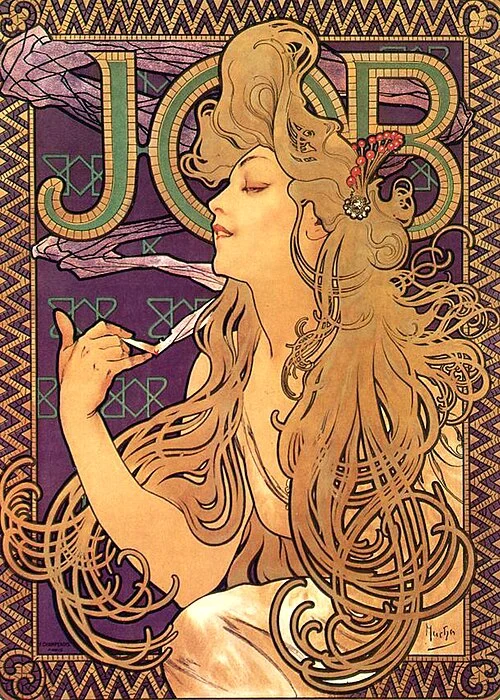
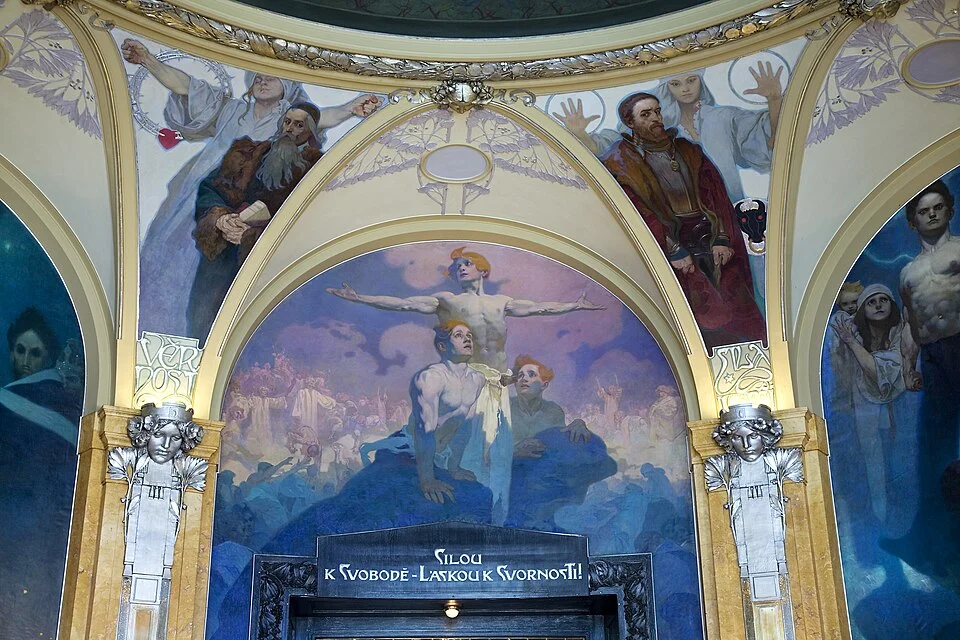
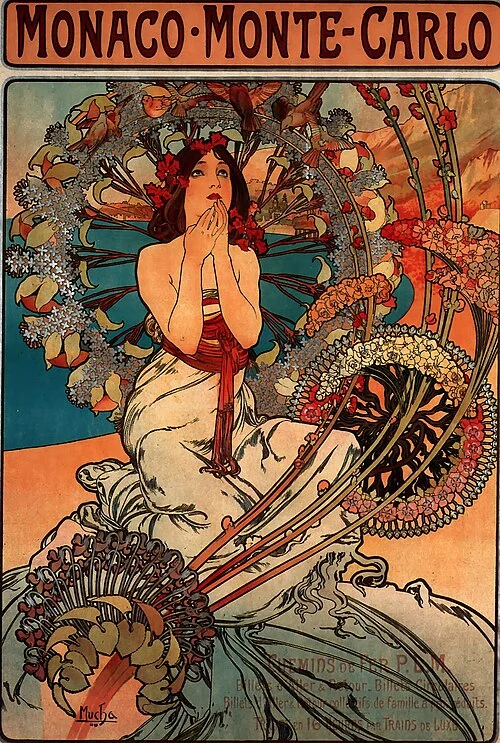
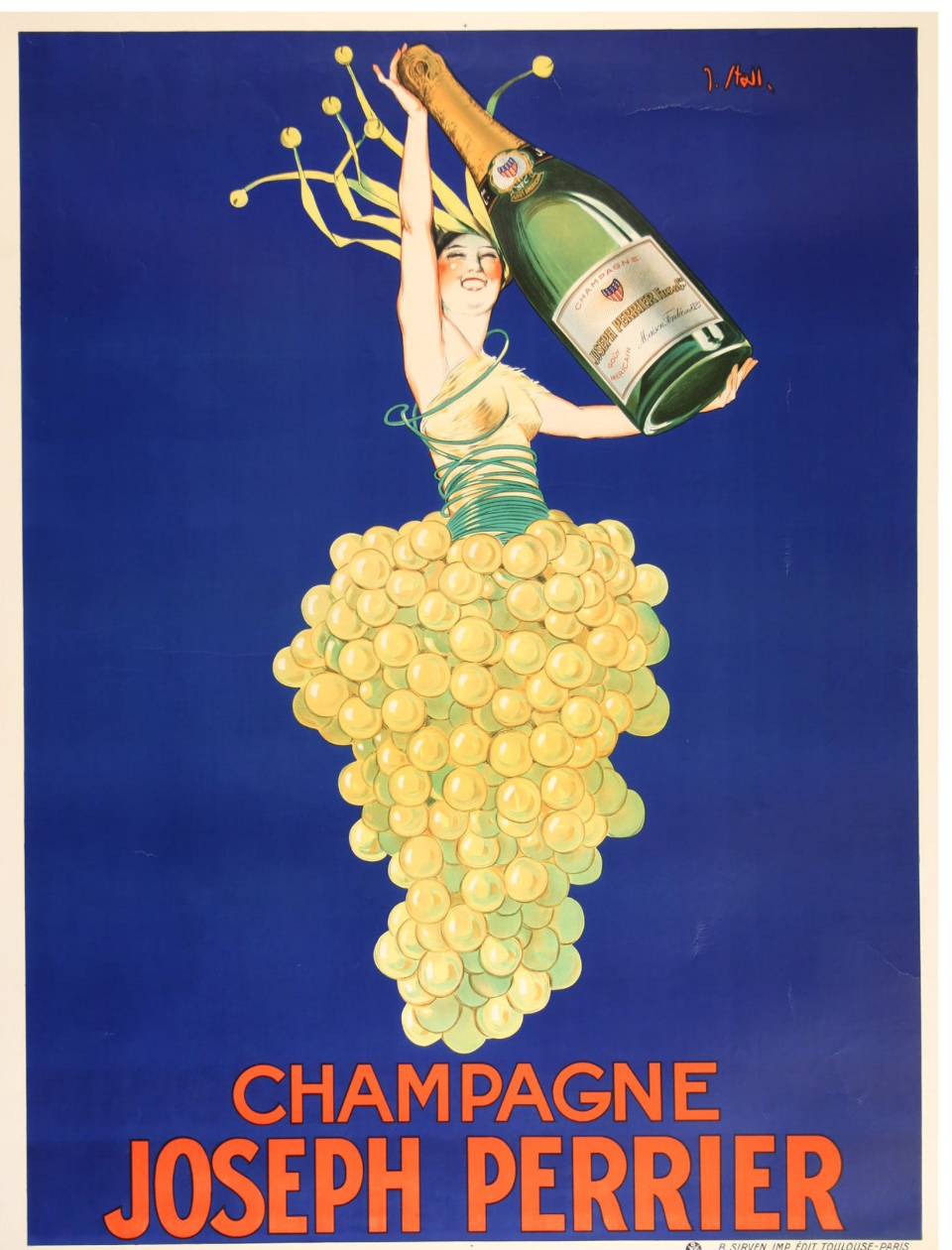
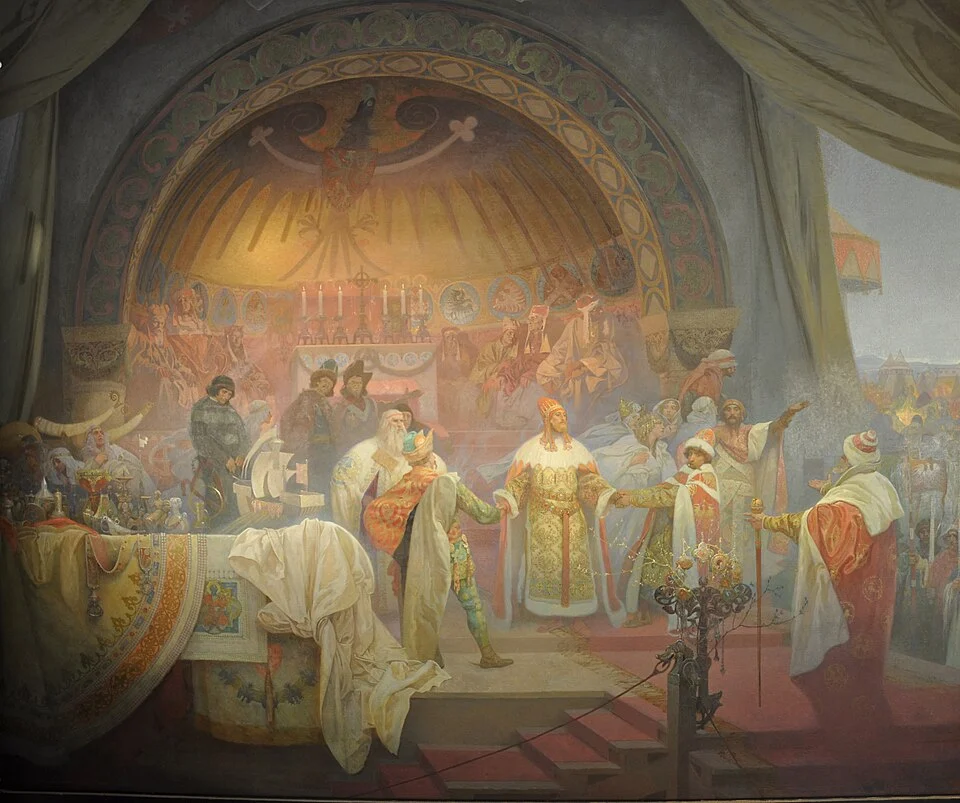
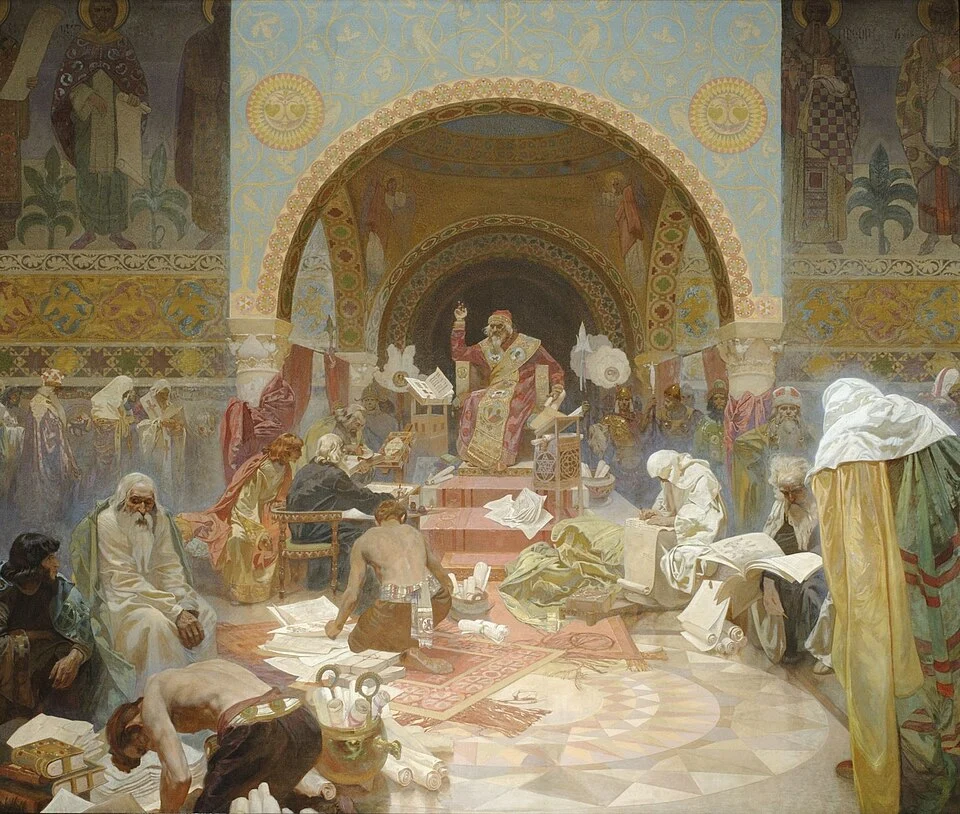
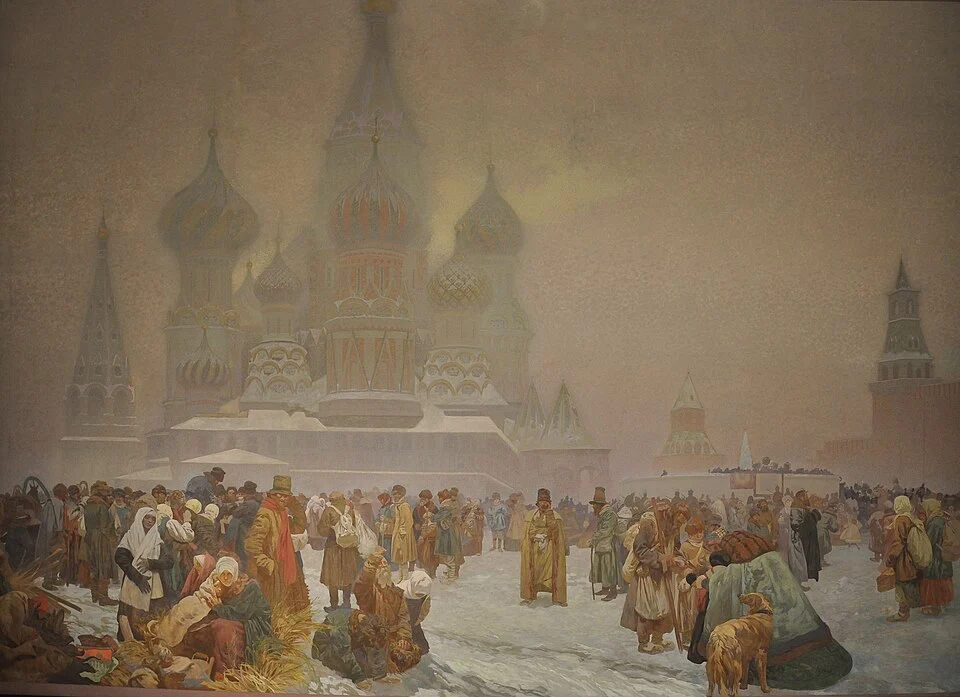
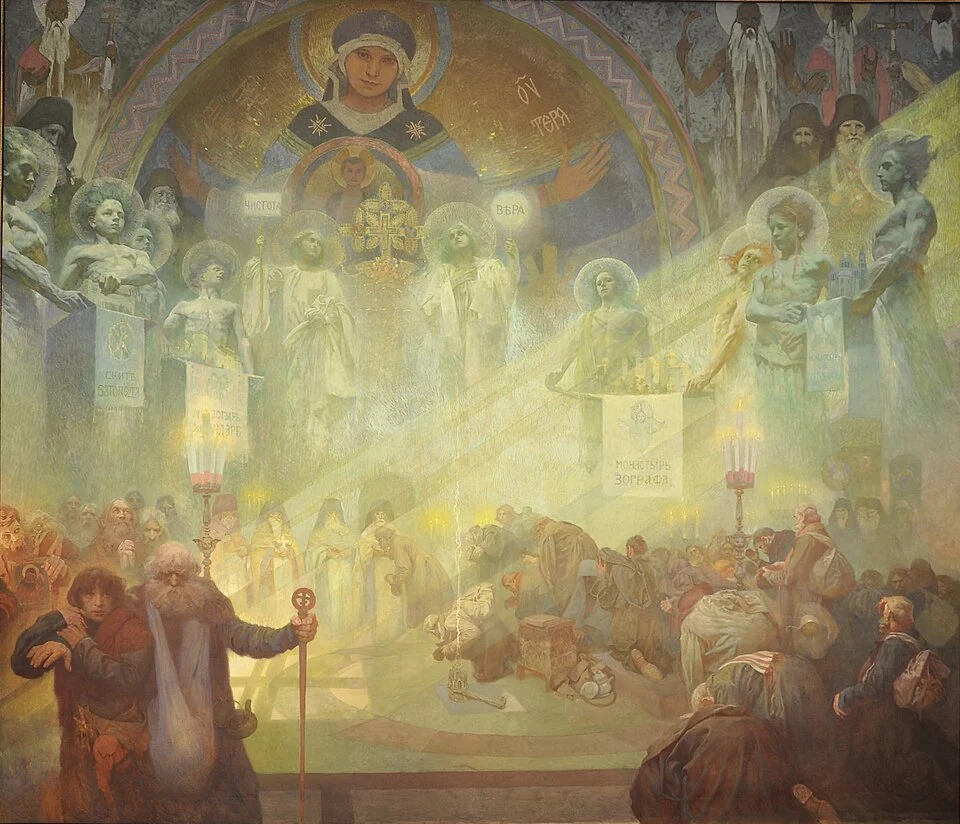
Mucha’s decisive breakthrough came in late 1894 when, somewhat by chance, he was commissioned to design a poster for Sarah Bernhardt’s theatrical production Gismonda, an image whose success upon its 1895 debut heralded the birth of the distinctive “Style Mucha” and established him overnight as the preeminent exponent of French Art Nouveau. He held his first solo exhibition in Paris in 1890, presenting 448 works across various media, and went on to design further celebrated theater posters for Bernhardt as well as decorative panel sets such as The Four Seasons, which became highly sought after by collectors. His distinctive style, sought after by advertisers and widely imitated in the rapidly expanding mass media of the period, was applied to commercial commissions for companies including the biscuit firm Lefèvre-Utile and the champagne house Ruinart Père et Fils, and he expanded his practice into textile design, postage stamps, and currency. After Czechoslovak independence, he designed the nation’s first postage stamps, banknotes, and national emblem. Beginning in 1910, he devoted nearly two decades to his most personal and ambitious project, The Slav Epic, a cycle of twenty monumental canvases depicting the mythology and history of the Slavic peoples, which he donated to the city of Prague upon its completion in 1928 on the condition that the city construct a dedicated pavilion, a promise that has never been fulfilled. He also designed a stained-glass window for St. Vitus Cathedral and created the triptych The Three Ages between 1936 and 1938 to advocate for wisdom, reason, and love as pathways to peace.

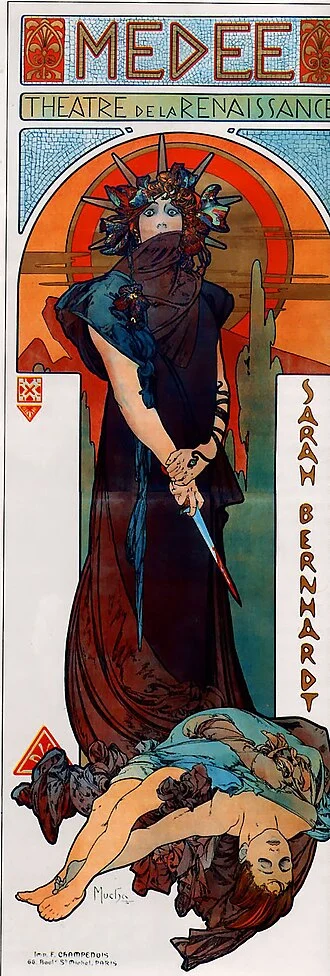
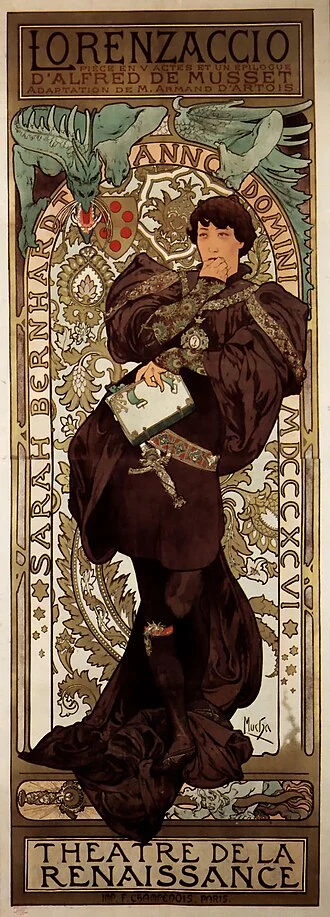
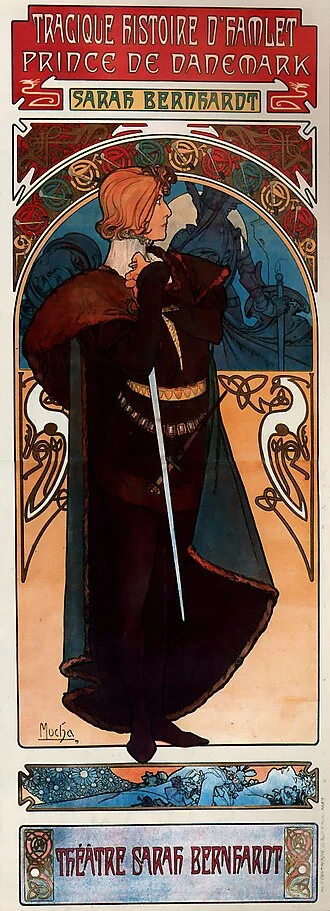
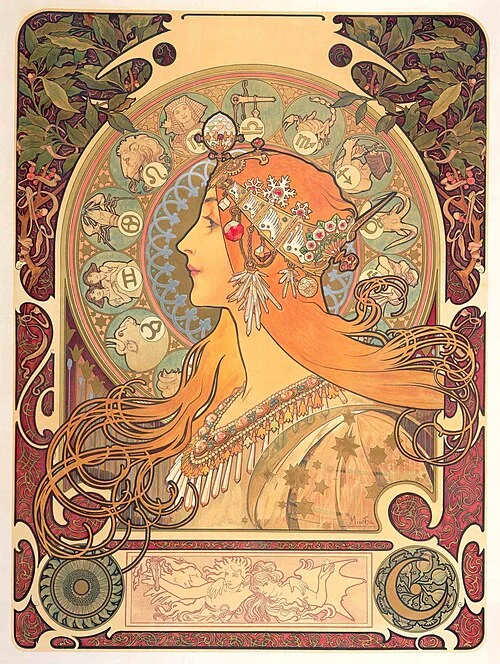
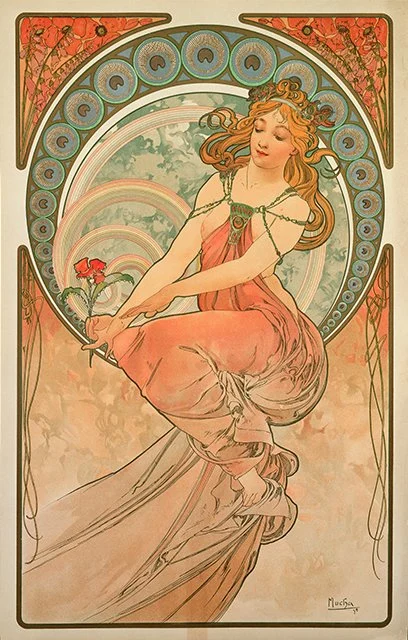
Mucha’s mature style, synonymous with the term Art Nouveau itself, was characterized by harmonious compositions, sinuous organic lines, and muted pastel tones, frequently depicting graceful young women with flowing hair set against botanical backdrops and encircled by rings of light resembling halos. He used lithography as his primary printing technique and typically signed his posters within the design itself, often drawing on photographs he took as an amateur photographer as templates for his compositions. Though his commercial art brought him tremendous fame, Mucha himself insisted his work carried a personal, spiritual, and national purpose, famously stating that the goal of his art was never to destroy but always to create and to construct bridges.
Key Influences
- Le Style Mucha: His visual language became so synonymous with the movement that Art Nouveau was known in Paris simply as “Le Style Mucha.”
- Gismonda Poster: His 1895 poster for Sarah Bernhardt remains one of the defining images of the entire Art Nouveau movement and launched the modern poster as an art form.
- The Slav Epic: His twenty-canvas cycle stands as one of the most ambitious nationalist art projects of the early twentieth century and remains central to Czech cultural identity.
- Commercial Art as Fine Art: His advertising work for companies across Europe helped blur the line between mass production and fine art, establishing the poster as a legitimate art form.
- Czech National Identity: His design of Czechoslovakia’s postage stamps, banknotes, and national emblem tied his artistic legacy directly to the birth of the modern Czech state.
If you are interested in further stories of the artists who shaped Art Deco, return to our artists page to browse the full directory.
Related Products from ArtDecoCollection.com