
Louis Majorelle
Louis-Jean-Sylvestre Majorelle was born on September 26, 1859, in Toul, France, the son of Auguste Majorelle, a furniture designer and manufacturer who had opened a shop in Nancy in 1860. Louis finished his initial studies in Nancy before moving to Paris in 1877 to study at the École des Beaux-Arts under the painter Aimé Millet. Following his father’s death in 1879, he cut short his studies and returned to Nancy to take over the family business alongside his mother, spending several years training with his father’s workers and gaining solid practical knowledge of cabinetmaking. In 1884, he became artistic director of Majorelle, and in 1885 he married Jeanne Kretz, daughter of the director of the municipal theaters in Nancy. Their only child, Jacques Majorelle, who would himself become an artist, was born the following year. Louis was one of the founding vice-presidents of the École de Nancy, the celebrated alliance of Lorraine decorative artists established in 1901. The outbreak of World War I and a catastrophic factory fire in 1916 dealt severe blows to his business, and he relocated to Paris for the duration of the war. Majorelle died in Nancy on January 15, 1926.
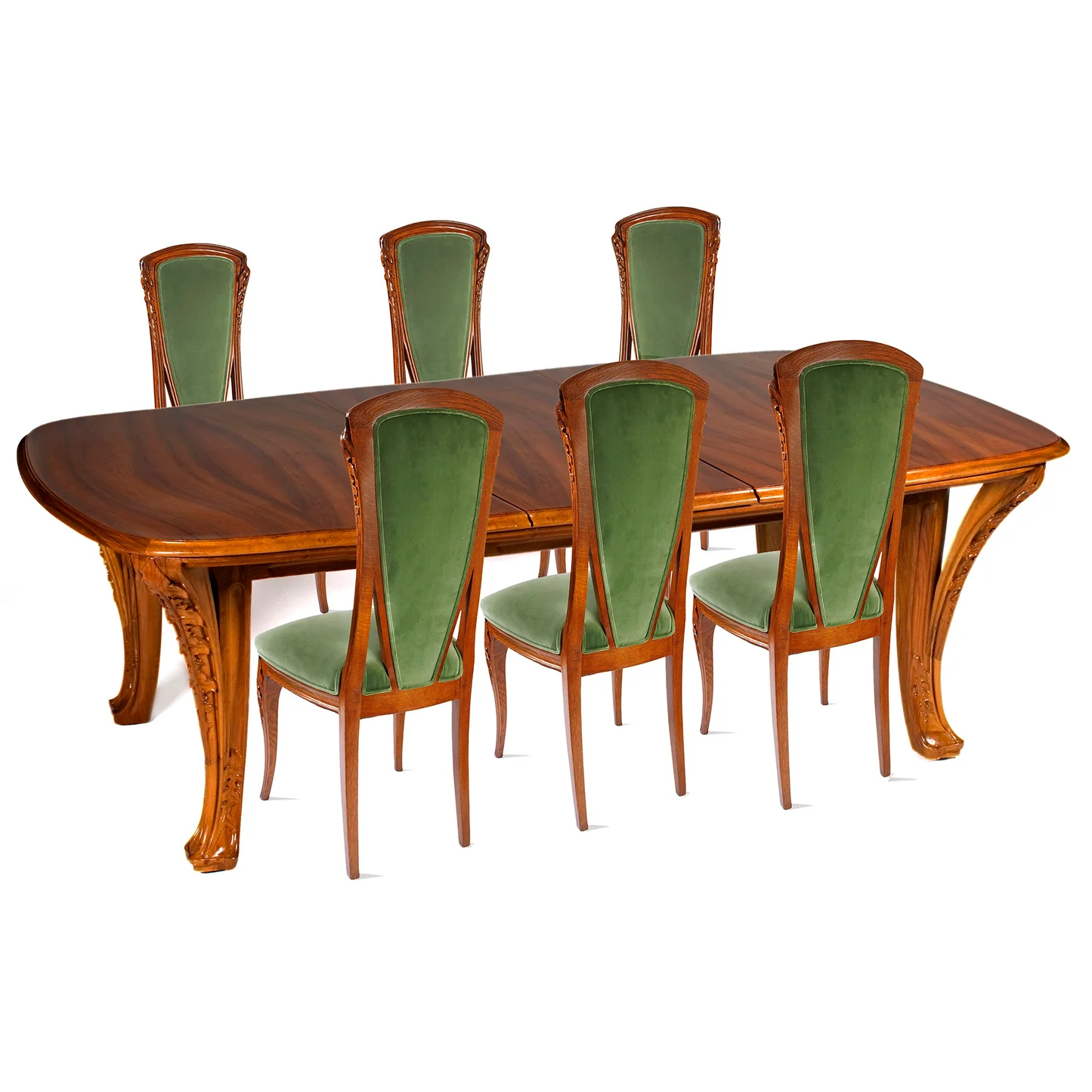

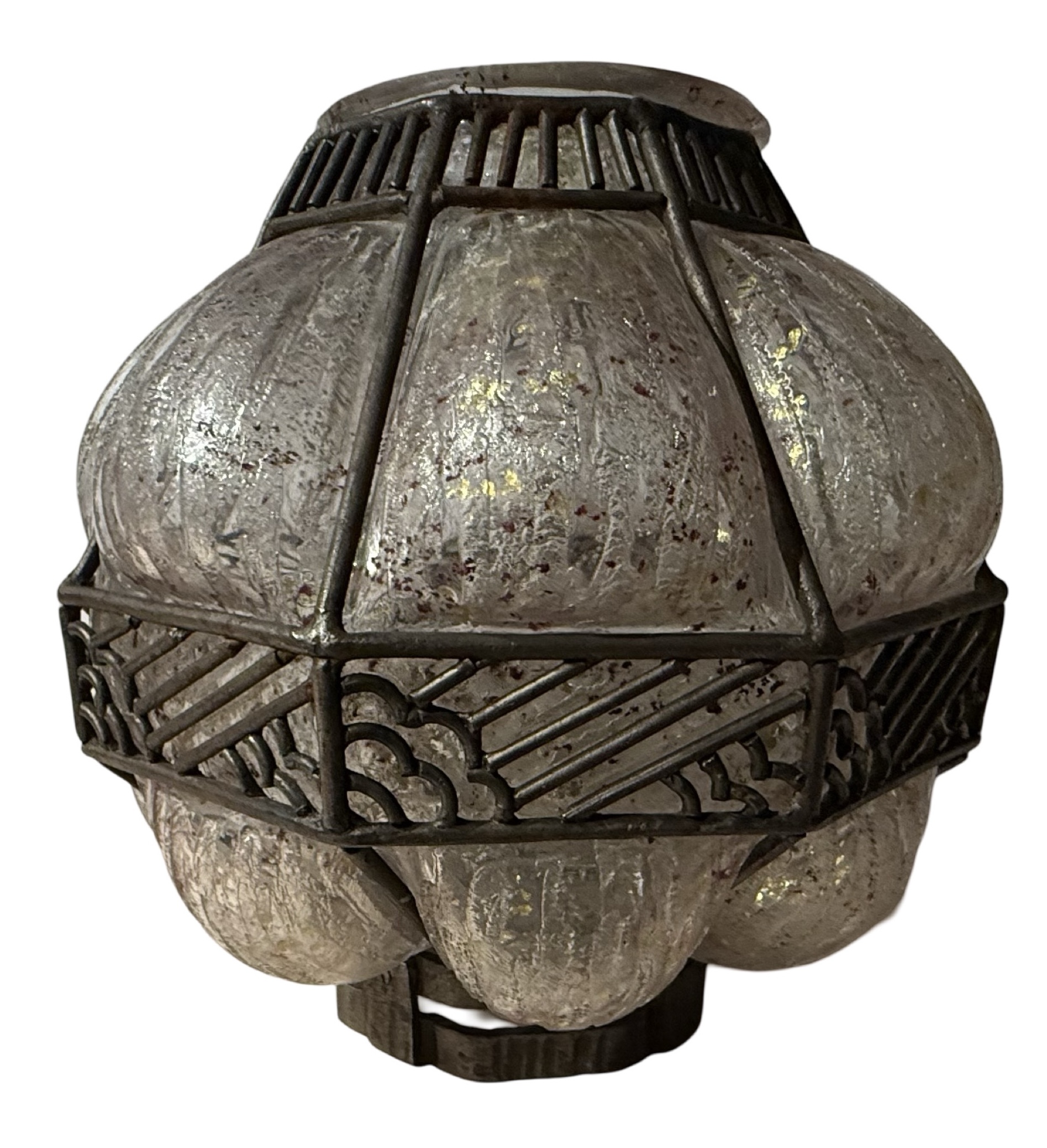
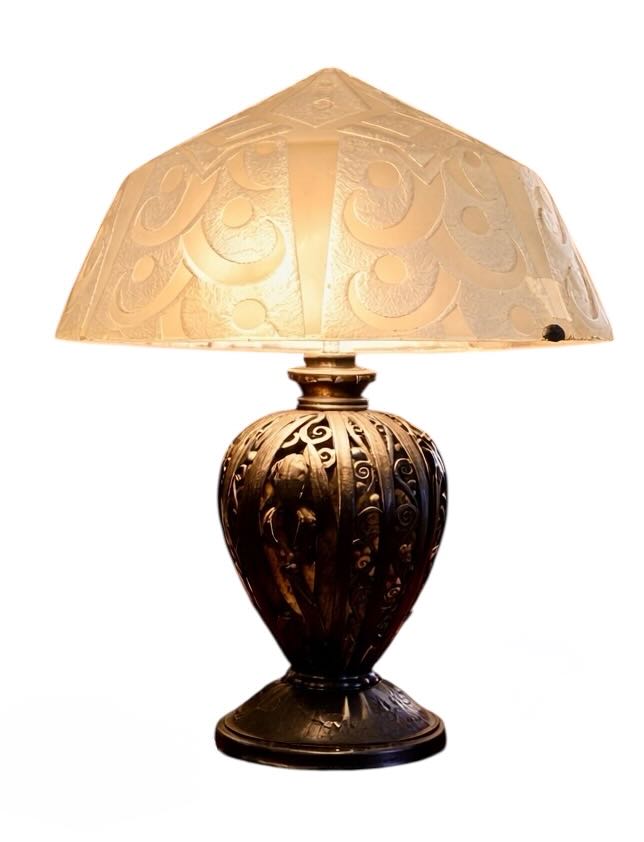
In the 1880s, Majorelle produced pastiches of Louis XV furniture styles, but the influence of glass and furniture maker Emile Gallé inspired him to pursue a new direction, and beginning in the 1890s his furniture drew its inspiration from nature, incorporating stems, waterlily leaves, tendrils, and dragonfly motifs. Before 1900, he added a metalworking atelier to his workshops to produce drawer pulls and mounts in keeping with the fluid lines of his woodwork, and from 1898 onward, he collaborated on lamp designs with the Daum Frères glassworks of Nancy. At the 1900 Paris Exposition Universelle, Majorelle’s designs triumphed and drew him an international clientele, and by 1910 he had opened shops in Nancy, Paris, Lyon, Lille, Oran, and Algiers. In 1898 he commissioned architect Henri Sauvage to collaborate on the building of his own house, the Villa Majorelle in Nancy, for which he himself produced all the ironwork, furniture, and interior woodwork. He developed a two-tiered production model, offering luxury hand-crafted furniture from his Nancy workshops alongside more affordable mass-produced furniture, a combination that accounts for his enormous commercial success. A German bombing raid destroyed his Nancy shop in 1917 and his factory fire of 1916 burned virtually all the firm’s sketches, awards, molds, and archives. After the war he reopened and continued to collaborate with Daum, though his late designs showed the stiffened geometry of Art Deco.
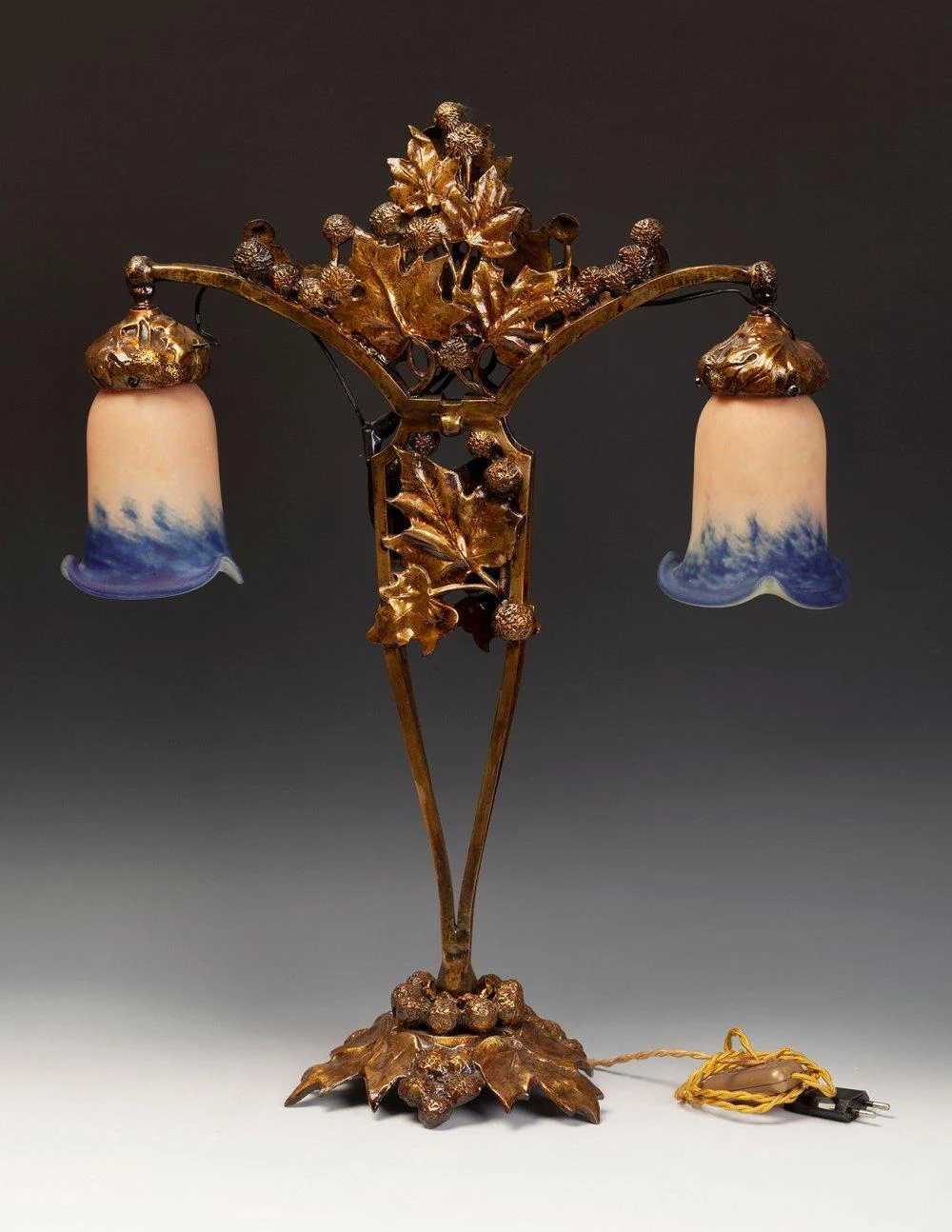
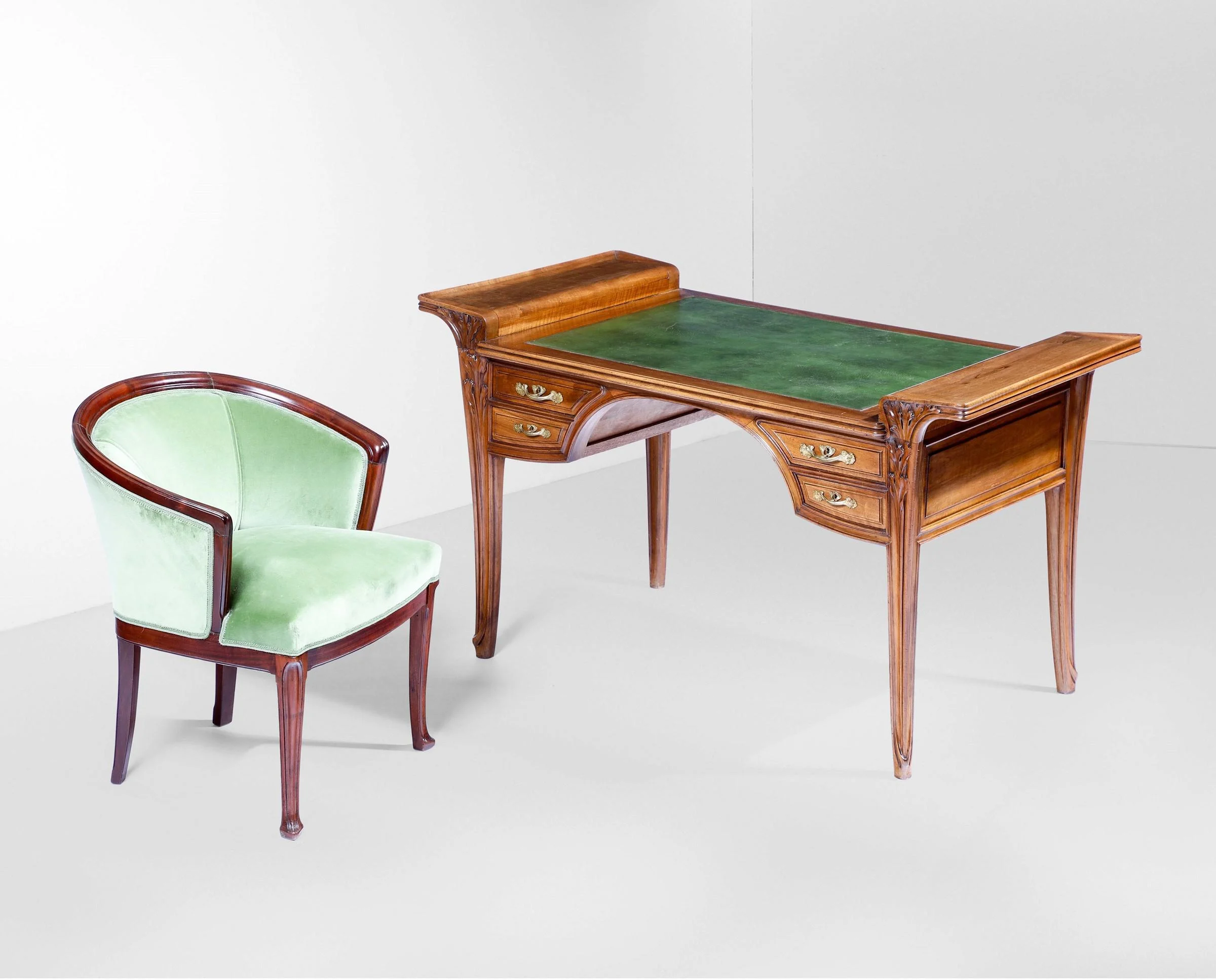
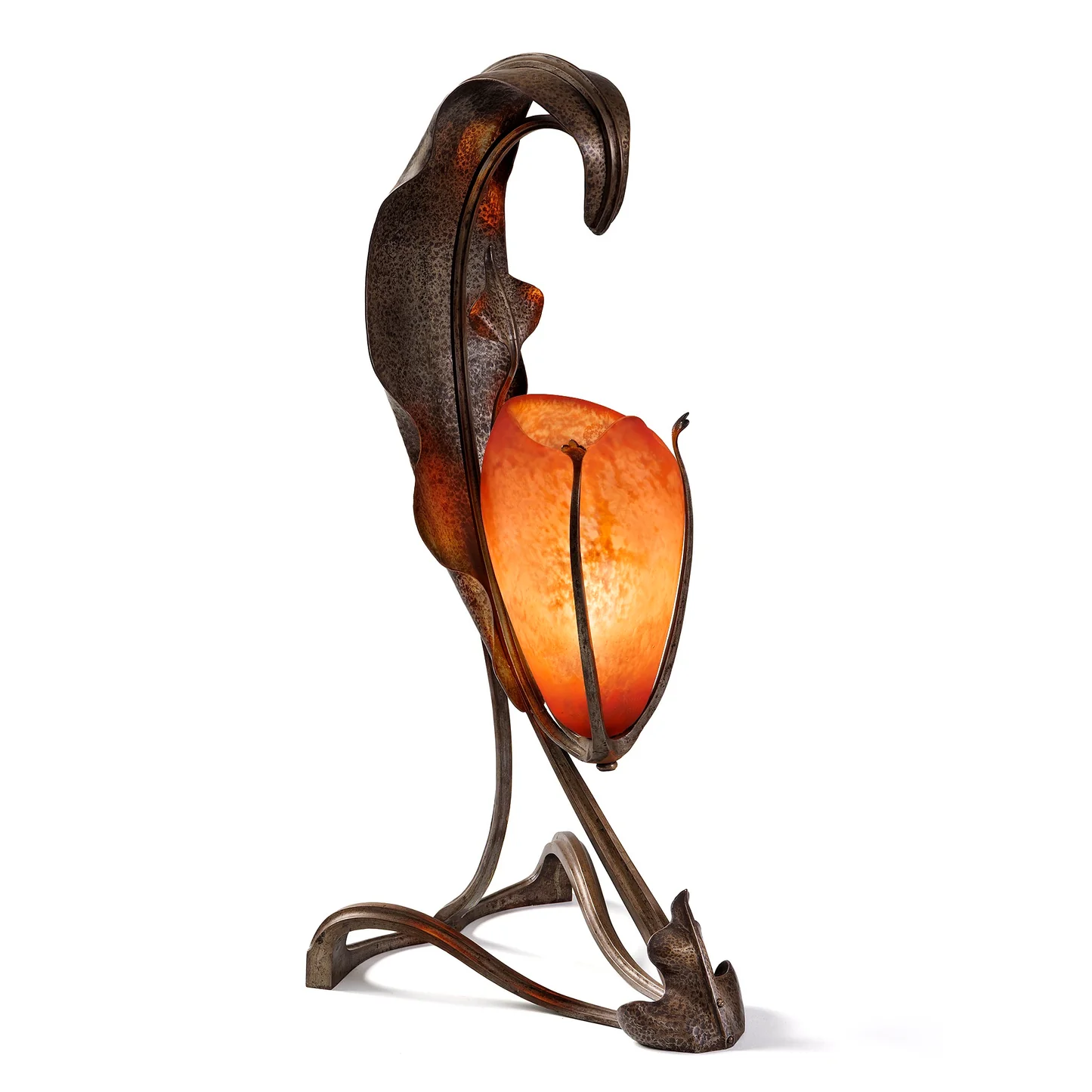
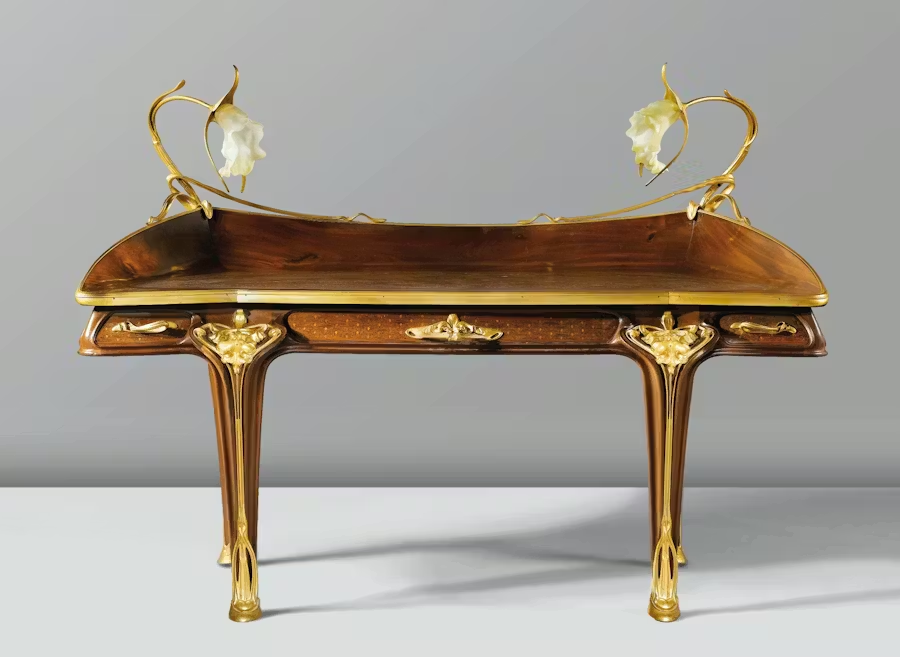
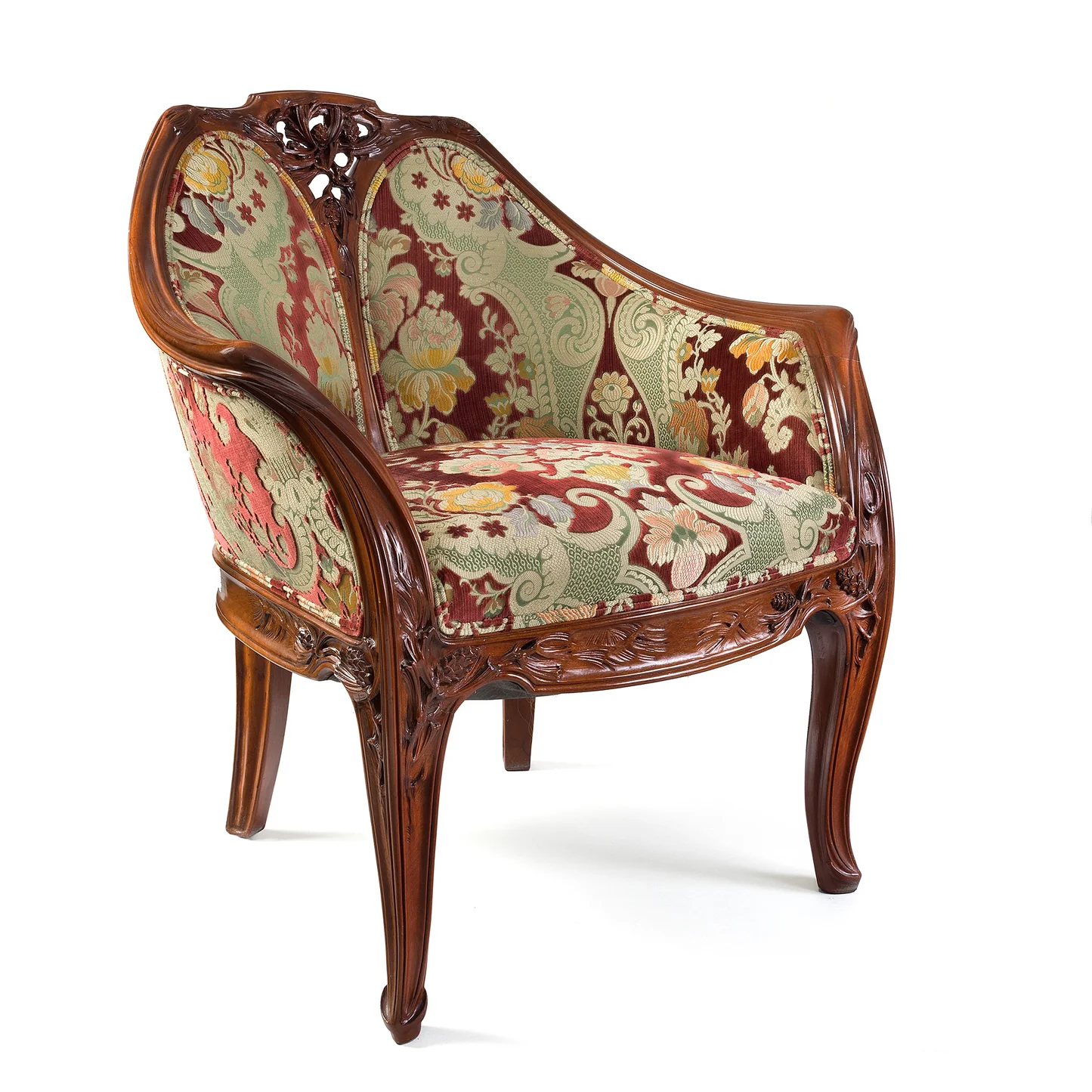
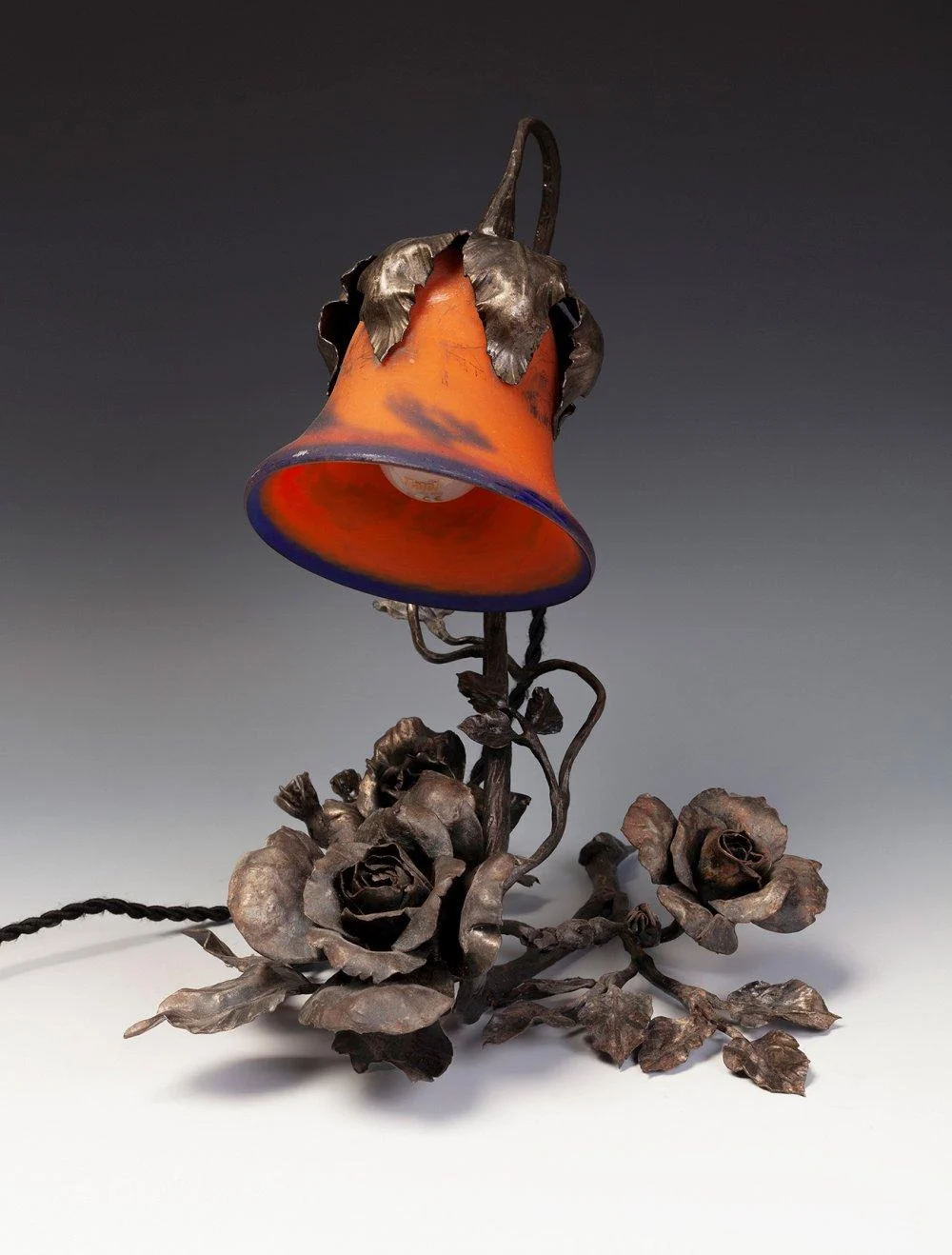
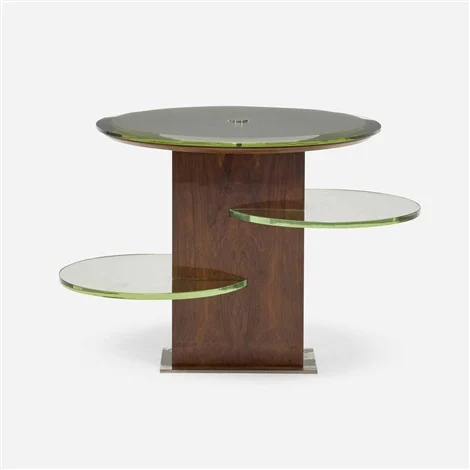
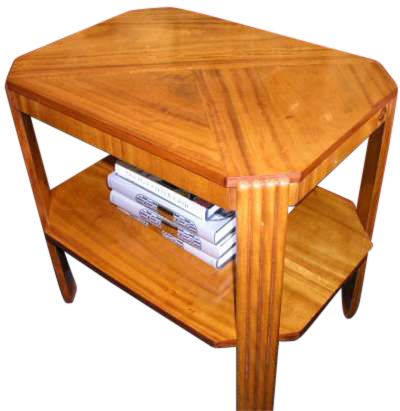
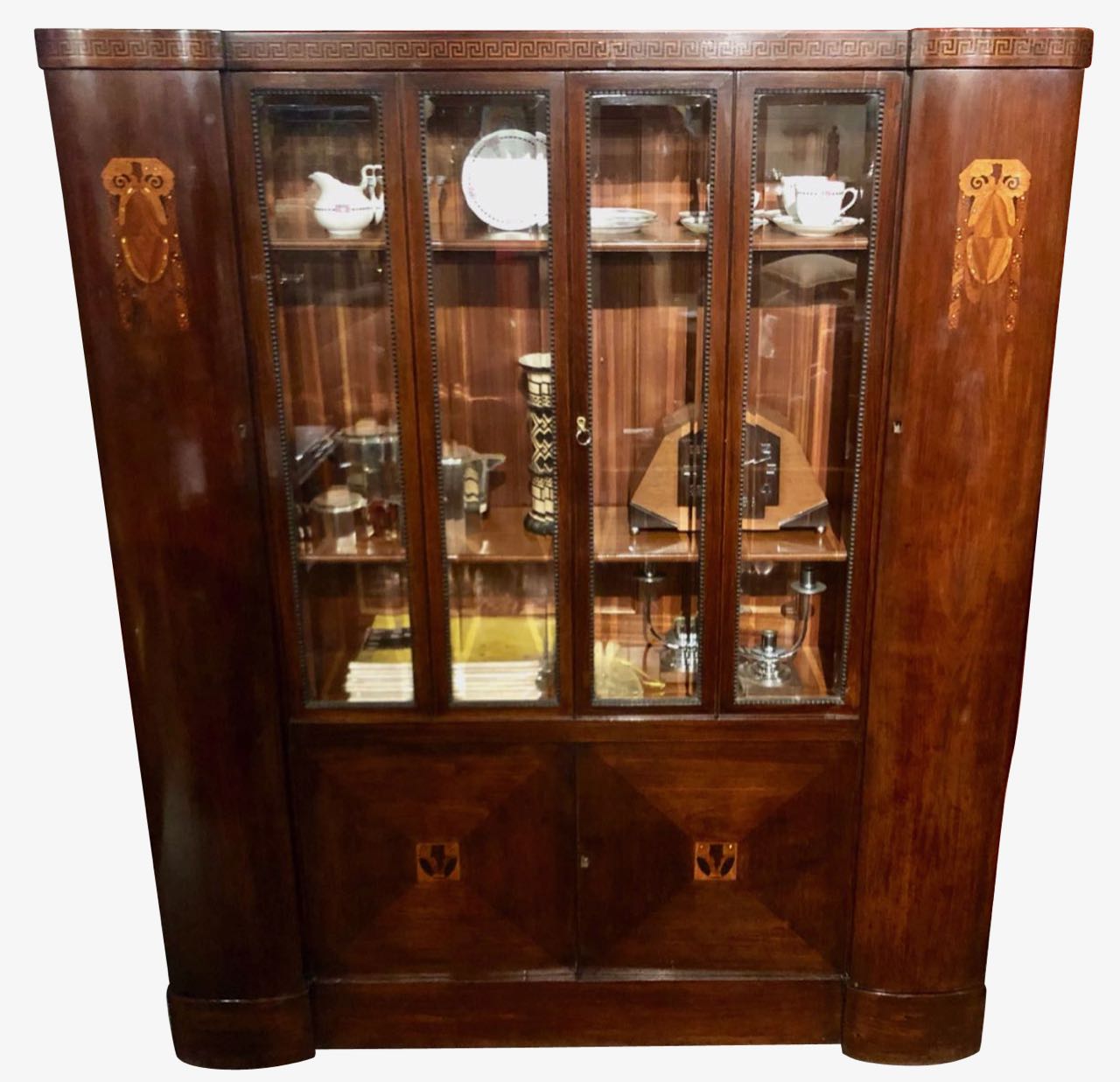
Majorelle’s furniture was conceived as painting in wood, combining the modified flowing line of Art Nouveau with polished native and exotic woods highlighted by bronze mounts in the 18th-century French tradition. His palette of materials ranged from oak, walnut, and cherry to rosewood, amaranth, ebony, and amourette, using wood as a painter uses color to create compositions ranging from calm monochromes to richly ornate botanical extravaganzas. After World War I, his style evolved toward the stiffened geometry that prefigured Art Deco, making his late work a bridge between the two defining movements of early 20th-century French decorative art.
Key Influences
- Art Nouveau Furniture: His botanical inlays, fluid bronze mounts, and use of exotic wood marquetry helped define the visual language of Art Nouveau furniture and brought it to an international audience through his participation in major exhibitions and his multi-city retail presence.
- École de Nancy: As a founding vice-president of the alliance, he was central to establishing Nancy as one of the European capitals of Art Nouveau and to promoting Lorraine decorative arts on the international stage.
- Democratizing Design: His two-tiered production model, combining bespoke luxury pieces with more affordable machine-assisted furniture, anticipated the 20th-century challenge of making well-designed objects accessible beyond an elite clientele.
- Daum Collaboration: His sustained partnership with Daum Frères produced some of the most celebrated lamp and lighting designs of the Art Nouveau period, helping to establish the pairing of glass and metalwork as a signature of the Nancy style.
- Jacques Majorelle: His son went on to become the painter and garden designer whose Jardin Majorelle in Marrakech remains one of the most visited sites in Morocco, extending the Majorelle name into a broader legacy of art and design.
If you are interested in further stories of the artists who shaped Art Deco, return to our artists page to browse the full directory.
Related Products from ArtDecoCollection.com