


Louis Comfort Tiffany
Louis Comfort Tiffany was born on February 18, 1848, in New York City, the son of Charles Lewis Tiffany, founder of Tiffany & Co. He received his first artistic training as a painter, studying under American landscape artists including George Inness and Samuel Colman, and traveled to Europe, North Africa, and throughout North America to paint. His interest shifted from painting to glassmaking around 1875, and he worked at several glasshouses in Brooklyn until 1878, acquiring the technical foundation that would define his career. He married Mary Woodbridge Goddard in 1872 and had four children; after her death, he married Louise Wakeman Knox in 1886 and had four more children, including Dorothy, who became a noted psychoanalyst and lifelong partner of Anna Freud. In 1902, following the death of his father, Tiffany was appointed the first Art Director of Tiffany & Co. and established the House’s art jewelry department. His 84-room Long Island mansion, Laurelton Hall, completed in 1905, embodied his artistic vision and was later donated to a foundation for art students before being destroyed by fire in 1957. Tiffany died on January 17, 1933, and is interred at Green-Wood Cemetery in Brooklyn.

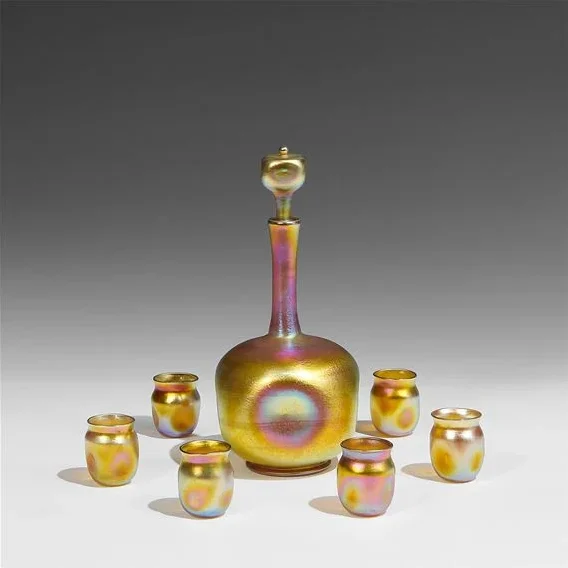
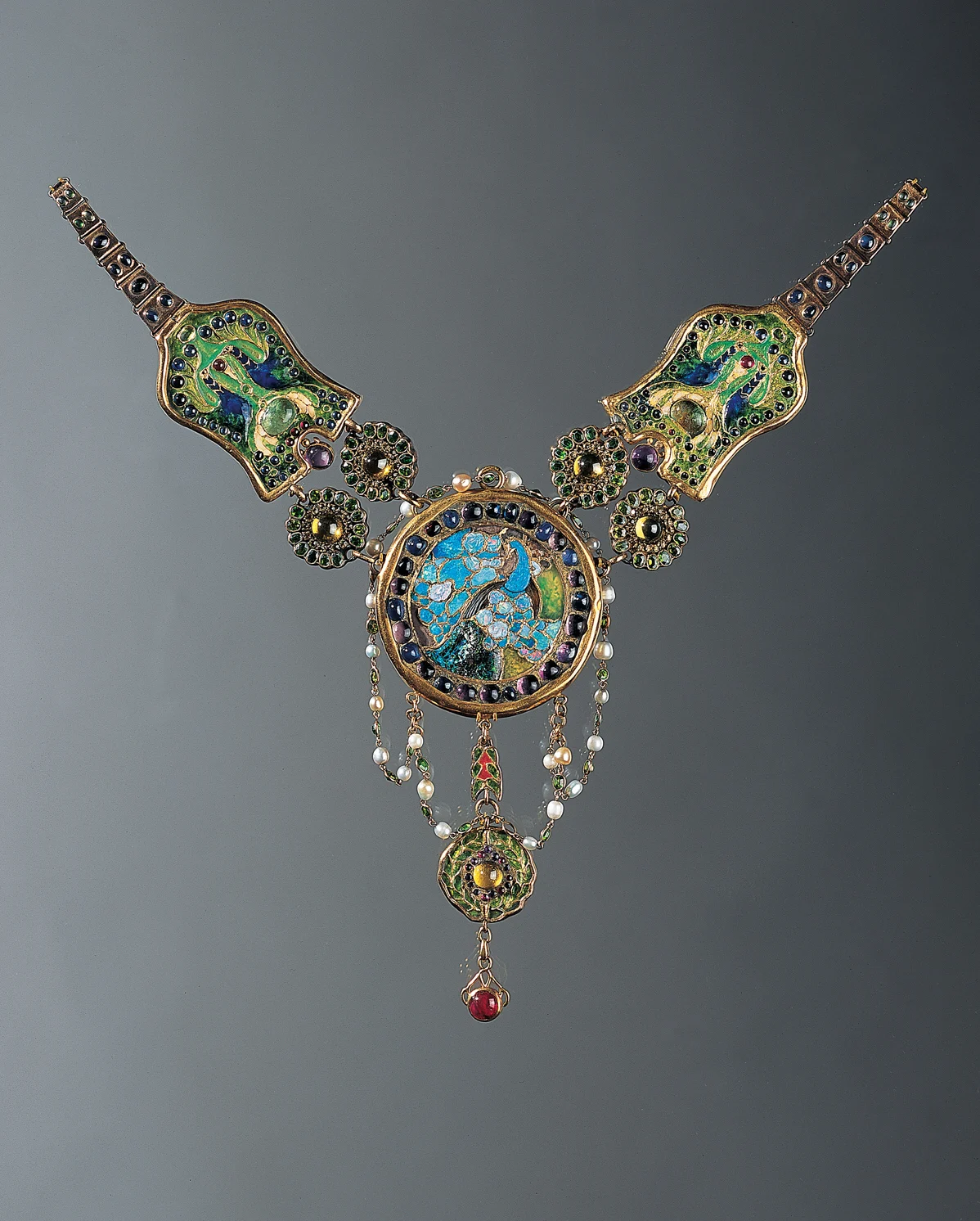
In 1879, Tiffany joined with Candace Wheeler, Samuel Colman, and Lockwood de Forest to form Associated American Artists, whose most notable commission was the 1882 redecoration of the White House state rooms for President Chester Arthur. He incorporated the Tiffany Glass Company in 1885, which became the Tiffany Glass & Decorating Company in 1892 and Tiffany Studios in 1900, eventually employing more than 300 artisans. His glassworks in Corona, Queens, developed Favrile glass, a trademarked technique of handmade iridescent blown glass drawing on Venetian, Egyptian, and Near Eastern influences. He acquired the copper foil technique for leading stained glass, which enabled a level of detail previously unknown and produced celebrated works, including The Four Seasons, which won a gold medal at the 1900 Paris Exposition Universelle. Clara Driscoll, head of the leaded-glass lamps and windows department, led a team of women designers whose work produced the iconic Dragonfly, Wisteria, and Poppy lamp shades, though their contributions were publicly uncredited during Tiffany’s lifetime. His jewelry designs, developed in collaboration with head designer Julia Munson, combined colored gemstones, enamels, and gold to capture naturalistic American themes, including dragonflies, grapevines, and wildflowers. Tiffany Studios filed for bankruptcy in 1932 as his glass fell from fashion in the changed aesthetic climate following World War I.
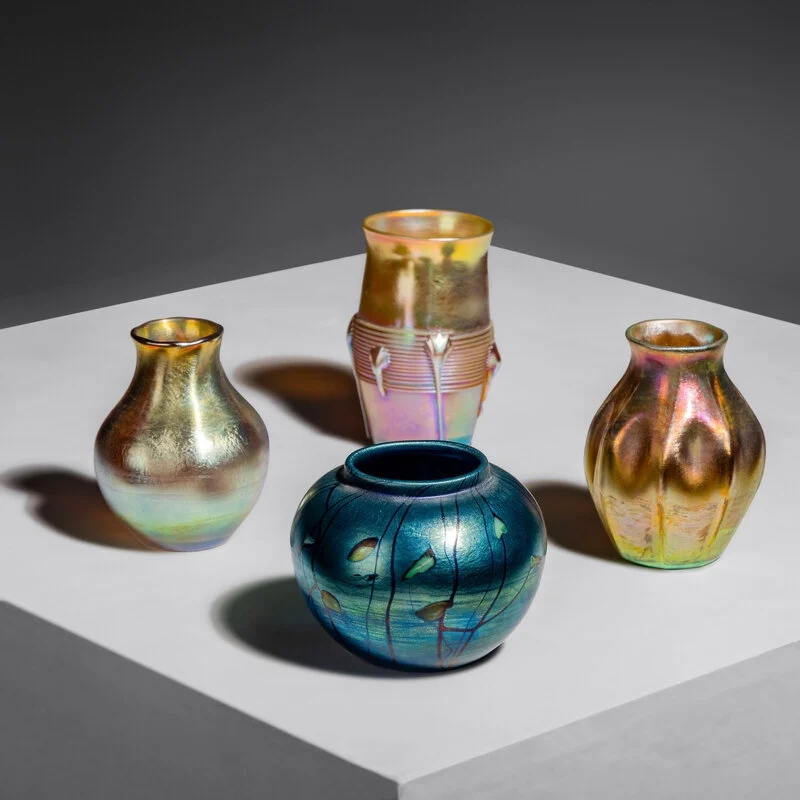
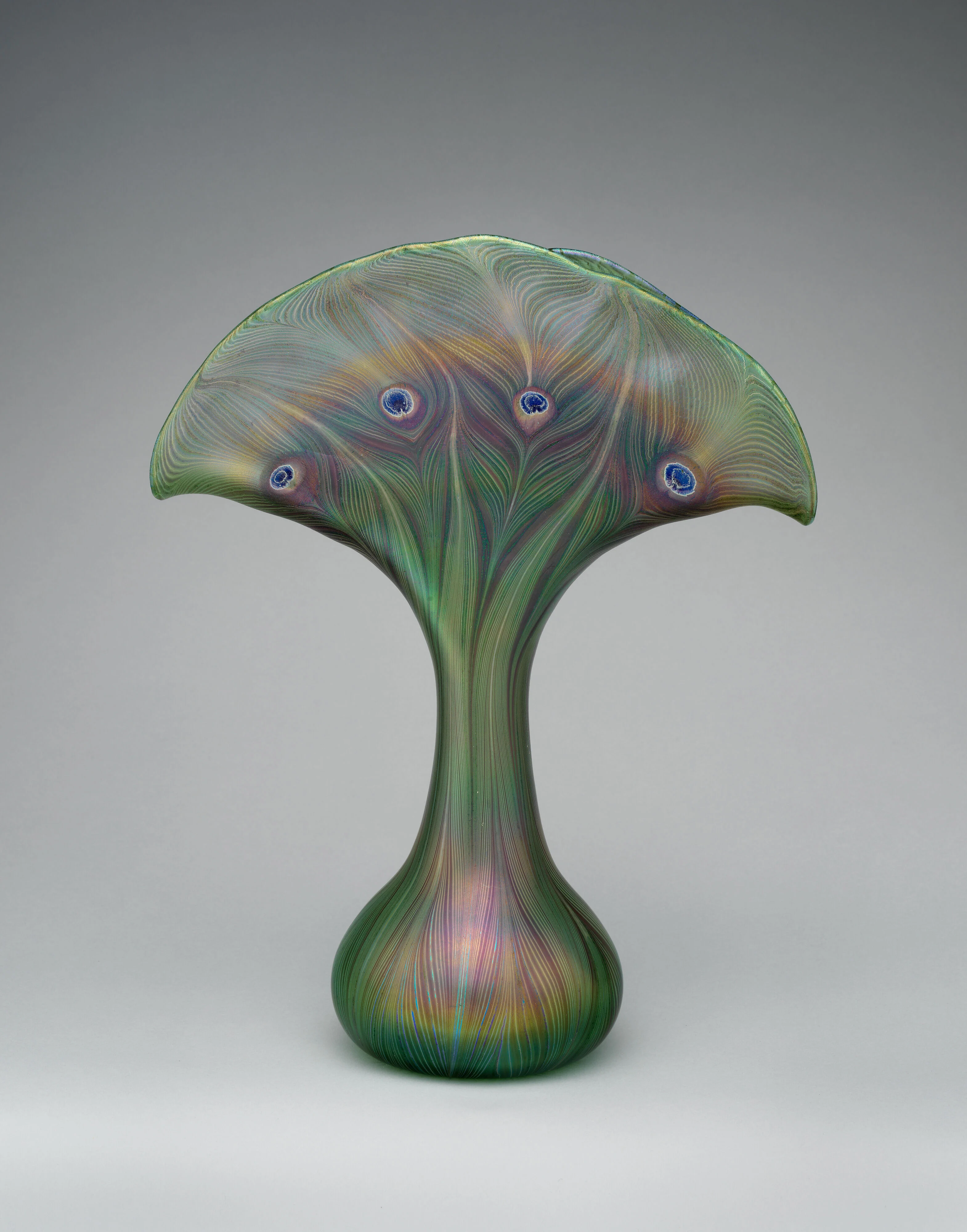
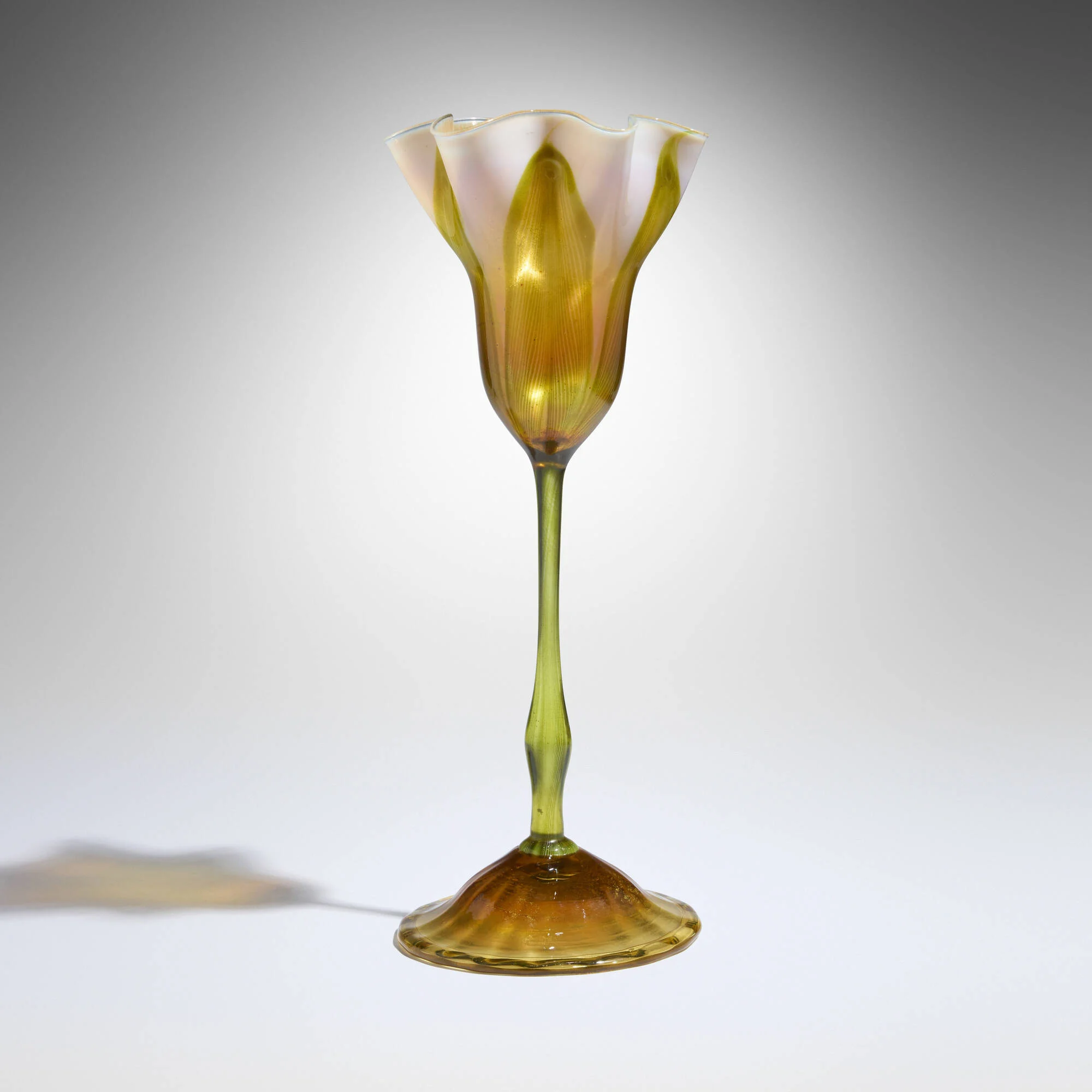


Tiffany approached design as a missionary act, believing that his luminous stained glass windows and mosaics depicting nature could restore the human spirit against the concrete and steel of industrial modernity. His work drew simultaneously on Art Nouveau’s organic sinuousness, the Arts and Crafts movement’s commitment to handcraft, and the rich decorative traditions of Etruscan, Egyptian, and Moorish art encountered during his youthful travels. Nature was his primary source and glass his primary medium, and through the development of Favrile glass, he achieved an iridescence and chromatic richness that remains among the crowning achievements of the American decorative arts.
Key Influences
- American Stained Glass: His copper foil technique and Favrile glass transformed the medium of stained glass from a European ecclesiastical tradition into a distinctly American decorative art form, producing windows and lamps of unprecedented detail and color.
- Art Nouveau in America: As the leading American practitioner of the style, he translated the organic vocabulary of European Art Nouveau into naturalistic American idioms, helping establish decorative design as a serious cultural force in the United States.
- The Tiffany Girls: His workshop model, in which Clara Driscoll and a team of women designers created many of his most celebrated lamp designs, was a significant if inadequately credited chapter in the history of women’s contributions to American design.
- Glass as Fine Art: His insistence that glass could be as expressive and valuable as painting or sculpture elevated the medium’s cultural status and established Tiffany glass as a serious collecting category that remains vigorously pursued today.
- Tiffany & Co. Design Identity: His decade as the House’s first Art Director established a design philosophy rooted in nature, colored gemstones, and handcraft that continues to inform the brand’s aesthetic identity.
If you are interested in further stories of the artists who shaped Art Deco, return to our artists page to browse the full directory.

Related Products from ArtDecoCollection.com