
Charles Rennie Mackintosh
Charles Rennie Mackintosh was born on June 7, 1868, in Townhead, Glasgow, the fourth of eleven children of William McIntosh, a superintendent with the City of Glasgow Police. He entered the architectural profession in 1884 as an apprentice to John Hutchinson and simultaneously attended evening classes at the Glasgow School of Art, where he became a prize-winning student. In 1889, he joined the major Glasgow practice of Honeyman and Keppie, becoming a partner in 1901. At the Glasgow School of Art, he was introduced by headmaster Francis Newbery to Margaret Macdonald and her sister Frances, and together with Herbert MacNair, they formed the collaborative group known as The Four, prominent members of the Glasgow Style movement. Charles and Margaret married in 1900 and remained lifelong creative partners. He resigned from the partnership in 1913 as it declined in profitability, and by 1914 had effectively ceased to practice architecture. Disillusioned, he and Margaret eventually moved to Port Vendres in southern France in 1923, where he devoted his final years entirely to watercolor painting. He returned to London in 1927 for treatment of tongue cancer and died on December 10, 1928, at the age of 60.

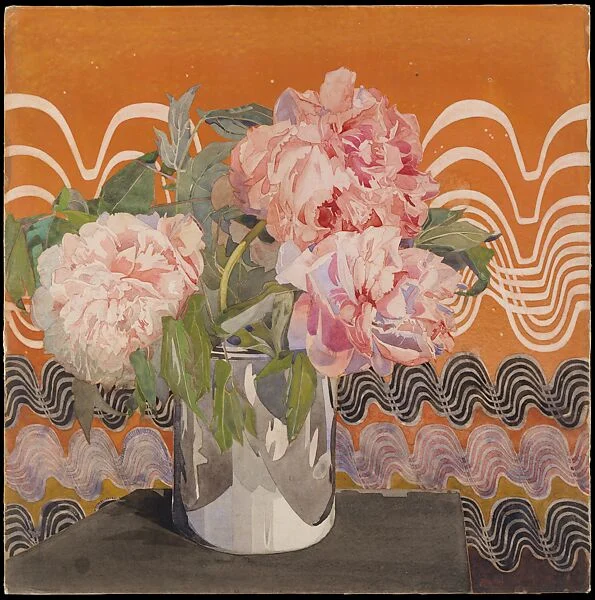
Mackintosh’s most substantial commission, the Glasgow School of Art, was awarded in 1896 and constructed in two phases through 1909, and is considered the first original example of Art Nouveau architecture in Great Britain. His tearoom commissions for Glasgow businesswoman Catherine Cranston, spanning 1896 to 1917, gave him extraordinary freedom to experiment with total design, providing furniture including his dramatic high-back chairs, light fittings, wall decorations, and cutlery. His domestic architecture, including Windyhill in Kilmacolm and the Hill House in Helensburgh, combined solid, simply massed exteriors with interiors of carefully conceived light, space, and color. His work gained far greater recognition in Europe than at home, contributing to the eighth Vienna Secession Exhibition in 1900 and participating in international exhibitions in Turin, Moscow, and Dresden. In 1901, his entry for a German competition to design a House for an Art Lover was judged so exceptional it was published as a portfolio of prints, though it failed to win. His final major interior commission, the remodeling of 78 Derngate in Northampton for W.J. Bassett-Lowke in 1916 and 1919, showed him working in a bold new style of primary colors and geometric motifs that went virtually unheeded. A major retrospective at the Metropolitan Museum of Art in 1996 helped cement his posthumous international reputation.

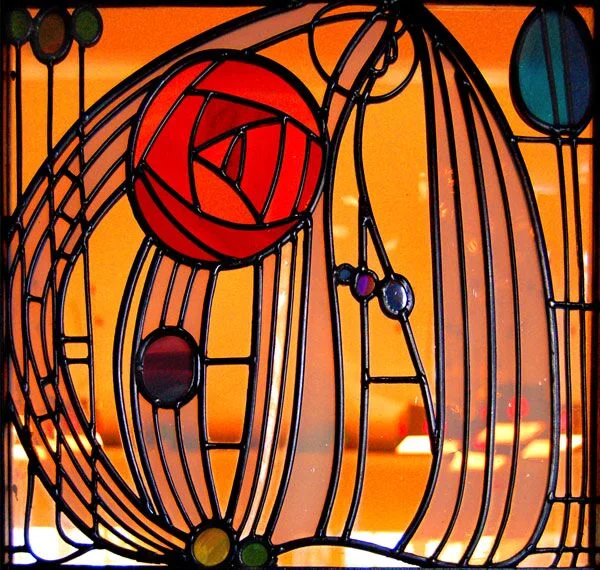
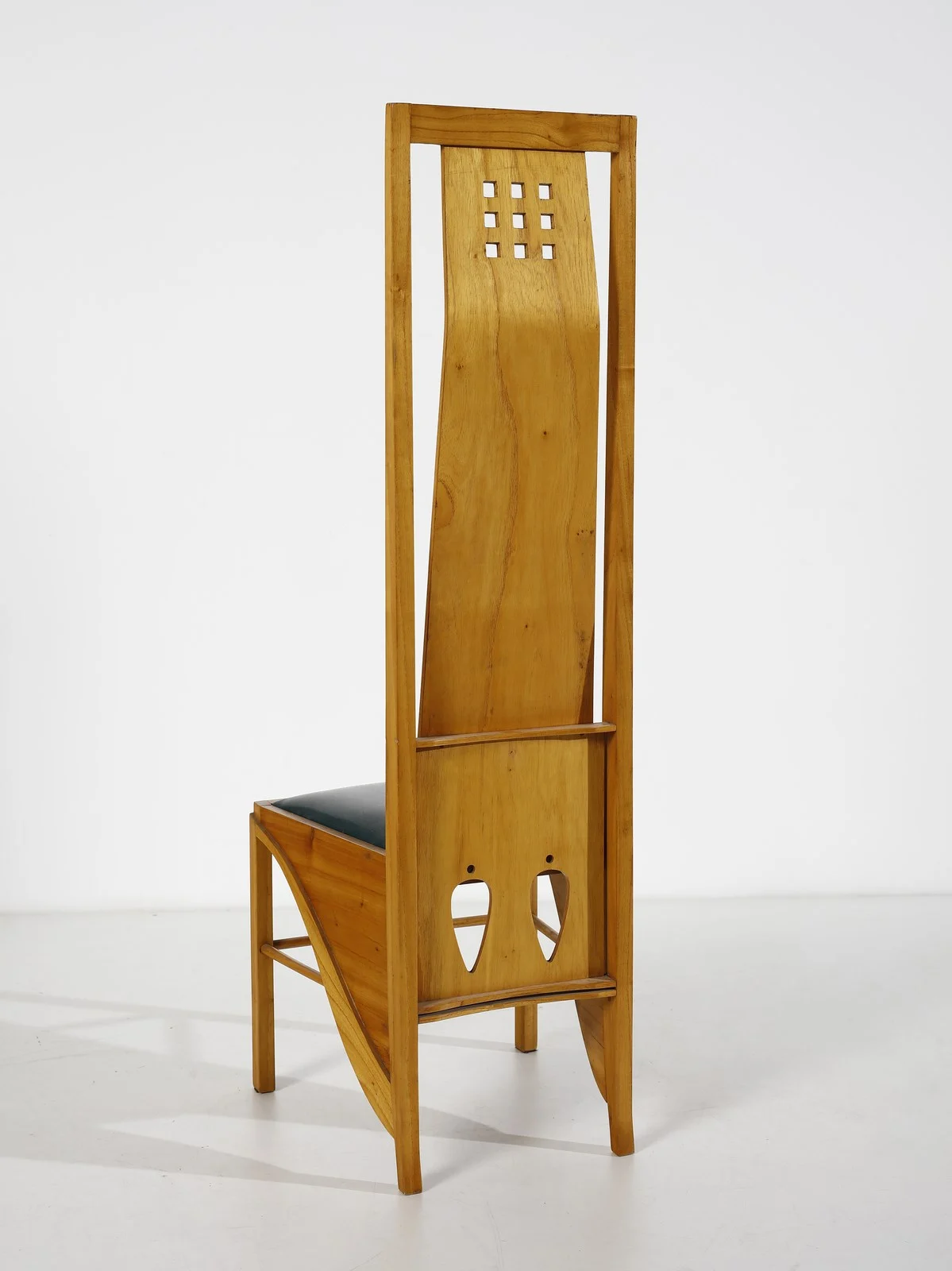
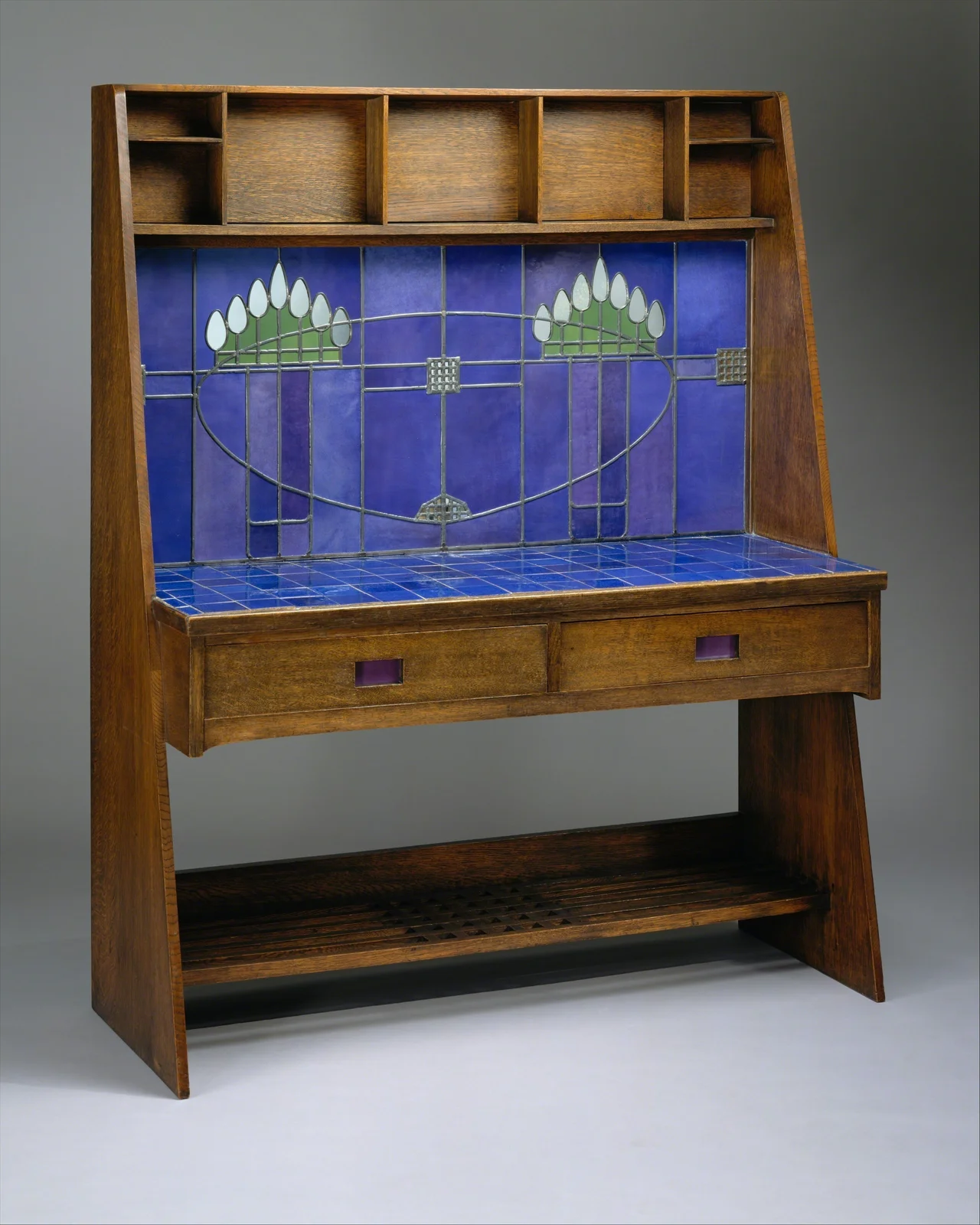
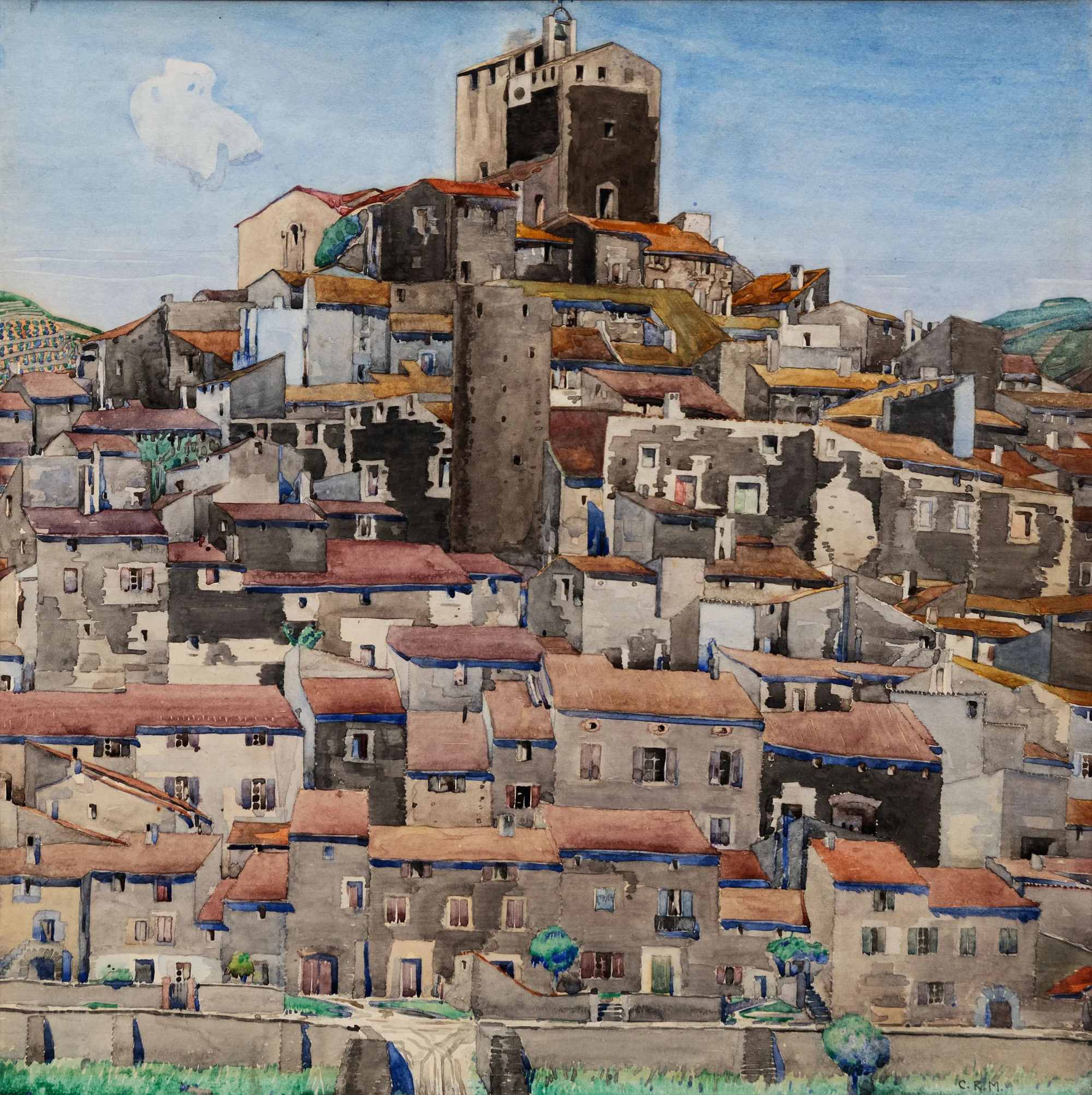


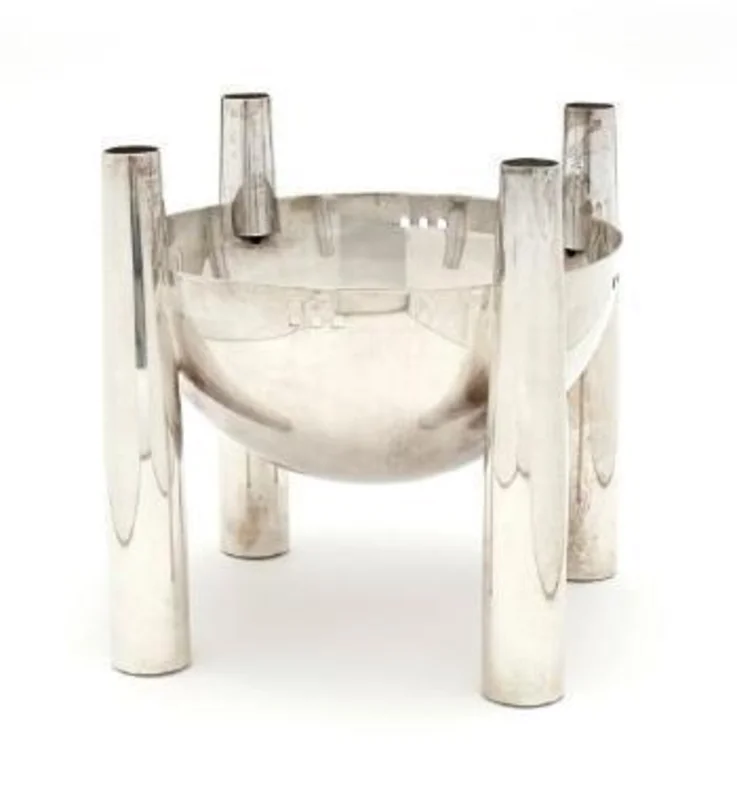
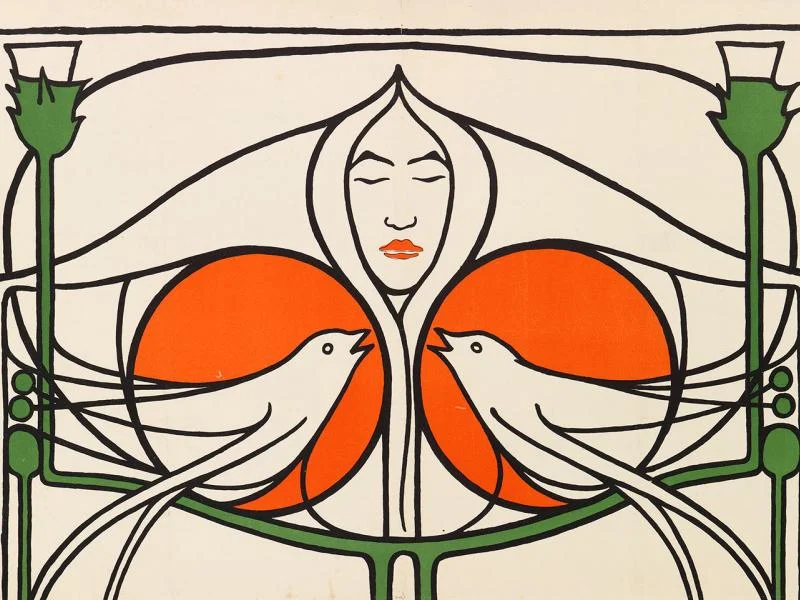
Mackintosh developed a distinctive visual language that contrasted strong right angles and rectilinear forms with delicate floral-inspired decorative motifs, most notably the Mackintosh Rose, drawing simultaneously on Scottish baronial tradition, Japanese restraint, and Art Nouveau ornament. He believed architects should be given complete artistic freedom, and consistently approached his commissions as exercises in total design, specifying every detail from structural form to furniture to cutlery. His mature work, particularly the 78 Derngate interiors, moved toward bold geometric abstraction that anticipated the design language of the 1920s and gave him a retrospective claim as a precursor of Art Deco.
Key Influences
- Glasgow School of Art: His masterwork is considered the first original example of Art Nouveau architecture in Britain and remains one of the most celebrated buildings of the early 20th century.
- Vienna Secession: His participation in the 1900 Vienna Secession Exhibition brought the Glasgow Style to European audiences and directly influenced Josef Hoffmann and the broader Secessionist movement.
- Total Design: His insistence on controlling every element of a building from structure to furnishings established a model of the architect as complete designer that influenced the Gesamtkunstwerk philosophy of the Wiener Werkstätte and later modernist practitioners.
- Japonisme: His integration of Japanese restraint, simplicity, and attention to spatial quality into a Western decorative framework helped define the more rigorous, geometric strand of Art Nouveau that distinguished his work from the French version.
- Posthumous Revival: His rediscovery following Glasgow’s designation as European City of Culture in 1990 made him a defining symbol of Scottish design identity and demonstrated how radically critical and popular reception of an artist can shift across generations.
If you are interested in further stories of the artists who shaped Art Deco, return to our artists page to browse the full directory.

Related Products from ArtDecoCollection.com