
Victor Horta
Victor Pierre Horta was born on January 6, 1861, in Ghent, Belgium, the son of a master shoemaker who considered craftsmanship a high form of art. He began formal architectural studies at the Académie des Beaux-Arts in Ghent at the age of twelve before moving to Brussels to study at the Académie Royale des Beaux-Arts under the Neoclassical architect Alphonse Balat, who was architect to King Leopold II. Working with Balat on the Royal Greenhouses of Laeken gave him his first experience with glass and iron construction. In 1884, he won the first Prix Godecharle ever awarded for architecture, and on graduation received the Grand Prize in architecture. He was appointed head of the Department of Graphic Design for Architecture at the Free University of Brussels in 1892 and promoted to professor the following year. He fled Belgium during World War I and lectured at Cornell, Harvard, MIT, and Yale before being named Memorial Lecturer and Professor of Architecture at George Washington University in 1917. He returned to Belgium in 1919, became Director of the Royal Academy of Fine Arts in Brussels in 1927, and was awarded the title of Baron by King Albert I in 1932. Horta died on September 8, 1947, in Brussels and is interred in Ixelles Cemetery.
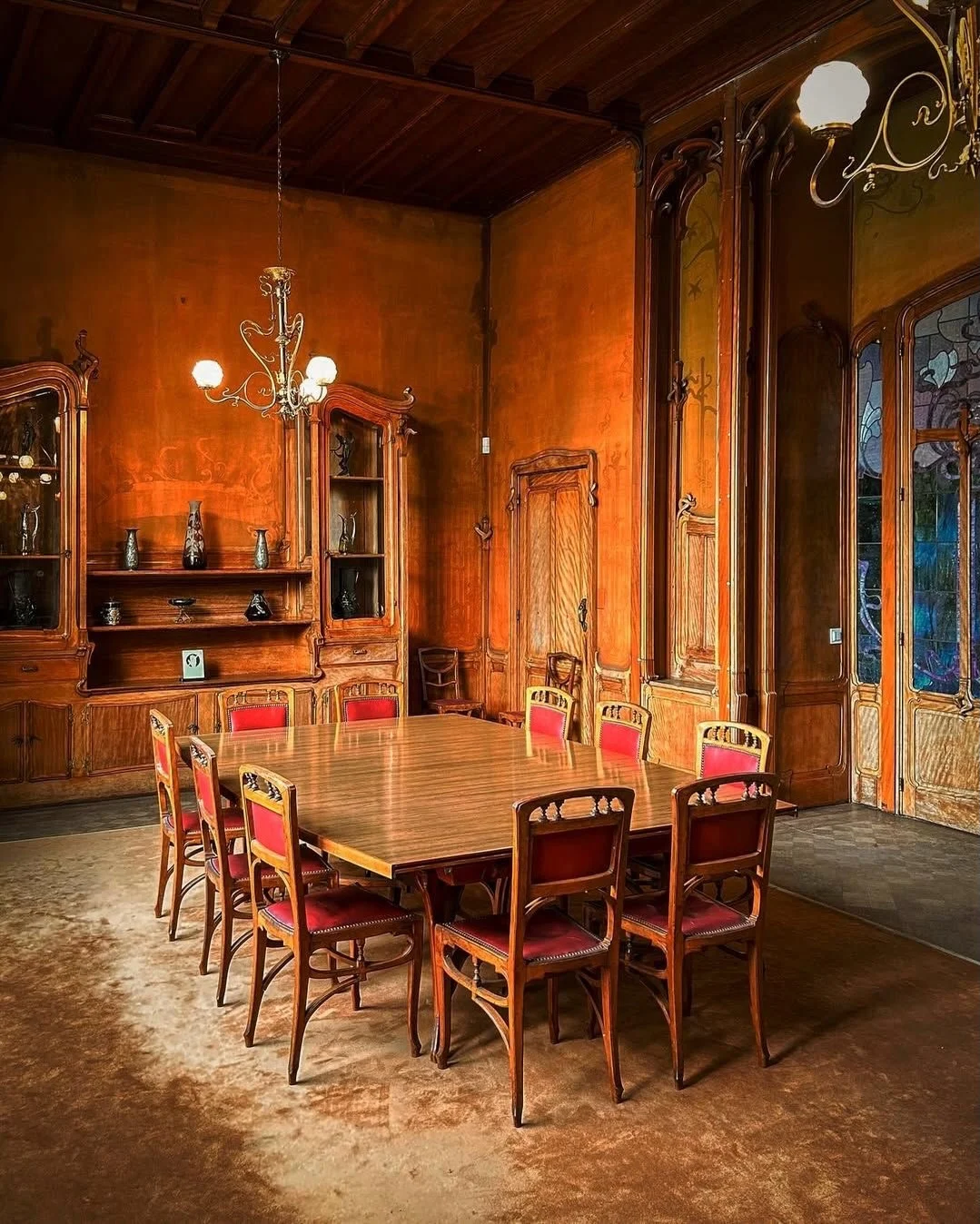
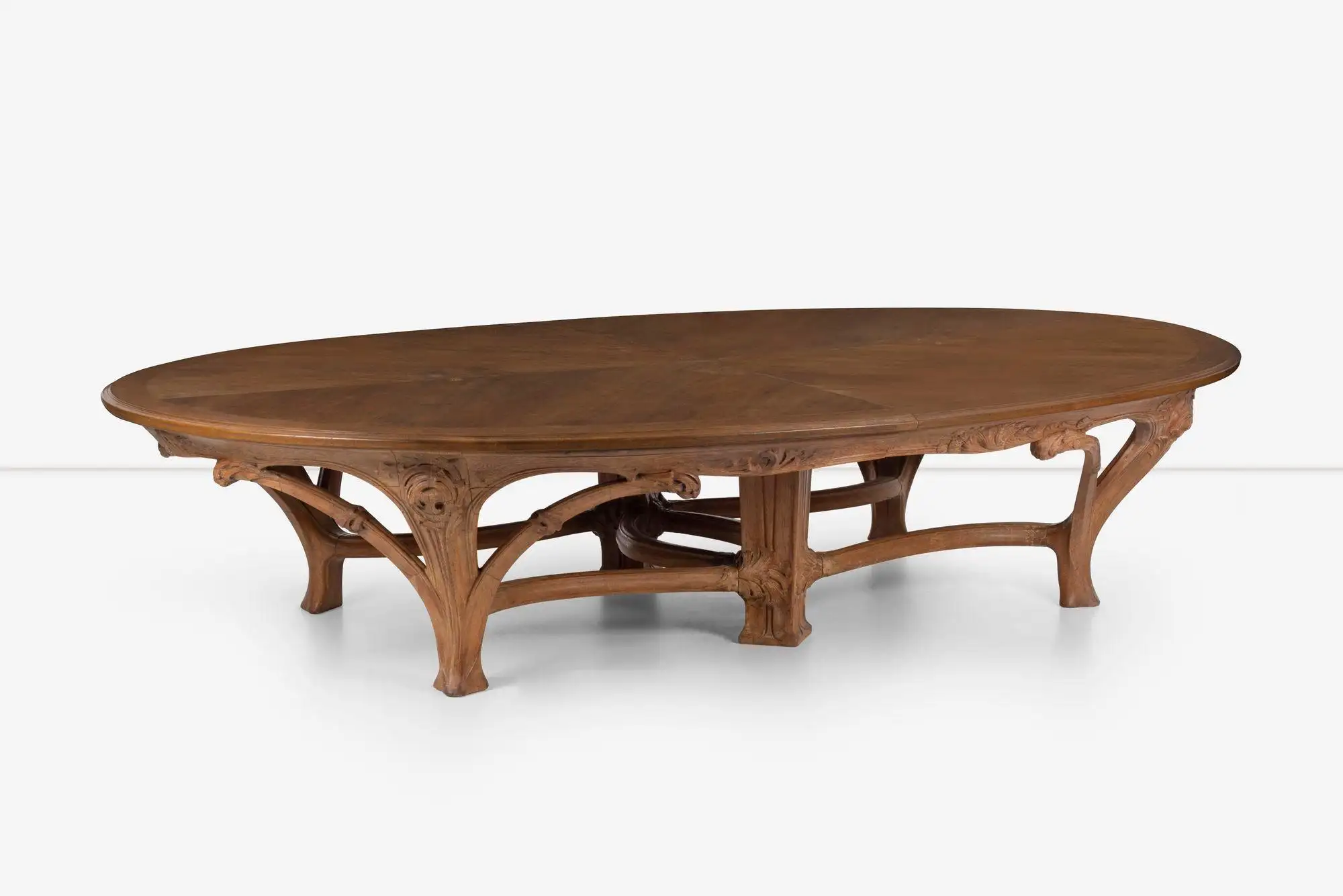
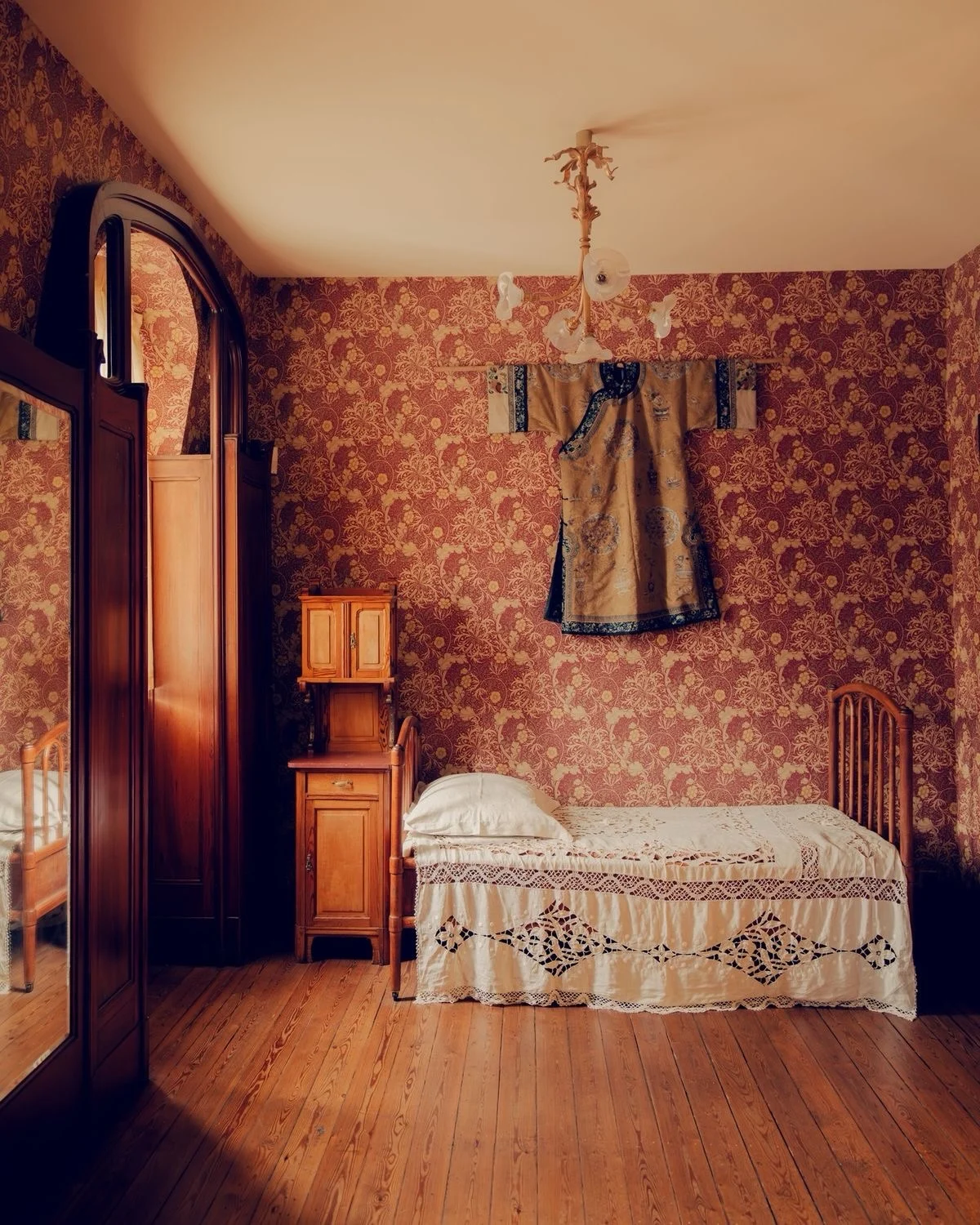
Horta’s major breakthrough came in 1892 when he was commissioned to design the Hôtel Tassel for scientist Émile Tassel, completed in 1893 and widely recognized as one of the first Art Nouveau buildings in the world, featuring curling vegetal ironwork repeated in the railings, floor tiles, doors, skylights, and painted walls around an open central stairway. The Hôtel Solvay, begun in 1895 with a virtually unlimited budget, used exotic materials in unusual combinations and was designed down to the bronze doorbell and house number. The Hôtel van Eetvelde introduced a particularly innovative open floor plan flooded with light from skylights and bay windows. His Maison du Peuple of 1896 to 1899, the headquarters of the Belgian Workers’ Party, was the first building in Belgium to have a largely iron and glass facade and demonstrated that his ideas could serve functional public buildings as effectively as luxury residences. From 1900 onward, his style simplified, eliminating organic ornament in favor of geometric forms, culminating in the Centre for Fine Arts in Brussels, completed in 1929, and the Brussels-Central railway station, designed from 1912 and finally completed posthumously in 1952. Four of his Brussels buildings were designated a UNESCO World Heritage Site in 2000.
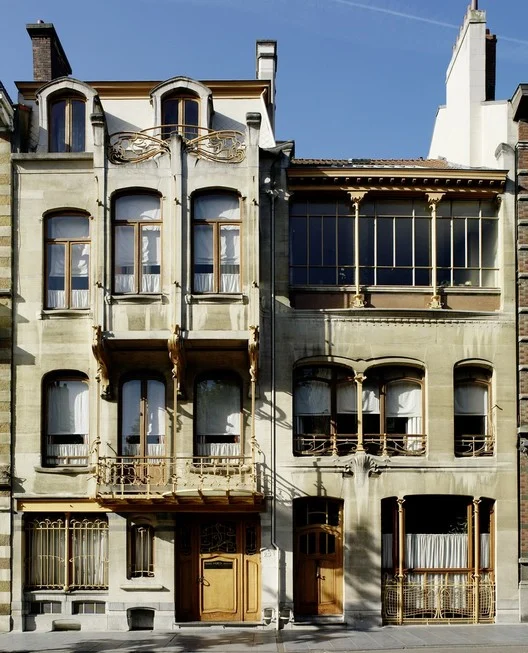
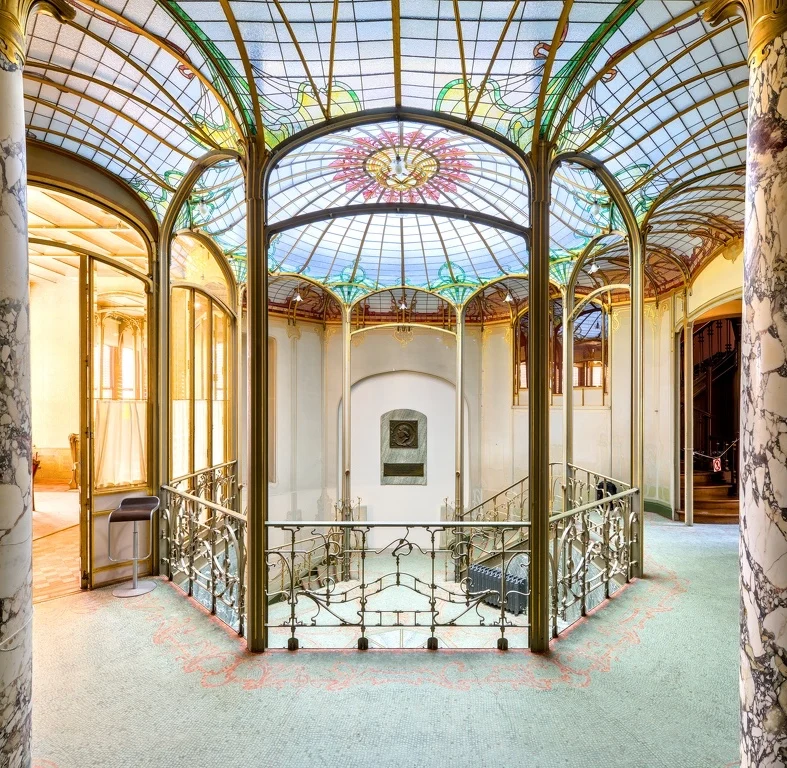
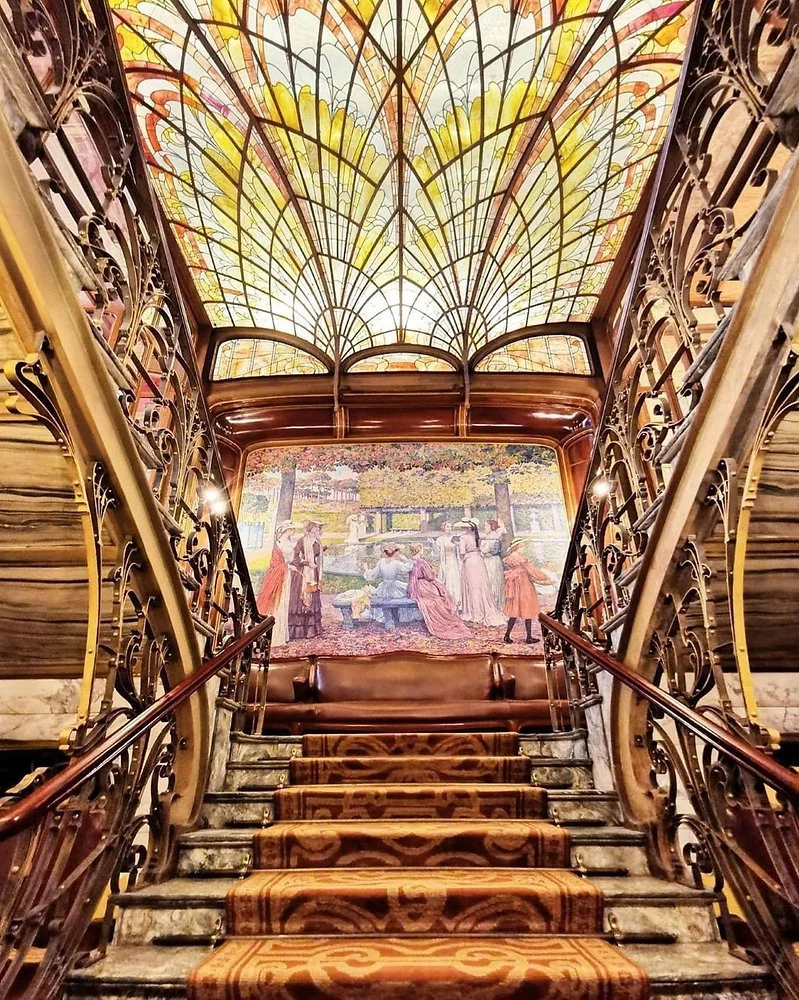
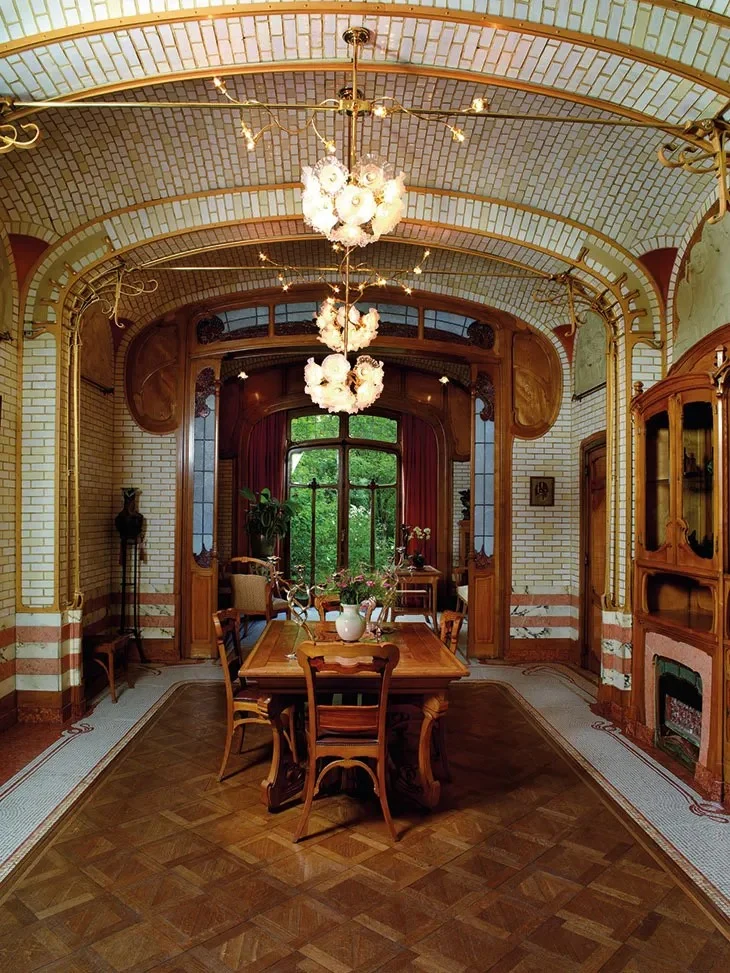
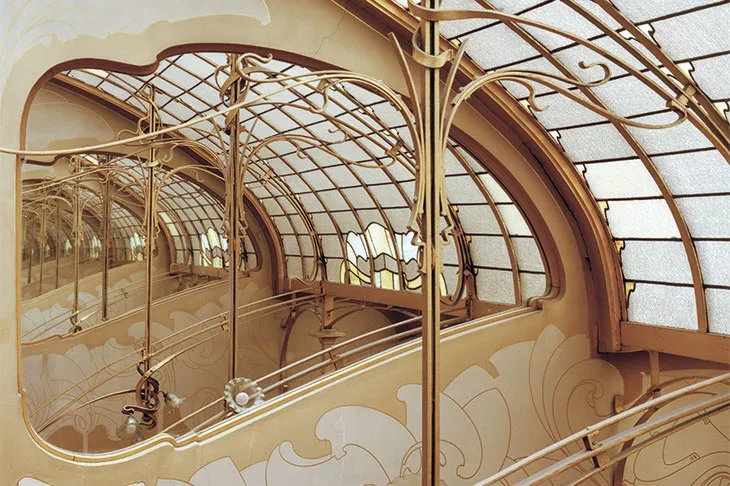
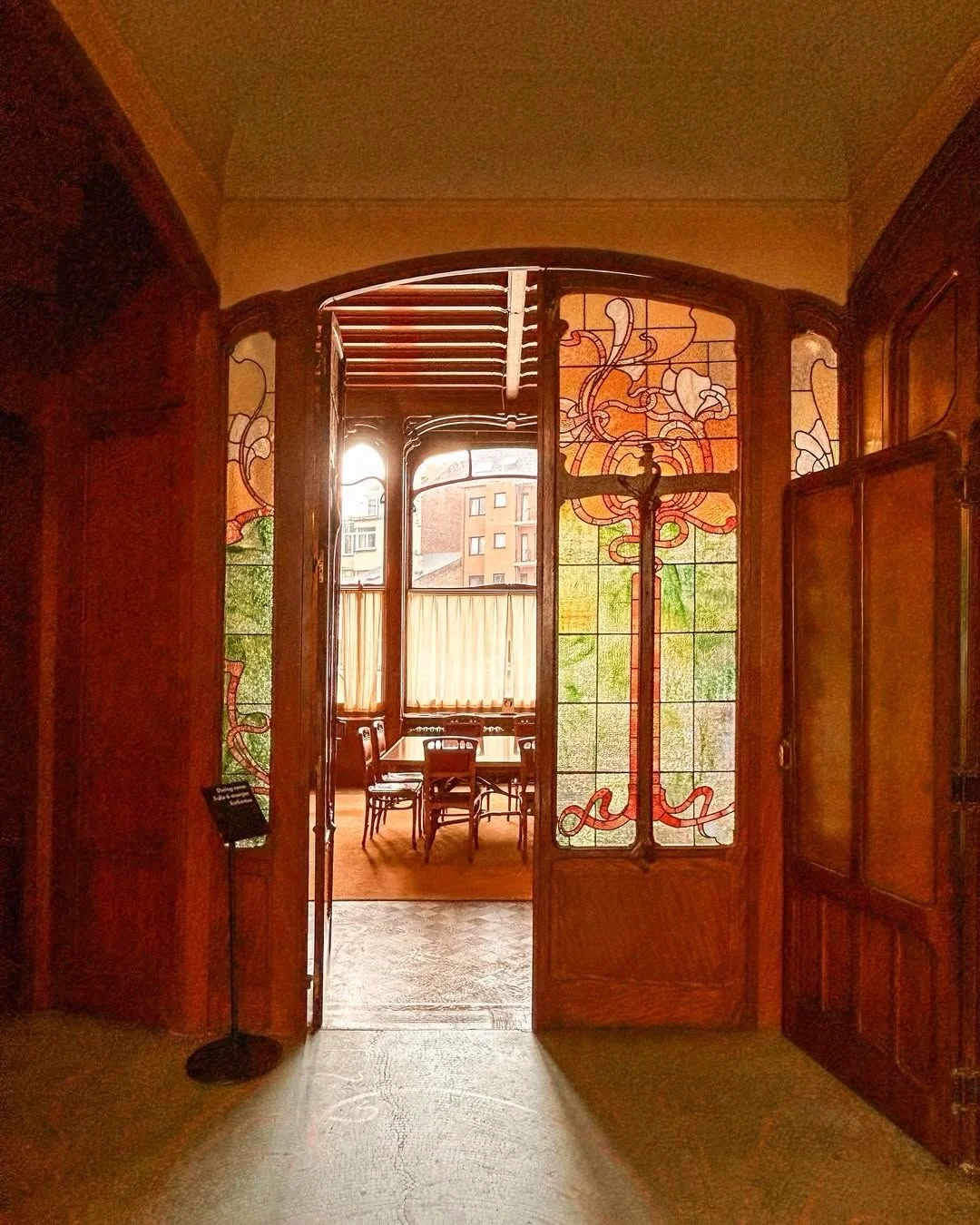
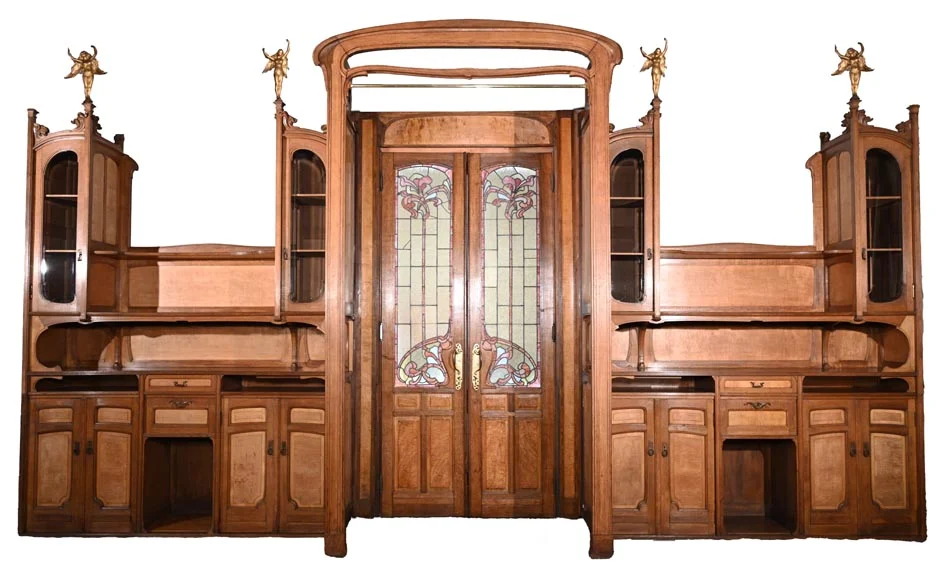
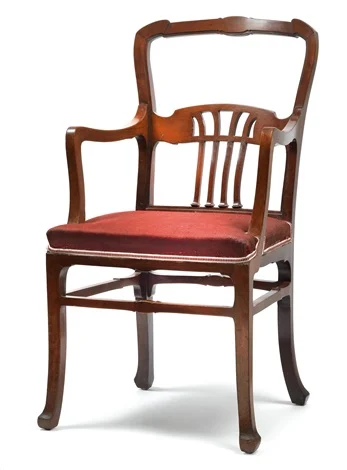
Horta’s Art Nouveau architecture was distinguished by its search for maximum transparency and light, achieved through open floor plans, large windows, skylights, and mirrors that brought natural light into every corner of his characteristically narrow Brussels building sites. His curving stylized vegetal forms, modeled on vines and flowers, were applied consistently across structure and decoration, unifying ironwork, tilework, stained glass, wall painting, and furniture into a total aesthetic environment. After 1900, he progressively abandoned organic ornament in favor of geometric clarity, making him both a founding voice of Art Nouveau and an early precursor of modernist architecture.
Key Influences
- Hôtel Tassel: Widely regarded as the first Art Nouveau building in the world, it established the formal vocabulary of the movement and directly inspired Hector Guimard’s iconic Paris Metro entrances.
- Iron and Glass in Domestic Architecture: His pioneering use of industrial materials in private residences helped establish that structural elements could also function as primary decorative features.
- Open Floor Plans: His spatial innovations, including the integration of light from above and the dissolution of rigid room divisions, made him a recognized precursor of modern architecture.
- UNESCO Recognition: The 2000 designation of four of his Brussels houses as a World Heritage Site confirmed his central place in the history of Western architecture and helped spark the broader rehabilitation of Art Nouveau as a serious movement.
- Belgian Art Nouveau: As the most internationally recognized of the Belgian Art Nouveau pioneers, he gave the movement its definitive architectural language and established Brussels as one of its world capitals.
If you are interested in further stories of the artists who shaped Art Deco, return to our artists page to browse the full directory.
Related Products from ArtDecoCollection.com