
Édouard Vuillard
Jean-Édouard Vuillard was born on November 11, 1868, in Cuiseaux, in the Saône-et-Loire region of France, the son of a retired army officer and a mother who ran a corset-making workshop from their Paris home after the family relocated when he was young. This domestic setting, filled with fabric, pattern, and the quiet activity of women at work, left a lasting imprint on his artistic sensibility and later became a recurring subject in his paintings. He attended the Lycée Condorcet, where he formed a lasting friendship with Ker-Xavier Roussel, and initially considered a military career before deciding to pursue art. He studied briefly at the Académie Julian and then at the École des Beaux-Arts, where he met Pierre Bonnard, Maurice Denis, and Paul Sérusier, the core group of artists who would soon found Les Nabis, a Post-Impressionist movement whose name meant “prophets” in Hebrew. Vuillard never married and lived for much of his adult life with his mother, whose presence and domestic world remained central to his art throughout his career. He died on June 21, 1940, in La Baule, France, while fleeing the German invasion during World War II.
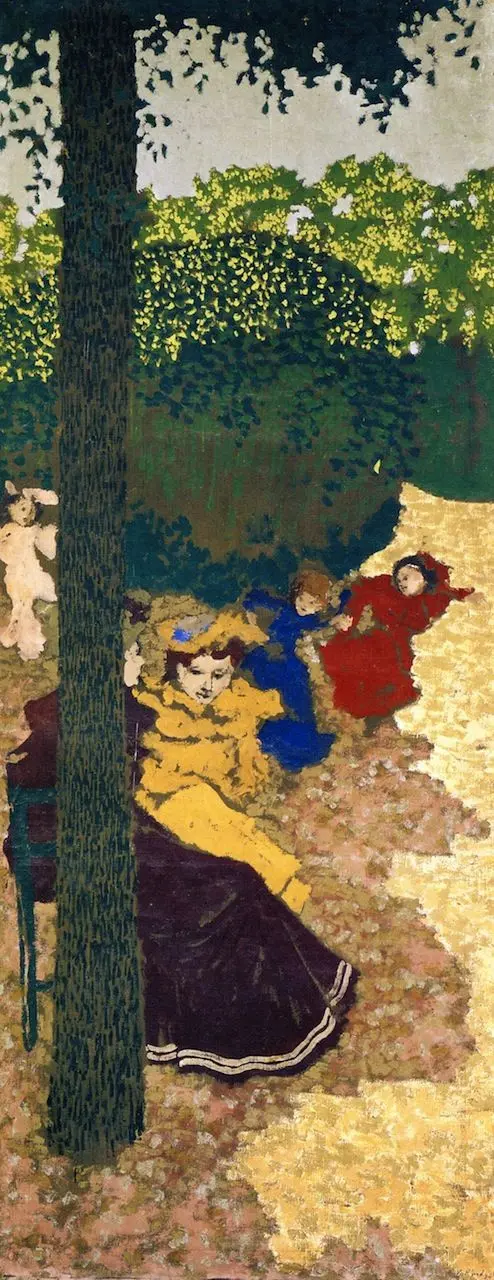
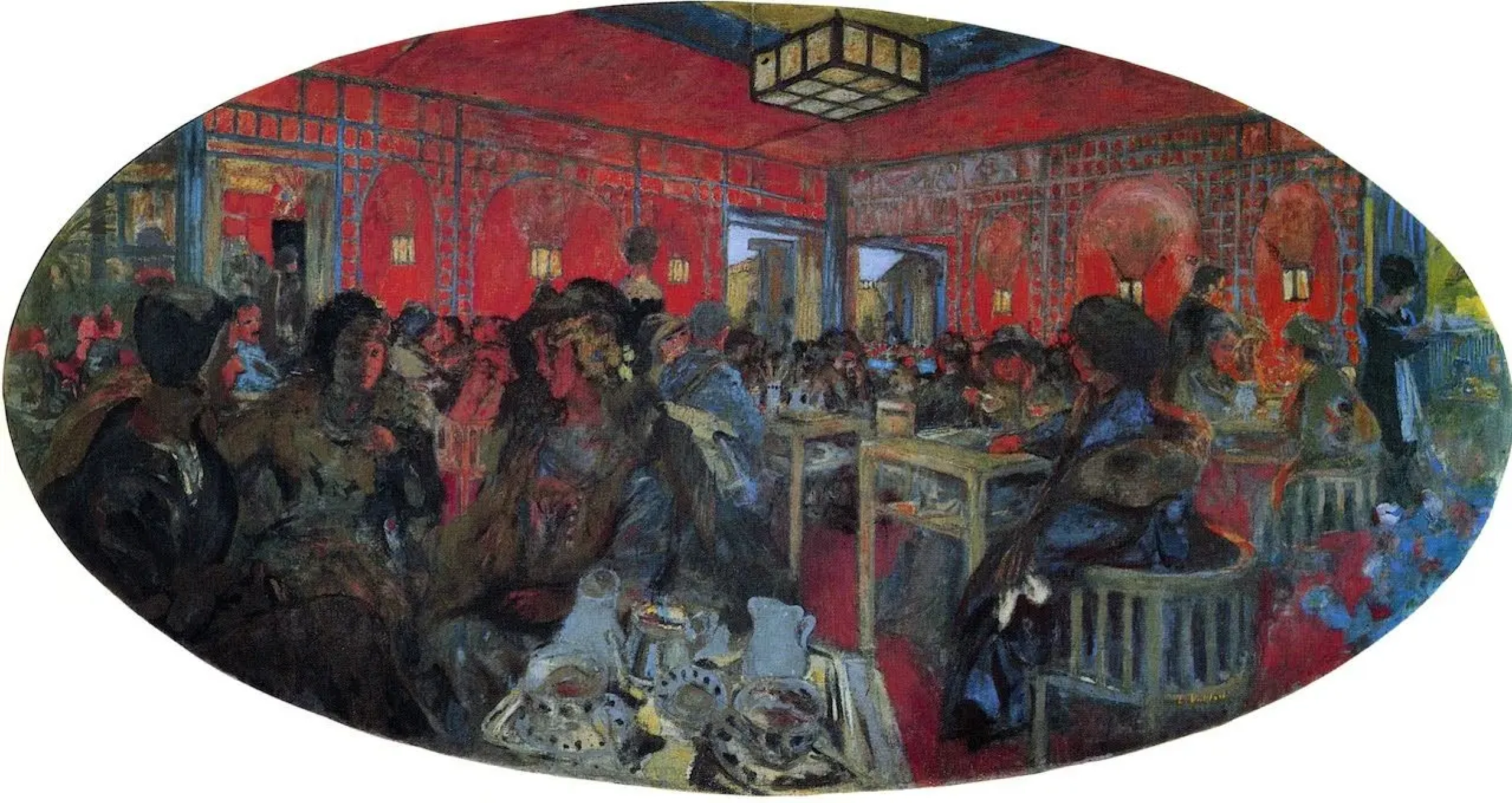

Vuillard’s early career unfolded within the Nabis circle in the 1890s, where he contributed decorative panels, theater programs, and stage designs for avant-garde playwrights alongside his easel paintings. He worked extensively for the innovative theater director Aurélien Lugné-Poe, designing sets and programs for productions that included works by Henrik Ibsen and Maurice Maeterlinck, extending his decorative sensibility into the world of performance. Alongside Bonnard, he became known as one of the leading Intimists, painters devoted to small-scale, richly patterned depictions of domestic interiors, quiet family gatherings, and the private lives of the Parisian bourgeoisie. His most celebrated works from this period, dense with overlapping pattern and flattened perspective, transform ordinary domestic scenes, women sewing, families at the dinner table, rooms filled with wallpaper and textiles, into complex meditations on intimacy and enclosure. He received major decorative commissions from wealthy patrons for large-scale panels intended for private homes, a continuation of the Nabis interest in unifying fine art with interior decoration. In his later career he shifted toward more traditional portraiture, painting numerous distinguished sitters from French society and the arts, and adopted a somewhat more naturalistic, less densely patterned style. He remained a respected figure in French art throughout his life and was elected to the Institut de France in 1937.
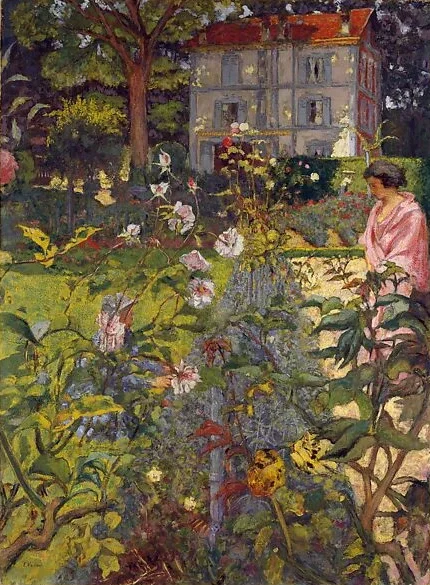
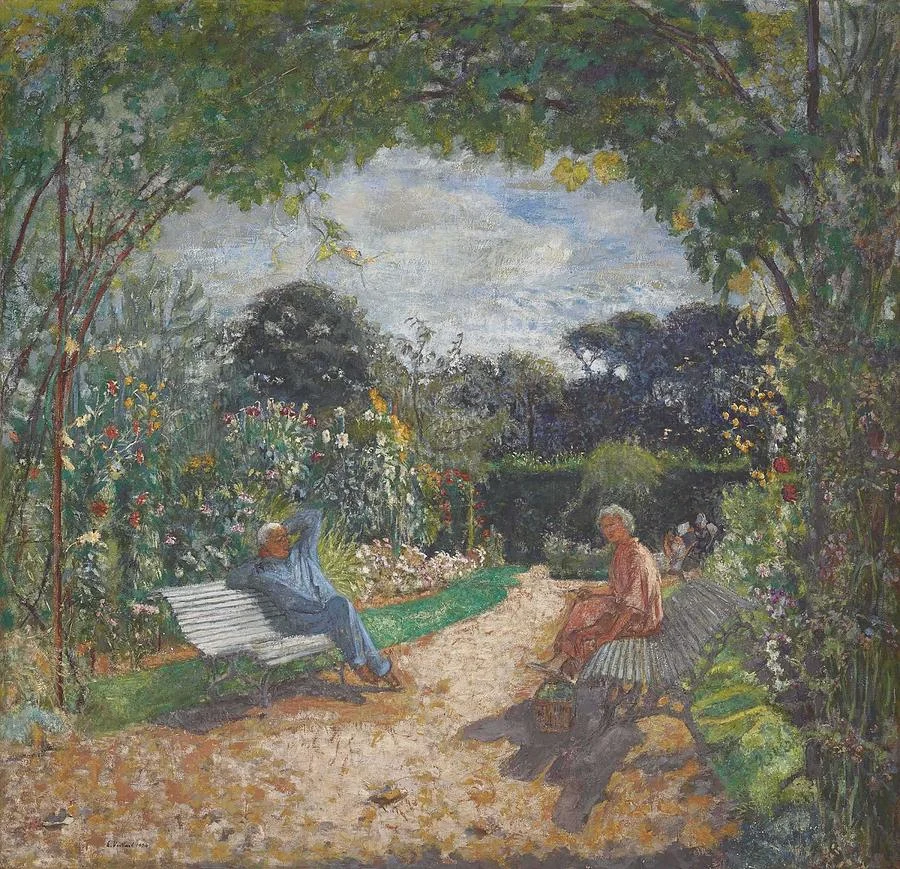
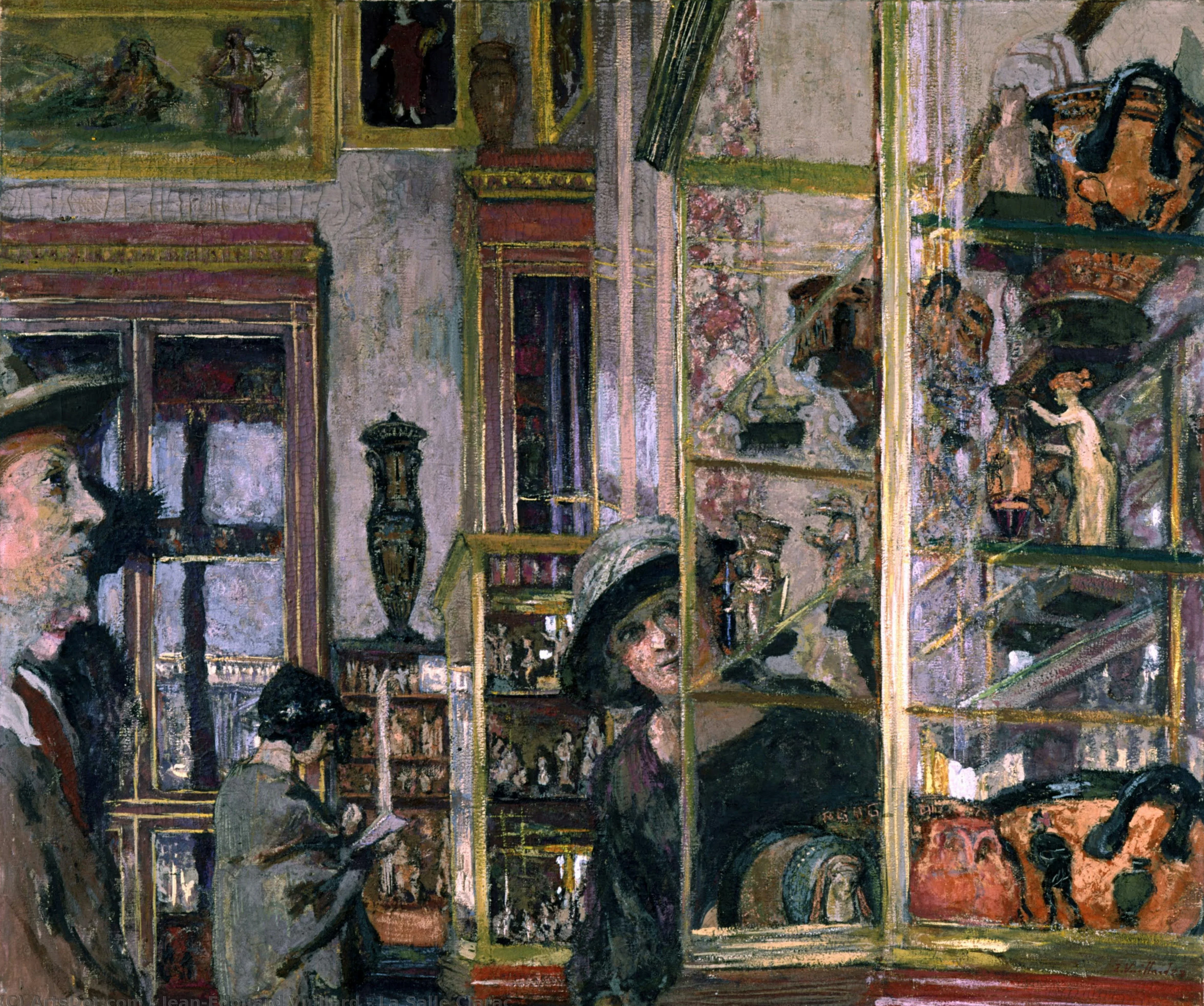
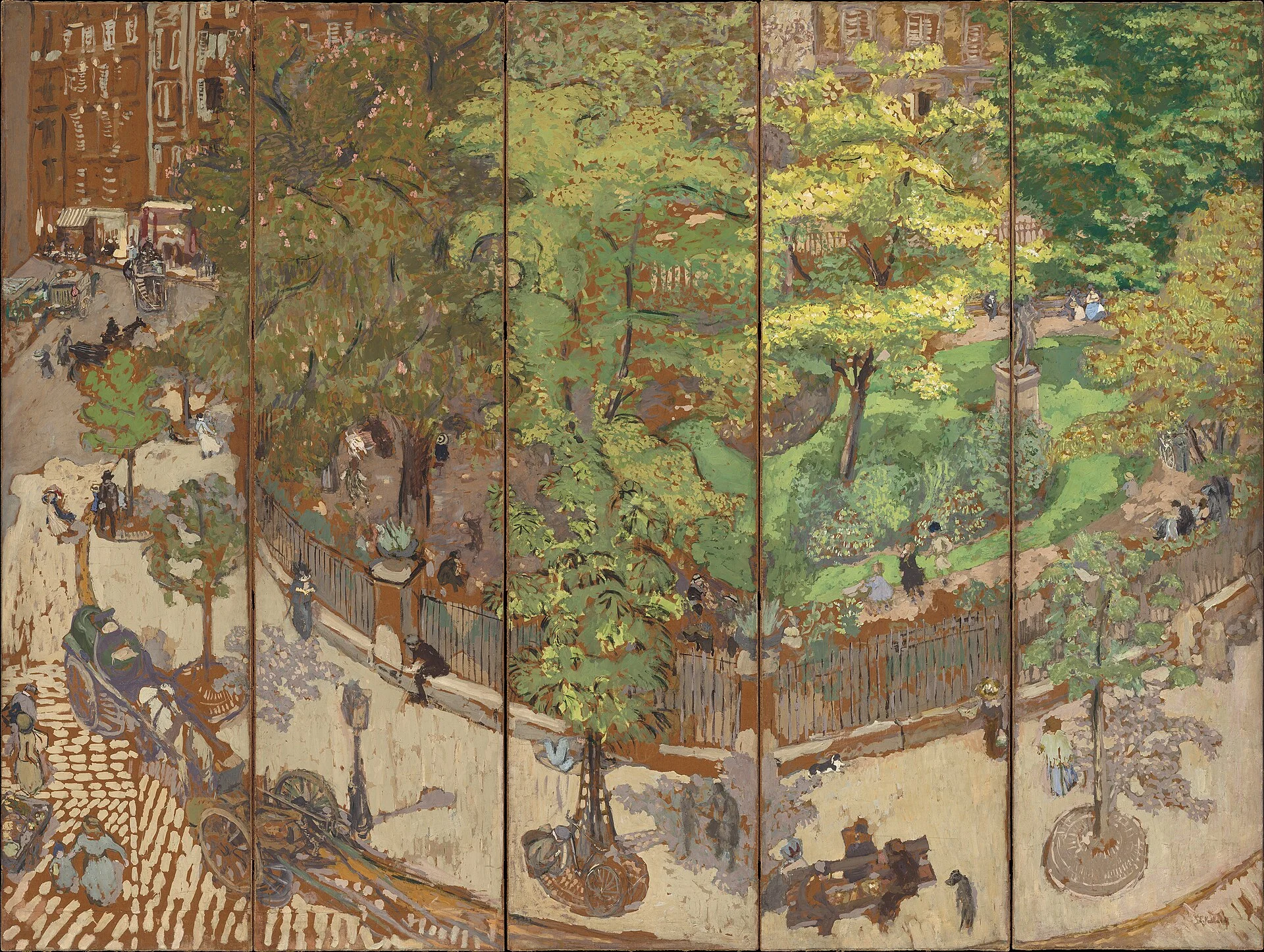
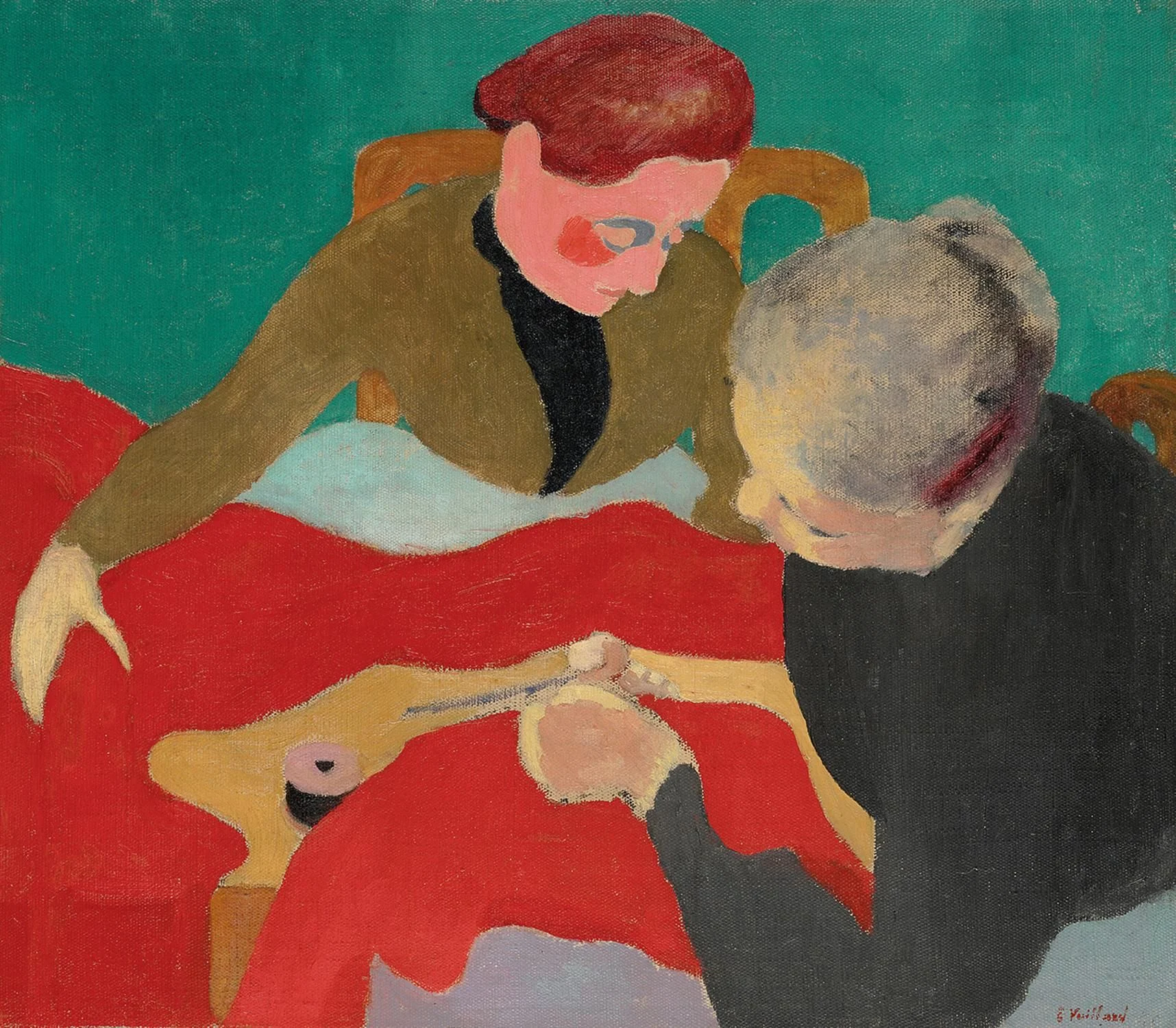
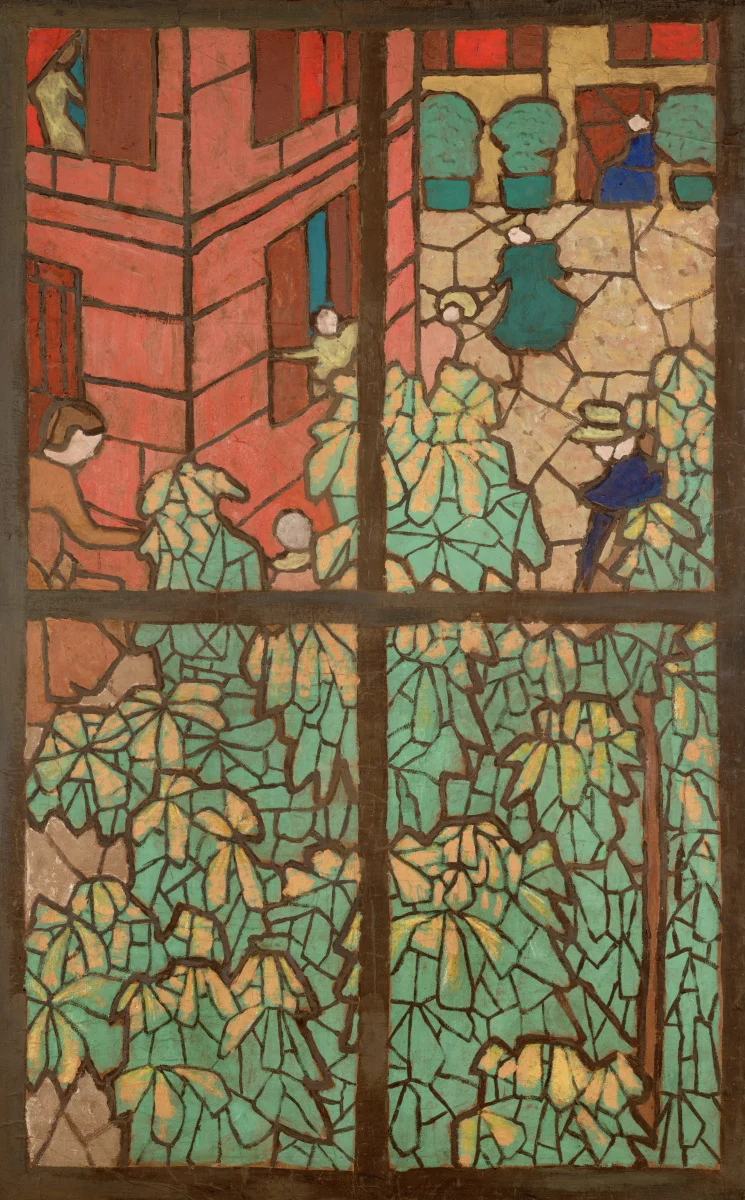
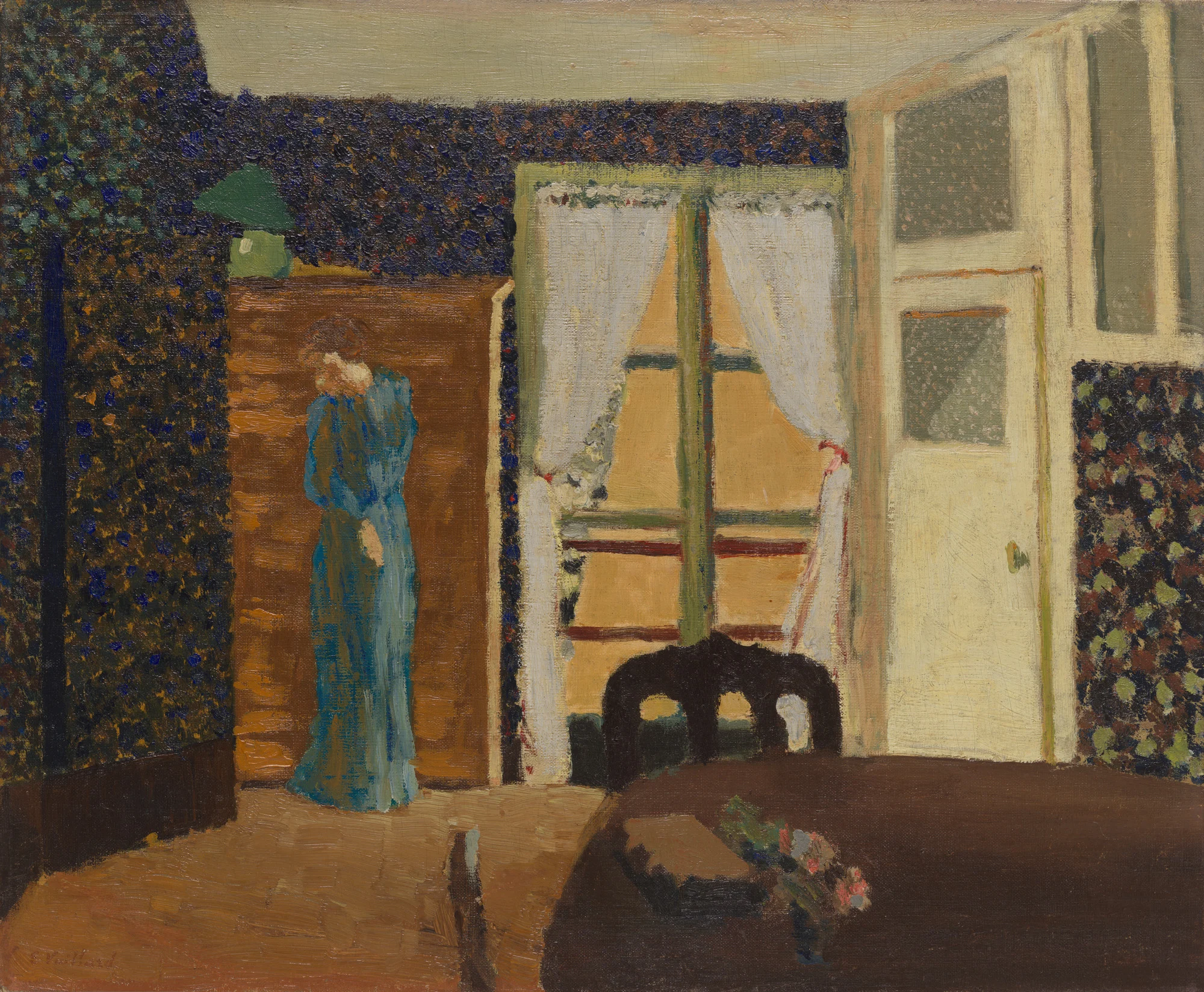
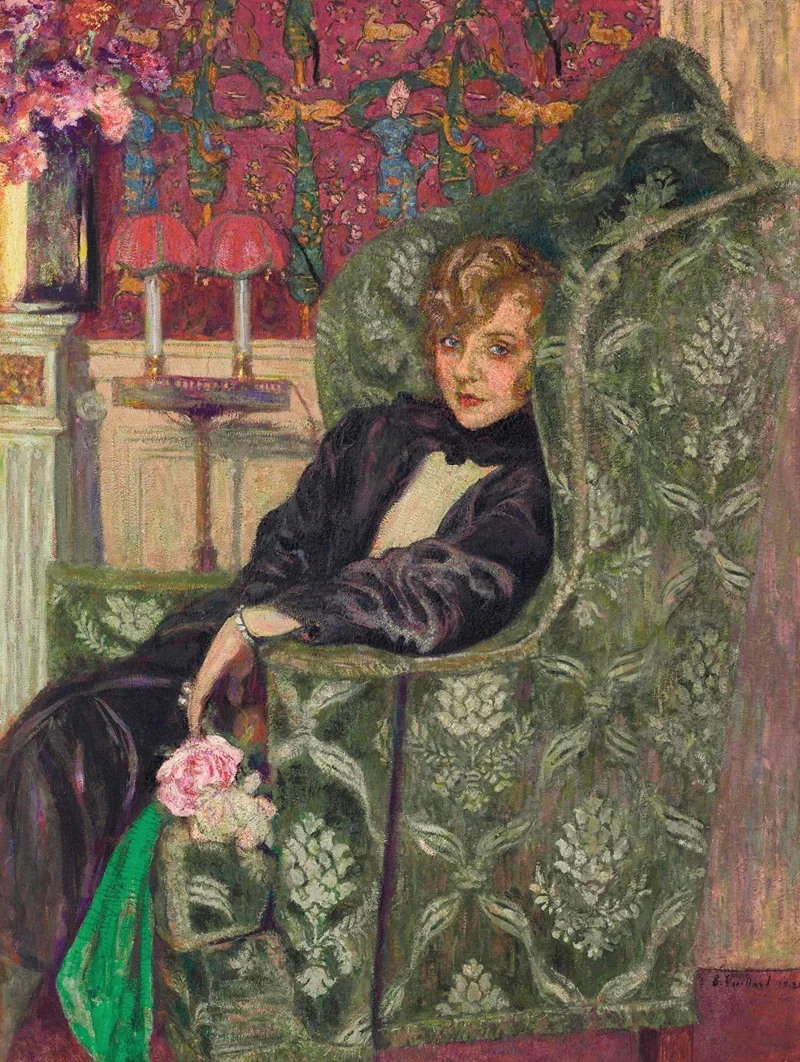
Vuillard’s paintings, particularly those of his Nabis period, are distinguished by their extraordinary flattening of pictorial space, where figures and their surrounding patterned wallpaper, fabric, and furnishings dissolve into a single continuous decorative surface. He worked frequently in distemper, a matte glue-based paint that gave his colors a chalky, muted richness distinct from the glossier surfaces of oil, reinforcing the intimate, almost hushed atmosphere of his interiors. His compositions favored close, cropped viewpoints and a deliberate ambiguity between figure and background, creating a sense of psychological closeness and quiet claustrophobia that became the defining quality of Intimism.
Key Influences
- Intimism: His domestic interiors, alongside those of Bonnard, established Intimism as a distinct and influential strand of French painting focused on the poetry of private, everyday life.
- Decorative Flatness: His dissolution of figure into pattern anticipated concerns that would resurface throughout twentieth-century painting, from Matisse’s decorative interiors to later abstract explorations of surface and depth.
- Theater and Fine Art: His stage designs for Lugné-Poe’s avant-garde productions helped forge lasting connections between the worlds of Symbolist theater and Post-Impressionist painting.
- Textile and Pattern in Painting: His childhood immersion in his mother’s dressmaking workshop shaped a lifelong fascination with fabric and ornament that gave his paintings their distinctive tactile richness.
- Les Nabis: As one of the group’s founding members, he helped chart new territory between Impressionism and full abstraction, contributing to a pivotal transitional moment in modern French art.
If you are interested in further stories of the artists who shaped Art Deco, return to our artists page to browse the full directory.
Related Products from ArtDecoCollection.com