
Charles Rohlfs
Charles Rohlfs was born on February 15, 1853, in Brooklyn, New York, the son of a cabinetmaker who worked for piano companies. He trained in drafting and design at the Cooper Union in Manhattan and worked as a stove patternmaker, receiving several patents for stove designs, while simultaneously pursuing a career as an actor. His acting ambitions came to a decisive end around 1895 when a Chicago critic reviewing one of his serious performances wrote that his face, legs, and hands were pure comedy. He married the successful crime novelist Anna Katharine Green in 1884, and the couple settled in Buffalo, New York, where he designed and made furniture for family use as early as 1888. He had no professional training as a furniture maker and was deeply dedicated to the primacy of individual expression, preferring the terms “artistic furniture” or “the Rohlfs style” over any movement affiliation. After retiring from furniture making around 1907, he became a leader of the Buffalo Chamber of Commerce and campaigned actively for child labor reform. He was widowed in 1935 when Anna Katharine Green died, and he followed a year later on June 30, 1936, in Buffalo.
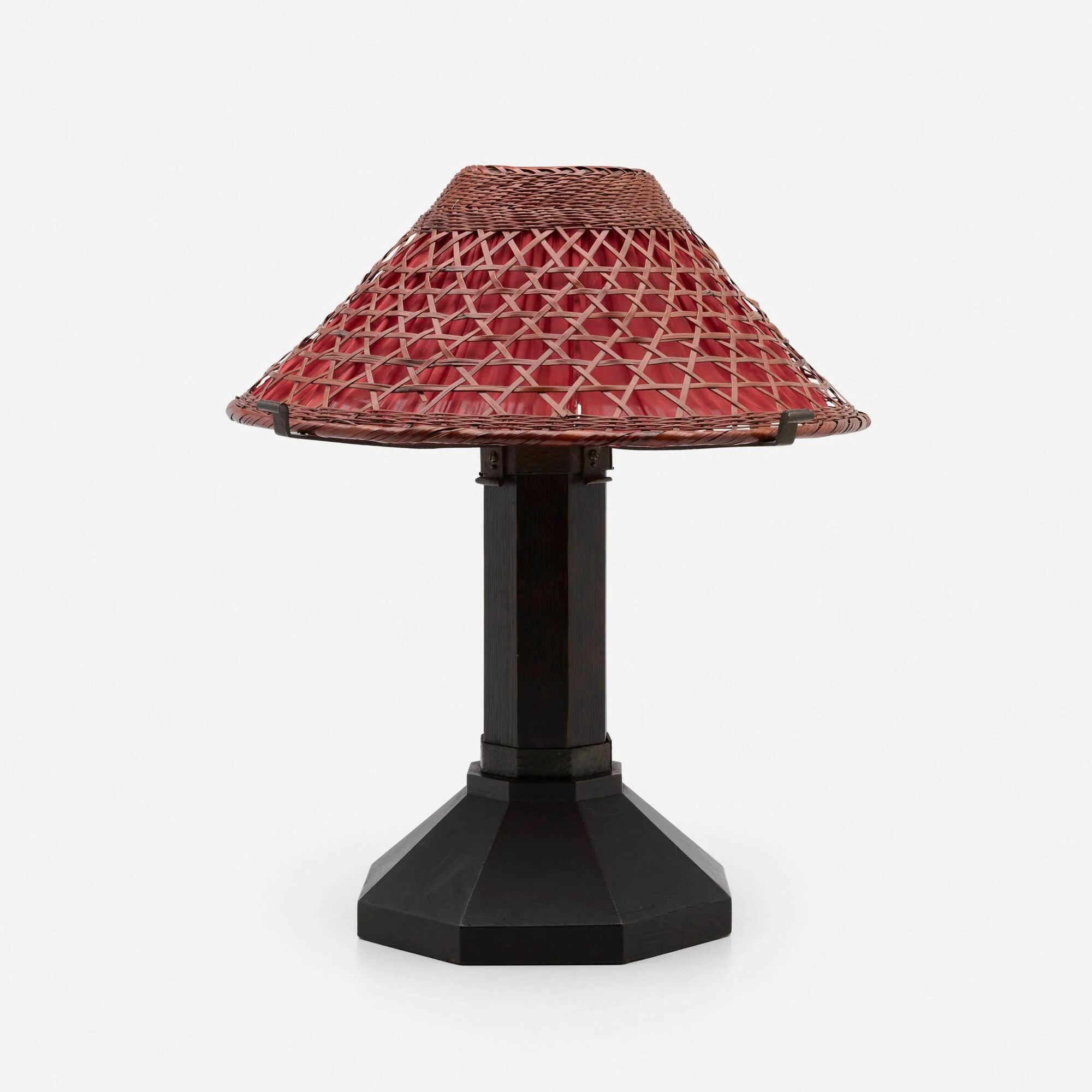
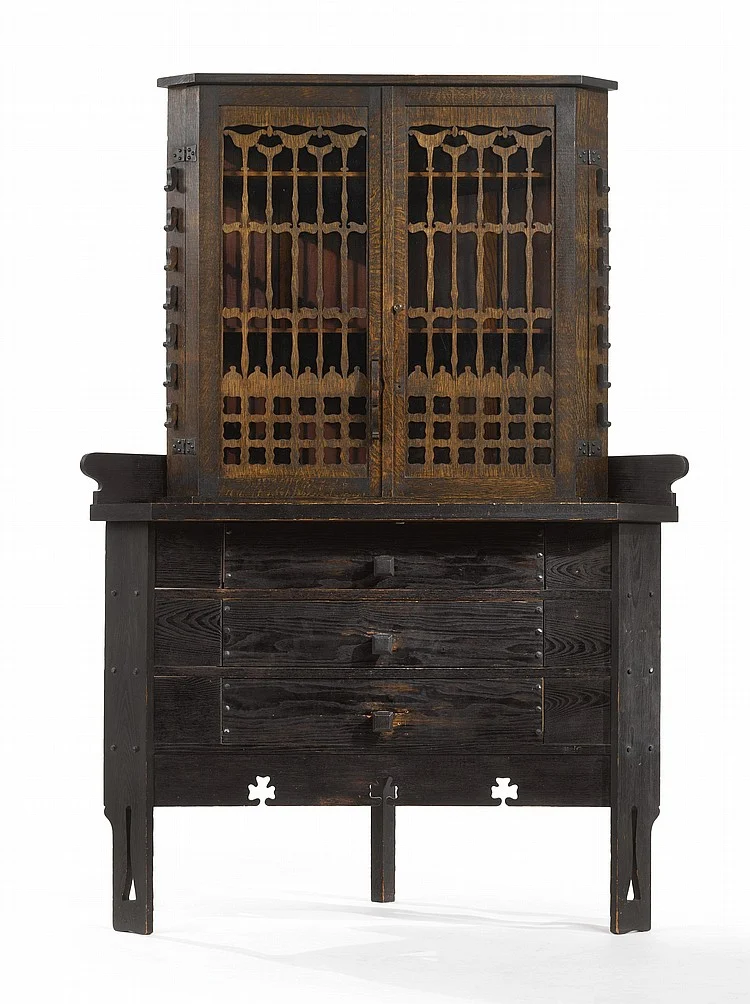

Rohlfs did not commence his professional furniture-making career until 1897, when he set up a shop on Washington Street in downtown Buffalo. By the century’s end, Marshall Field in Chicago was advertising his work, though sales fell short of expectations. He participated in the Arts and Crafts Exhibition at the National Arts Club in New York in 1900 and the following year was both exhibitor and organizer at the Pan-American Exposition in Buffalo, which brought him international fame. He is the only American furniture maker known to have participated in the International Exposition of Decorative Art in Turin in 1902, after which he was admitted to the Royal Society of Arts in London. His furniture, consistently made of dark matte oak, was embellished primarily by means of elaborate carving, with virtuosic detail recalling Chinese and Japanese forms, Gothic tracery, and abstract renditions of nature. His work directly influenced Gustav Stickley’s popular Craftsman Furniture, though Rohlfs’s own commercial success was limited, as his forms were considered too eccentric for the mainstream market. In a career of barely a decade, he produced only a few hundred works, many of them for his own home. His furniture is now held in the collections of the Metropolitan Museum of Art, the Art Institute of Chicago, the Brooklyn Museum, the Dallas Museum of Art, and over a dozen other major institutions.

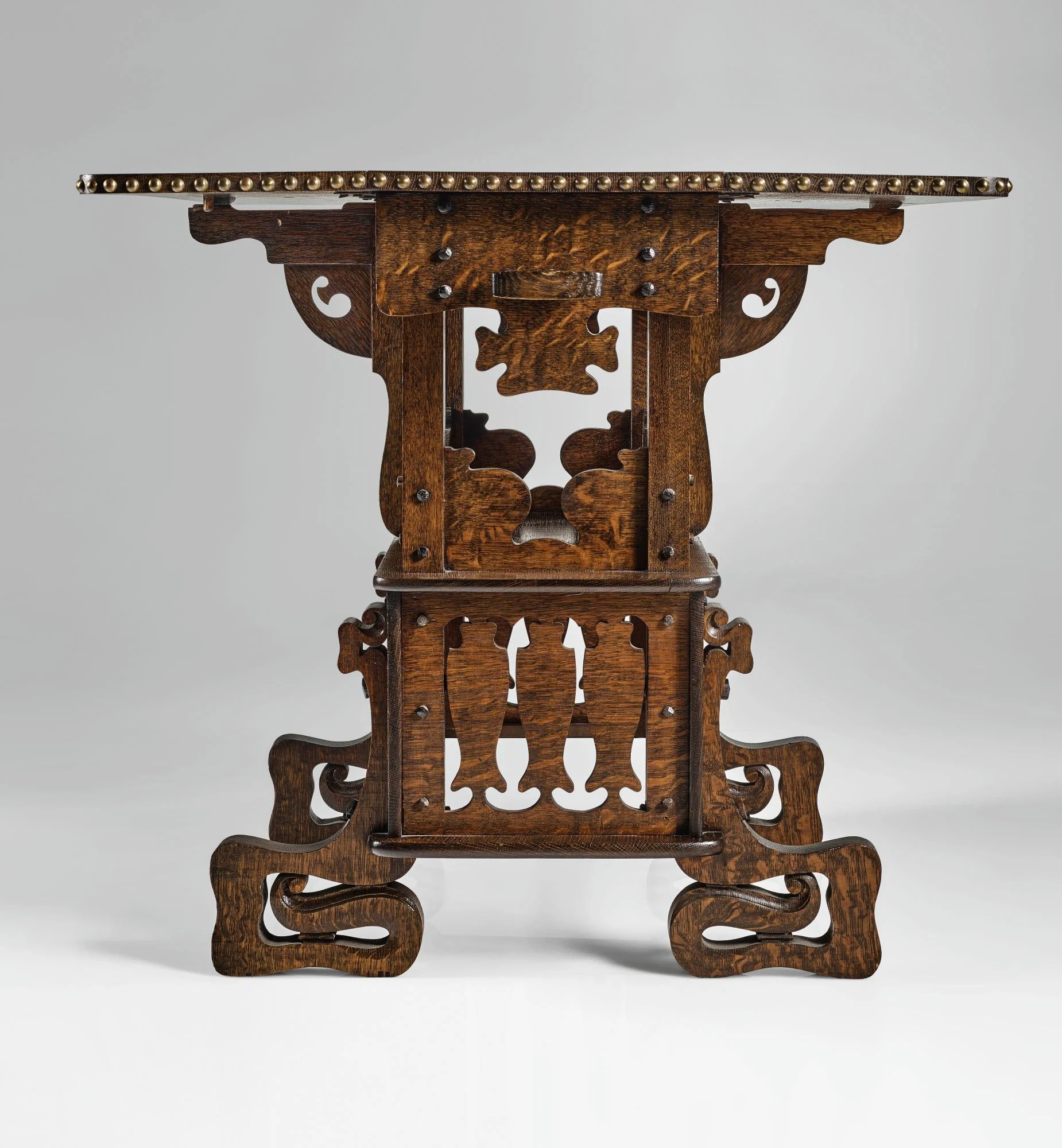
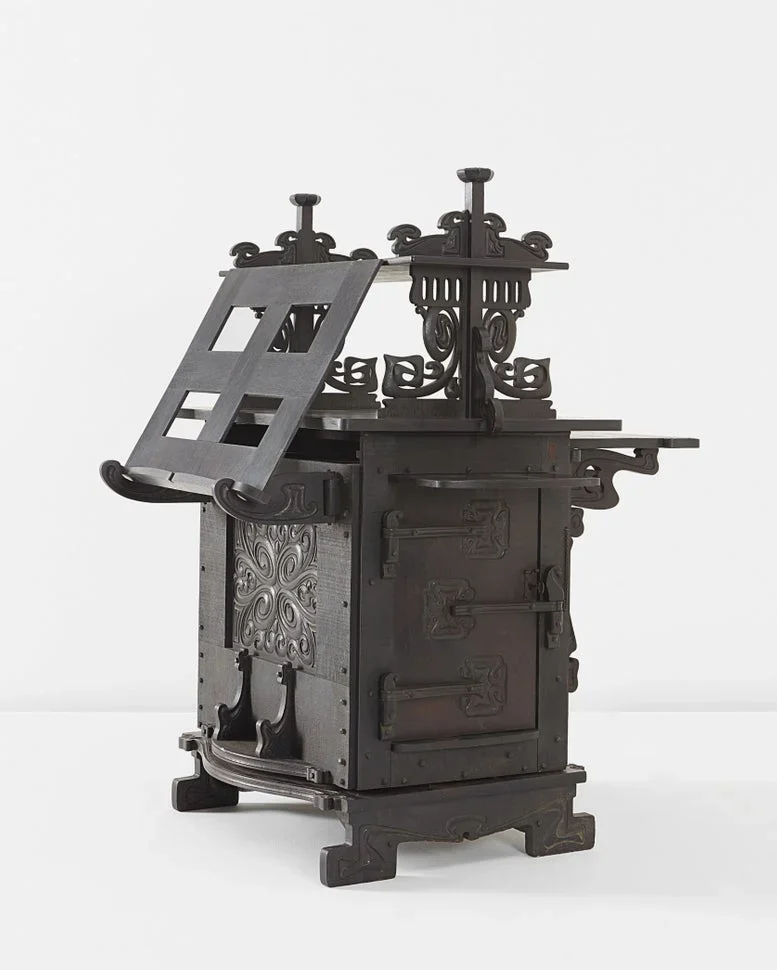
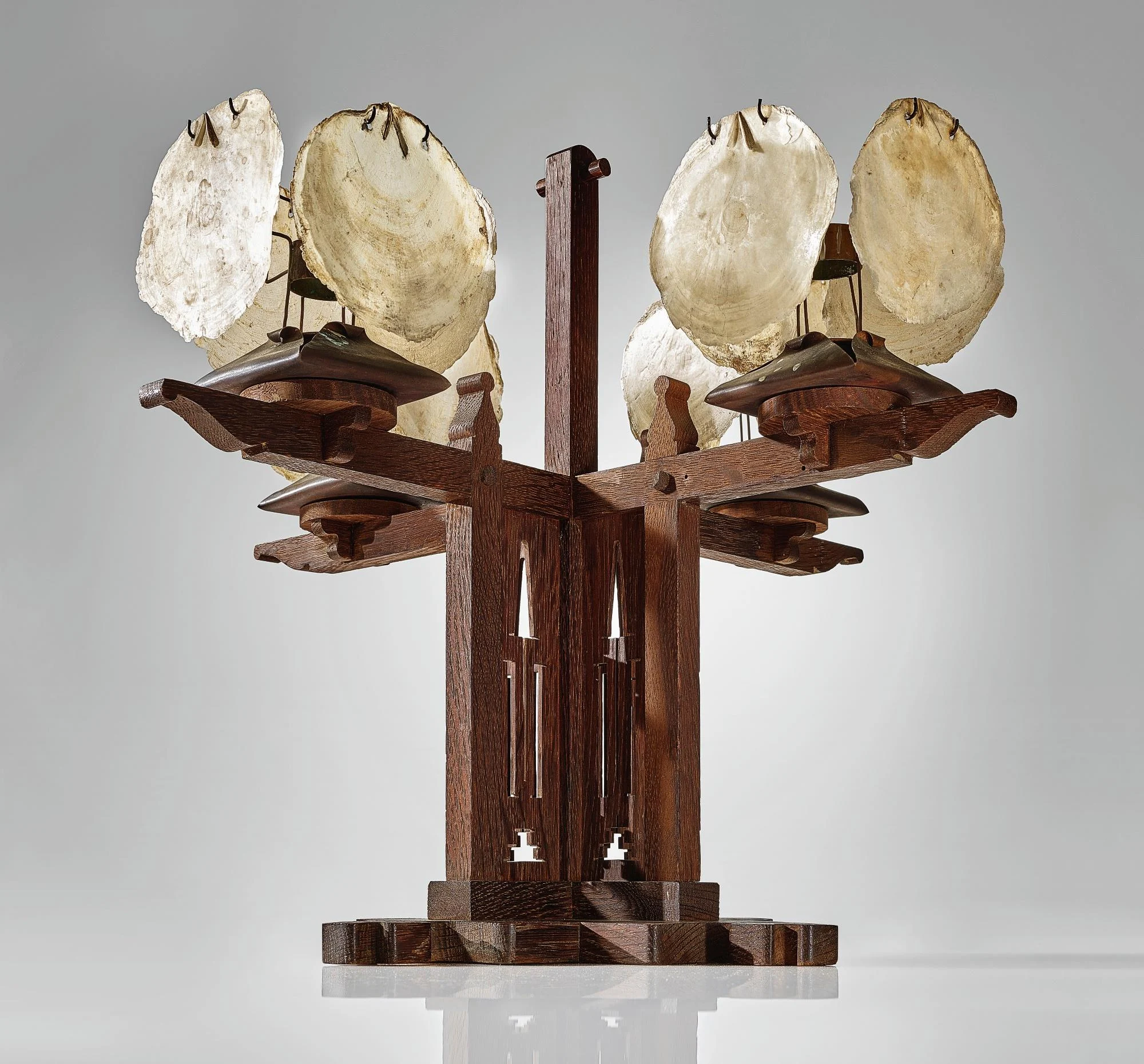
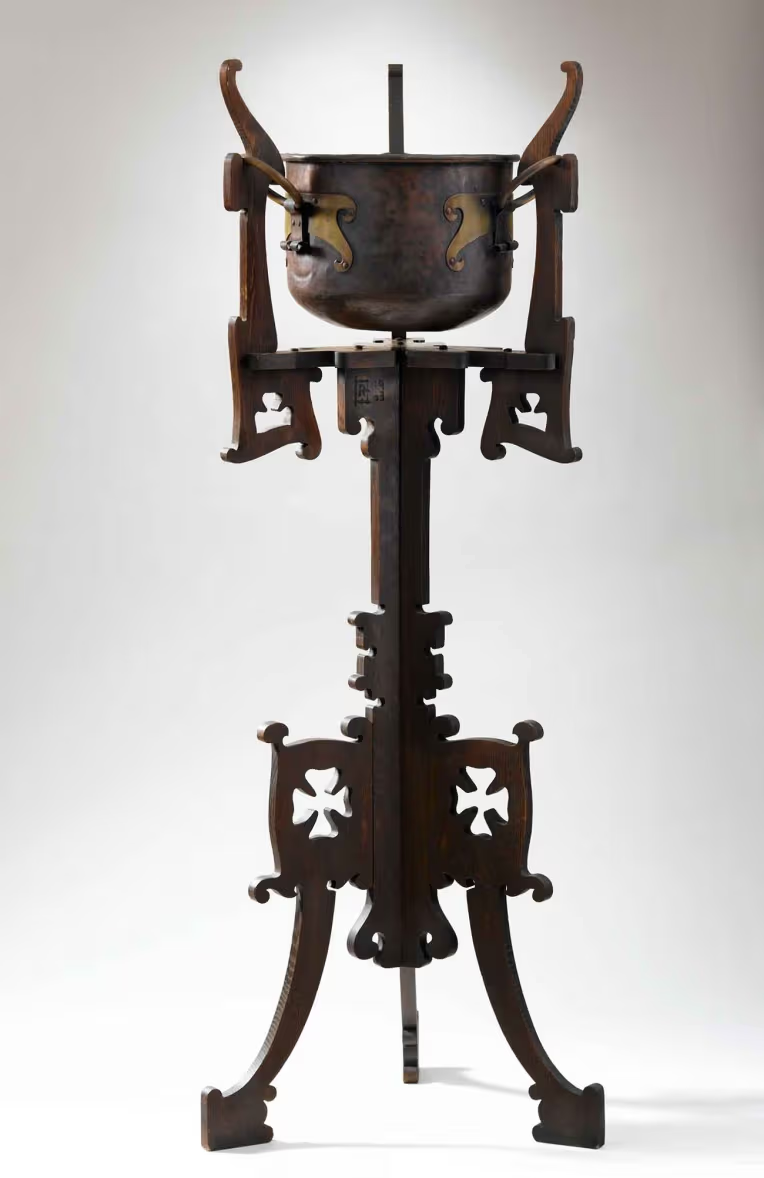
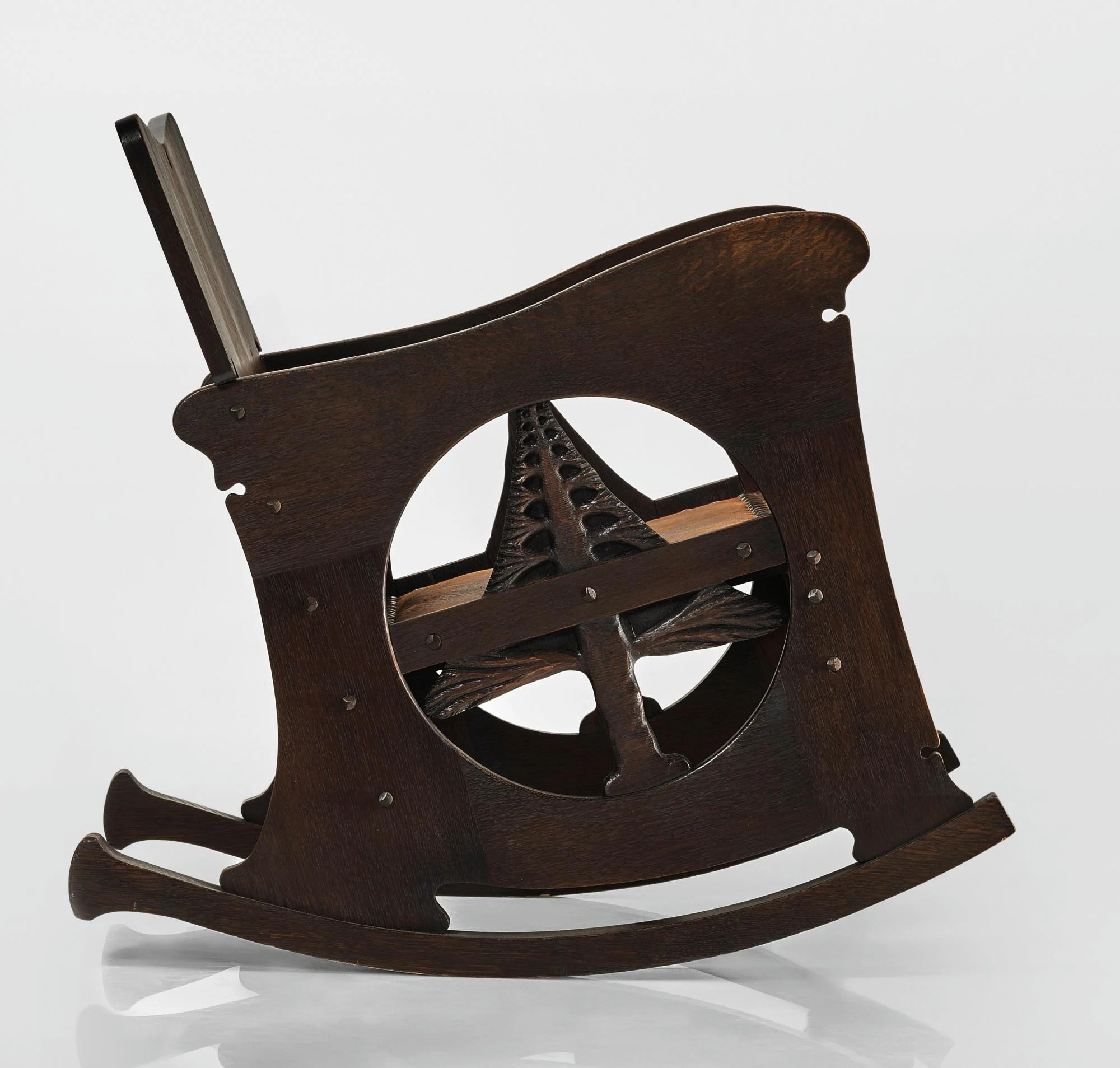
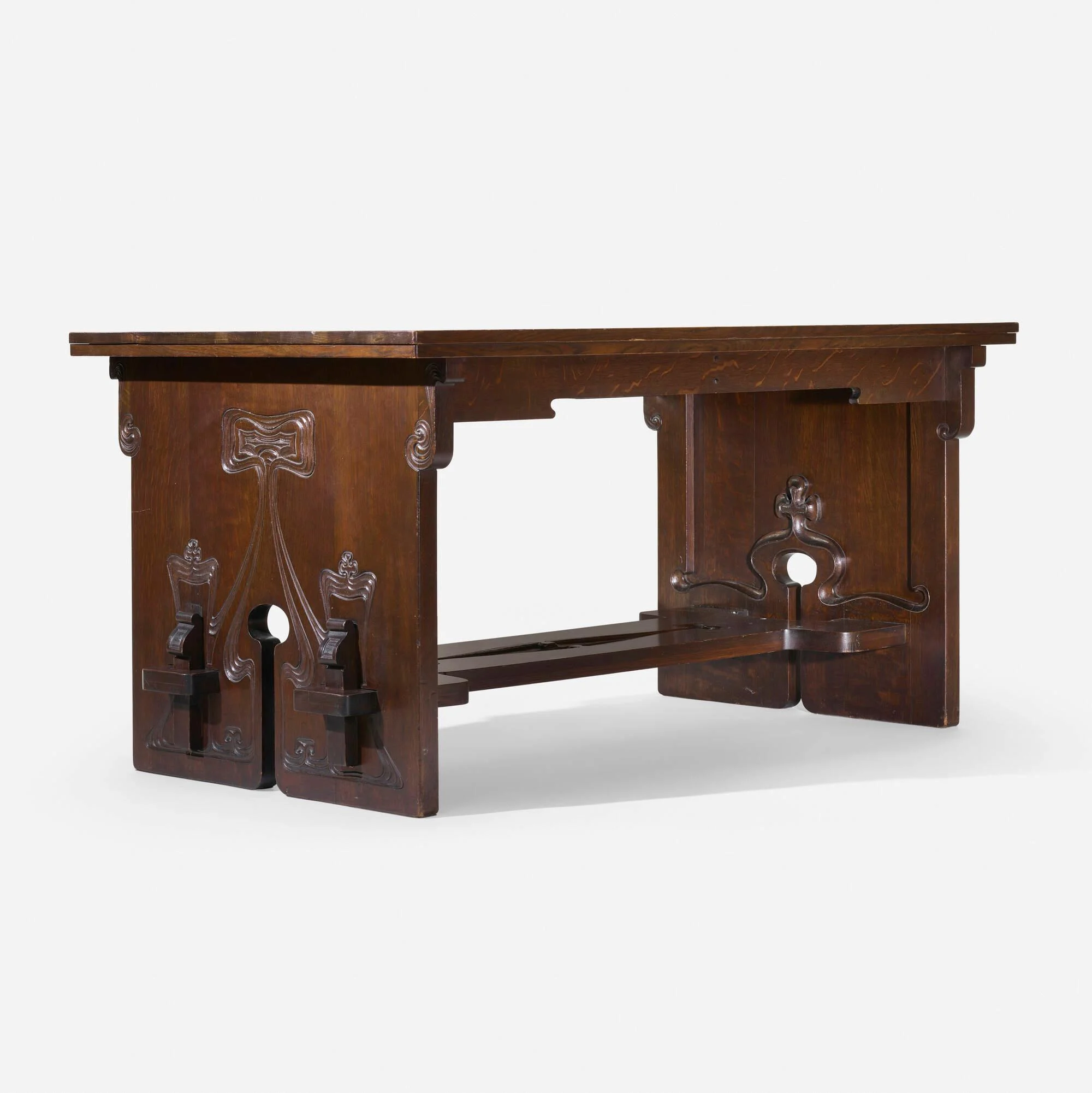

Rohlfs combined the abstract naturalism of Art Nouveau with the bold forms and materials of the Arts and Crafts movement, drawing additionally on Asian, Moorish, Gothic, and Germanic precedents in an eclectic synthesis that resisted easy categorization. His unusually slender, inventive silhouettes distinguished him from other Arts and Crafts makers, and his virtuosic carving sometimes drew directly from natural structures, as in one desk chair whose carved surface resembles the cellular structure of oak as seen through a microscope. He insisted that his designs came from the natural grain of the oak itself and his own creative imagination, describing his approach with the characteristic declaration: “If I make a chair, I am a chair.”
Key Influences
- American Art Furniture: His uncompromising personal vision established a precedent for individual artistic expression in furniture that stood apart from both the commercial mainstream and the workshop movements of his time.
- Gustav Stickley: His dark matte oak forms and structural sensibility directly influenced Stickley’s Craftsman Furniture, making him an unacknowledged source of one of the most commercially successful American design movements.
- Turin 1902: As the only American furniture maker at the International Exposition of Decorative Art, he brought an entirely original American voice into the international Art Nouveau conversation.
- Art for Art’s Sake: His refusal to align with any movement or style in favor of pure personal expression placed him in the tradition of late nineteenth-century aestheticism and made his work a touchstone for later designers who valued individuality over conformity.
- Patternmaker’s Precision: His background in industrial patternmaking gave his furniture an unusual structural rigor, influencing how subsequent American craftsmen understood the relationship between making and design.
If you are interested in further stories of the artists who shaped Art Deco, return to our artists page to browse the full directory.

Related Products from ArtDecoCollection.com