

Cubism and the Shape of Modern Living
How a Revolution in Painting Reshaped the Furniture, Interiors, and Decorative Arts of the 1920s Through the 1940s

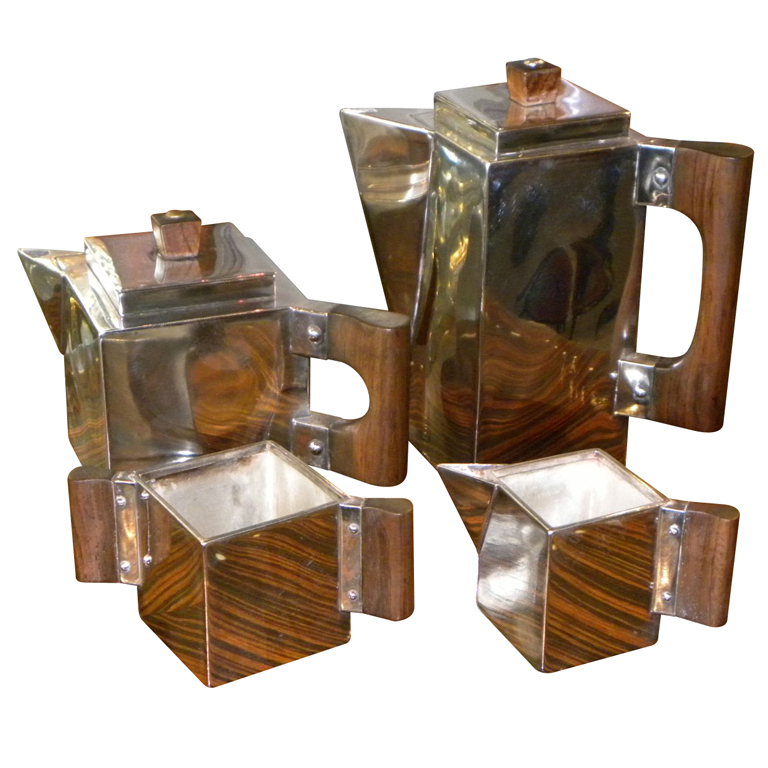
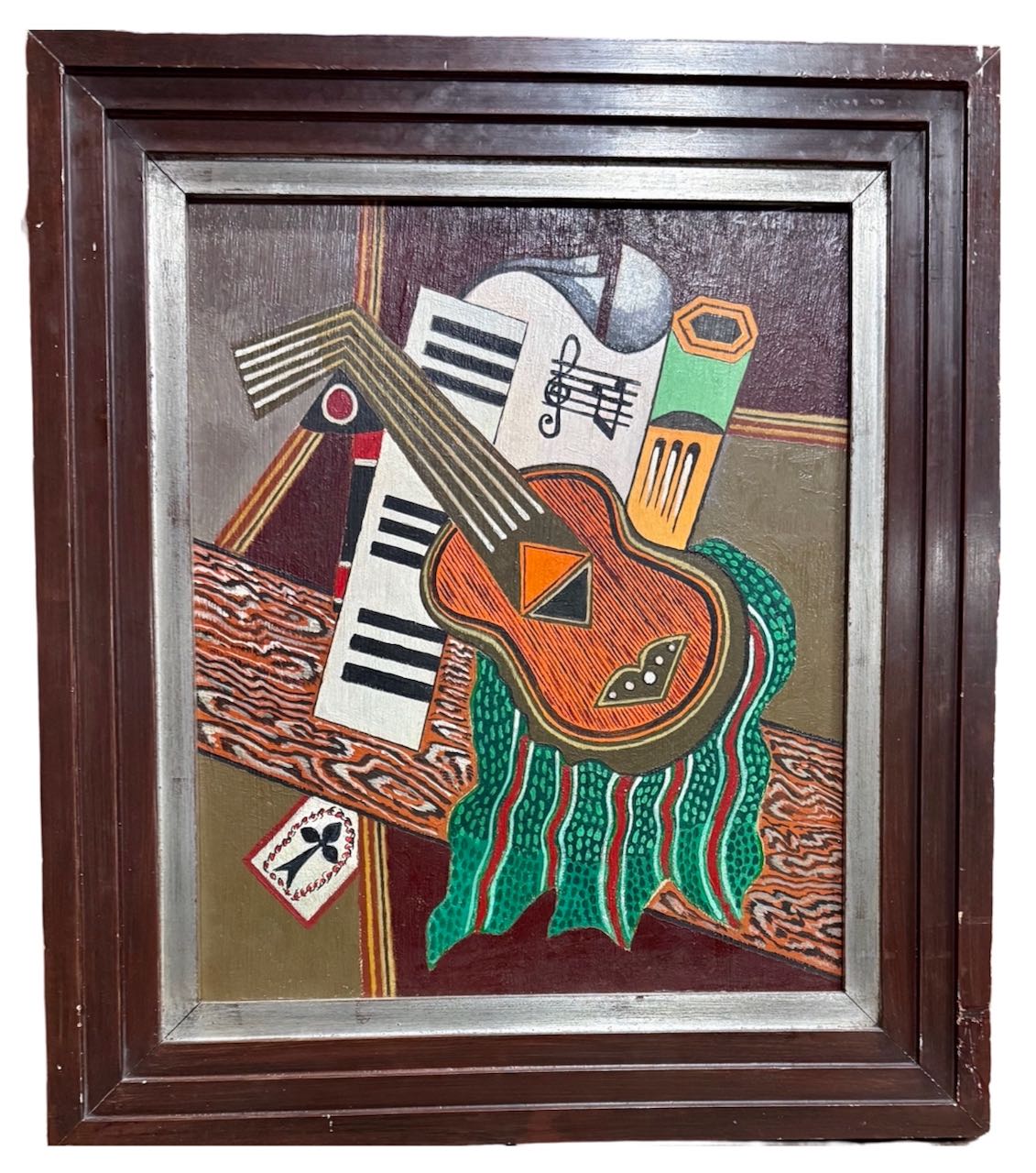
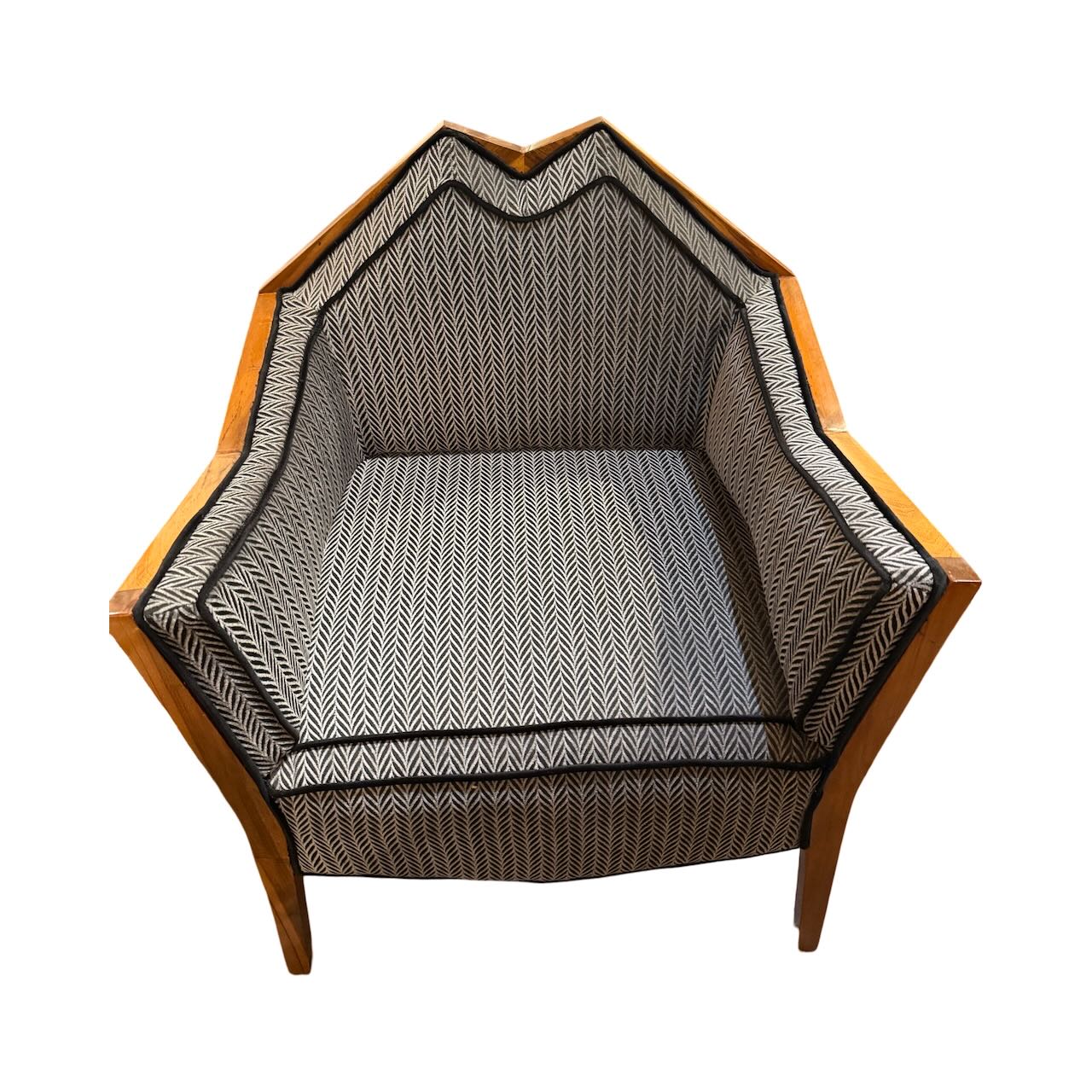
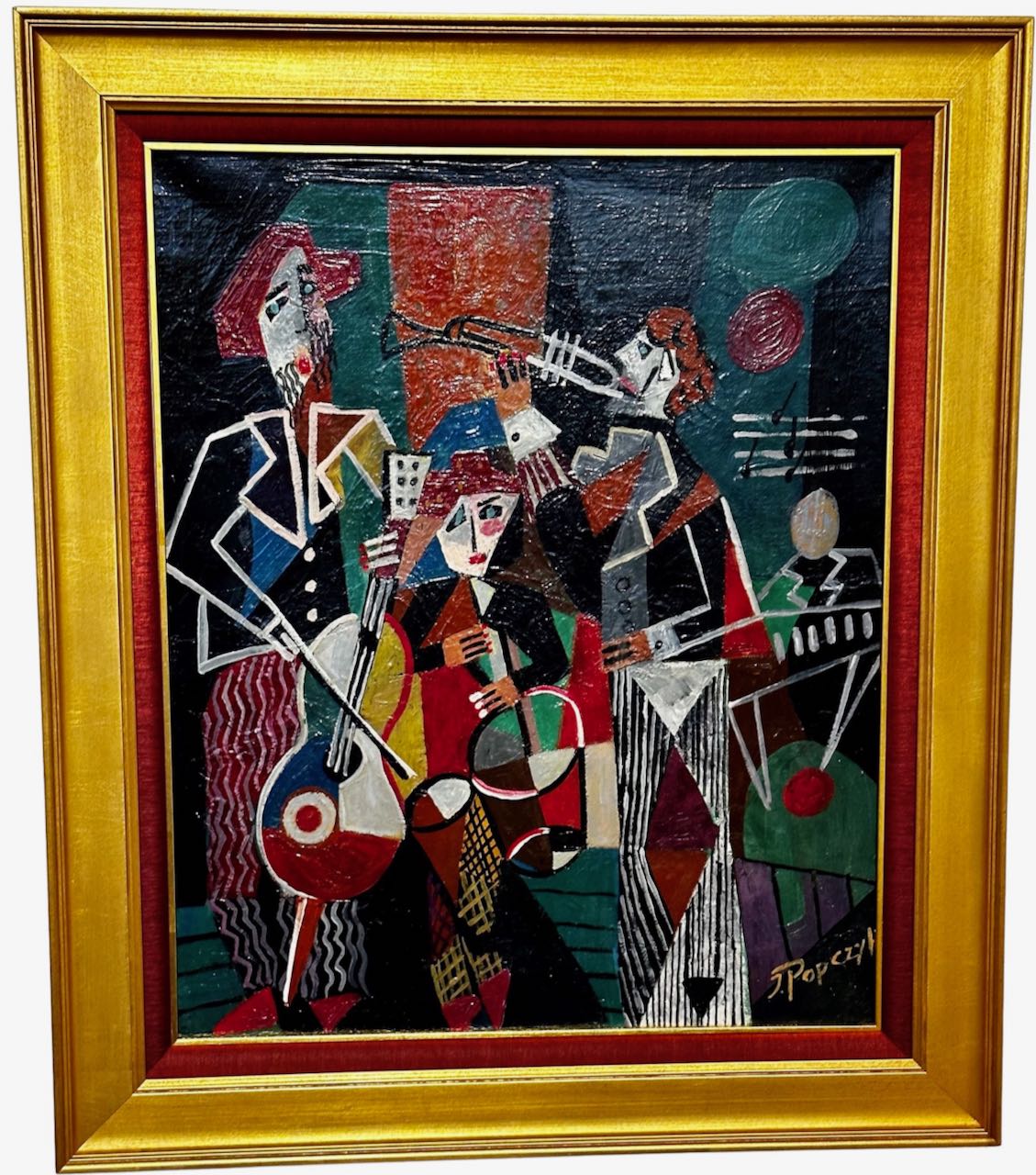
Cubism holds an unusually important place in the history of modern design because its ideas did not remain confined to painting. It began as a radical experiment on canvas in the first decade of the twentieth century, but within twenty years it had reshaped the way designers thought about furniture, interiors, architecture, glass, metalwork, lacquer, and nearly every category of the decorative arts. During the 1920s through the 1940s, when Art Deco became the dominant international style for modern living, the vocabulary of Cubism sat beneath much of what made the period so visually distinct. Cubism played a meaningful role in shaping certain aspects of Art Deco, particularly in its use of stepped forms, intersecting planes, stylized geometry, and a more compressed sense of space. These qualities can often be seen in Deco furniture and interiors, though usually in a refined and decorative way rather than as a direct extension of avant garde painting. A well designed Deco room was not simply elegant or fashionable, it was often carefully organized around balance, geometry, and visual control. That shared interest in structure helps explain why many of the period’s finest objects still feel so harmonious today. Cubism was certainly one influence among several that contributed to the Art Deco vocabulary, but its impact should be understood as selective rather than universal.
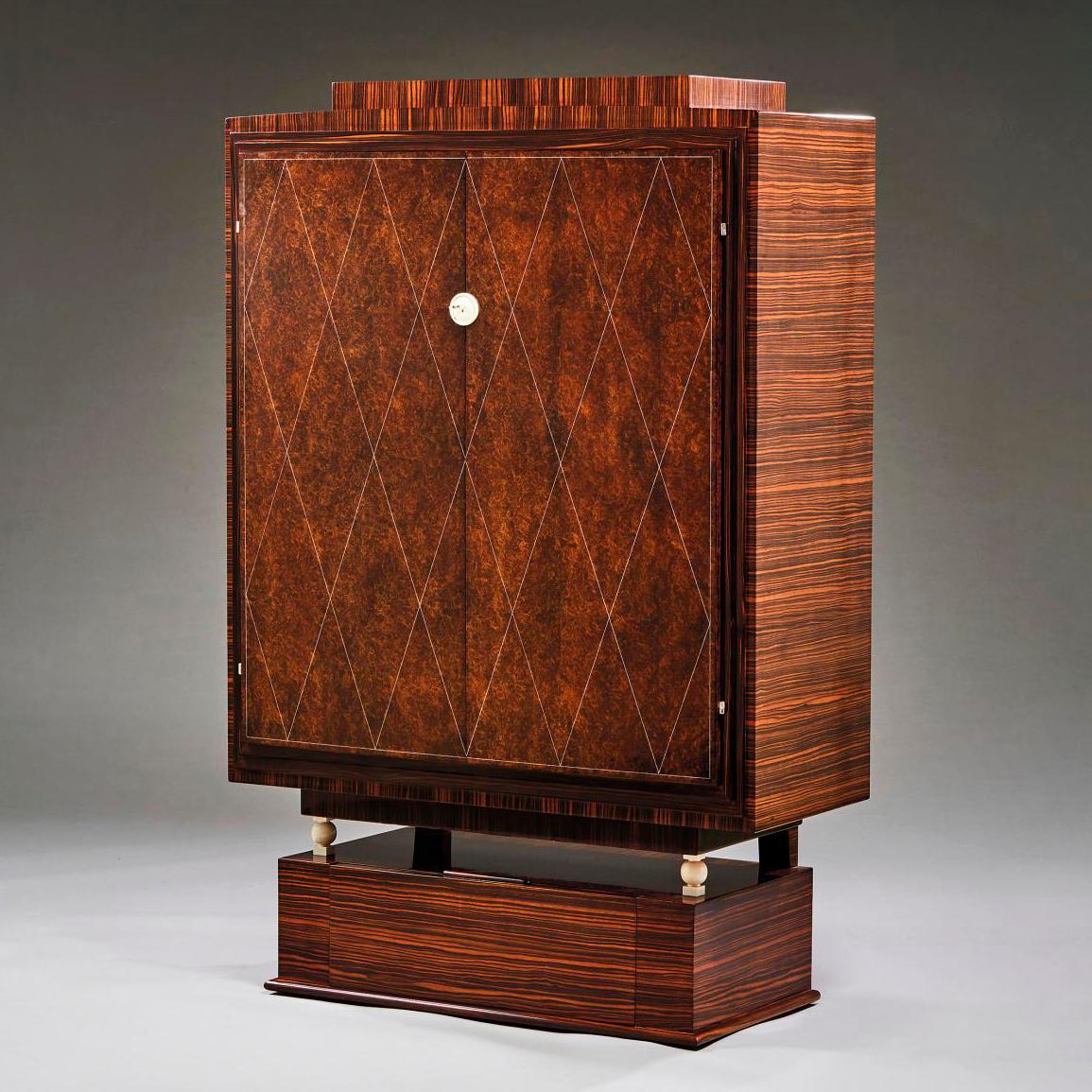
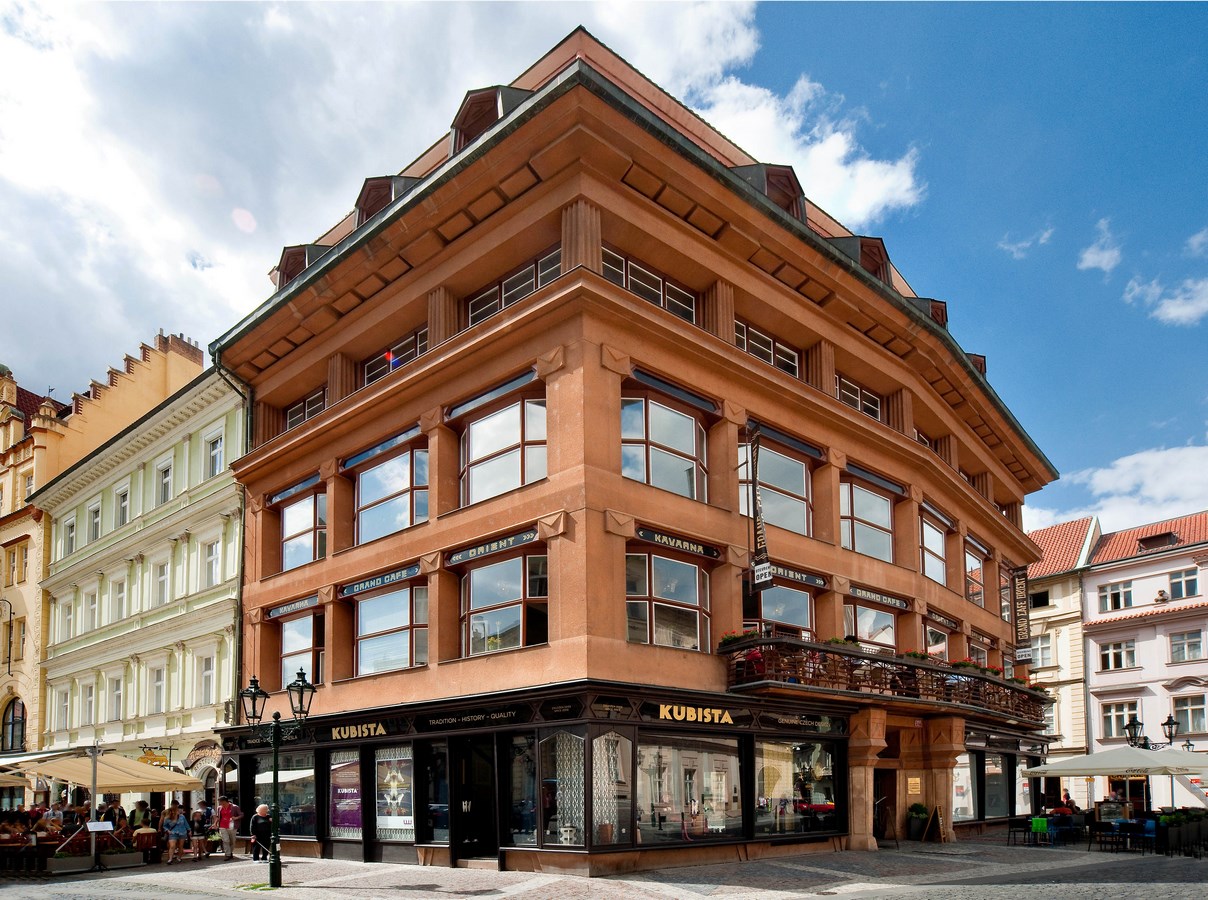
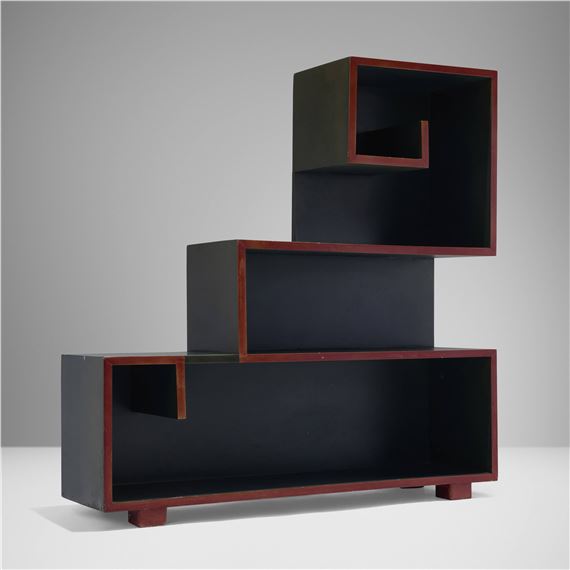
Left: 1922, Émile-Jacques Ruhlmann, “État Cabinet,” Middle: 1911-1912, Josef Gočár, House of the Black Madonna, Prague, Right: c. 1928, Paul T. Frankl, “Skyscraper” Bookcase
The story begins in Paris around 1907, when Pablo Picasso and Georges Braque began a working dialogue that would change the direction of Western art. Picasso’s Les Demoiselles d’Avignon, painted that year, is often cited as the opening move, though it was the sustained partnership between the two painters over the following years that truly developed the new language. They began by fracturing familiar subjects into angular planes, collapsing perspective, and allowing multiple viewpoints to coexist within a single composition. This early phase, known as Analytical Cubism, produced restrained, nearly monochromatic paintings built from tightly interlocking facets of muted ochre, gray, and brown. By around 1912, both artists shifted toward what came to be called Synthetic Cubism, introducing brighter colors, bold shapes, printed papers, and collage elements into their compositions. A wider circle of painters, including Juan Gris, Fernand Léger, Jean Metzinger, and Albert Gleizes, extended these ideas into exhibitions, essays, and theory, turning Cubism from a two-person experiment into a full international movement. By the end of the First World War, its essential principles, the rejection of traditional perspective, the celebration of geometry, the fracturing of form into stylized planes, had already begun migrating far beyond painting.
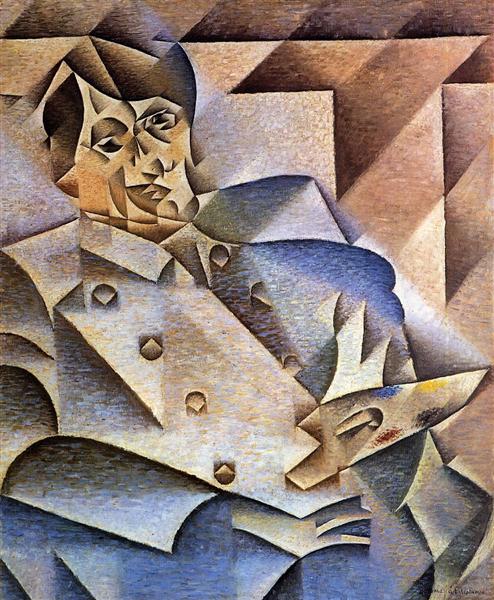
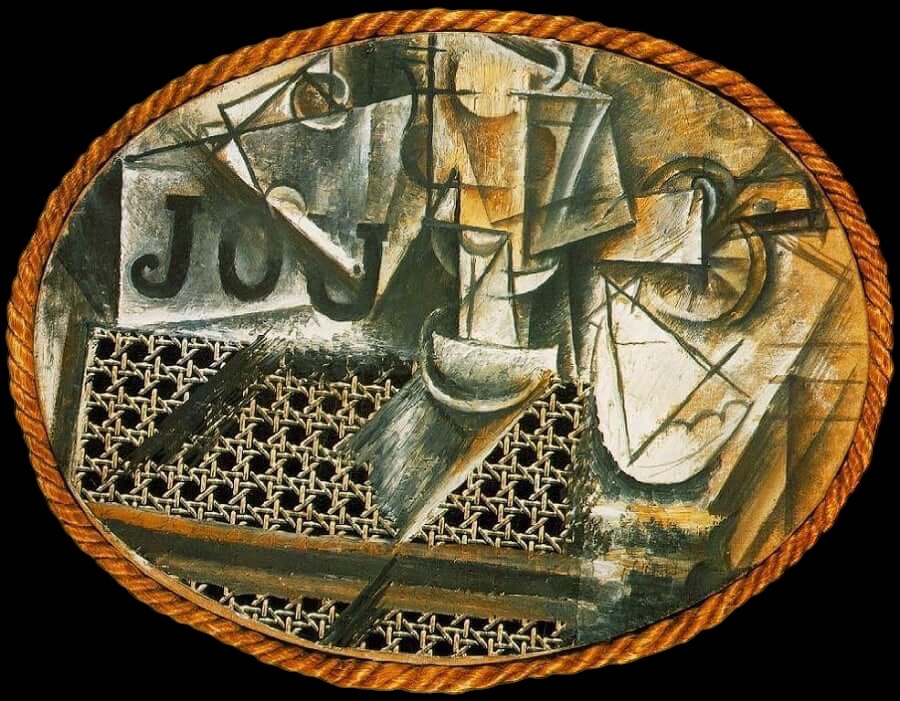
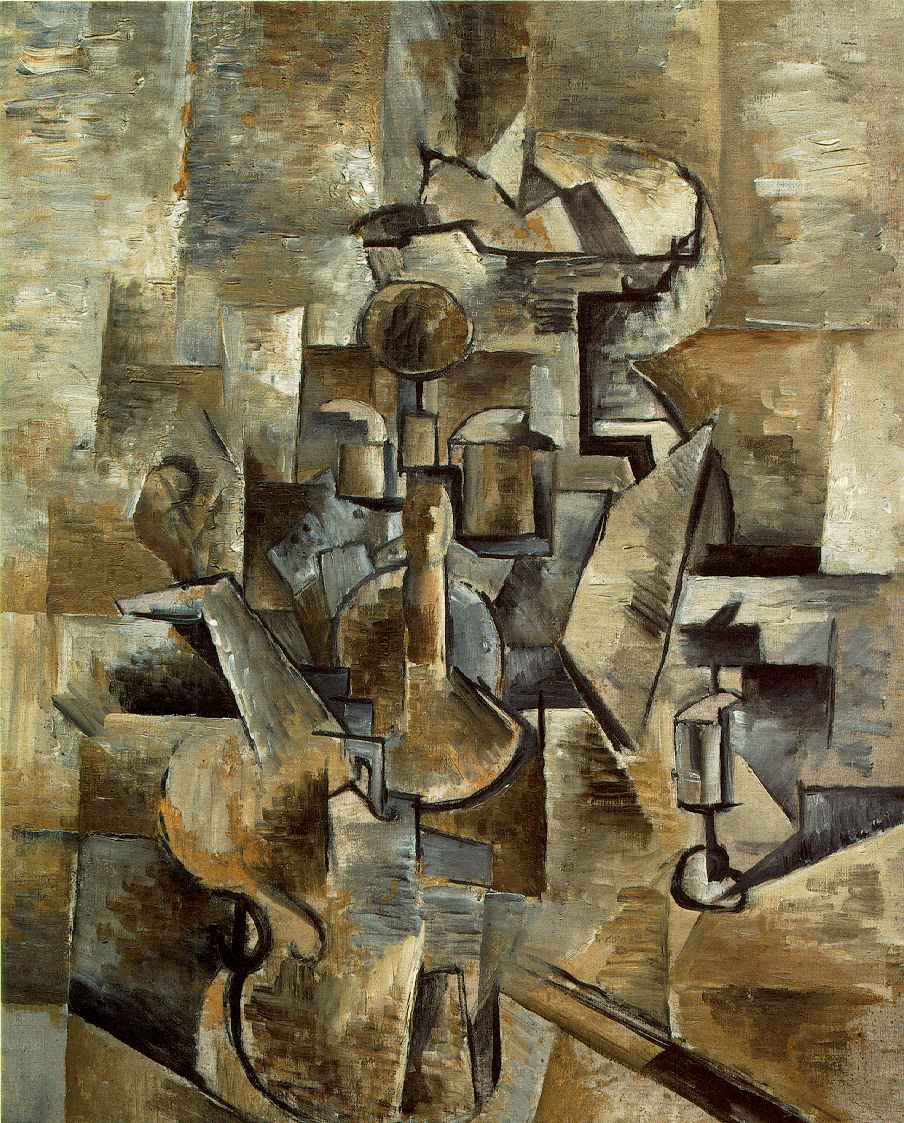
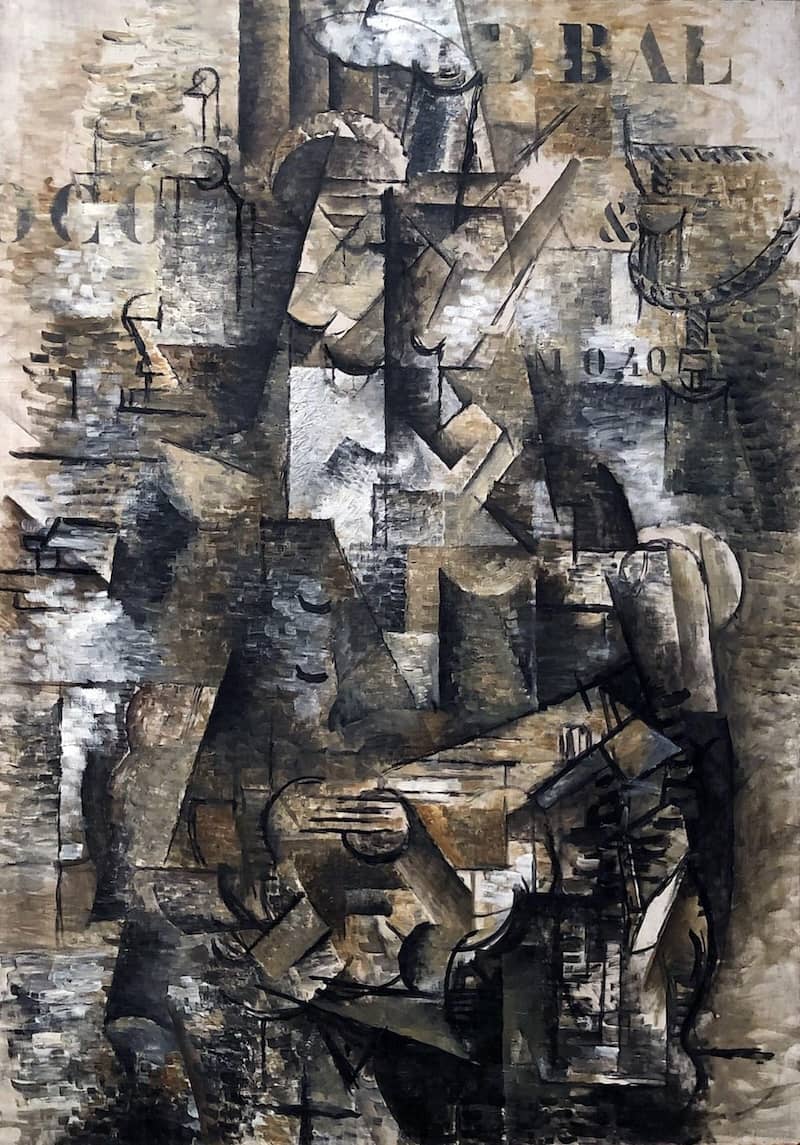
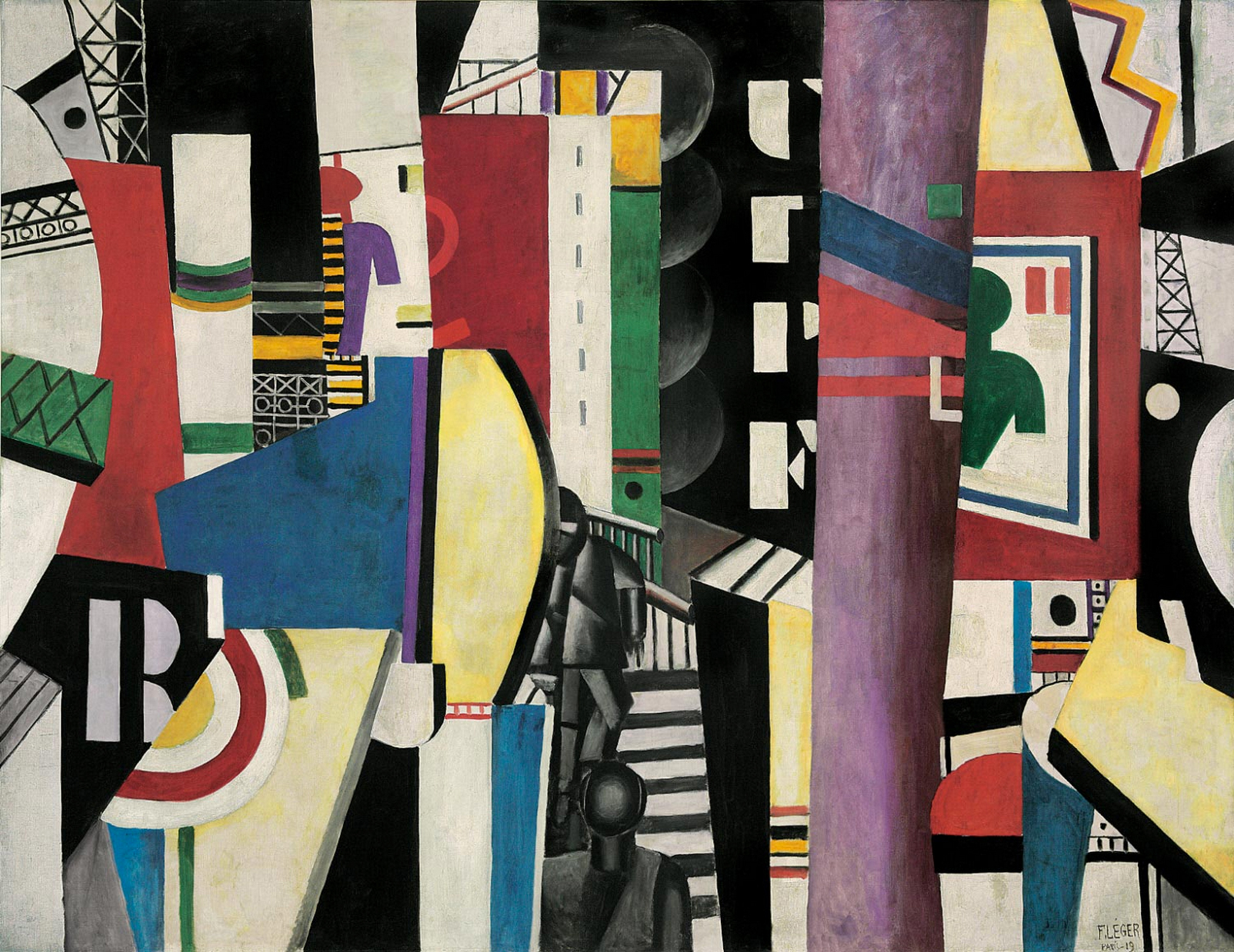
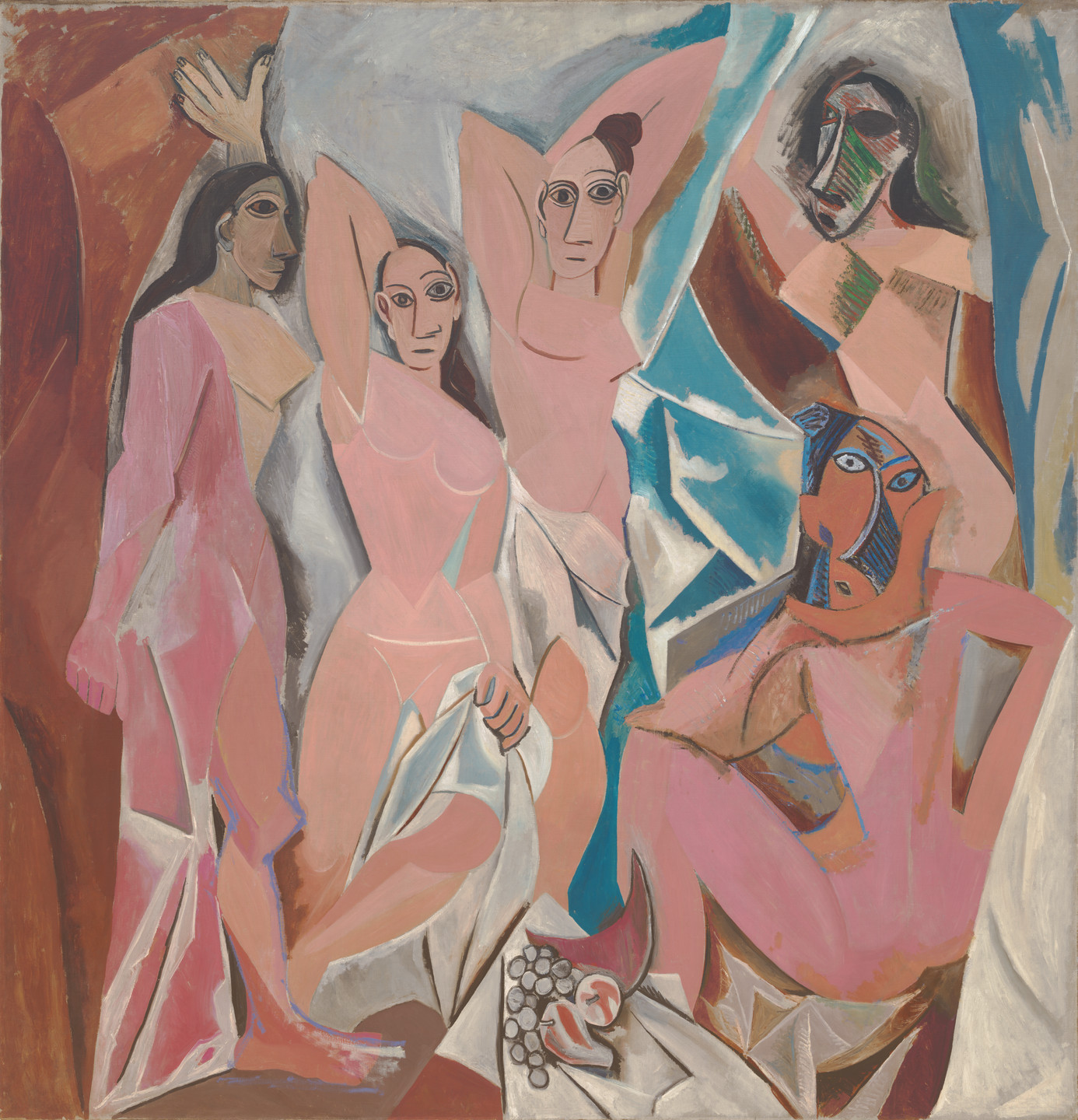
Top: Left: 1912, Juan Gris, “Portrait of Pablo Picasso,” Middle: 1912, Pablo Picasso, “Still Life with Chair Caning,” Right: 1910, Georges Braque, “Violin and Candlestick.” Bottom: Left: 1911, Georges Braque, “The Portuguese,” Middle: 1919, Fernand Léger, “The City,” Right: 1907, Pablo Picasso, “Les Demoiselles d’Avignon”
The great turning point came in 1925, when Paris hosted the Exposition Internationale des Arts Décoratifs et Industriels Modernes, the event that gave Art Deco its name. The exhibition brought together the finest French designers of the era, and visitors encountered furniture, interiors, textiles, glass, and metalwork that shared a new visual grammar rooted in Cubism’s sense of geometry and structure. Where earlier decorative styles had favored naturalistic ornament, curving silhouettes, and historical references, the designers at the 1925 Expo offered something sharper and more disciplined. Cabinets were built from intersecting planes. Carpets were laid out as angular compositions. Lacquered screens read almost as multi-panel paintings in their own right. Even the Exposition’s pavilions, with their stepped facades and stylized decorative reliefs, translated the principles of cubist composition into architectural form. The event made clear that the modern decorative arts would not simply borrow motifs from modern painting. They would absorb its structural logic, building rooms and objects that were composed rather than merely decorated. From that moment on, Cubism’s influence on Art Deco was no longer theoretical. It was visible in nearly every serious interior of the next two decades.
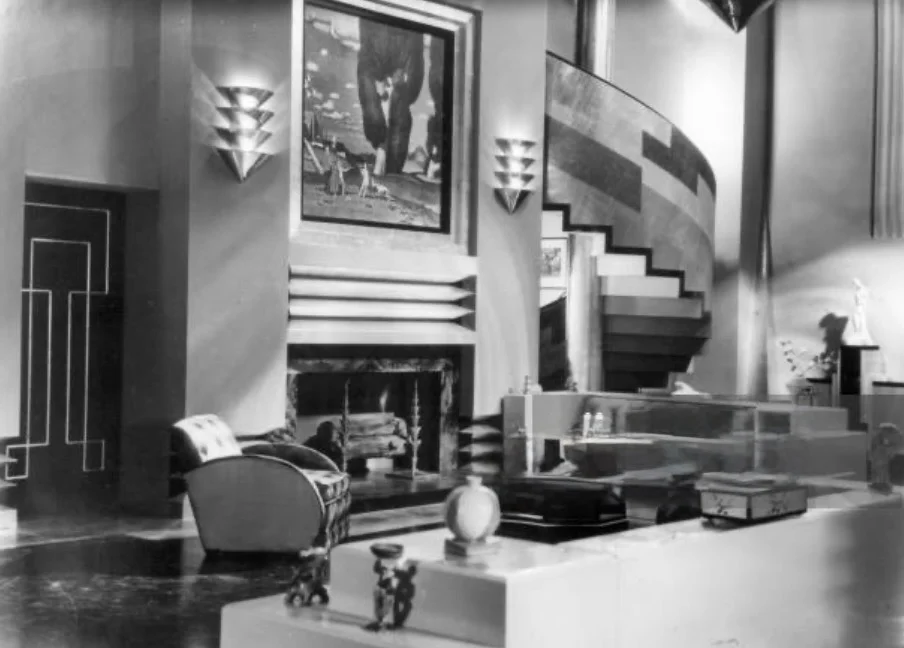
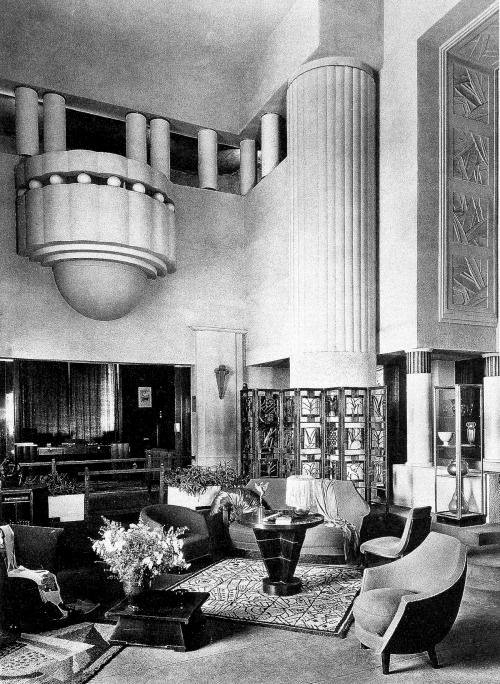
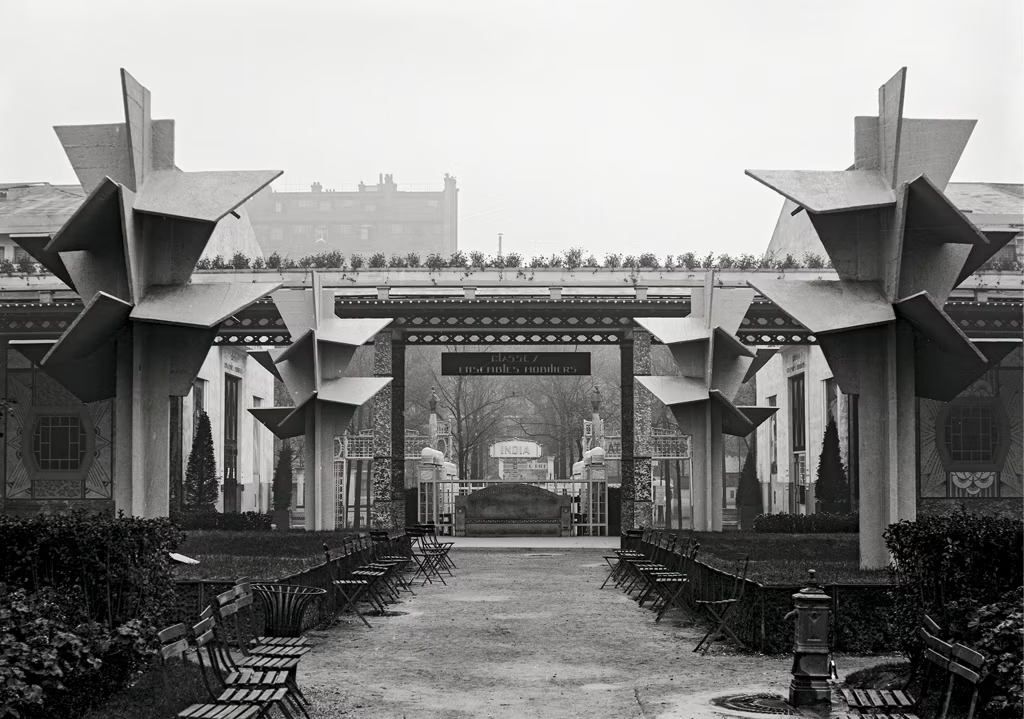
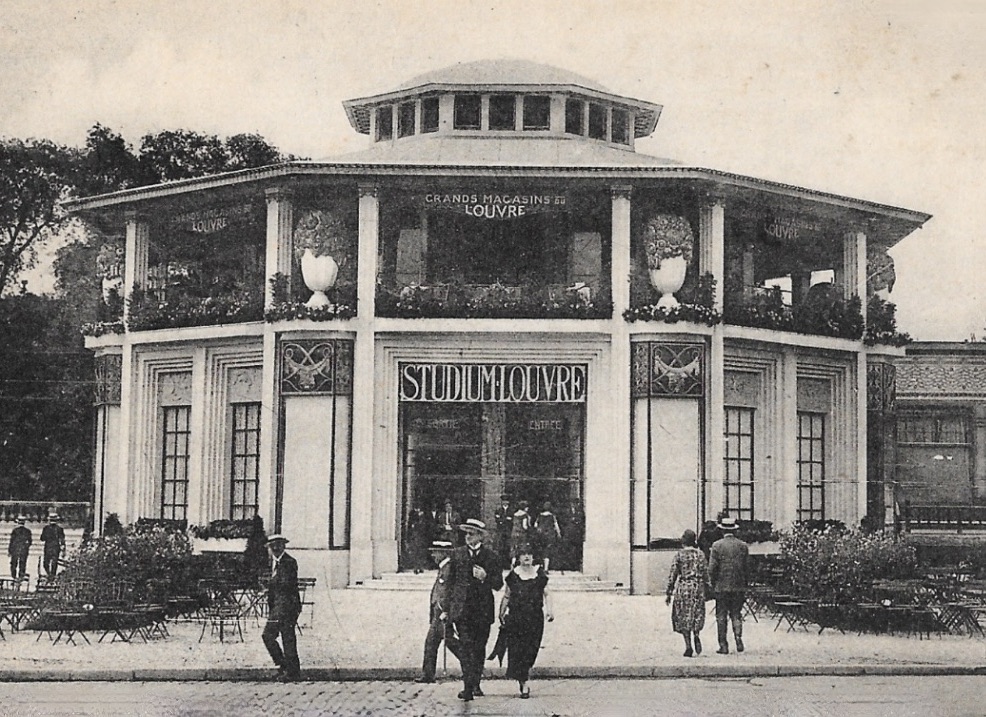
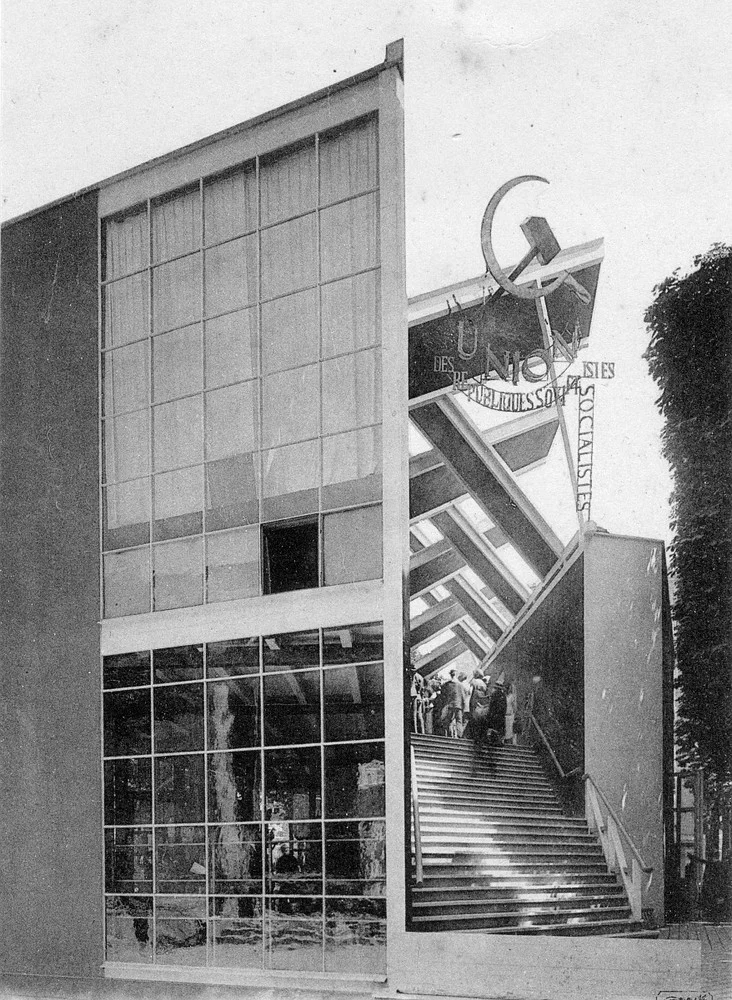
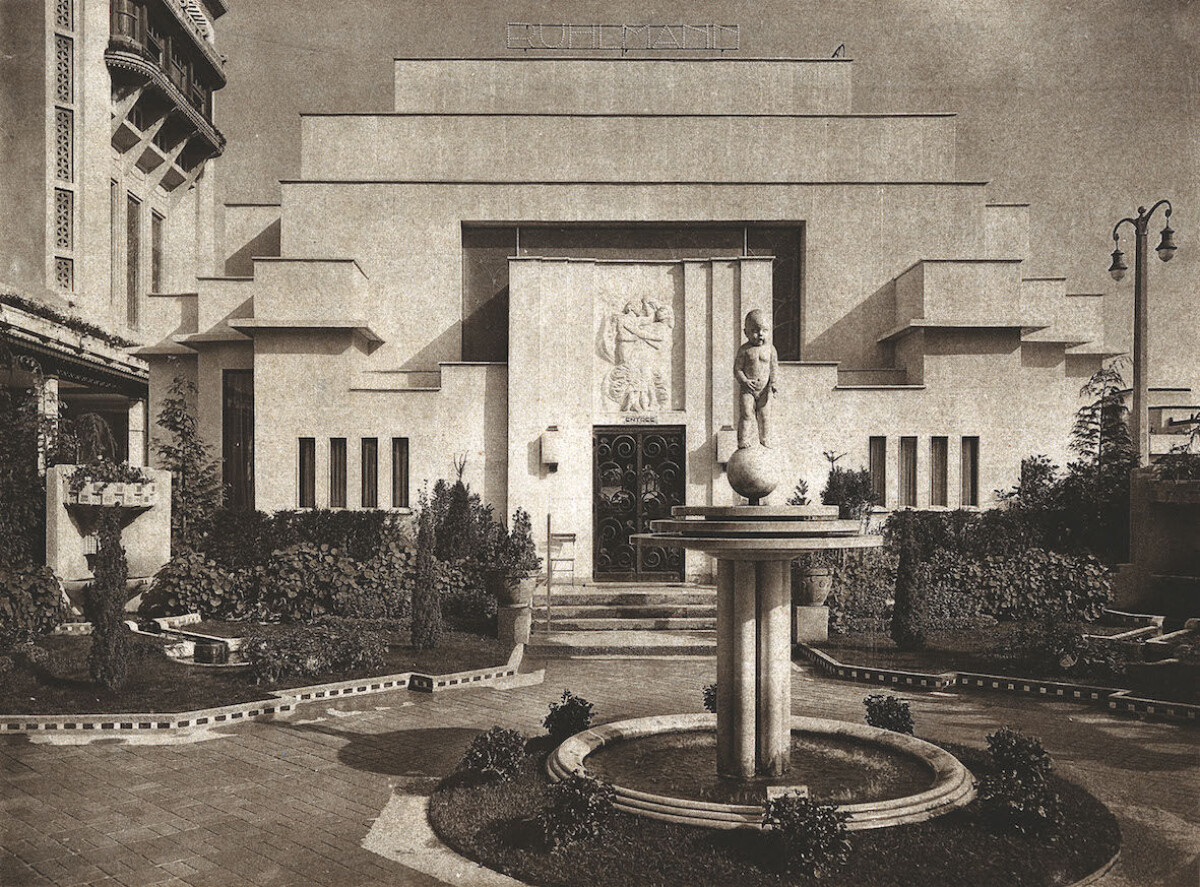
Top: Left: c. 1934, William Lescaze, Living Room of the William Lescaze House and Studio, New York, Middle: 1925, Henri Sauvage and Georges Wybo, Pavillon Primavera, Right: 1925, Robert Mallet-Stevens with Jan and Joël Martel, concrete trees at the Paris Expo. Bottom: Left: 1925, Albert Laprade, Studium-Louvre Pavilion, Middle: 1925, Konstantin Melnikov, Soviet Pavilion, Right: 1925, Pierre Patout and Émile-Jacques Ruhlmann, Hôtel du Collectionneur
The French designers who led this transformation produced some of the most sophisticated furniture ever made, and their relationship to Cubism was both deep and inventive. Pierre Legrain, originally a bookbinder, brought his graphic sensibility to low stools, cabinets, and seating that read almost as three-dimensional collages, with sharp geometric profiles and bold material contrasts. Louis Süe and André Mare, working through the Compagnie des Arts Français, developed a softer but equally geometric style in their sideboards, consoles, and salons, often balancing stylized floral marquetry against strict cubic forms. Marcel Coard favored heavier, sculptural pieces built from exotic woods, shagreen, and stone, with faceted surfaces and confident angular joinery that owed a clear debt to cubist composition. Jacques Émile Ruhlmann, widely regarded as the master of the period, worked in a more restrained register, but his cabinets and desks remain deeply geometric beneath their elegance, relying on proportion, symmetry, and precisely controlled planes rather than applied ornament for their effect. Designers such as Jean Dunand, Eileen Gray, and Clément Mère extended this vocabulary into lacquer, screens, and smaller case goods, ensuring that Cubism’s influence reached every corner of the well-appointed French interior. The result was a body of work that still represents the high-water mark of twentieth-century furniture making.
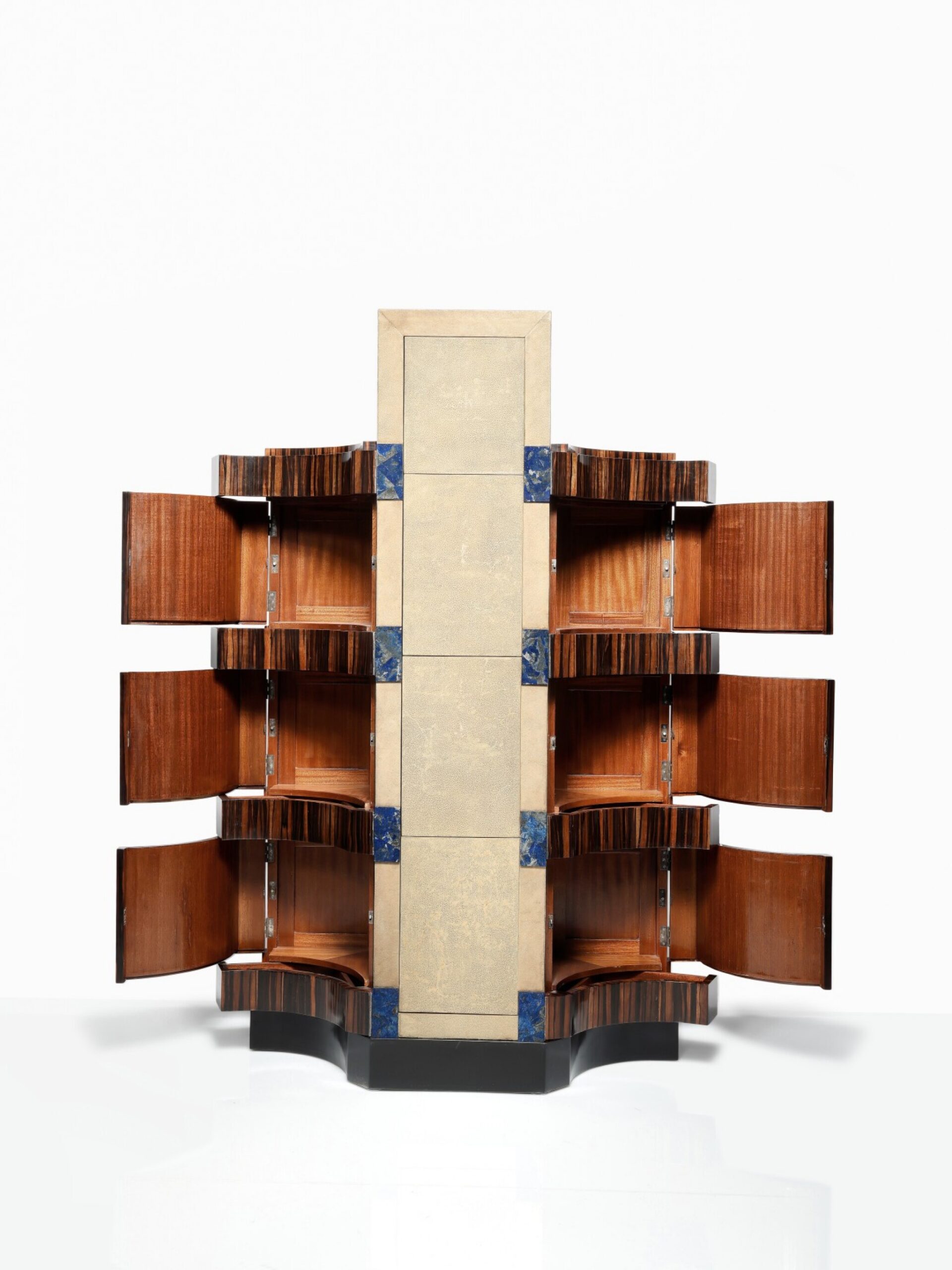
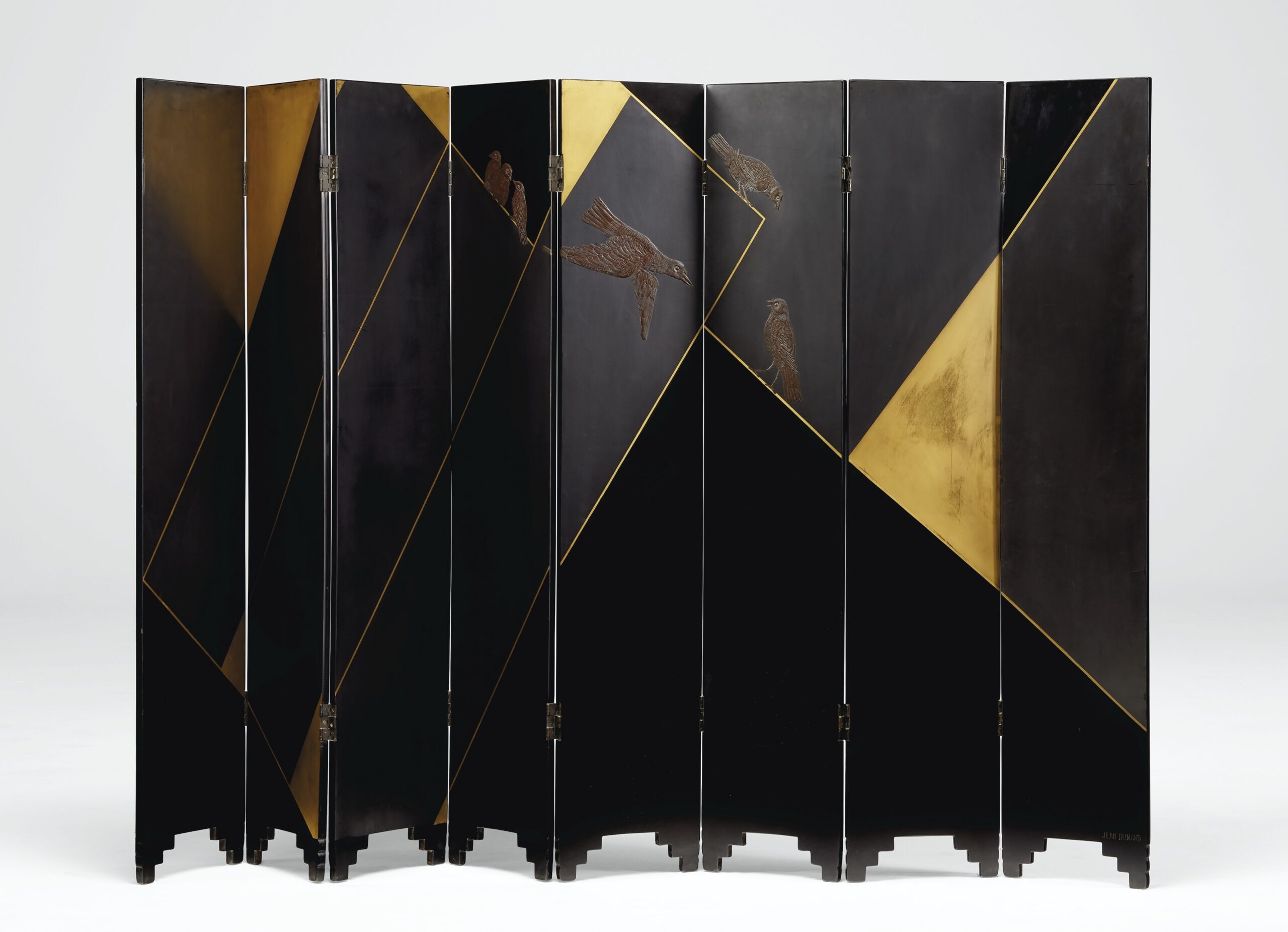
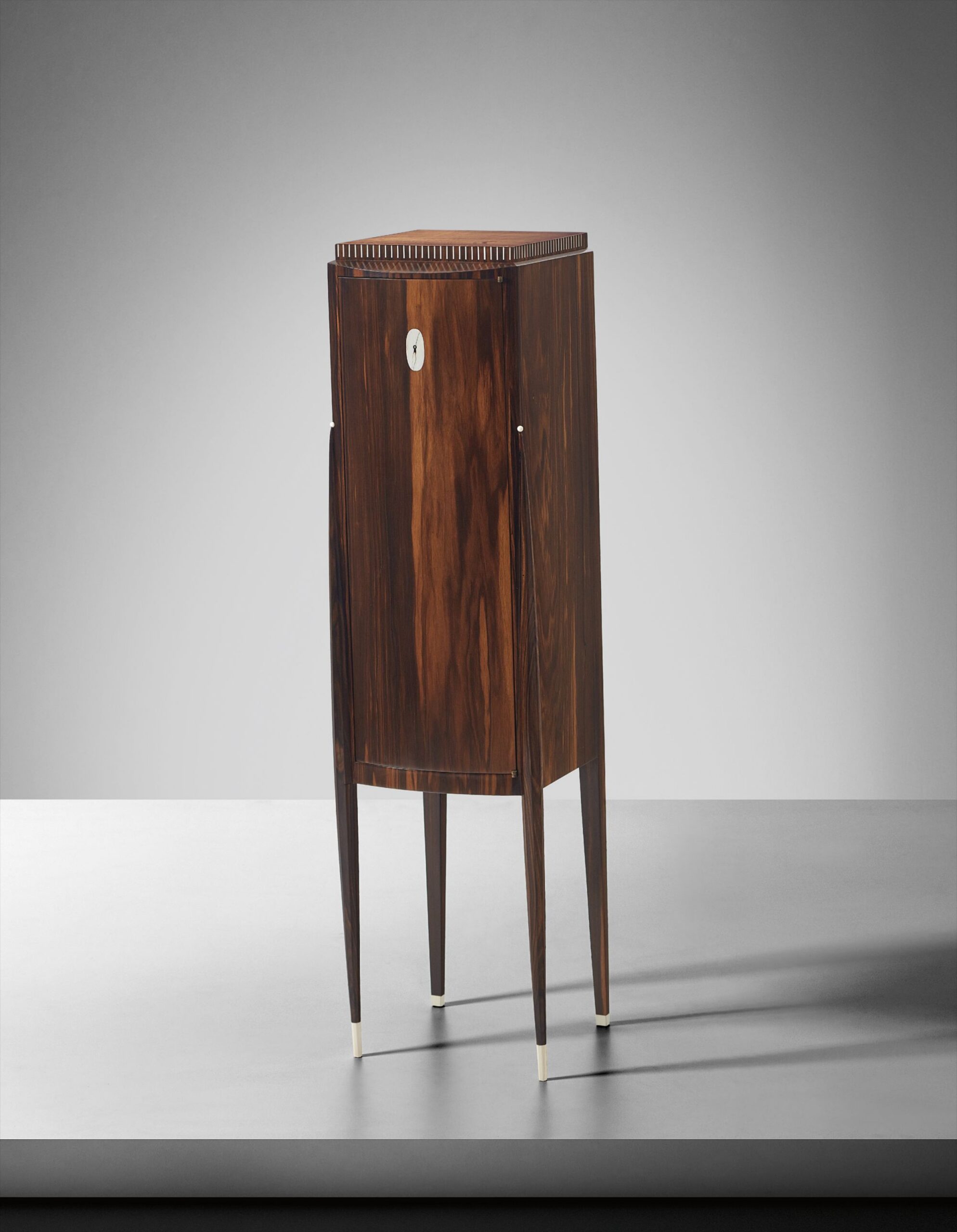
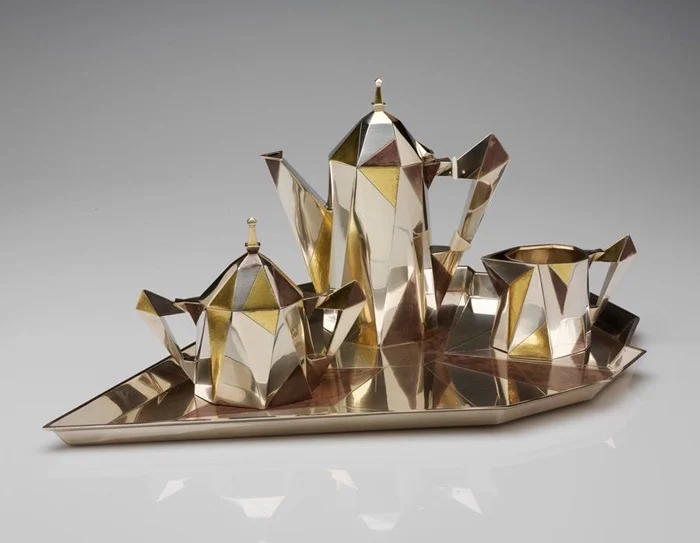
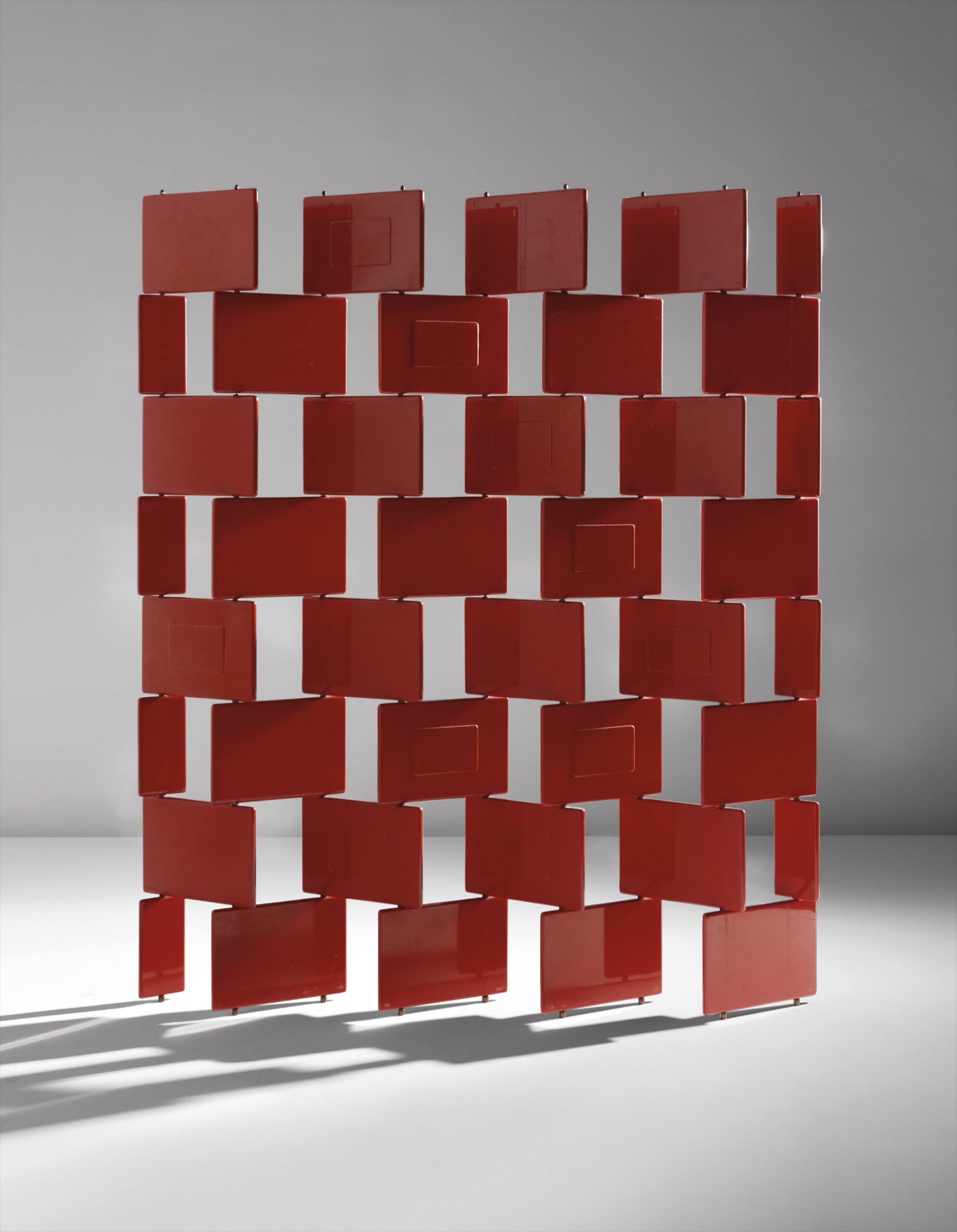

Top: Left: c. 1928, Marcel Coard, cabinet, Middle: c. 1928, Jean Dunand, “Oiseaux Décor Géométrique” screen, Right: c. 1925, Émile-Jacques Ruhlmann, cabinet. Bottom: Left: 1928, Jean Puiforcat, Cubist tea and coffee service, Middle: c. 1922-1925, Eileen Gray, “Brick Screen,” Right c. 1925, Pierre-Émile Legrain, desk
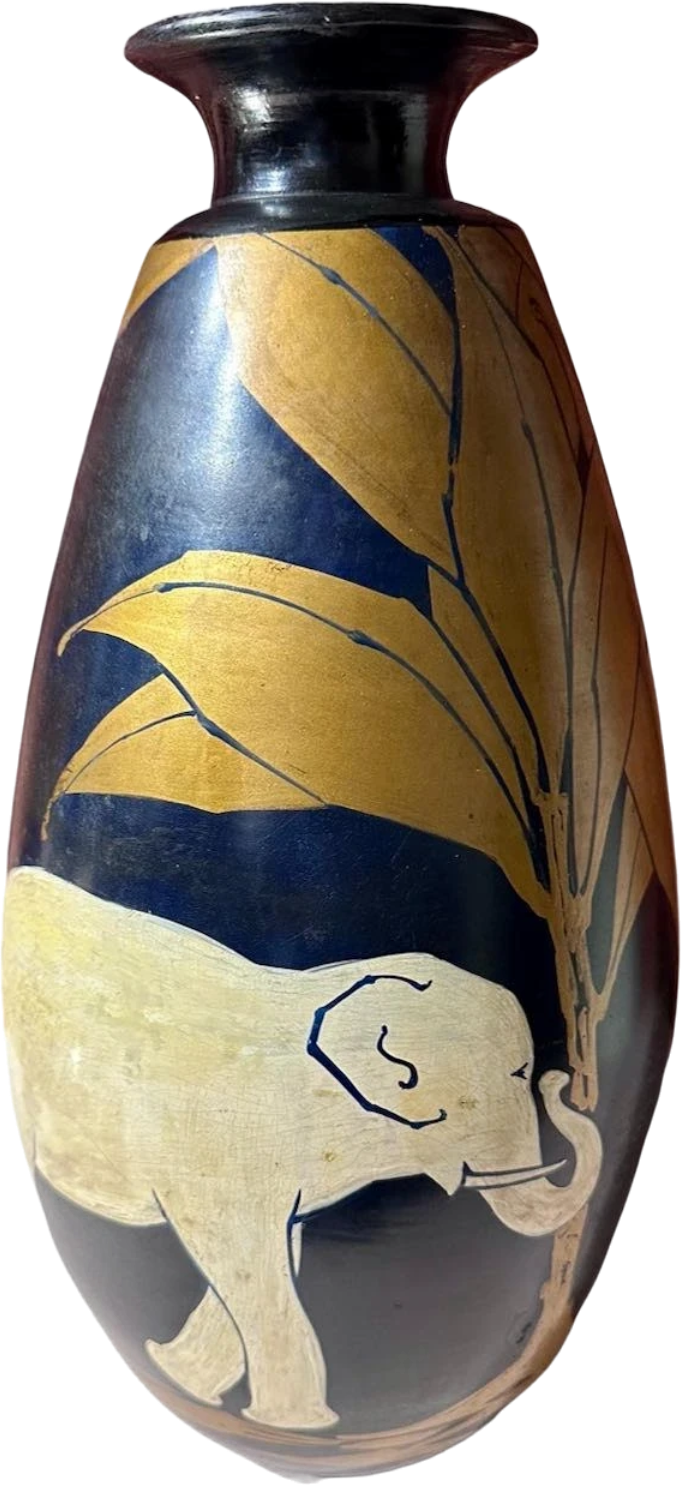
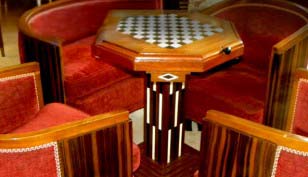
Materials played a decisive role in how Cubism entered the decorative arts, because the geometry at the heart of the style demanded surfaces that could carry its discipline. French designers favored rare and difficult woods such as Macassar ebony, amboyna, palmwood, and Brazilian rosewood, all of which presented dramatic grain that complemented the strict angular forms they were worked into. Lacquer, particularly the traditional East Asian technique revived by Jean Dunand and others in Paris, produced deep, reflective surfaces that suited stylized cubist compositions, whether abstract or inspired by stylized human and animal figures. Shagreen, the pale sharkskin and stingray skin known in French as galuchat, was applied to cabinets, small boxes, and desk accessories, offering a cool geometric texture when cut into tile-like patterns. Parchment, ivory, silvered metal, and polished steel all entered the vocabulary as well, each prized for its ability to articulate a plane or an edge with precision. A well-made Deco cabinet in the cubist spirit might combine four or five of these materials within a single object, each contributing a different kind of geometry. This emphasis on material clarity is part of what separates the best furniture of the period from its later imitations. It was not decoration for its own sake. It was structure, surface, and geometry working together, in the same way that a cubist painter built a composition from carefully balanced planes.
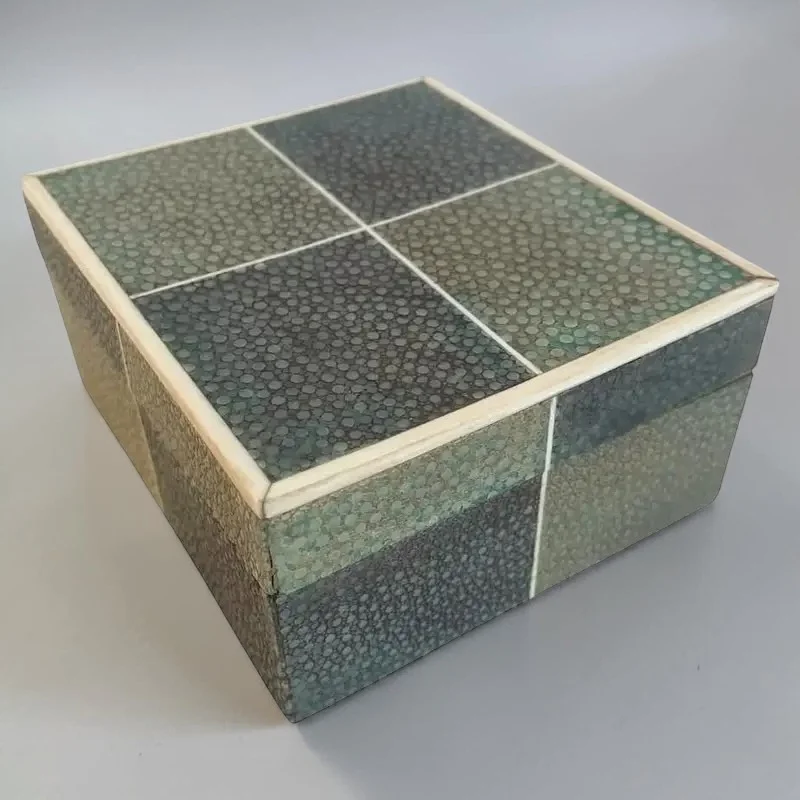

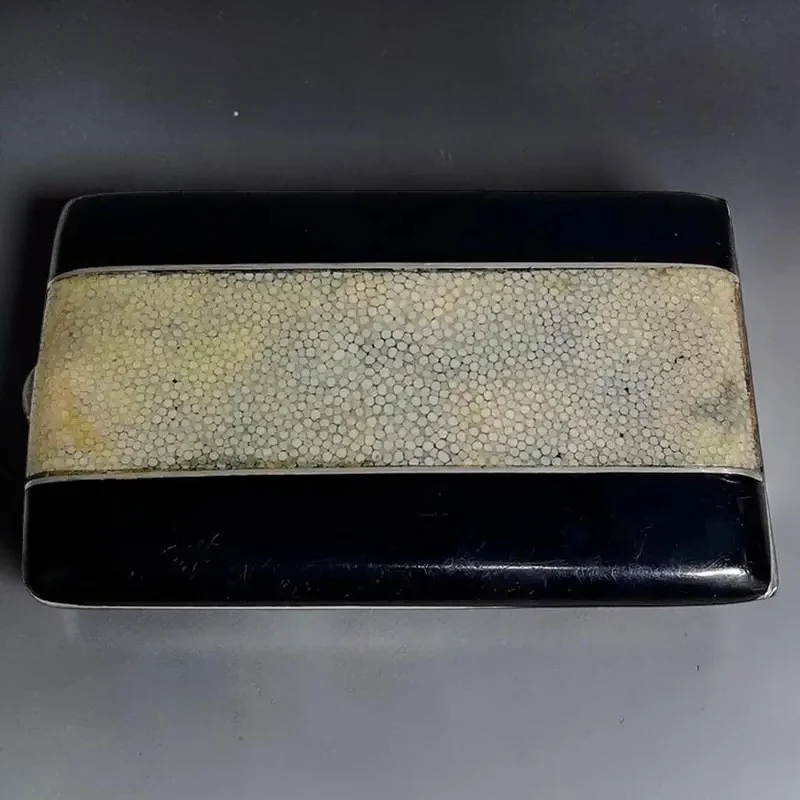
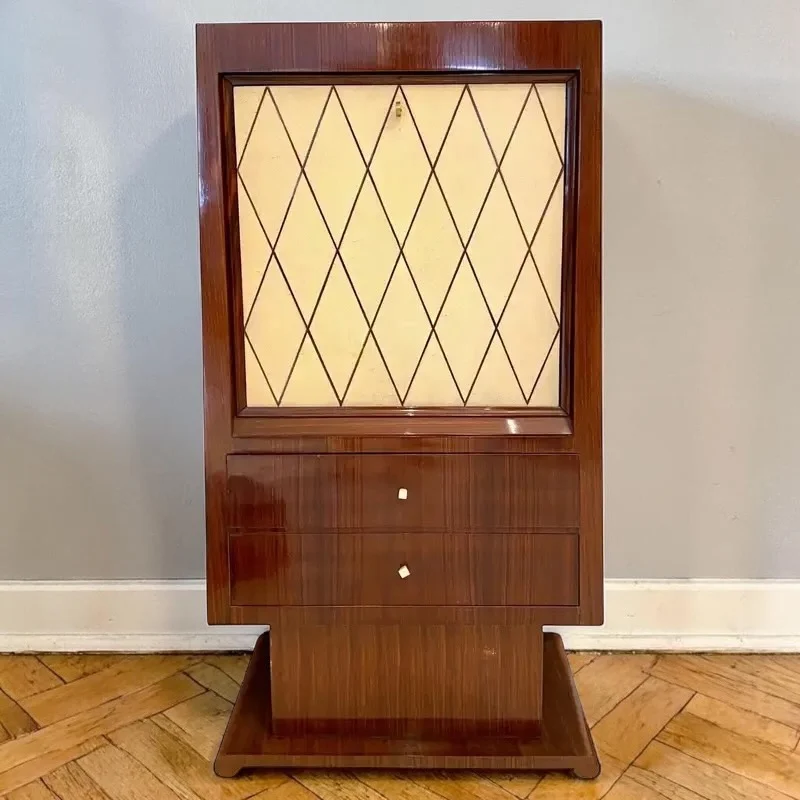
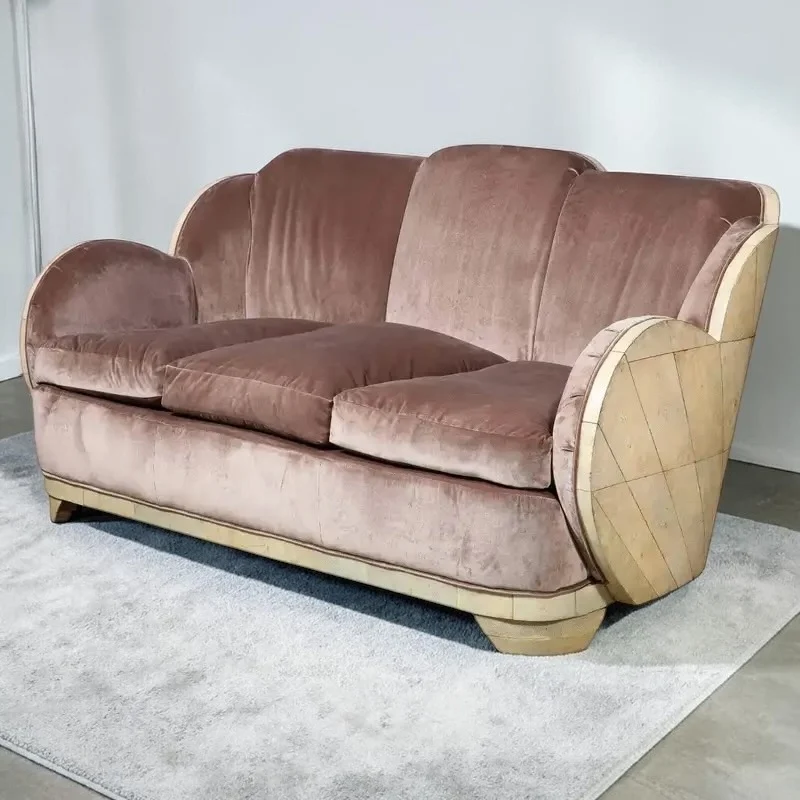
Top: Left: Ivory Shagreen Box. Middle: Parchment Screen, Right: Lacquer and Shagreen Cigarette Case, Bottom: Left: Brazilian Rosewood, Parchment & Ivory cabinet, Right: “Cloud” Sofa with Shagreen by Harry & Lou Epstein Furniture
One of the most remarkable and least expected chapters in the story unfolded in Prague, where a small group of Czech architects and designers pushed Cubism further into three dimensions than anyone in France ever attempted. Beginning around 1910, figures such as Pavel Janák, Josef Gočár, Josef Chochol, and Vlastislav Hofman developed a full decorative movement now known as Czech Cubism, producing architecture, furniture, ceramics, and metalwork whose surfaces were fractured into faceted crystalline planes. Where French designers often used cubist ideas as an underlying structural principle, the Czechs treated them as the visible finish of the work itself. A Czech Cubist chair might have a back rest shaped by a series of sharp diagonal breaks, or a sideboard might be faced entirely in intersecting prismatic forms that catch the light the way a cut gemstone does. Buildings such as the House of the Black Madonna in Prague, completed in 1912 by Josef Gočár and today home to the Museum of Czech Cubism, translated these principles into full architectural statements, complete with faceted cornices, angular balconies, and geometric interiors.
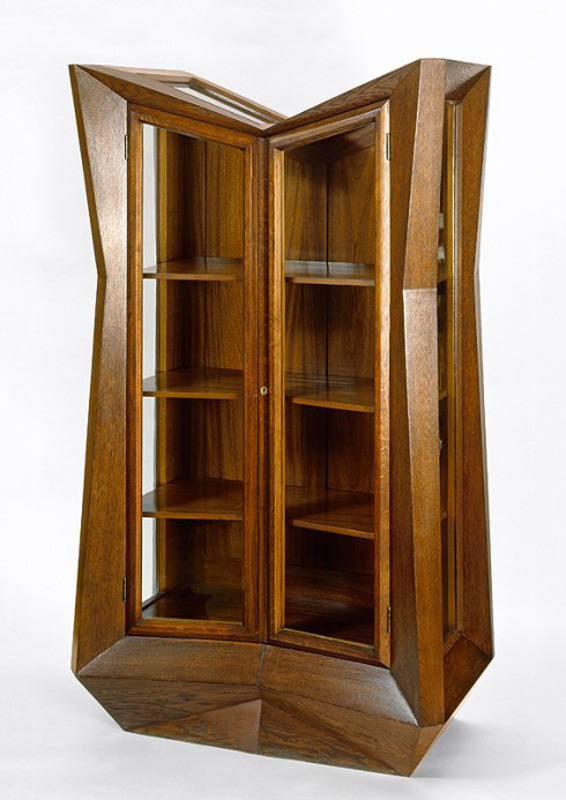

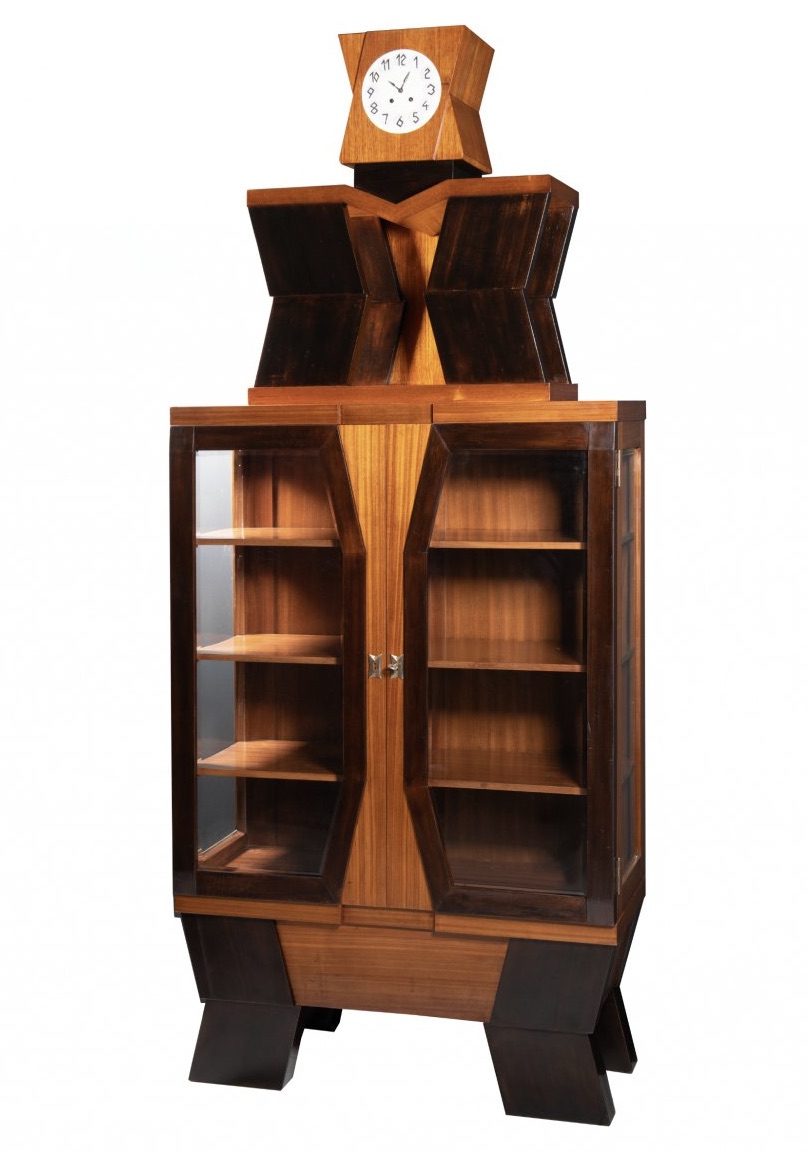
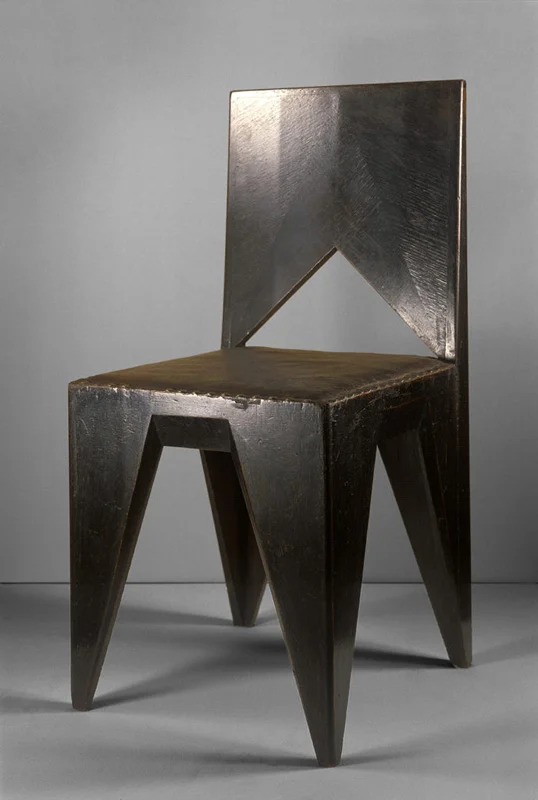
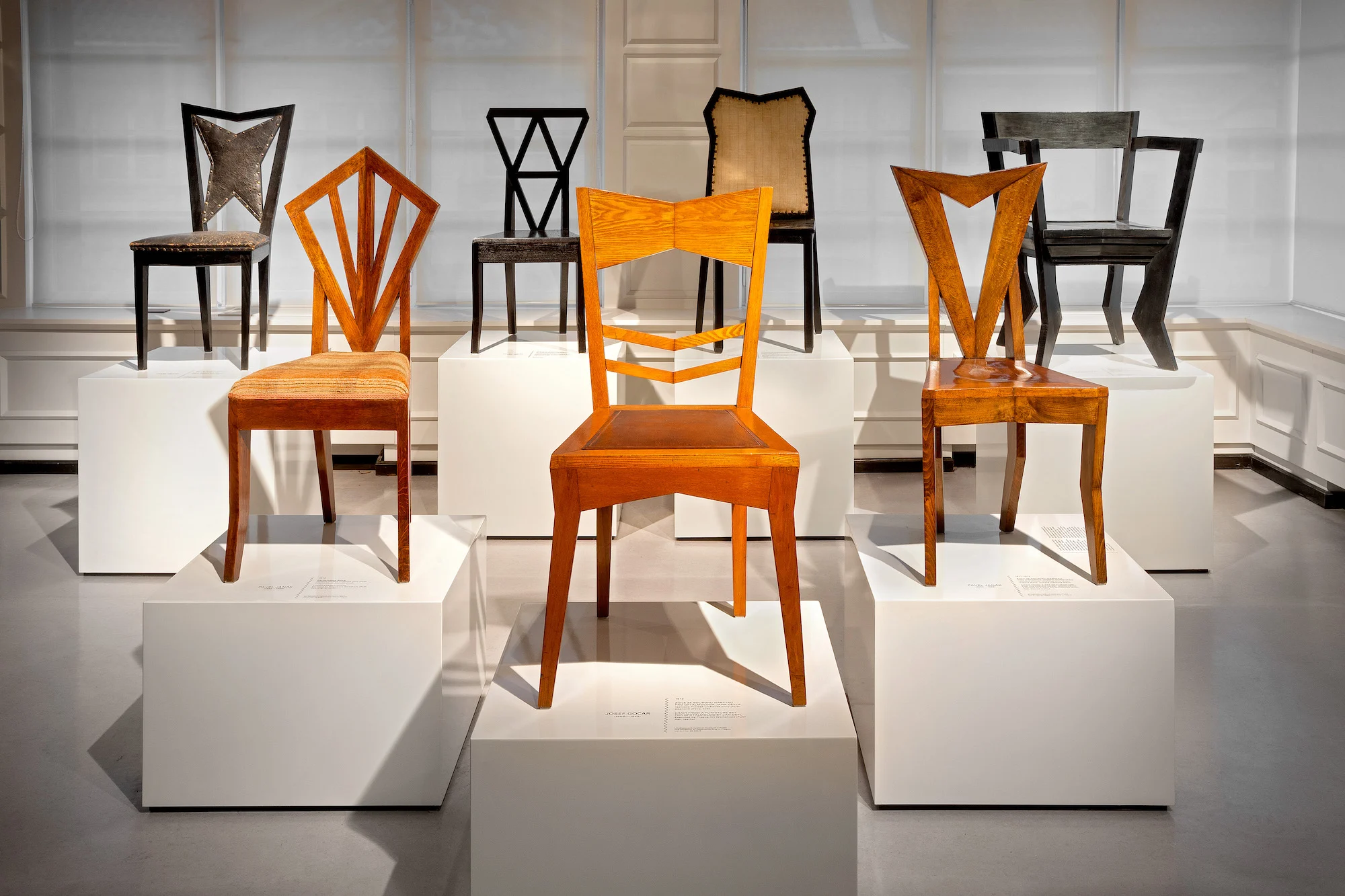
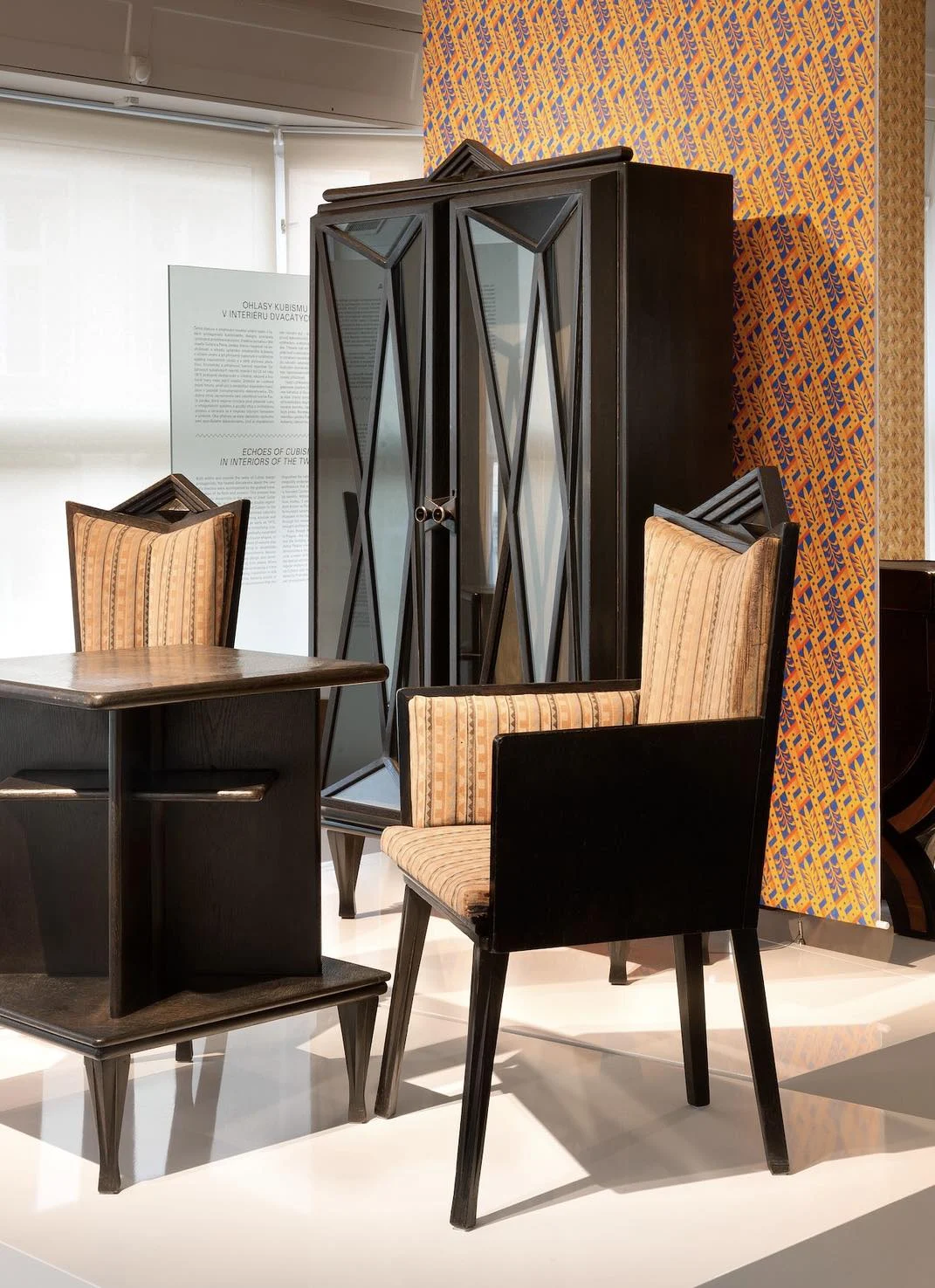
Top: Left: c. 1912-1913, Josef Gočár, Czech Cubist vitrine, Middle: c. 1912-1913, Czech Cubist living room suite, Right: 1913, Josef Gočár, Czech Cubist cabinet with clock, Bottom: Left: 1911-1912, Pavel Janák, Cubist chair in black-stained oak, Middle: c. 1911-1914, Czech Cubist chairs by Pavel Janák and Josef Gočár, Museum of Decorative Arts, Prague, Right: c. 1912-1913, Pavel Janák, Cubist chairs and cabinet, House of the Black Madonna, Prague
The movement was relatively short-lived, largely confined to the years before the First World War and the early 1920s, but its influence within Central European design was lasting. For collectors and historians today, Czech Cubism stands as proof that the movement’s ideas were flexible enough to support a complete decorative vocabulary, not simply a style of painting.
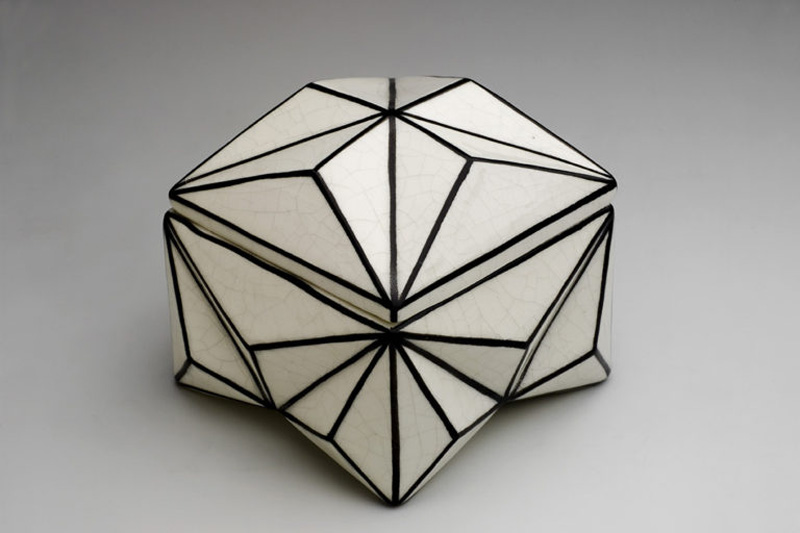
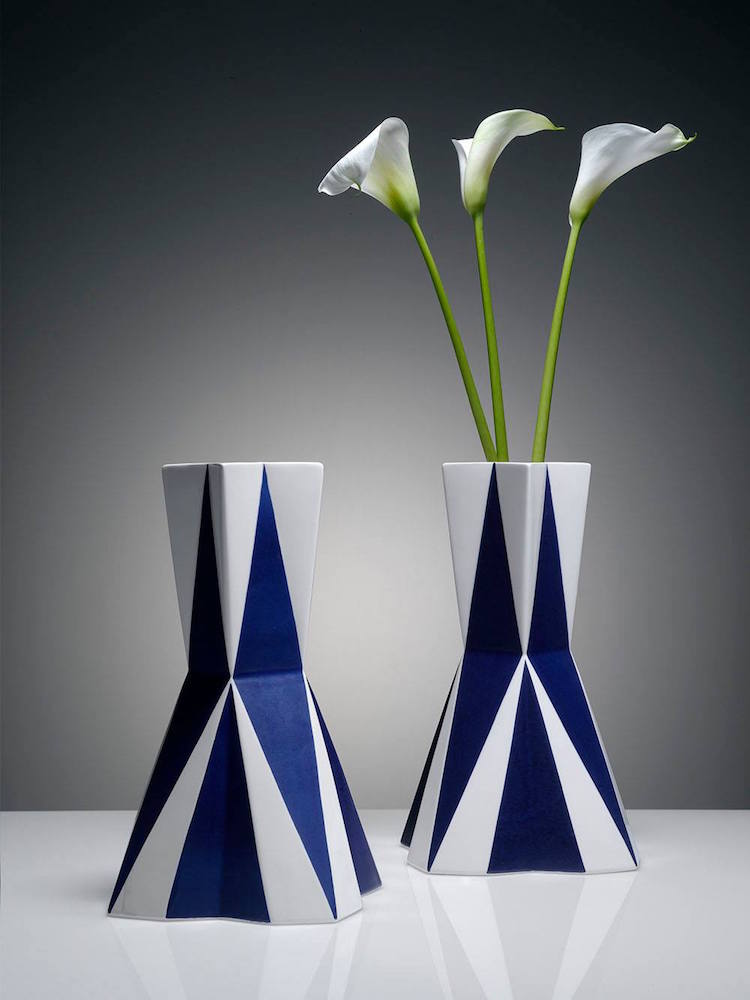
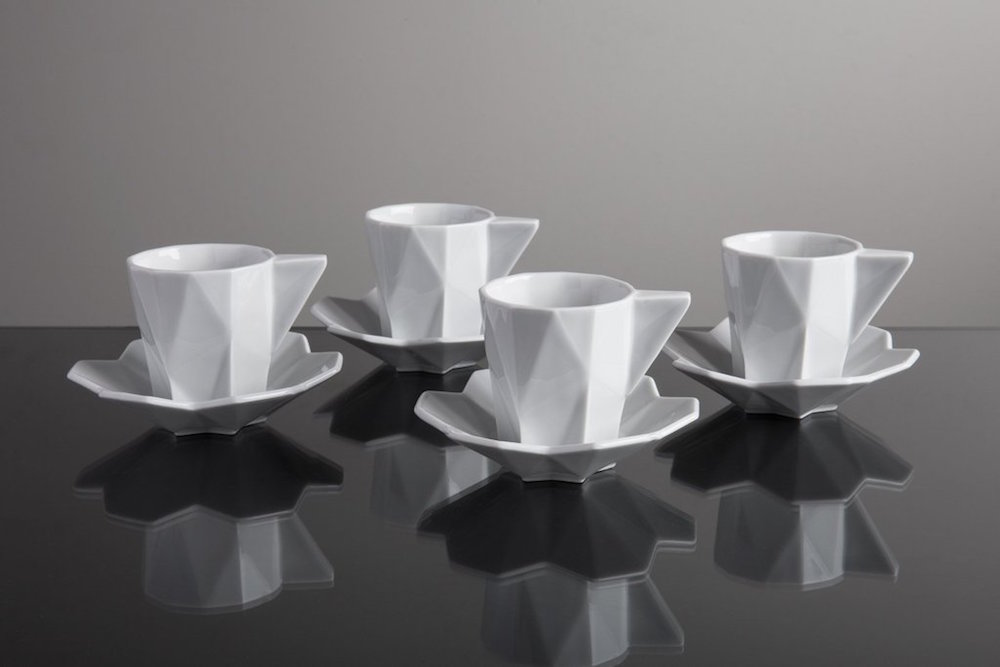
Left: 1911, Pavel Janák, Cubist ceramic box, Middle: 1911-1912, Vlastislav Hofman, Cubist vase for Artěl, Right: 1911, Pavel Janák, Cubist coffee service for Artěl
Across the Atlantic, American designers interpreted Cubism in a distinctly different register, one shaped by skyscrapers, industry, and the energy of the modern American city. The Vienna born designer Paul Frankl arrived in New York in 1914 and became one of the clearest voices of American Art Deco, producing his celebrated Skyscraper furniture in the late 1920s. These bookcases, desks, and cabinets were built from stacked rectangular forms that deliberately echoed the setback silhouettes of New York skyscrapers, translating the cubist idea of intersecting geometric planes into recognizably American imagery. Donald Deskey, best known for his interiors at Radio City Music Hall, completed in 1932, worked in a similar spirit, combining lacquer, chrome, aluminum, and Bakelite in furniture and interiors whose geometric composition owed a clear debt to cubist principles. Kem Weber in California and Gilbert Rohde in New York extended the vocabulary further, adapting the same structural logic for the growing American market for modern furniture. American Cubist influenced design tended to favor cleaner lines, more industrial materials, and a slightly less ornate sensibility than its French counterpart, reflecting a culture that admired mass production and engineering as much as craftsmanship. Even so, the connection was unmistakable. The flattened planes, stepped profiles, and stylized geometry that defined American Art Deco interiors all grew from the same Parisian experiment that had begun two decades earlier.
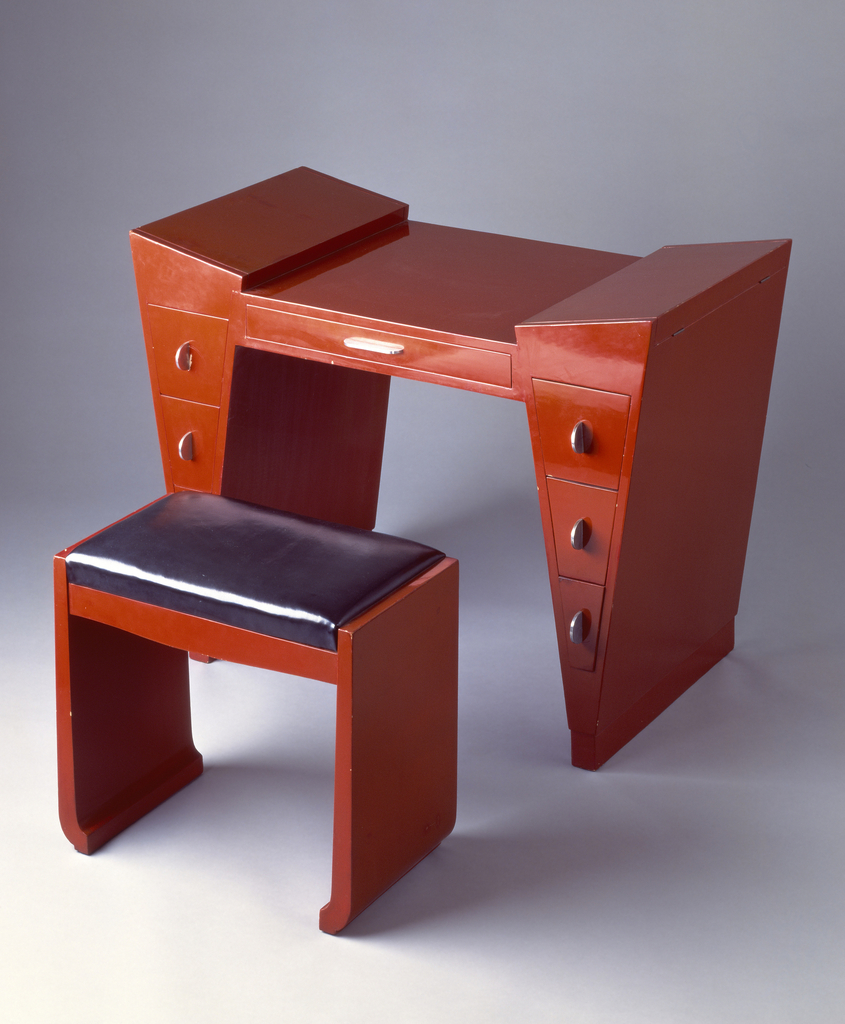
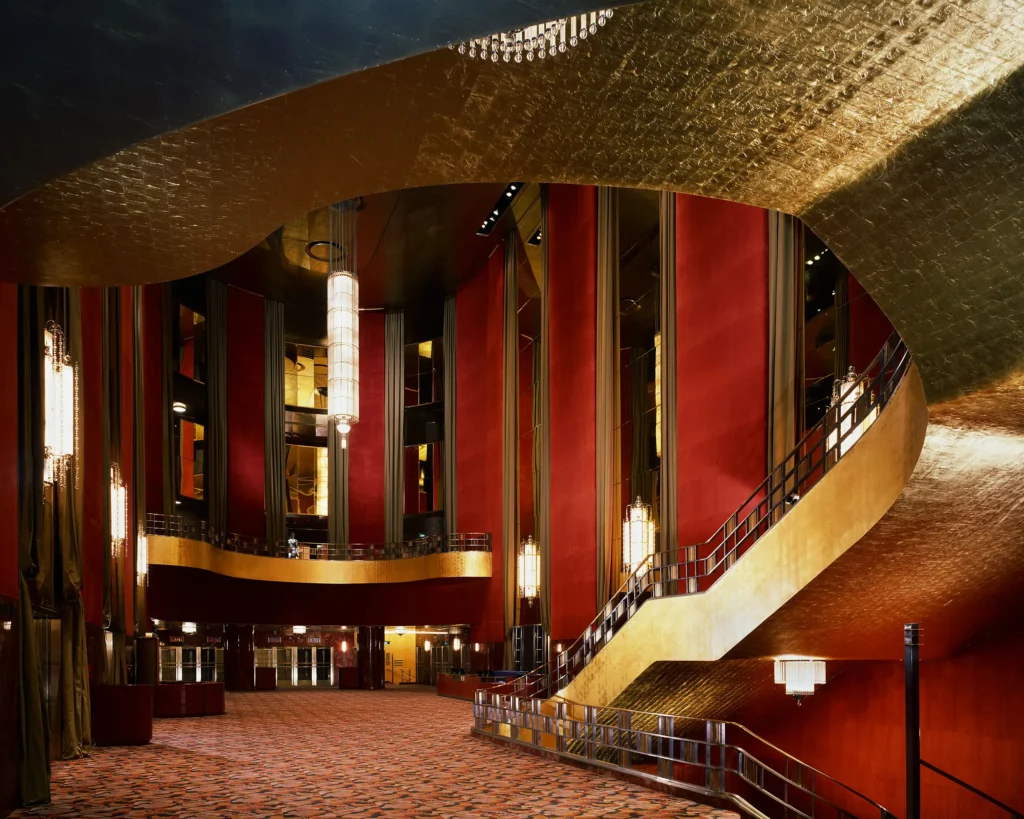

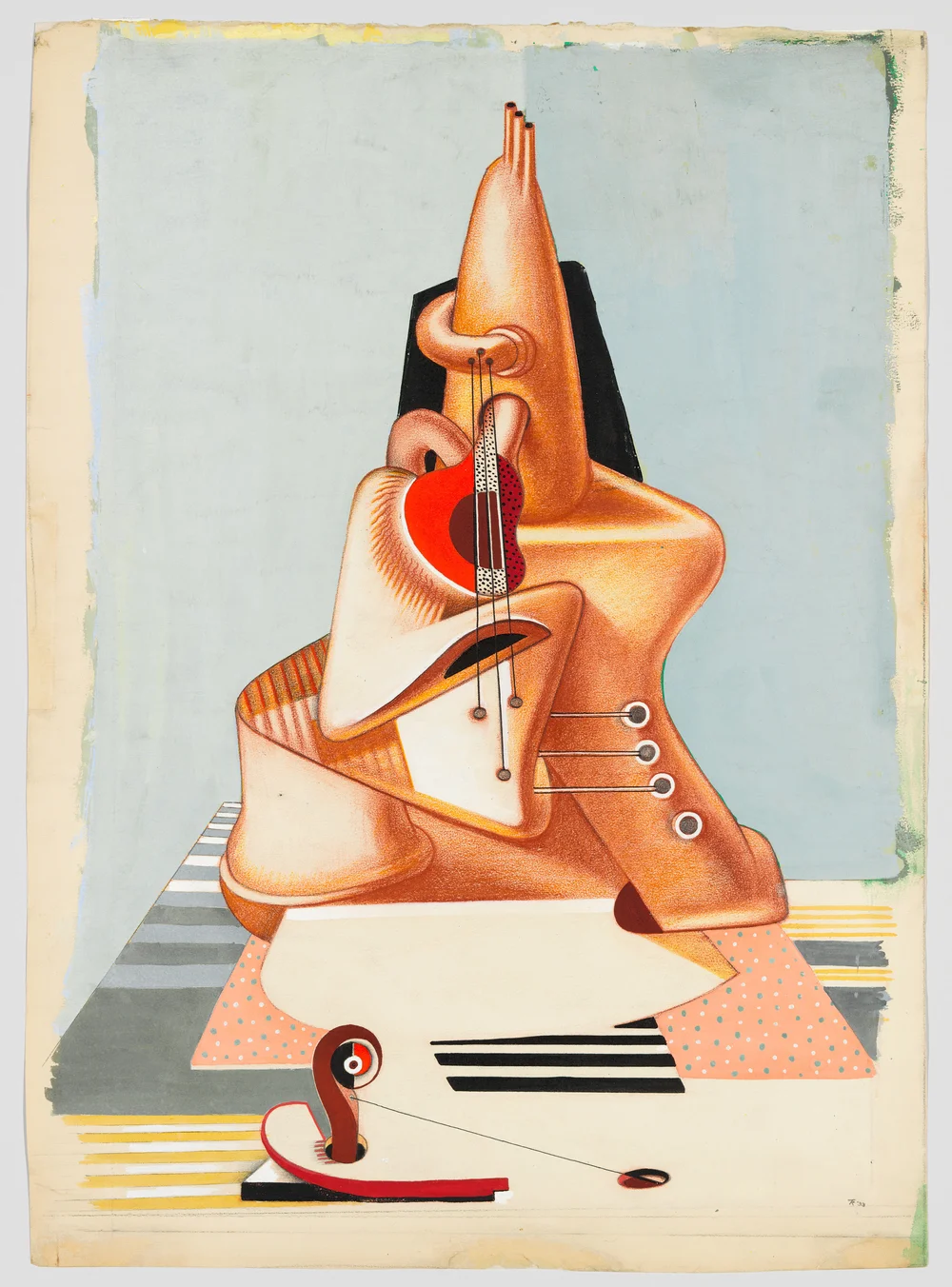
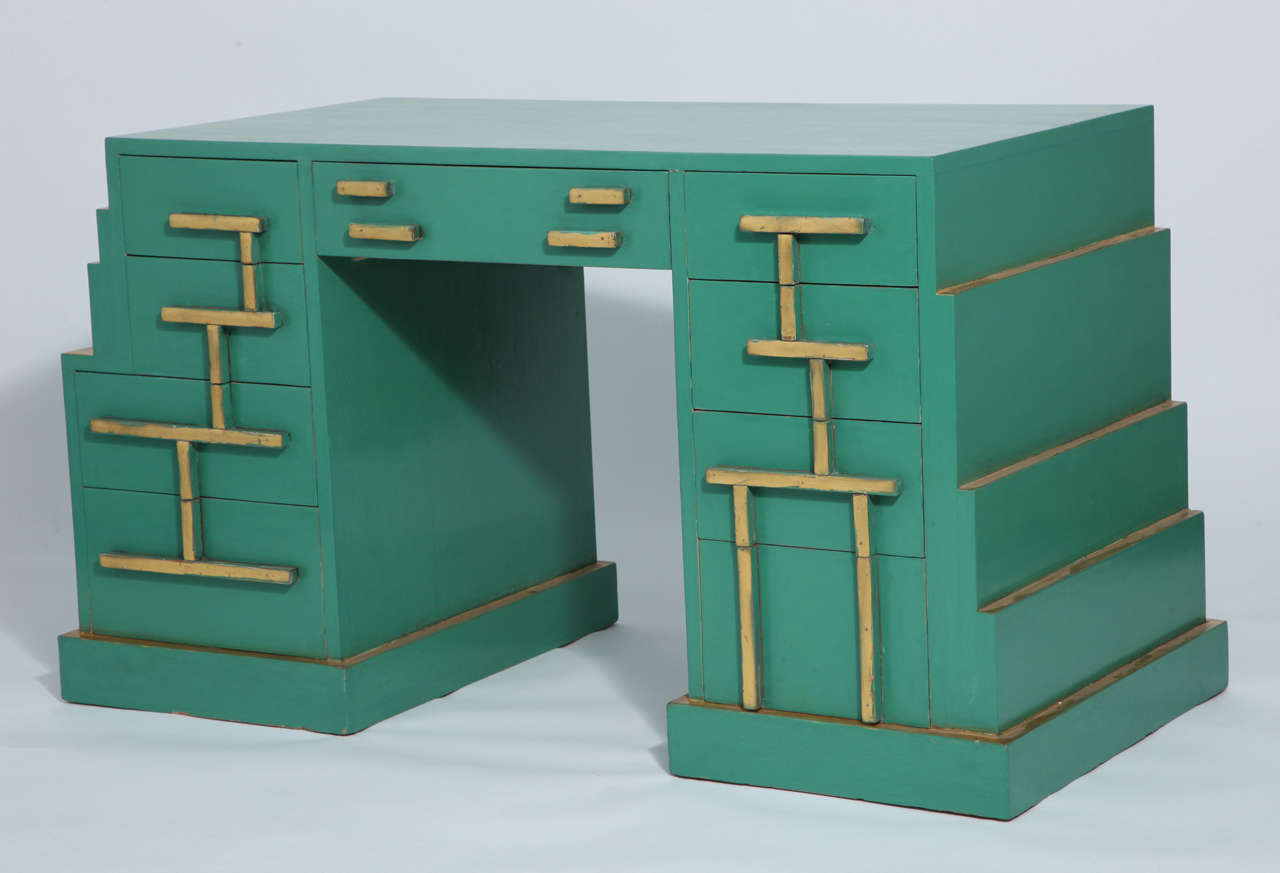
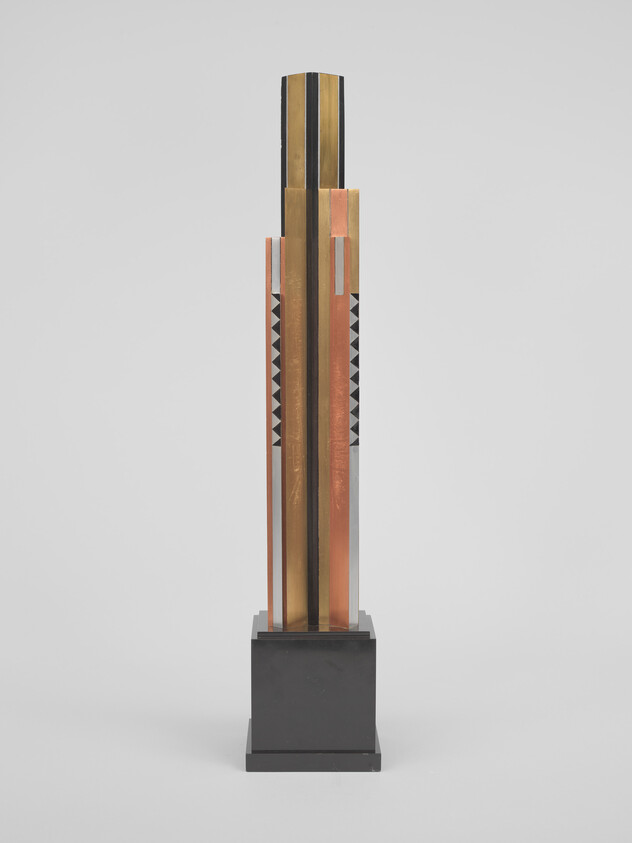
Top: Left: c. 1928, Paul T. Frankl, dressing table and stool, Middle: 1932, Donald Deskey, Grand Foyer of Radio City Music Hall, Right: c. 1928, Paul T. Frankl, “Skyscraper” Bookcase. Bottom: Left: 1933, Theodore Roszak, “Metaphysical Structure”, Middle: c. 1928, Paul T. Frankl, “Skyscraper” Desk, Right: c. 1924, John Storrs, “Forms in Space #1”
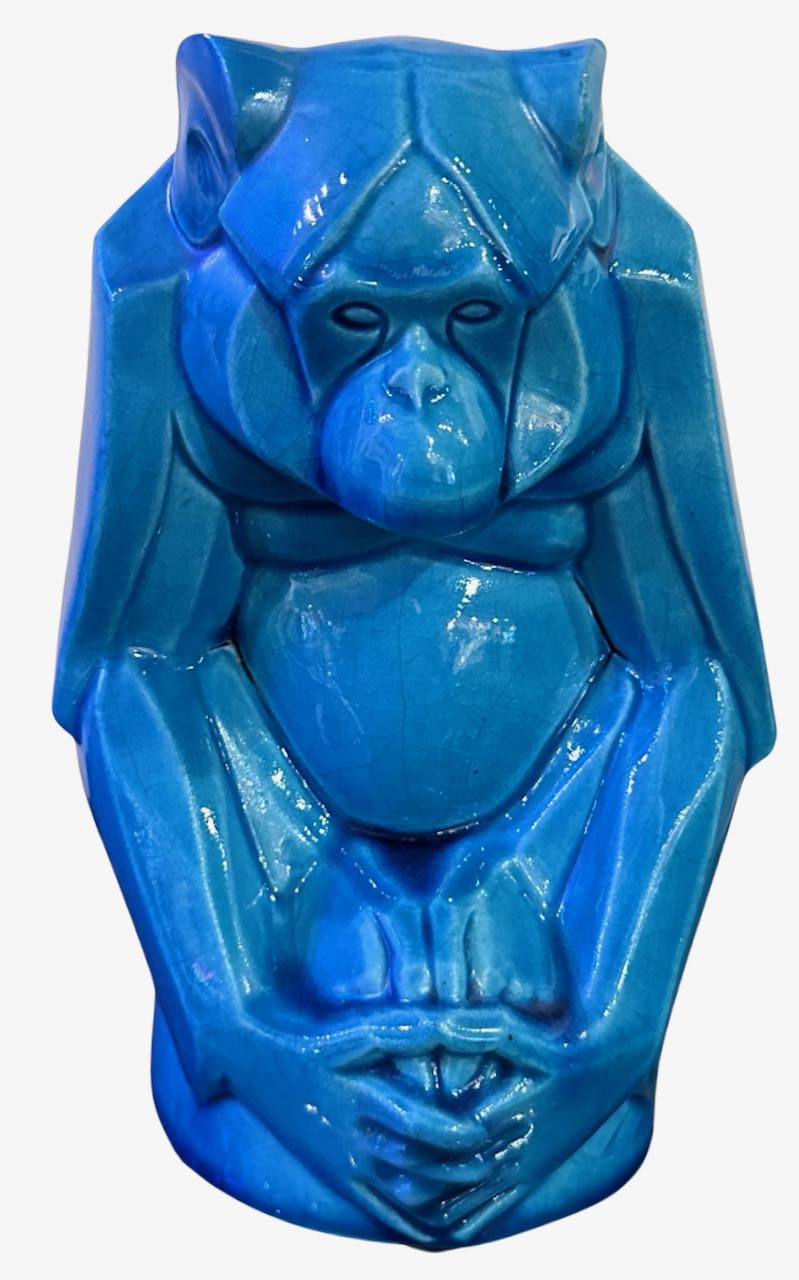
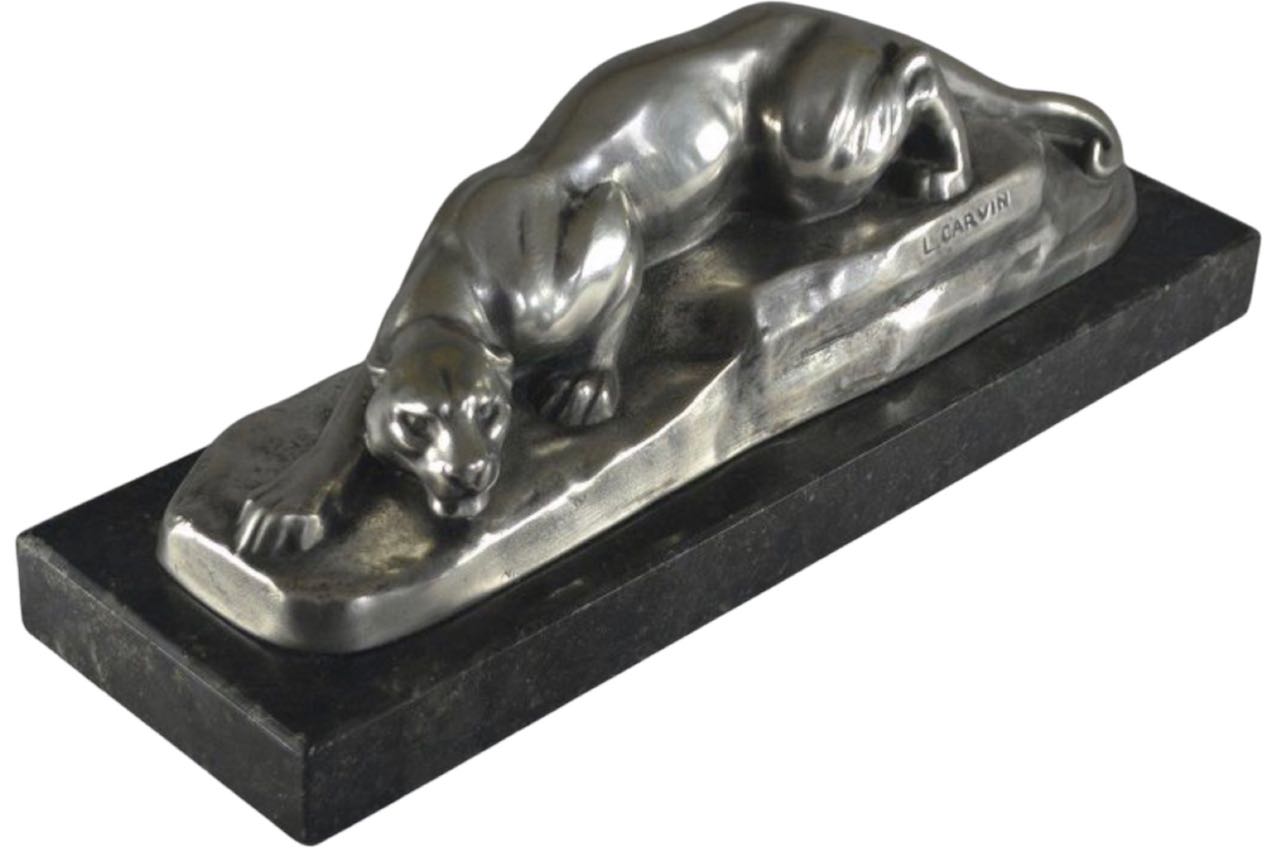
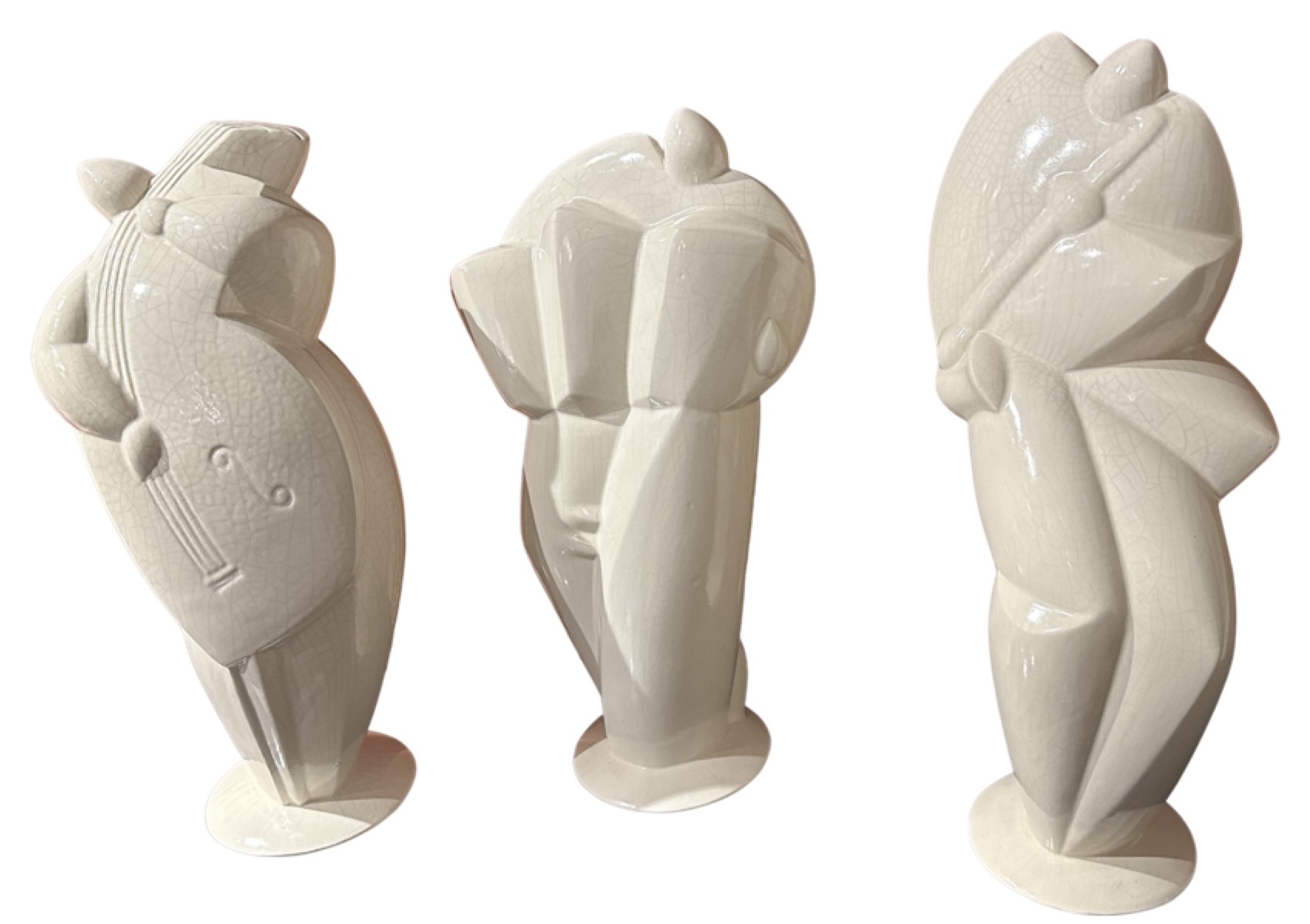
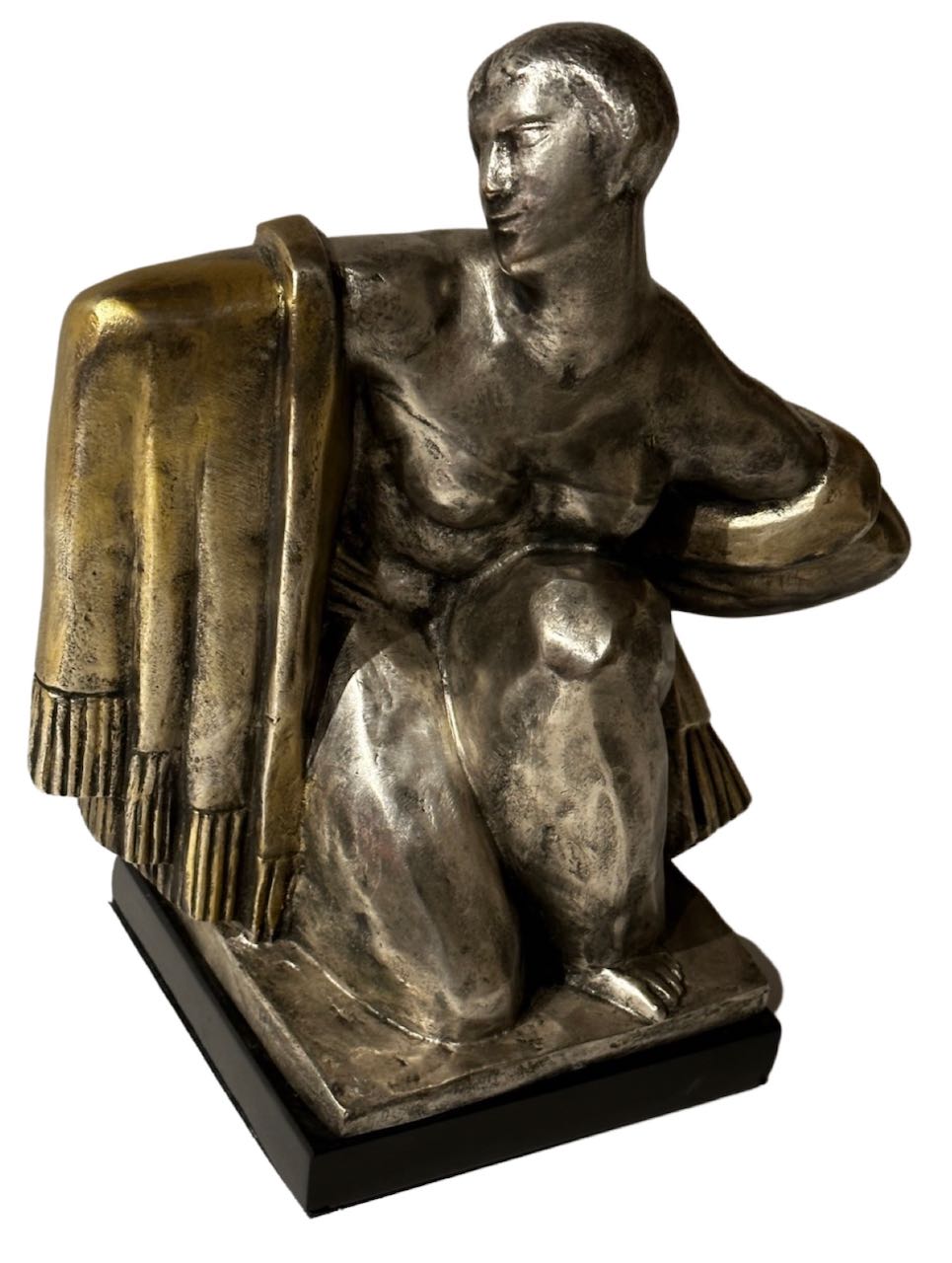
Cubist sculpture played a meaningful role in shaping the language of Art Deco, especially in its embrace of abstraction, structure, and modern form. While Cubism was never the only force behind Art Deco, its influence can be clearly felt in the work of sculptors who reduced the figure to simplified volumes, sharp contours, faceted surfaces, and a more architectural sense of composition. Artists such as Jacques Lipchitz, Henri Laurens, and Ossip Zadkine helped open the door to a sculptural style that valued geometry and controlled distortion over naturalistic detail. That spirit carried into Art Deco, where sculptors often balanced elegance with stylization, creating works that felt both refined and modern. In this way, Cubist sculpture contributed an important formal vocabulary to the Art Deco movement, offering a new way to think about mass, rhythm, and the human figure.
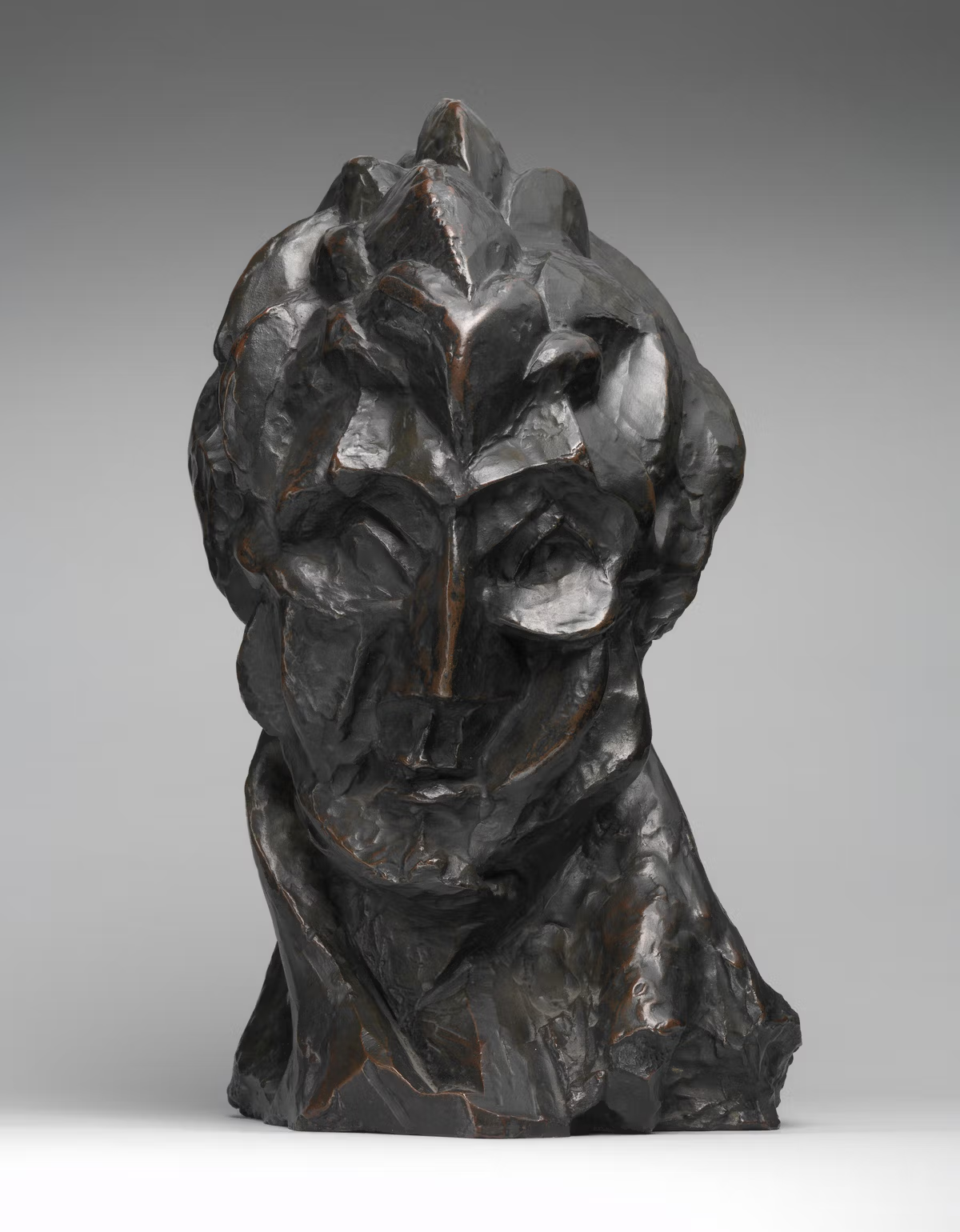
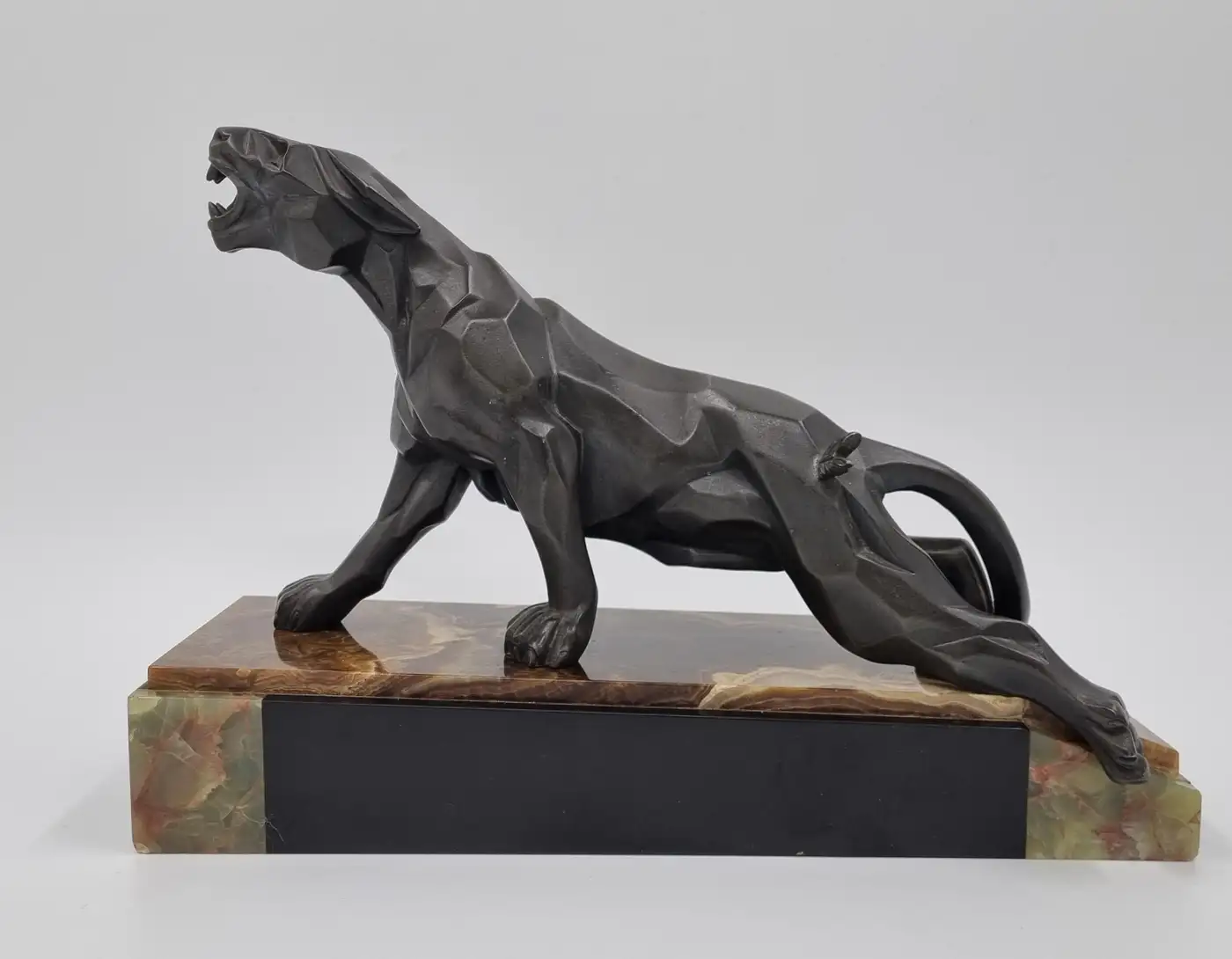
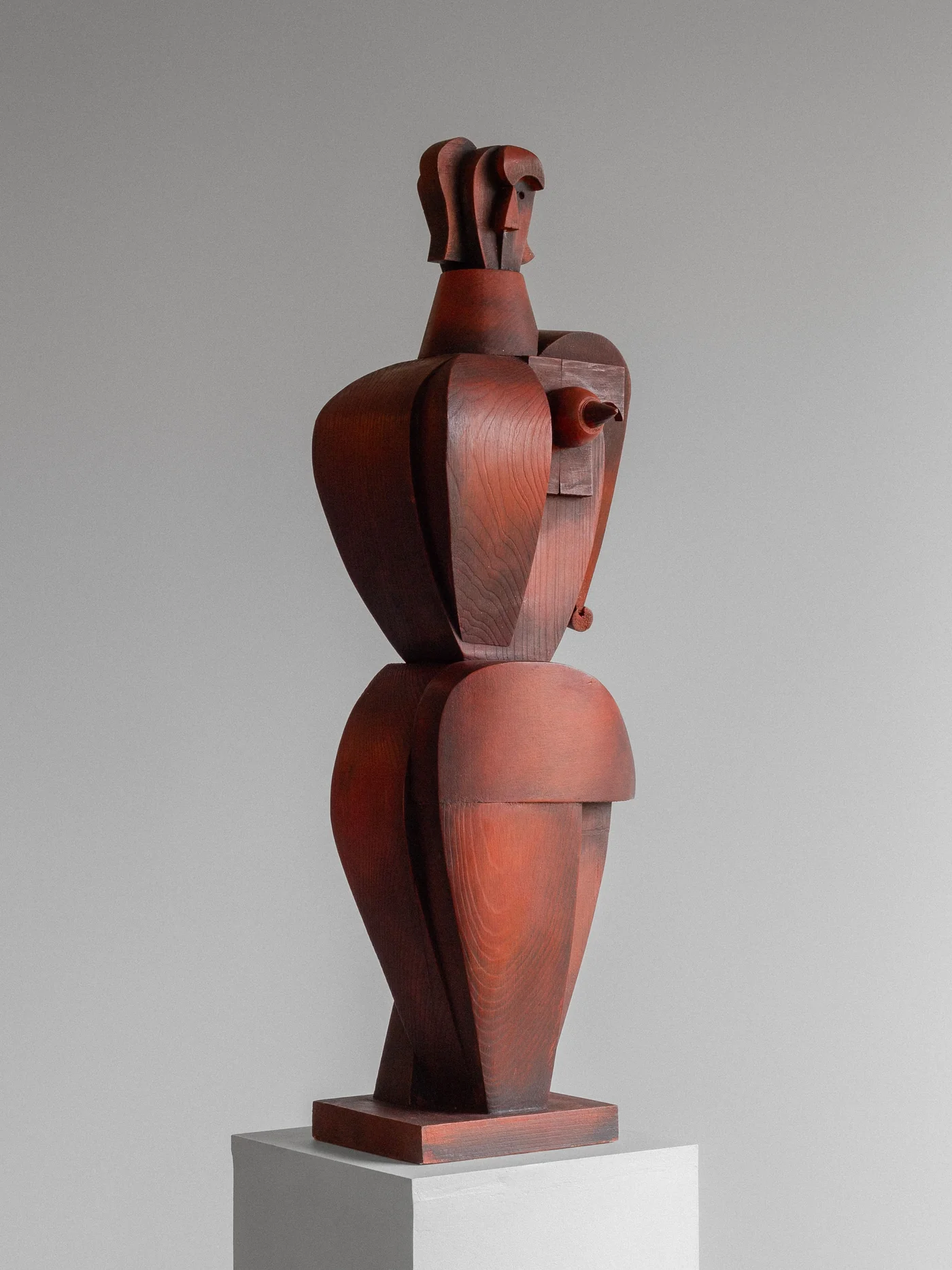
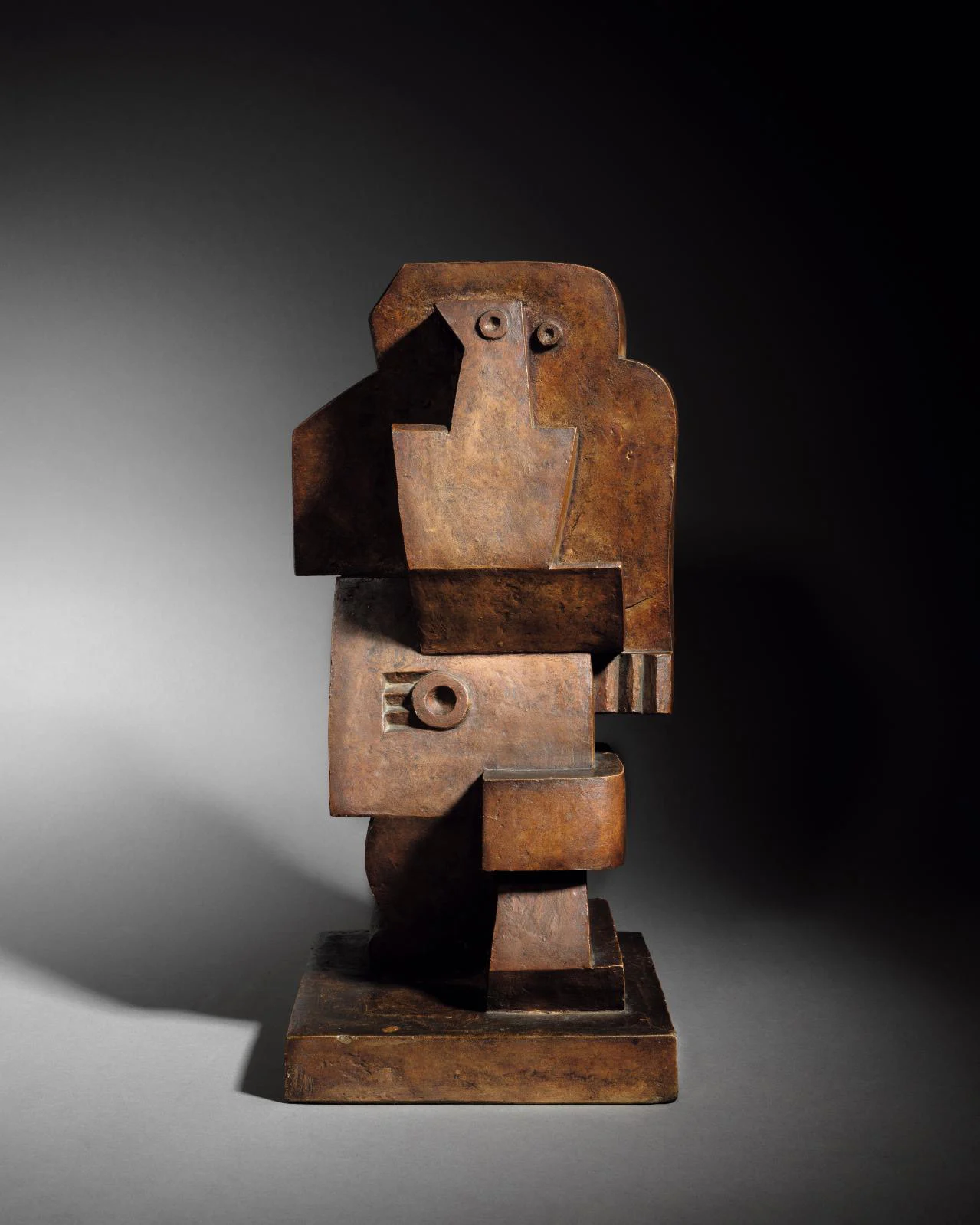
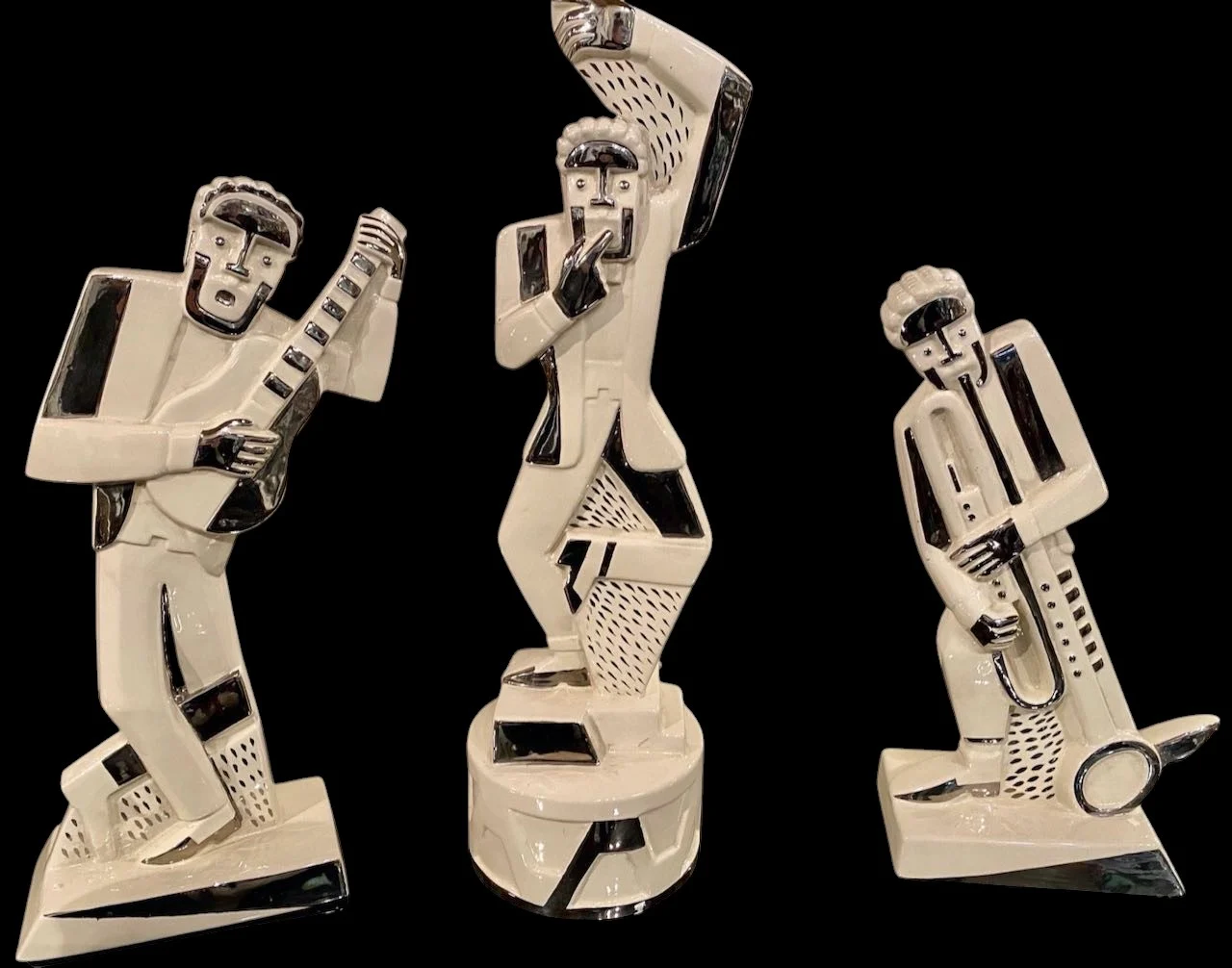

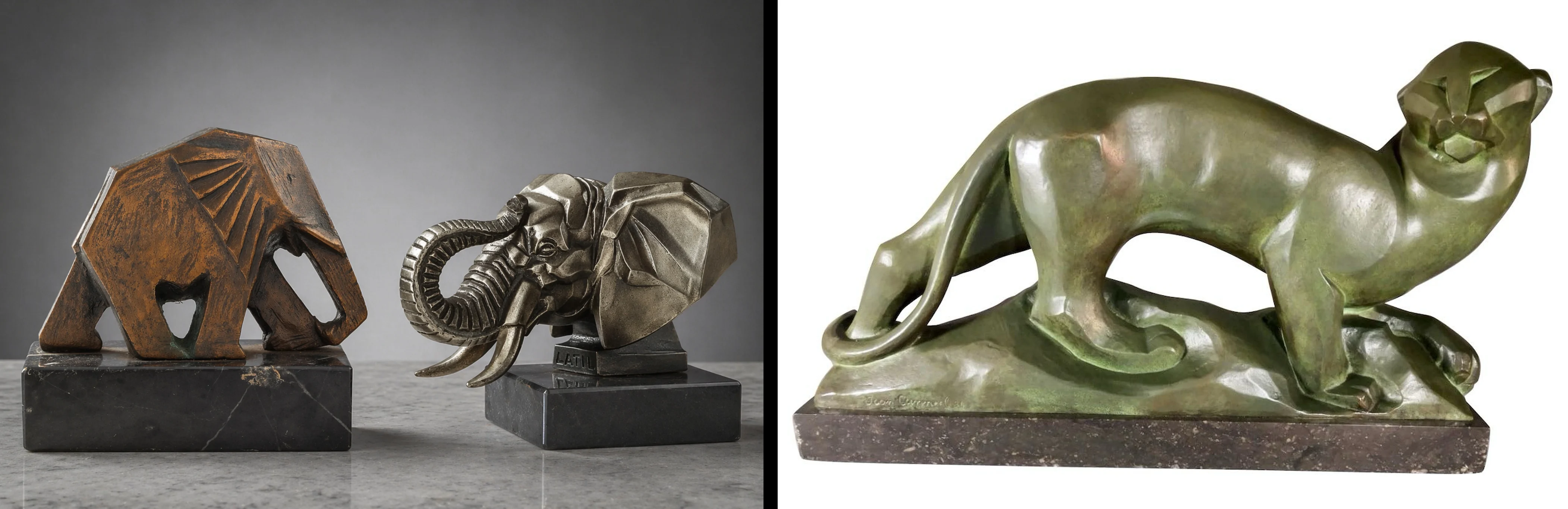
Top: Left: 1909, Pablo Picasso, “Head of a Woman (Fernande),” Middle: c. 1920-1930, Michel Decoux, “Cubist Panther,” Right: 1914, Alexander Archipenko, “Figure of a Woman.” Middle: Left: 1926-1930, Jacques Lipchitz, “Figure,” Middle: c. 1925-1930, Sigismond Olesiewicz for Atelier Primavera, “Cubist Jazz Band” figurines, Right: 1918, Jacques Lipchitz, “Seated Guitar Player”Bottom: Left: “Cubist Elephant,” Frederick Bazin, French 1920s Right: “Cubist Panther by Jean Canneel”
The enduring appeal of Cubism in the decorative arts lies in its extraordinary flexibility, and in the way its core ideas continue to shape modern design nearly a century after the movement began. Whether expressed in the restrained elegance of a Ruhlmann cabinet, the faceted drama of a Czech Cubist chair, the sculptural presence of a Marcel Coard console, or the confident skyscraper silhouette of a Paul Frankl bookcase, cubist thinking gave Art Deco its structural spine. It taught designers to treat a room as a composition, to value geometry as a form of beauty, and to trust that clarity and structure could produce richness rather than coldness. That lesson never really left modern design. The clean lines of midcentury modernism, the geometric minimalism of later twentieth-century interiors, and the current revival of Art Deco in contemporary rooms all trace part of their ancestry back to Picasso, Braque, and the painters who first broke the world into planes. A great piece of Art Deco furniture still carries that inheritance visibly on its surface. It reminds us that modern living, at its best, is not the absence of ornament but the careful composition of form, material, and proportion, and that a revolution begun on canvas in Paris more than a hundred years ago continues to shape the rooms we build today.
Further Reading
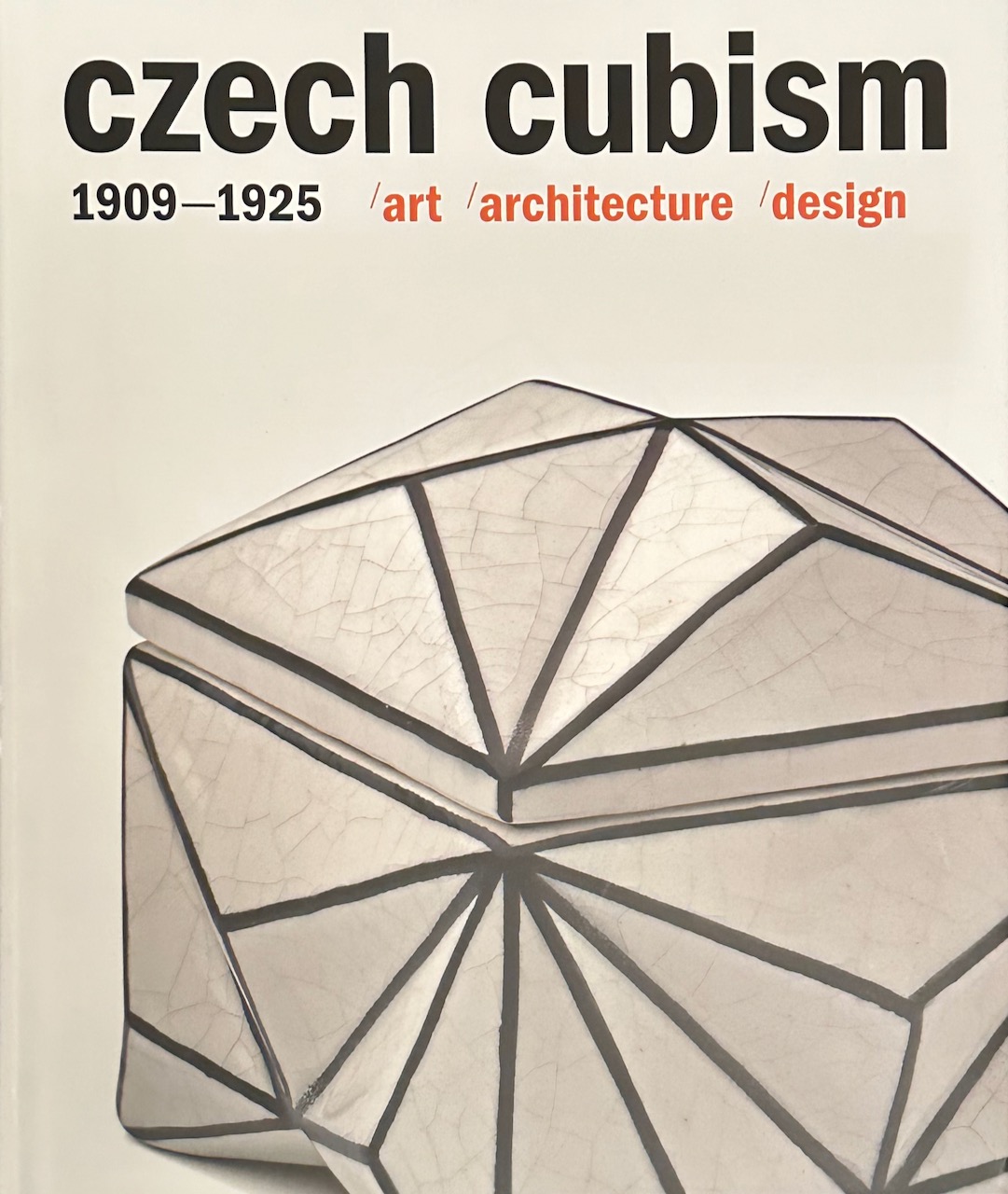
For anyone interested in exploring these ideas in greater depth, we carry two excellent books that cover the Czech contribution to the movement in remarkable detail. Czech Cubism 1909–1925: Art, Architecture, Design offers the most comprehensive survey available of the Prague-based movement discussed in this journal, with extensive photography of the architecture, furniture, ceramics, and graphic design produced during its brief but extraordinary run. Czech Art Deco 1918–1938, published by the Municipal House in Prague, picks up where Cubism left off and traces how its faceted vocabulary evolved into the broader Czech Art Deco style through the interwar years. Together, the two volumes make a natural pair for readers who want to understand both the origin of the movement and its lasting influence on Central European design.




If you are interested in further stories of Art Deco design, collecting, and celebrating the artistry of early 20th Century:

Related Products from ArtDecoCollection.com