
Fernand Léger
Fernand Léger was born on February 4, 1881, in Argentan, in Lower Normandy, France, the son of a cattle farmer who discouraged his interest in art. He trained as an architectural apprentice in Caen from 1897 to 1899 before moving to Paris, where he supported himself as an architectural draftsman and photography retoucher while pursuing his studies. Although he was rejected by the École des Beaux-Arts, he attended as an unenrolled student while also studying at the School of Decorative Arts and the Académie Julian. A visit to the Cézanne retrospective at the 1907 Salon d’Automne was a turning point, leading him toward geometric form and away from the Impressionist influences of his early work. In 1908 he rented a studio at La Ruche, an artists’ settlement in Montparnasse, where he became close with Alexander Archipenko, Jacques Lipchitz, Robert Delaunay, and the poets Guillaume Apollinaire and Blaise Cendrars. He signed his first dealer contract with Daniel-Henry Kahnweiler in 1913 and married Jeanne-Augustine Lohy in 1919. During World War II he lived in the United States, teaching at Yale and Mills College, before returning to France in 1945 and joining the Communist Party. He married Nadia Khodossevitch in 1952 and died suddenly at his home in Gif-sur-Yvette on August 17, 1955.

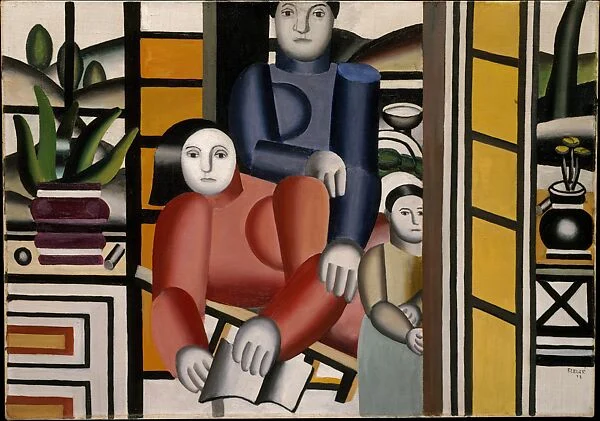
Léger debuted his personal form of Cubism at the 1910 Salon d’Automne with Nudes in the Forest, and the following year participated in the first public exhibition of Cubism at the Salon des Indépendants alongside Albert Gleizes, Jean Metzinger, and Francis Picabia. His series Contrast of Forms, begun in 1913, illustrated his theory that the strongest pictorial effect came from juxtaposing color against color, curved against straight, and solid against flat. His experience at the front lines in World War I transformed his work: struck by the sight of artillery breaches gleaming in sunlight, he began developing his mechanical period, rendering figures and objects as robot-like forms assembled from cylinders and machine parts. Three Women of 1921 is considered the masterpiece of this phase. In 1924 he co-produced and co-directed the film Ballet Mécanique with George Antheil and Man Ray, a work without narrative that conveyed the pace of modern life through rapid montage. He was associated with the Purist movement of Le Corbusier and Amédée Ozenfant in the mid-1920s, and in 1938 was commissioned to decorate Nelson Rockefeller’s apartment. His late career took him into stained glass, mosaic, and ceramic sculpture, with major projects at the United Nations building in New York, the church at Audincourt, and the Central University of Venezuela in Caracas. The Musée National Fernand Léger opened in Biot, France, in 1960, housing the largest collection of his work.
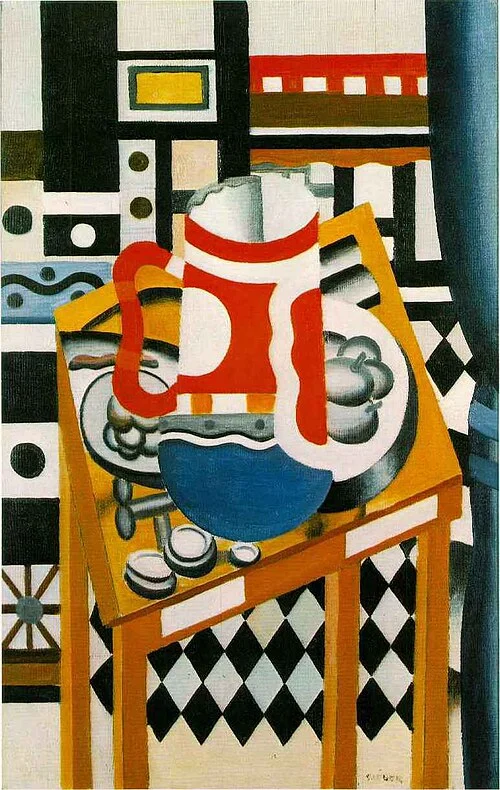


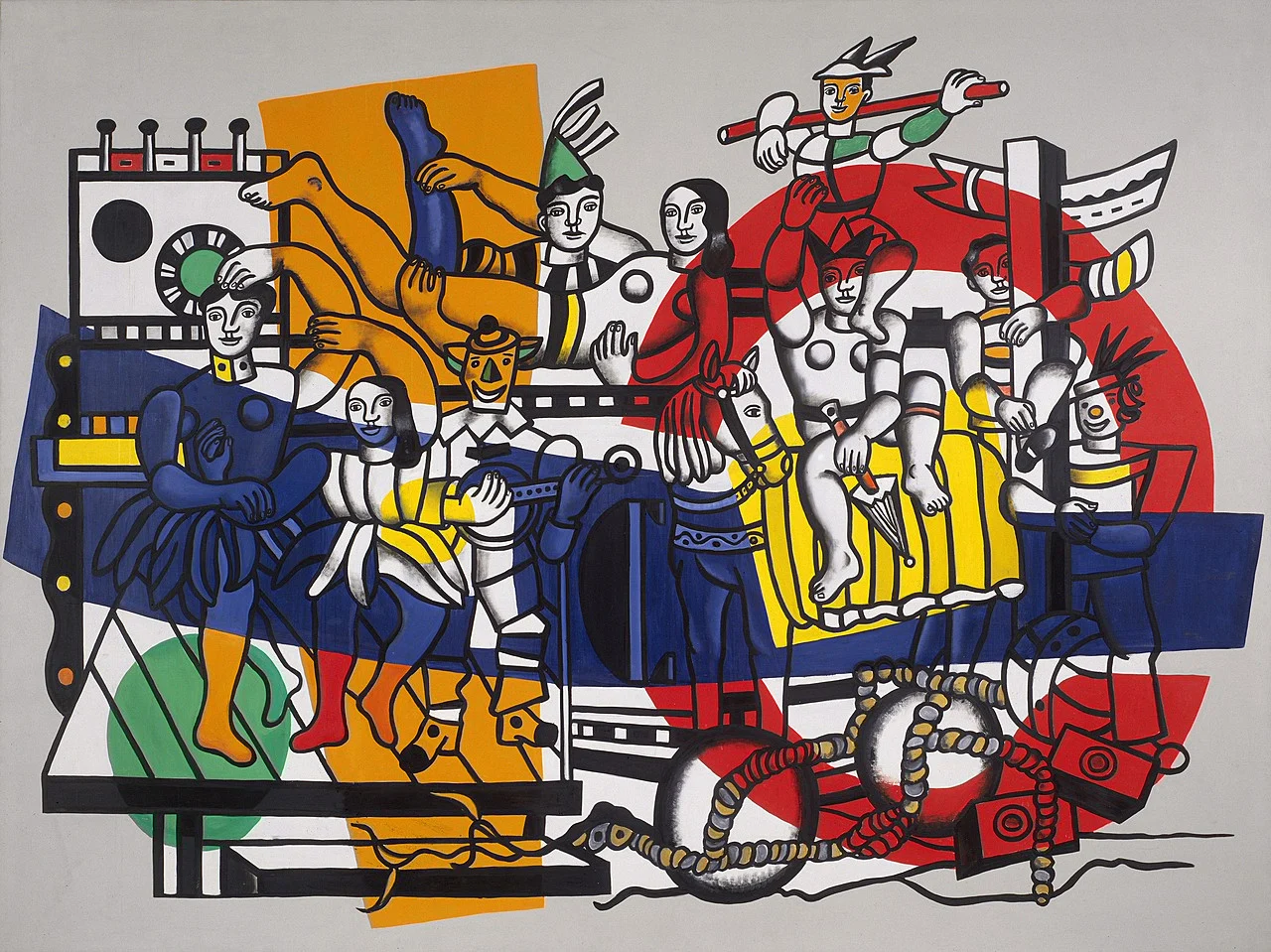
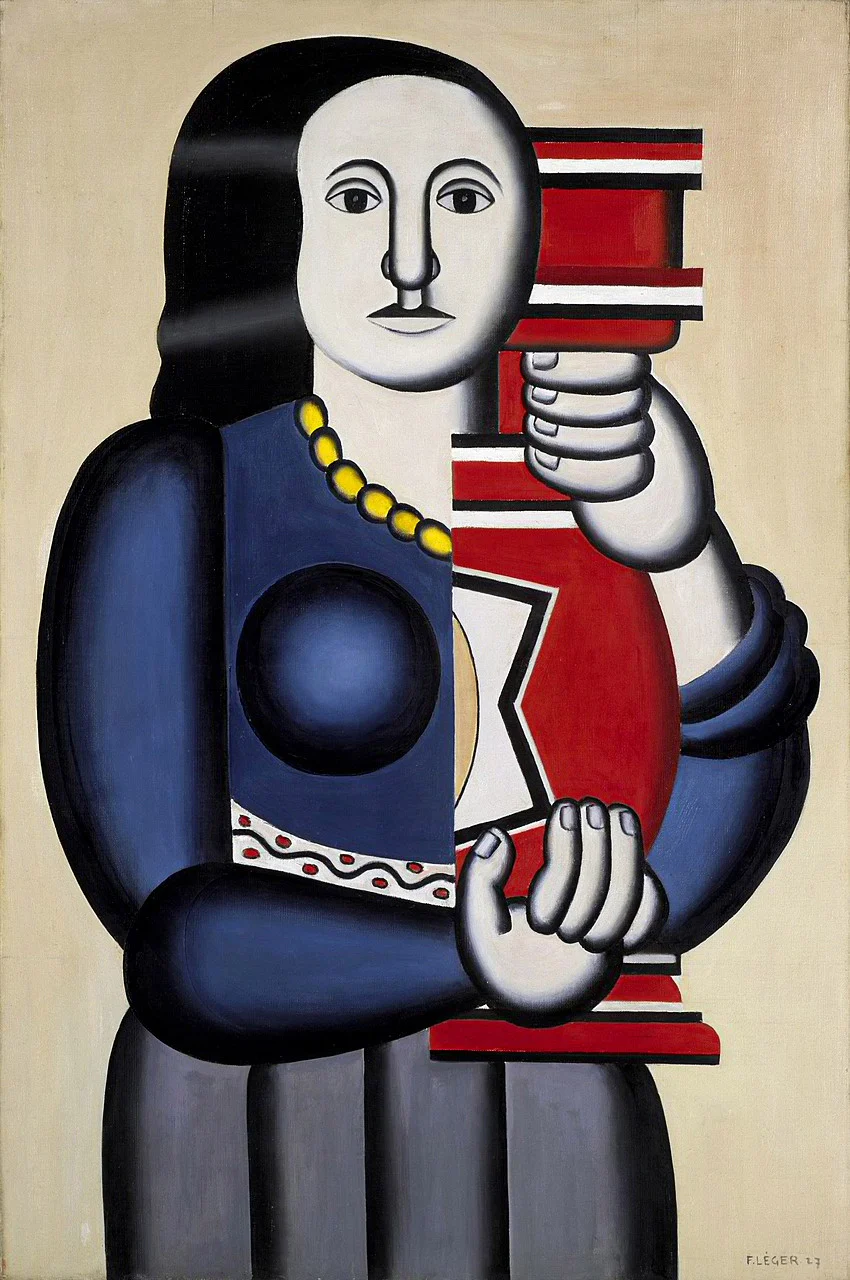
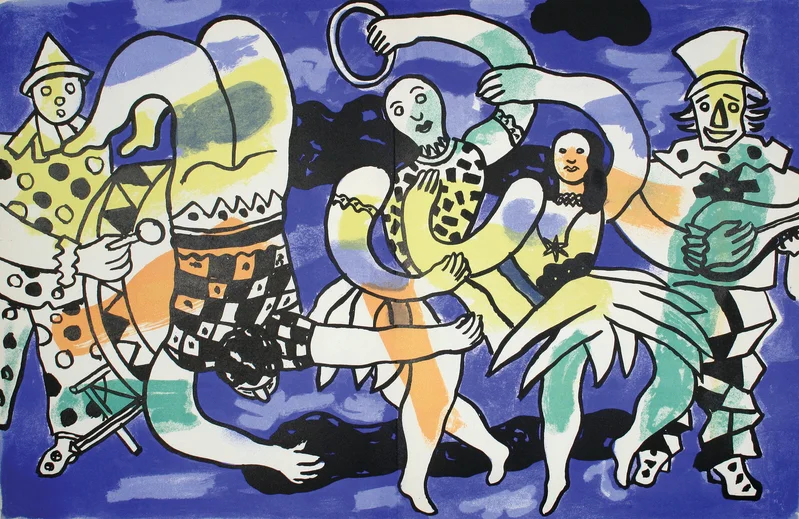
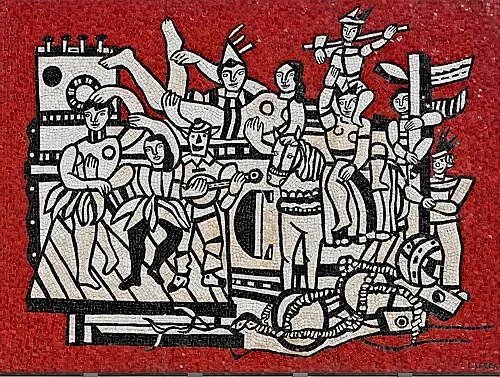
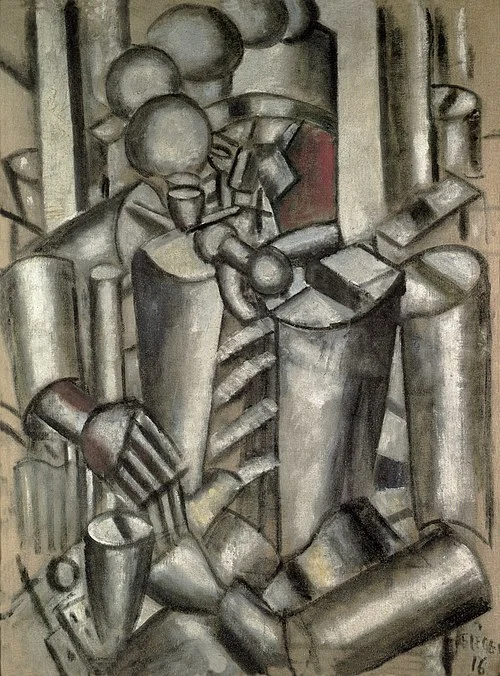
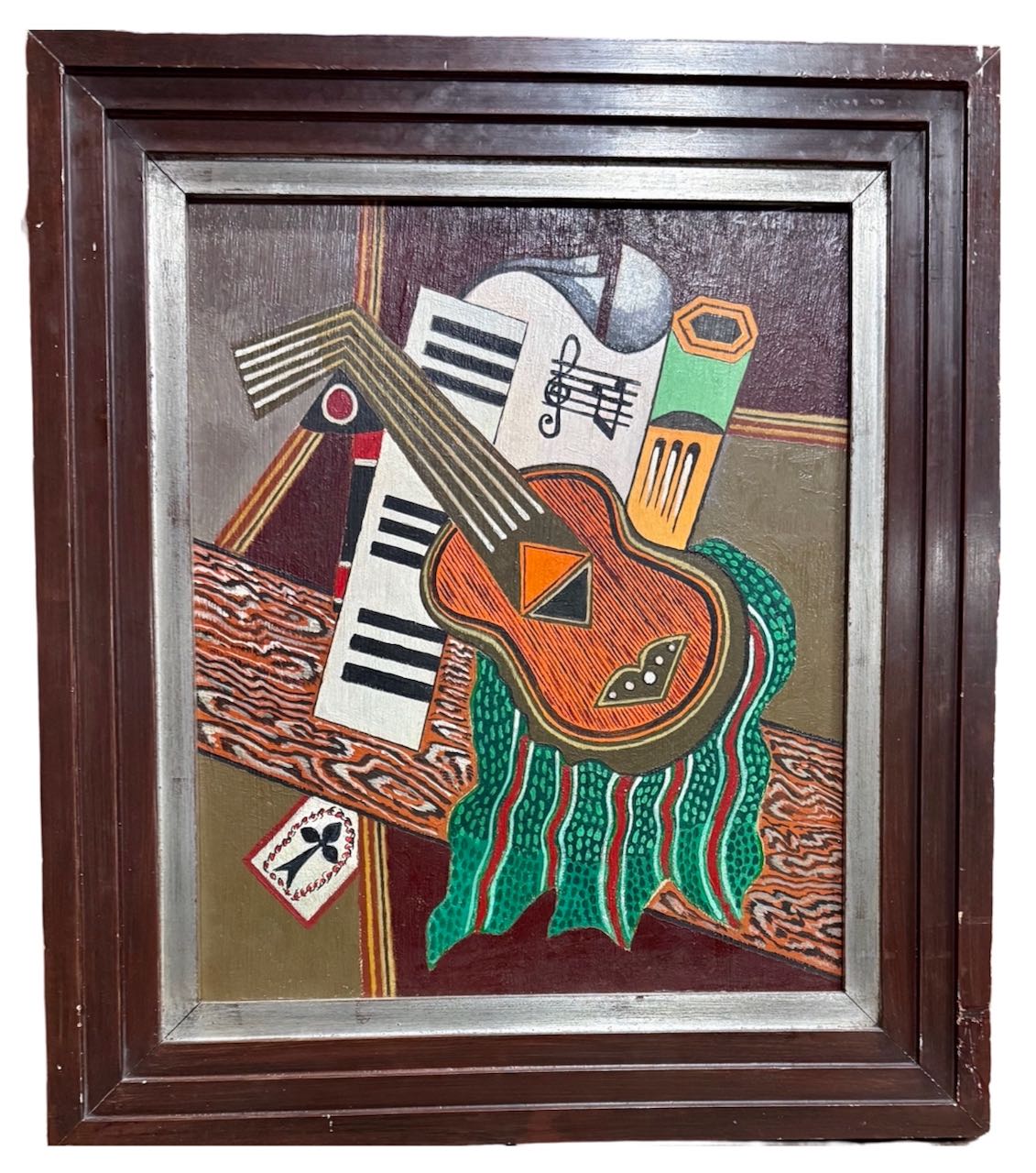
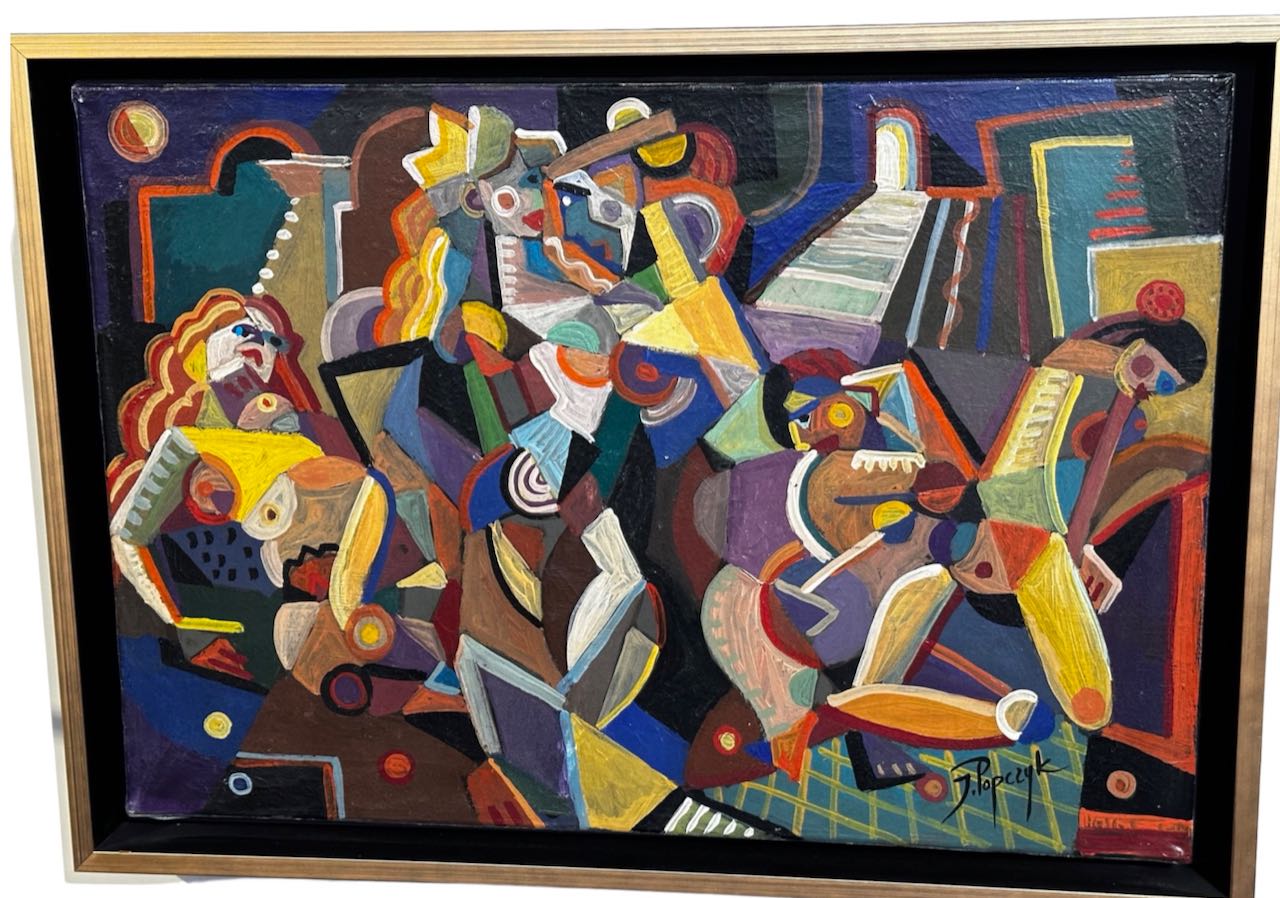
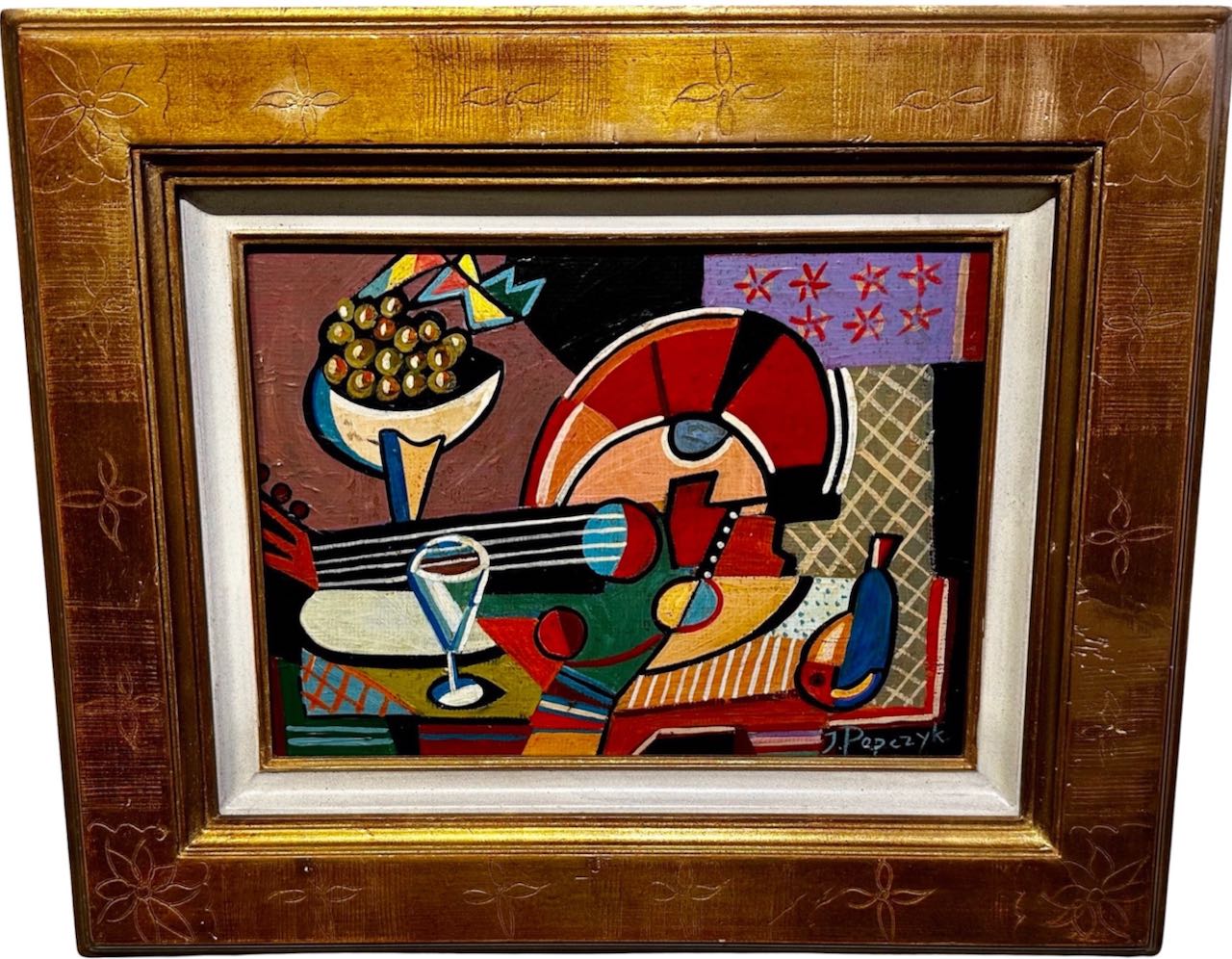
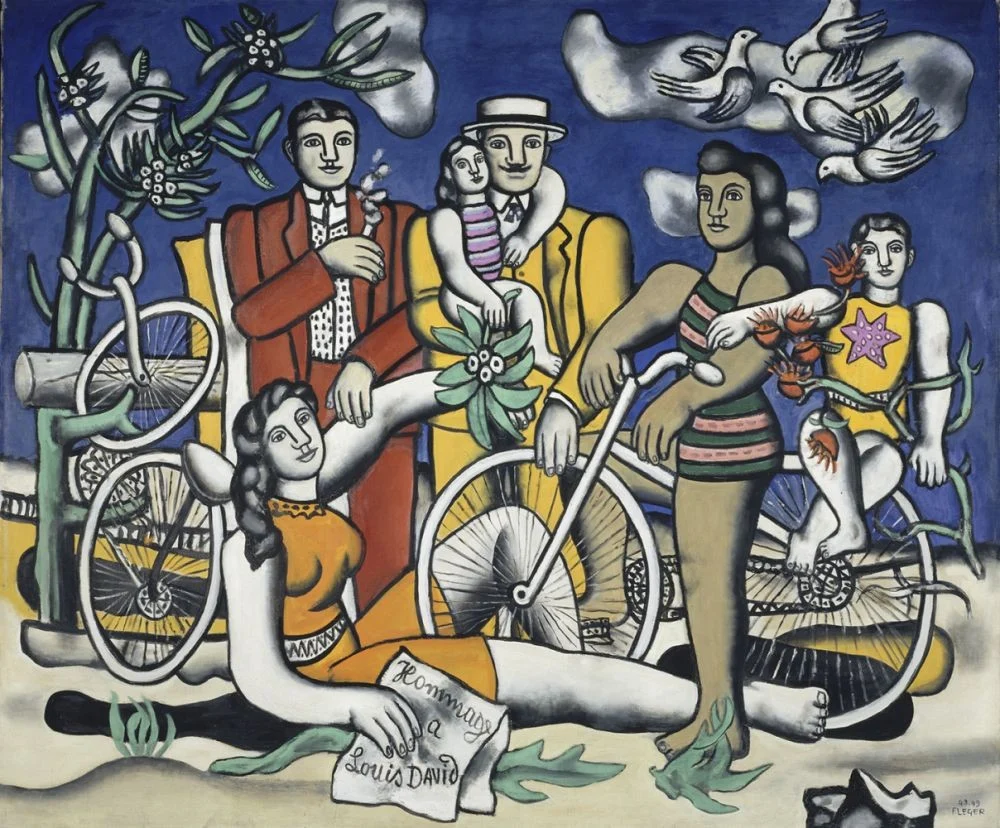
Léger developed what critics called “tubism,” reducing figures and objects to cylindrical and conical volumes rendered in bold primary colors with firm black outlines. His subject matter was drawn from the world of machines, workers, advertising, and urban life, treated not with irony but with genuine enthusiasm for the modern age. Where other Cubists worked in muted ochres and grays, his palette stayed vivid and declarative throughout his career, making his paintings among the most immediately legible works to emerge from the Cubist movement.
Key Influences
- Machine Aesthetic: As the first painter to take the imagery of the machine age as his primary idiom, he is widely regarded as a forerunner of Pop Art.
- World War I: His time at the front lines transformed his visual language, convincing him that art must engage the experience of ordinary workers and soldiers rather than retreat into abstraction.
- Ballet Mécanique: His 1924 film was a landmark in avant-garde cinema, demonstrating that the rhythms of modern life could be expressed through moving images as powerfully as through paint.
- Purist Collaboration: His association with Le Corbusier and Ozenfant connected the world of Cubist painting to the emerging discourse of modernist architecture and design.
- Democratic Art: His sustained commitment to making modern art accessible to working-class audiences, through teaching, murals, and figurative work, shaped how the social responsibilities of the avant-garde were understood in postwar France.
If you are interested in further stories of the artists who shaped Art Deco, return to our artists page to browse the full directory.

Related Products from ArtDecoCollection.com