
Juan Gris
Juan Gris was born José Victoriano González-Pérez on March 23, 1887, in Madrid, where he studied mechanical drawing at the Escuela de Artes y Manufacturas from 1902 to 1904, contributing drawings to local periodicals throughout. From 1904 to 1905, he studied painting with the academic artist José Moreno Carbonero, and in 1906, after selling all his possessions, he moved to Paris, where he would live and work for most of the remainder of his life. It was in 1905 that he adopted the pseudonym Juan Gris, the name by which he would become known to the world. In Paris, he became friends with Georges Braque, Fernand Léger, Henri Matisse, Jean Metzinger, and Pablo Picasso, as well as the writers Guillaume Apollinaire, Max Jacob, and Maurice Raynal. He gave up working as a satirical cartoonist in 1911 to paint seriously, and by 1912 had developed a distinctive personal Cubist style. He signed a contract that year with dealer D.H. Kahnweiler, who retained exclusive rights to his work. Gris later formed close friendships with Jacques Lipchitz and signed with Léonce Rosenberg during the war years before Kahnweiler’s return in 1920. He died of kidney failure in Boulogne-sur-Seine on May 11, 1927, at the age of 40.
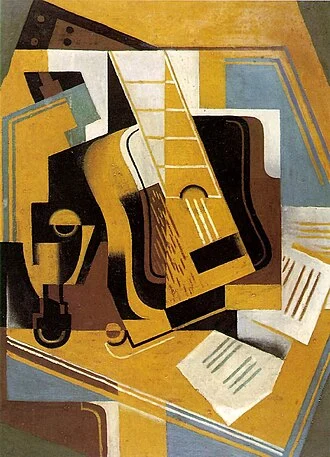

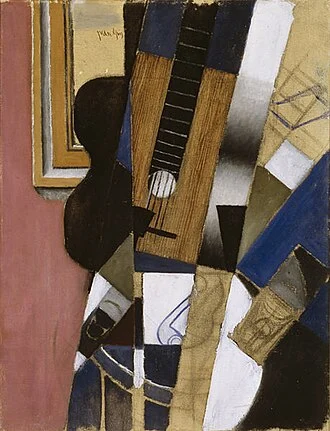
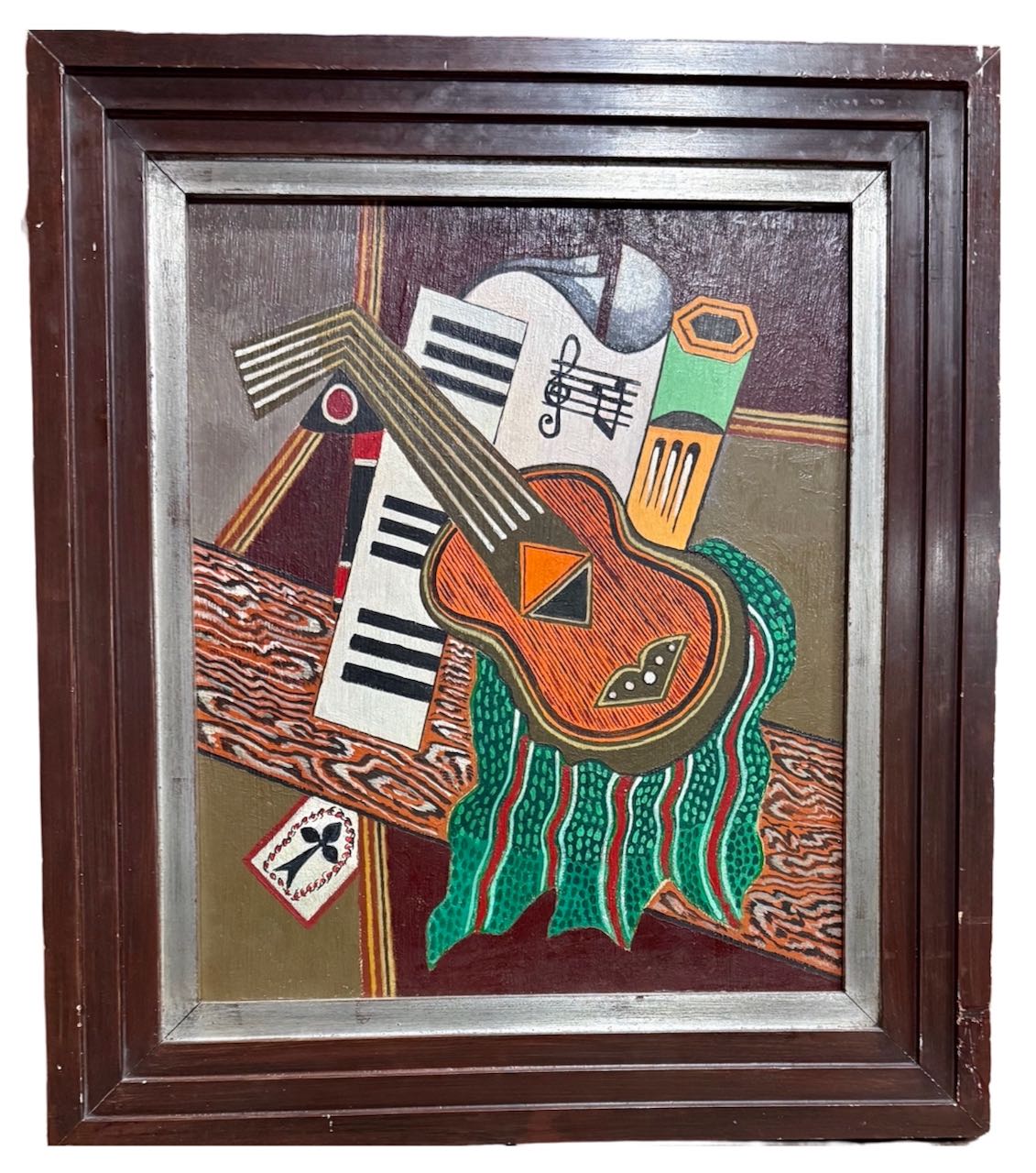
Gris exhibited for the first time in 1912 at the Salon des Indépendants in Paris, where he showed Hommage à Pablo Picasso, and that same year participated in the first declared group exhibition of Cubism worldwide at the Galeries Dalmau in Barcelona, as well as at Der Sturm in Berlin and the Salon de la Section d’Or in Paris. He began his career working in the style of Analytical Cubism, a term he himself later coined, before converting after 1913 to Synthetic Cubism, making extensive use of papier collé and collage. His works from late 1916 through 1917 exhibit a greater simplification of geometric structure characteristic of Crystal Cubism, with oblique overlapping planar constructions that blur the distinction between objects and their settings. His first major solo show was held at Rosenberg’s Galerie l’Effort Moderne in Paris in 1919, followed by major exhibitions at the Galerie Simon in Paris and the Galerie Flechtheim in Berlin in 1923. In 1924, he delivered his definitive aesthetic lecture, Des possibilités de la peinture, at the Sorbonne, and designed ballet sets and costumes for Sergei Diaghilev and the Ballets Russes. His 1915 painting Nature morte à la nappe à carreaux sold at auction for $57.1 million, the record for his work. His friendship and collaboration with Jacques Lipchitz were particularly significant, as the two artists shared motifs and investigated ways of expanding the geometry of Cubist language across their respective mediums of painting and sculpture.
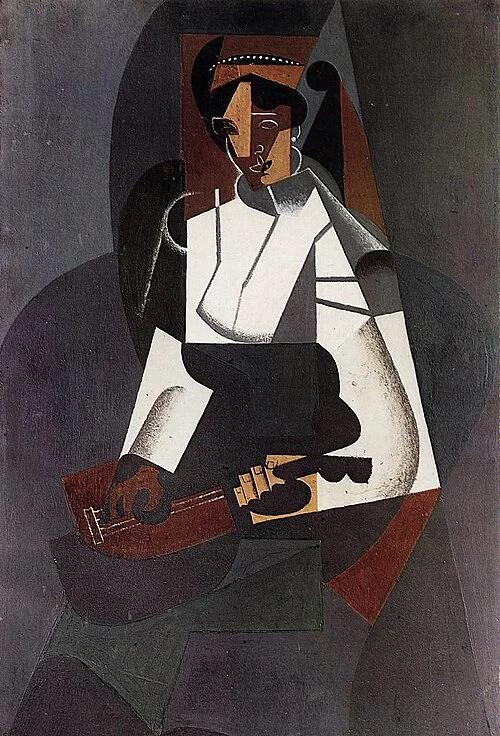
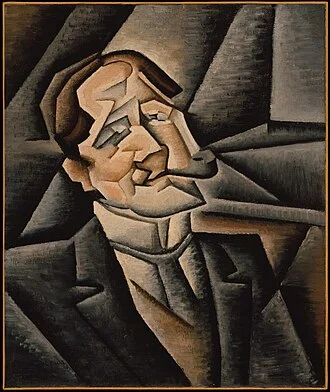
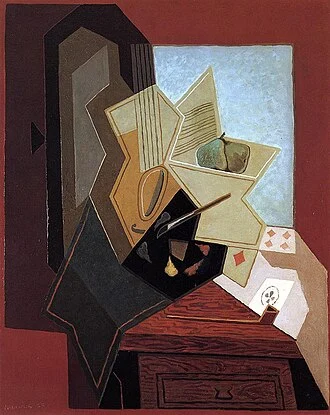
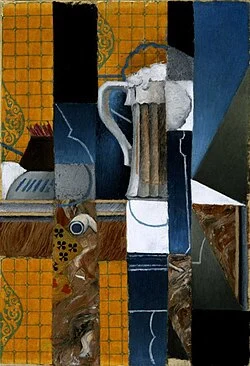
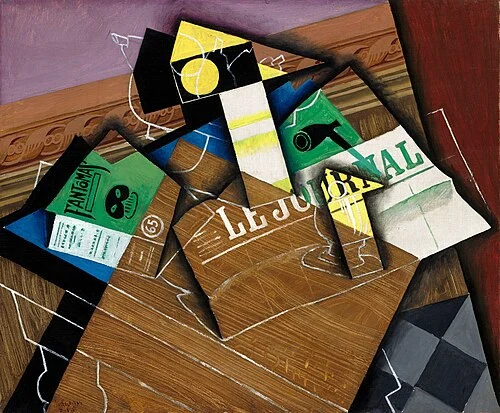
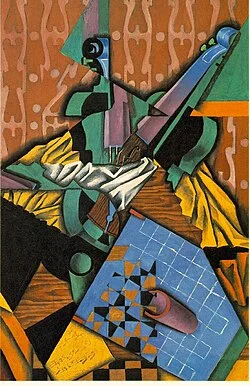
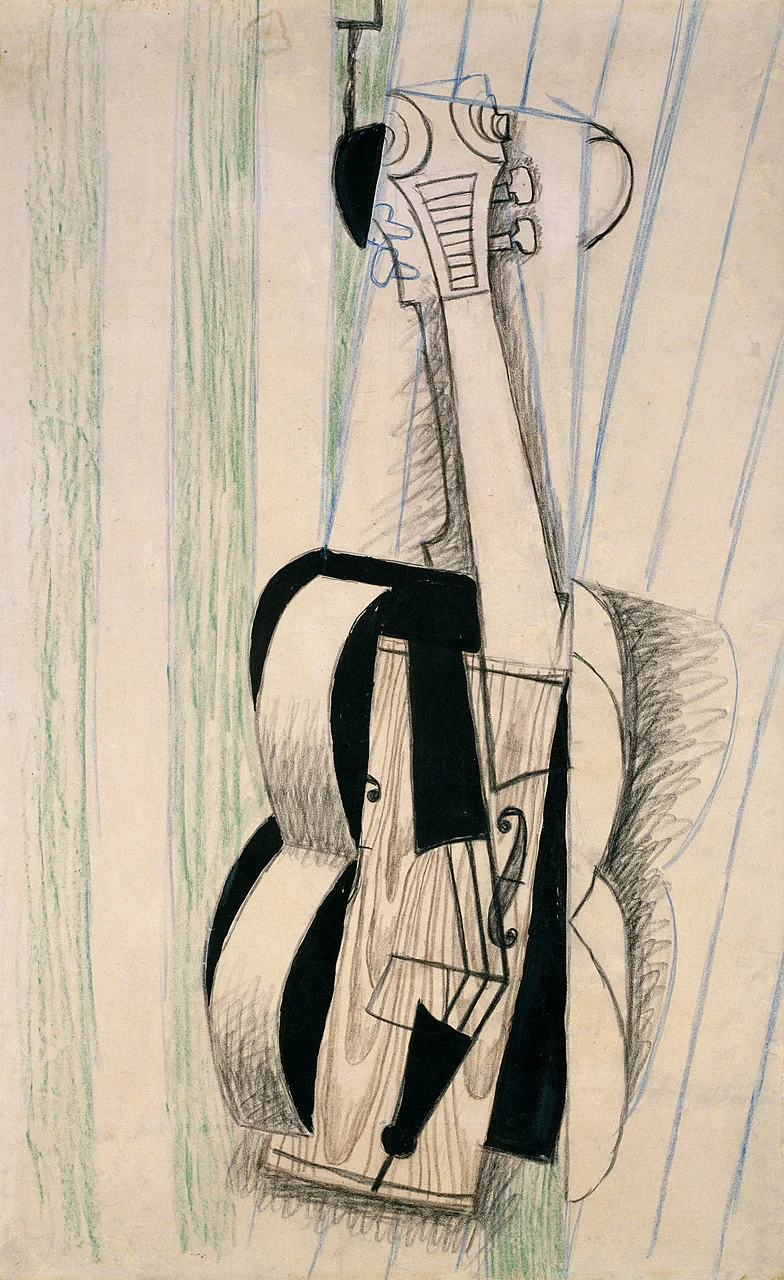
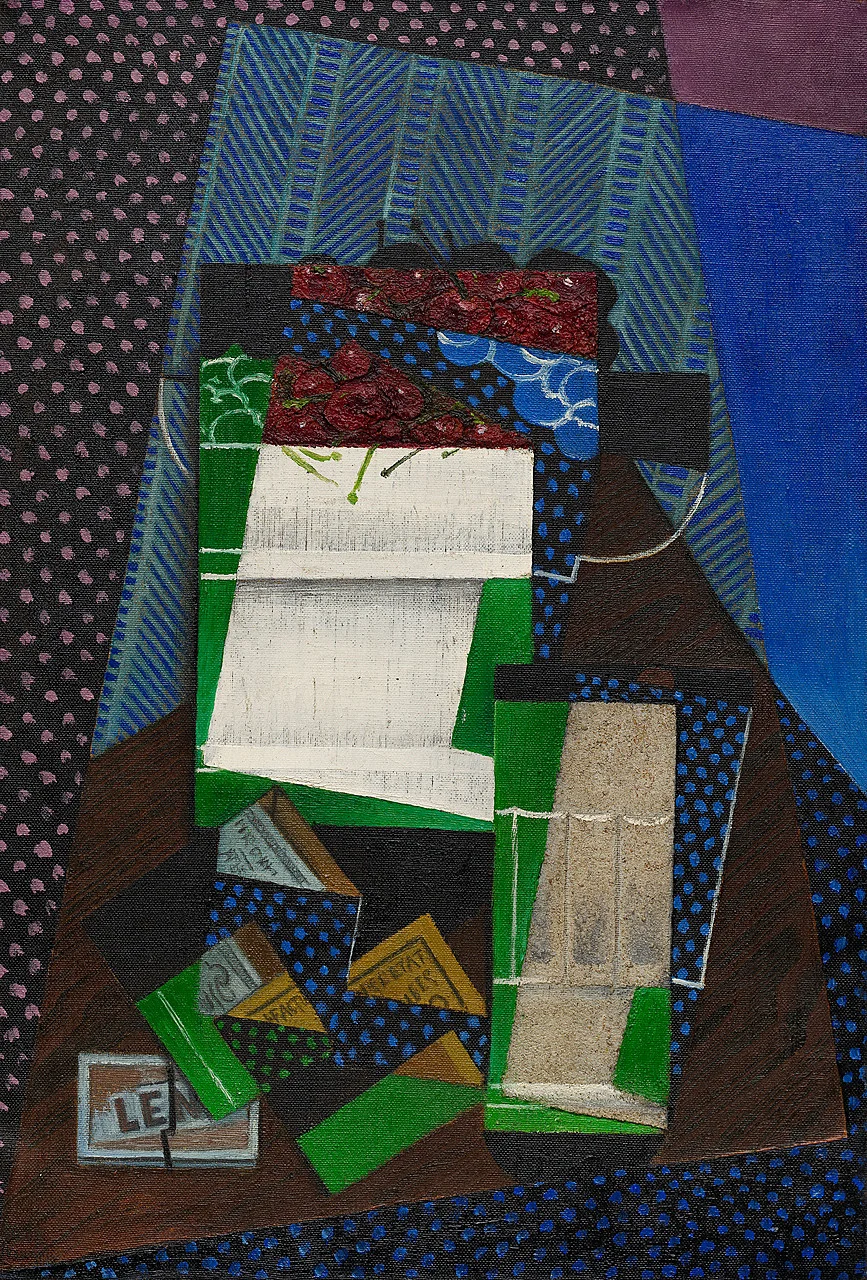
Unlike Picasso and Braque, whose Cubist works were practically monochromatic, Gris painted with bright, harmonious colors in daring novel combinations influenced by his friend Matisse, giving his work a clarity and rational measurability that distinguished it from other Cubist practitioners. His preference for geometric order and clear underlying structure influenced the Purist style of Amédée Ozenfant and Le Corbusier, making him a central figure in the post-war return to order movement. His Crystal Cubism period refined this geometric framework to its most essential form, creating compositions in which the abstract armature served as the starting point and all constituent elements, including figures, became part of a unified whole.
Key Influences
- Synthetic Cubism: His development and sustained interpretation of Synthetic Cubism, with its emphasis on collage, flat planes, and bright color, expanded the movement’s possibilities beyond the monochromatic severity of its founders.
- Purist and Post-War Order: His preference for clarity, rationality, and geometric structure directly influenced Le Corbusier and Ozenfant’s Purist movement, connecting Cubism to the broader drive toward order and system in postwar European design.
- Ballets Russes: His set and costume designs for Diaghilev brought the visual language of Cubism into theatrical and decorative contexts, extending its influence into the performing arts and the broader decorative culture of the 1920s.
- Sculptor-Painter Exchange: His close collaboration with Jacques Lipchitz, sharing motifs and geometric systems across painting and sculpture, was a model of cross-disciplinary creative exchange that enriched both artists’ work.
- Crystal Cubism: His geometric refinements during 1916 and 1917 defined the Crystal Cubism style, providing a bridge between the analytic phase of Cubism and the decorative, ordered sensibility that would characterize much of Art Deco.
If you are interested in further stories of the artists who shaped Art Deco, return to our artists page to browse the full directory.
Related Products from ArtDecoCollection.com