
H. & L. Epstein
The Epstein furniture company was founded in East London in the 1890s by Morris Solomon Epstein, a Polish Jewish immigrant who settled in the cabinet-making colony that had formed in the Shoreditch area of the East End, largely made up of skilled craftsmen from the Baltic States and the Balkans. Morris initially specialized in high-quality reproduction furniture, and all six of his sons followed him into the trade. In 1929, two of the brothers, Harry and Lou, took over the business and formed H. & L. Epstein, with Harry serving as the designer and Lou as the cabinetmaker working with a team of highly skilled craftsmen, many of them also of Eastern European origin. Their origins outside the British furniture tradition left them uninfluenced by the forces that shaped most British furniture design, including the Arts and Crafts movement, giving their work an independence of spirit that set it apart. The firm employed around fifteen men at its most productive and is widely regarded today as the epitome of the British Art Deco furniture style. The company voluntarily wound down in 1981 and formally closed in 1986 following the death of Lewis Epstein, at which point their equipment, photographic archive, and records were donated to the Geffrye Museum in London.
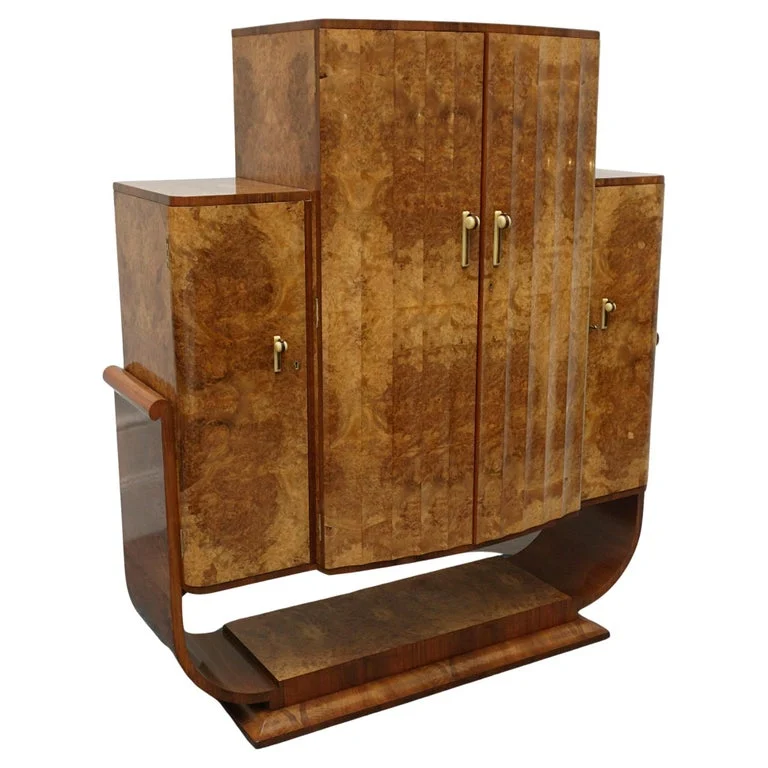
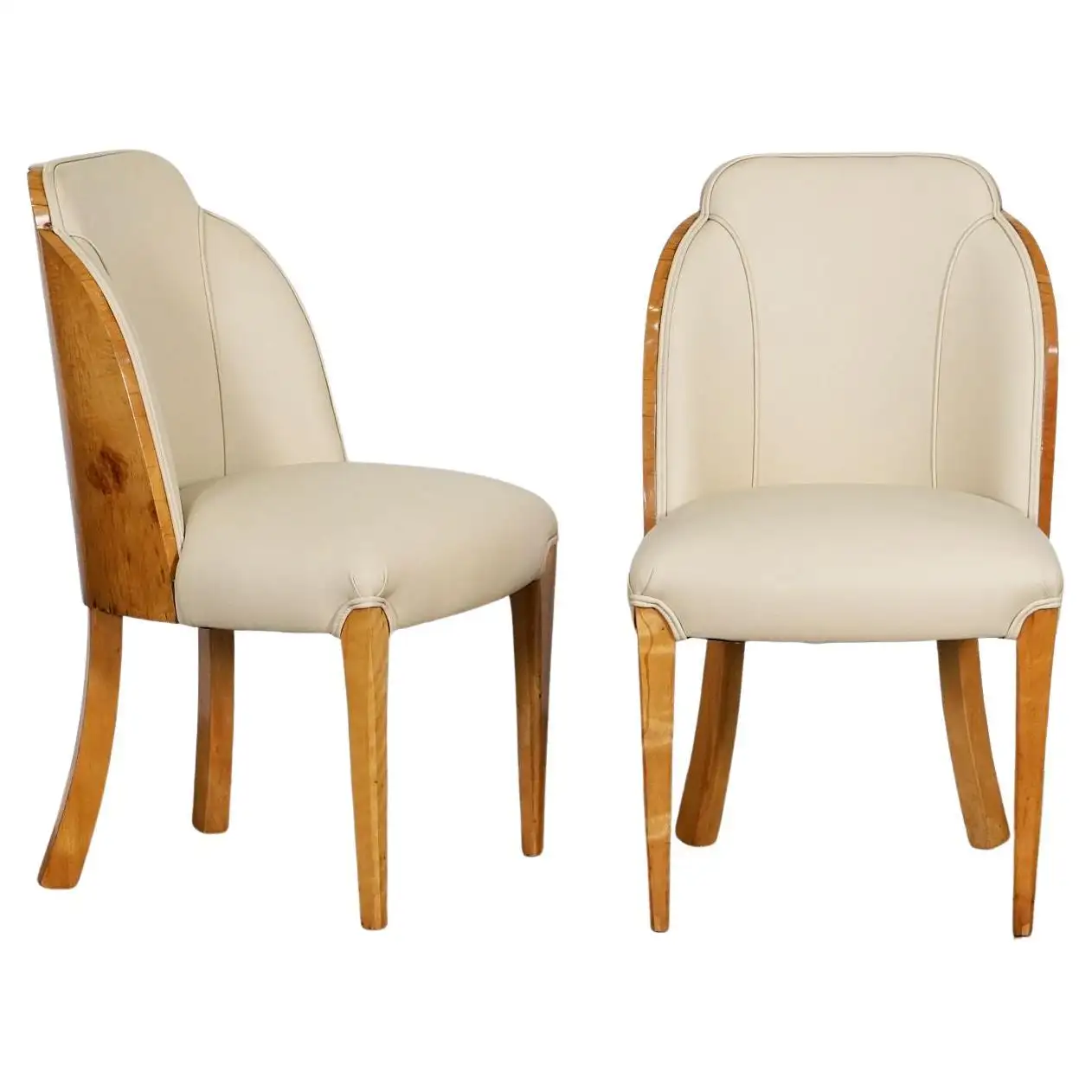
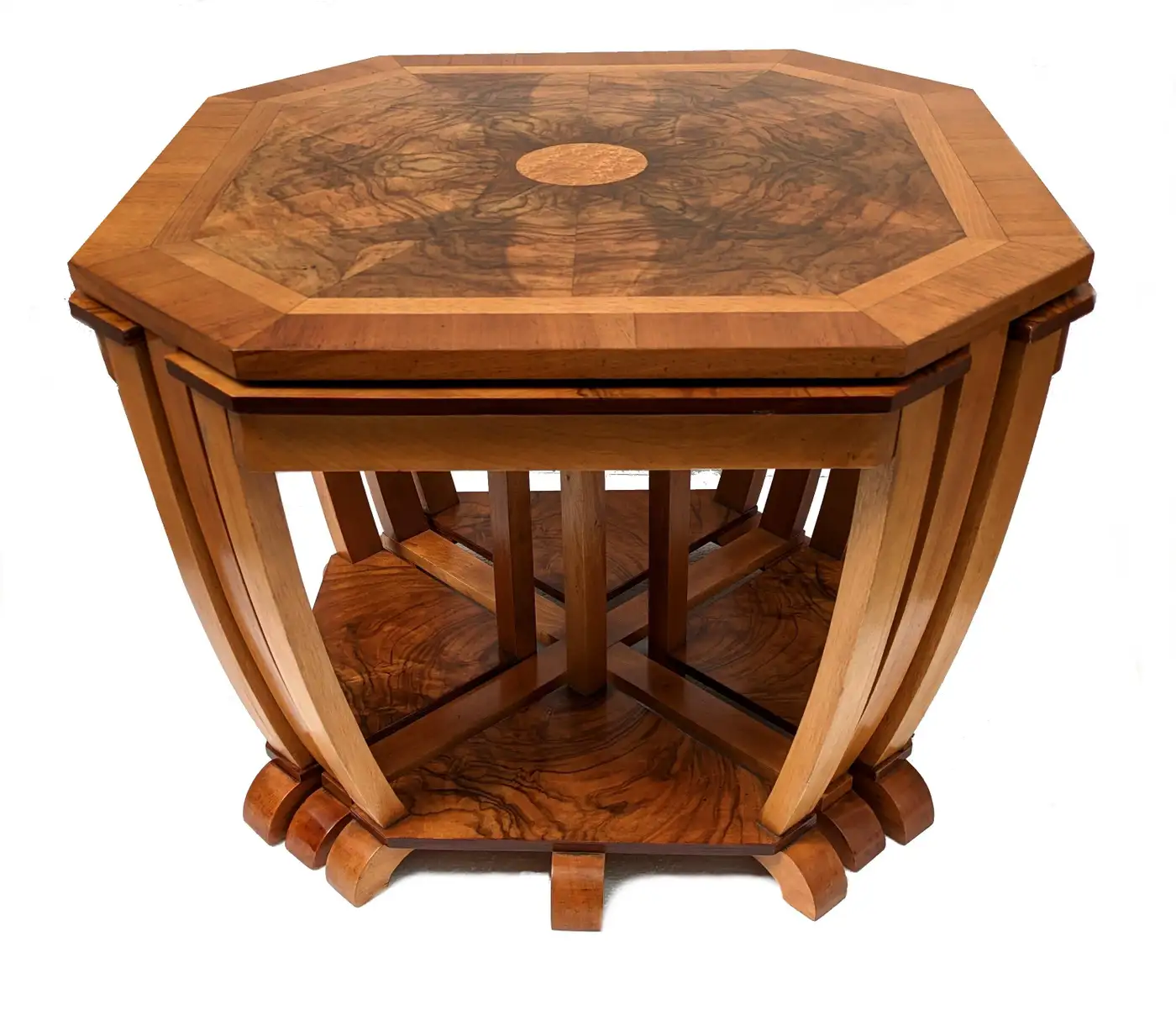
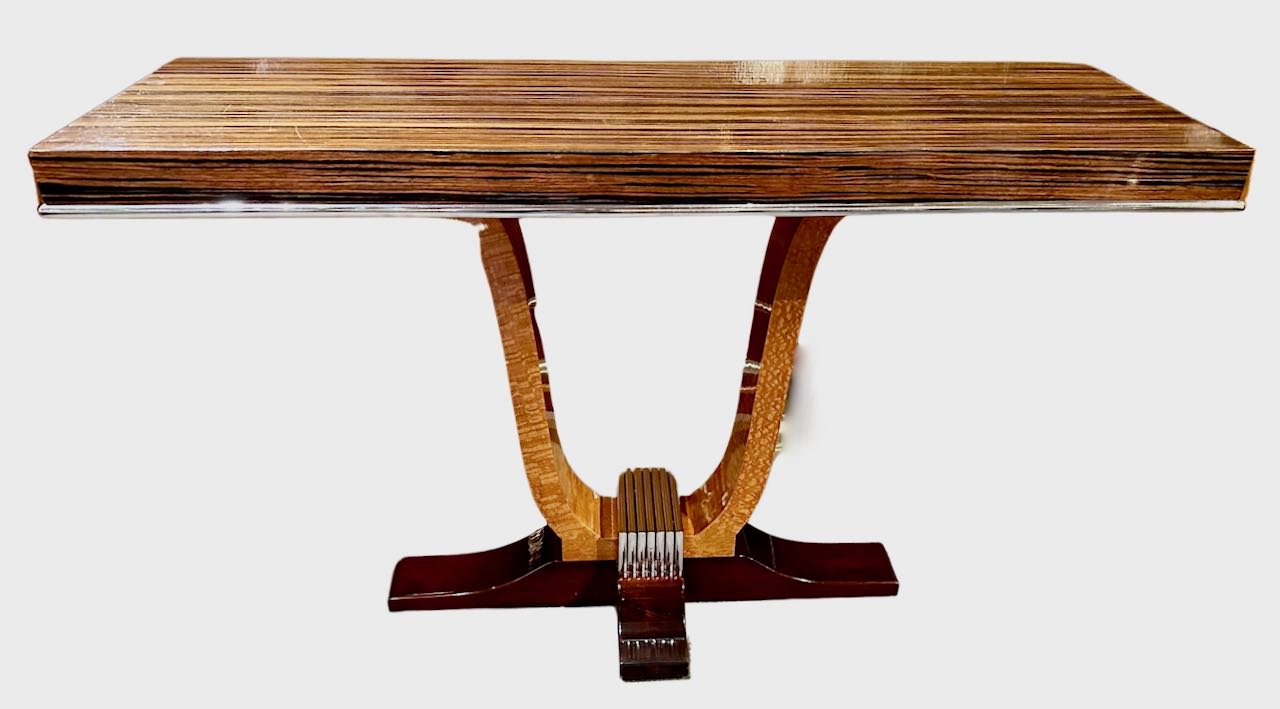
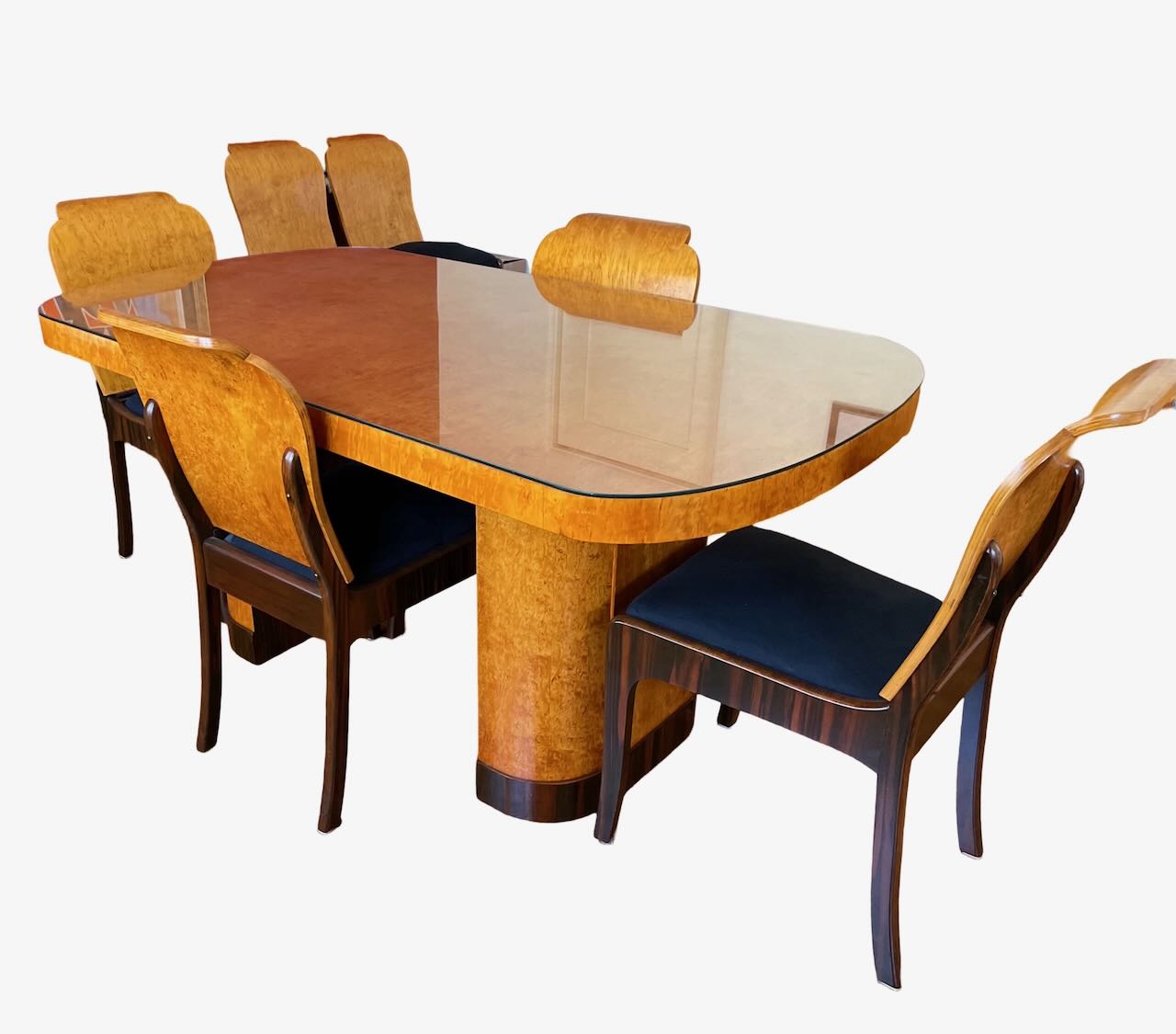
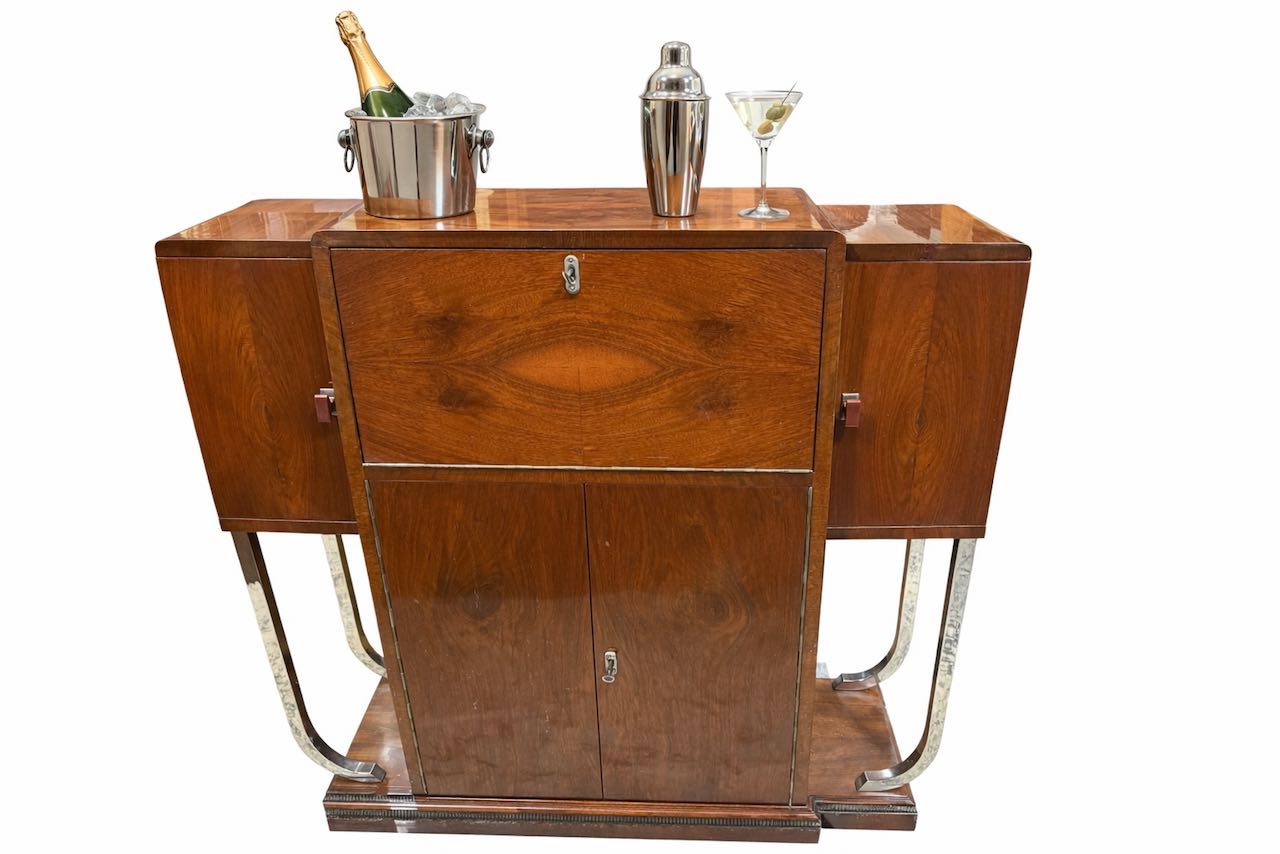
Harry and Lou Epstein were strongly influenced by the 1925 Paris Exposition Internationale des Arts Décoratifs et Industriels Modernes and later by the Streamline Moderne style. Most of their furniture was commission-made, allowing customers to order pieces to their specific requirements. In the early years, they retailed through East End furniture outlets before eventually opening their own showrooms in London, Manchester, Dublin, and Glasgow. Their most celebrated designs include the Cloud dining and lounge suites, featuring the distinctive cloud-shaped back that became their signature, as well as boat-based tables, cocktail cabinets, and case furniture in burr walnut. They prided themselves on exclusively handmade production using only the finest materials, and were considered artists rather than tradesmen within their trade. Early Epstein furniture bore no maker’s mark; later pieces from the 1950s onward sometimes carry an ivorine label stamped H. & L. Epstein Ltd or Epstein & Goldman. Their work is now among the most sought-after British Art Deco furniture on the antiques market.
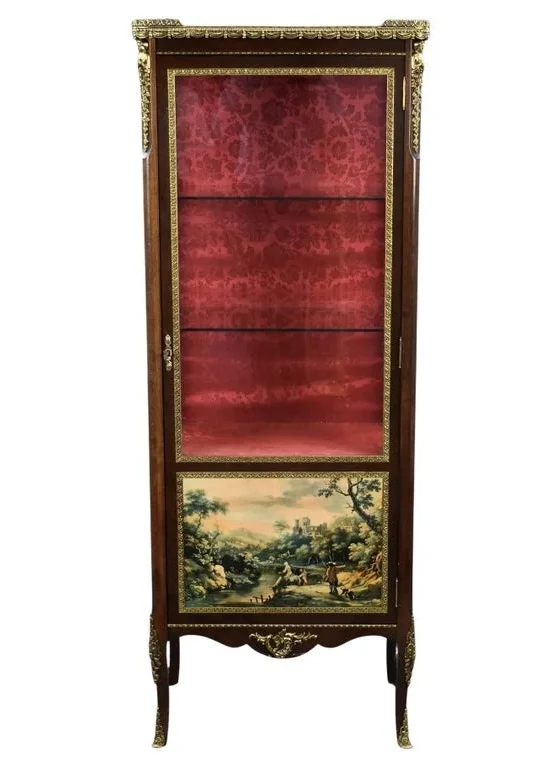
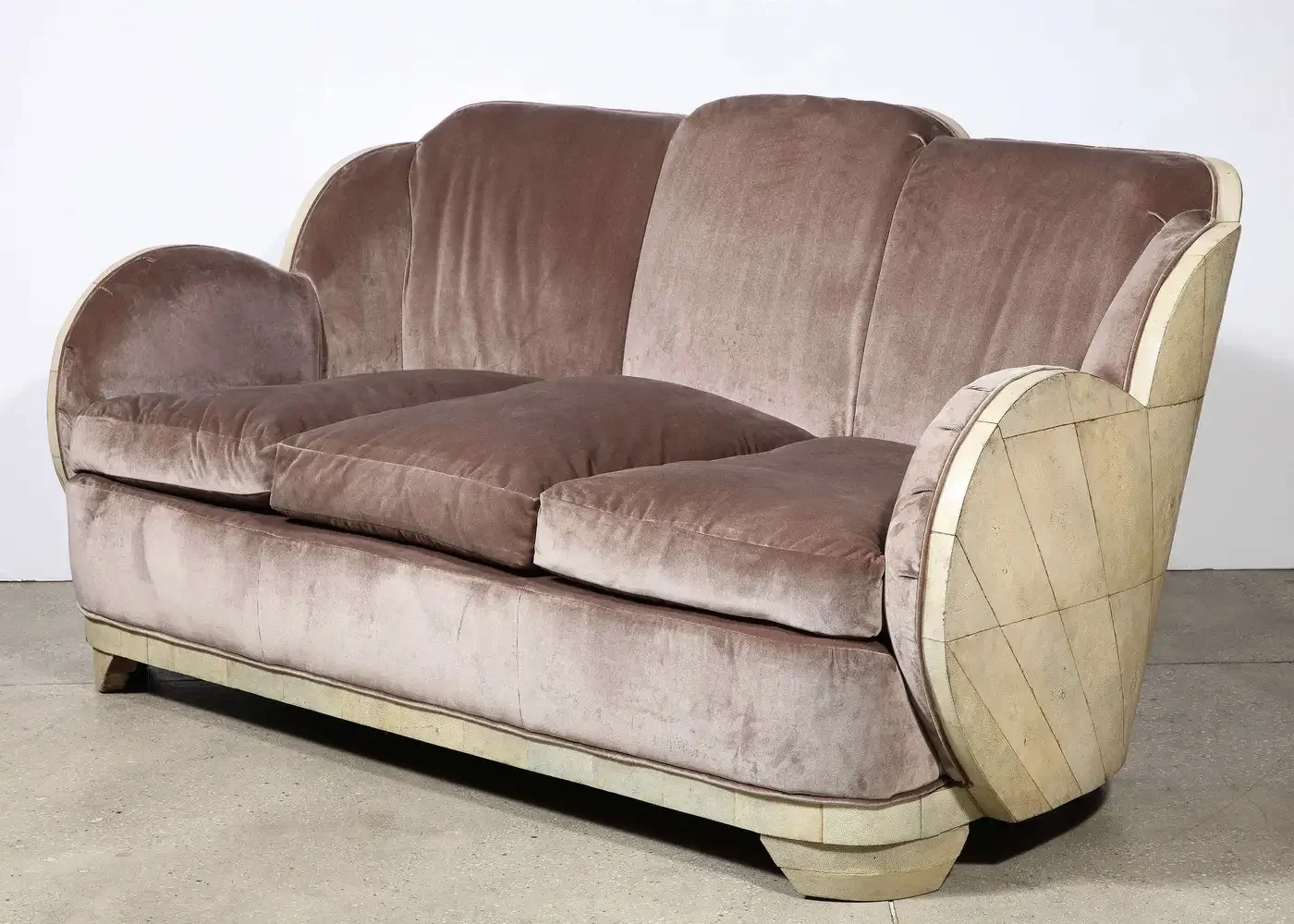

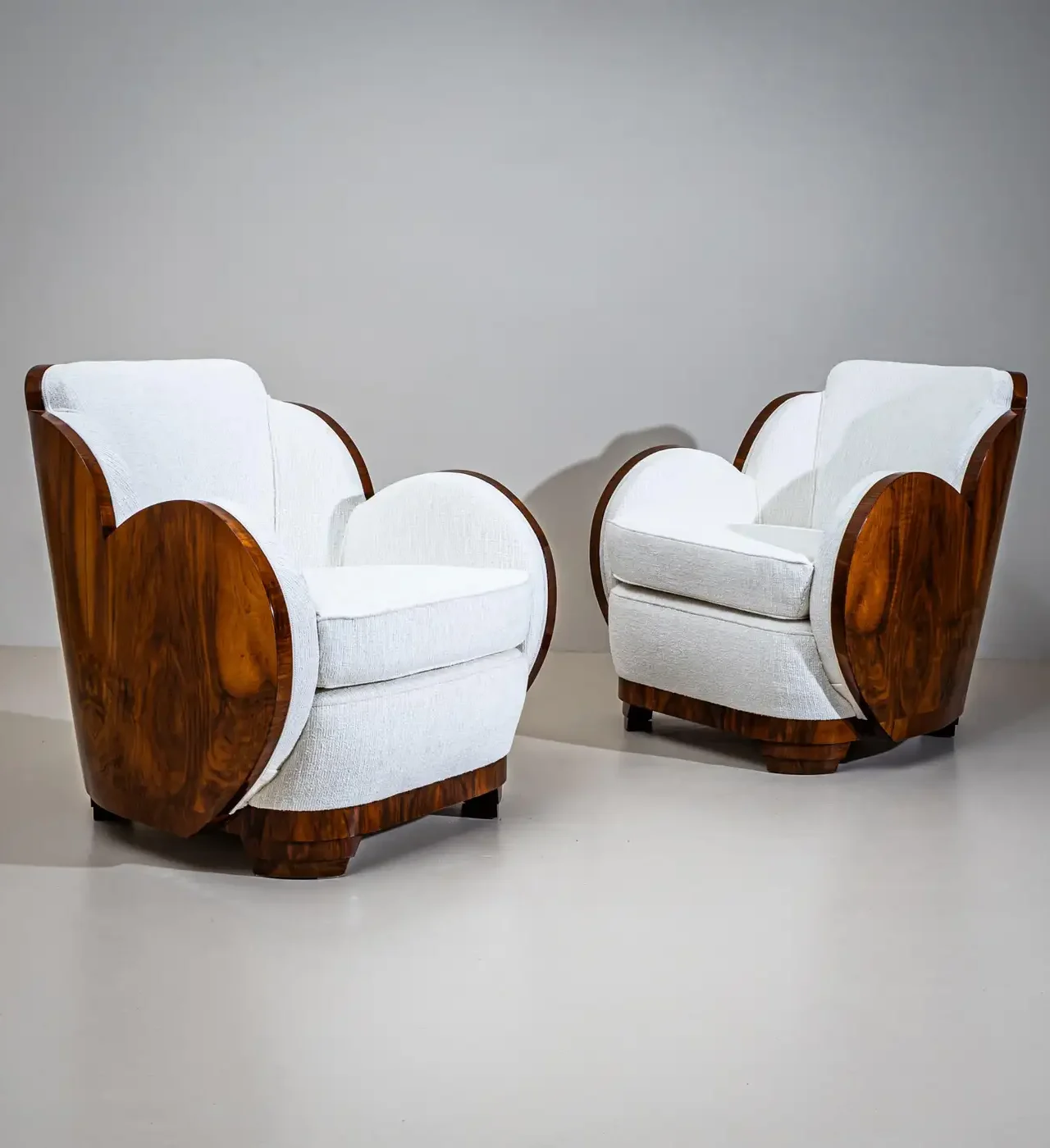
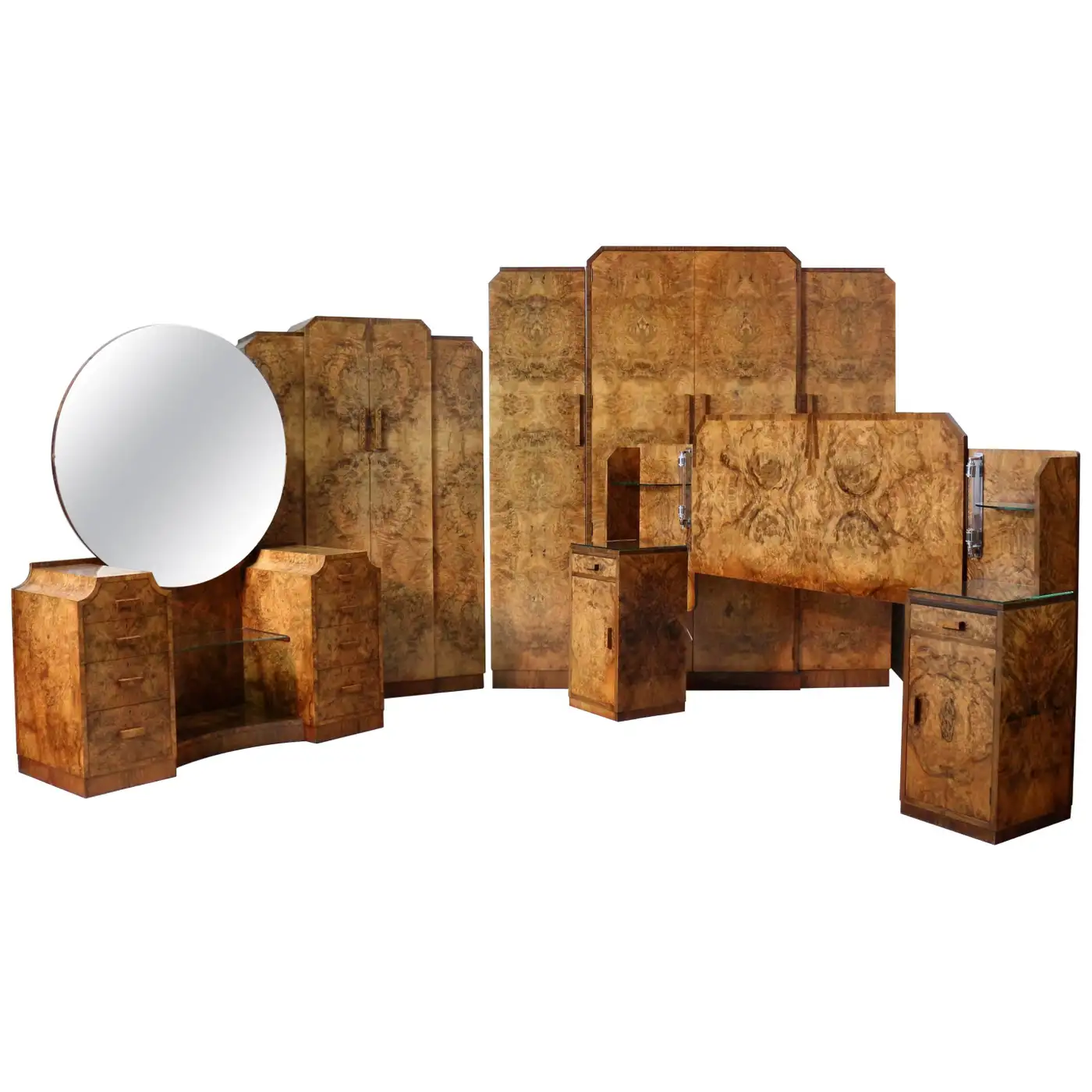
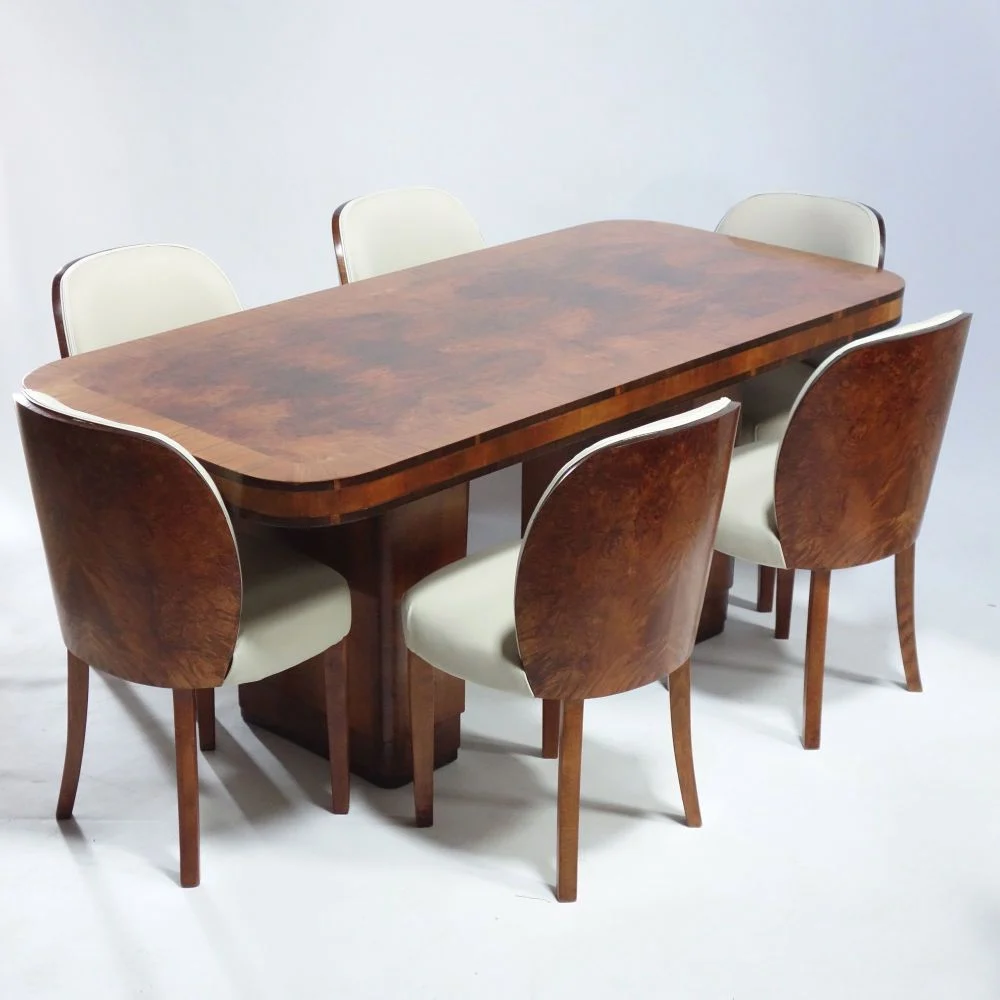
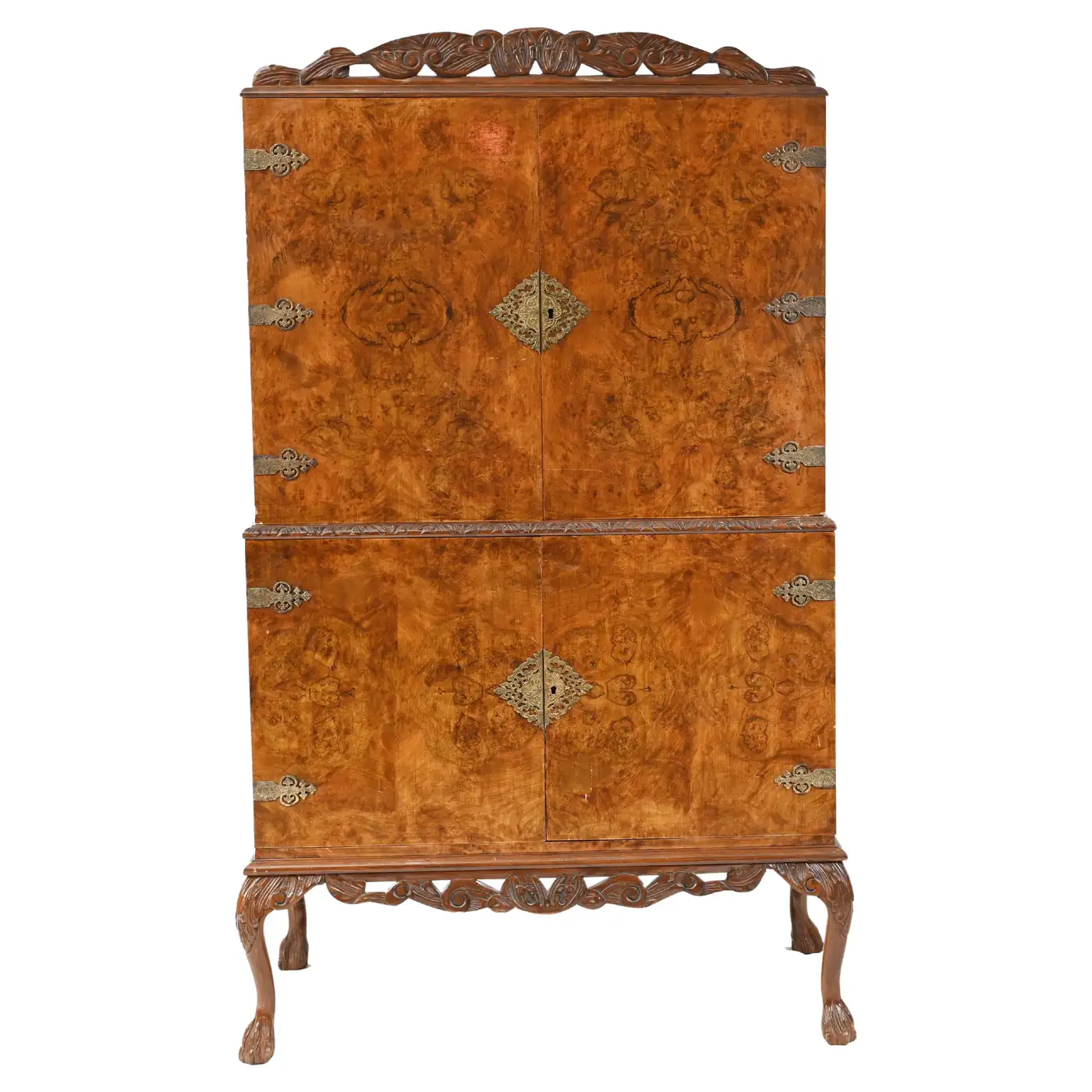
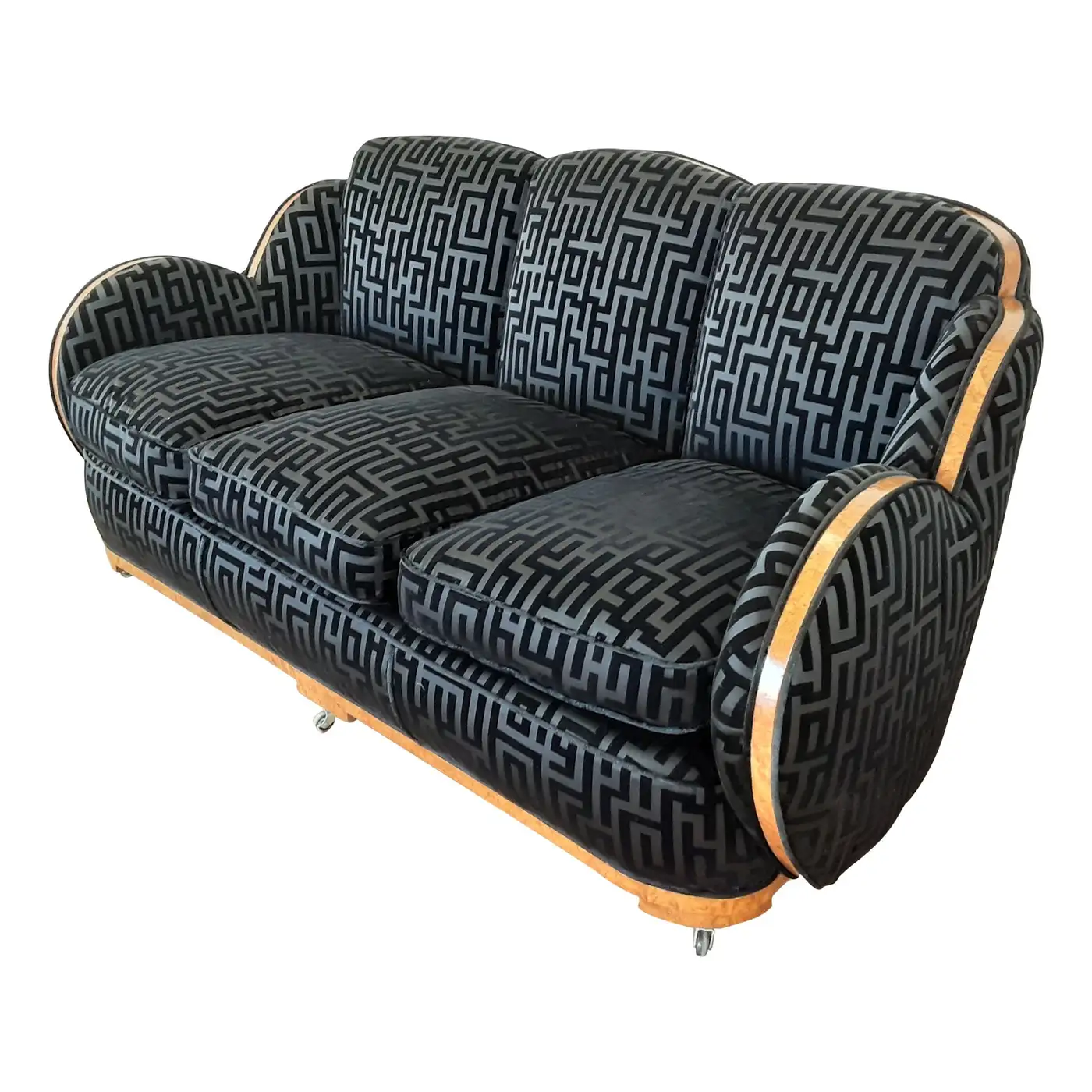
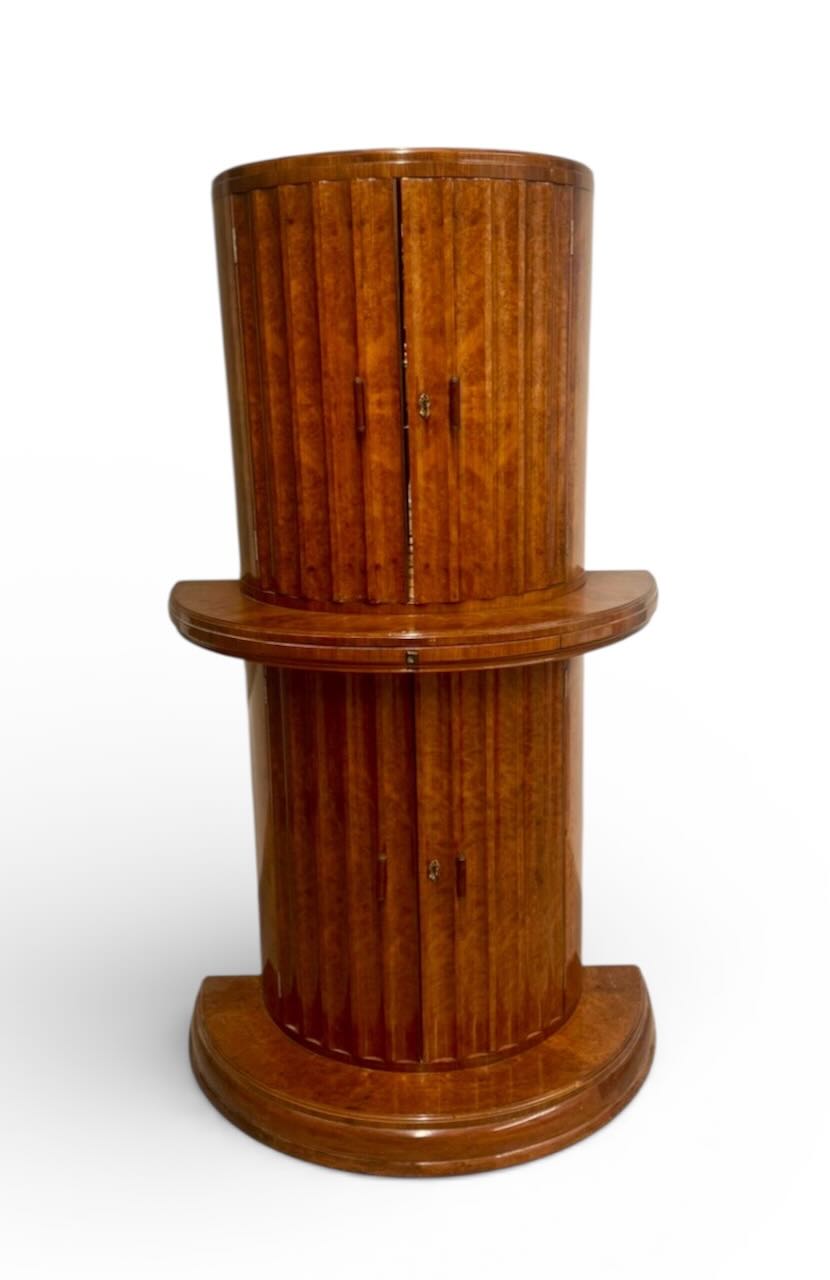
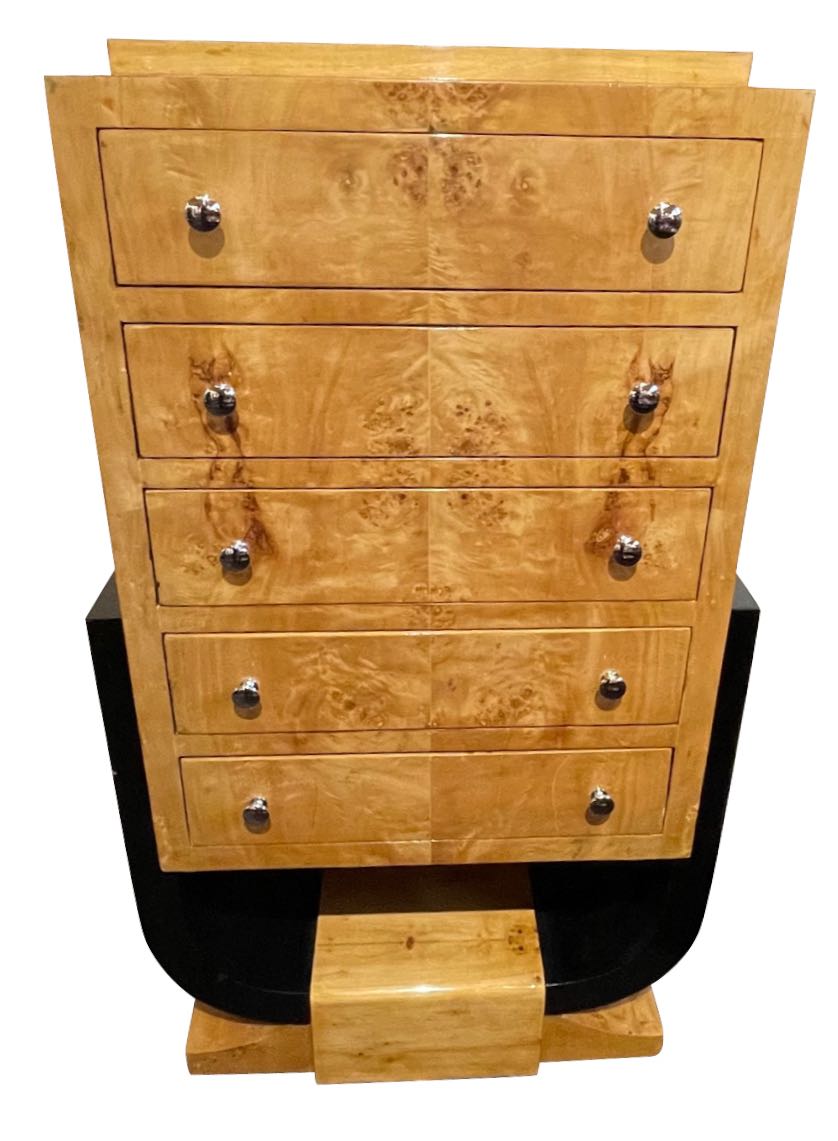
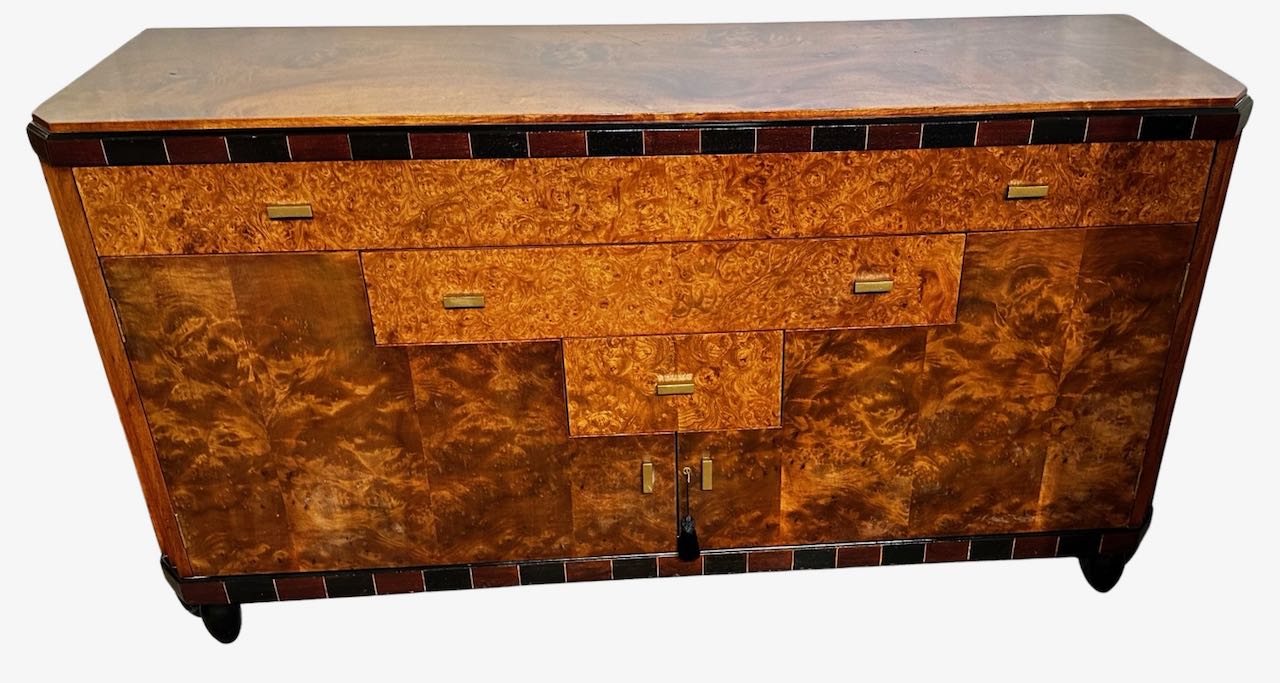
Epstein furniture was made primarily from bleached and burr walnut, with veneers in mahogany, sycamore, and violet wood, and inlays of brass, ivory, and mother of pearl, finished to a high lacquered sheen. Harry Epstein had an exceptional eye for shape and proportion, producing geometric forms with a strong sense of symmetry that characterize British Art Deco at its most solid and functional. Their work lacked the theatrical drama of American Deco or the delicate flair of French designers, instead achieving an elegant restraint perfectly suited to the middle-class British market.
Key Influences
- British Art Deco: Their furniture is widely regarded as the definitive expression of the British Art Deco style, setting the standard against which other British makers of the period are measured.
- Paris 1925: The Exposition Internationale was the decisive influence on Harry Epstein’s design vocabulary, shaping the geometric forms and material choices that defined the company’s output.
- Immigrant Craft Tradition: Their Eastern European origins and connection to the East End cabinet-making community gave their work a technical independence that distinguished it from mainstream British furniture.
- Middle-Class Accessibility: Their commission-based model and showroom network helped bring high-quality Art Deco design to a broader British public beyond the aristocratic clientele served by established firms.
- Cloud Suite: Their Cloud dining and lounge suites became iconic objects of British interwar design and remain among the most recognizable Art Deco furniture forms produced in England.
If you are interested in further stories of the artists who shaped Art Deco, return to our artists page to browse the full directory.
Related Products from ArtDecoCollection.com