
François Bazin
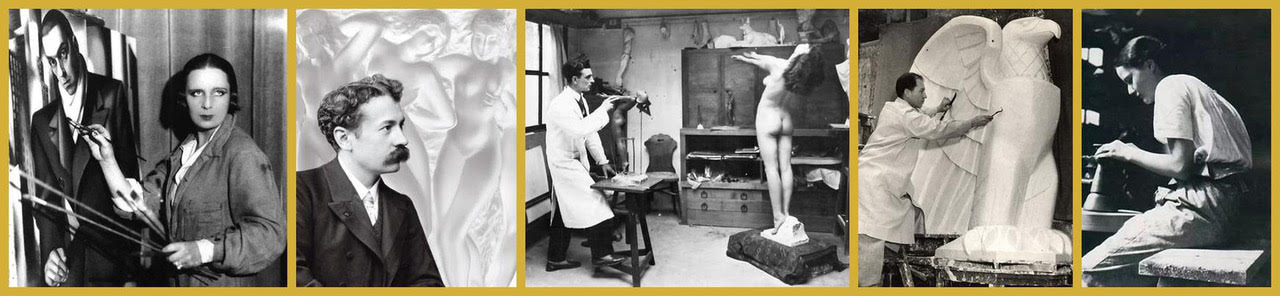
François Bazin was born on October 31, 1897, in the 14th arrondissement of Paris, to parents who were copper engravers and medalists. His mother was exceptionally talented, becoming the first female engraver in France and a competitor for the prestigious Prix de Rome. Soon after his birth, the family moved to Chile, where both parents had found positions teaching art at the art school in Santiago. Bazin grew up there before returning to Paris in 1913, when he enrolled at the École des Arts Décoratifs and then at the École Nationale Supérieure des Beaux-Arts. With the start of World War I, he was mobilized in 1916 into the aviation wing of the French forces, where he learned to fly Spad fighter aircraft powered by Hispano-Suiza V8 engines. It was during his military service that he met Marc Birkigt, the head of Hispano-Suiza, a connection that would define the most celebrated chapter of his career. After the war, he completed his studies and was runner-up for the Prix de Rome in 1925. Bazin died rather young, at 59, on December 9, 1956, in Paris.
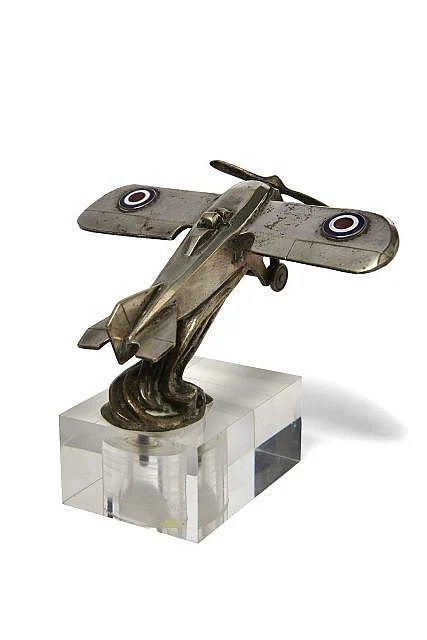
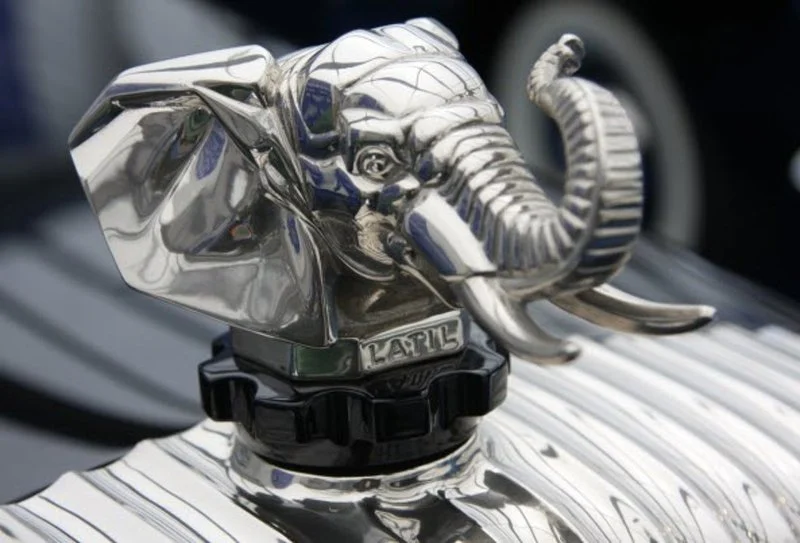
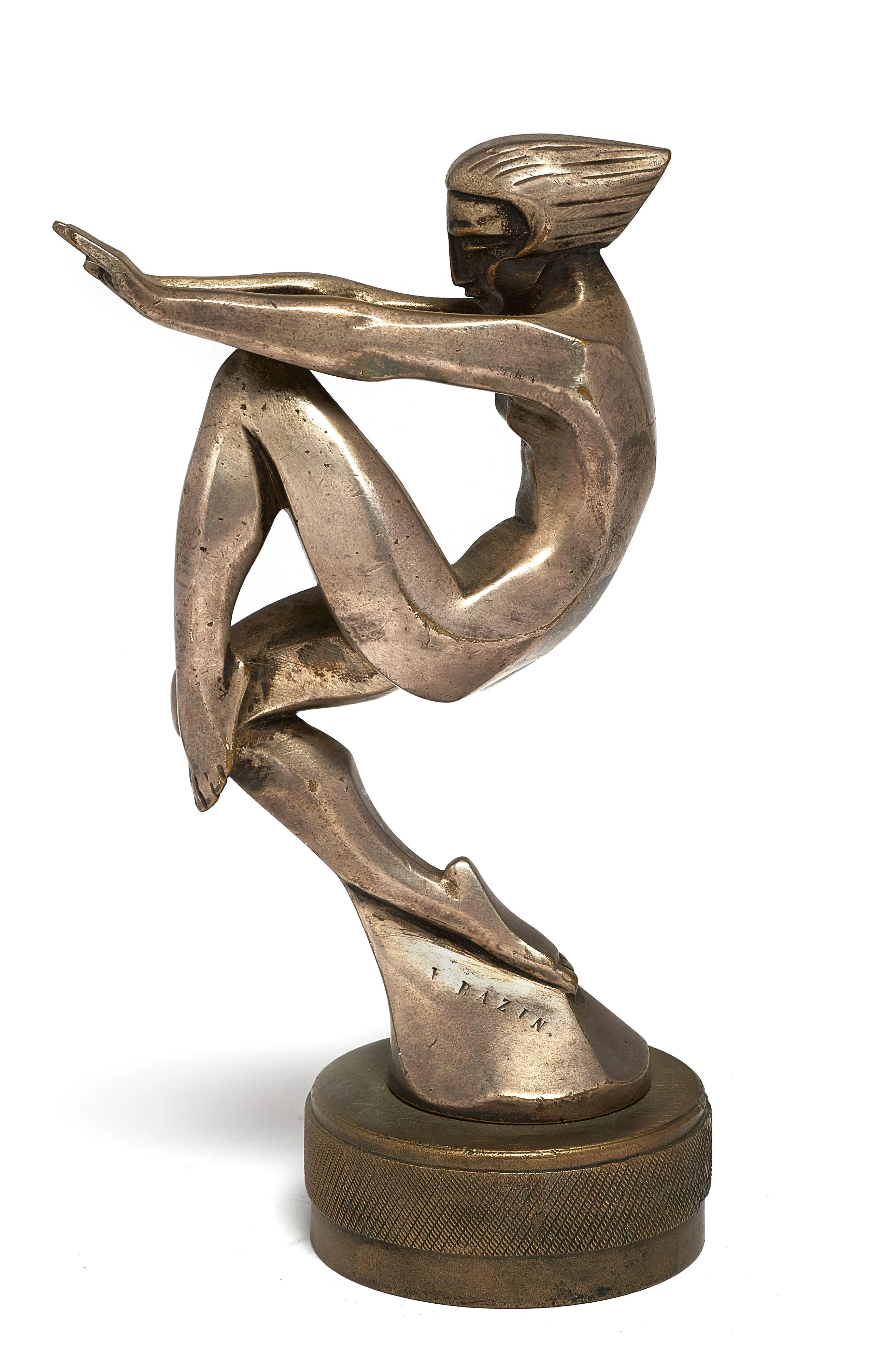
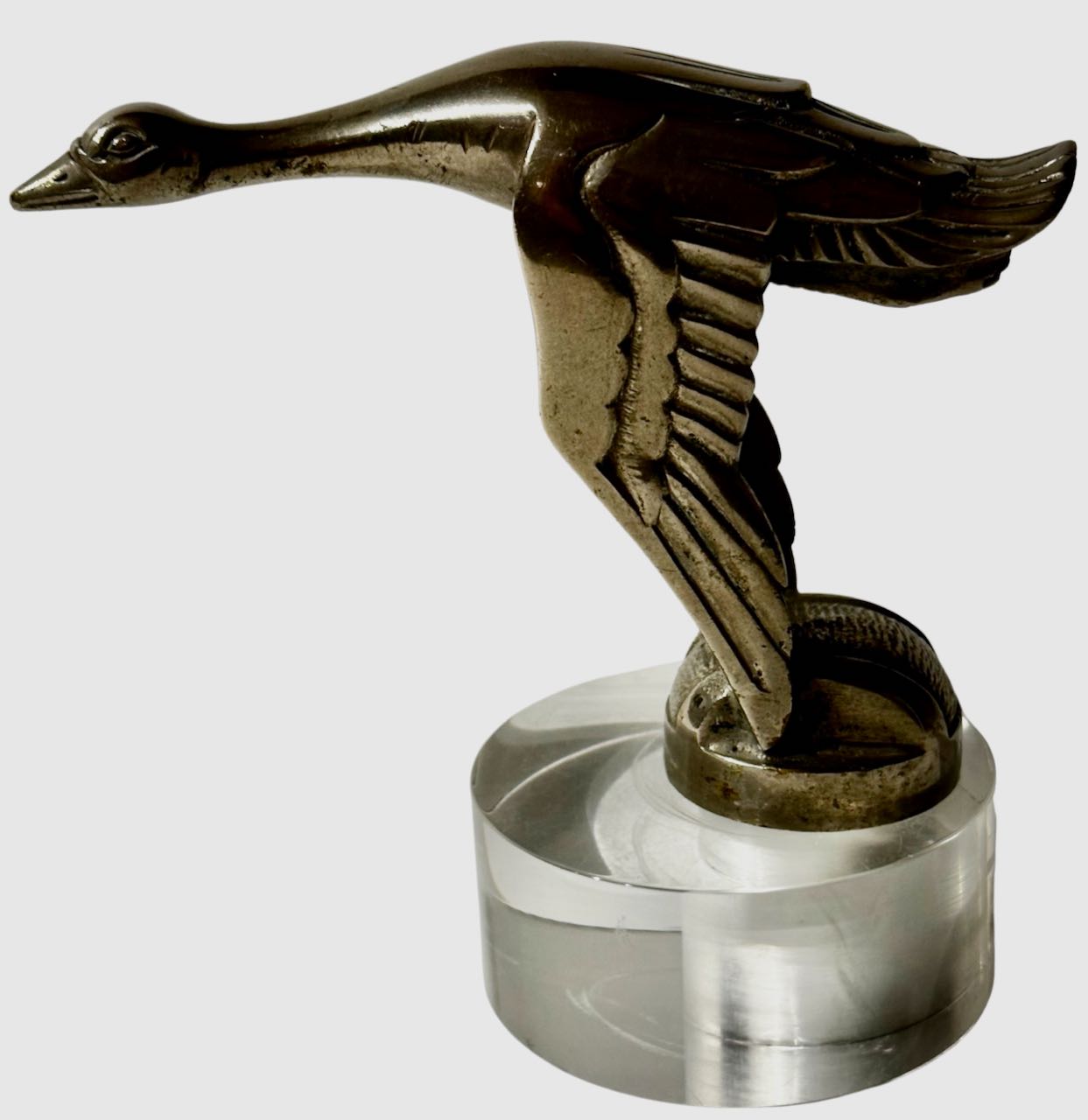
Bazin’s most famous commission came from Marc Birkigt, who asked him to design and sculpt the stork mascot for Hispano-Suiza, inspired by the emblem used by the ace French fighter pilot Georges Guynemer on the flanks of his Spad aircraft. The tiny flying stork became the official hood ornament of the Franco-Spanish marque and was produced in numerous versions, including one specially made for tennis legend René Lacoste in which the stork holds a tennis ball in its beak. When André Citroën launched the Croisière Noire to cross the African continent in 1924, he personally contacted Bazin to design a mascot for the expedition, resulting in the celebrated Femme Mangbetu, modeled on Nobosudru, the favorite wife of a Mangbetu tribal chief. Over a career of almost four decades, Bazin conceived more than 70 different mascots, including commissions for major automobile brands such as Isotta Fraschini, Latil, Unic, and Licorne, and he often worked with the firm Louis Lejeune Ltd. In 1929, he won the gold medal at the Salon des Artistes Français and received a National Prize for his works Aux Bigoudens, Terre de pardons, and Légendes à Pors-Car en Penmarch. He made three decorative bas-reliefs for the Palace of Hydrotherapy at the 1937 Exposition des Arts et Techniques in Paris, and many of his works were produced in porcelain by the Sèvres factory. His granddaughter Julie Bazin has since revived his legacy by launching limited-edition giant bronzes of his legendary mascots and a jewelry collection inspired by the Croisière Noire.
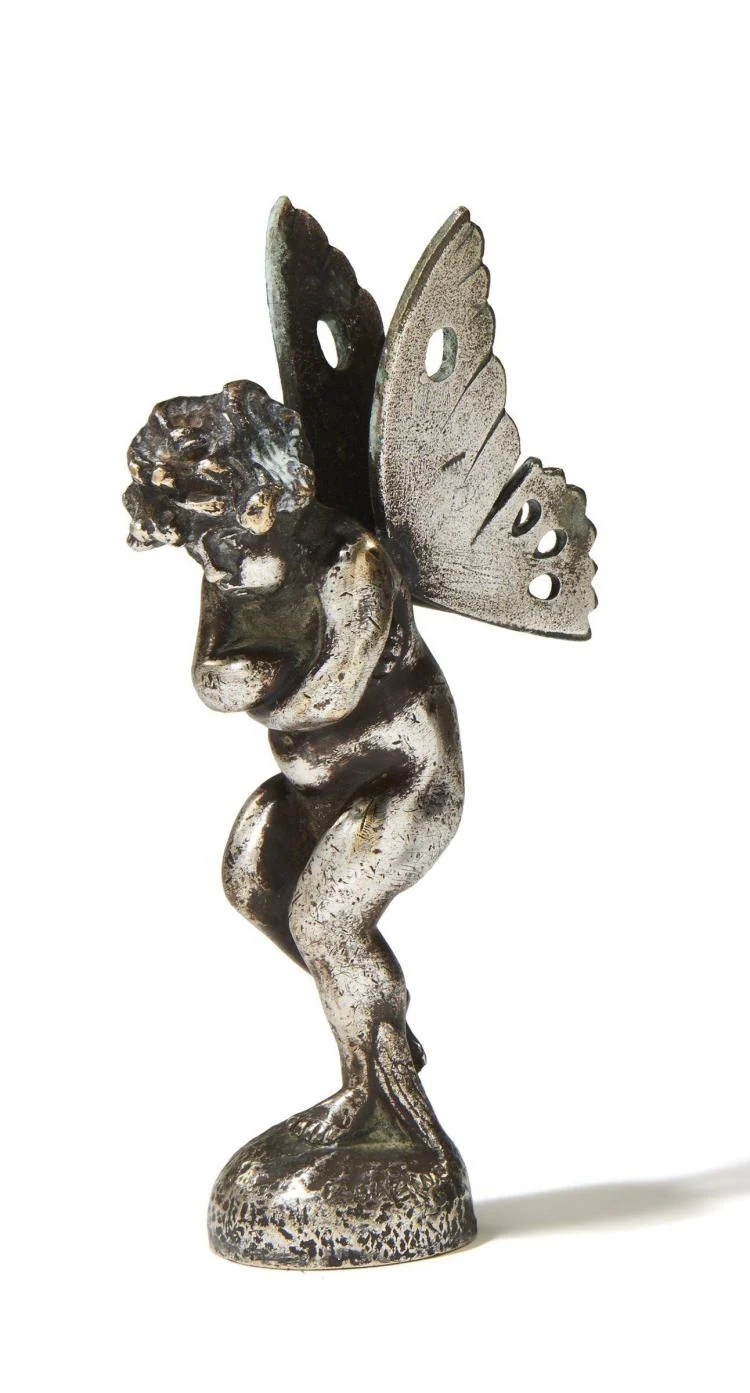
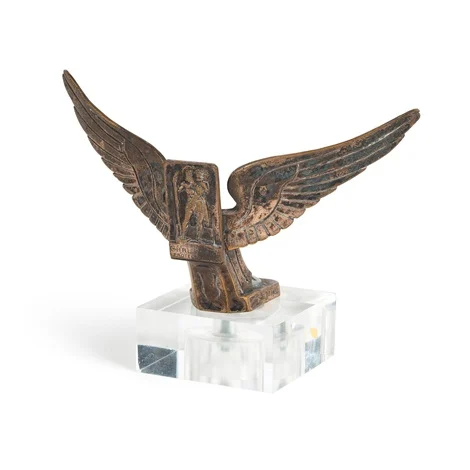
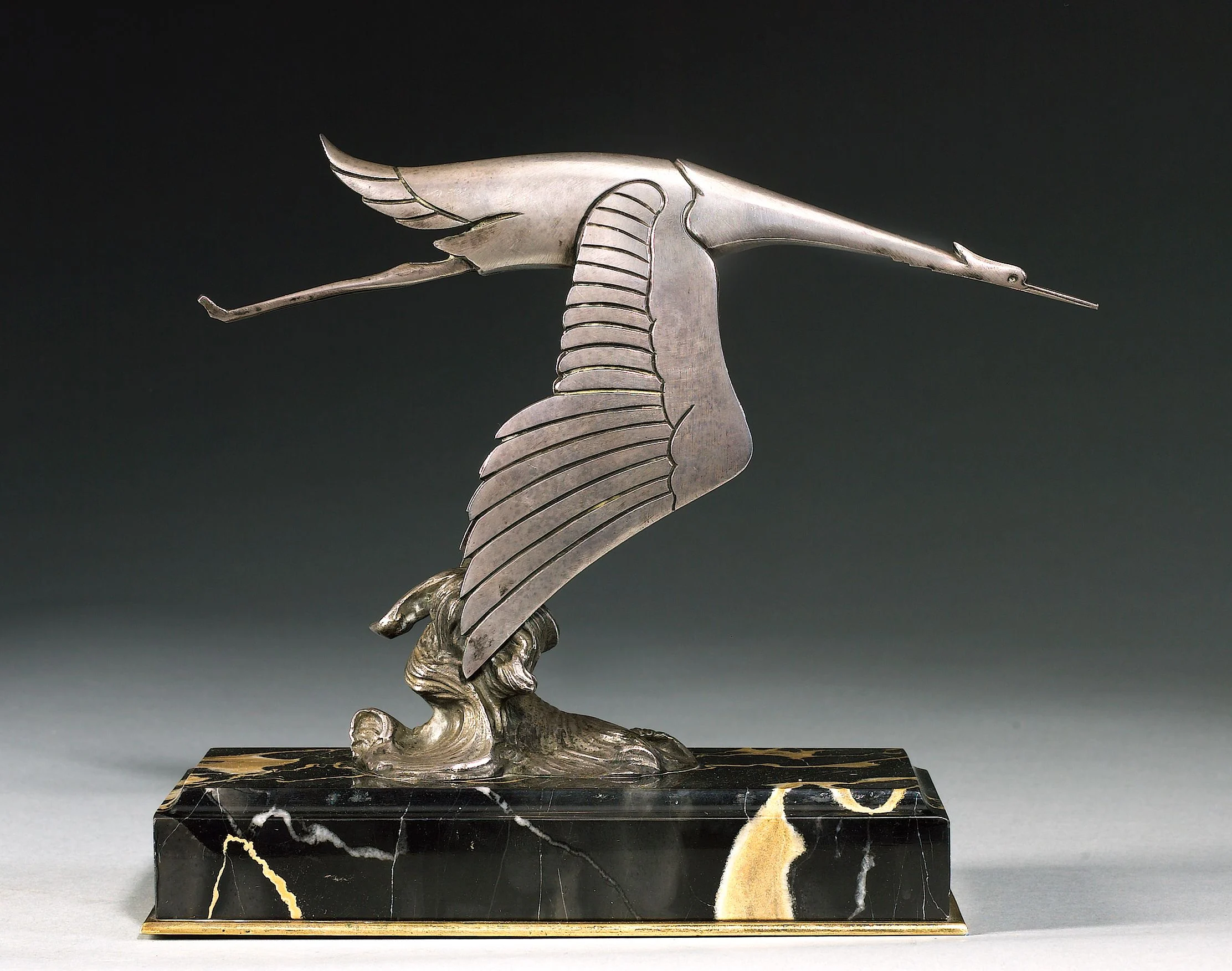
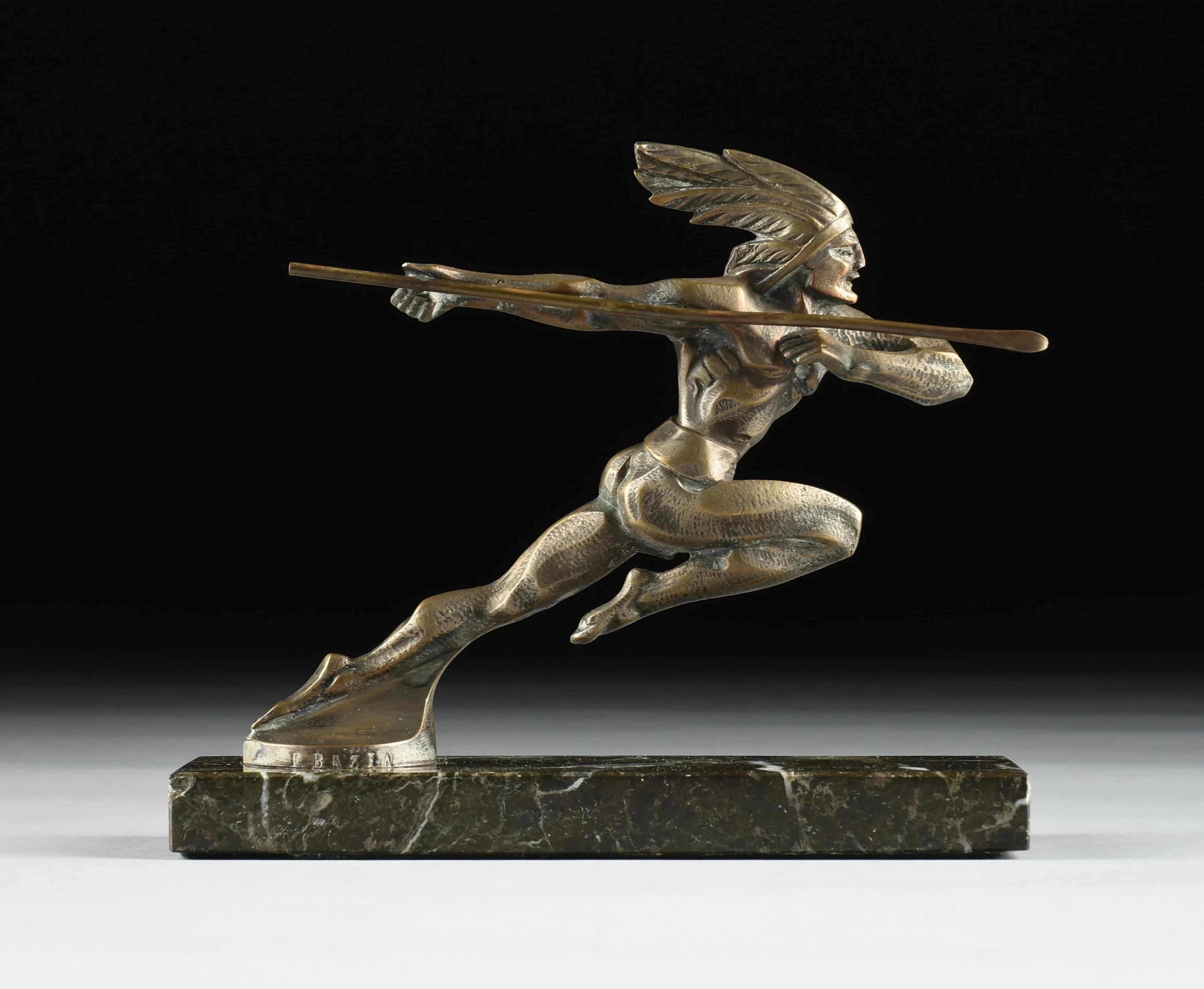
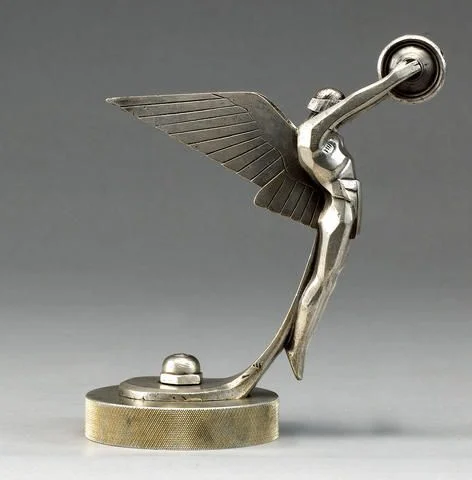
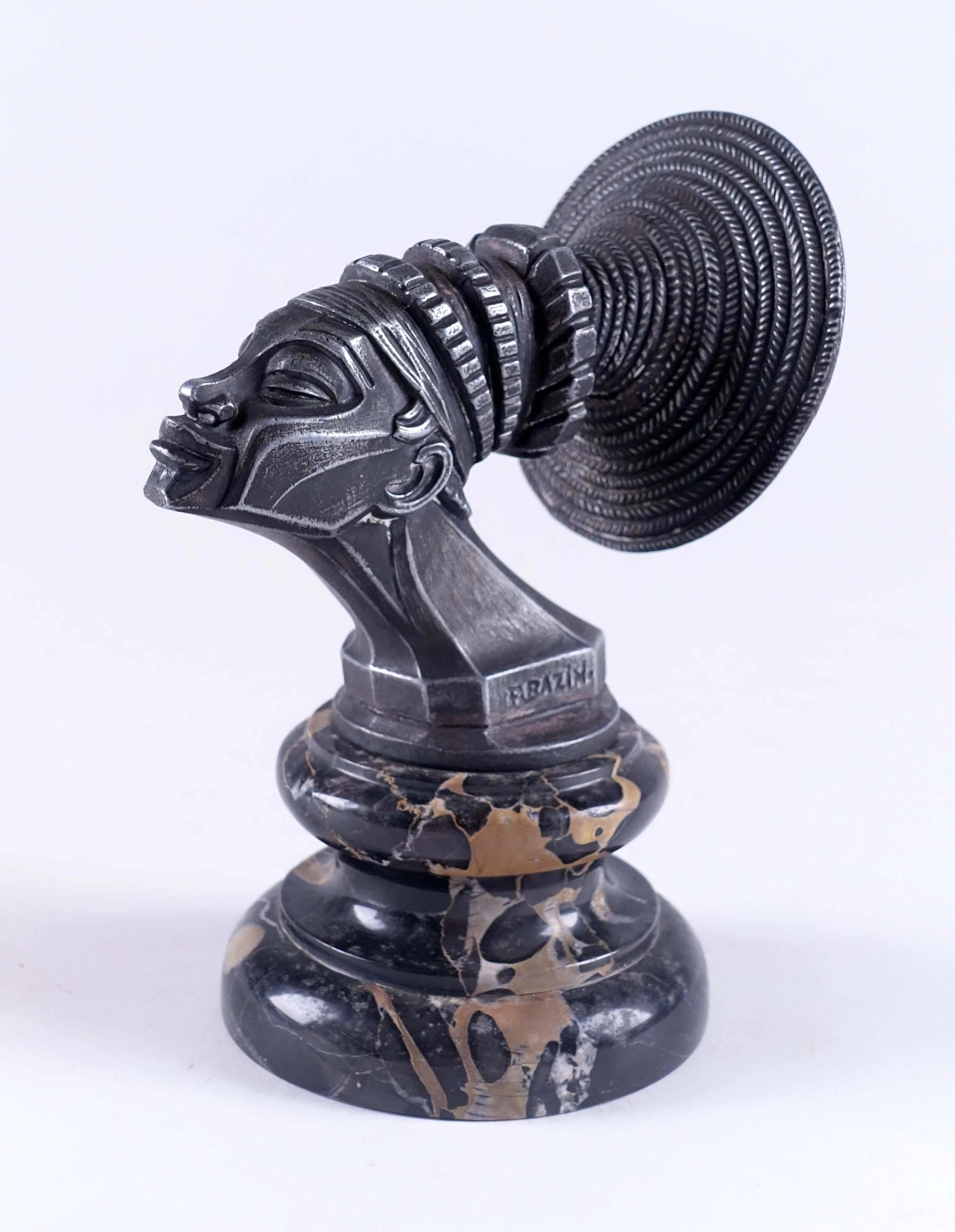
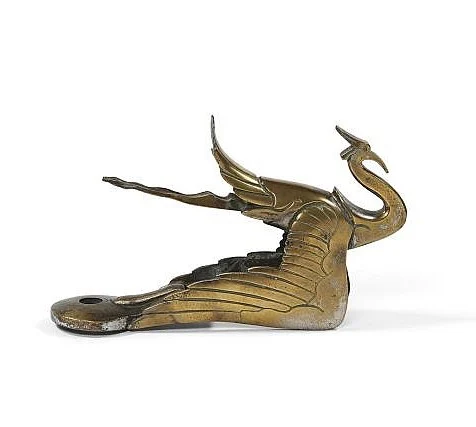
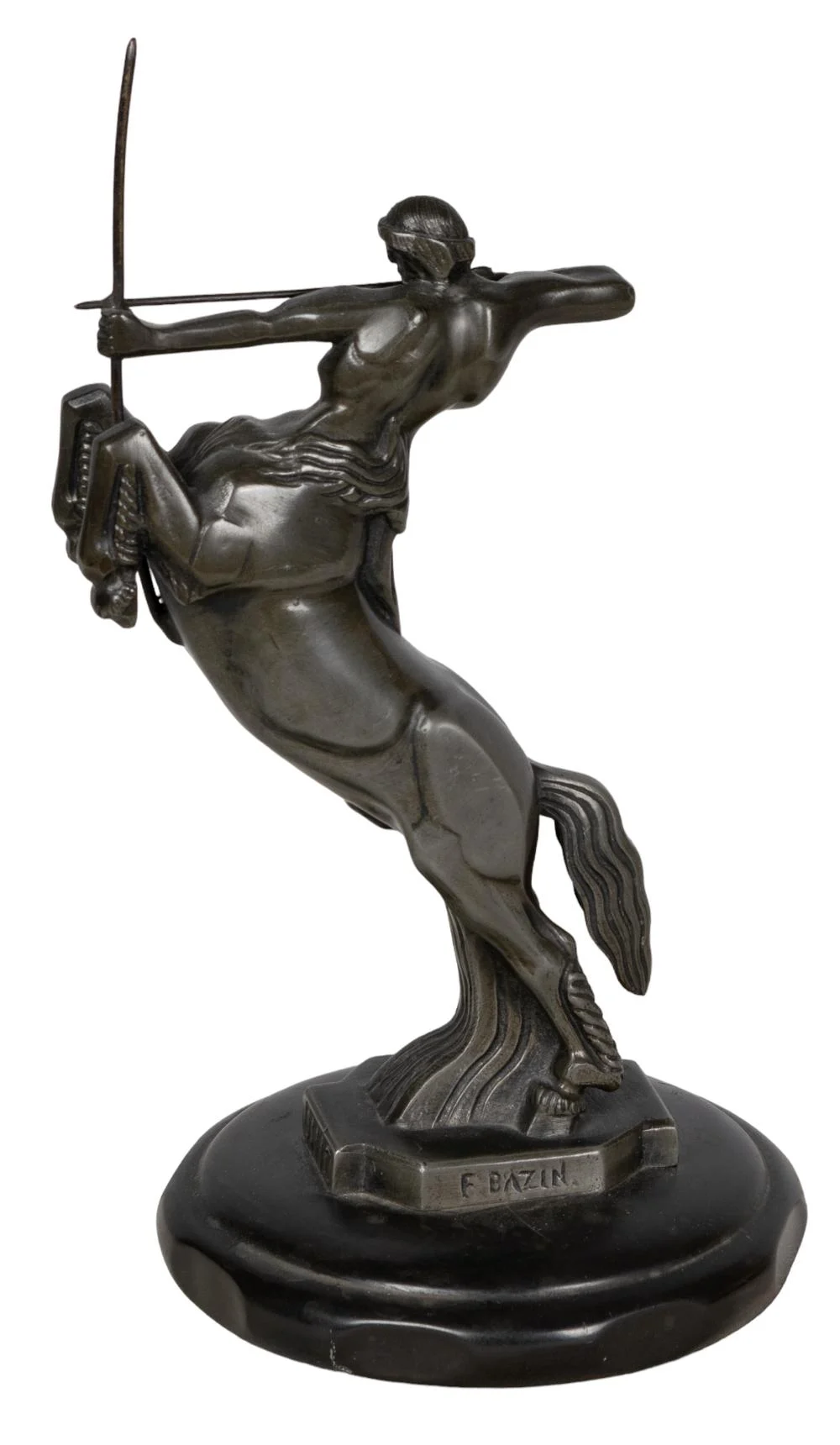
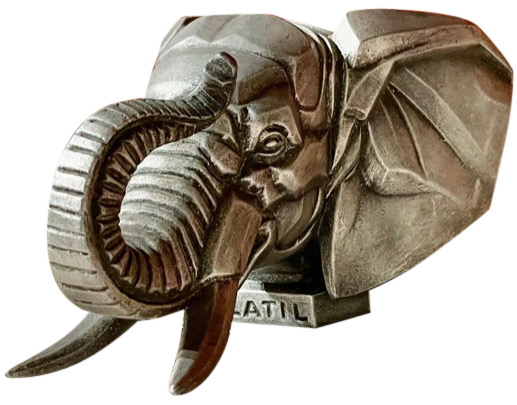
Bazin possessed an incredible ability to combine curves and angular features, giving his creations a very pronounced Art Deco character, as seen in works such as the Éléphant-Latil, Pégase, and the Triomphe. His Femme Mangbetu mascot exemplifies this approach, with its long, sinuous neck, geometric circular headdress, and sharp edges balanced against flowing organic forms. He traveled widely through Italy, Greece, Egypt, and Madagascar, experiences that enriched his sculptural vocabulary and informed the cultural breadth of his subjects.
Key Influences
- Automotive Mascot Design: His more than 70 hood ornaments for marques including Hispano-Suiza, Citroën, and Isotta Fraschini, helped establish the automobile mascot as a recognized form of Art Deco sculpture.
- Brand Identity through Sculpture: The Hispano-Suiza stork became inseparable from the automaker’s identity, demonstrating how a single sculptural object could define a luxury brand’s image for generations.
- Cross-Cultural Representation: His Femme Mangbetu mascot for the Croisière Noire brought African sculptural forms into the European decorative arts vocabulary, reflecting the era’s fascination with non-Western aesthetics.
- Aviation and Art: His firsthand experience as a fighter pilot lent authenticity to his aviation-themed sculptures and forged the personal connections with the aerospace industry that produced his most celebrated commissions.
- Automobilia as Collectible Art: His mascots have commanded consistently high prices at auction, helping establish automobile-related decorative objects as a serious collecting category within the broader Art Deco market.
If you are interested in further stories of the artists who shaped Art Deco, return to our artists page to browse the full directory.
Related Products from ArtDecoCollection.com