
Georges Braque
Georges Braque was born on May 13, 1882, in Argenteuil, France, the son and grandson of house painters and amateur artists who ran a prosperous decorating firm. He grew up in Le Havre, where he studied painting in the evenings at the École des Beaux-Arts from about 1897 to 1899, before moving to Paris to apprentice as a decorator and study at the Académie Humbert from 1902 to 1904. His training as a house painter gave him a solid professional handling of materials and knowledge of artisan techniques such as the imitation of wood grain, skills he would later incorporate directly into his Cubist pictures. He signed a contract in 1907 with dealer Daniel-Henry Kahnweiler, who introduced him to Guillaume Apollinaire, who in turn introduced him to Picasso. In 1912, he married Marcelle Lapré and settled in Sorgues in southeastern France. During World War I, he served as an infantry sergeant, was decorated twice for bravery, and in 1915 suffered a serious head wound that required trepanation and a long convalescence. He died in Paris on August 31, 1963, and was given a state funeral in the Cour Carrée of the Louvre. He is buried at the Church of St. Valery in Varengeville-sur-Mer, Normandy, whose windows he designed.
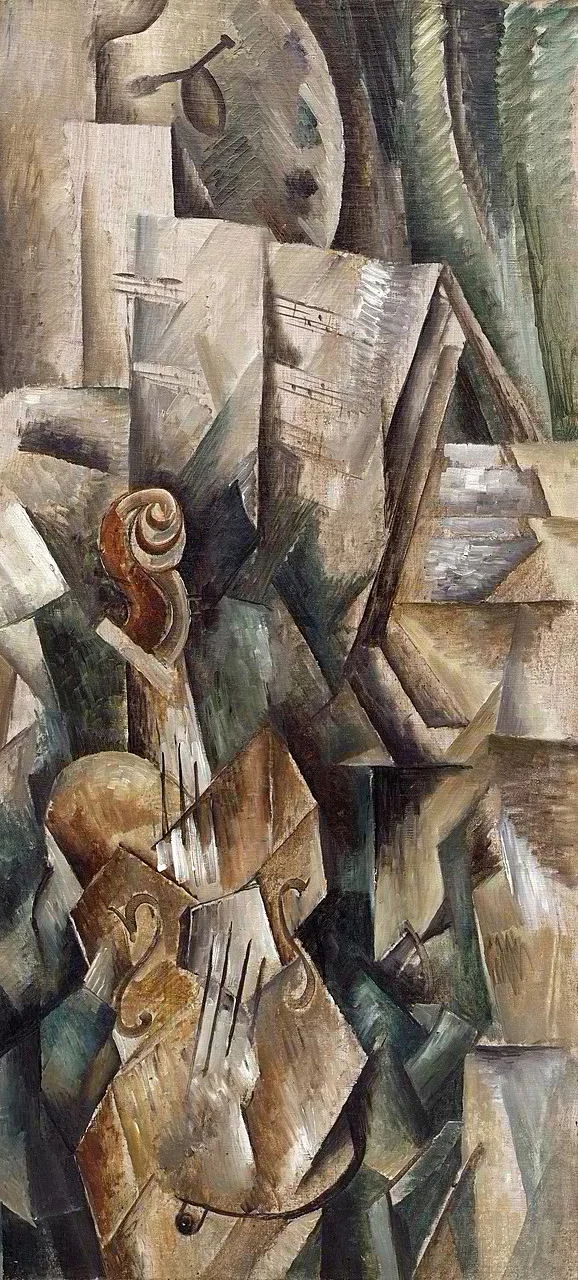
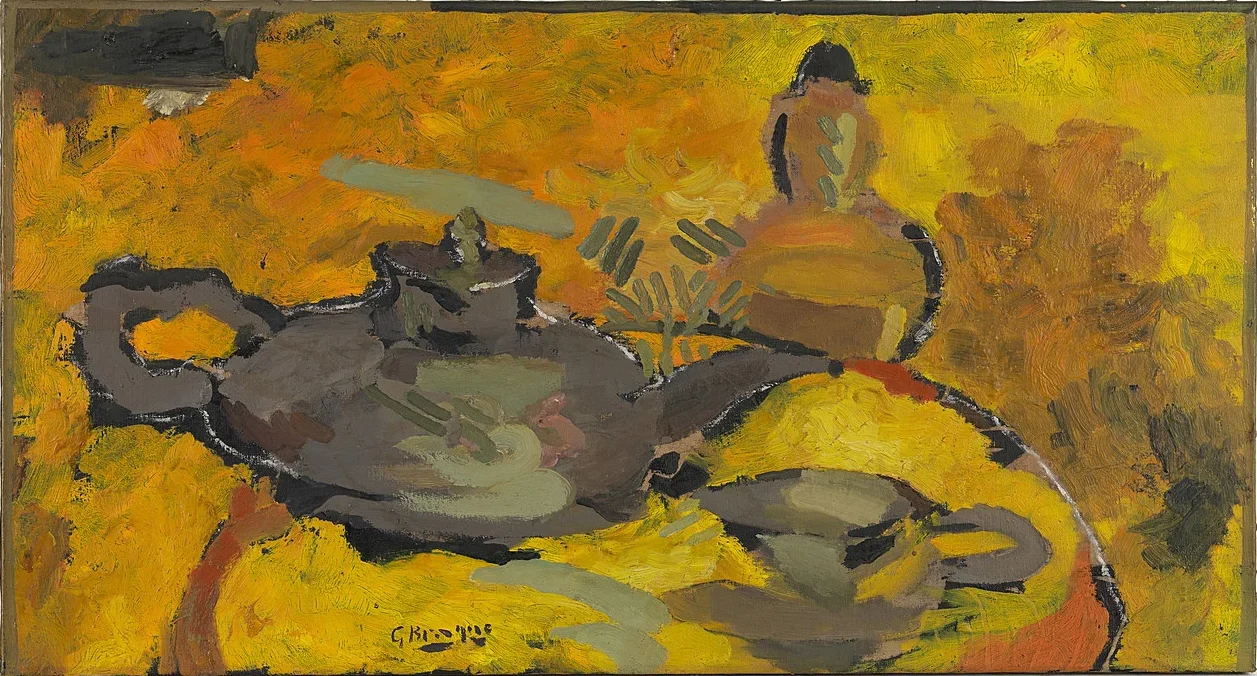
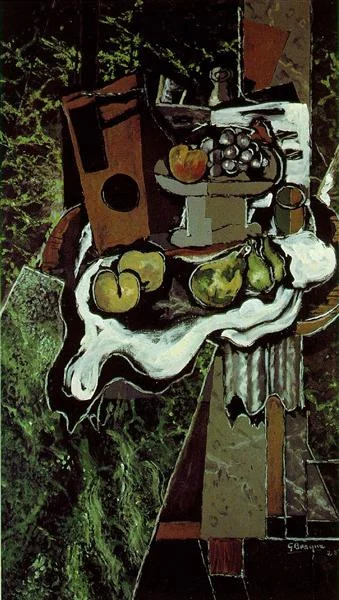
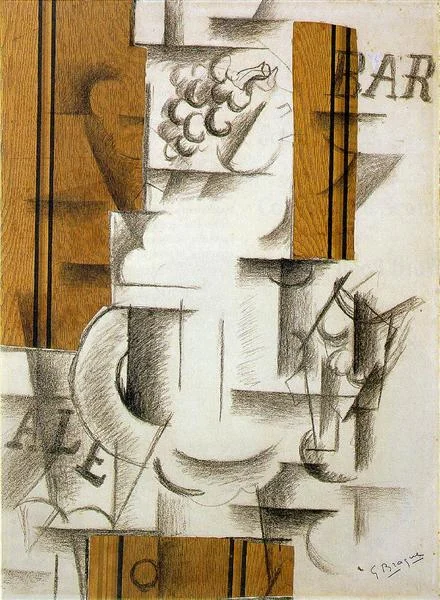
Braque began his career in an Impressionist style before transitioning to Fauvism around 1905, working most closely with Raoul Dufy and Othon Friesz to develop a somewhat more subdued version of the style. His first solo show in 1908 at Kahnweiler’s gallery prompted critic Louis Vauxcelles to describe his reduction of everything to geometric forms as “cubic oddities,” inadvertently providing the movement with its name. From 1909 to 1914, he and Picasso worked in such close collaboration that their paintings became practically indistinguishable, jointly developing Analytic and then Synthetic Cubism. In 1912, he created what is generally considered the first papier collé by attaching three pieces of wallpaper to the drawing Fruit Dish and Glass, a work that significantly advanced the idea of the picture as an autonomous object rather than an illusionistic representation. In 1923 and 1925, he received commissions from Sergei Diaghilev to design stage decor for the Ballets Russes. He won first prize at the Carnegie International in Pittsburgh in 1937 and, in 1952, produced The Birds, a ceiling painting for a room in the Louvre. In his later career, he worked extensively in lithography and sculpture, and in 1962 created the etching and aquatint series L’Ordre des Oiseaux with master printmaker Aldo Crommelynck.
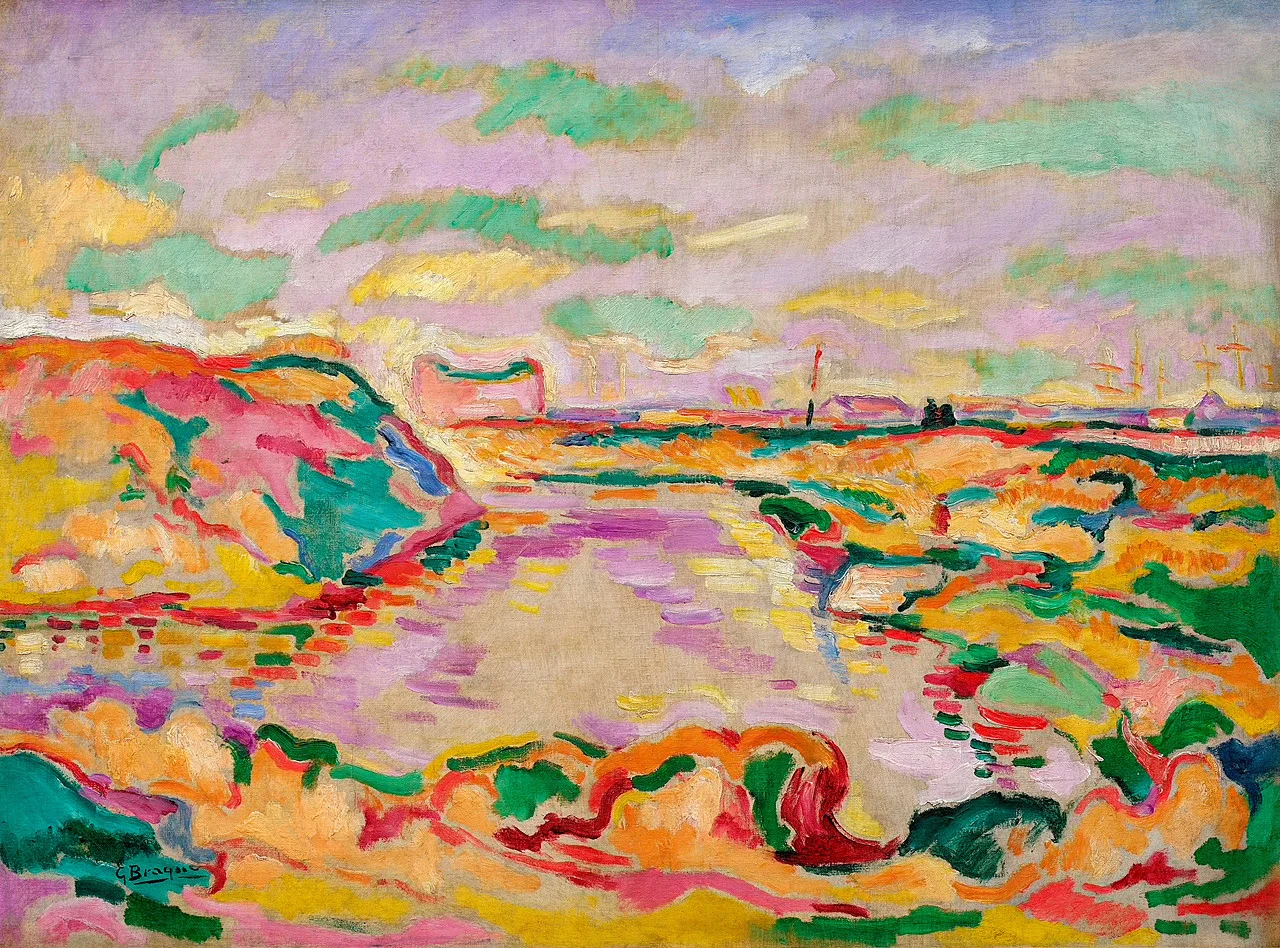
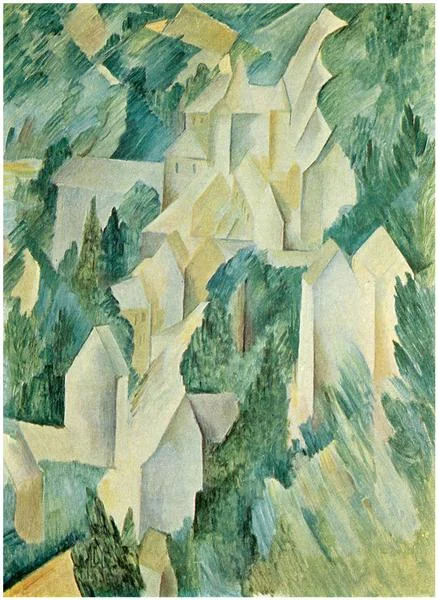
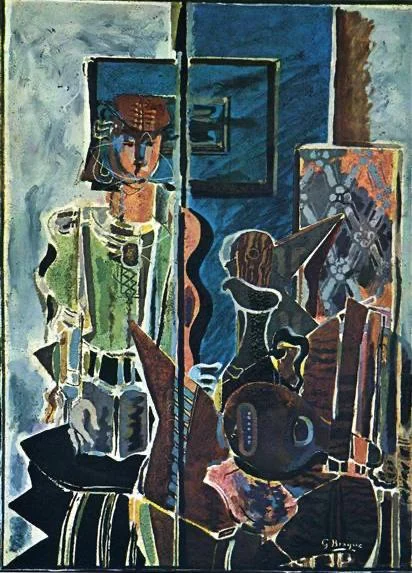
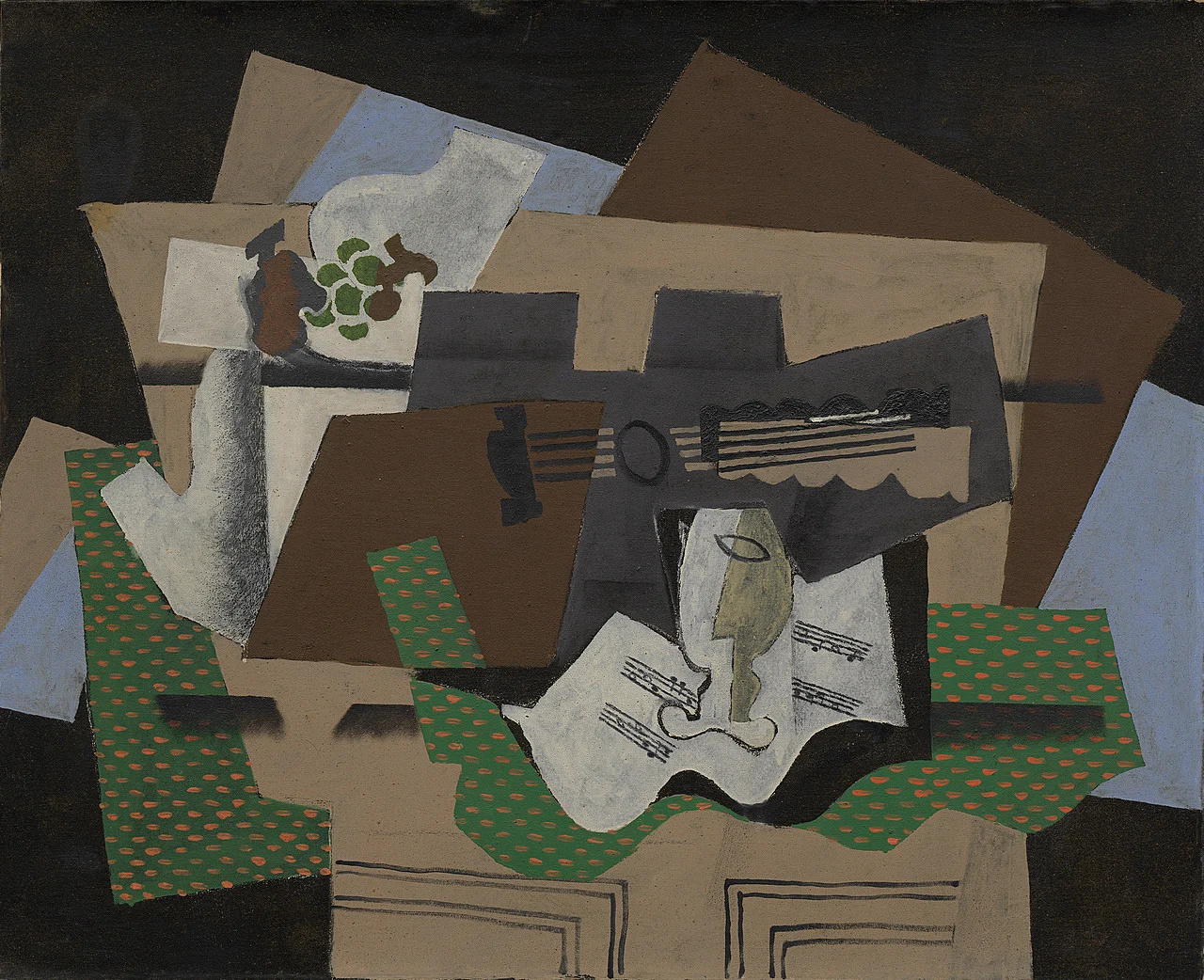
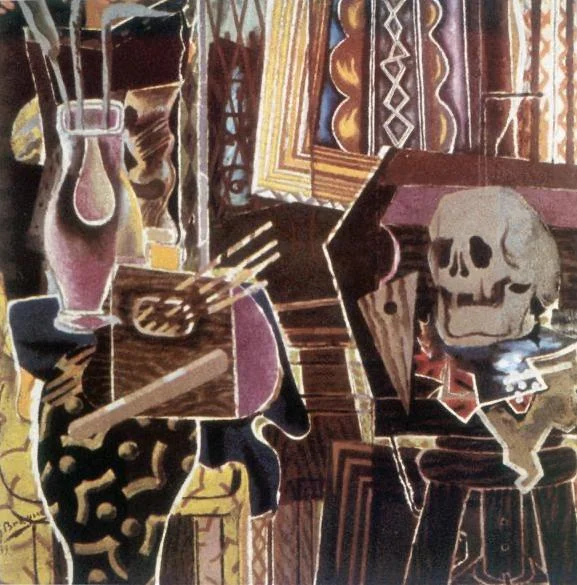
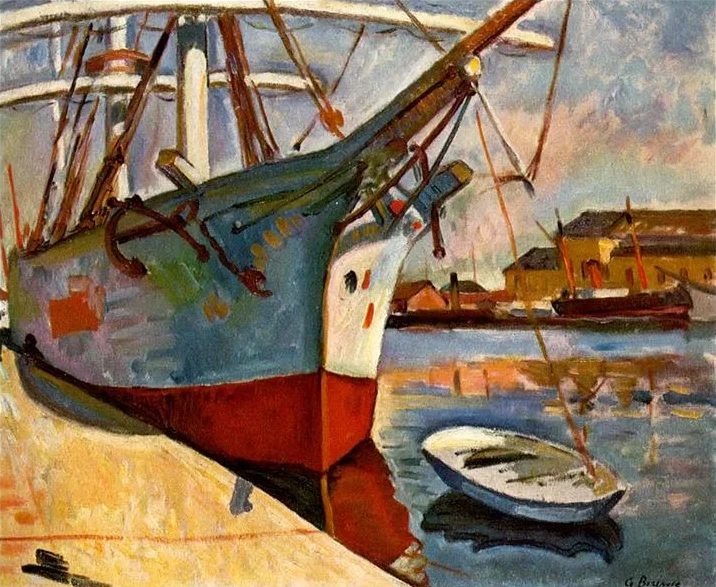
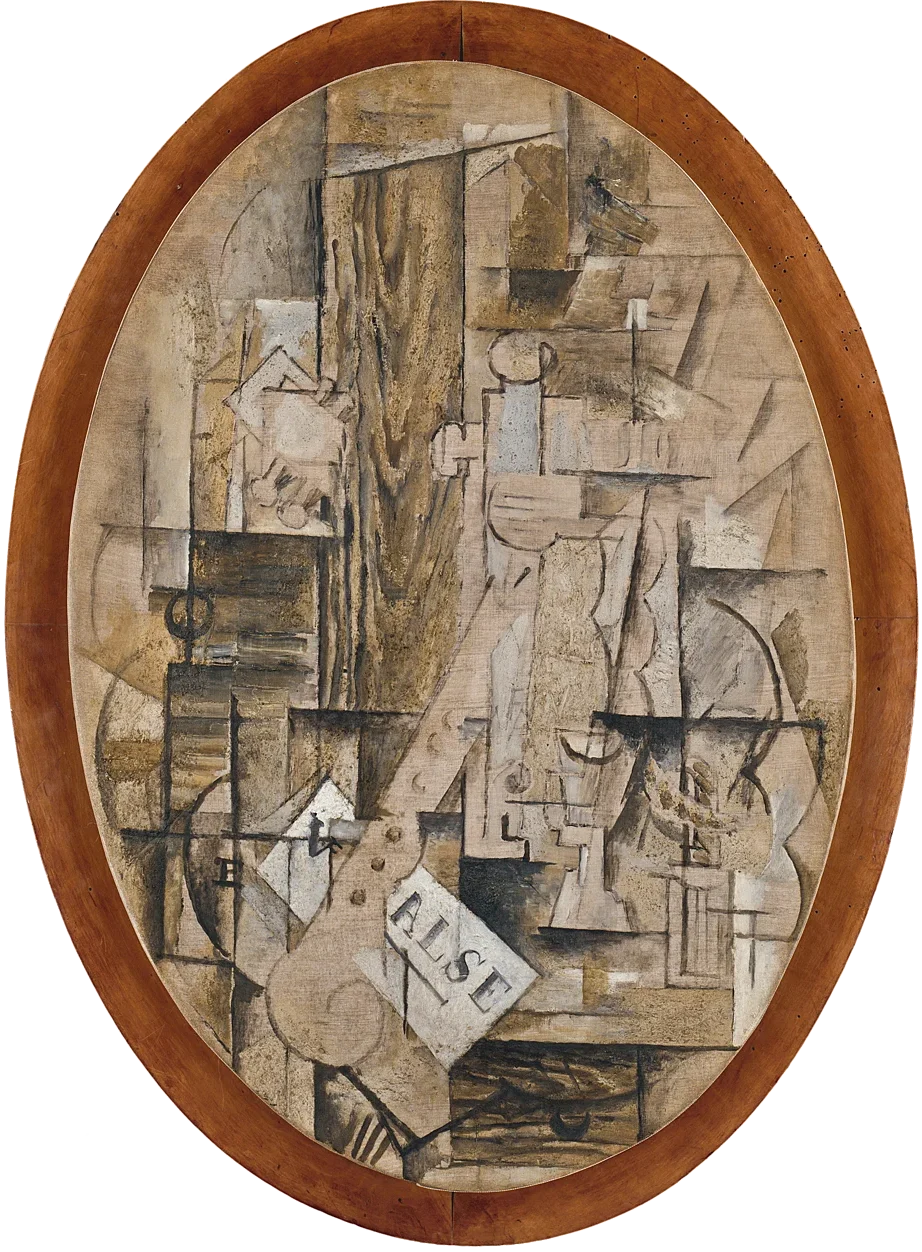
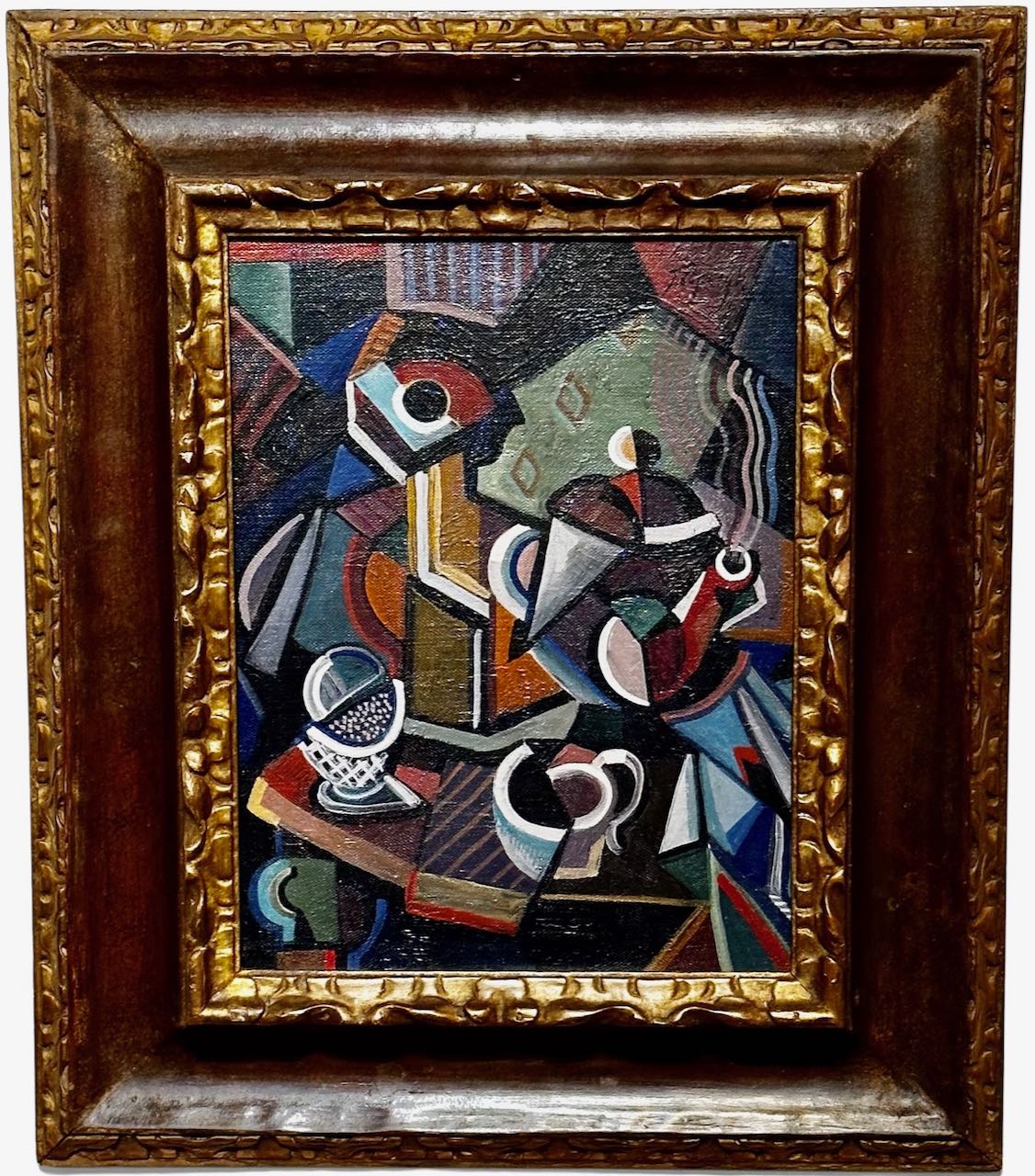
Braque believed that an artist experienced beauty in terms of volume, line, mass, and weight, and described the fragmentation of objects as a way of getting closest to them and establishing space and movement in space. He favored still life as his primary subject because it offered tactile, manual space where he could measure his distance from the object rather than the distance between objects, a distinction at the heart of Cubism’s spatial revolution. After the war, he moved away from austere geometry toward forms softened by looser drawing, freer brushwork, and more brilliant color, developing a deeply personal style that remained committed to the Cubist method of simultaneous perspective and fragmentation until his death.
Key Influences
- Co-Founding Cubism: His joint development of Cubism with Picasso between 1908 and 1914 was one of the most consequential artistic collaborations in history, producing a visual language that transformed painting, sculpture, architecture, and design across the century.
- Papier Collé: His invention of the pasted-paper technique in 1912 established collage as a legitimate fine art medium and introduced the idea of the picture as an object in itself, with enormous consequences for subsequent art, design, and typography.
- Ballets Russes: His stage designs for Diaghilev brought Cubist aesthetics into theatrical space and contributed to the broader cross-disciplinary culture of the 1920s Parisian avant-garde.
- Cézanne’s Legacy: His sustained engagement with Cézanne’s structural use of color and multiple perspectives provided the geometric foundation from which Cubism emerged, making him the key conduit between Post-Impressionism and the modernist movement.
- Still Life as Modernist Form: His elevation of the ordinary still life into the primary vehicle for radical formal experimentation established a precedent for modernist painters and influenced how designers and decorative artists approached the relationship between everyday objects and abstract form.
If you are interested in further stories of the artists who shaped Art Deco, return to our artists page to browse the full directory.
Related Products from ArtDecoCollection.com