
Peter Mullin and the Mullin Automotive Museum
A Tribute to the Collector Who Treated French Automobiles as Rolling Sculpture
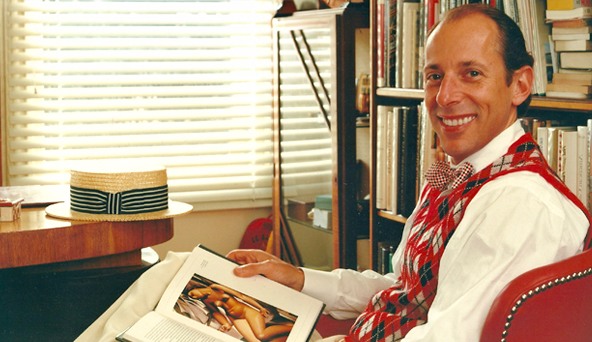
I first met Peter Mullin more than twenty years ago when he walked into Art Deco Collection, our shop in San Francisco, and soon became a serious client. This was before he created the Mullin Automotive Museum in Oxnard, California, but he was already deeply active in the vintage automobile world. What quickly became clear was that his passion extended far beyond cars alone. He was drawn to the full visual culture surrounding them, the Bugatti family, French auto coachbuilding, Art Deco furniture, fine art, sculpture, design, and the extraordinary atmosphere of the prewar European Automobile Salons.
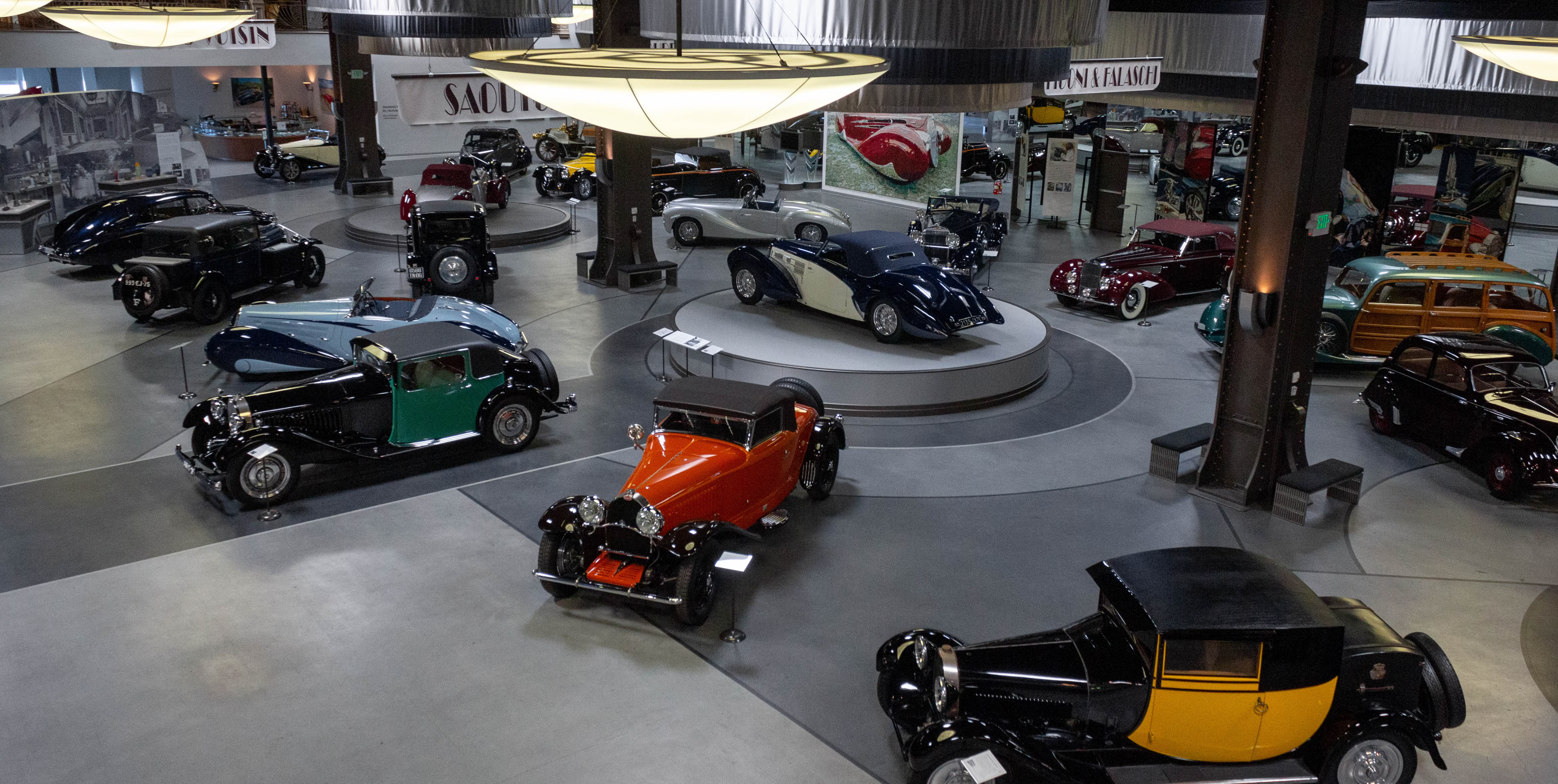
Shortly after that meeting, Peter began to share his vision for what would become the Mullin Automotive Museum, which opened in 2010 and grew into one of the most important collections devoted to French automobiles of the Art Deco and Machine Age period. The museum became especially known for its Bugatti collection, as well as cars made by Delahaye, Delage, Voisin, Hispano Suiza, Talbot Lago, and other great French marques whose streamlined forms blurred the line between engineering and sculpture. Writers often described the museum as evoking the Paris automobile salons of the 1930s, where cars were presented not simply as machines, but as expressions of luxury, innovation, and modern design.
Peter Mullin passed away in September 2023, and the museum closed in February 2024. While its physical galleries are no longer open, his vision remains an important part of Art Deco design history. We are pleased to present this story as a tribute to Peter Mullin’s remarkable achievement, his understanding of the French automobile as a rolling sculpture, and his dedication to recreating the world of the French automobile salon through cars, Bugatti history, decorative arts, and related collections.
— Rick Fishman
Peter Mullin came to cars in his sixties, after a long career in financial services and insurance that he had always approached as a means to a larger end. As a young man, he wanted to be a painter, then a sculptor, and he changed course only after watching a working printmaker struggle to pay his bills week by week. He used to say his cars were rolling sculptures. The discovery that would define the second half of his life happened in his own driveway in Brentwood, when a neighbor asked to use the Mullins’ Paul Williams-designed home as the backdrop for a photo shoot. Peter assumed the car would be a Ferrari. Instead, the gate opened and a postwar Delahaye glided in, emerald green and swooping, bodied by Carrosserie Figoni et Falaschi. Within twenty four hours he had told the neighbor that if any cars came up for sale, Peter would be his man, and five or six purchases followed in quick succession.
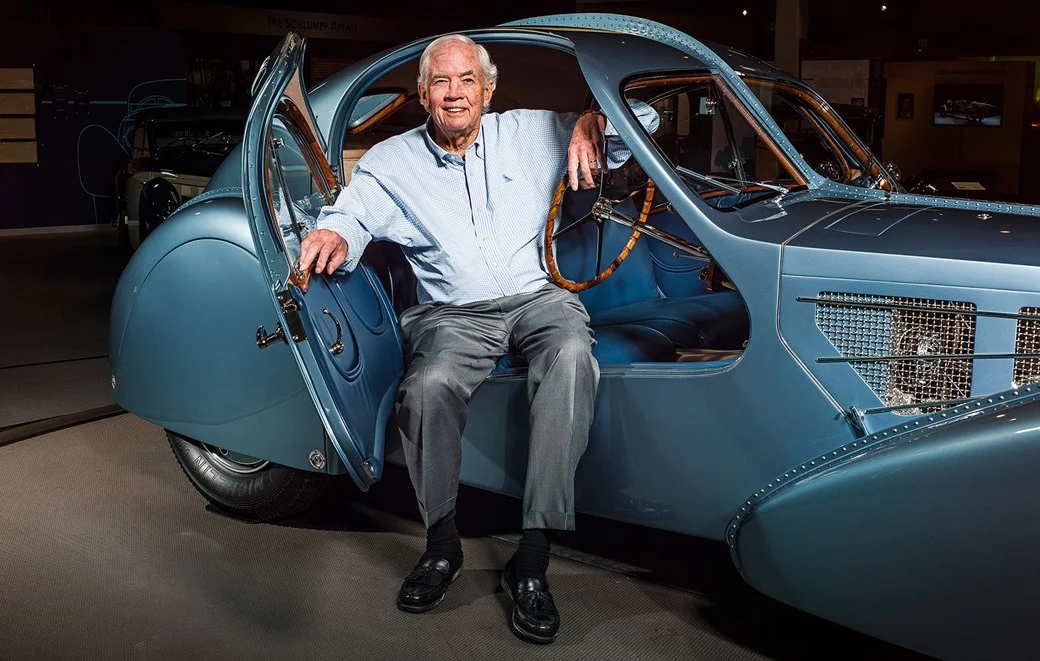

Left: Peter Mullin with the 1936 Bugatti Type 57SC Atlantic Right: 1937 Delahaye 135MS Roadster with Figoni et Falaschi coachwork
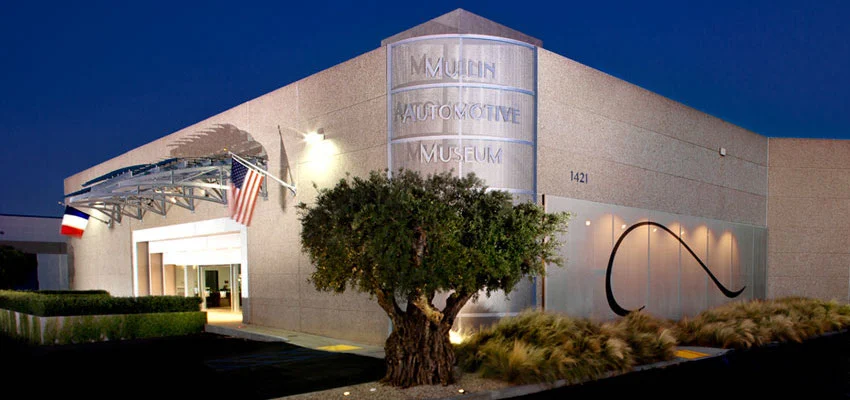
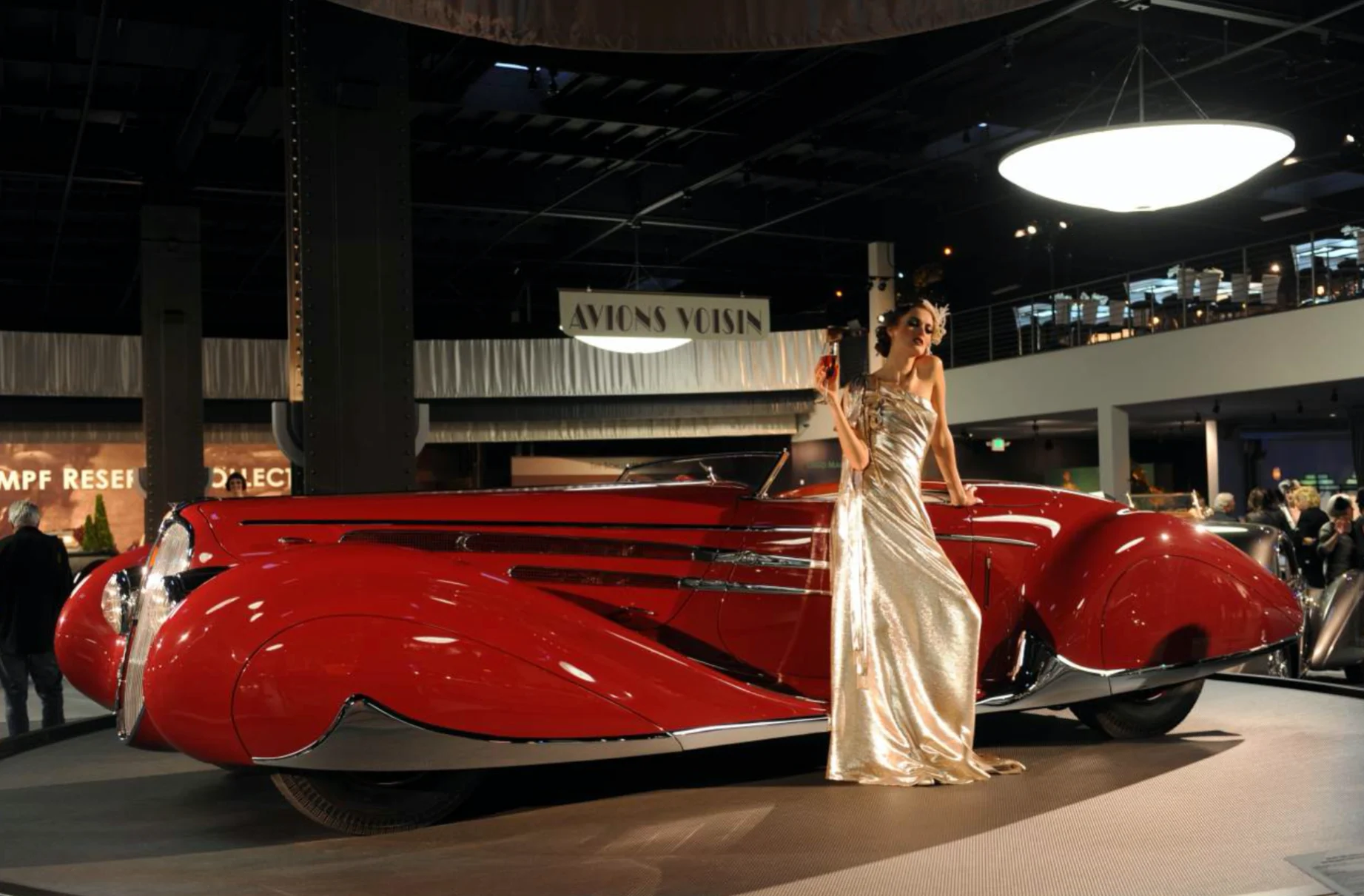
The collection outgrew the Brentwood garden, then a warehouse in Culver City, before the widow of newspaper publisher Otis Chandler called to say her late husband’s old Vintage Museum of Transportation and Wildlife in Oxnard was available. Peter took over the building. He brought in the Santa Monica architect David Hertz to handle the remodel with solar panels, reflective roofing, and other modern inventions, then turned the interiors over to the design firm, The Scenic Route, who created the galleries to evoke the Grand Palais auto salon of the prewar years. The columns were wrapped in riveted cladding, period-correct signs naming the marques hung in their proper places, and the upper-level railings were recreated from designs by Edgar Brandt, the great Art Deco ironworker. Cars sat on open floor with no stanchions and no glass between them and the visitor, an arrangement that horrified some of Peter’s peers but he never reconsidered changing that design. Visitors could approach a multimillion-dollar Bugatti or Hispano Suiza closely enough to see their reflection in the lacquer, and over fourteen years, that trust was never violated. The Mullin Automotive Museum opened in 2010, and from the moment visitors stepped inside, the building transported them to another era.
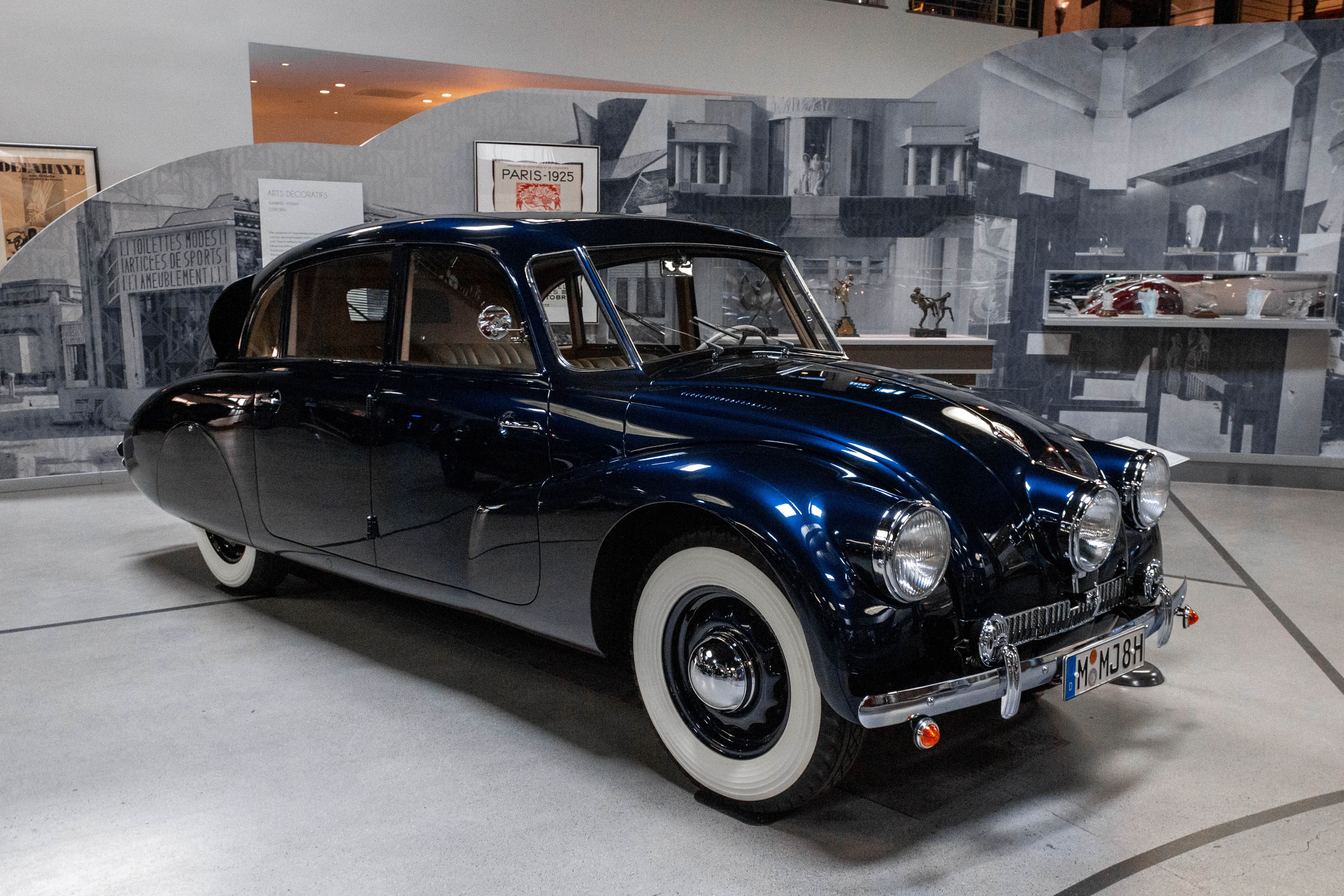
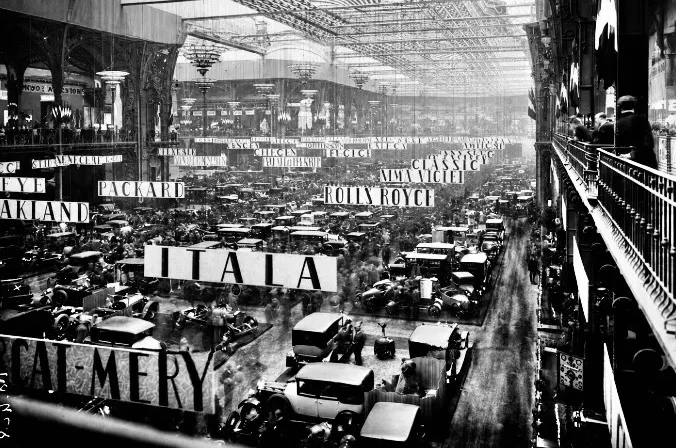
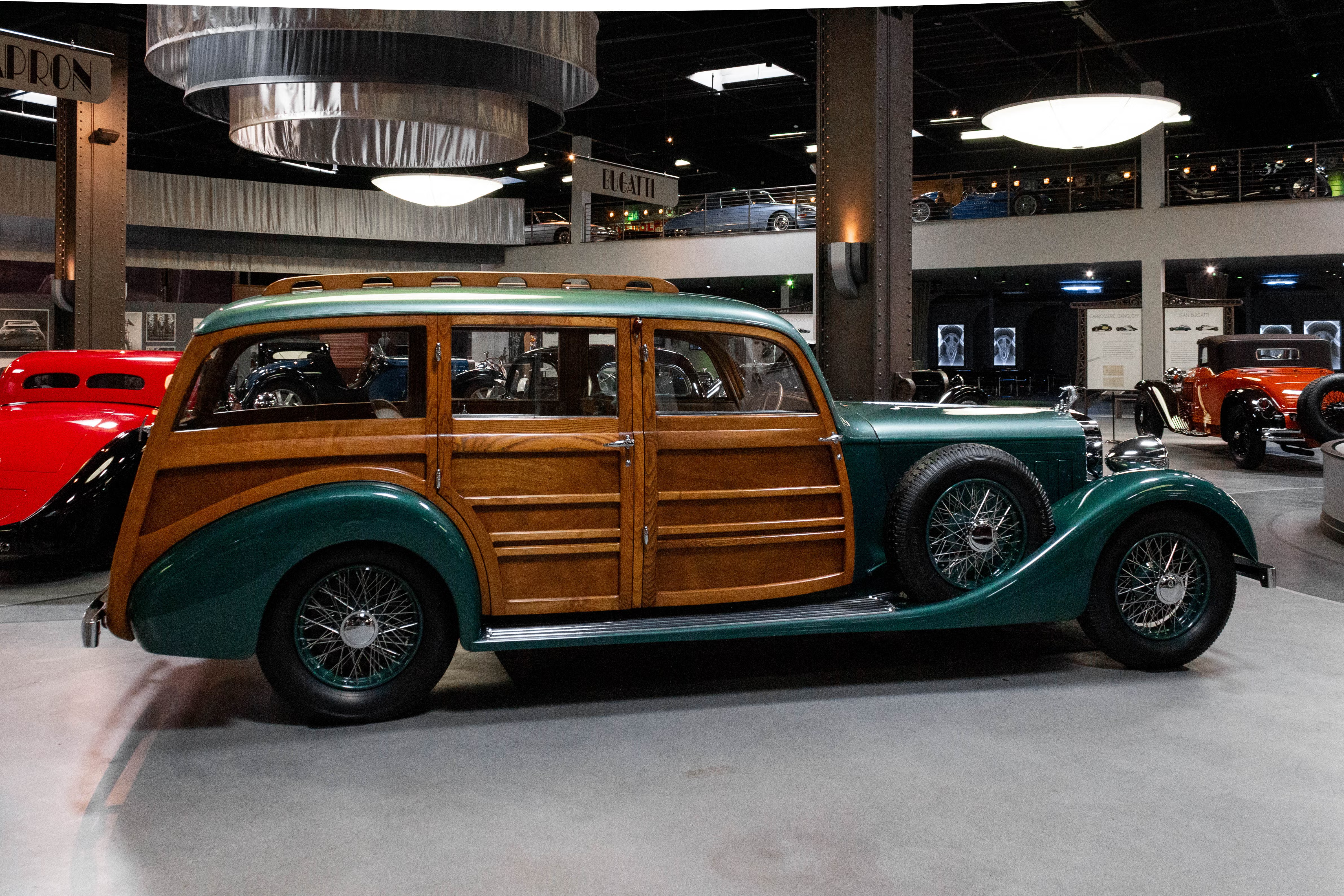
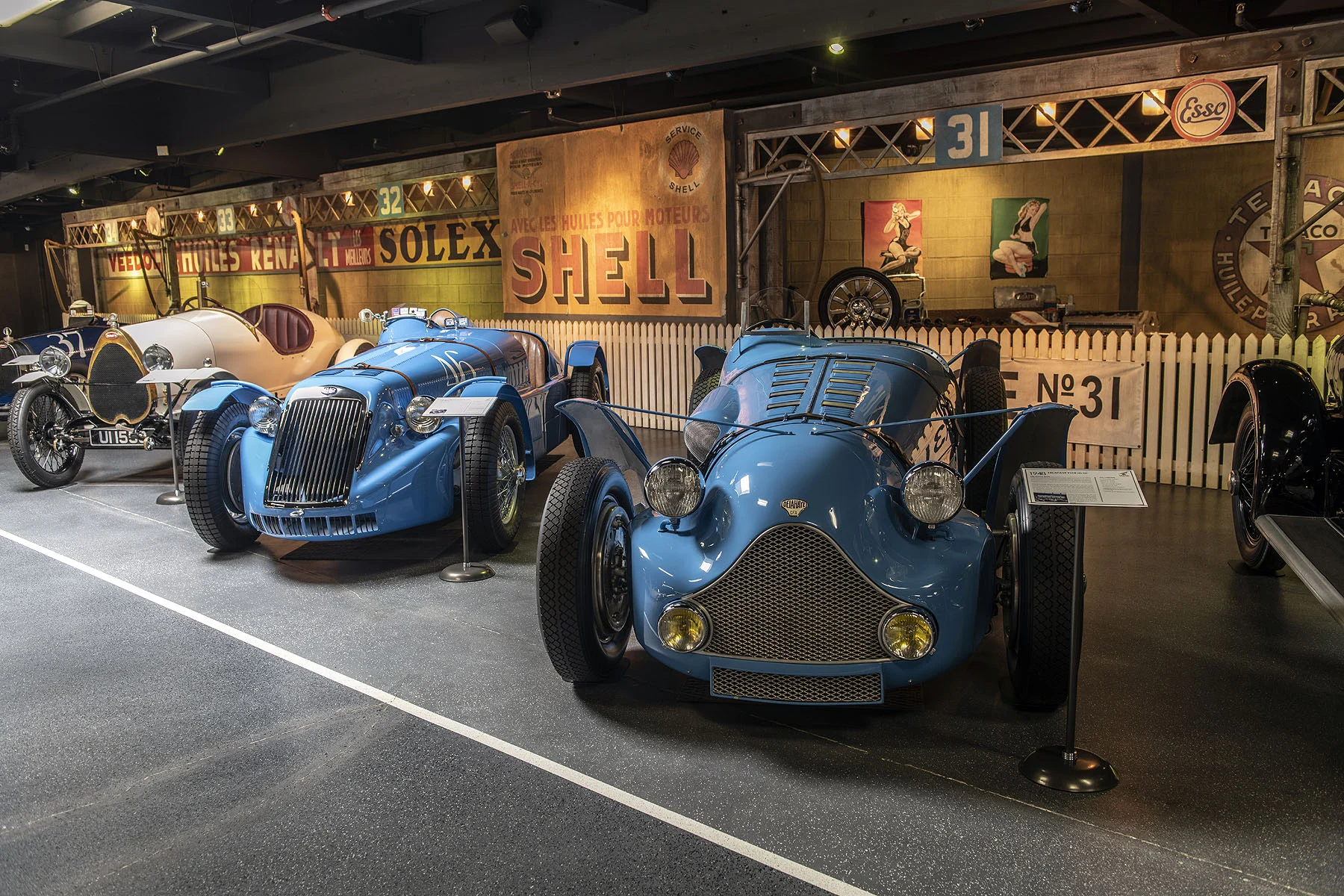
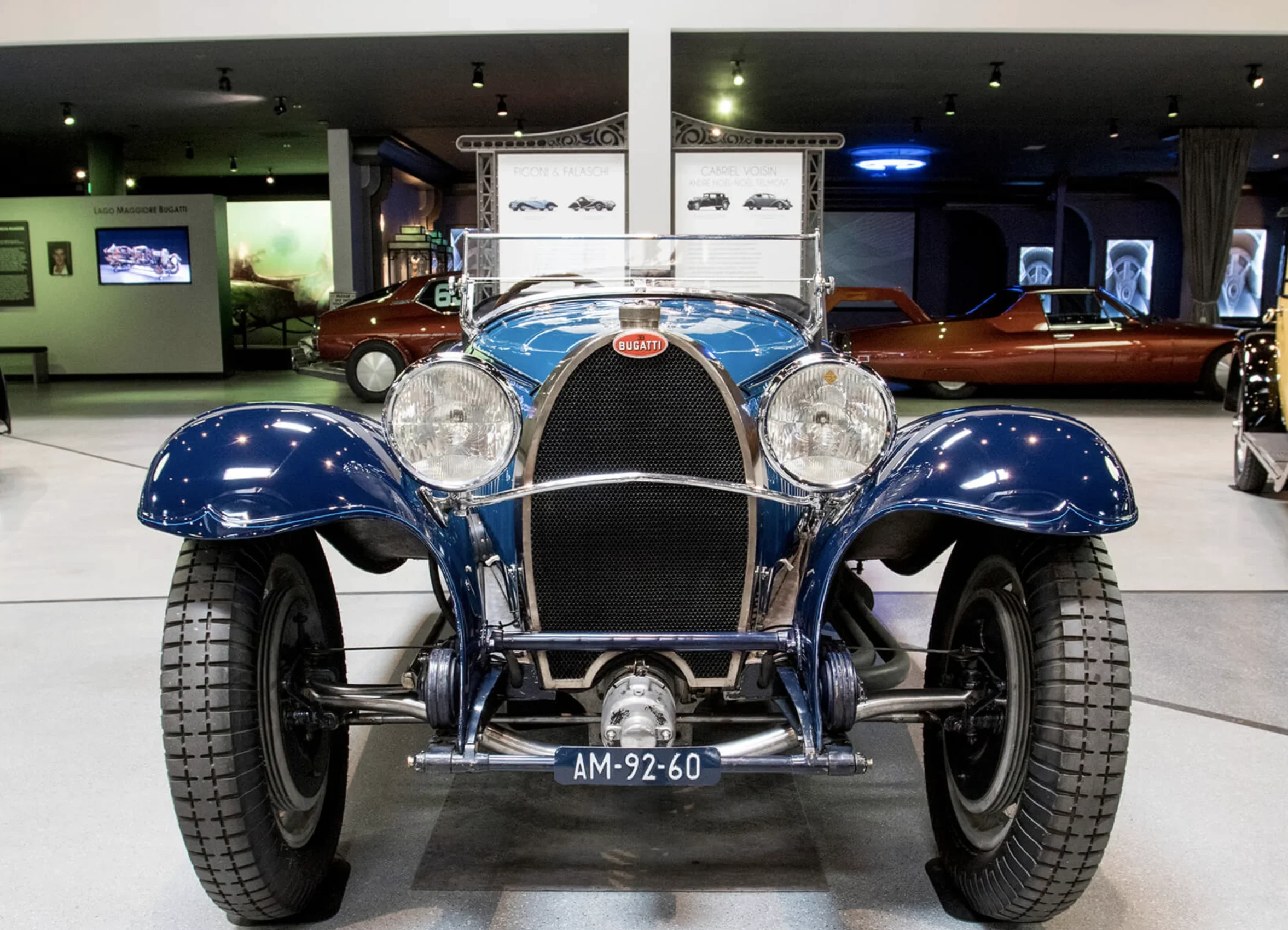
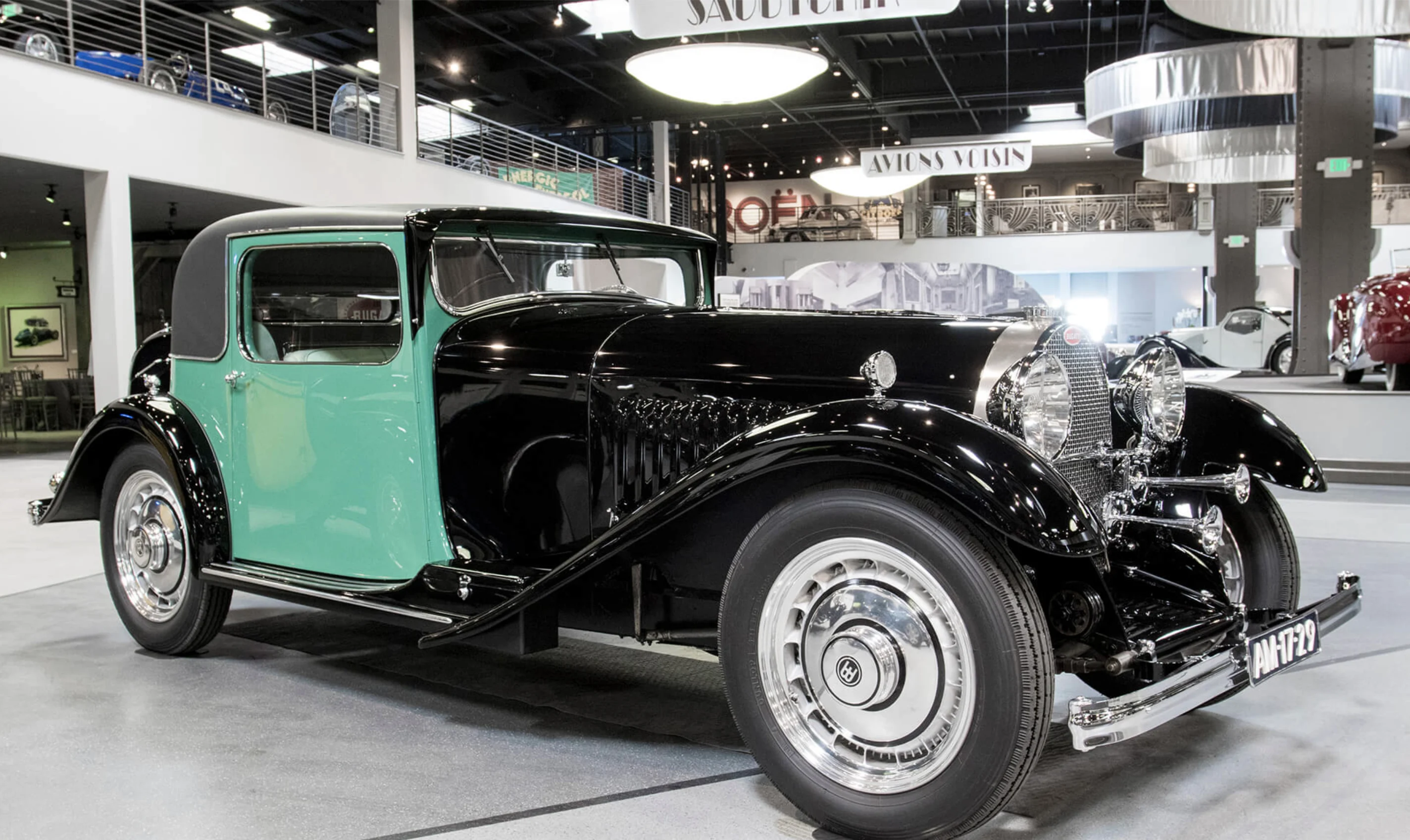
Top: Left: 1938 Tatra T87, displayed before a mural of the 1925 Paris Exposition that gave Art Deco its name Middle: The 1924 Salon de l’Automobile at the Grand Palais in Paris Right: 1937 Hispano-Suiza Type K6 Break de Chasse Bottom: Left: The museum’s Le Mans pit lane diorama, with a 1936 Delahaye Type 135 S, 1937 Talbot-Lago Type 150 C, and 1925 Bugatti Type 35C Middle: 1927 Bugatti Type 43 Grand Sport Right: 1930 Bugatti Type 46 Semi-Profilée Coupé
The collection drew from the great French marques of the Art Deco and Machine Age period, with Bugatti, Delahaye, Delage, Voisin, Hispano Suiza, and Talbot Lago all represented across examples ranging from grand prix machinery to touring coupes and salon cabriolets. The majority of the cars dated from the 1920s and 1930s, when French coachbuilders were working in the tradition of the great Parisian ateliers, hammering aluminum and shaping steel with the same attention that the city’s furniture makers and jewelers brought to their own crafts. Houses like Figoni et Falaschi, Vanvooren, Chapron, and Franay treated each commission as a design problem as much as an engineering one. The streamlined forms they produced, with teardrop fenders, raked windshields, and long flowing flanks that seemed to move even at rest, were not borrowed arbitrarily from aviation and locomotive design. They were the result of coachbuilders working in genuine dialogue with the broader visual culture of the period, and they stood as some of the most beautiful objects the Machine Age produced in any medium. Peter collected them with that context in mind. He understood that these cars were not simply fast or expensive. They were the automotive equivalent of what was happening simultaneously in architecture, furniture, glass, and the decorative arts, a single design culture expressing itself across every material and every craft. The museum made that argument visible.
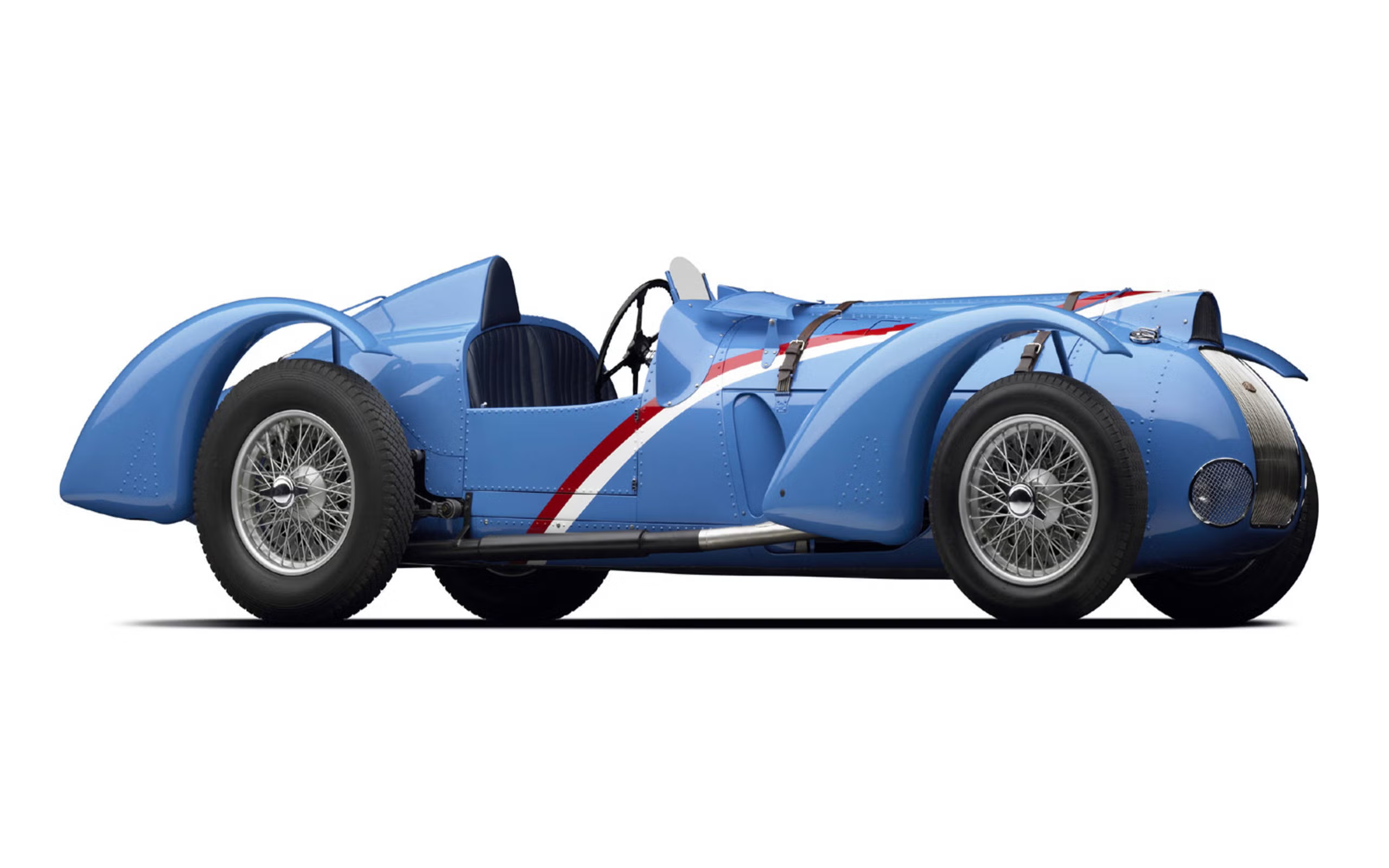
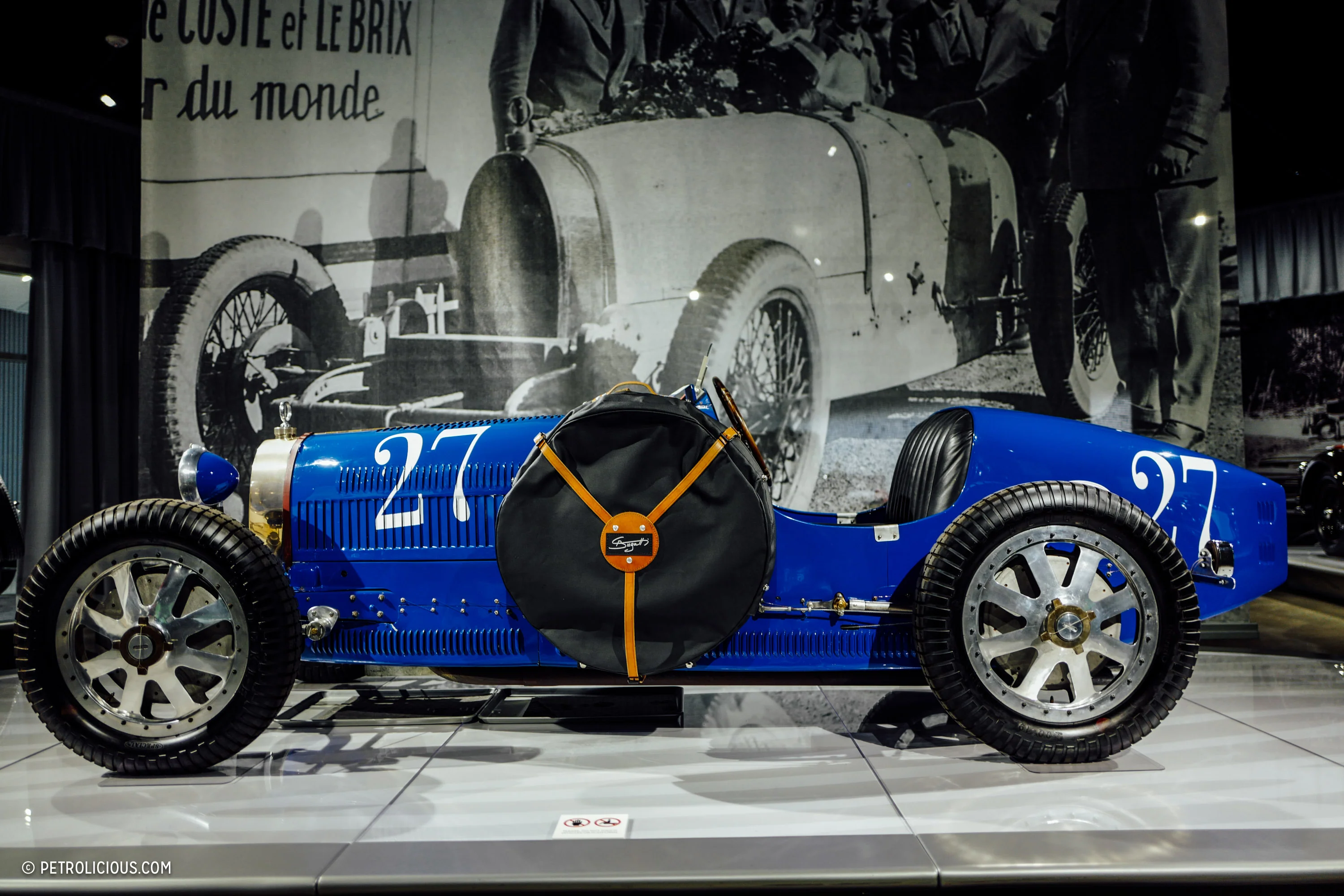
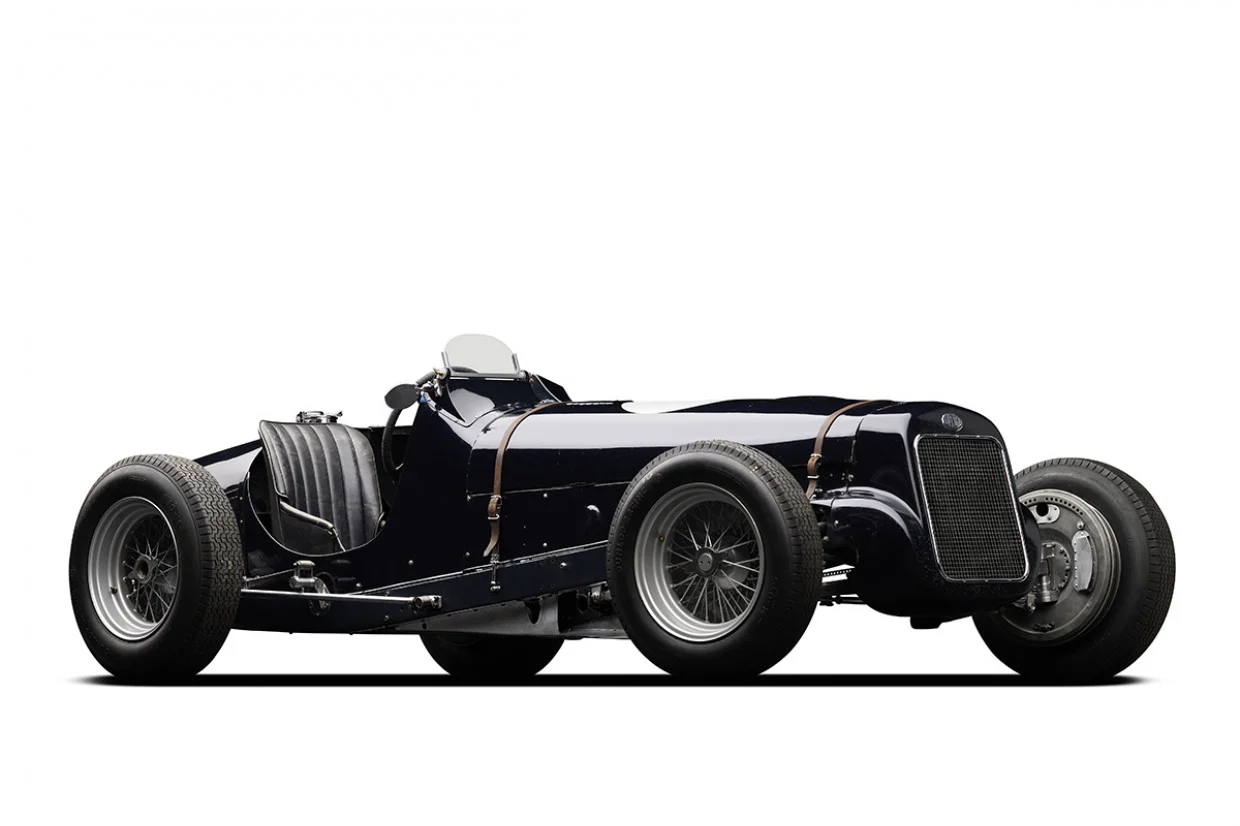
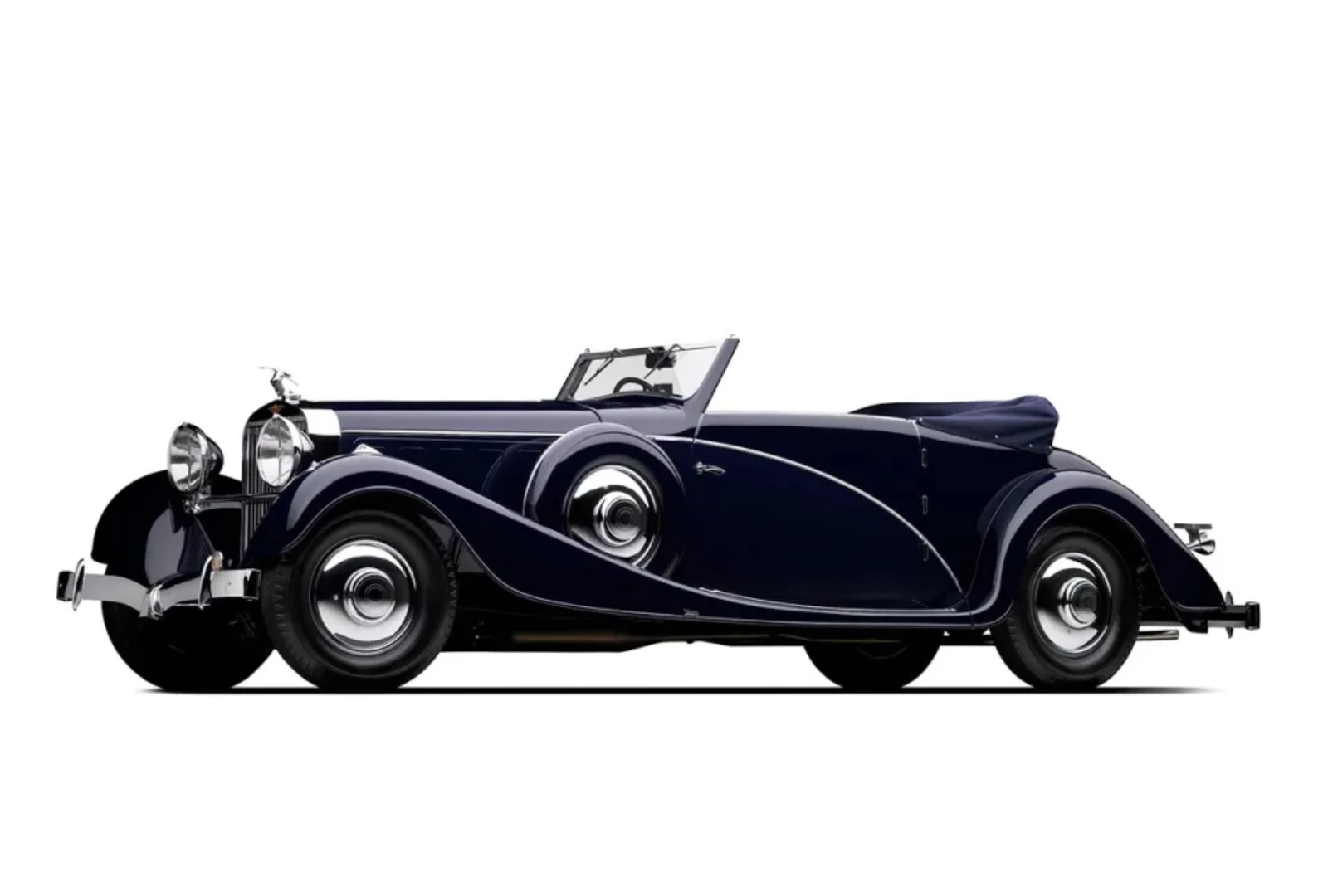
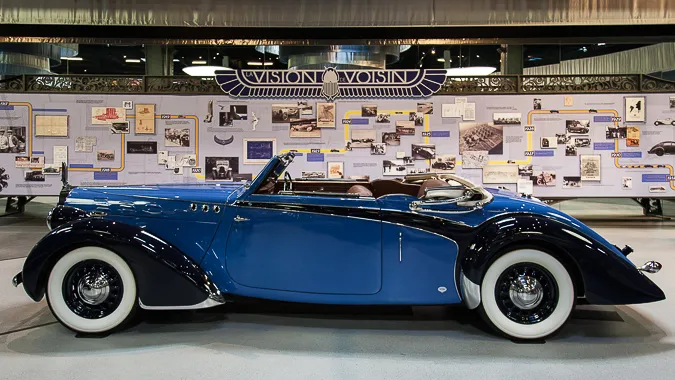
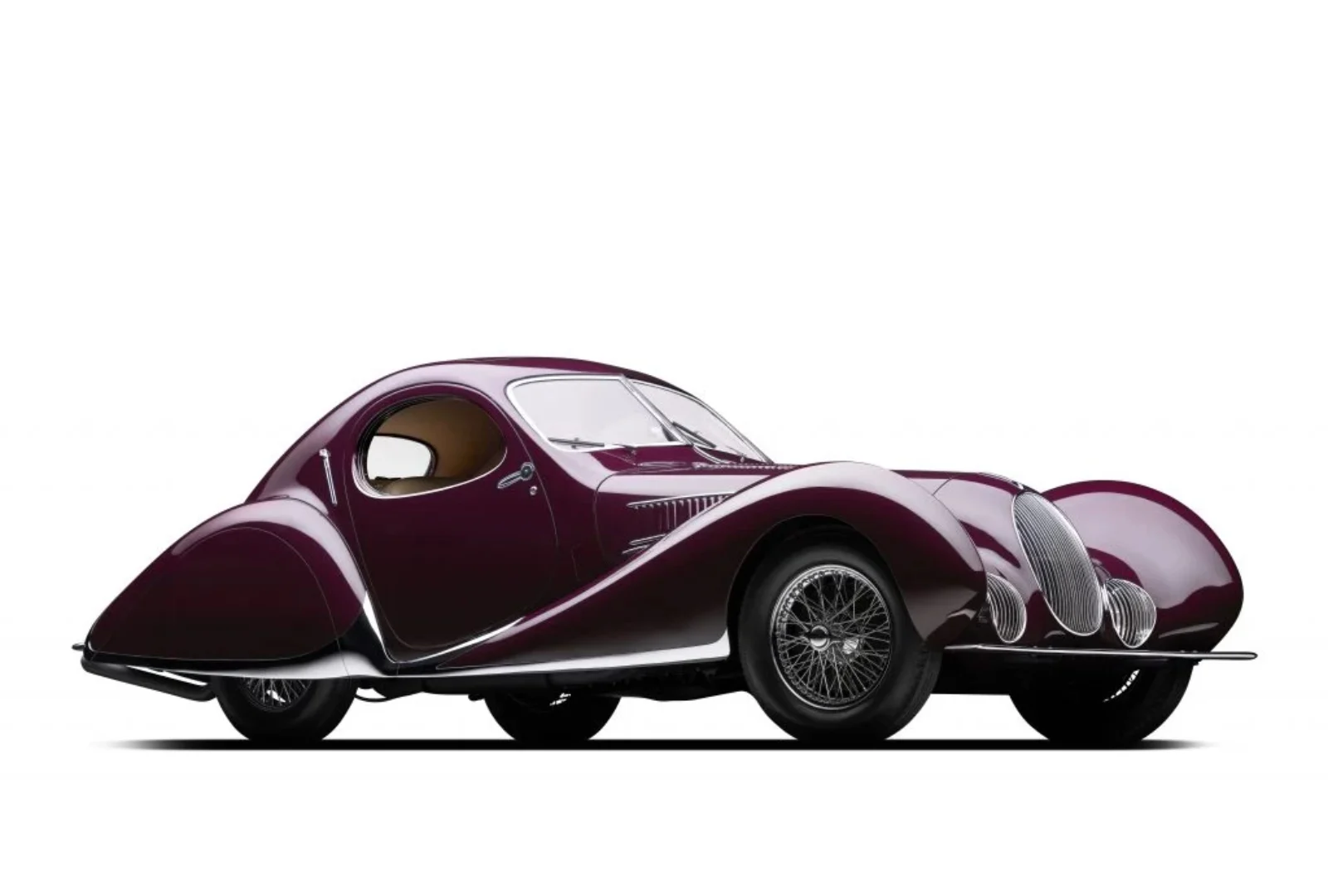
Top: Left: 1936 Delahaye 135 S Compétition Court, raced by the Écurie Bleue at Le Mans Middle: 1925 Bugatti Type 35C Grand Prix Right: 1927 Delage 15 S 8 Bottom: Left: 1935 Hispano-Suiza J12 with Vanvooren coachwork Middle: 1934 Avions Voisin Type C27, acquired by Peter Mullin in trade for a rare Voisin aircraft engine Right: 1937 Talbot-Lago Type 150-C-S Teardrop
Peter’s approach to preservation ran counter to the prevailing logic of high-end car collecting. He restored the showpieces to a level that won at the most prestigious concours in the world, but he also treated the unrestored car as a legitimate object in its own right. The clearest expression of this was his stewardship of the Schlumpf Reserve Collection, sixty-two significant French automobiles that the Swiss textile magnates Fritz and Hans Schlumpf had assembled before their business collapsed in the 1970s. The cars had been seized by the French government, hidden in a barn in Malmerspach, and slowly picked apart by parts scavengers over the decades. Peter acquired the bulk of them in 2008 and chose to leave them as he had found them. Alongside the Schlumpf cars stood a 1925 Bugatti Type 22 Brescia Roadster that had spent more than seventy-five years at the bottom of Lake Maggiore in Switzerland after a Swiss playboy abandoned it at customs in 1934. Together, these objects told the truth about how cars age, what time does to chrome and lacquer and leather, and why preservation can be the harder and more honest path.
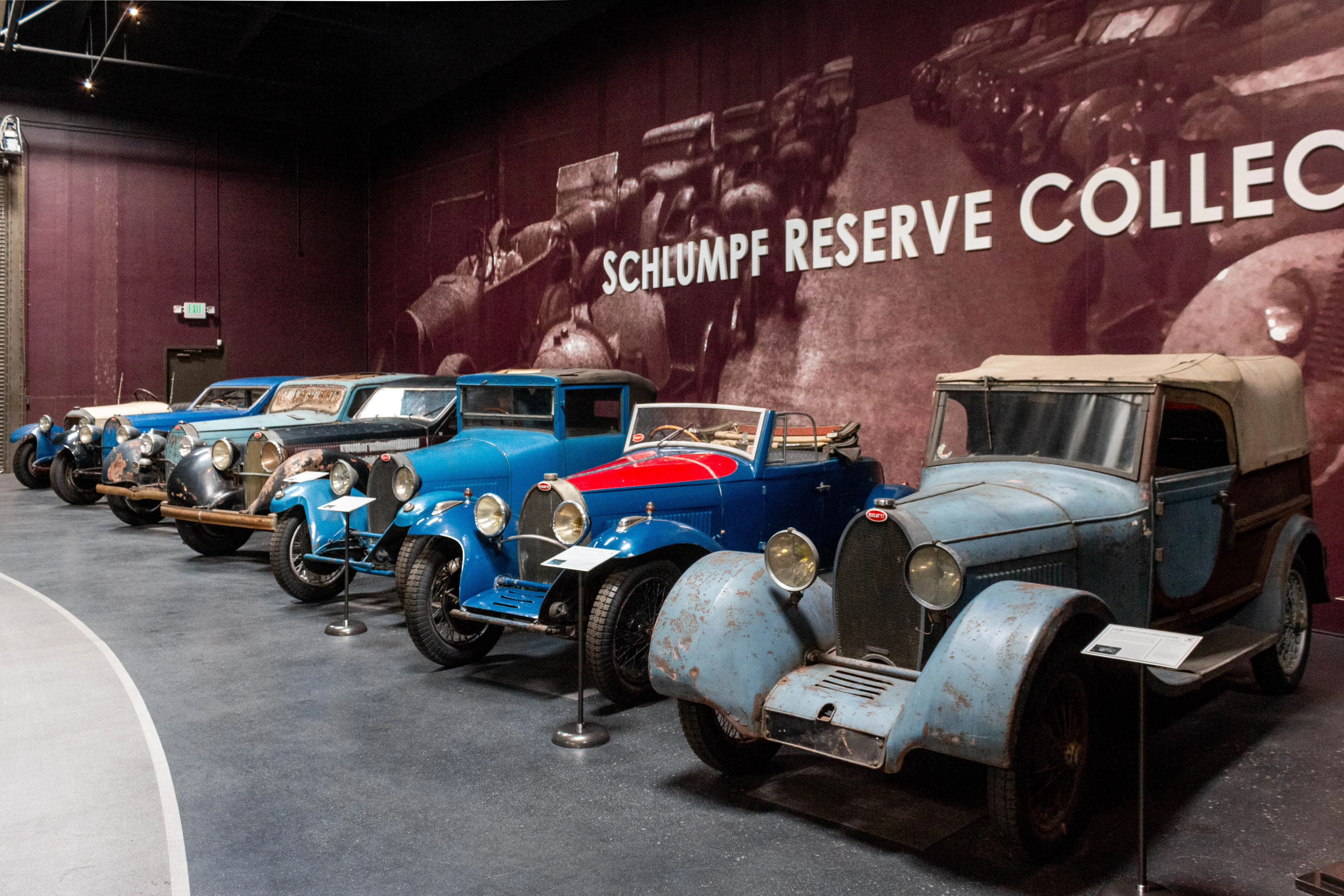

Left: The Schlumpf Reserve Collection in its unrestored condition Right: The 1925 Bugatti Type 22 Brescia Roadster, known as the Lady of the Lake
At the heart of the museum stood the Bugatti collection, the largest private holding of Ettore and Jean Bugatti automobiles outside France and a tribute to a family of artists that had been making beautiful things for half a century before they ever built a car. Carlo Bugatti, the patriarch, worked through the late nineteenth and early twentieth centuries as a furniture maker, painter, jeweler, and instrument designer in a style that fused Moorish geometry, Japanese influence, and his own restless invention. His son Rembrandt was a sculptor who spent his days at the Antwerp Royal Zoological Garden modeling animals in bronze with an extraordinary feel for posture and movement. Ettore, the second son, built the cars, debuting his first machine, a tricycle with a De Dion engine, in 1899, and arriving at the famed Paris Auto Salon by 1910. Jean, Ettore’s eldest, designed coachwork from the age of eighteen and produced many of the most beautiful bodies the firm ever made before dying at thirty in a 1939 testing accident. The museum honored every one of them. Carlo’s furniture was displayed alongside Rembrandt’s bronzes, Ettore’s cars filled the main floor, and Jean’s designs were represented in some of the rarest and most coveted Bugatti coupes ever bodied. When the museum opened in 2010, Peter flew the surviving members of the Bugatti family to California from Europe, hosted them for more than a week, and was visibly proud to do so, because the place was as much a homage to their lineage as it was to his own taste.
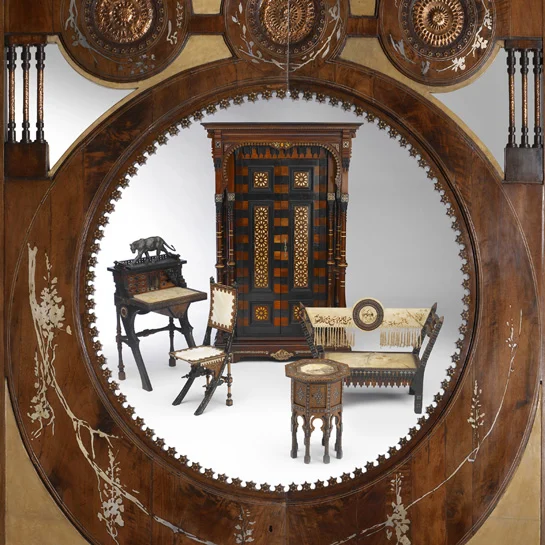
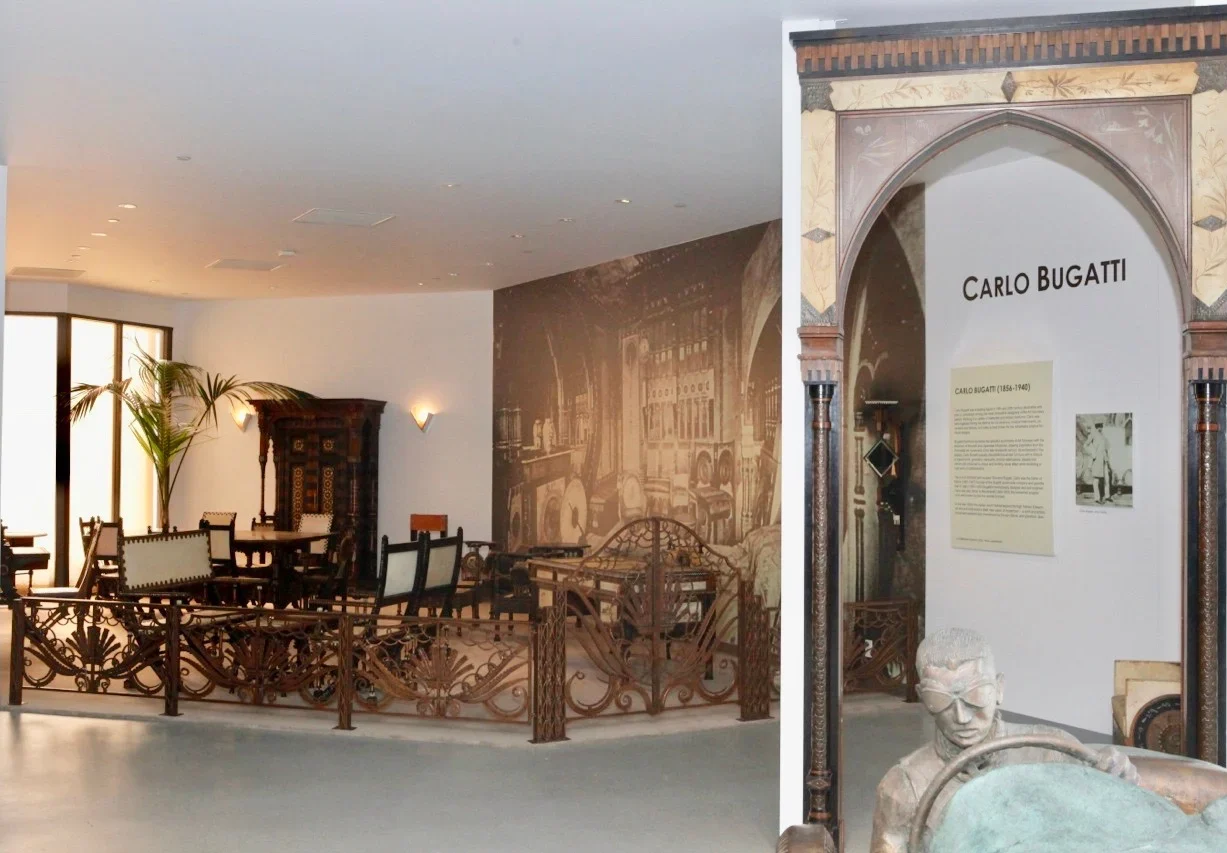
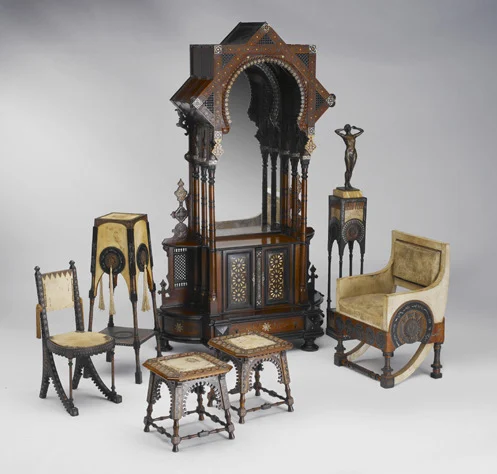

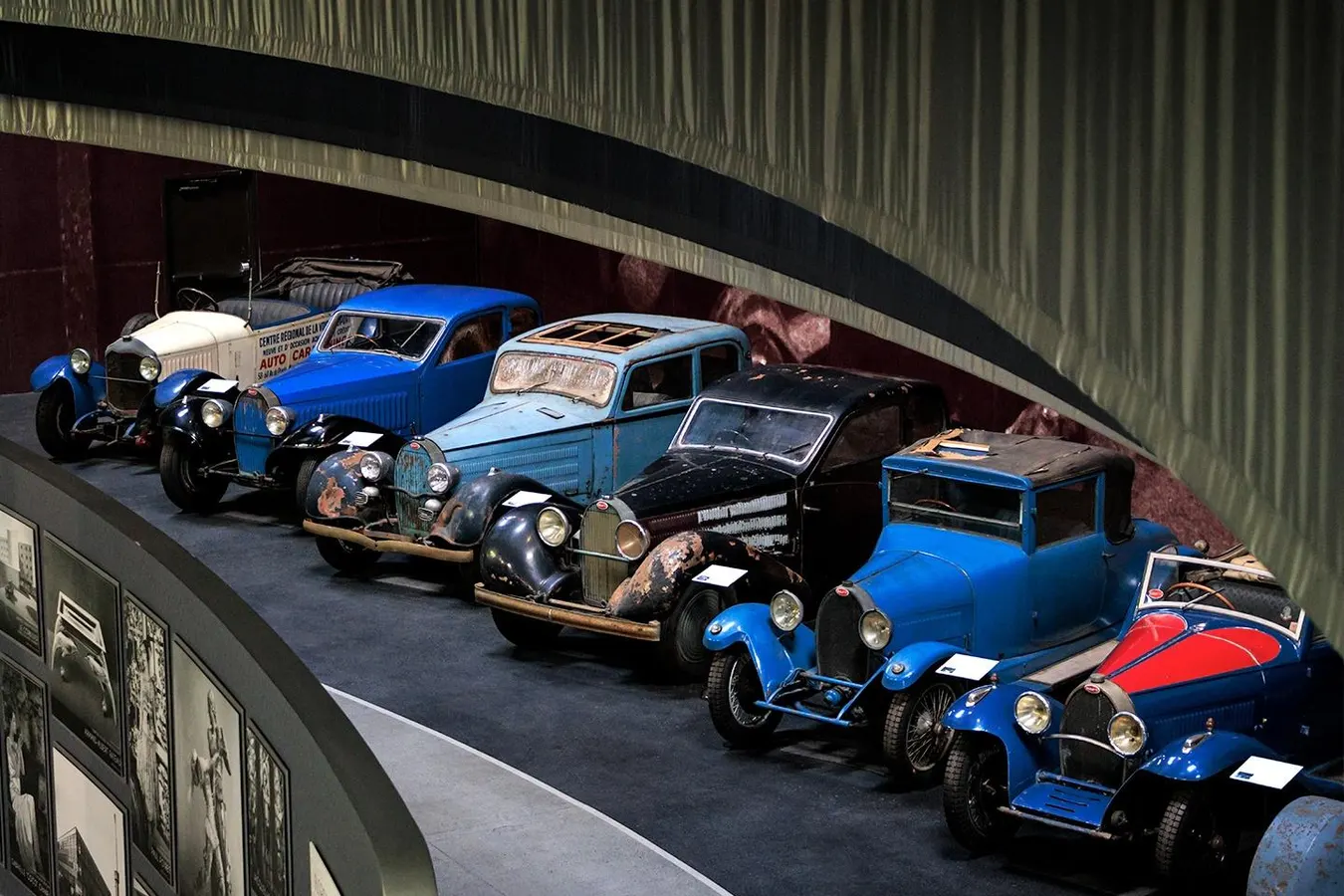
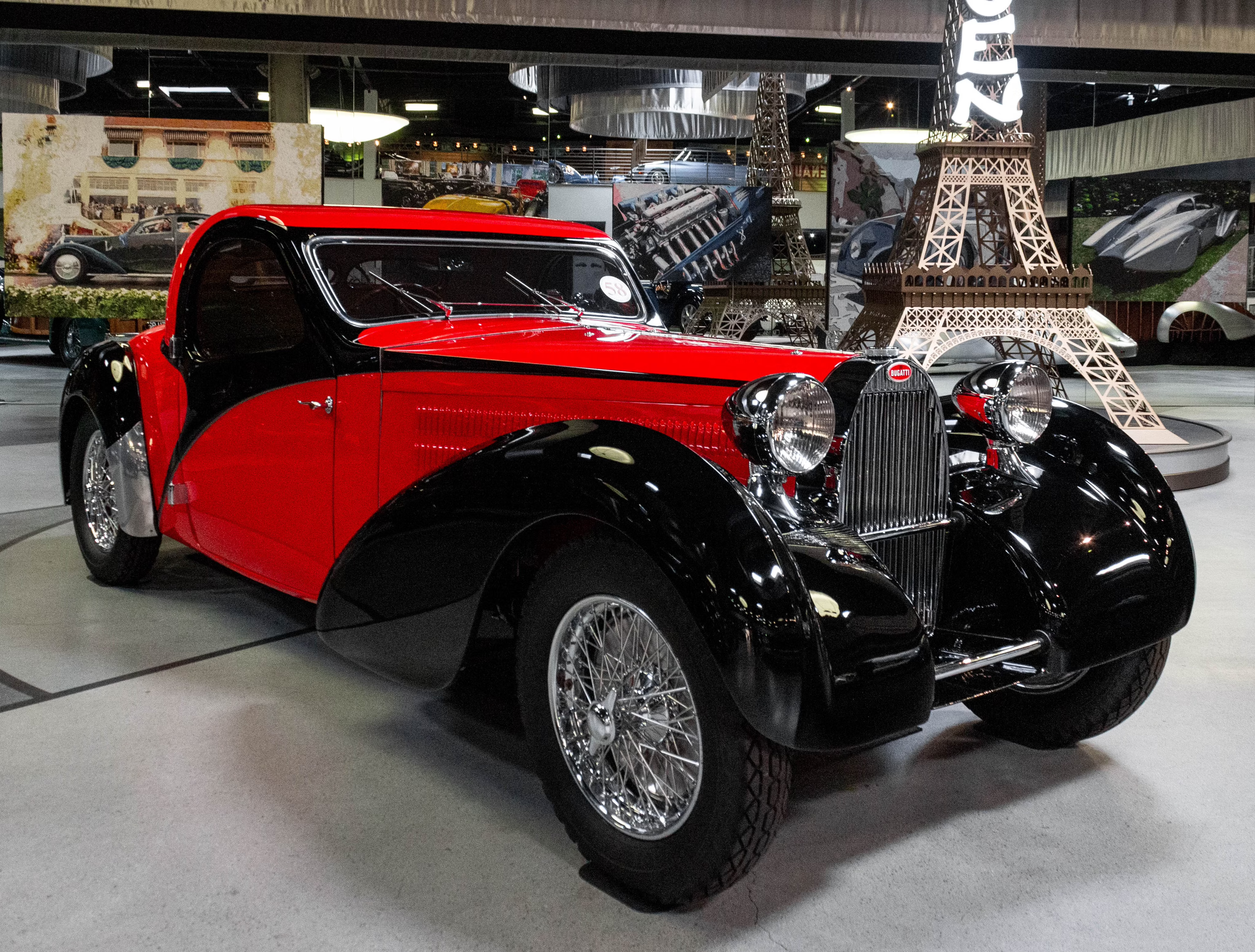
Top: Left: Carlo Bugatti furniture suite Middle: The museum’s Carlo Bugatti gallery, featuring custom ironwork gates crafted by the Art Deco Collection Right: Carlo Bugatti furniture Bottom: Left: 1924 Bugatti Type 35 Grand Prix Middle: The Schlumpf Reserve Collection Right: 1939 Bugatti Type 57C Atalante
More than seventy-five pieces of Carlo Bugatti’s furniture filled the museum, perhaps the largest concentration of his work in private hands anywhere in the world. They included armchairs, desks, cabinets, and the more ambitious sculptural compositions that had won Carlo the Diploma of Honour at the Turin International Exhibition of Decorative Arts in 1902 with a now legendary installation called the Snail Room. The forms were unlike anything else from the period. He worked in walnut and vellum, hammered copper inlay, pewter and bone detail, fringed silks and tasseled cords, with profiles that turned and curled and arched as though they had grown rather than been built. A staged corner of the gallery brought a group of these pieces together as a complete period environment, and walking through it, you understood that the cars in the next room were not anomalies. They were the third act of a family that had been composing rooms, sculpting figures, and shaping beautiful objects long before the Type 35 automobile ever turned a wheel.

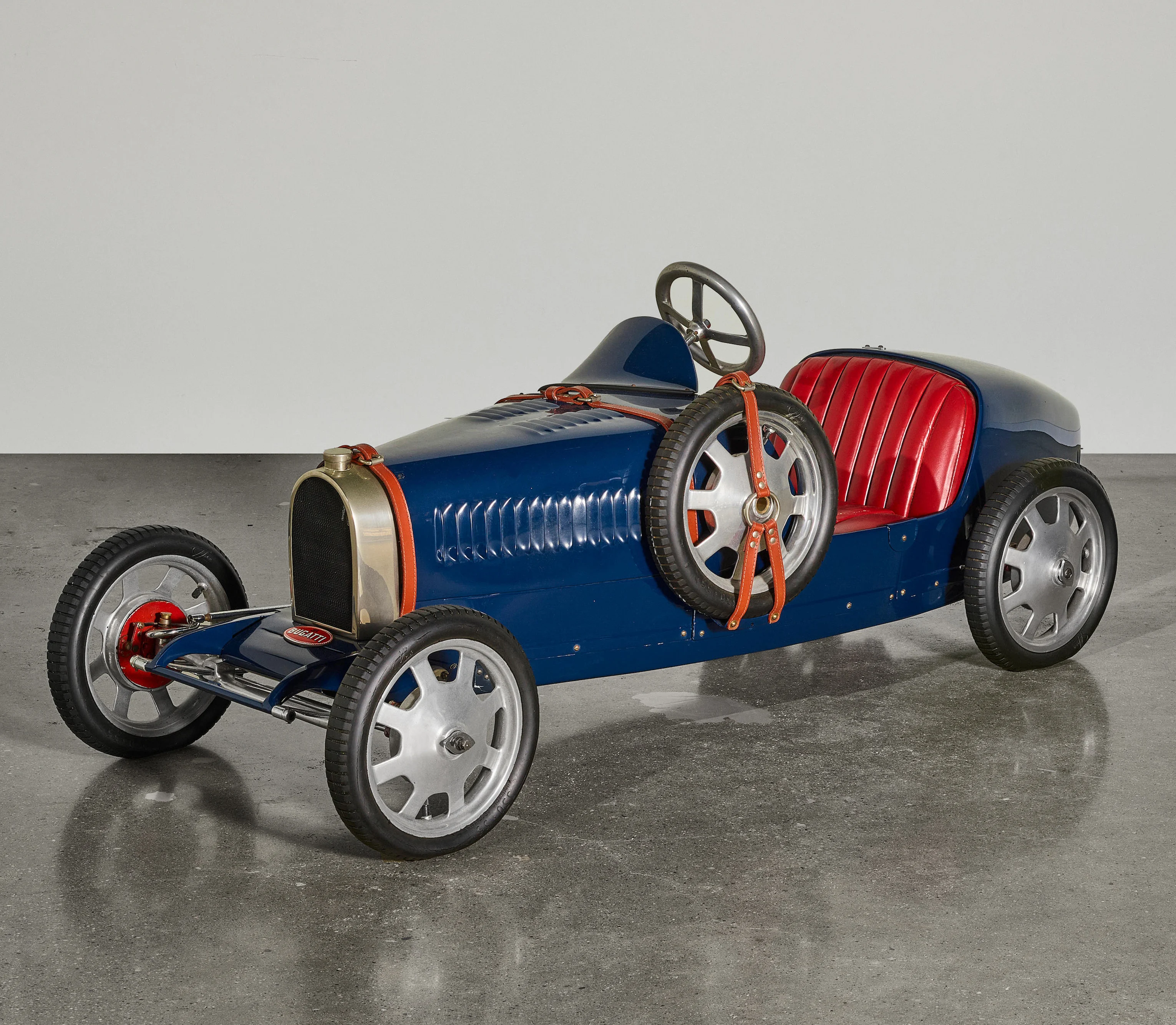
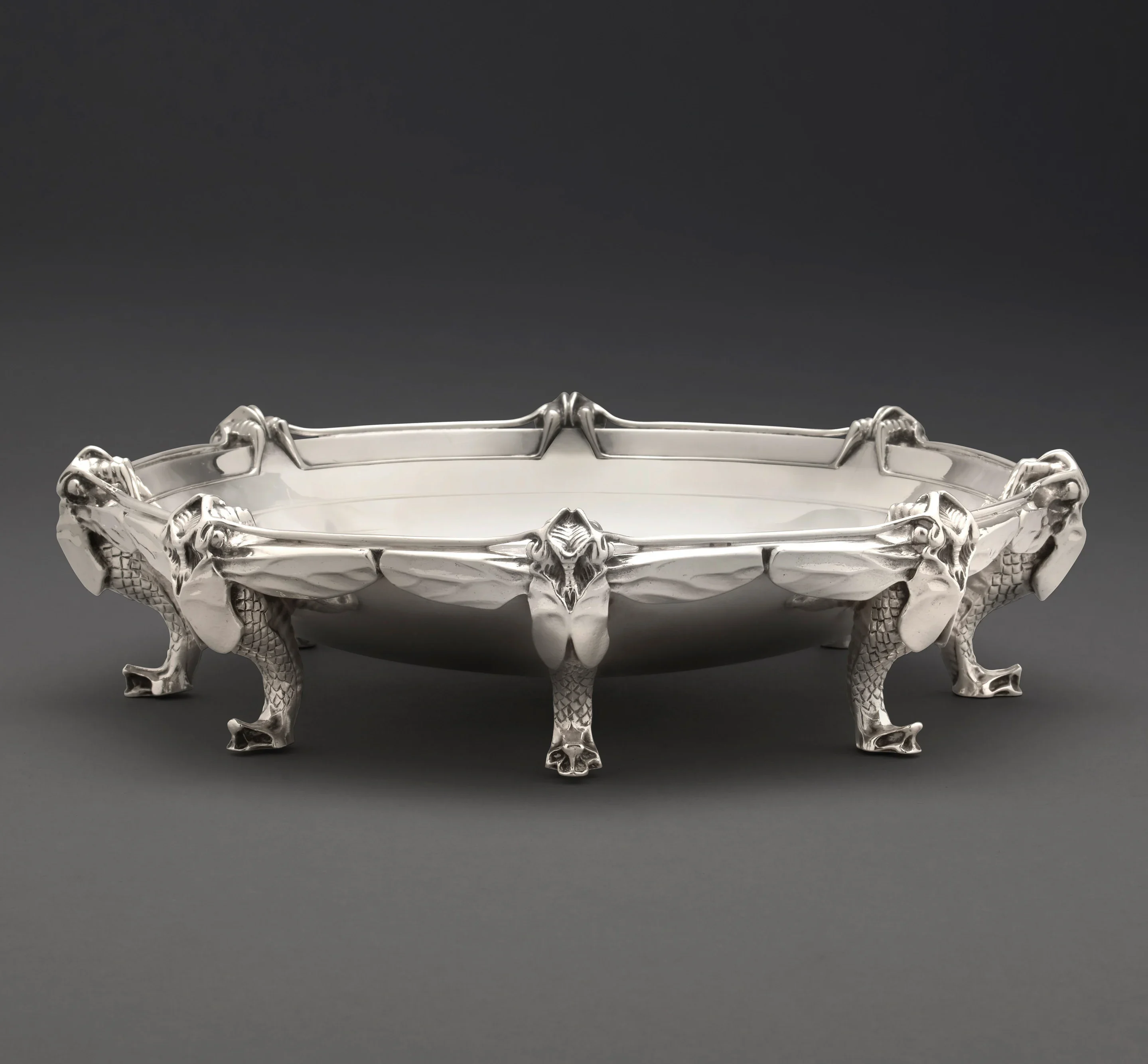
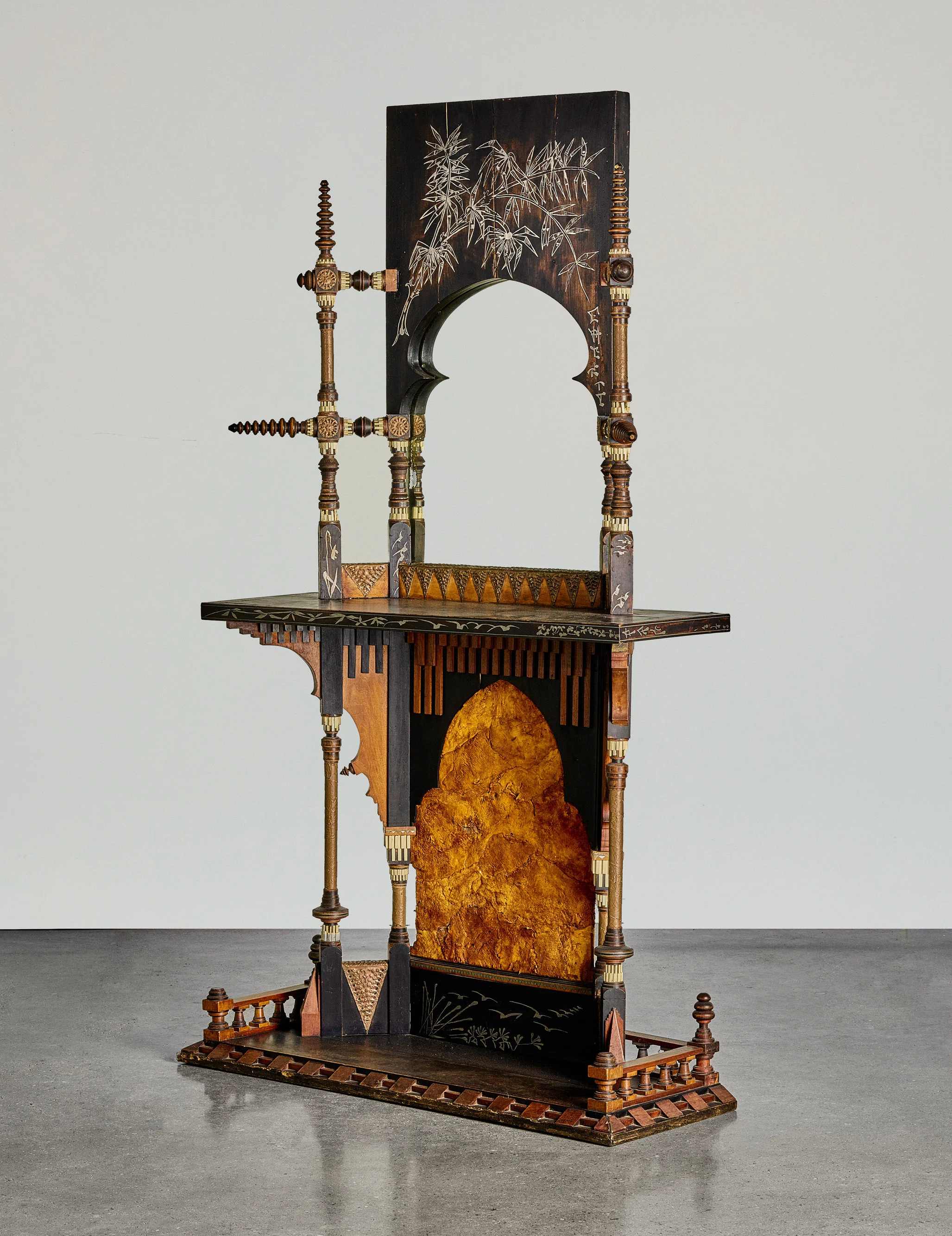

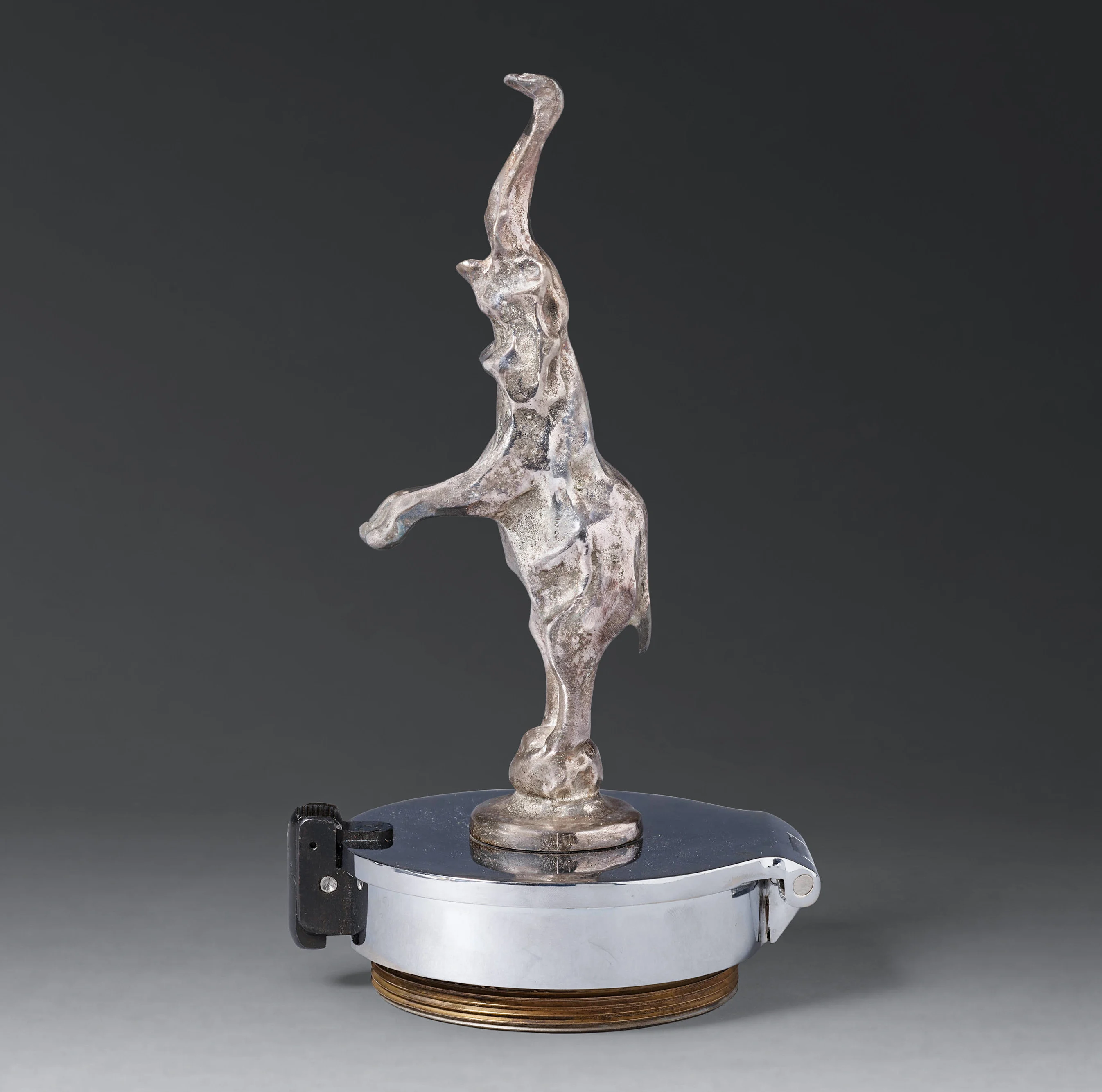
Top: Left: Panthère Assise by Rembrandt Bugatti, c. 1907 Middle: 1927 Bugatti Type 52 “Baby” Right: Silver centerpiece by Carlo Bugatti Bottom: Left: Carlo Bugatti wall console and mirror, c. 1900 Middle: The Club Bugatti mezzanine Right: The Dancing Elephant, Rembrandt Bugatti’s 1904 bronze chosen by Ettore as the mascot of the Type 41 Royale
Beyond the Bugatti material, the museum offered one of the deepest concentrations of Art Deco decorative art on the West Coast, woven directly into the automotive displays. Peter and Merle Mullin traveled the world hunting for it, finding pieces in Cairo, Budapest, Buenos Aires, and of course, Paris, the center of the style. Many of the South American pieces had migrated with their owners, carried out of Europe in the 1930s and 1940s by families fleeing the rise of fascism. The collection included a substantial group of René Lalique crystal hood ornaments, the opalescent glass mascots that had once perched on the radiator caps of Hispano Suizas and Voisins, with motifs ranging from nudes and birds to mythological figures and stylized animals. There were sculptures by Pierre Le Faguays and other figures of the period, vases by Daum, Schneider, Degué, and Louis Majorelle, paintings by Tamara de Lempicka, period photographs, lacquered cabinets, and chrome and ebony furniture from the great French ensembliers. The cars sat in the context that had produced them, surrounded by the same vocabulary of stepped forms, polished surfaces, and stylized geometry that defined the era.

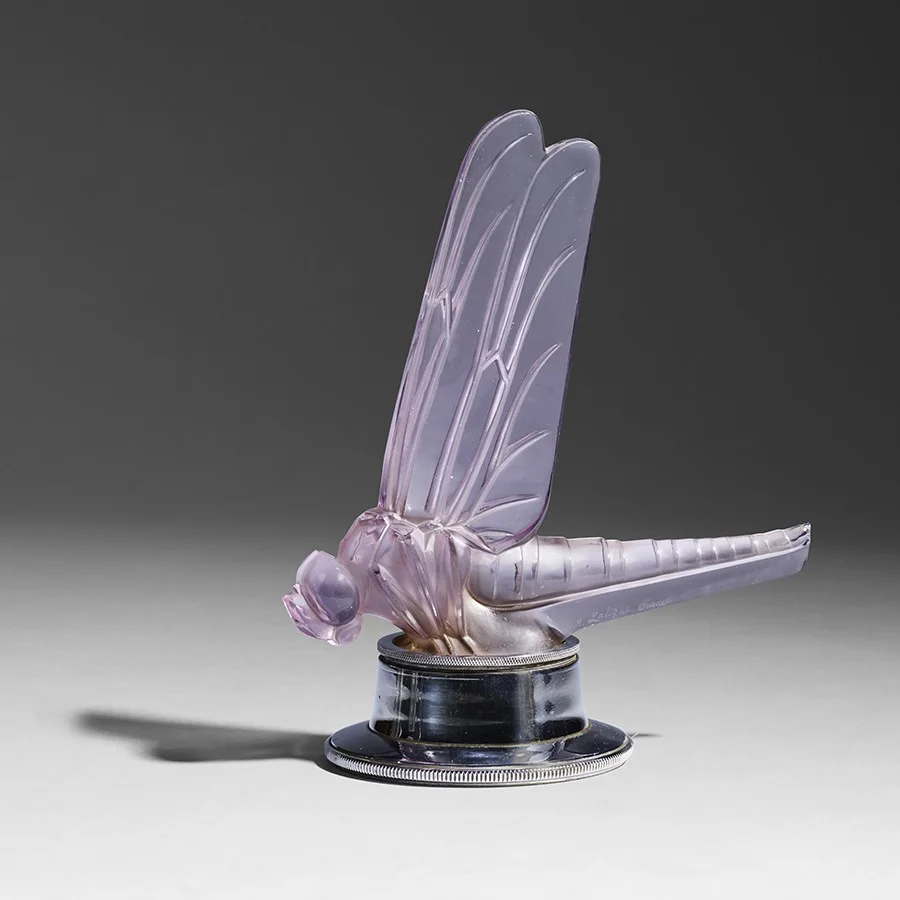
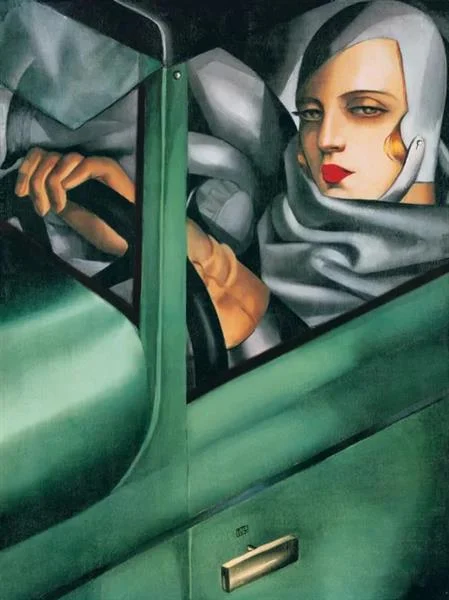
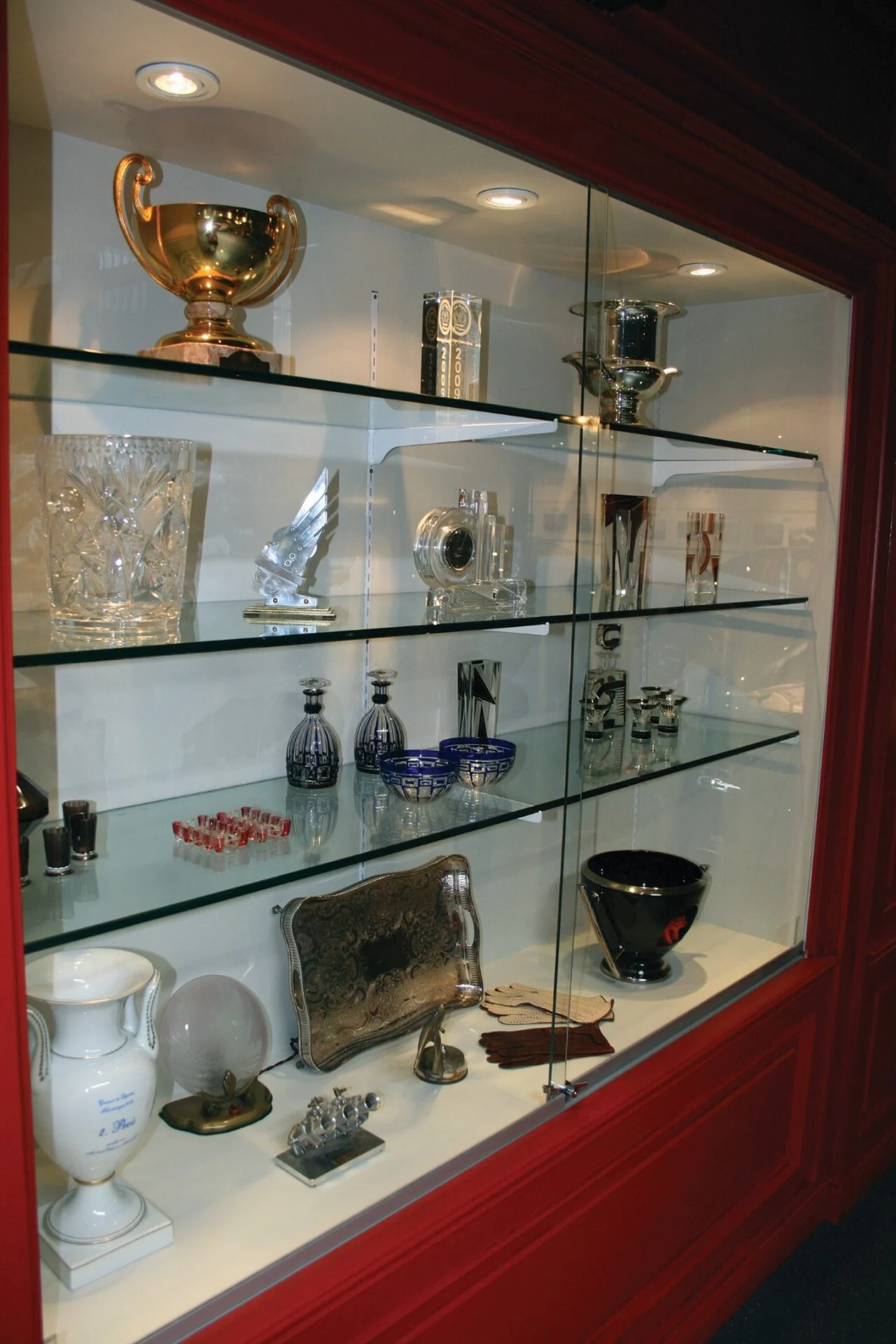

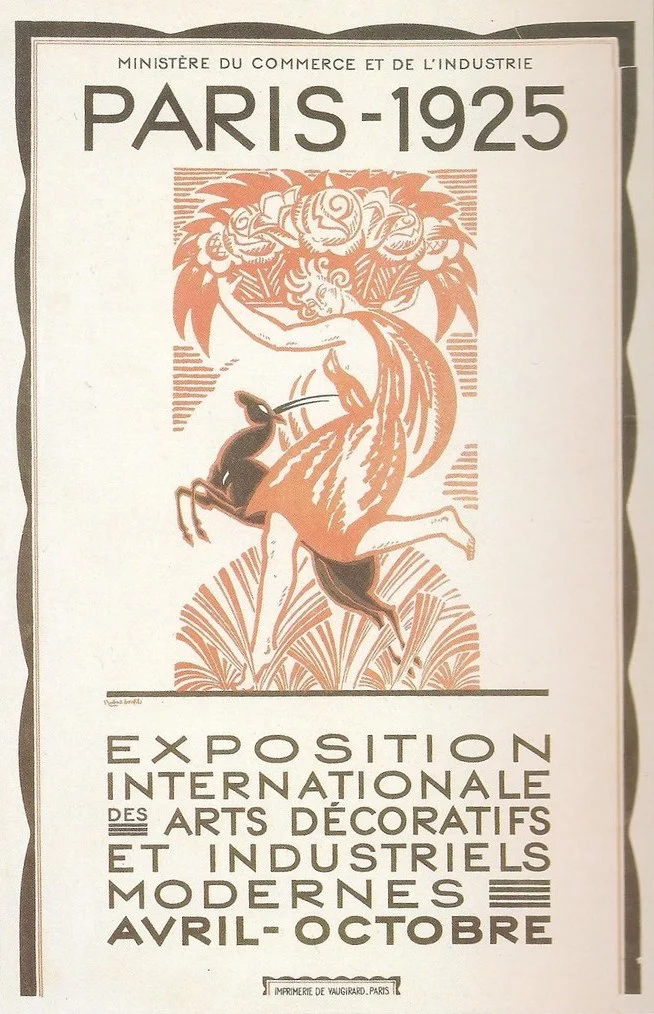
Top: Left: “Folie,” a bronze scarf dancer by the Max Le Verrier foundry, c. 1930 Middle: René Lalique’s Grande Libellule glass mascot, 1928 Right: Self-Portrait in a Green Bugatti by Tamara de Lempicka, 1929 Bottom: Left: Best of Show trophies from Pebble Beach alongside Peter Mullin’s personal driving gloves Middle: Hispano-Suiza’s La Cigogne Flying Stork mascot Right: Official poster for the 1925 Exposition Internationale des Arts Décoratifs et Industriels Modernes
The competitive side of the work was equally serious. Peter first showed a car at the Pebble Beach Concours d’Elegance in 1984 with a 1948 Talbot Lago T26 Cabriolet, and he and Merle returned almost every year afterward for nearly four decades. They presented sixty-five cars in that span, earning thirty-five class awards, thirteen special awards, and six Most Elegant honors. The ultimate prize came in 2011 when their 1934 Voisin C-25 Aérodyne won Best of Show, with an interior upholstered in a hand-woven wool fabric so complex that a friend had to track down the original looms in northwestern France and rebuild them from the destroyed remnants. In August 2023, just weeks before Peter’s death, he and Merle drove their 1939 Delahaye Type 165 Figoni et Falaschi Cabriolet across the winner’s podium after taking Best in Class in the Figoni Centennial group. It was a fitting last lap for a couple who had spent four decades taking these machines to their highest stage.
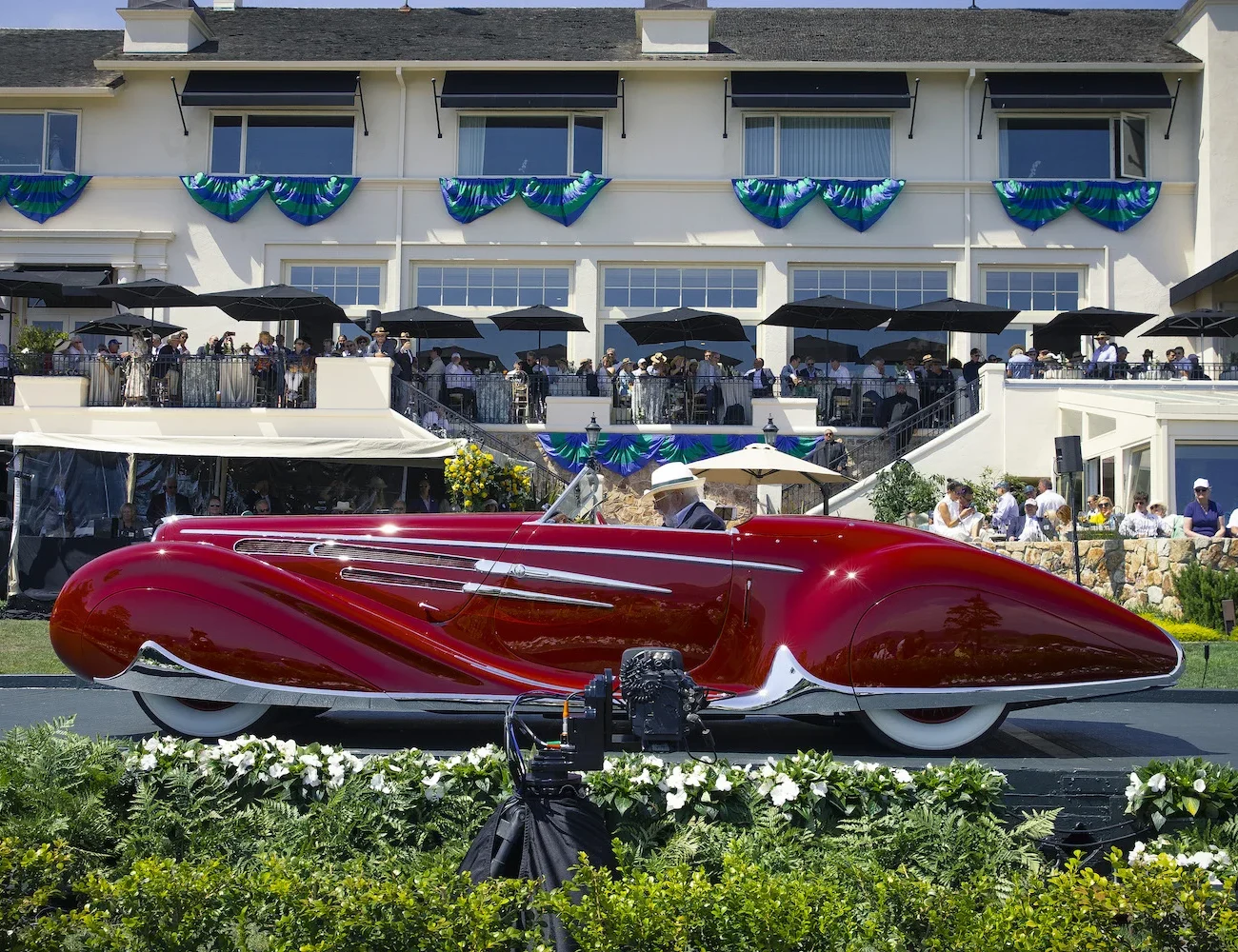

Left: The 1937 Delahaye Type 135MS Special Roadster at the 2011 Pebble Beach Concours d’Elegance Right: Merle Mullin with the 1936 Bugatti Type 57SC Atlantic at the 2021 Pebble Beach Concours d’Elegance
His generosity in the broader collector world ran just as deep. Together with collectors Bruce Meyer and David Sydorick, he played a pivotal role in founding the Petersen Automotive Museum in Los Angeles, where he served as Chairman of the Board and remained an active member for the rest of his life. In 2013, he and Merle donated fifteen million dollars to ArtCenter College of Design in Pasadena, the largest single gift in the college’s history, an investment that grew from a 2006 collaboration in which ArtCenter students had designed and hammered the body of his 1939 Bugatti Type 64. He served as President of the American Bugatti Club, and in recognition of his work in preserving French cultural heritage, was named a Knight of the Order of Arts and Letters by France. He was also a founding partner in the Cotswold Automotive Park and Mullin Museum project in Great Tew, England, an effort to carry his vision for the French automobile salon to a second permanent home. The Pebble Beach Concours presented him with a Lifetime Achievement Award in 2010, the Art Deco Society of California honored him with its Preservation Award in 2011, and Automobile Magazine named him Man of the Year in 2015. Through all of it, he remained genuinely accessible, as likely to be found talking with a teenager about a Type 35 vintage car as with a fellow board member about important acquisitions.
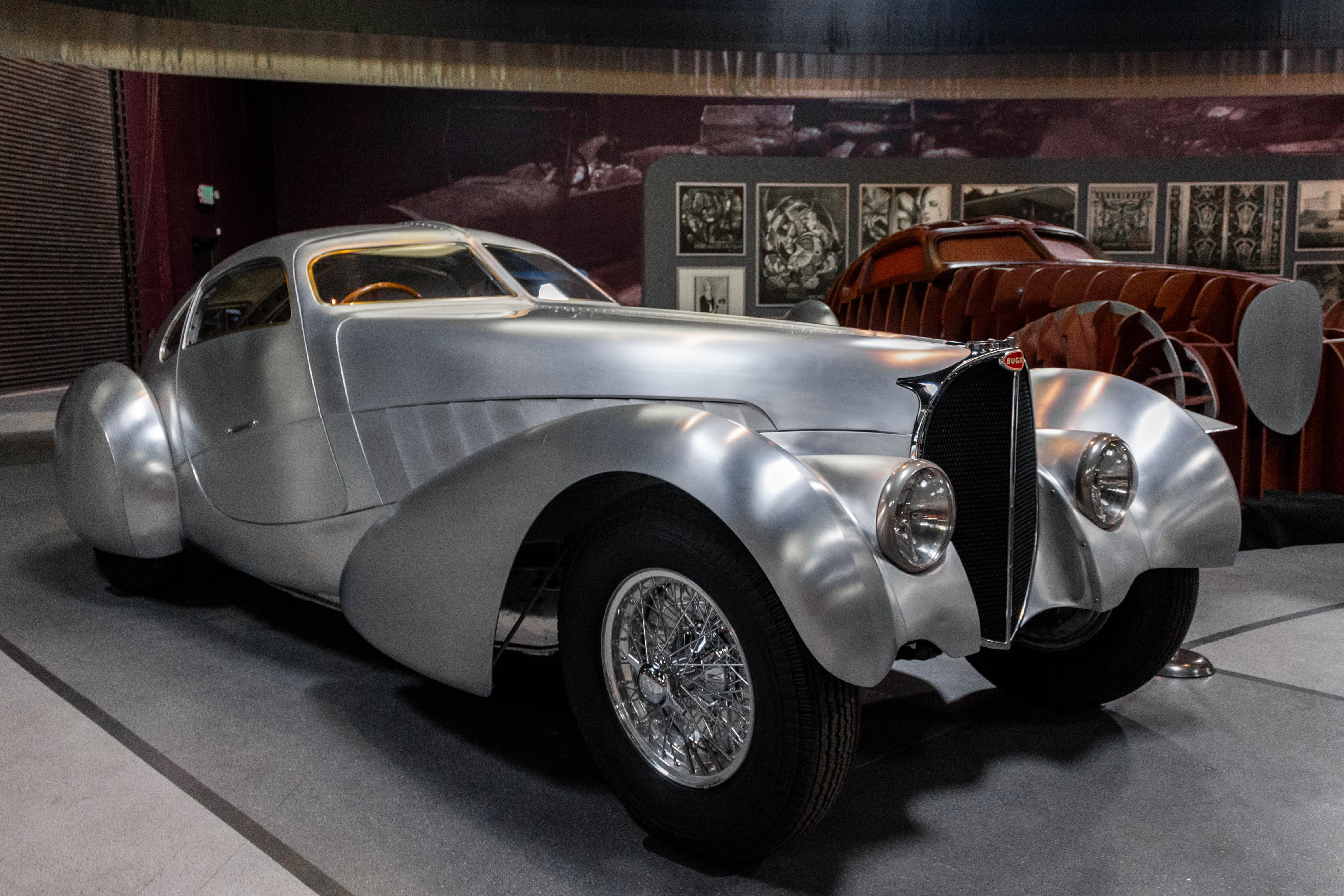
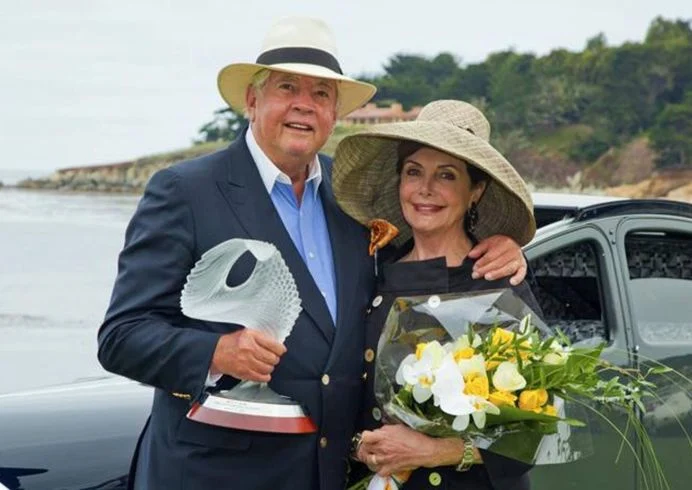
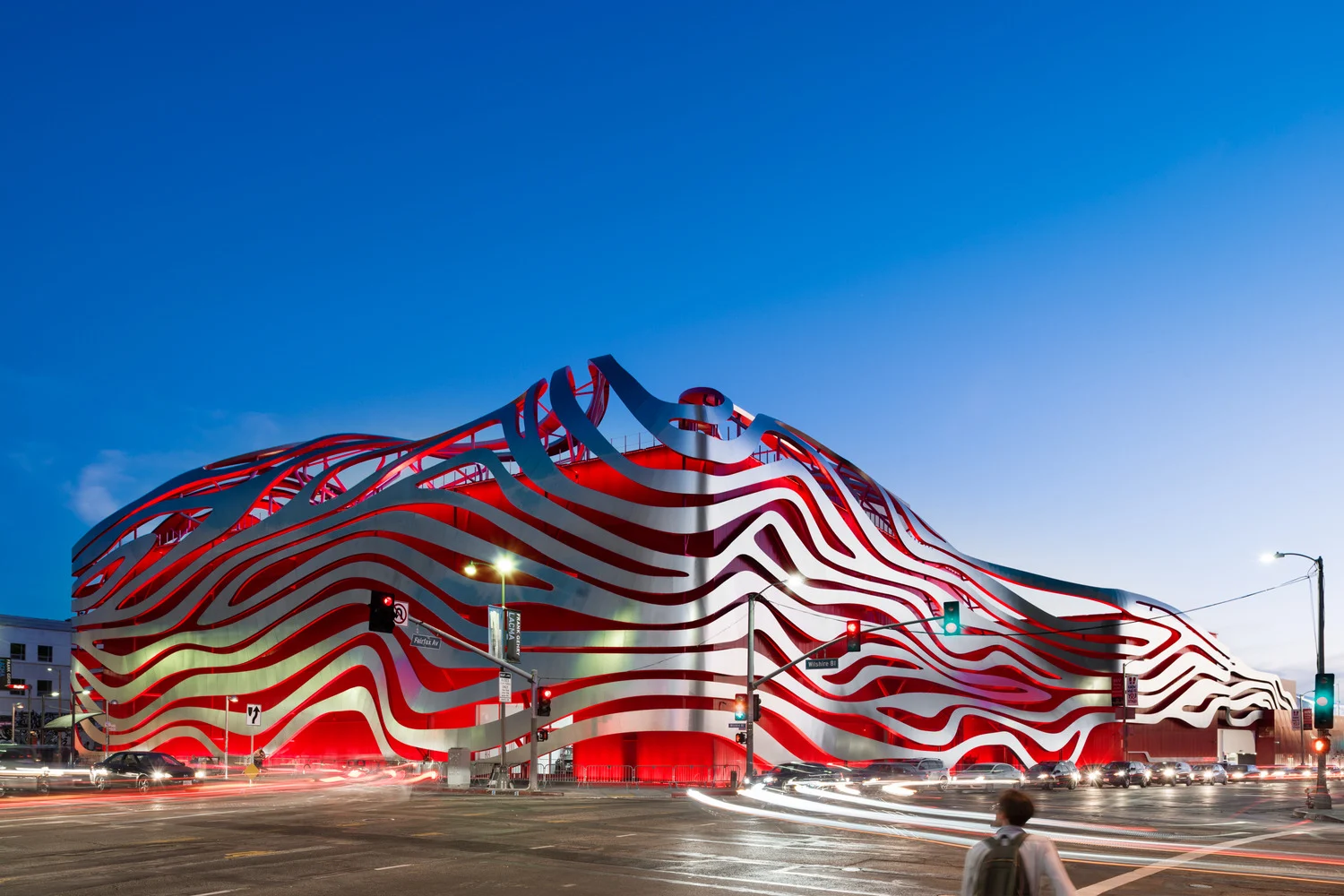
Left: The 2013 re-creation of the 1935 Bugatti Type 57 Aérolithe Middle: Peter and Merle Mullin receiving the Pebble Beach Concours d’Elegance Lifetime Achievement Award Right: The Petersen Automotive Museum in Los Angeles
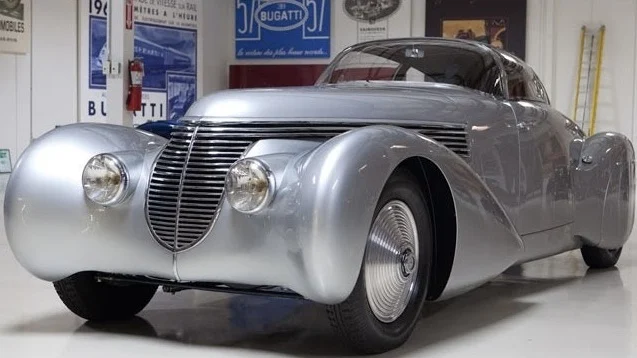
The Mullin Automotive Museum closed its doors on February 10, 2024, four months after Peter’s death the previous September. Merle, his wife and partner in every aspect of the work for decades and the museum’s director, oversaw its final months with the same care she had brought to everything else. Four of the collection’s most significant cars were donated to the Petersen Automotive Museum, among them the 1937 Talbot-Lago T150 CS Teardrop and the iconic 1938 Hispano-Suiza H6B Dubonnet Xenia. The 1936 Bugatti Type 57SC Atlantic, co-owned with collector Rob Walton throughout its time at the museum, passed into his full stewardship. A portion of the collection went to auction with Gooding & Company in a sale held at the museum itself in April 2024, where the Bugatti Type 57C Aravis, the Hispano-Suiza J12 Cabriolet, and pieces of the Schlumpf Reserve Collection found new owners. The remainder, what Merle described as the top forty-seven cars, was entrusted to private custodians for preservation and continued sharing. That was the principle Peter had always held. He saw himself as a steward, not an owner, holding these objects in trust for the next generation of people who would come to understand them. The galleries are dark now, but the cars are still out there, still being driven, still appearing on concours fields, and the world Peter built around them, however briefly it stood, is still teaching anyone who looks closely what coachbuilding was capable of in its finest hour.
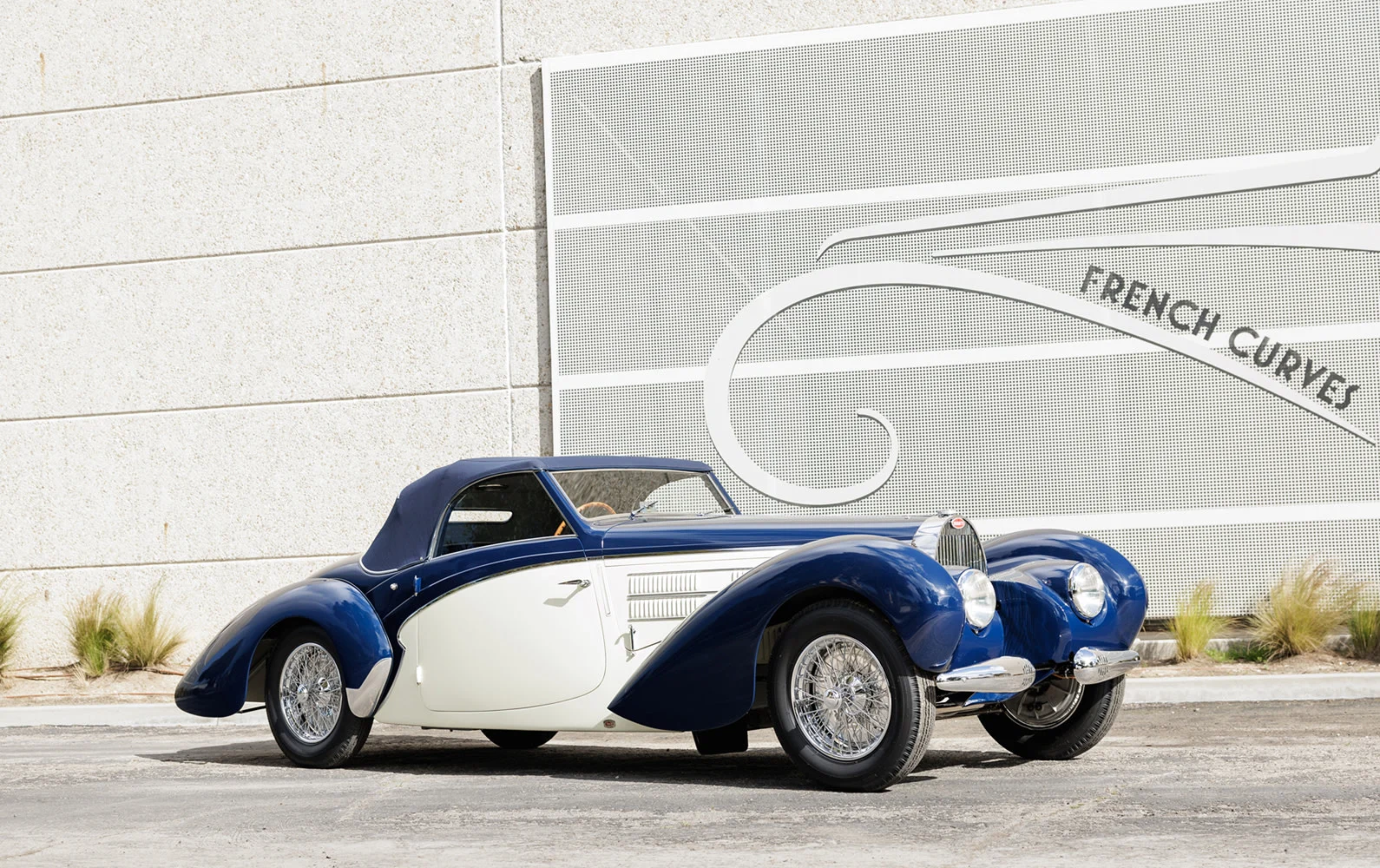
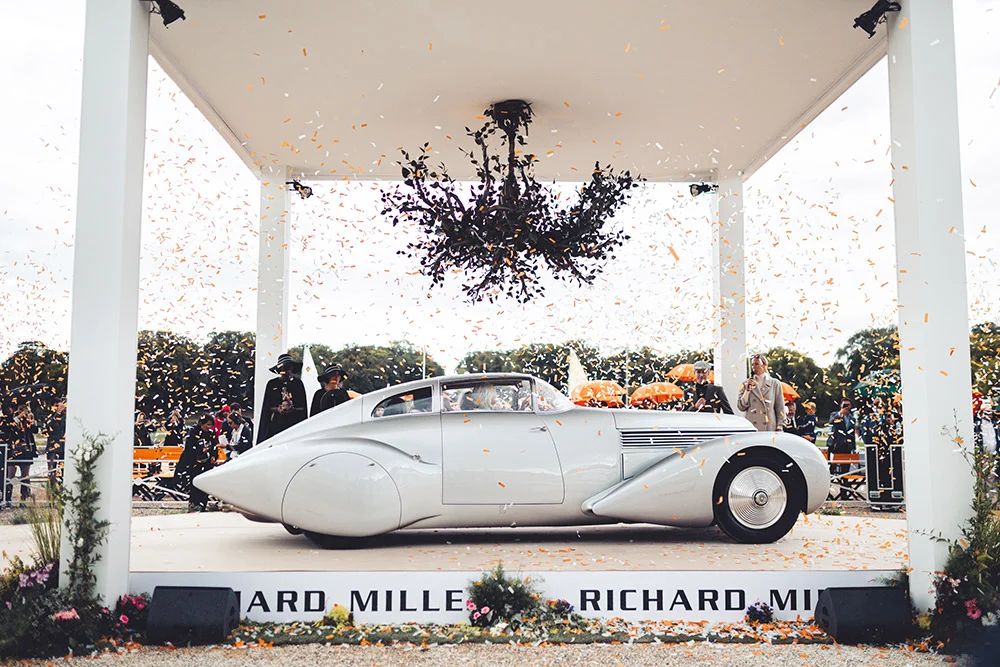
Left: The 1939 Bugatti Type 57C Aravis Special Cabriolet, restored in collaboration with its original owner Maurice Trintignant Right: The 1938 Hispano-Suiza H6B Dubonnet Xenia, now at the Petersen Automotive Museum
From ArtDecoCollection.com
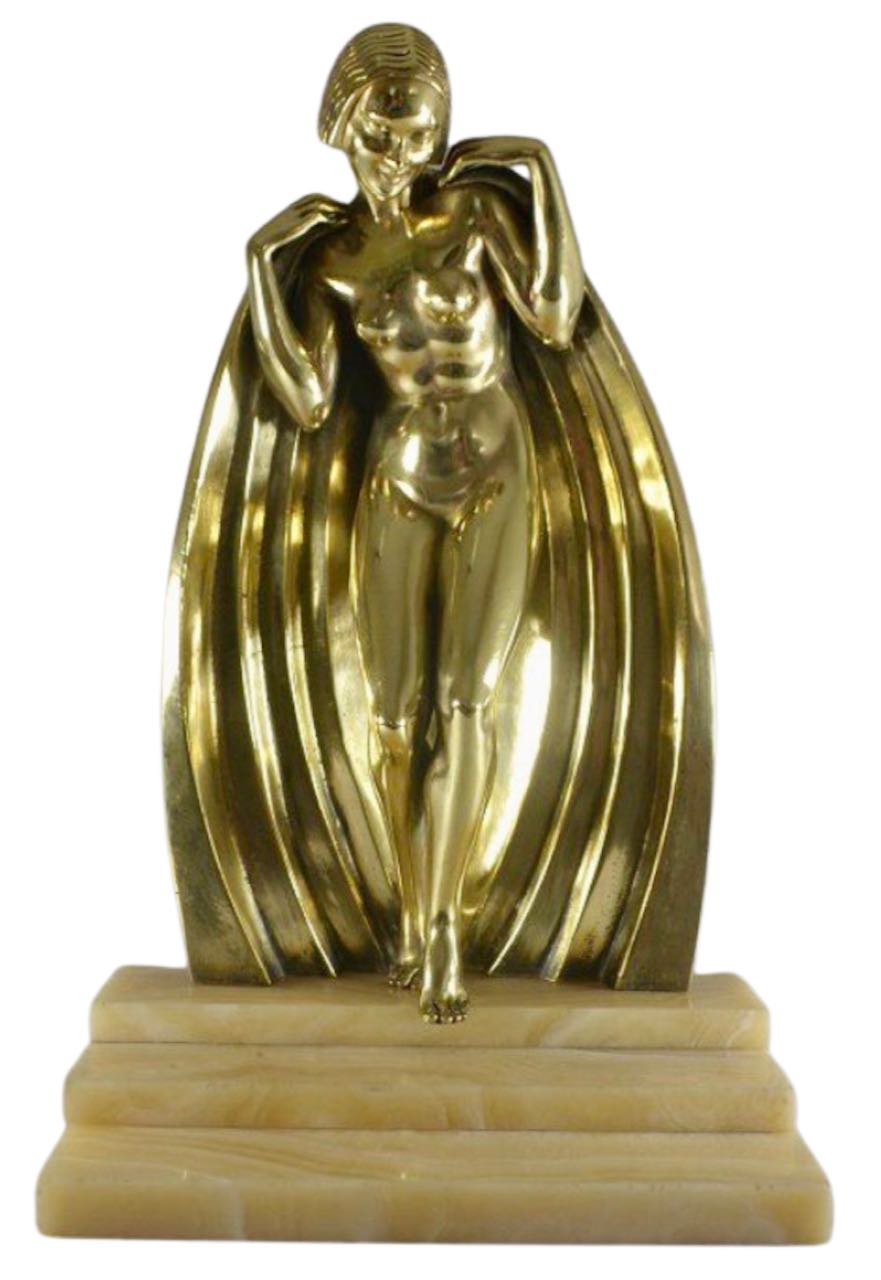
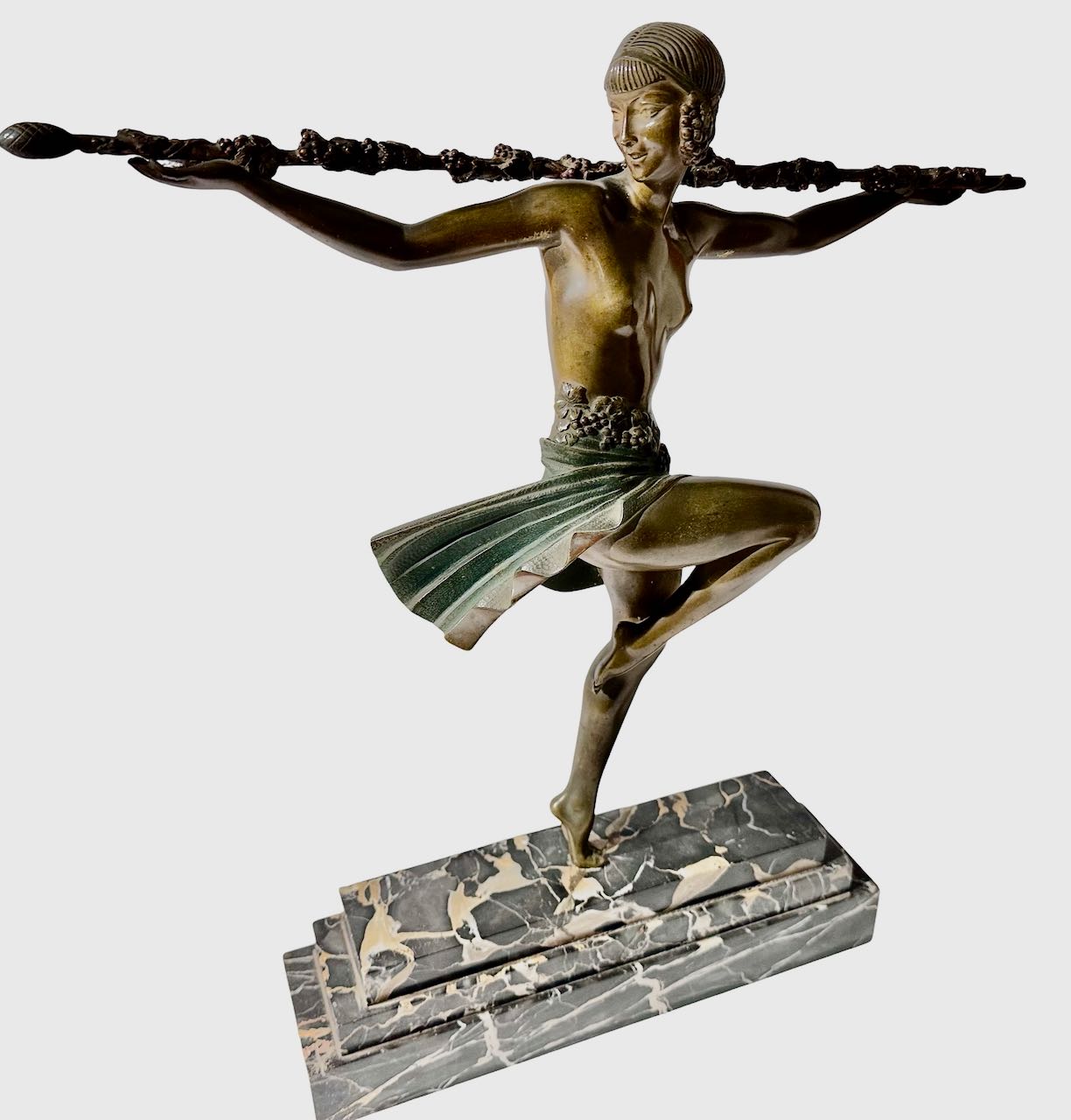
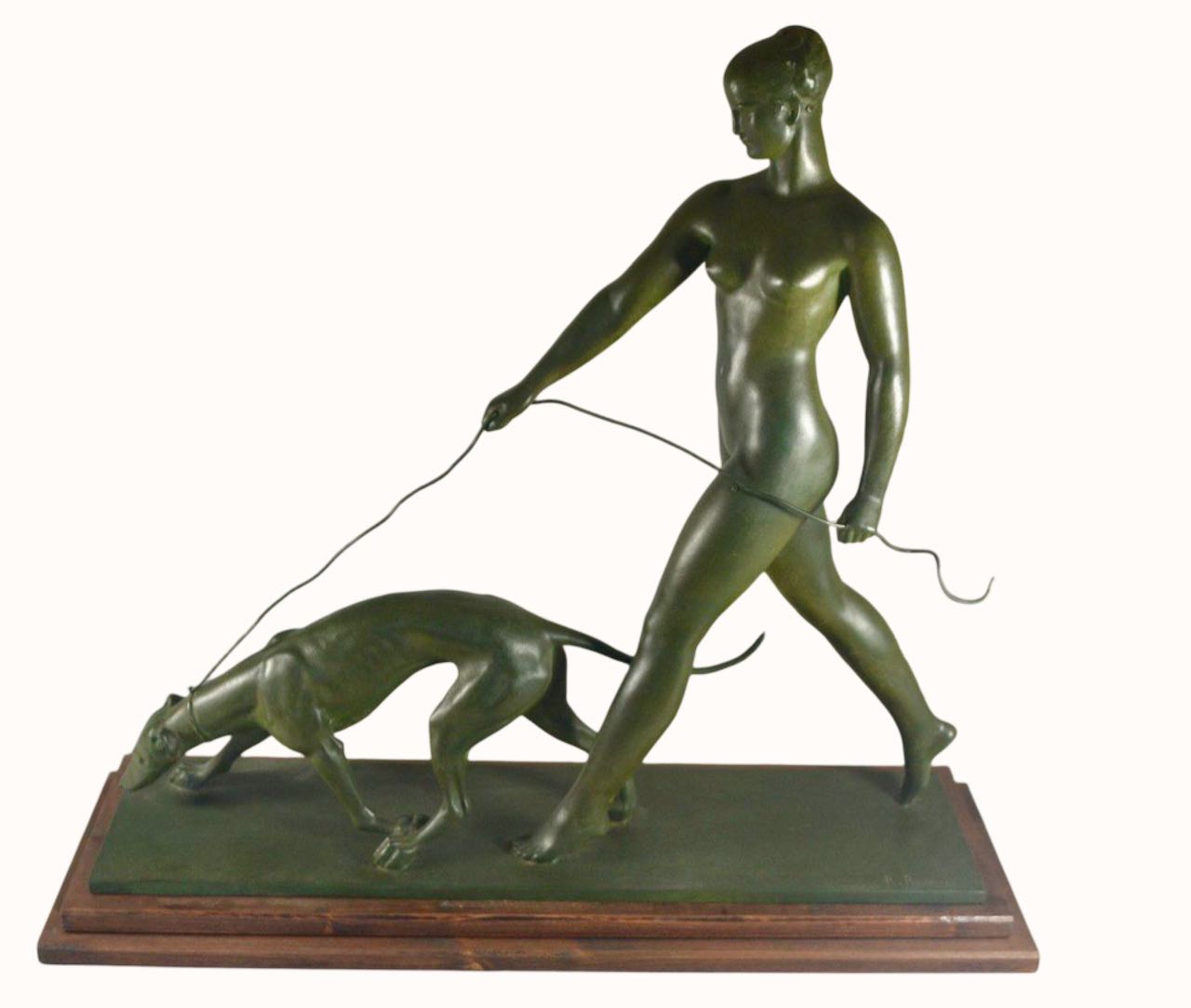
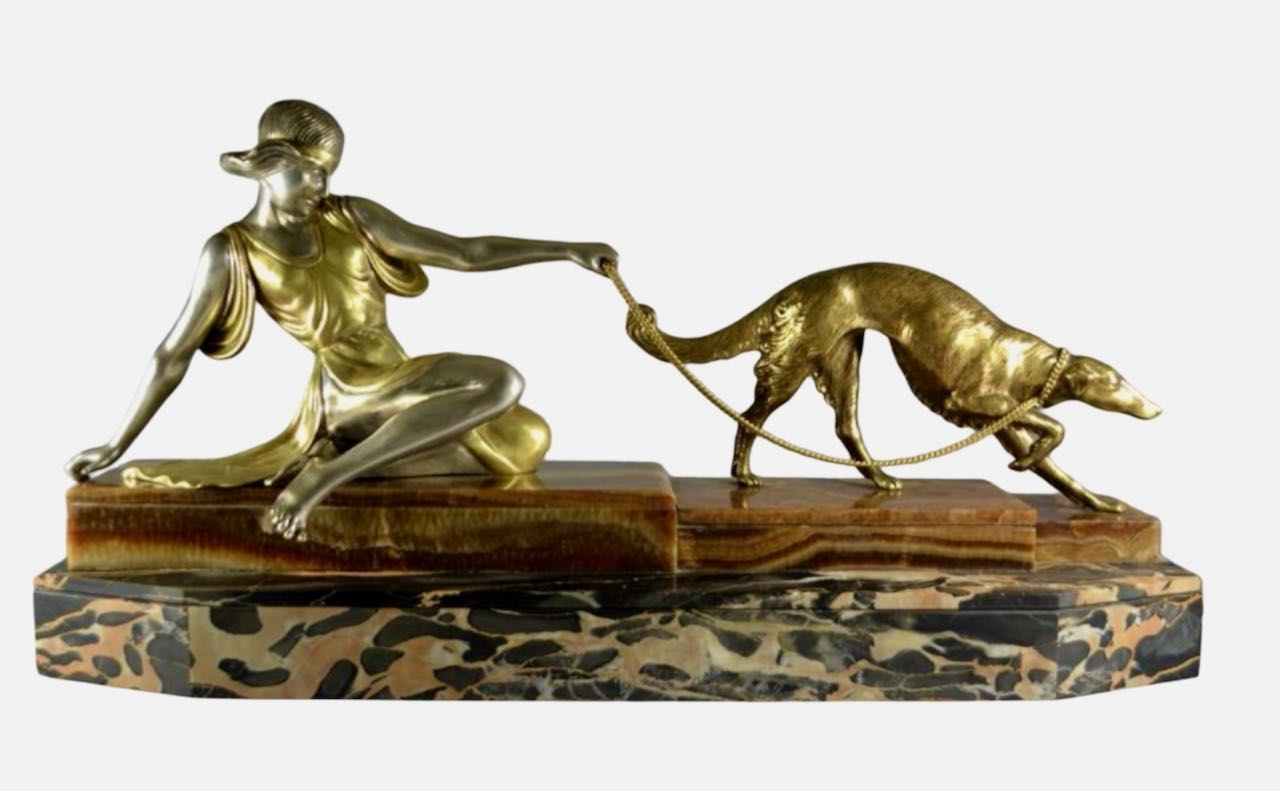
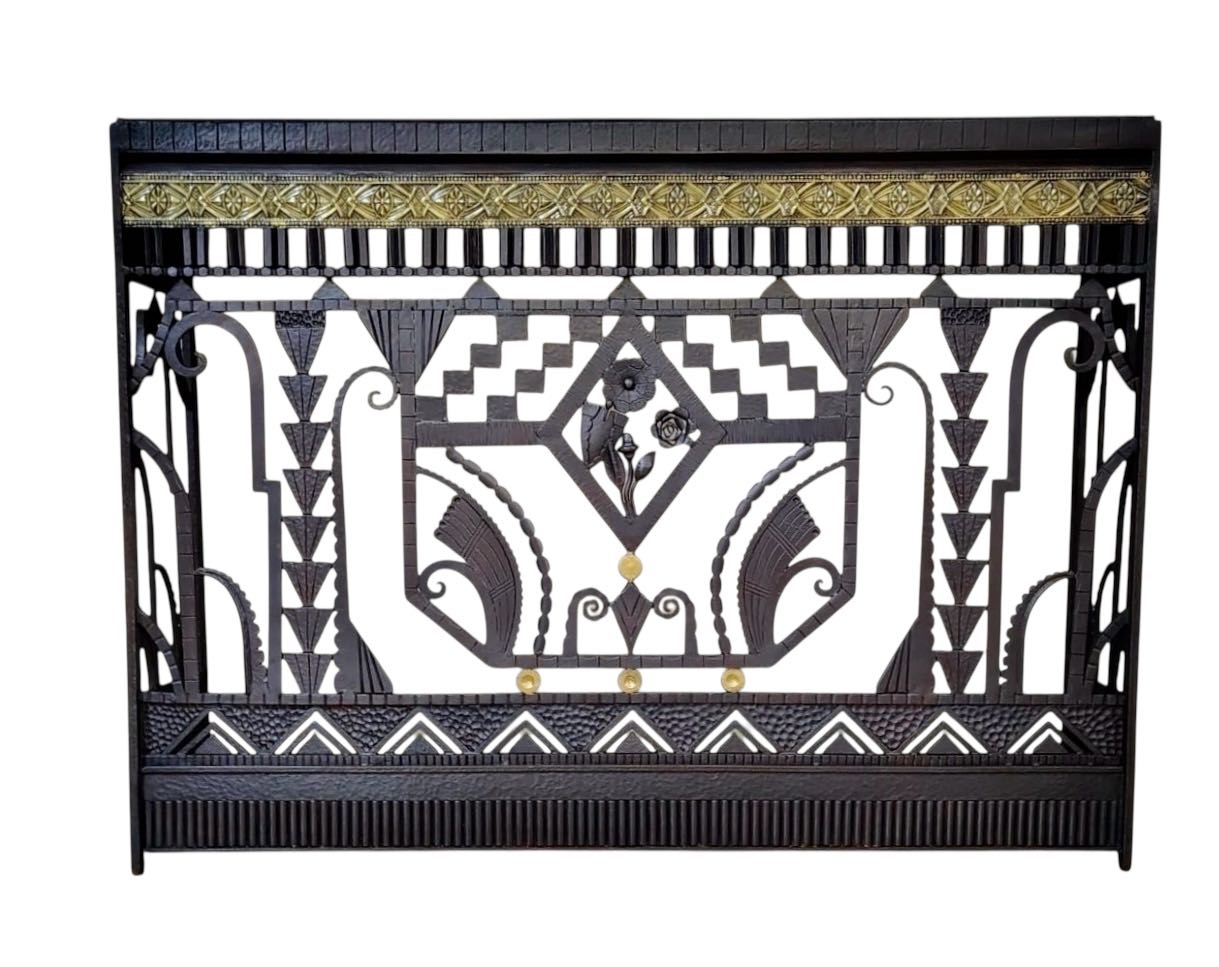
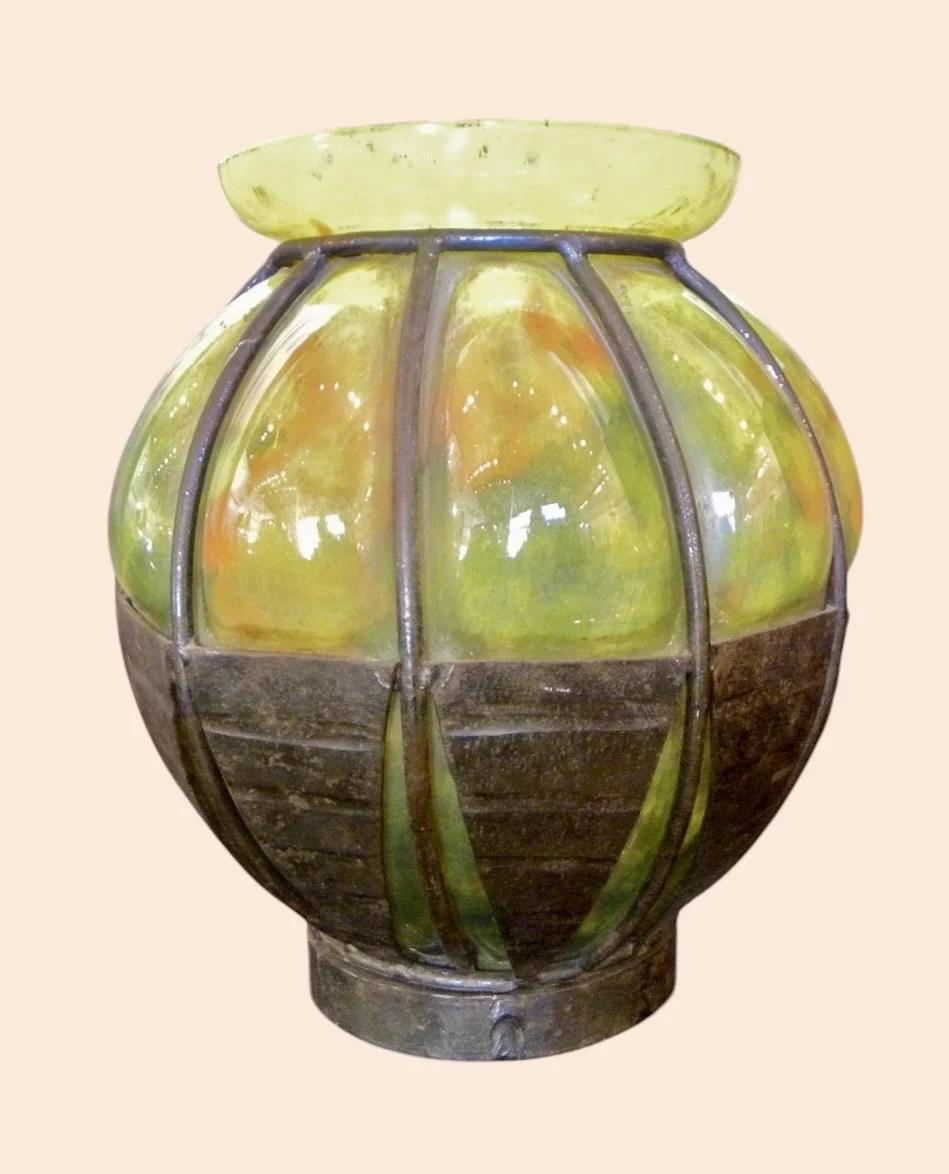
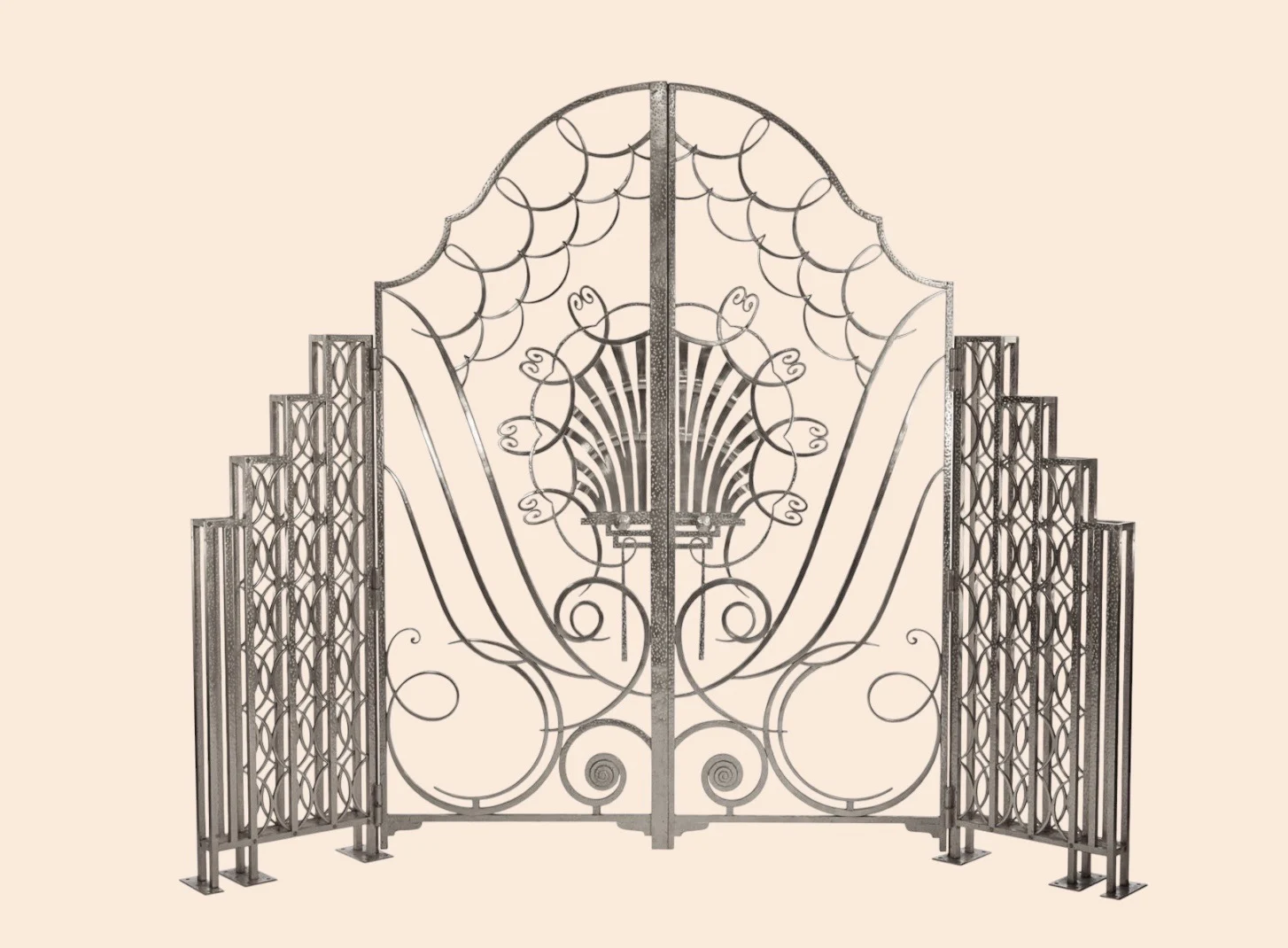
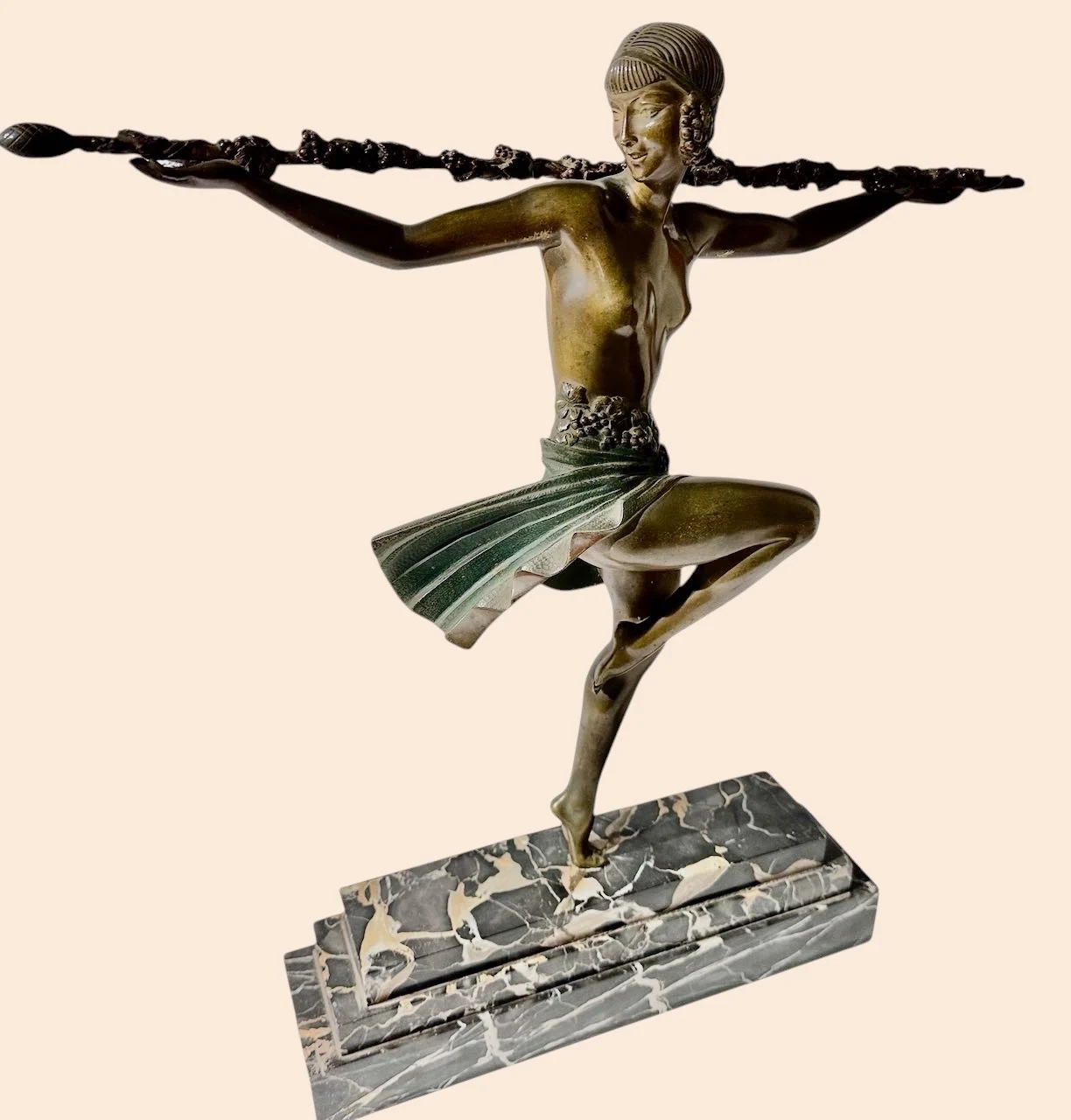
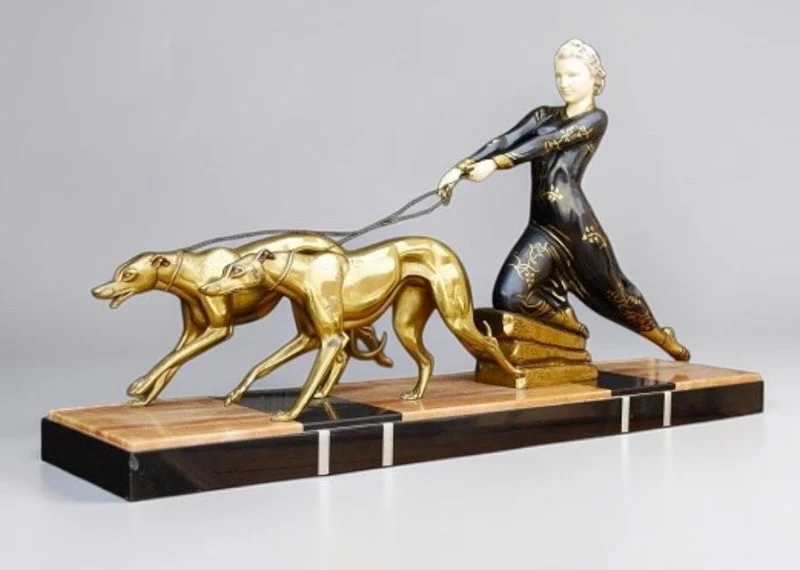
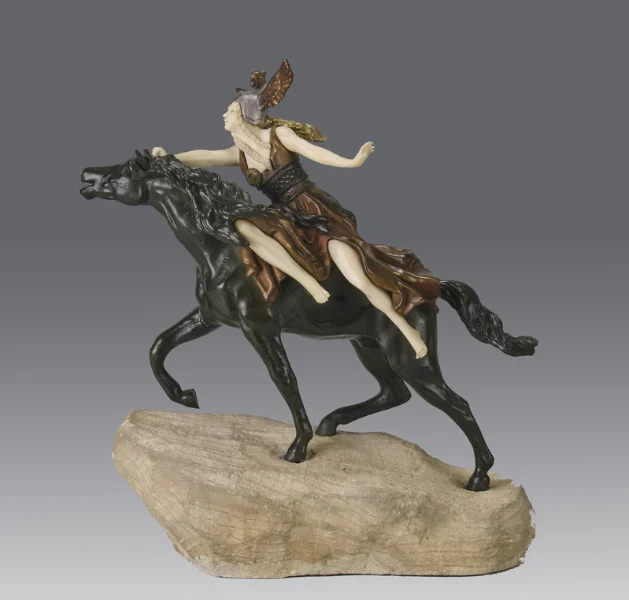
ArtDecoCollection placed several significant works with the Mullin Automotive Museum over the years. Pictured here a French Art Deco mantel clock from 1925, a bronze figural sculpture on a stepped ziggurat-style base in green and brown marble and onyx. A set of wrought iron gates originally designed by Raymond Subes for the French ocean liner SS Ile de France. Pierre Le Faguays’s Dancer with Thyrsus, a bronze figure cast circa 1930, accompanied by a Verrerie d’Art Lorraine vase from the 1920s, its citrus-colored mottled art glass blown directly into a wrought iron frame. Claire Jeanne Roberte Colinet’s Valkyrie, Into the Unknown, a chryselephantine sculpture in bronze and ivory of a Norse warrior on horseback attributed to Menneville of a woman in a gold-toned dress walking two greyhounds.



If you are interested in further stories of Art Deco design, collecting, and celebrating the artistry of early 20th Century:

Related Products from ArtDecoCollection.com