
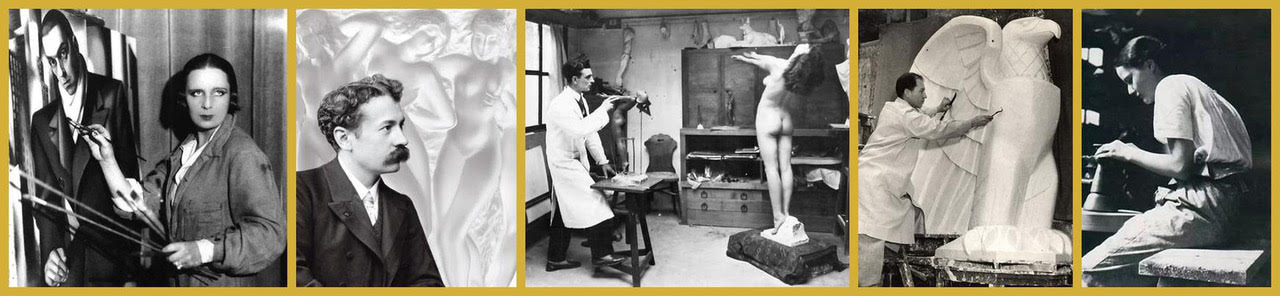
Jean Bugatti
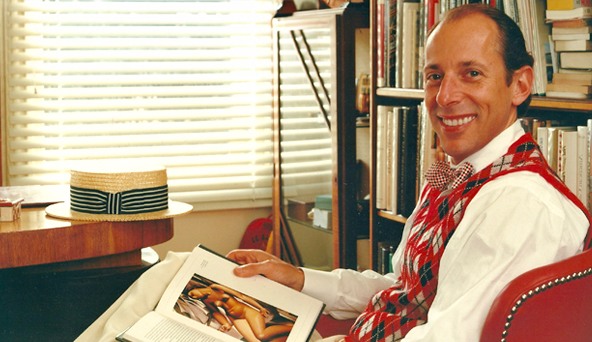
Jean Bugatti was born Gianoberto Maria Carlo Bugatti on January 15, 1909, in Cologne, Germany, the eldest son of Ettore Bugatti and his wife Barbara. The family soon moved to Dorlisheim near Molsheim in Alsace, where his father was building the Bugatti automobile manufacturing plant. Growing up multilingual in a family of exceptional creators, he received no formal engineering education, instead apprenticing at his father’s side and learning from the factory’s craftsmen. By his teens, he was involved in most aspects of the work, absorbing chassis and engine design alongside body styling and construction. In 1936, Ettore officially turned over operational control of Automobiles E. Bugatti to his son, making Jean responsible for the company at the age of 27. He was also an accomplished test driver, frequently putting the company’s prototypes through their paces on the roads near Molsheim. On August 11, 1939, while testing the Type 57C tank-bodied racer that had just won Le Mans, Jean swerved to avoid a cyclist and crashed into a tree at the age of 30. He is buried in the Bugatti family plot at the municipal cemetery in Dorlisheim.
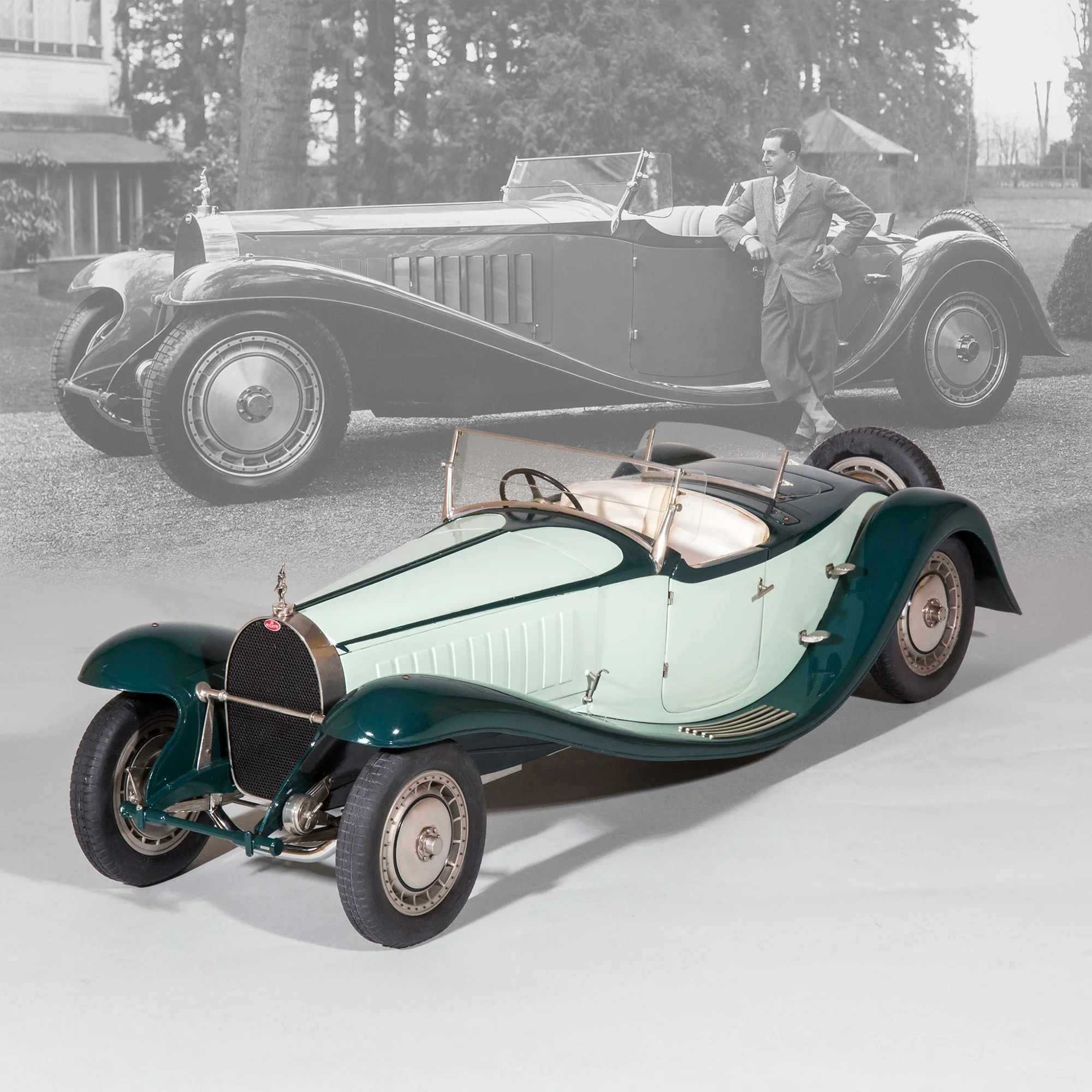
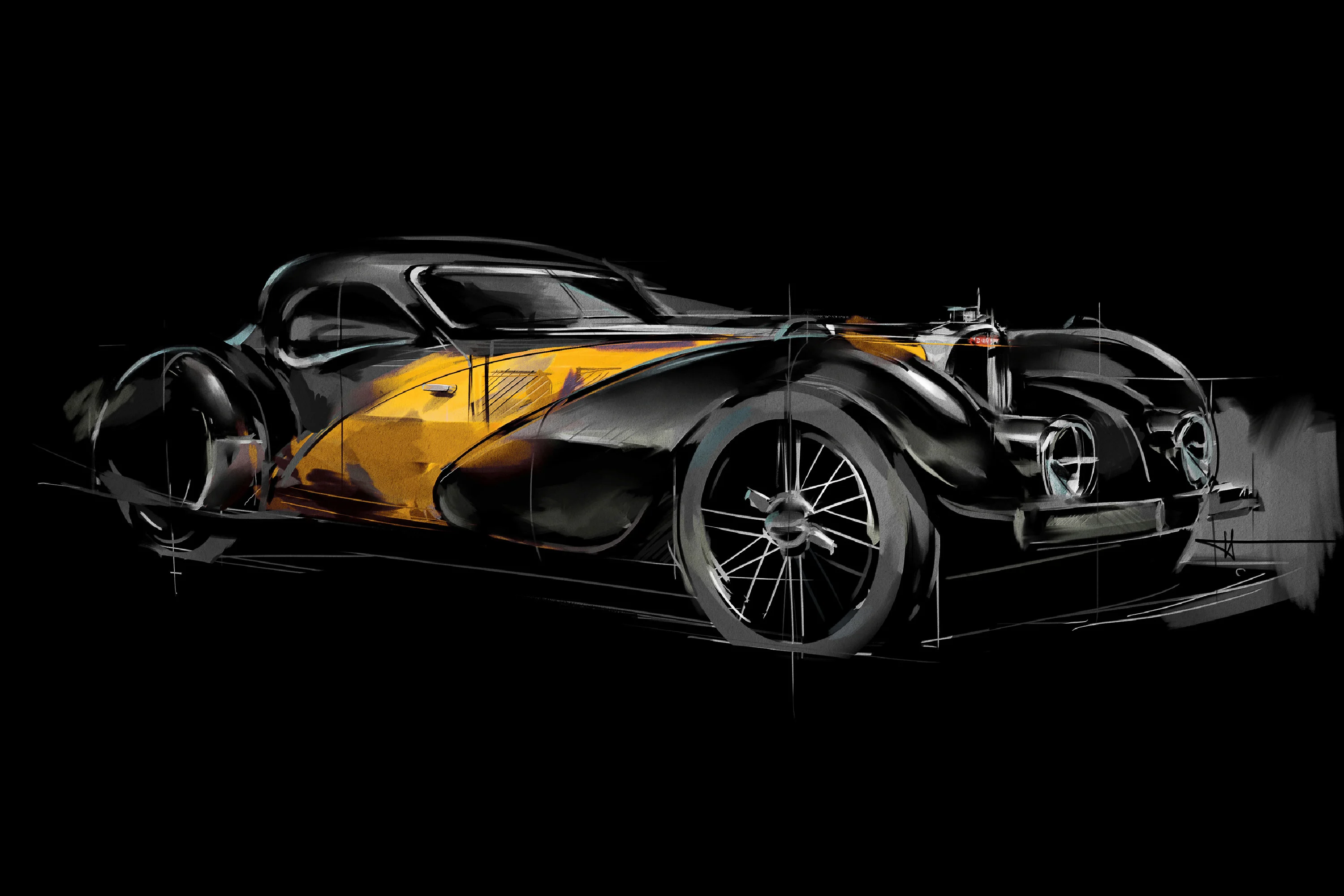
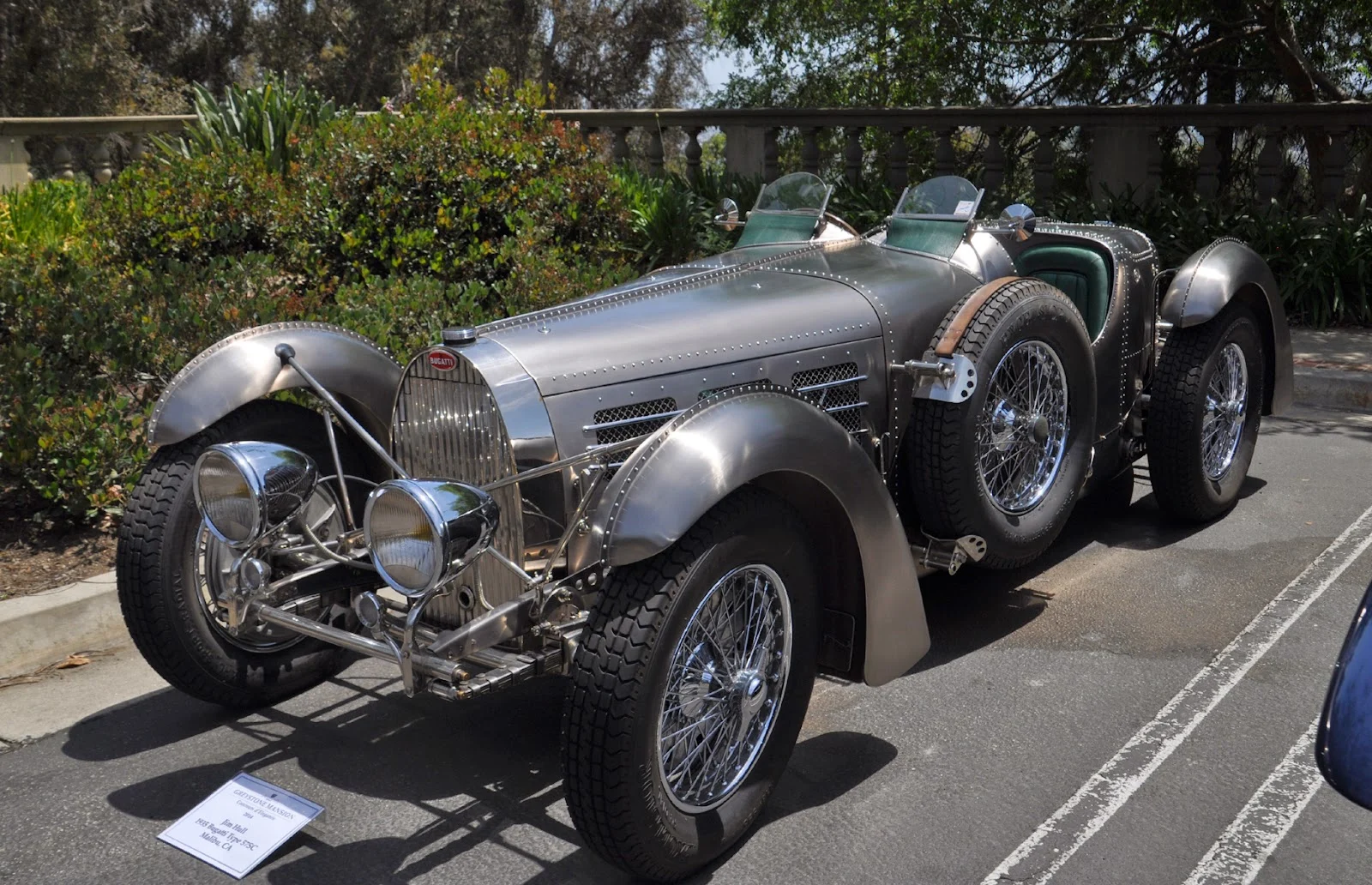
Jean’s first major contribution came at the age of 23 when he designed the body of the Type 41 Royale Esders, an elegant two-seater convertible that added a new dimension to his father’s engineering achievement. He designed four distinct body variants for the Type 57, the Ventoux, Stelvio, Atalante, and Atlantic, each reflecting his command of proportion, form, and the relationship between surface and light. His masterpiece, the Type 57 SC Atlantic, debuted at the 1936 Paris Salon and quickly became recognized as one of the most beautiful automobiles ever made, its riveted aluminum body and flowing aerodynamic form placing it at the vanguard of Art Deco design. On the engineering side, he developed double-overhead-cam engines and experimented with independent front suspension systems, including the secret “Crème de Menthe” prototype built covertly to avoid his father’s disapproval. His C-line design, first visible in models such as the Type 50 and Type 57, became a core element of Bugatti’s visual identity, carried forward into the modern era. At the time of his death, three chassis for the ambitious Type 64 had been started, a lightweight grand touring coupe featuring butterfly doors that would have predated the Mercedes-Benz 300SL’s by nearly two decades. Only one Type 64 was bodied before his death brought the project to an end.
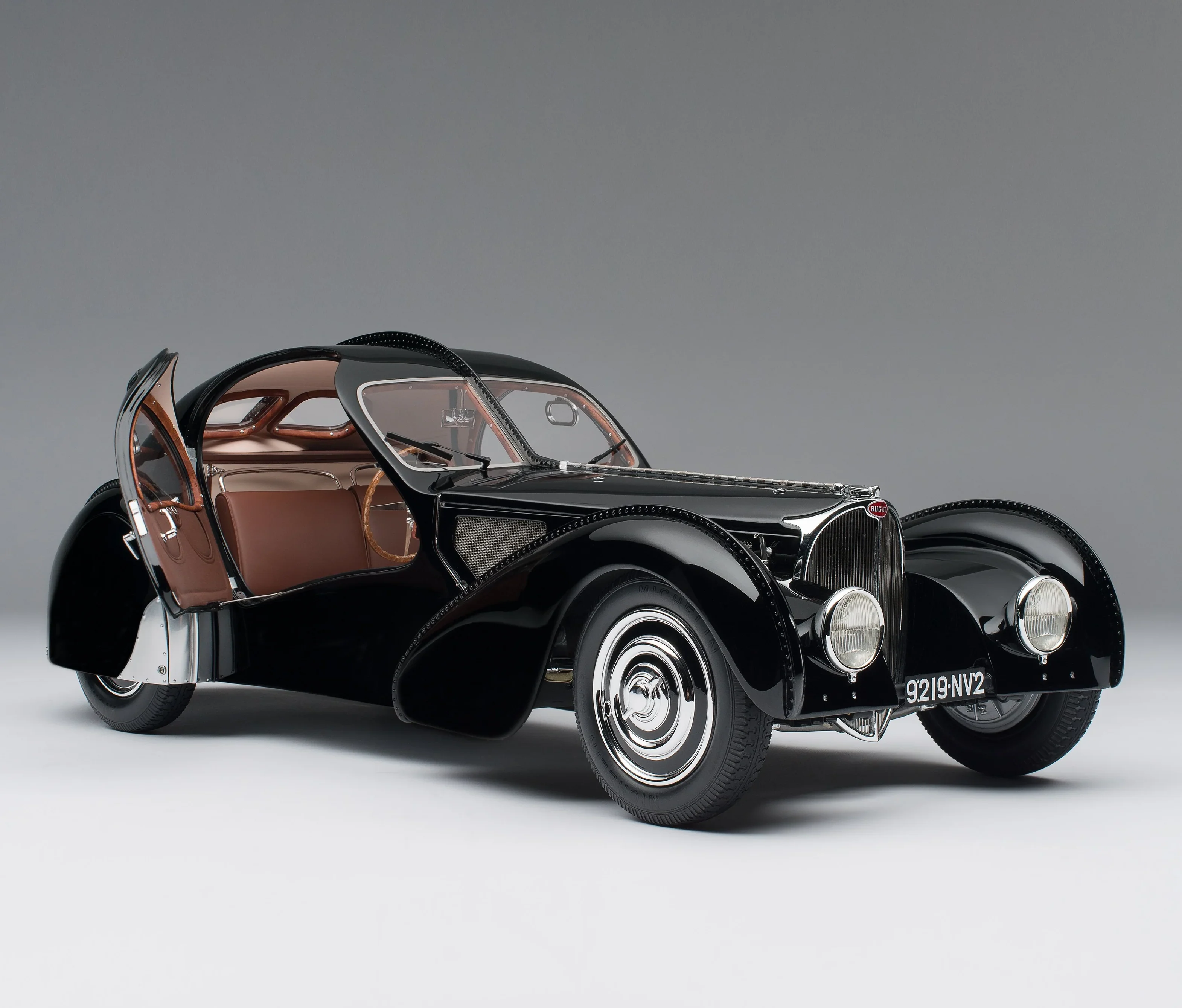
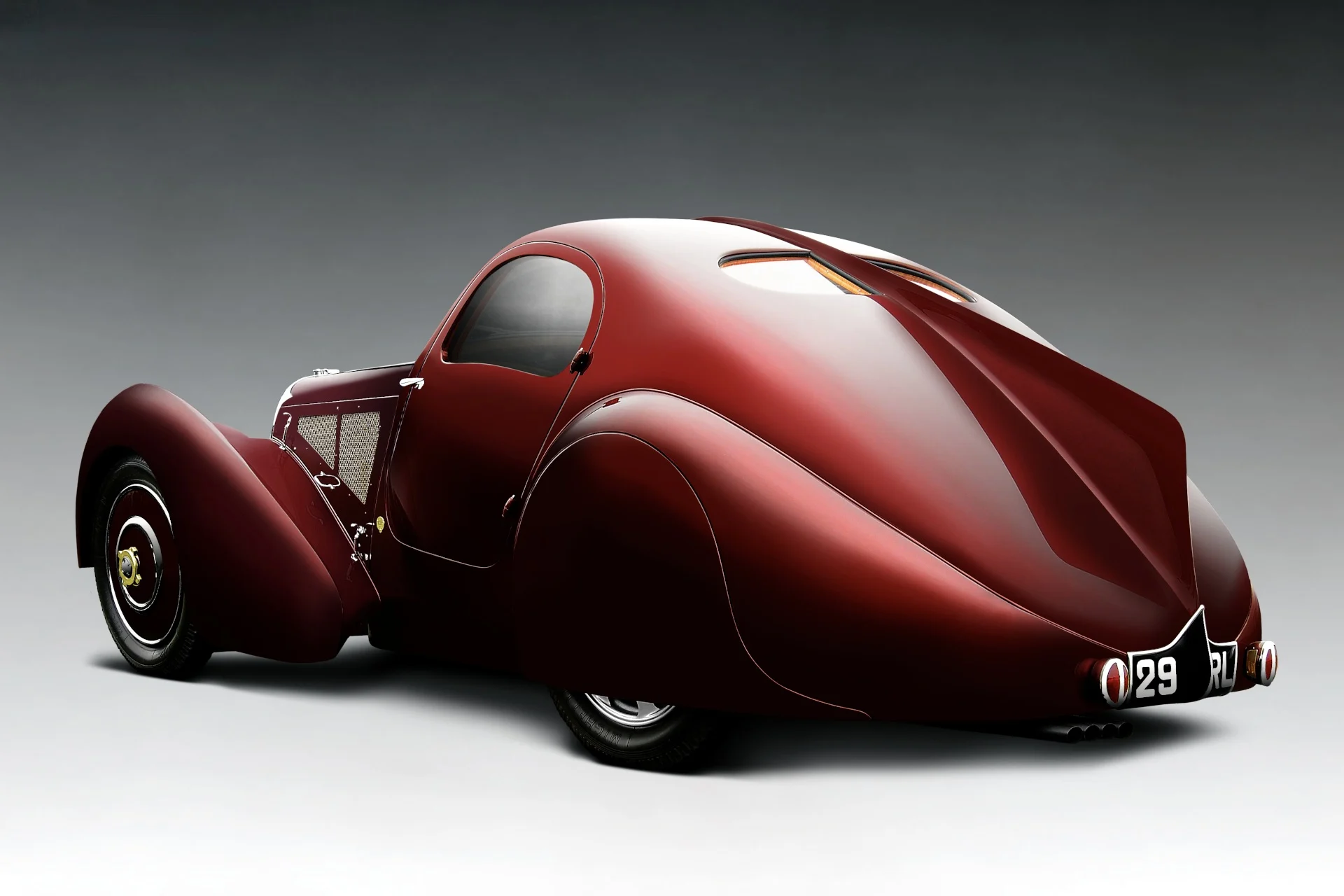
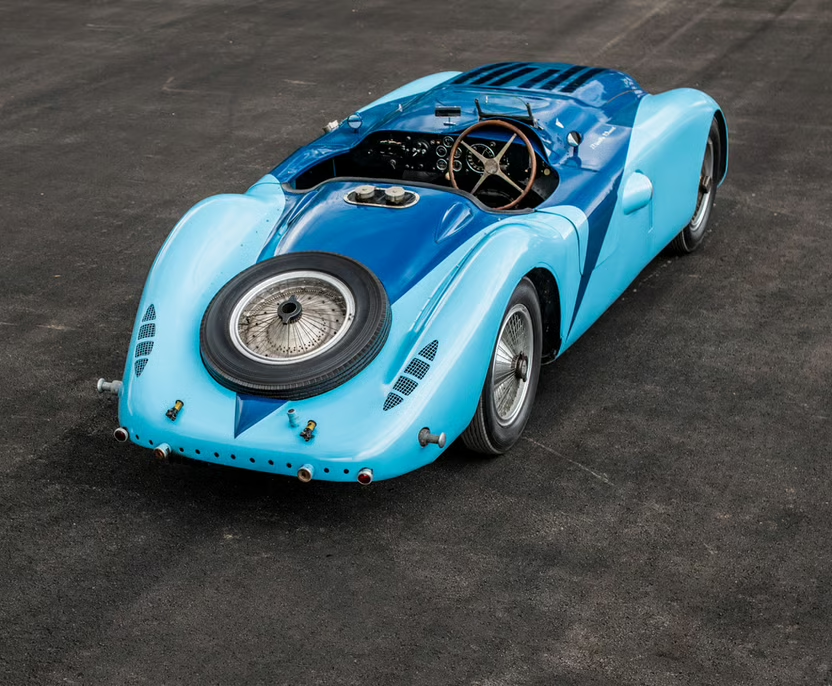
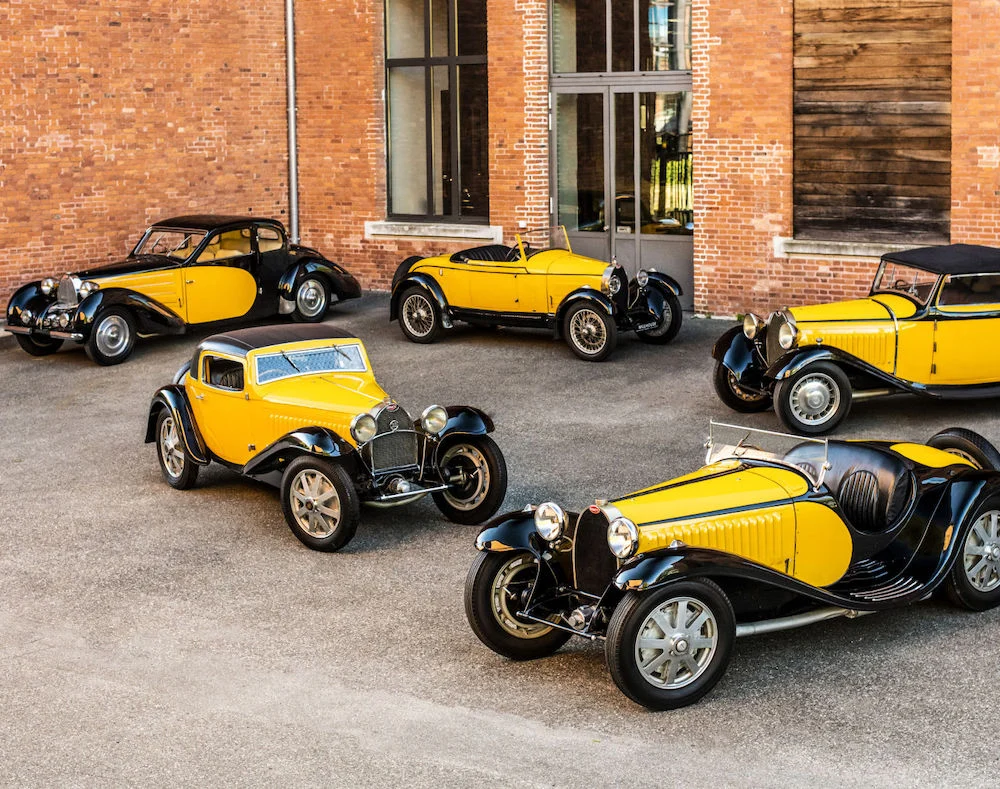
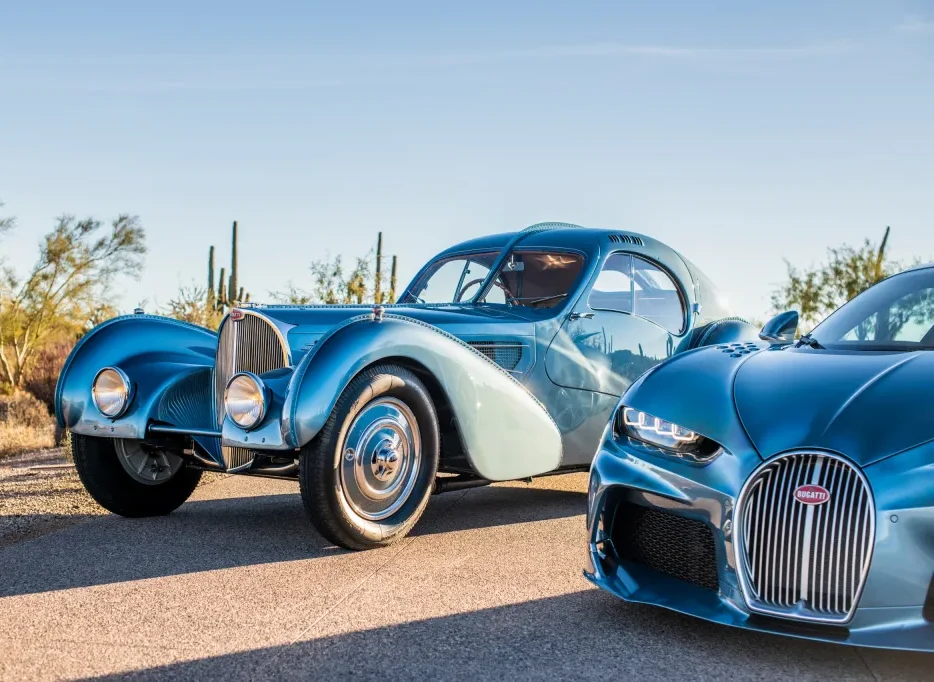
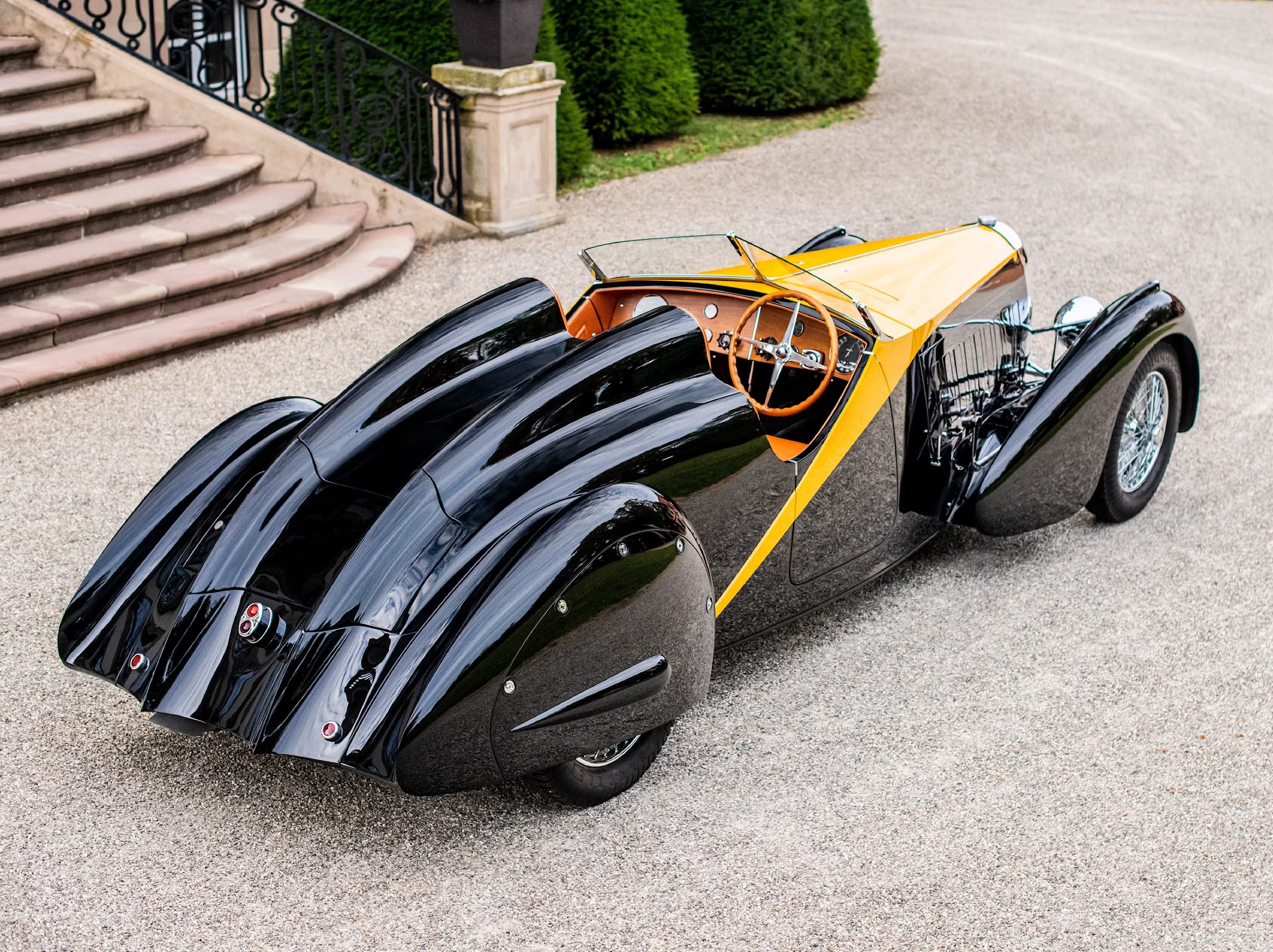
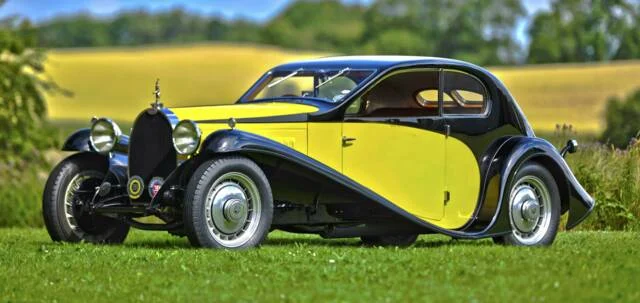
Jean Bugatti approached automobiles as sculptures, using perfect proportions, bold centerline accentuation, and a dropping beltline to create forms designed to reflect light in dynamic ways even when standing still. His use of riveted aluminum bodies, prominent dorsal seams, and aircraft-inspired aerodynamic shaping gave his cars a visual language that was unmistakably Art Deco while remaining technically rigorous. His duotone color treatments and shapely surface work transformed the automobile into a total aesthetic object, a quality that designers at Bugatti continue to reference directly in the modern era.
Key Influences
- Type 57 SC Atlantic: His most celebrated design became one of the defining Art Deco objects of the 20th century and remains a touchstone for automotive designers worldwide, inspiring modern Bugatti models, including the one-of-one La Voiture Noire.
- Automobile as Sculpture: His treatment of the car body as a sculptural rather than purely functional object elevated automotive design into the realm of fine art and influenced how the discipline was understood for generations.
- Bugatti Visual Identity: His C-line design and approach to proportion have been carried through every subsequent Bugatti model, making his aesthetic decisions foundational to one of the world’s most recognizable luxury brands.
- Aerodynamic Form in Design: His aircraft-inspired use of riveted aluminum and flowing aerodynamic shaping brought aviation aesthetics into automotive design years before they became widespread in the industry.
- Art Deco and Motion: His cars became part of the broader French Art Deco movement, demonstrating that industrial design could achieve the same cultural significance as architecture, furniture, and the decorative arts.
If you are interested in further stories of the artists who shaped Art Deco, return to our artists page to browse the full directory.