
Max Le Verrier
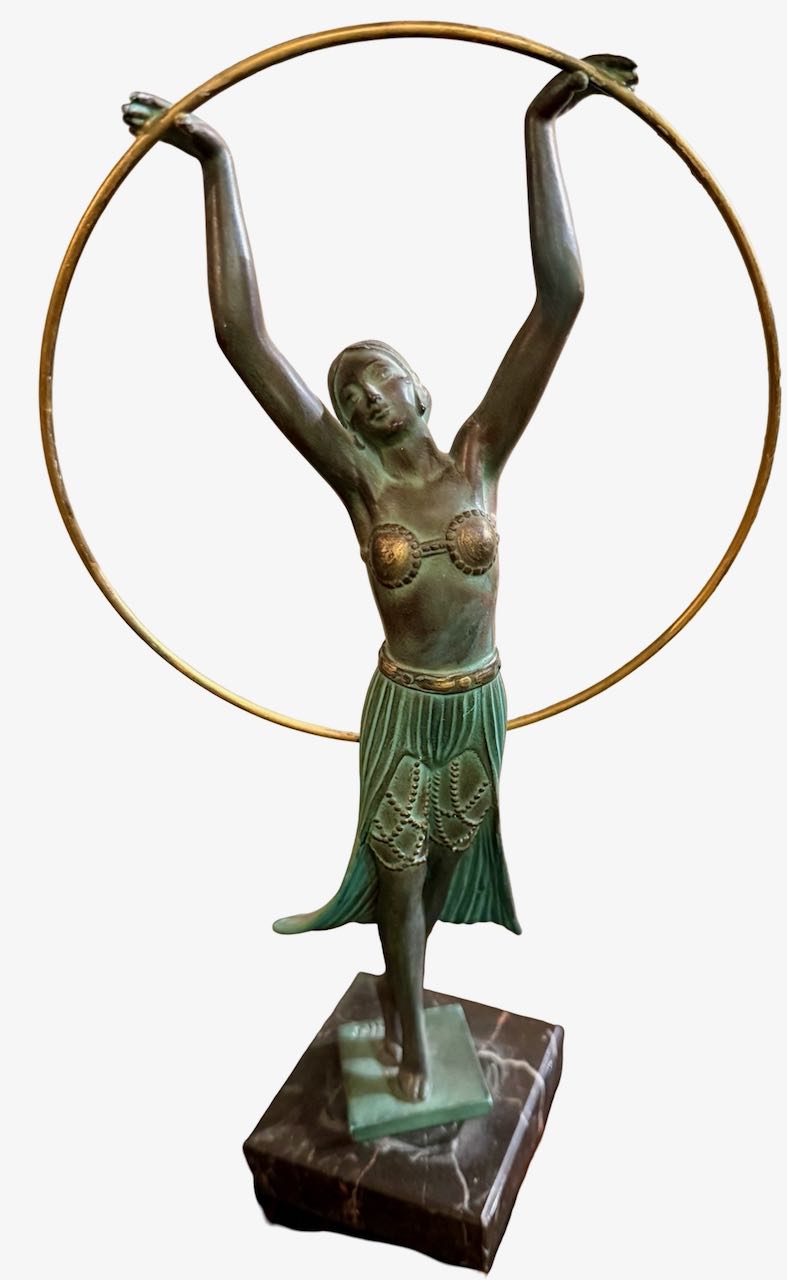
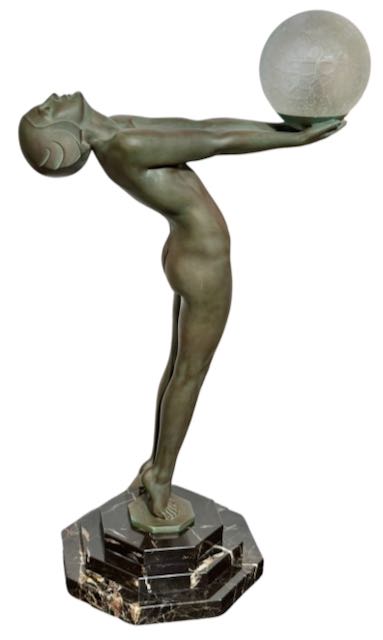
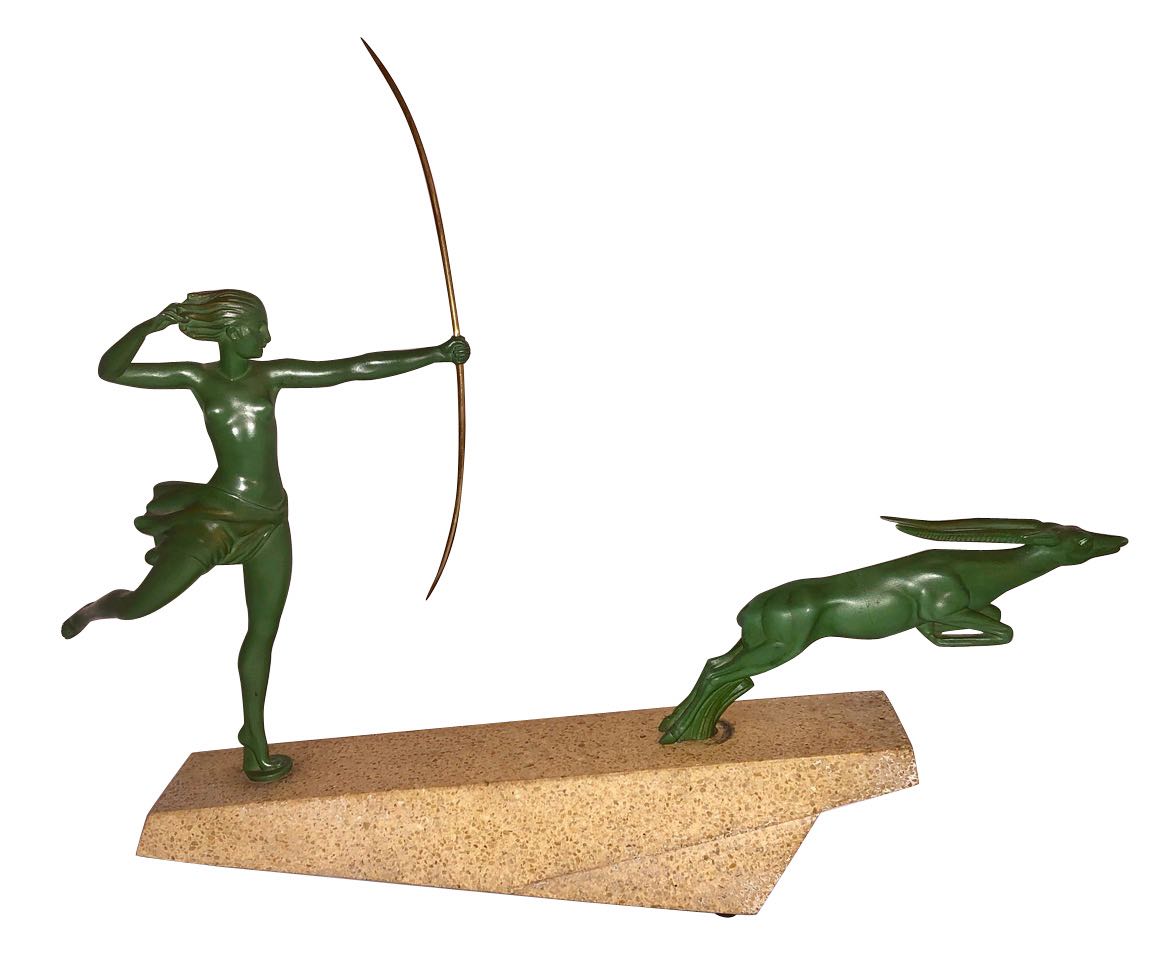
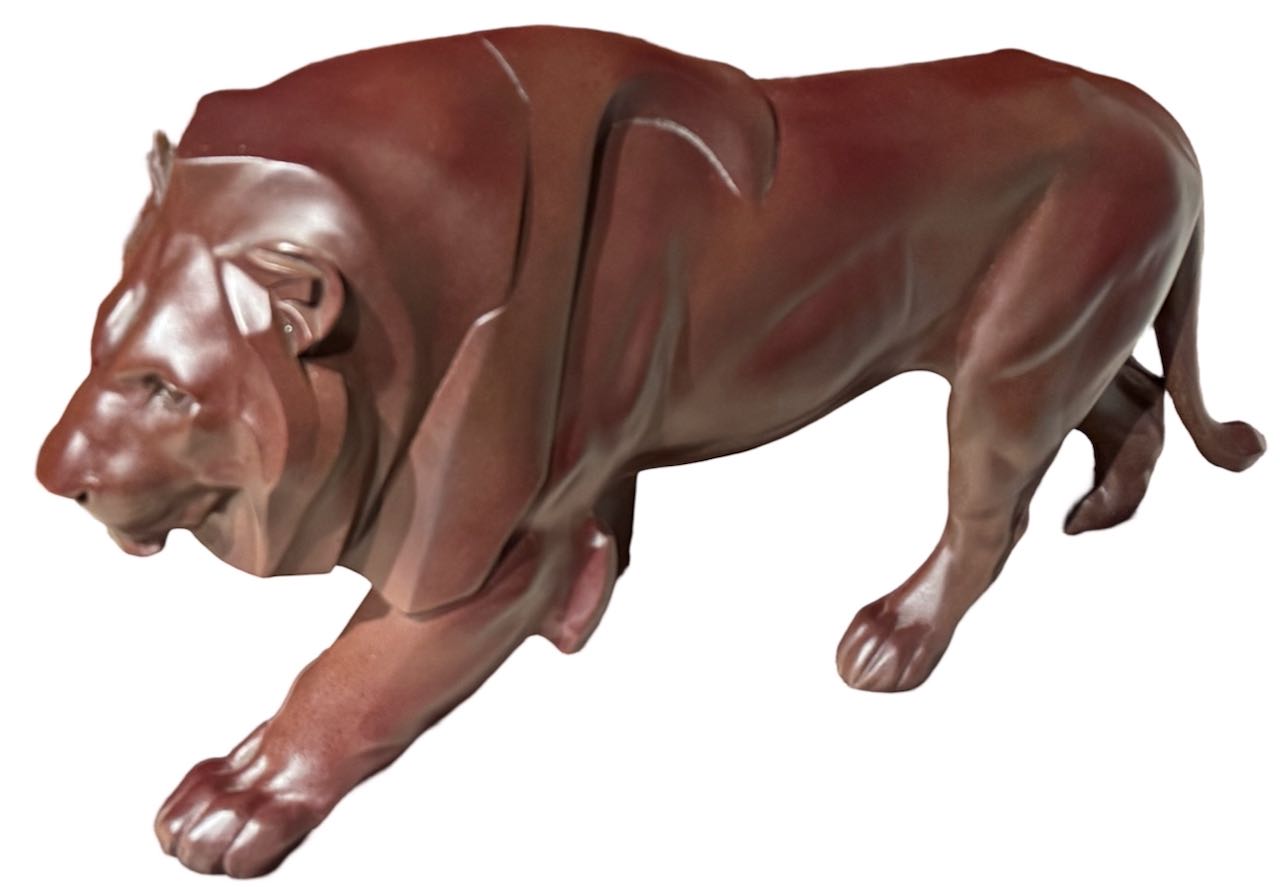
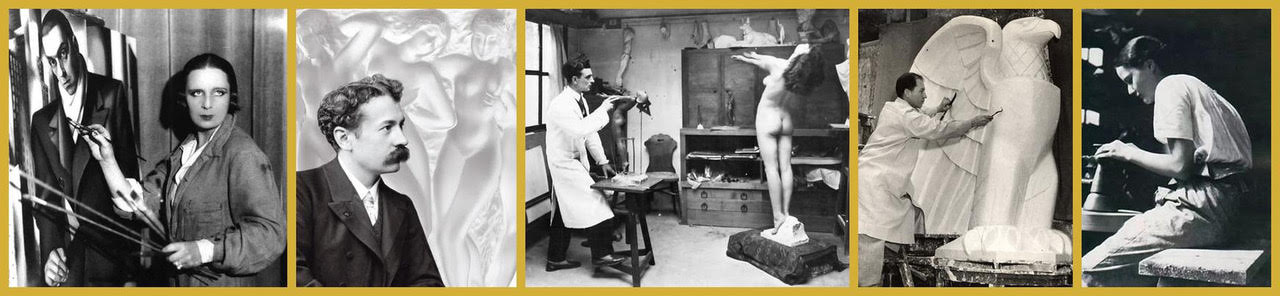
Max Le Verrier was one of the defining sculptors of the French Art Deco era, known for his sleek athletic figures, crisp geometry, and signature green patinas. Born in 1891 in Neuilly-sur-Seine to a Belgian mother and a Parisian goldsmith father, he developed an early interest in drawing and modeling despite being pushed toward agricultural training. As a young man, he worked odd jobs, spent time in England, and eventually served as a pilot in World War I, an experience that sharpened his sense of discipline and form. After the war, he studied sculpture at the École des Beaux Arts in Geneva, where he met lifelong collaborators Pierre Le Faguays and Marcel Bouraine. He returned to Paris in 1919 and quickly immersed himself in the city’s artistic revival, producing his first successful pieces and gaining recognition for his precise modeling. His debut at the 1925 Exposition Internationale des Arts Décoratifs earned him a gold medal and positioned him among the rising voices of modern French sculpture. By 1926 he had opened his own foundry, which became known for its exceptional quality and for casting work for many leading sculptors of the period. Through the 1920s and 1930s he refined a personal vocabulary of stylized human and animal forms that made his name synonymous with Art Deco sculpture.
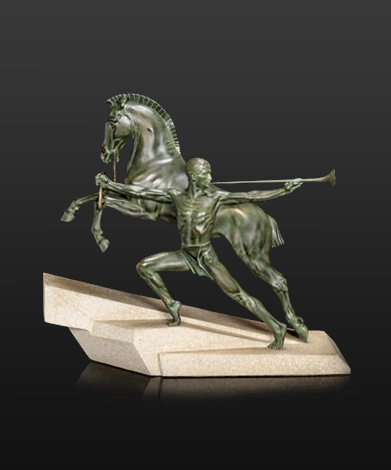
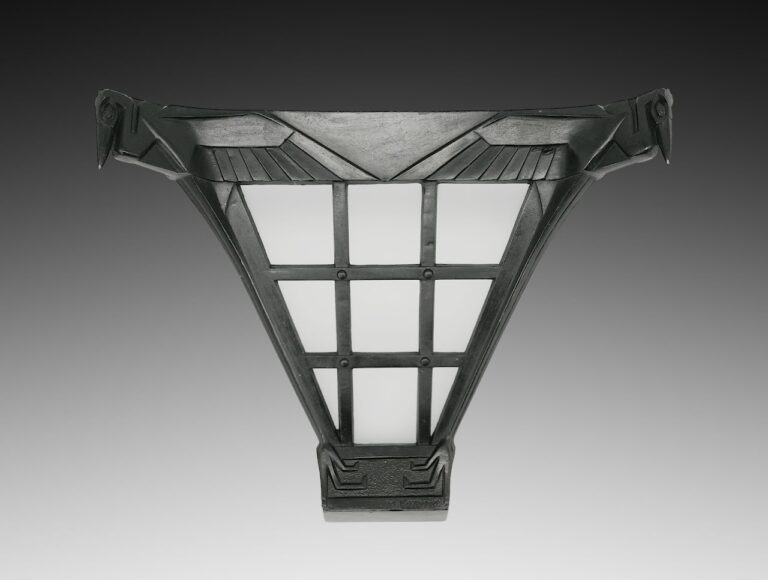

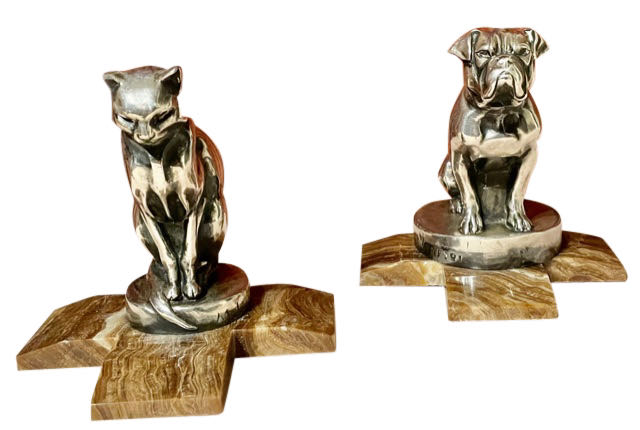
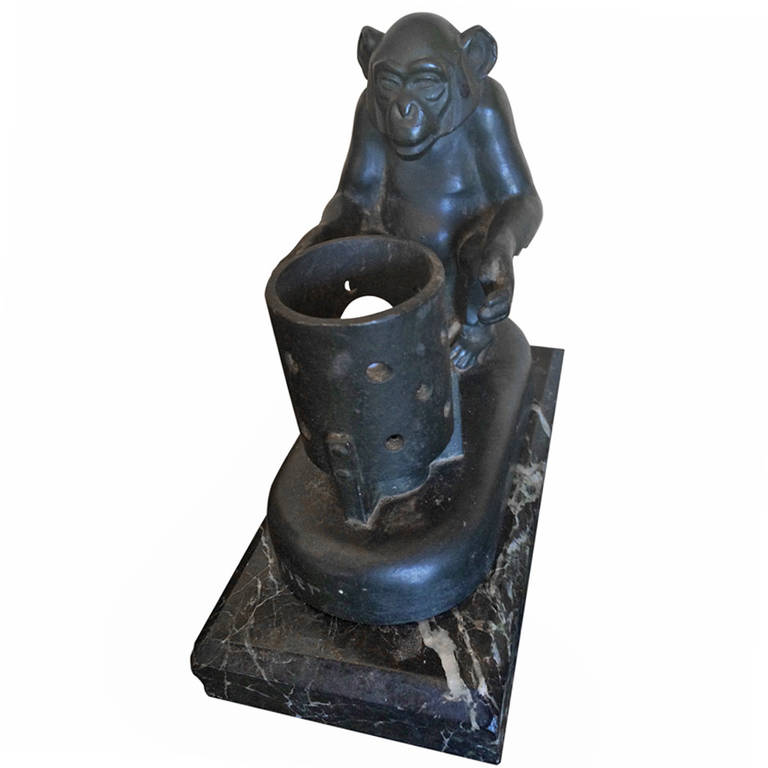
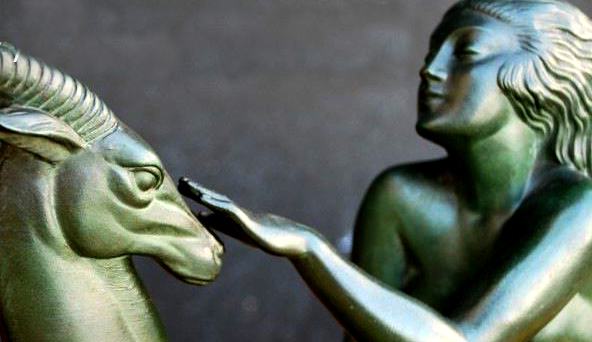
Le Verrier’s foundry became an essential hub of Parisian design culture, producing lamps, bookends, desk sets, and sculptural objects that blended fine craftsmanship with modern flair. His female figures, often shown in athletic poses with taut lines and controlled movement, captured the era’s fascination with idealized physicality and elegant precision. He preferred his own proprietary metal alloys over traditional bronze, believing they allowed sharper detail and more expressive patinas, especially the vivid green finish now closely associated with his work. He continued to cast for artists such as Le Faguays and Bouraine, reinforcing his central role in shaping the visual identity of French Art Deco. During World War II he used his studio as a covert site for Resistance activity, was arrested in 1944, and returned to work only after the liberation of Paris. He reopened his workshop after the war and resumed sculpting, remaining active until his death in 1973. His studio at rue Deparcieux became a landmark of modern decorative arts, and his objects were widely collected in Europe and America. Today his legacy endures through museum collections and through Maison Max Le Verrier, which continues to produce authorized editions of his most iconic works.
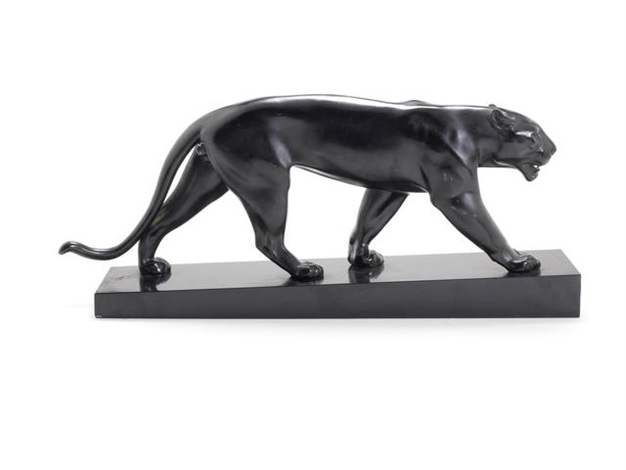
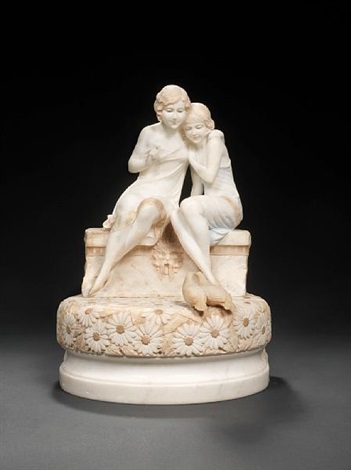
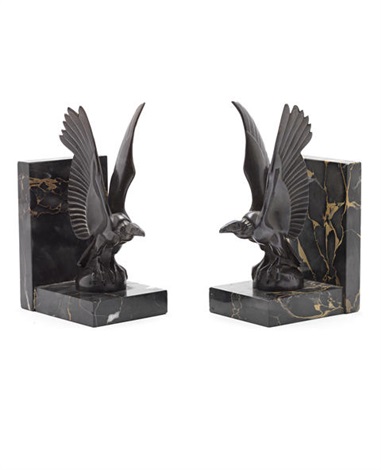
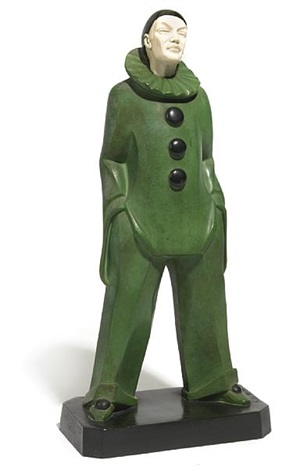
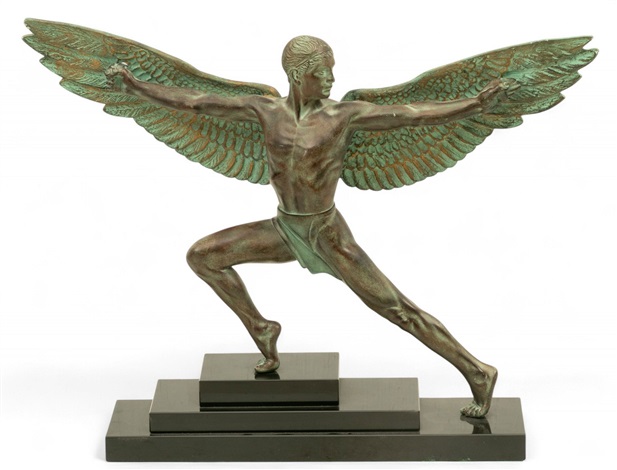
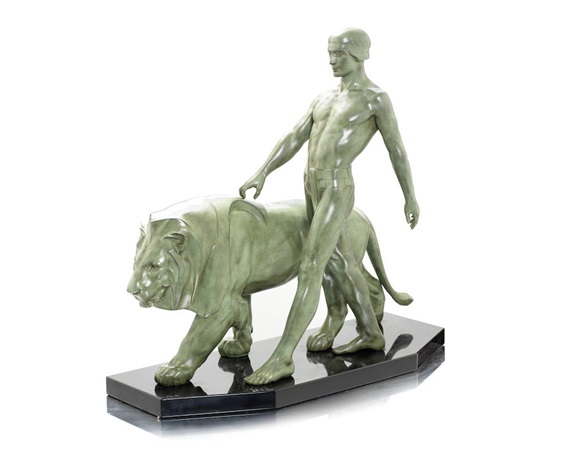
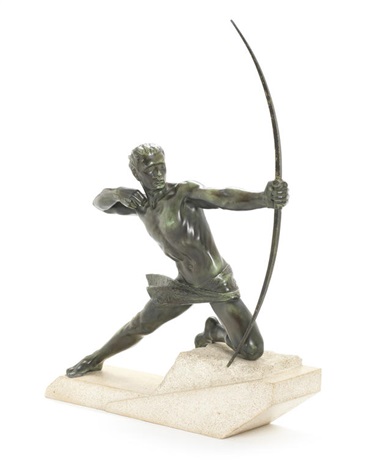
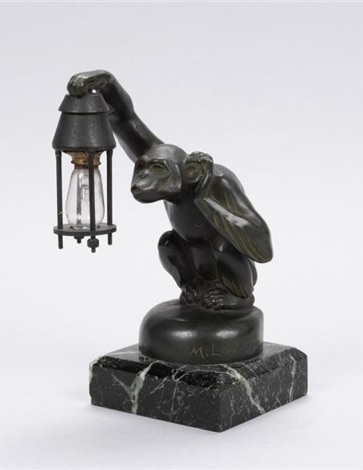
Le Verriers style is defined by streamlined anatomy, crisp contours, and a balance between stylization and realism. His figures often convey a sense of movement frozen at its most elegant point, emphasizing symmetry and athletic grace. He favored strong silhouettes, geometric bases, and dramatic contrasts created through polished surfaces and richly colored patinas. The famous green patina became a hallmark of his workshop, giving his pieces a vivid and unmistakable presence. His work embodies the glamour, discipline, and modern confidence central to the Art Deco aesthetic.
Key Influences
Art Deco Sculpture: Helped define the visual language of French Art Deco through stylized human and animal forms.
Modern Craft Workshops: Advanced casting quality as the head of a major Parisian foundry used by leading sculptors.
Material Experimentation: Developed proprietary alloys and patinas that expanded the expressive range of decorative sculpture.
International Exhibitions: Rose to prominence after winning a gold medal at the 1925 Exposition Internationale des Arts Decoratifs.
Artistic Collaboration: Worked closely with sculptors like Pierre Le Faguays and Marcel Bouraine, shaping a unified modern style.
If you are interested in further stories of the artists who shaped Art Deco, return to our artists page to browse the full directory.
Related Products from ArtDecoCollection.com