
Streamline Moderne, Design in Motion
How the Curves, Chrome, and Future-Facing Design of the 1930s Gave Modern Living Its Fastest and Most Confident Voice
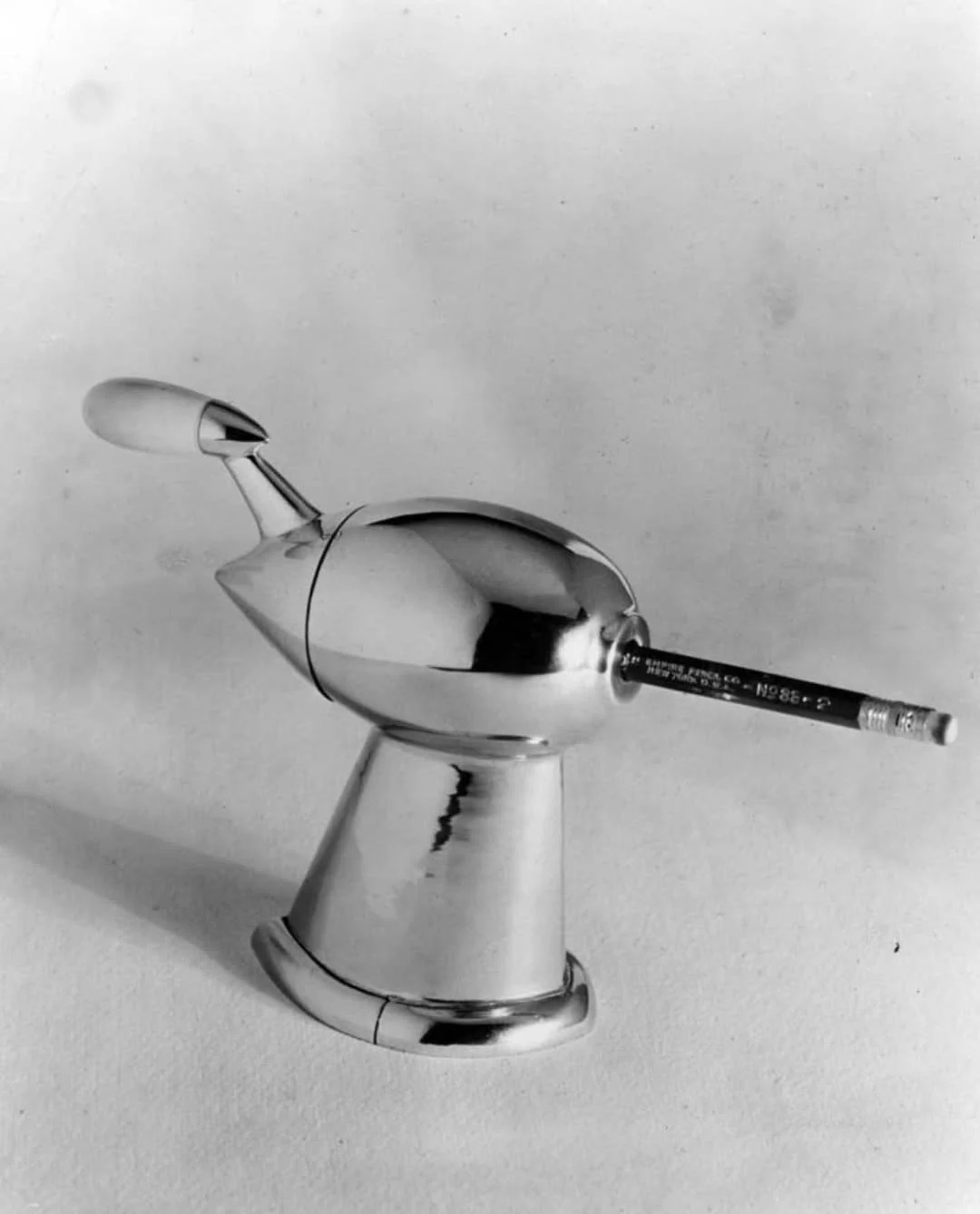
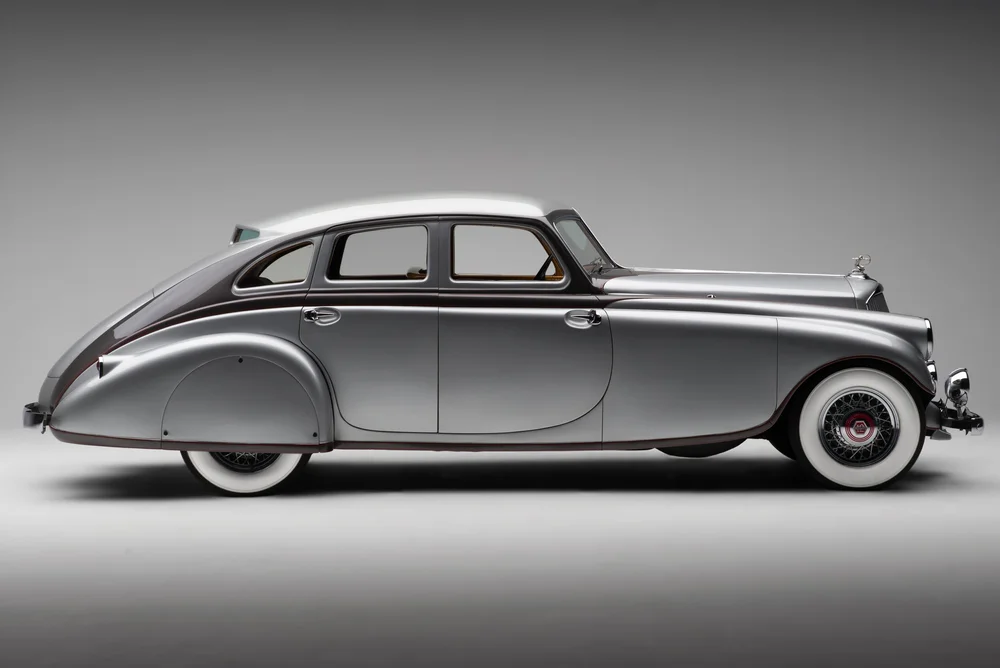
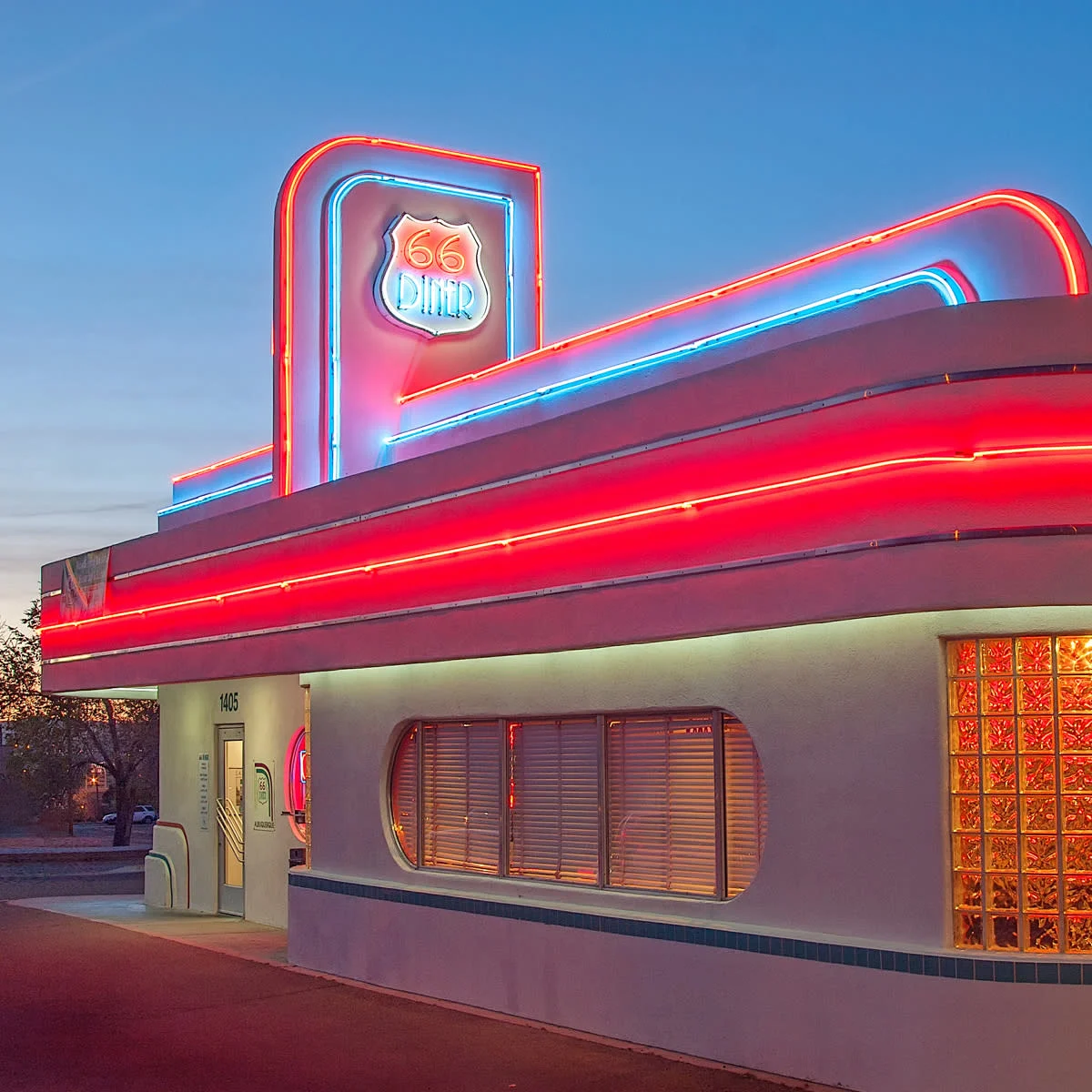


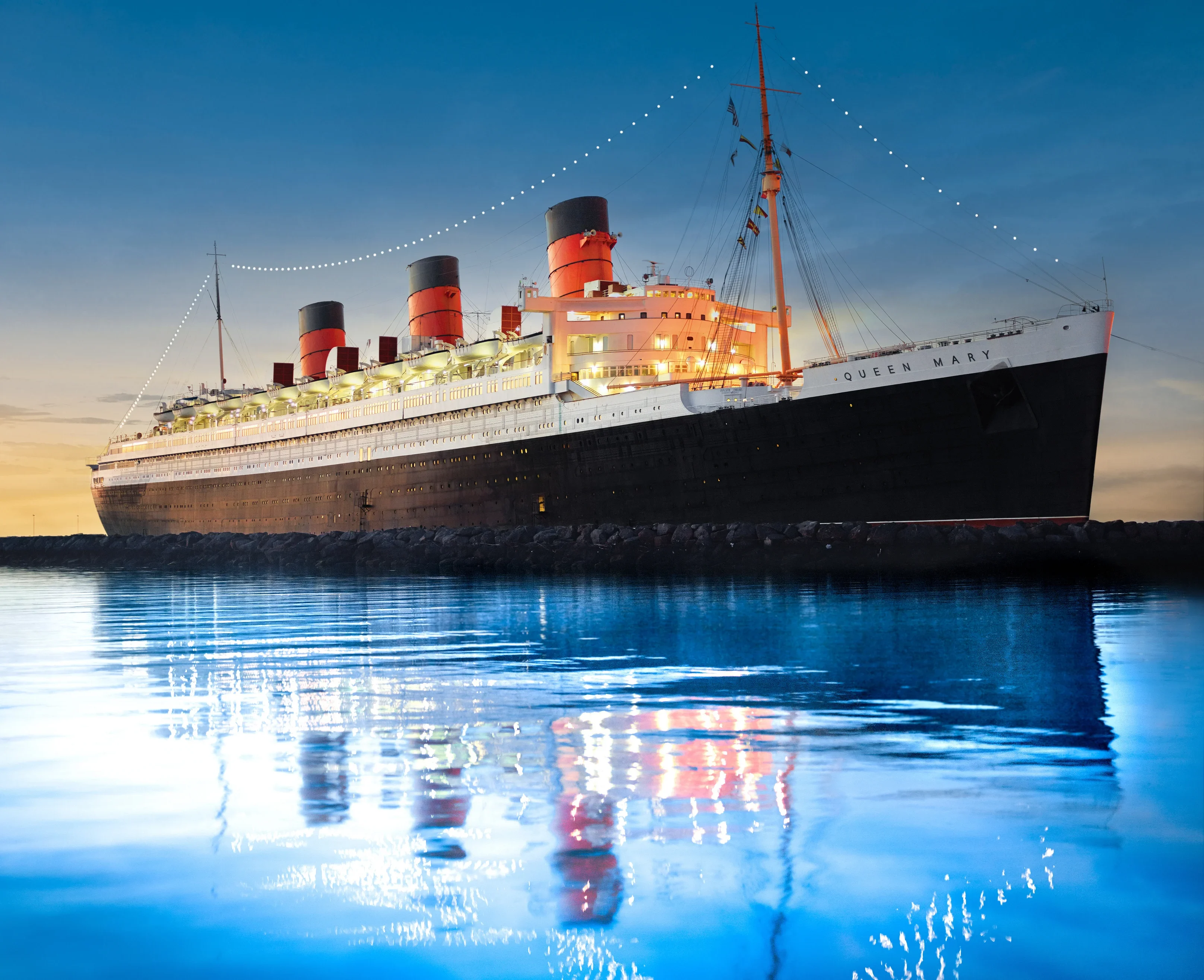
Top: Left: Raymond Loewy chrome pencil sharpener prototype, 1933, Middle: Pierce Silver Arrow by Phillip Wright, 1933, Right: The 66 Diner, Albuquerque, originally a 1947 service station. Bottom: Left: New York Central Mercury locomotive by Henry Dreyfuss, 1936, Middle: Marlin Hotel, Miami Beach, by L. Murray Dixon, 1939, Right: RMS Queen Mary, launched 1934
The style emerged out of a very specific moment in American life, one shaped by the Great Depression, the rise of commercial aviation, and a public that needed something to believe in. By the early 1930s, the country was hungry for images of progress and renewal, and designers responded by looking to the engineered forms that were beginning to define the age. Norman Bel Geddes published Horizons in 1932, a widely read manifesto that argued streamlined form was both the future of design and a moral commitment to efficiency, and the book helped move the idea out of the engineering laboratories and into the public imagination. The Chicago World’s Fair of 1933, billed as A Century of Progress, introduced millions of visitors to streamlined trains, aerodynamic cars, and buildings that suggested a world on the verge of something better. Six years later the New York World’s Fair carried that vision further, presenting an entire streamlined future through its Futurama exhibit and the sculptural monuments of the Trylon and Perisphere. Streamline Moderne was never only about style. It was a public language for optimism, a way of saying that the machine age could produce beauty, dignity, and confidence alongside efficiency. That larger promise is part of what gave the look its staying power long after the fairs closed.
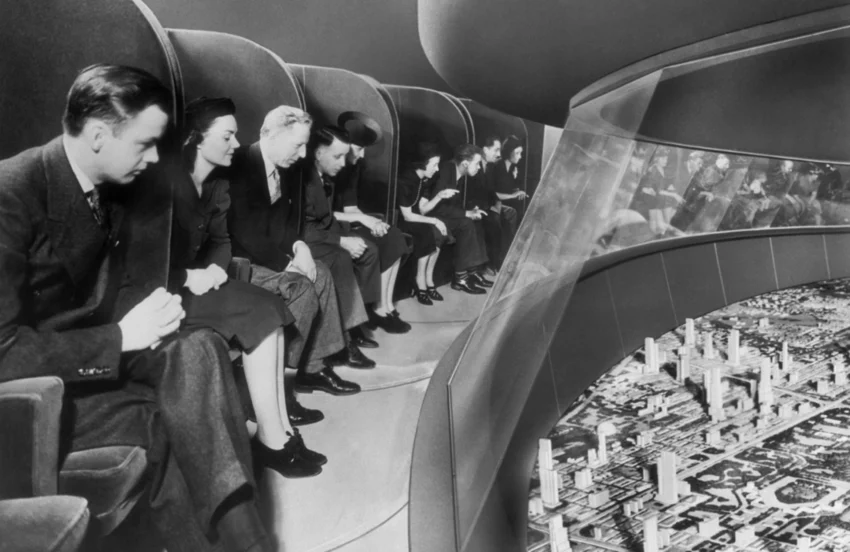


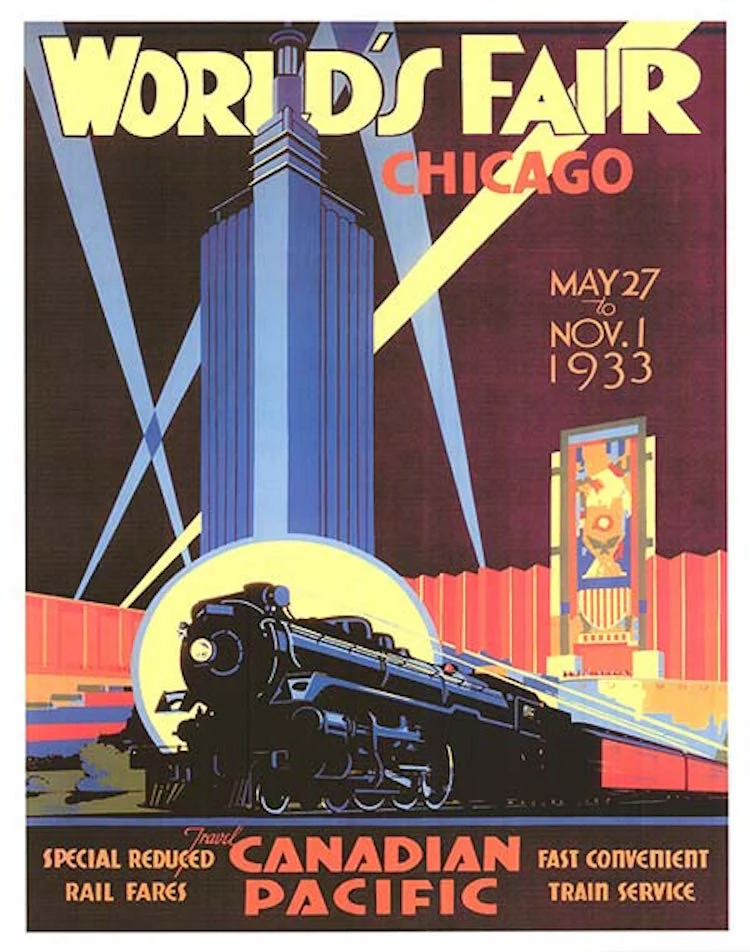
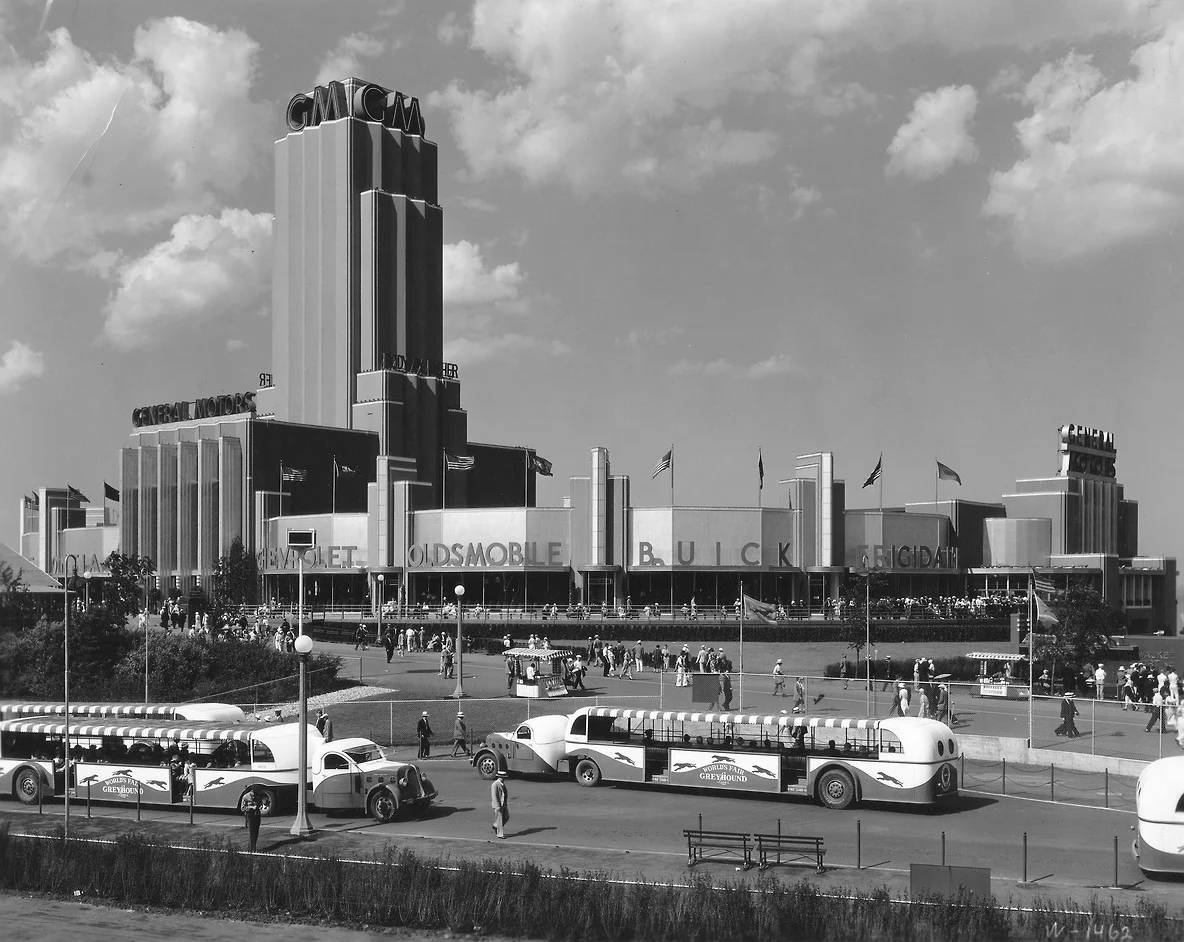
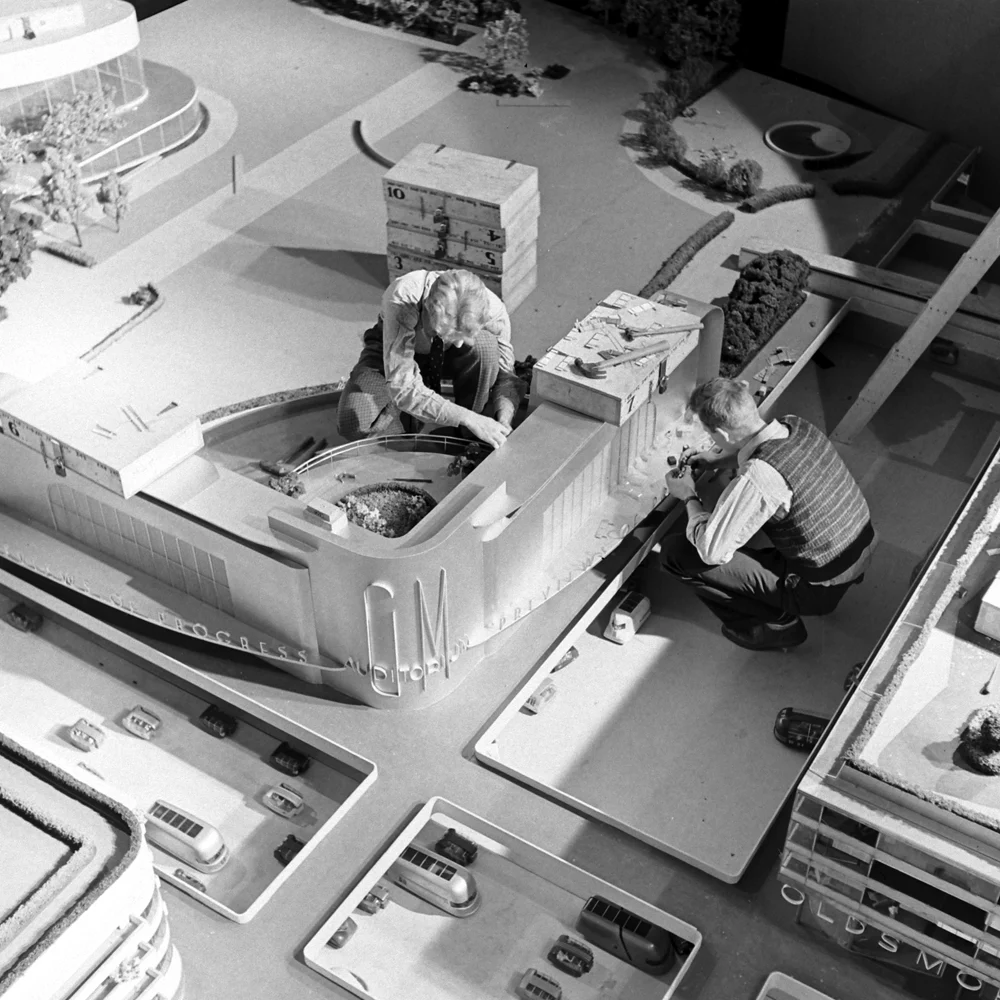
Top: Left: Norman Bel Geddes’ “Futurama” exhibit for General Motors, 1939 New York World’s Fair, Middle: Trylon and Perisphere by Harrison & Fouilhoux, 1939 New York World’s Fair, Right: “The World of Tomorrow” poster by Joseph Binder, 1939. Bottom: Left: “A Century of Progress” Chicago World’s Fair poster, 1933, Middle: General Motors Building by Albert Kahn, 1933 Chicago World’s Fair, Right: Model makers detailing the “Futurama” city for Norman Bel Geddes, 1939
The visual vocabulary is immediately recognizable. Horizontal speed lines, rounded corners, teardrop silhouettes, polished chrome trim, glass block, porthole windows, and smooth, uninterrupted surfaces all work together to suggest motion even in objects that never move. Ornament was pared back to essentials, and the curves did the decorative work that geometry and carved relief had done in earlier expressions of modern design. Color also shifted toward the materials themselves, with gleaming metals, milky whites, deep maritime blues, and warm woods doing the work that bolder palettes had done elsewhere in the period. This was a visual shift rather than a philosophical one. The discipline, the confidence in modern materials, and the appetite for bold composition that defined the period’s decorative arts were all still present, simply redirected toward continuous curves and reflective surfaces. Streamline Moderne and the more angular strains of modern design frequently appeared side by side, in the same room or even on the same object, because they were answering the same cultural question in their own way.
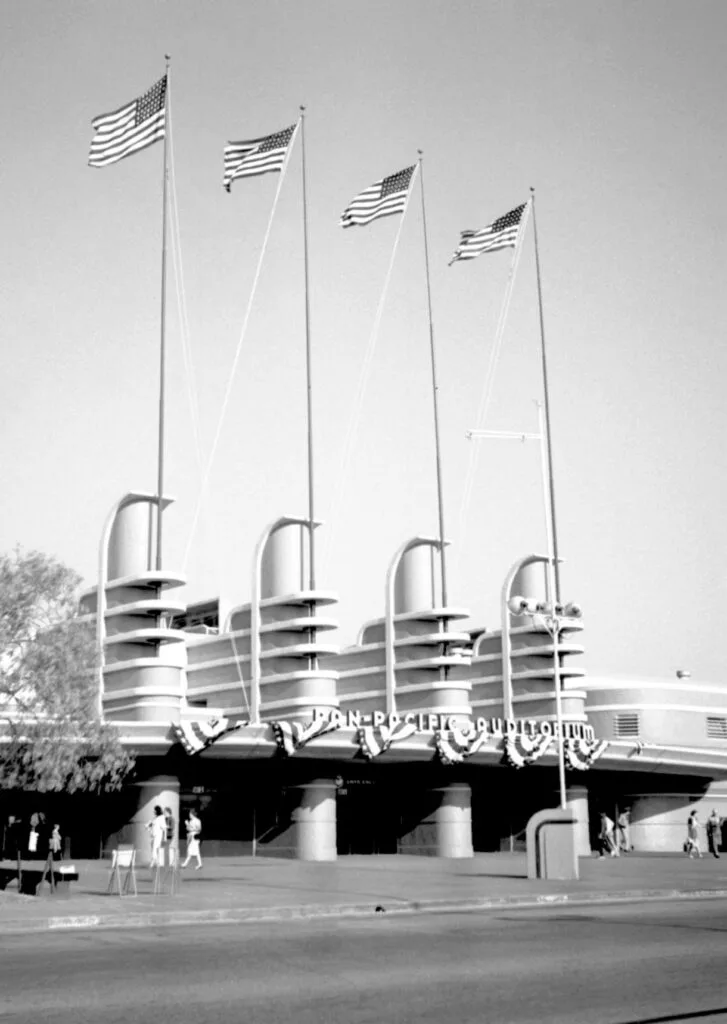
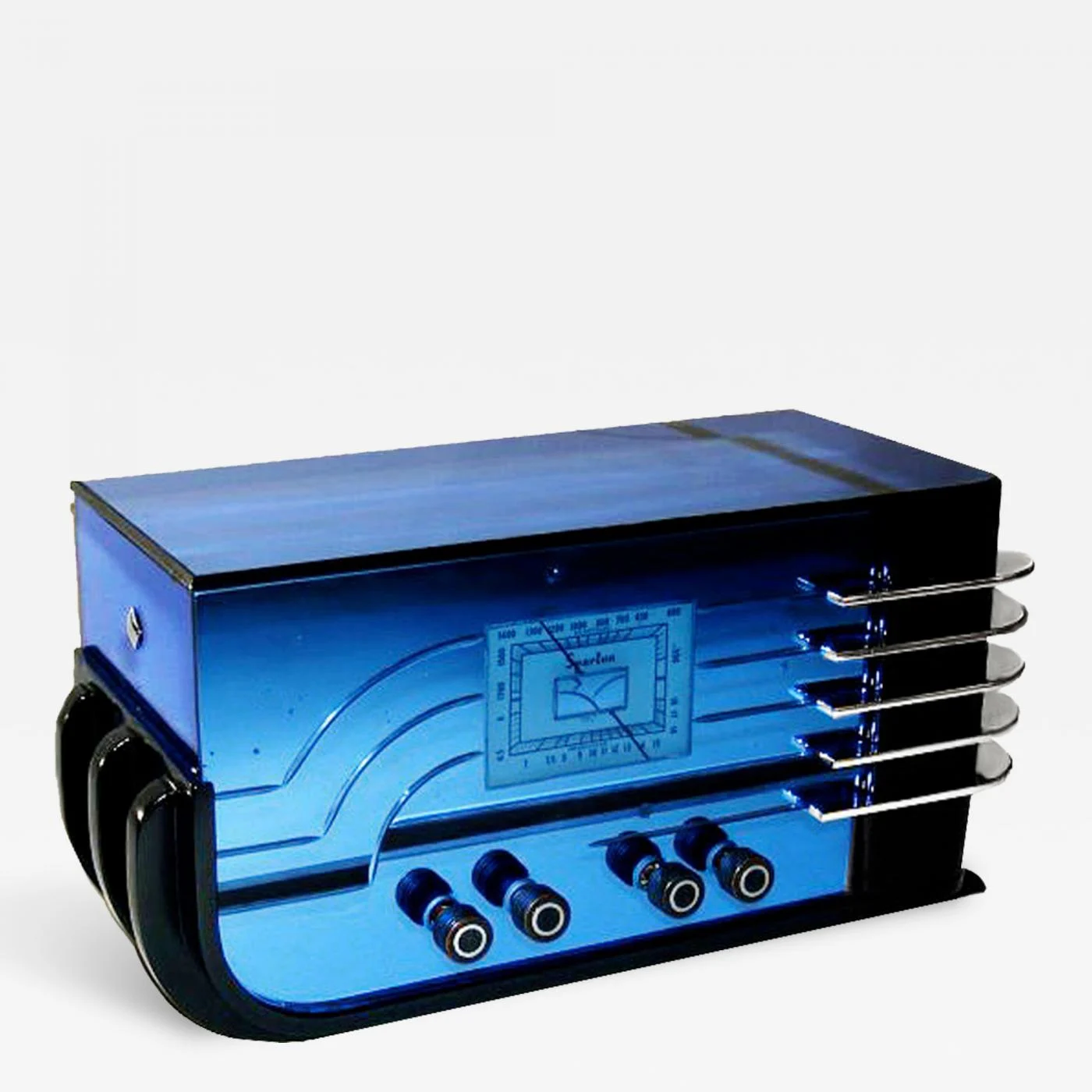
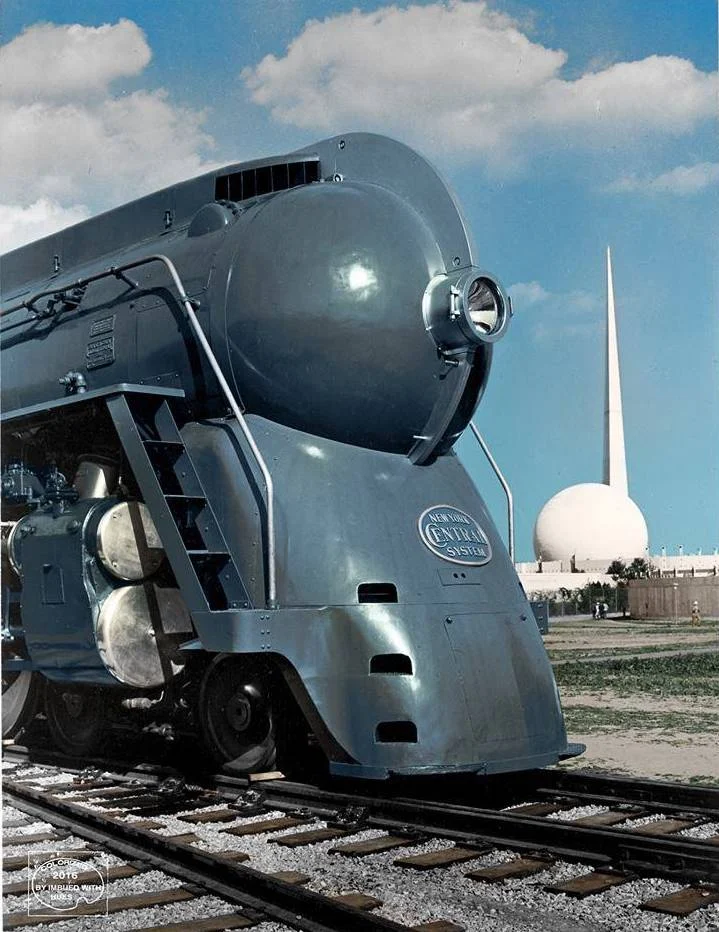
Left: Pan-Pacific Auditorium, Los Angeles, by Wurdeman and Becket, 1935, Middle: Sparton “Bluebird” radio by Walter Dorwin Teague, 1936, Right: New York Central “Super Hudson” locomotive by Henry Dreyfuss, 1938
No style in American history owed more to the professional rise of industrial design, and Streamline Moderne was in many ways the shared language of the first generation to practice it. Raymond Loewy, born in France and later associated with everything from the Pennsylvania Railroad’s locomotives to the Coldspot refrigerator and the Studebaker Avanti, brought an almost theatrical instinct to streamlined form, and his memoir Never Leave Well Enough Alone would later become a foundational text in the field. Norman Bel Geddes, a theater designer who moved into industrial work, produced the Patriot radio and the visionary Futurama exhibit and argued that streamlining should shape not only objects but entire cities. Henry Dreyfuss designed the interiors of the 20th Century Limited and the Western Electric rotary telephone that would sit on American desks for half a century, and he later codified his approach in the influential Designing for People. Walter Dorwin Teague gave Kodak its most iconic cameras and helped Texaco rebrand its service stations into a recognizable modern chain. Donald Deskey, already known for the interiors of Radio City Music Hall, moved fluidly between sharp geometry and streamlined forms, a reminder of how closely the two vocabularies worked together in the hands of the period’s leading designers. Together, these figures effectively invented the American industrial design profession, and Streamline Moderne was the visual language through which they introduced themselves to the public.

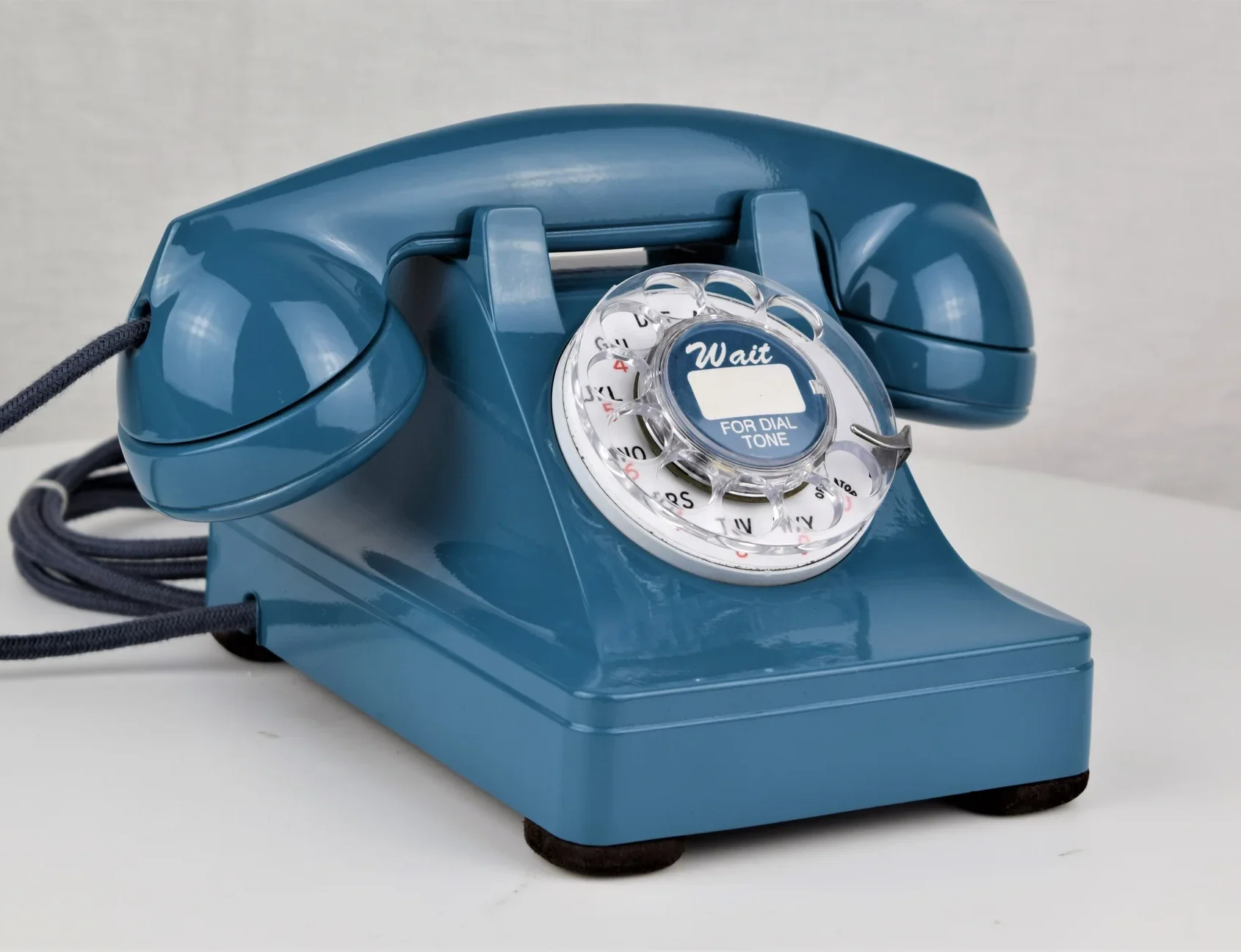

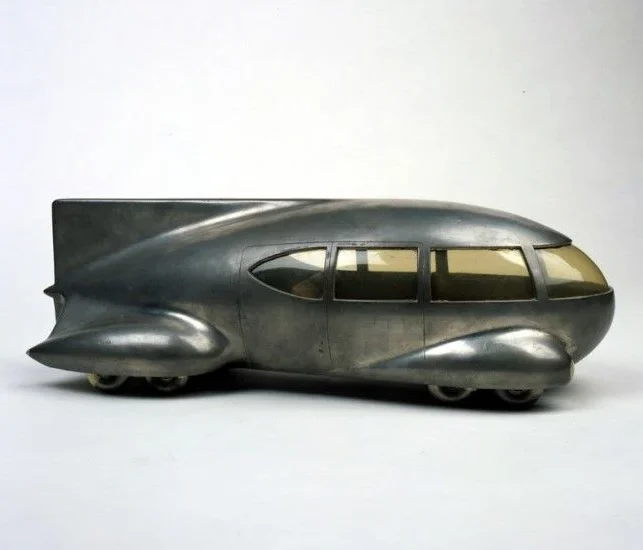
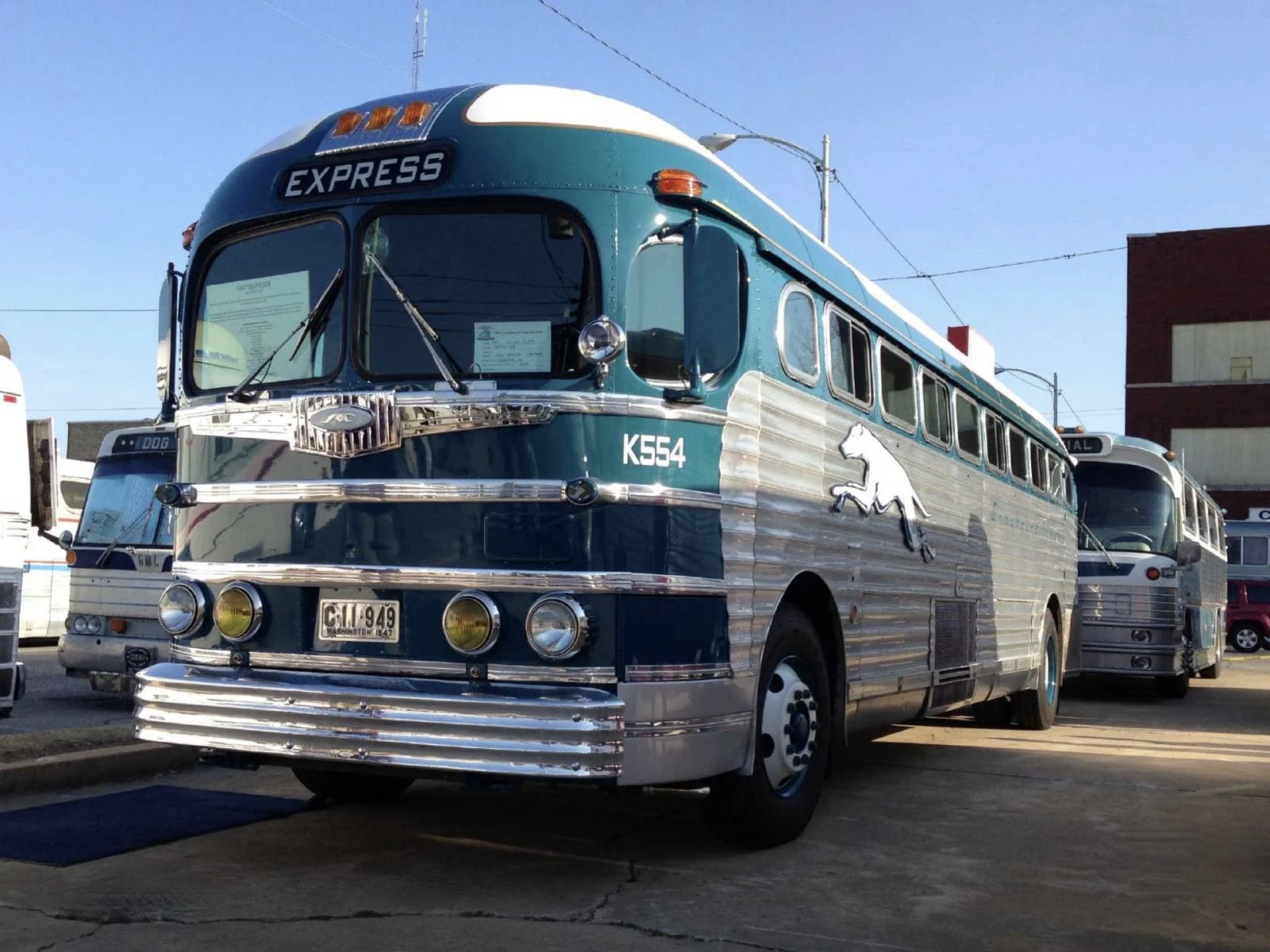
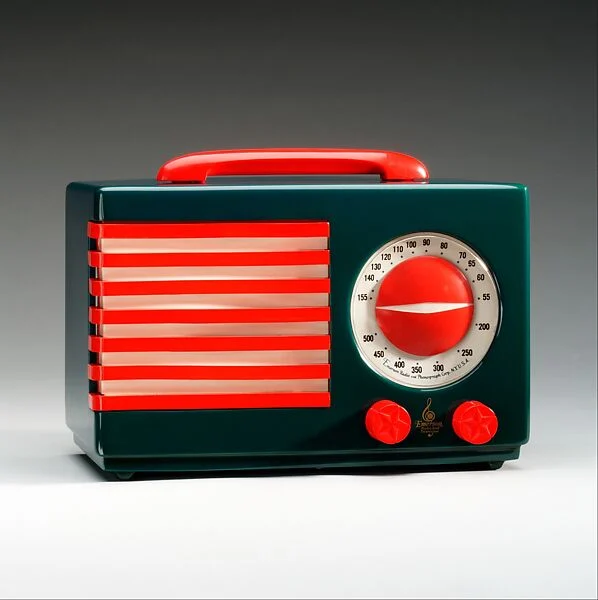
Top: Left: Kodak Bantam Special camera by Walter Dorwin Teague, 1936, Middle: Western Electric Model 302 telephone by Henry Dreyfuss, 1937, Right: “Air-Line” armchair by KEM Weber, 1934. Bottom: Left: “Motor Car No. 9” concept by Norman Bel Geddes, 1932, Middle: Greyhound Silversides bus by Raymond Loewy, 1940, Right: Patriot radio for Emerson by Norman Bel Geddes, 1940
Streamlining began as engineering before it became ornament. Aerodynamic research into reducing drag on aircraft and trains in the 1920s produced shapes that turned out to be beautiful as well as efficient, and designers were quick to recognize the opportunity. The Pioneer Zephyr of 1934, a stainless steel diesel train that ran from Denver to Chicago in just over thirteen hours on its record-setting inaugural dash, became a symbol of what modern rail travel could be, and the 20th Century Limited followed with an art-directed elegance that would have been unthinkable a decade earlier. Raymond Loewy answered with his own streamlined locomotives for the rival Pennsylvania Railroad, and the long, fluted faces of the GG1 and S1 became some of the most photographed images of American streamlining. The Chrysler Airflow, also introduced in 1934, was the first American car designed with wind tunnel testing in mind, and although it sold poorly, its influence on later automotive design was enormous. The Douglas DC-3, which first flew the following year, transformed commercial aviation almost overnight and gave the public a daily reminder that the streamlined future had already arrived. On the water, the SS Normandie and the Queen Mary brought streamlined form to an entirely different scale, their interiors as thoroughly modern as their hulls. Each of these vehicles became a kind of traveling advertisement for the style, and their imagery saturated the period’s design culture.
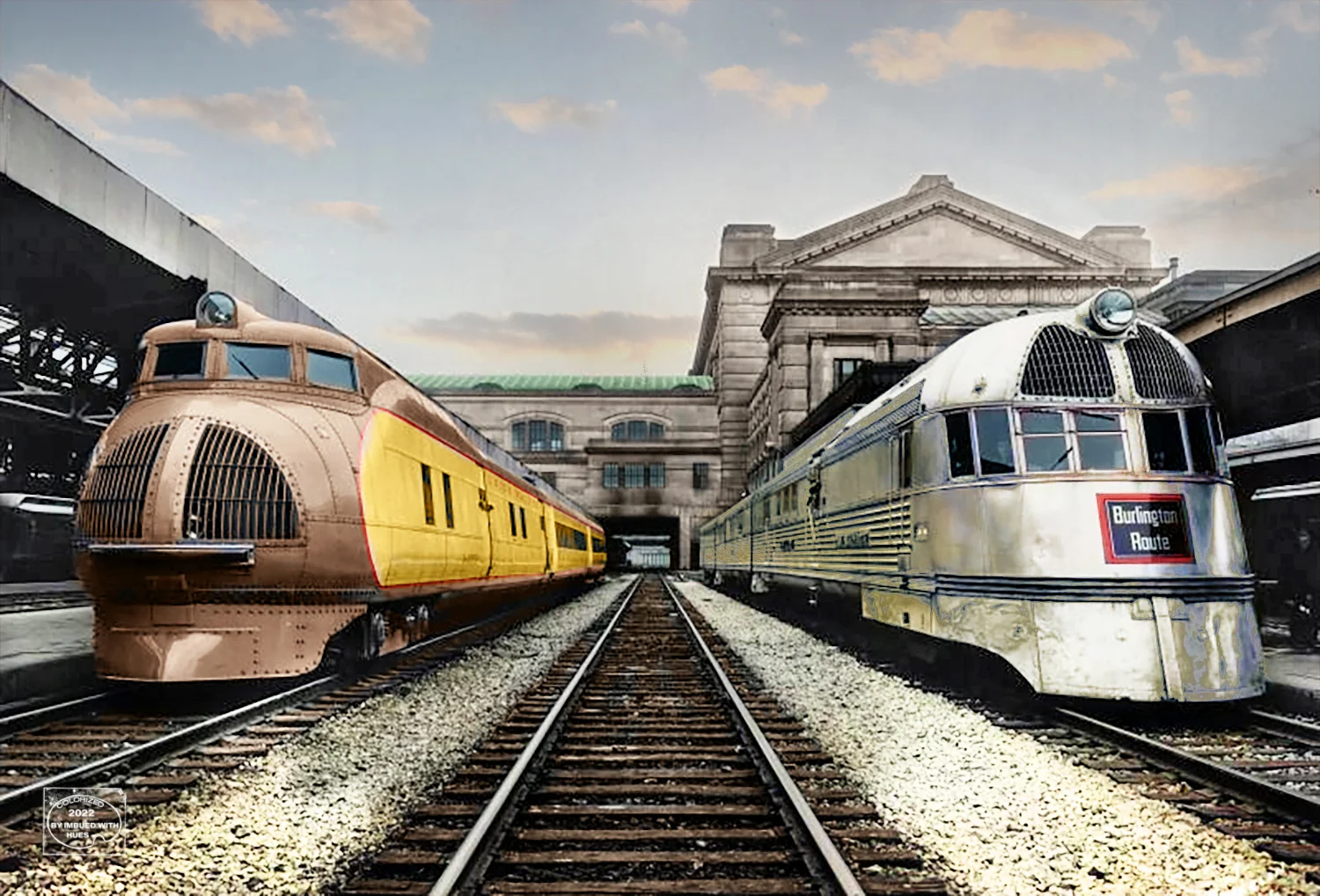
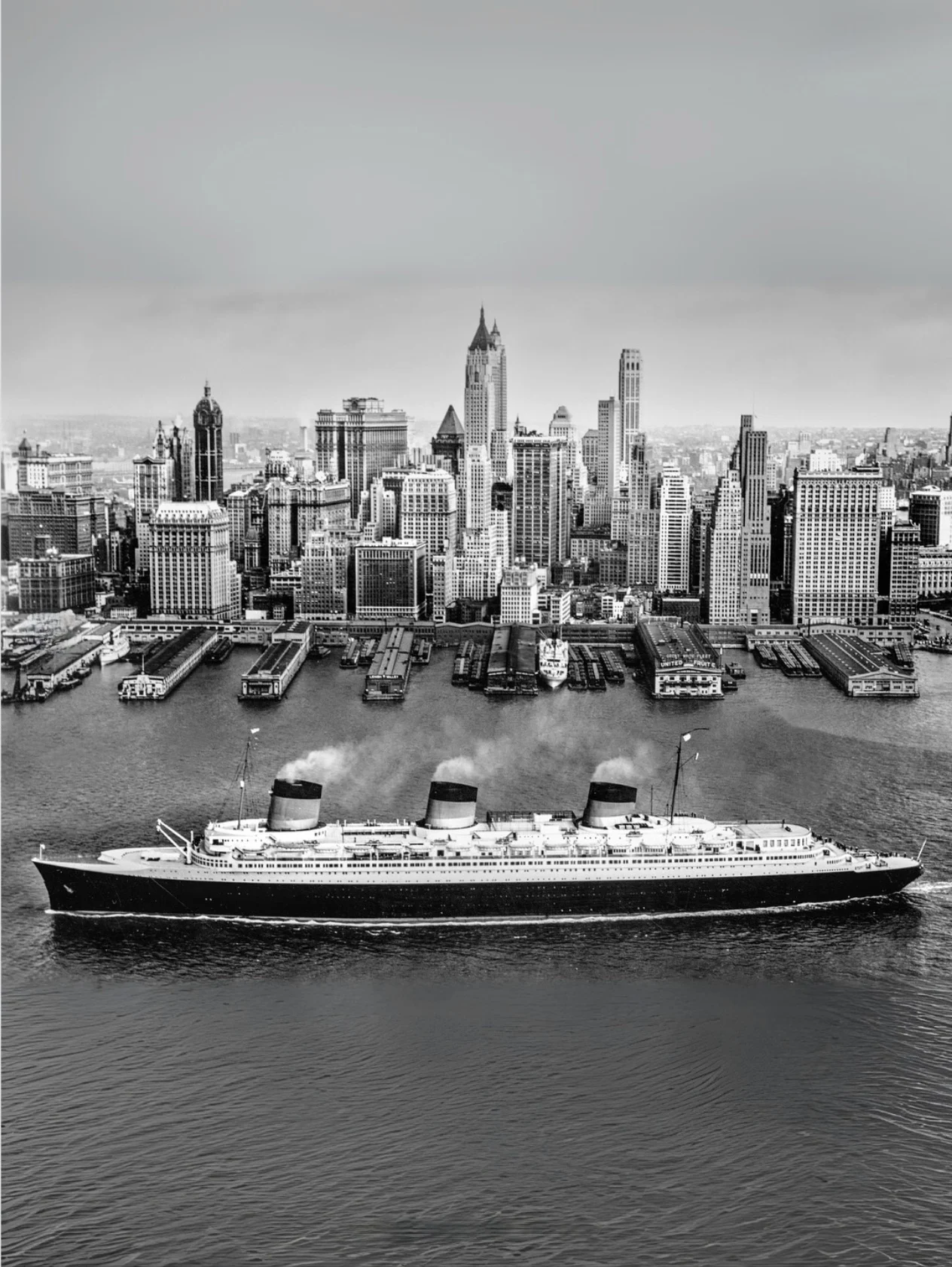
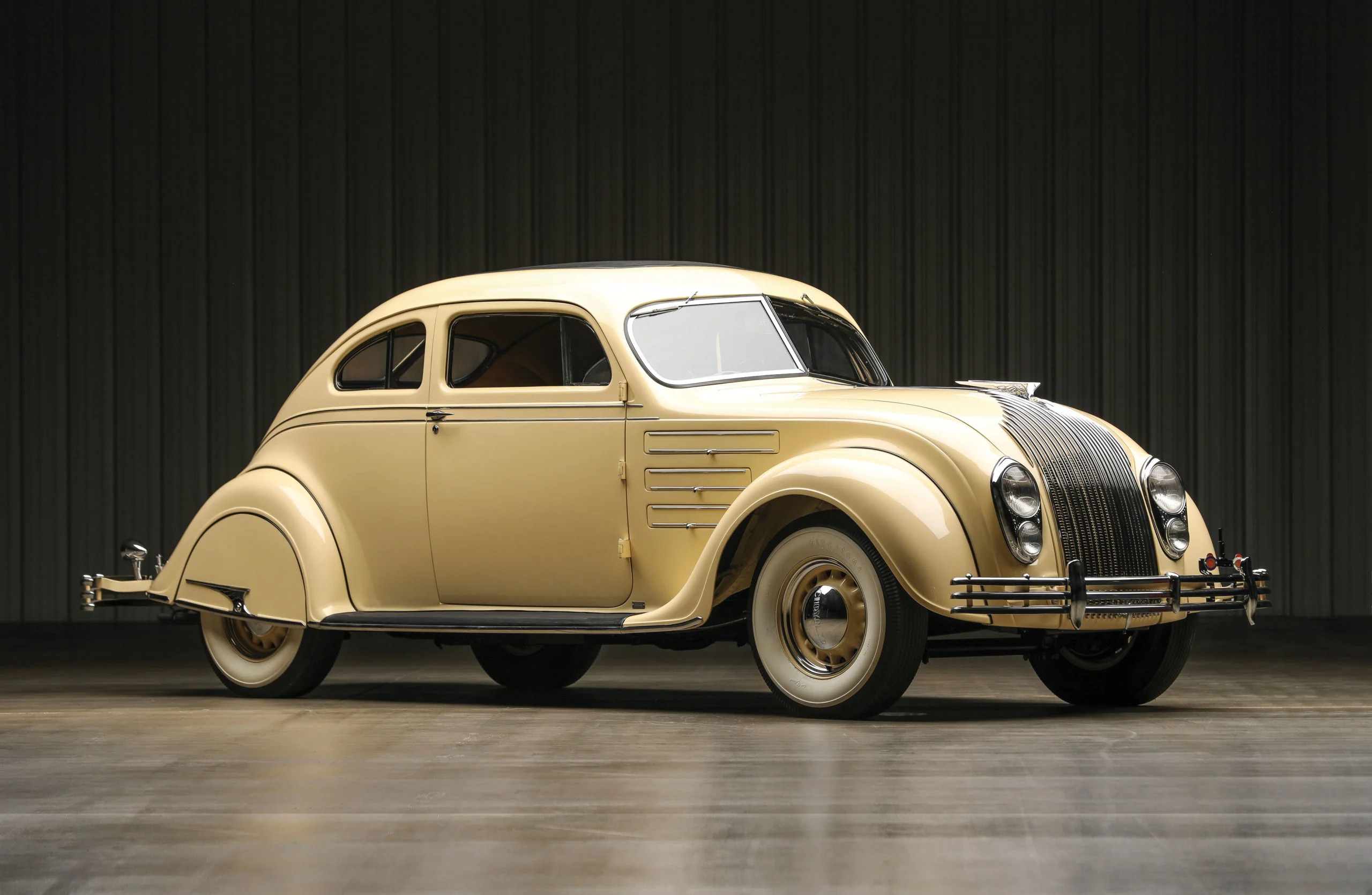

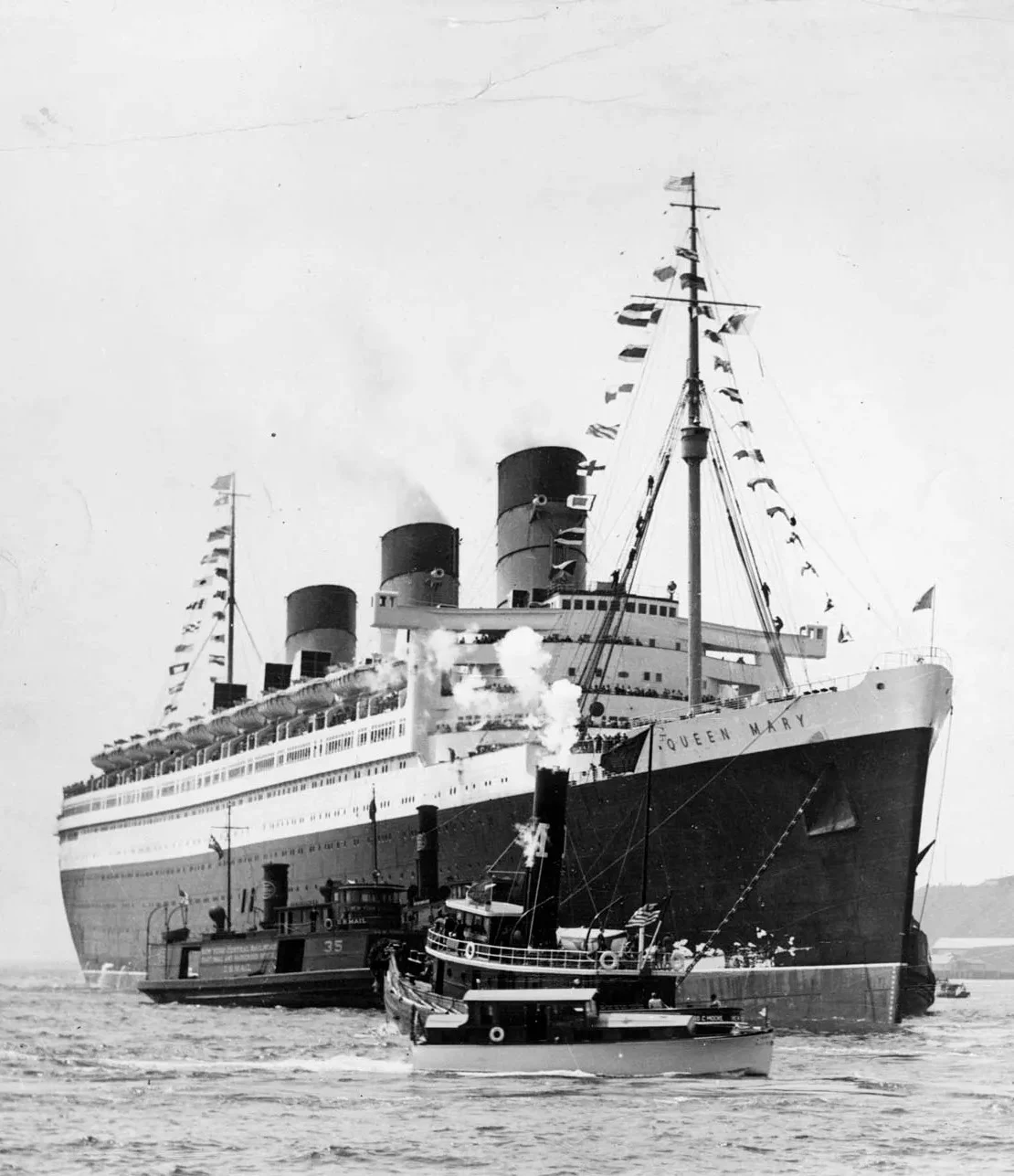
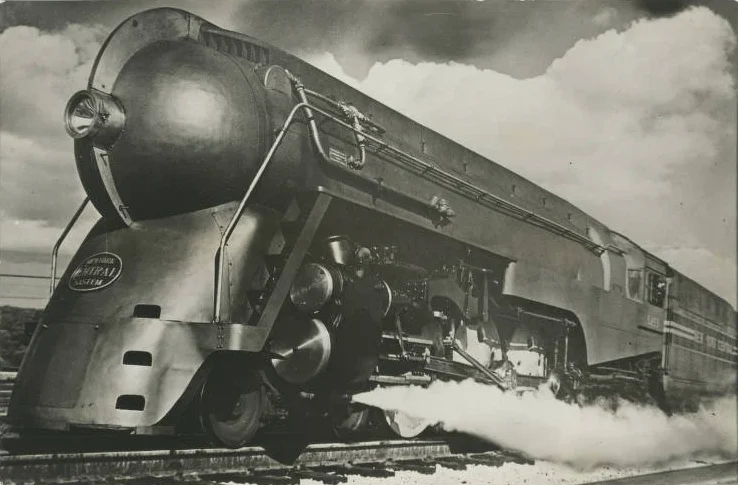
Top: Left: Union Pacific M-10000 and Burlington Pioneer Zephyr, 1934, Middle: RMS Queen Mary in New York Harbor, launched 1934, Right: Chrysler Airflow by Carl Breer, 1934. Bottom: Left: Douglas DC-3 by Arthur E. Raymond, 1935, Middle: RMS Queen Mary profile, 1930s, Right: New York Central “Super Hudson” locomotive by Henry Dreyfuss, 1938
Streamline Moderne gave the period an architecture for the roadside, the shoreline, and the corner of every American main street. Diners wrapped in stainless steel, theaters with curved marquees and neon trim, gas stations that looked like small streamlined pavilions, bus terminals, ice cream stands, and movie houses all carried the style into ordinary daily life. The Greyhound terminals designed by Thomas Lamb and W. S. Arrasmith standardized the look across an entire transit network, turning the simple act of boarding a bus into an encounter with modern design. Landmarks like the Pan-Pacific Auditorium in Los Angeles and the Coca-Cola Building in the same city demonstrated the style at its most confident, while the hotels of Miami Beach turned entire neighborhoods into an open-air display of curved balconies, horizontal banding, porthole windows, and glass block. Architecture in this mode was not monumental in the older sense. It was approachable, photogenic, and designed to look modern from a moving car. That accessibility is one of the reasons so many of these buildings still survive and are treasured today, and why the effort to preserve them has become a cultural movement of its own.
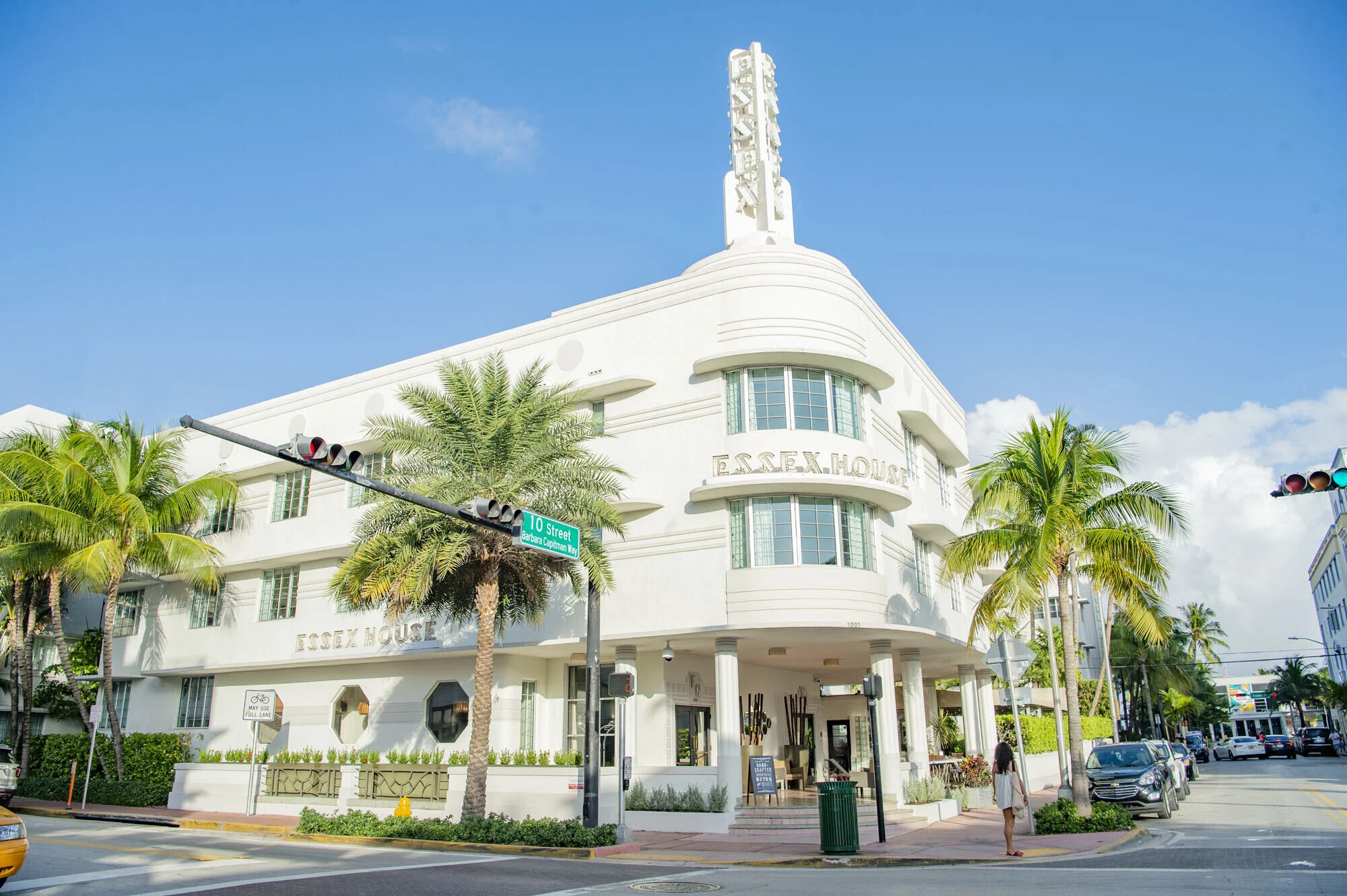
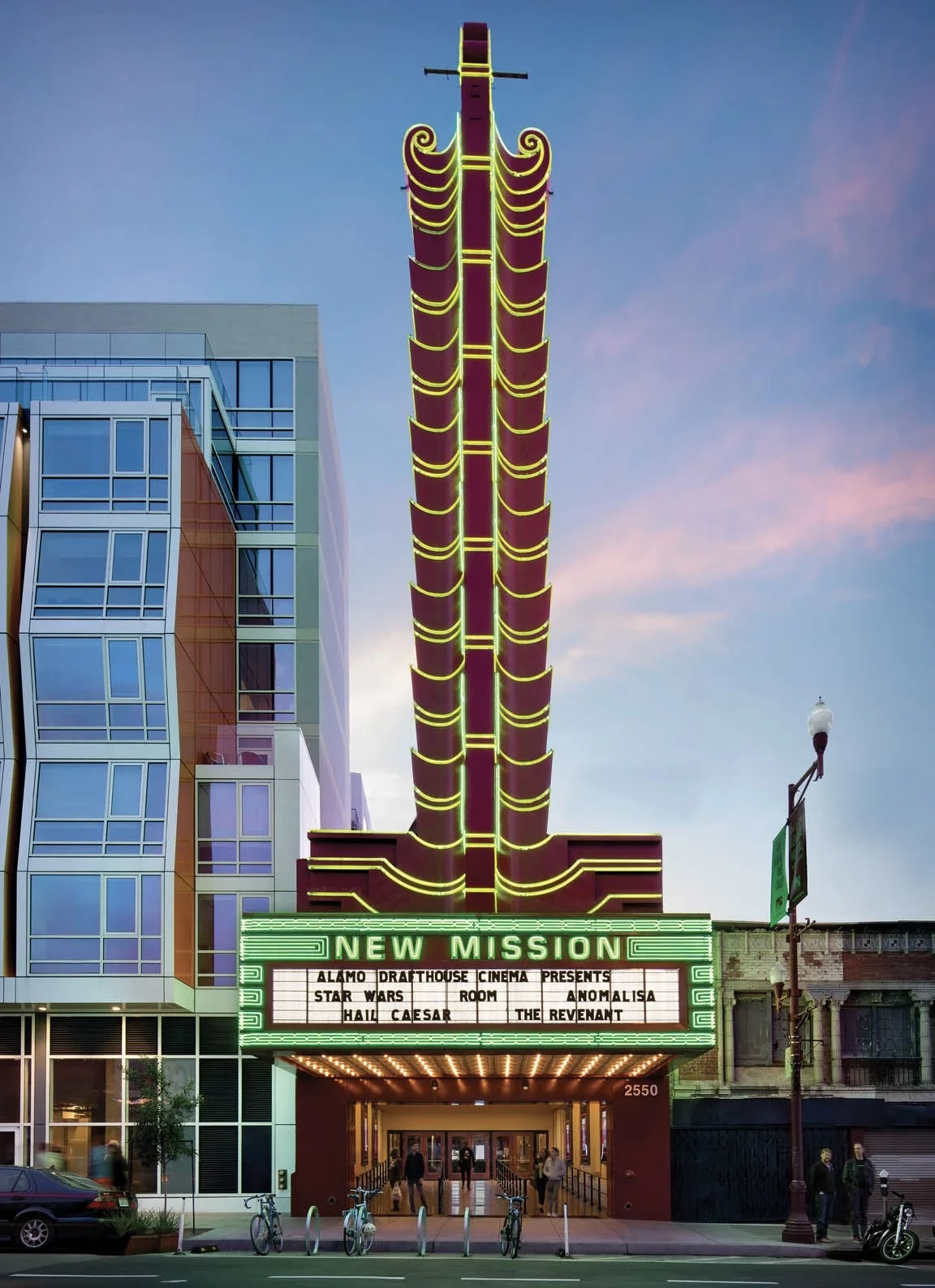
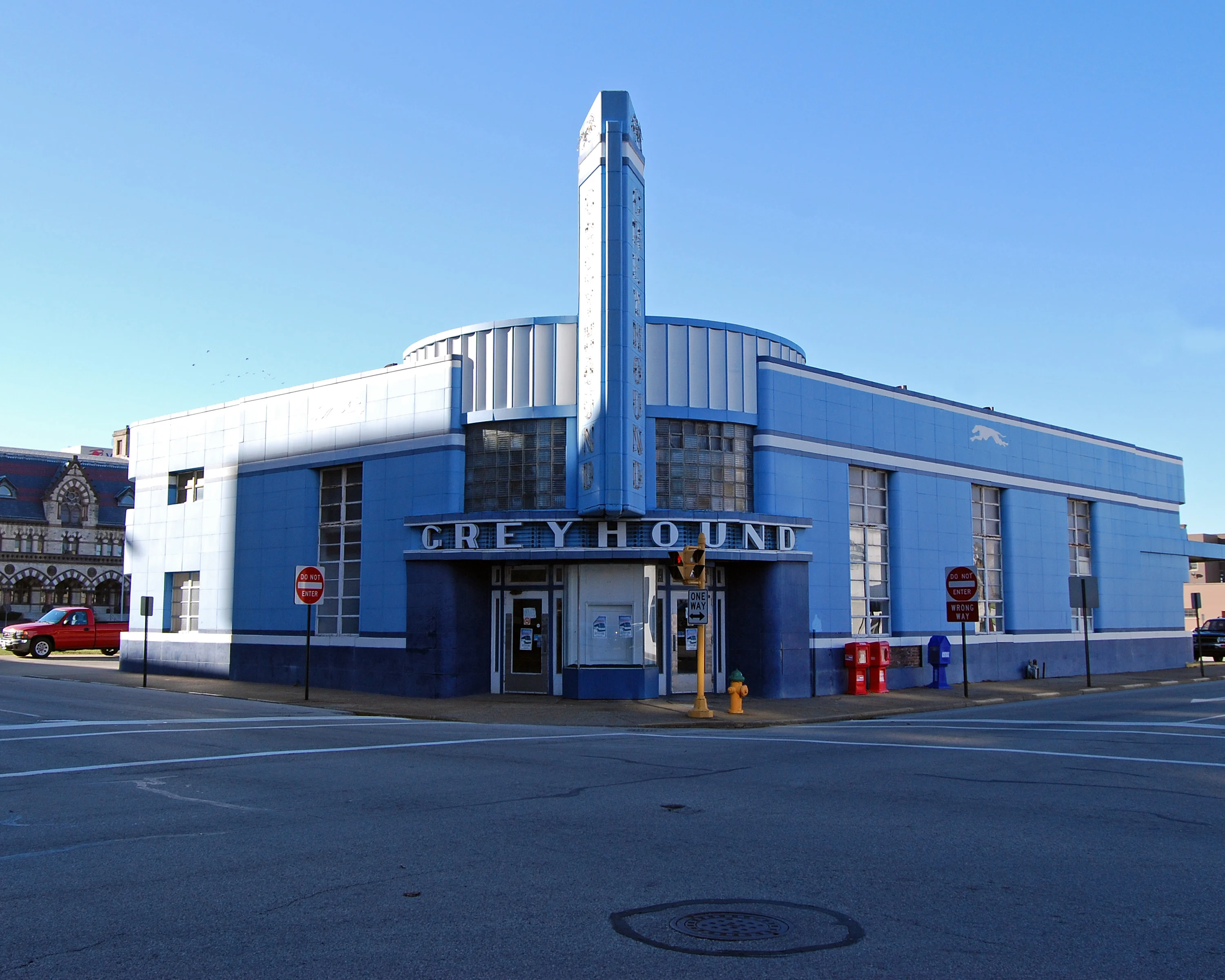
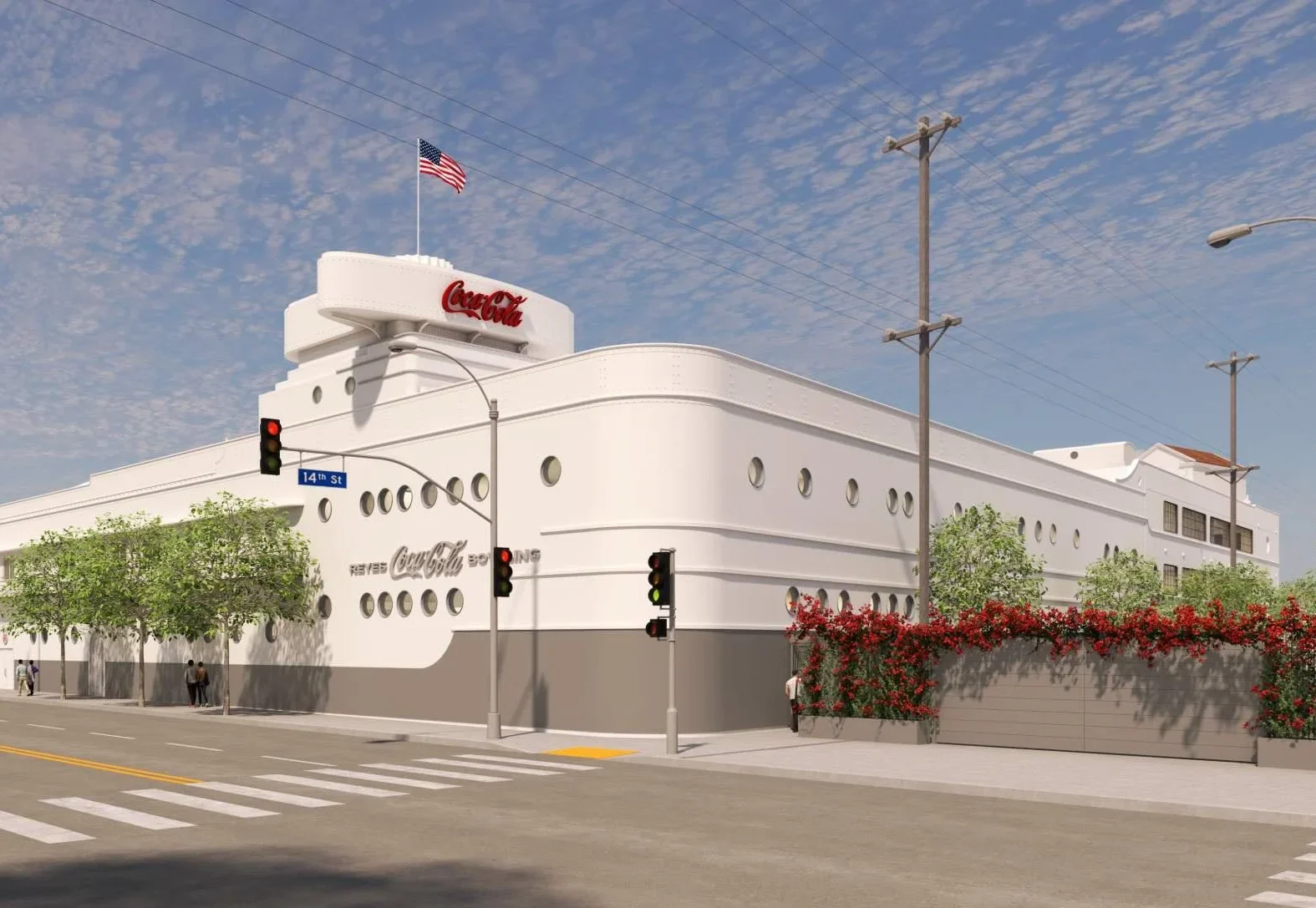
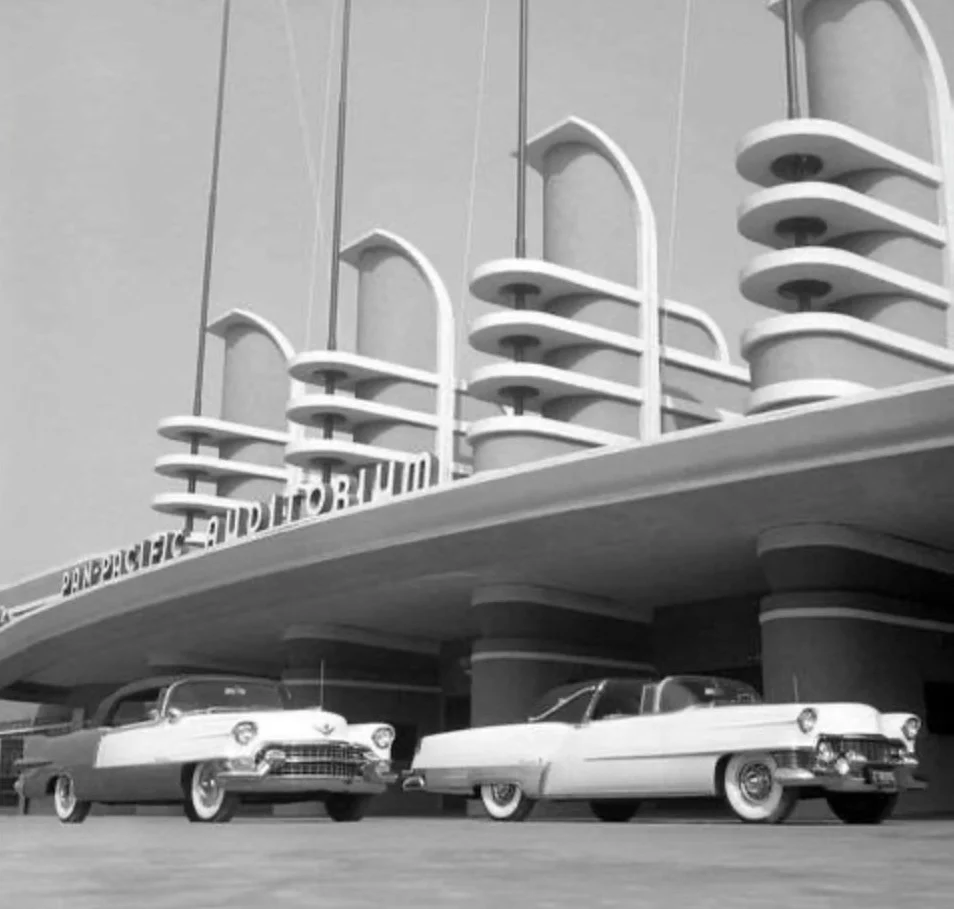
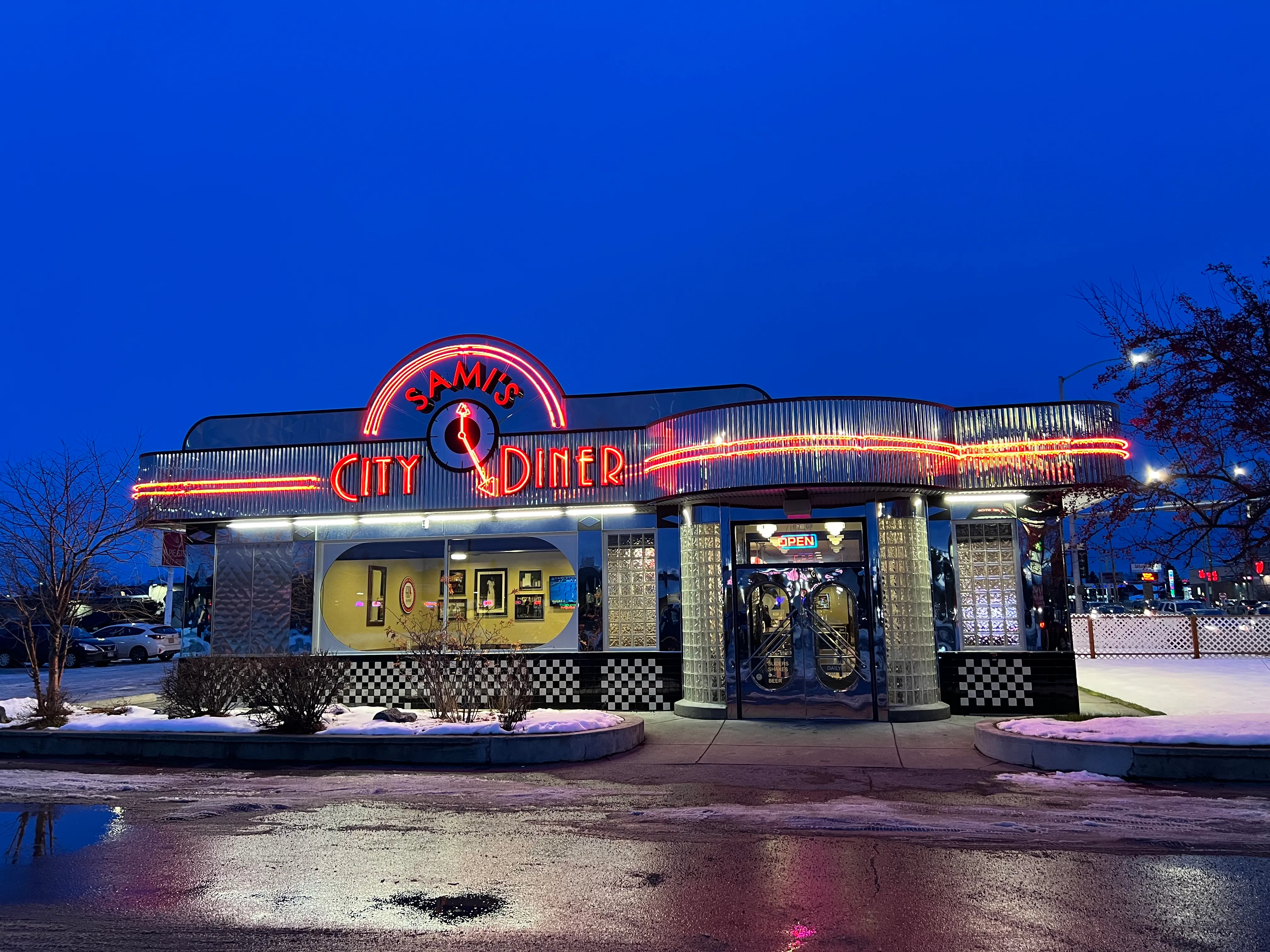
Top: Left: Essex House, Miami Beach, by Henry Hohauser, 1938, Middle: New Mission Theater, San Francisco, renovation by Timothy Pflueger, 1932, Right: Greyhound Bus Terminal, Evansville, Indiana, by William Strudwick Arrasmith, 1938. Bottom: Left: Coca-Cola Building, Los Angeles, by Robert V. Derrah, 1939, Middle: Pan-Pacific Auditorium, Los Angeles, by Wurdeman & Becket, 1935, Right: Sami’s City Diner, Anchorage, Alaska, a 2006 tribute to mid-century streamline
Inside those buildings, Streamline Moderne produced some of the period’s most ambitious interiors and furniture. Tubular metal furniture, originally a European modernist innovation, was reshaped by American designers into something more glamorous, with KEM Weber‘s Airline Chair of 1934, Wolfgang Hoffmann’s chrome and leather lounge pieces, and Warren McArthur‘s anodized aluminum chairs and tables setting the tone. Gilbert Rohde, working primarily for Herman Miller, brought streamlined sensibility into modular bedroom and dining suites that anticipated mid-century modern by more than a decade. Donald Deskey, beyond his celebrated Radio City Music Hall interiors, produced lacquered cabinets, smoking stands, and built-in furnishings that moved between geometric and streamlined idioms. The two great ocean liners of the era took the style to its highest pitch. The SS Normandie, completed in 1935 after her 1932 launch at Saint-Nazaire, contained a first-class dining room longer than the Hall of Mirrors at Versailles. Its hammered glass panels by Jean Dupas and lighting fixtures by René Lalique made it the most ambitious streamlined interior ever built. The Queen Mary, which made her maiden voyage the following year, paired its lighter palette and its veneers in dozens of exotic woods with a comparable level of artistic and craft investment. Both ships demonstrated that streamlined form could carry weight at the largest scale and that an entire interior could be designed as a single coherent expression of the modern world.

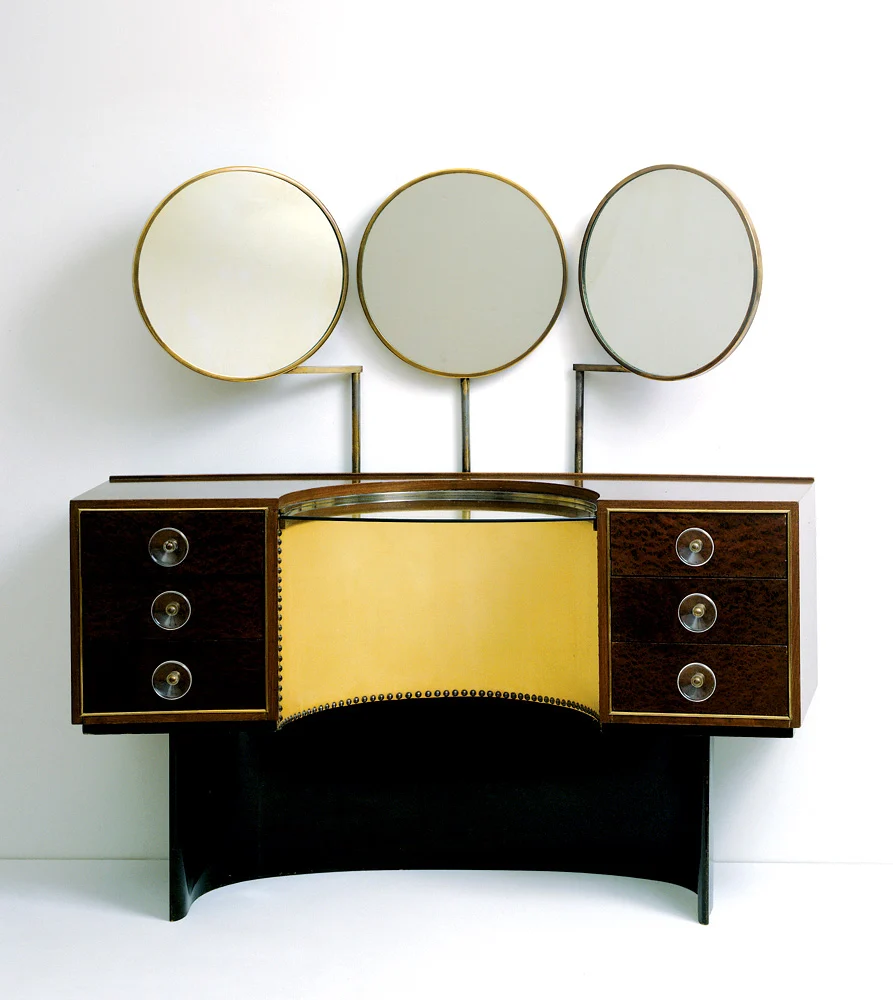
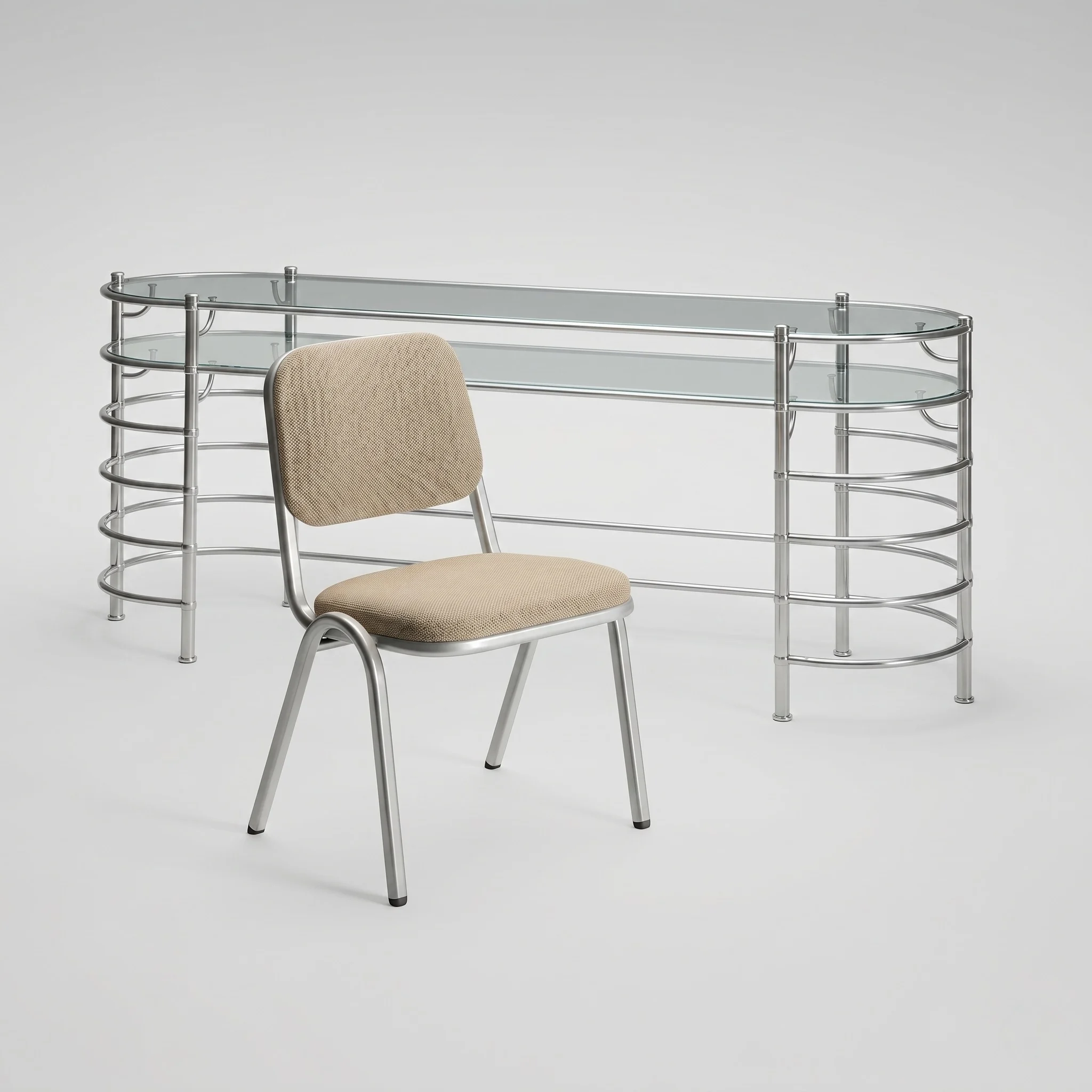

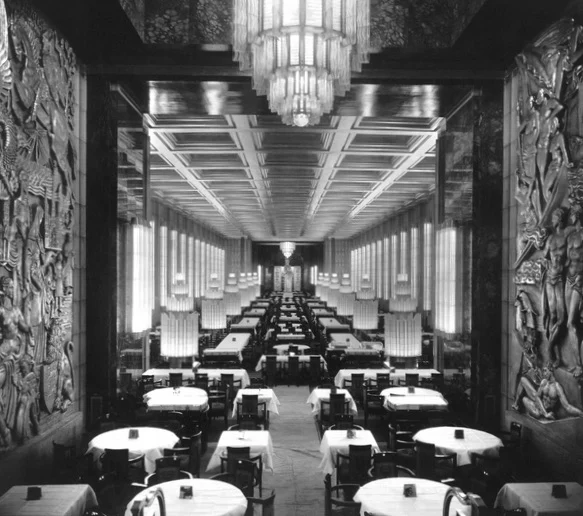
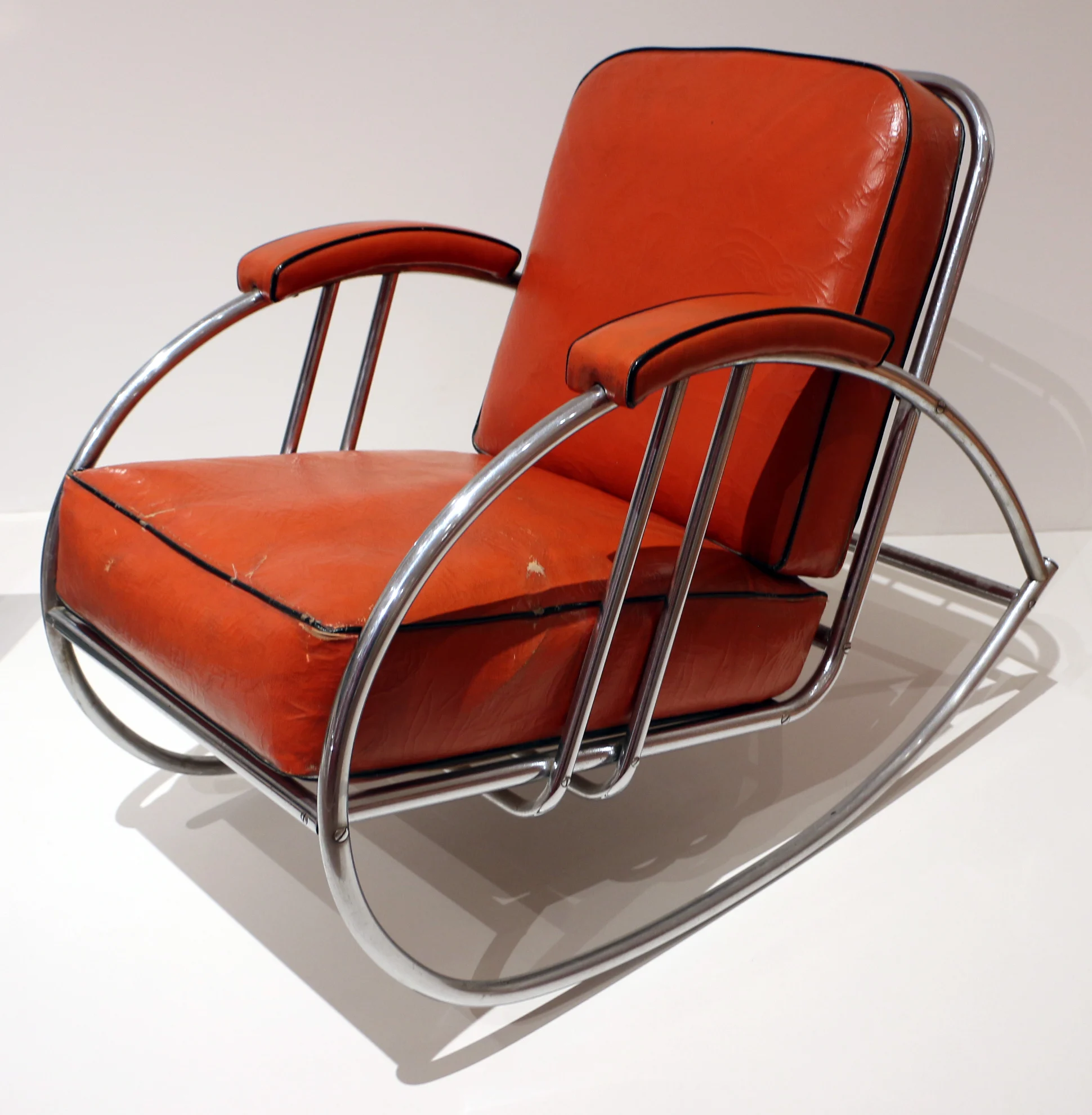
Top: Left: Airline Armchair by KEM Weber, 1934, Middle: Dressing Table for Herman Miller by Gilbert Rohde, c. 1934, Right: Tubular aluminum desk and chair set in the style of Warren McArthur, 1930s. Bottom: Left: “Tete-a-Tete” sofa by Warren McArthur, c. 1930, Middle: Grand Salon of the RMS Queen Mary, launched 1936, Right: Rocking chair for Howell Manufacturing by Wolfgang Hoffmann, c. 1934
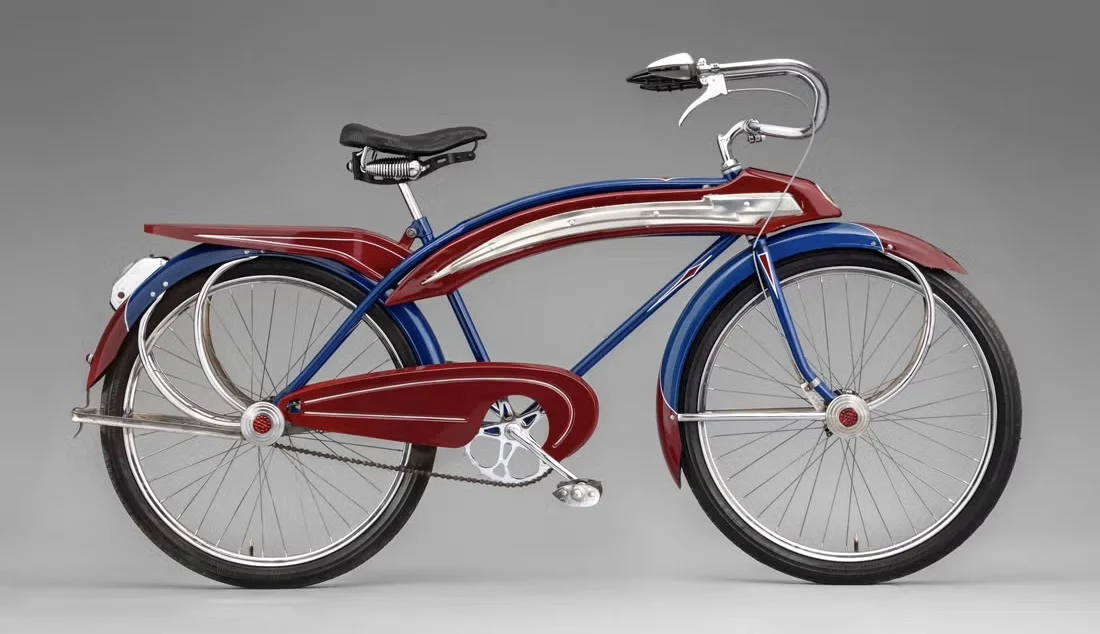
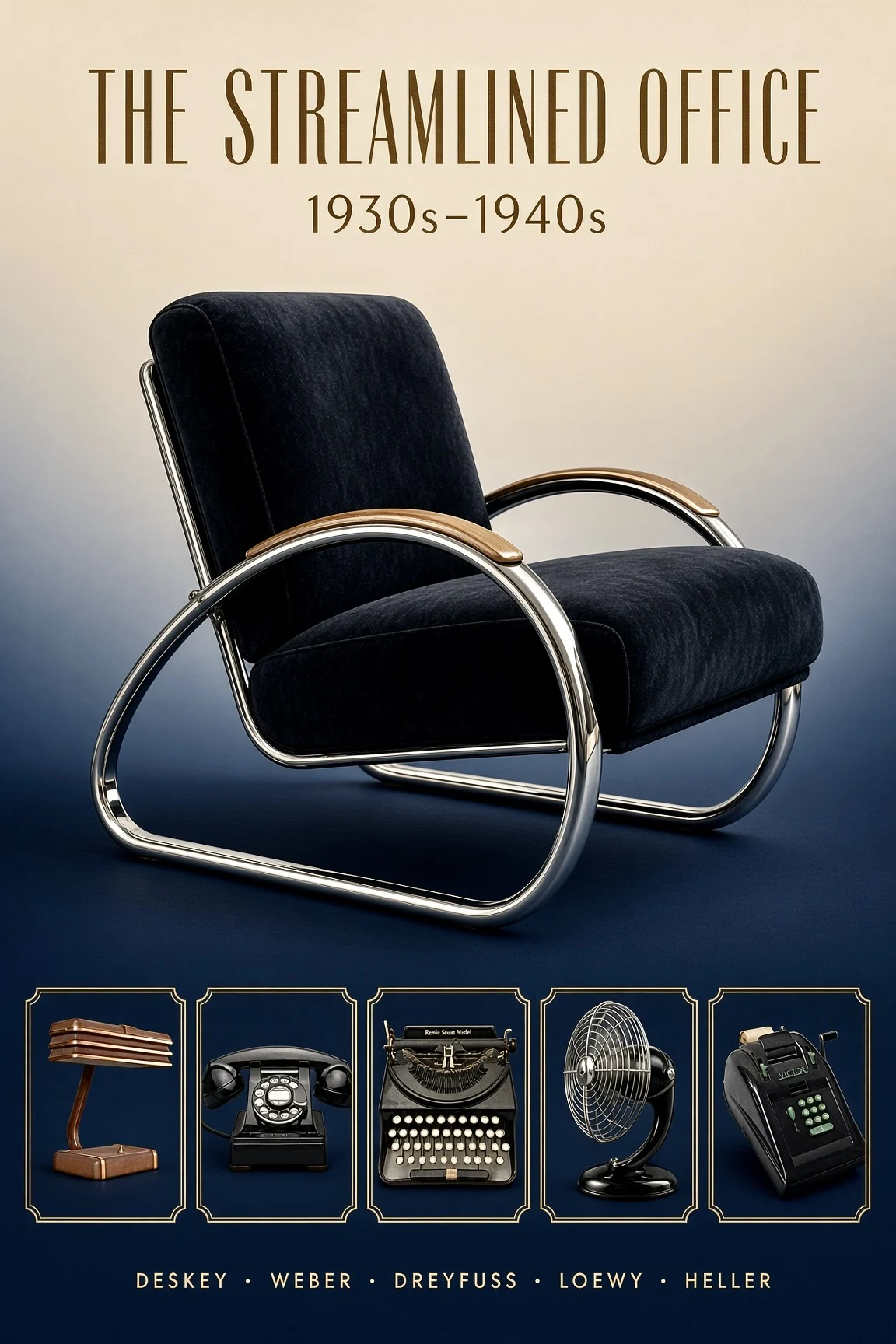
The democratic reach of Streamline Moderne is clearest in the objects it brought into ordinary households. A Bakelite radio with a cloud shaped cabinet, a chrome pencil sharpener shaped like a miniature locomotive, a toaster with rounded corners and horizontal ribs, and a vacuum cleaner that looked like a small aircraft all carried the same visual ideas that animated the ocean liners and express trains. Designers like Harold Van Doren and Lurelle Guild built entire careers turning kitchen and household goods into objects worth admiring on the counter as much as using at the table. That same look soon reshaped the American office, where typewriters, fans, pencil sharpeners, and desk sets in molded Bakelite and polished chrome made clerical work feel as modern as the buildings it filled. New materials made this possible. Bakelite and other early plastics could be molded into smooth continuous forms, chrome and aluminum brought reflectivity and lightness at reasonable cost, and mass production techniques spread the results across the country. For the first time, good modern design was something a family could hold in its hands rather than admire from a distance. That shift changed what Americans expected their everyday objects to look like, and its echoes run through industrial design to this day.
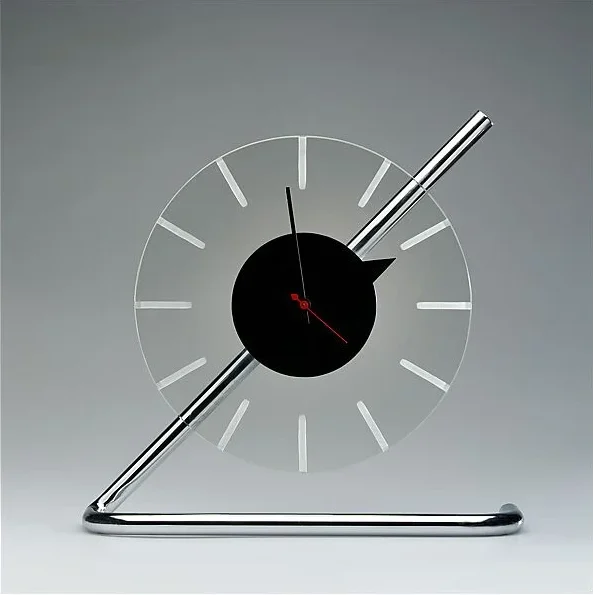

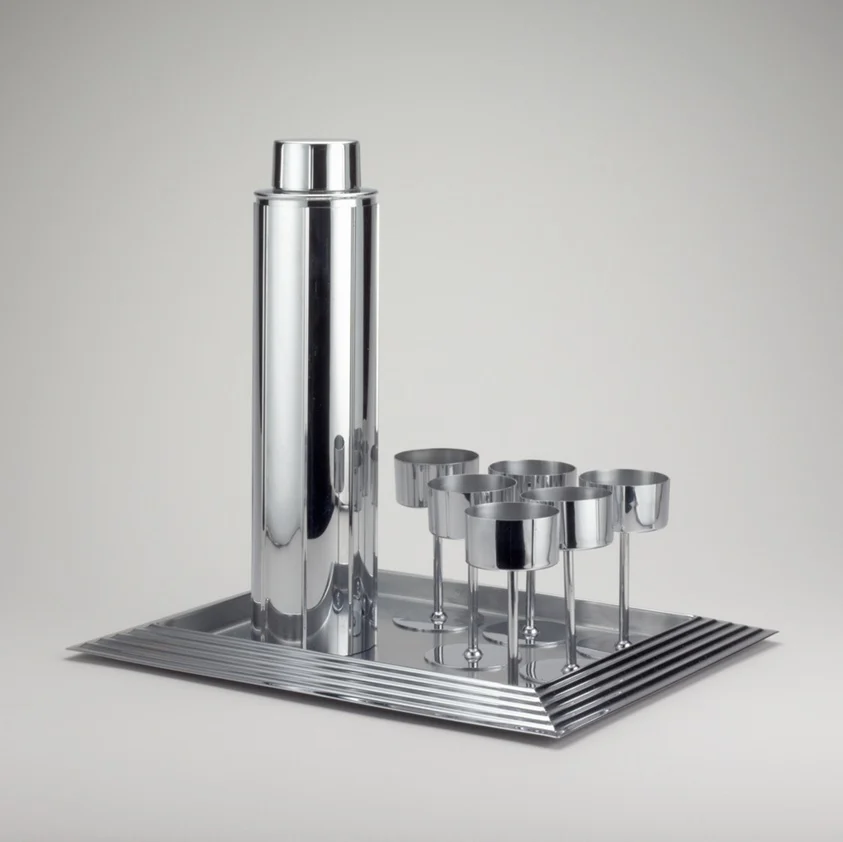
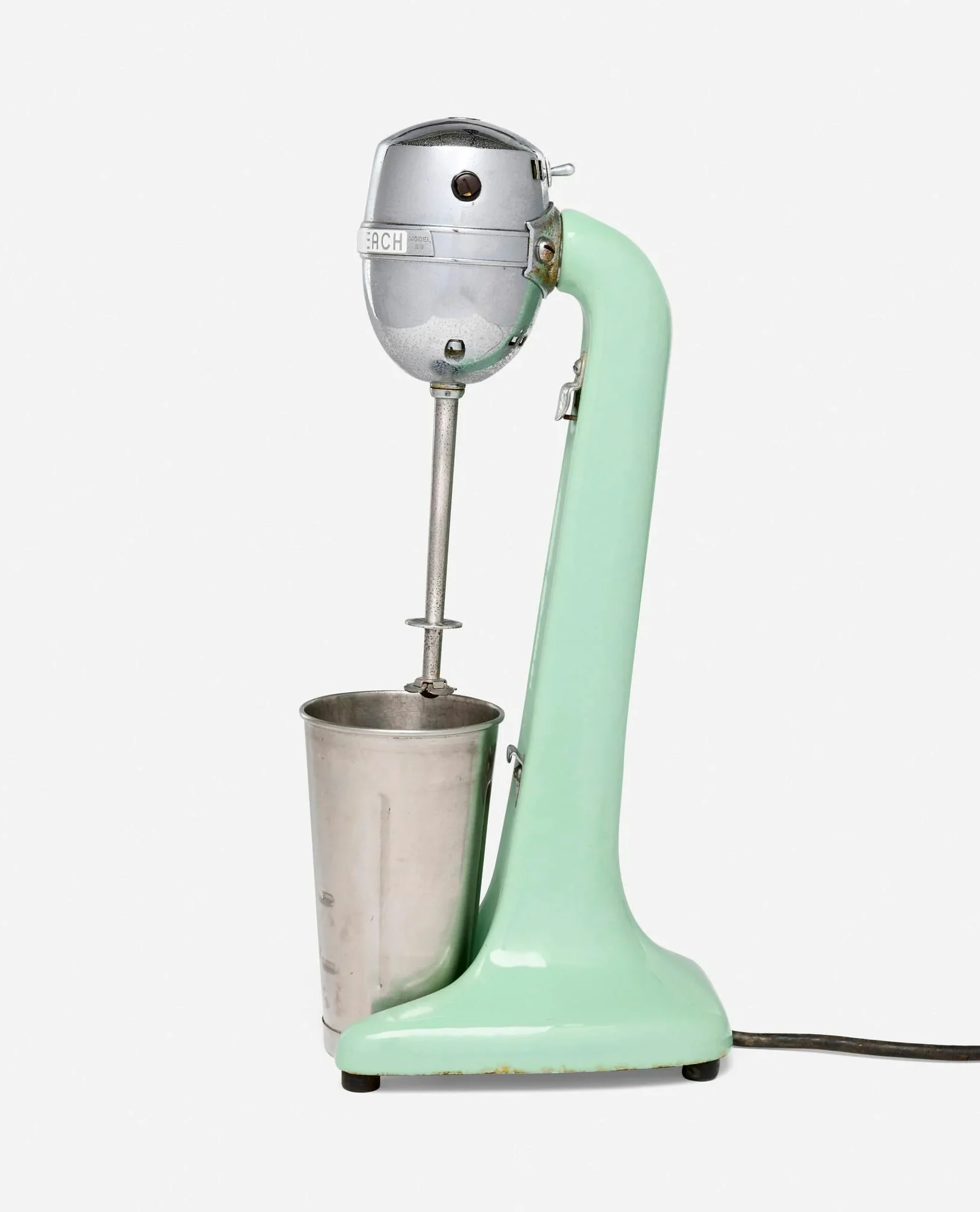
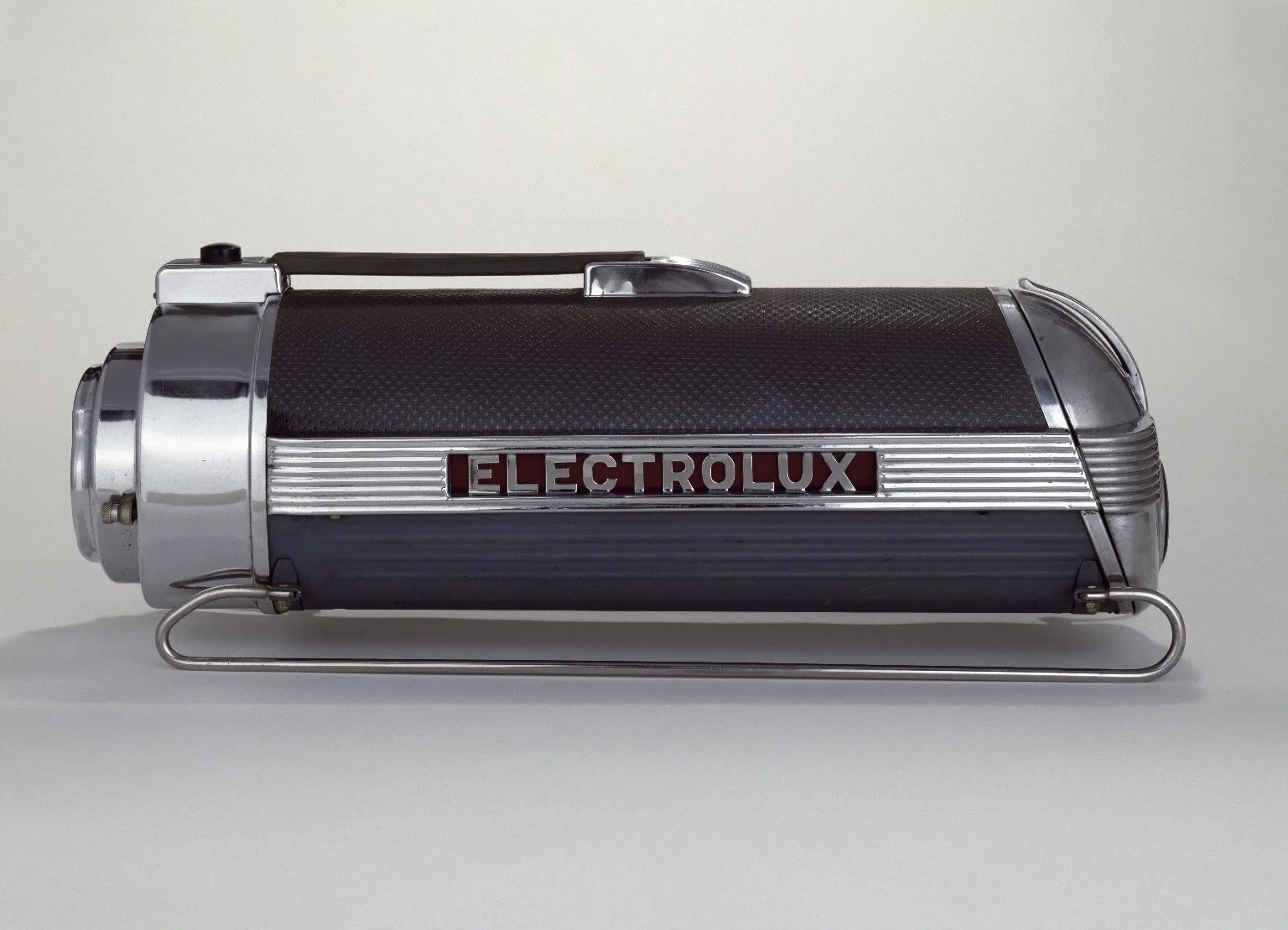

Top: Left: Desk clock (Model 4082) for Herman Miller by Gilbert Rohde, c. 1933, Middle: Remington Rand Streamliner typewriter by John Adam Zellers and Herbert E. Bridgewater, c. 1940, Right: “Manhattan” cocktail set by Norman Bel Geddes, 1934. Bottom: Left: Hamilton Beach Model 30 drink mixer, 1930s, Middle: Electrolux Model XXX vacuum cleaner by Lurelle Guild, 1937, Right: “Saturn” punch bowl set by Russel Wright, c. 1935
Streamline Moderne remains one of the defining visual expressions of the interwar and wartime years, and its best work still carries the optimism of the moment that produced it. The style gave the period a way of talking about speed, progress, and the promise of modern life without resorting to the heavy ornament of earlier centuries, and it did so with a confidence that still reads clearly today. Even as the country shifted into wartime production after 1941, the streamlined sensibility continued to shape aircraft, trains, and the industrial landscape that powered the war effort, and it carried directly into the early postwar years. Its influence runs through mid-century industrial design, the diners and motels that survive along American highways, the grand seaside hotels of Miami Beach, and the preserved ocean liners and trains that have become museum pieces in their own right. Seen alongside the other decorative movements of its time, Streamline Moderne fills out the period in a way no other style does, the work of a generation that believed modern life could be beautiful at every speed and at every scale. A century later, the best Streamline Moderne objects and buildings still feel exactly like what they were designed to be, a glimpse of the future seen through the eyes of a generation that refused to lose faith in it.
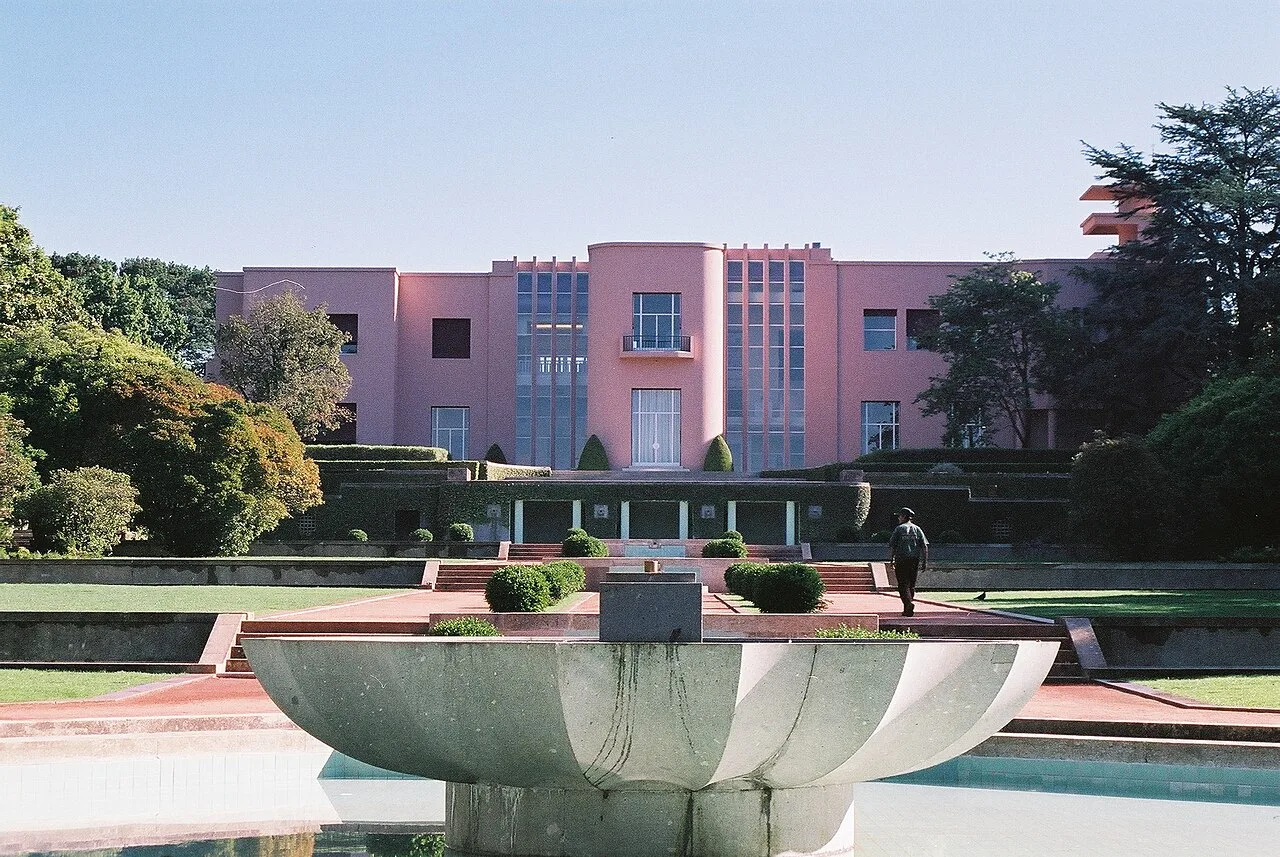
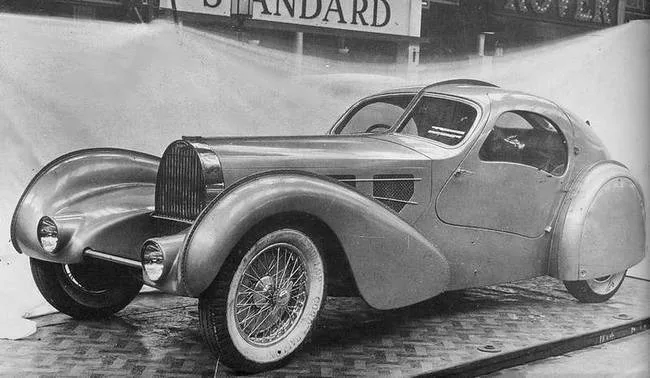
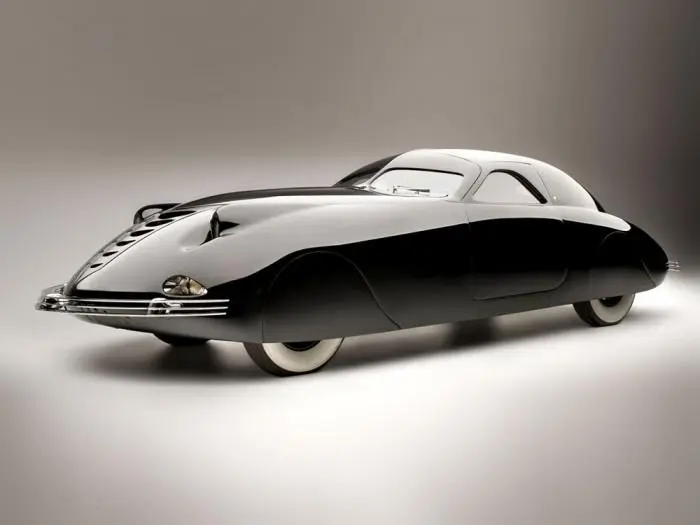
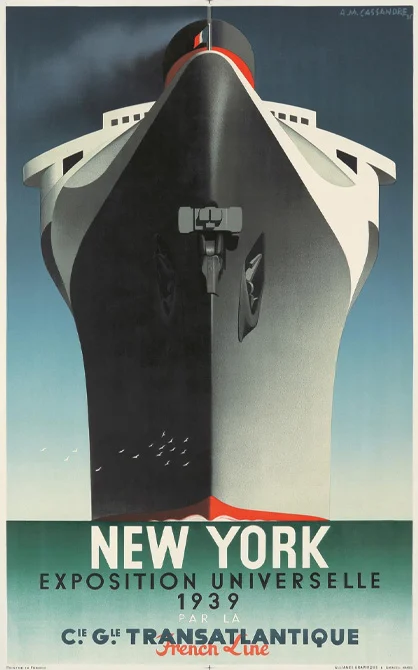
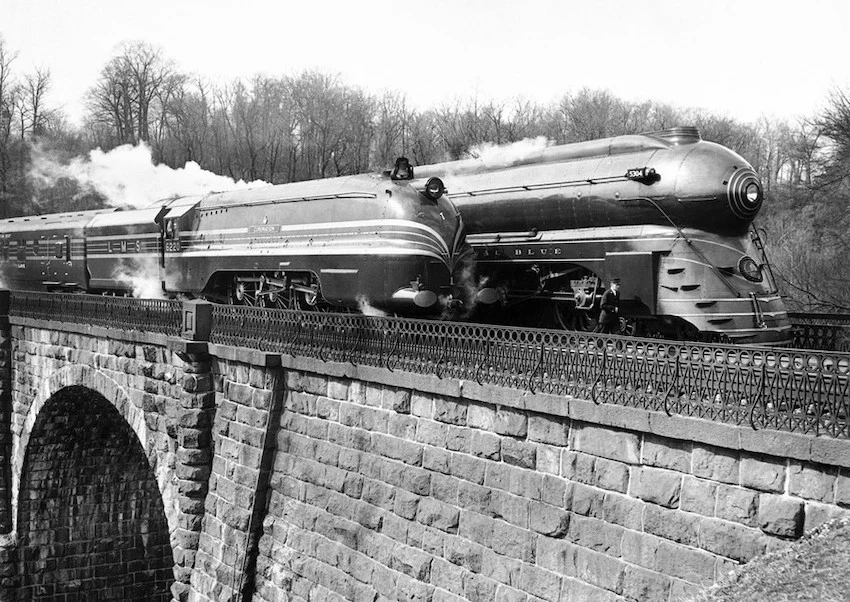
Top: Left: Casa de Serralves, Porto, by José Marques da Silva, completed 1944, Right: Bugatti Type 57SC Atlantic by Jean Bugatti, 1936. Bottom: Left: LMS Coronation Scot, streamlined by William Stanier and Tom Coleman, and the B&O Royal Blue, streamlined by Otto Kuhler, 1939 New York World’s Fair, Middle: SS Normandie poster by A.M. Cassandre, 1935, Right: Phantom Corsair by Rust Heinz and Maurice Schwartz, 1938
Further Reading
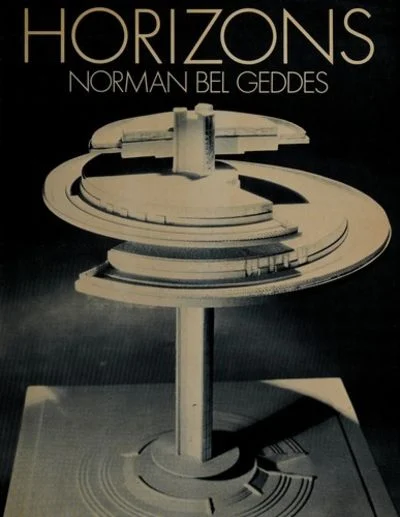
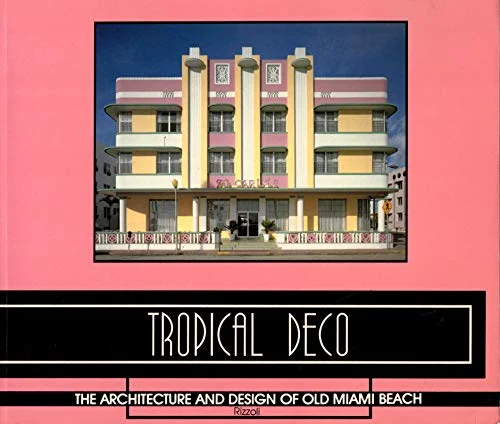
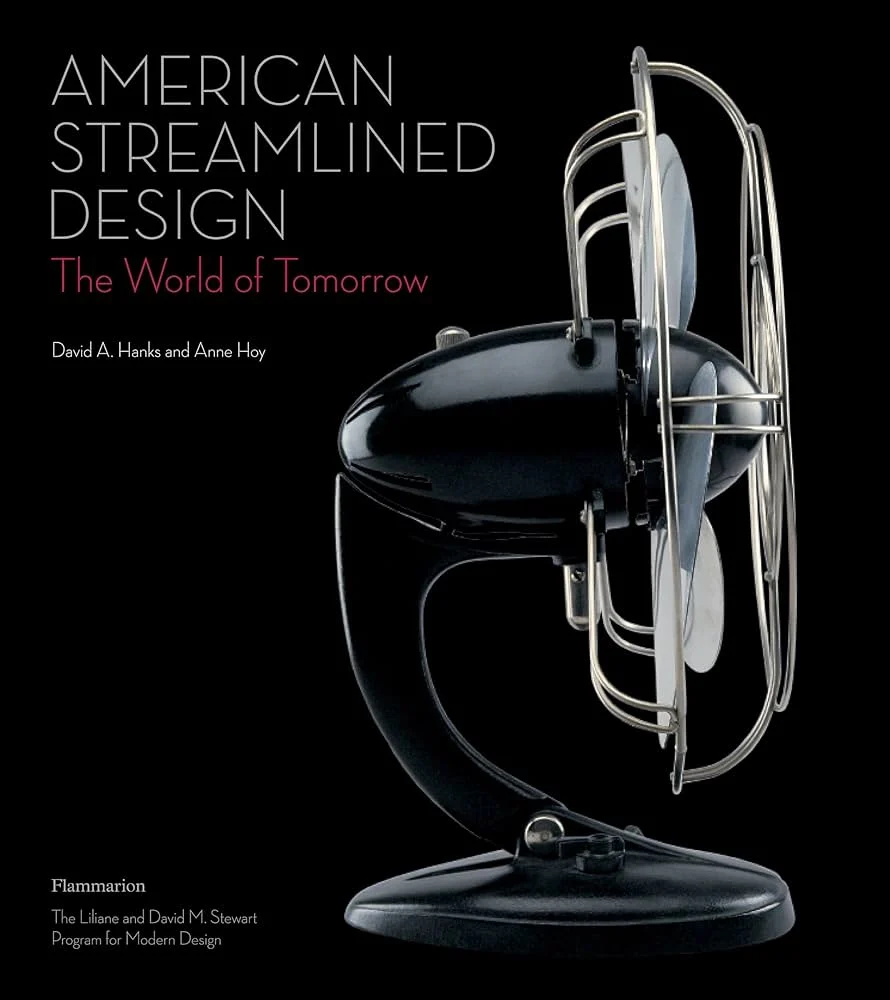
For anyone interested in exploring these ideas in greater depth, a small group of well-regarded books offers a clear path into the style and the world that produced it. Horizons by Norman Bel Geddes, first published in 1932, is the closest thing the movement has to a founding manifesto, written by one of its central figures at the precise moment streamlined form was moving from the engineering laboratory into public life, and it remains essential for understanding the optimism and ambition behind the work. Tropical Deco: The Architecture and Design of Old Miami Beach, published by Rizzoli, focuses on one of the most iconic surviving environments shaped by Streamline Moderne, documenting the hotels, apartments, and storefronts that turned an entire neighborhood into an open-air showcase of curves, pastels, and porthole windows. American Streamlined Design: The World of Tomorrow by David A. Hanks and Anne Hoy, produced in connection with a major museum exhibition, is the strongest single-volume survey of the period, with extensive photography of the transportation, architecture, furniture, and household objects that defined the style.


If you are interested in further stories of Art Deco design, collecting, and celebrating the artistry of early 20th Century:

Related Products from ArtDecoCollection.com