
Jean Dupas
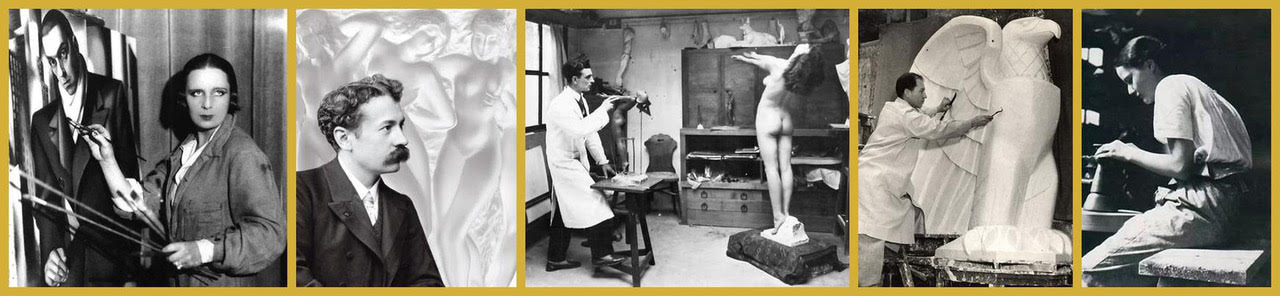
Jean Théodore Dupas was born on February 21, 1882, in Bordeaux, France, the son of a merchant marine captain, and began his adult life as a merchant seaman before poor health forced him to abandon the sea and enroll in art school. He studied first in Bordeaux and later in Paris, and in 1910 won the Prix de Rome in painting, spending four years at the Villa Medici in Italy before the outbreak of World War I interrupted his studies. He was part of the Bordeaux School, a group that included Robert Pougheon, René Buthaud, Jean Gabriel Domergue, Raphaël Delorme, and his close collaborator Alfred Janniot. One of his earliest commissions came from Bordeaux industrialist Henri Frugès in 1912, who engaged him alongside Daum Frères, Jean Dunand, and Edgar Brandt to transform his home into a showcase of contemporary art. Dupas was named curator of the Musée Marmottan in Paris in 1940, admitted to the Académie des Beaux-Arts in 1941, appointed professor of painting at the École des Beaux-Arts, and ended his career as director of the Musée Marmottan. Andy Warhol was a noted admirer of his work and collected it extensively. Dupas died on September 6, 1964.
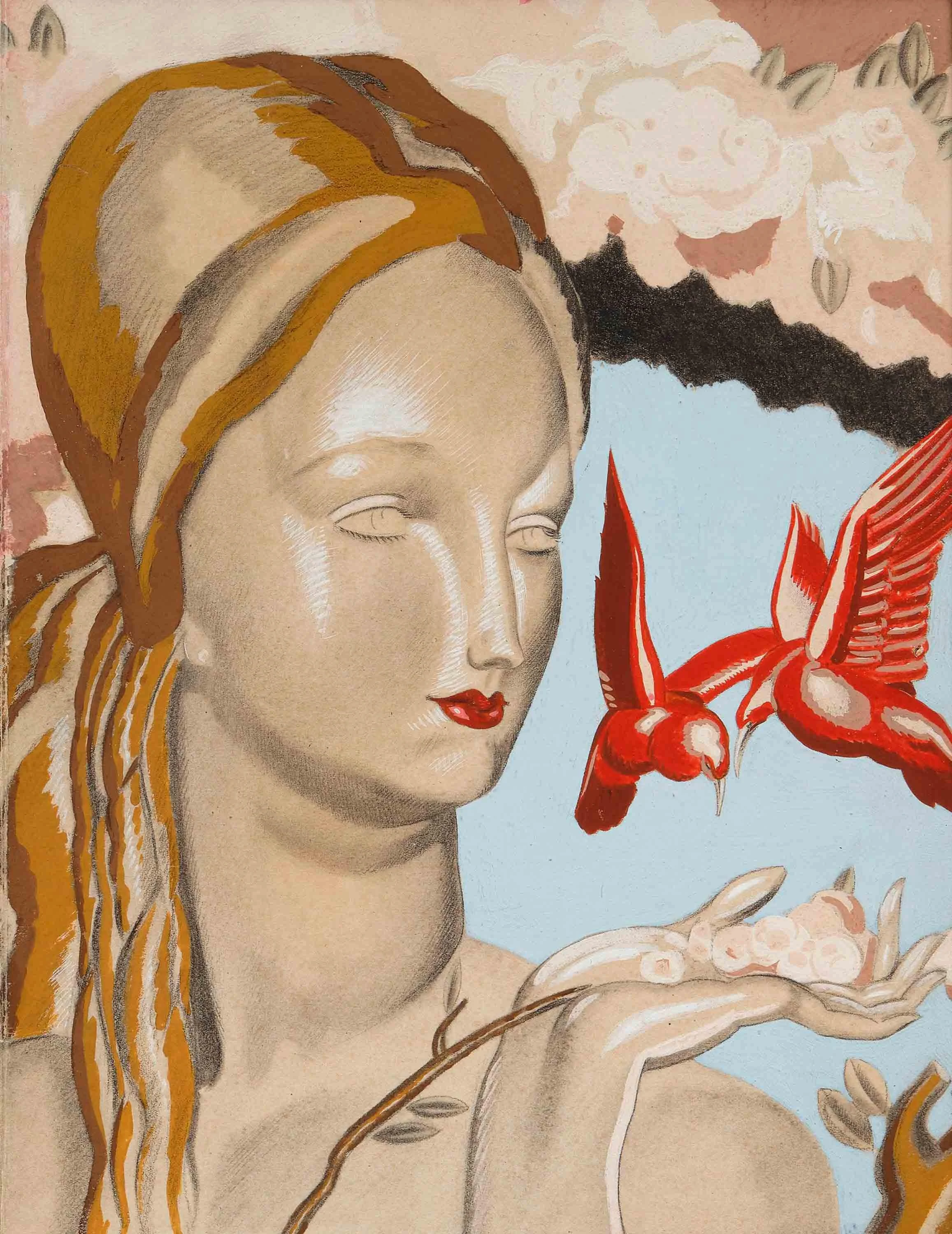
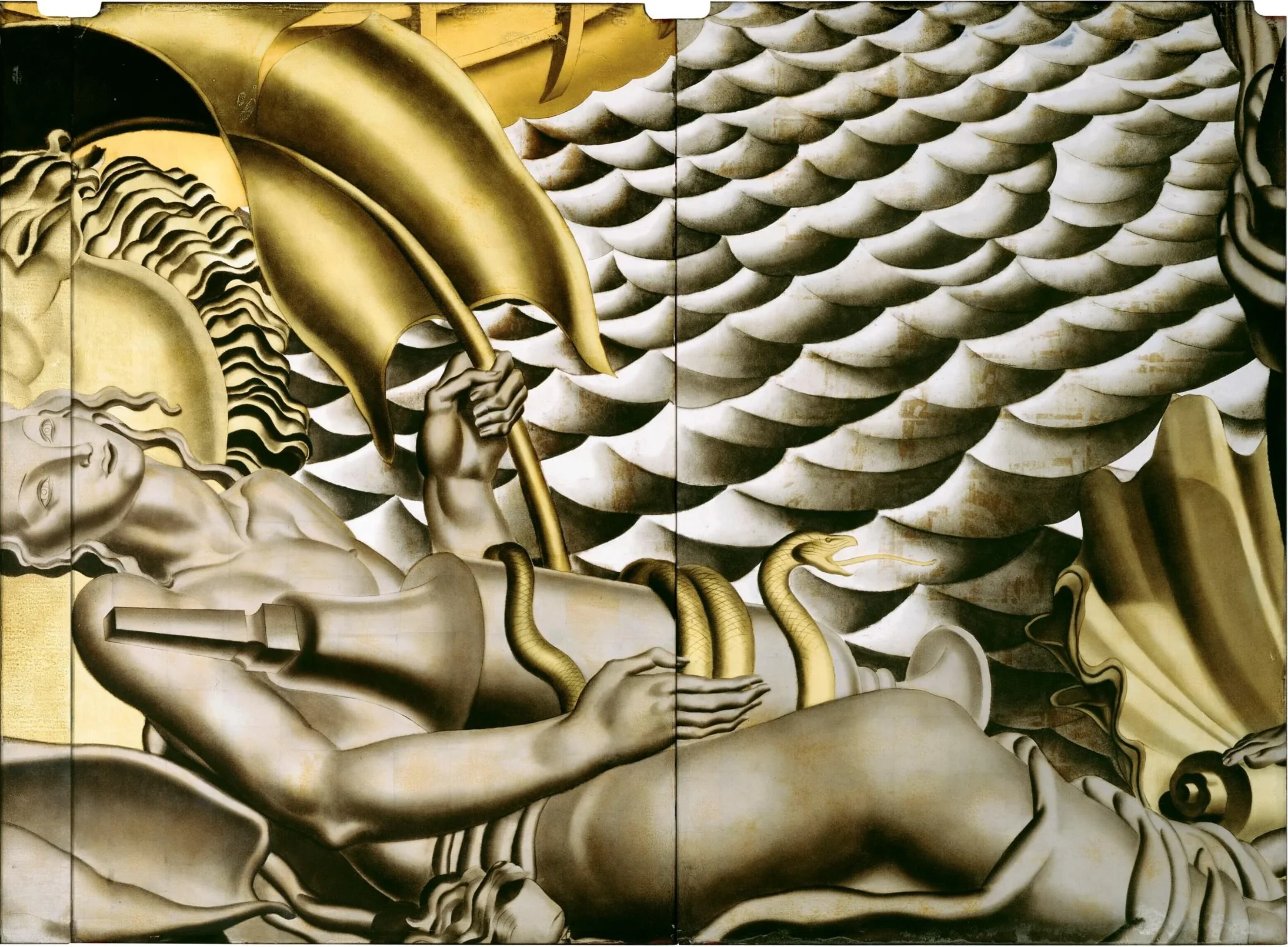
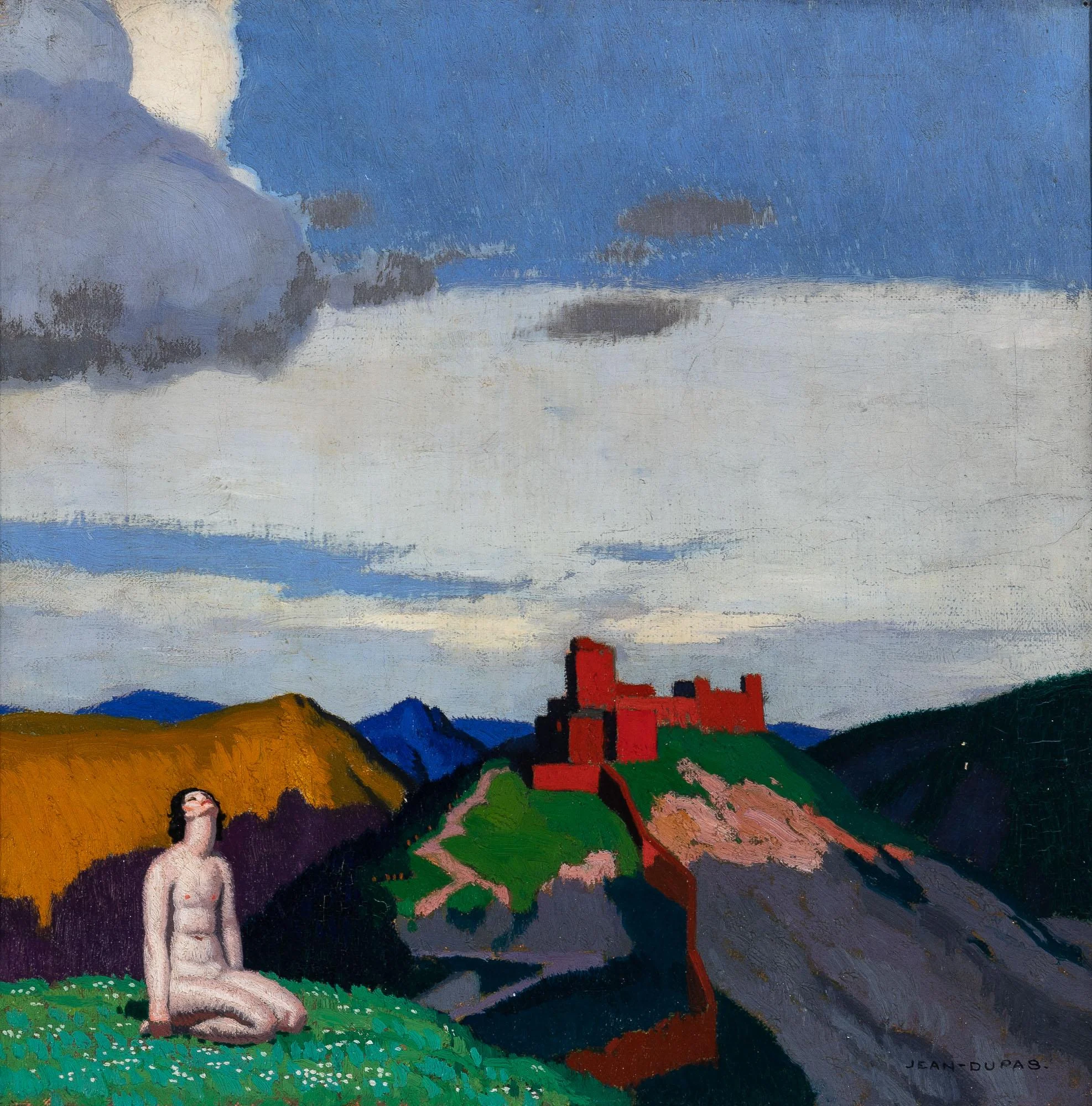
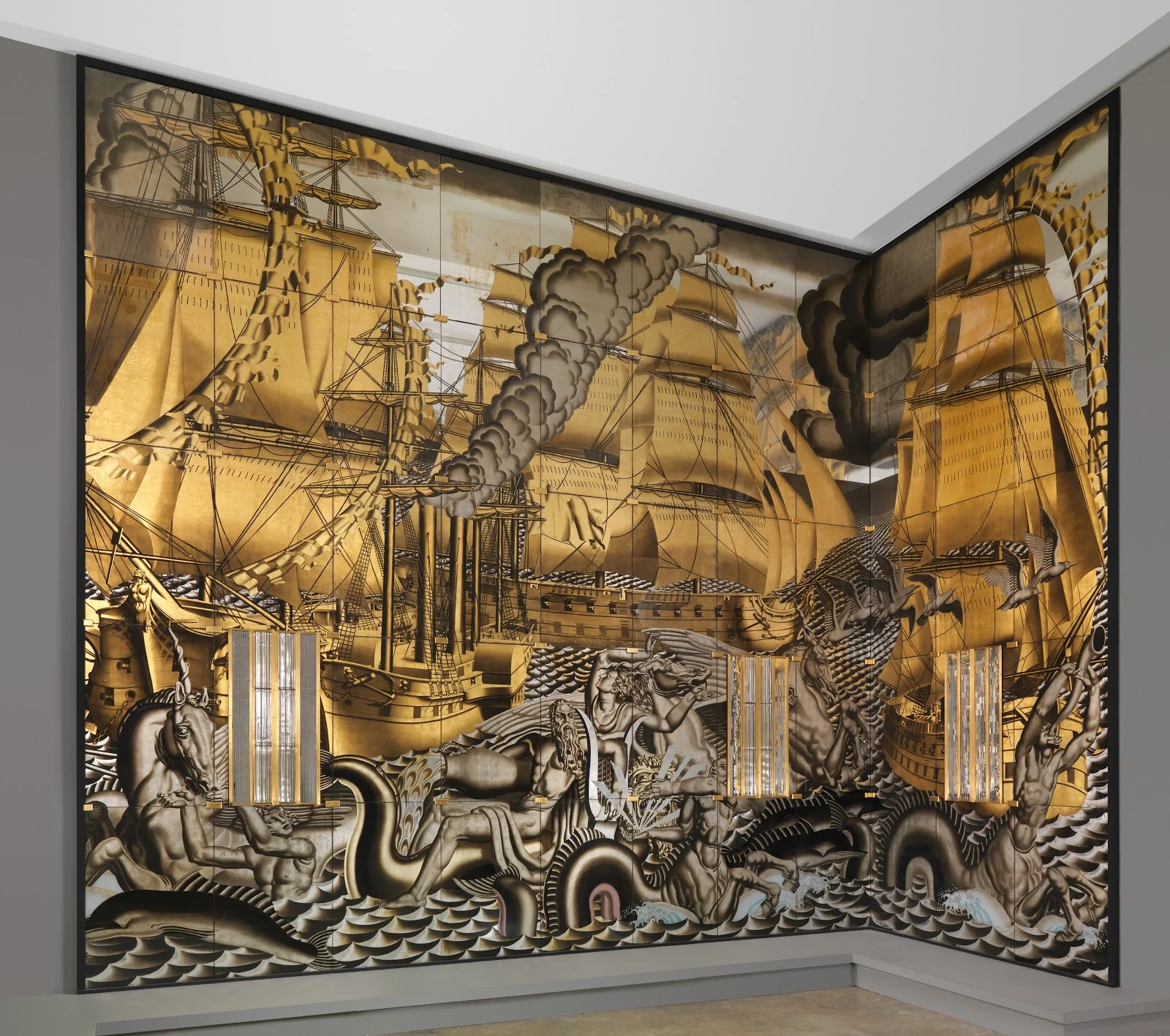
Dupas’s public prominence arrived at the 1925 Exposition Internationale des Arts Décoratifs et Industriels Modernes in Paris, where he exhibited Les Perruches as part of Jacques-Émile Ruhlmann’s celebrated Hôtel d’un Collectionneur, and his painting became one of the most recognizable works of the Art Deco movement. His collaboration with Ruhlmann was ongoing, and in 1926, he worked alongside Ruhlmann and sculptor Alfred Janniot on the decoration of the tearoom of the ocean liner Île-de-France. In the late 1920s, his distinctive visual style dominated advertising and commercial art across the Art Moderne period, with work appearing regularly in Vogue and Harper’s Bazaar, and a 1927 fur catalogue for Max considered a masterpiece of print advertising. He produced poster commissions for Frank Pick at London Transport in the 1930s. His most important commission came in 1934 when he was engaged to create large verre églomisé panels for the Grand Salon of the SS Normandie, representing the history of navigation across more than 400 square meters of gold, silver, and painted glass fabricated with glass master Charles Champigneulle. Portions of the Normandie mural are now displayed at the Metropolitan Museum of Art.
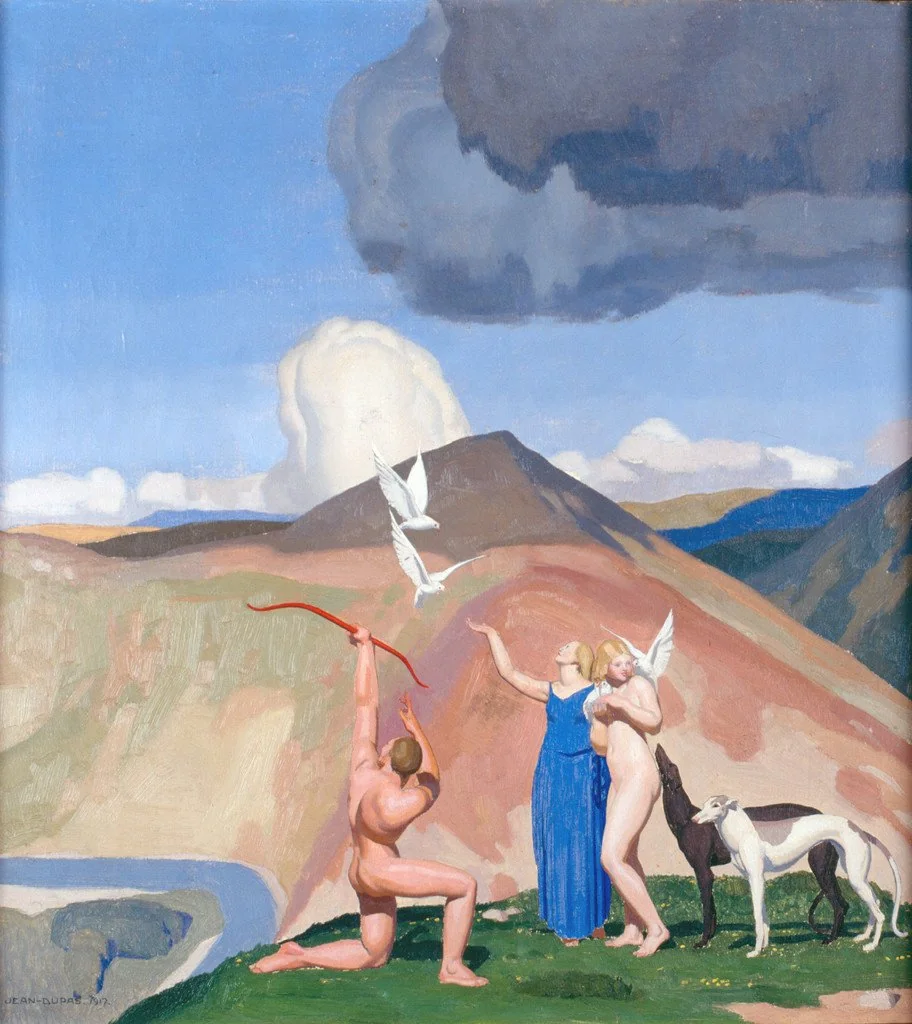
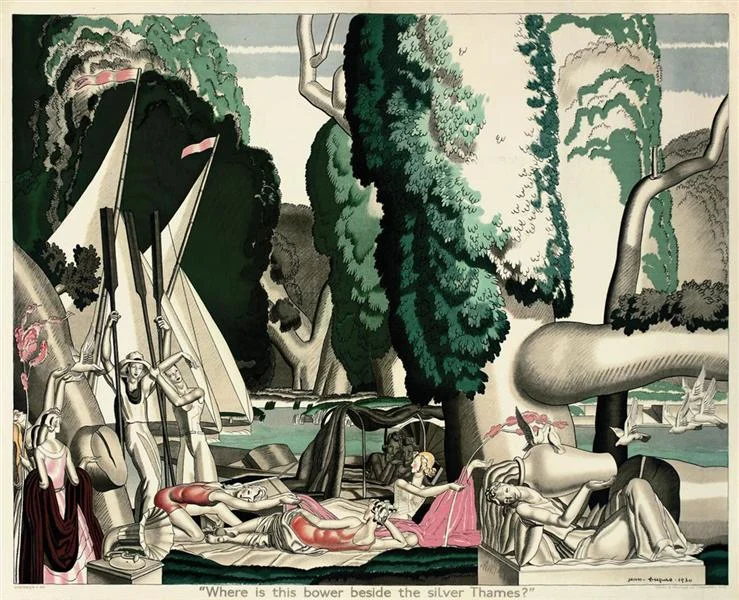
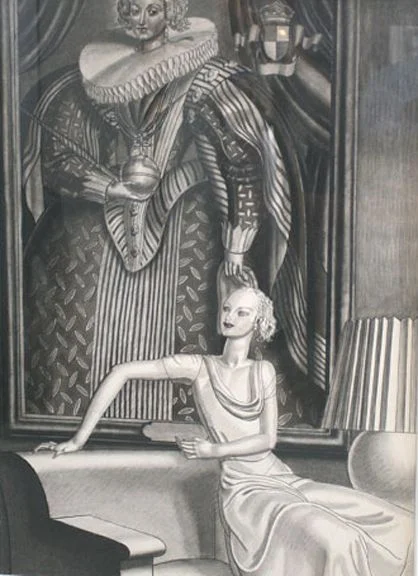
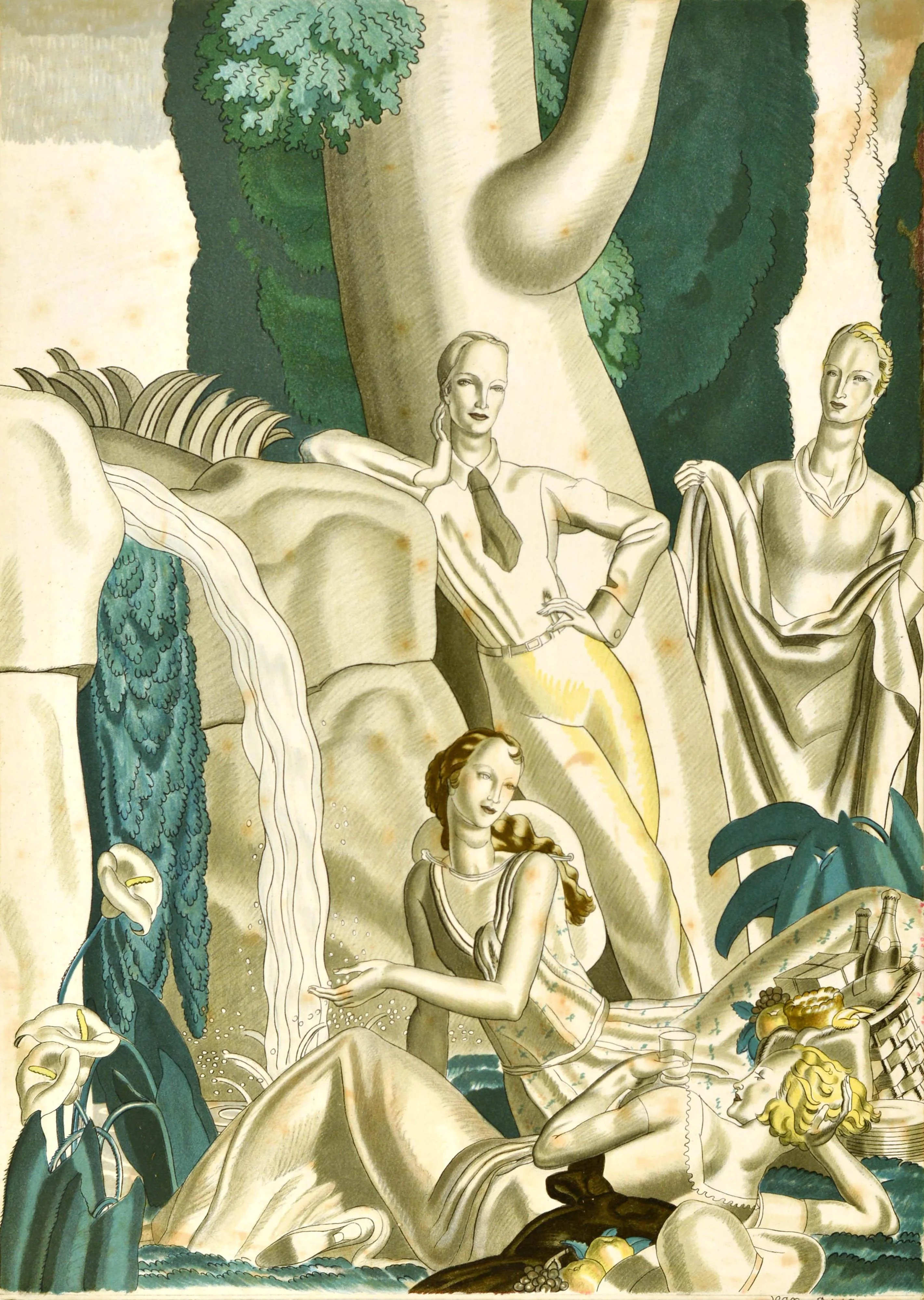
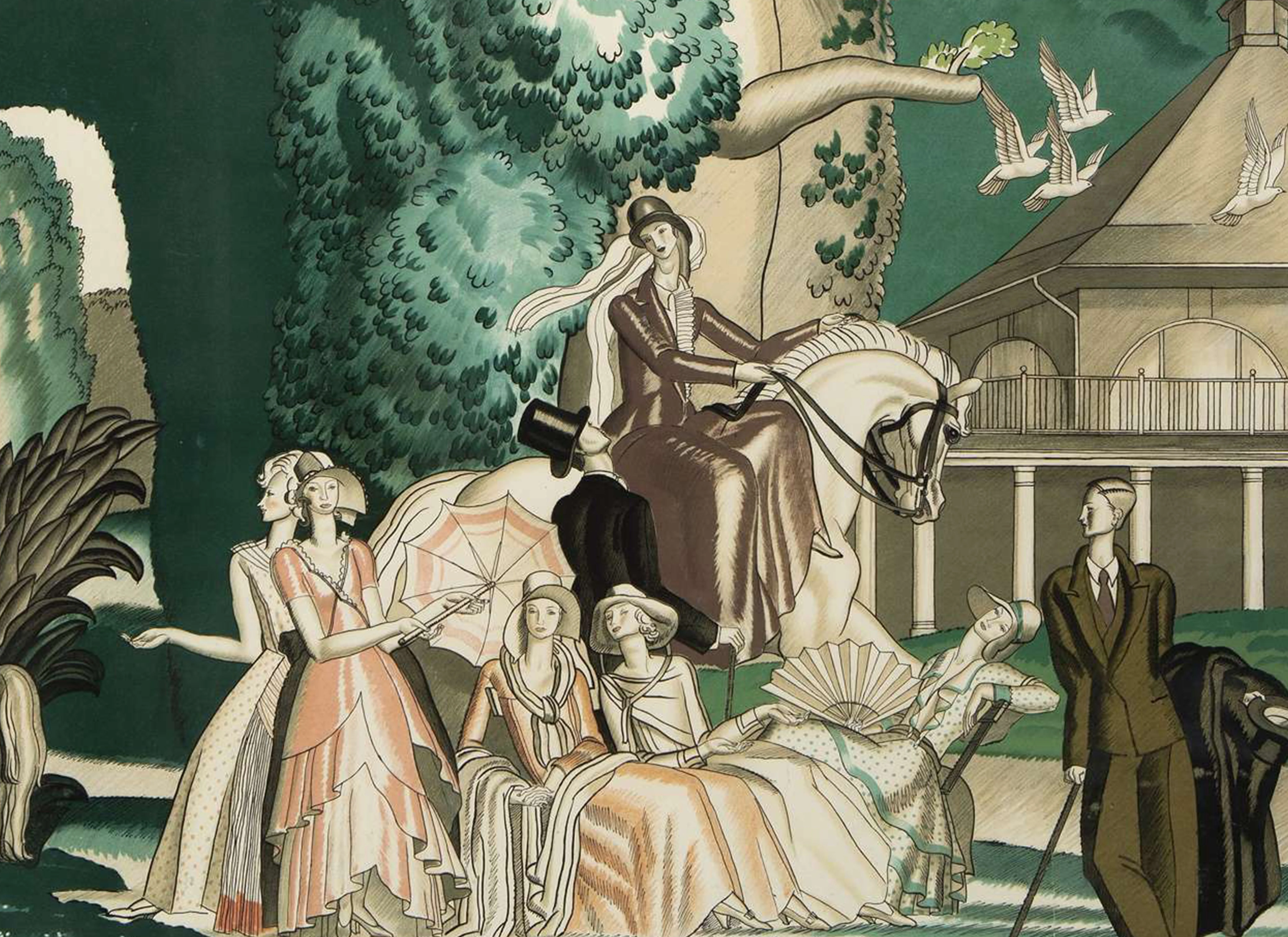
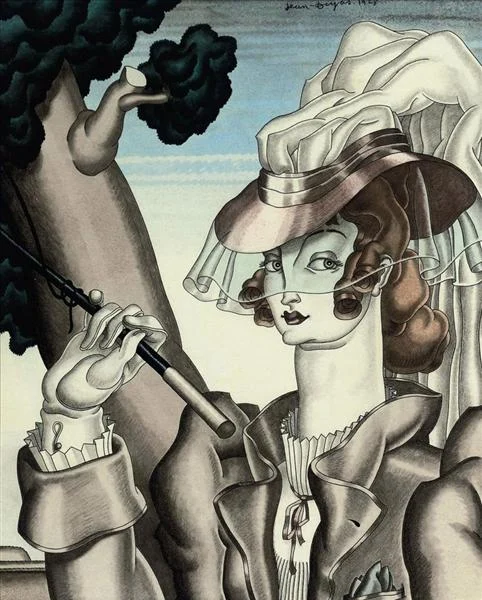
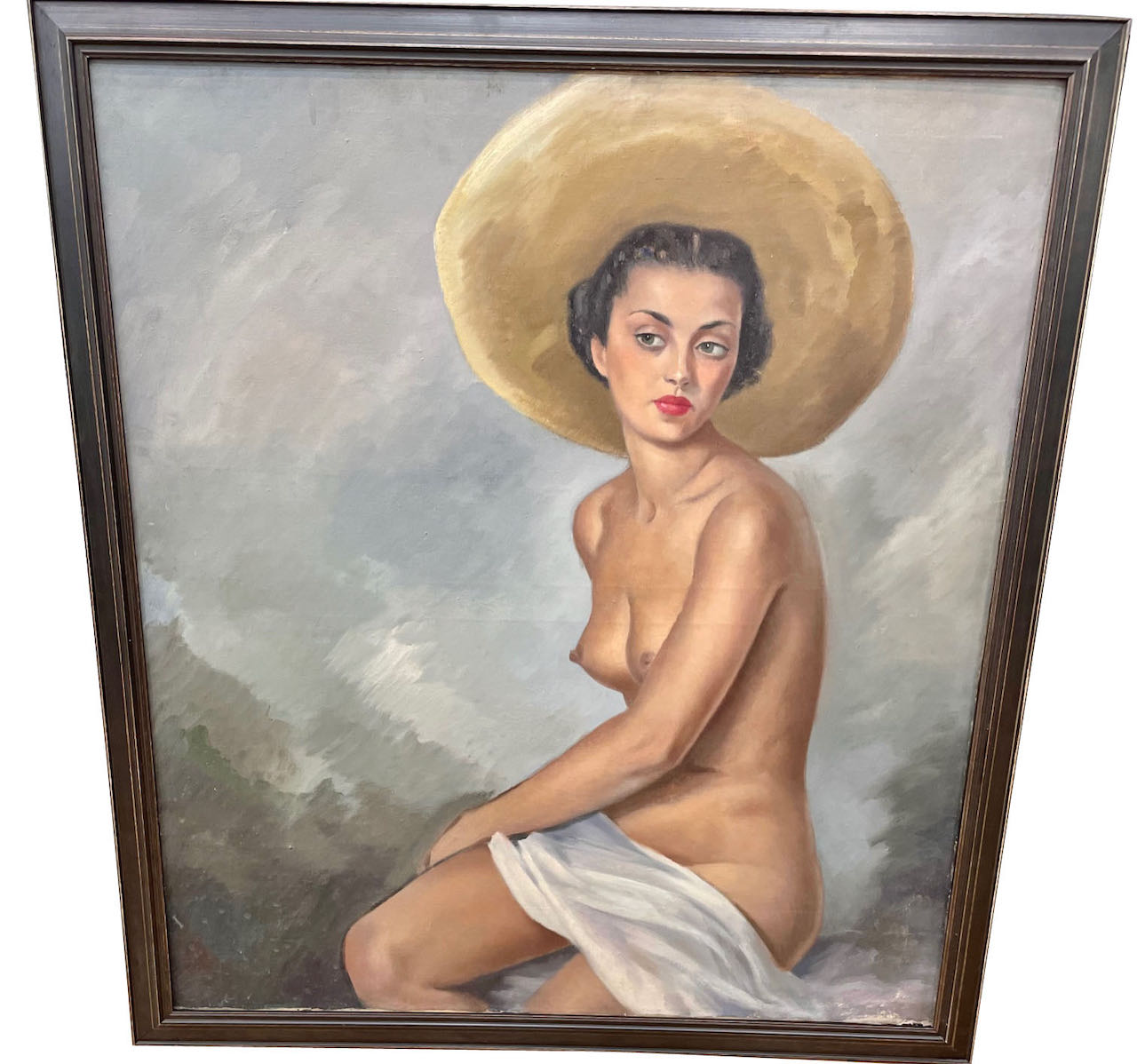
Dupas is the painter most closely associated with the Art Deco period, and the Dupas look is immediately recognizable: cropped hair, almond-shaped eyes, a small but full mouth, and always an elongated neck. His figures are gracefully distorted by elegant elongation, their anatomy exaggerated in a way that borders on Cubism while remaining rooted in the neo-classical and Mannerist traditions of the Bordeaux School. As his fellow artist George Barbier wrote of him in 1927, few artists had at such an early age gathered around them such swarms of imitators and disciples.
Key Influences
- Art Deco Painting: His work at the 1925 Exposition, and particularly Les Perruches, helped establish Art Deco as a painterly movement with its own visual language distinct from the decorative arts.
- SS Normandie: His verre églomisé panels for the Grand Salon were among the most ambitious decorative commissions of the ocean liner era and now define his legacy in the permanent collection of the Metropolitan Museum of Art.
- Ruhlmann Collaboration: His sustained partnership with Ruhlmann placed his paintings at the center of the most prestigious Art Deco interiors of the 1920s and 1930s.
- Commercial Visual Culture: His domination of Art Deco advertising and fashion illustration shaped the visual identity of the interwar period and directly influenced how the era’s beauty ideals were communicated to a mass audience.
- School of Bordeaux: As its most internationally recognized figure, he gave the group its lasting reputation and demonstrated that regional French artistic traditions could produce work of global significance.
If you are interested in further stories of the artists who shaped Art Deco, return to our artists page to browse the full directory.
Related Products from ArtDecoCollection.com