
A.M. Cassandre
Adolphe Jean-Marie Mouron, known professionally as A.M. Cassandre, was born in 1901 in Kharkiv, Ukraine, and moved with his family to Paris before World War I. He studied at the Académie Julian, where he painted in an academic style influenced by Cézanne before shifting toward the modern movements transforming Europe. Inspired by Cubism, Futurism, and the emerging Bauhaus ideals, he developed a distinctly geometric and industrial approach to composition and typography. Around this time, he began signing his work as “Cassandre,” the name under which he would achieve international recognition. He saw advertising as a modern form of art capable of reaching a wide public, merging creative design with communication. His breakthrough came in 1923 with Au Bucheron, a bold poster for a furniture company that won first prize at the 1925 Paris Exhibition. The success of that design brought major commissions for travel posters, including the now-iconic Le Nord Express and Normandie. By the end of the 1920s, Cassandre had established himself as one of Europe’s most influential graphic artists and a defining voice of the Art Deco era.
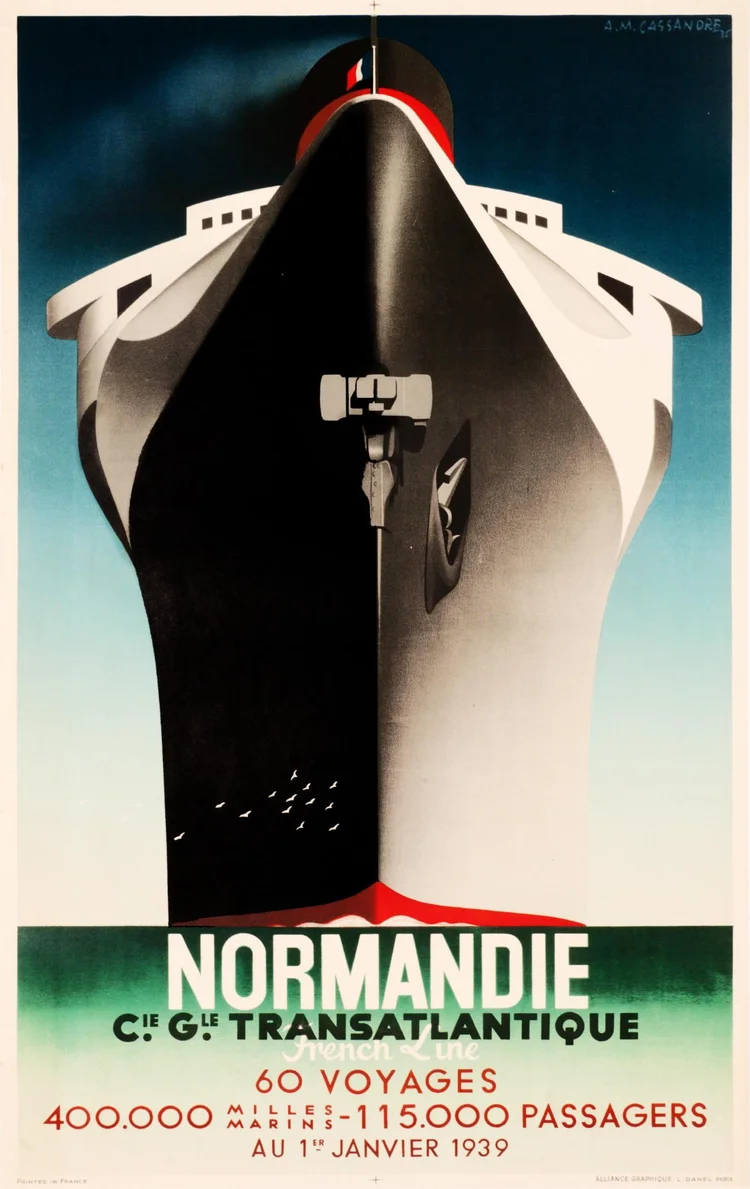

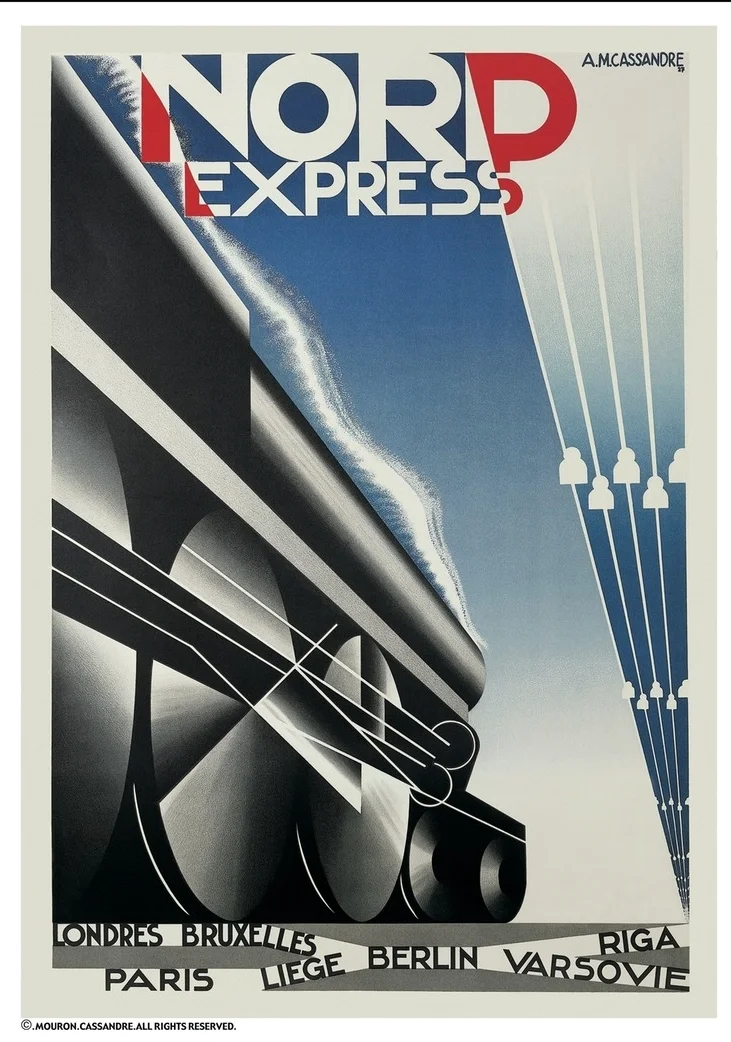
Throughout the 1930s, Cassandre expanded his reach, co-founding the Alliance Graphique studio and producing work that shaped modern advertising and visual culture. He designed posters for major clients such as Dubonnet, Harper’s Bazaar, and L’Intransigeant, creating images that combined strong geometry, bold lettering, and simplified perspective. His work was characterized by striking balance, bridging fine art, design, and commerce, while celebrating the dynamism of modern life. Cassandre’s typographic innovations for the Deberny et Peignot foundry, including the typefaces Bifur (1928), Acier (1930–34), and Peignot (1937), became hallmarks of Art Deco typography and remain influential in contemporary design. In his later years, he turned his attention to stage design, painting, and corporate identity, most famously creating the YSL logo for Yves Saint Laurent in 1963. Despite professional success, he struggled with depression and took his own life in 1968. His vision, however, endures in every field that connects design, communication, and modern aesthetics, marking him as one of the great innovators of the twentieth century.
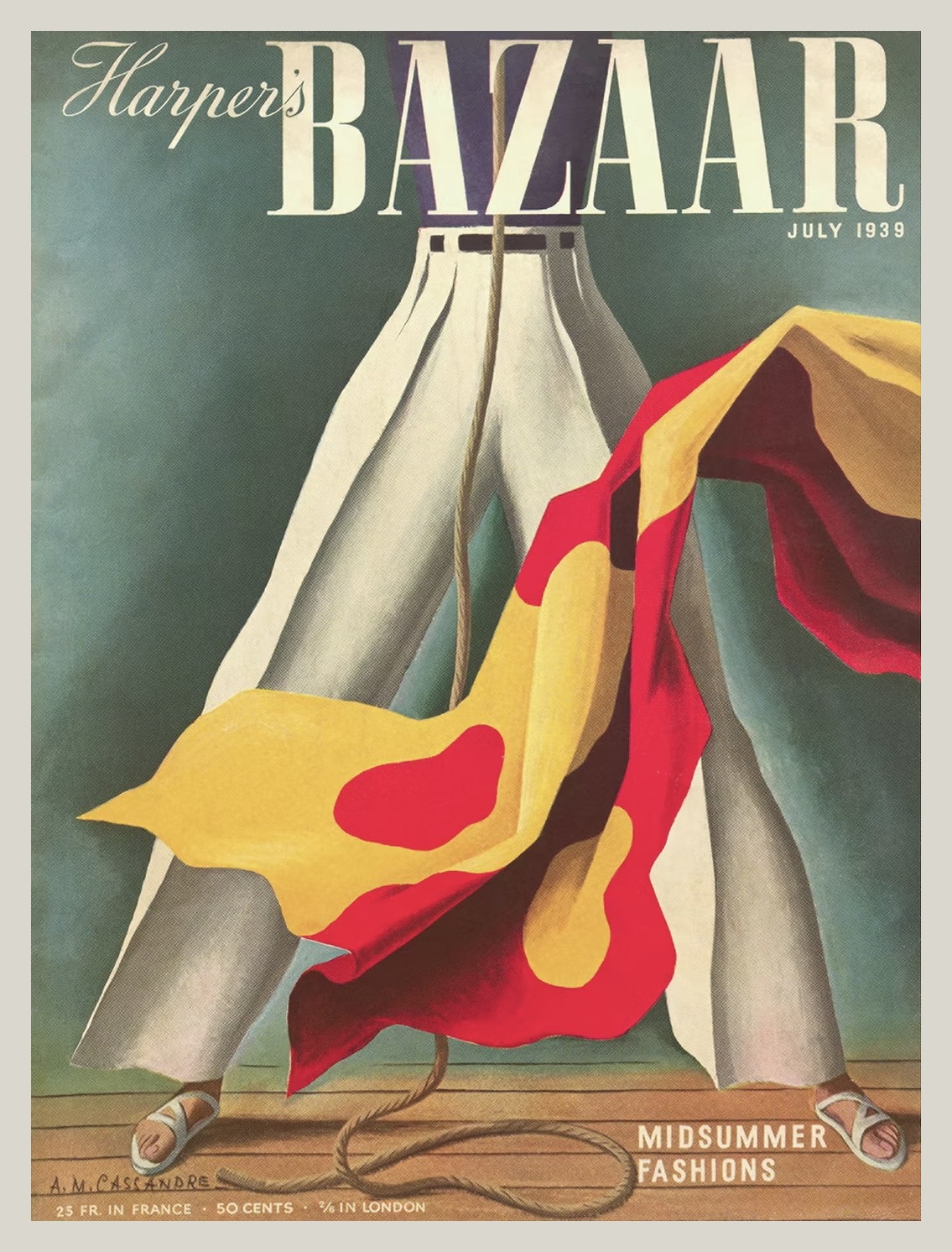

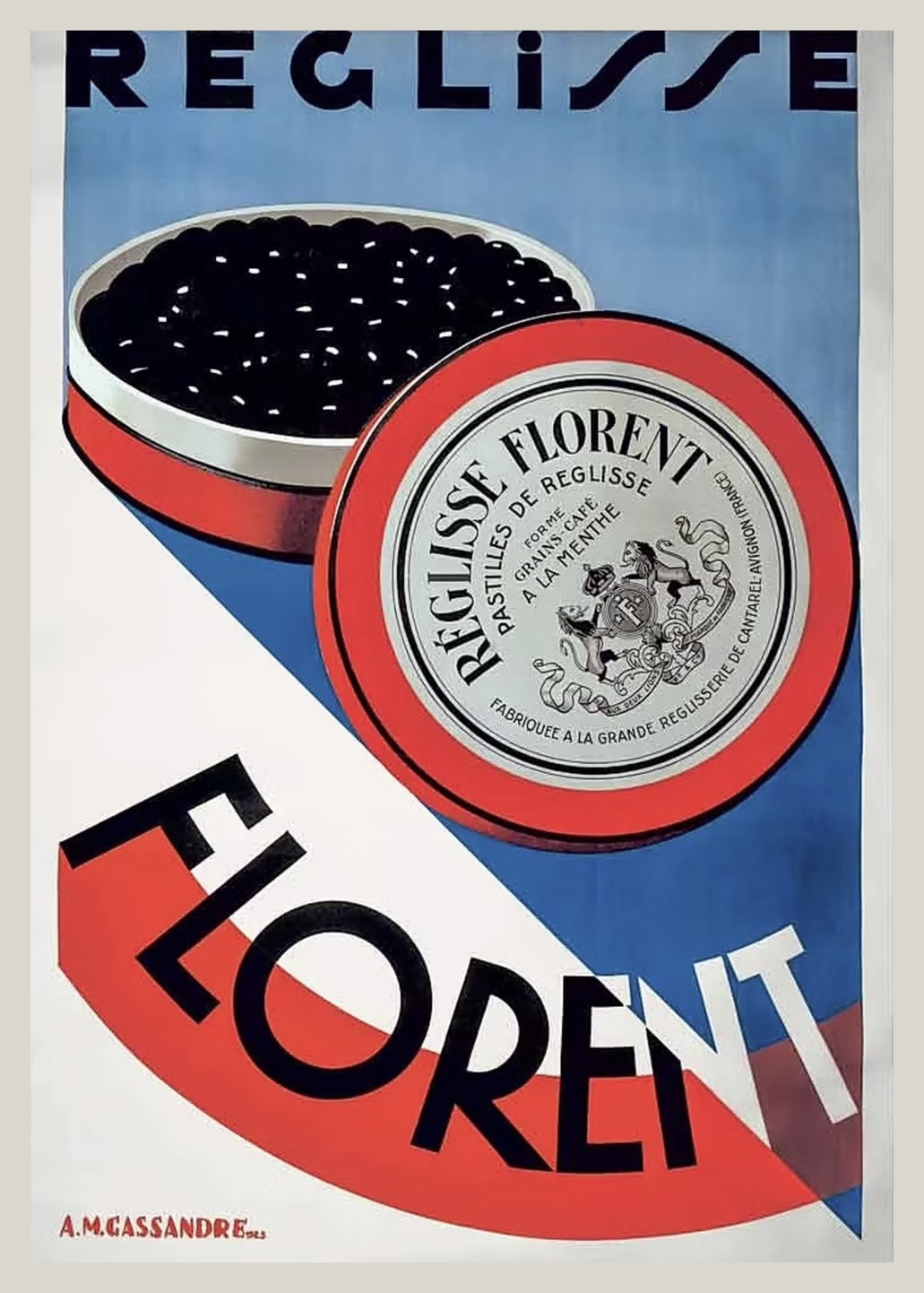
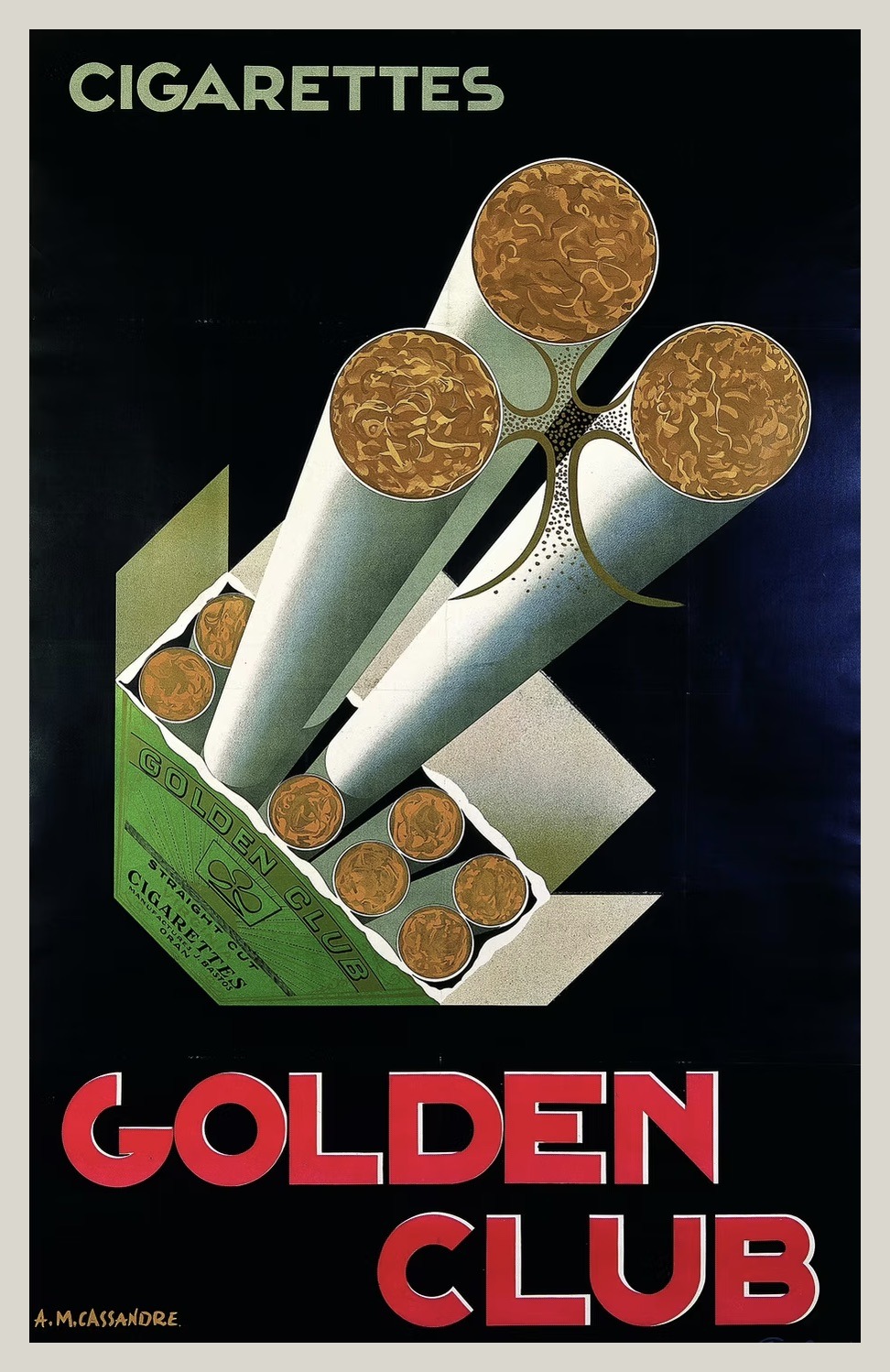
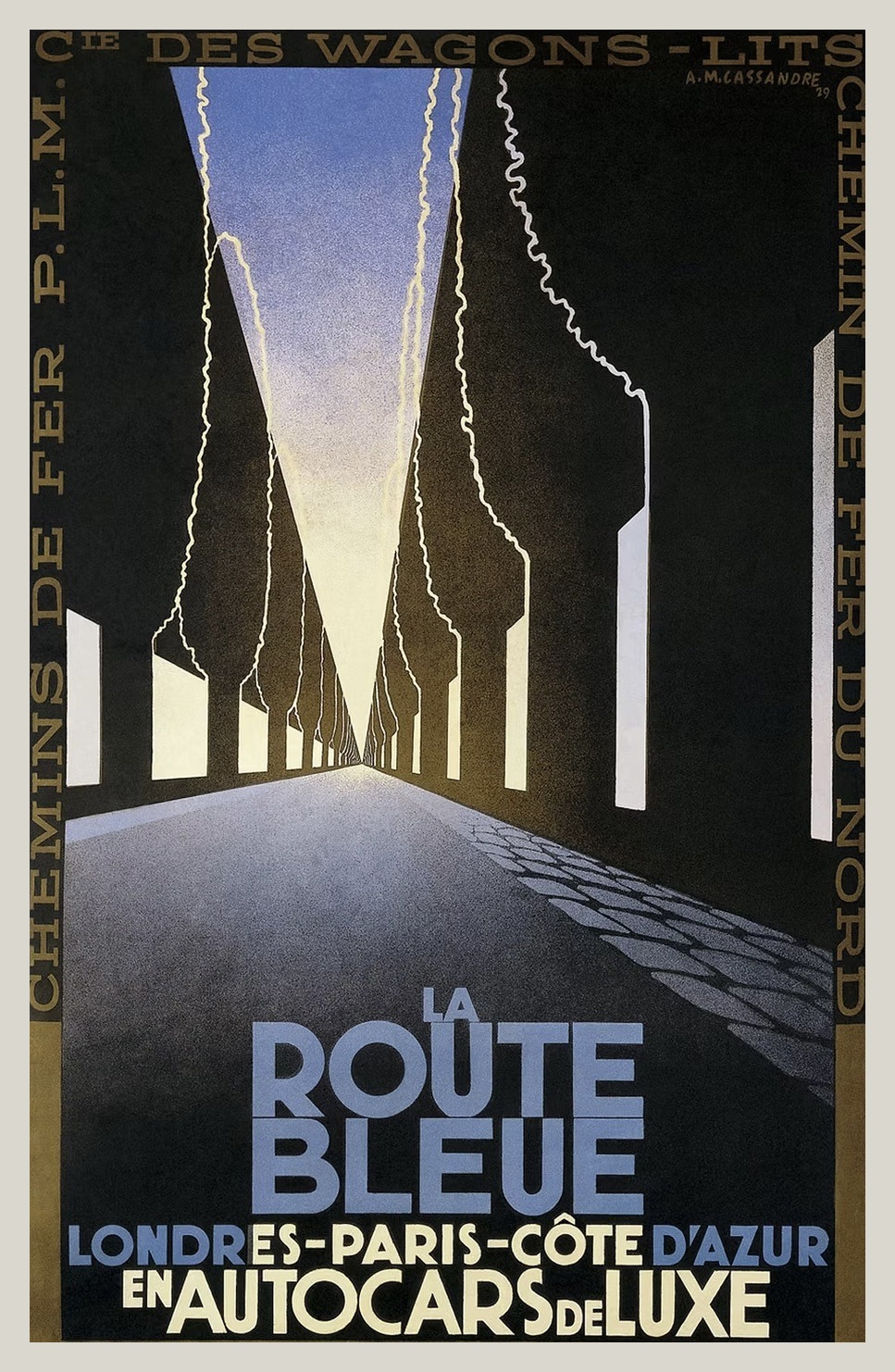
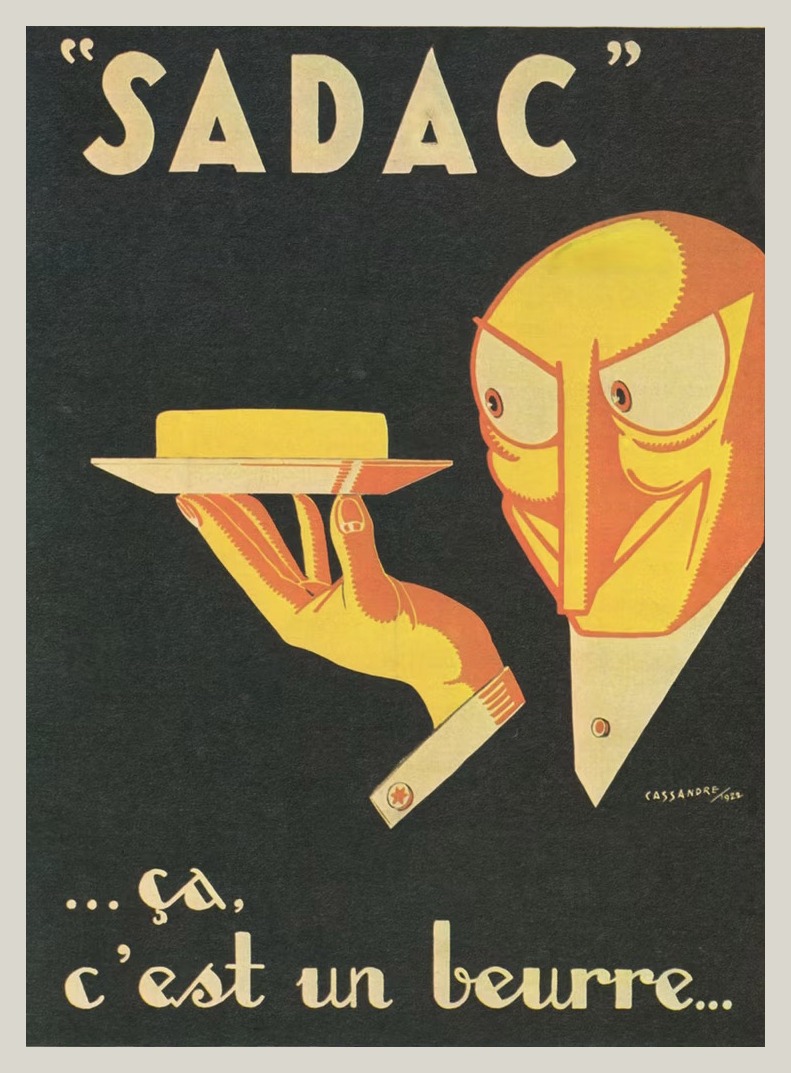


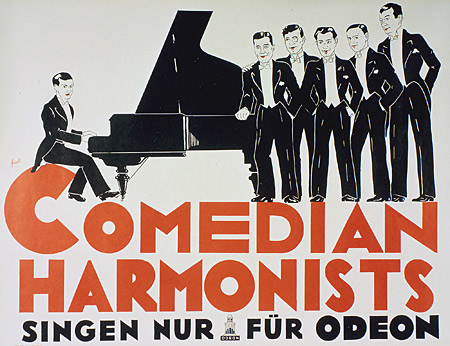
Cassandre’s style combined modern technology with classical composition. He used simplified forms, strong diagonals, and dramatic contrasts of light and shadow to create bold, memorable imagery. His posters often conveyed motion and energy through precise geometry and careful control of perspective. Typography was as important as imagery, with letterforms integrated directly into the visual structure of each piece. Cassandre’s ability to balance clarity, elegance, and innovation made his designs both timeless and distinctly modern.
Key Influences:
• Modern Art Movements: Cubism, Futurism, and the Bauhaus inspired his use of geometry, abstraction, and dynamic structure.
• Industrial Modernity: Trains, ships, and modern architecture provided imagery that captured the speed and optimism of his time.
• Typography and Communication: Cassandre treated lettering as visual art, pioneering the integration of text and image in design.
• Mass Media and Advertising: He viewed posters as a democratic art form that could bring modern design to everyday audiences.
• Legacy in Branding and Design: His influence shaped visual communication for decades, from type design to the enduring YSL logo.
If you are interested in further stories of the artists who shaped Art Deco, return to our artists page to browse the full directory.
Related Products