✕


ART & STATUES
CERAMICS & GLASS
Art Deco Around The World
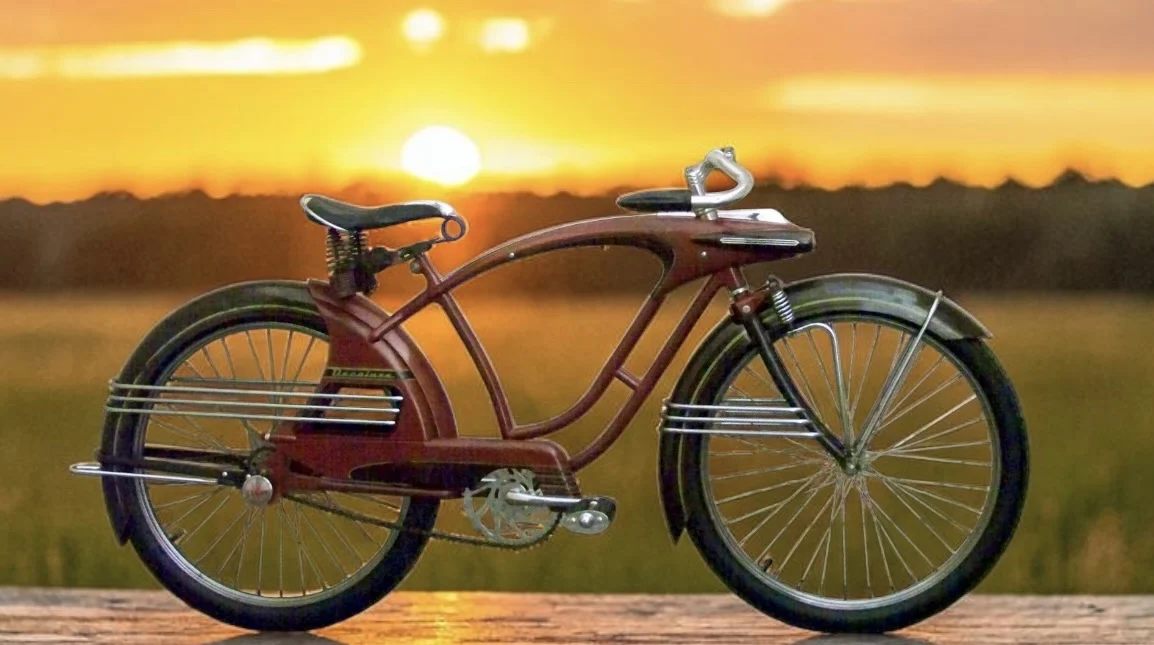
Elgin Decoluxe-Streamline Bike in Motion
The Imaginary History
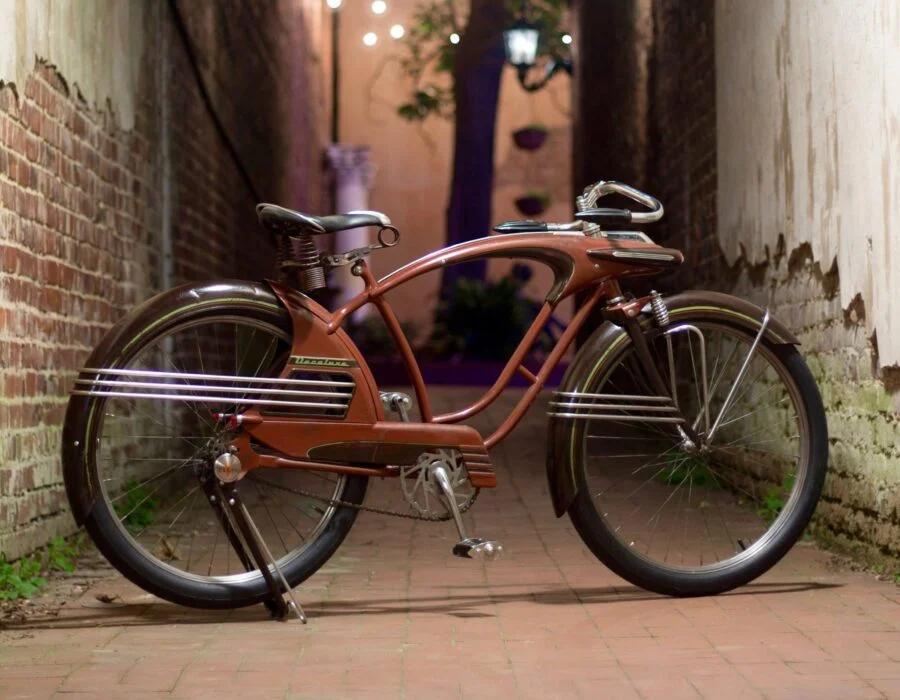
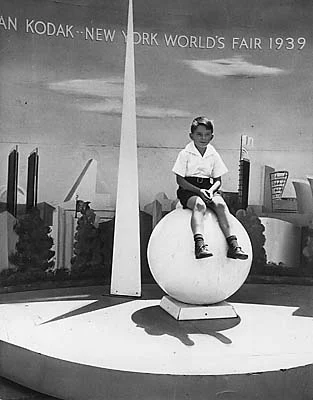
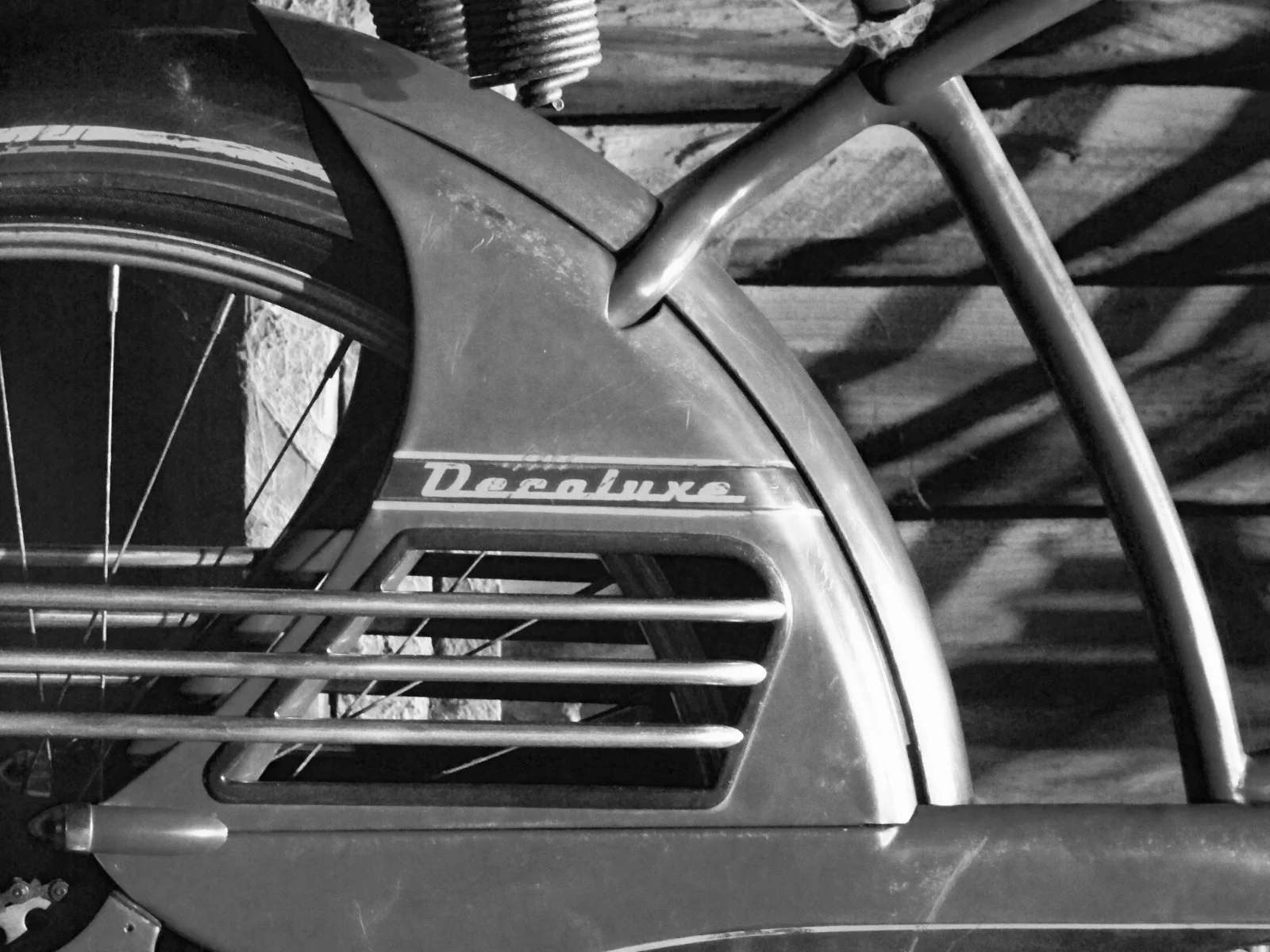
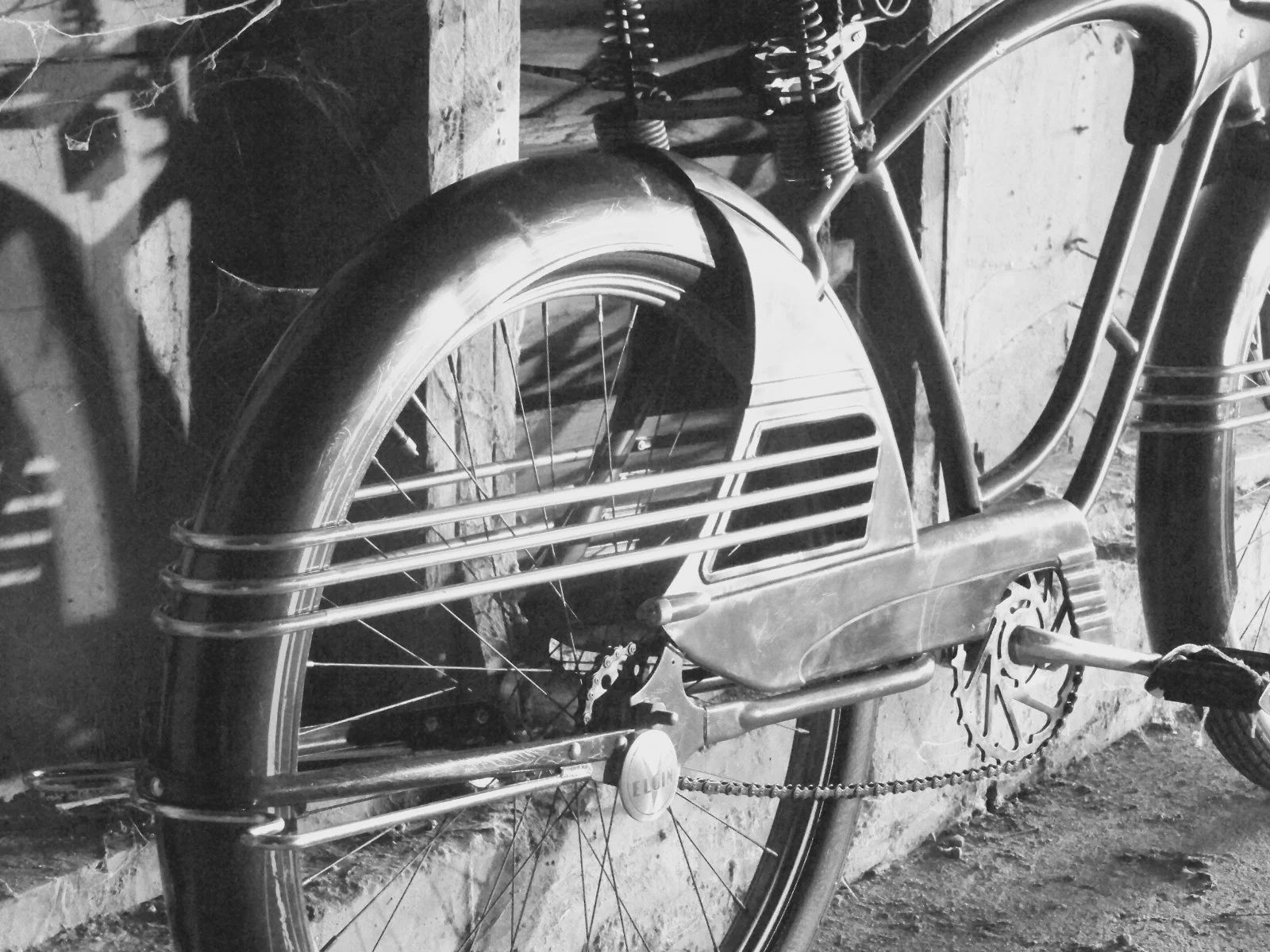
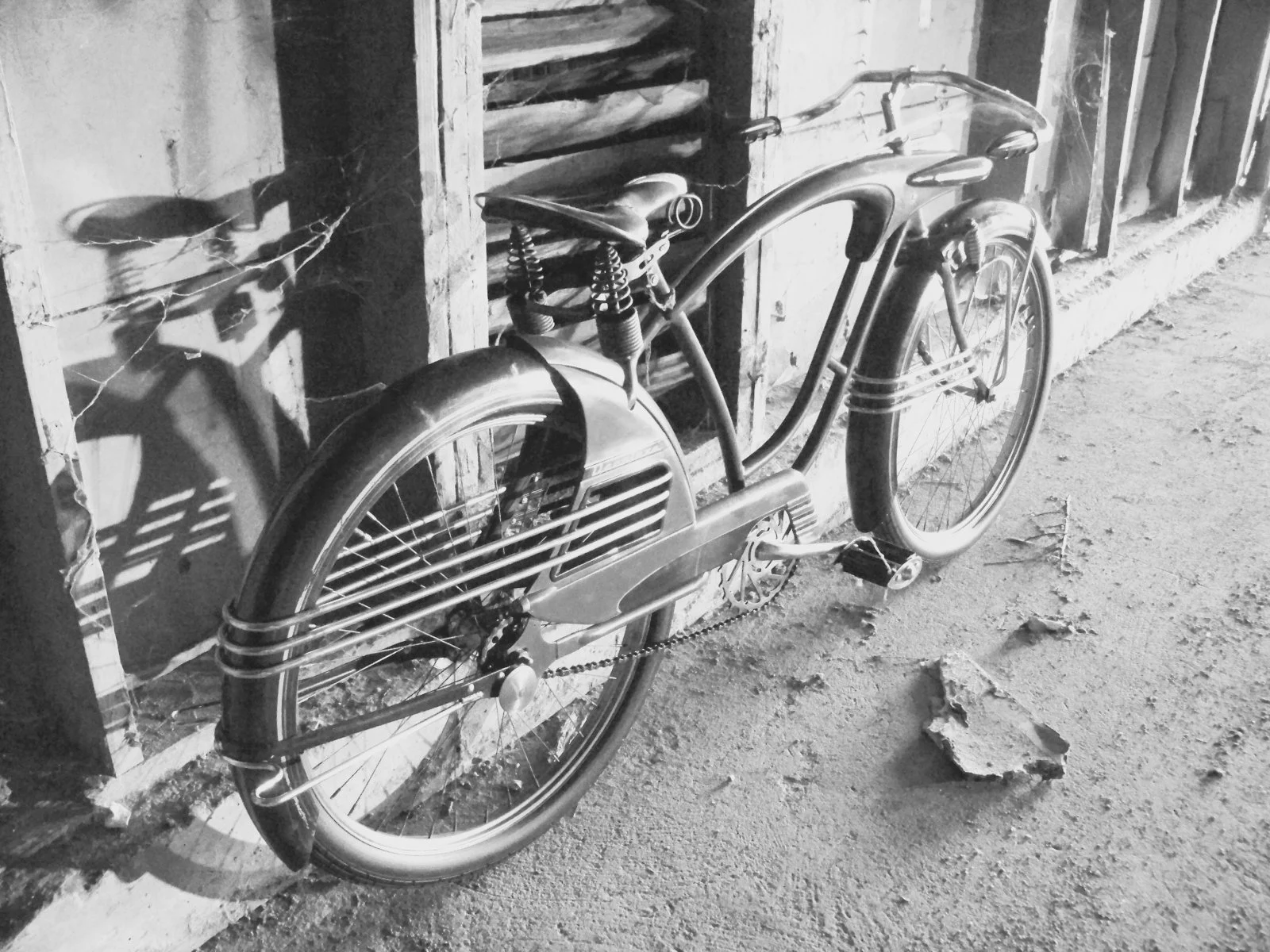
With the 1939 New York World’s Fair in full swing and the public imagination fixed on futuristic styling, the designers at Murray Ohio Manufacturing Company began developing an ambitious new deluxe bicycle unlike anything then on the market. Known internally as the Decoluxe, the project was kept highly confidential, although rumors of a dramatic new design were already circulating through the bicycle industry by late 1940. The first prototype was completed in the summer of 1941 and presented to executives at Sears, Roebuck and Co., who quickly recognized its commercial potential. Sears agreed to become the sole retailer for the new Elgin branded model, positioning the Decoluxe as a forward looking bicycle with the visual excitement of aviation, streamlining, and machine age design.
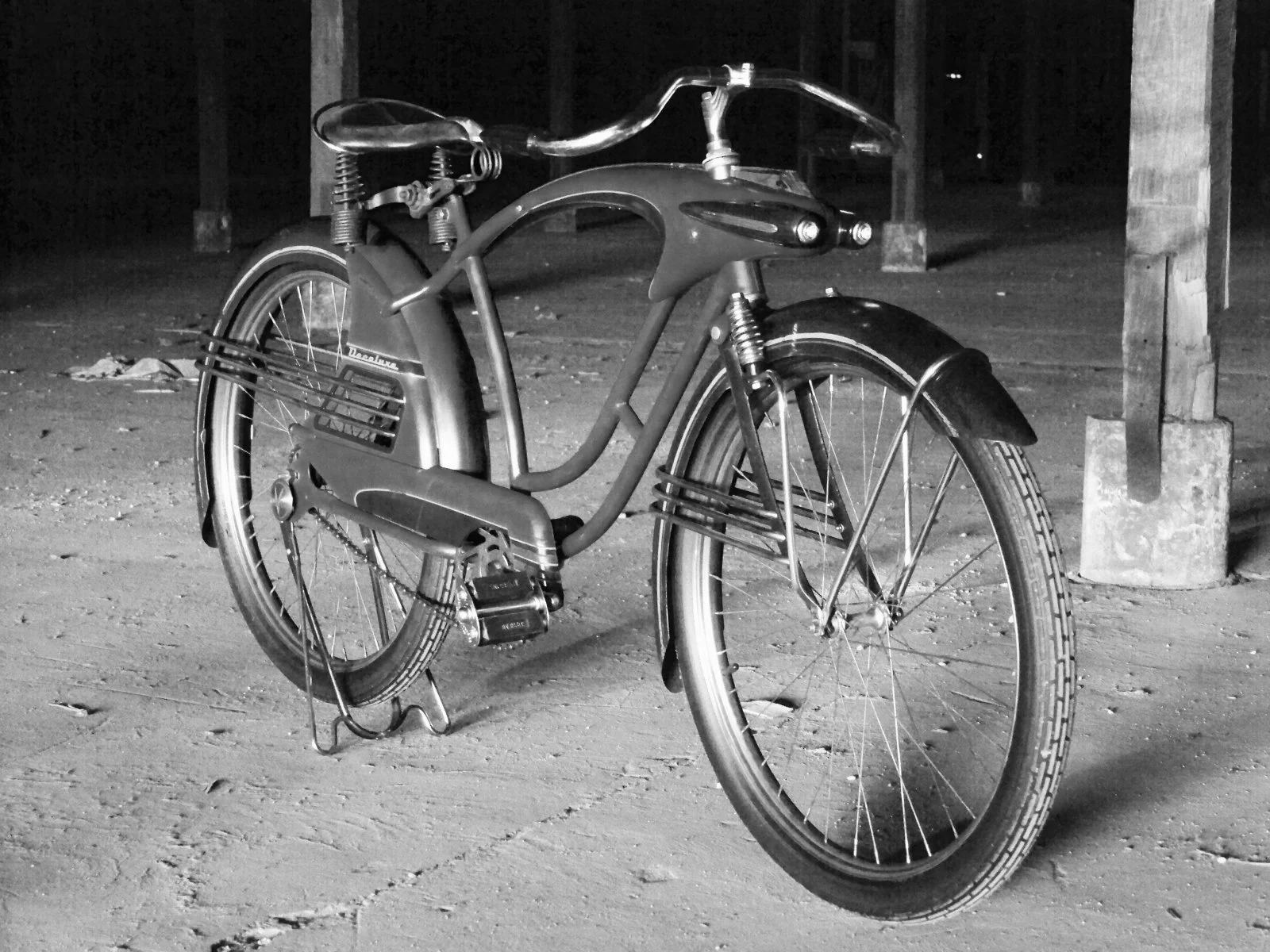
After nearly two years of planning, the Elgin Decoluxe was expected to enter production in early 1942. Before tooling at the Ohio plant could be completed, however, the attack on Pearl Harbor brought the United States into World War II, redirecting manufacturing priorities toward the war effort. The Decoluxe project was shelved and eventually abandoned, leaving only the prototype behind at the Murray facility, where it was reportedly used by couriers moving through the plant. Years later, rare photographs revealed the existence of this extraordinary bicycle, and builder Jim Henderson, known as The Renaissance Man, began a long search for it. He eventually located the lone Decoluxe in a storeroom of an undisclosed Chicago warehouse. Remarkably, its original paint and chrome survived and were revived through careful polishing.
The Real Story
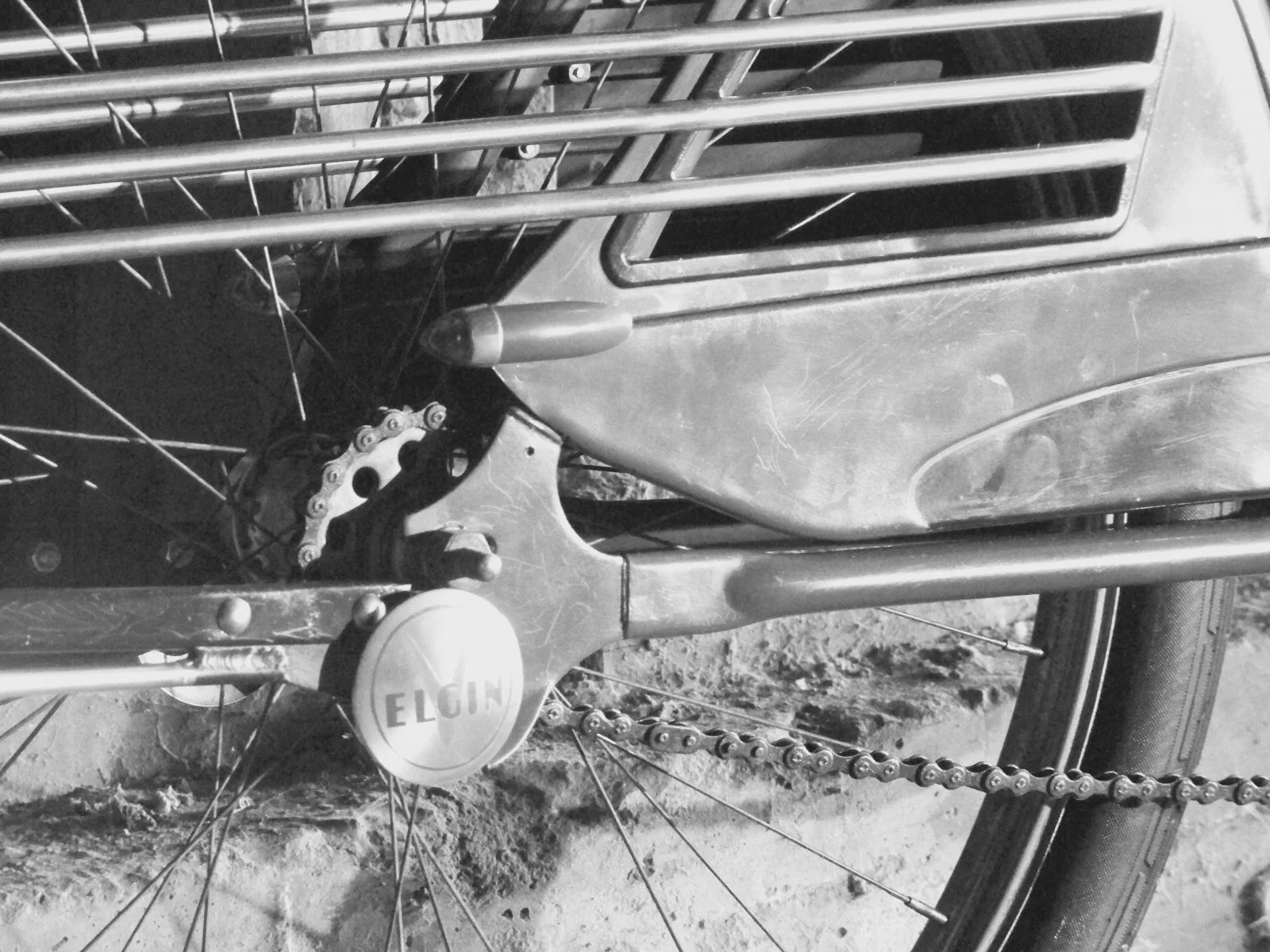
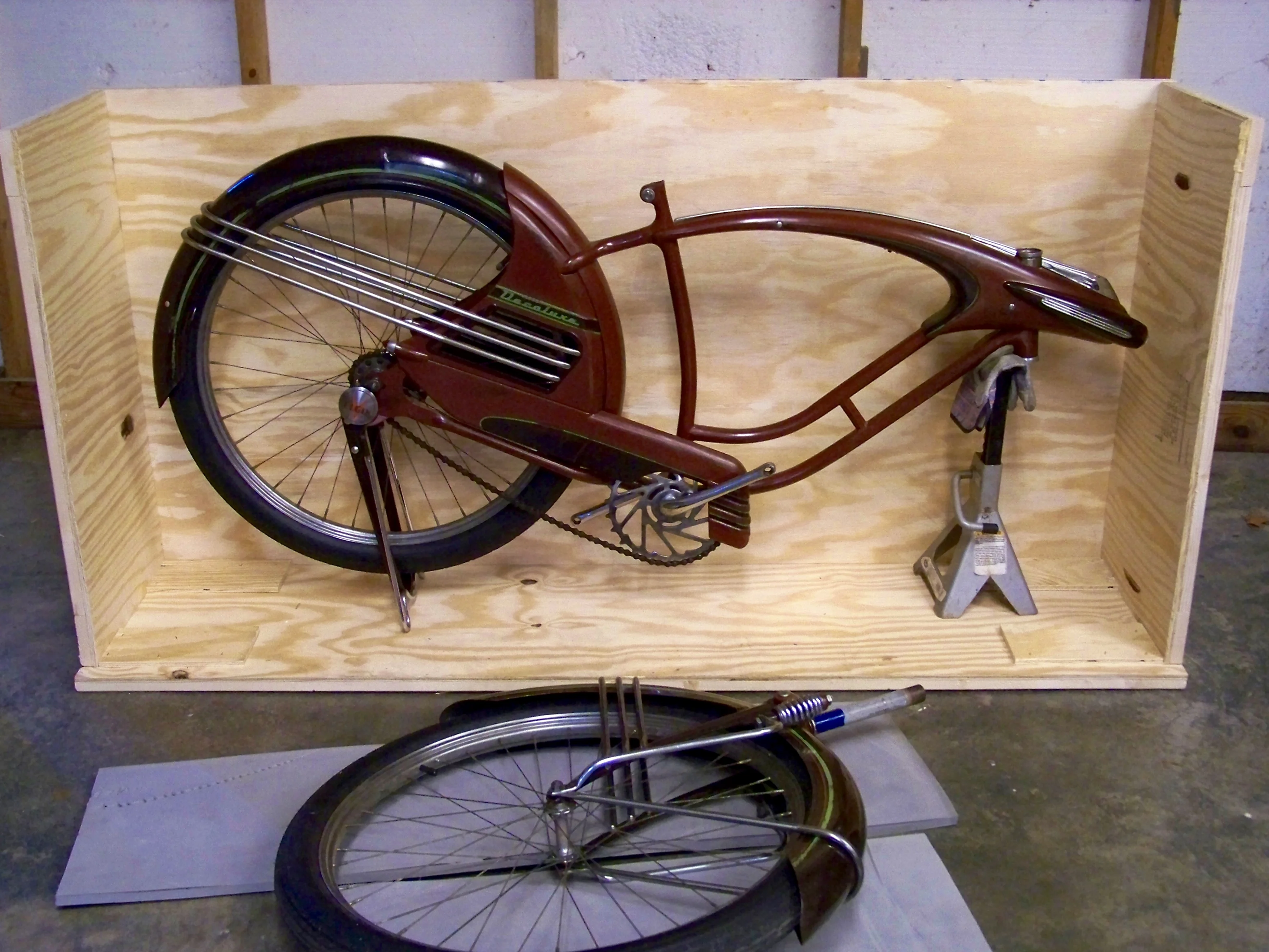
The Elgin Decoluxe begins as a fantasy and a 1941 Elgin girls frame, originally chosen as a promising candidate for a custom convertible tank project. After briefly setting it aside for a 1957 Schwinn Wasp, the builder returned to the Elgin as a build off project and began shaping the idea through research into Art Deco design, streamlining, and period bicycle styling. The goal was not to recreate a documented production model, but to build a bicycle that felt as if it could have existed, a design imagined from the language of the late 1930s and early 1940s. Higgins skirt guards, kept for years without the right project, suddenly made perfect sense against the Elgin frame and became an important visual anchor. From there, parts from different manufacturers, periods, and styles were carefully brought together so they would flow naturally, creating a unified machine rather than a collection of unrelated pieces. The finish was treated to suggest old paint that had been compounded and waxed back to life, giving the bicycle the character of a rediscovered Deco era survivor.
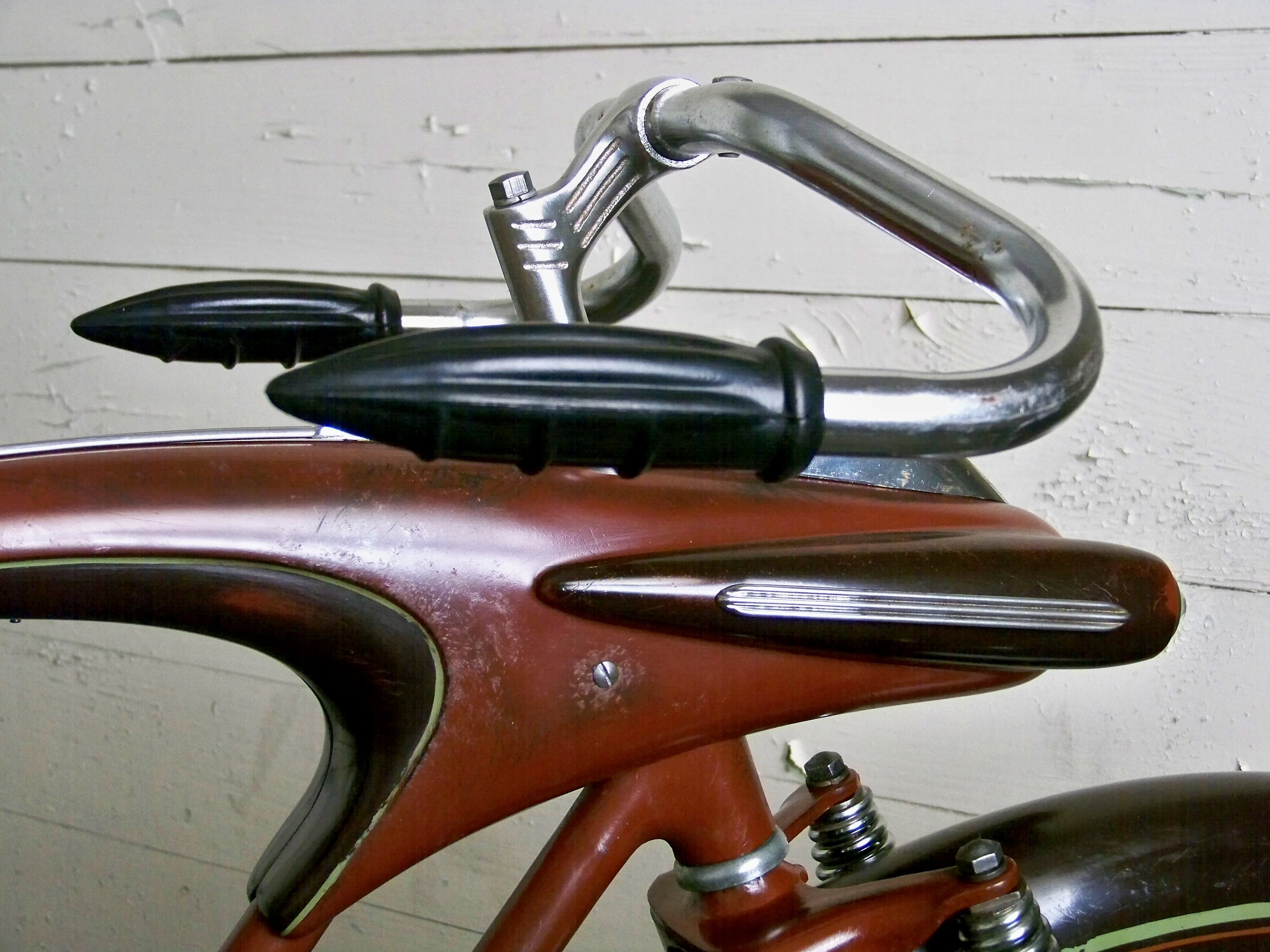
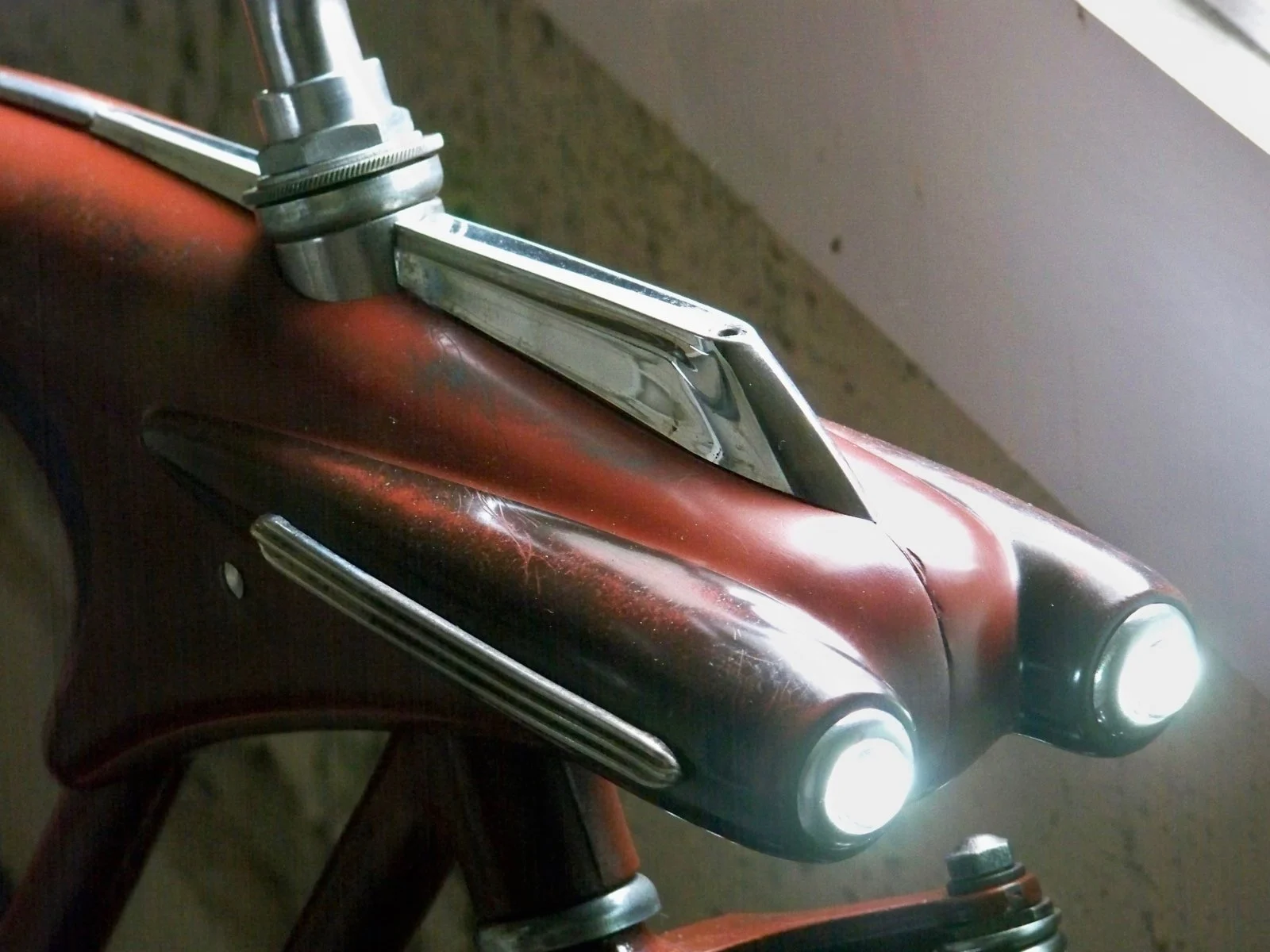
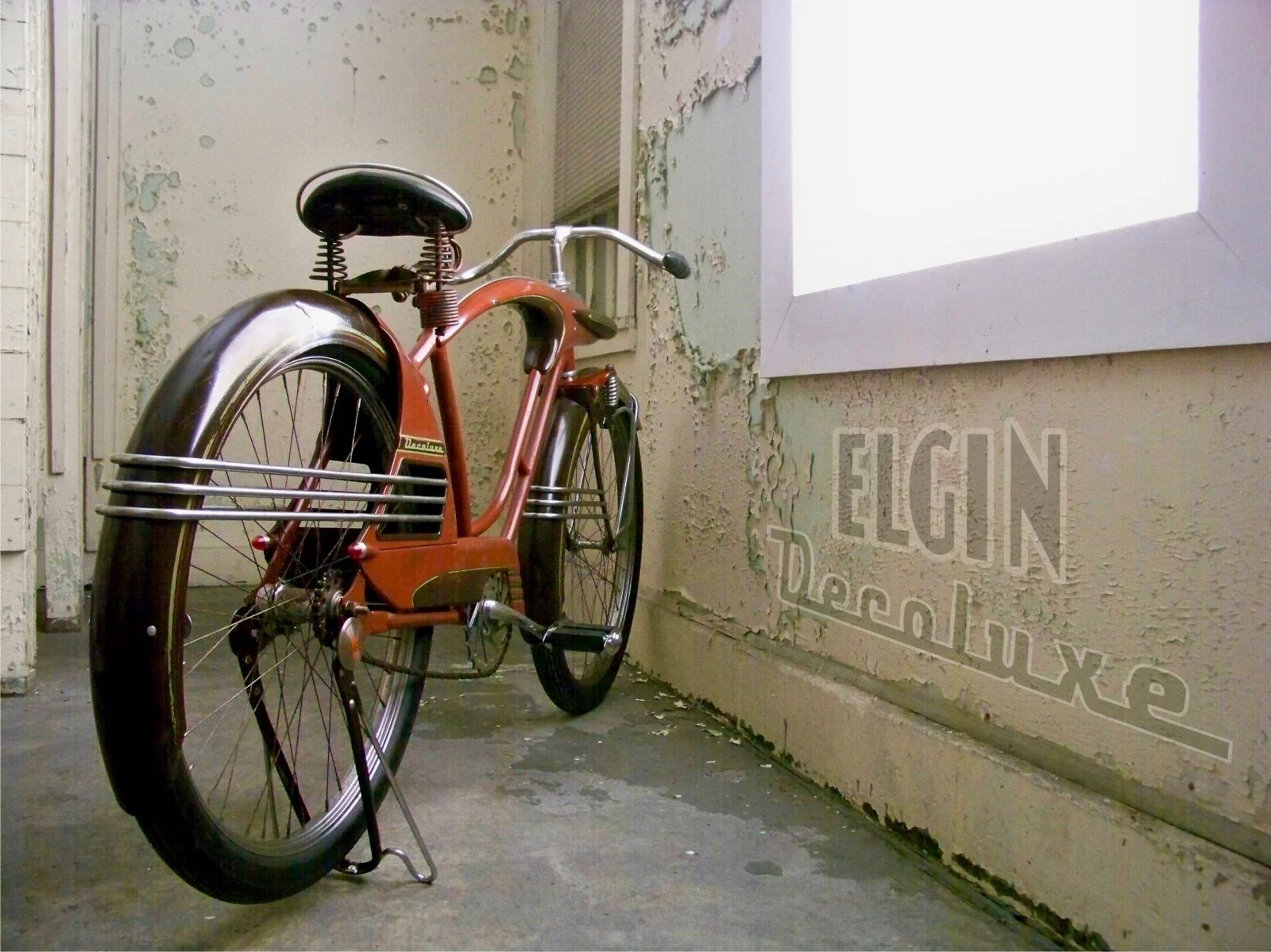
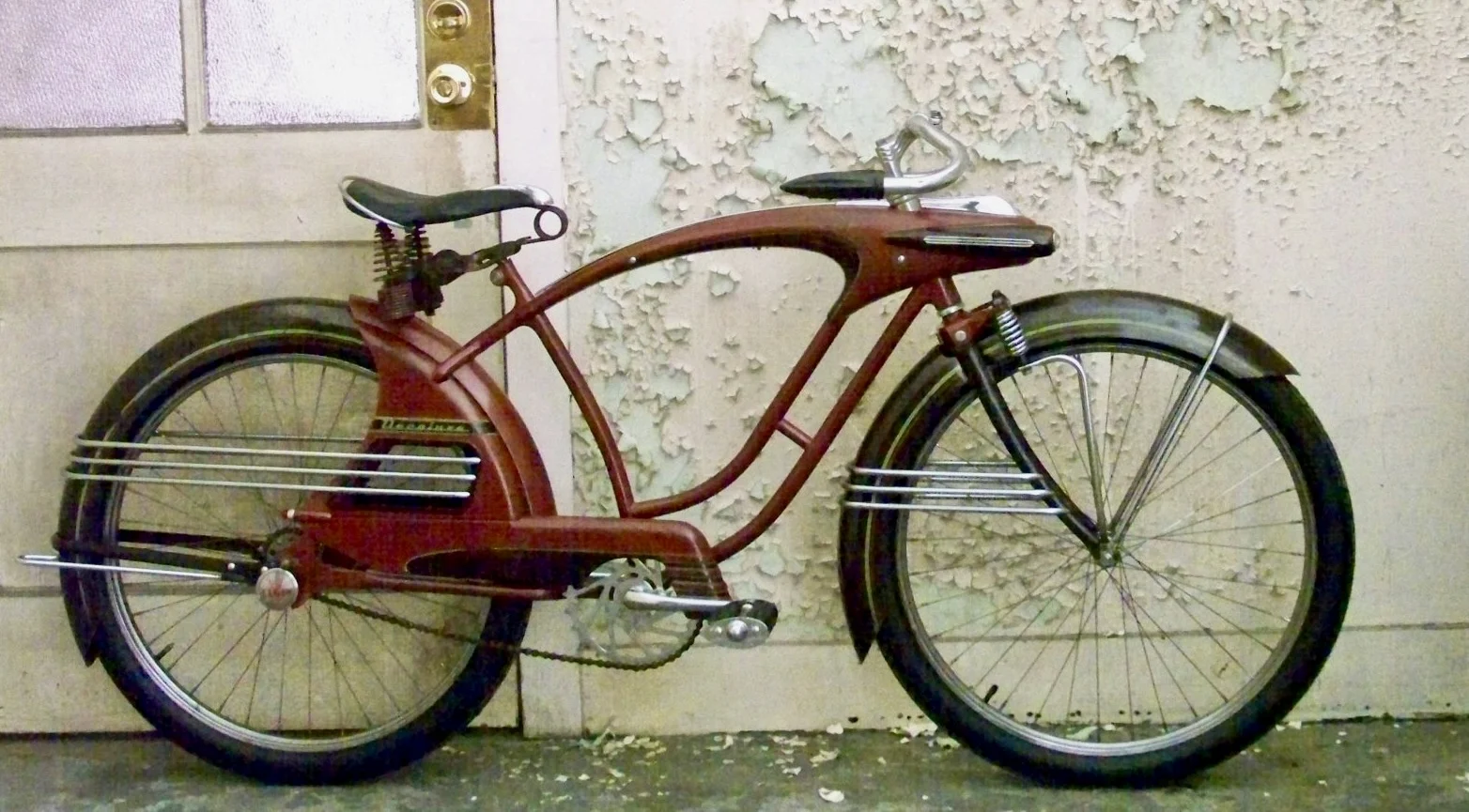
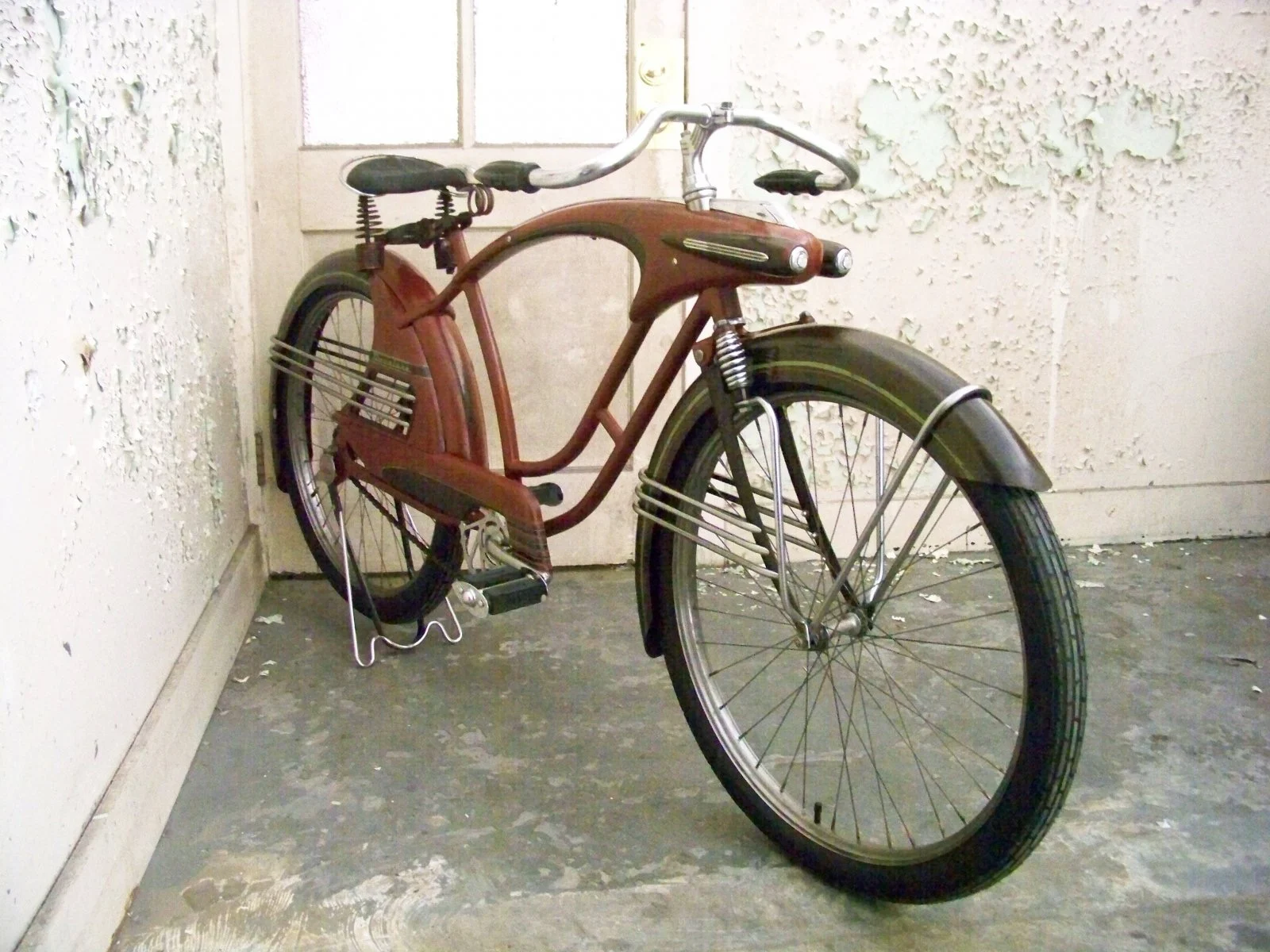
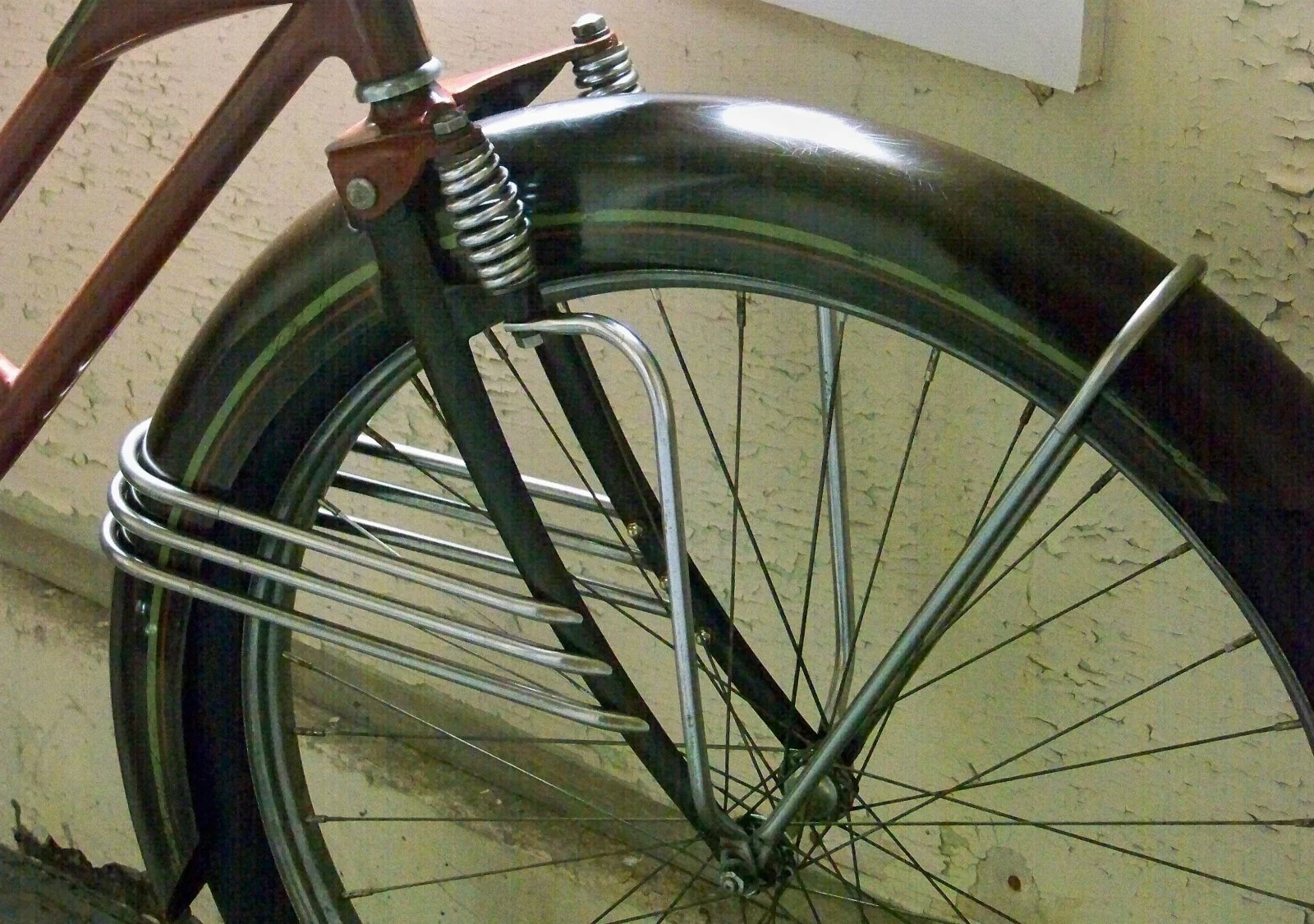
For those interested in the construction details, the following notes are attributed to Jim Henderson, who created this remarkable custom build. His work brought together a wide range of period, reproduction, and custom elements to create a bicycle that feels as if it could have existed in the late Art Deco era.
Build details attributed to Jim Henderson, The Renaissance Man:
• 1941 Elgin girls frame
• TRM convertible tank
• CWC Shockmaster fork
• Prewar Elgin triple step wheels
• Schwalbe Fat Frank 26 x 2.35 tires
• 1930s and 1940s era Torrington Art Deco handlebar stem
• Huffy middleweight handlebar
• Foxgrips reproduction Airflo grips
• Prewar Diamond skip tooth chain
• Prewar Lazy Heart chain ring
• Persons Majestic teardrop pedals
• Monark deep fenders
• Huffy fenderettes
• J.C. Higgins Colorflow skirt guards
• CWC Western Flyer and Hiawatha chain guard
• Prewar long spring saddle, customized
• Lucky Seven seat post
• Colorflow fender brace and custom drop stand
• Custom Deco fender braces
• LED headlights and tail lights
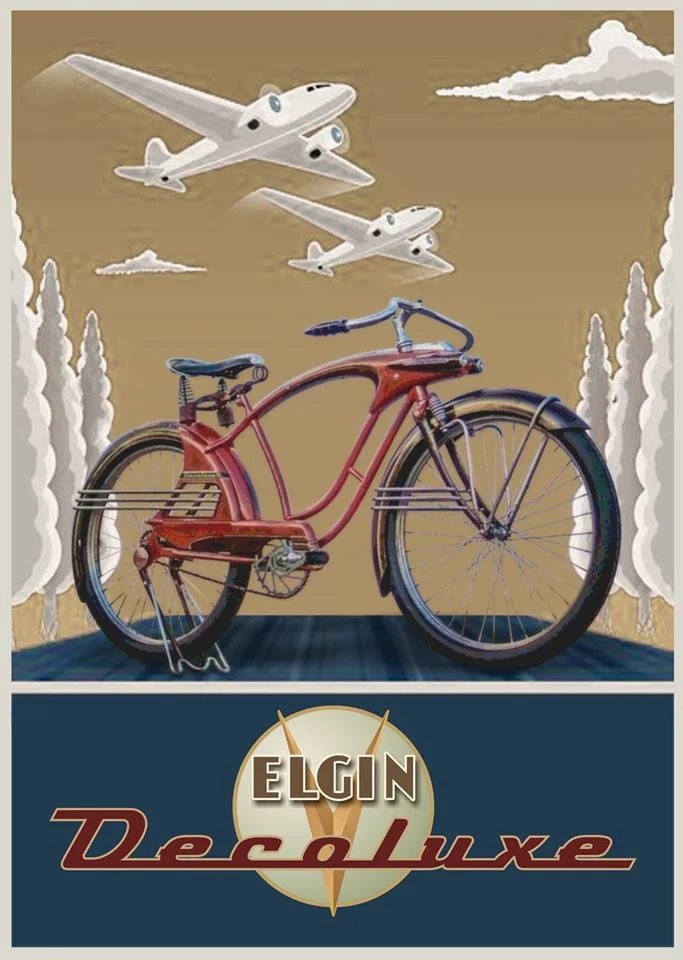
Elgin Decoluxe poster design by Jim Henderson
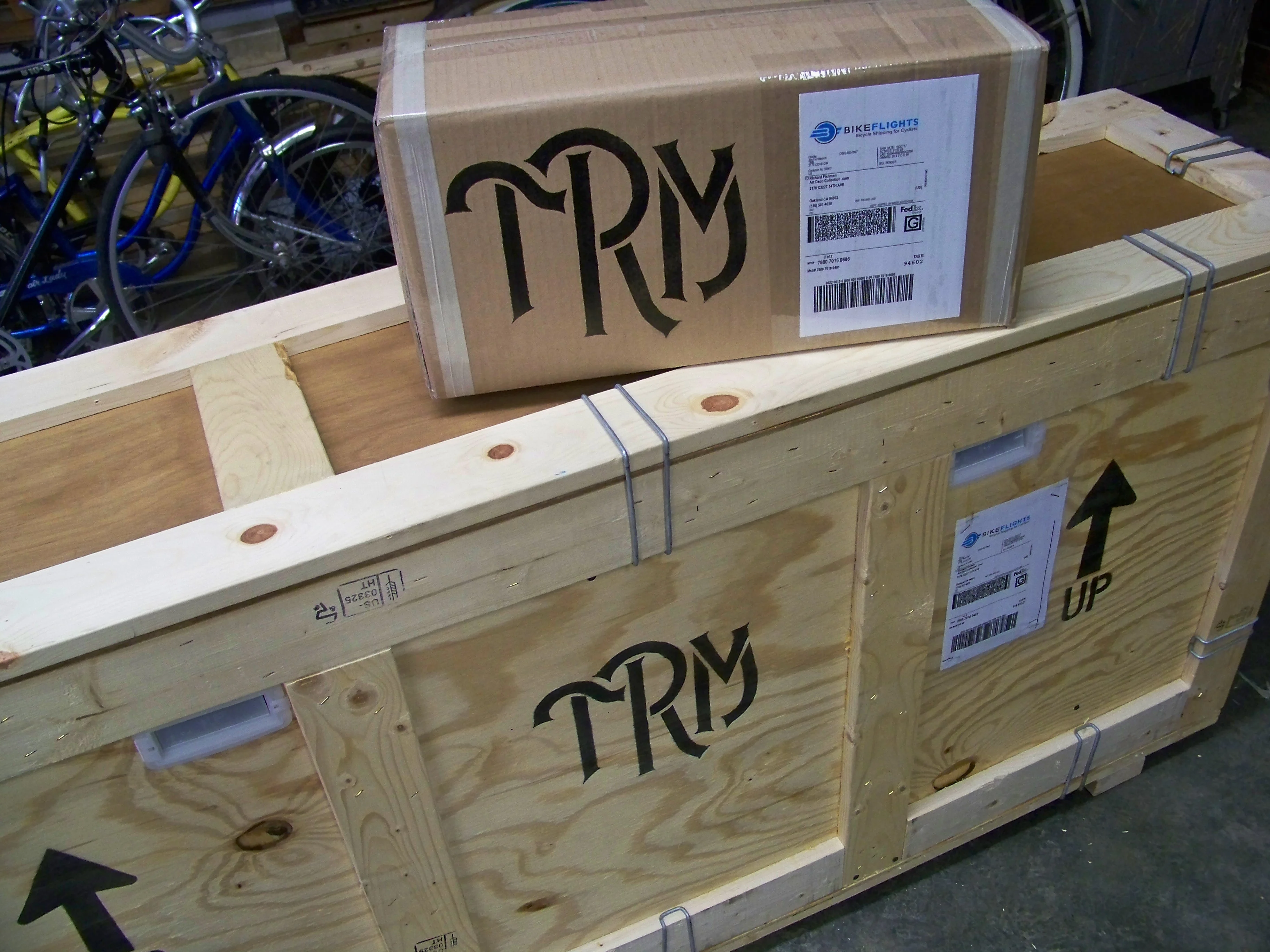
After seeing the bike and first falling for its imaginary history, I pursued it with the same instinct that has guided so many acquisitions for Art Deco Collection. Once I learned that it might actually be possible to own it, and once the true story of the build became clear, there was no hesitation. It had the look, the imagination, and the Deco spirit that we are always searching for, even if its history was different than I first understood. That was more than ten years ago, and today the Elgin Decoluxe holds a place of honor among the other vintage bicycles in our collection. Special care was taken in preparing a custom crate so this extraordinary bicycle could be shipped safely and arrive exactly as Jim Henderson required.
A link to Jim Henderson is included here, where you can learn more about his bicycle builds, contact him directly, and explore his work with custom bicycles, special projects, and related support.
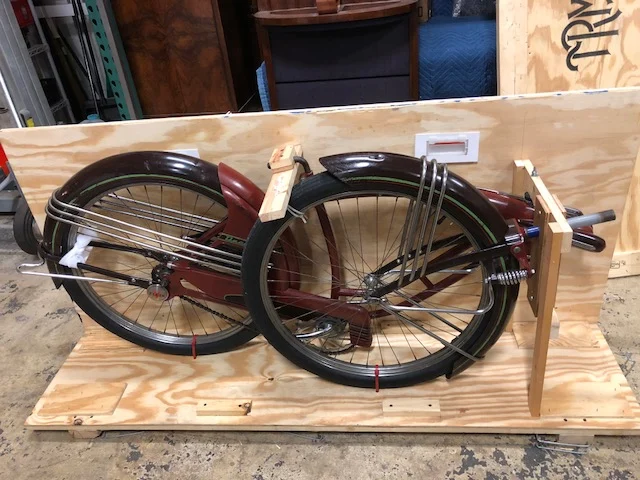
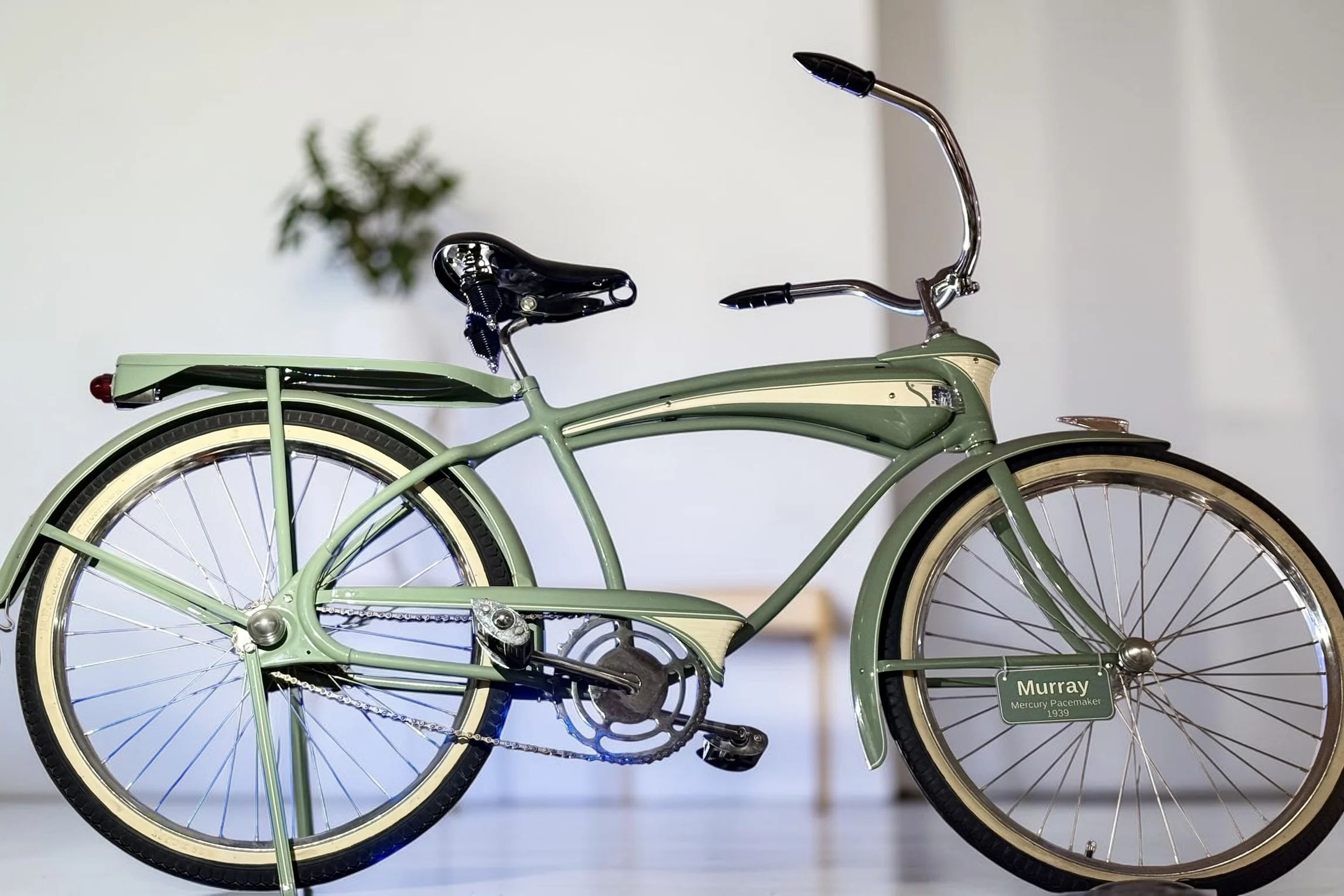
Here it hangs in our showroom among other important historic bicycles. To the left is our restored 1939 World’s Fair bicycle, made by the Murray bicycle company and originally available only at the 1939 San Francisco Treasure Island World’s Fair or the New York World’s Fair of the same year.
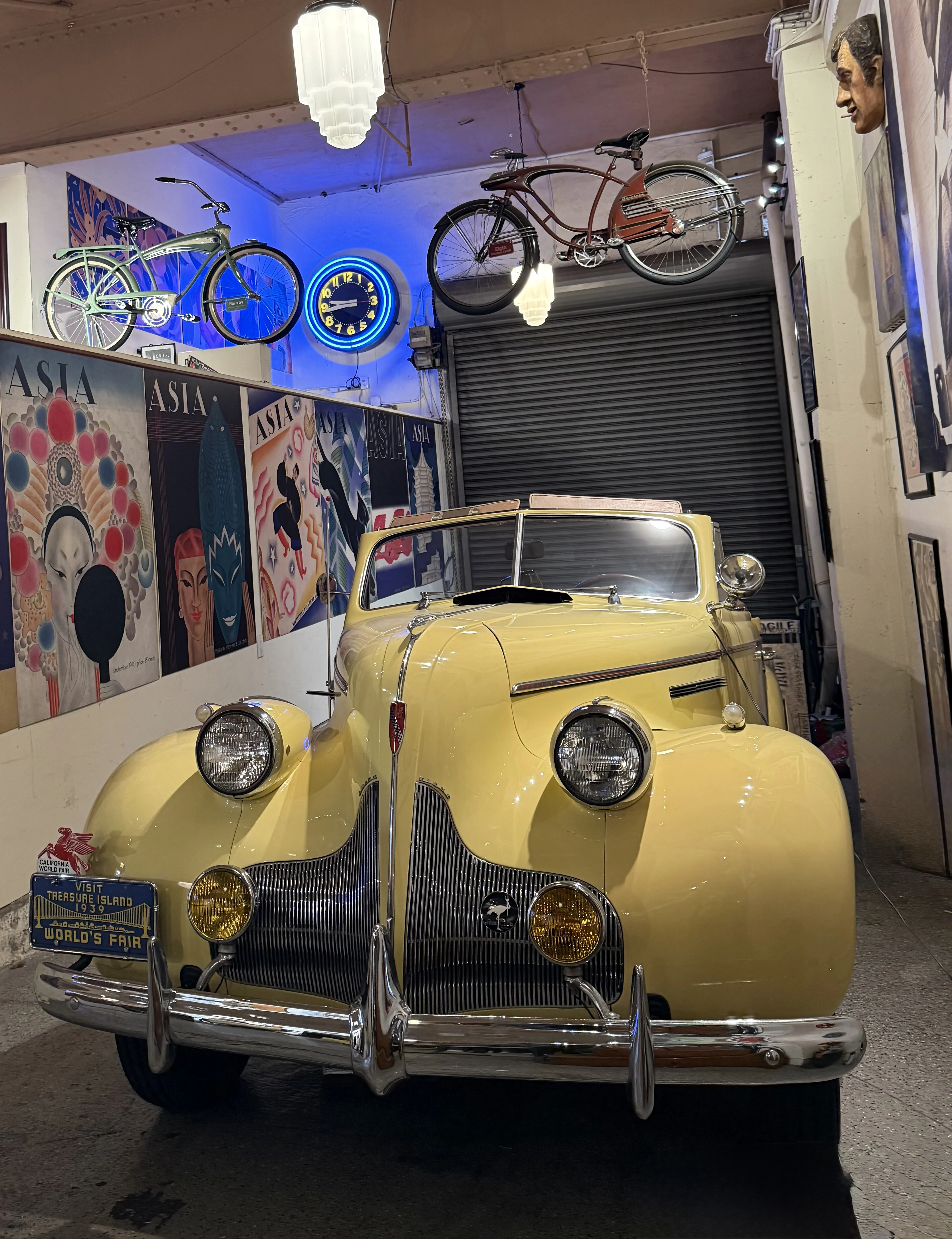
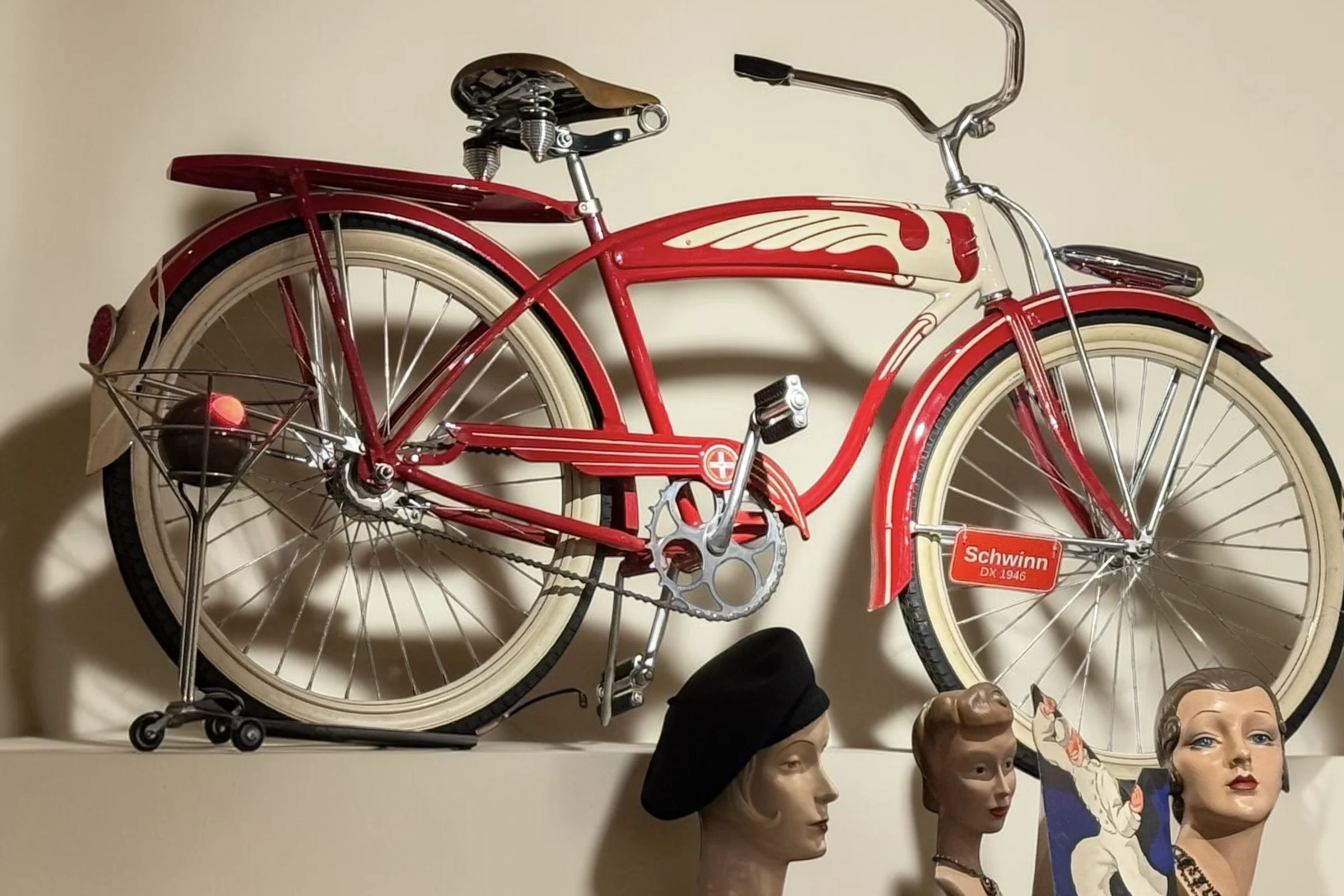
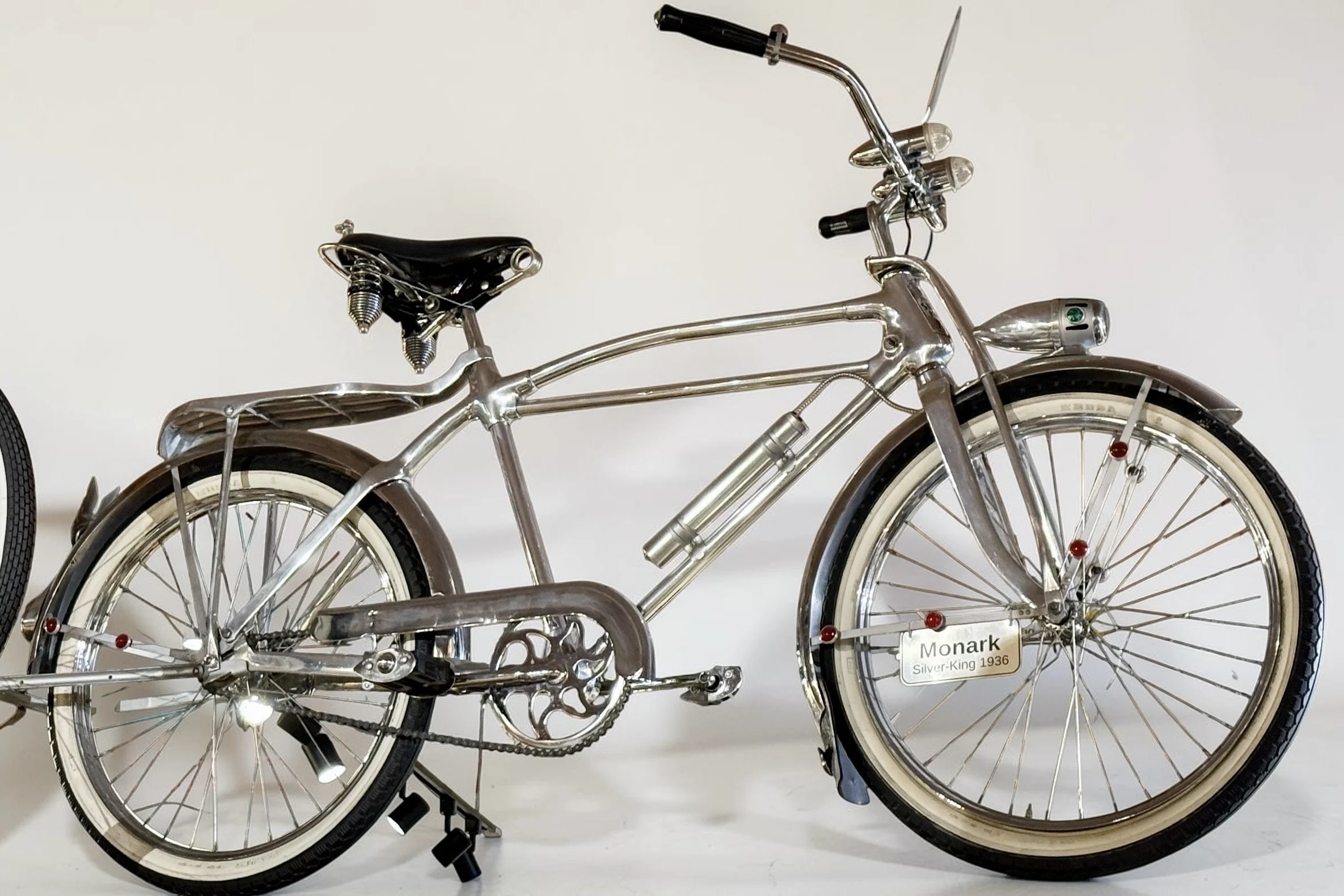
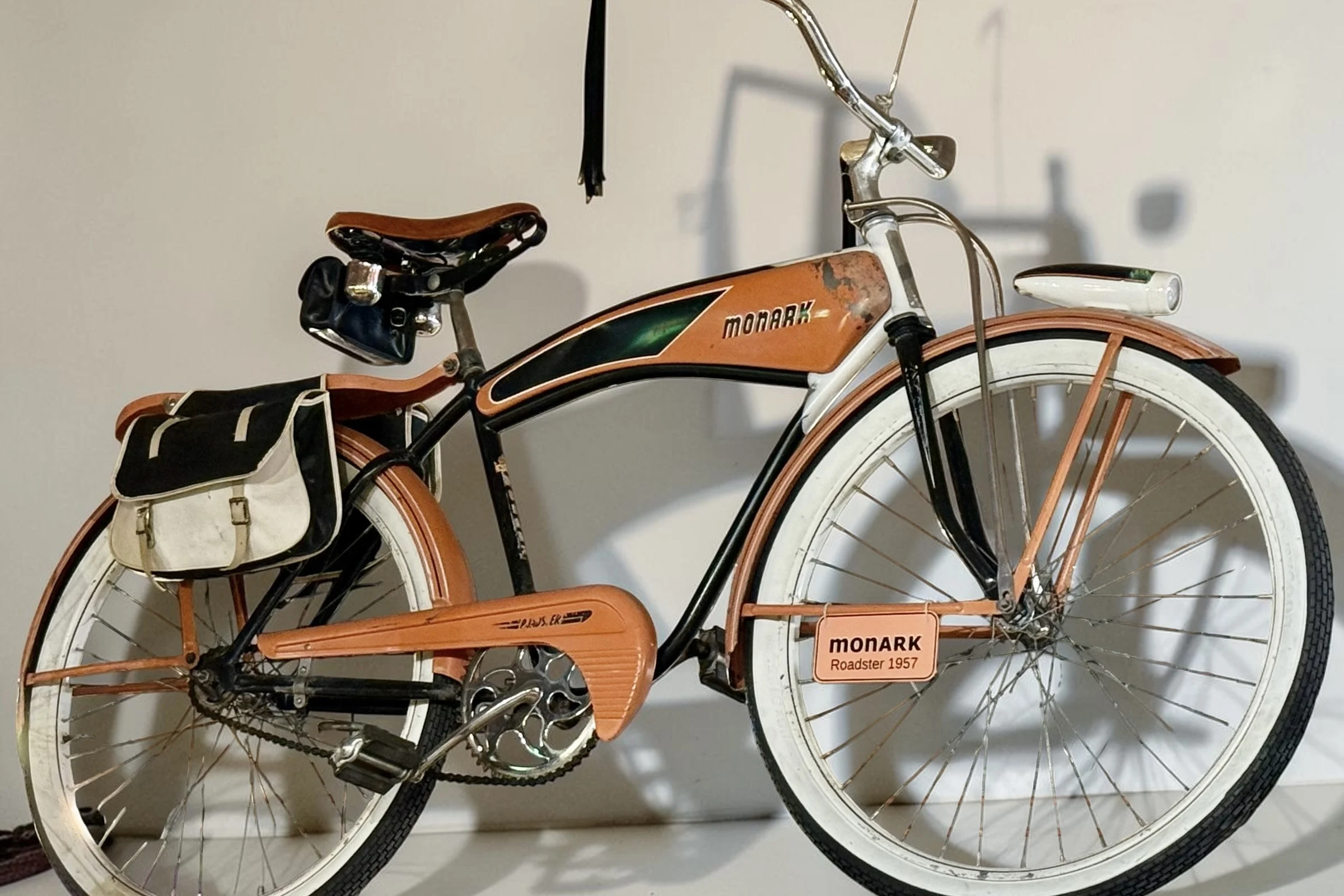
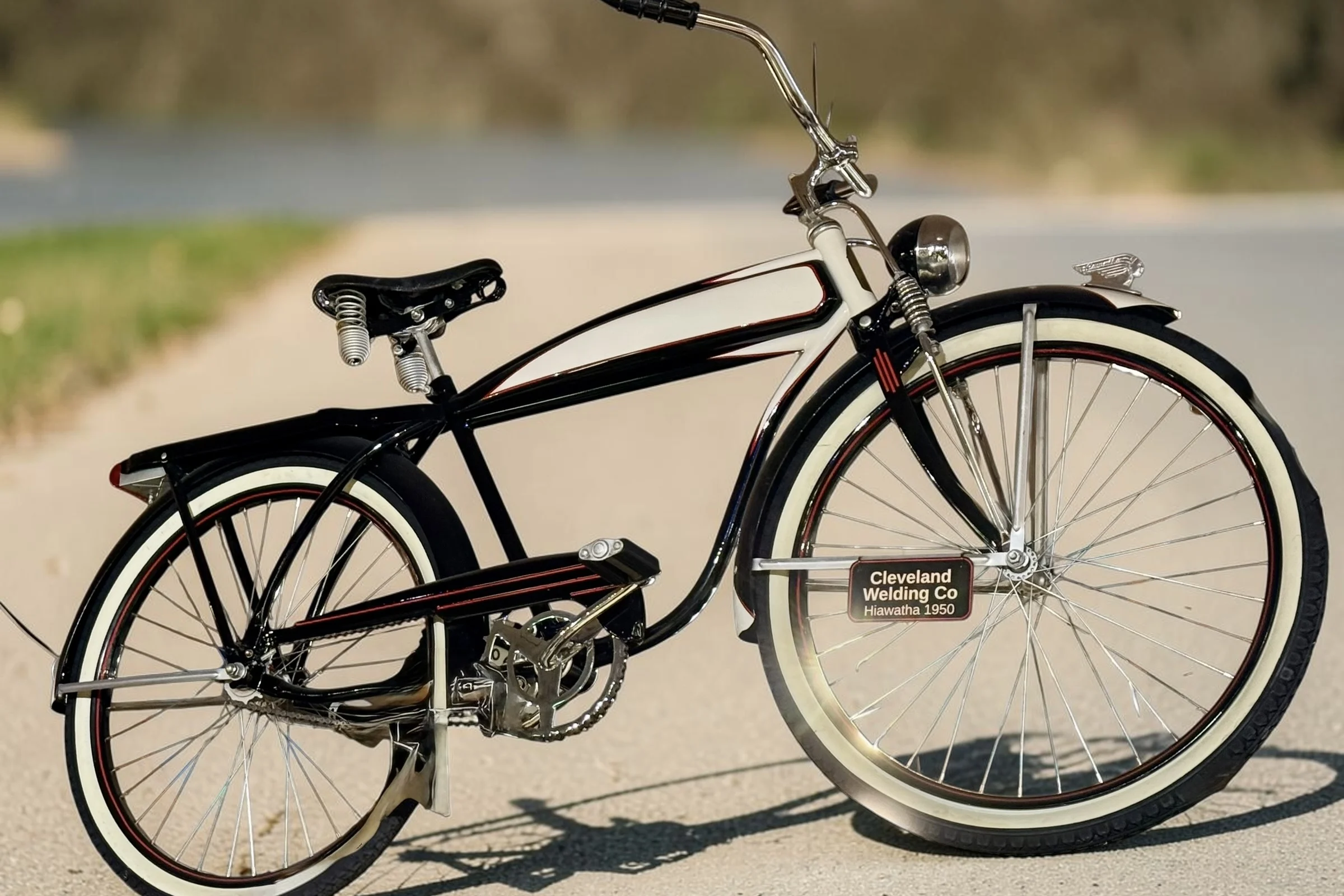
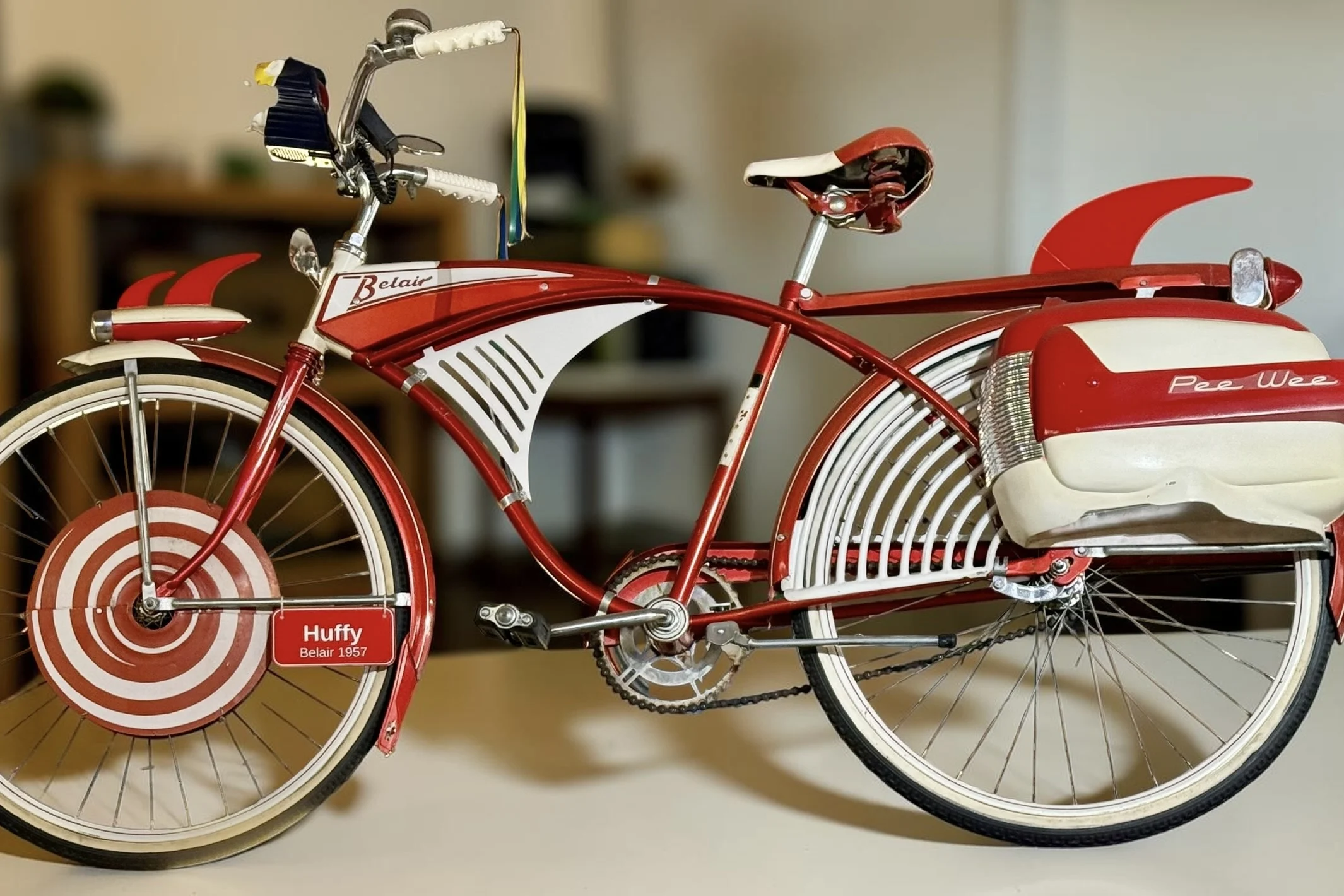
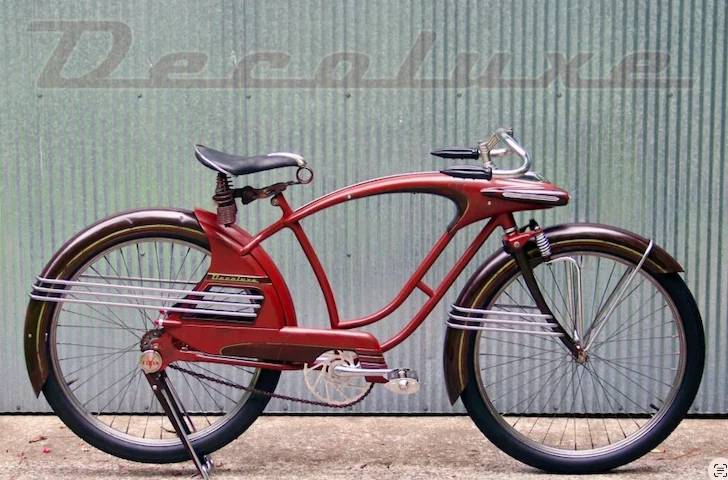
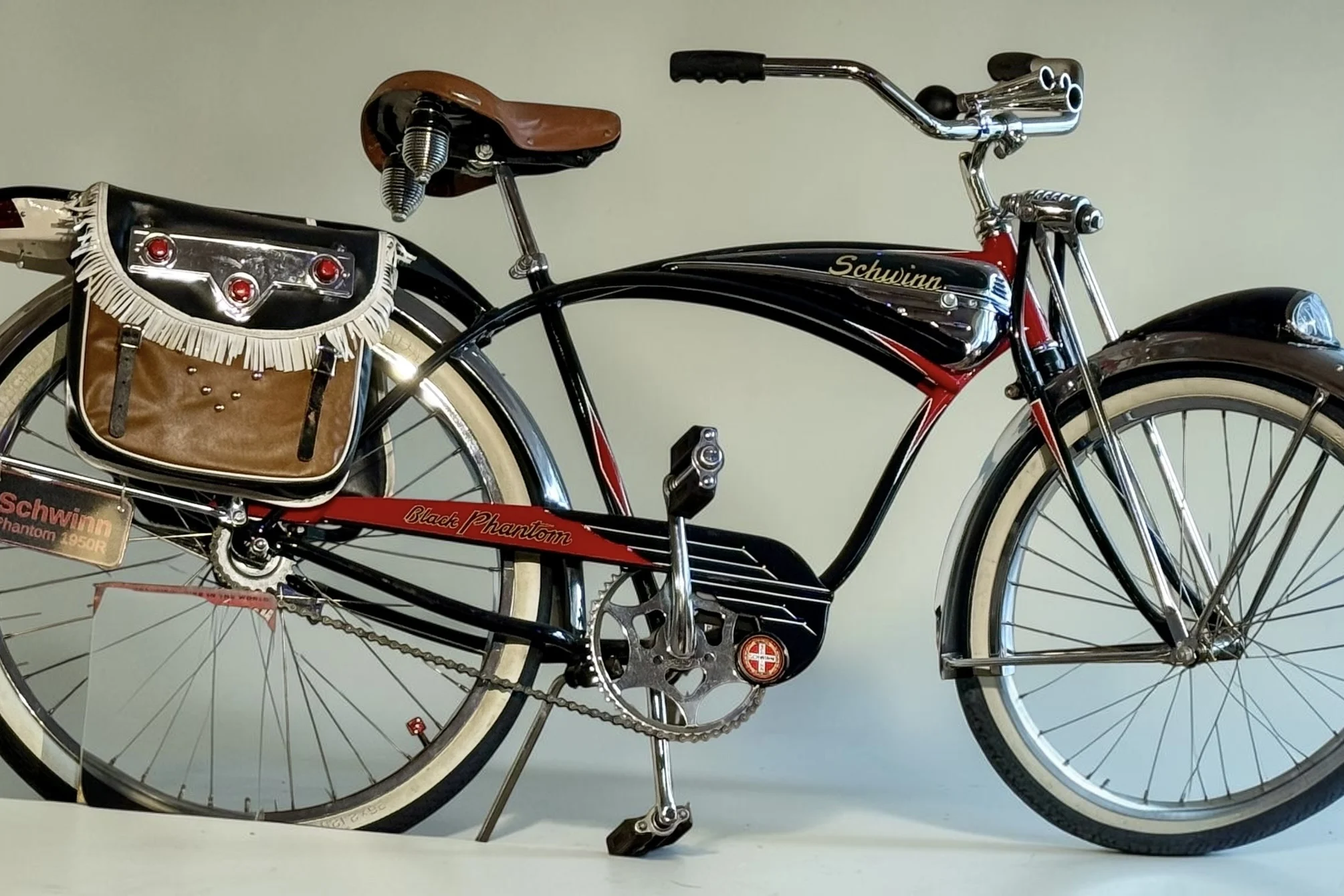
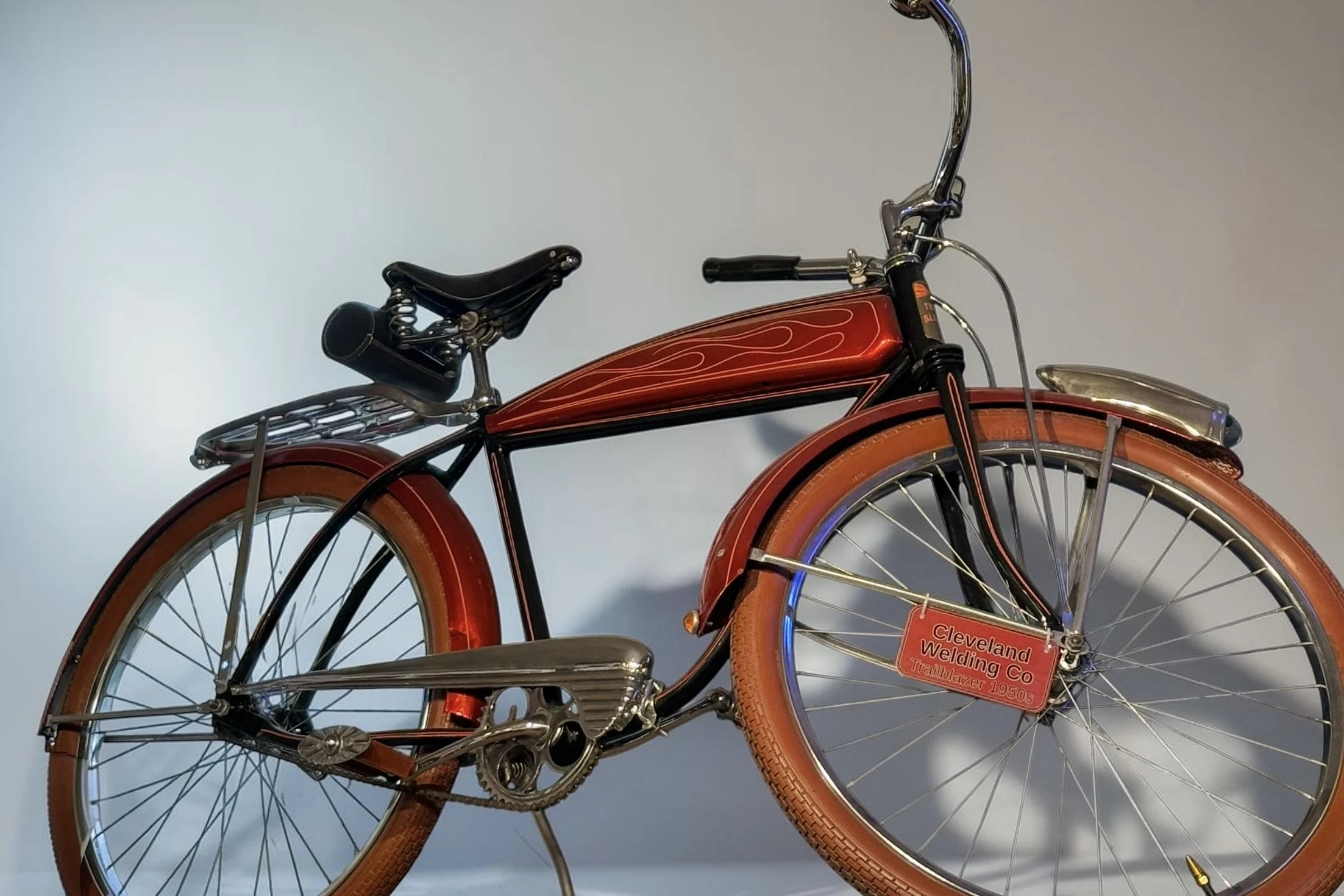
Some of the Vintage Bikes on display at Art Deco Collection Showroom

ART & STATUES
CERAMICS & GLASS
© Copyright Art Deco Collection. 2026 All rights reserved. Site Map