



The Fox Theatre, America's Movie Palace
How William Fox’s Ambition Produced the Greatest Cinematic Palaces in the Country, and Why So Many Still Stand
Wilhelm Fried Fuchs arrived in the United States at nine months old, carried from Hungary by his parents in search of a better life. The family name was simplified to Fox at entry, and the boy grew up on the Lower East Side of Manhattan, working street corners to help support the household. By twenty he had started a company in the garment trade, and by 1904 had sold it and purchased a penny arcade in Brooklyn, converting the upper floor into a nickelodeon where audiences paid a nickel to watch the early moving pictures. Over the following two decades, William Fox fought through patent disputes, studio rivalries, and the machinery of the emerging motion picture industry to build one of the largest entertainment empires in American history. By the mid-1920s, his Fox Film Corporation controlled both the production and distribution of films, and he had begun to see the exhibition side of the business as the next frontier. In 1925, he launched an ambitious plan to construct movie theaters on a scale that had never been attempted, buildings so large, so ornate, and so dramatically conceived that simply entering one would be an experience in itself. He was not building movie houses. He was building palaces, and he intended them to be the largest and most extraordinary that any city in the country had ever seen.
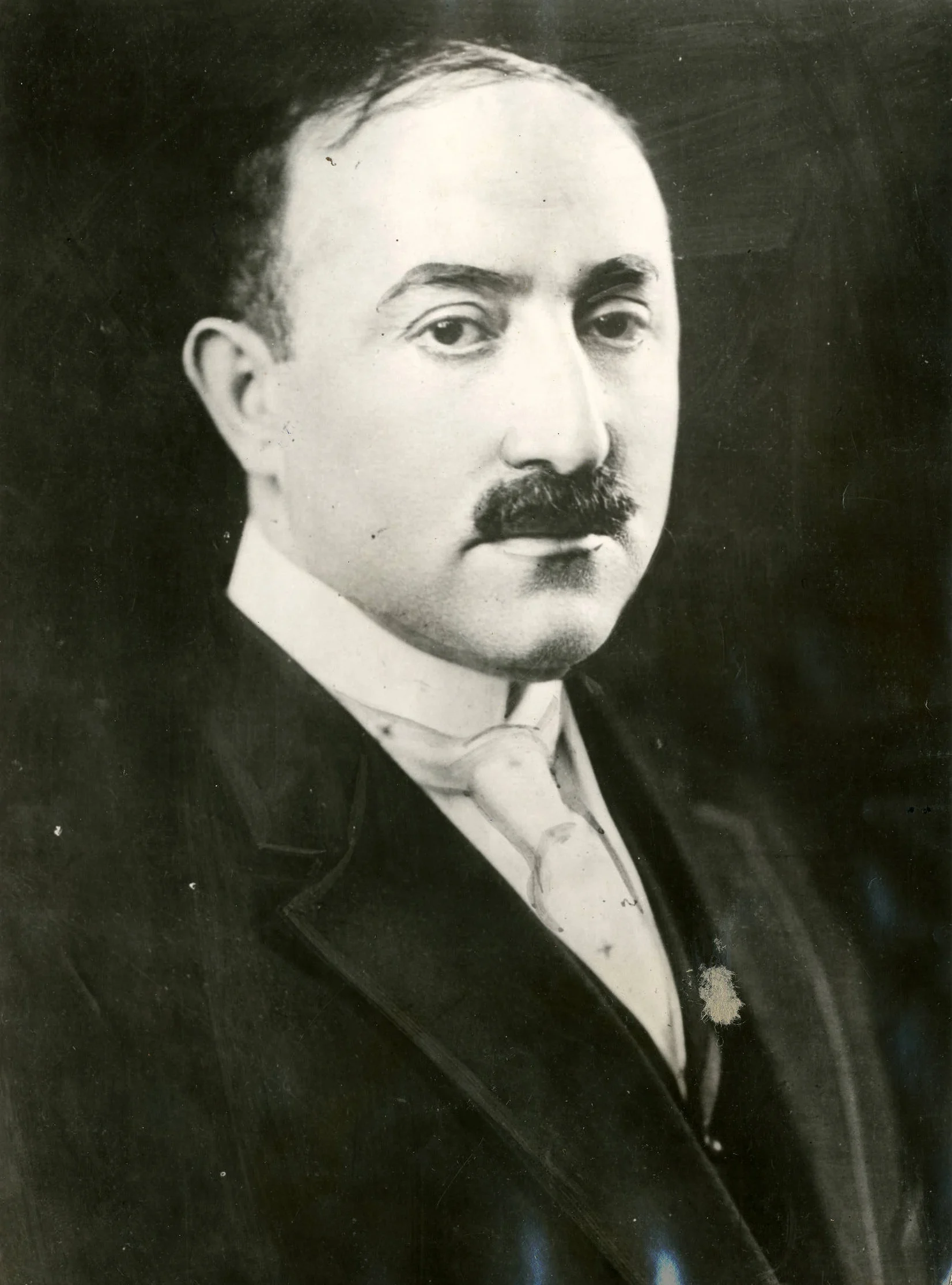
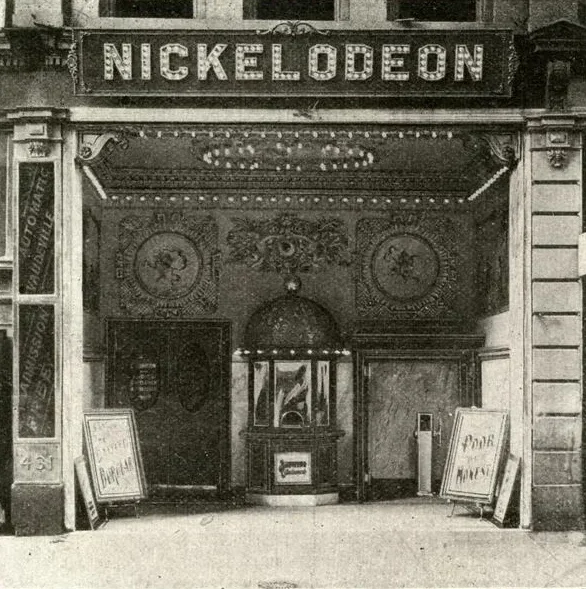
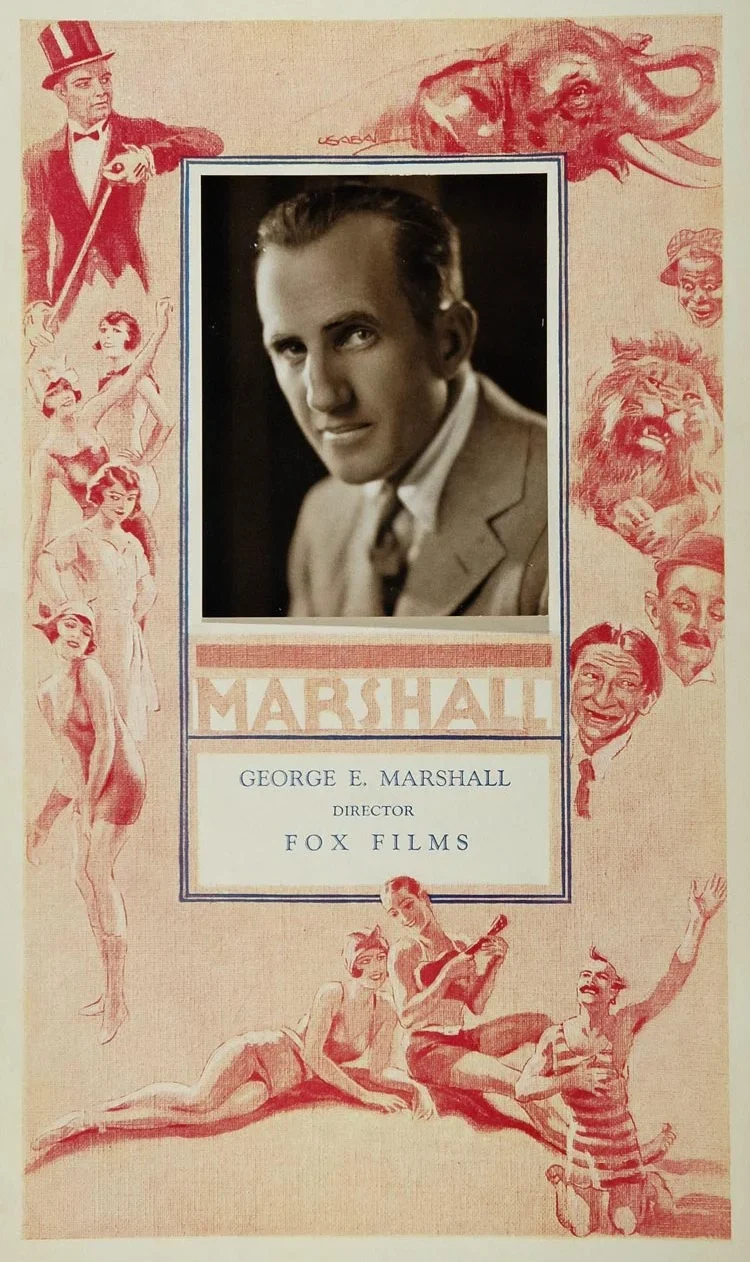
Left: William Fox, founder of Fox Film Corporation, c. 1920s, Middle: The Nickelodeon, first permanent movie theater in the United States, Pittsburgh, 1905, Right: Fox Film Corporation promotional portrait, director George E. Marshall, 1926
The 1920s were the golden age of the American movie palace, a period when theater owners competed to offer audiences not just a film but a complete transformation of experience, in the shared belief that the grander the building, the greater the draw. Fox’s theaters sat at the top of this hierarchy. Between 1927 and 1932, he built or acquired more than a thousand venues across the United States, from small neighborhood houses to enormous flagship buildings in major cities. The flagships were the jewels of the chain, five theaters Fox commissioned as grand showcases in Detroit, Brooklyn, Atlanta, San Francisco, and St. Louis, each conceived as a monument to what the era of cinema could produce when money and ambition were given room to work. Fox also pioneered technology on the exhibition side, introducing built-in equipment for sound film using his Movietone system, and his Fox Movietone News reels became a fixture in theaters across the chain from 1928 through 1963. These were not simply places to watch a movie but civic statements, as much a source of urban identity as a train station or a concert hall, built by a man who believed the movies were the defining cultural medium of the century and that the buildings where people watched them should reflect that belief in every detail. Fox was right about the movies. He was right about the buildings, too.

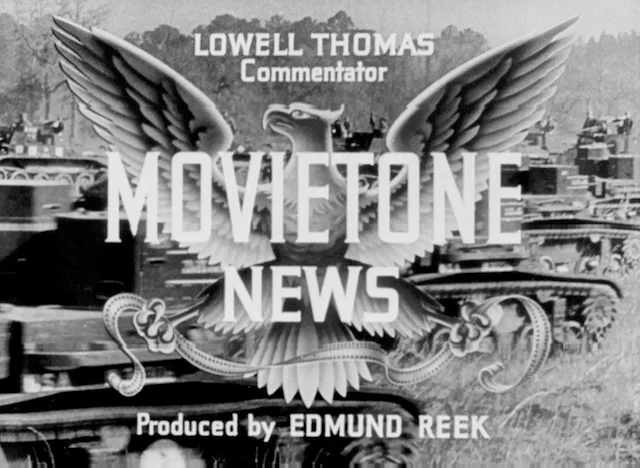

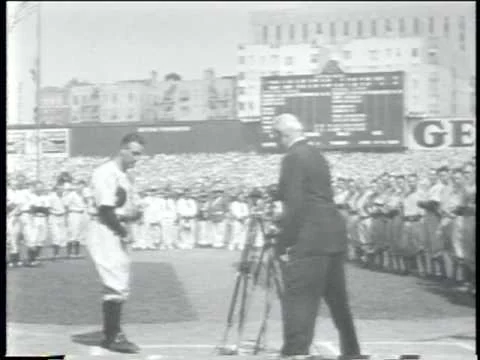
Left: Fox Theatre Detroit marquee advertising Destination Moon, 1950, Middle: Fox Theatre auditorium, Atlanta, Georgia, Right: Fox Movietone News opening title card, 1927, Video: Movietone News, Lou Gehrig Appreciation Day, 1939
The architects Fox commissioned to design his flagship theaters were accomplished specialists who brought very different sensibilities to the work. C. Howard Crane of Detroit, who had designed more than two hundred and fifty theaters and considered his Fox commission the best work of his career, built the Detroit and St. Louis buildings in what came to be called the Siamese Byzantine style, packing every surface with carved ornament drawn from Hindu, Burmese, Indian, Egyptian, and Persian traditions. Thomas W. Lamb, the New York architect who had helped define the American movie palace format with his Times Square designs in the 1910s, was given the San Francisco Fox, which opened in 1929 and quickly acquired a reputation as perhaps the most graceful and sophisticated of all the great movie palaces. The Atlanta Fox came from a different process entirely, its architects, the Atlanta firm of Marye, Alger, and Vinour, working from an Islamic and Egyptian template originally designed for a planned Shriners’ headquarters before Fox secured a long-term lease and transformed the project into a theater. The result bore no resemblance to the theaters in Detroit and St. Louis, which is part of what makes the Fox chain so visually distinct from any competing chain of the era. These were not buildings produced from a single blueprint, each designed for its city and site, drawing from a different corner of the world’s architectural traditions. The common thread was ambition, the shared conviction that a theater should be something more than a box with a screen inside it.
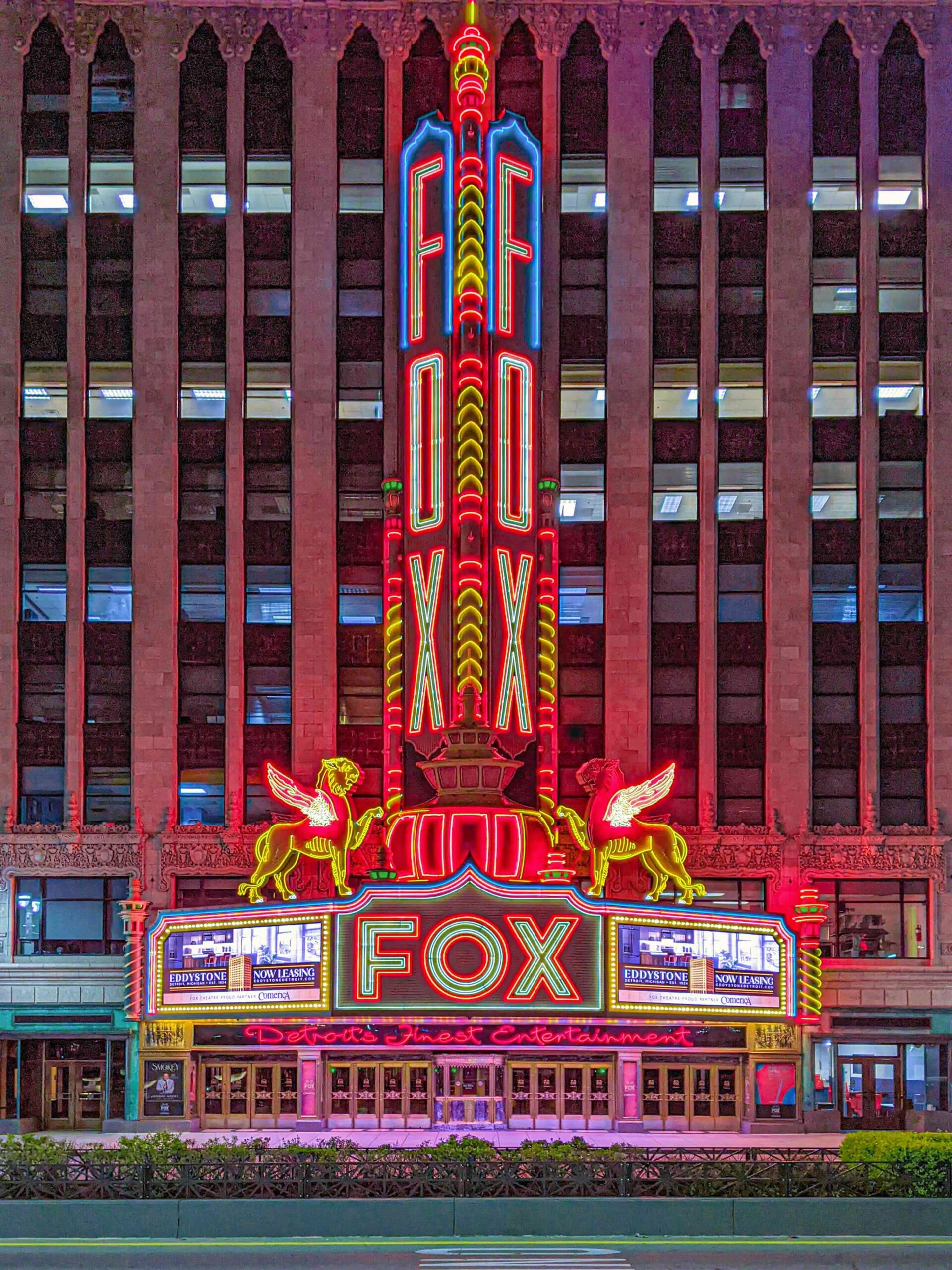
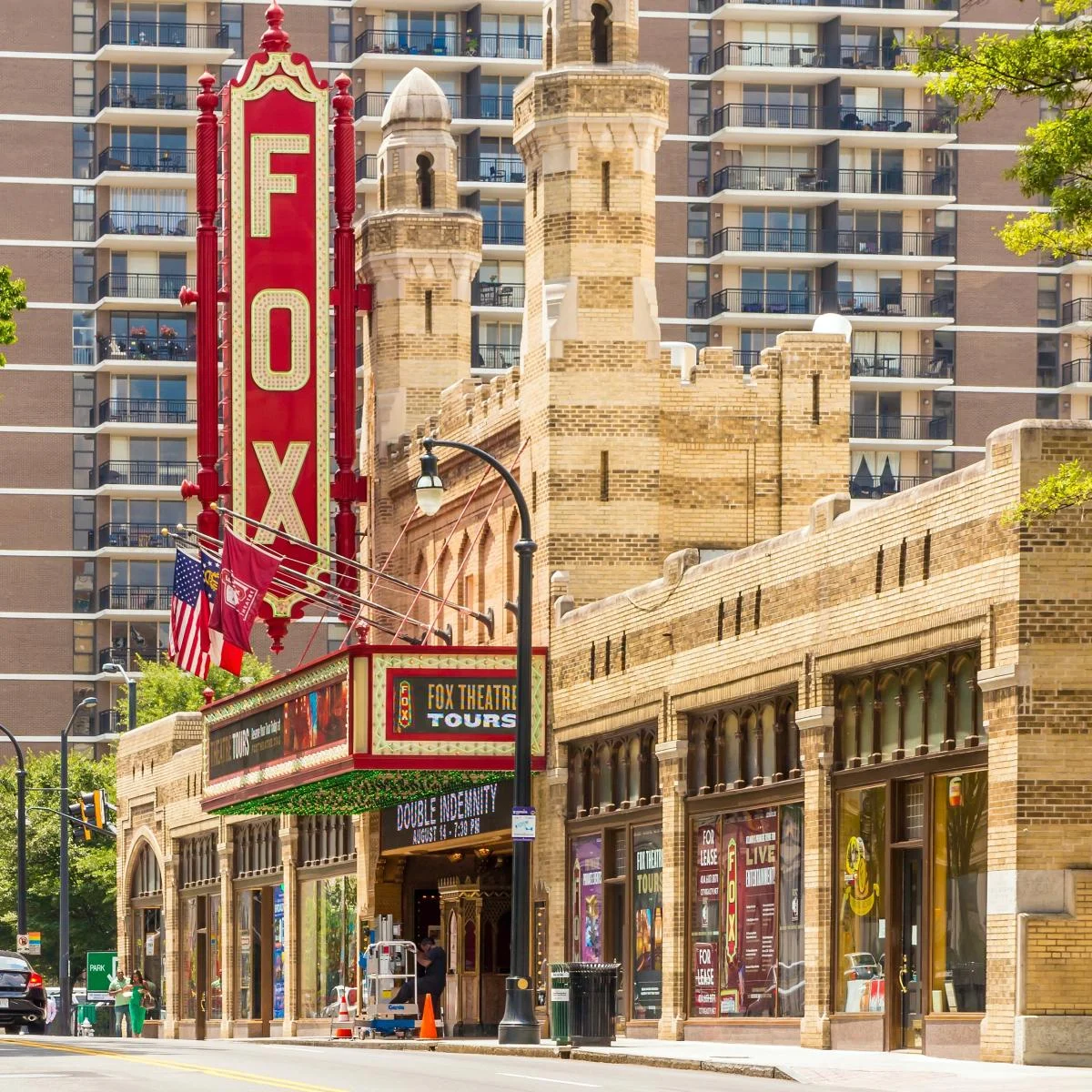
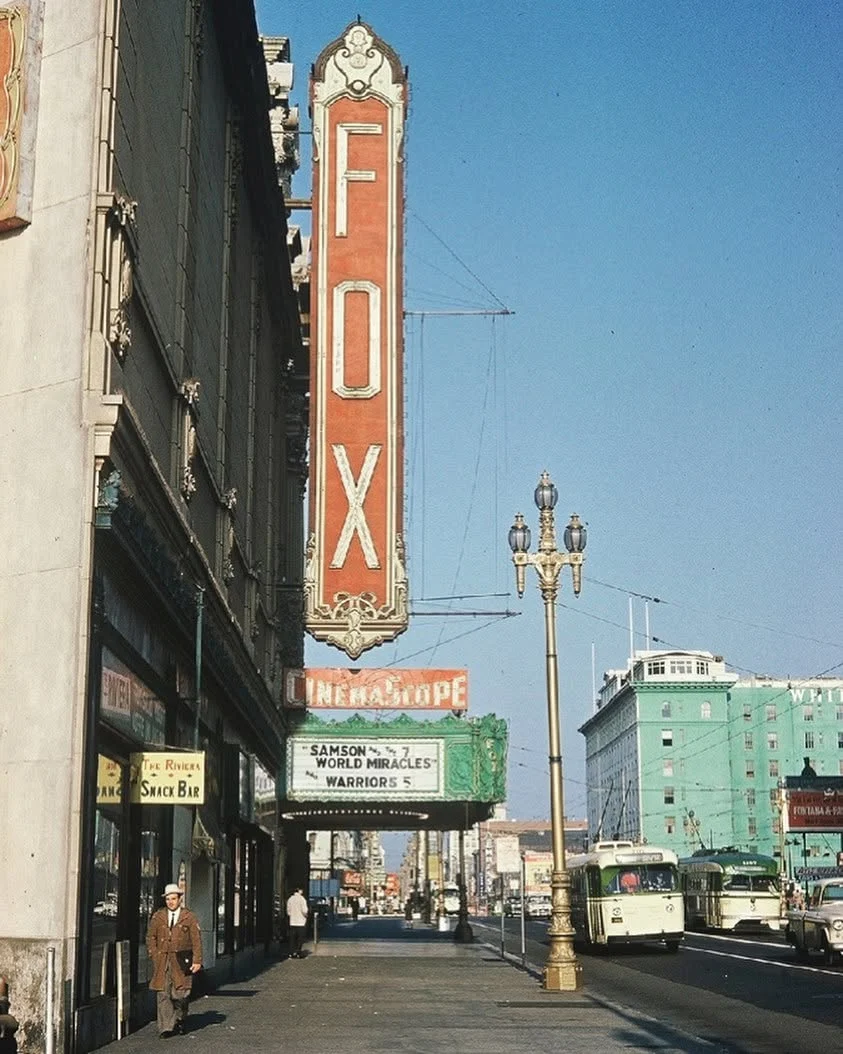
Left: Fox Theatre, Detroit, Michigan, 1928, Middle: Fox Theatre, Atlanta, Georgia, 1929, Right: Fox Theatre, San Francisco, California, 1929
Of the five flagship theaters, the Detroit Fox set the standard for physical presence and scale. Opening in September 1928 with the silent film Street Angel, it offered a lobby a half-block long and six stories high, and an auditorium of more than five thousand seats. The St. Louis Fox, opening in January 1929, was built from the same architectural molds and seated four thousand five hundred, making it the second-largest theater in the United States at the time. Atlanta’s Fox took a completely different direction, its auditorium conceived as an Arabian courtyard open to the night sky, with ninety-six embedded crystal stars and a projection system that sent clouds drifting slowly overhead. Two Moorish castles were built into the ceiling, connected by a stone bridge from which hand-sewn carpets of sequins and rhinestones hung like flying rugs, forming the proscenium arch. The Egyptian Ballroom was modeled after the Temple of Karnak, with hieroglyph-patterned carpets and papyrus columns, while the mezzanine ladies’ lounge featured a replica of the throne chair of Tutankhamun. In San Francisco, Thomas Lamb produced a theater of four thousand six hundred and fifty seats, dressed in a French Rococo language, classical in its references but no less opulent. The Brooklyn Fox, also from Crane, opened in August 1928 with nearly four thousand seats, dominating the intersection of Nevins, Flatbush, and Livingston streets. Together, these five buildings represented the fullest expression of what the movie palace era could accomplish.
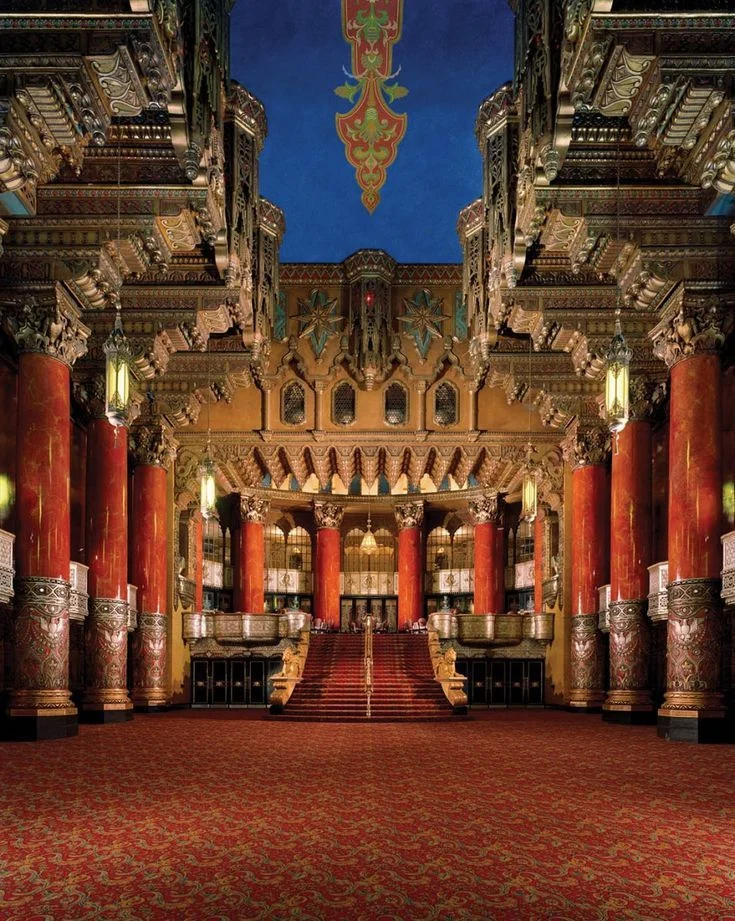
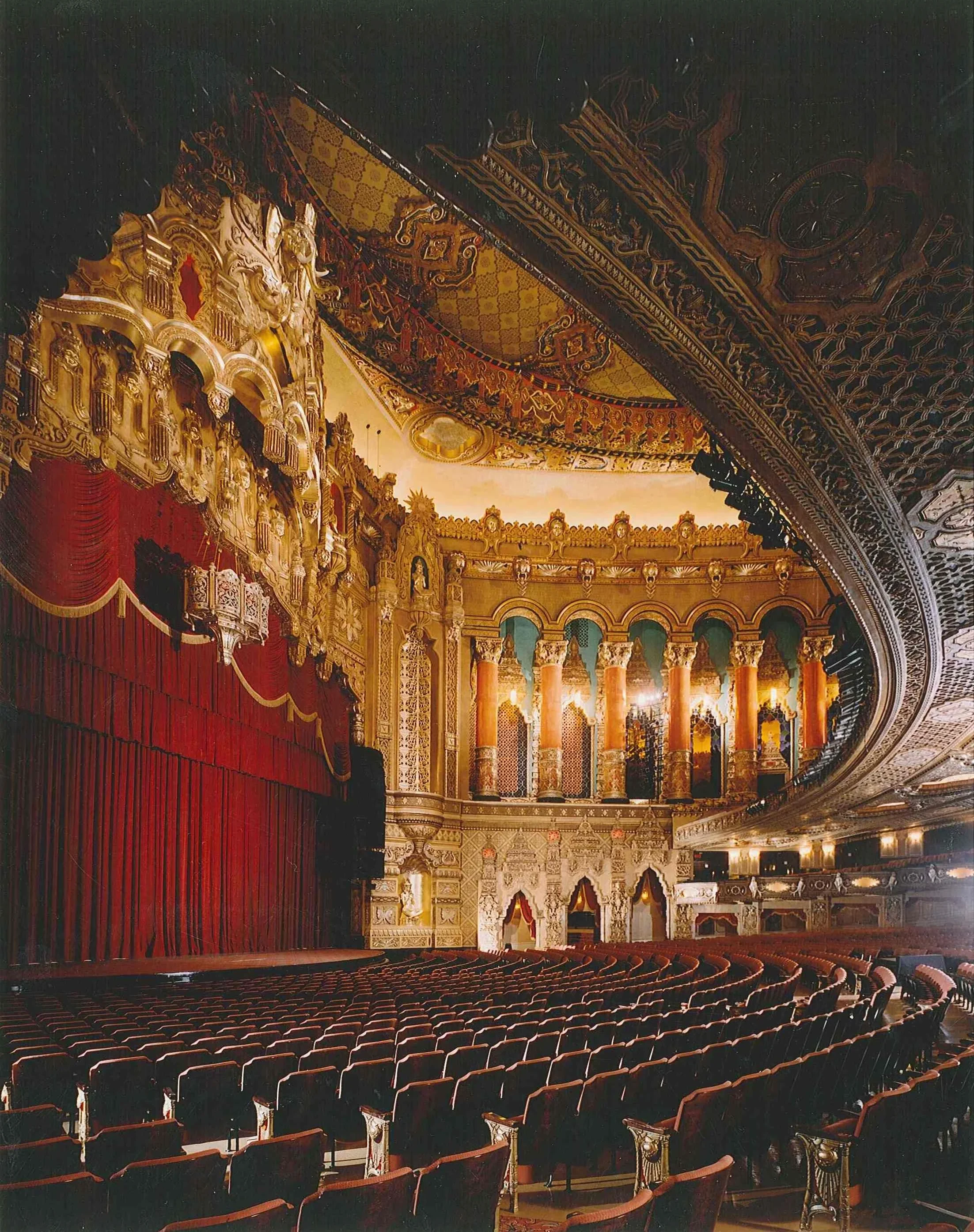
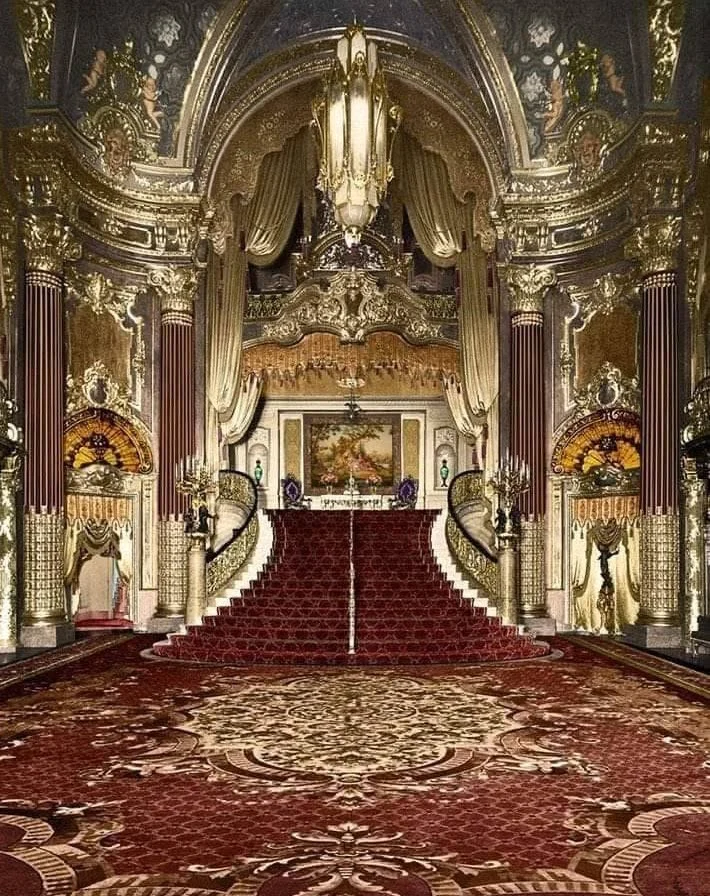
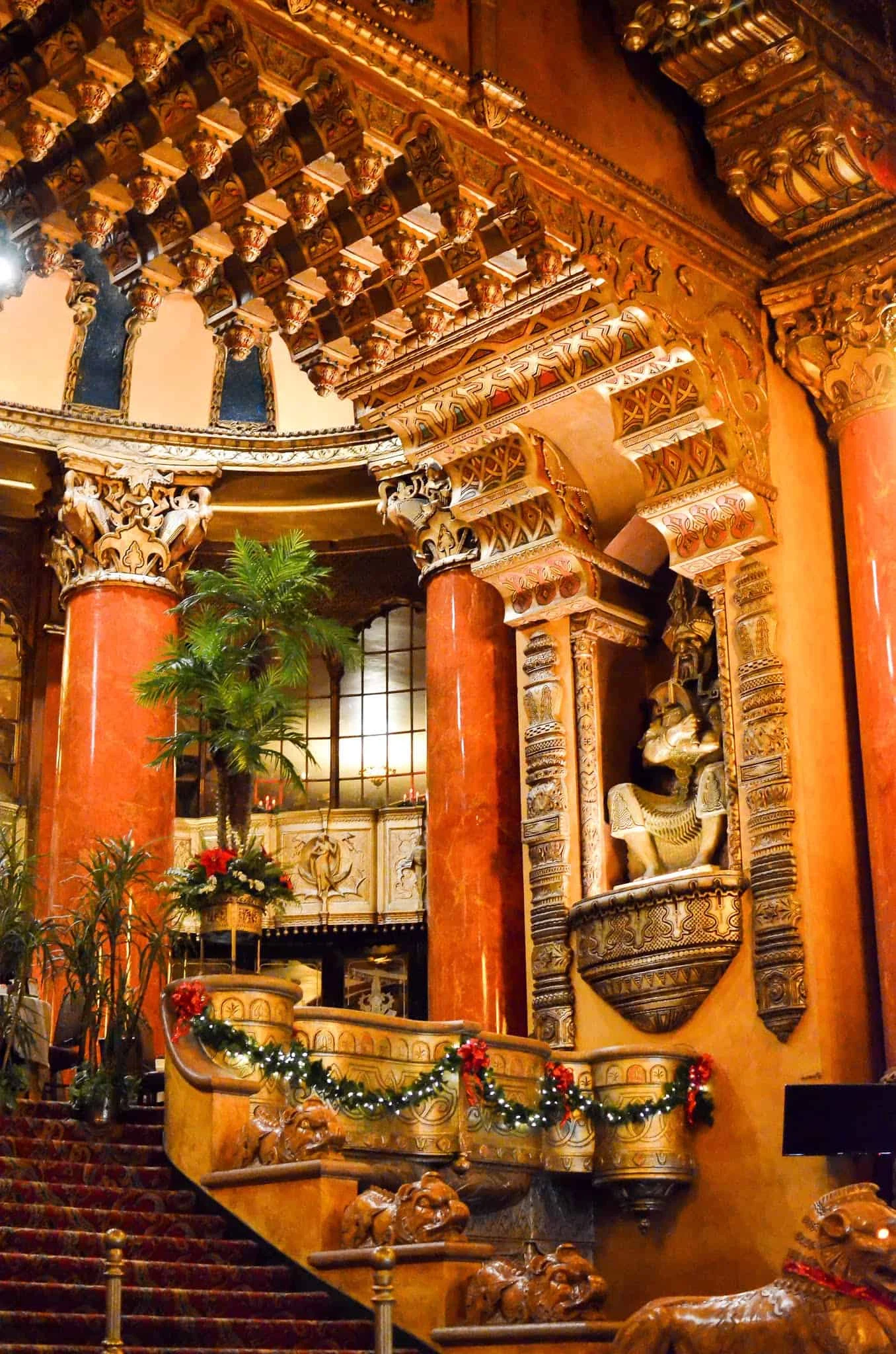
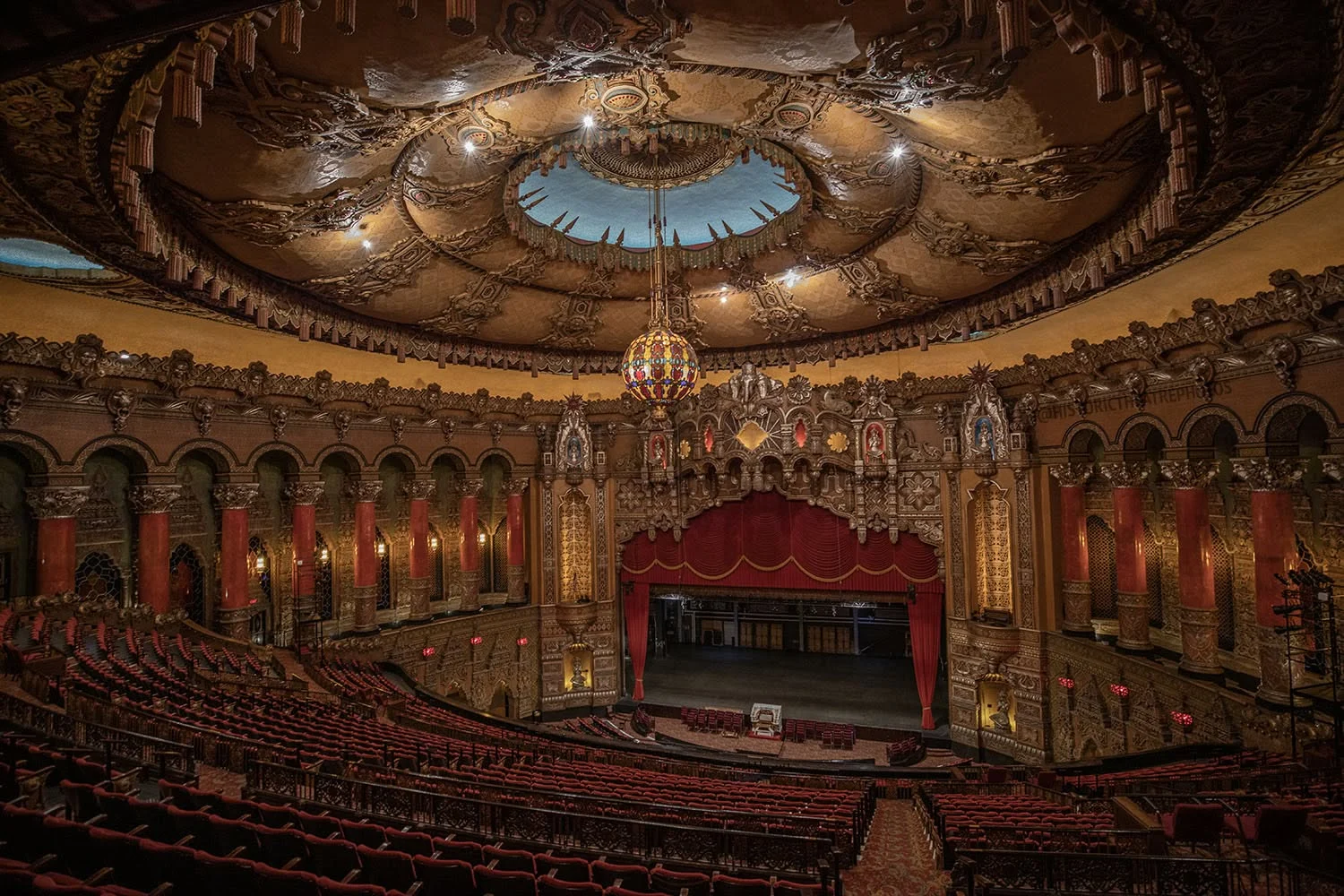
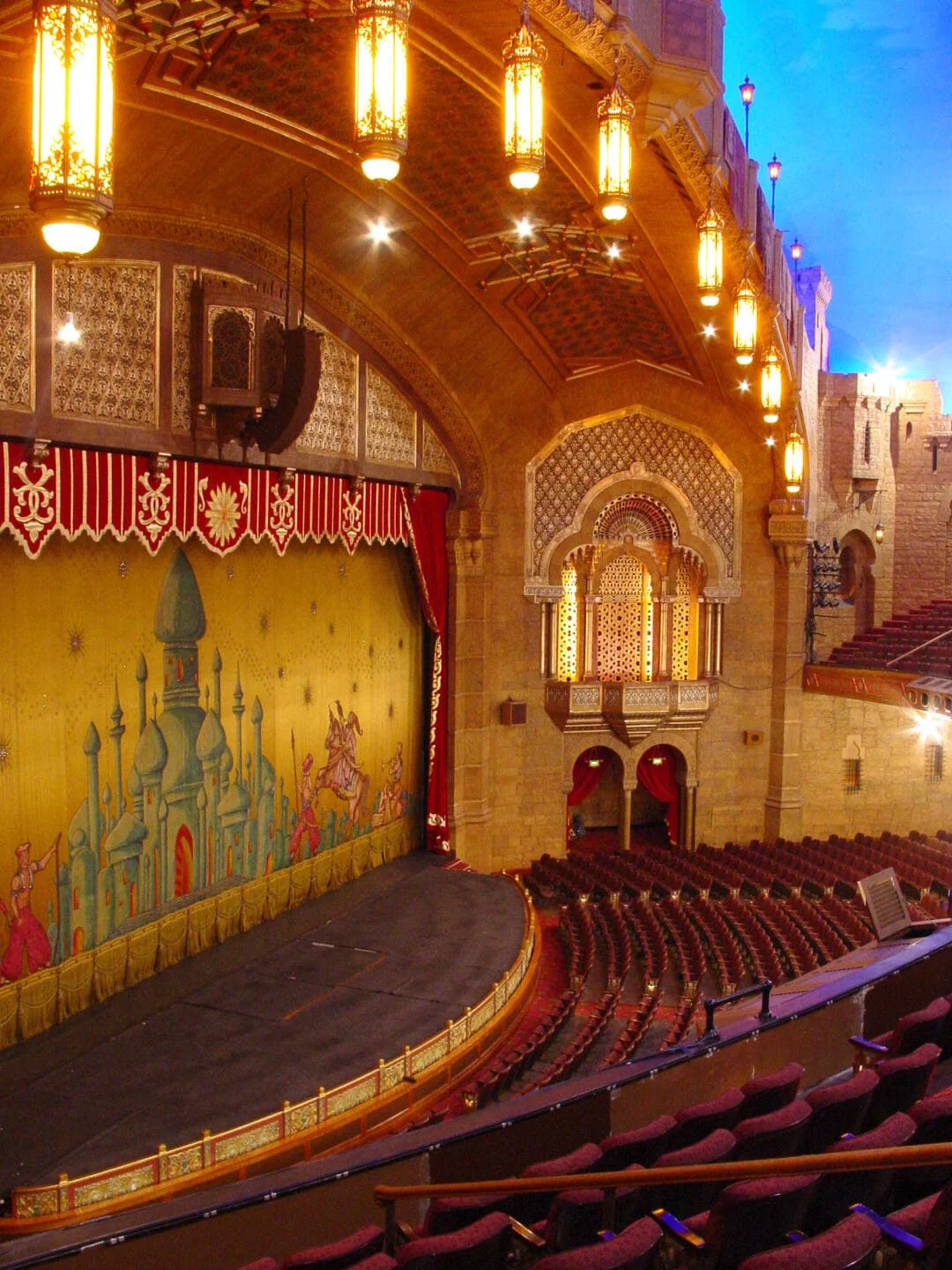
Top: Left: Fabulous Fox Theatre lobby, St. Louis, Missouri, 1929, Middle: Fox Theatre auditorium, Detroit, Michigan, 1928, Right: Fox Theatre lobby, San Francisco, California, 1929 Bottom: Left: Fabulous Fox Theatre interior, St. Louis, Missouri, Middle: Fabulous Fox Theatre auditorium, St. Louis, Missouri, Right: Fox Theatre auditorium, Atlanta, Georgia
The interior design of Fox theaters was not simply decoration but a deliberate effort to transform the act of moviegoing into something closer to travel. The concept of the atmospheric theater, developed most fully by architect John Eberson in the early 1920s, aimed to place the audience inside a fantastical outdoor courtyard or garden, with the sky visible overhead and the architectural details of some distant culture surrounding them on every side. Fox theaters drew on this tradition even when they did not follow Eberson’s specific approach. The Atlanta Fox replicates an Arabian courtyard so completely that the audience appears to be sitting beneath a real night sky, with stars above and the low crenellated walls of an ancient city on every side. The Visalia Fox in California’s Central Valley was designed to evoke a temple garden in India, its ceiling dotted with stars that glow and flicker during performances. The Detroit Fox layered its Hindu and Burmese imagery across three levels, filling every column capital, wall panel, and ceiling coffer with carved and gilded ornament until the total effect was one of warm, concentrated abundance. What all of these interiors shared was the quality of departure, a sense that stepping through the entrance meant leaving the ordinary city behind and arriving somewhere governed by entirely different rules. The best Fox theater interiors achieved that with a thoroughness that is still striking to visitors today.
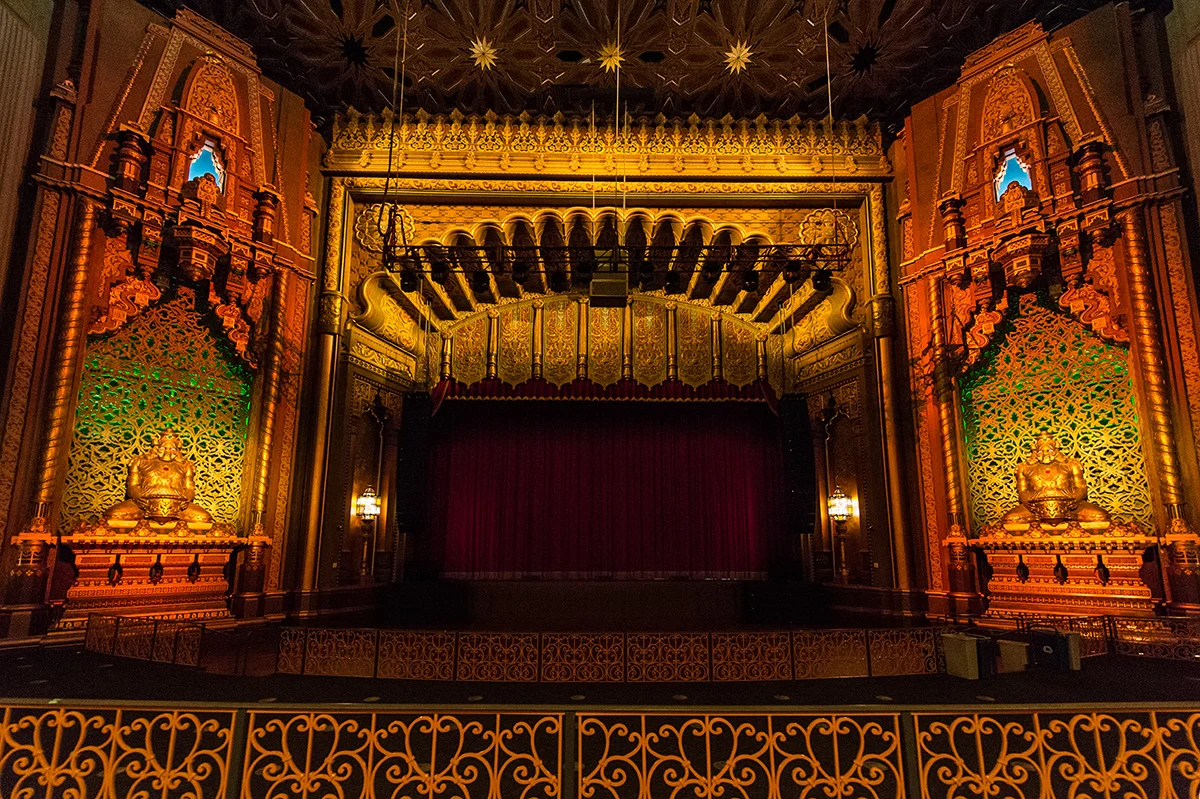
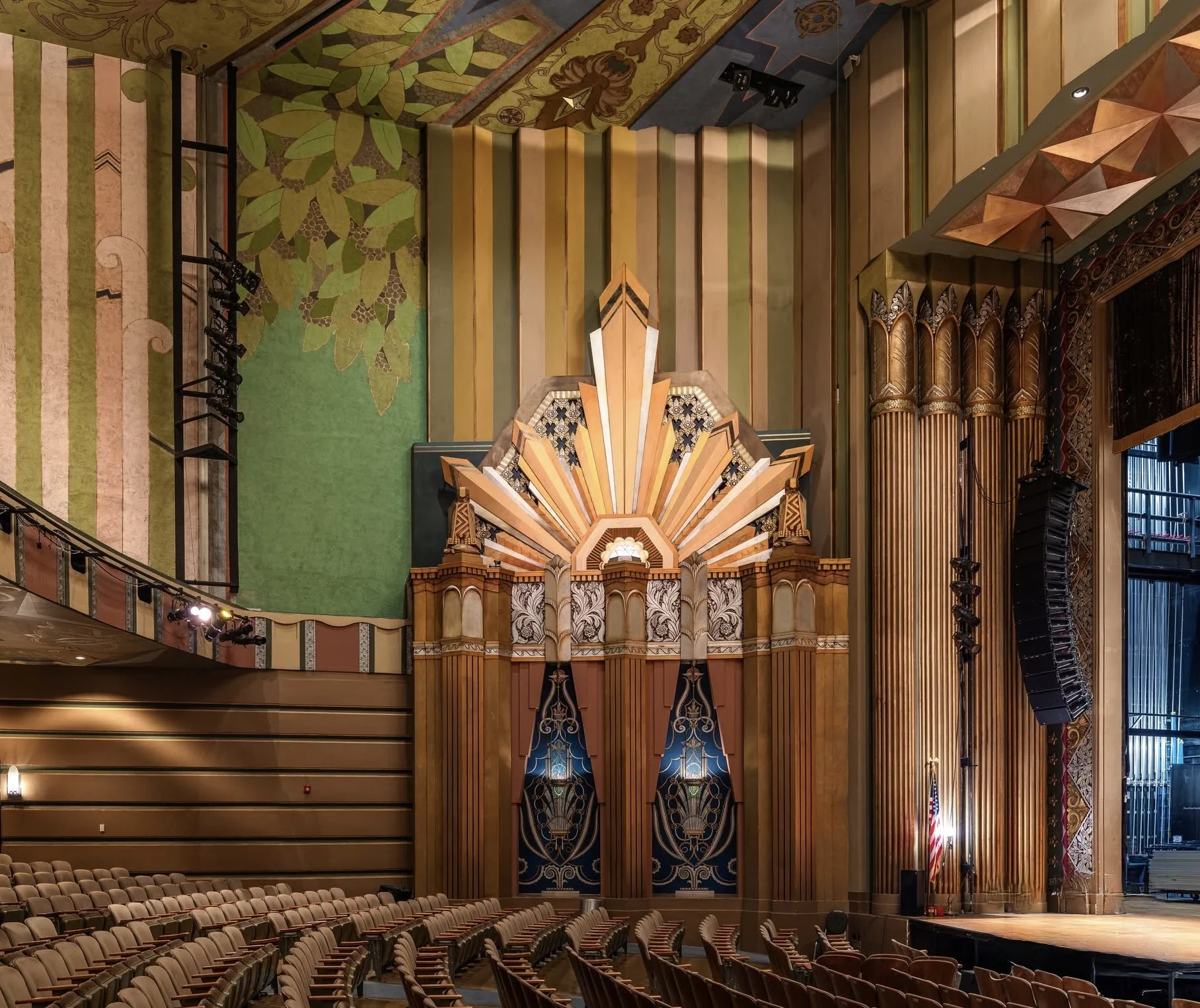
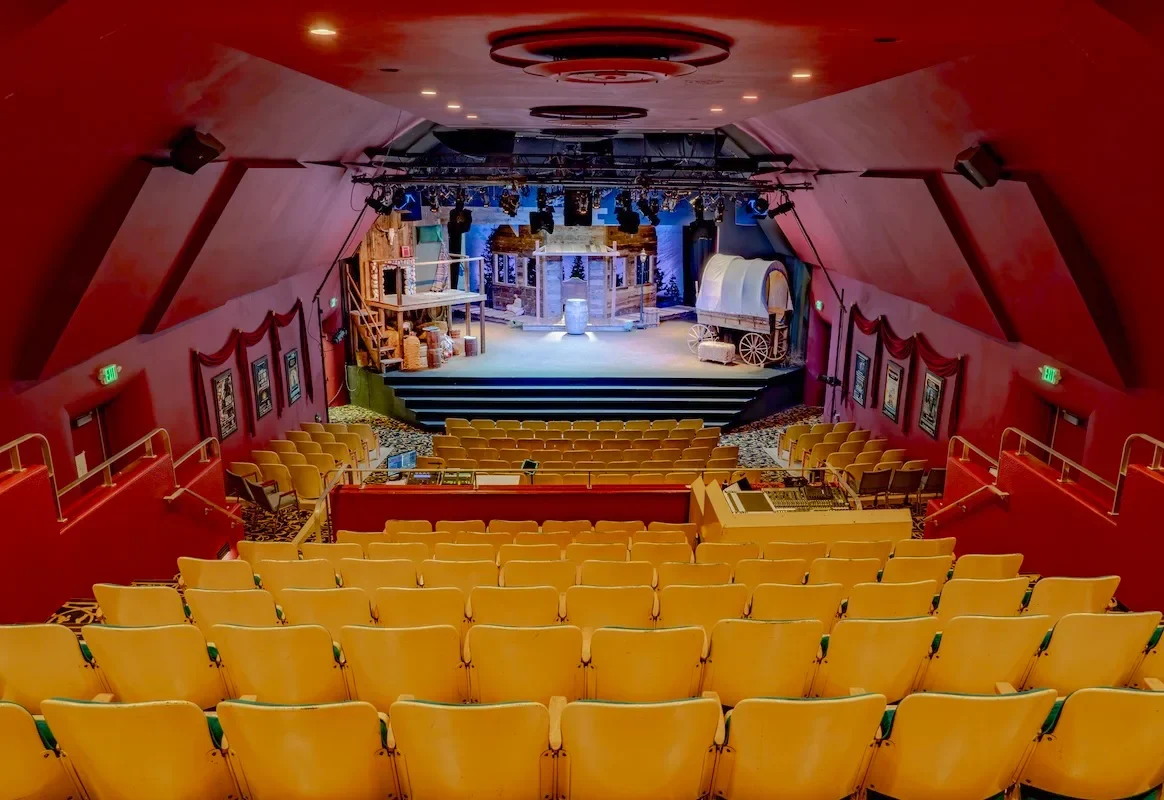
Left: Fox Theater Oakland interior, Oakland, California, restored 2009, Middle: Martin Woldson Theater at the Fox, Spokane, Washington, 1931, Right: Aurora Fox Arts Center interior, Aurora, Colorado, 1946
At the center of the silent movie palace experience, well before the film began, was the theater pipe organ. In the era before synchronized sound, a single musician at the console could fill a five-thousand-seat auditorium with what sounded like a full orchestra, and with the right instrument could also produce the effects of birds in flight, pistol shots, passing trains, rain, thunder, and horse hooves on cobblestones. The instrument was the creation of Robert Hope-Jones, a British engineer who developed his Unit Orchestra in the late nineteenth century and later partnered with Rudolph Wurlitzer to bring it to industrial scale as the Mighty Wurlitzer, which became as essential to the movie palace as the screen itself. The Fox theaters were among its most celebrated homes. The San Francisco Fox housed a Wurlitzer with four manuals and thirty-six ranks, and recordings made on that instrument introduced many enthusiasts to the theater organ for the first time. The Detroit Fox installed a four-manual Wurlitzer in the main auditorium and a separate three-manual Moller organ in the lobby. The Atlanta Fox chose a Moller instrument over a Wurlitzer, giving it a distinct sonic character closely associated with that building’s particular acoustic quality. The introduction of synchronized sound film in the late 1920s made the theater organ nearly obsolete within just a few years, but the instruments survived in their buildings, and many have since been restored. Original organs still play in the Fox theaters of Atlanta, Detroit, and St. Louis.
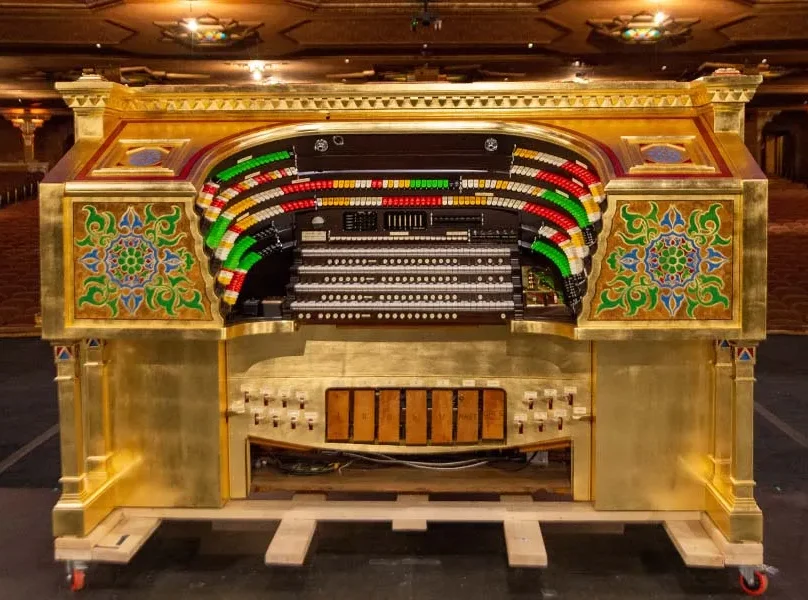
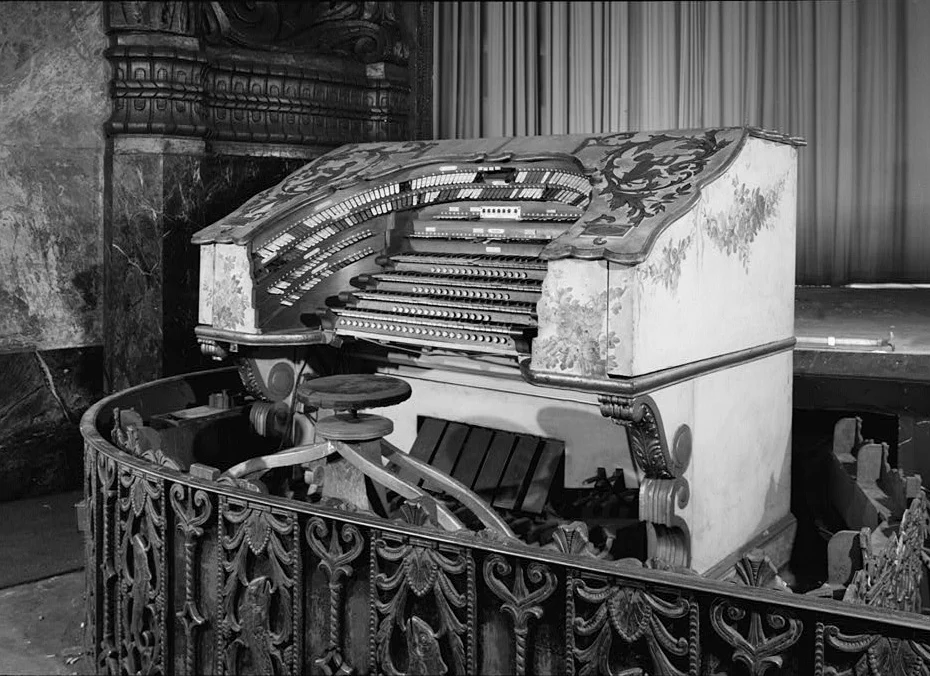
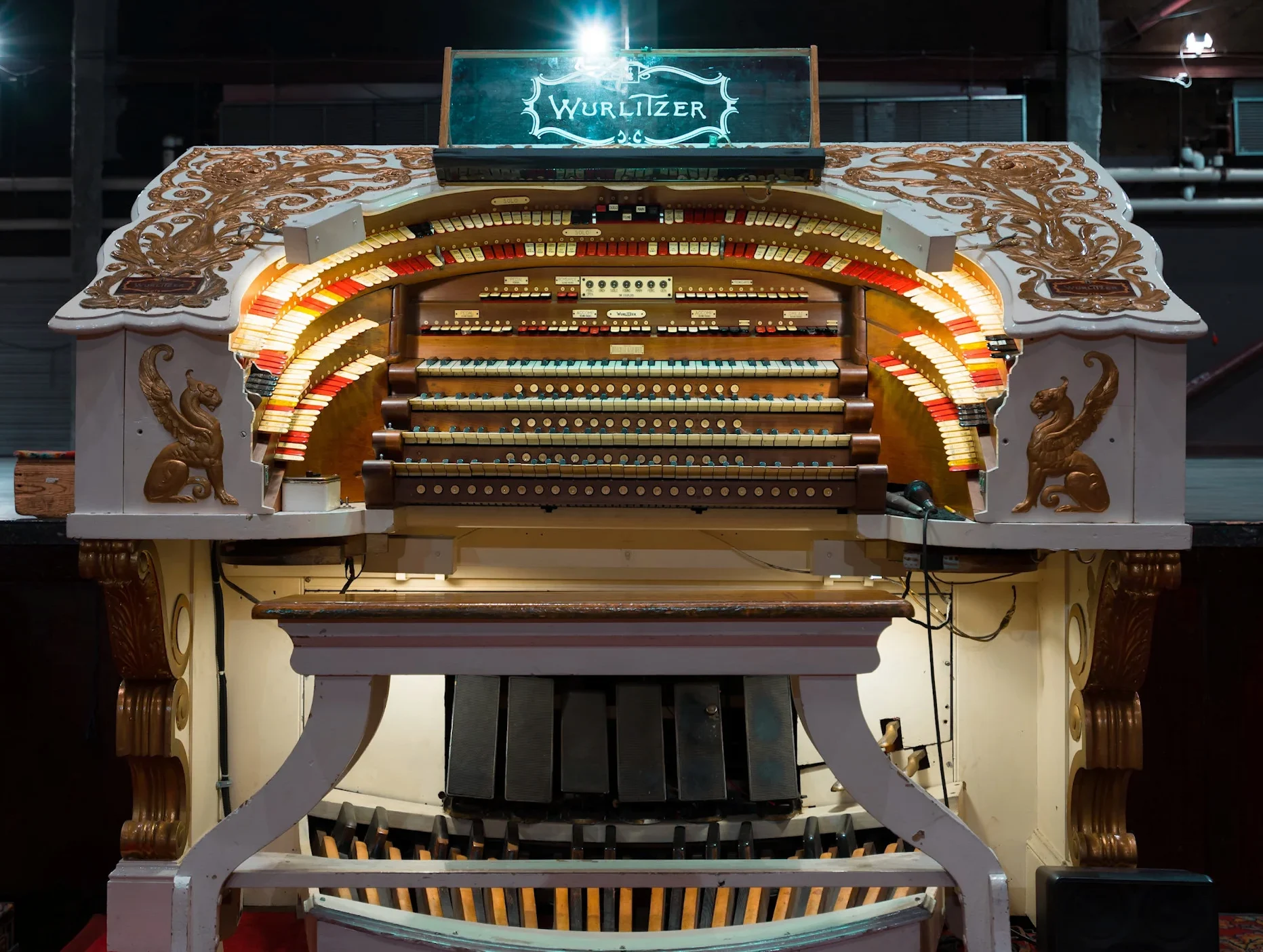
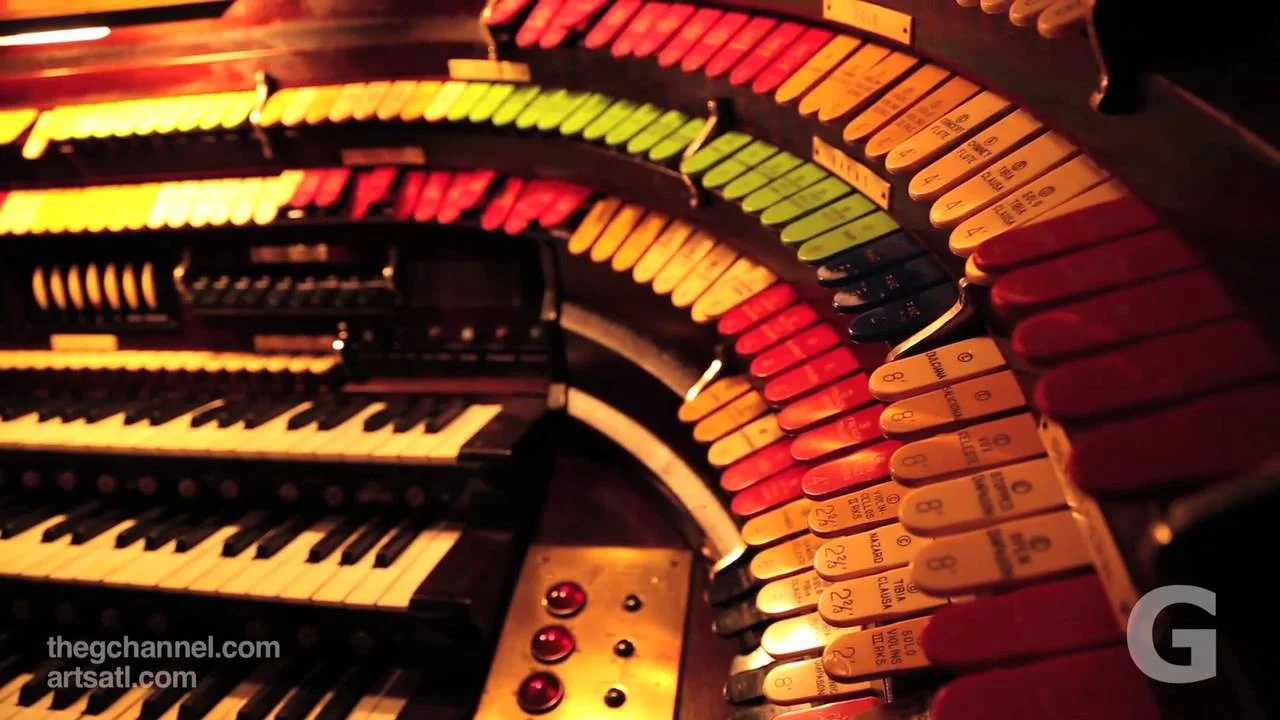
Left: Mighty Mo, M.P. Möller theatre organ, Fox Theatre, Atlanta, Georgia, 1929, Middle: Wurlitzer theatre organ console, Fox Theatre, Brooklyn, New York, 1928, Right: Mighty Wurlitzer theatre organ console, c. 1929, Video: Behind the Scenes with Ken Double and the Mighty Mo, Fox Theatre, Atlanta, Georgia
From the street, a Fox theater announced itself before anyone could read a listing or spot a marquee. The tall vertical pylon reading “FOX” in bold block letters, set above a canopy of changeable letter panels outlined in neon, became one of the most consistent graphic identities in American city life during the 1930s and 1940s, a single word repeated from California to Kansas to Georgia, scaled to its neighborhood but always unmistakable. The marquee, updated weekly with whatever was playing, was both an advertisement and a community calendar, and in many smaller cities, the Fox marquee was the most elaborate illuminated sign on the entire street. In Hutchinson, Kansas, the Fox Theatre’s marquee holds the distinction of having been the first flashing neon display in the entire state. The exterior cladding varied as widely as the interiors: some buildings were sheathed in glazed terra cotta with Art Deco stepped arches and pressed aluminum panels, while others drew on Moorish brickwork, Spanish Colonial Revival stucco, or Gothic stonework depending on local context. Tucson’s Fox used Southwestern Art Deco while Spokane’s moved toward a cleaner modernist formality. No two buildings looked exactly alike from the outside, yet all of them read immediately as part of the same family. A Fox theater was never background architecture; it was built to dominate its block and to be seen from a distance, and the neon signs and illuminated marquees ensured that on a Friday night in any city that had one, the Fox was almost certainly the brightest point on the street.
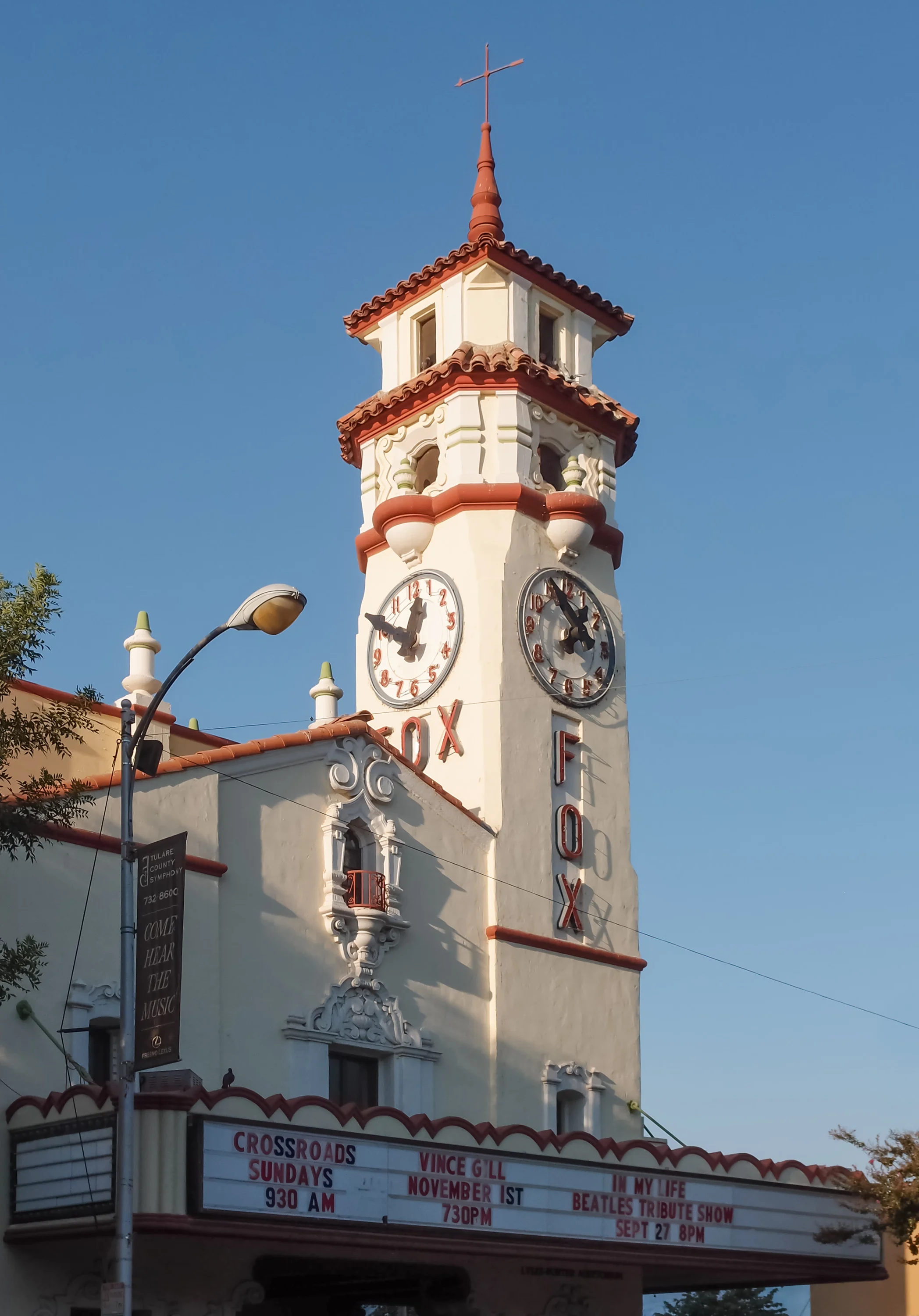
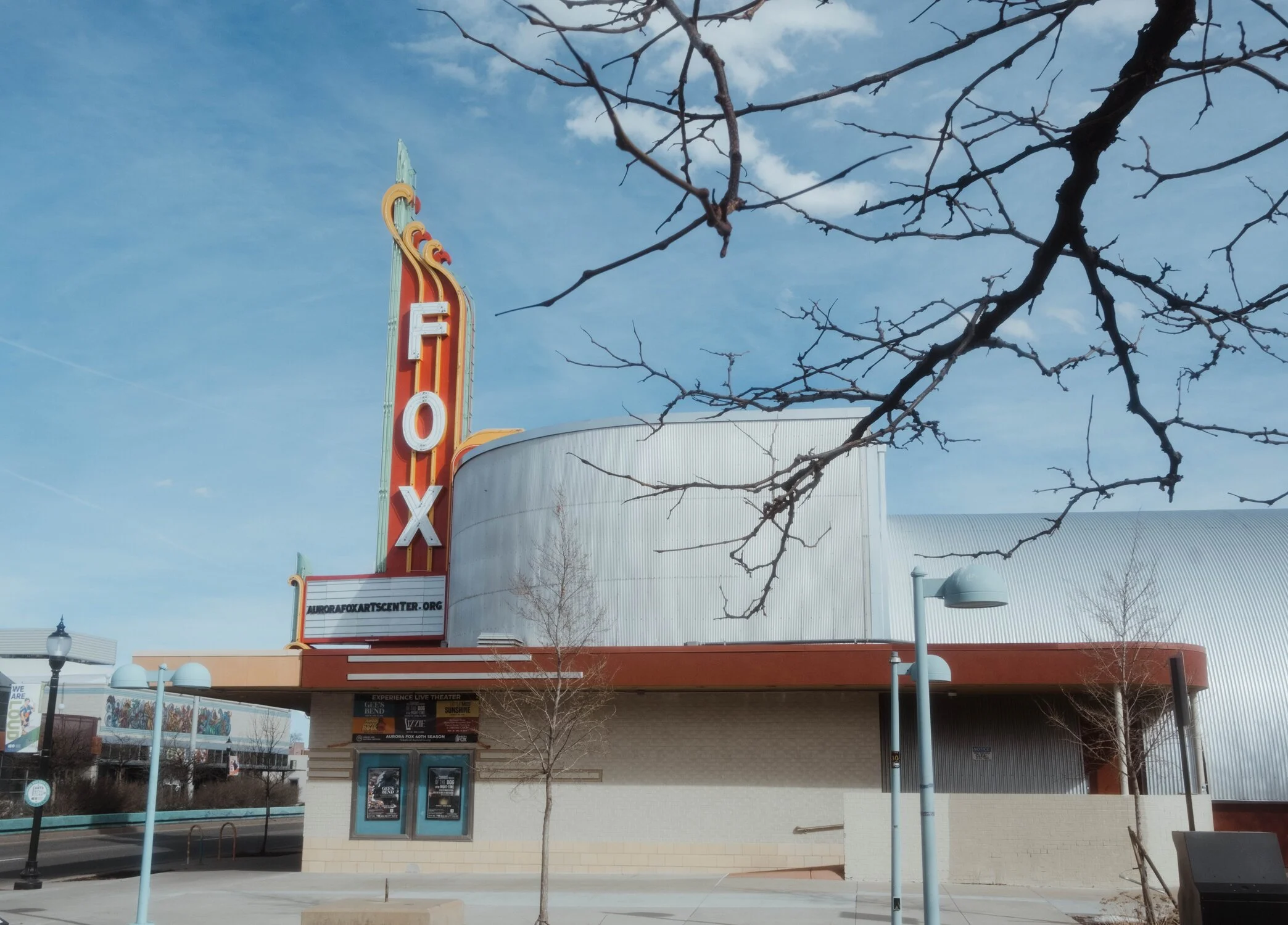
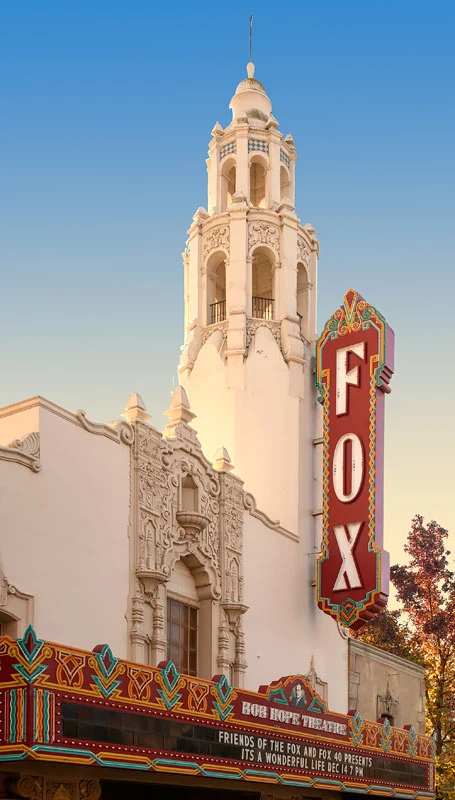
Left: Fox Theatre, Visalia, California, 1930, Middle: Aurora Fox Arts Center, Aurora, Colorado, 1946, Right: Bob Hope Theatre, formerly Fox California Theatre, Stockton, California, 1930
The ambition that drove the American movie palace had a parallel half a world away. In Amsterdam in 1921, a Polish-Jewish entrepreneur named Abraham Icek Tuschinski opened a cinema on Reguliersbreestraat so extreme in its decorative conception that a Dutch newspaper described it as a beacon of the Roaring Twenties’ cultural revolution. His story echoes Fox’s own: an immigrant of modest means driven by a near theatrical conviction about what a cinema could be, who built a building that announced itself as a destination rather than simply a place of entertainment. The Royal Theater Tuschinski was designed by architect Hijman Louis de Jong in a layered combination of the Amsterdam School, Jugendstil, and Art Deco, with interior decoration by Pieter den Besten and Jaap Gidding covering every surface in carved wood, mosaic, painted murals, stained glass, hand-woven Moroccan carpets, and silk-shaded lamps of striking organic form, giving the building a richness and tactile density that set it apart from anything the Dutch capital had seen before. Today, still operating under the Pathe banner and renamed the Royal Theater Tuschinski on its hundredth anniversary in 2021, it is considered one of the most beautiful cinemas in the world. The comparison to the great Fox theaters is not incidental: the movie palace era produced buildings of this order wherever it took root, places where the architecture’s ambition was inseparable from the entertainment’s ambition and the room itself was understood to be as much a part of the experience as anything shown on the screen. That shared conviction ran across borders and design traditions, and it produced a body of buildings that had no real precedent and has not been repeated since.
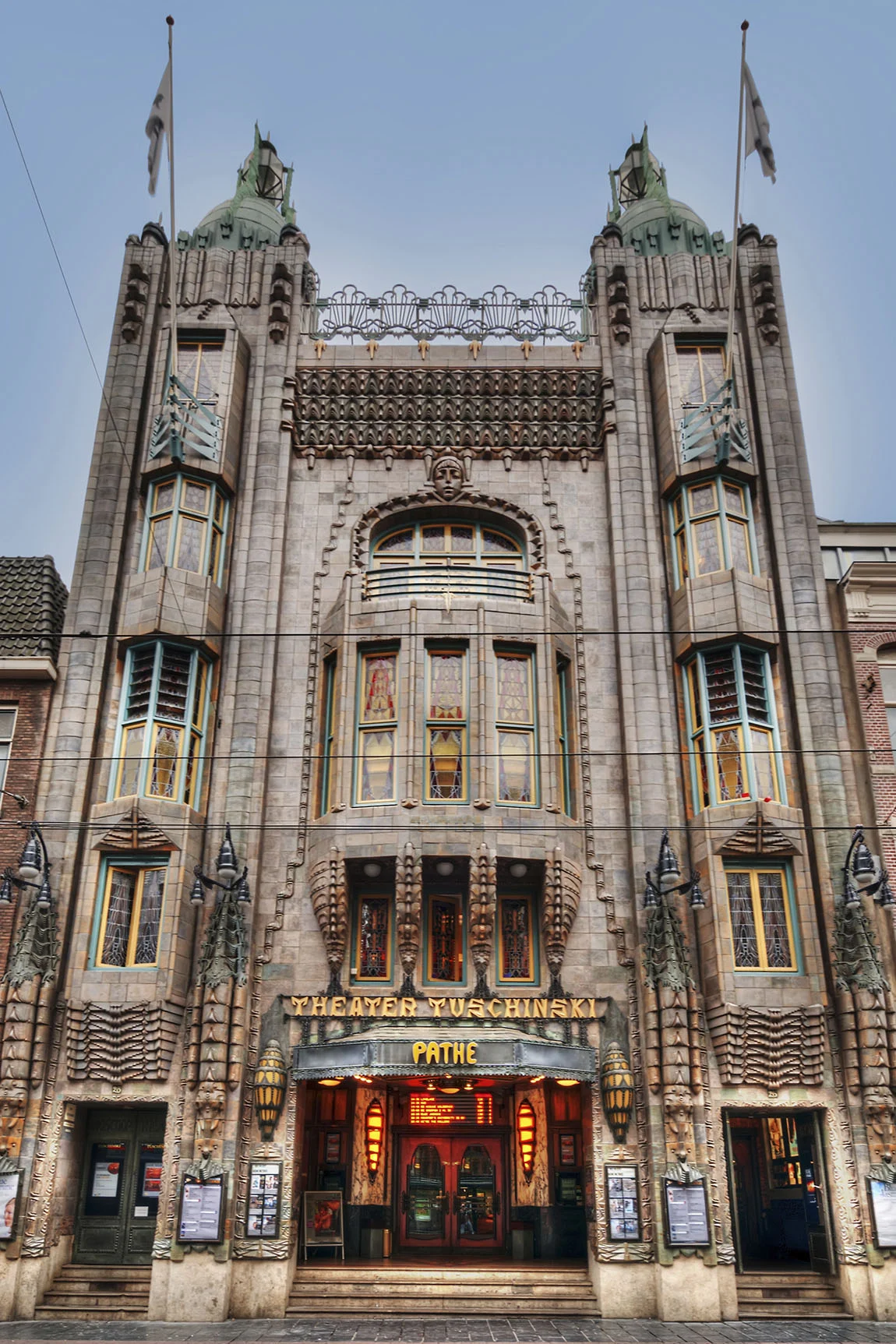
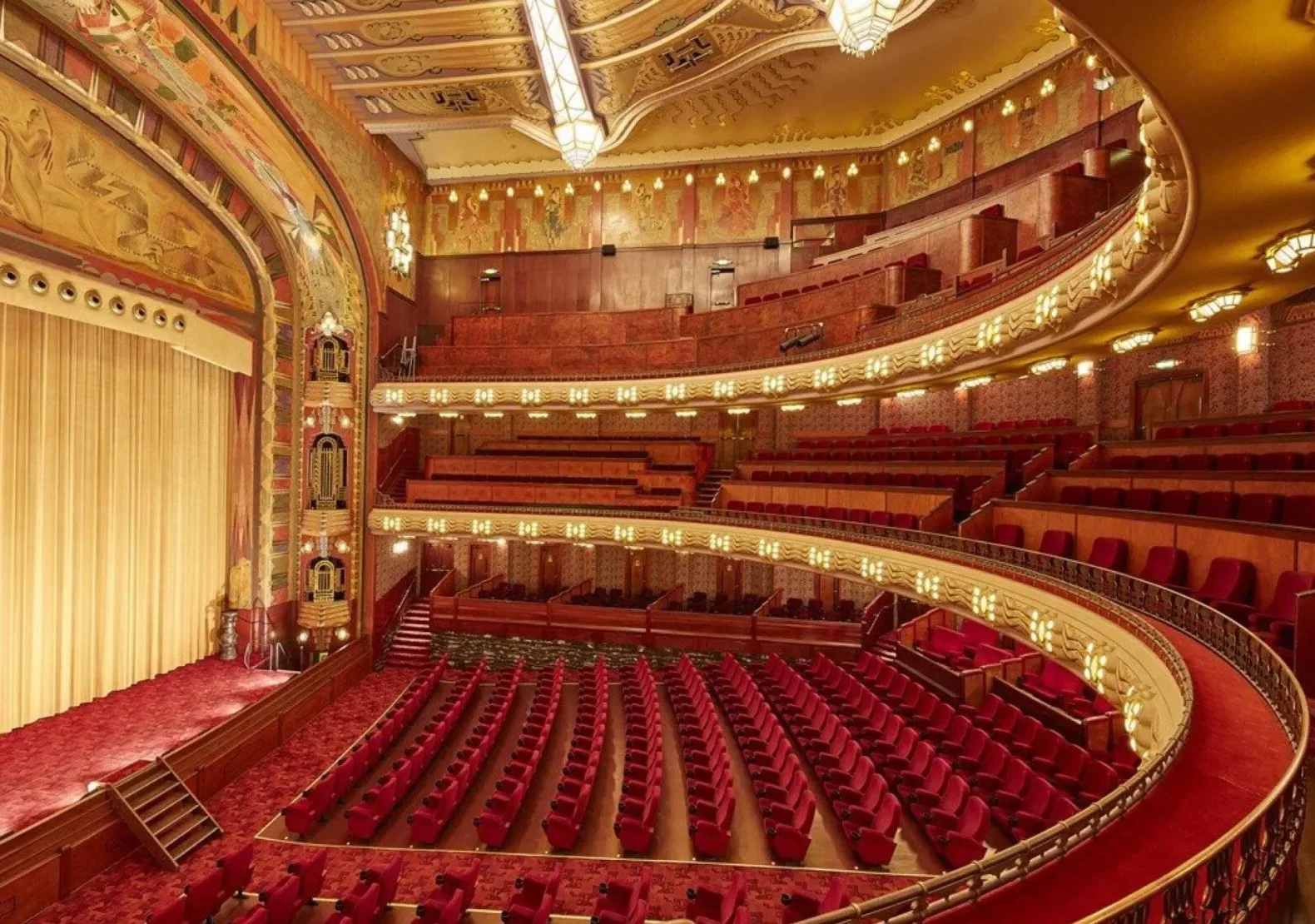
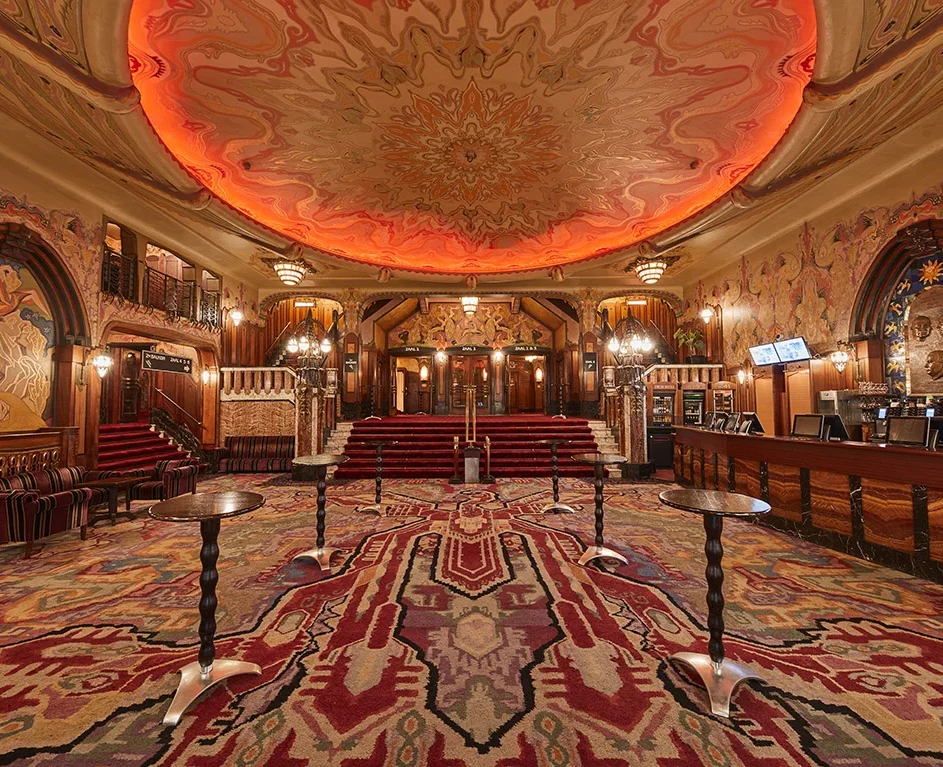
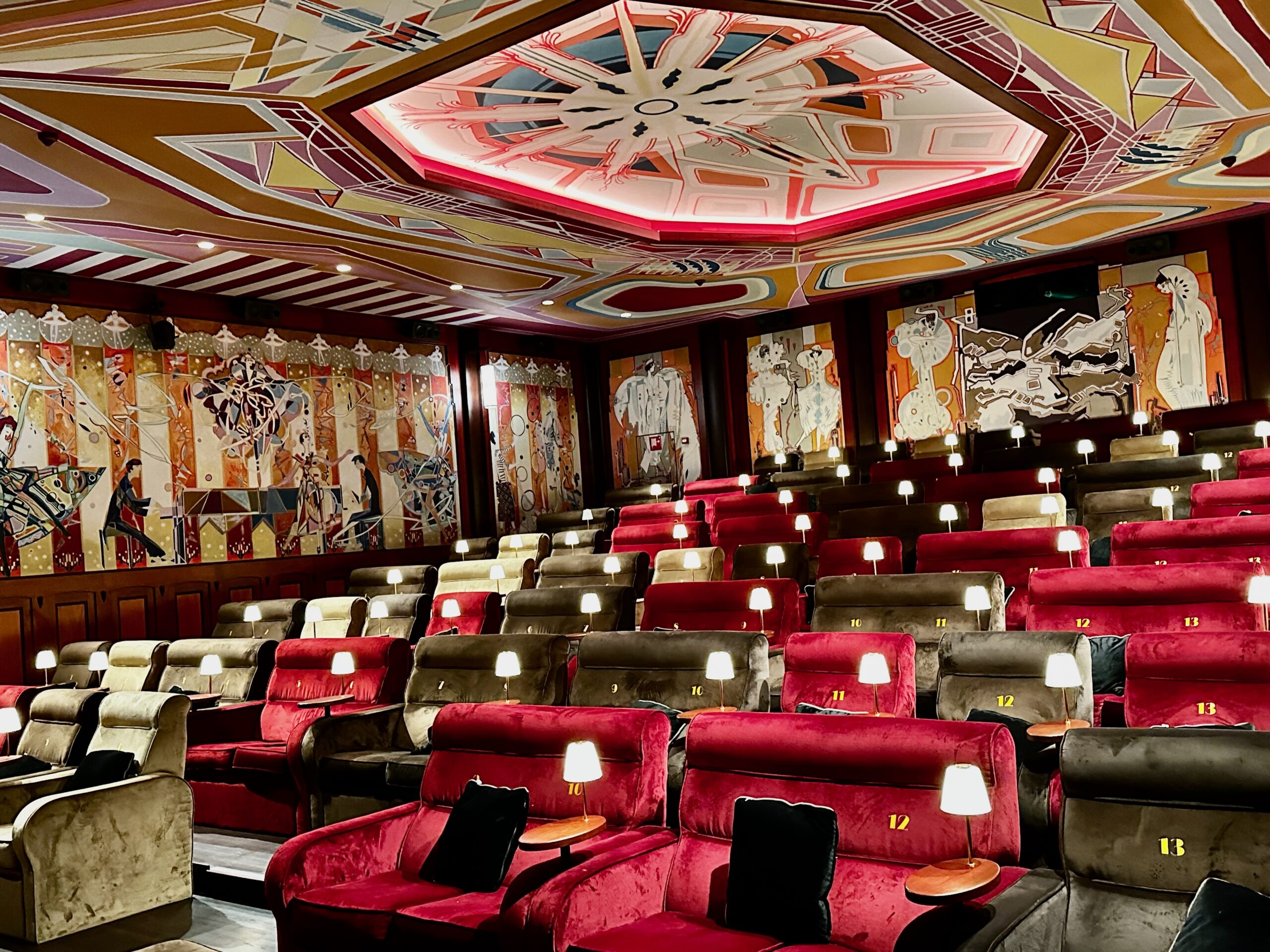
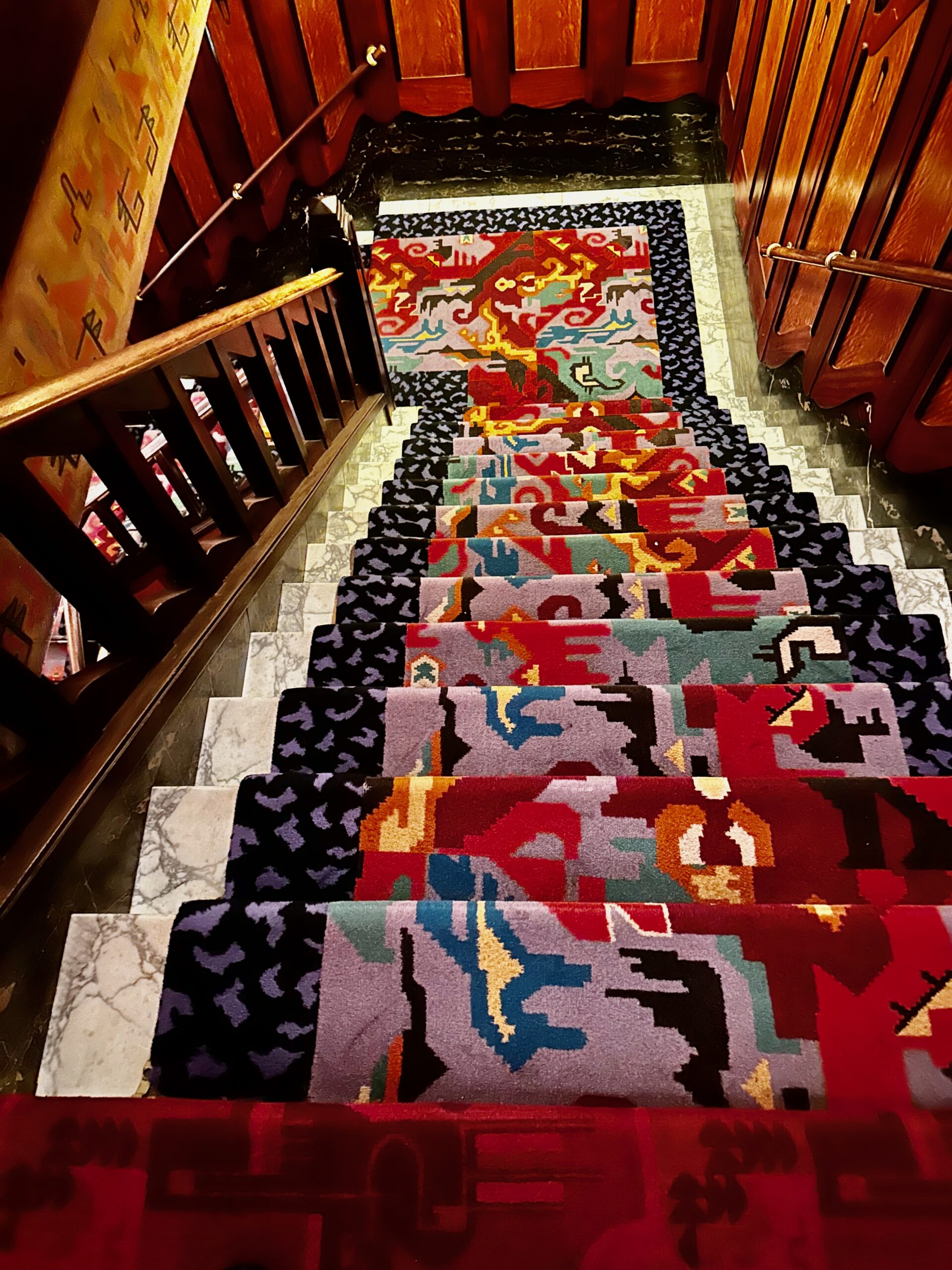
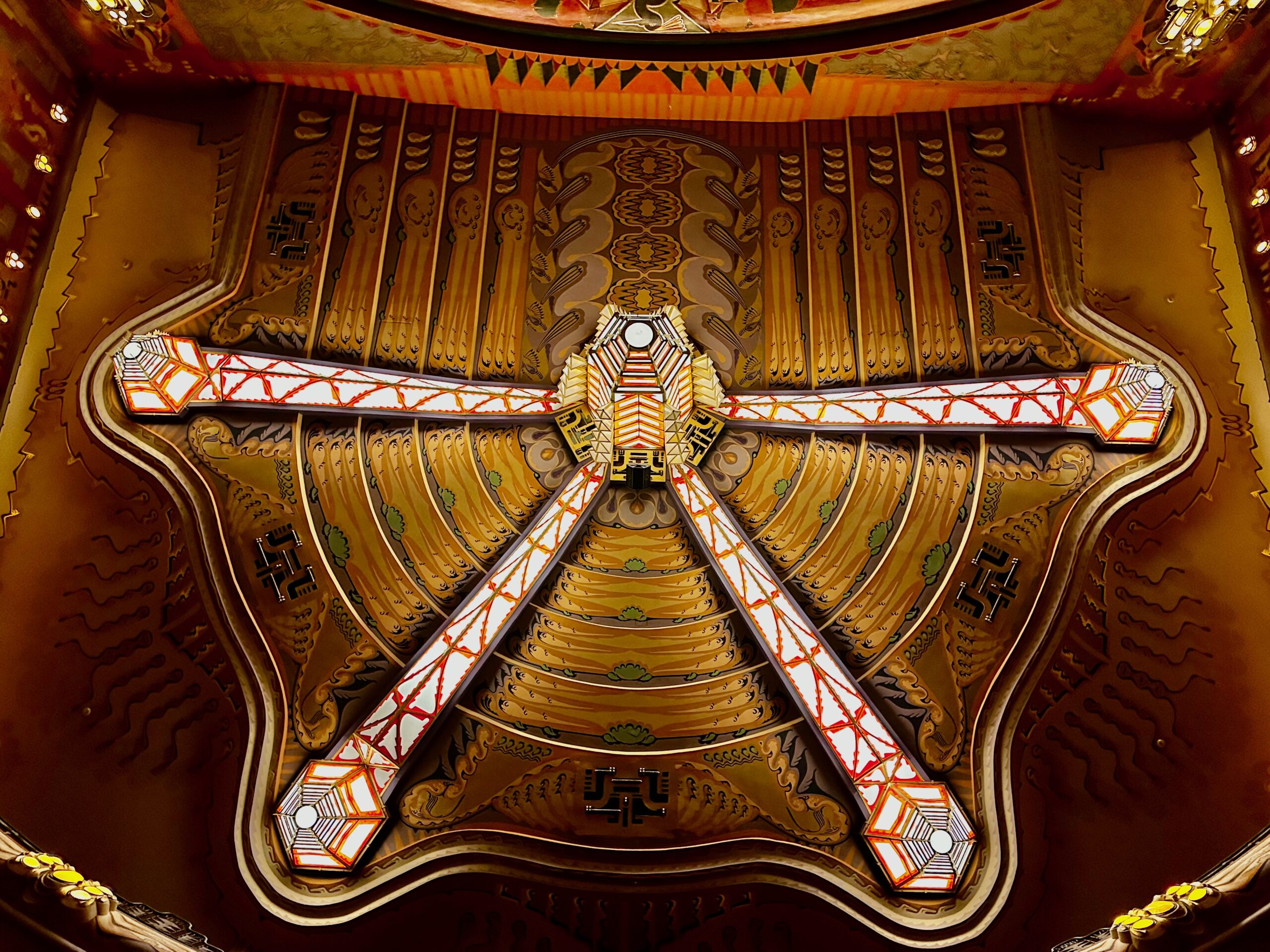
Top: Left: Pathé Tuschinski, Amsterdam, 1921, Middle: Royal Theatre Tuschinski main auditorium, Amsterdam, Right: Royal Theatre Tuschinski lobby, Amsterdam Bottom: Left: Tuschinski Theatre main hall ceiling, Amsterdam, Middle: Tuschinski Theatre staircase carpet, Amsterdam, Right: Tuschinski Theatre ceiling detail, Amsterdam
By the early 1950s the world the Fox theaters were built for had begun to change. Suburban development spread outward from the urban cores where nearly every major Fox building was located, drawing residents and their entertainment dollars with it, while new shopping centers offered parking and multiplex cinemas designed for the car rather than the pedestrian. Television arrived in American living rooms and made the trip downtown feel optional in a way it had never been before. The Fox theaters began losing audiences slowly at first, then more rapidly as the 1960s advanced. Some kept going by shifting toward kung-fu films and horror double features, but these were holding patterns rather than solutions. The San Francisco Fox closed in February 1963 and was demolished that summer, its nearly five thousand seats and Thomas Lamb’s Rococo interior gone within weeks, with only Fox Plaza left on the site. The Brooklyn Fox followed in 1971, razed to make way for a utility facility. Atlanta’s Fox closed in 1974 when Southern Bell proposed purchasing the site for its corporate headquarters, and Detroit’s Fox went dark in the early 1980s. In city after city, the pattern repeated itself, and the buildings that had once been the proudest addresses on their blocks sat vacant, their marquees unlit and their Wurlitzers silent. The loss of the San Francisco Fox in particular is still considered one of the most significant architectural demolitions in American cultural history. The building was in excellent condition when it came down.
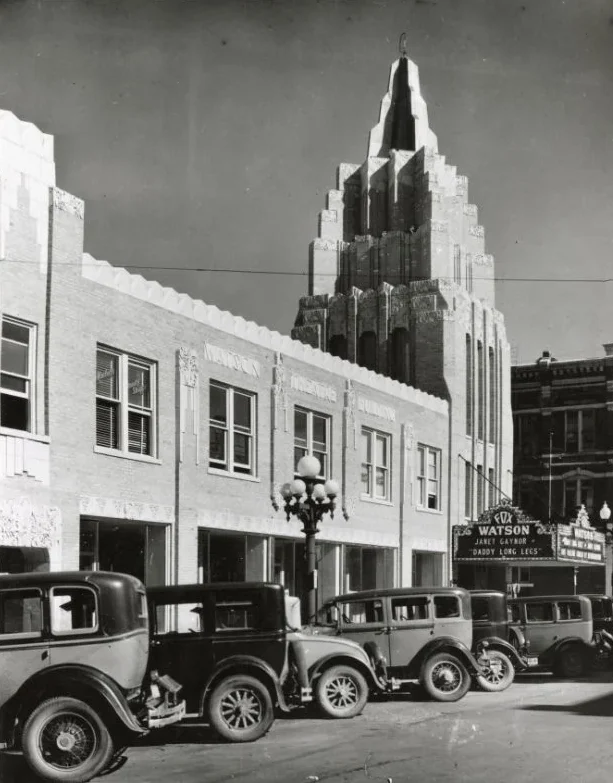
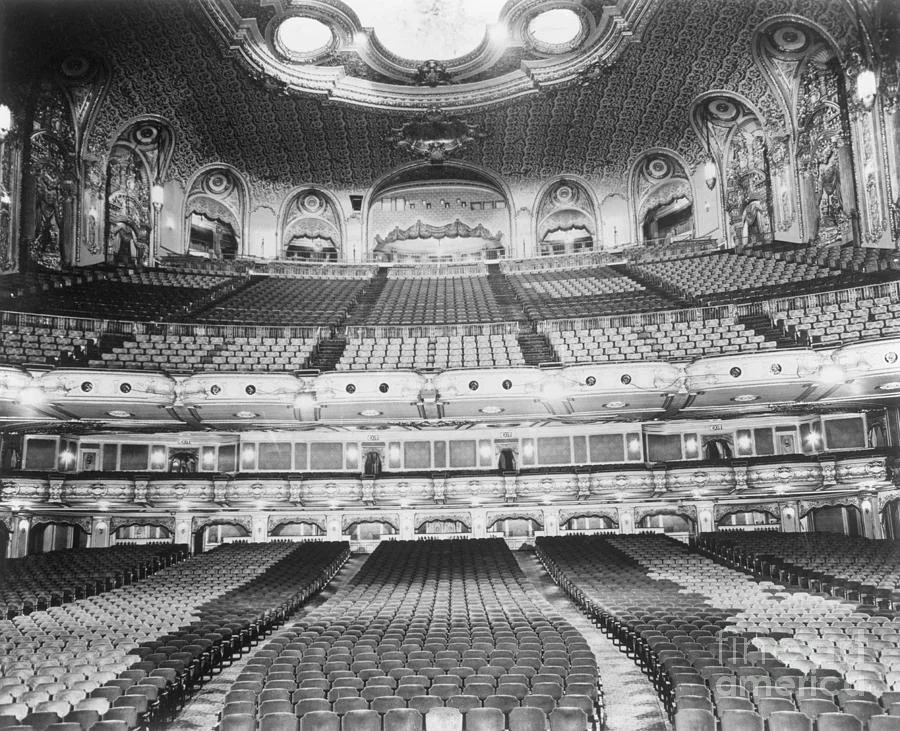
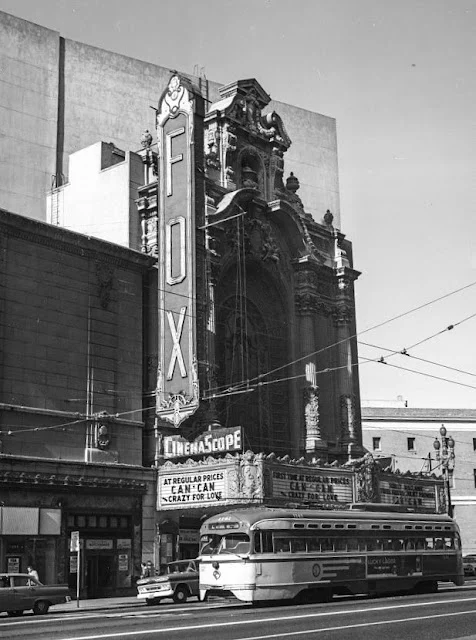
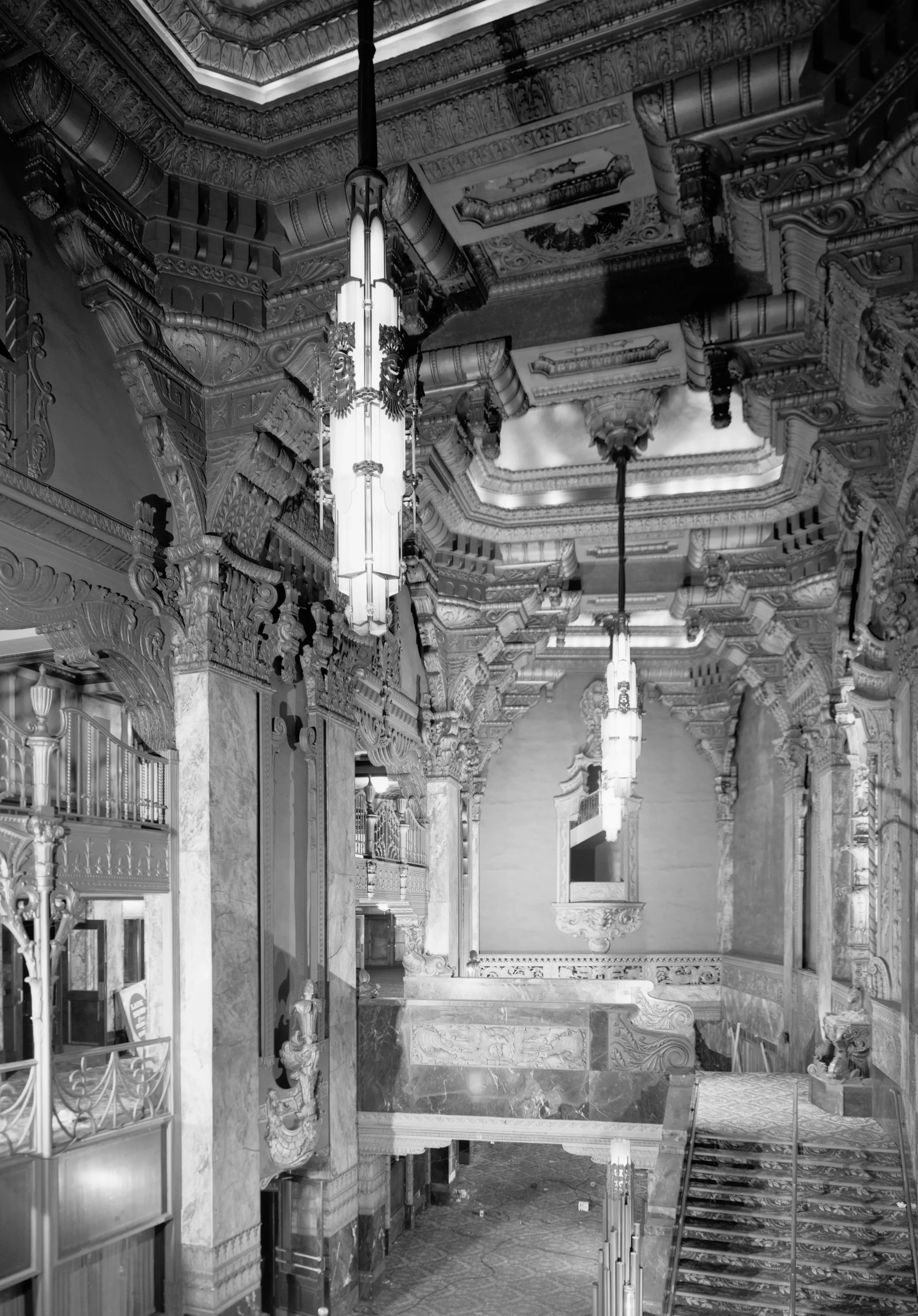
Left: Fox-Watson Theatre, Salina, Kansas, 1931, Middle-Left: Fox Theatre interior, San Francisco, California, 1929, Middle-Right: Fox Theatre, 1350 Market Street, San Francisco, final days of operation, 1963, Right: Fox Theatre lobby, Brooklyn, New York, 1928
The story of the Fox theaters that survive is ultimately a story about communities deciding that the buildings were worth fighting for. In Atlanta, the turning point came in 1974 when local citizens formed Atlanta Landmarks and launched a “Save the Fox” campaign that raised three million dollars through individual donations, purchased the building, and began a restoration that returned it to active use in 1975. The Fox Theatre in Atlanta has since received more than twenty million dollars in additional restoration investment and now hosts over two hundred and fifty performances annually, from Broadway touring productions to the Atlanta Ballet. In Detroit the Ilitch family acquired the Fox in 1988 and invested twelve million dollars in an eighteen-month restoration, reopening with a performance by Smokey Robinson and the Count Basie Orchestra; designated a National Historic Landmark in 1989, it remains the largest continually operating theater in the country. St. Louis restored its Fox in 1982, and Oakland’s Fox, boarded up since 1966, was restored and reopened in 2009 as part of a plan to revitalize the Uptown district. Tucson’s Fox reopened after a six-year, fourteen-million-dollar rehabilitation in 2006, and Spokane’s Fox became home to the Spokane Symphony after its own restoration in 2007. Across Kansas, Colorado, California, Missouri, and elsewhere, smaller Fox theaters have been returned to active use through comparable combinations of civic will, nonprofit funding, and preservation grants. Roughly twenty to thirty historically significant Fox theaters now operate across the country as concert halls, Broadway houses, community venues, and civic landmarks, drawing audiences who come as much to experience the architecture as to see what is being performed inside it. William Fox built them to last, and in the cities that chose to keep them, they have.
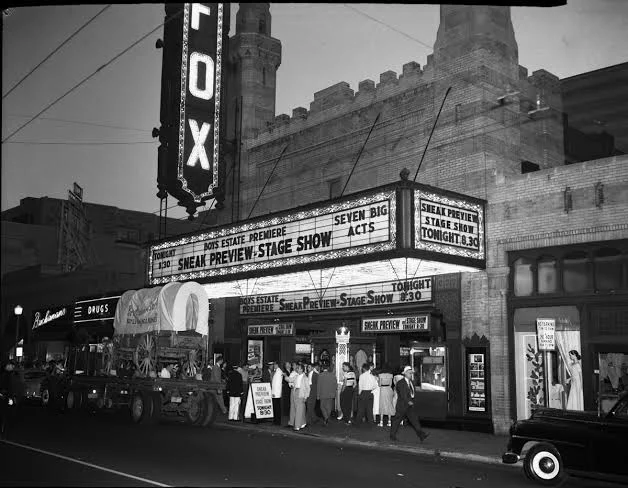
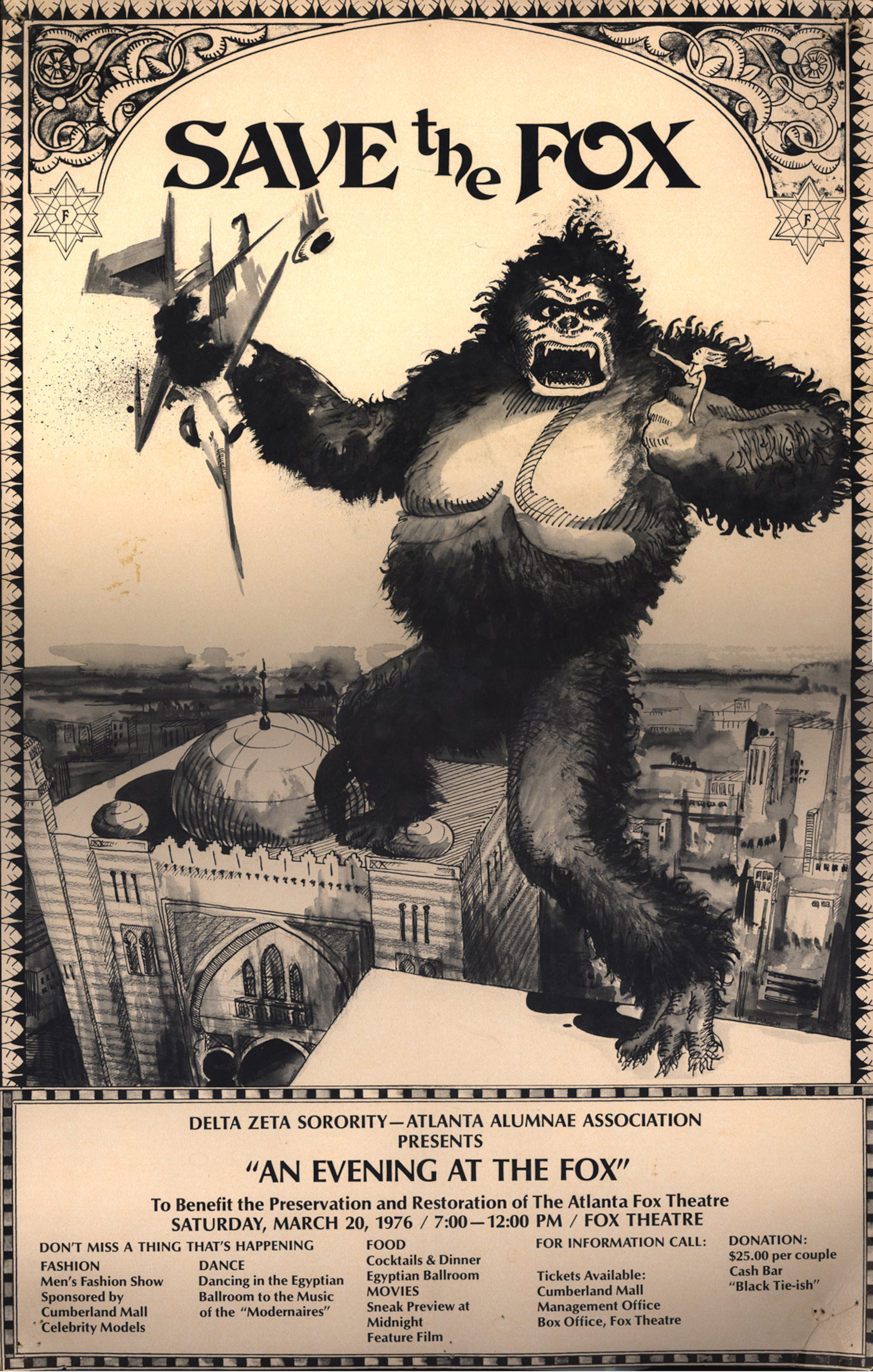
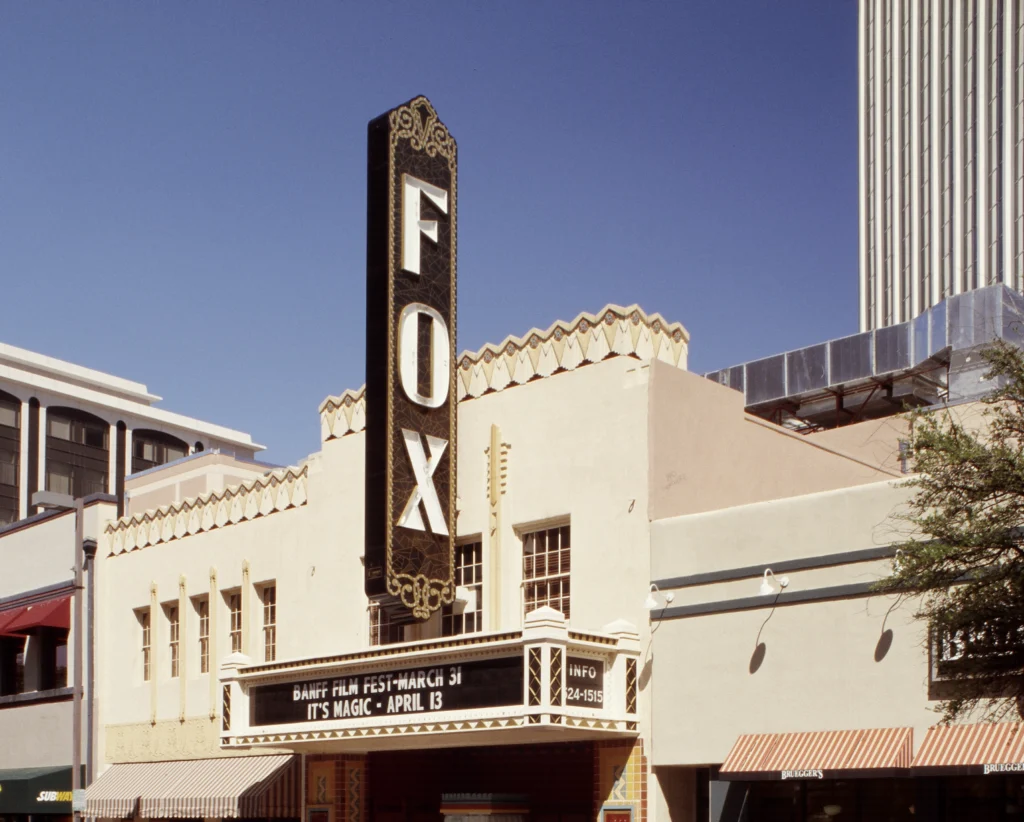
Left: Fox Theatre, Atlanta, Georgia, restored 1975, Middle: Save the Fox fundraising gala poster, Atlanta, 1976, Right: Fox Tucson Theatre, Tucson, Arizona, restored 2005
Recommended Reading
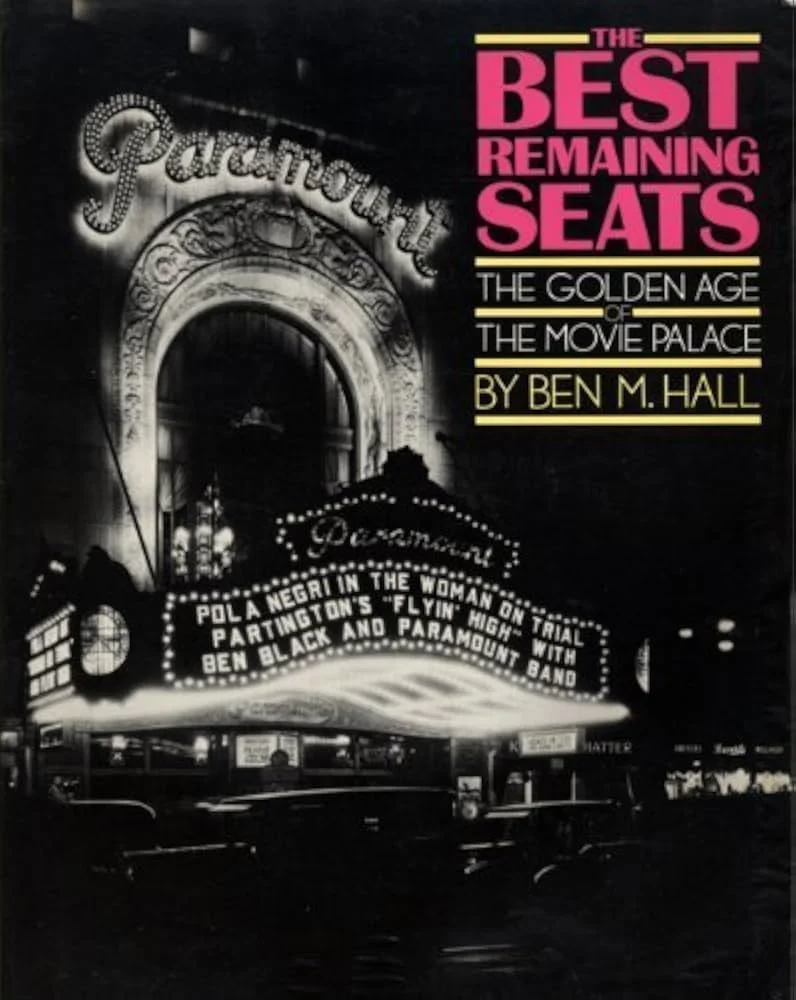
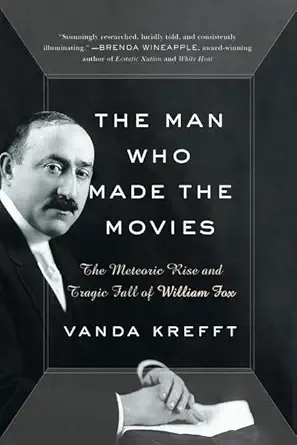
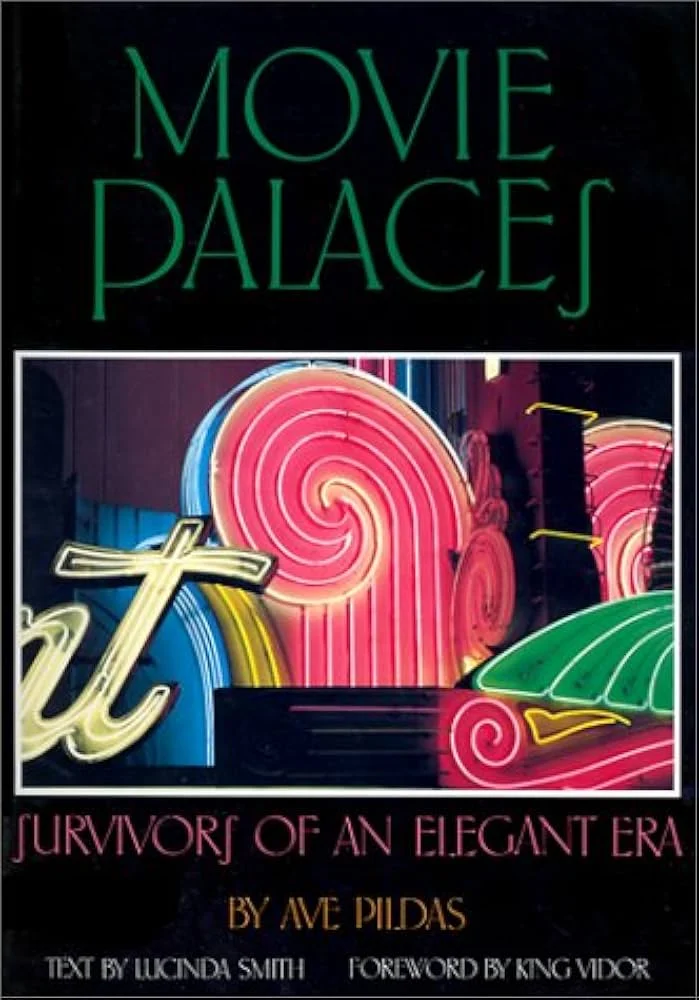
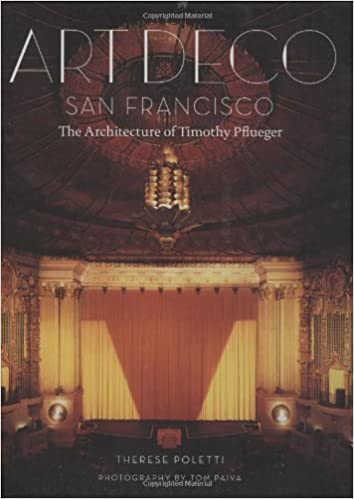
For those who want to go further into the history of the Fox theaters and the movie palace era, four books offer particularly rewarding starting points. The Best Remaining Seats: The Story of the Golden Age of the Movie Palace by Ben M. Hall, first published in 1961, remains the definitive text on the American movie palace, tracing the arc from the early nickelodeons through the 1920s construction boom and the decades of decline, with close attention to the architects, the theater organs, and the buildings that defined the era. The Man Who Made the Movies: The Meteoric Rise and Tragic Fall of William Fox by Vanda Krefft, published in 2017, is the first comprehensive biography of William Fox, following the immigrant entrepreneur from his Brooklyn penny arcade through the construction of his theater empire and the financial collapse that stripped it from him. Movie Palaces by Ave Pildas, published in 1980 with text by Lucinda Smith and a foreword by King Vidor, documents the great American movie theaters through photography, capturing the interiors and facades of surviving and since-demolished palaces across the country and remaining one of the most visually complete records of what these buildings looked like at their most intact. Art Deco San Francisco: The Architecture of Timothy Pflueger by Therese Poletti, published by Princeton Architectural Press in 2008, traces the career of the San Francisco architect who brought Mayan, Asian, and Egyptian forms to the city’s Art Deco buildings, including the Castro Theatre and the Paramount in Oakland, and offers a vivid account of the Bay Area’s contribution to the movie palace tradition.
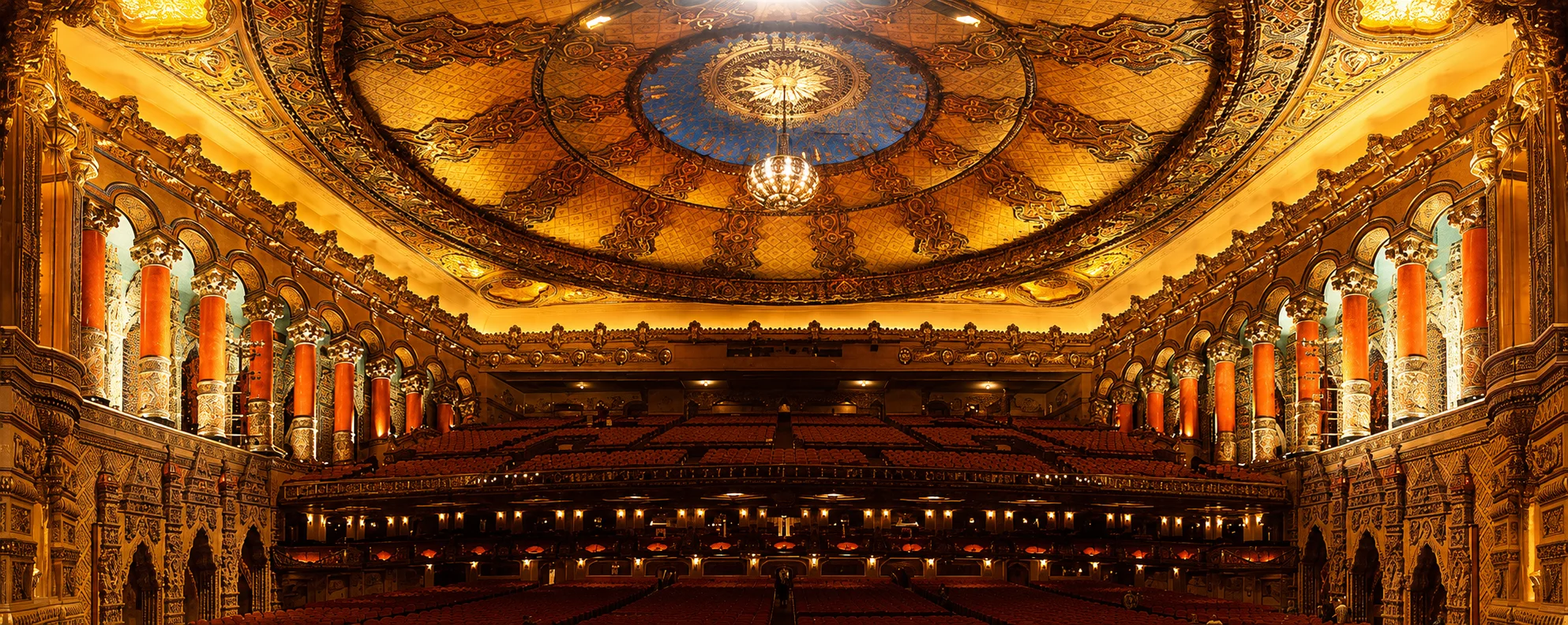
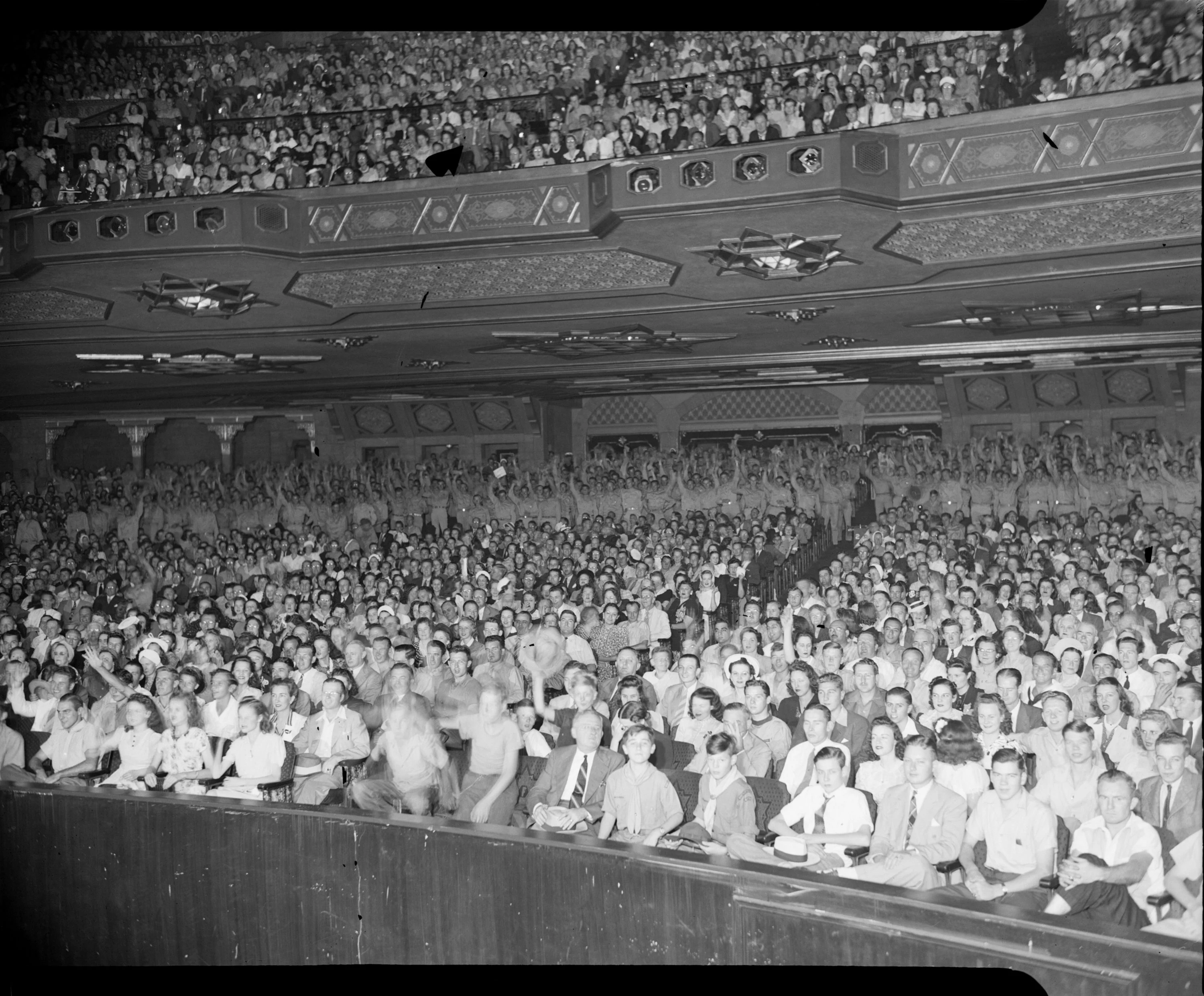
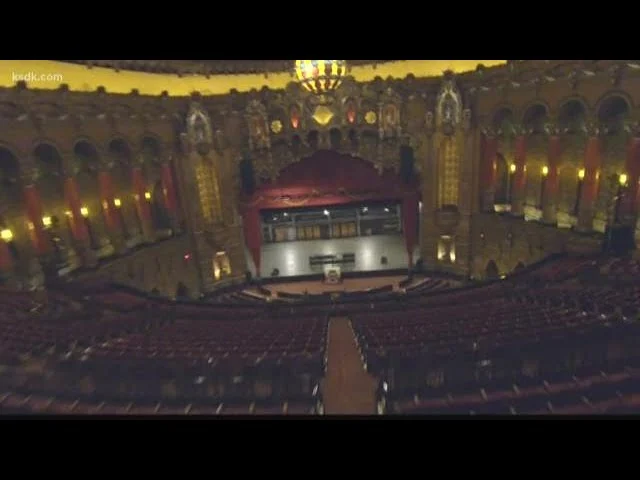
Fabulous Fox Theatre auditorium, St. Louis, Missouri
If you are interested in further stories of Art Deco design, collecting, and celebrating the artistry of early 20th Century:

Related Products from ArtDecoCollection.com