
Neon Signs, The Glass That Lit the Modern Age
How a Hand-Bent Tube of Colored Light Gave the 1920s, 30s, and 40s Their Most Recognizable Voice
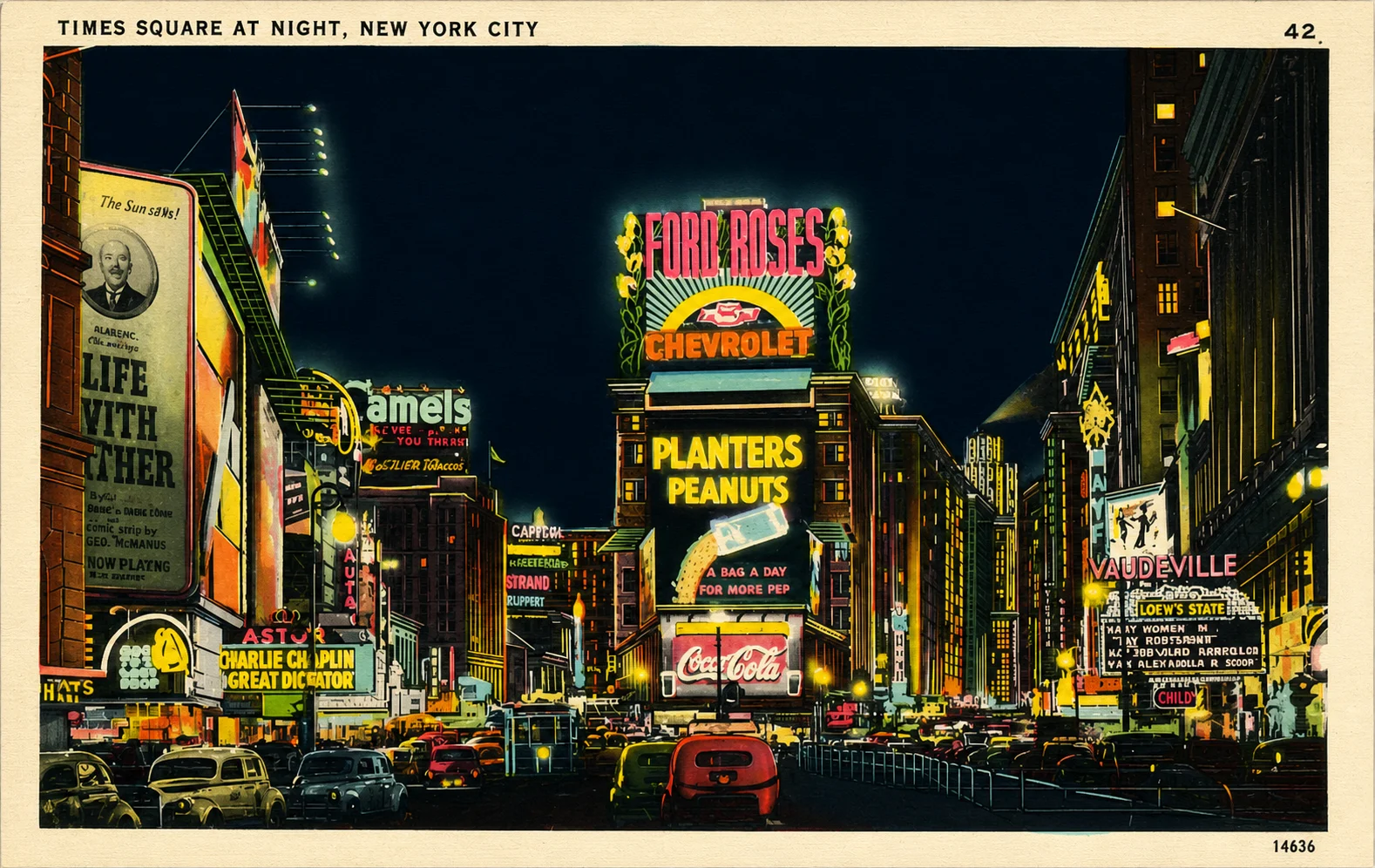
Neon holds a particular place in the history of modern design because it gave the era its night identity. From the late 1920s through the years just after the Second World War, the same decades that saw the decorative world embrace geometry, speed, polish, and the engineered object, a single new technology lit nearly every public surface those designers were drawing. The marquee, the storefront, the diner, the hotel facade, and the small sign in the corner pharmacy window all spoke a shared language after dark, and that language was written in colored light bent inside glass. Neon was not decoration laid over the period. It was part of its core vocabulary, woven into the architecture and the streetscape so completely that the photographs we now associate with the modern city are almost always photographs of buildings made visible by their signs. The look of the era, the sense of confidence and forward motion that runs through its objects and rooms, found its purest public expression in the glow of a hand-bent tube. A century after the first commercial signs went up, that glow still reads instantly as the visual signature of the years that produced it.

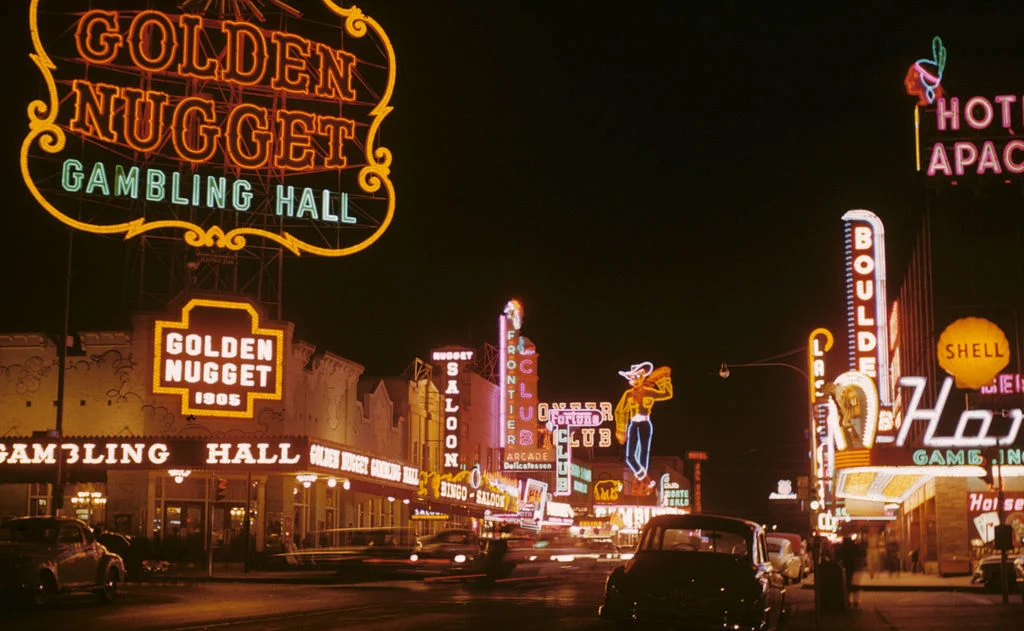
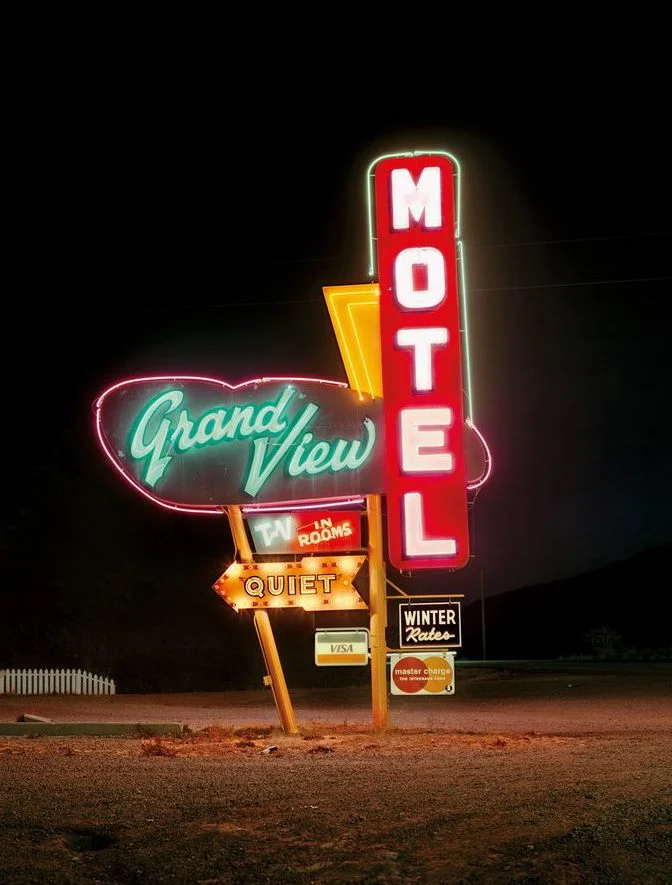
Left: Fox Oakland Theatre marquee, Oakland, California, 1928. Middle: Fremont Street, Las Vegas, Nevada, 1952. Right: Grand View Motel, Raton, New Mexico.
The technology itself arrived earlier than most of the design world that came to depend on it. The French chemist and engineer Georges Claude patented a method for using rare gases to produce stable electrical light in 1910 and demonstrated the result that same year at the Paris Motor Show, where two enormous twelve-meter tubes burned through the night above visitors at the Grand Palais. The first commercial sign followed in 1912 above a small Paris barber shop, and by the early 1920s neon had become a familiar sight on French boulevards. The Atlantic crossing came in 1923, when the Los Angeles Packard dealer Earle C. Anthony bought two signs from Claude during a trip to Paris and mounted them outside his showroom on Wilshire Boulevard. The legend was that they stopped traffic for days. Claude Neon licensed the technology widely through the late 1920s, and behind every sign that followed was a small workshop and a craftsman who could do something almost no one else could. The tube bender stood at a ribbon burner with a full-scale pattern drawn on a fireproof asbestos board, heated each section of straight tubing until it became pliable, and bent it by hand against the pattern. Completed letters were then sealed to electrodes and connected to a vacuum pump for bombarding, the process that drove out moisture and impurities before the tube was filled with rare gas at low pressure and sealed permanently. The work could not be mechanized in any meaningful way, and the trade ran through thousands of small two- and three-person shops in every American city through the 1930s and 1940s, where the best benders developed reputations the way good furniture makers and metalworkers did, by word of mouth among architects, theater owners, and the sign companies themselves.
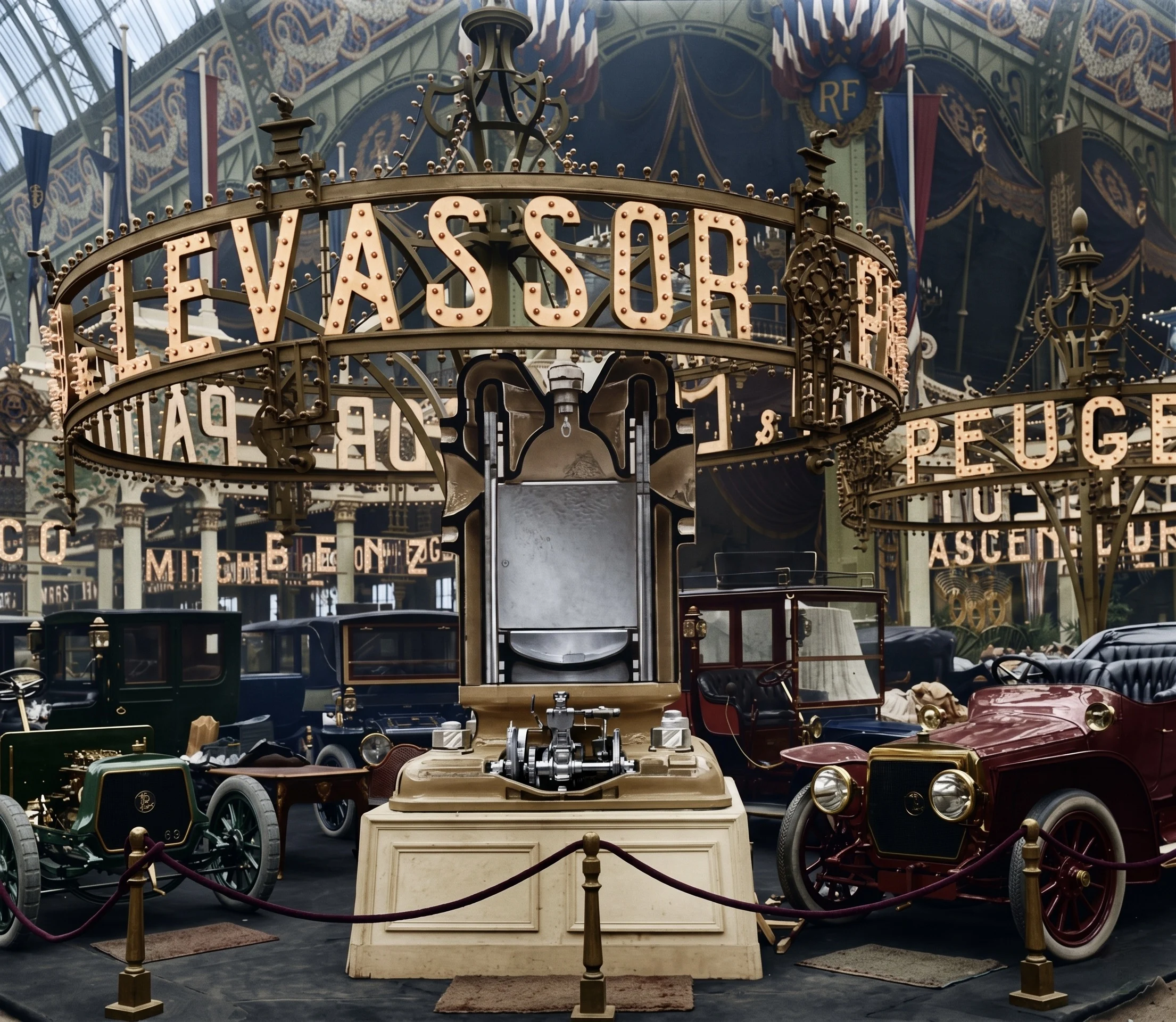
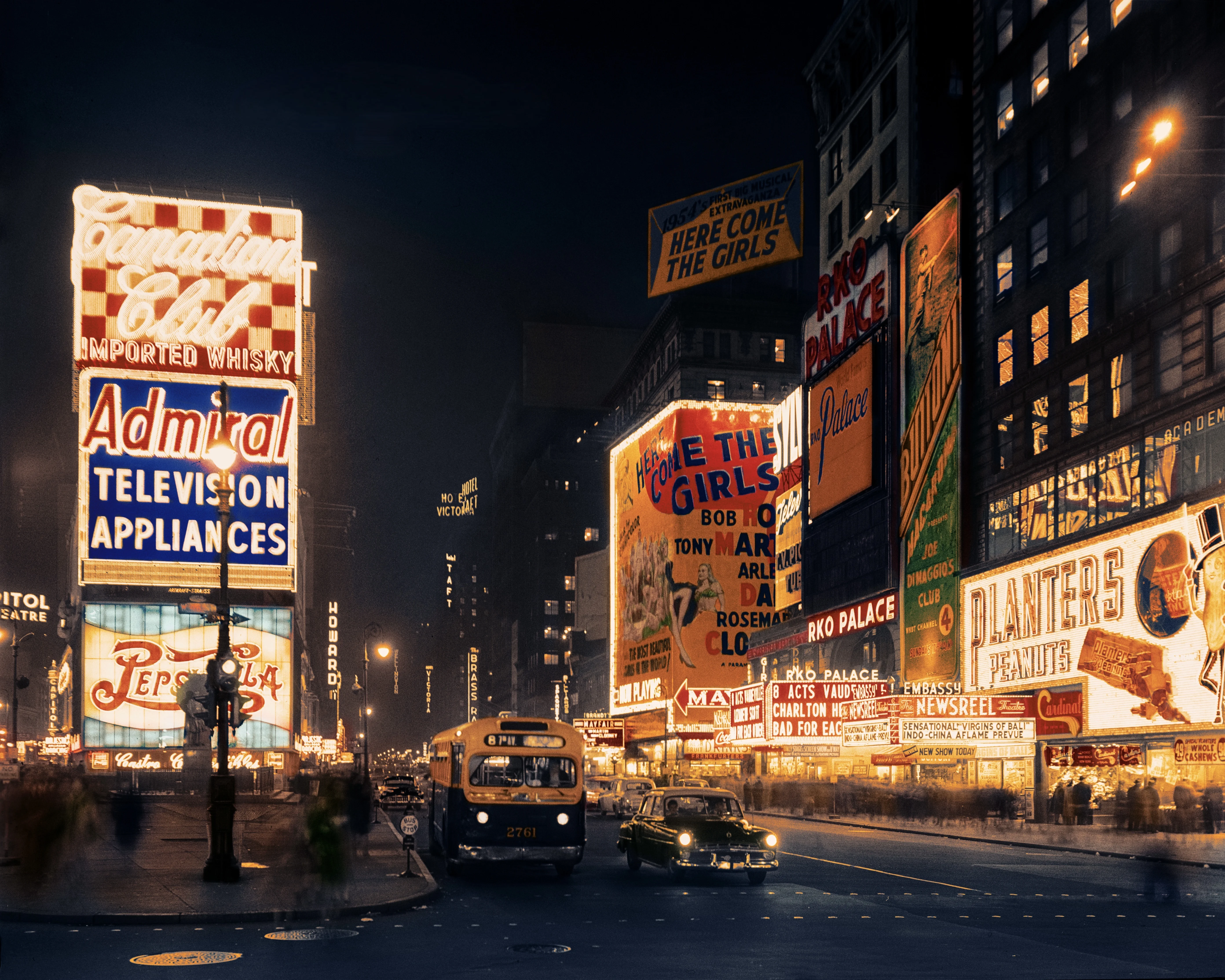
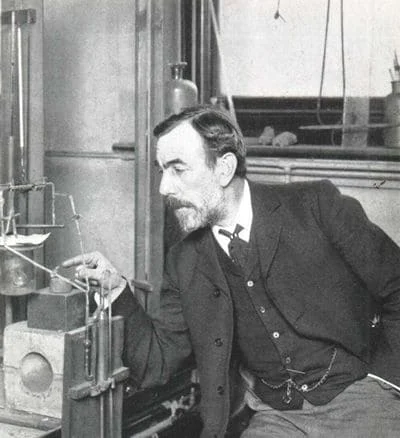
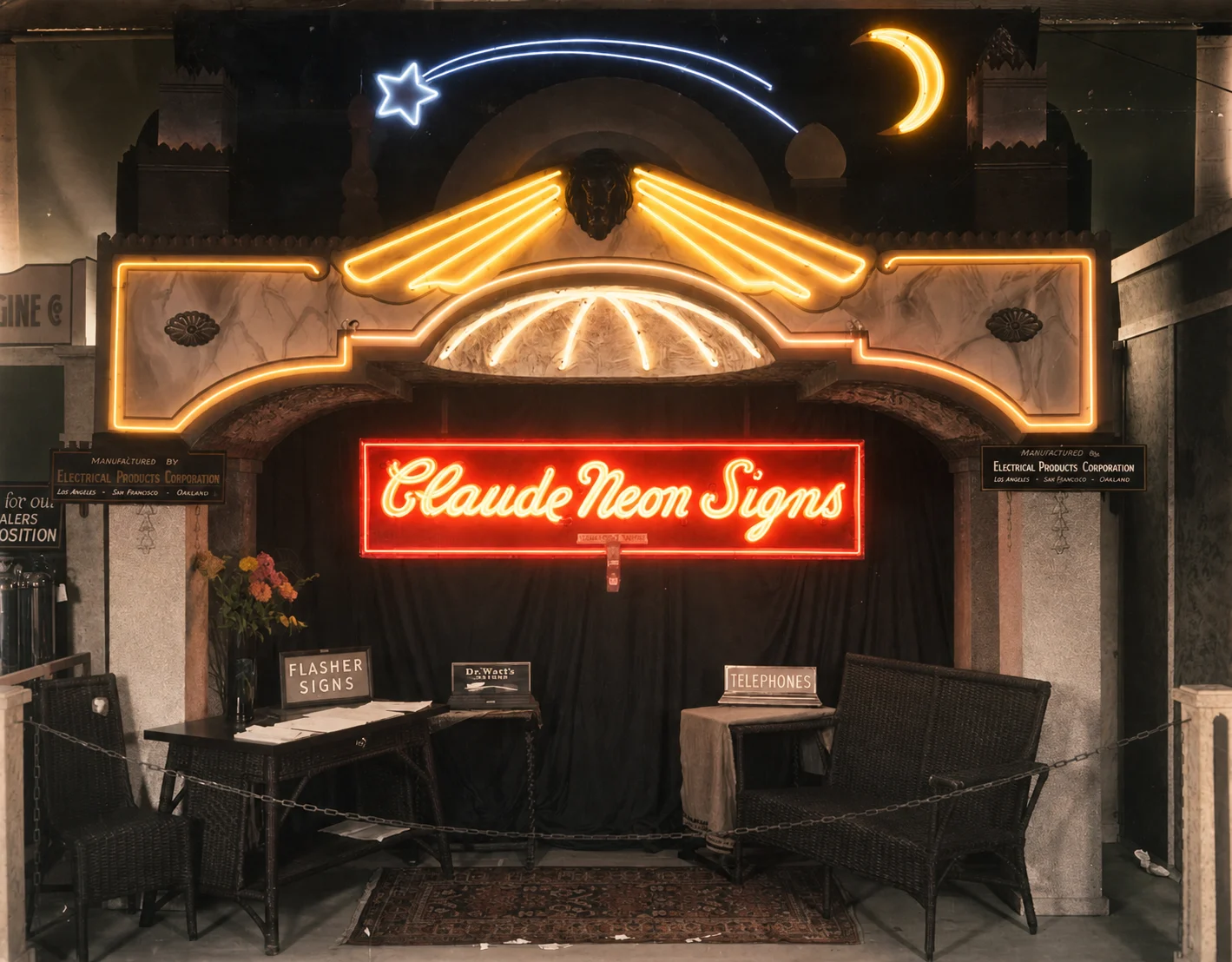
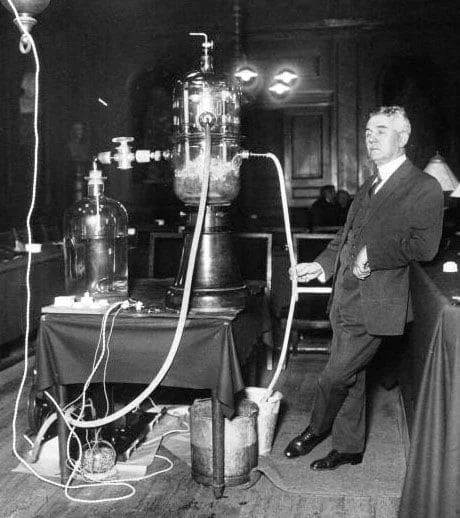
Top: Left: Levassor display, Paris Exposition, 1900, Right: Times Square, New York, 1954, Bottom: Left: Sir William Ramsay, who discovered neon in 1898, Middle: Claude Neon Signs showroom display, Right: Georges Claude, who debuted neon at the Paris Motor Show in 1910.
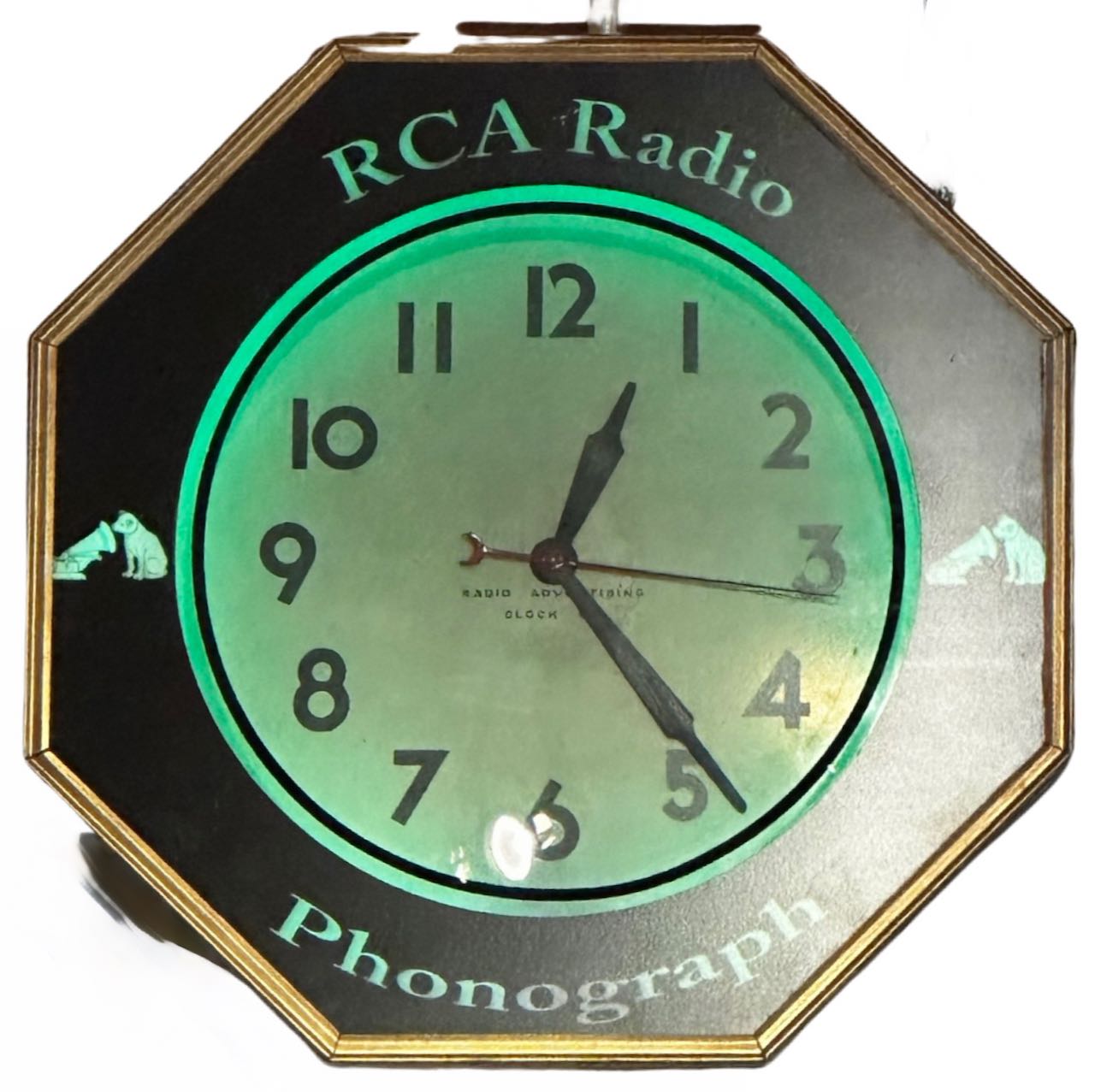
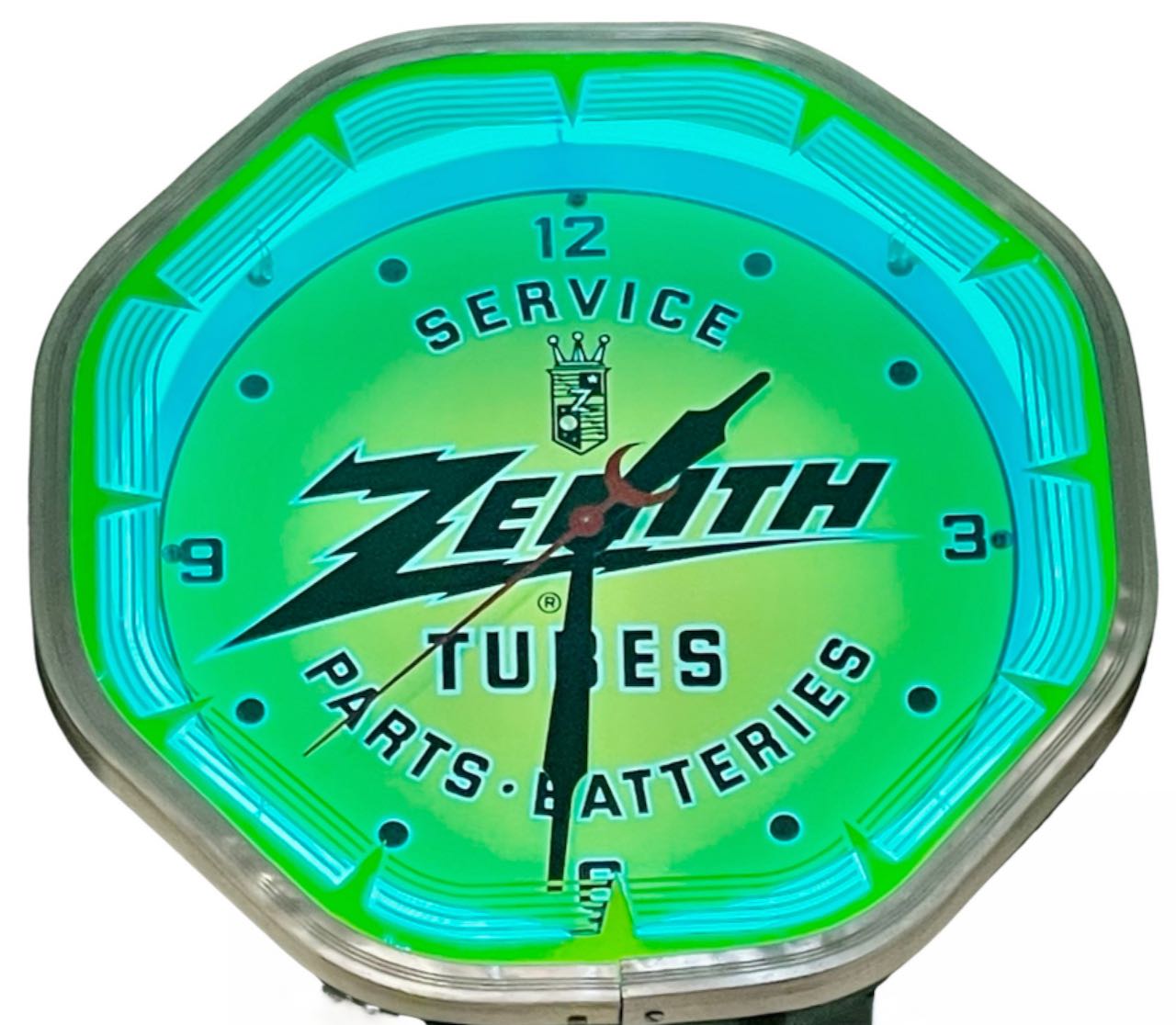
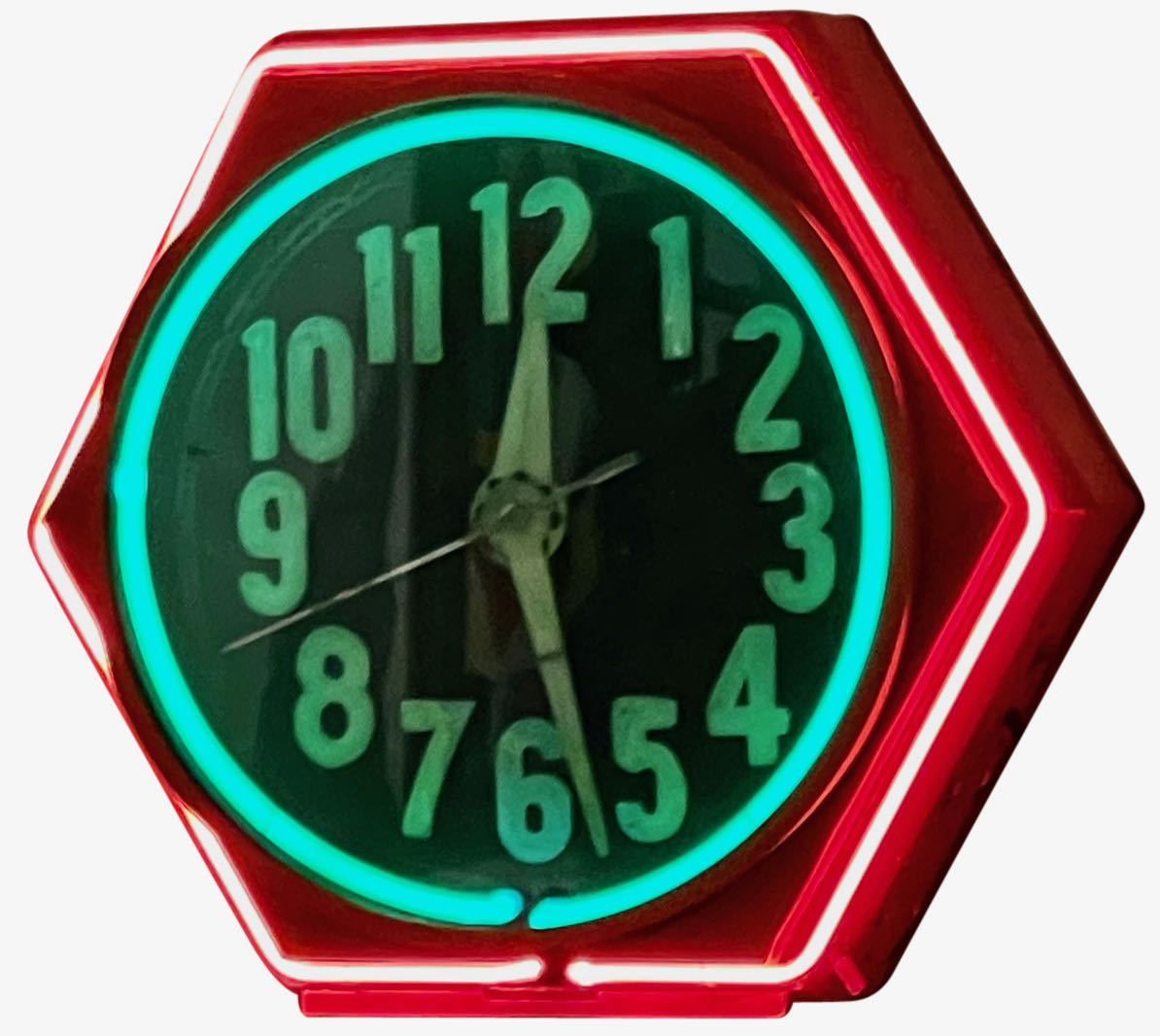
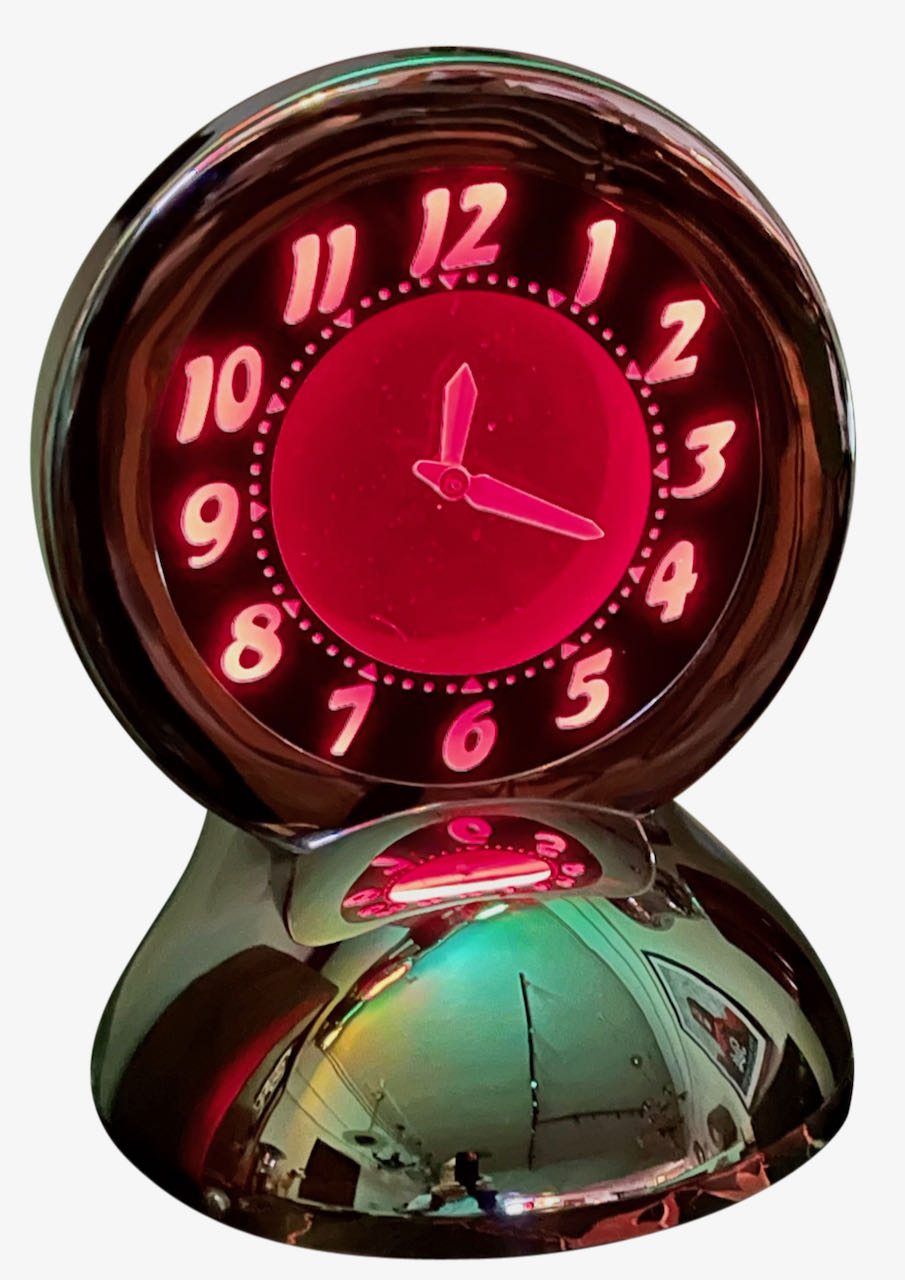
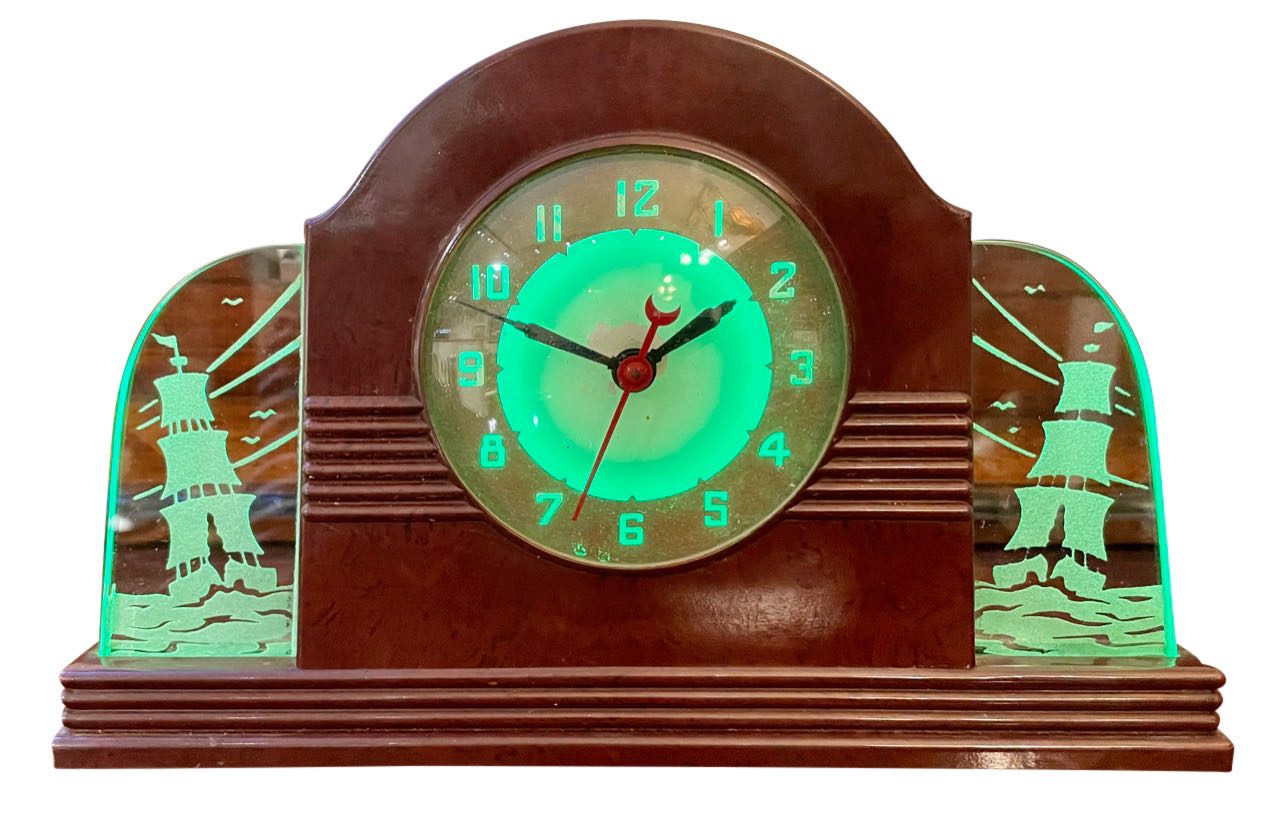
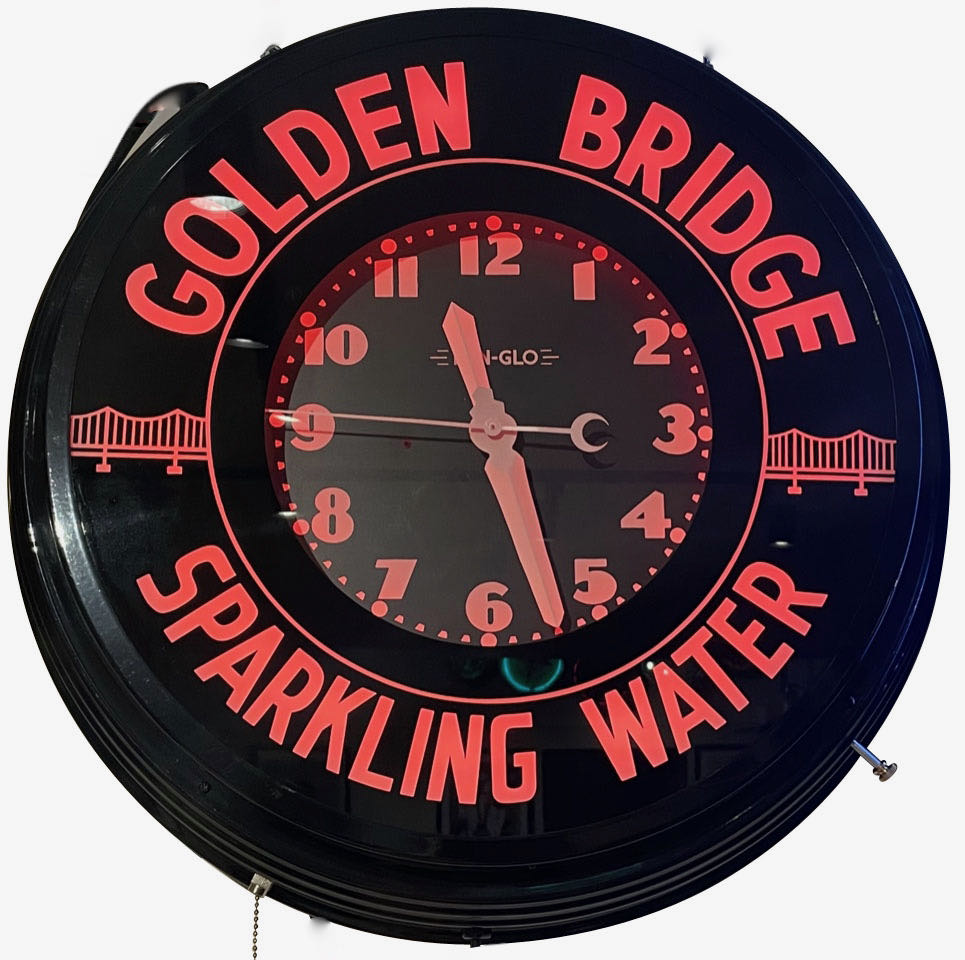
Among the most celebrated objects the medium produced was the neon clock. By the late 1920s, dedicated manufacturers such as Neon Products of Lima, Ohio, and the Electric Neon Clock Company of Cleveland were turning out custom timepieces for restaurants, bars, drugstores, and service stations across the country. Each one combined a working clock movement with a bright ring of bent tube and an illuminated dial, and the form fit the period perfectly. Round and octagonal cases of polished chrome and Bakelite framed bold sans-serif numerals, and the most ambitious designs added sunburst patterns, stepped pyramidal frames, or layered geometric borders drawn directly from the era’s broader decorative vocabulary. The clocks were almost always commissioned with a brand on the dial, Coca-Cola, Pabst, Mobilgas, Budweiser, RC Cola, and Dr Pepper among the most common, and the same shops produced custom faces for the local pharmacist, garage, or hardware store. The need was practical as much as decorative, since a clock had to be readable across a smoky barroom or down the length of a drugstore aisle, and the bright neon ring solved that problem more elegantly than any earlier illuminated timepiece. The result was a category of object that combined commercial utility with the period’s most ambitious design language. The clocks have survived in greater numbers than almost any other piece of period neon work, and a century later they remain among the most collected objects of the era, often hung in homes and bars as the last visible trace of a vanished diner, garage, or corner store.
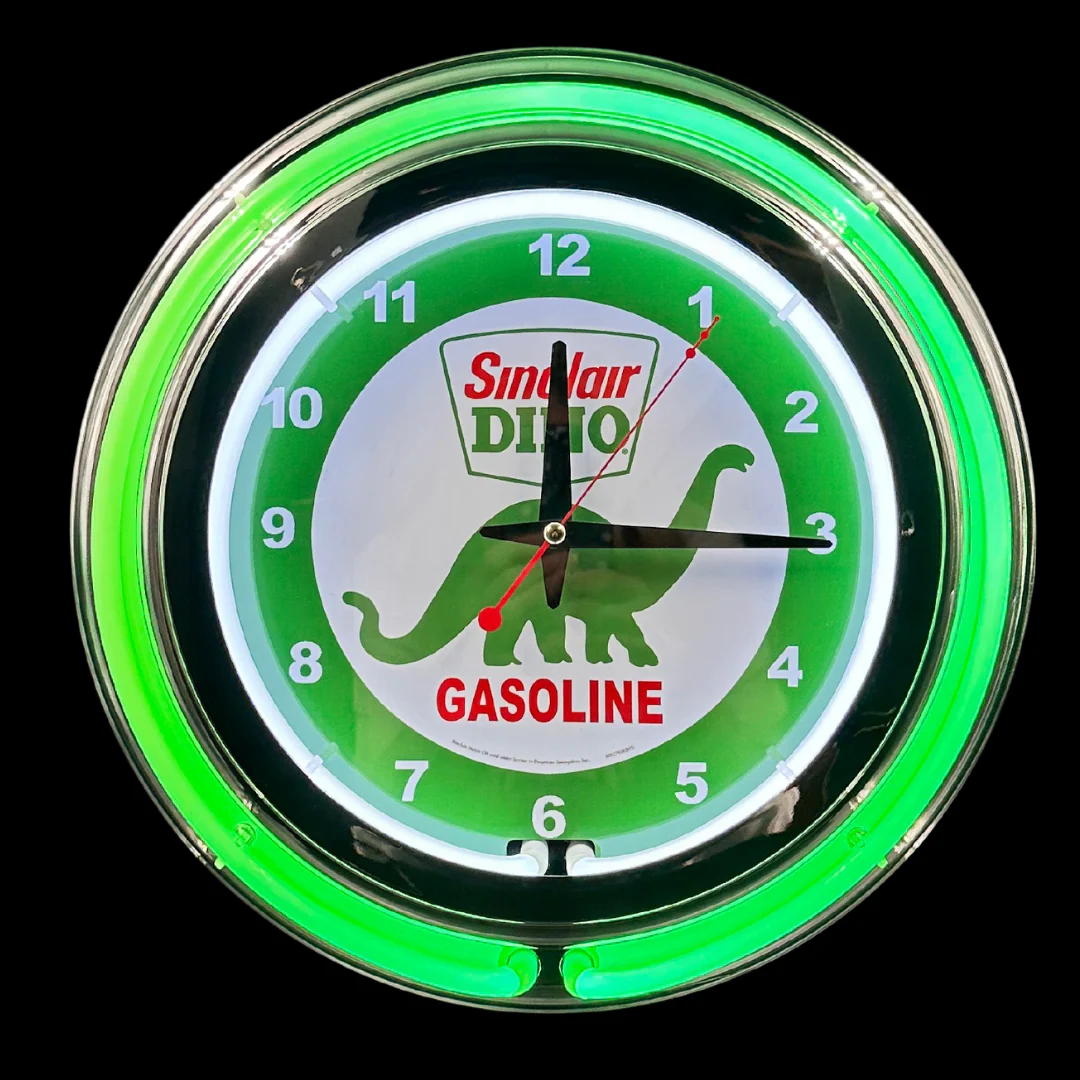
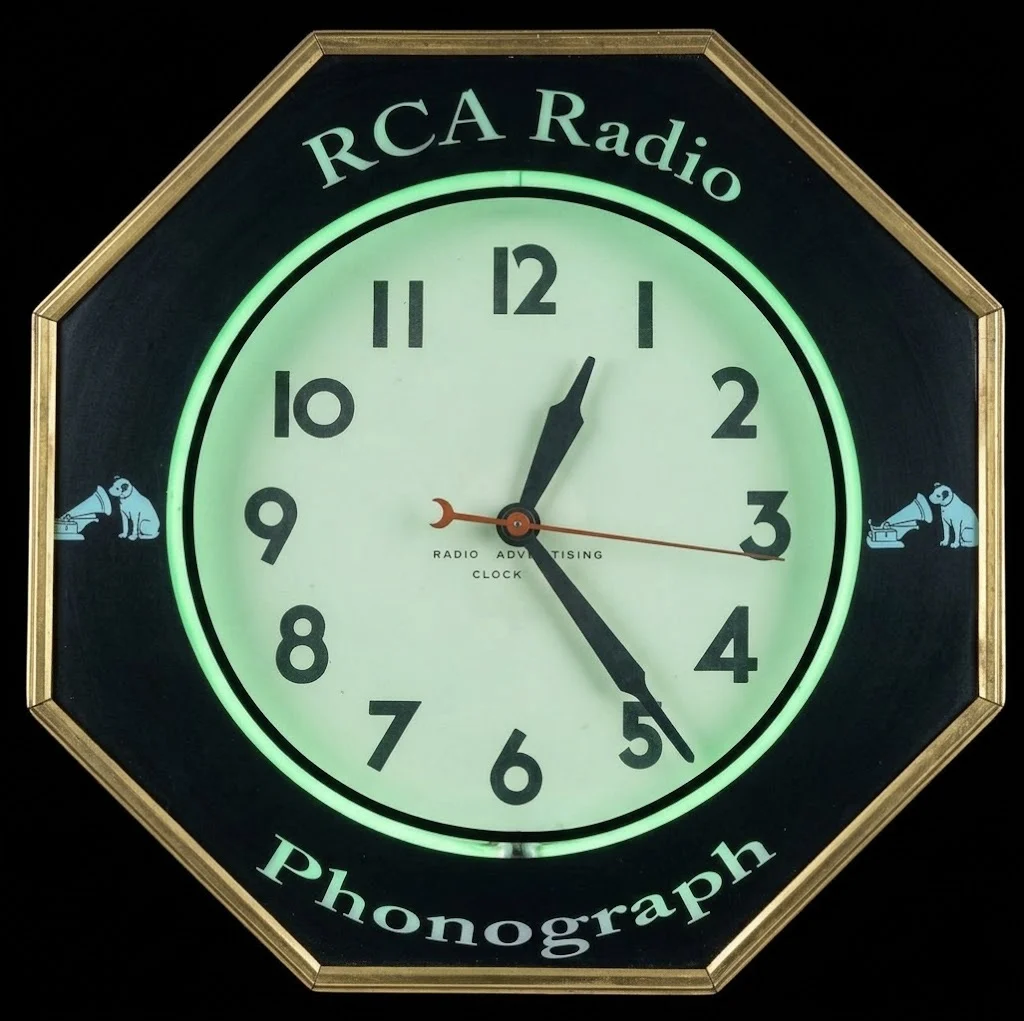
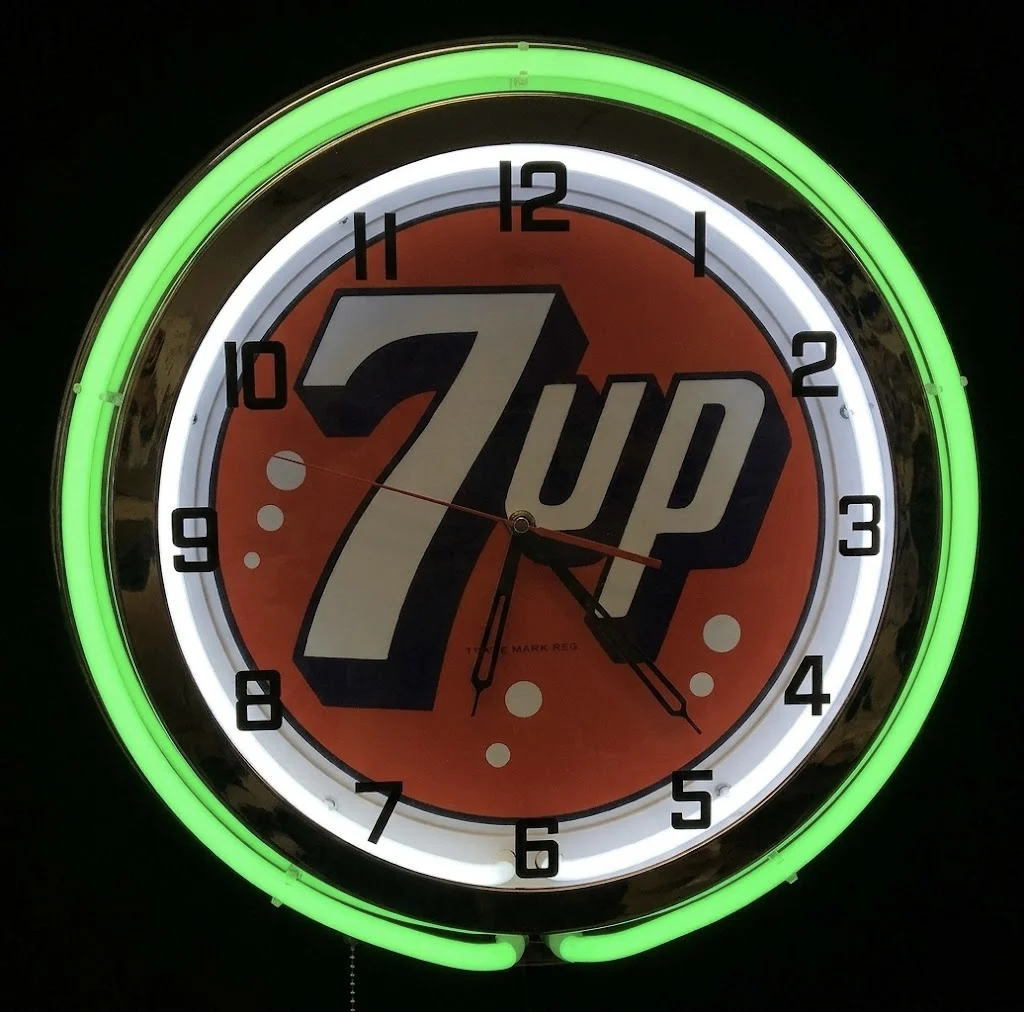
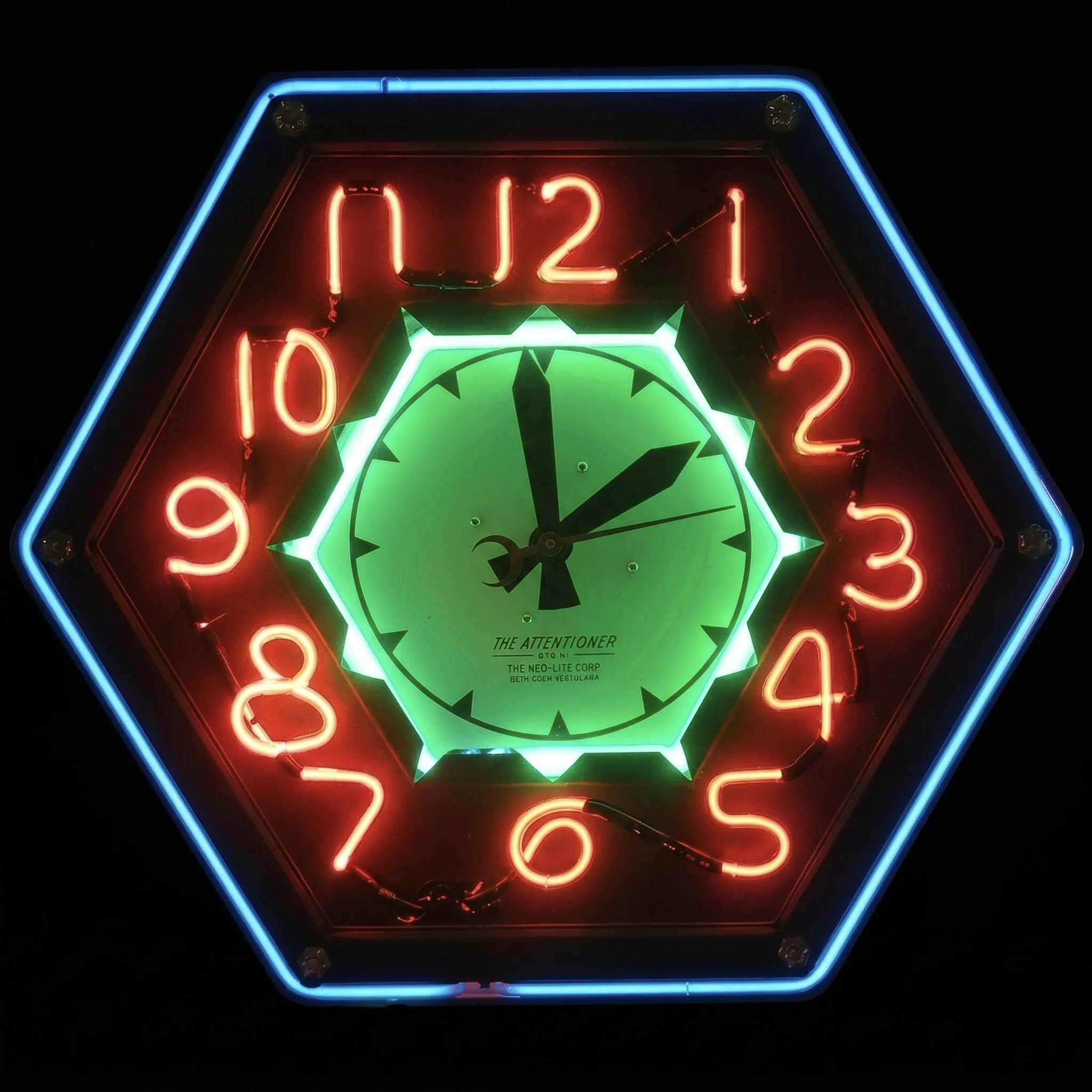
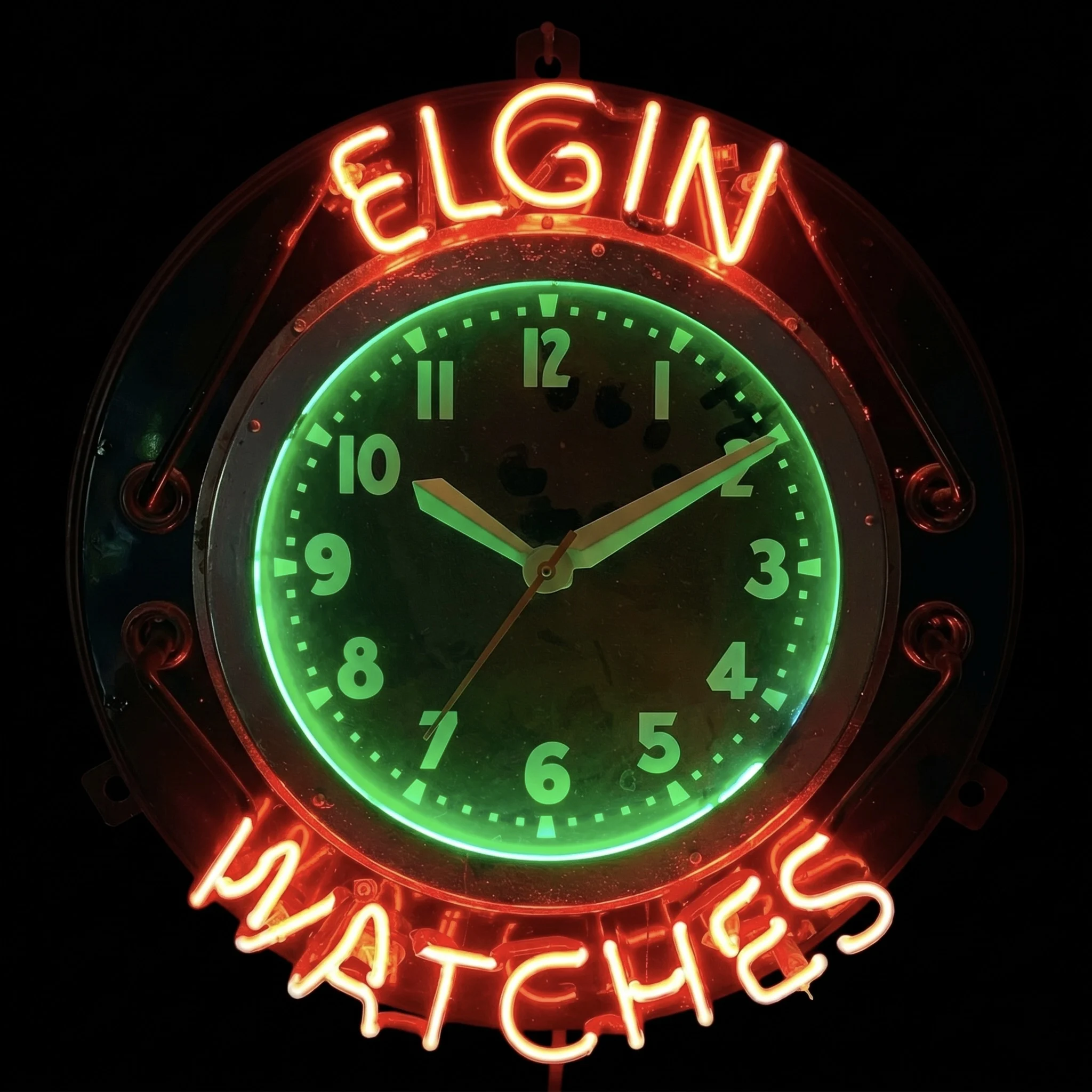
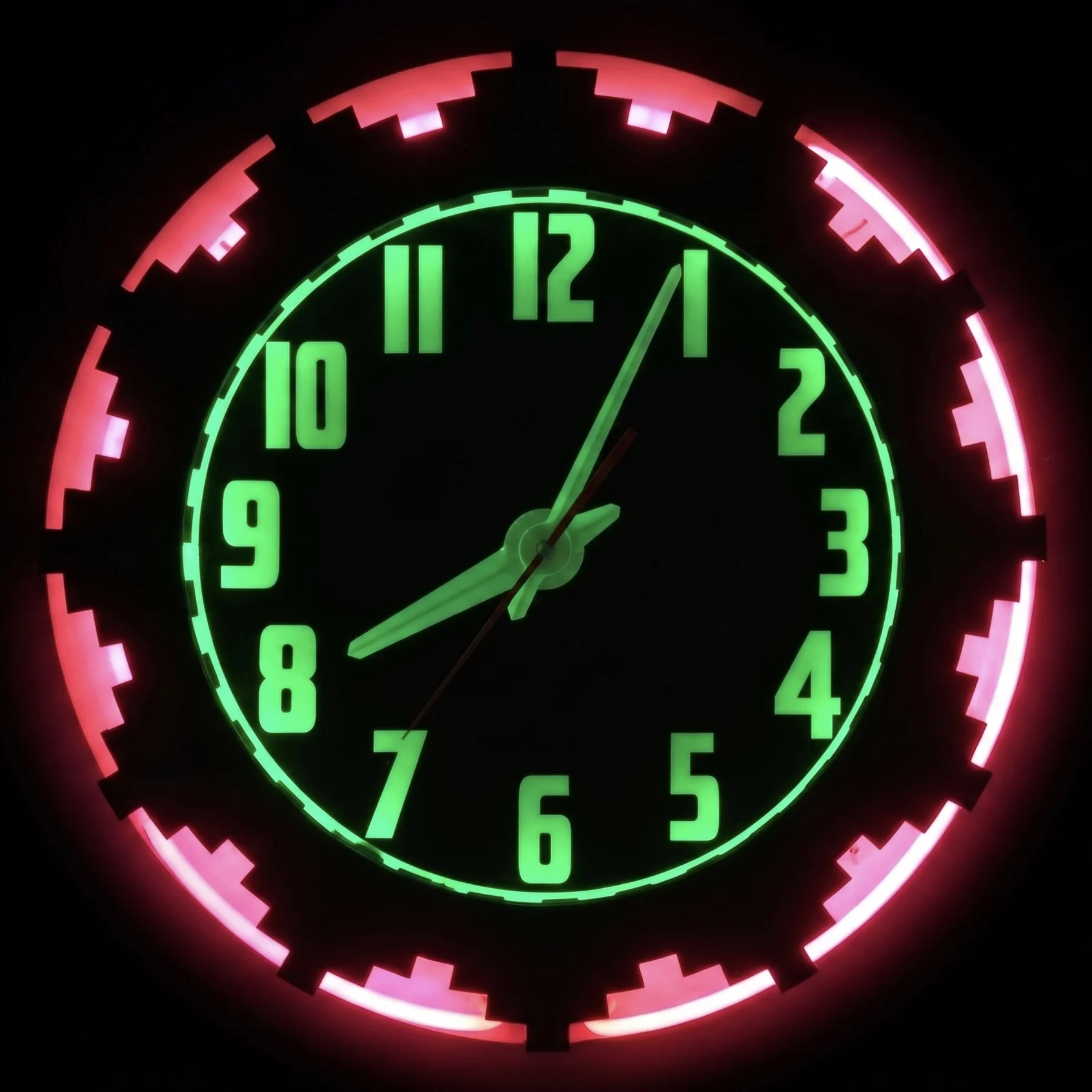
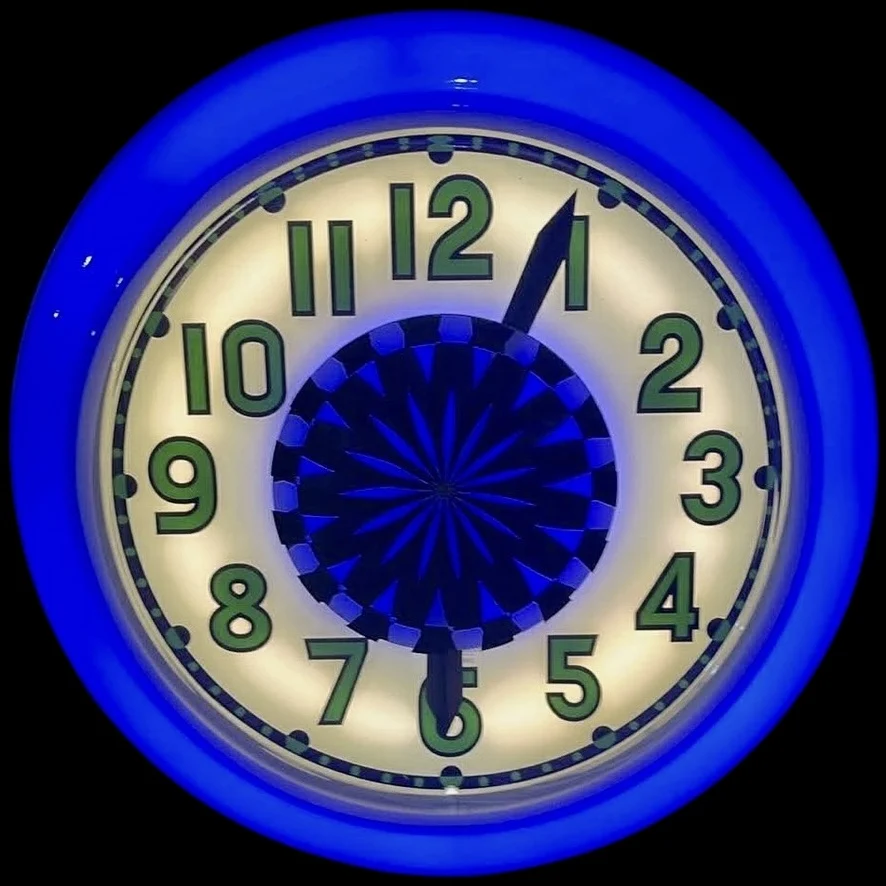
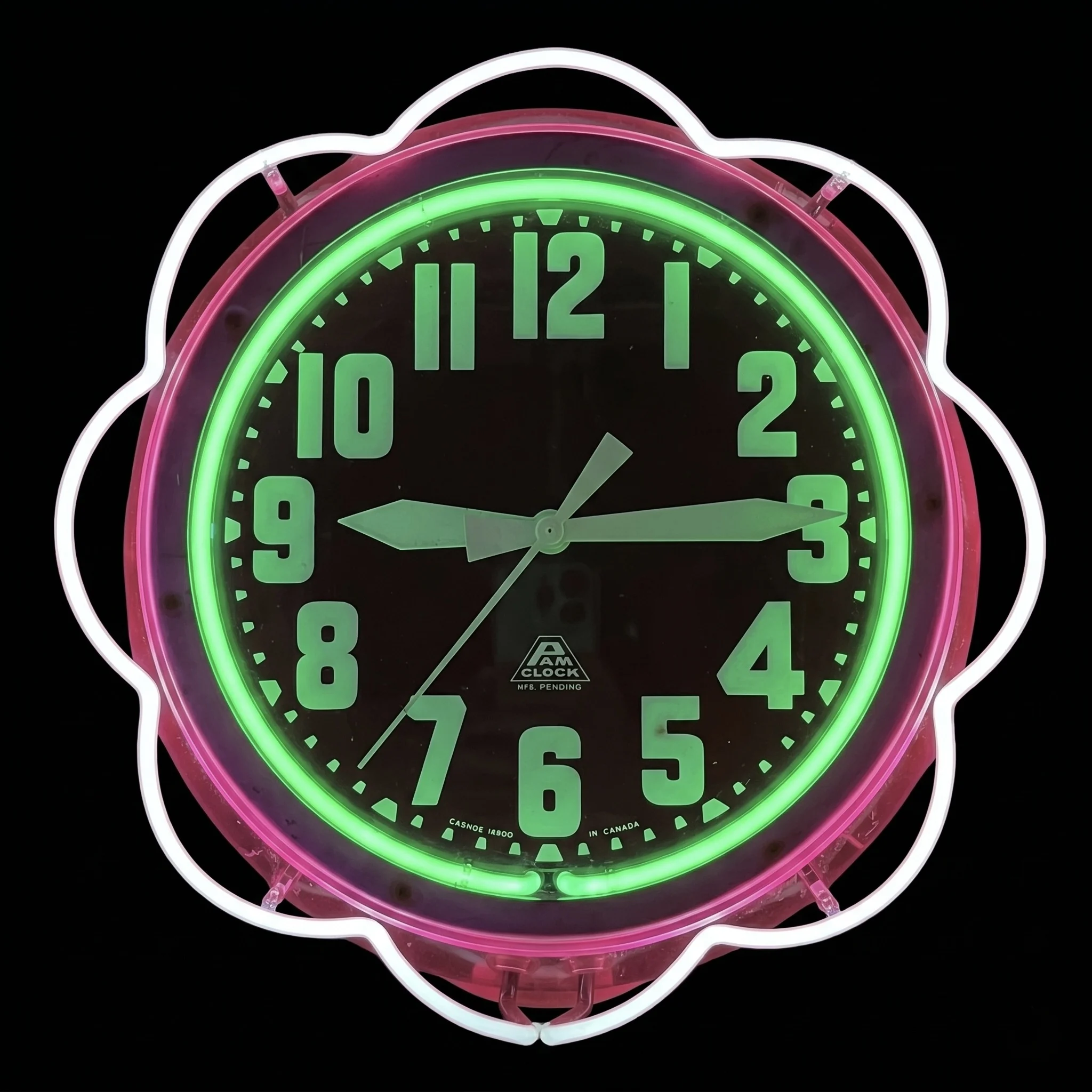
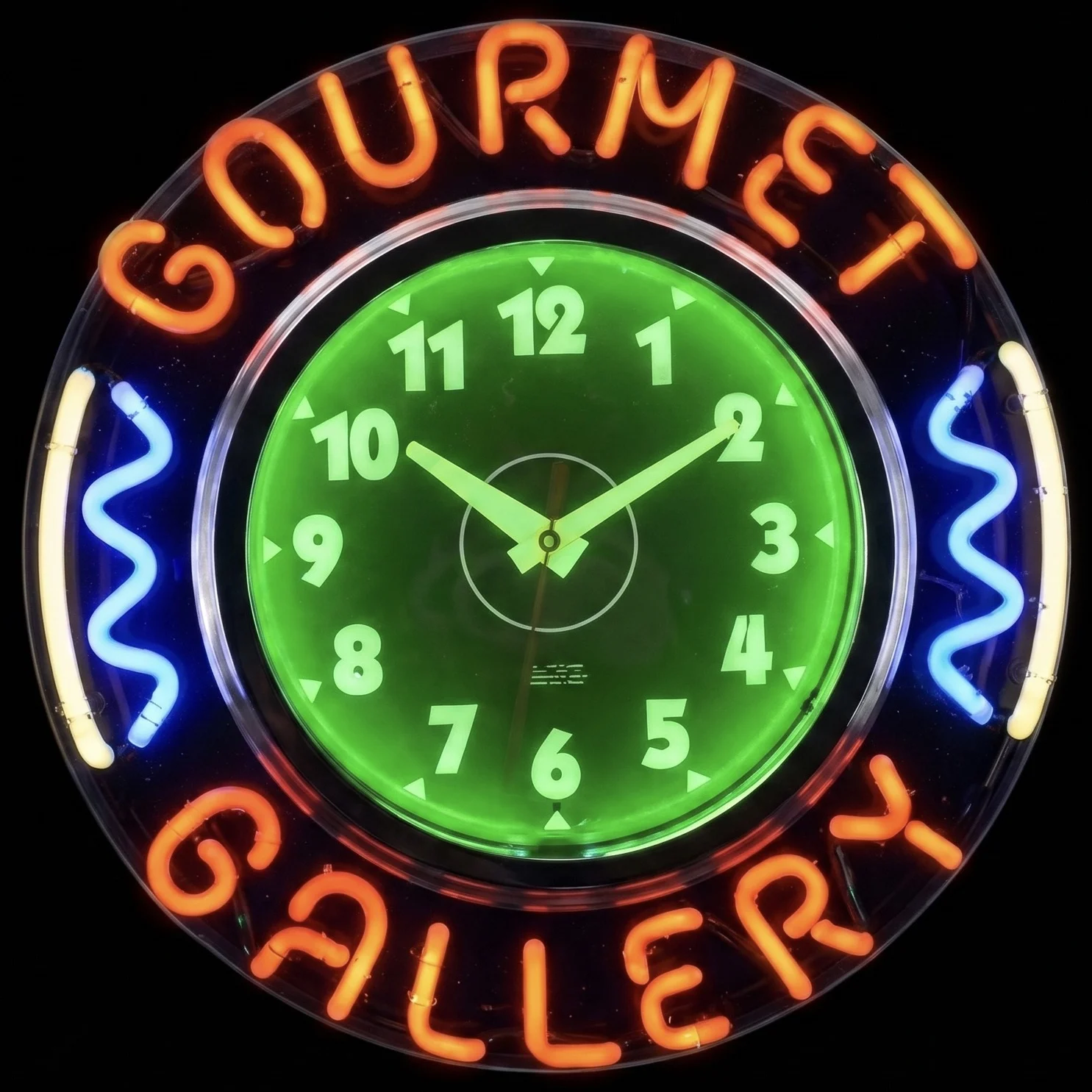
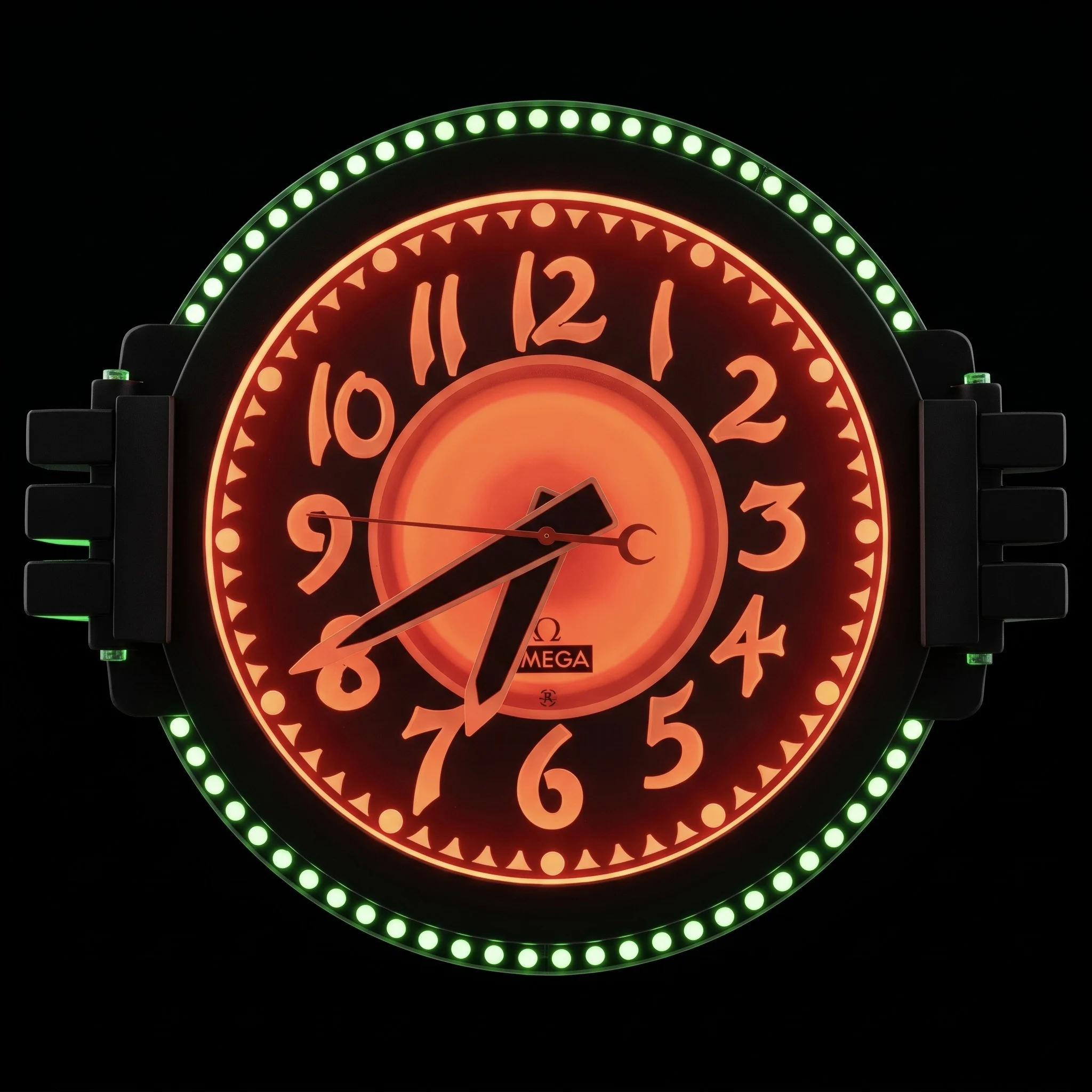
Top, left to right: Sinclair Dino double neon clock, RCA Radio and Phonograph neon clock, 7-Up double neon clock, Neo-Lite Attentioner hexagon neon clock, Elgin Watches neon clock. Bottom, left to right: Glo-Dial Aztec neon clock, mid-century Spinner neon clock, Pam Clock Company Flower scalloped neon clock, Gourmet Gallery neon clock, Omega Watches industrial neon clock.
The colors came from the gases themselves and from a small chemistry that designers learned to work with the way painters learned a palette. Pure neon, the gas that gave the medium its name, produced the orange-red glow that runs through the oldest surviving signs and that the eye still reads as the most authentic neon color. Argon mixed with a drop of mercury produced a cool electric blue, and that blue, combined with phosphor coatings on the inside of the tube, opened up the rest of the spectrum. By the early 1930s benders could produce greens, yellows, golds, pinks, soft whites, and a deep ruby that came from selenium-tinted glass, and a single sign might hold five or six colors in a single composition. The design language followed the medium. Letterforms had to flow because the tube itself had to flow, and the period’s love of streamlined sans-serifs, elegant scripts, and rounded geometric capitals turned out to be exactly what the bender’s hand could produce most gracefully. Designers drew their letters knowing they would be made in glass, and the glass in turn shaped what designers drew. The result was a body of typography unlike anything that had come before it, decorative and engineered in equal measure, and unmistakably of its era.
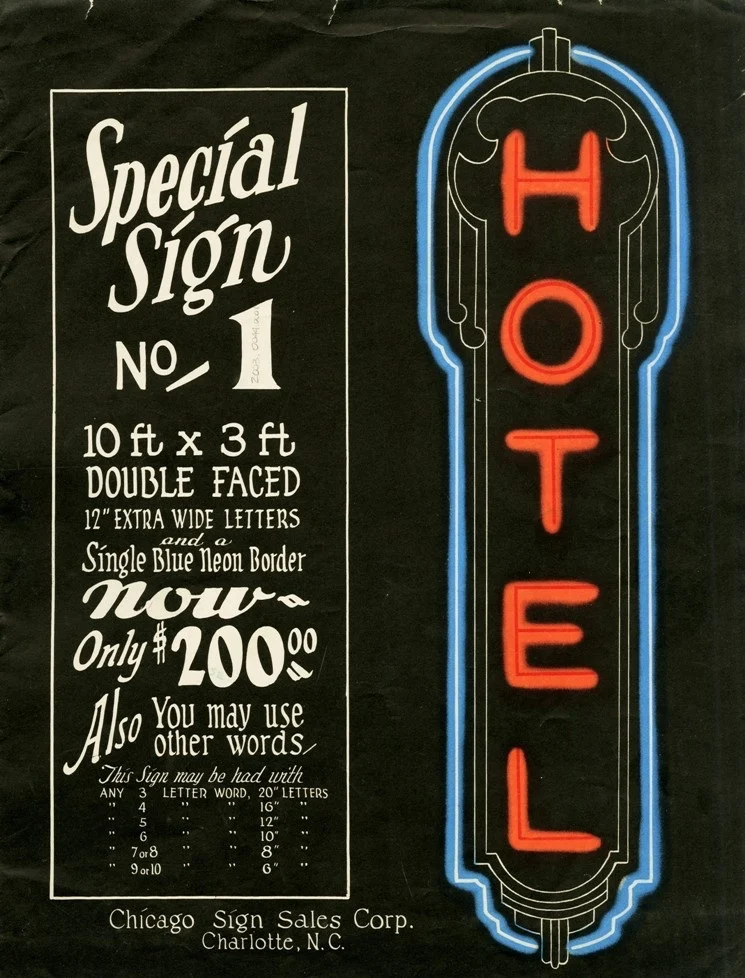
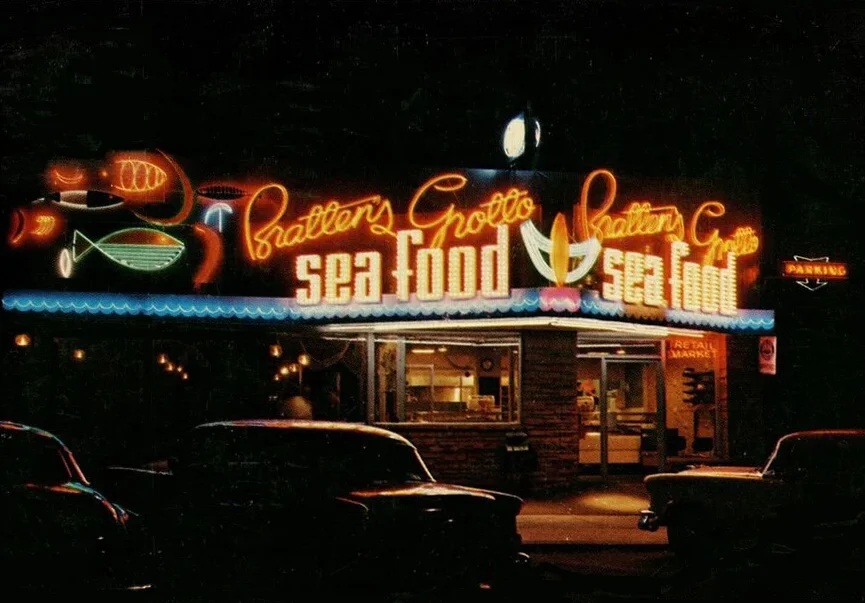
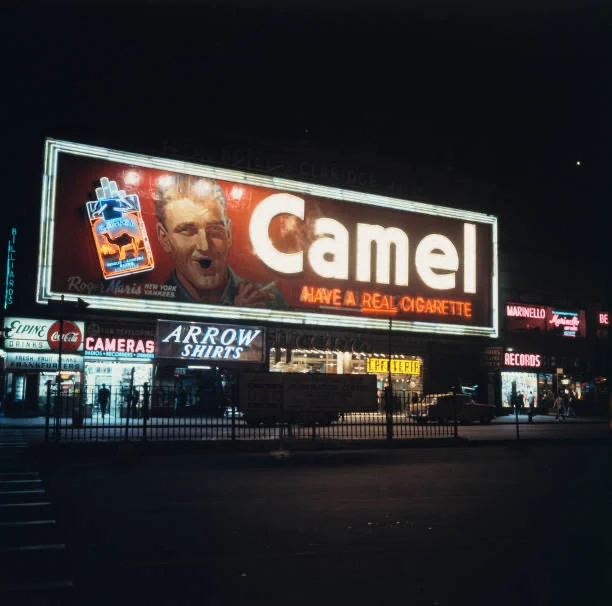
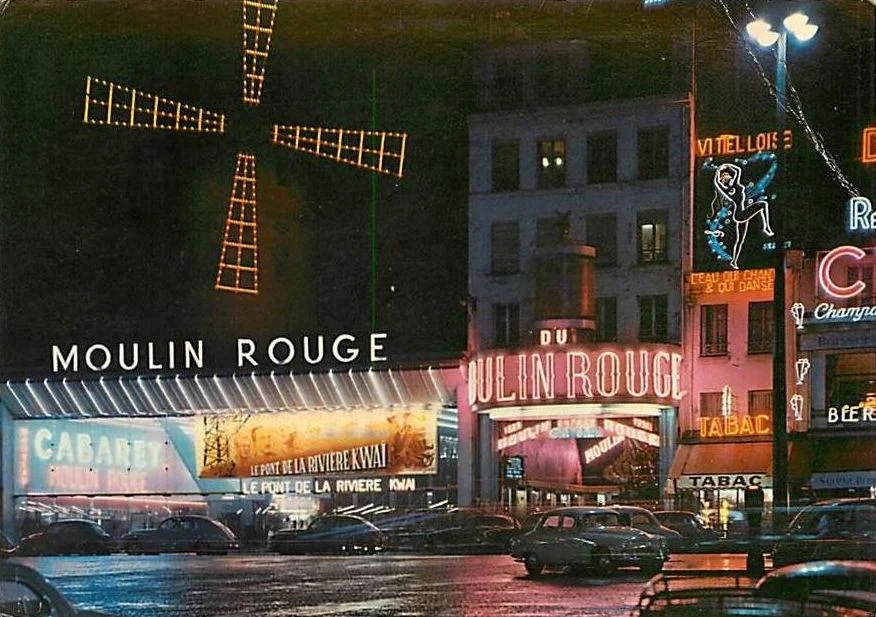
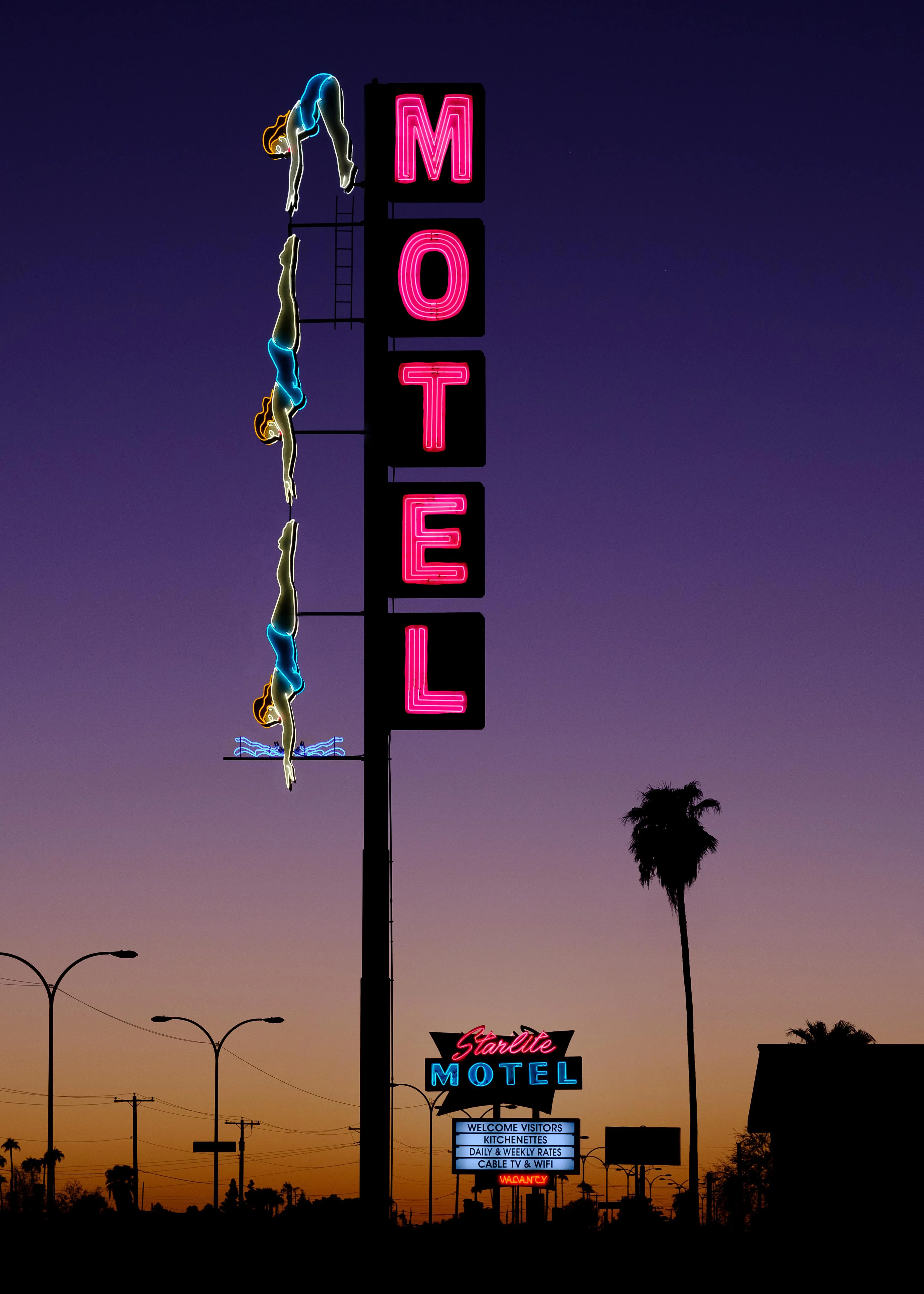

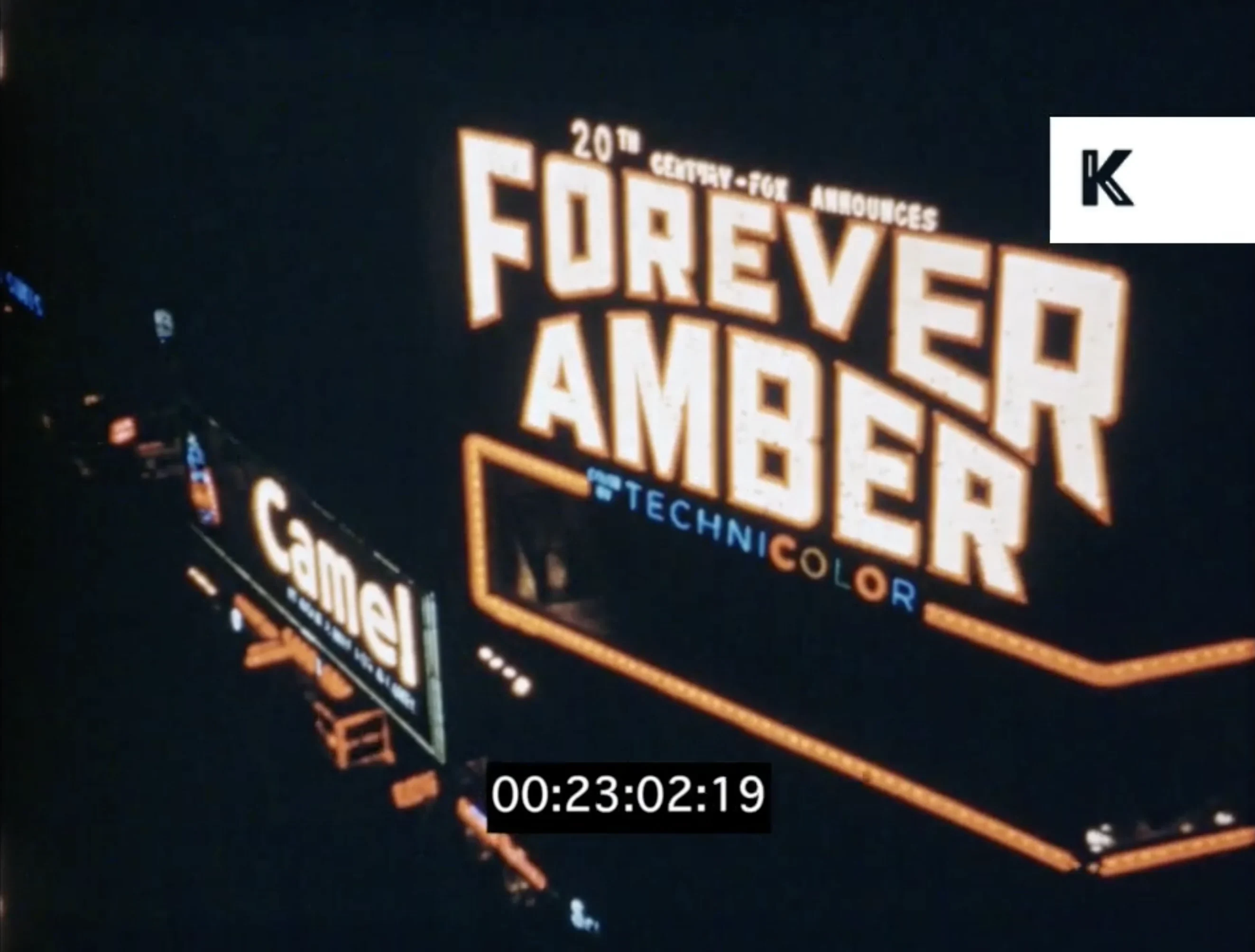
Top: Left: Chicago Sign Sales Corporation advertisement, 1930s, Middle: Bratten’s Grotto, Salt Lake City, Utah, Right: Camel billboard, Times Square, New York, Bottom: Left: Moulin Rouge, Paris, Middle: Starlite Motel with its animated Diving Lady sign, Mesa, Arizona, 1960, Right: Cinephone marquee, Paris, 1930s.
No building used neon more ambitiously than the theater. The picture palace and the smaller neighborhood movie house, both of which had grown into defining features of American downtowns by the 1920s, depended on their marquees the way ocean liners depended on their funnels, as the visible promise of what waited inside. The horizontal marquee carried thousands of incandescent bulbs framed by neon tube borders, often in two or three colors, and the vertical blade sign ran the full height of the facade in stacked letters that could be read from blocks away. The largest theater chains, the Pantages houses, the Paramount, the Fox theaters, Loew’s, and the regional circuits that competed with them, treated their signs as architectural statements in their own right, and the building behind the sign was often designed around it rather than the other way around. The smaller deco theaters that lit up Main Streets in towns of every size followed the same logic on a smaller scale, with a bender’s name on the back of the work and a local sign company maintaining the tubes for the life of the building. After sundown, the marquee became the most photographed face of any city block, and the photographs of those marquees, taken in the rain or against a dark sky, are still the images that come to mind when the period is remembered. The theater marquee did more than advertise a film. It taught a generation what a building could look like at night.
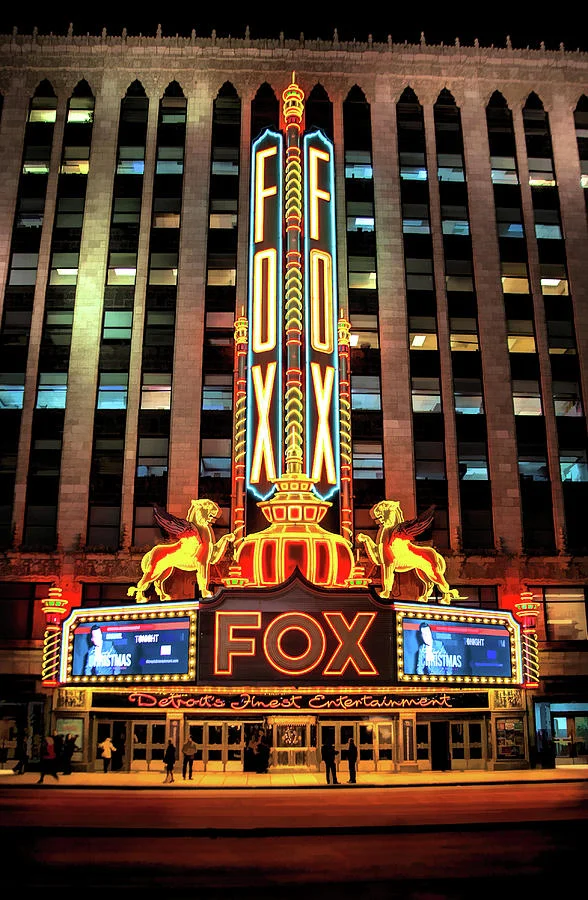
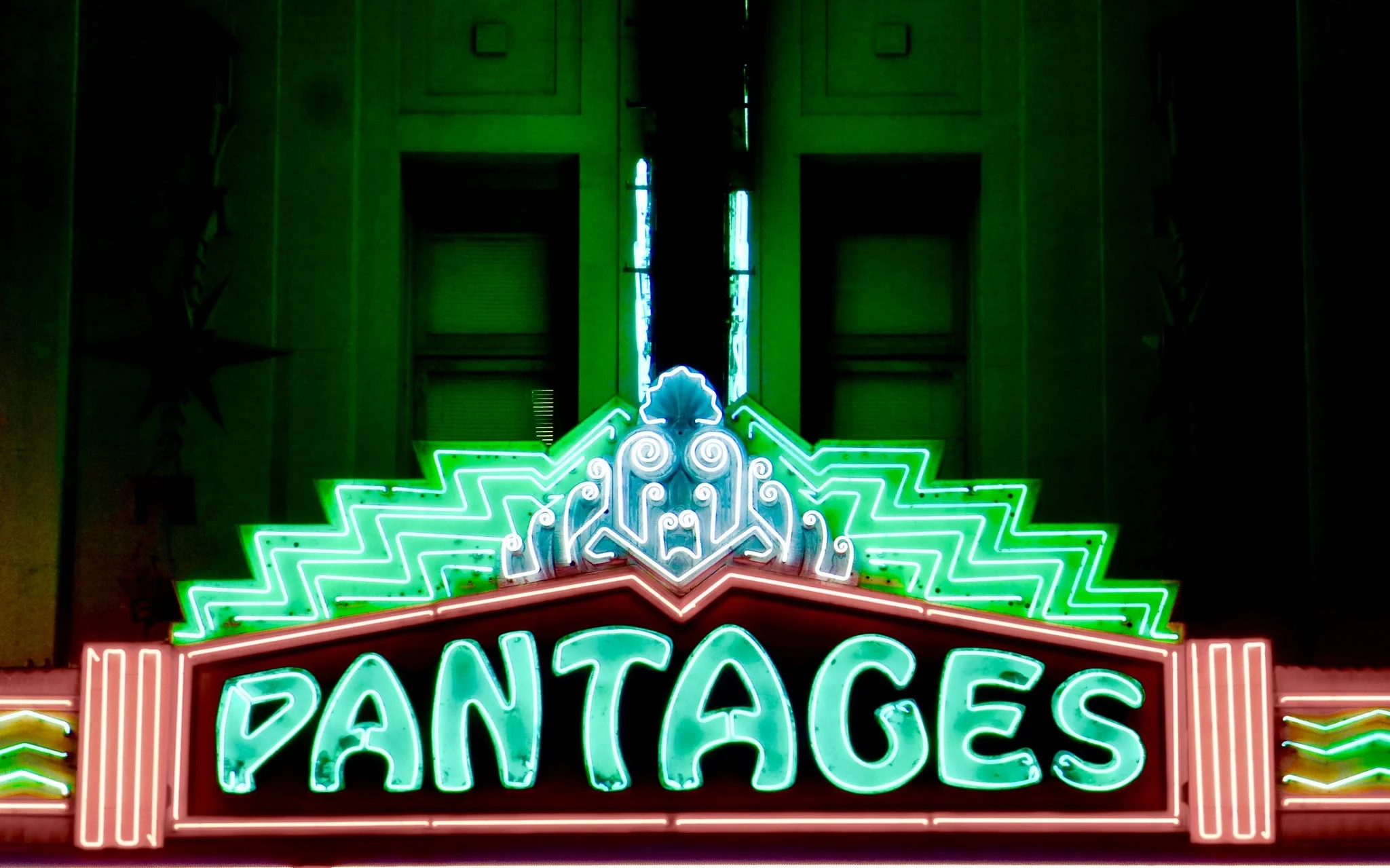
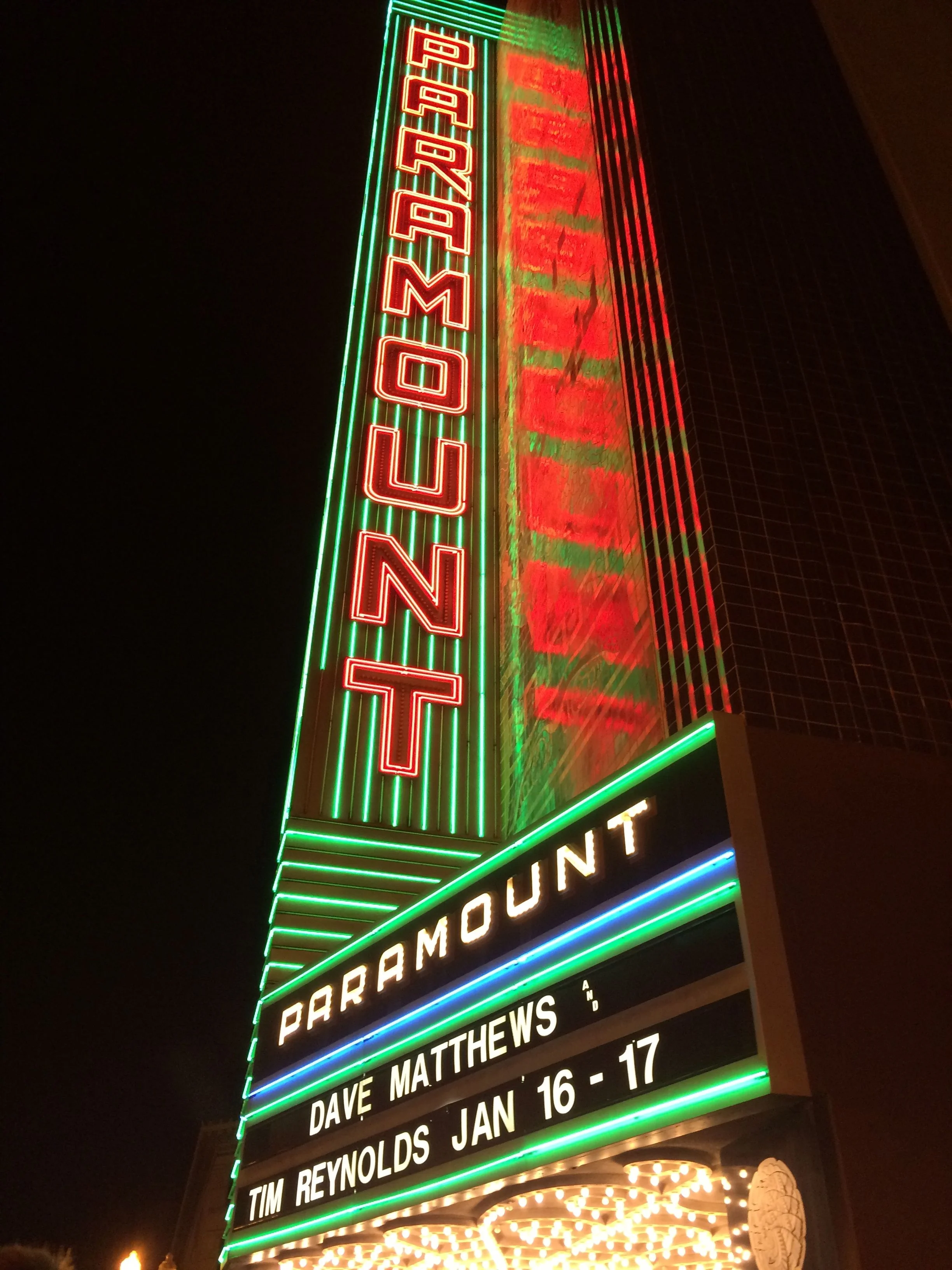
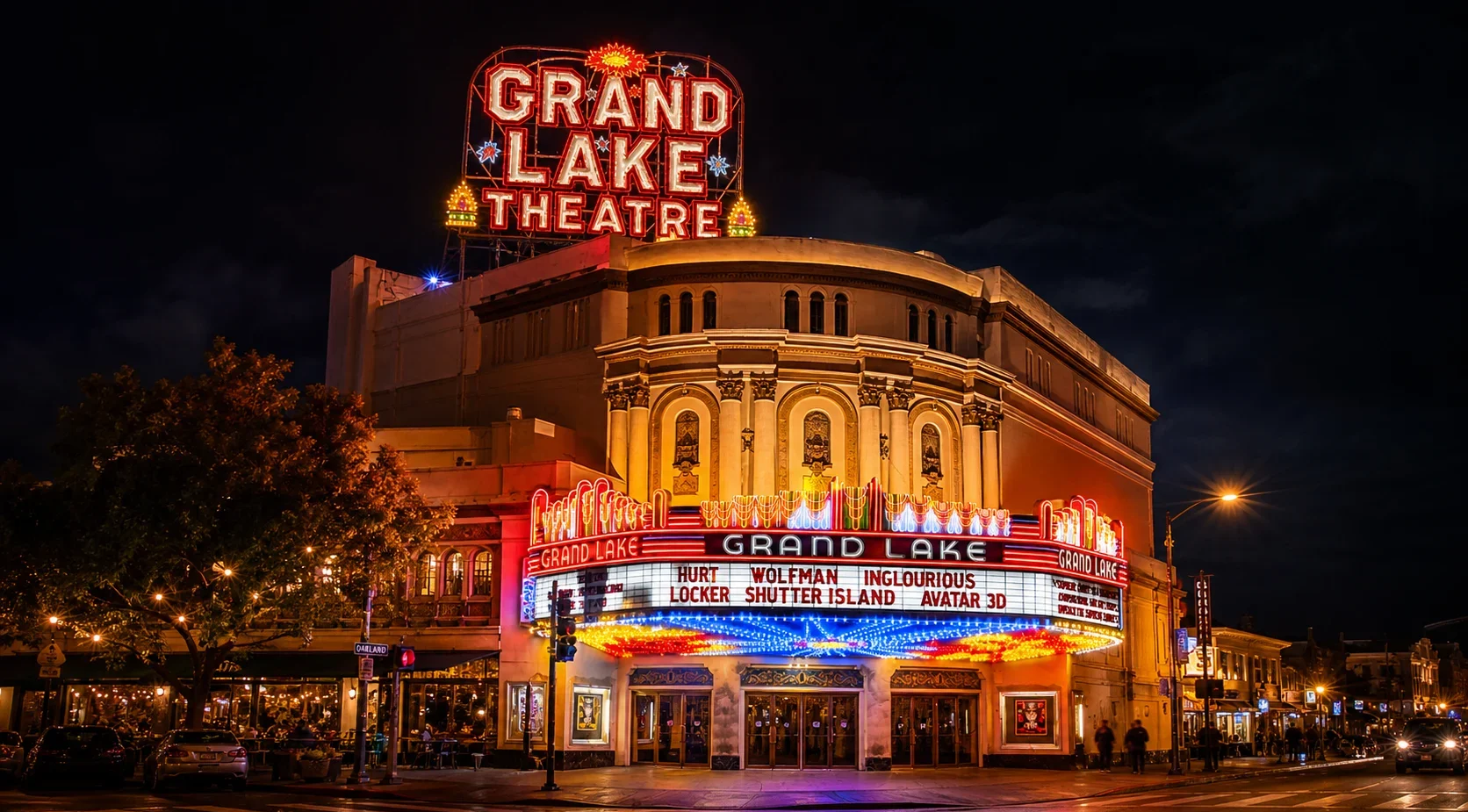
Top: Left: Fox Theatre, Detroit, Michigan, 1928, Middle: Pantages Theatre, Hollywood, California, 1930, Right: Paramount Theatre, Oakland, California, 1931. Bottom: Grand Lake Theatre, Oakland, California, opened in 1926
The sign that moved was the period’s most ambitious extension of the medium. Banks of tubes wired to mechanical sequencers could be programmed to flash in patterns, and chasing borders gave even a modest storefront the impression of motion. The larger animated spectaculars went further still, building entire scenes out of sequenced tubes, a horse galloping across a gas station roof, a coffee cup steaming above a diner, a bowler knocking down pins on the side of a bowling alley. Programmatic signs took the idea into three dimensions, with giant cocktail glasses, arrows, top hats, cowboy boots, and tropical fruit hung from poles or mounted on rooftops, each shaped like the thing it sold. Architectural neon worked at the other end of the scale, outlining cornices, towers, parapets, and entryways in continuous colored light, and turning whole buildings into vertical light sculpture. A bank tower or a hotel facade rendered this way at night bore little resemblance to its daytime self. The transition that ran through the period was the slow shift from a sign as something attached to a building to a sign as something the building was built to carry.
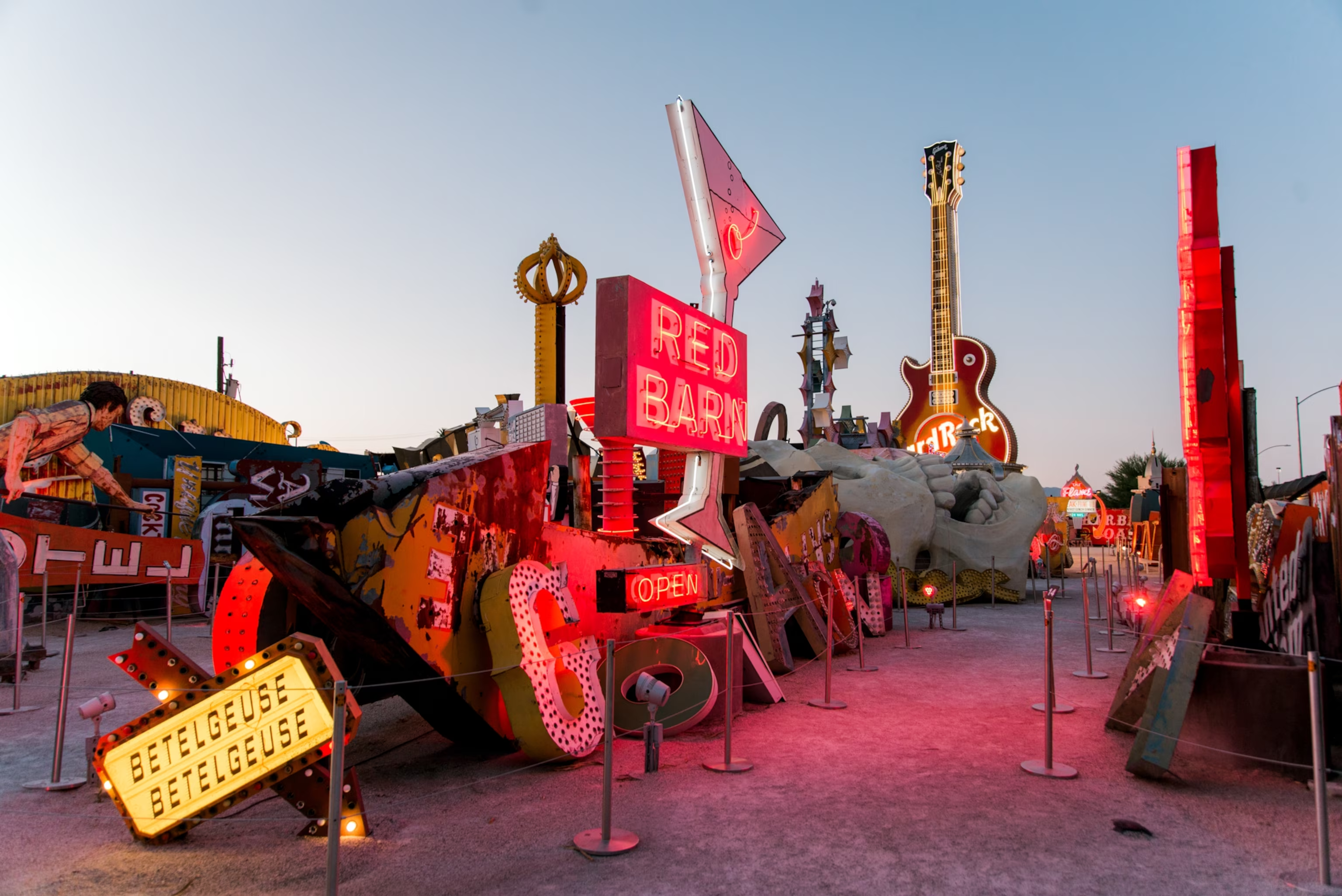
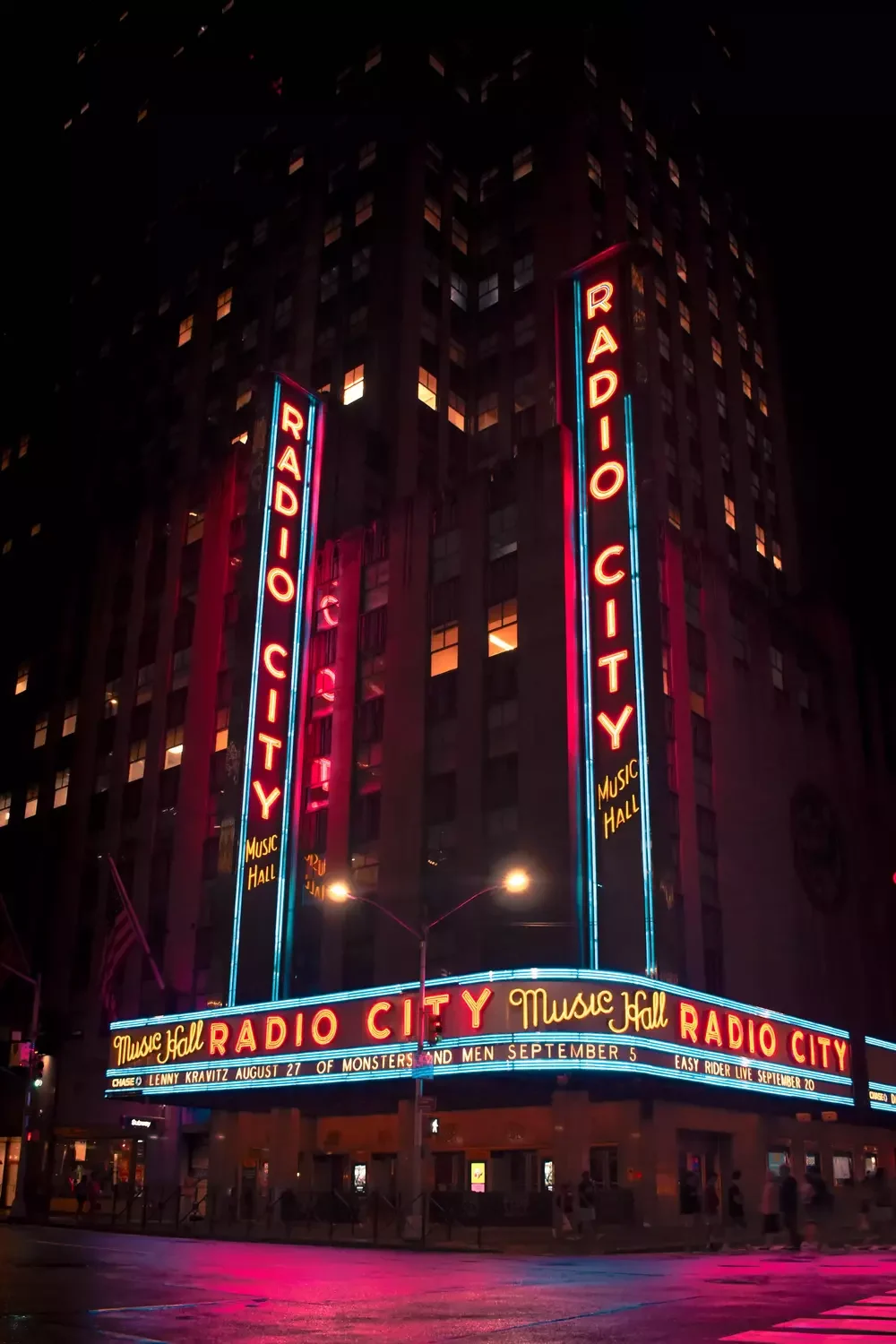
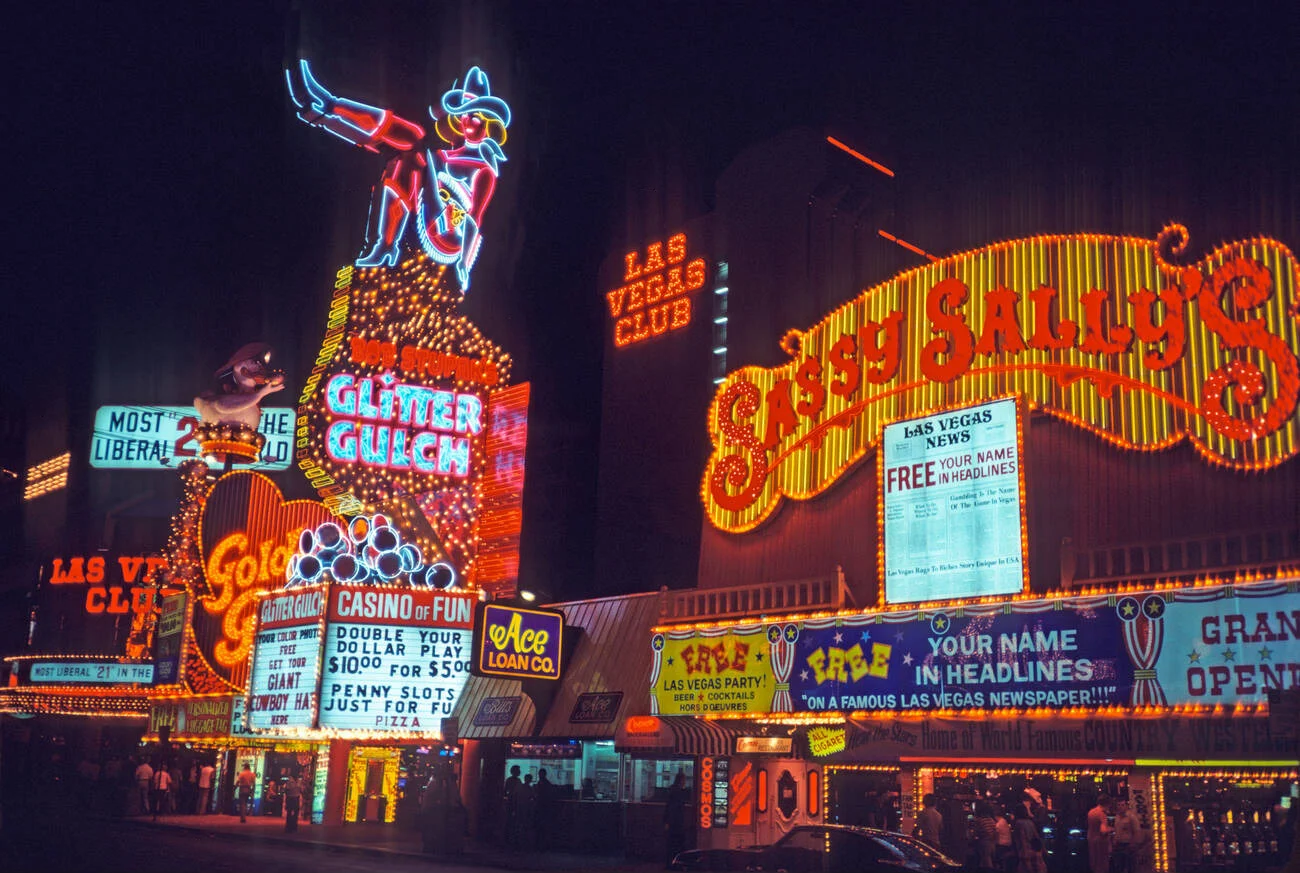
Left: The Neon Museum Boneyard, Las Vegas, Nevada. Middle: Radio City Music Hall, New York, 1932. Right: Glitter Gulch, Fremont Street, Las Vegas, Nevada.
At the other end of the scale, neon entered the room itself. The big round neon clock above the bar or behind the pharmacy counter, with its bright ring of tube and illuminated dial, became one of the most reliable furnishings of any commercial interior in the period, often custom-built for the business that hung it and stamped on the back with the name of the shop that made it. The cocktail lounge window held a glowing martini glass with an olive bent in green tube, the soda fountain held a Coca-Cola disc, the barbershop held its spinning pole. Small Open, Drugs, Eat, Cafe, and Beer signs hung in the windows of nearly every storefront in town, often barely a foot across and produced by the same shops that built the larger work outside. These smaller pieces were rarely treated as art at the time, but they carried the period’s design language into rooms that would never hold a marquee, and they survive in disproportionate numbers today because they were portable, durable, and easy to keep when a business closed. A neon clock or a small window sign now sits in collections, bars, and home interiors across the country, often as the last visible trace of a vanished diner, drugstore, or barbershop. The smallest expressions of the medium turned out to be among the most enduring.
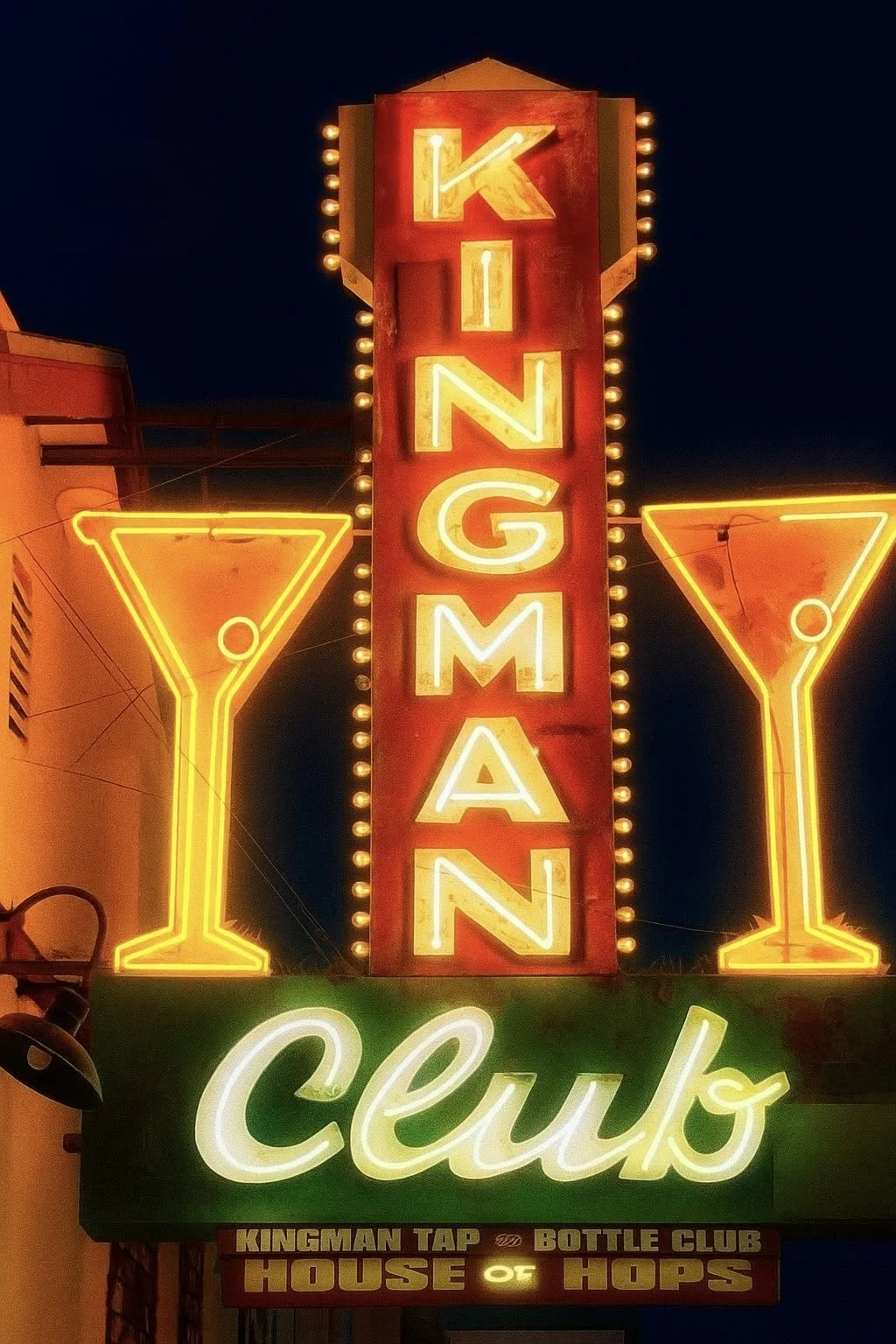
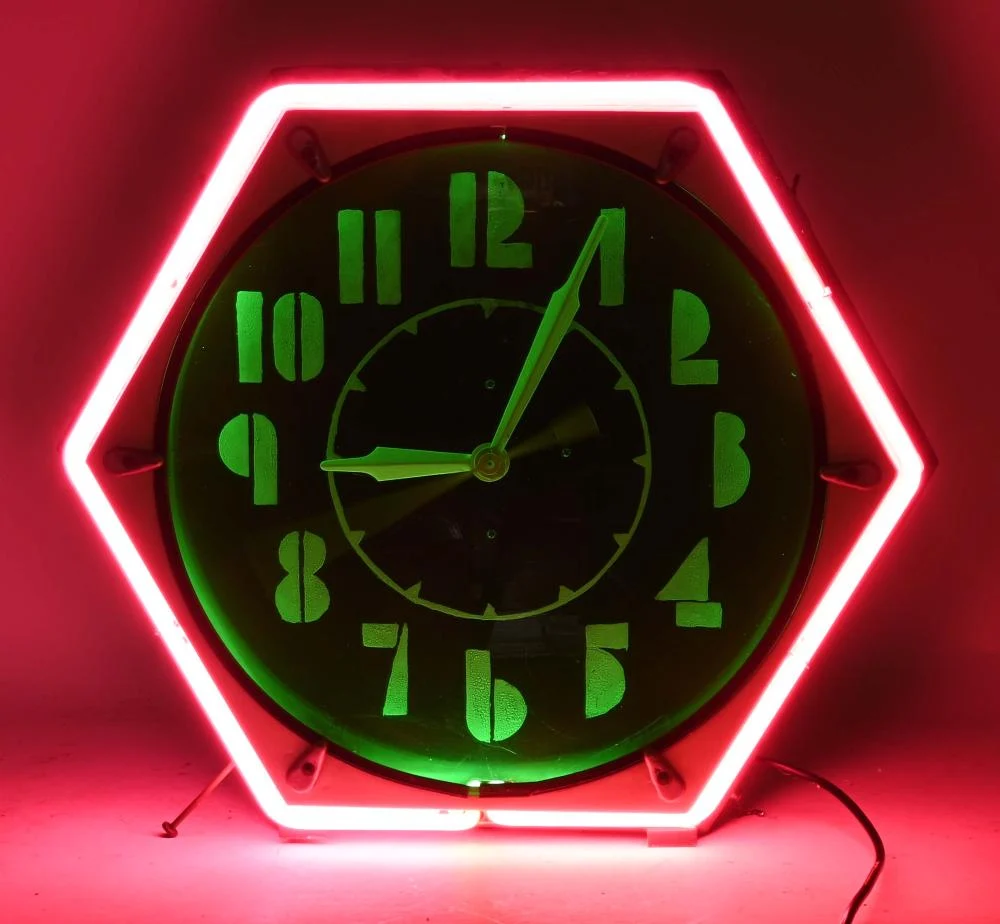
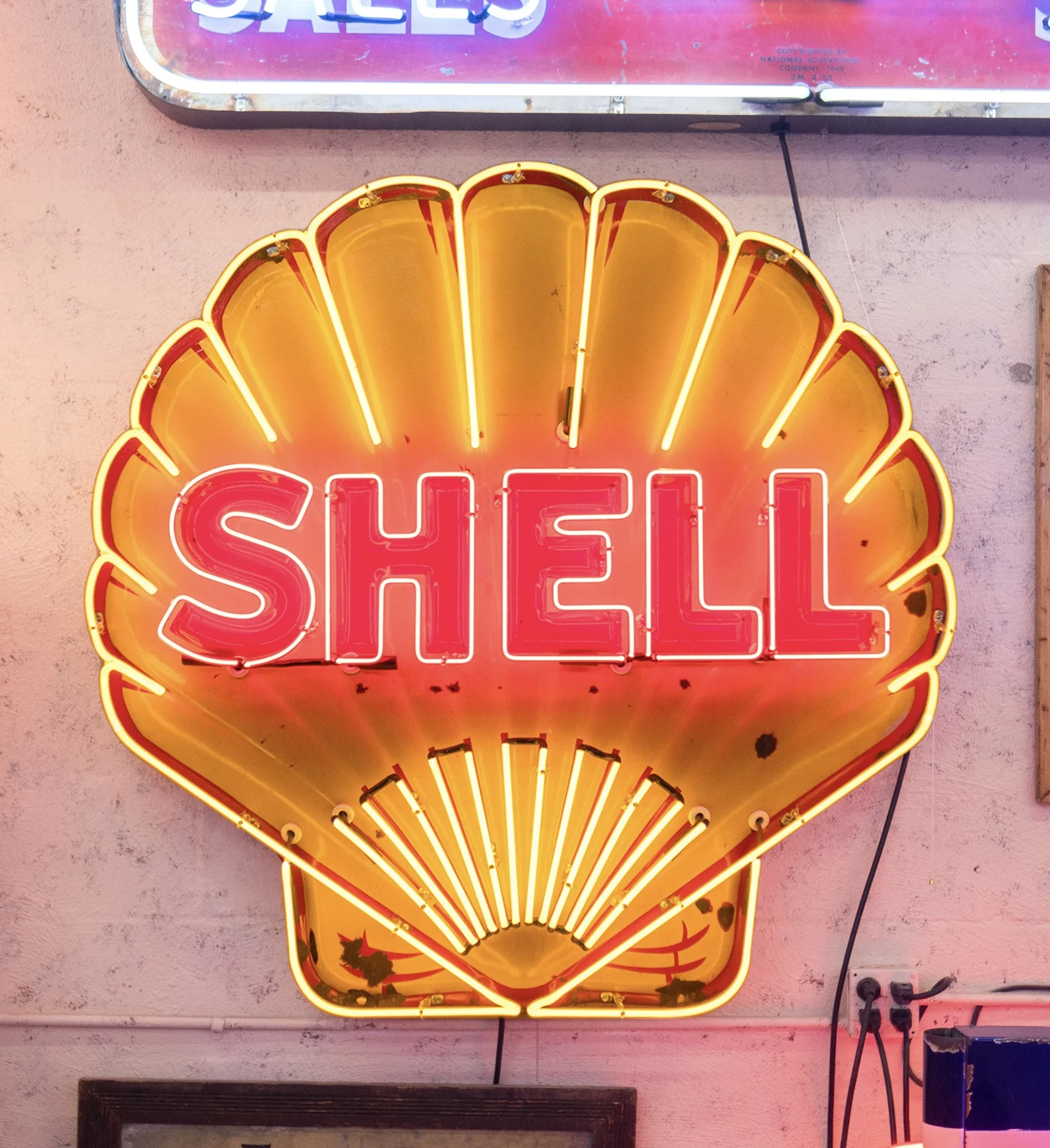
Left: Kingman Club, Kingman, Arizona, Route 66. Middle: Hexagonal neon clock, 1930s. Right: Vintage Shell gas station sign.
The car reshaped the country, and neon shaped the car’s landscape. By the 1930s, every state highway carried a string of small businesses that depended entirely on being seen at speed and after sundown, and the medium that had been developed for downtown facades adapted naturally to the demands of the open road. The diner stretched its name across a stainless steel front in flowing red script. The motel announced itself with a tall pole sign and an arrow pointing off the highway, often topped with a star or a thunderbird in colored tube. Gas stations, drive-ins, roadhouses, and tourist courts followed the same logic, with sign forms designed to be readable from a quarter mile away by a driver who would be past the door in twenty seconds if the message did not register. The roadside became the most democratic expression of the period’s design language, the one place where a one-room business in a small town could afford to commission custom work in the same medium that lit the great theaters of New York and Los Angeles. A good roadside sign was its own kind of architecture, often outlasting the building behind it and sometimes outlasting the road itself, and the surviving examples now read as some of the truest decorative objects the period produced.
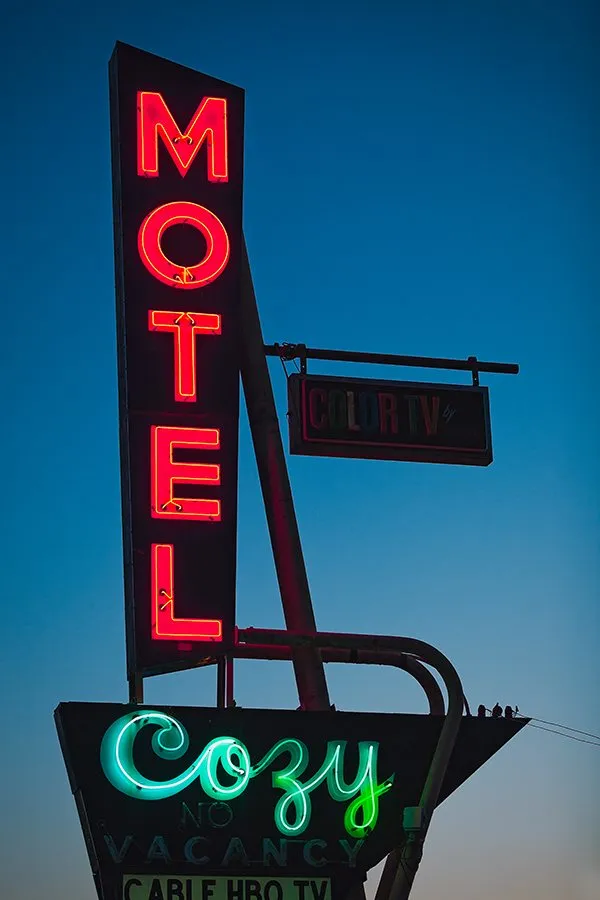
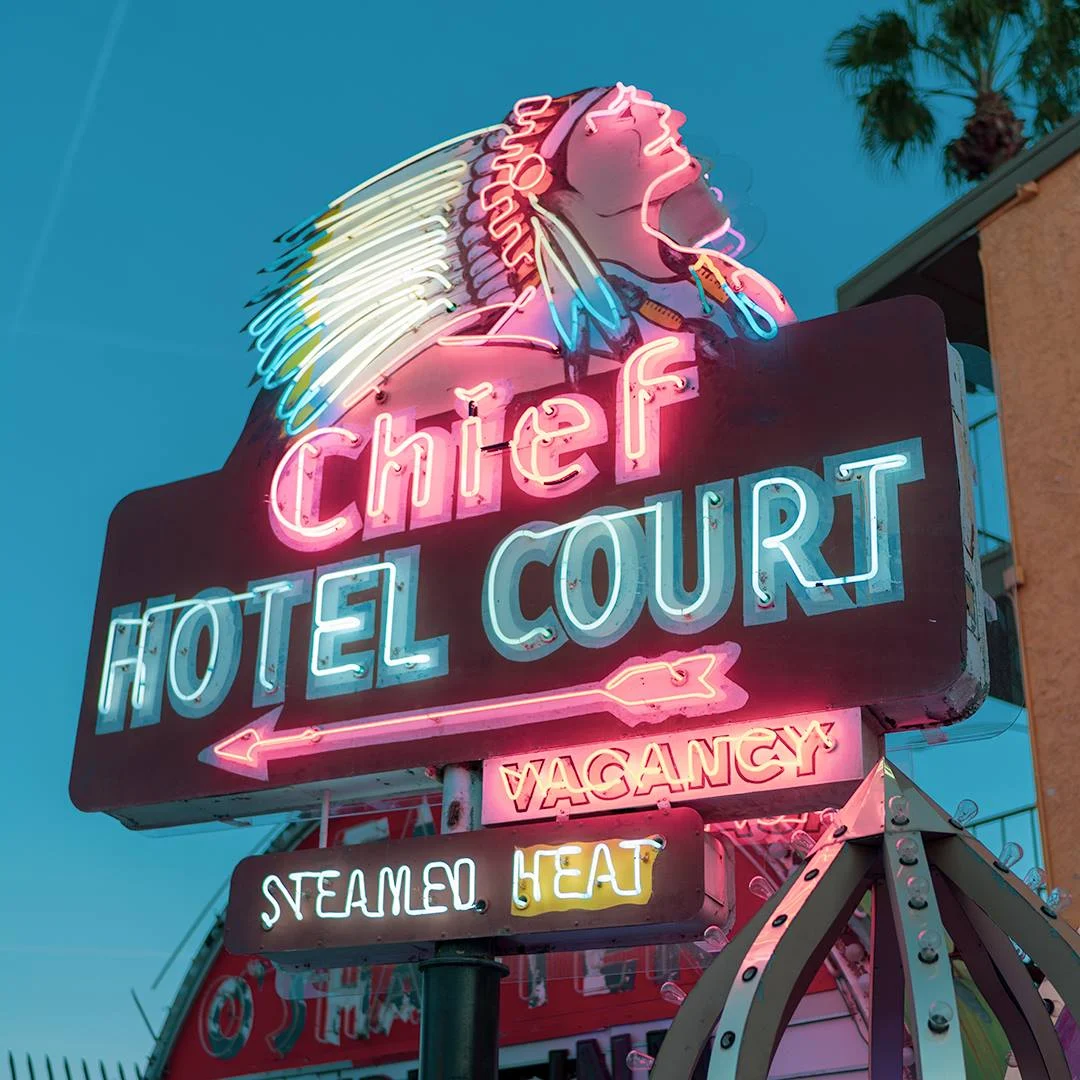
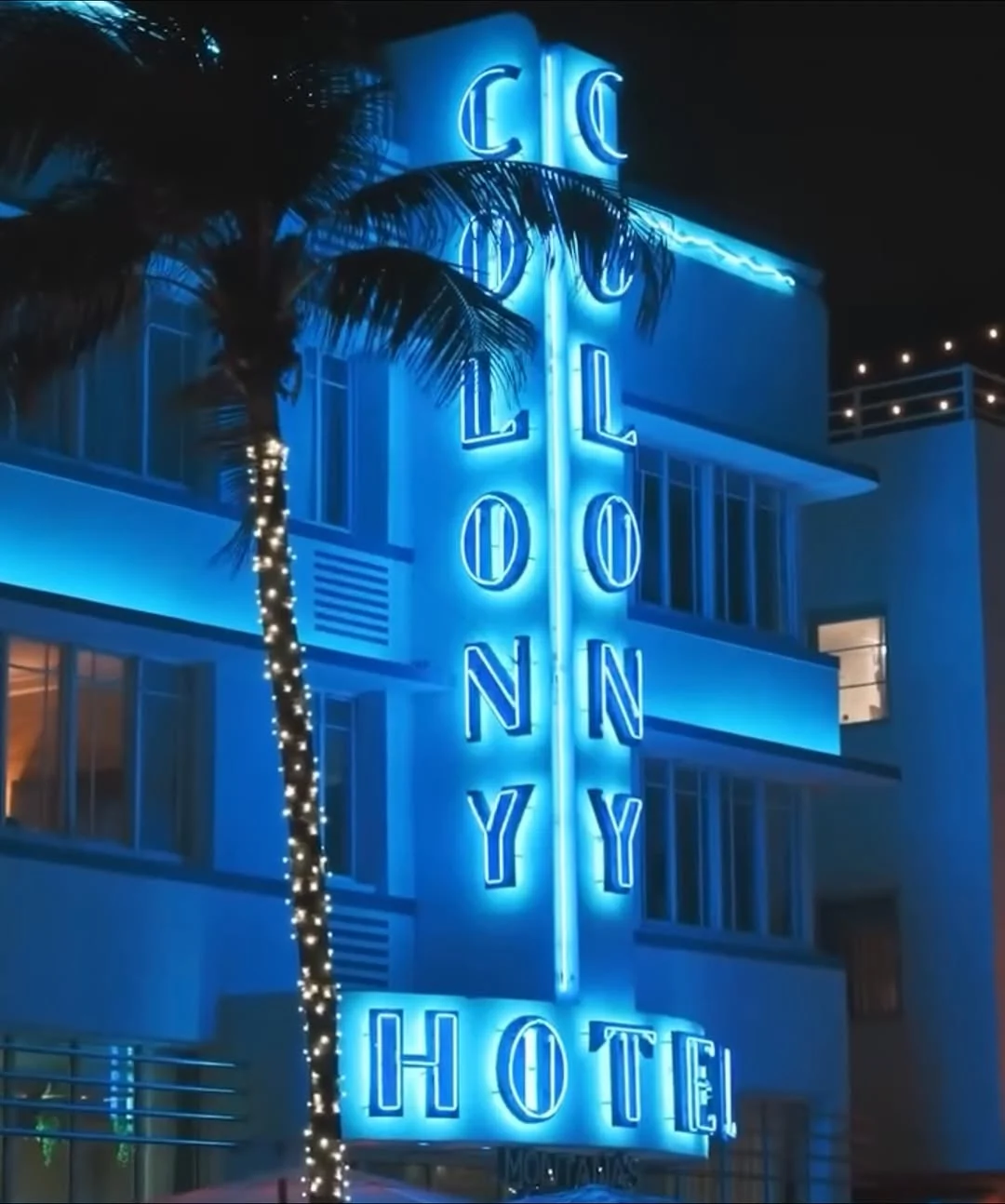
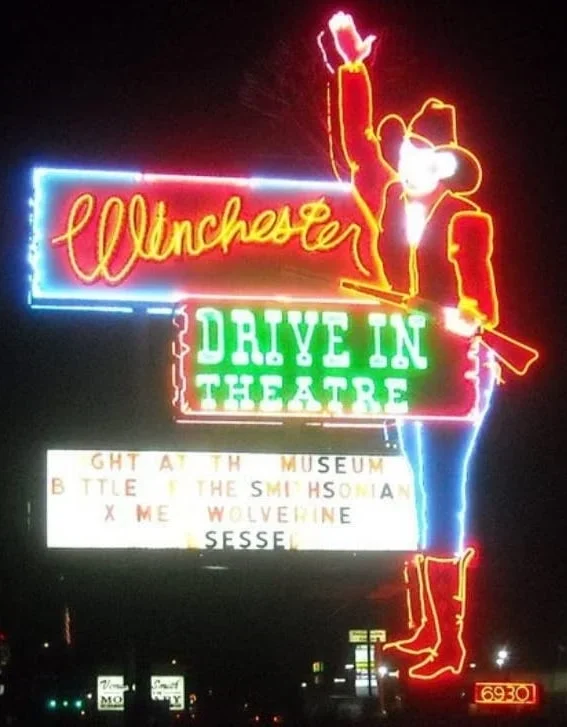
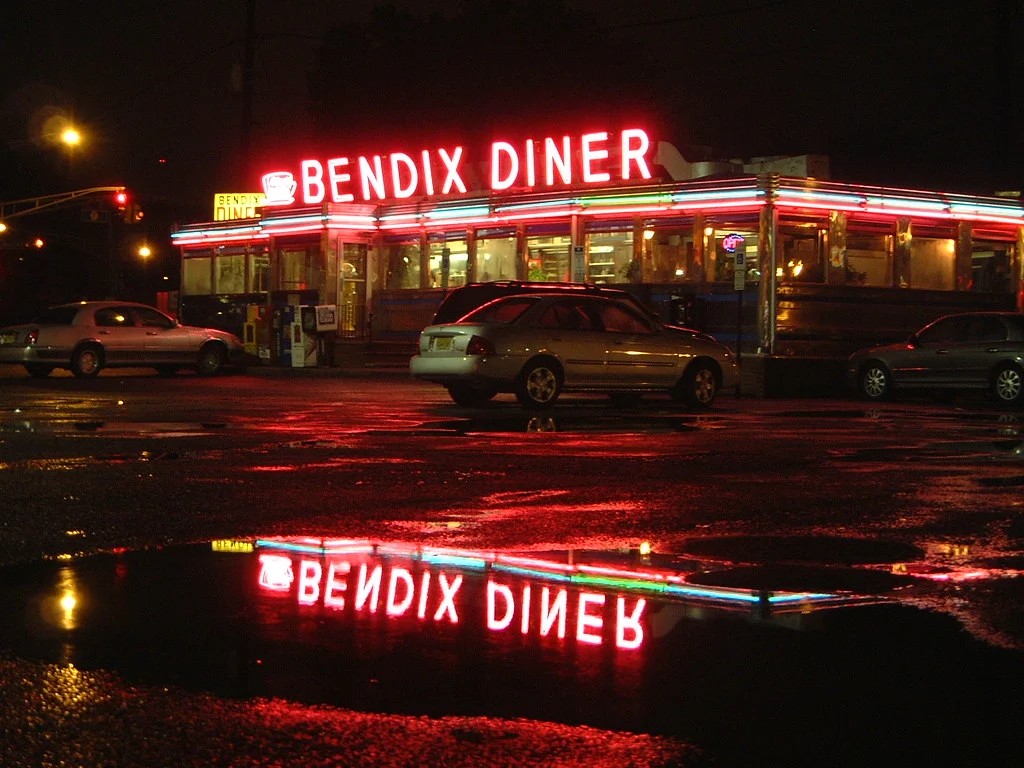
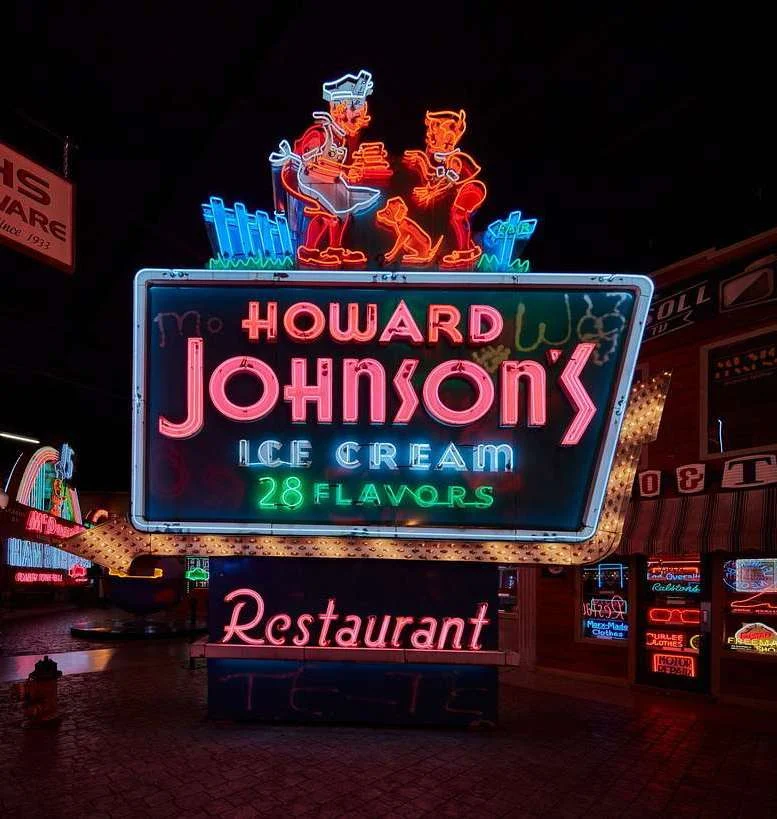
Top: Left: Cozy Motel, Middle: Chief Hotel Court, Las Vegas, Nevada, Right: Colony Hotel, Miami Beach, Florida, 1935, Bottom: Left: Winchester Drive-In, San Jose, California, Middle: Bendix Diner, Hasbrouck Heights, New Jersey, Right: Howard Johnson’s, 1930s.
Neon’s place in the period was secured by the time the war forced a pause on the trade. Wartime restrictions on copper, glass, and labor slowed new sign production through the early 1940s, and a generation of benders went into other industries for the duration. The medium returned with extraordinary force after 1945, reaching its most extreme expression in early Las Vegas before the broader culture began to shift. By the late 1960s, plastic-faced backlit signs had grown cheaper and easier to maintain than hand-bent tubes, and the trade that had once filled every American downtown contracted into a much smaller circle of preservationists, restoration shops, and a handful of holdouts. The signs themselves stayed where they were. Surviving examples still mark old theaters, diners, and downtown blocks across the country, often patched and re-tubed by craftsmen working in the same way their grandfathers did. The recent revival, driven in part by museums such as the Museum of Neon Art in Glendale, California and the Neon Museum in Las Vegas, has returned attention to the work as a serious decorative achievement of its time. A century after the first commercial signs went up in Paris, the best surviving examples still broadcast the optimism of the era that produced them, and they still do it in colored light made by hand.
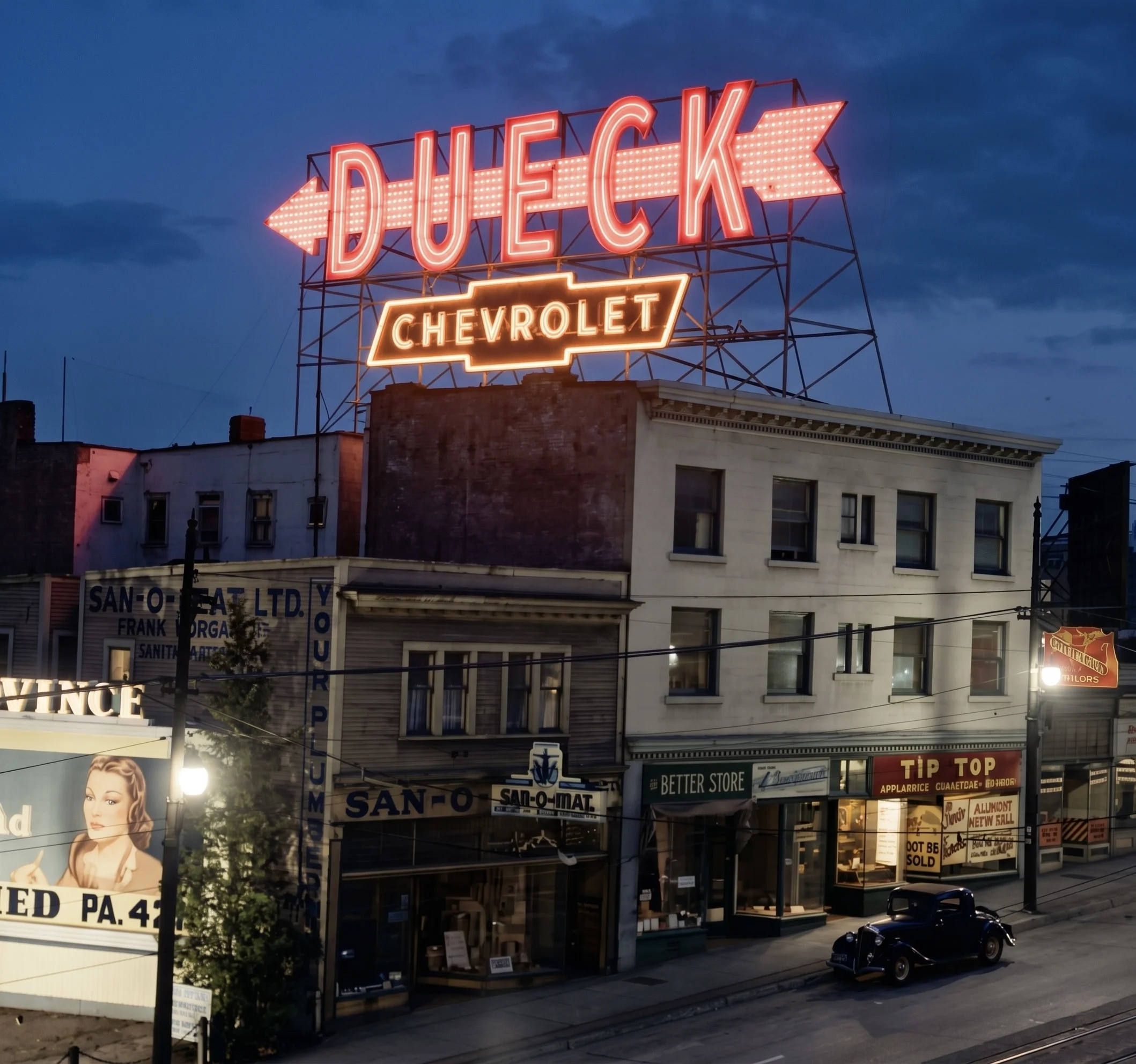
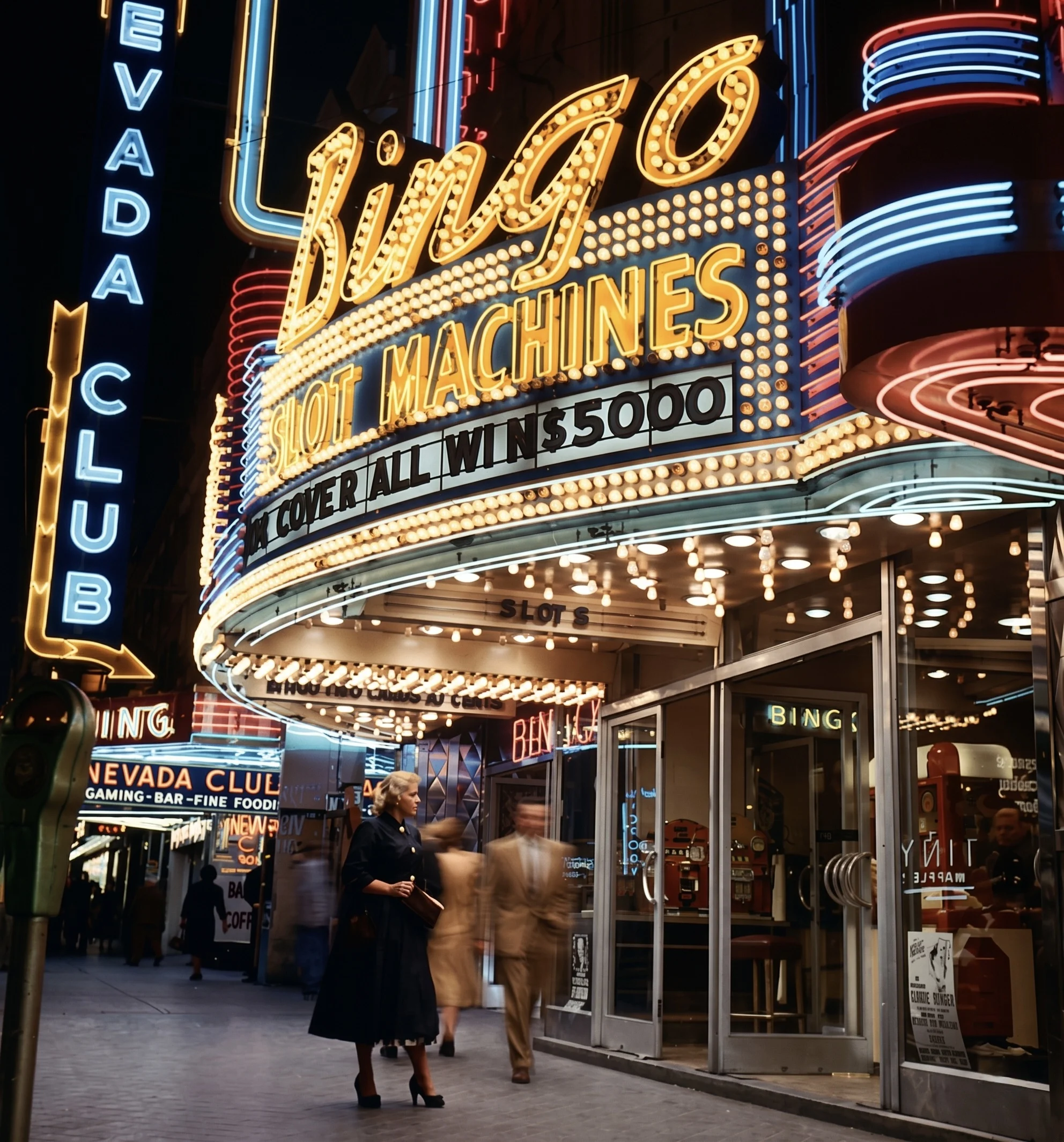
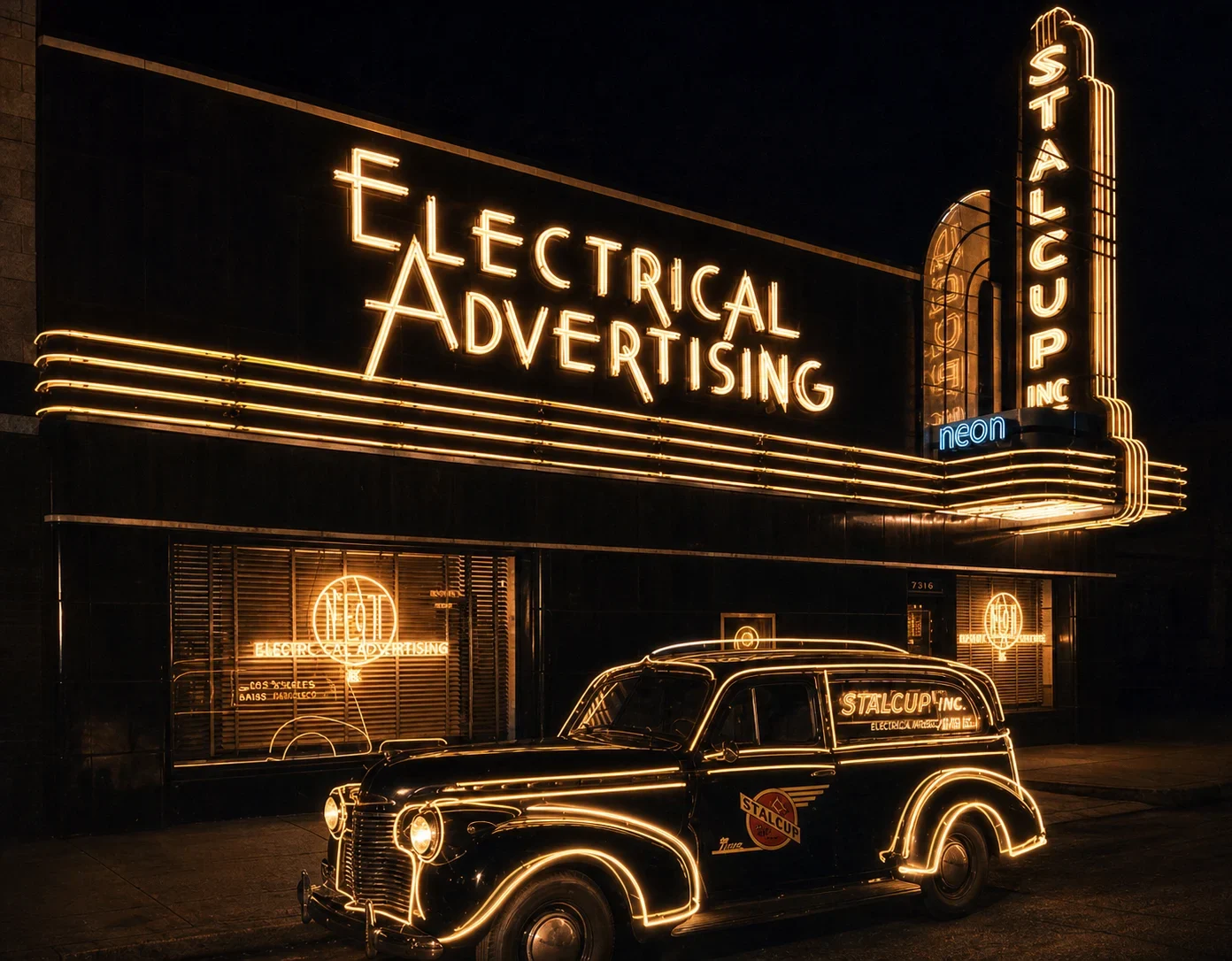
Left: Dueck Chevrolet rooftop sign, Vancouver, British Columbia, late 1930s. Middle: Nevada Club, Reno, Nevada. Right: Stalcup Inc. storefront, 1930s.

Neon Clock Collection at Art Deco Collection.com

Recommended Reading
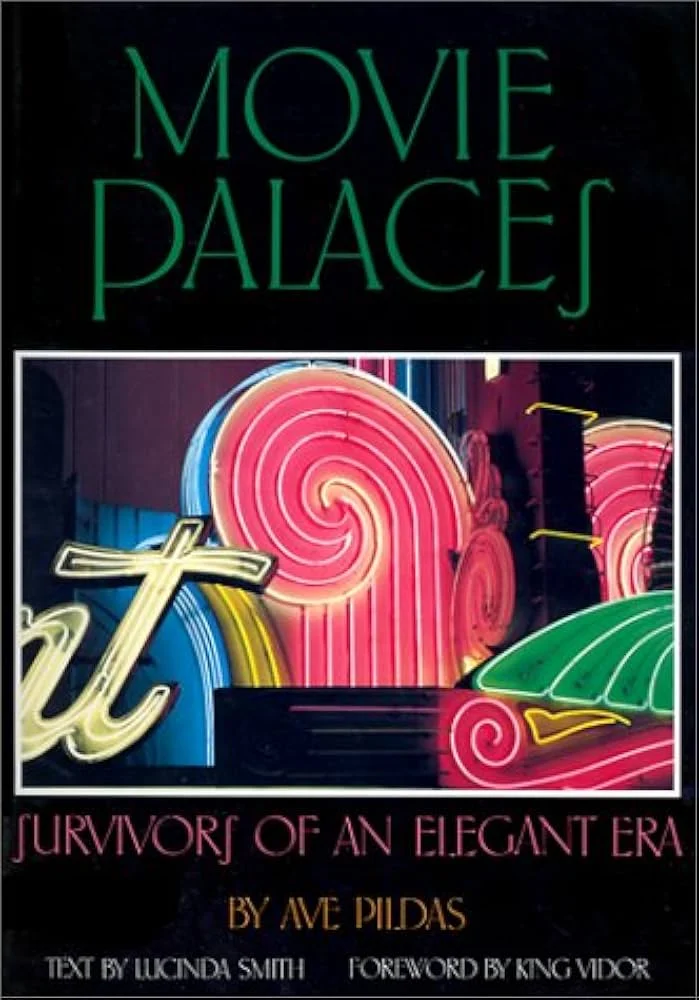
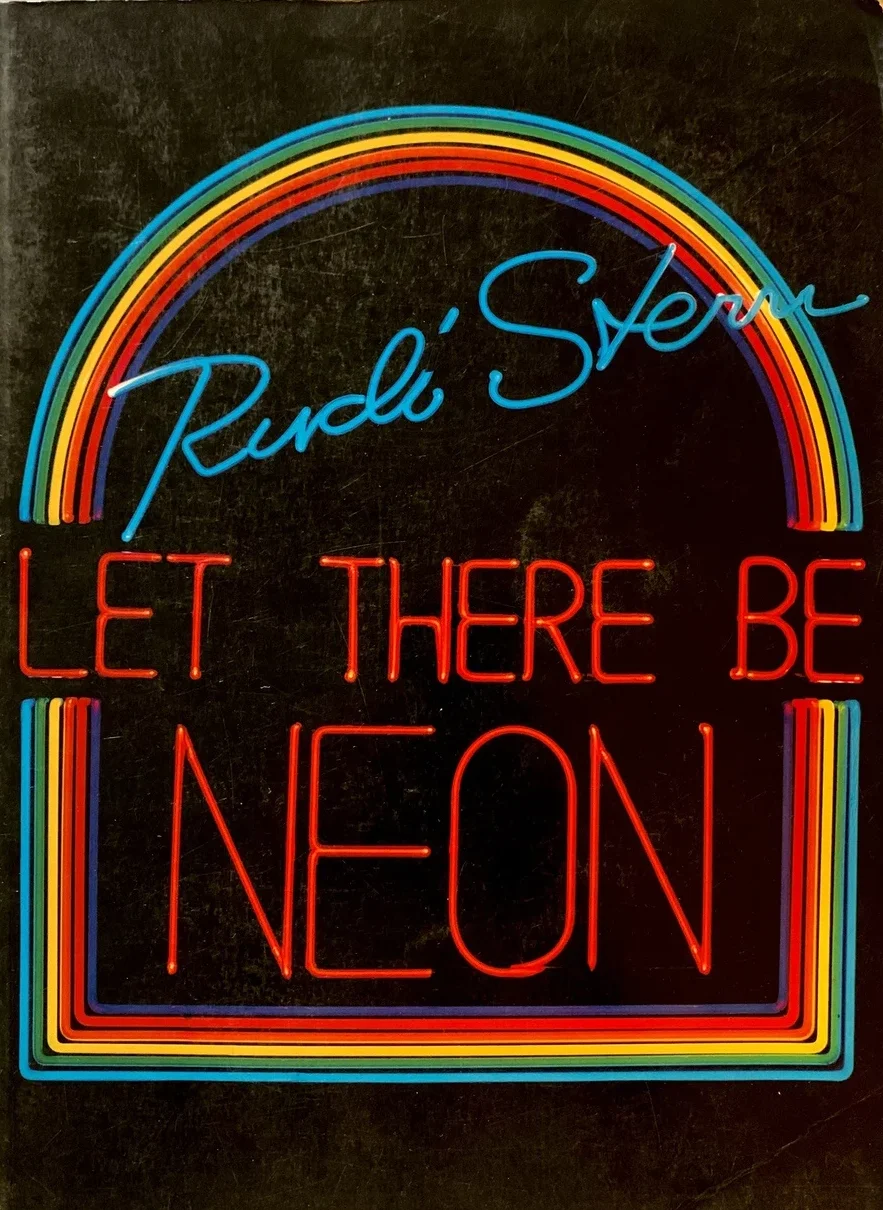
For readers interested in exploring the subject further, three books stand out. Movie Palaces by Ave Pildas, with text by Lucinda Smith and a foreword by King Vidor (1980), collects the photographer’s color images of the great American picture palaces of the 1920s and 1930s, with close attention to the marquees, blade signs, and entries that defined the era’s most ambitious theater architecture. Let There Be Neon by Rudi Stern, with a foreword by Tom Wolfe (1979, expanded in 1988 as The New Let There Be Neon), was written by the artist who founded New York’s first neon gallery in 1972 and remains the standard reference on the medium as both a handcraft and a decorative art, with a full history running from Georges Claude through the late twentieth century. Spectacular Illumination, Neon Los Angeles 1925 to 1965 by Tom Zimmerman with J. Eric Lynxwiler (2016) gathers more than two hundred photographs documenting the rise of neon along Wilshire Boulevard, Broadway, and the boulevards of greater Los Angeles during the medium’s golden age, and stands as the most thorough visual record of any single American city’s neon heritage in print.

If you are interested in further stories of Art Deco design, collecting, and celebrating the artistry of early 20th Century:
Related Products from ArtDecoCollection.com