

The temple was listed on the National Register of Historic Places on 11 November 1980. In 2013 it faced foreclosure over about $152,000 in back taxes, and Jack White paid $142,000 of the debt, after which the Scottish Rite Cathedral was renamed the Jack White Theatre, since his mother had once worked there as an usher. The building now depends on concerts, filming, and about thirty weddings a year to cover operating costs of roughly $1.2 million, and it is one of four tax-incentive-approved filming facilities in Michigan and the only one in Detroit.
✕
ART & STATUES
CERAMICS & GLASS
Art Deco Around The World
Detroit Masonic Temple, Gothic Grandeur in the City of Art Deco
A 1,037-room Gothic Revival giant, built in the decade Art Deco reached Detroit.
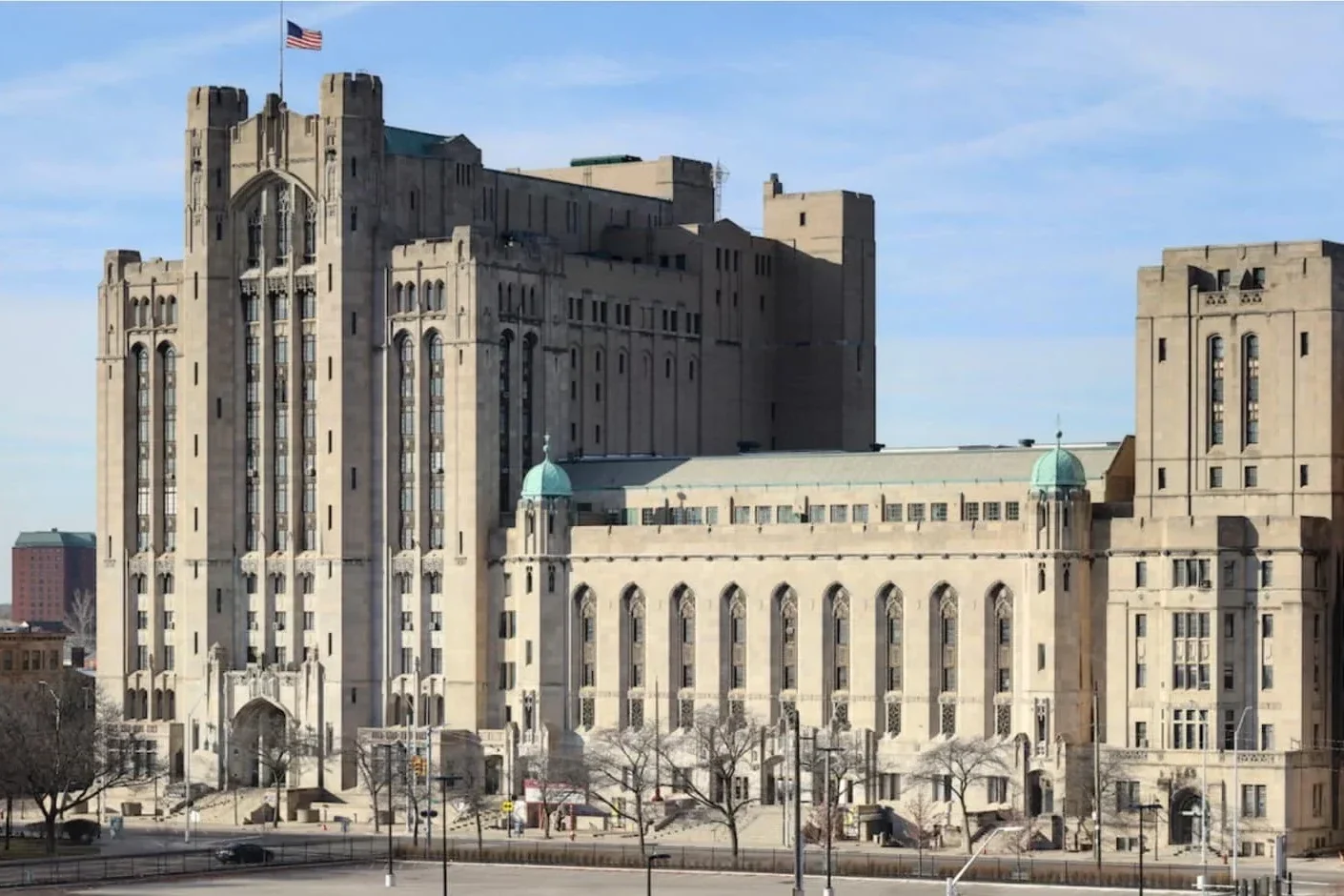
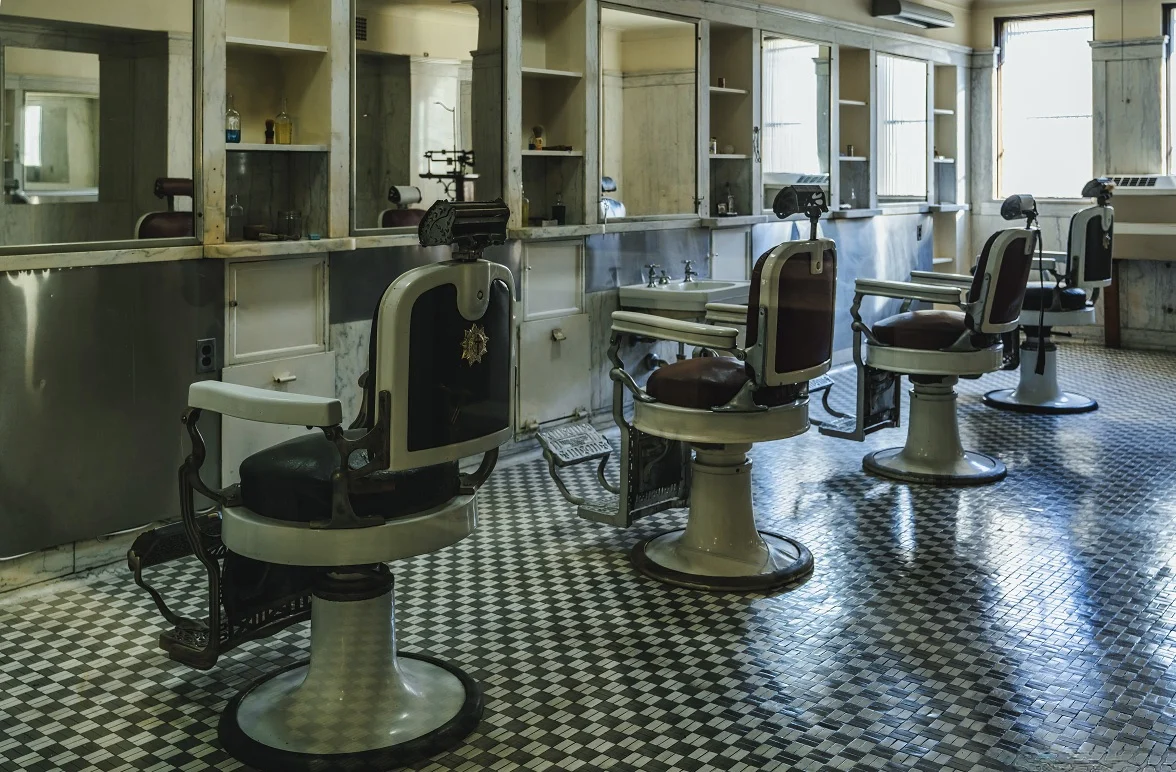
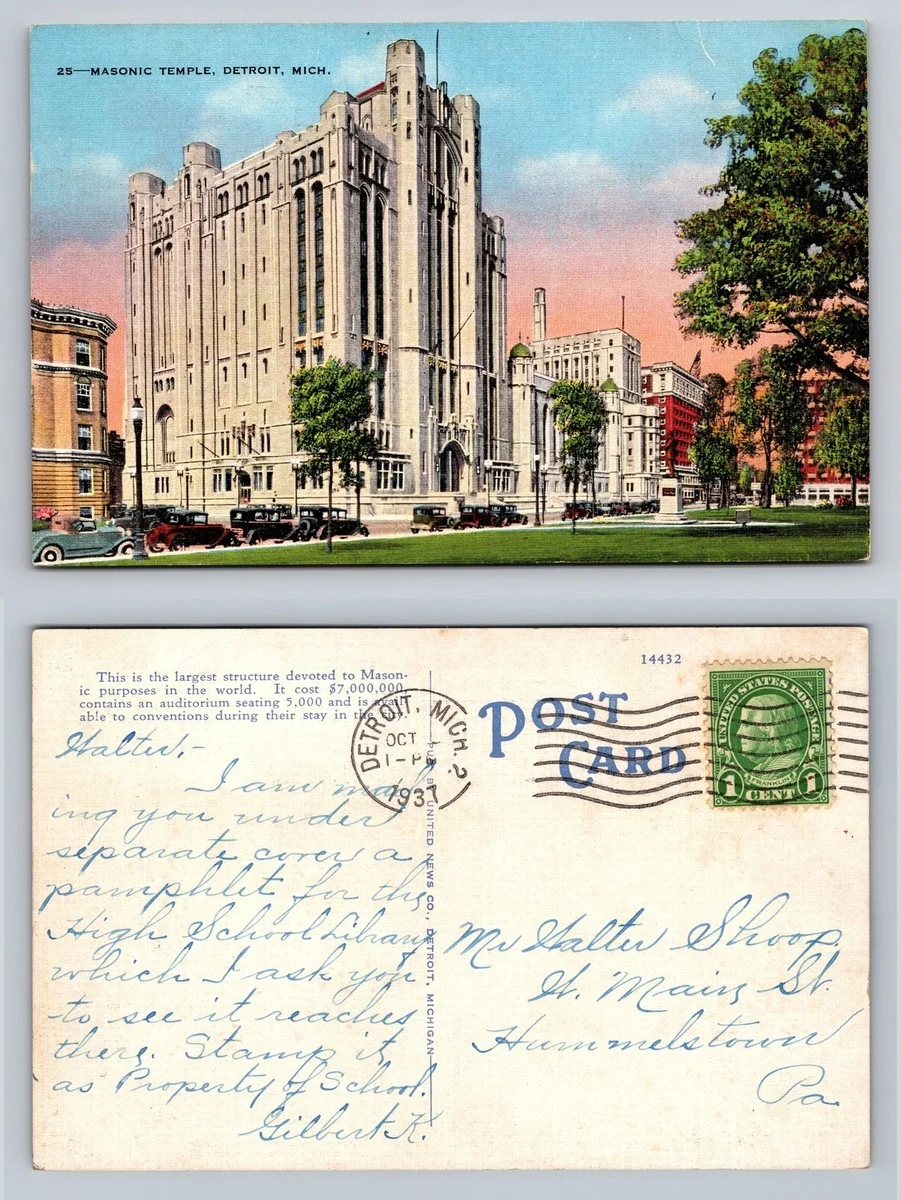 The Detroit Masonic Temple at 500 Temple Street is the largest Masonic temple in the world, a Gothic Revival tower faced in Indiana limestone that rises 210 feet and holds 1,037 rooms in about 550,000 square feet. A 16-story ritual tower connects to a 10-story wing for the Shriners and a 7-story auditorium building. George D. Mason designed it, believing that Gothic best expressed Masonic traditions, though few Masonic buildings use that style, and it held the title of largest of its kind from 1939, after the Chicago Masonic Temple was demolished. The building is not Art Deco, but it went up in the 1920s, just as Art Deco was reaching American cities, and the sculptor who decorated its interior later worked on Art Deco landmarks such as the Fisher Building. Its budget was $6.5 million, and the temple was designed to house 47 Masonic orders and to serve as a civic center for the city.
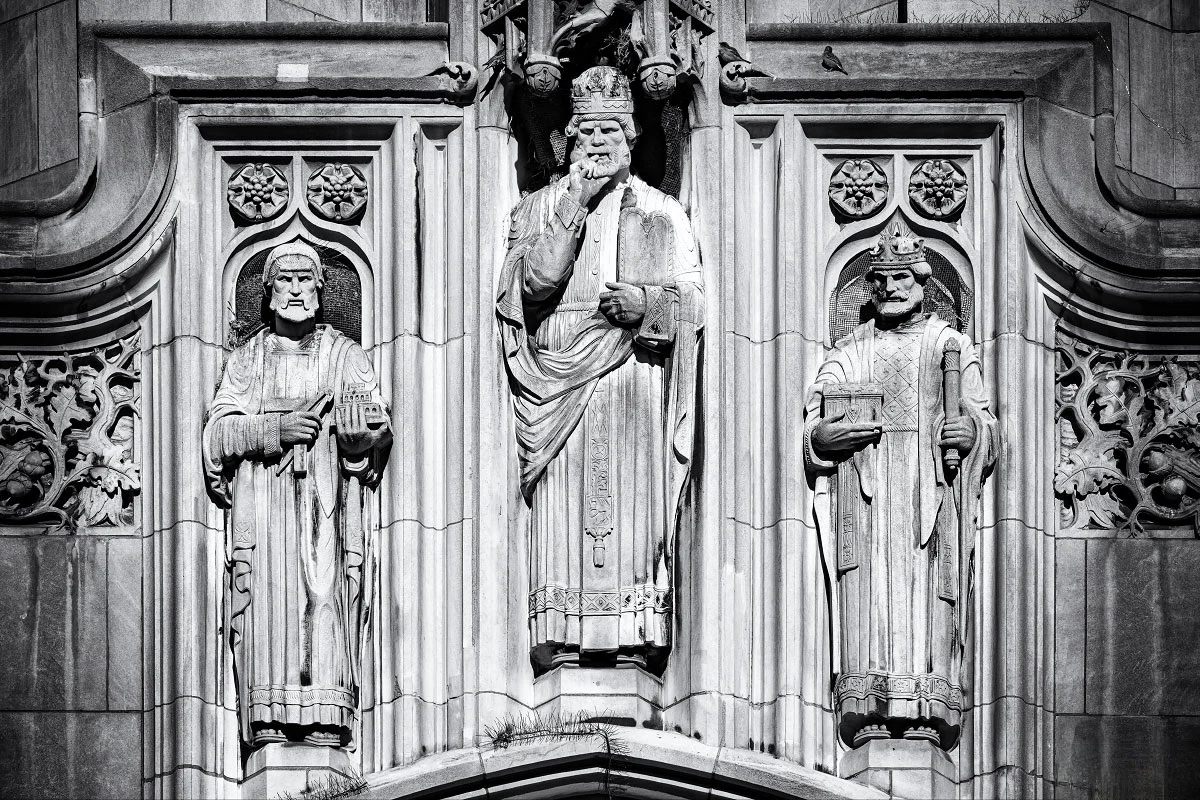
Detroit’s Masonic Temple Association was incorporated in 1894 and moved into its first temple on Lafayette Boulevard in 1896. Five mansions stood on the site chosen for the new building. Ground was broken on Thanksgiving Day, 25 November 1920, and the cornerstone was laid on 19 September 1922 during a large ceremony with the trowel George Washington had used at the U.S. Capitol. The building opened on 22 February 1926 and was dedicated that Thanksgiving, after about six years of building and furnishing. The first lodge, Archives Lodge No. 456, was consecrated on 28 June 1927. Leo Friedlander carved the three figures above the main entrance, and Bill Gehrke made most of the other exterior sculpture. The top three floors were never finished, including a planned theater and swimming pool, as the Depression ended some of Mason’s plans. Membership peaked at about 55,000 in 1926 and has fallen to roughly 3,300.
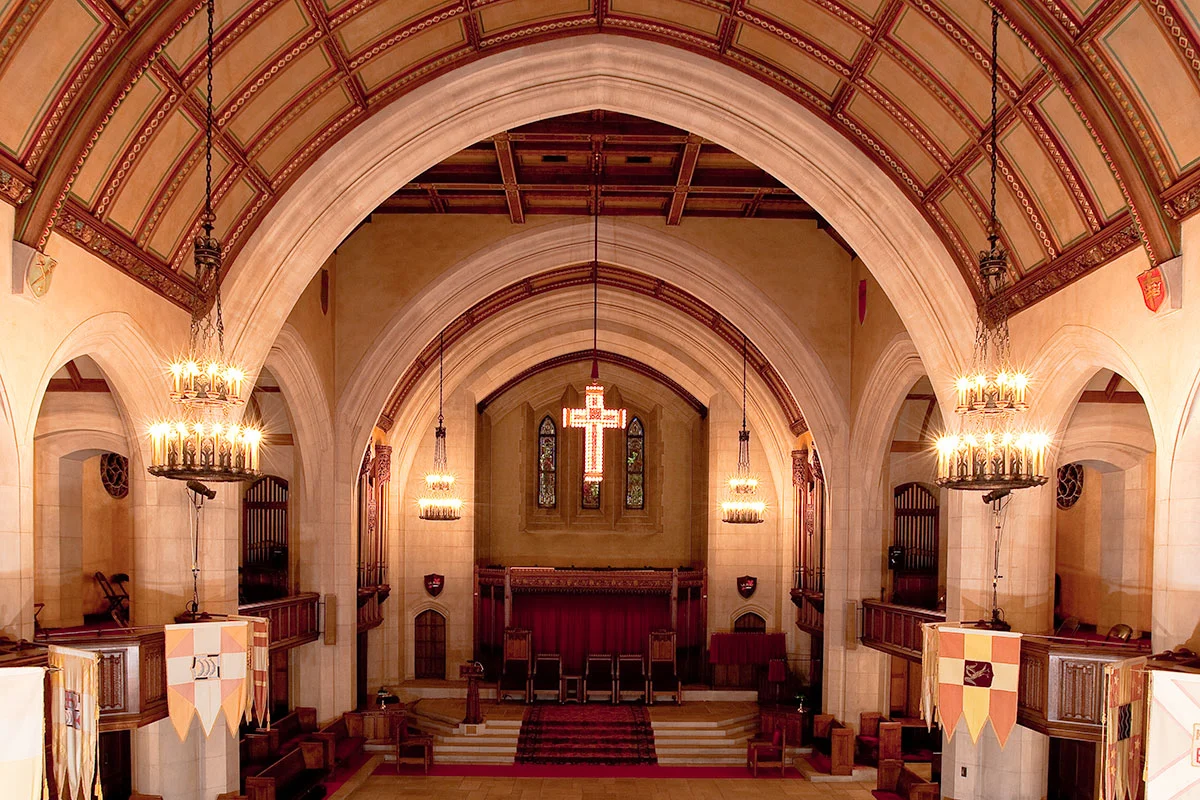

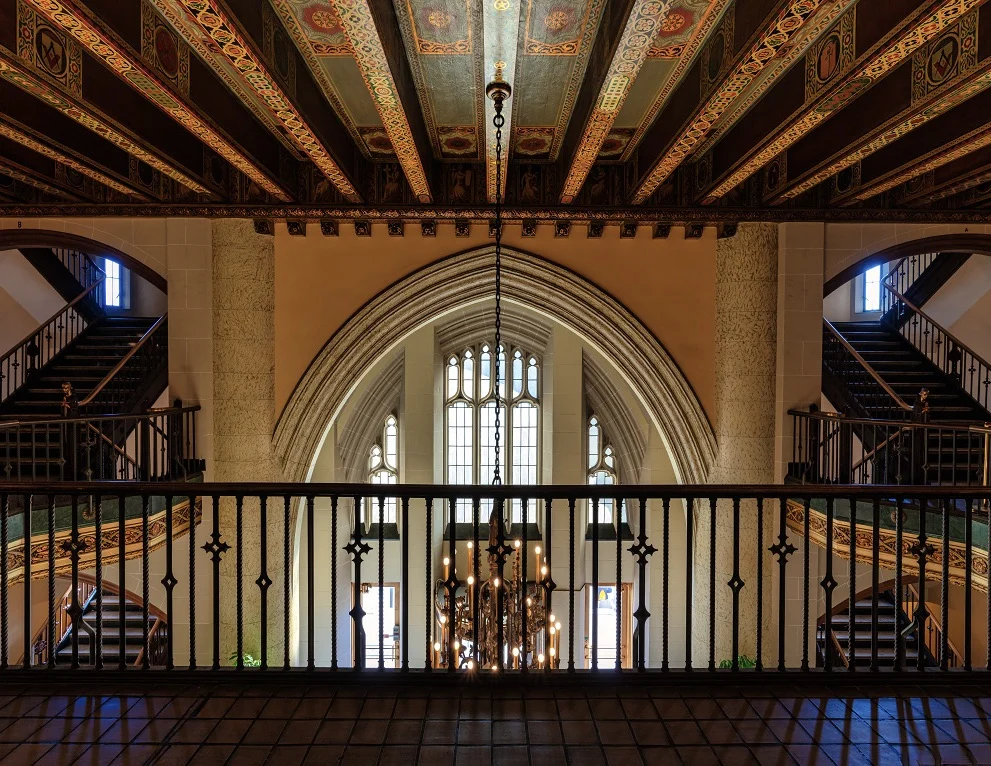
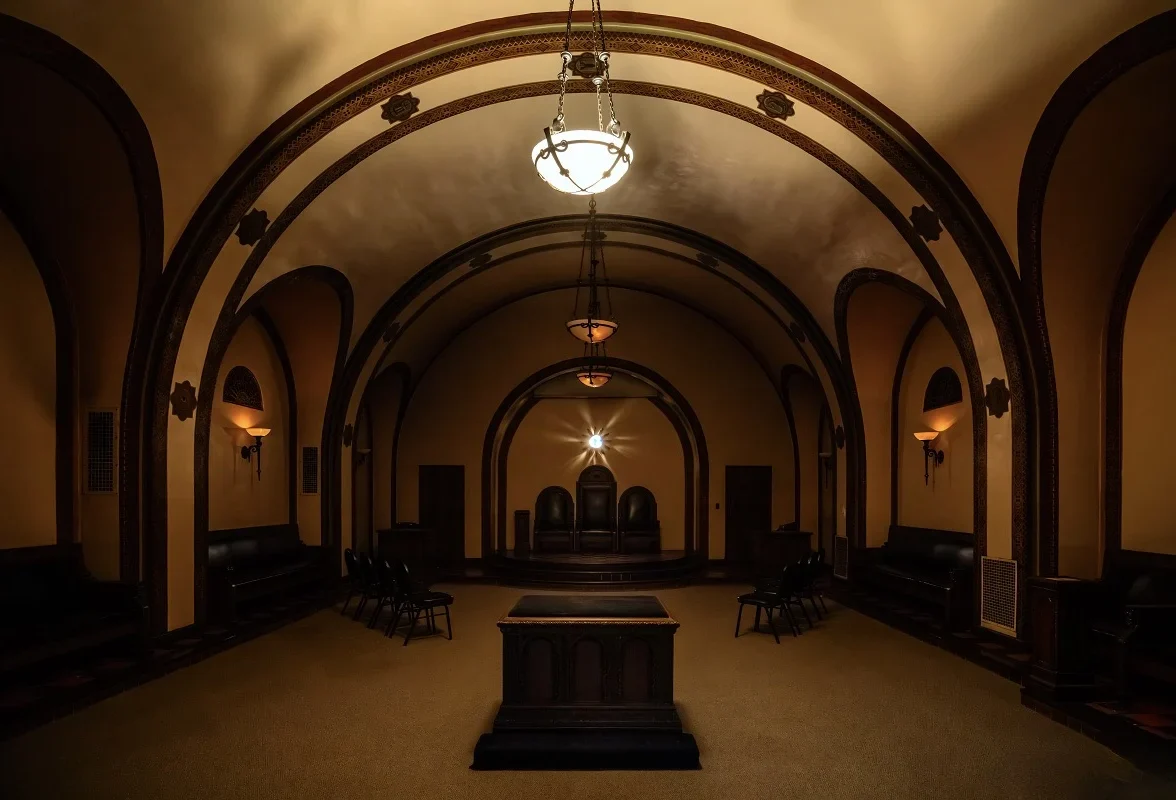
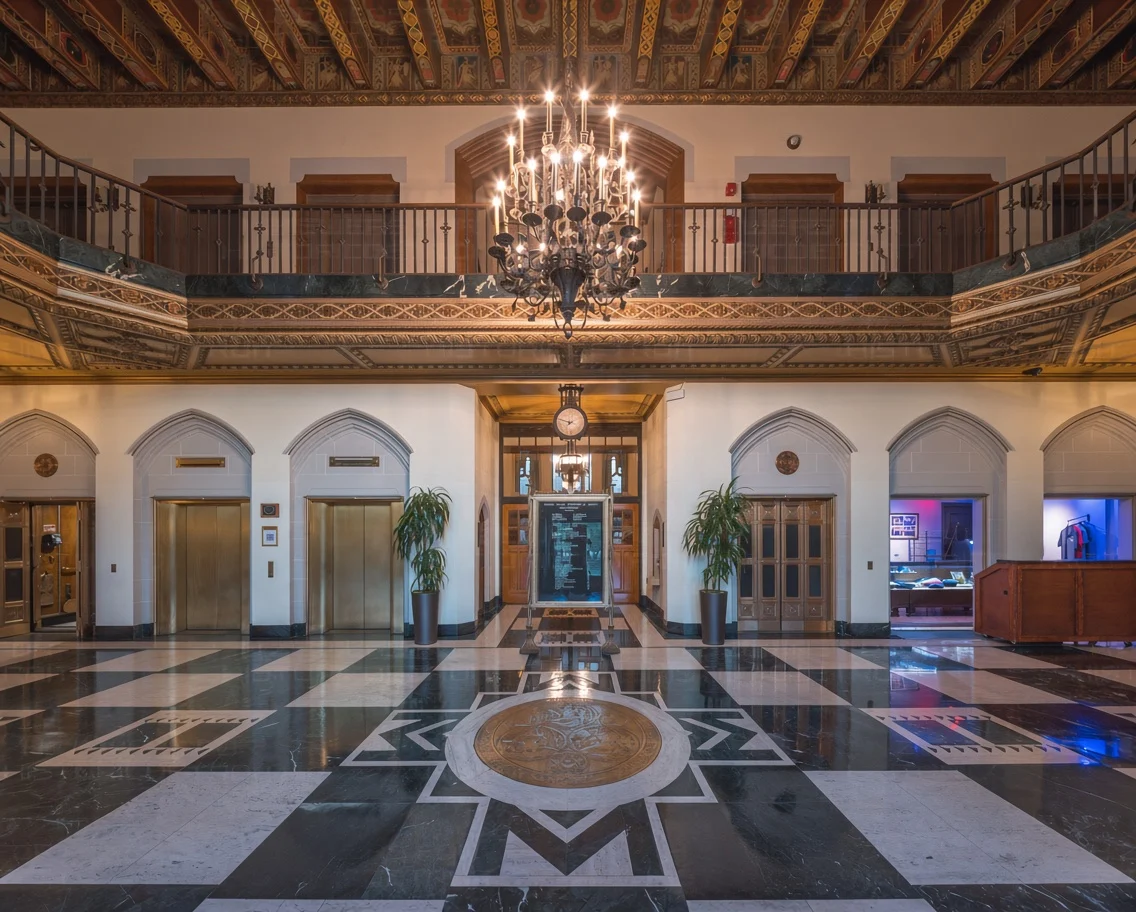
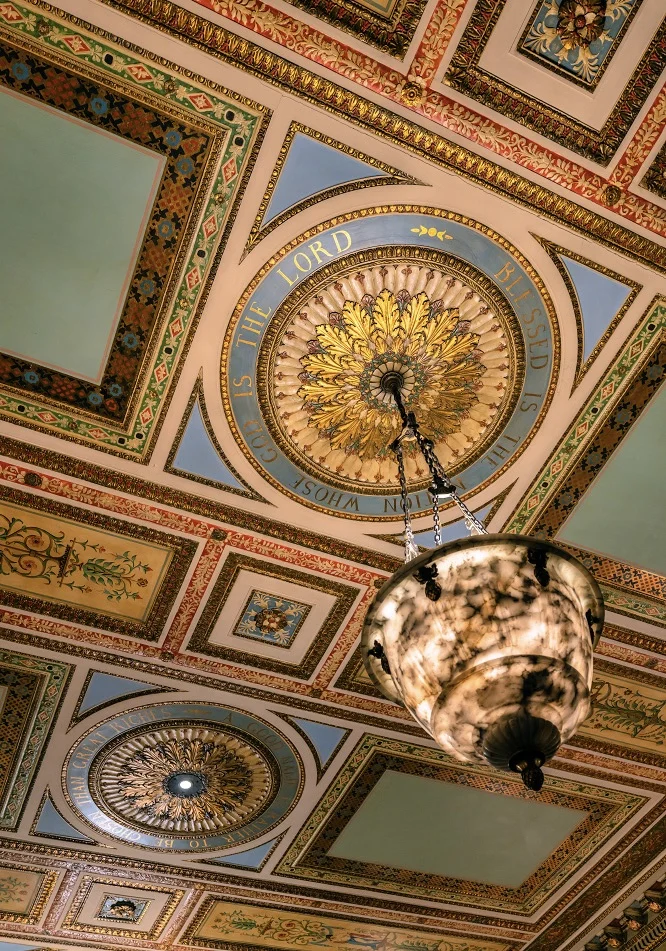
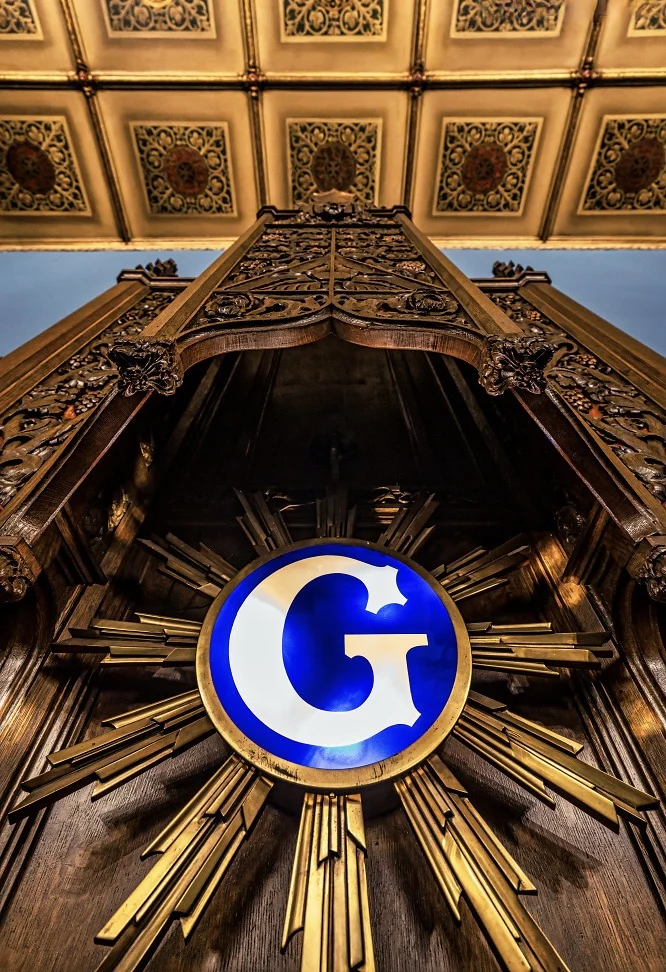
 The interior owes much to Corrado Parducci, a sculptor born in Italy in 1900 and brought to Detroit by Albert Kahn. Mason first declined to hire him because he was only 24, but Parducci won him over with models of his ideas, and the temple became his first solo commission. He designed much of its interior stone, plaster, and metalwork, including plaster ceilings and light fixtures. He worked from small sketches that became full-size clay models, which foundries cast in bronze or aluminum, and he never carved the stone himself. He went on to complete about 600 commissions, among them churches, schools, banks, and utility buildings. The temple has seven craft lodge rooms, each in a different style, with motifs from Egyptian, Doric, Ionic, Corinthian, Italian Renaissance, Byzantine, Gothic, and Romanesque design. Italian artists carried out the work under Mason’s direction, and the Detroit Historical Society says the rooms range from Corinthian to Art Deco.
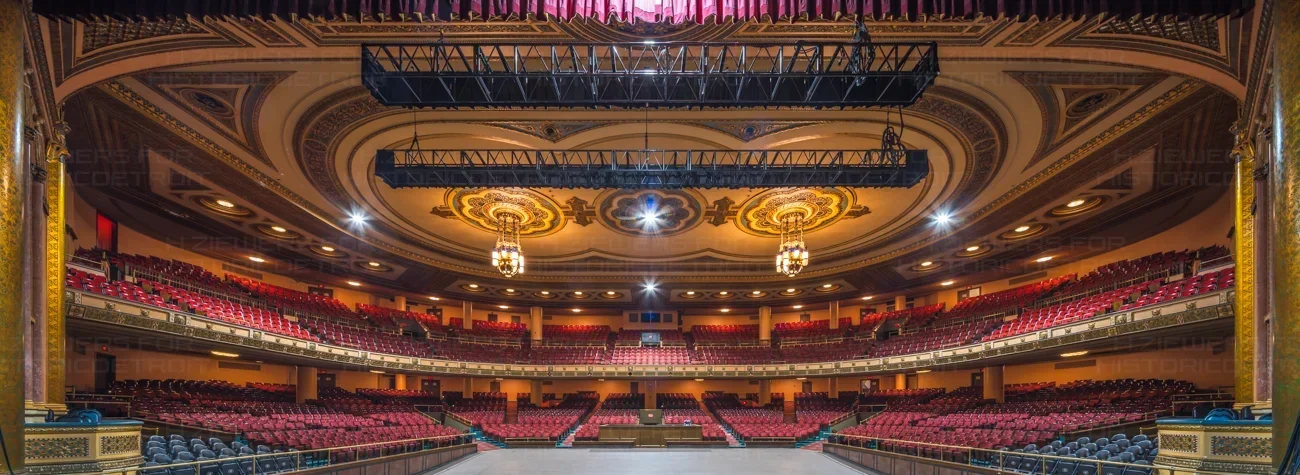
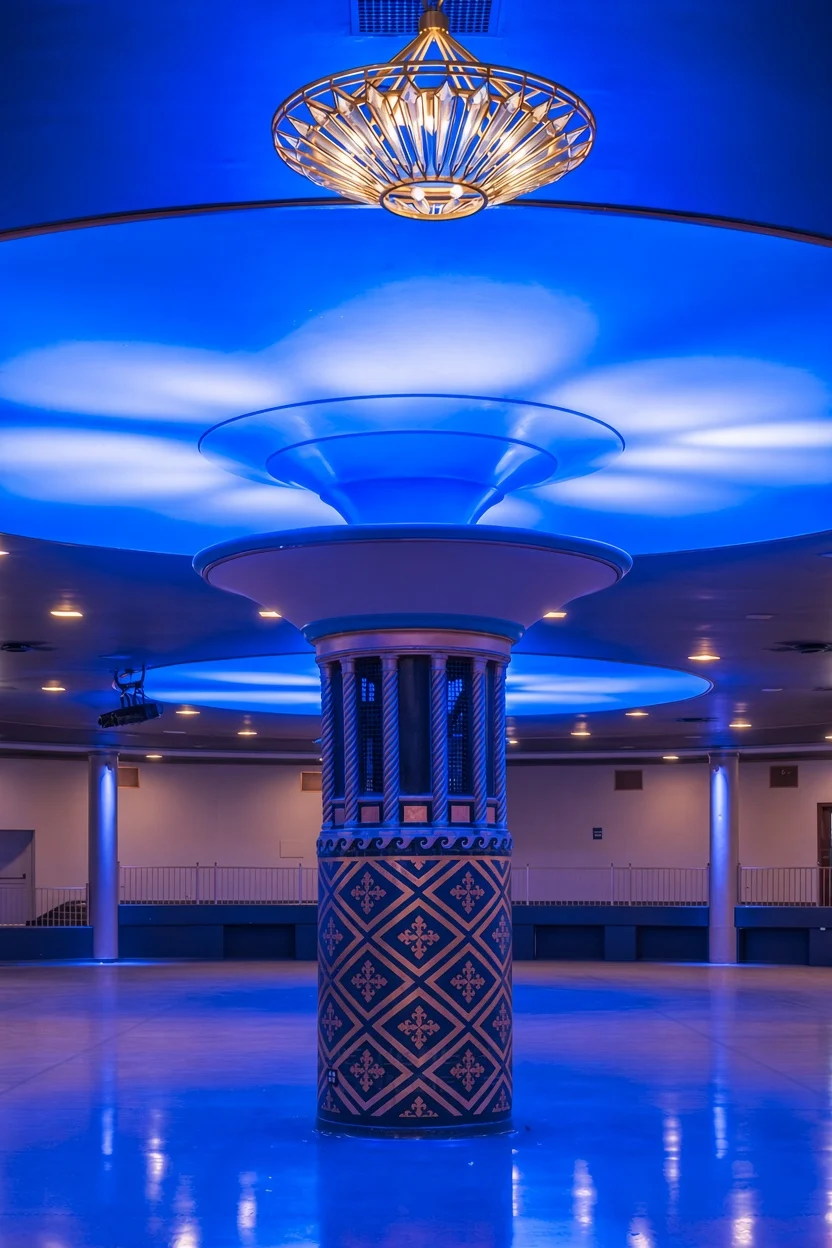
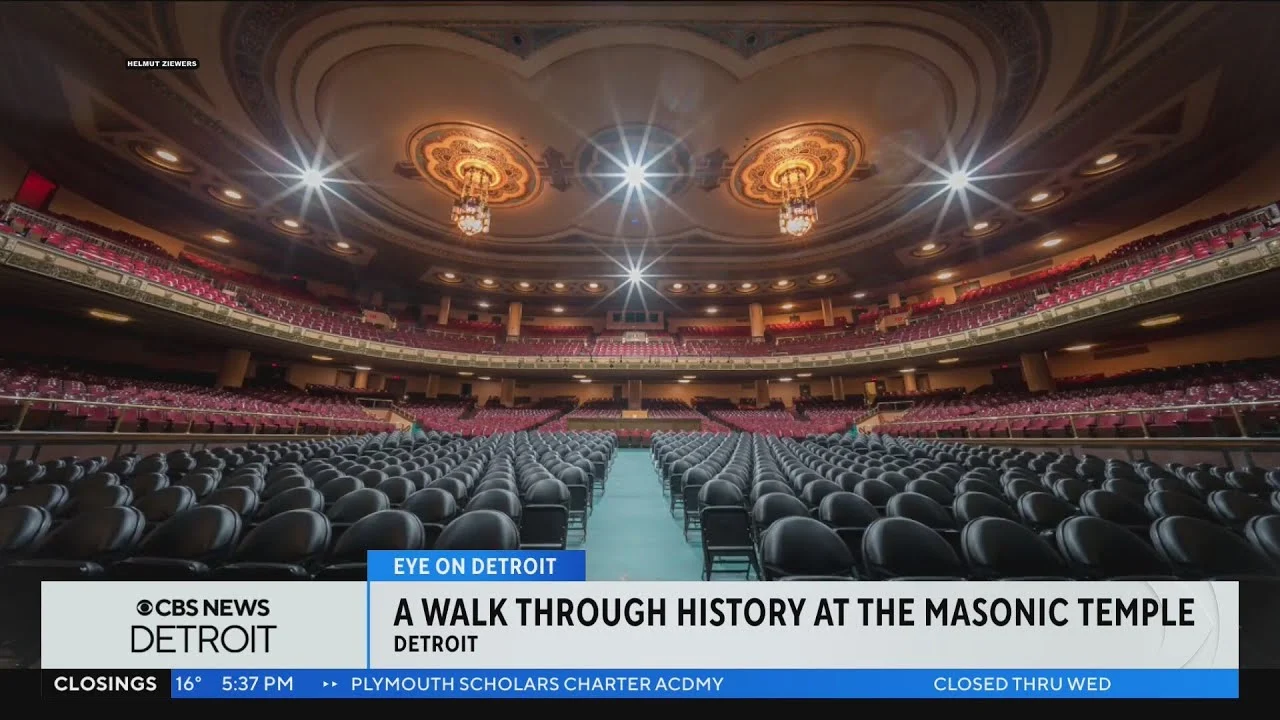
The building is also a working venue. Its Masonic Temple Theatre seats about 4,400, after nearly 600 of the original 5,000 seats were removed because of poor sightlines, and its stage is 100 feet wide and 55 feet deep. From 1936 to 1942, the Detroit Symphony Orchestra broadcast the Ford Sunday Evening Hour from the auditorium on radio, with free admission and stations across the country carrying the program. Early Detroit auto shows were held in the building, Michigan Opera Theater staged productions on its stage, and Jascha Heifetz, Jimi Hendrix, and B.B. King later performed there. The former Scottish Rite Cathedral seats about 1,600, the Fountain Ballroom covers 17,264 square feet, and the drill hall measures 160 by 100 feet and has a floating floor laid on felt cushions, which hosts trade shows and Detroit Roller Derby. The temple has five pipe organs and seven stained-glass windows.





Related Products from ArtDecoCollection.com
Original Art Deco Aluminum and Mica Zigzag Wall Sconces

French Art Deco Machine Age Theater Sconces
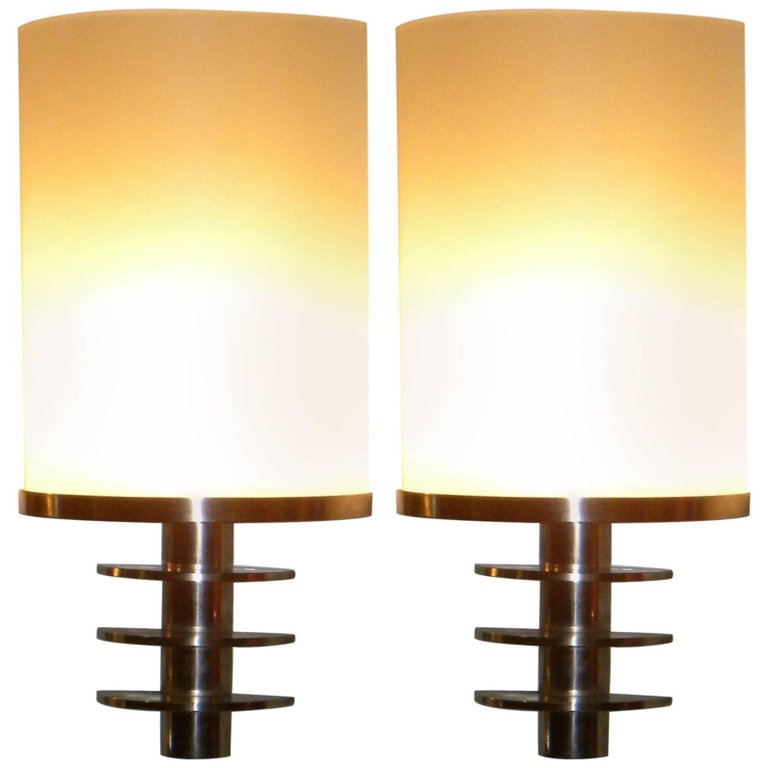
Original Art Deco Movie Theater Sconces Rare
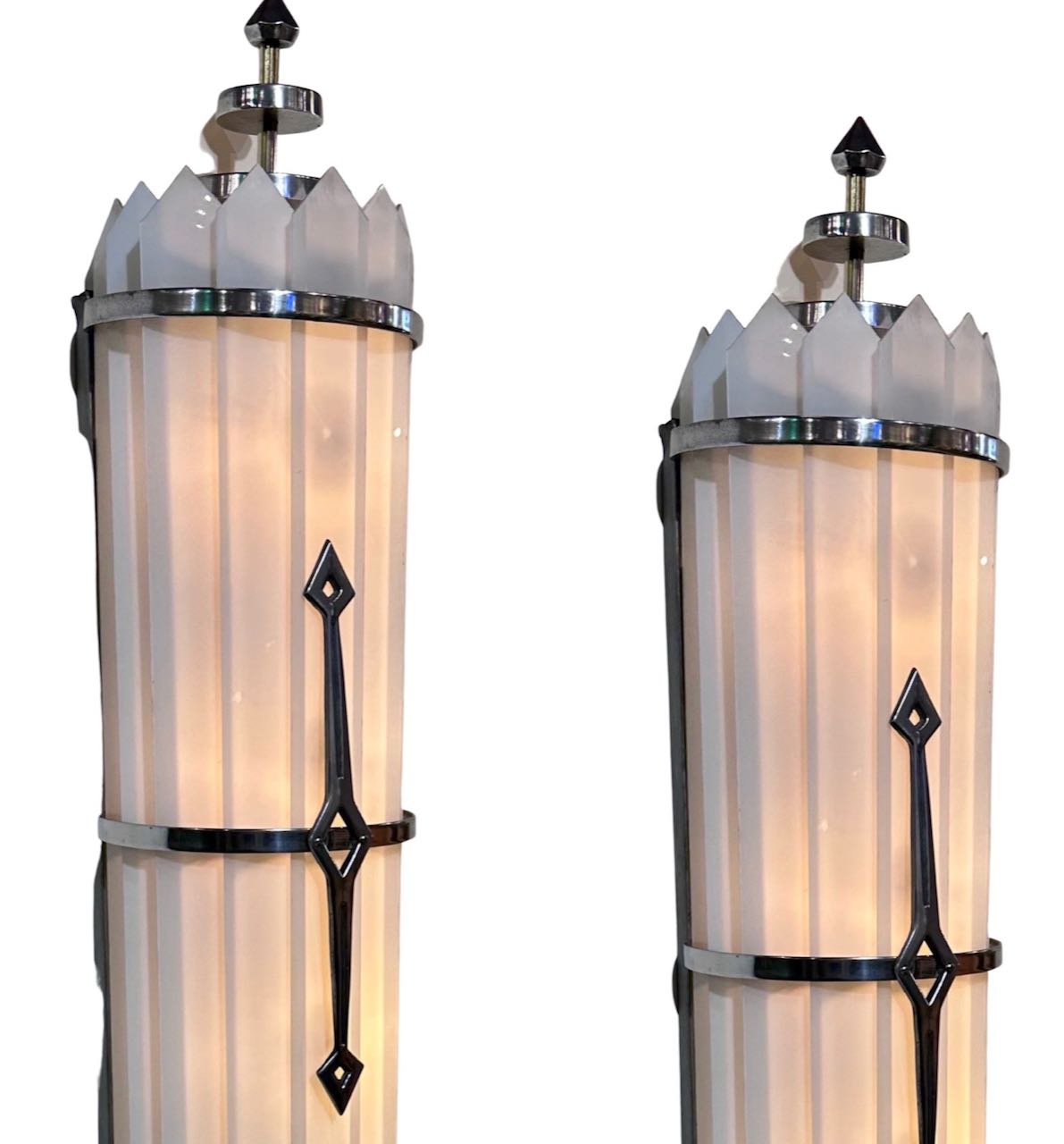
Art Deco Geometric Ceiling Lamp with Rare Marbled Glass, France c. 1930
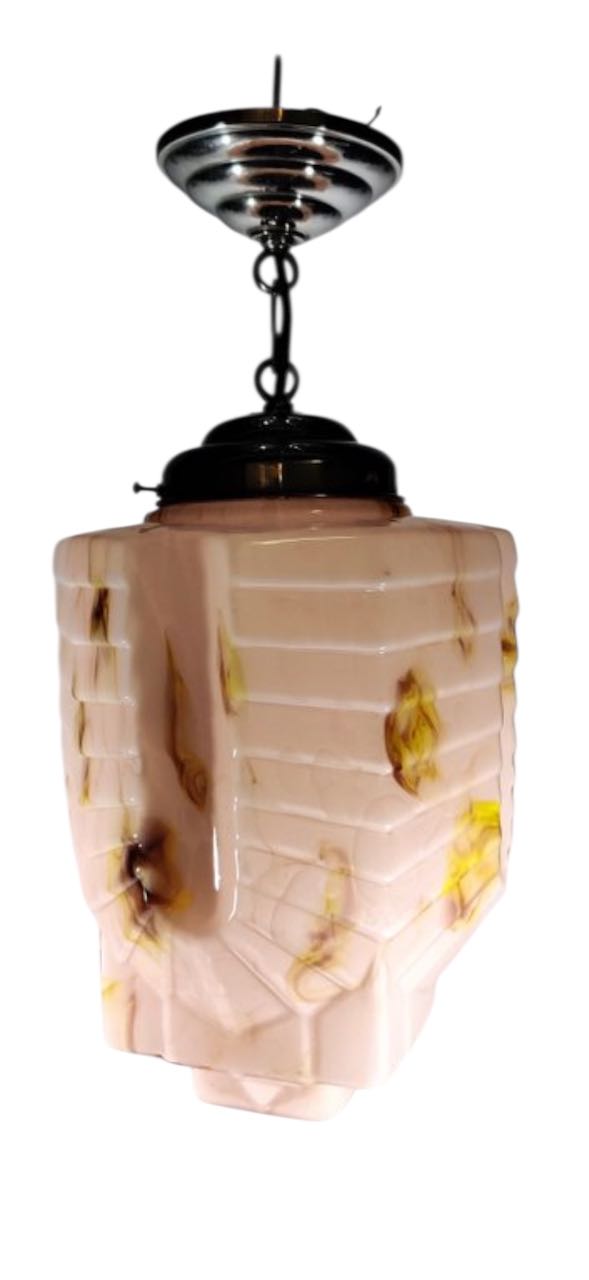
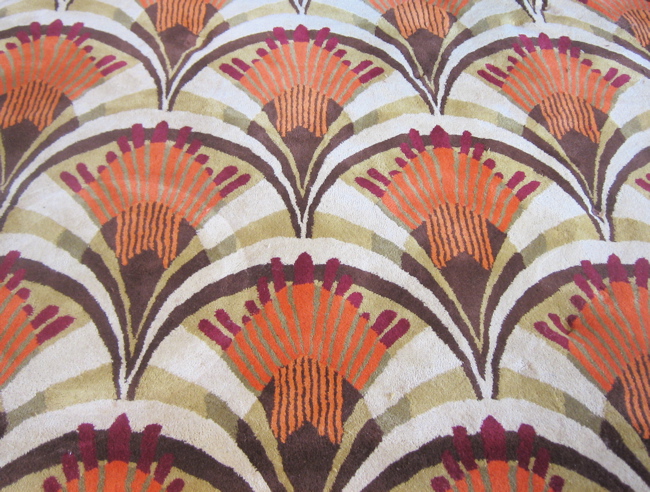
Art Deco Collection Custom Carpets • San Francisco Fox Theater 1930s Design

ART & STATUES
CERAMICS & GLASS
© Copyright Art Deco Collection. 2026 All rights reserved. Site Map