✕


ART & STATUES

CERAMICS & GLASS
The Art Deco Radio and the Modern Home
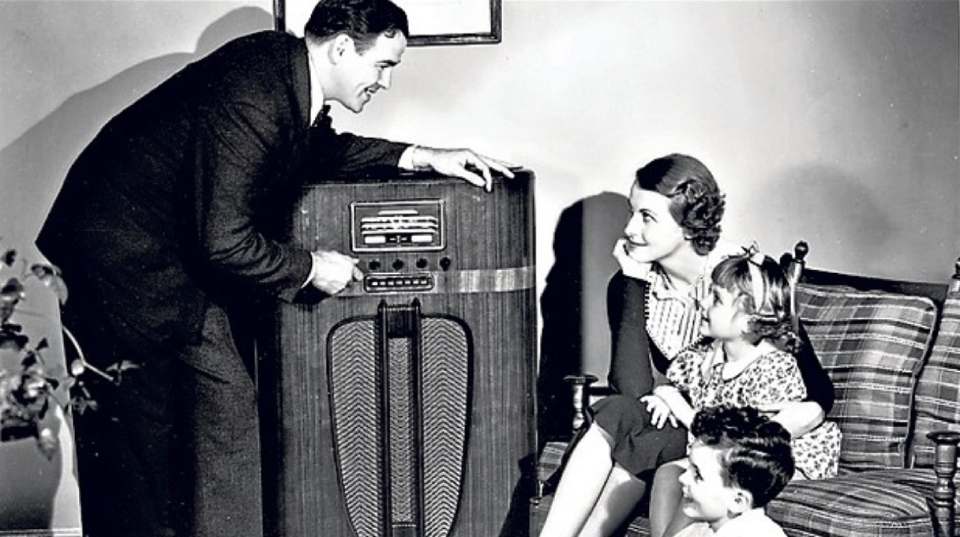
The radio became one of the most transformative inventions of the early twentieth century, serving as the first true technology tool to enter homes across America and the world. During the 1920s and 1930s, it brought families together in living rooms to share news, music, and entertainment, connecting listeners to events across continents in real time. Much like the telephone before it and television after, the radio became a cultural anchor, offering comfort, curiosity, and connection through its glowing dials and warm sound.

As radio broadcasting expanded, so too did the artistry of the radio itself. Manufacturers quickly realised that the radio was not merely a utility but a centerpiece of modern living. Art Deco design, with its geometric lines, rich veneers, chrome accents, and streamlined forms, perfectly embodied the optimism and sophistication of this new age. Radios became sculptural expressions of the era, reflecting the same sense of speed and luxury found in automobiles, skyscrapers, and ocean liners of the period.

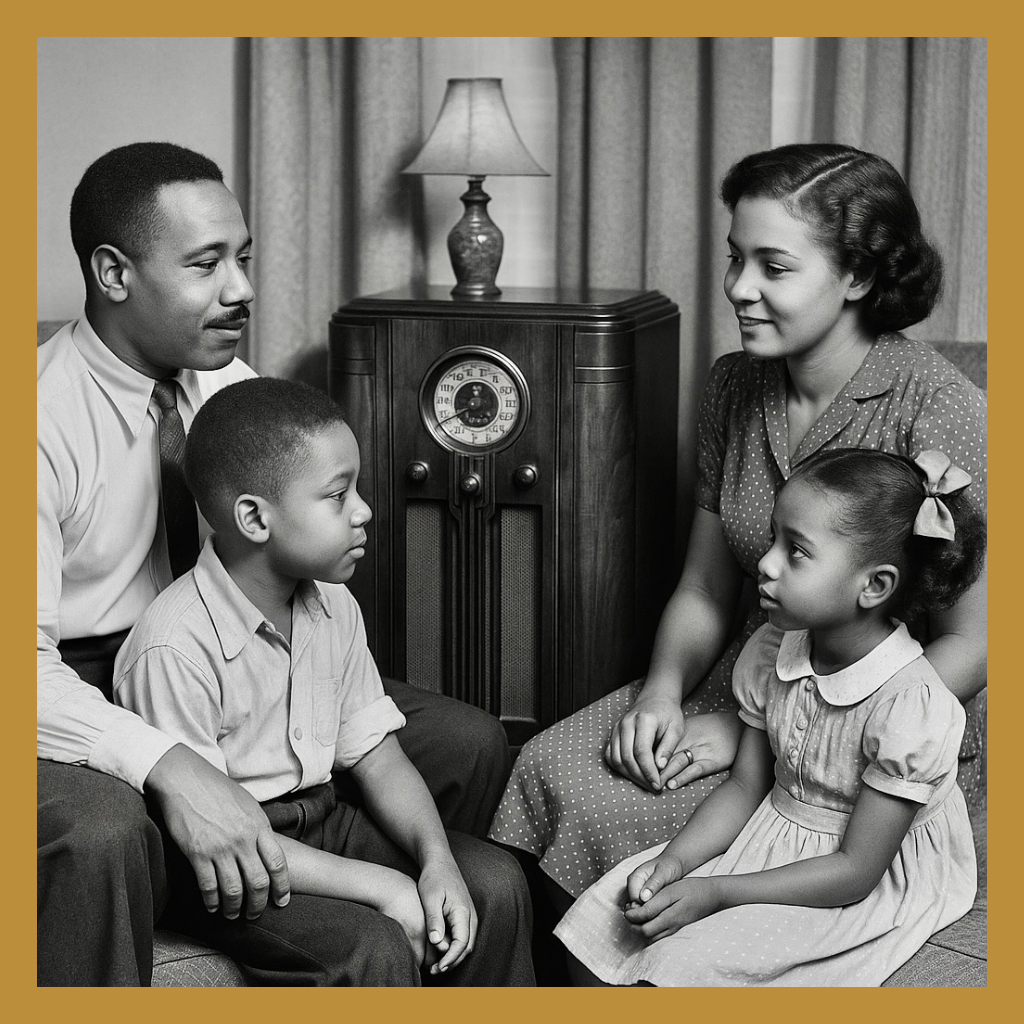
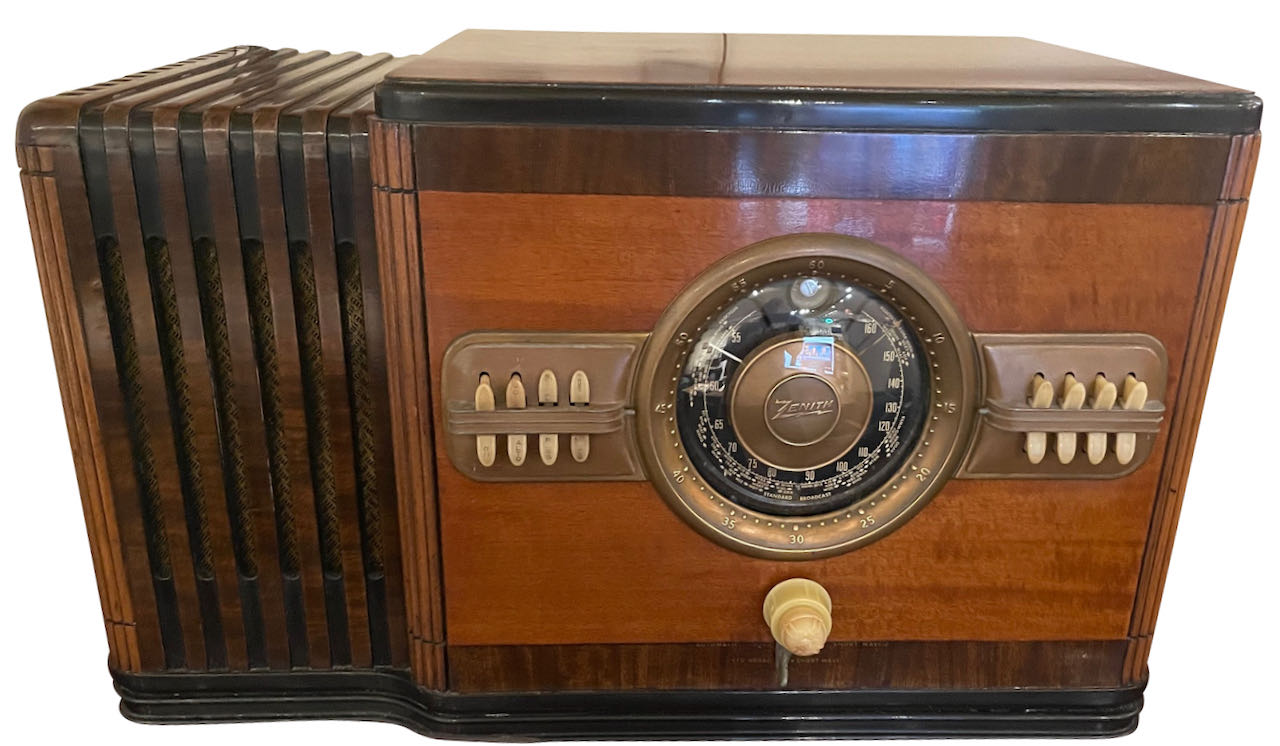
In America, brands like Zenith, Philco, and Grunow led the way, crafting radio cabinets that were both technologically advanced and beautifully designed. Zenith’s “Walton” tombstone model, with its iconic dial, and Philco’s “Cathedral” and “Bullet” models became household staples. Grunow introduced stunning chrome and wood combinations that mirrored the elegance of urban Art Deco interiors. Other innovations included chair-side radios that functioned as both end tables and sound systems, merging convenience and design in true Deco spirit.
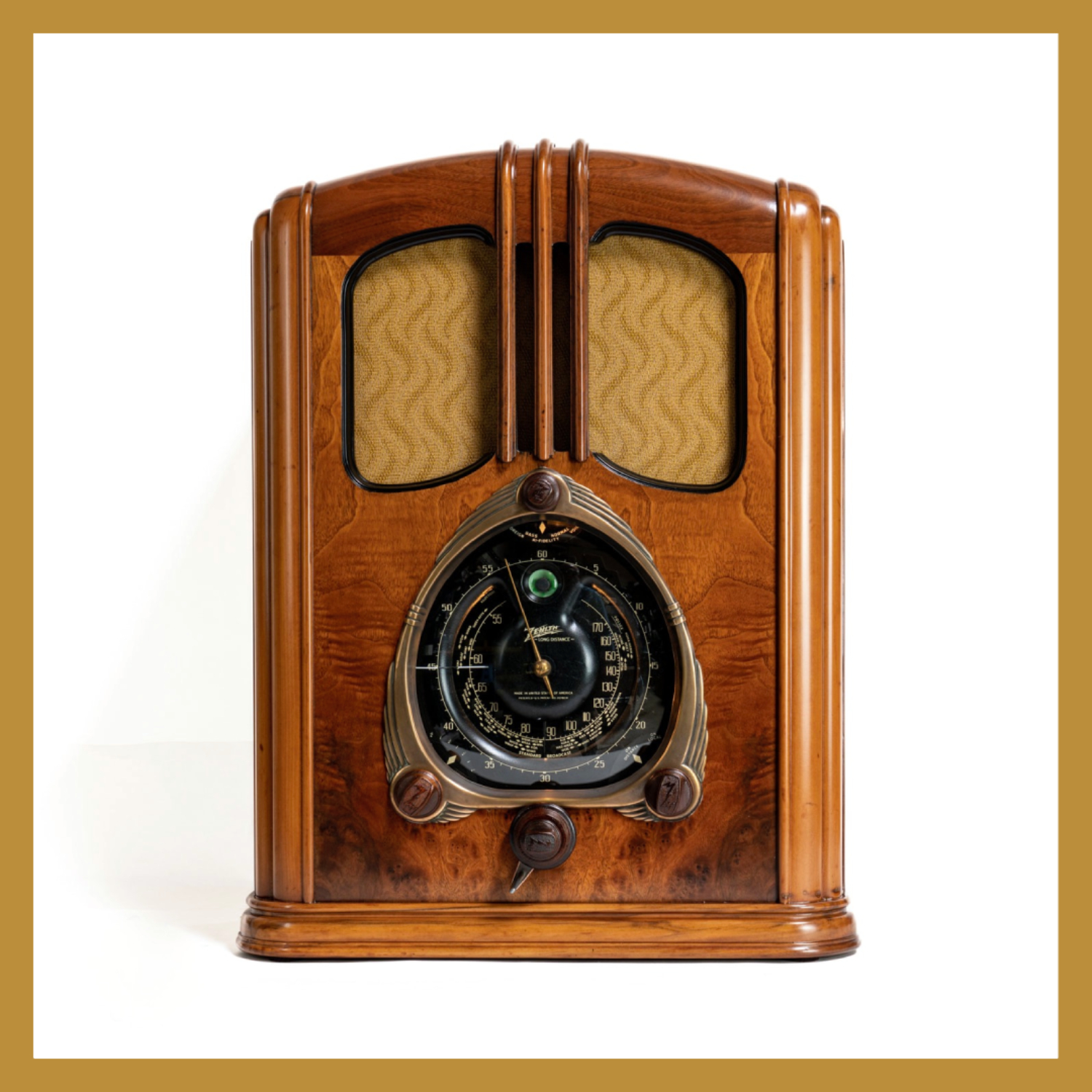
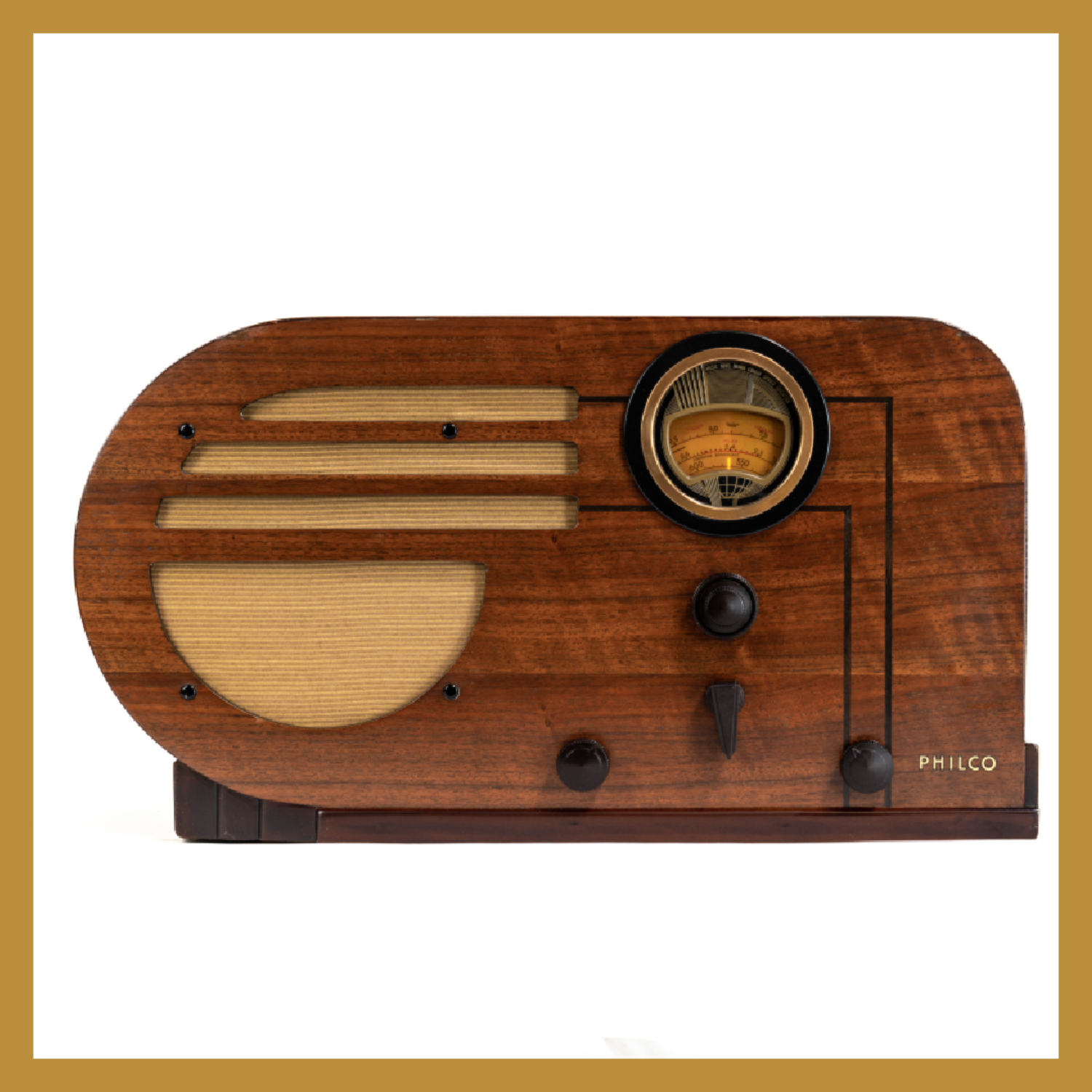

Left: Zenith ‘Walton’ Tombstone Radio, Middle: Philco ‘Bullet’ Radio, Right: Sparton ‘Blue Mirror’ Radio
The Prohibition era added another layer to the radio’s cultural importance. As speakeasies flourished in secret, radio bars—combining the sleek design of Art Deco with hidden liquor compartments—became fashionable additions to private homes. These pieces blended technology and social rebellion with refinement, embodying the glamour and excitement of the Jazz Age. The radio was not just a voice in the room but part of a broader lifestyle that celebrated innovation, design, and discreet indulgence.
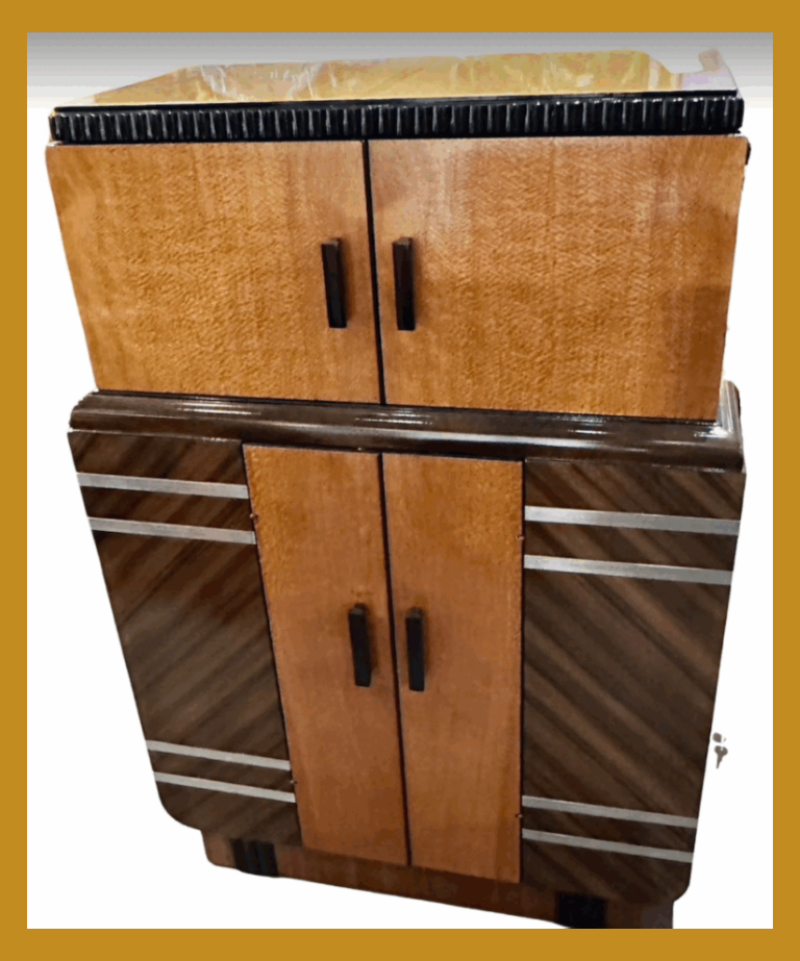
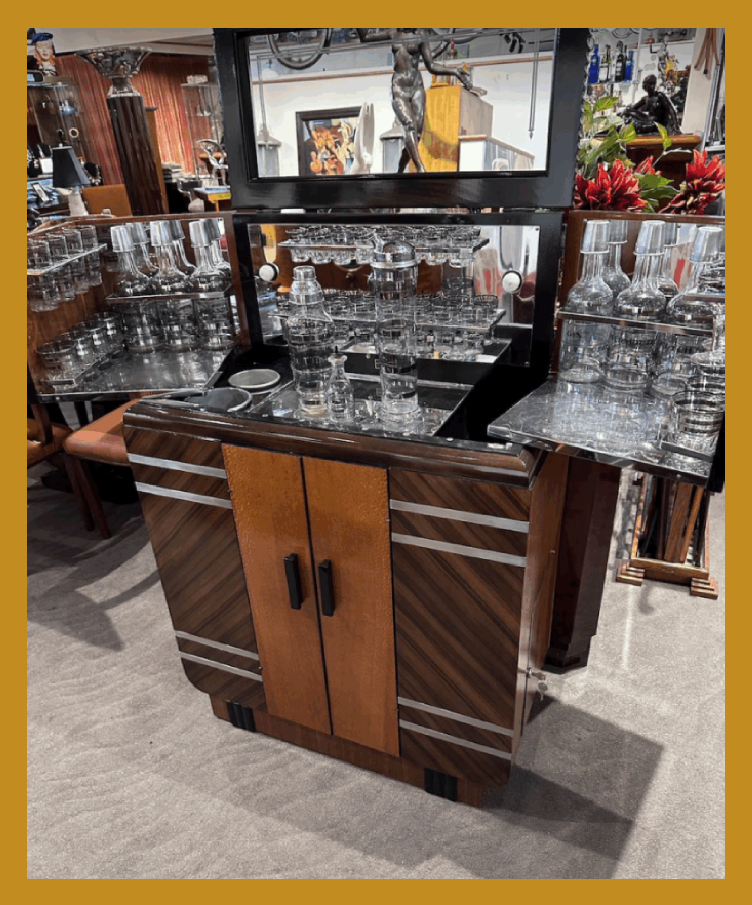
Learn more about this radio bar by clicking here
Technological evolution during this time also defined the experience. Early 4-tube sets gave way to more powerful 6-, 9-, and 12-tube configurations, improving clarity and range. Combination units featuring phonographs allowed listeners to play records as well as tune in to radio programmes, creating the first complete home entertainment centres. These advancements made radios not only a marvel of design but also a symbol of progress, modern living, and social sophistication.
Today, Art Deco radios remain among the most collectible and admired technological artifacts of their time. Their elegant veneers, Bakelite casings, and chrome embellishments stand as reminders of a period when design and function were inseparable. The integration of modern Bluetooth technology has now given these vintage radios a new life, allowing them to connect seamlessly with smartphones, computers, and streaming devices. This fusion of past and present preserves their beauty while adapting their function for contemporary use, ensuring that the spirit of Art Deco design and innovation continues to play on, one broadcast—or playlist—at a time.
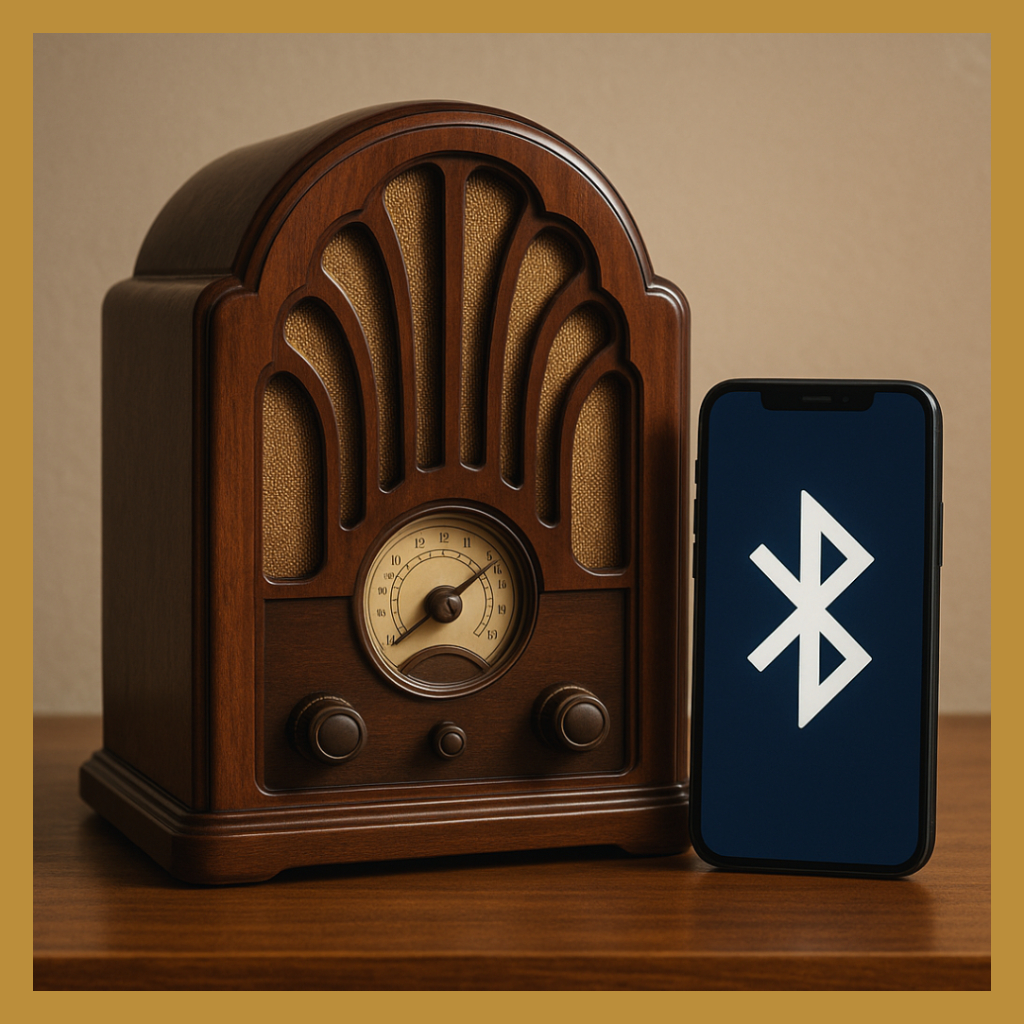
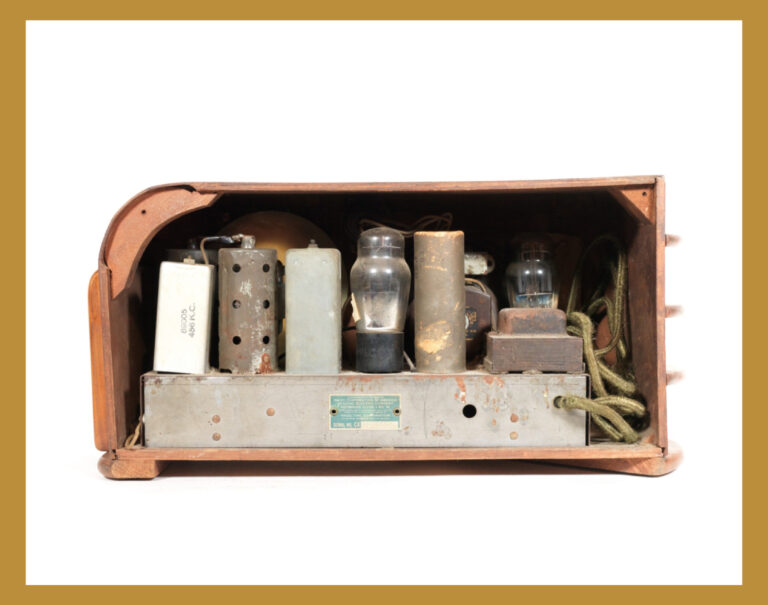
Left: Art Deco era radio with Bluetooth functionality, Right: Exposed tubes inside of a Climax 60 radio.
If you are interested in further stories of Art Deco design, collecting, and celebrating the artistry of early 20th Century:

Related Products from ArtDecoCollection.com
Zenith 12-S-470 “Aztec” Console Radio 1940 Classic Bluetooth
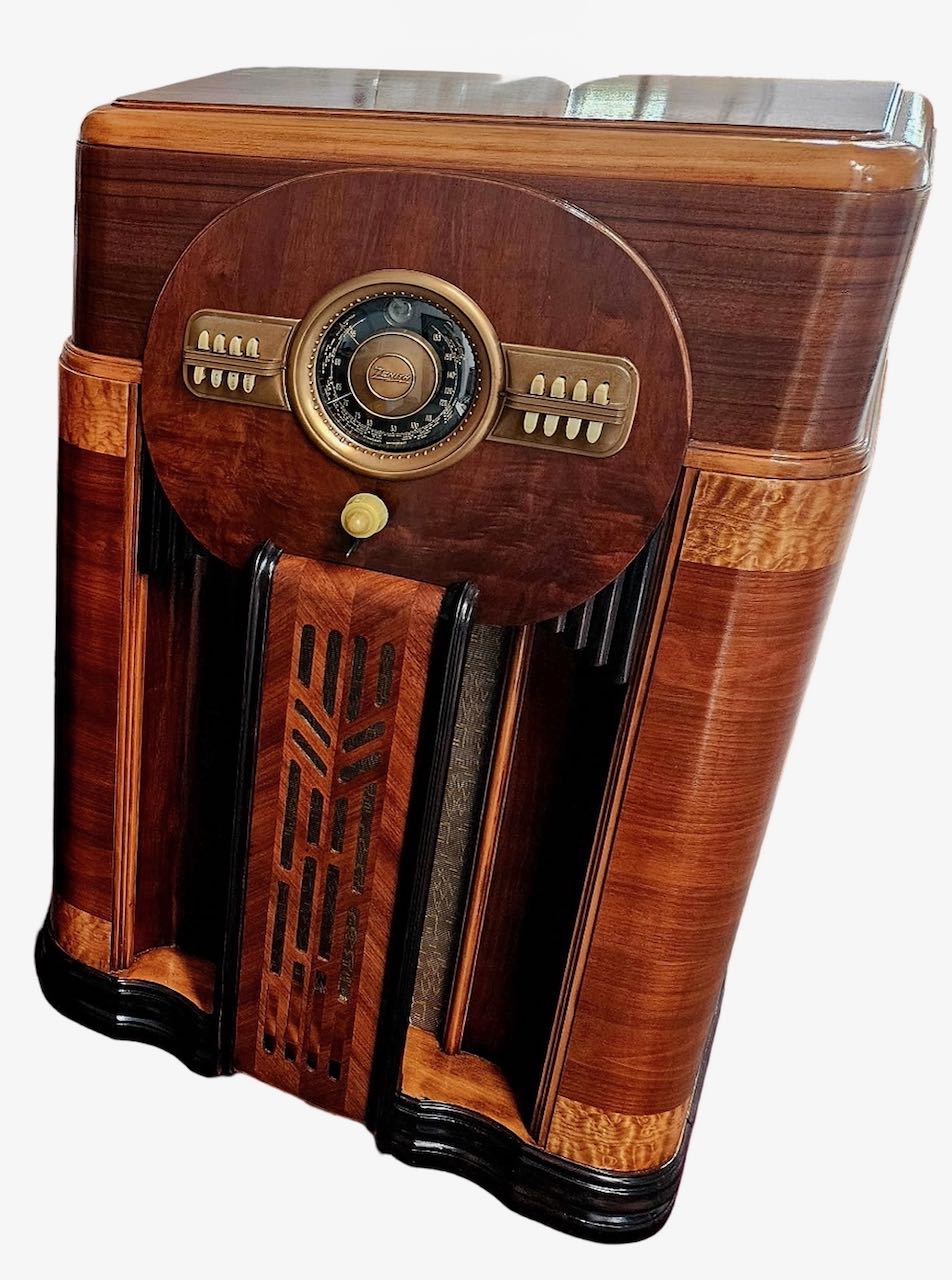
Zenith Model 808 Art Deco Tombstone Radio with Bluetooth, 1935
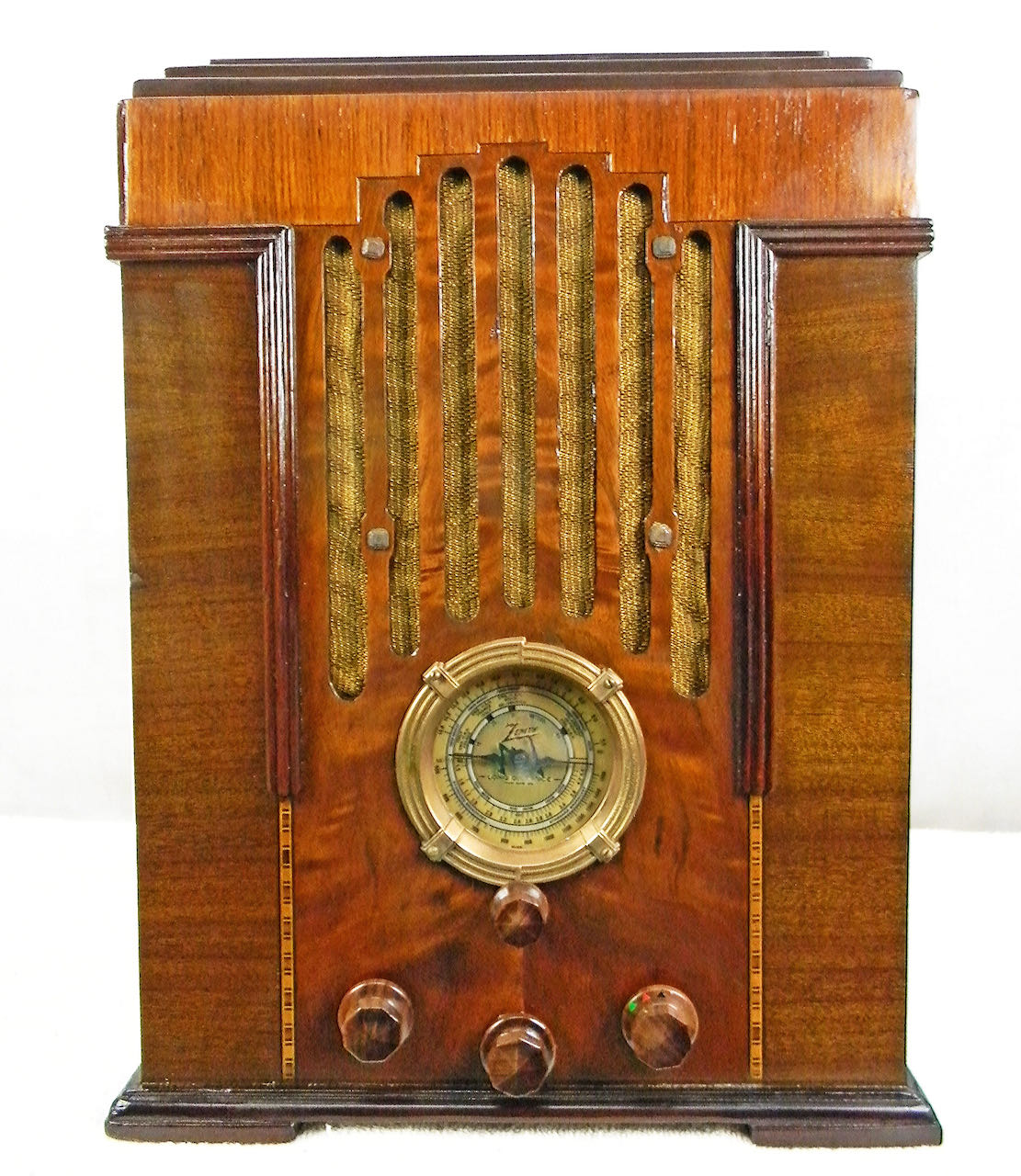
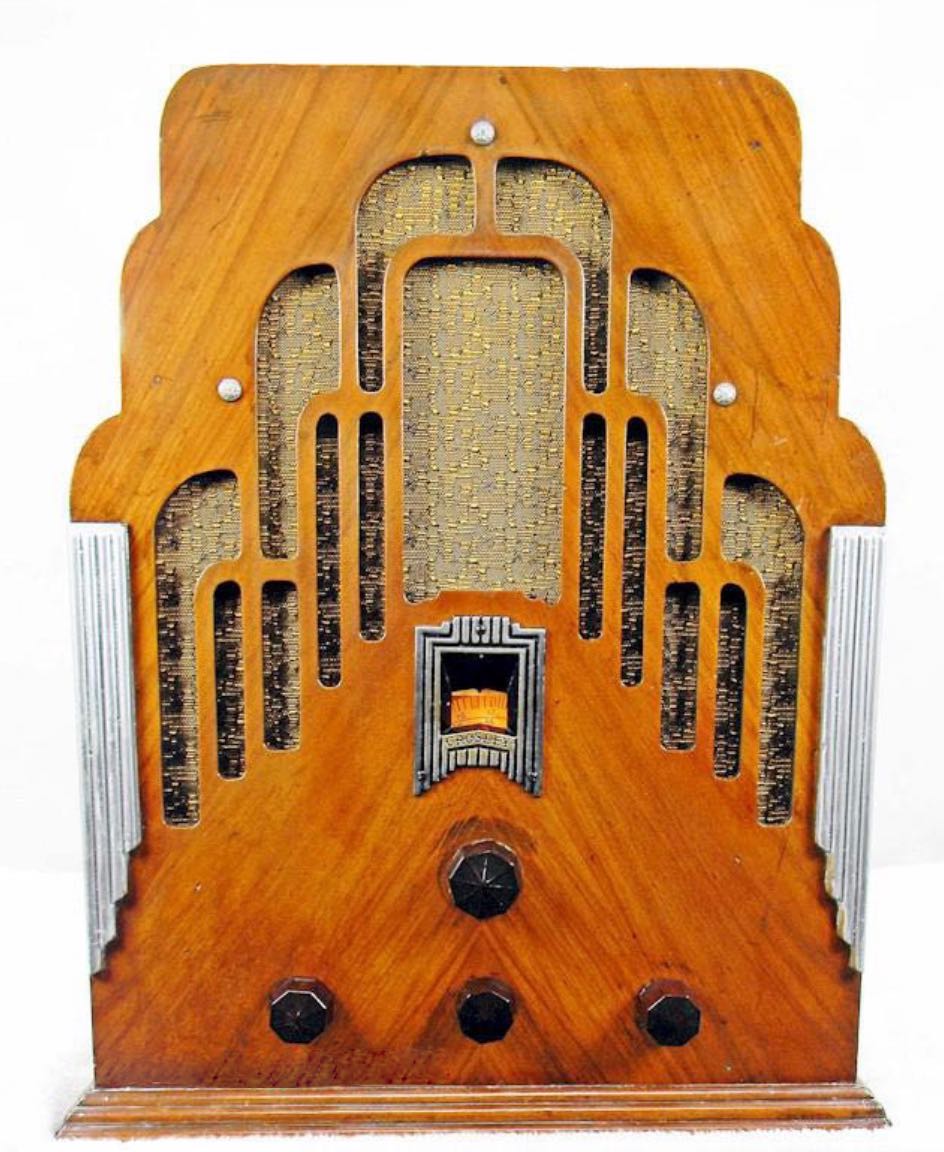
Crosley Art Deco 179 “Dual Four” Antique Tombstone (1934) Radio
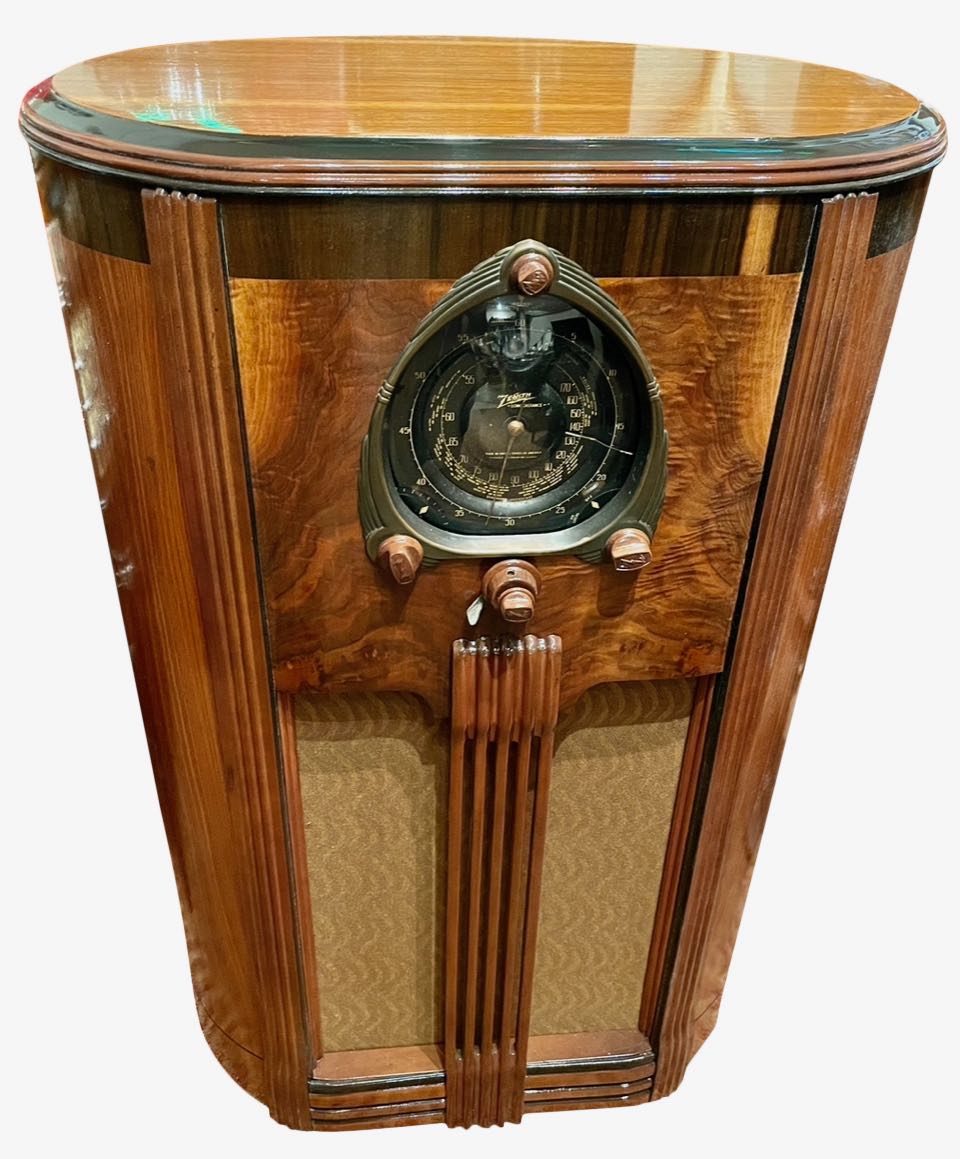
1938 Zenith 9S263 Shutter Dial Oval Console Radio with Bluetooth
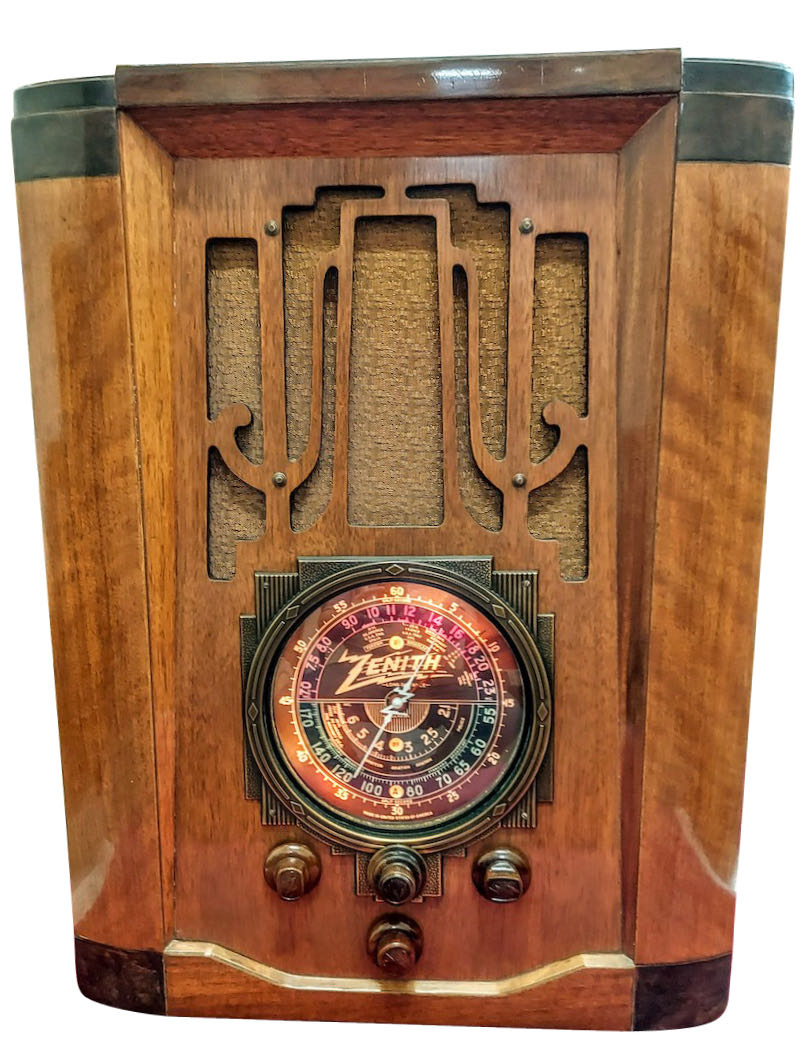
1936 Zenith Model 7-S-28 Art Deco Tombstone Radio with Bluetooth
ART & STATUES
CERAMICS & GLASS
© Copyright Art Deco Collection. 2026 All rights reserved. Site Map