

Taken together, these magazines did something buildings and furniture could not: they carried Art Deco into ordinary households on a monthly basis, at a price far lower than a Ruhlmann cabinet or a coachbuilt Delahaye. Original issues and loose plates from Harper’s Bazaar, Vanity Fair, and Art-Gout-Beaute remain widely collected today, and surviving copies in good condition command real money at auction and from specialist dealers. They offer a kind of Art Deco most people could actually afford to own in the 1920s, which may be exactly why the style still feels so immediate nearly a century later.
✕
ART & STATUES
CERAMICS & GLASS
Art Deco Around The World
Art Deco Magazines, the Style's Monthly Arrival on the Newsstand
How Harper’s Bazaar, Vanity Fair, and a handful of other magazines carried Art Deco’s geometry and glamour into millions of ordinary homes.
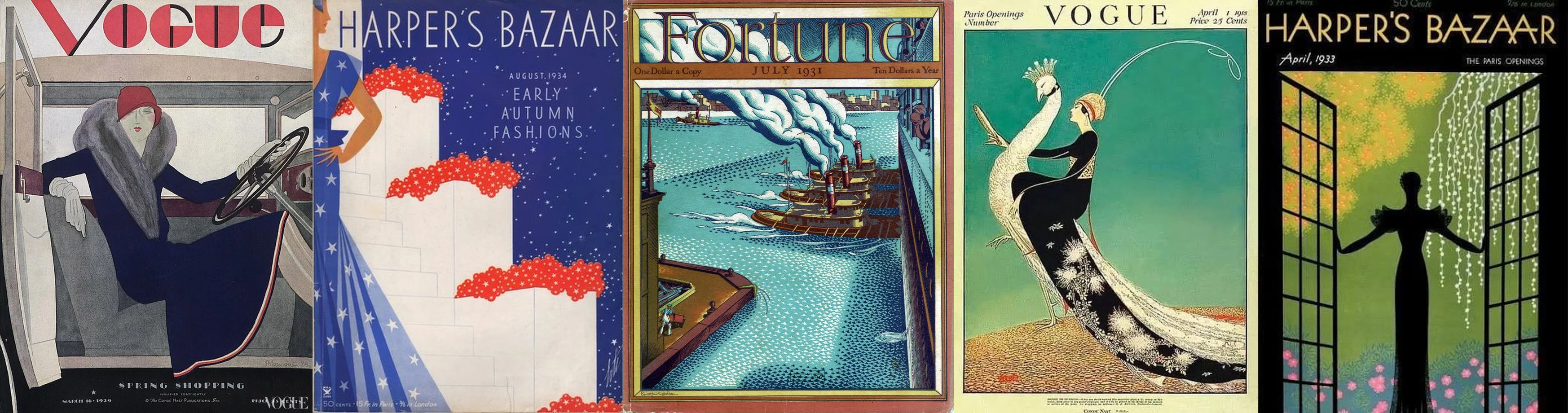
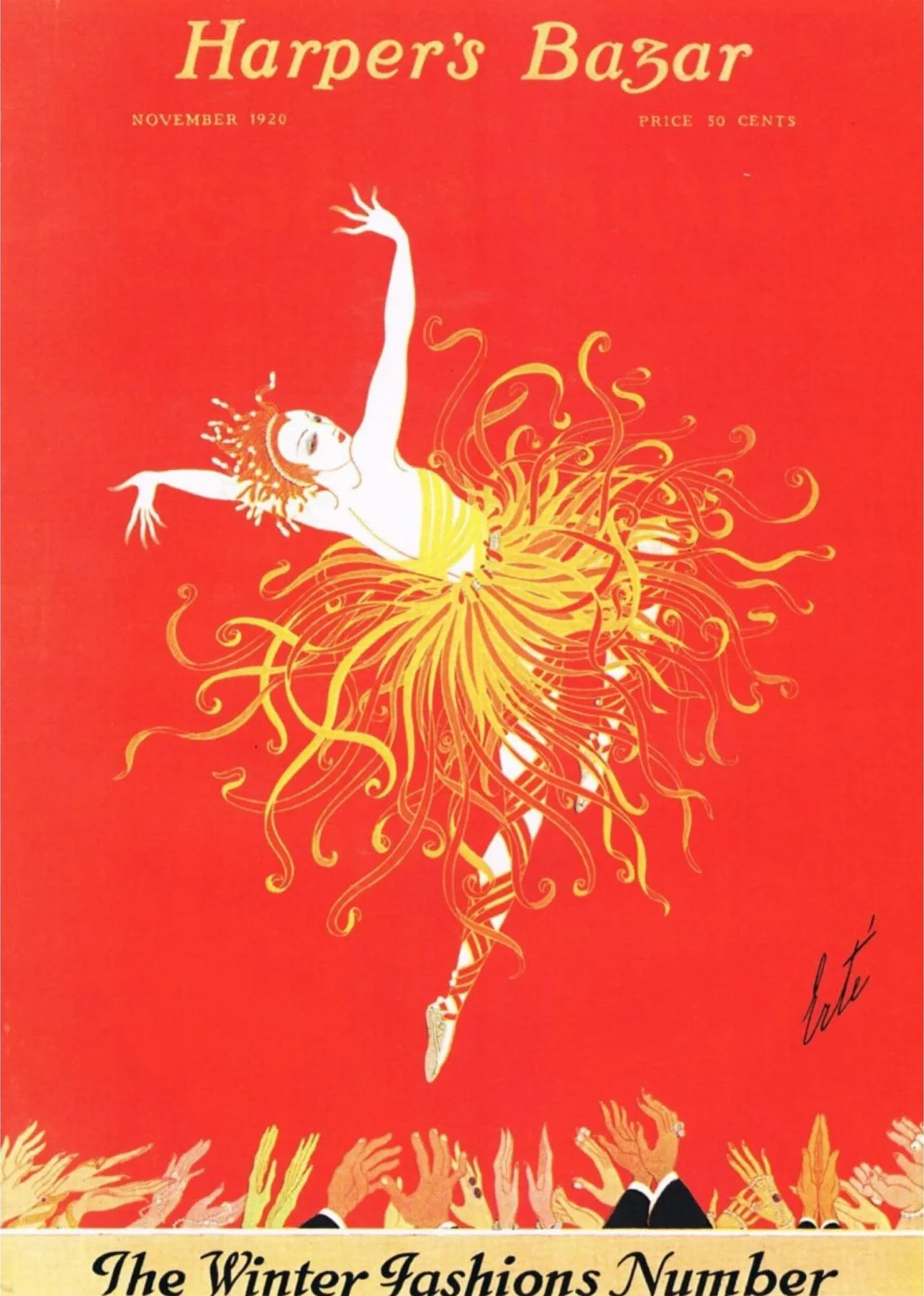
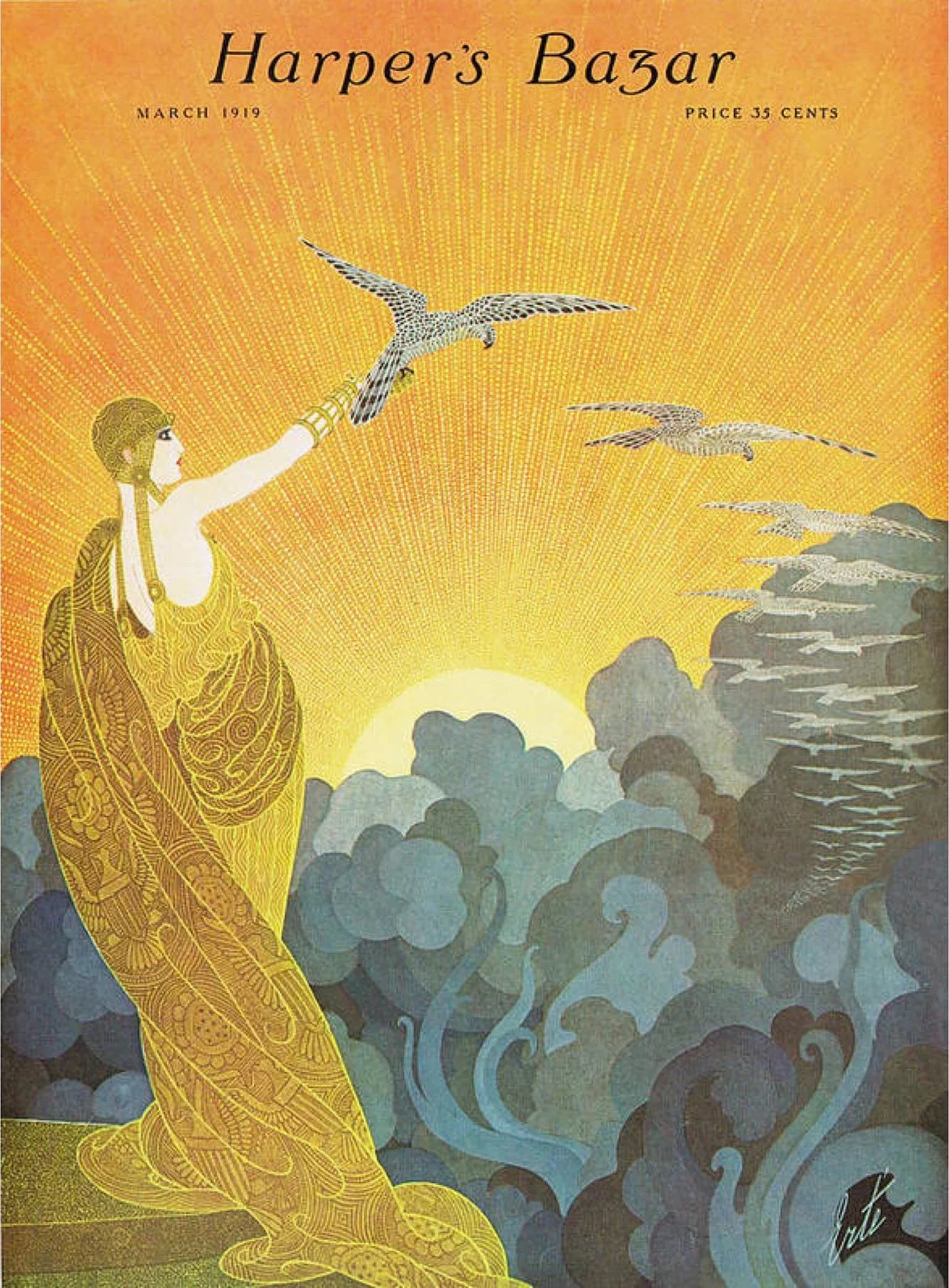
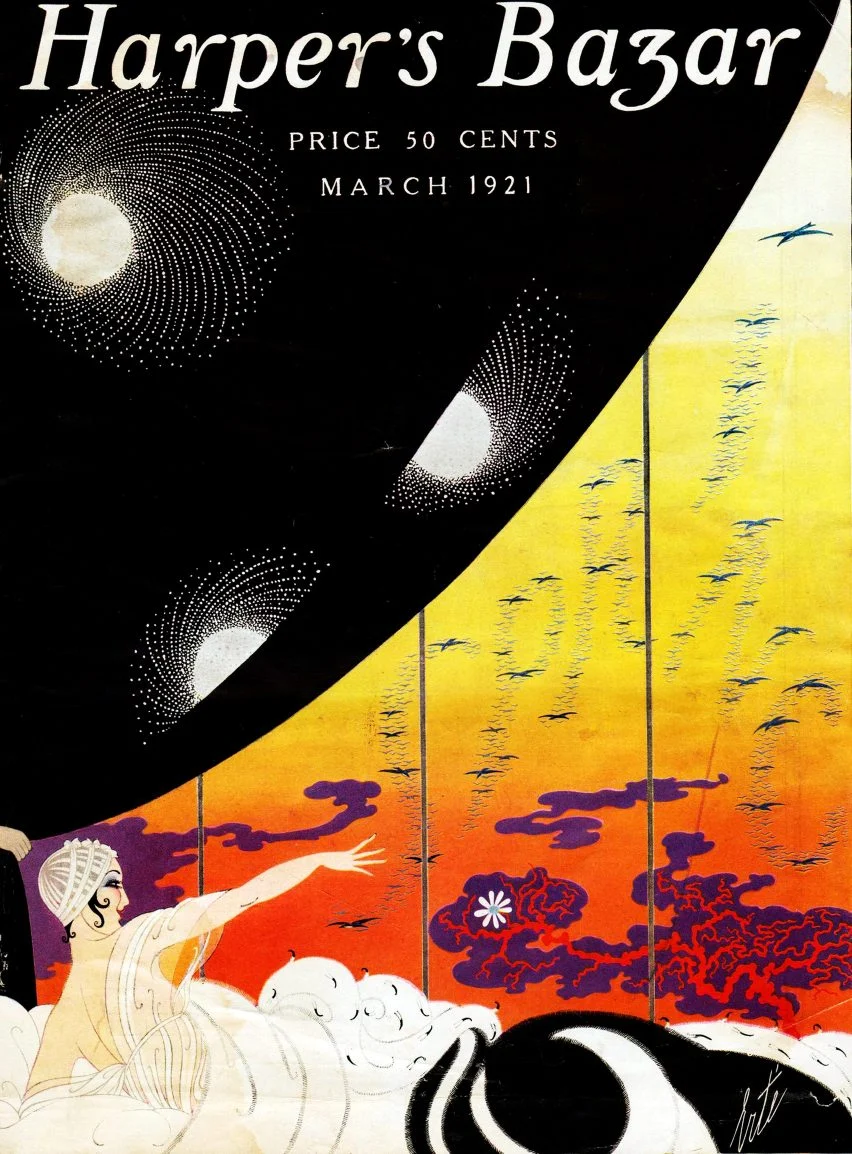
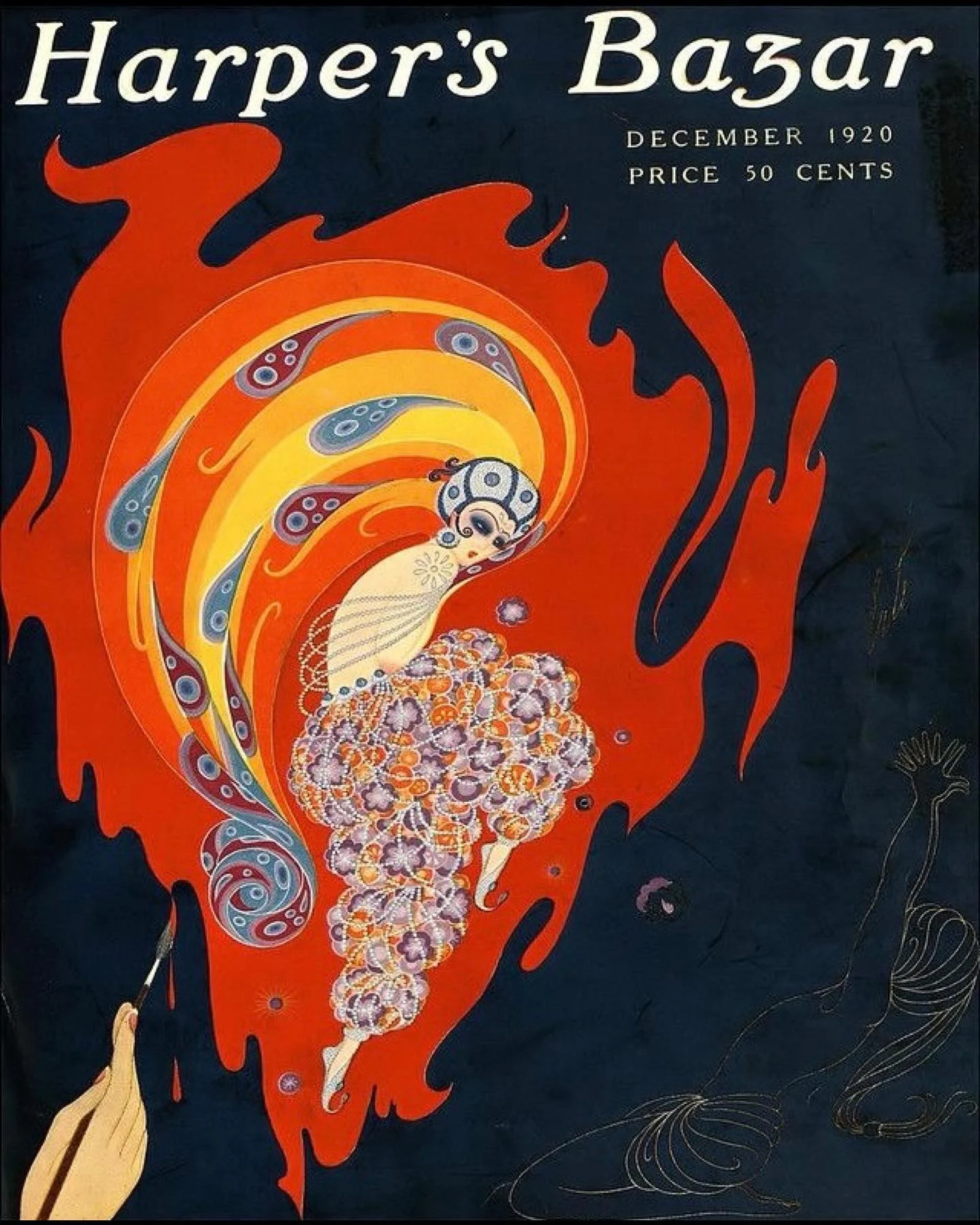
 Art Deco found its most immediate audience not in buildings or furniture but on newsstands, where fashion and culture magazines translated the style’s geometry and glamour into something millions of people could hold in their hands every month. No single illustrator did more to define that look than Erté, the Russian-born Romain de Tirtoff, who signed with Harper’s Bazaar in 1915 and spent the next twenty-two years producing more than two hundred covers for the magazine, an output so prolific and so stylistically consistent that his name became shorthand for the era’s visual language. His covers favored tall, impossibly elegant women rendered in sharp, theatrical lines, often set against geometric backdrops that mirrored the same setback silhouettes rising in skyscrapers at the same moment. Erté’s work for Harper’s Bazaar ran well past the usual boundaries of fashion illustration, and by the 1920s his influence extended into stage and costume design, but the magazine cover remained his signature format and the one through which most of the public encountered Art Deco at all.
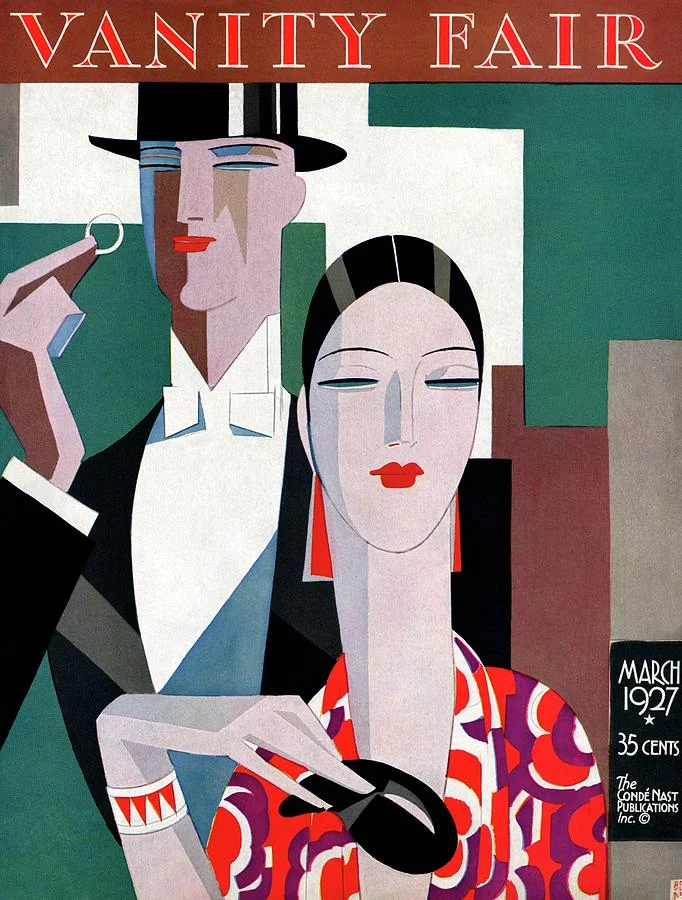
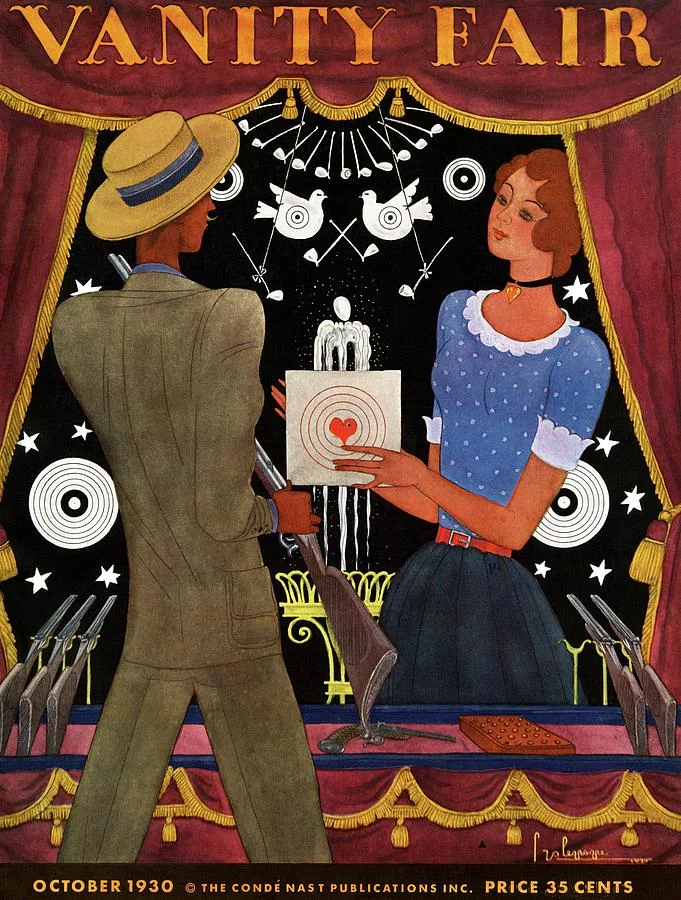
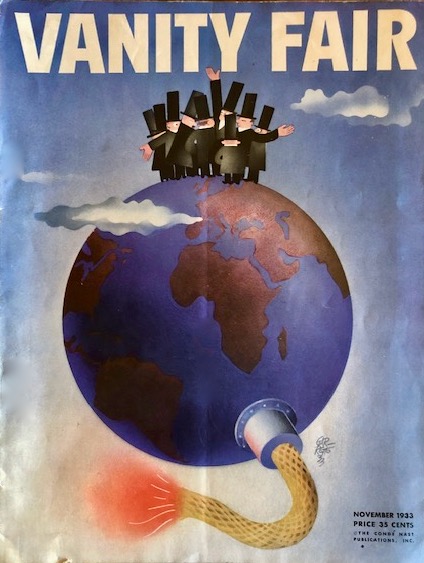
Vanity Fair, published by Conde Nast starting in 1913, took a different approach, leaning on bold, stylized cover illustrations from artists like Georges Lepape to project sophistication and wit rather than fashion alone. Under editor Frank Crowninshield, the magazine built a reputation for pairing serious literary talent, including Dorothy Parker, T.S. Eliot, and Aldous Huxley, with covers and layouts that embraced the same geometric clarity found in Deco architecture and design. Lepape’s covers in particular leaned into stylized figures and flattened, graphic compositions that owed as much to Cubism as to fashion plates, giving the magazine a visual identity distinct from its more fashion-forward competitors. The Great Depression proved harder to survive than any stylistic trend, however, and advertising revenue collapsed so severely by the mid-1930s that Conde Nast folded Vanity Fair into Vogue in 1936, ending its run just as the Art Deco era it had helped define was itself giving way to wartime austerity.
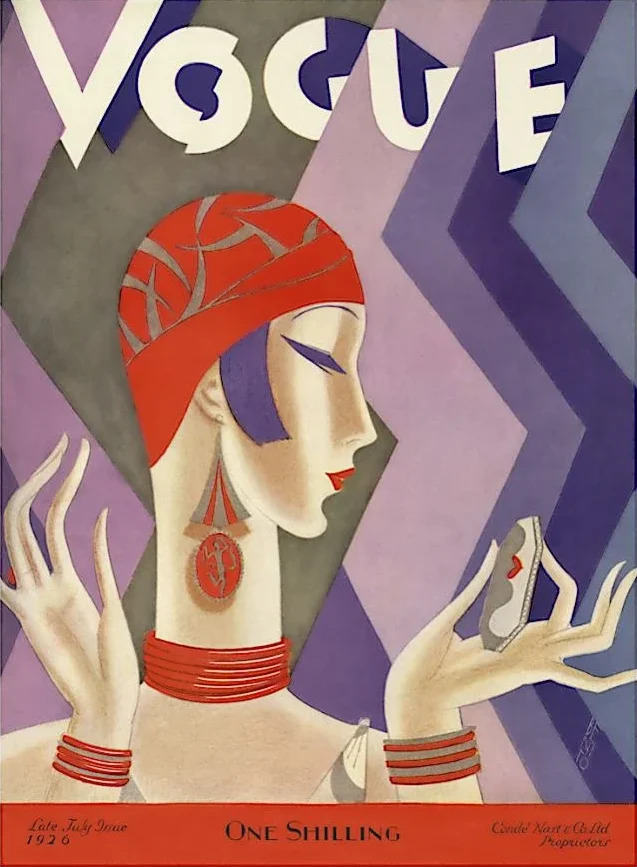
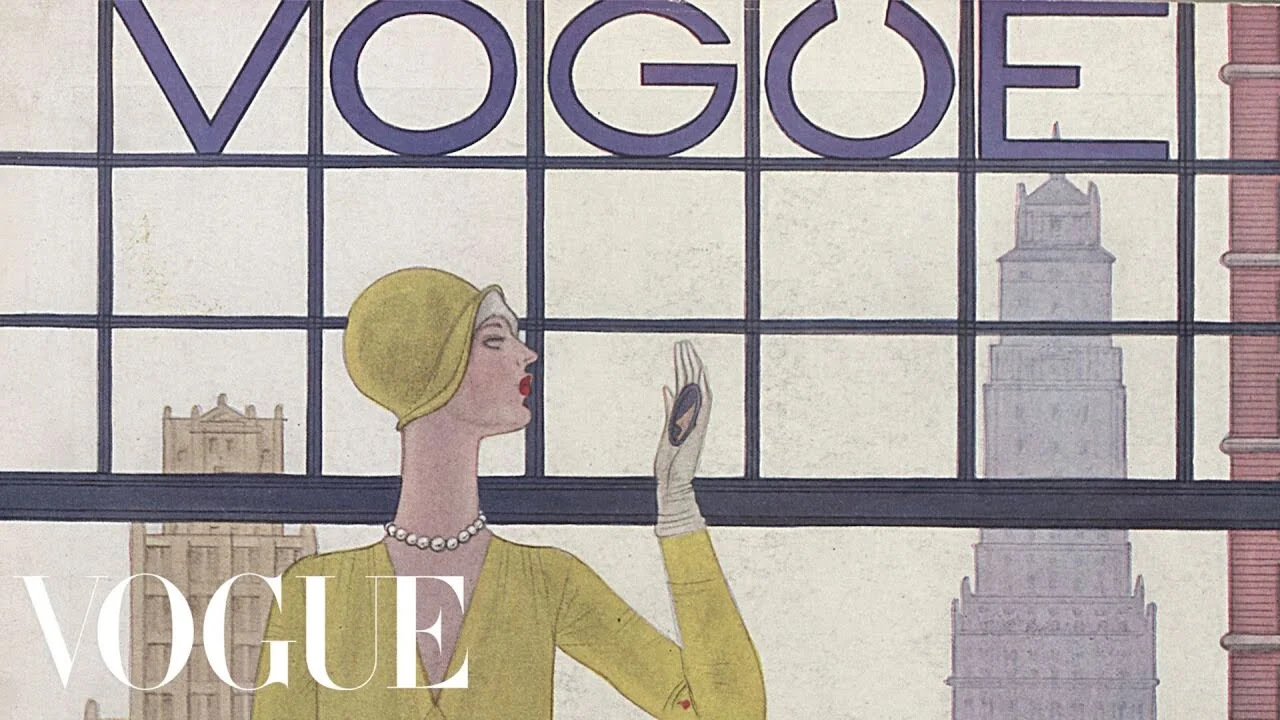
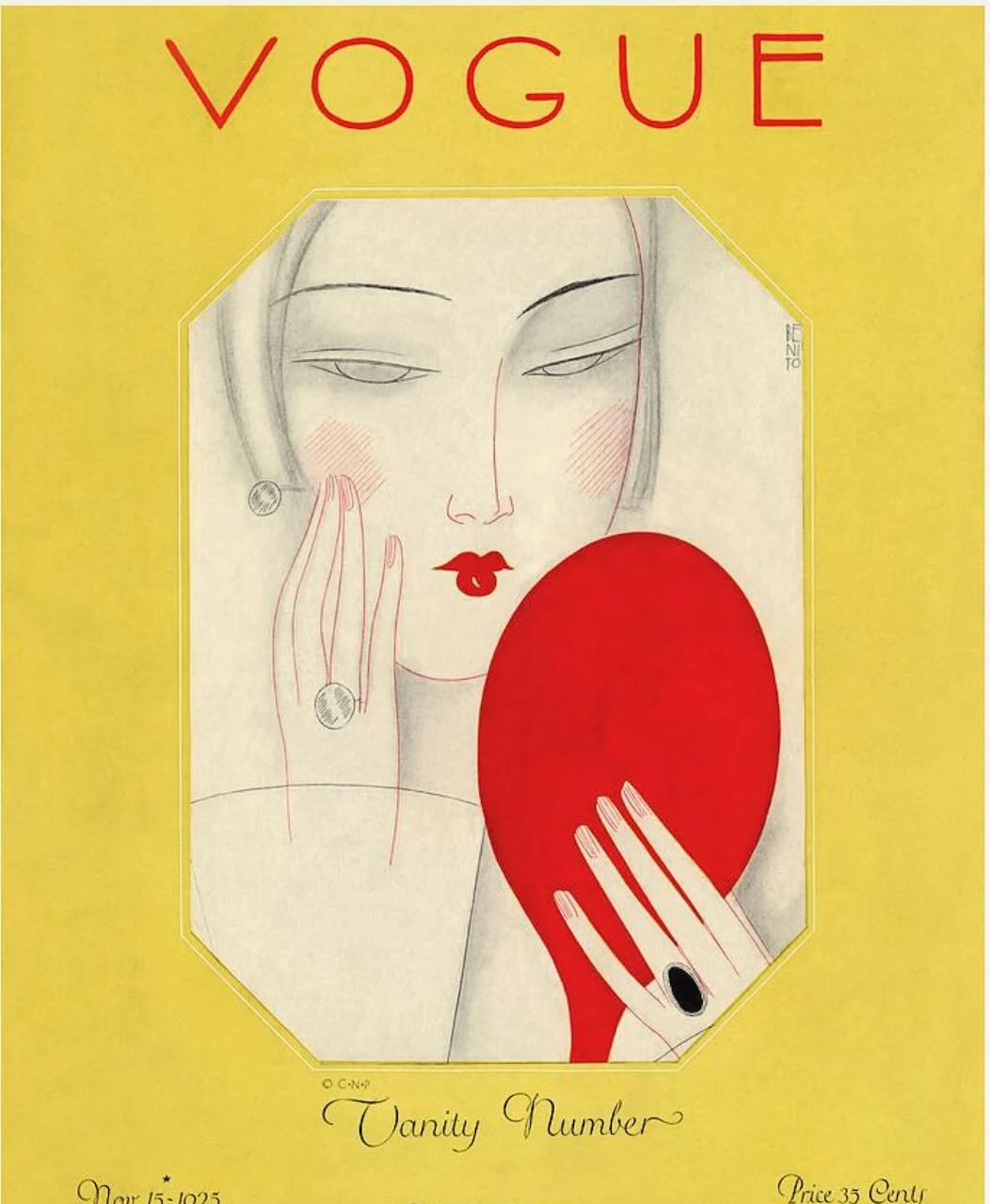 Vogue, the title that absorbed Vanity Fair, had its own defining Deco voice in Eduardo García Benito, the Spanish-born illustrator whose covers ran from the early 1920s into the mid-1930s and gave the magazine many of its most recognizable faces. Vogue itself dubbed his signature approach the “Big Head,” a style built on simplified, geometric forms, touches of Constructivism, and crisp pen outlines, with figures often compared to the sculptures of Amedeo Modigliani. He was especially prolific in 1926, the year of his late July cover, when his work appeared on the magazine’s front page again and again. Where Erté built theatrical fantasies, Benito offered something cooler and more modern, and the contrast helps explain why Vogue and Harper’s Bazaar could chase the same readers while looking nothing alike.
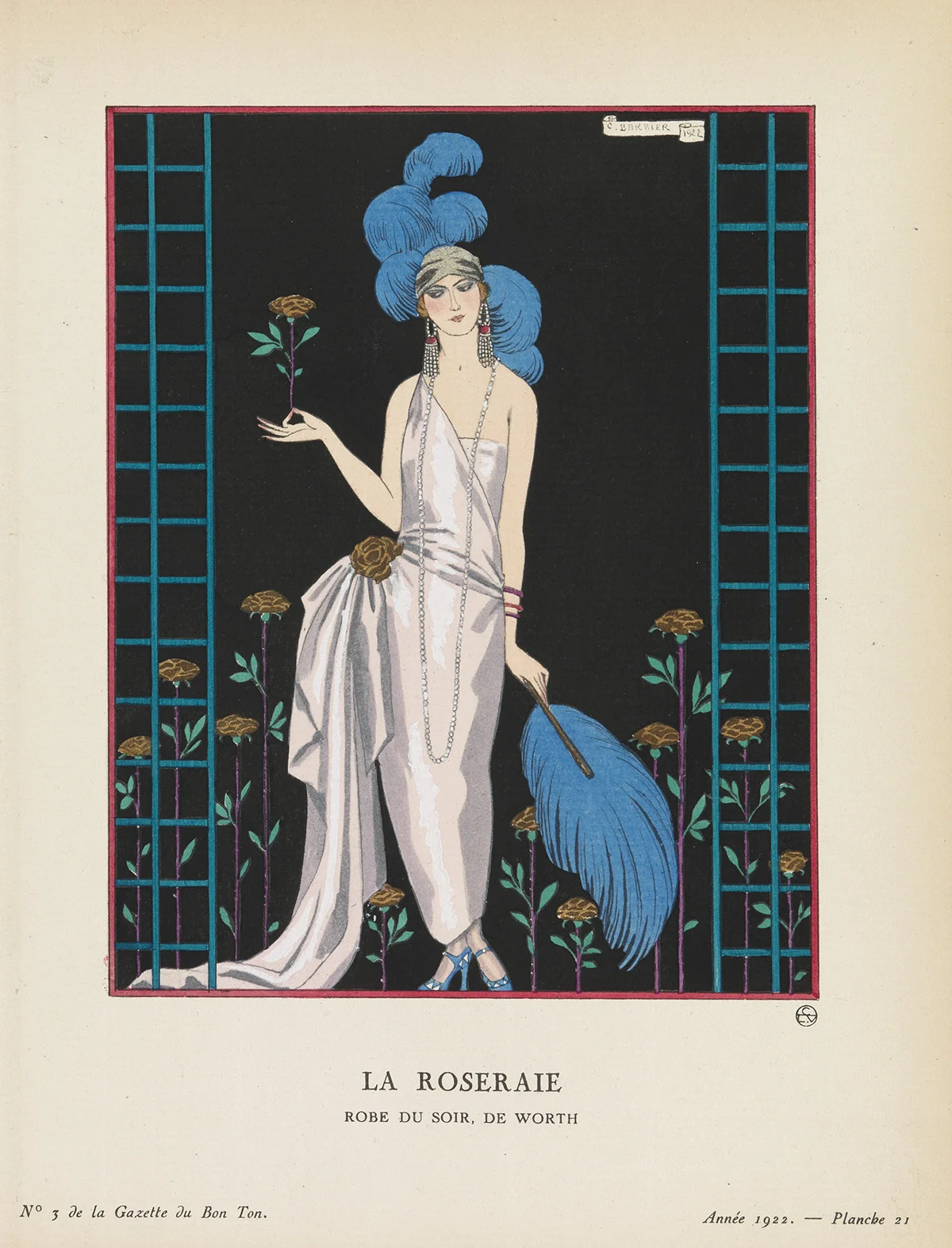
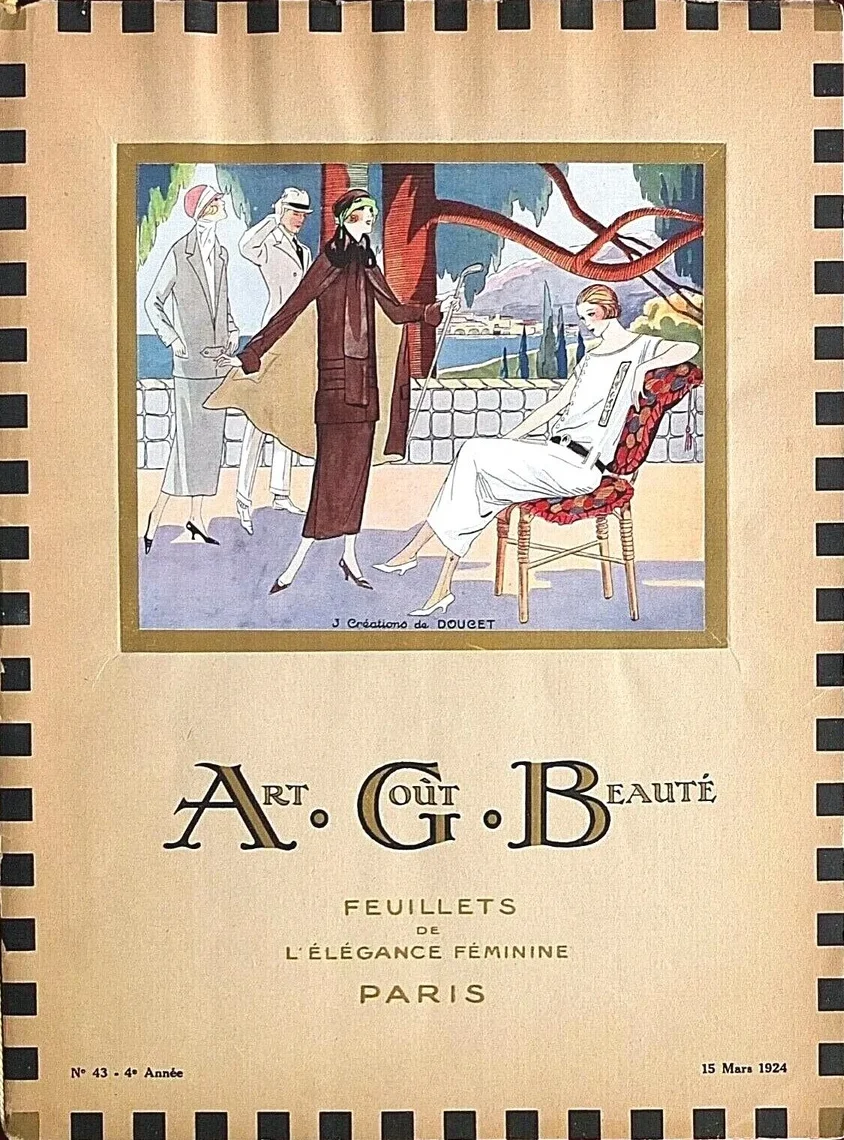
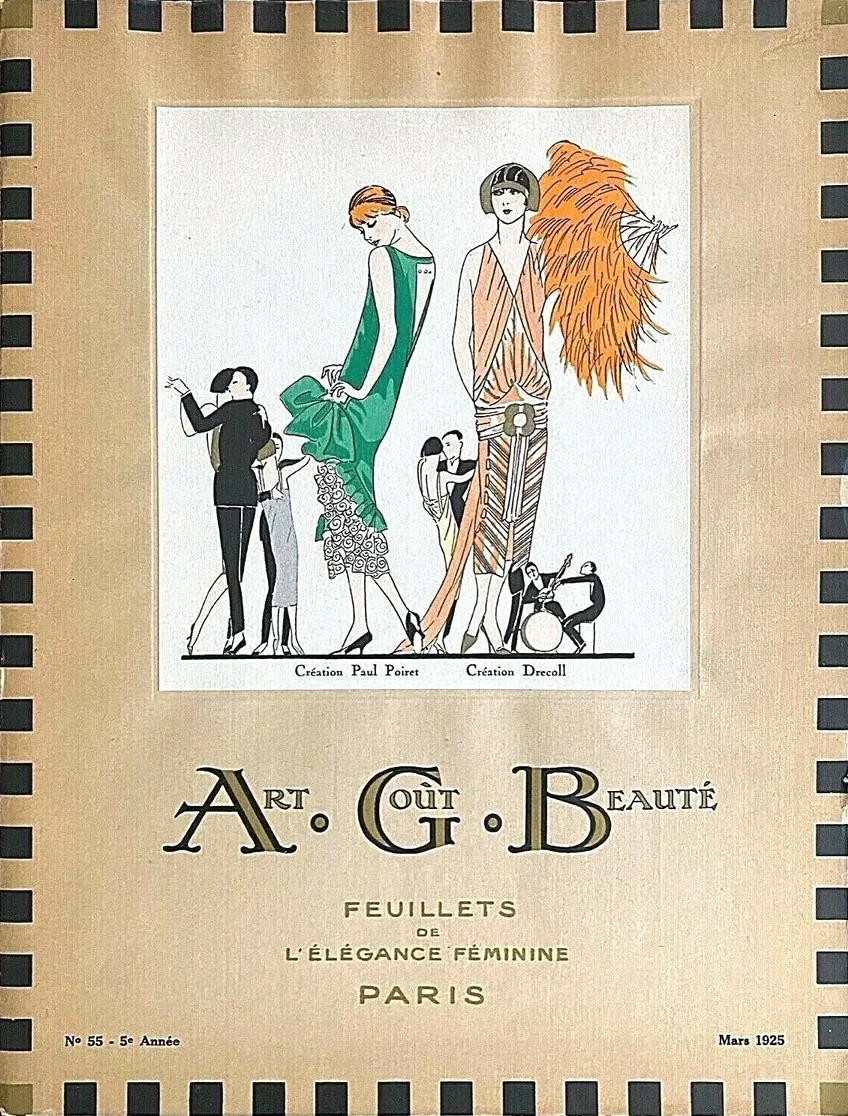
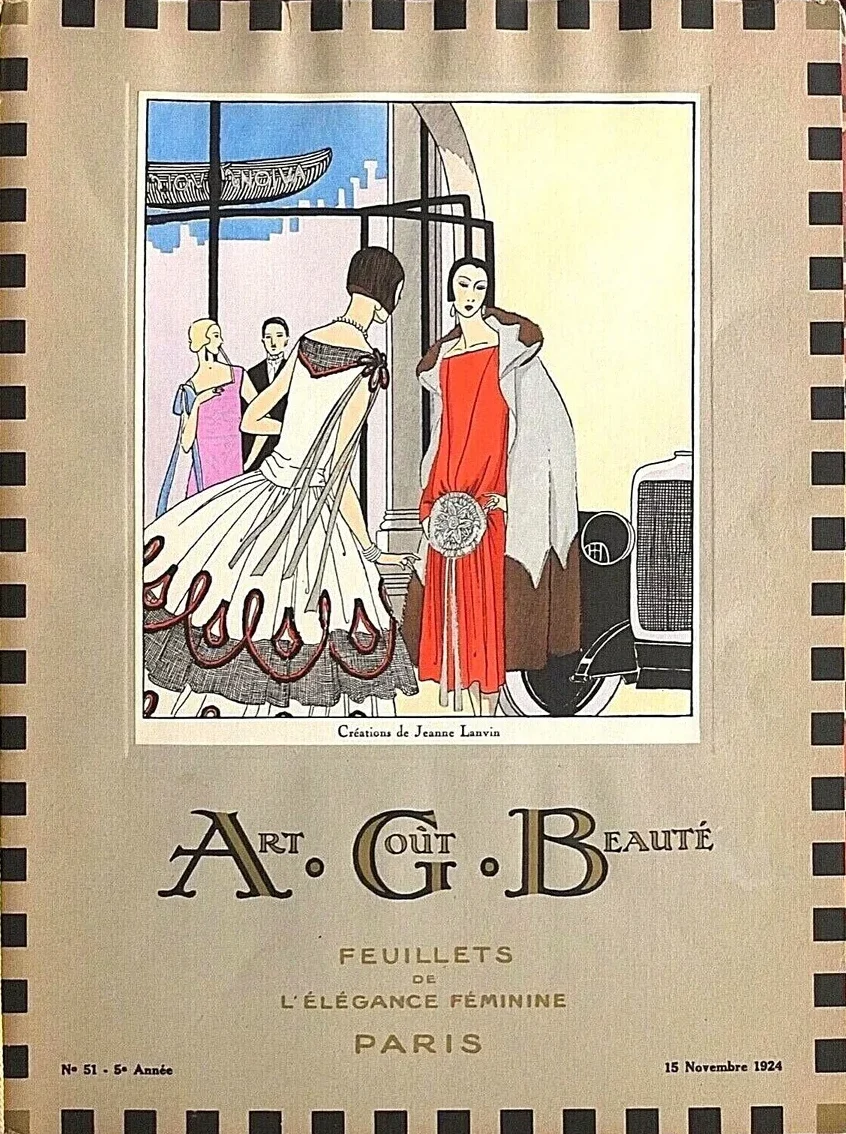 In France, the style’s spiritual home, the most purely Art Deco magazine may have been Art-Gout-Beaute, published in Paris from 1920 to 1933 and financed by the textile firm Albert Godde, Bedin et Cie specifically to showcase its fabrics through fashion illustration. Each issue arrived bound with a silk cord and filled with lavish plates aimed squarely at a wealthy readership, functioning less like a traditional magazine and more like a portable exhibition of the lifestyle its illustrations promised. The artists working for Art-Gout-Beaute treated fashion illustration as fine art in its own right, producing plates with the same confident geometry, flattened perspective, and decorative border work found in the era’s best graphic design, and the magazine’s nearly complete surviving runs are now held by institutions like the National Gallery of Victoria as a visual record of interwar luxury. Unlike its American counterparts, it never pretended to serve a mass audience, and that exclusivity is precisely what let its illustrators push the style as far as it could go.
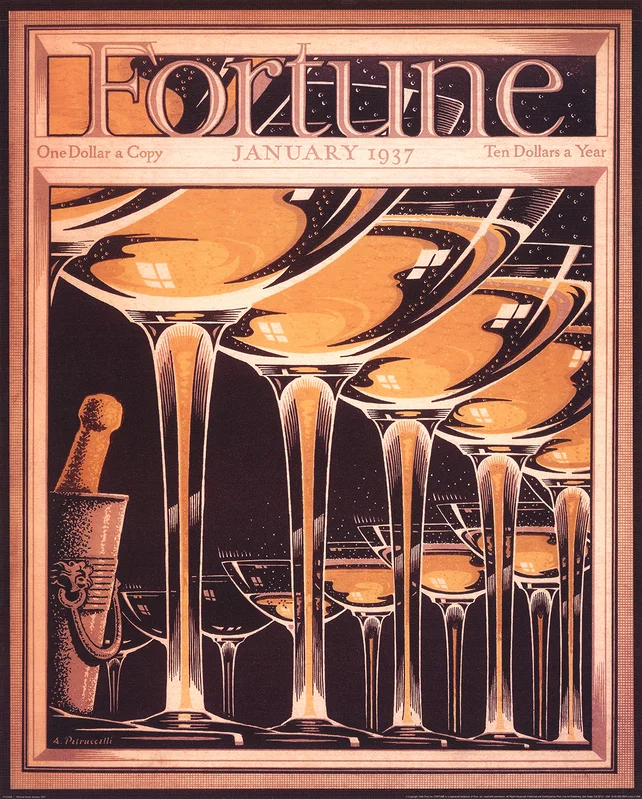
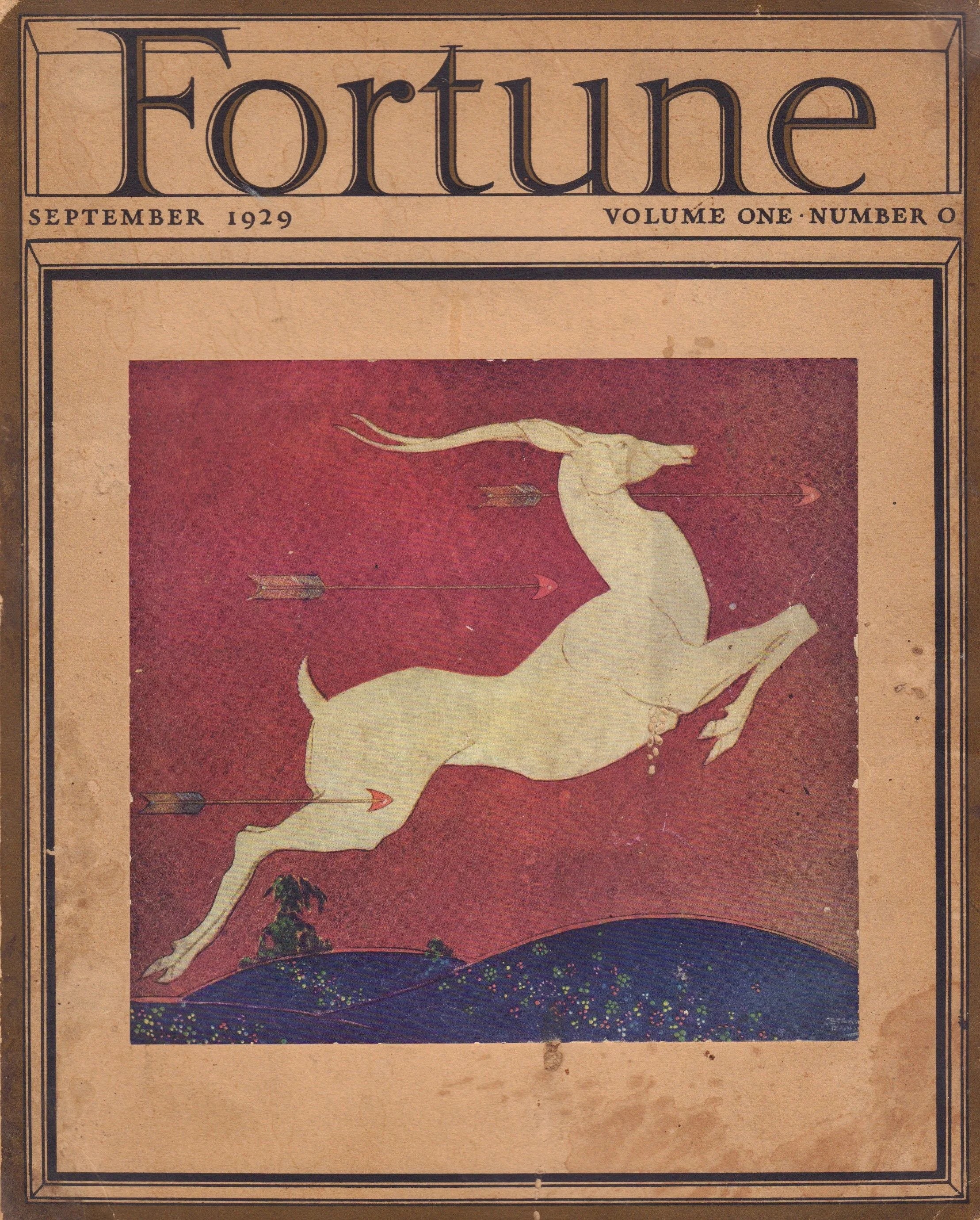
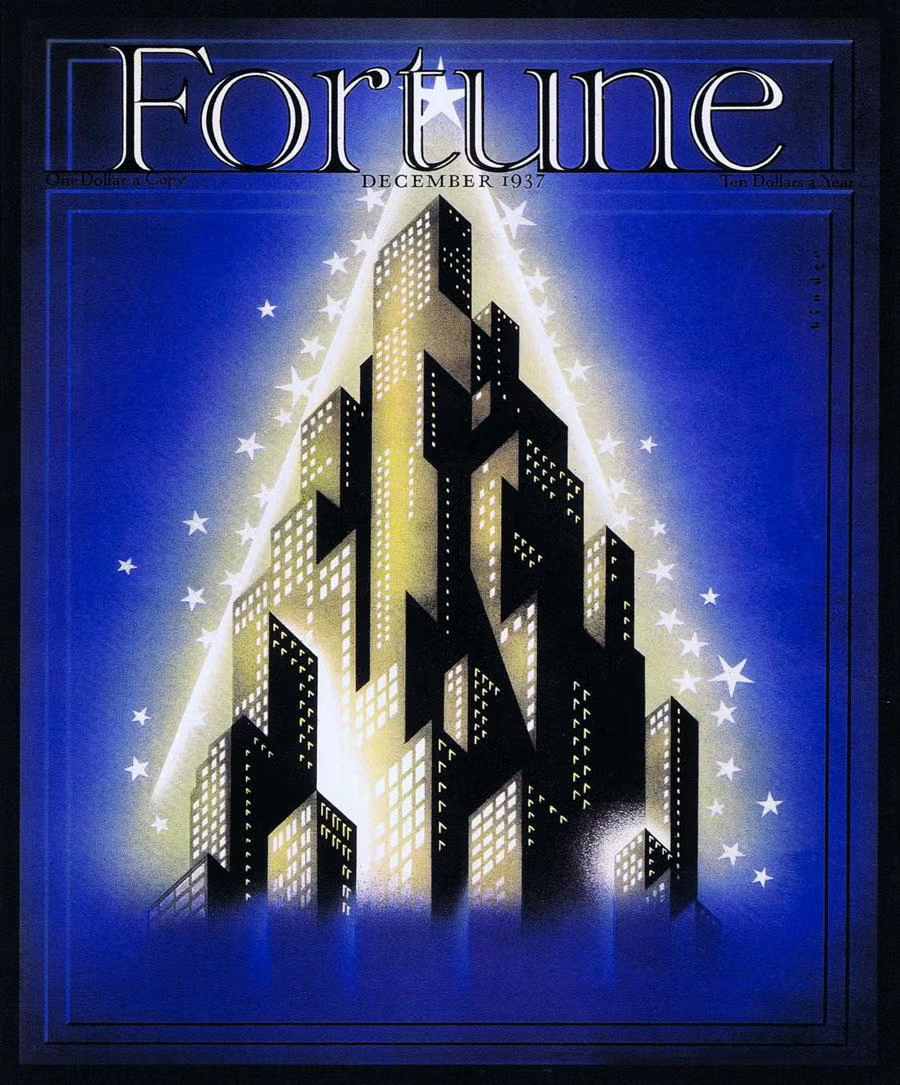
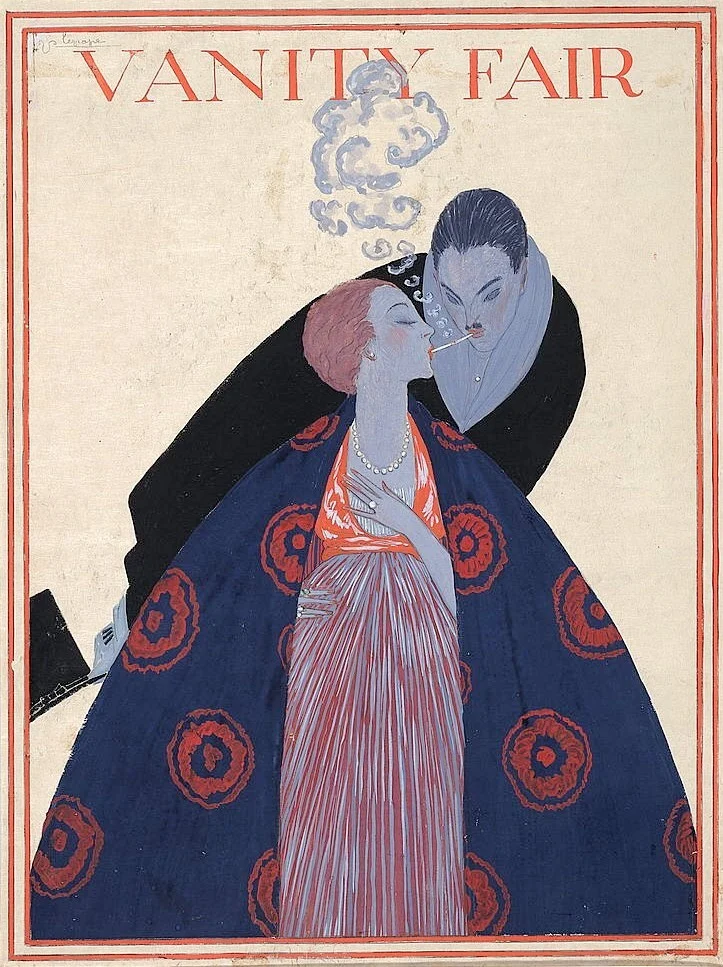
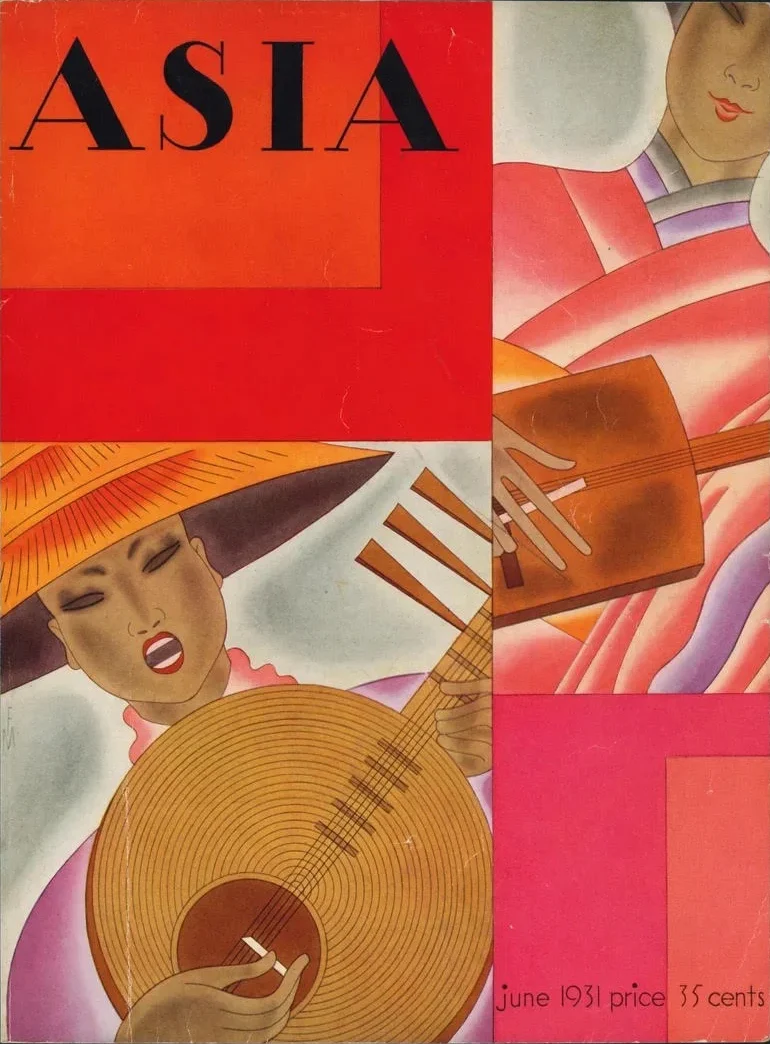
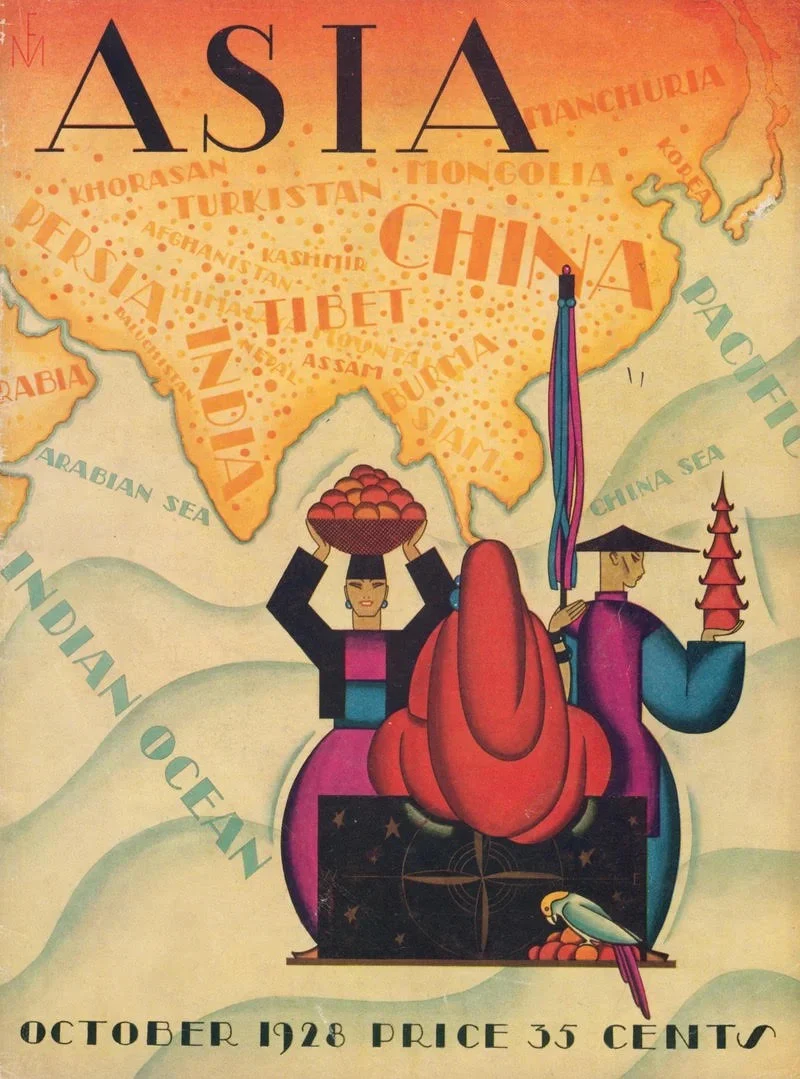
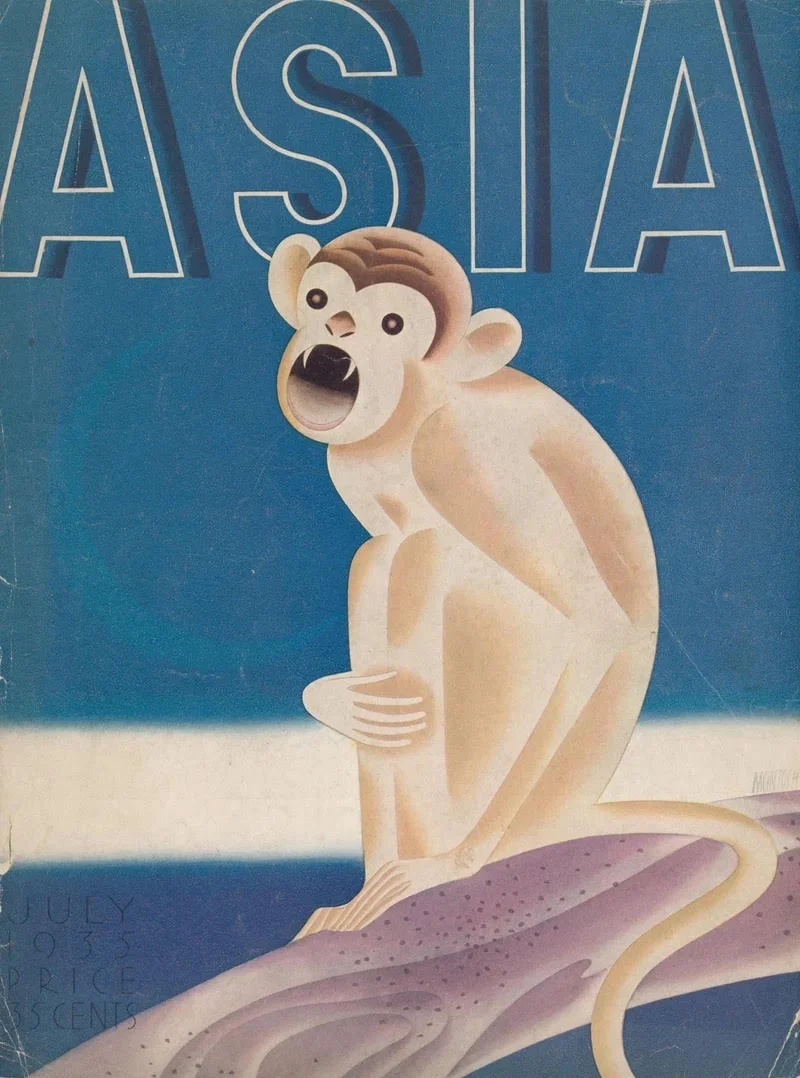
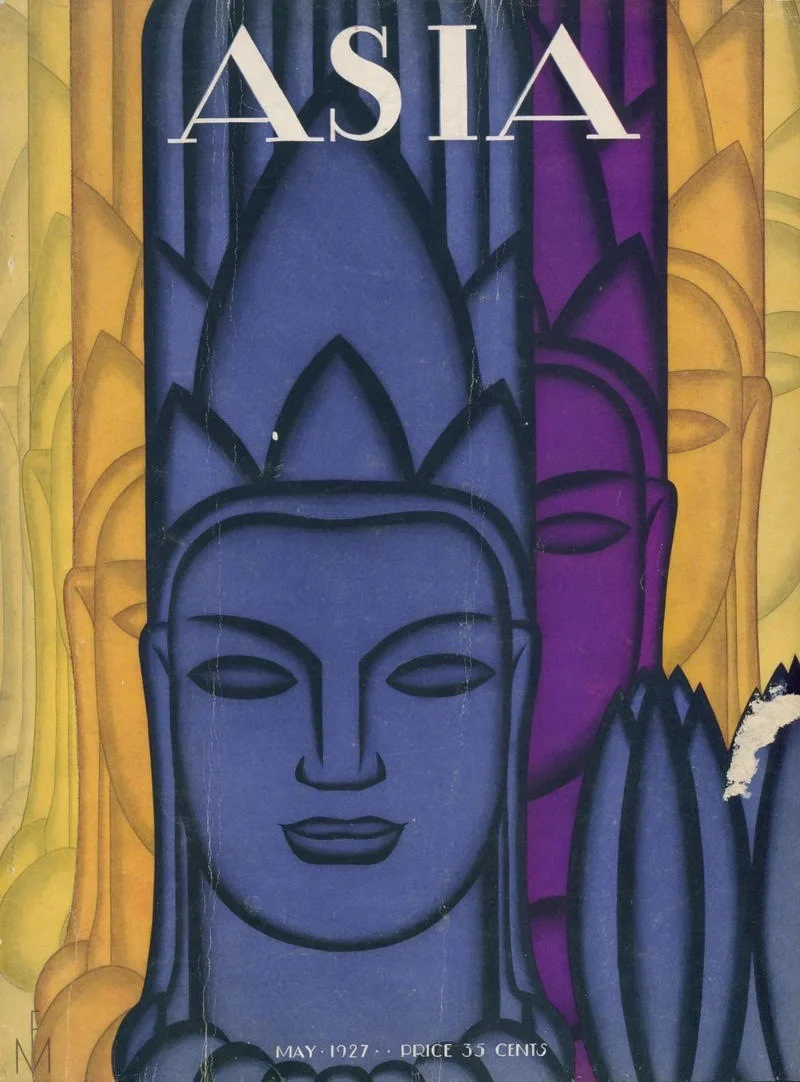 Not every Deco cover sold fashion. Asia magazine began in 1898 as a scholarly journal and was relaunched as Asia in 1917, and across the 1920s and 1930s its covers were a showcase for Frank McIntosh, the illustrator who defined the magazine’s look. McIntosh paired Art Deco geometry with imagery drawn from across the region, and his covers reflected the period’s Western fascination with the East as much as they celebrated it. Inside, the magazine moved away from luxury and travel promotion toward serious coverage of Asian affairs and literature under editors Richard Walsh and Pearl S. Buck, but the McIntosh covers remain what collectors prize most.
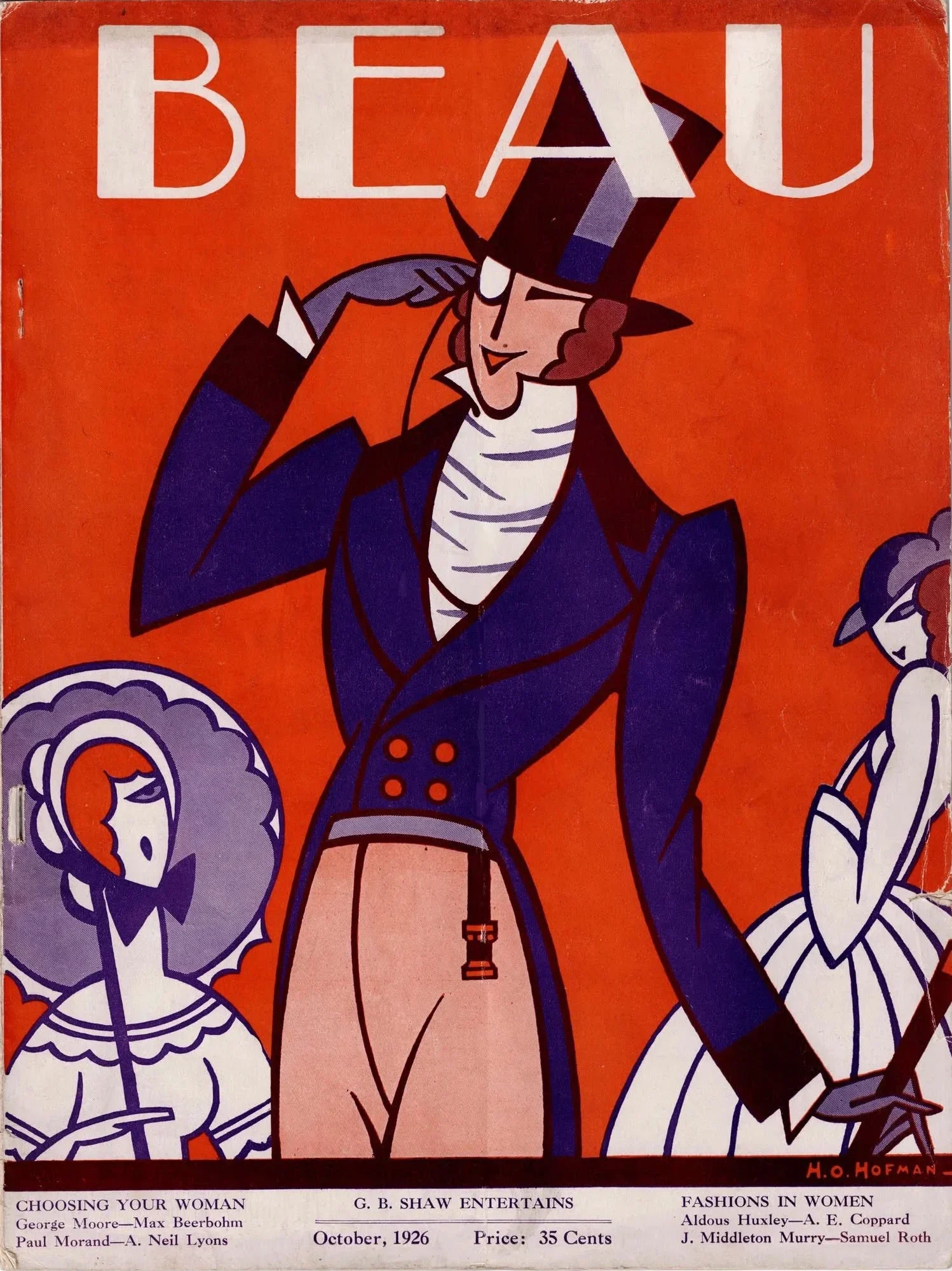
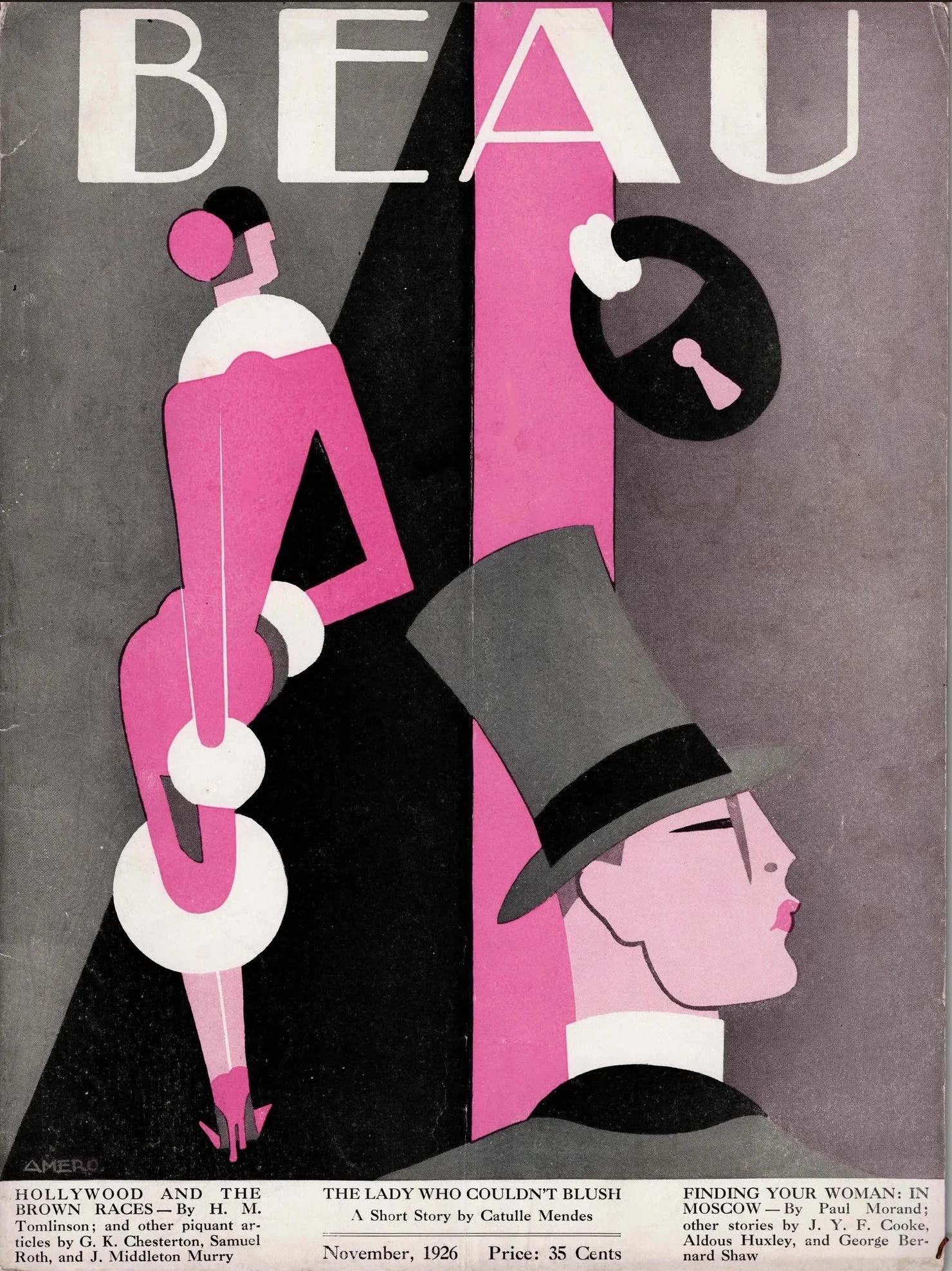
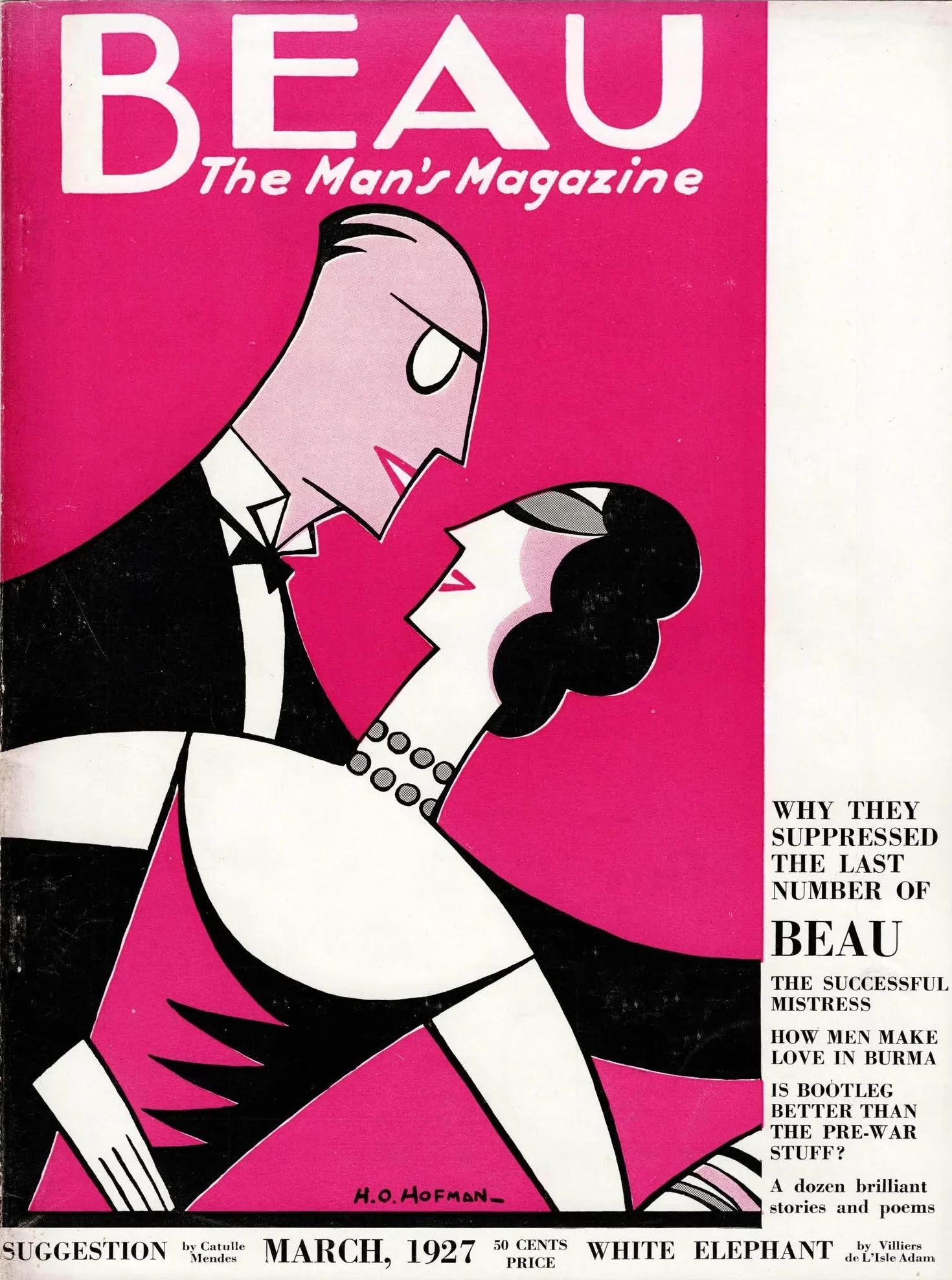
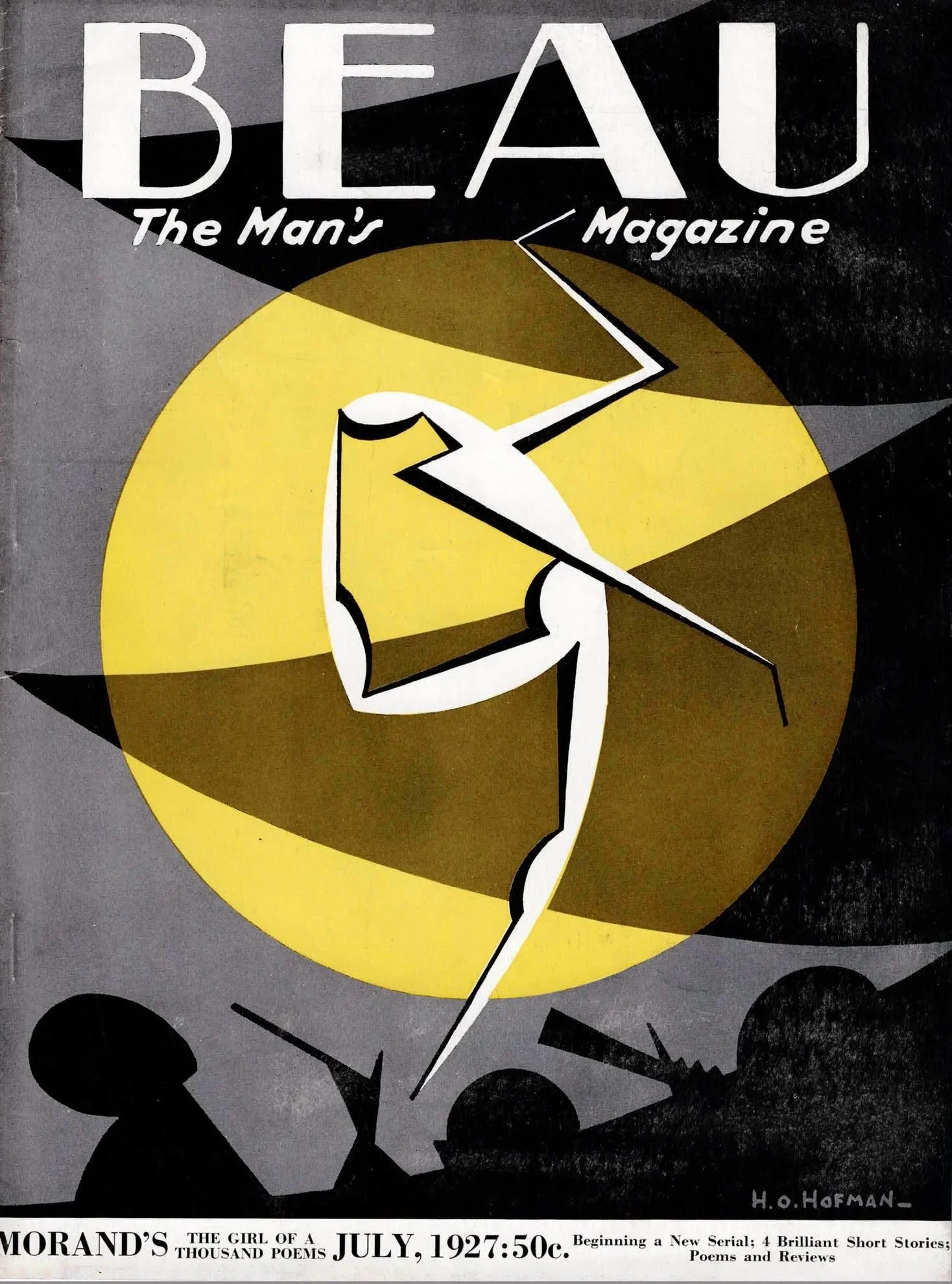
The decade’s more adventurous publishers also used the Deco cover to sell a point of view. Beau, launched in New York in October 1926 by Samuel Roth, announced itself in its first issue as a magazine for “moderns, for epicureans, for sophisticates,” and it set out to address the male reader at a time when, in its view, editors paid almost exclusive attention to feminine taste. Priced high at roughly fifty cents an issue, it drew on the city’s busiest illustrators: H.O. Hofman, who painted covers for The New Yorker between 1925 and 1927, designed the cover of the first issue, and Emilio Amero, a Mexican-born artist who worked as a staff artist for the New York Sun and Theatre Magazine, designed the second. Beau’s run was short, lasting only into 1927, and its February 1927 issue was banned from distribution in New York City, but its covers capture how quickly Deco’s graphic language spread beyond fashion into the lifestyle press.

Related Products from ArtDecoCollection.com
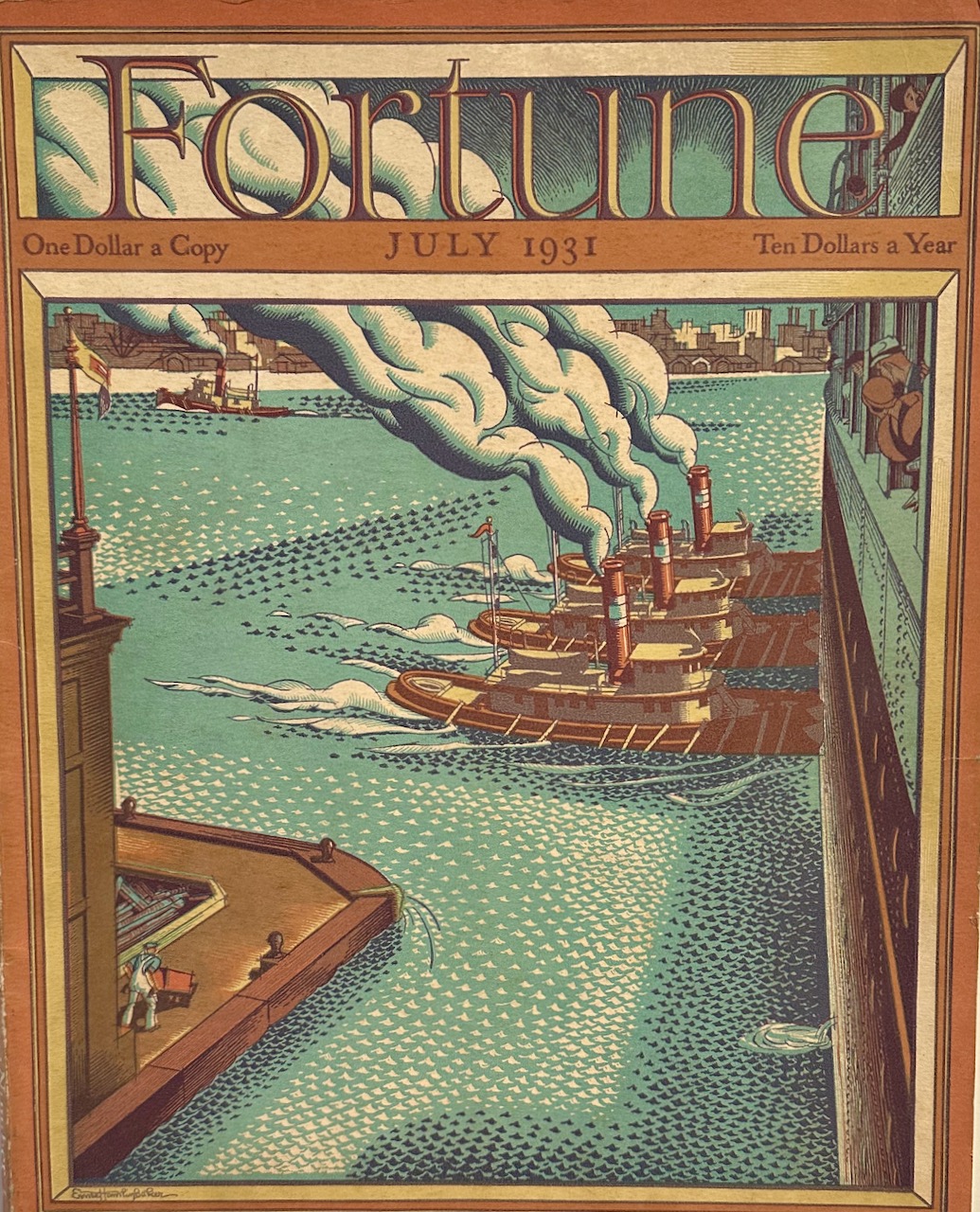
Fortune Magazine, July 1931
Vanity Fair Magazine, November 1933
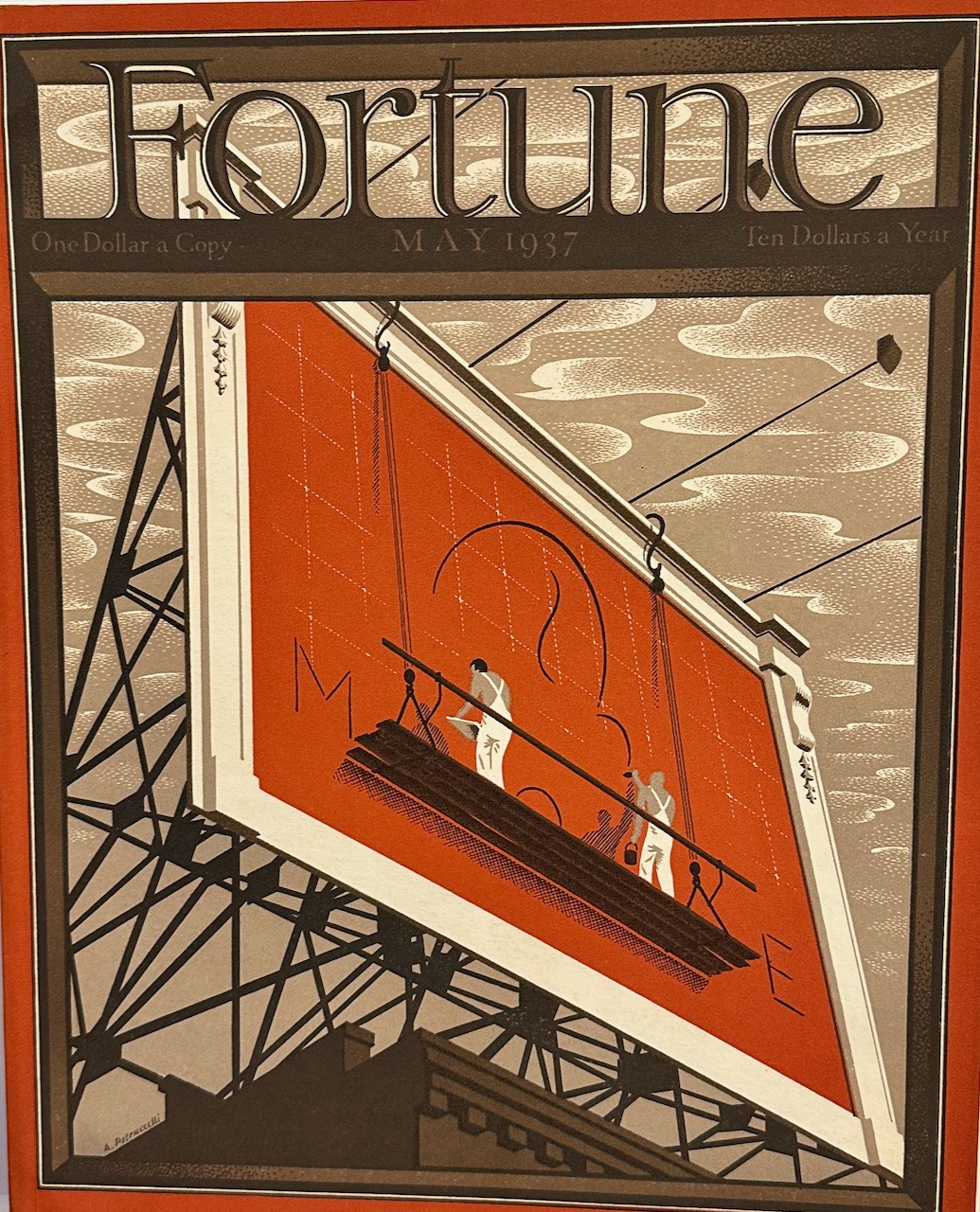
Fortune Magazine, May 1937

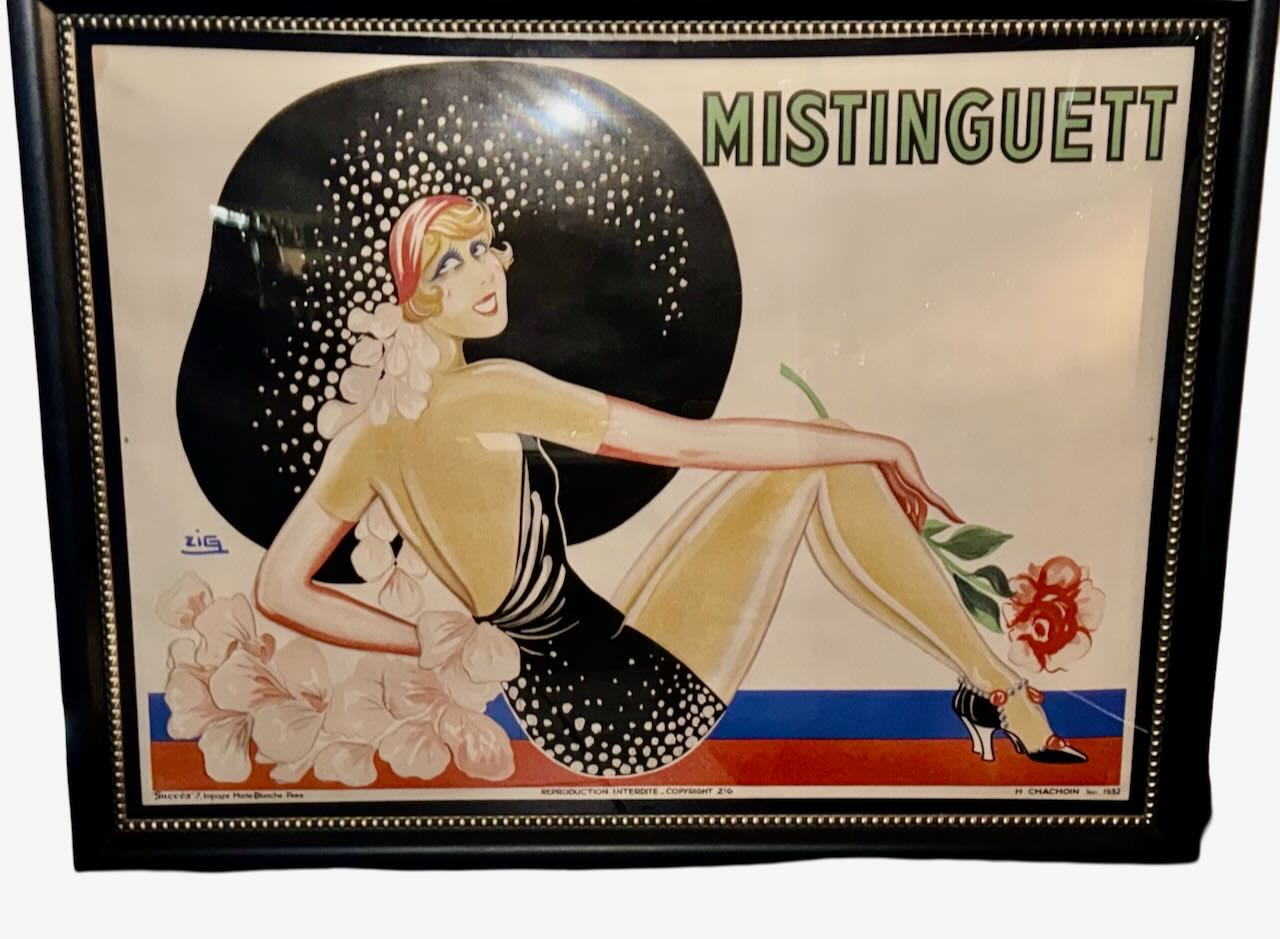
Original “Mistinguett” Poster by Zig, Framed Art Deco Lithograph, 1932

ART & STATUES
CERAMICS & GLASS
© Copyright Art Deco Collection. 2026 All rights reserved. Site Map