

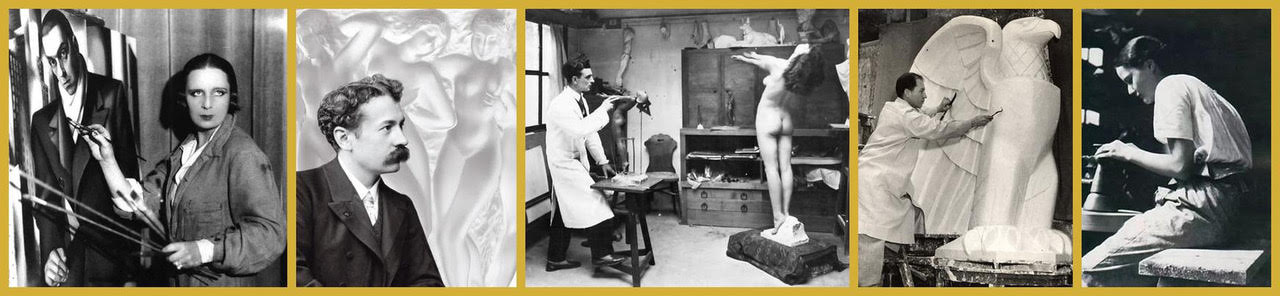
Erté
Romain de Tirtoff, known professionally as Erté, was born in 1892 in St. Petersburg and became one of the most recognizable creative voices of the twentieth century. Though his father expected him to pursue a military career, he showed an early fascination with clothing and performance, designing a dress for his mother at the age of five. At fourteen he moved to Paris, where he studied at the Académie Julian and immersed himself in the world of theatre, couture, and avant garde design. Around this time he adopted the name Erté, a French phonetic rendering of his initials, and began shaping the artistic identity that would make him famous. In 1913 he secured his first major position with fashion designer Paul Poiret, whose dramatic silhouettes and theatrical sensibility suited Erté’s interest in glamour and fantasy. His ideas drew heavily from the Parisian music halls, where elaborate staging and vibrant costumes pushed visual boundaries. Over the next decades he worked across fashion, theatre, opera, film, and publishing, becoming a defining figure of the Art Deco era. His career ultimately spanned more than eighty years and made him a symbol of elegance, innovation, and modern style.
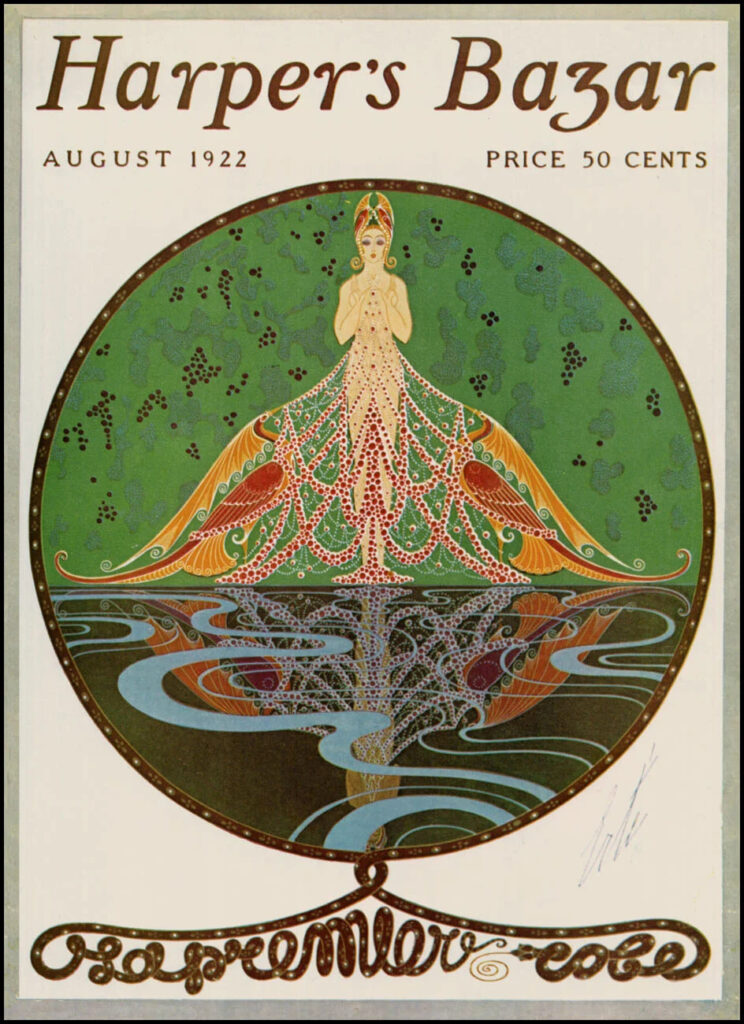
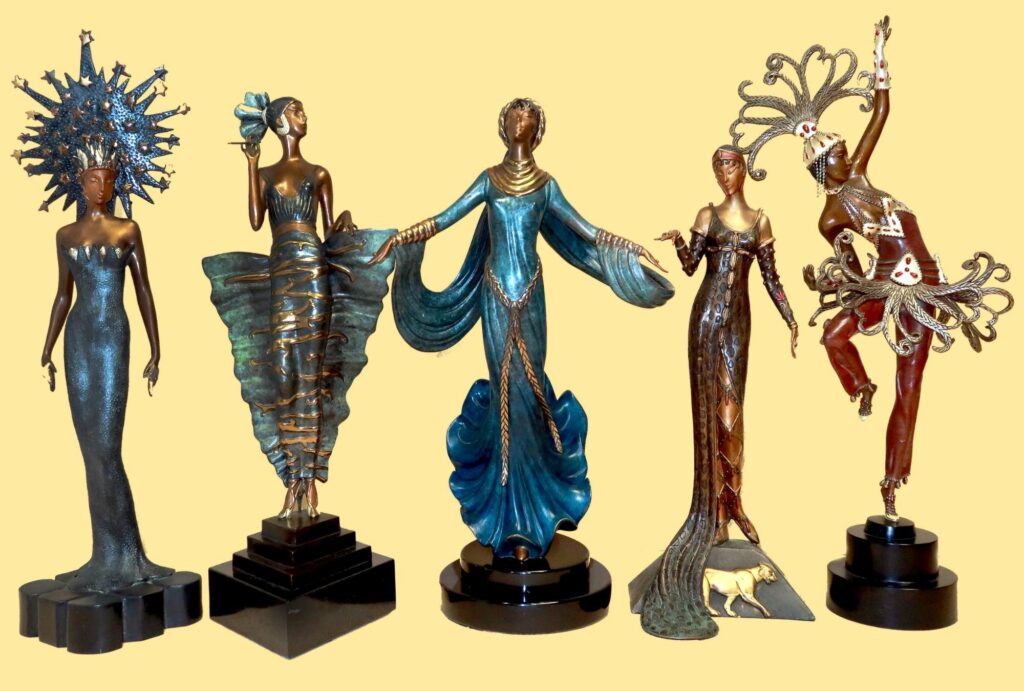
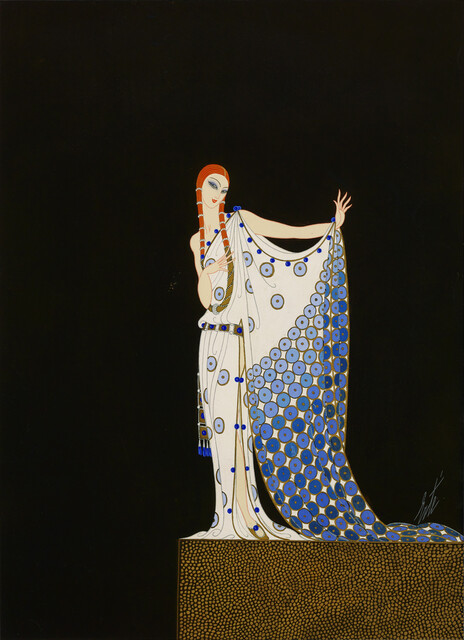
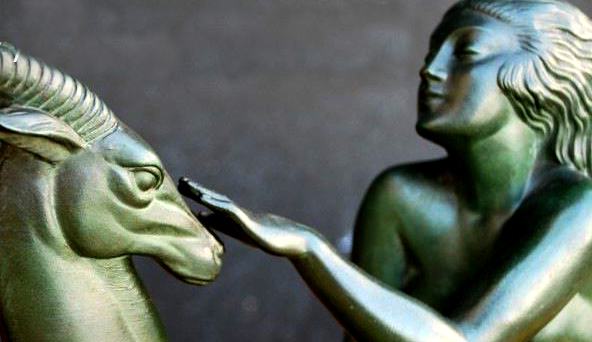
Erté’s illustrations and stage designs shaped the visual language of Art Deco with their streamlined silhouettes, geometric structure, and sumptuous detail. His work appeared regularly in Vogue, Cosmopolitan, and especially Harper’s Bazaar, for which he created more than two hundred covers and countless interior illustrations. His drawings combined fashion, fantasy, and architecture, presenting figures that were elongated, stylized, and impossibly refined. He brought the same sense of drama to the theatre, designing costumes and sets for the Folies Bergère, the Ziegfeld Follies, La Bohème, and major film productions including Ben Hur. When Art Deco fell out of favor in the mid century, his popularity faded, but a revival of interest in the 1960s launched a second career that lasted until his death in 1990. During this period he created serigraphs, limited edition prints, and bronze sculptures that translated his early design language into new mediums. Works such as Symphony in Black became icons of the Deco revival, reaffirming his place as one of the movement’s essential artists.
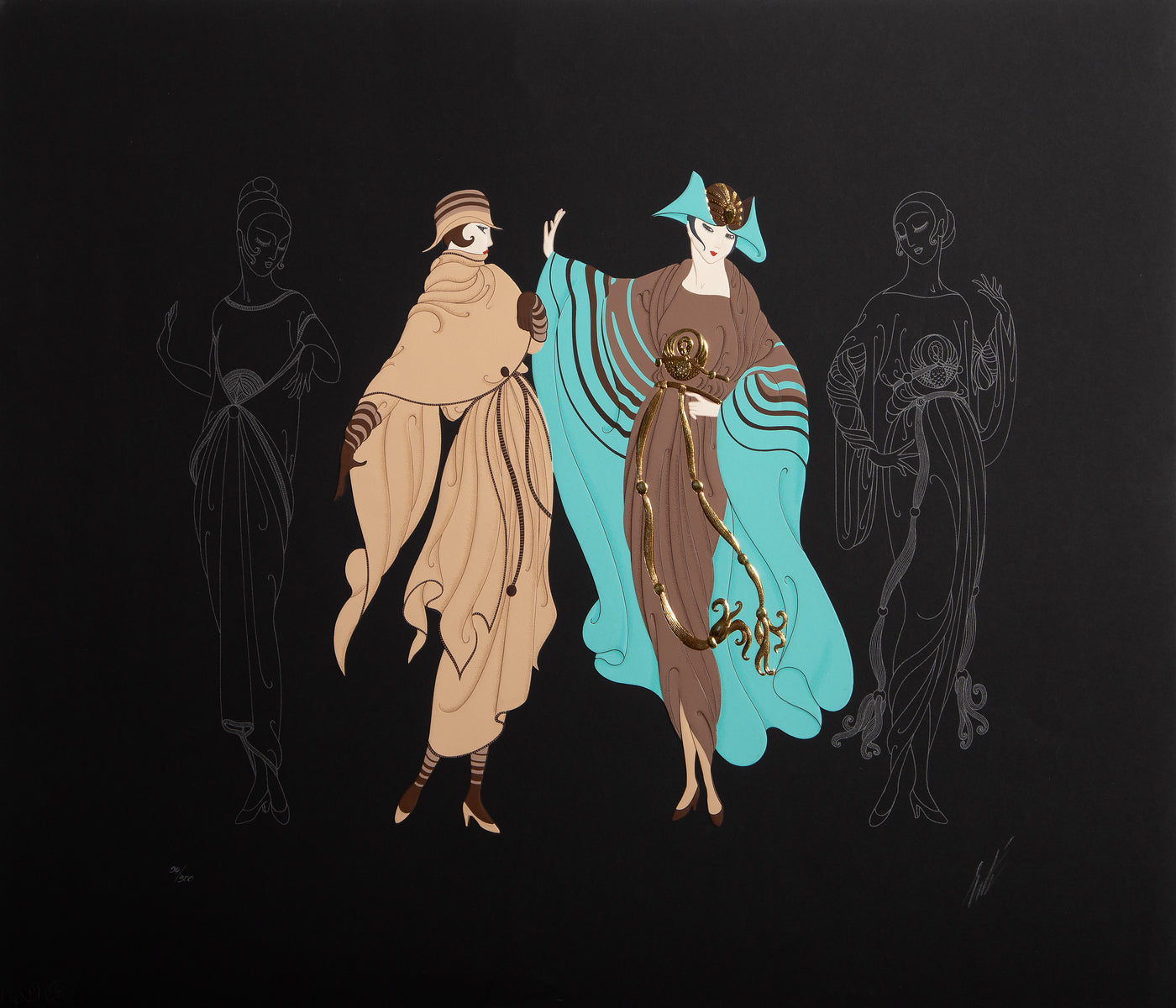
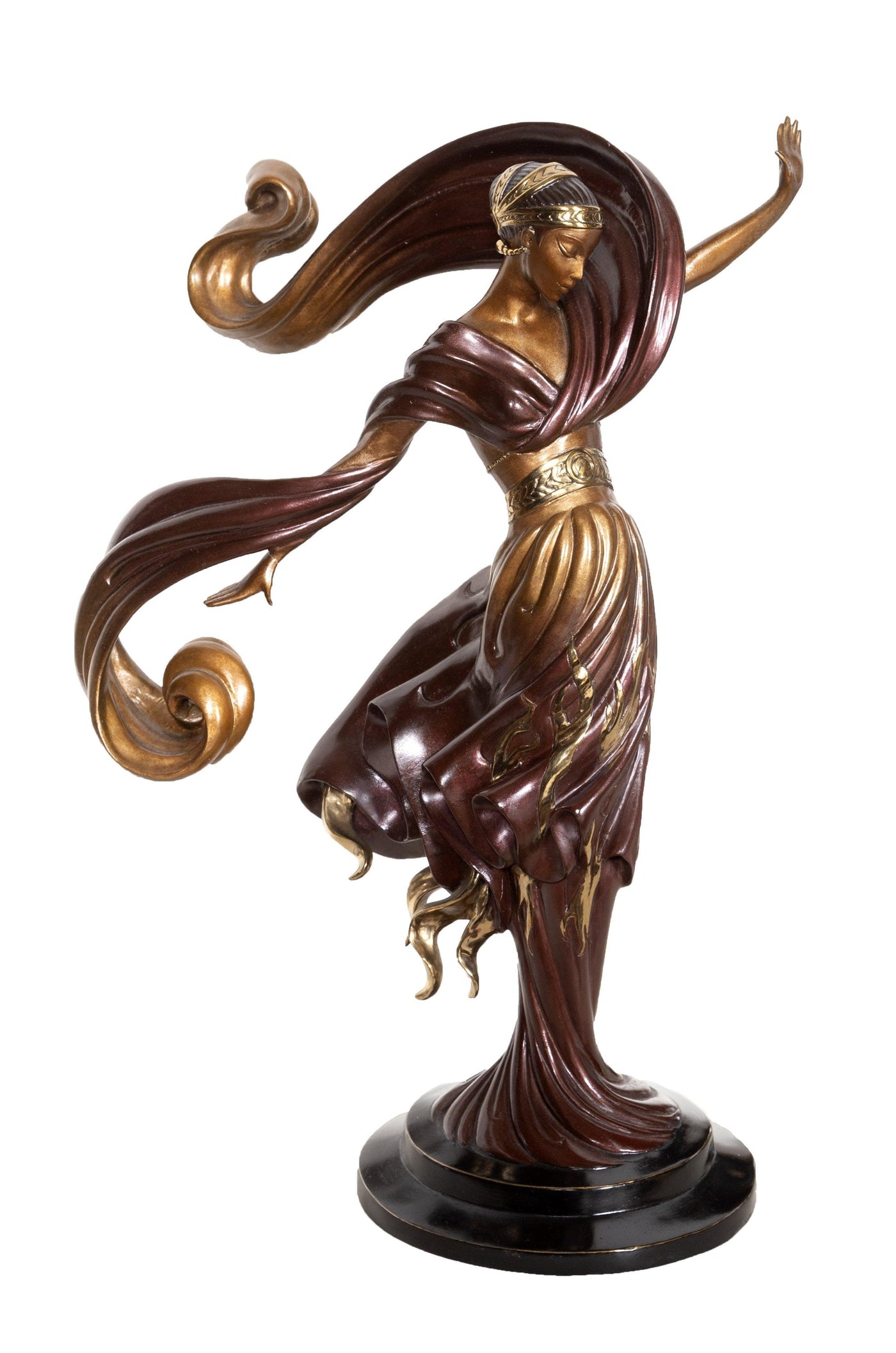
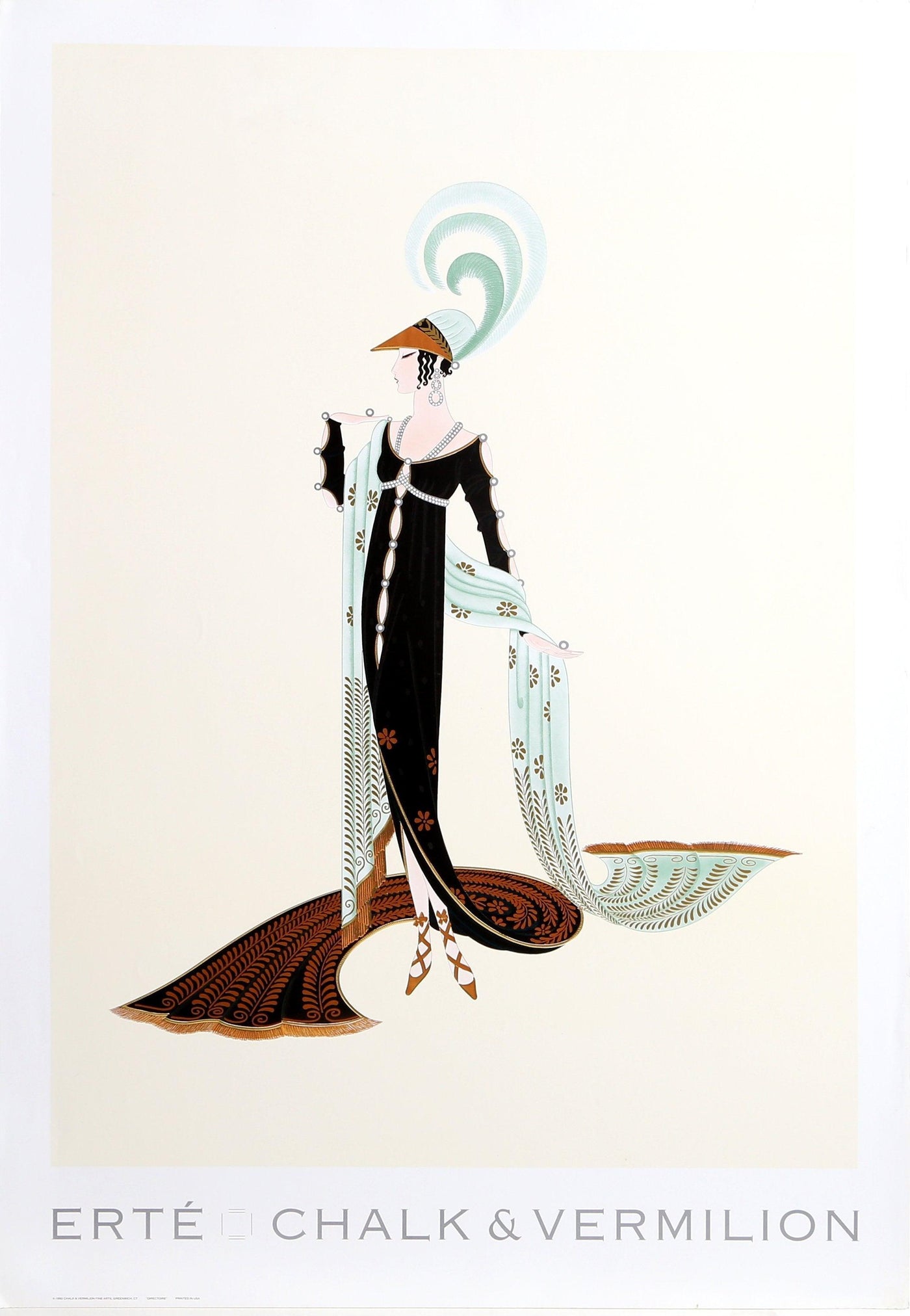
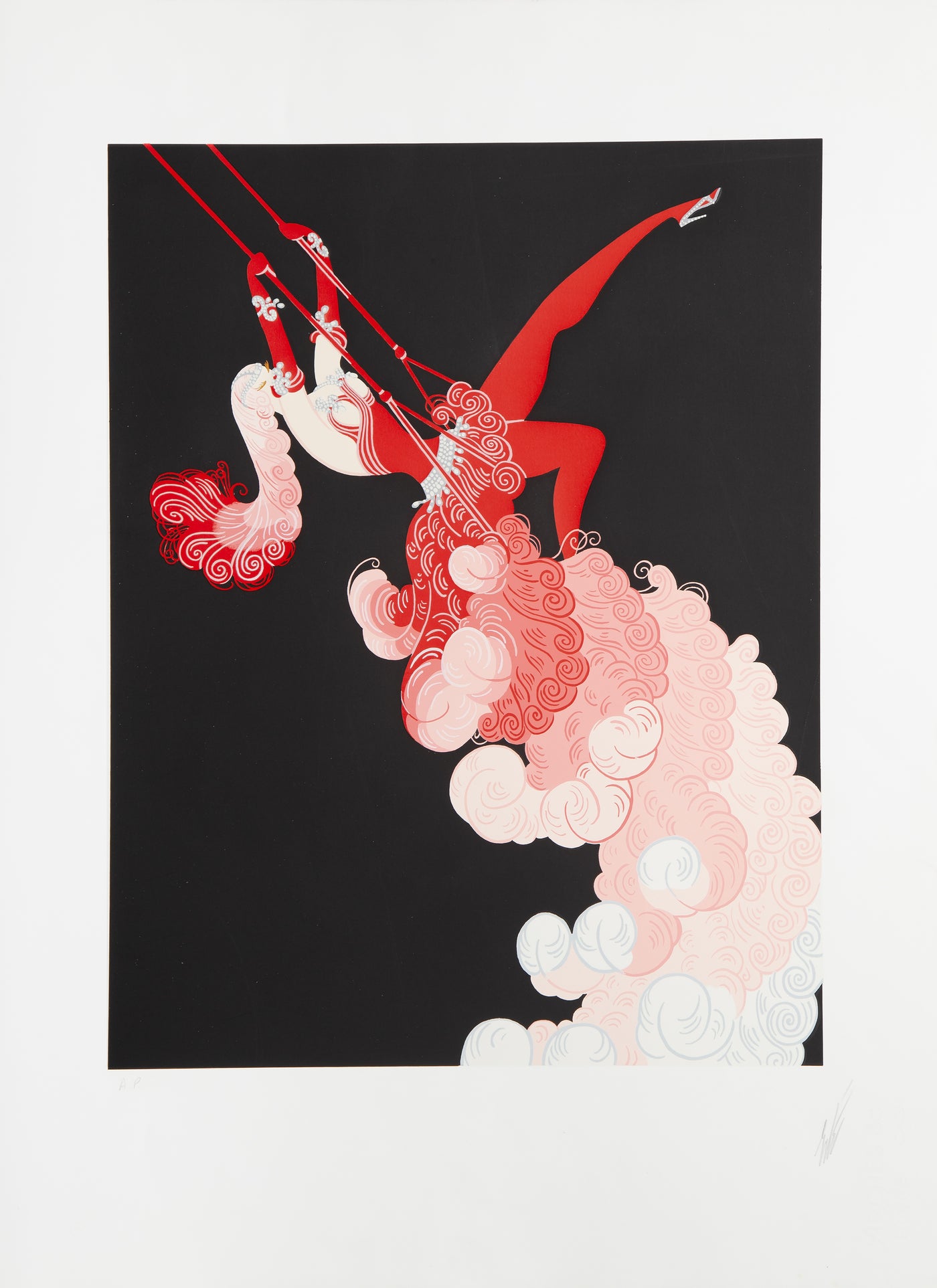
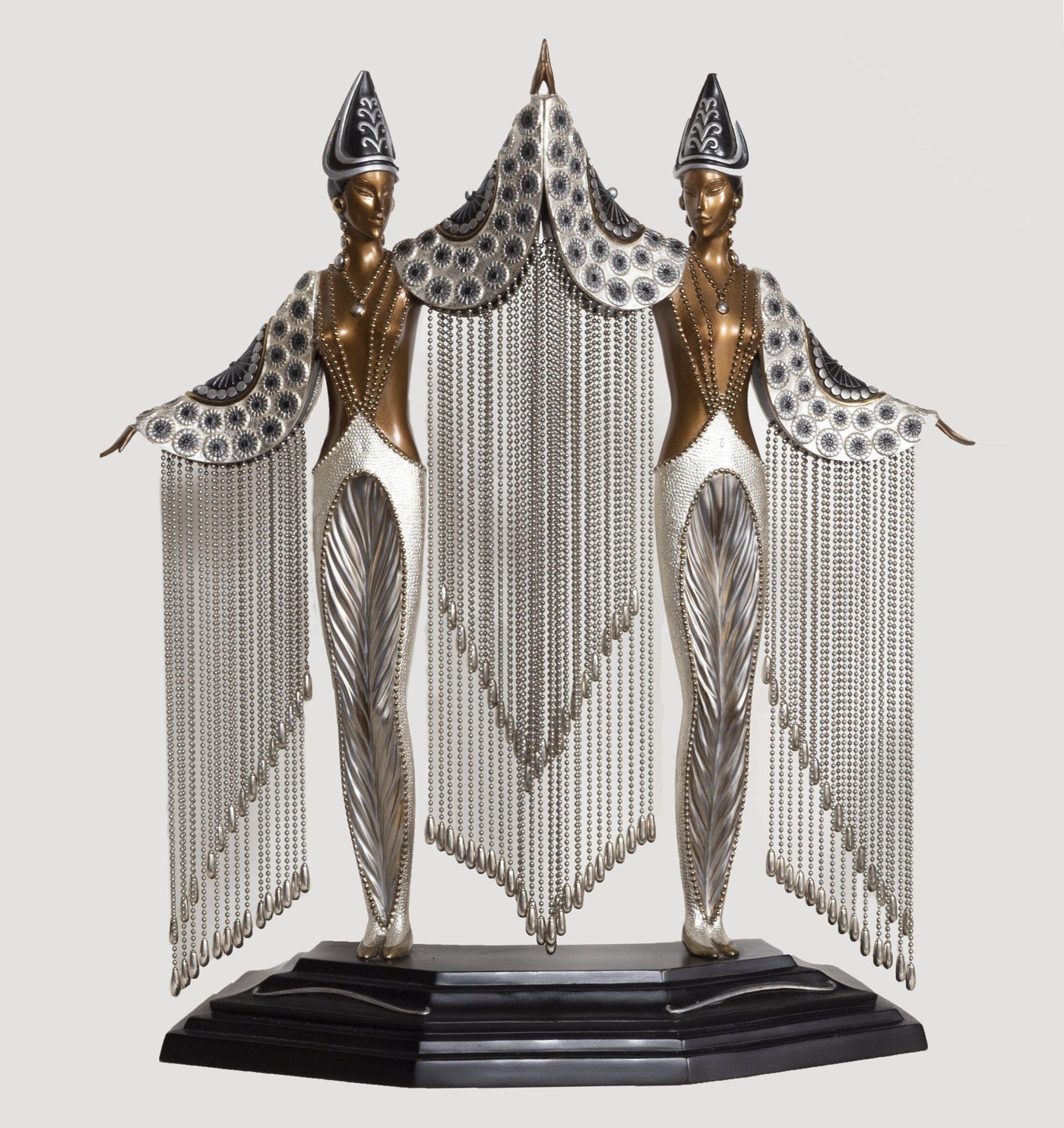
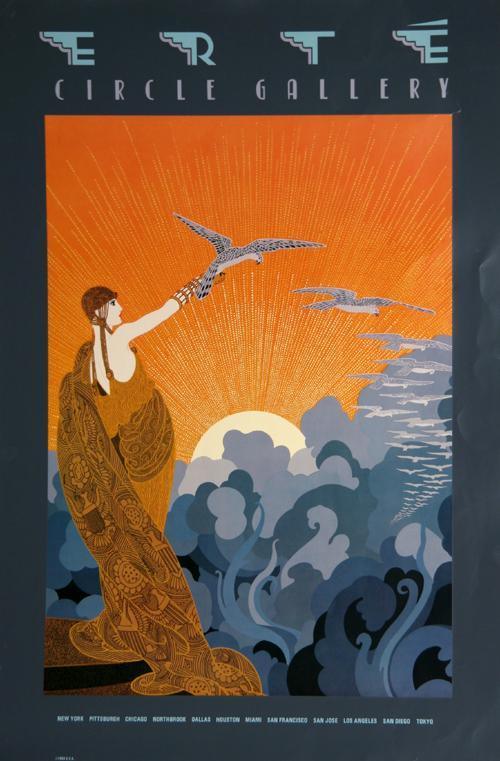
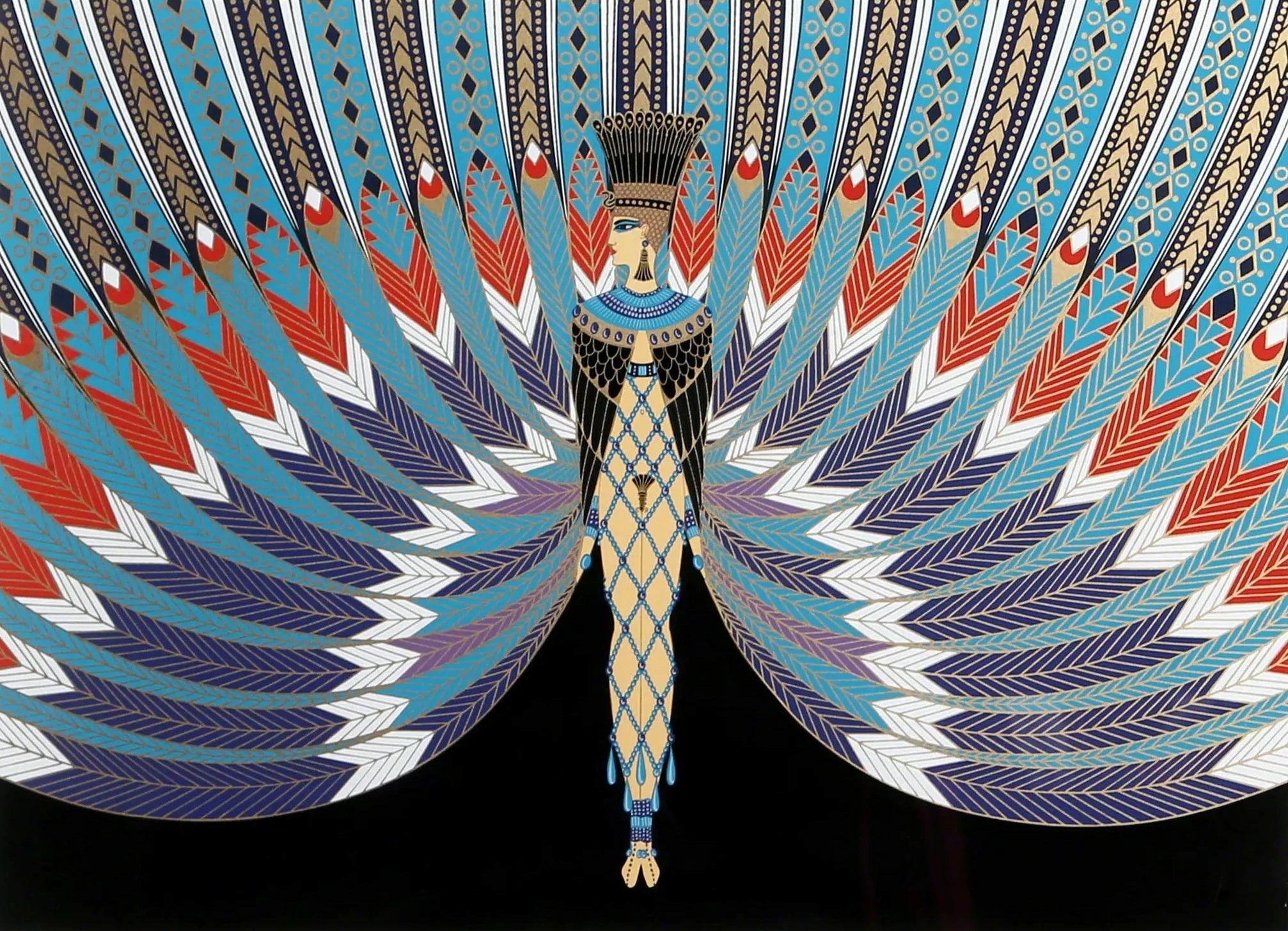
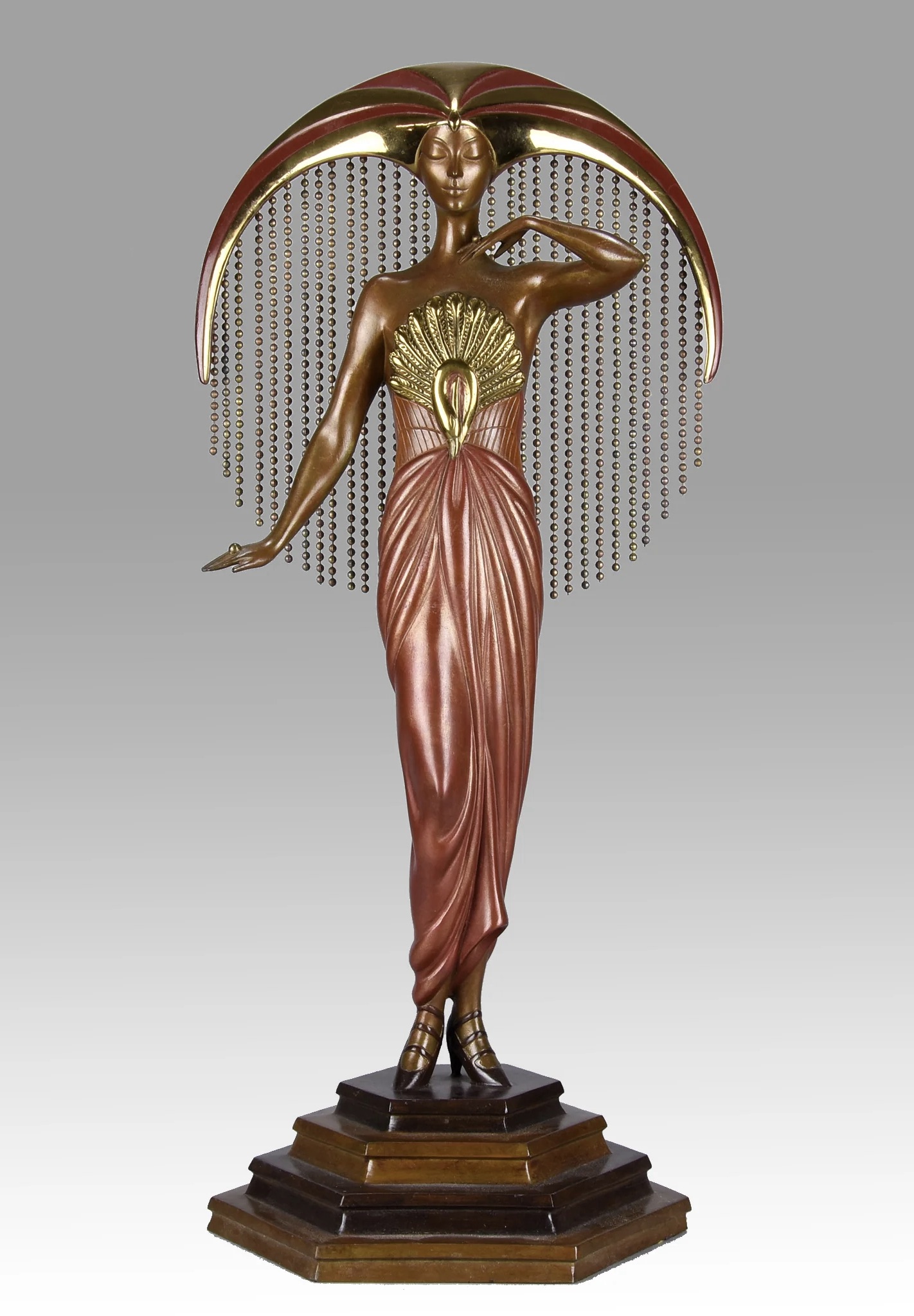
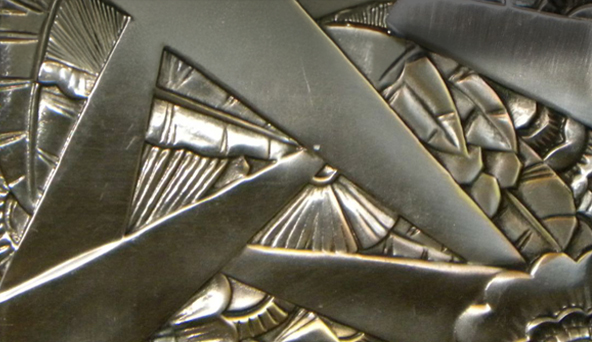
Ertes style blended fashion illustration, theatre design, and modern graphic composition into a unified and unmistakable language. His figures were elongated and elegant, often framed by bold geometry or flowing ornament that balanced movement with precision. Color played a central role, with saturated hues and dramatic contrasts heightening the sense of glamour. He favored clean lines, stylized poses, and intricate patterns that combined luxury with clarity. Across all mediums, his work embodied the sophistication, fantasy, and sleek visual rhythm that define the Art Deco aesthetic.
Key Influences:
Parisian Theatre and Music Halls: Elaborate staging and dramatic costume inspired his sense of spectacle and silhouette.
High Fashion and Couture: Work with designers like Paul Poiret shaped his understanding of form, elegance, and visual drama.
Graphic Modernism: His magazine illustrations reflect the clean geometry and bold layouts of early twentieth century design.
Cross Disciplinary Practice: Work in theatre, opera, and film expanded his visual language and kept his ideas continually evolving.
Art Deco Revival: Renewed interest in the movement during the 1960s and 70s allowed him to reinterpret his style through prints and bronze sculpture, securing his long term legacy.
If you are interested in further stories of the artists who shaped Art Deco, return to our artists page to browse the full directory.