








Art & Statues
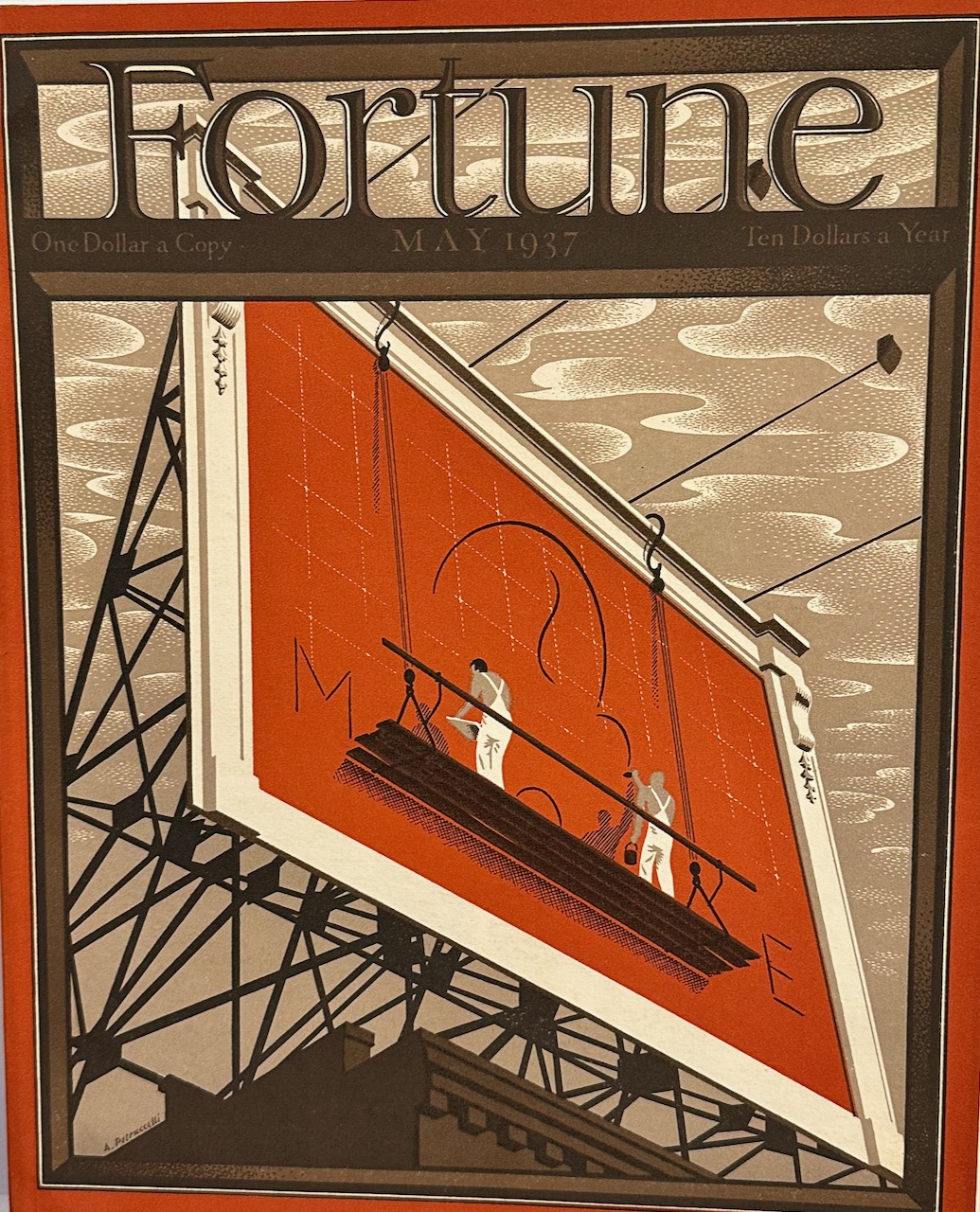


Fortune Magazine, May 1937
Fortune Magazine, May 1937
This is the May 1937 issue of Fortune, Volume XV, Number 5, published by Time Inc. in New York. The cover, painted by Antonio Petruccelli, shows two workmen on a scaffold painting a red billboard high above the city, its steel scaffolding and sharp diagonal composition rendered in the graphic, geometric style that defined the magazine's best Art Deco covers. The 240-page issue covers a wide range of subjects, including an installment on wartime Germany, a report on the WPA's federal arts programs, and a chart tracing the history of federal relief efforts during the Depression. Color reproductions of Renaissance paintings from the Mellon collection appear alongside a full-page portrait of Wendell Willkie, along with lavish advertising for automobiles and other major brands of the day. Petruccelli was one of Fortune's most frequent and celebrated cover artists, and this issue is a strong example of the bold, angular compositions that made his covers instantly recognizable.
Founded by Henry Luce in 1930, Fortune set out to be, in Luce's words, the most beautiful magazine in America, and its production values reflected that ambition throughout the 1930s. This issue continues that tradition, combining serious reporting on Depression-era politics and international affairs with rich color photography, fine art reproduction, and striking illustration, all printed on heavy stock that gave the magazine its distinctive weight and presence.
Antonio Petruccelli contributed numerous covers to Fortune during the 1930s, developing a style built on strong diagonal composition and flattened, stylized figures that suited the magazine's modern visual identity. His billboard painters here echo the industrial subjects he returned to often, treating scaffolding and signage with the same graphic precision he brought to skyscrapers and machinery in other covers.
Original Fortune issues from this period are widely sought after for their cover art alone, and this issue holds particular appeal for its combination of a strong Petruccelli composition and substantial period content on Depression-era relief efforts and prewar Europe. It remains a compelling artifact for collectors of illustration art and students of 1930s American history alike.