






Art & Statues
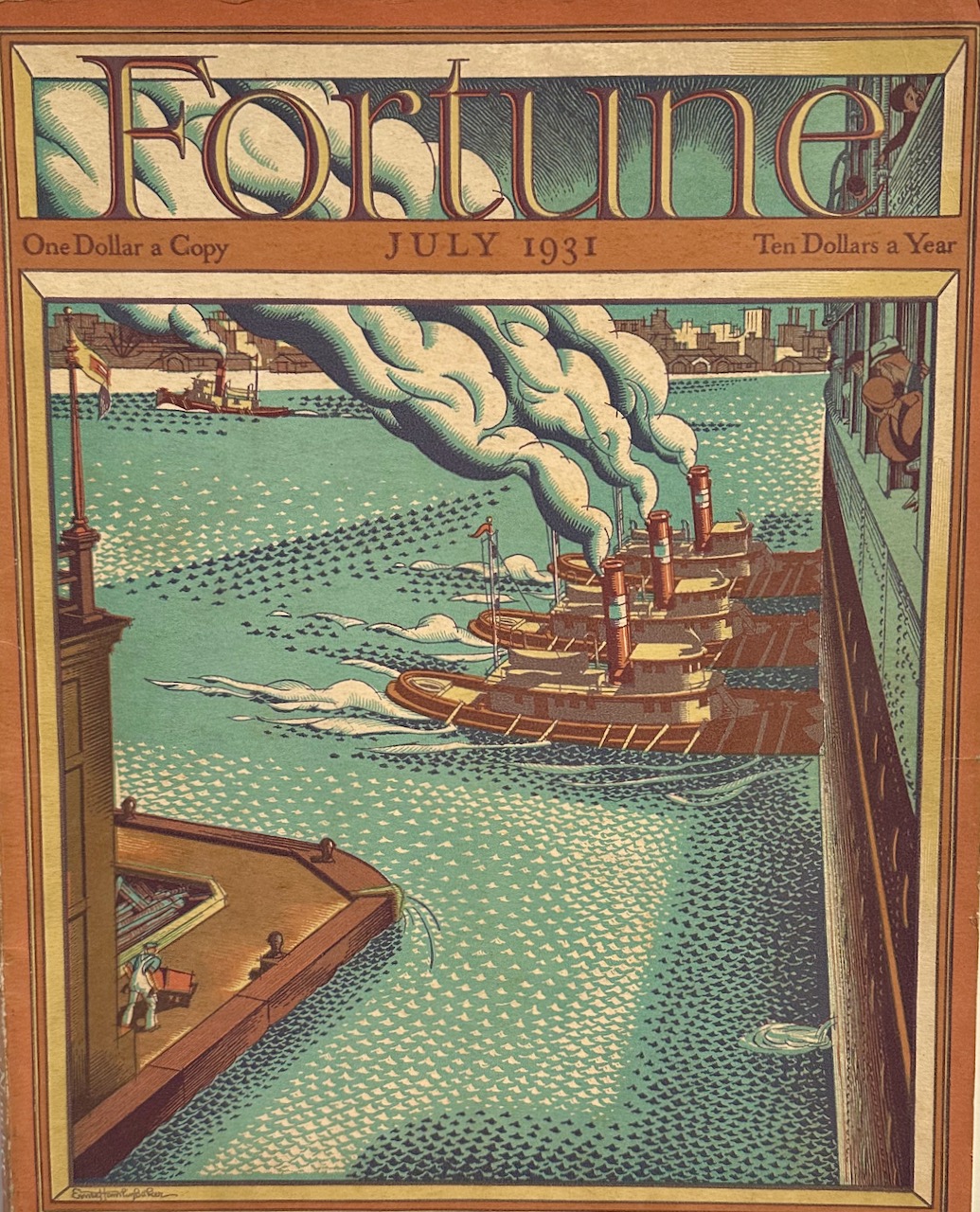


Fortune Magazine, July 1931
Fortune Magazine, July 1931
This is the July 1931 issue of Fortune, Volume IV, Number 1, published by Time Inc. in New York and edited by Henry R. Luce. The cover, painted by Ernest Hamlin Baker, shows a line of tugboats steaming through a harbor beneath billowing plumes of smoke, rendered in the bold stylized color and pattern typical of the magazine's early Art Deco covers. Inside, the 128-page issue covers the Chadbourne Plan for Cuban sugar, John D. Rockefeller Jr.'s Forest Hill development in Cleveland, color printing in newspapers, U.S. dollars invested abroad, American ambassadors, and a piece on the American steel industry, all illustrated with period photography, color plates, and advertisements. Fortune was still a new publication at this point, having launched only in 1930, and its early issues quickly became known for commissioning leading illustrators for their covers. Baker went on to become one of the most recognized cover artists of the era, and this issue is a strong example of his work for the magazine.
Fortune set itself apart from other business publications of the period through its lavish production values, oversized format, and heavy use of color illustration and photography at a time when most business journalism was strictly text. This issue reflects that ambition, pairing substantial reporting on industrial and financial subjects with striking visual material throughout, including period advertisements for automobiles, tires, and other major industrial brands of the day.
Ernest Hamlin Baker was one of several prominent illustrators, including Antonio Petruccelli and Walter Buehr, whom Fortune commissioned regularly during this period to give the magazine a distinctive visual identity. Baker later became well known for his portrait covers for Time magazine, but his early work for Fortune, like this tugboat scene, shows the same graphic confidence and precise linework that would define his later career.
Original Fortune issues from the early 1930s are widely collected today for their striking Art Deco cover art, and this issue is a strong example of that appeal, combining a well-known artist with substantive Depression-era business content. It holds interest both for collectors of illustration art and for those researching American business history of the period.

info@artdecocollection.com