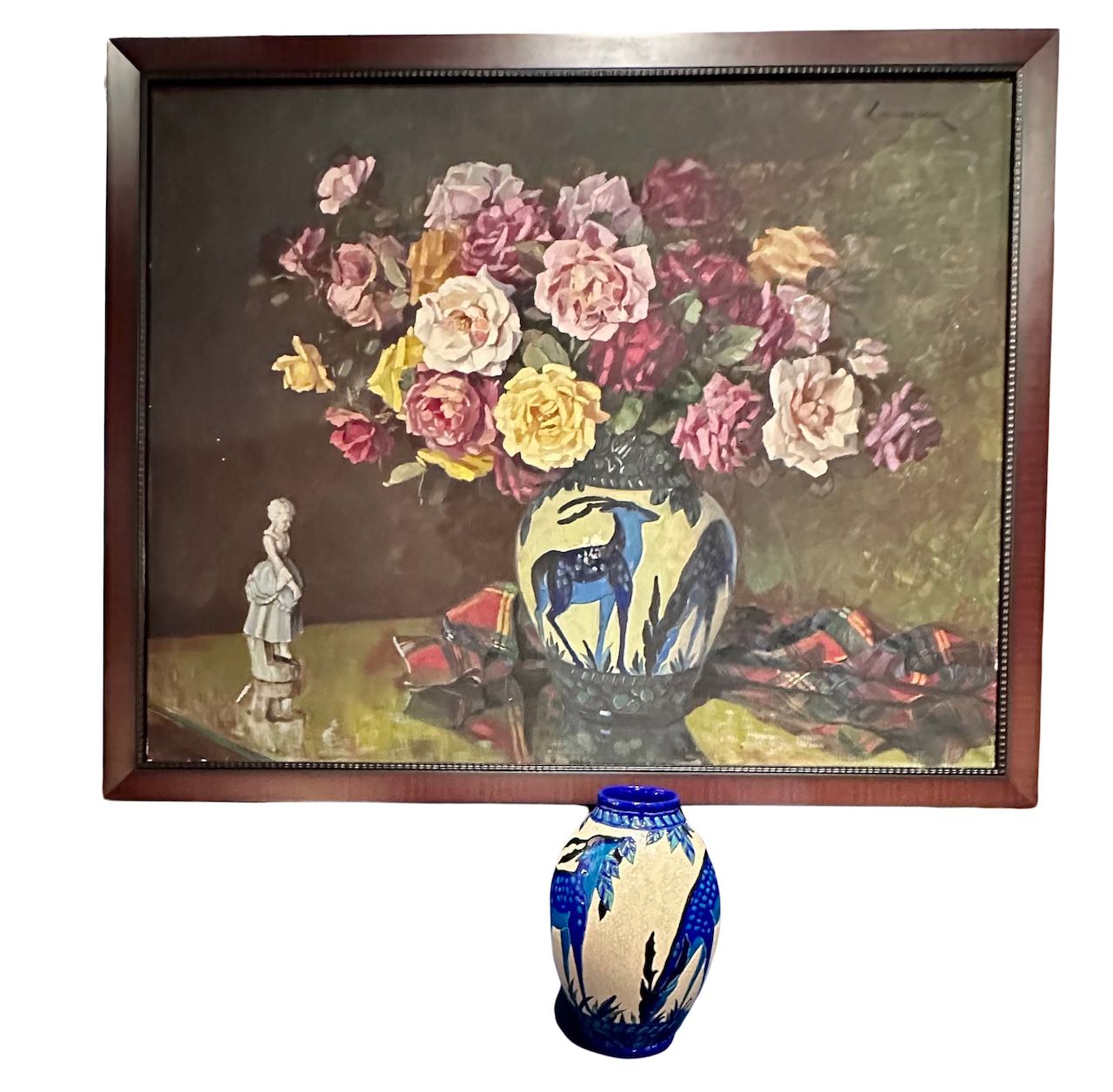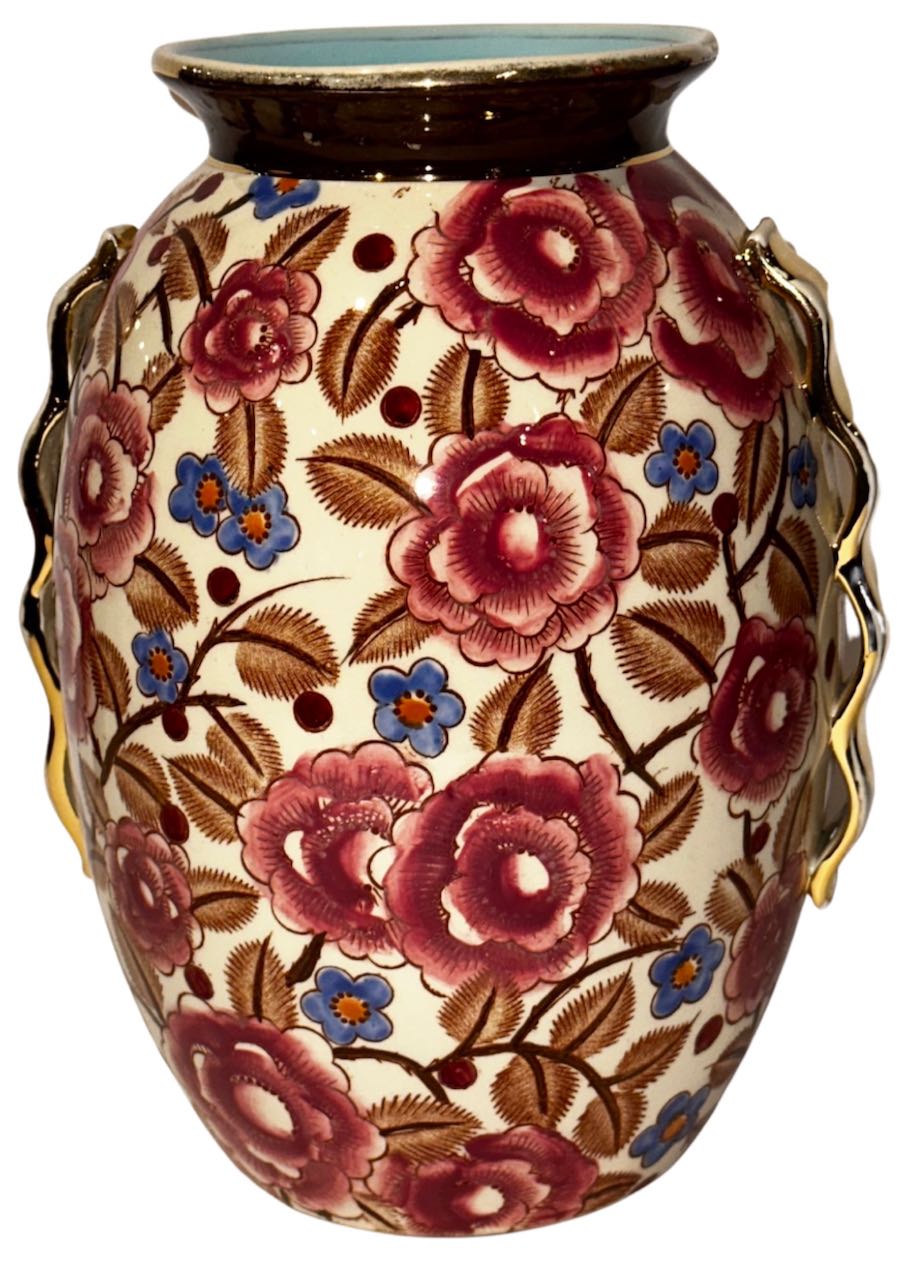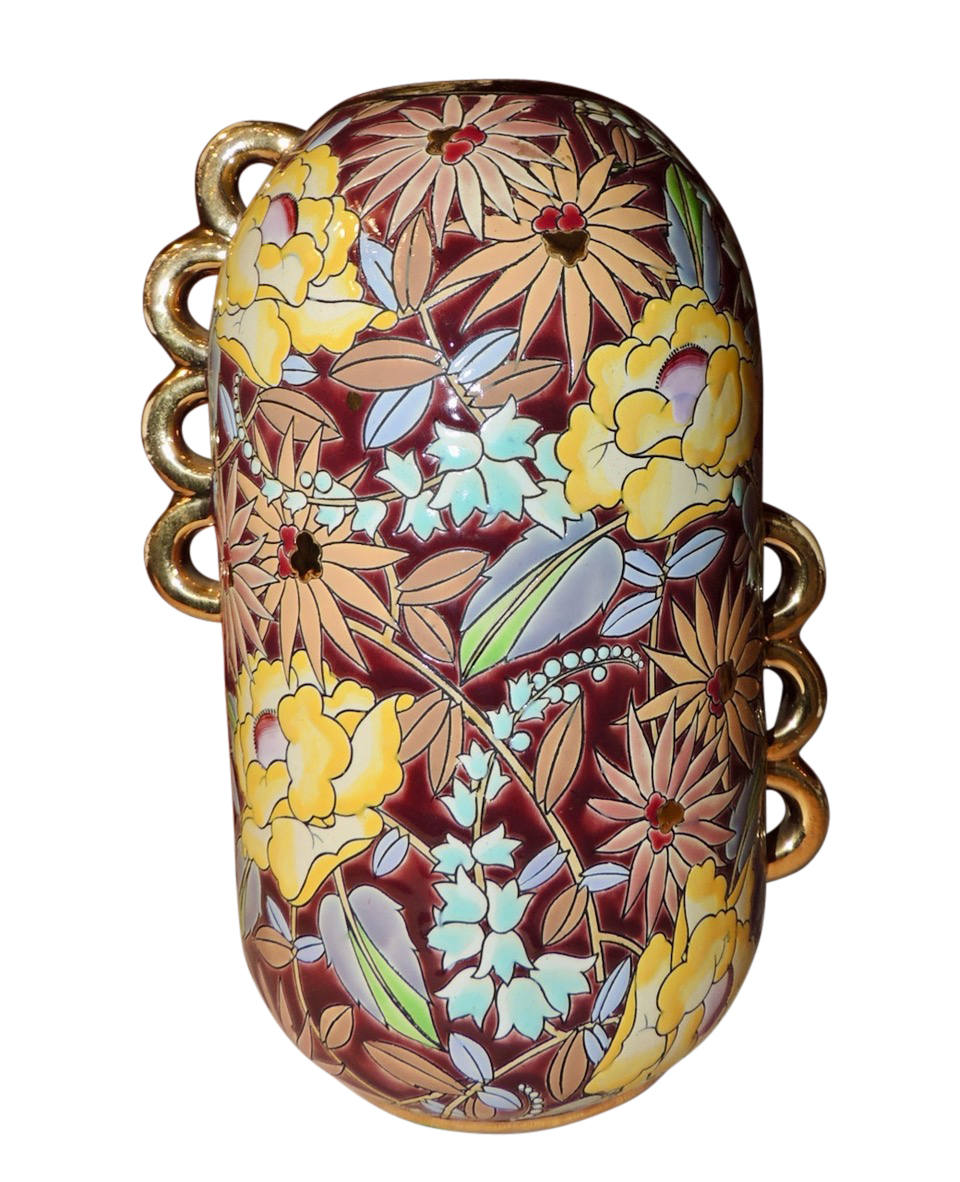
Boch Frères Keramis and Charles Catteau: The Art of Reinventing Ceramics
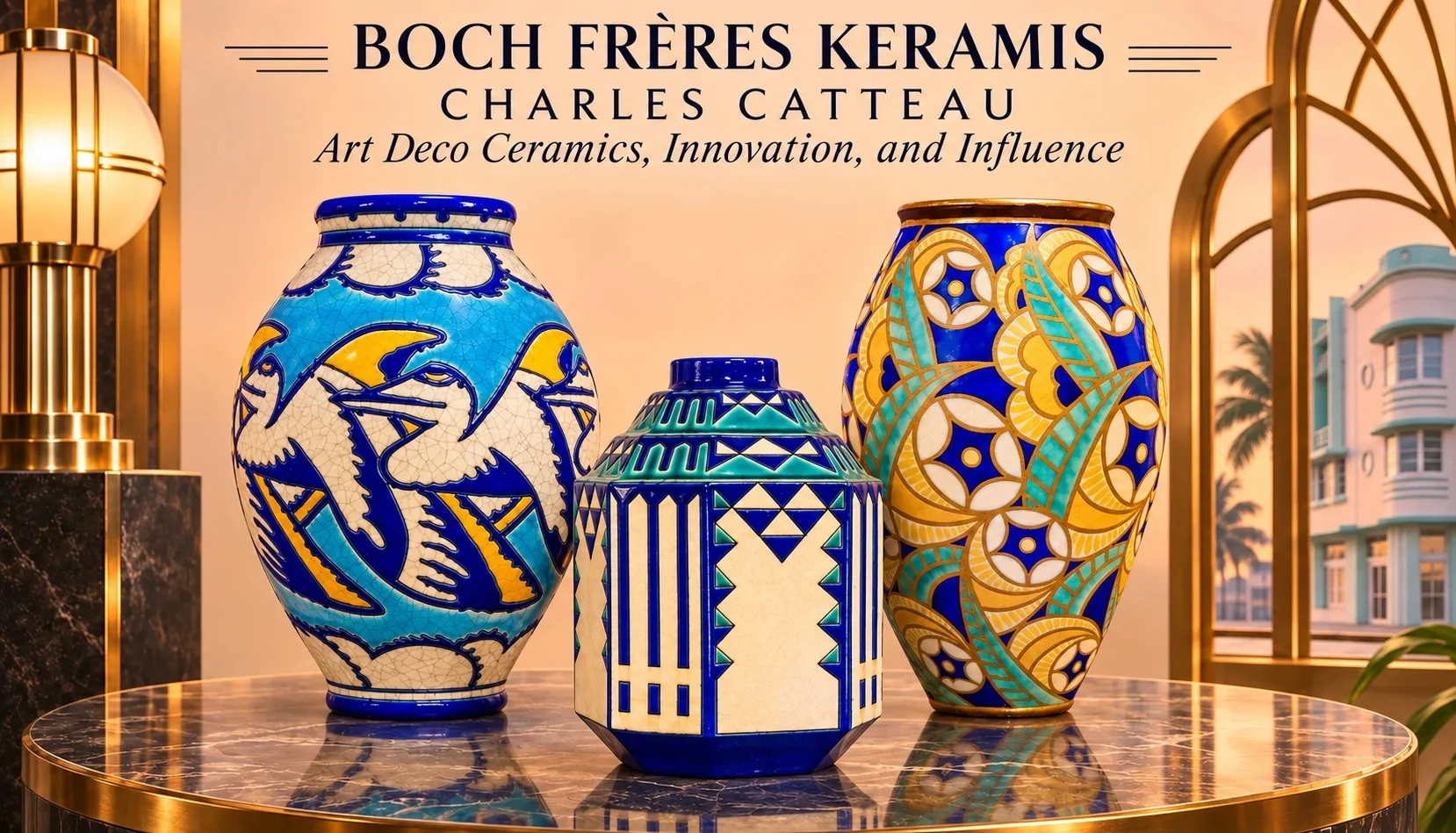
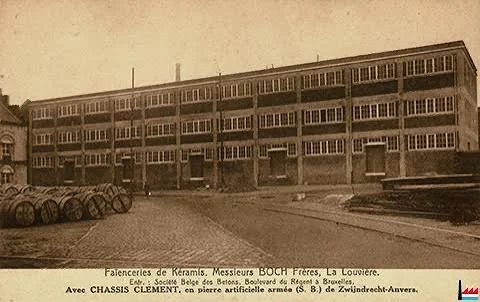
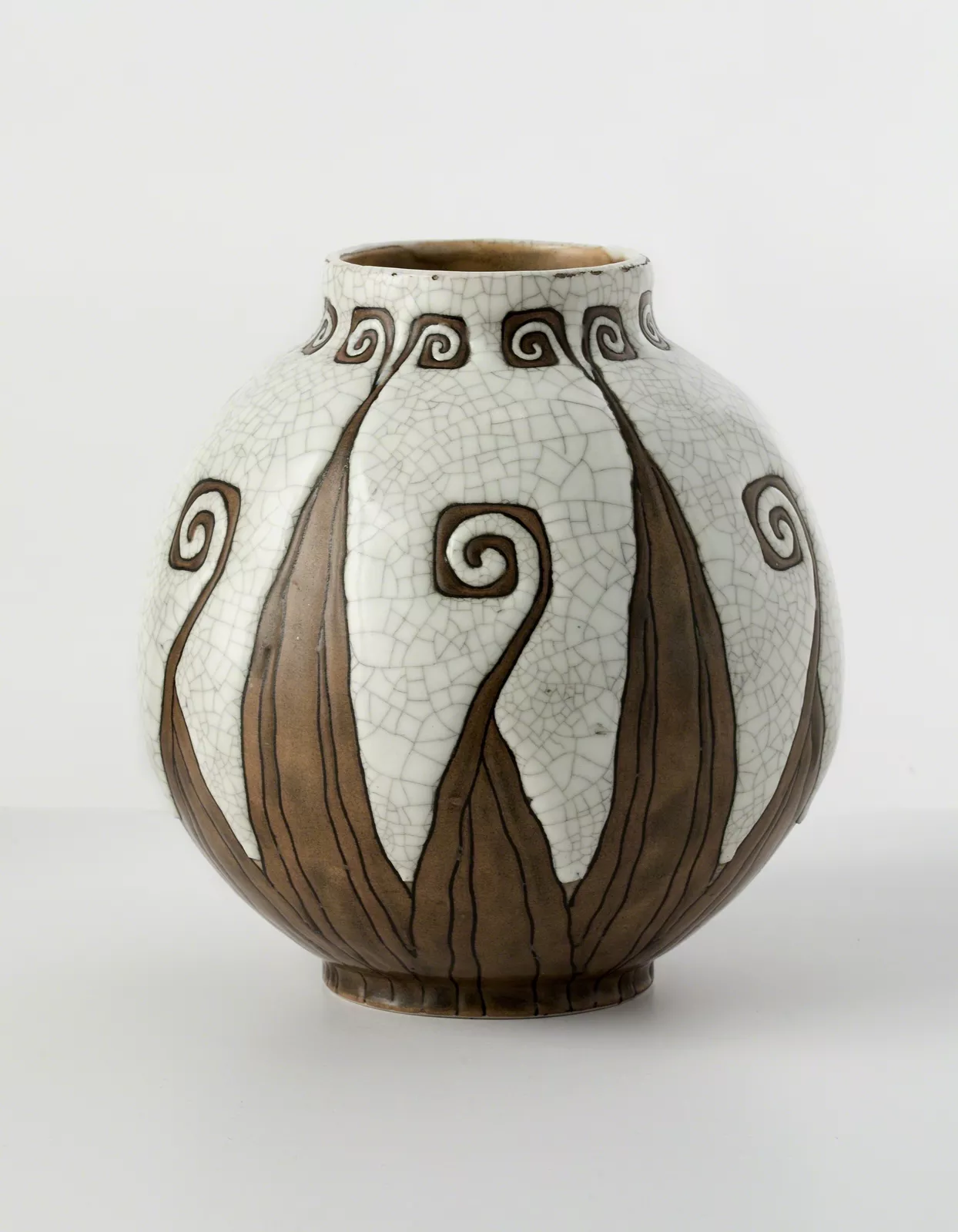 The history of Boch Frères Keramis is one of the great stories of European decorative arts, particularly during the first half of the twentieth century. What began as a substantial Belgian pottery manufacturer eventually became one of the most influential producers of Art Deco ceramics, largely through the creative direction of Charles Catteau. The origins of the company go back to 1841, when Eugène and Victor Boch, together with their brother in law Jean Baptiste Nothomb, established the Keramis factory in La Louvière, Belgium. The Boch family was already deeply involved in European ceramic manufacturing, and its knowledge of production, technology, and international distribution provided the foundation for what would follow. During the nineteenth century, the factory produced everything from everyday tableware and household ceramics to more elaborate decorative pottery. By the beginning of the twentieth century, Boch Frères had become one of Belgium’s major ceramic manufacturers. Its extraordinary development during the Art Deco period would demonstrate that fine design was not necessarily limited to individual studio artists or expensive, individually commissioned objects. A well organized factory, with the right artistic leadership, could produce decorative ceramics of remarkable originality and quality for an international market.
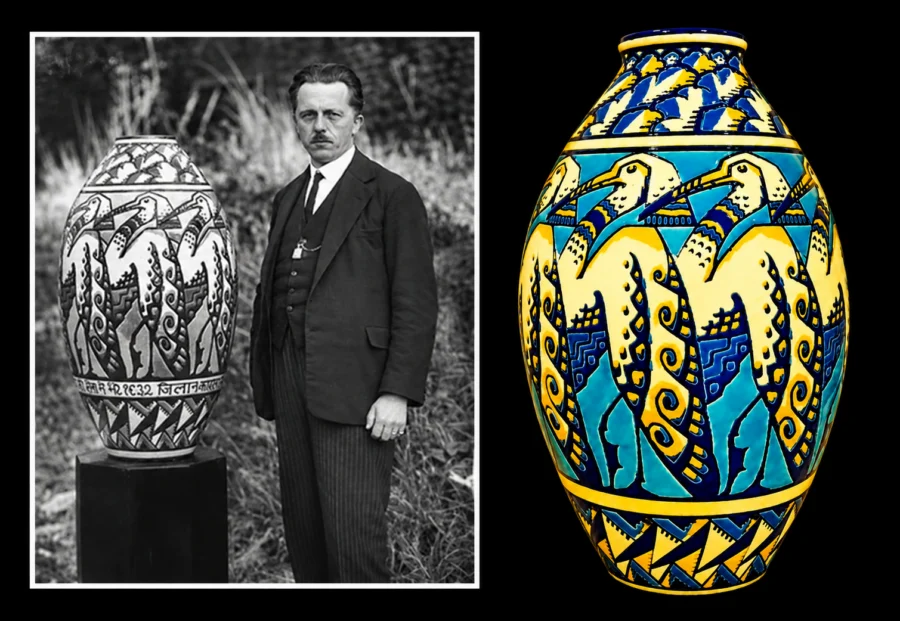
The arrival of Charles Catteau (1880–1966) in 1906 dramatically changed the artistic direction of the company. Born in Douai, France, Catteau studied at the prestigious National School of Ceramics in Sèvres, graduating in 1903 as a ceramic engineer. His early professional experience included working at the Nymphenburg porcelain manufactory near Munich, where he encountered the German Jugendstil movement and the developing language of European Art Nouveau. This background was particularly important because Catteau understood both the artistic and technical sides of ceramic production. When he joined Boch Frères, he brought a knowledge of design, glazing, chemistry, and manufacturing that few decorative artists possessed in equal measure. By 1907, he had assumed leadership of the factory’s decorating department, which became known as the Atelier de Fantaisie. Rather than simply producing new patterns for existing pottery, Catteau began rethinking the relationship between the shape of an object, its surface decoration, the materials used, and the finished appearance. He also taught at the industrial school in La Louvière, training generations of decorators and ceramic specialists who would contribute to the factory’s success. His position was not merely that of an artist supplying drawings. He became the guiding creative force behind an important industrial design workshop, and his influence would extend through nearly four decades of ceramic production.
The 1925 International Exposition of Modern Decorative and Industrial Arts in Paris became a defining moment for Charles Catteau and Boch Frères. This enormously influential exhibition brought together leading artists, architects, designers, and manufacturers from around the world and would eventually give the Art Deco movement its name. The exhibition placed a particular emphasis on the integration of modern artistic design with industrial manufacturing, precisely the approach Catteau had been developing at Keramis. His ceramics attracted considerable attention, and he received a gold medal for his work. Both Catteau and Boch Frères earned recognition for the artistic quality of their industrial creations. The achievement was especially important for a Belgian manufacturer competing for attention in Paris, then one of the world’s leading centers of decorative arts. The exposition also helped strengthen the company’s relationships with influential French designers and retailers. Beginning in the early 1920s, Boch Frères had supplied ceramics to major Parisian department store design workshops, including Primavera at Printemps, Pomone at Le Bon Marché, and La Maîtrise at Galeries Lafayette. These were not simply stores selling decorative objects. They were important institutions promoting modern interiors and commissioning designers and manufacturers to create coordinated furnishings and accessories. Boch also worked in connection with leading figures such as Maurice Dufrêne, Jacques and Jean Adnet, and Jean Luce. Through these relationships, its ceramics reached an increasingly sophisticated international clientele and became part of the larger decorative vocabulary of the Art Deco interior.
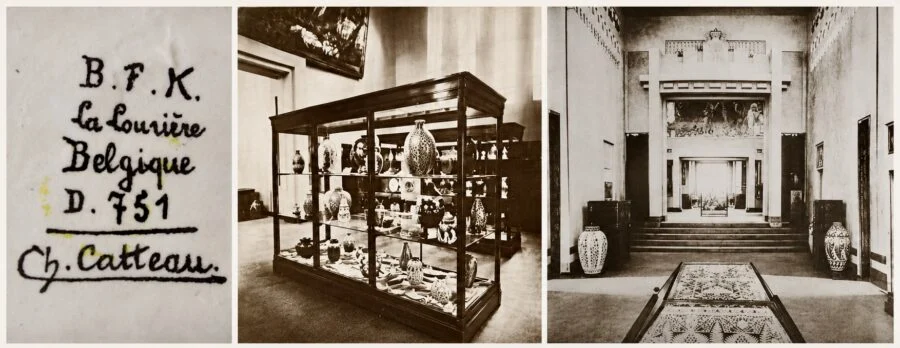
The Belgian Pavilion at the 1925 Paris Exposition notice the large flanking pair of vases as you enter.
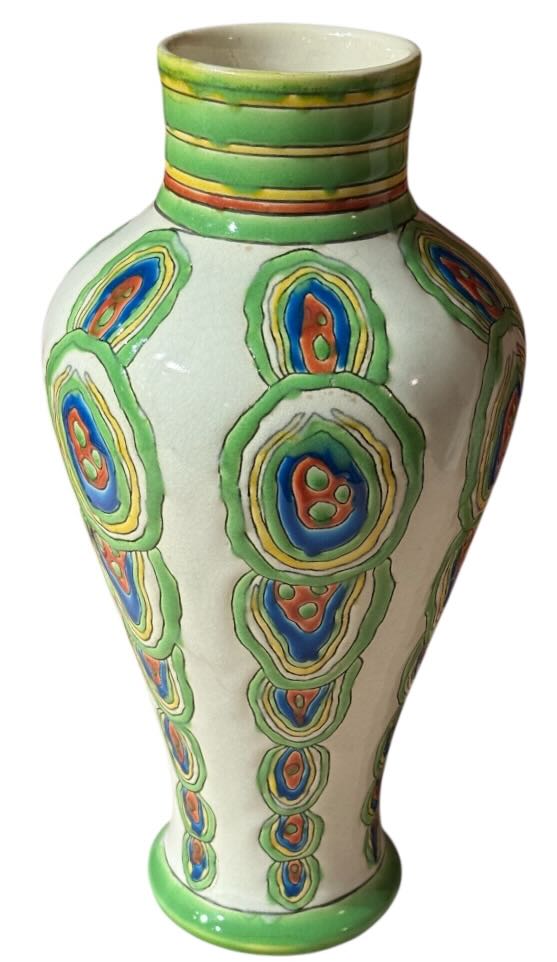
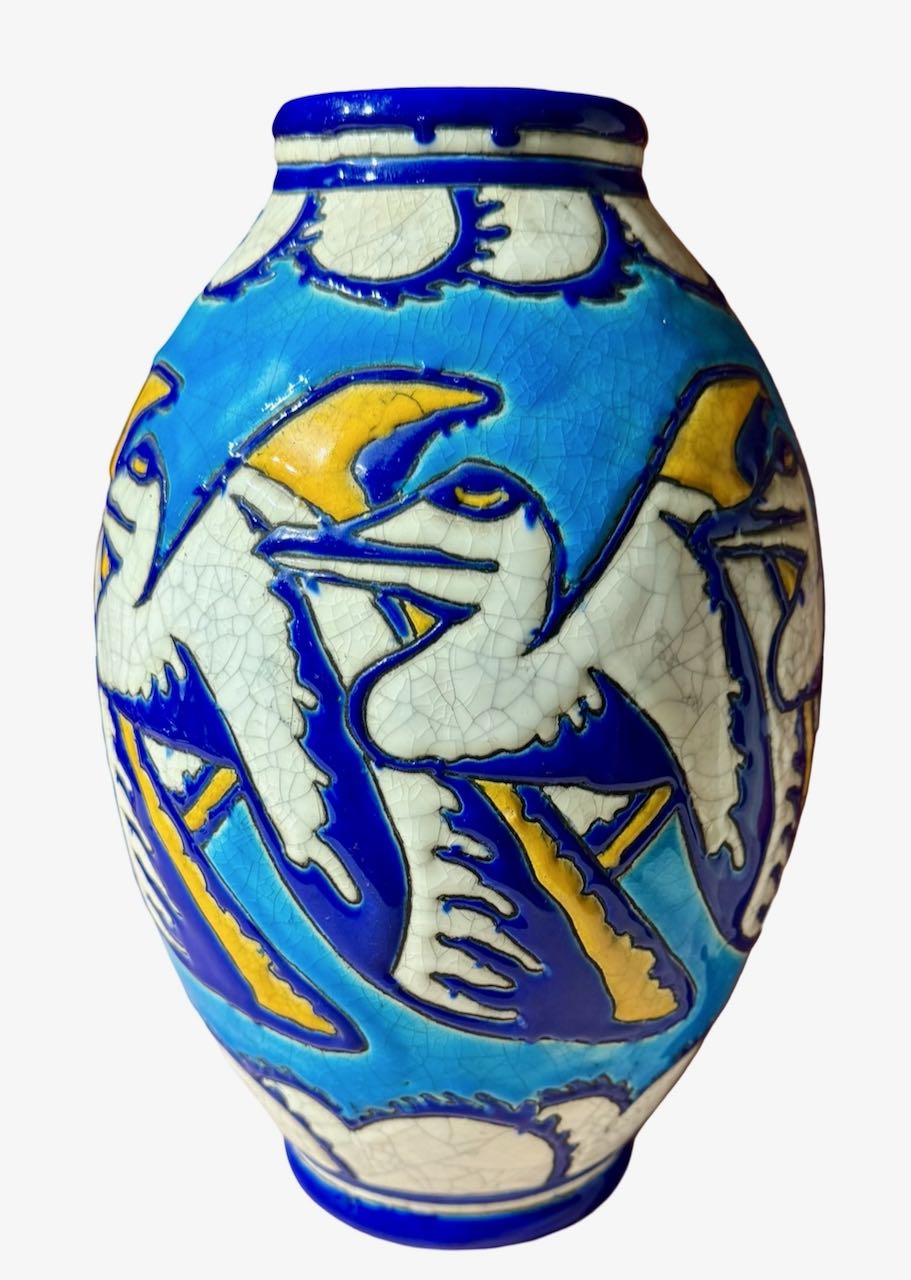
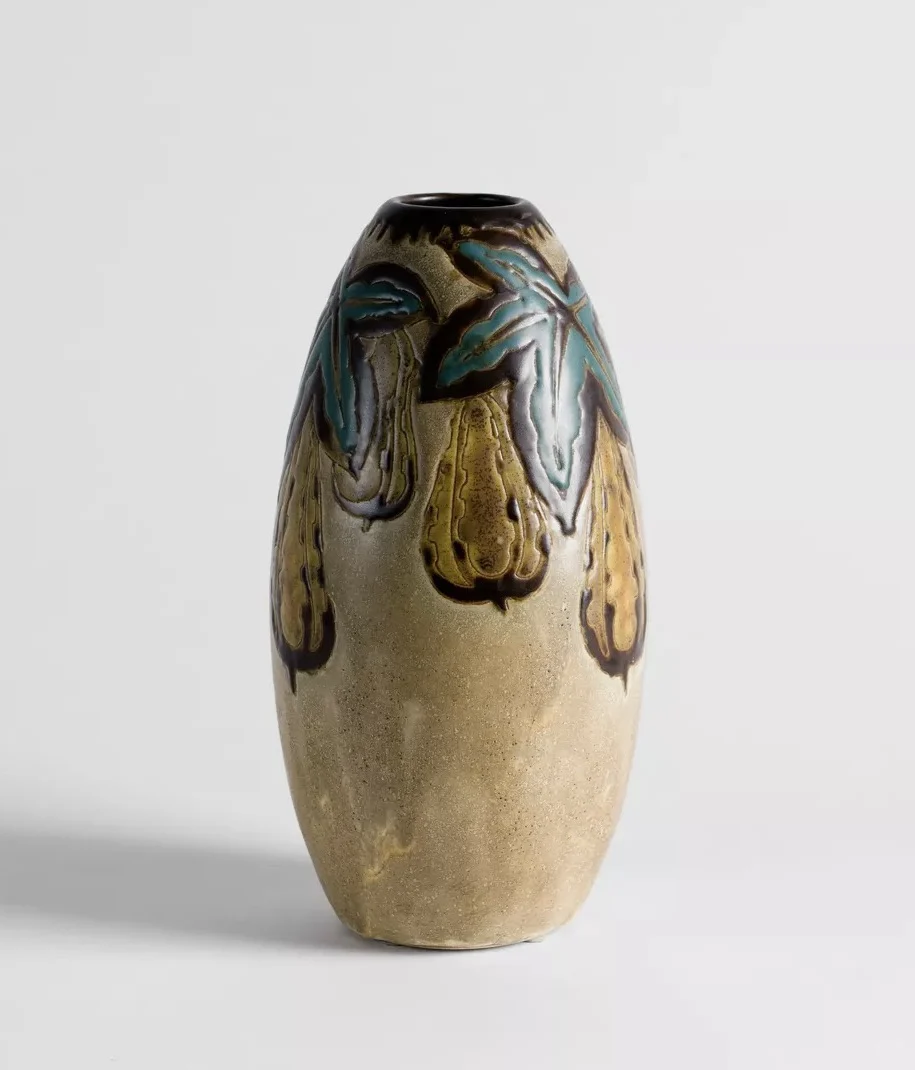 The years following the First World War were especially significant, as Catteau and his workshop developed a new decorative language that perfectly reflected the emerging Art Deco movement. His early designs retained elements of Art Nouveau, with flowing botanical decoration, naturalistic flowers, and traditional ornamental subjects. Gradually, these gave way to increasingly geometric compositions, strong contrasting colors, repeating patterns, and highly stylized representations of animals and plants. Japanese art was an especially important influence, particularly its emphasis on simplified forms, carefully balanced compositions, and the relationship between empty space and decoration. African sculpture and decorative traditions, ancient Greek pottery, Chinese art, Egyptian ornament, and contemporary Cubism also provided inspiration. The discovery of Tutankhamun’s tomb in 1922 helped stimulate the worldwide fascination with Egyptian design, which became another important element of Art Deco. Catteau absorbed these international influences without simply copying them. Deer, birds, penguins, flowers, leaves, and abstract geometric figures became recognizable elements of a decorative vocabulary that could be adapted to hundreds of different ceramic shapes. Some designs used restrained bands of ornament against large areas of undecorated surface, while others covered the entire object in complex repeating patterns reminiscent of textiles and wallpaper. The results were unmistakably modern, reflecting an international artistic movement that reached far beyond Belgium.
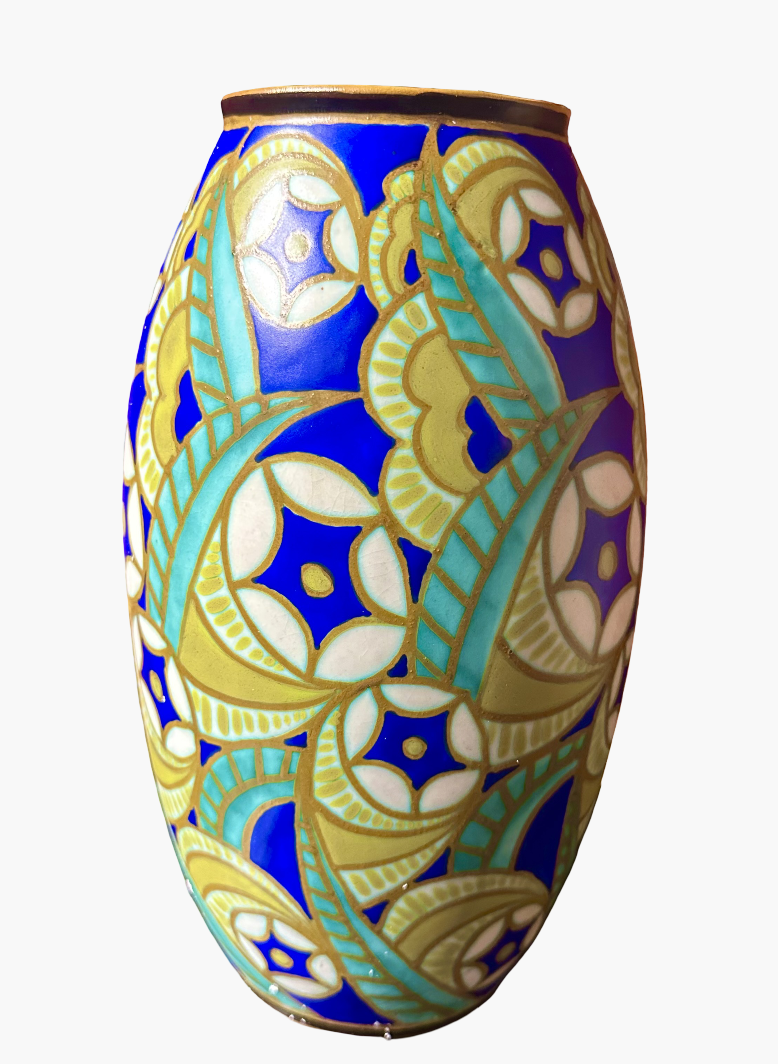
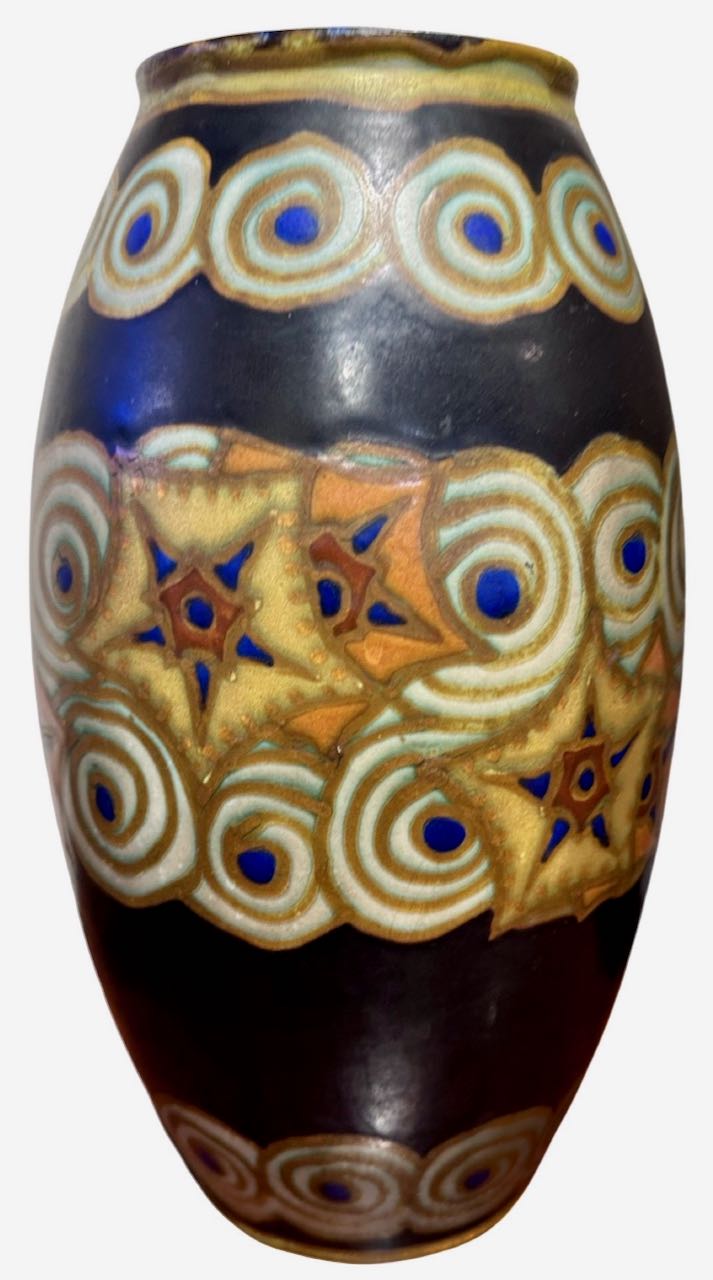
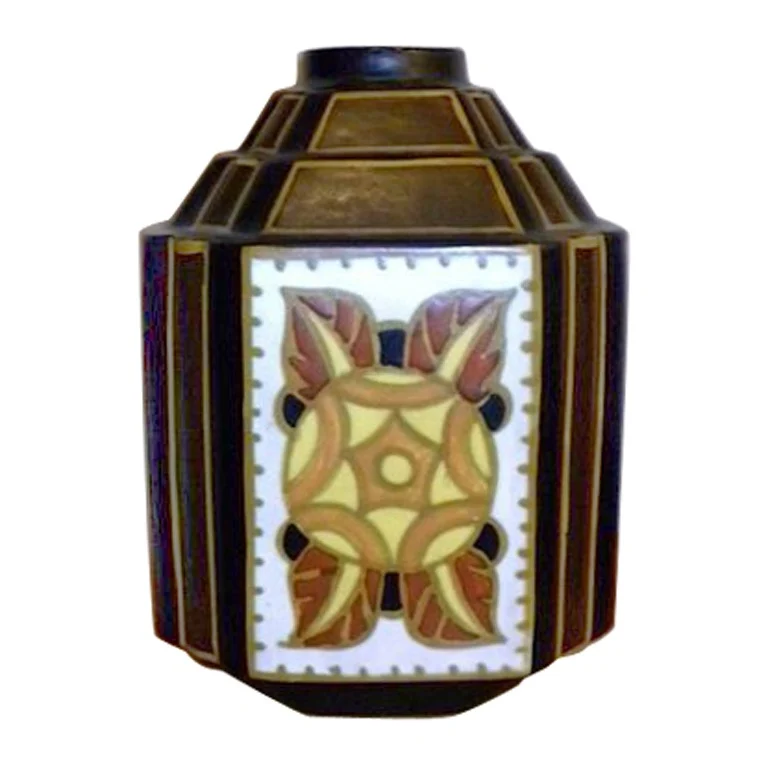
One of the most remarkable achievements of Catteau’s workshop was the extraordinary variety of ceramic bodies, decorative techniques, glazes, colors, and surface finishes developed for its production. Boch Frères worked extensively with fine earthenware, often described as faience, as well as stoneware, known in French as grès. These materials offered distinctly different possibilities. Fine earthenware provided an excellent surface for colorful decoration, often featuring pale or crackled backgrounds with sharply defined patterns. Stoneware, fired at higher temperatures, offered a different character, sometimes with heavier bodies, earthy colors, and rich combinations of matte and glossy glazes. Catteau experimented with combinations of enamel, glaze, slip, and texture that gave the ceramics remarkable visual depth. Some pieces have smooth, brilliant surfaces that reflect light almost like glass, while others display velvety matte finishes, controlled crackle effects, or contrasting areas of raised and recessed decoration. The matte finishes are particularly interesting because they allow color and pattern to become the dominant visual elements rather than reflections from the surface. On certain examples, strongly outlined geometric decoration creates the impression of several overlapping layers, even when the actual surface remains relatively smooth. Other pieces employ thick enamel applications and contrasting textures that give the decoration a distinctly dimensional quality. This tremendous variation is one of the reasons Boch Frères ceramics can look so different from one another while still belonging to the same artistic movement.
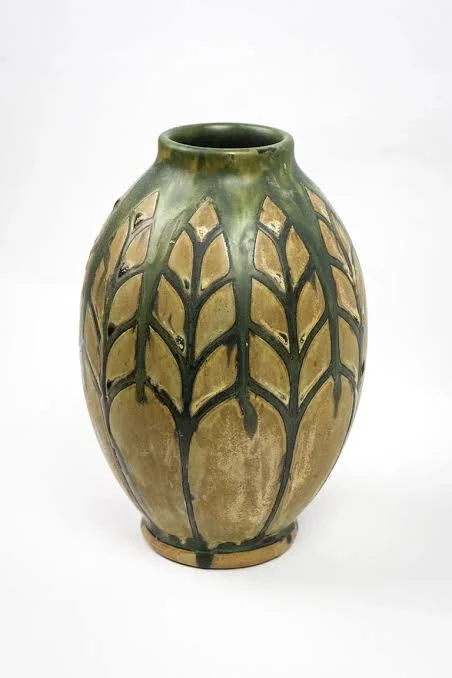
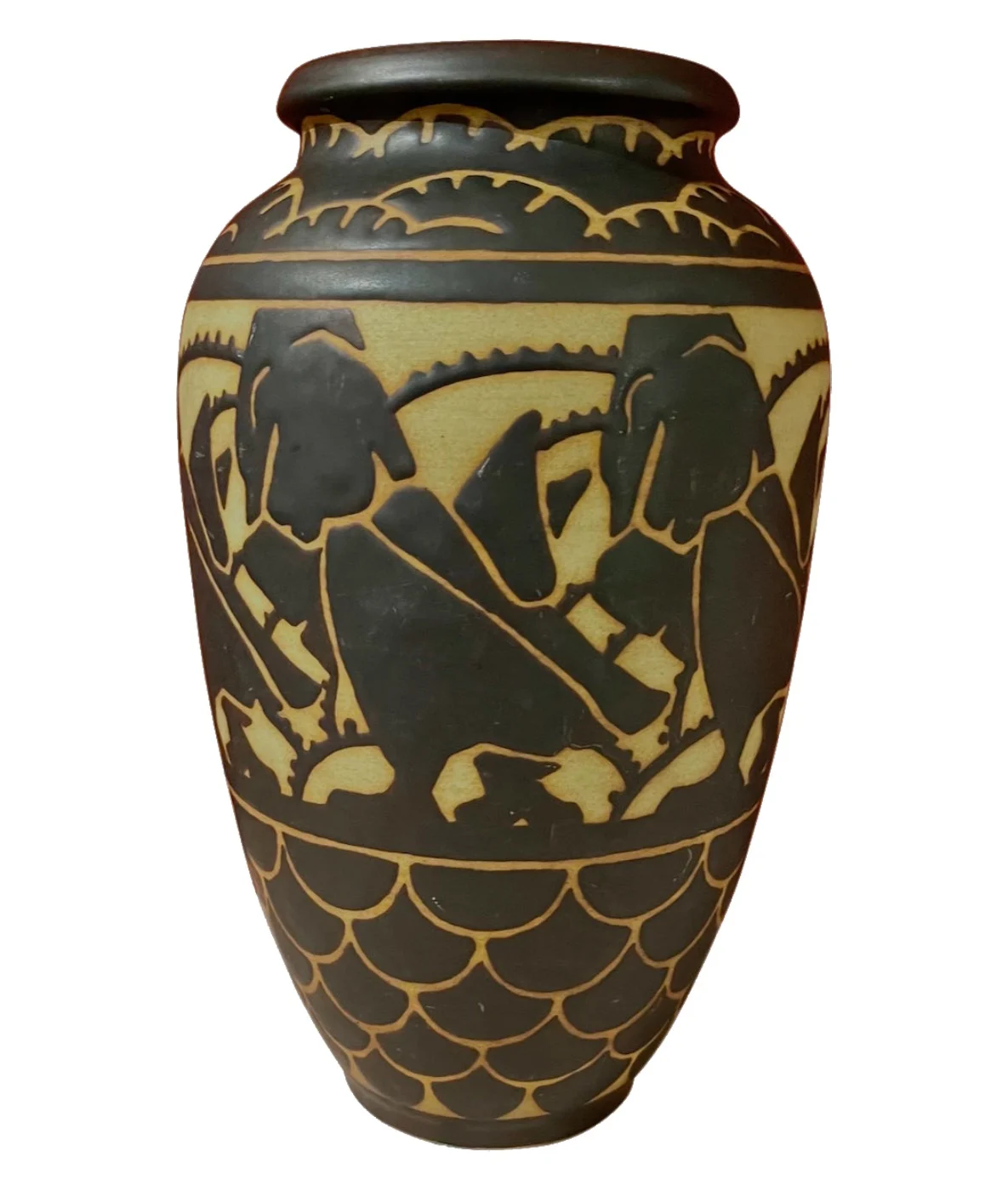
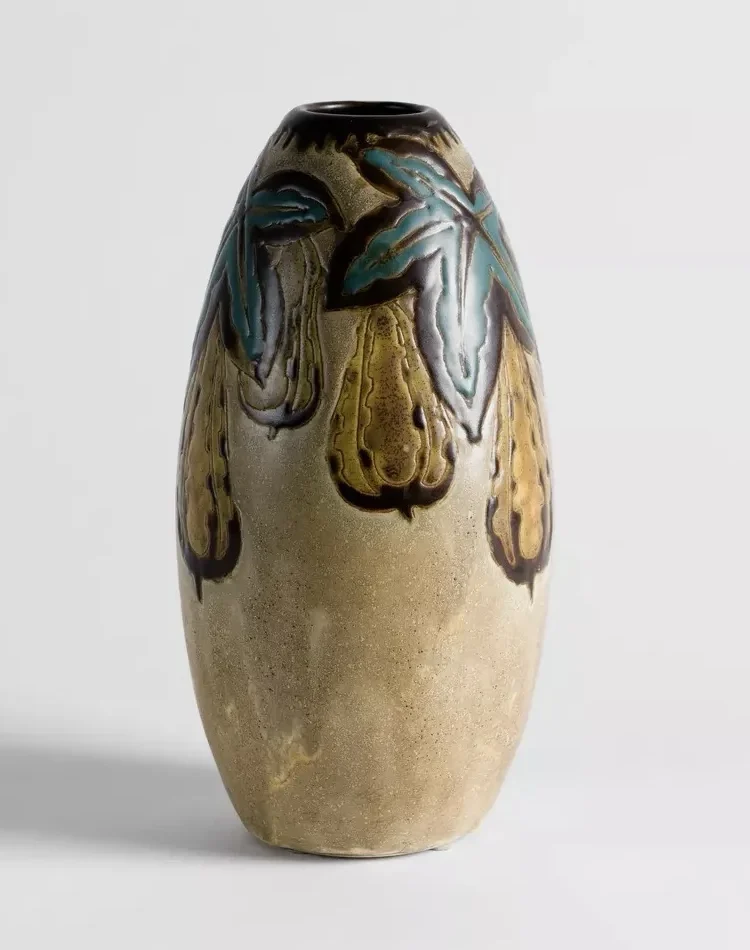
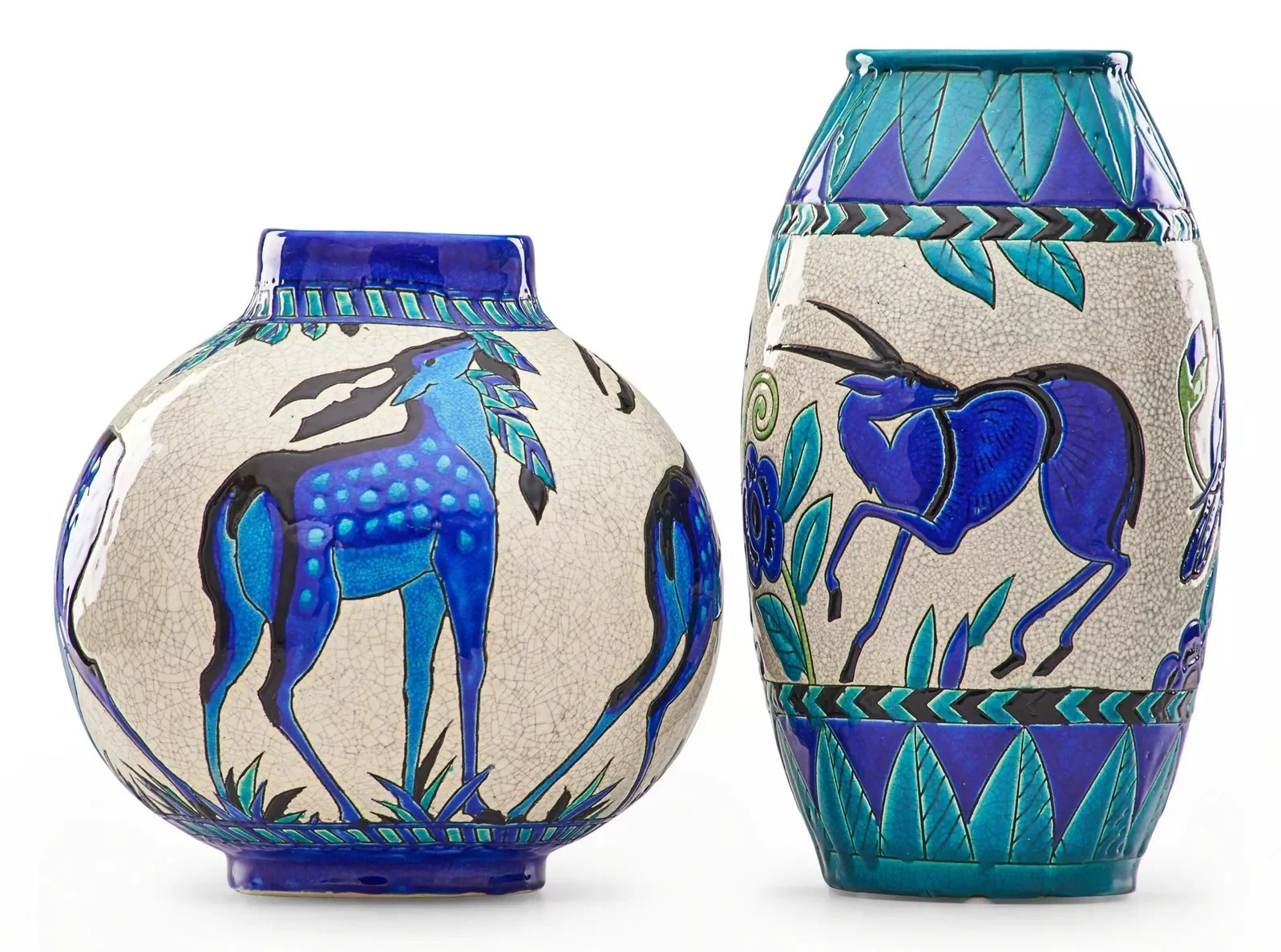
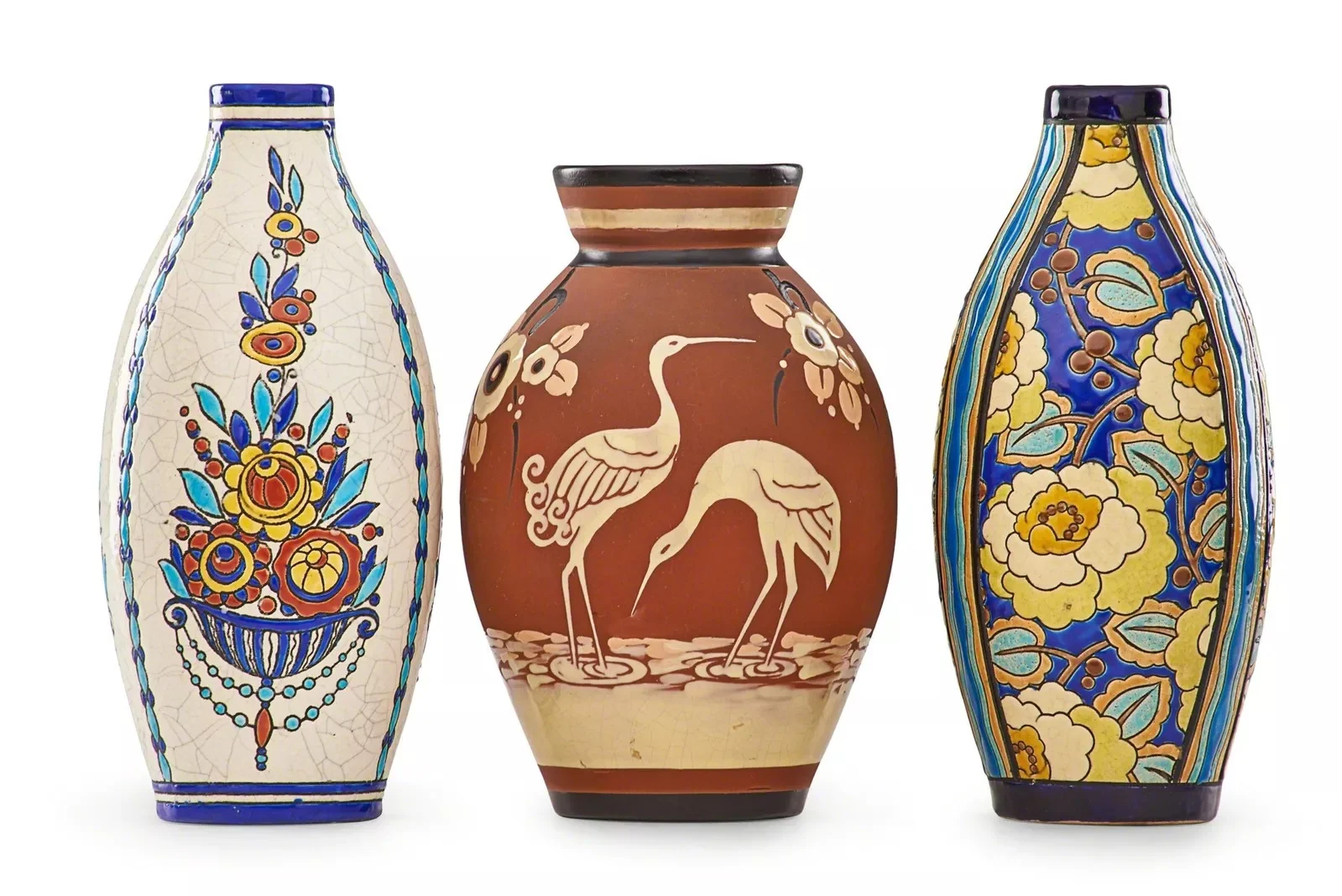
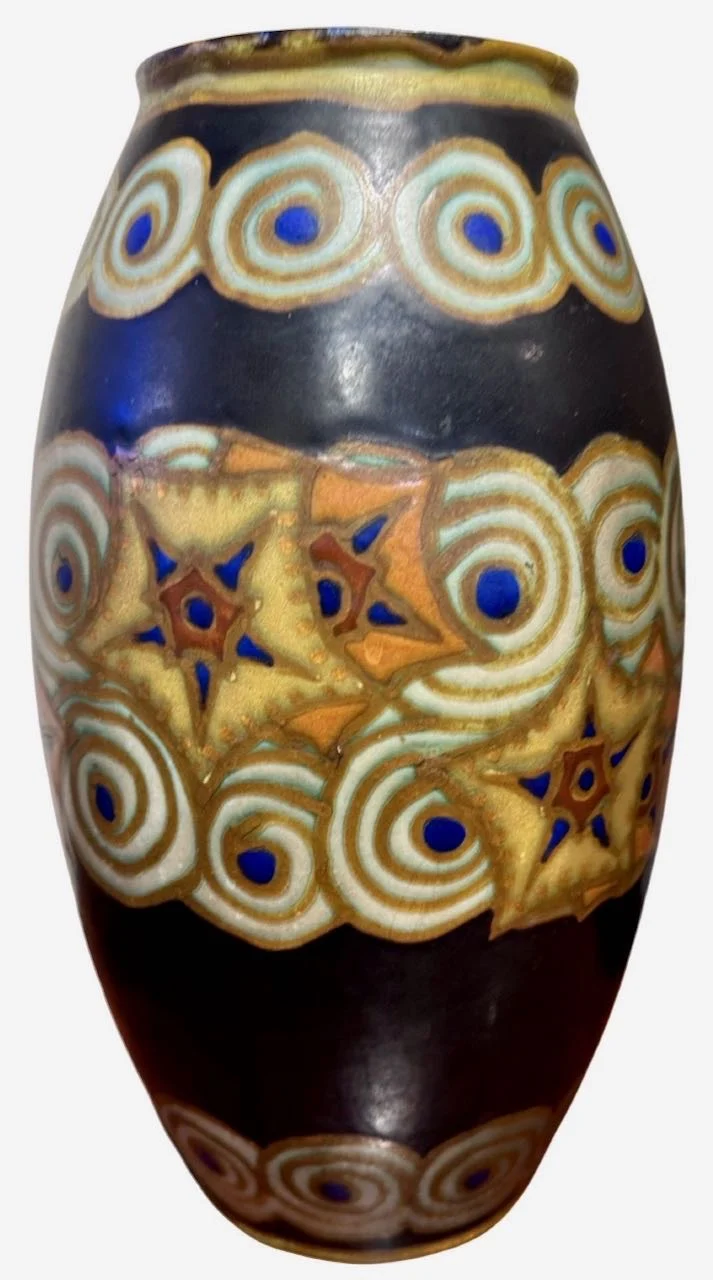
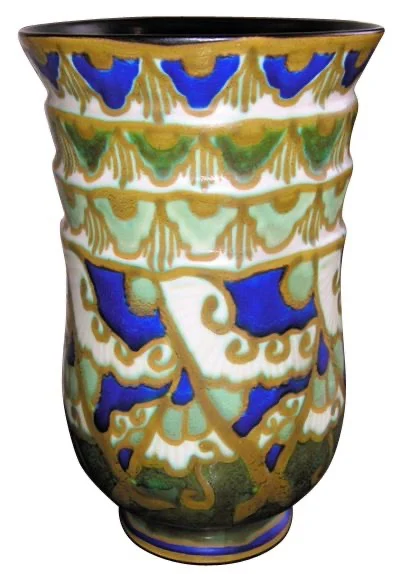
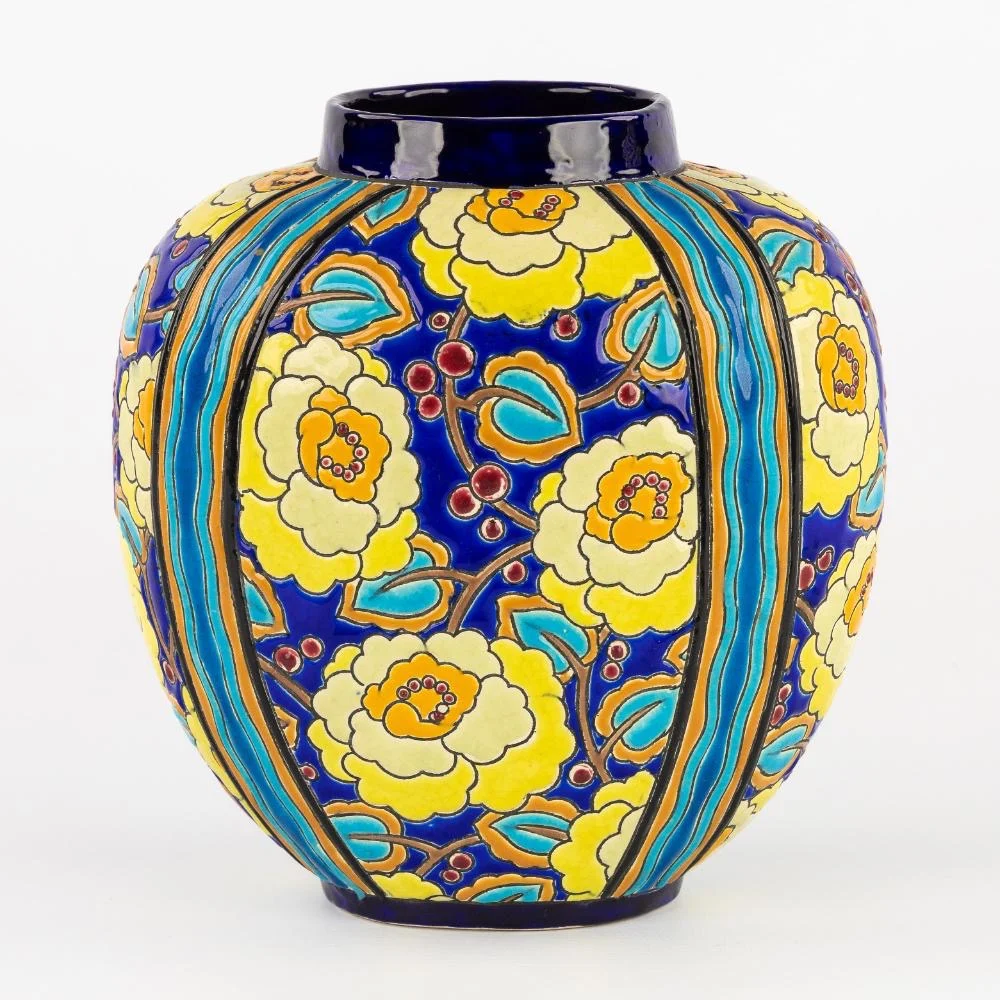
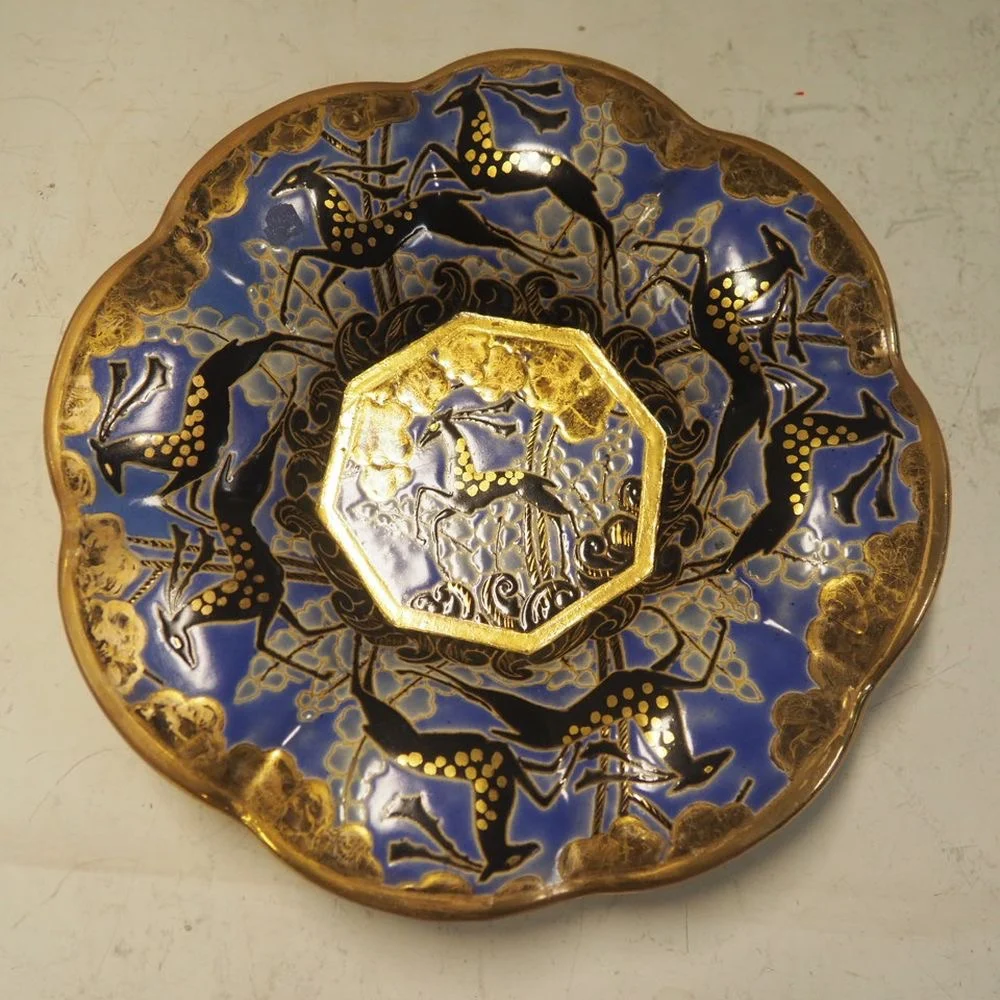
Perhaps the most fascinating technical development was the use of cloisonné style enamel decoration, a treatment closely associated with the famous French pottery of Longwy. The historical relationship between these two manufacturers is especially interesting. The Boch family had been involved in establishing the Longwy pottery works in France in 1798, although the factory passed into the ownership of the d’Huart family in 1835. During the later nineteenth century, Longwy developed its celebrated enamel decoration, influenced by Asian ceramics, using clearly defined outlines to separate areas of brilliant color. The boundaries of these decorative compartments created a jewel like effect, somewhat reminiscent of cloisonné metalwork. Longwy became internationally recognized for this distinctive treatment. At Boch Frères, Catteau developed related techniques using outlined patterns filled with contrasting enamels, including brilliant and matte finishes, while adapting the decoration to the geometry and stylization of Art Deco. It is important to distinguish the two traditions. Longwy developed its own recognizable enamel processes and artistic identity, while Catteau incorporated similar visual principles into the broader experimental program at Keramis. The result was not simply an imitation of Longwy, but an interpretation suited to the forms, colors, and decorative ambitions of the Boch workshop. For collectors today, comparing examples from the two manufacturers offers a fascinating opportunity to understand how a shared ceramic tradition could develop into different expressions of early twentieth century design.
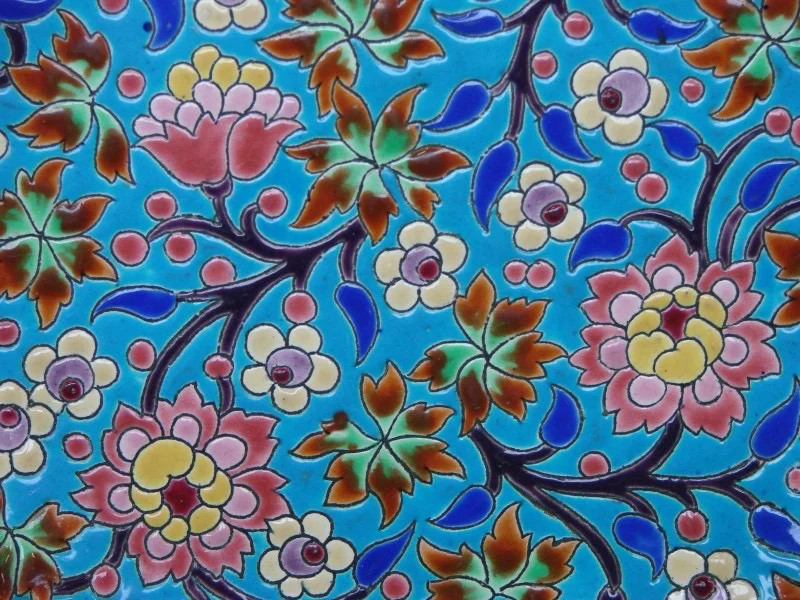
The French town of Longwy, near the Belgian border, is home to a unique tradition of laying enameled colors, cloisonné, on top of ceramic.
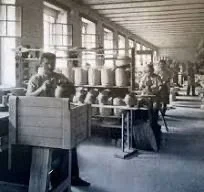
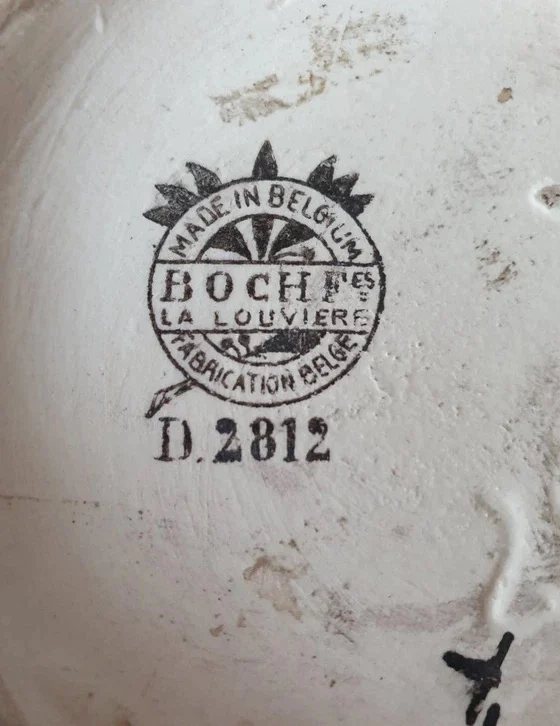
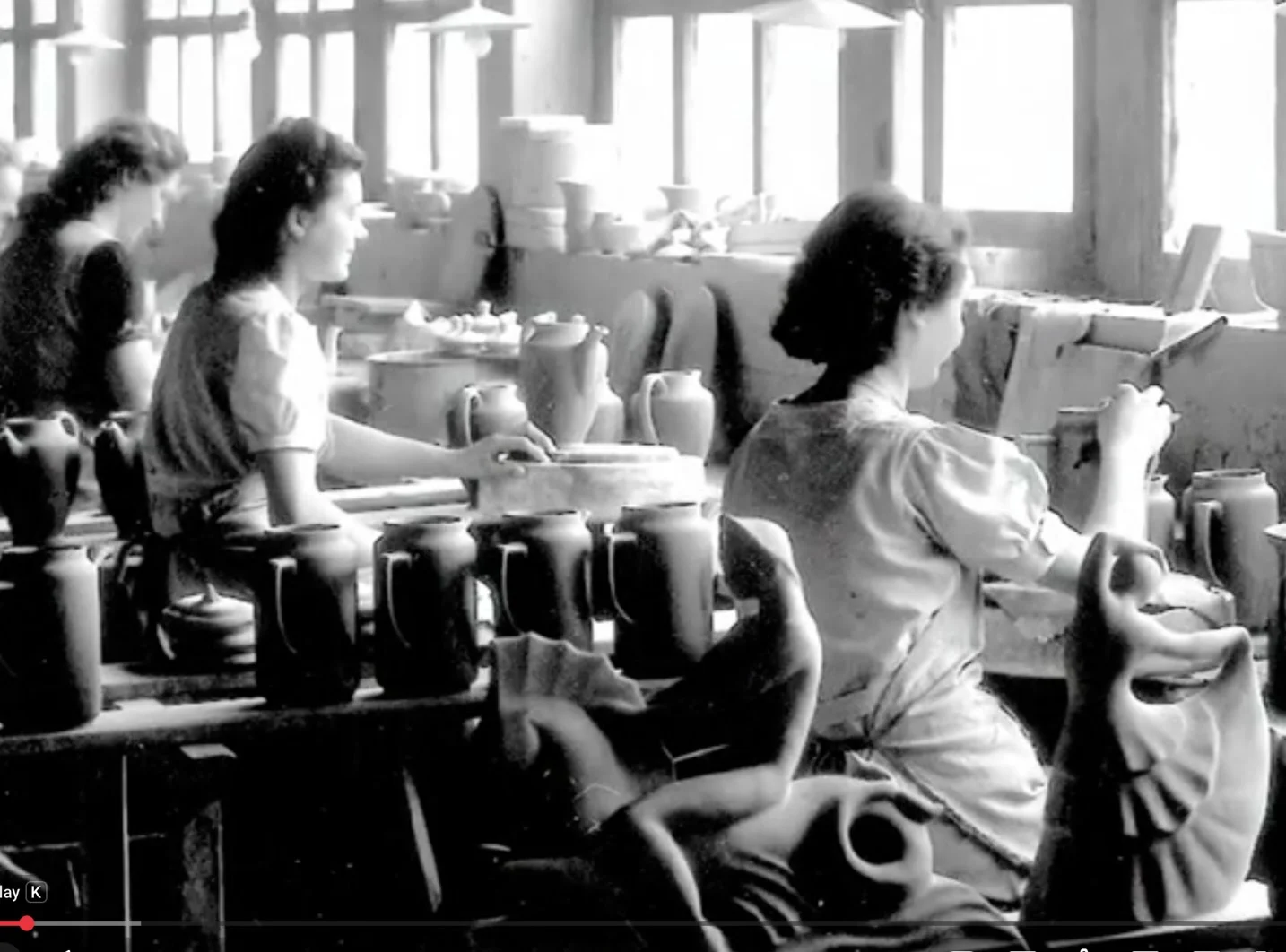
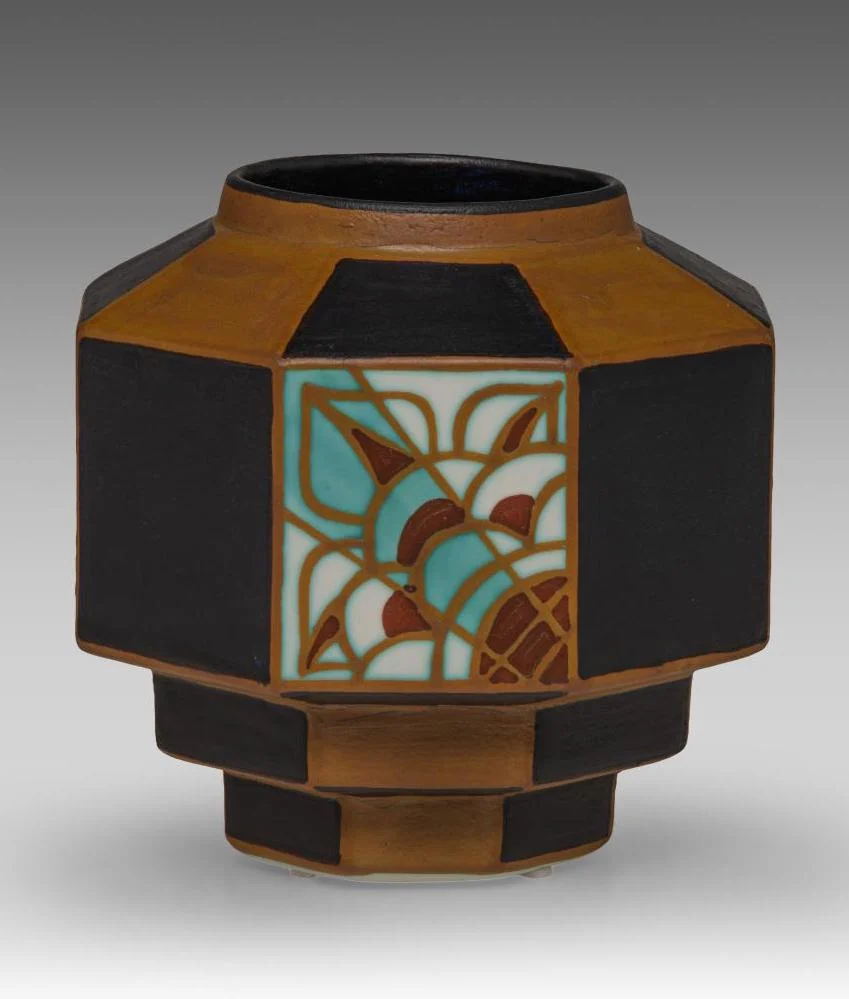 Another essential part of the Boch Frères story is the relationship between hand craftsmanship and industrial production. Catteau believed that high quality artistic design should reach a much broader public than the limited clientele able to purchase unique works of art. His workshop developed methods for reproducing sophisticated patterns with considerable consistency while retaining the involvement of skilled decorators. Ceramic forms could be made through industrial forming and casting processes, including molds that allowed the same shape to be produced repeatedly. Decorative designs could be transferred through printed outlines, stencils, or pouncing techniques, while colored enamels and glazes were frequently applied or finished by hand. This combination allowed the factory to manufacture substantial quantities without losing the appearance of individual craftsmanship. A single vase form might be used for numerous decorative patterns, while a particularly successful pattern could be adapted to several different shapes. The factory developed extensive systems for numbering its forms and decorations, records that have become invaluable to modern researchers and collectors. Although Catteau remains the most celebrated name associated with these ceramics, it would be a mistake to overlook the artists, painters, modelers, and technicians who translated his concepts into finished objects. Many pieces required considerable individual skill, sometimes involving several stages of preparation, decoration, glazing, and firing. The collaboration between artistic direction and the workshop was central to the achievement of Boch Frères, demonstrating how industrial production and genuine craftsmanship could successfully coexist.
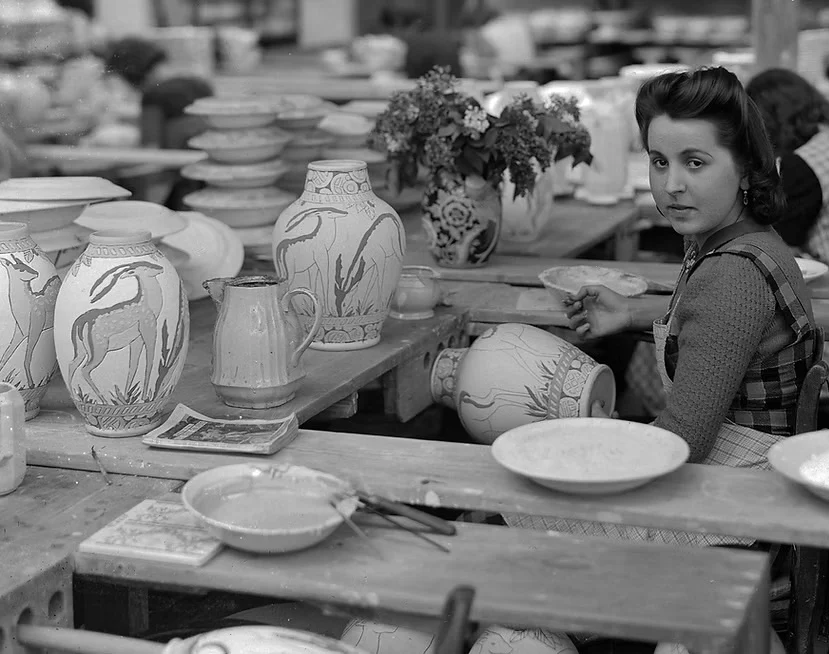
Boch employee getting ready to apply color to the 2nd firing
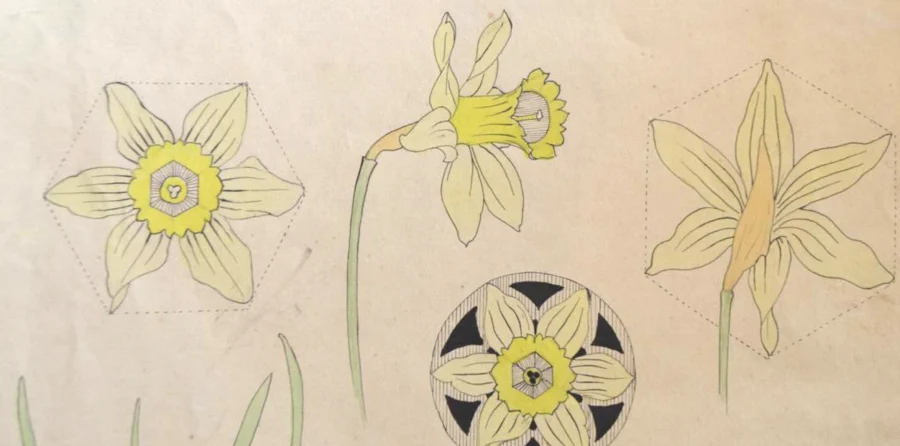
A pattern used for the design
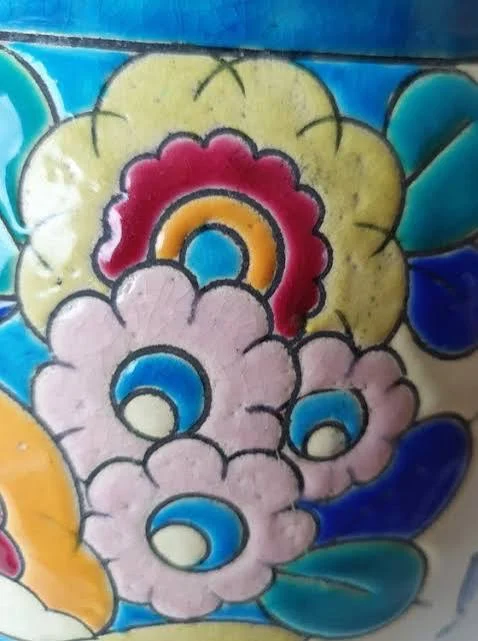
A completed cloisonné style enamel decoration after the final firing
Ceramic Cloisonné Examples
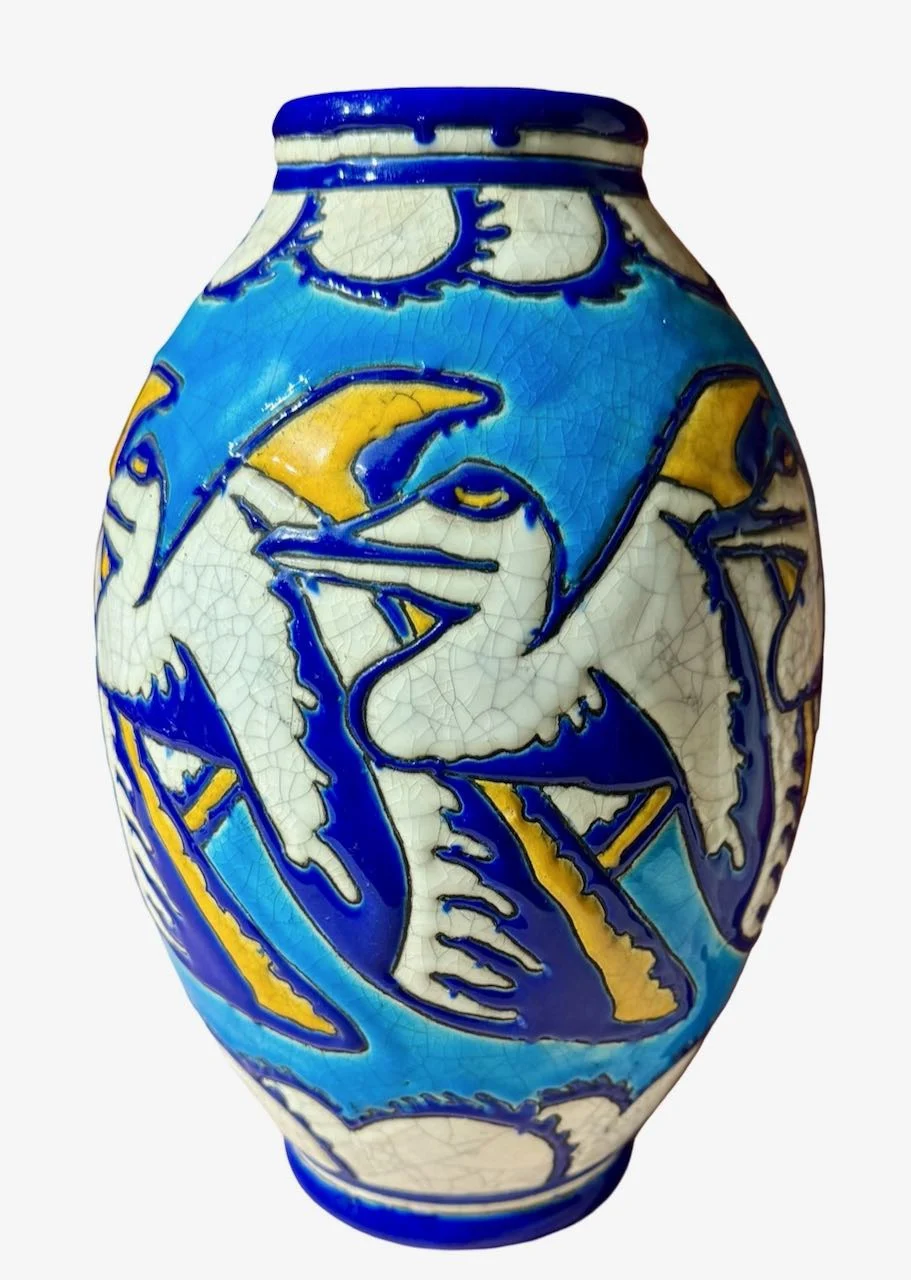
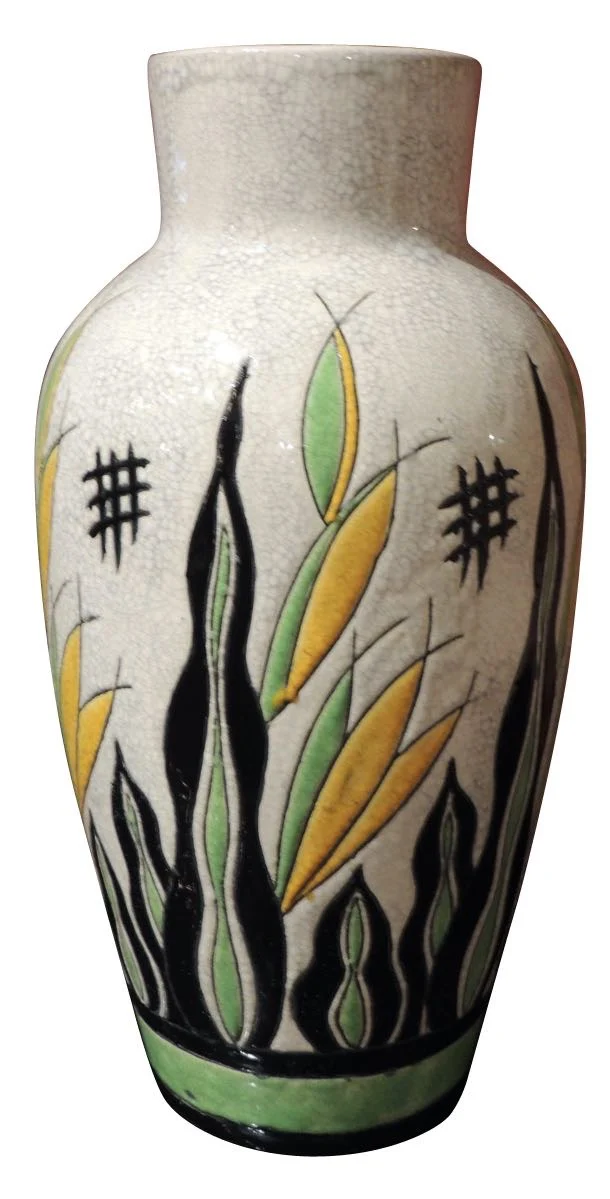
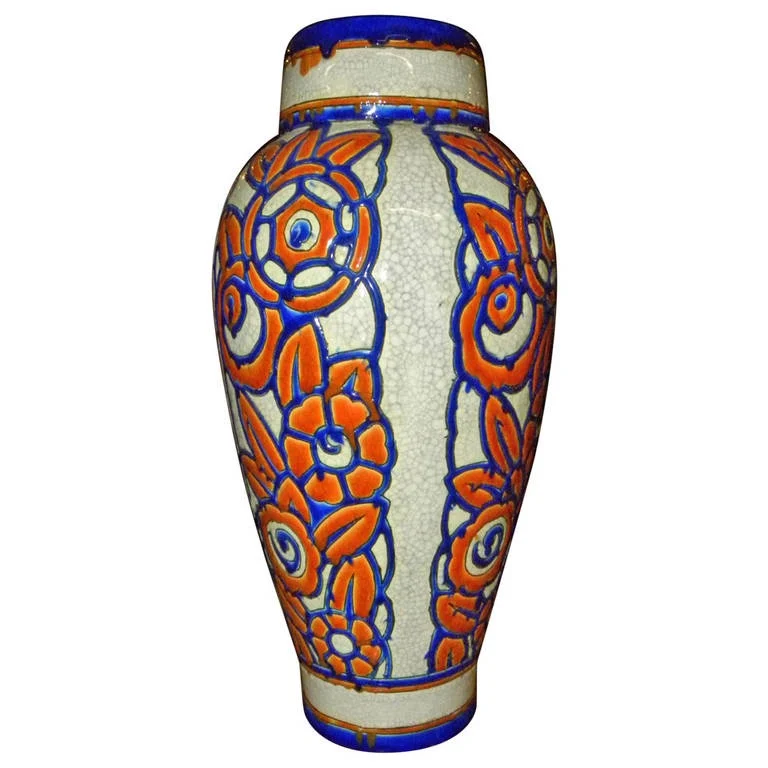
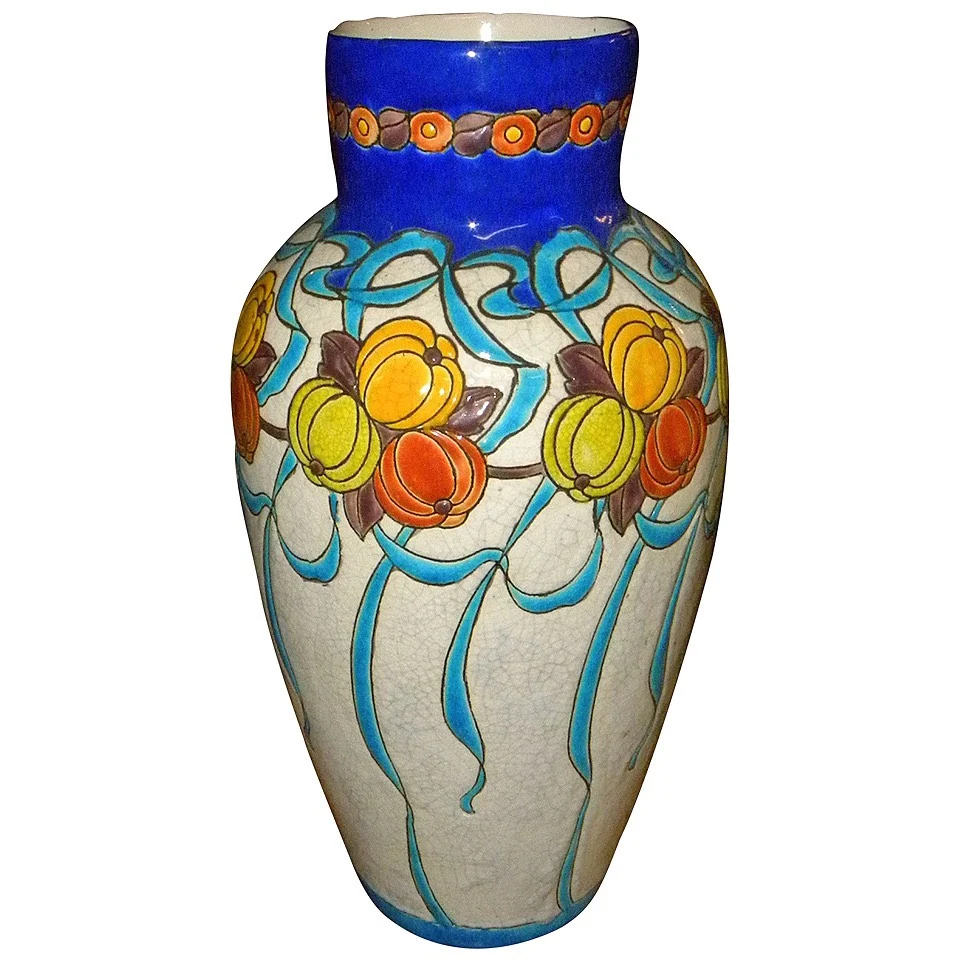
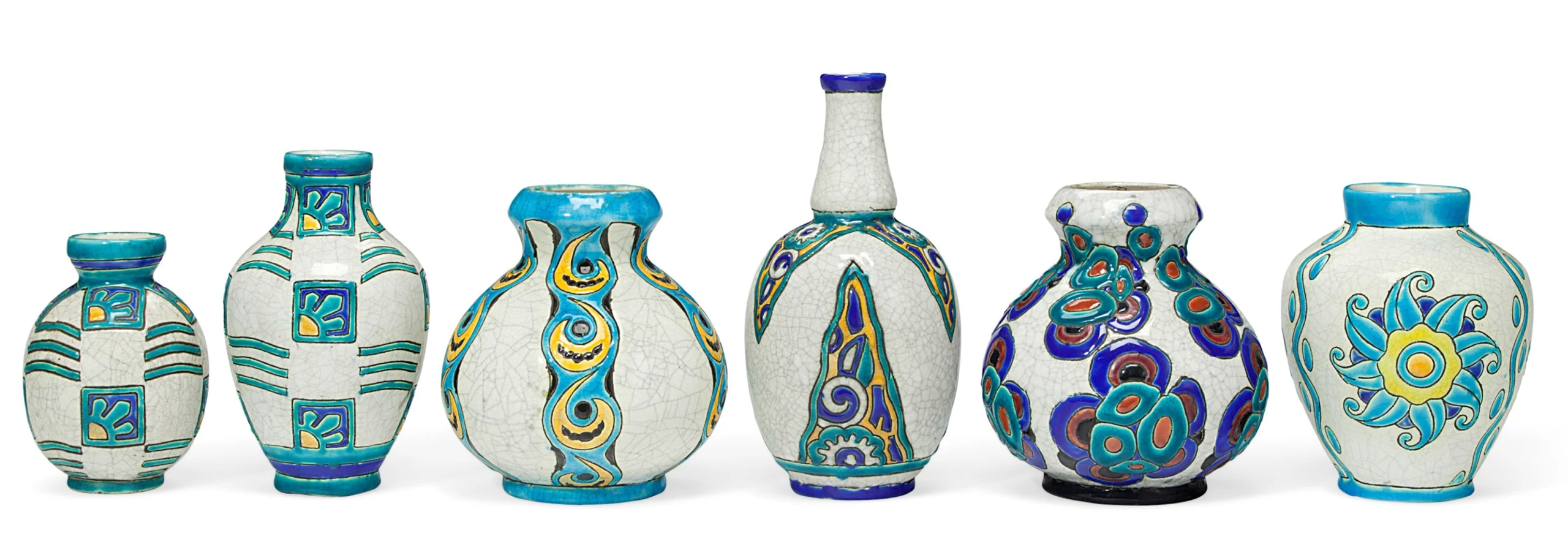
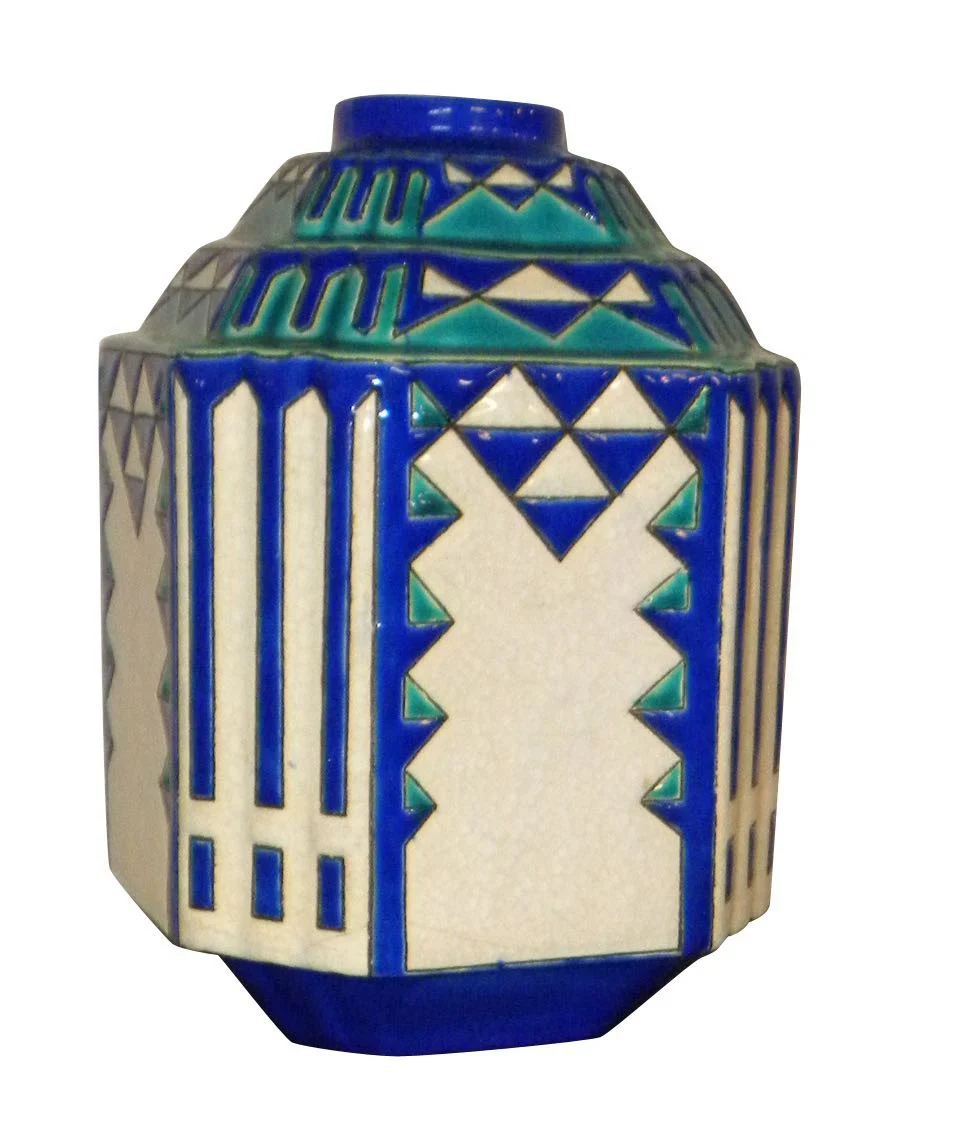
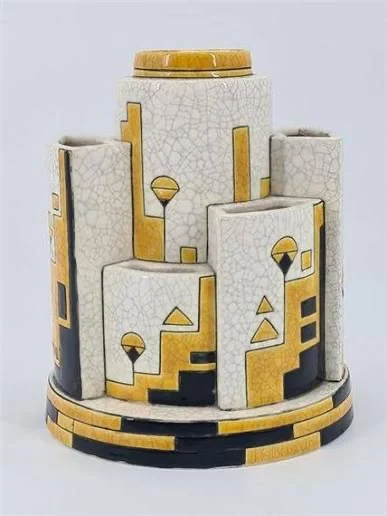
During the later 1920s and early 1930s, the workshop reached an extraordinary level of creativity and production. The range of decorative treatments continued to expand, incorporating increasingly sophisticated combinations of geometry, color, texture, and sculptural form. Some vases were tall and architectural, with stepped shoulders or faceted surfaces, while others were rounded, compressed, elongated, or deliberately unconventional. Large decorative vessels could become important focal points in a room, while smaller examples provided affordable expressions of contemporary design. The factory also extended Art Deco patterns into tableware and other domestic ceramics. Catteau’s particular genius was his ability to understand how a design would interact with a three dimensional object. A pattern that appears relatively simple in a drawing might become surprisingly complex as it wraps around a curved vase, crosses a shoulder, or changes direction along a narrow neck. At the same time, more elaborate designs could be carefully organized so the decoration never overwhelmed the form. The factory’s presence at the 1930 International Exhibition in Liège further demonstrated the importance of its decorative production. Yet by the middle of the 1930s, European taste was changing. The bold geometry and strong colors of the preceding decade gradually gave way to more restrained, naturalistic, and classical designs. Catteau reduced his involvement after 1935 and retired in 1946. The factory continued producing ceramics long after the height of the Art Deco movement, but the creative achievements of the Catteau period remain its most celebrated contribution to twentieth century decorative art.
Boch & the Geometric Form and Decoration
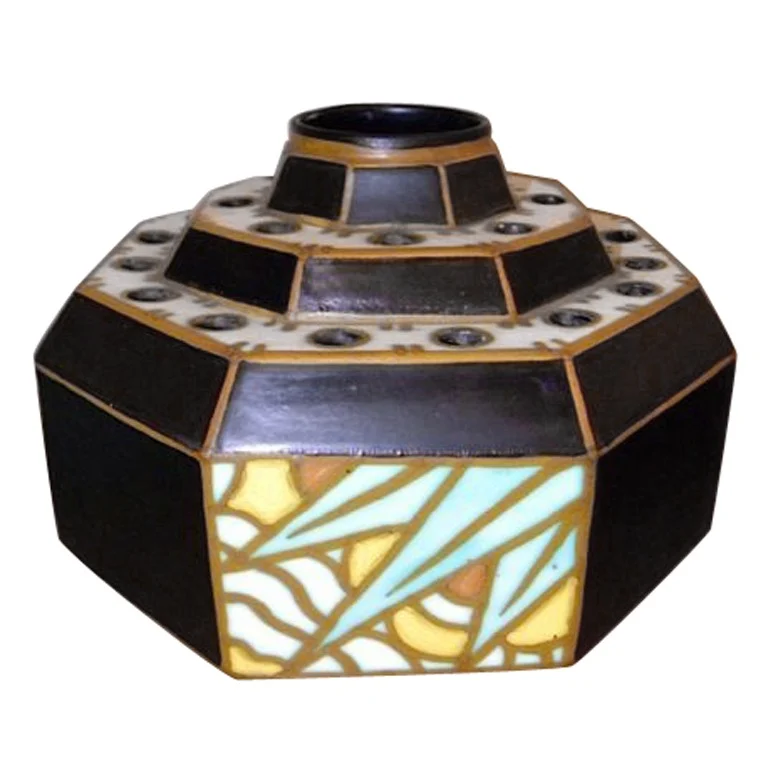
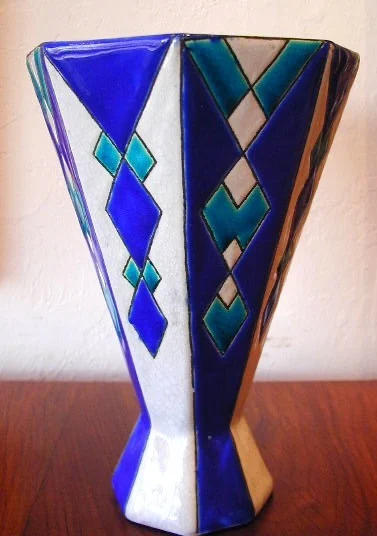
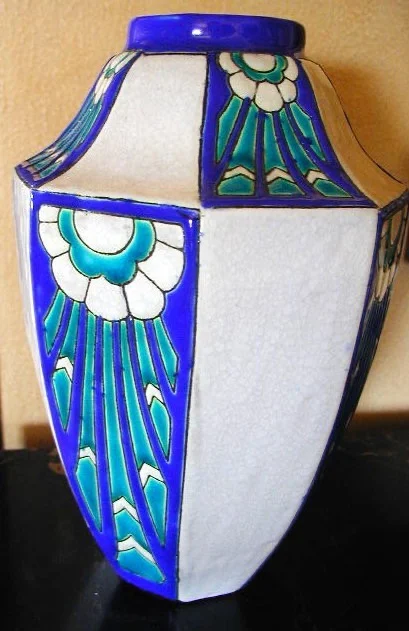
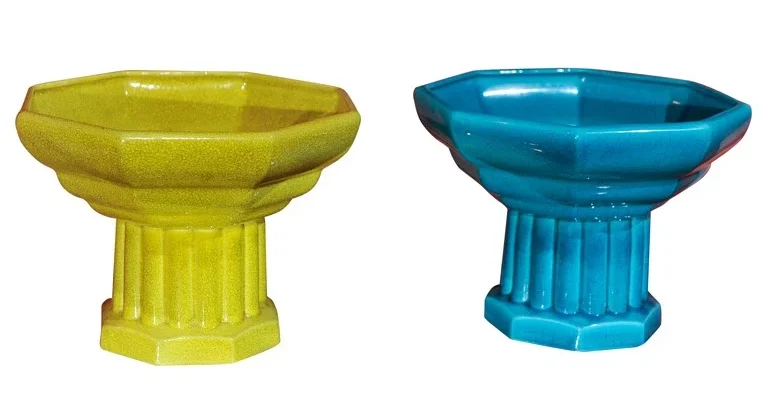
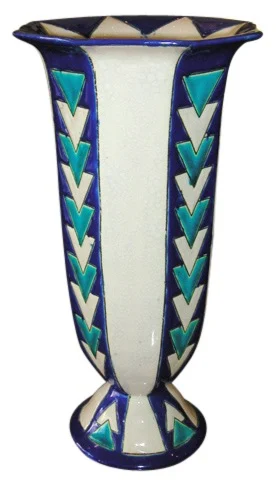
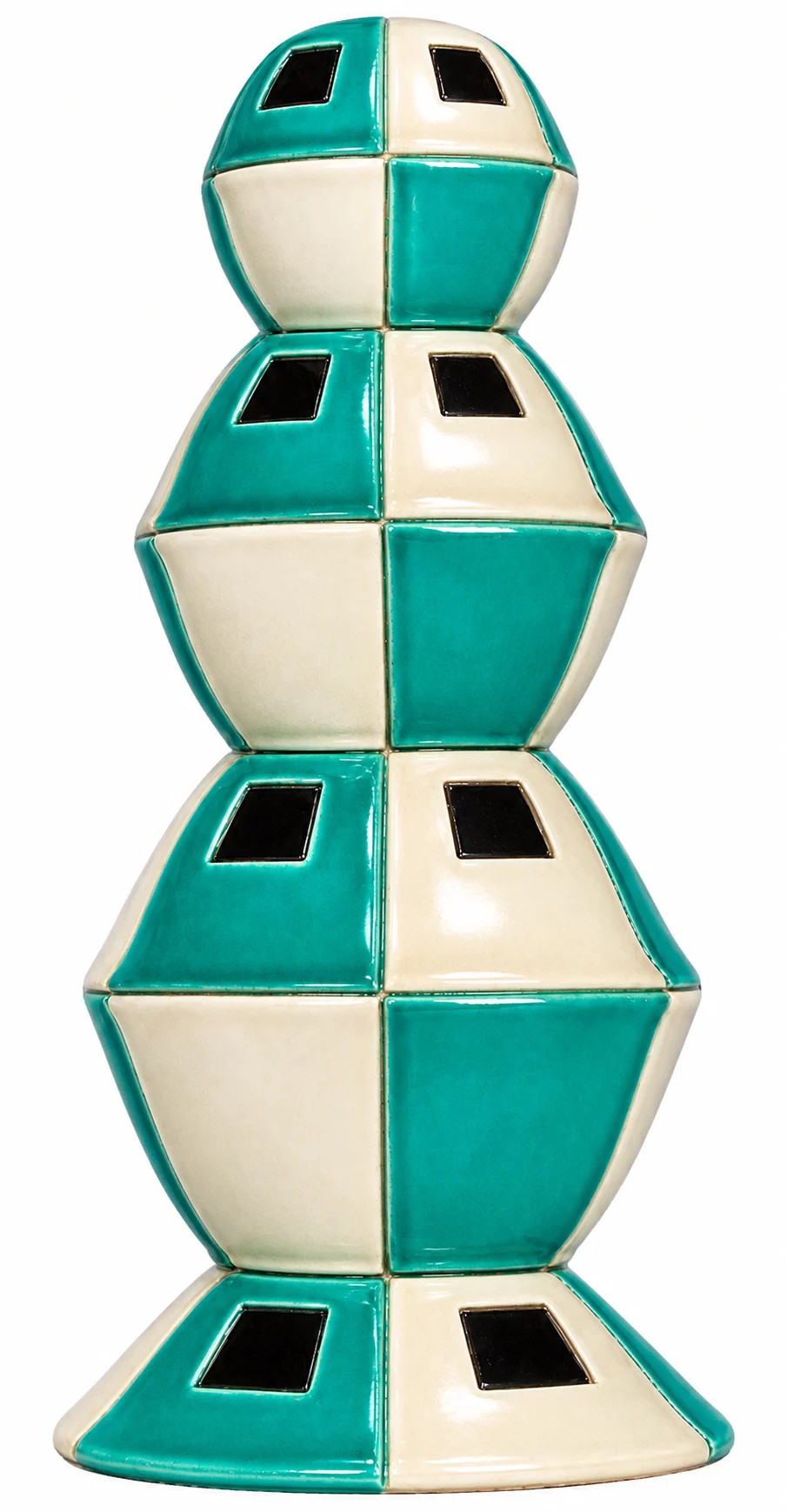
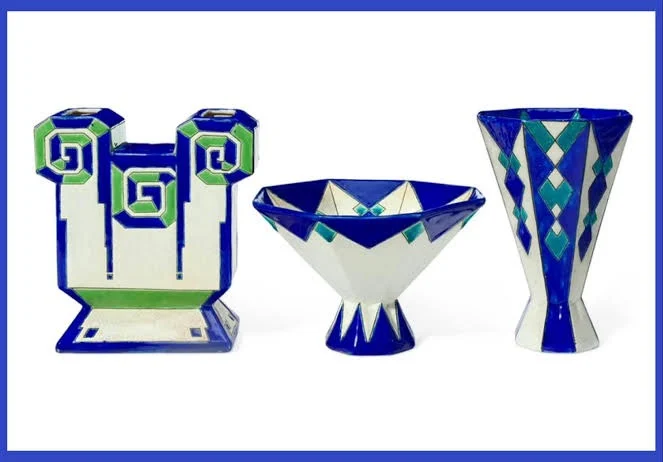
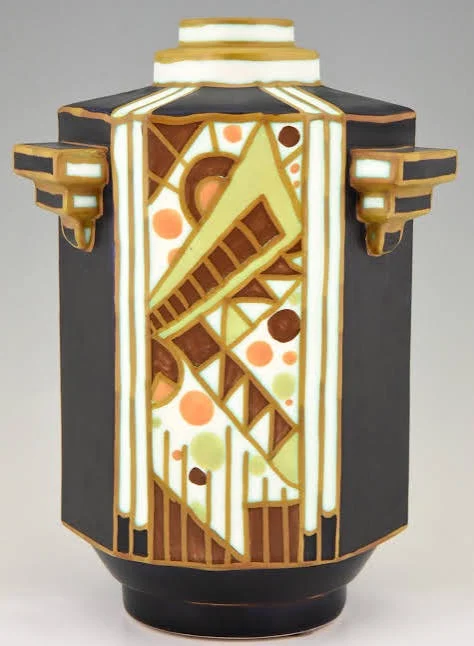
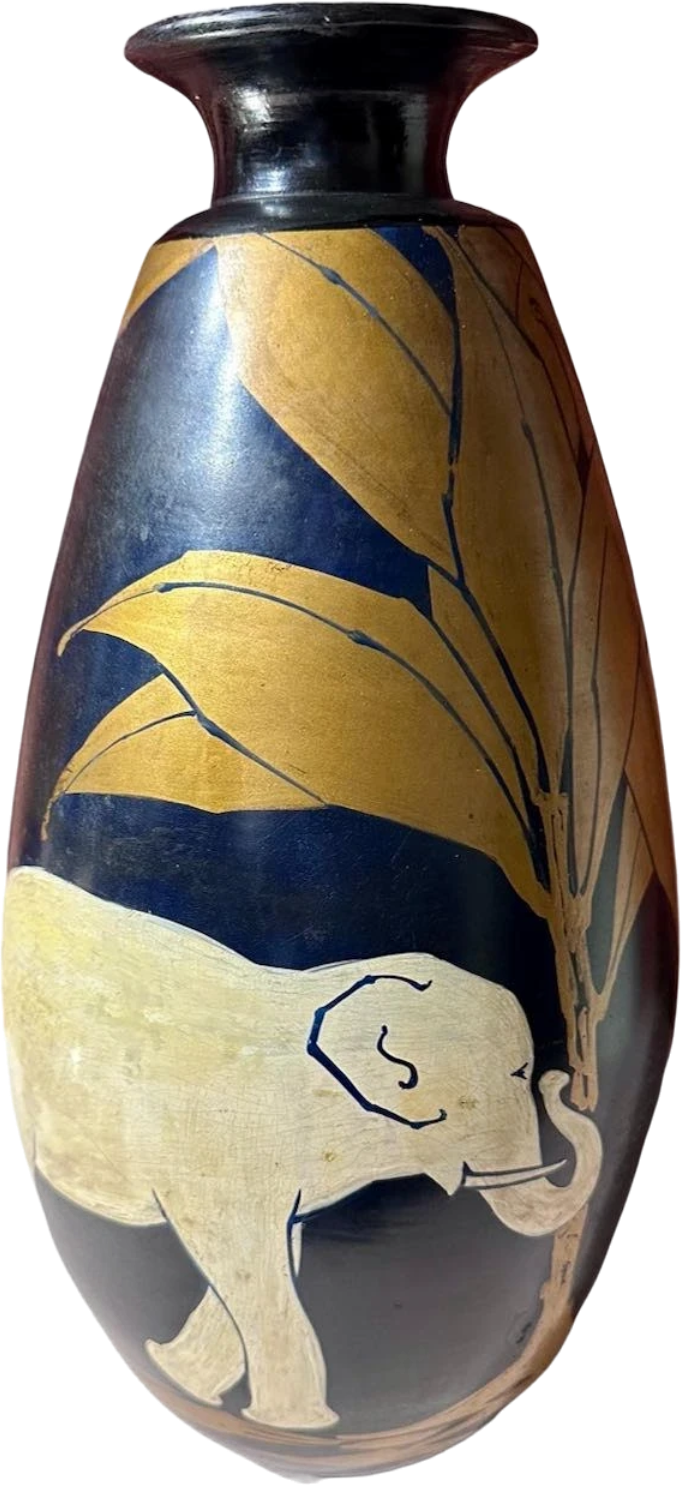
Boch Frères Grès Stoneware and Animal Designs
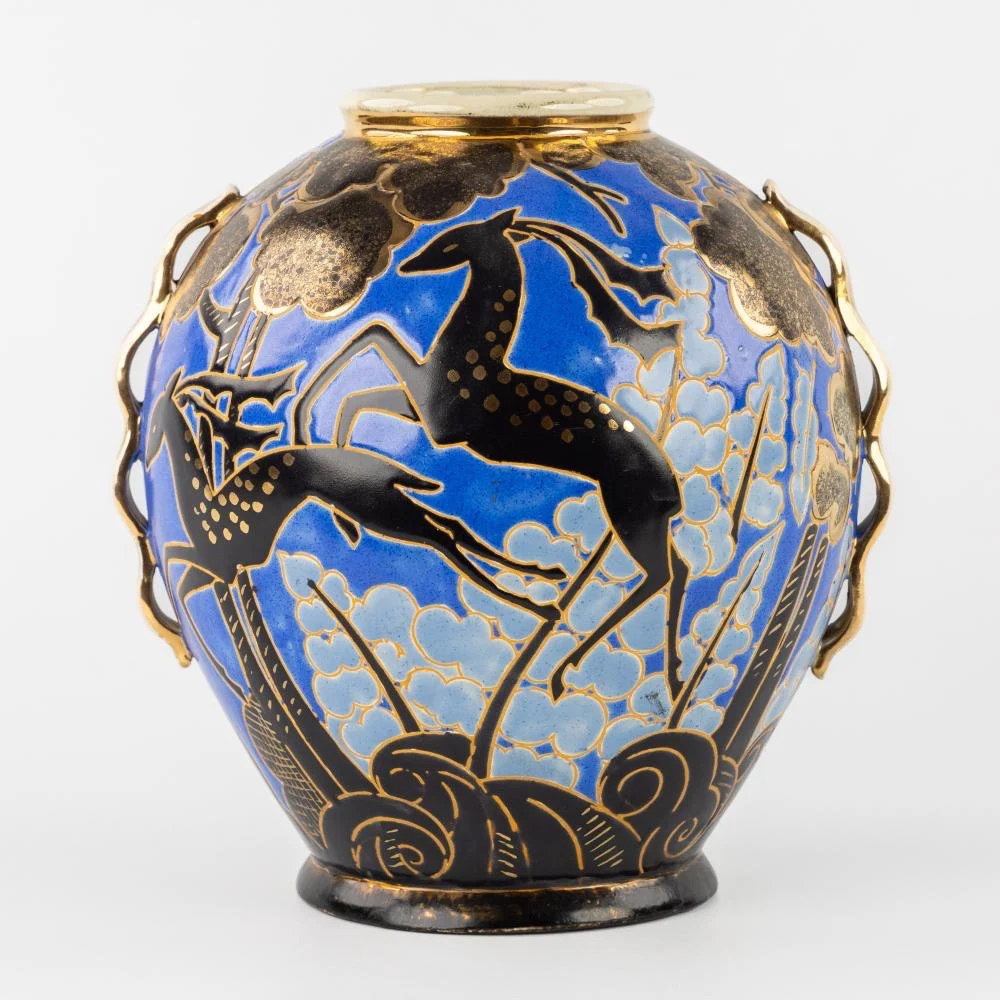
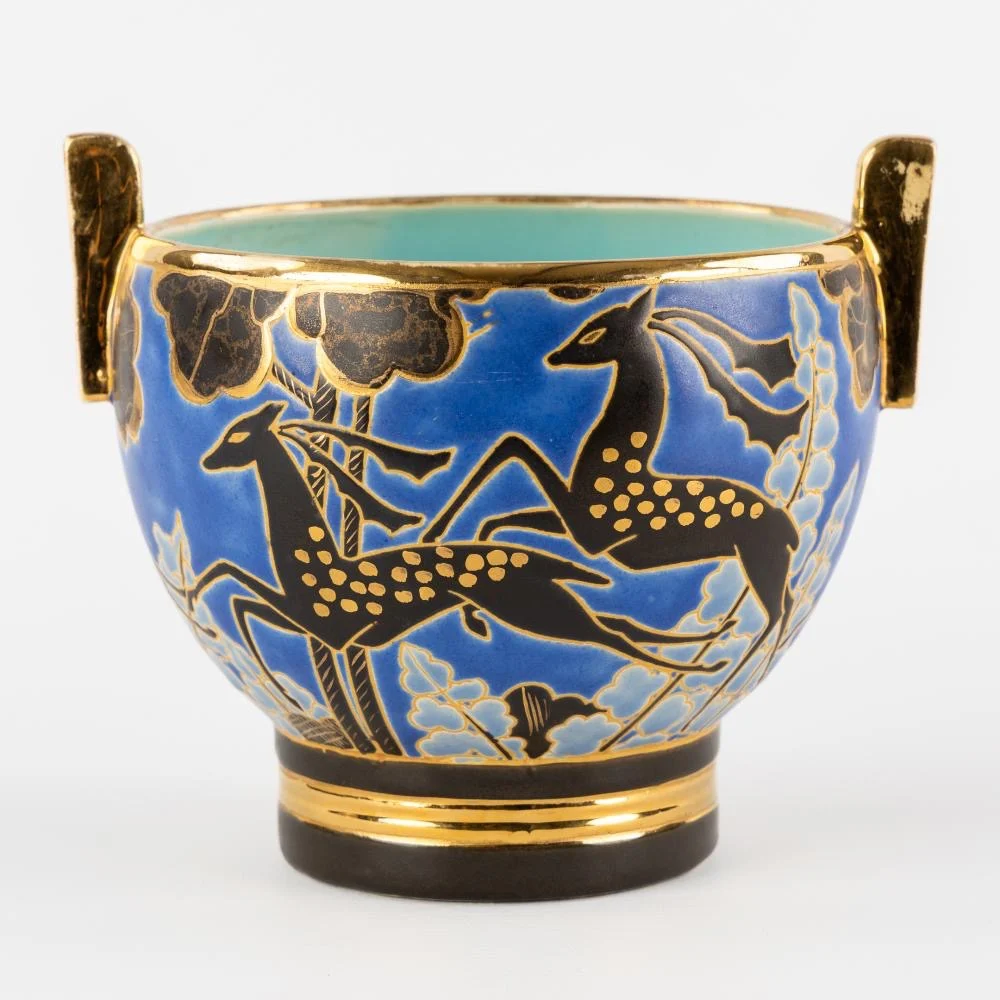
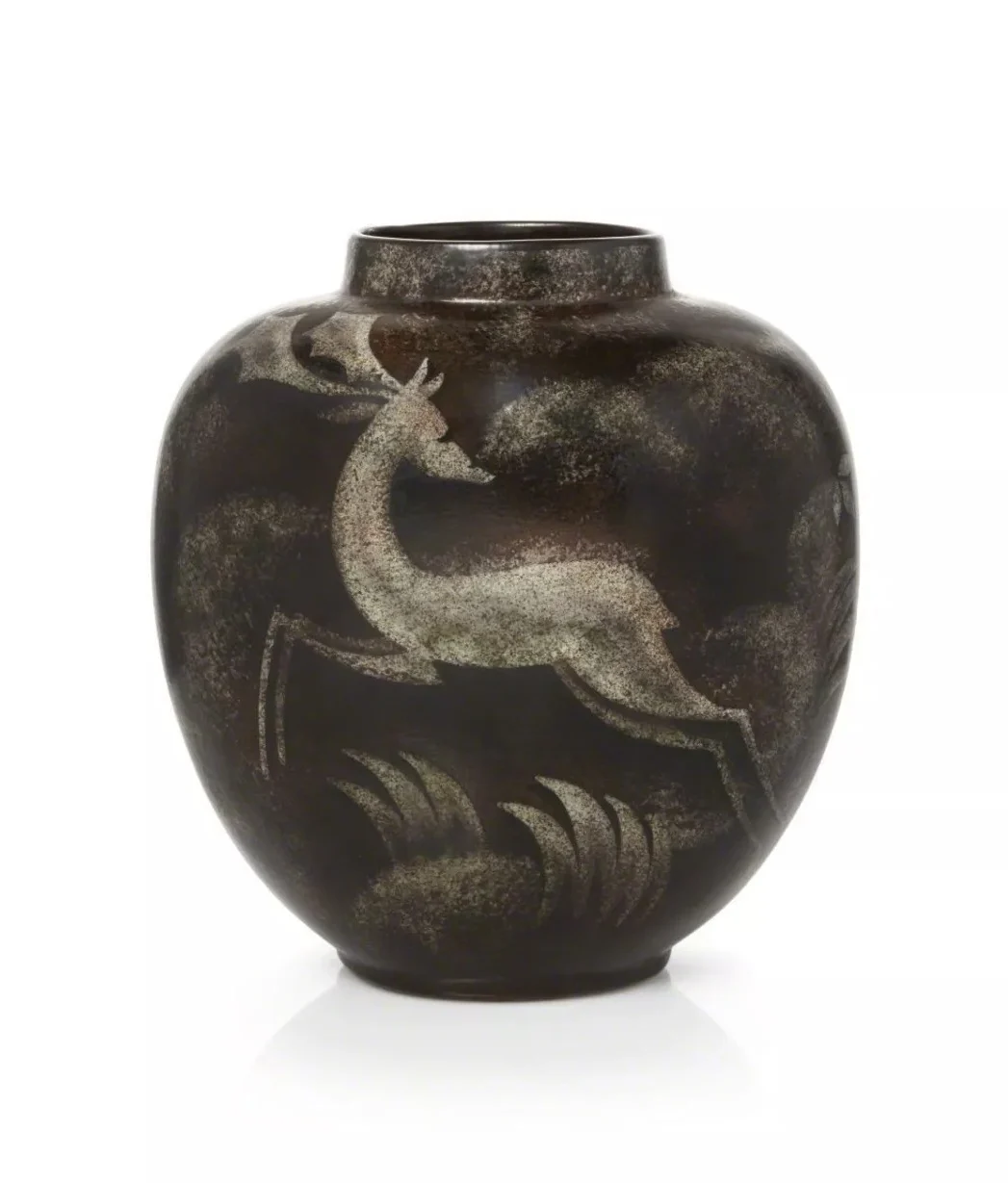 Grès stoneware vases decorated with animals. These were produced in smaller quantities than the more common earthenware pieces, and finding good examples today is not easy. The designs featuring elephants, monkeys, birds, deer, and other animals are particularly sought after and often bring the highest prices. This is something I have seen throughout my years in the decorative arts business. Whether we are talking about ceramics, bronze sculpture, or glass, animal subjects generally attract more attention and money than floral designs. Grès is the French word for stoneware, a dense, extremely hard and durable ceramic made from natural clays and minerals, including quartz, and fired at much higher temperatures than traditional earthenware. It has a heavier feel, is less porous, and is particularly resistant to wear. These are the examples that serious collectors are often willing to pay a premium to acquire.
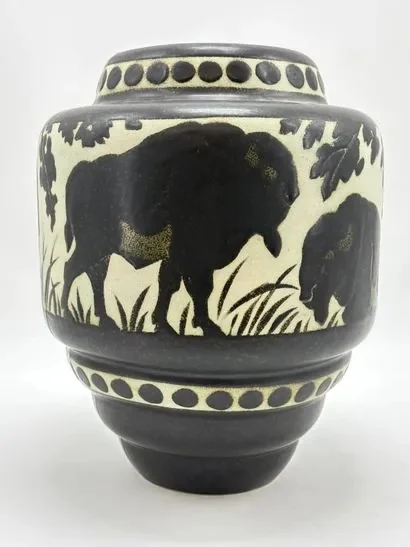
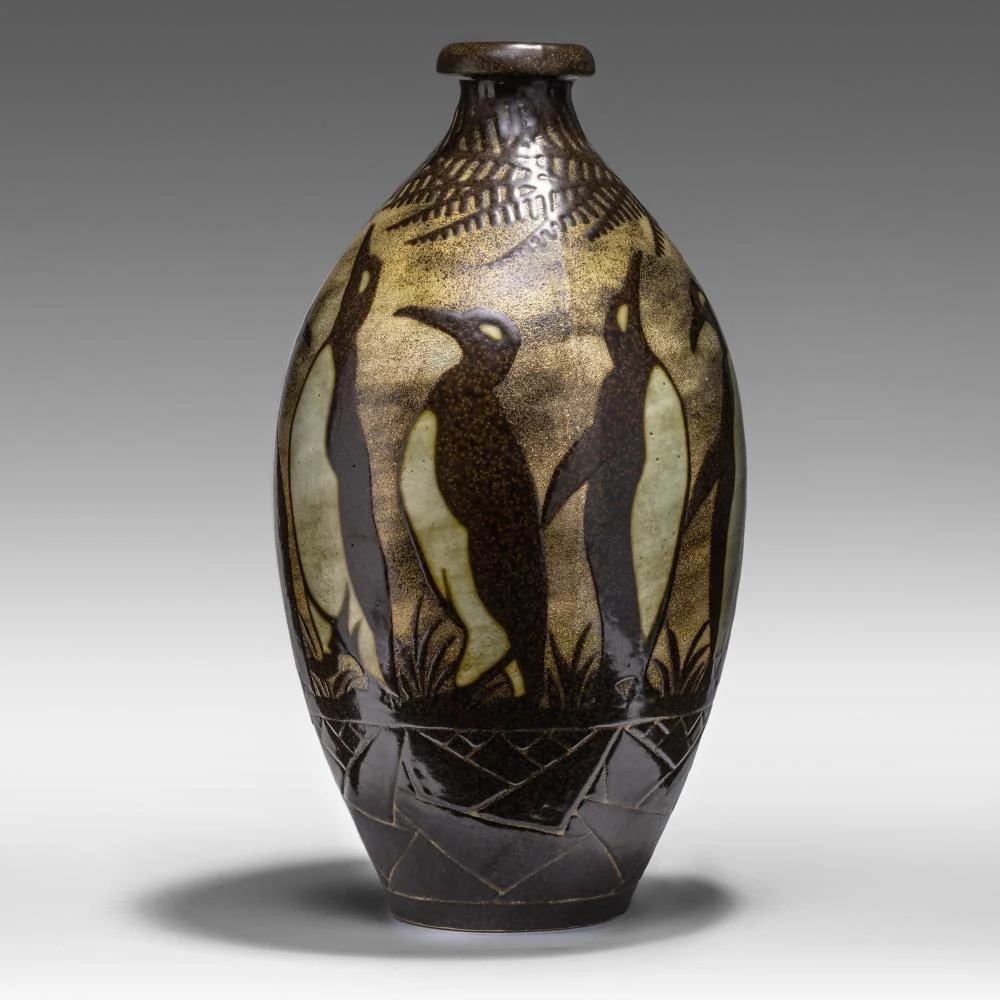
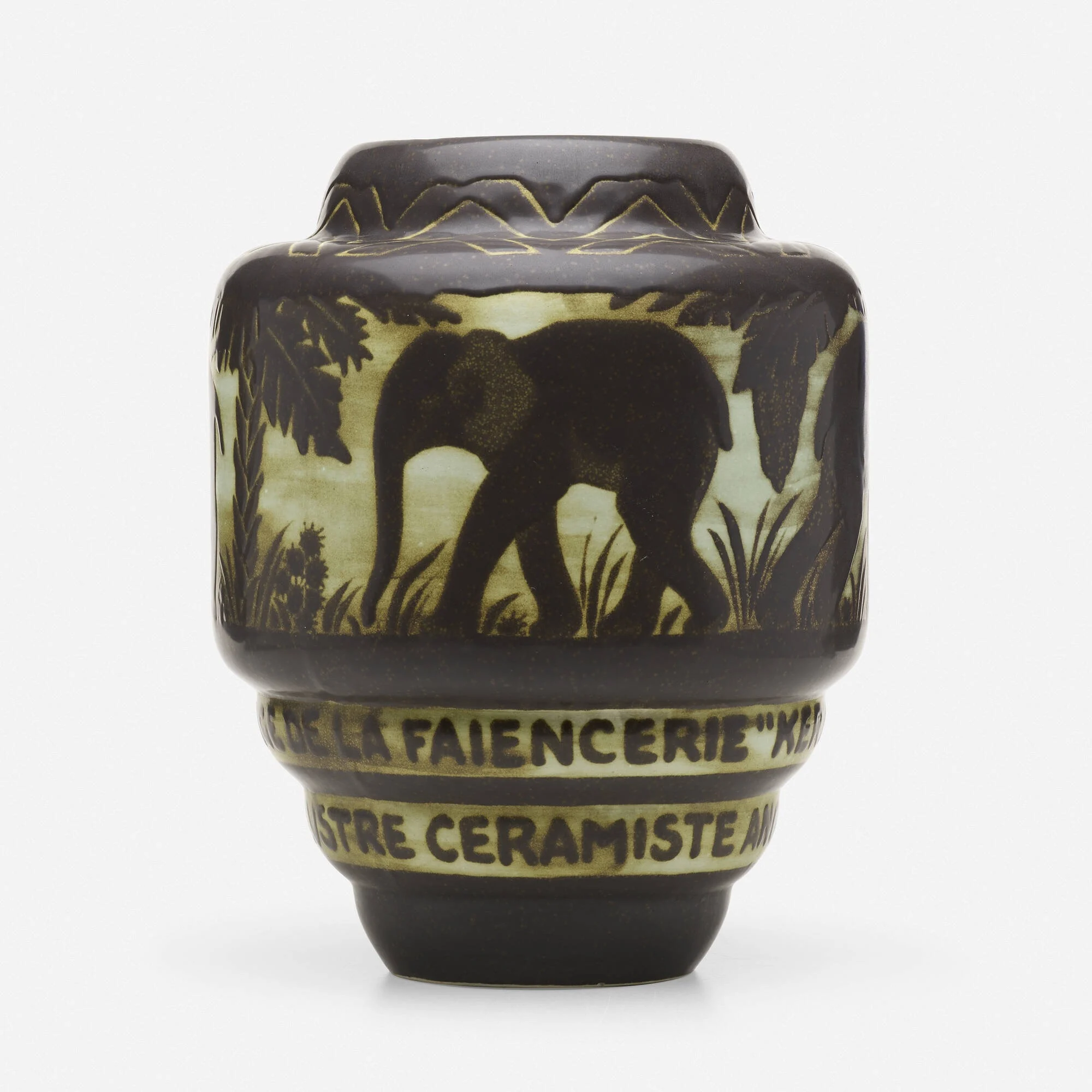
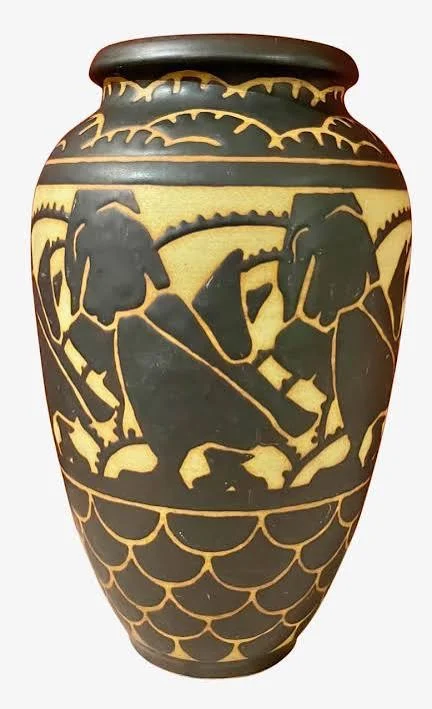
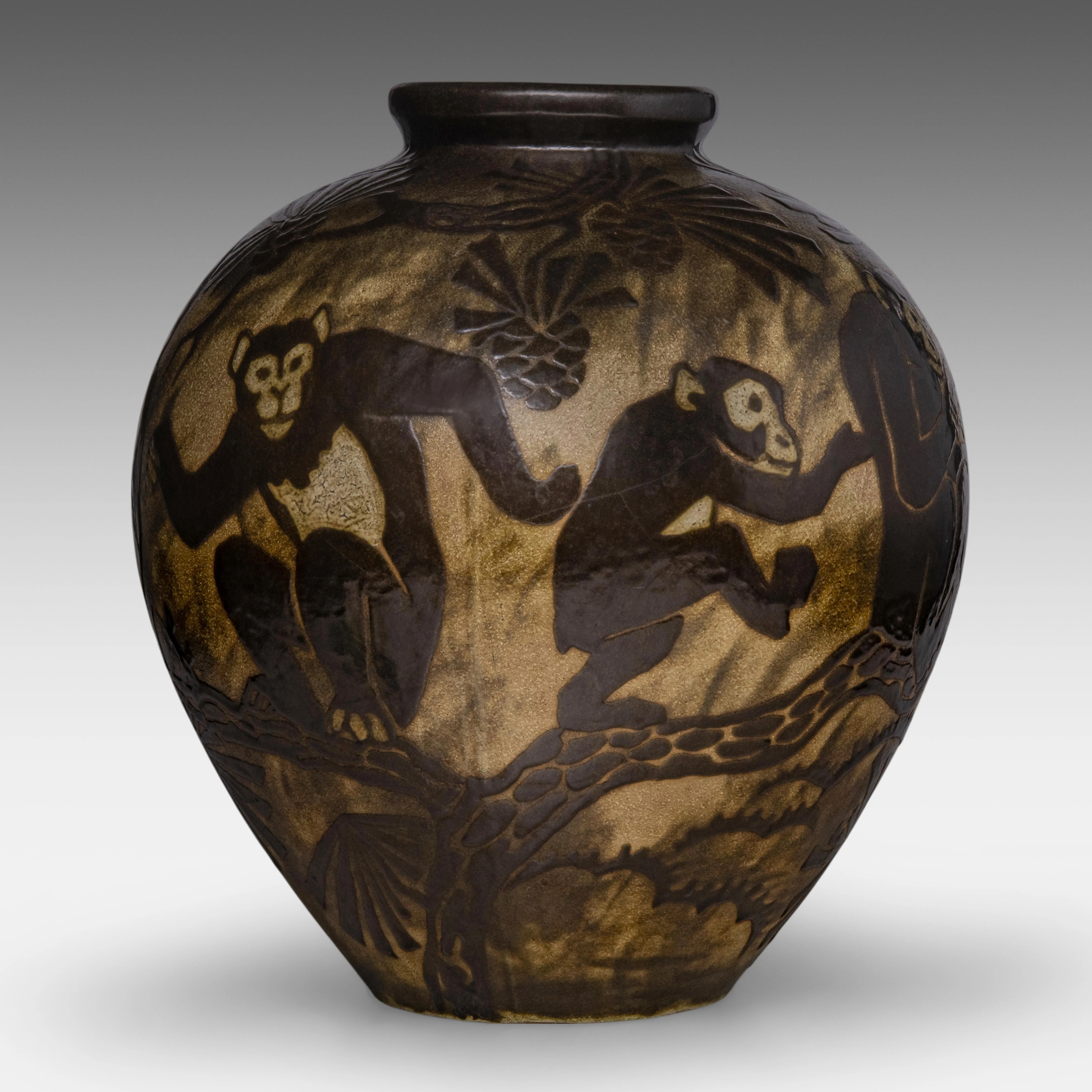
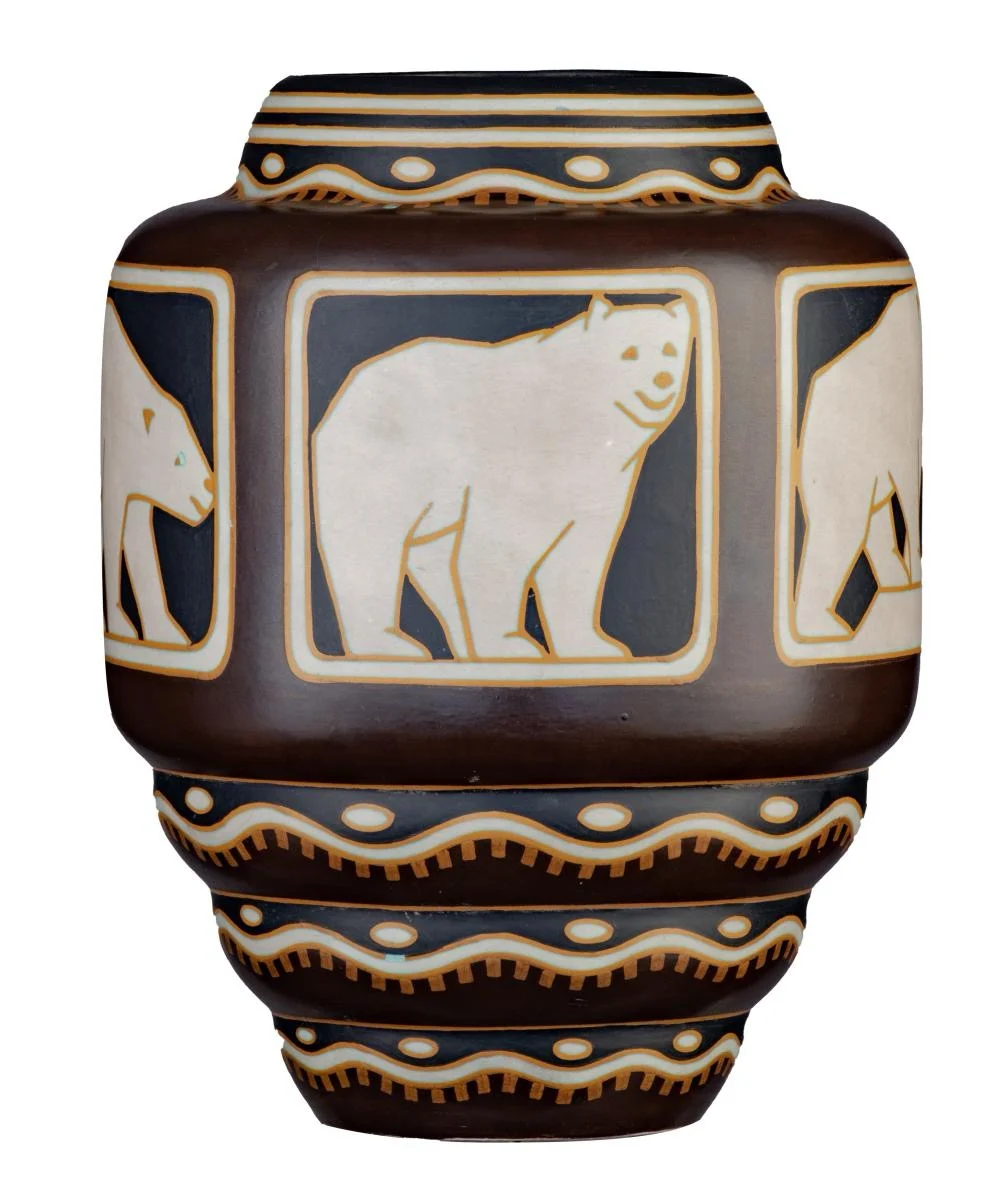
Gres Stoneware Floral with color added
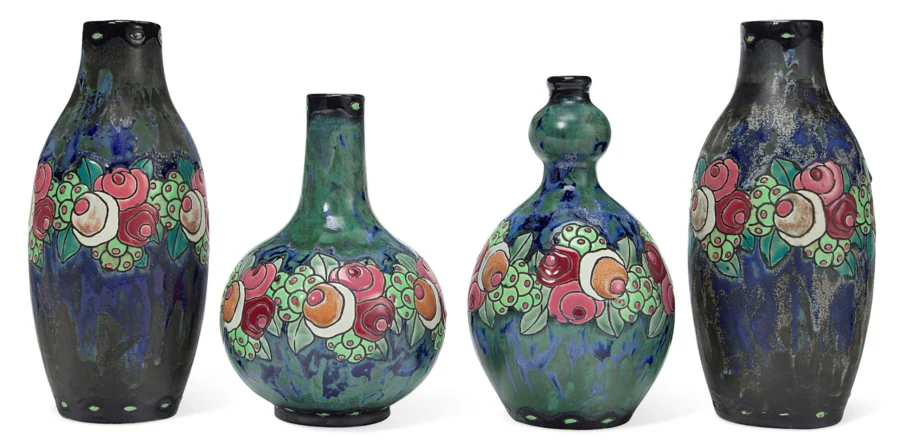
Gloss Ceramic Painted Examples
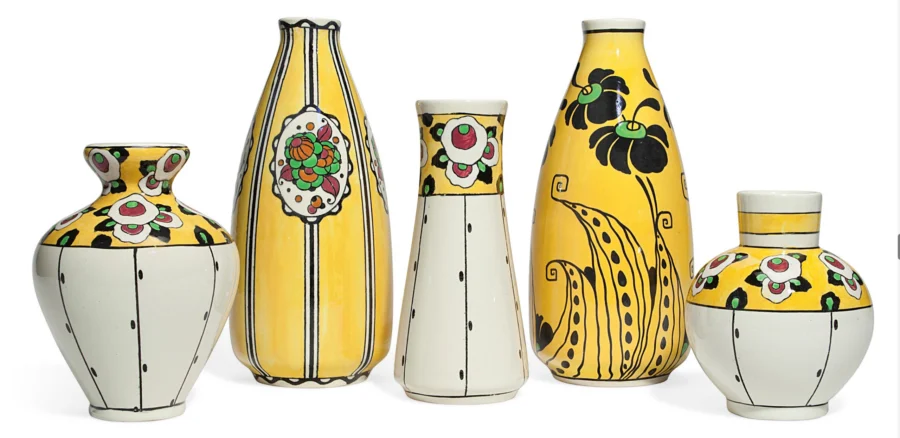
Matt Ceramic Painted Examples
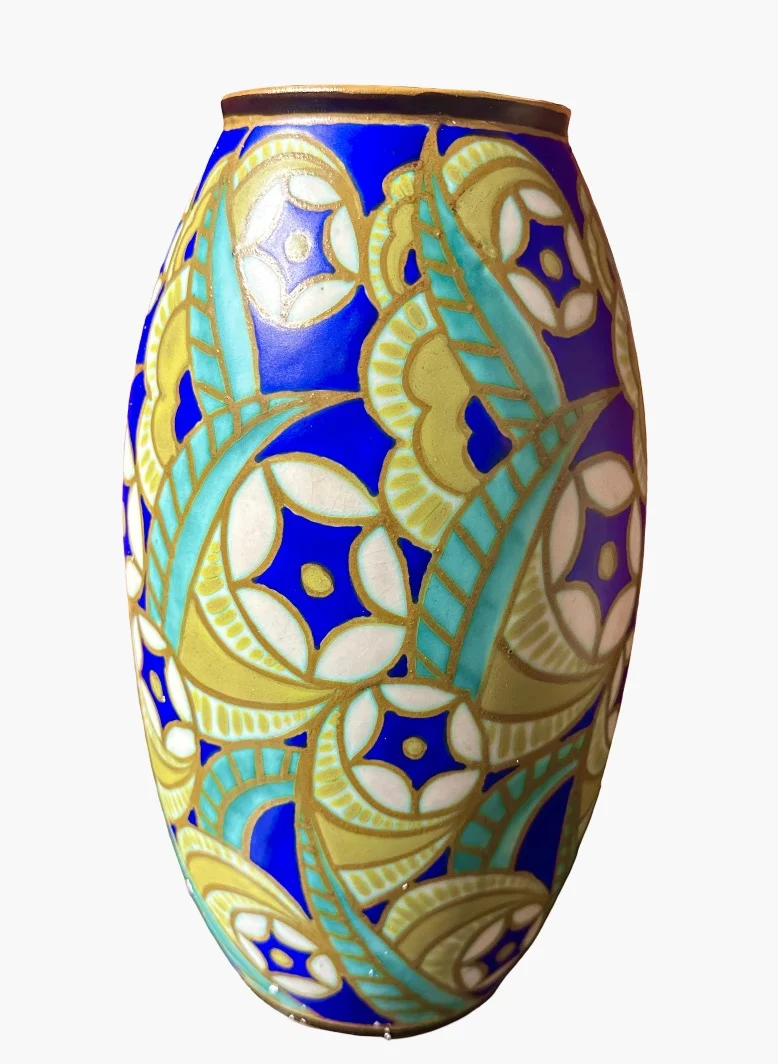
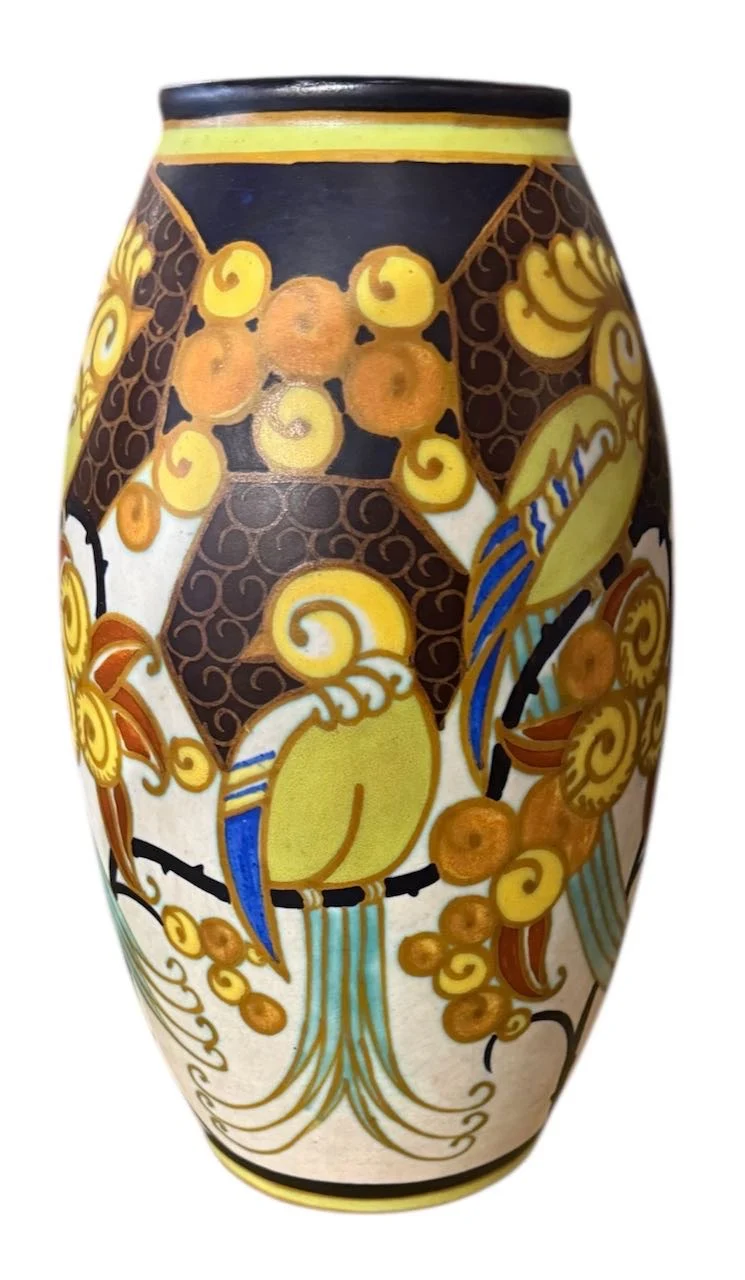
African Influences and the Art Deco Movement
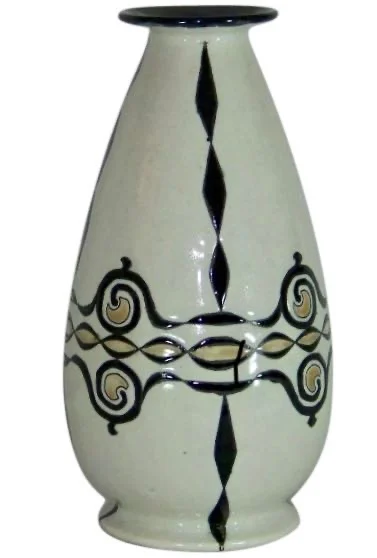
During the late nineteenth and early twentieth centuries, African art became an important influence on European artists and designers, contributing to a movement known as Primitivism. Belgium’s colonial involvement in the Congo brought large quantities of African sculpture, masks, and decorative objects into European museums and private collections. These objects introduced European artists to unfamiliar forms of geometric abstraction, stylized figures, and repeating patterns. Charles Catteau and the designers at Boch Frères Keramis were influenced by this growing interest in African art, incorporating geometric motifs, bold contrasts, and stylized decoration into their ceramics. What I find particularly interesting is how these African influences, combined with Cubism and other international design movements, became part of the distinctive Art Deco vocabulary that made Boch ceramics so recognizable during the 1920s and 1930s
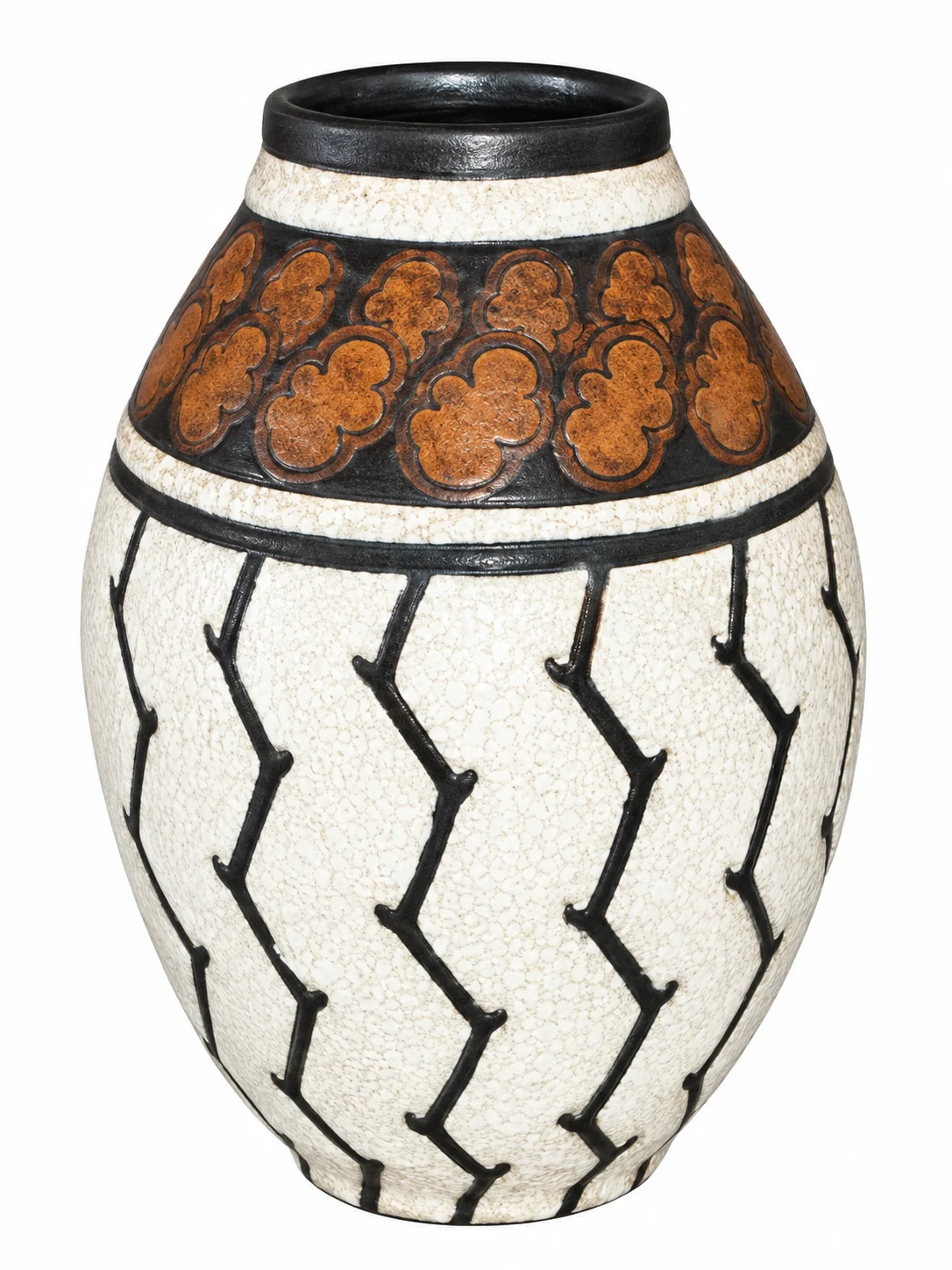
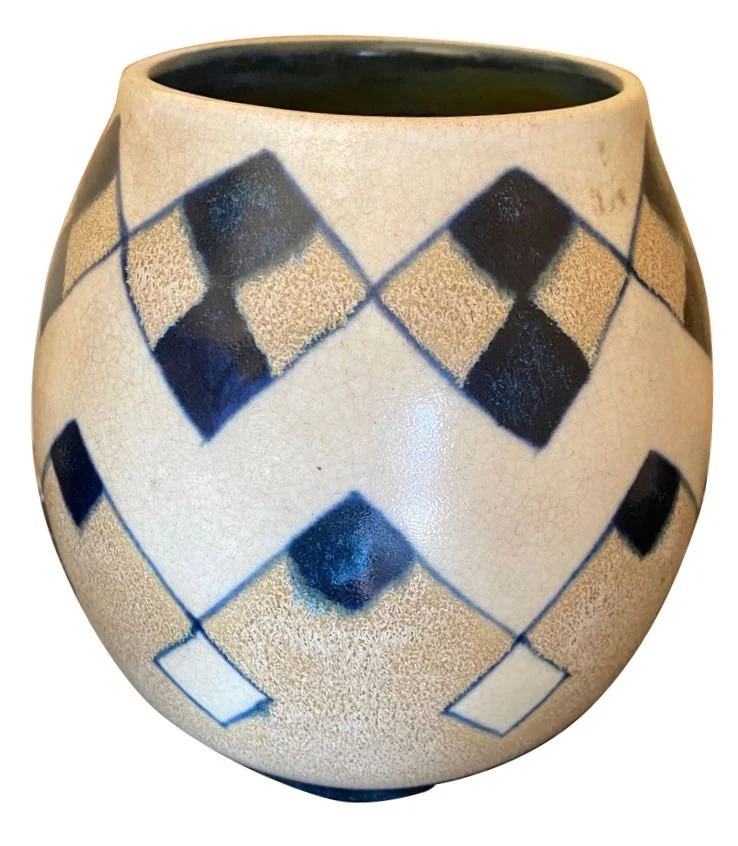
Today, the importance of Charles Catteau and Boch Frères Keramis is firmly established within the history of European decorative arts, although the field continues to offer opportunities for discovery. The preservation of the factory’s history has been greatly advanced by collectors Claire De Pauw and Marcel Stal, whose collection of more than 800 Catteau and Boch ceramics became an important reference for researchers.
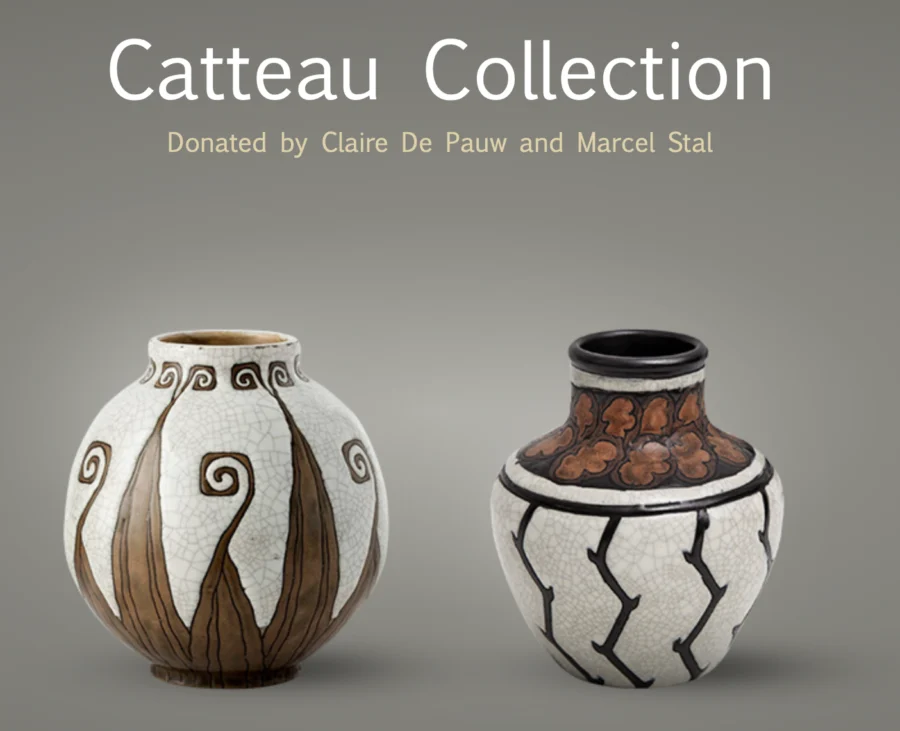
Donated to the King Baudouin Foundation, the collection is closely associated with the Keramis Museum in La Louvière, which opened in 2015 on the historic factory site. Surviving factory documentation, pattern drawings, numbered models, and records have made it possible to study the development of the ceramics with far greater precision than was possible during the early collecting years.
Also a visit to Villa Empain, one of Brussels’ finest Art Deco landmarks, Villa Empain rose from neglect to renewal, becoming a cultural center where architecture, history, and the Boghossian vision live on in Brussels. There is a wonderful collection of Boch & Catteau pottery, not always on display but you can see it here.

The original Boch operation ultimately ceased production in 2011, bringing an end to a long chapter of Belgian ceramic manufacturing, but its artistic legacy remains very much alive. Collectors today continue to seek exceptional examples, particularly those with unusual shapes, elaborate decoration, distinctive glaze treatments, and documented connections to Catteau’s most creative period. What makes the story especially significant is that these objects represent more than an attractive style of pottery. They demonstrate how an experienced ceramic engineer, working within a major industrial factory and supported by talented craftsmen, could create an astonishing variety of artistic designs that were both commercially successful and culturally important. A century after the 1925 Paris Exposition, Boch Frères Keramis remains one of the clearest examples of the ideals of Art Deco: modern design, technical innovation, craftsmanship, international influence, and the belief that art could become part of everyday life.
My own involvement with Boch Frères ceramics began over 35 years ago, long before the internet changed the antiques business. I still remember buying my first pair of Charles Catteau vases at the Paris flea market. At the time, I didn’t even know what they were, but I knew they were great, beautiful and had something special about them. Nearly 27 years ago, during my regular buying trips to France and Belgium, as an antique pioneer, I began using a laptop computer and a digital camera, two tools that would completely change the way I did business. I encouraged other European dealers to get a computer and a camera which would help all of us. This was beginning of Art Deco Collection.com as an independent website, which eventually grew into a physical showroom and an international business.
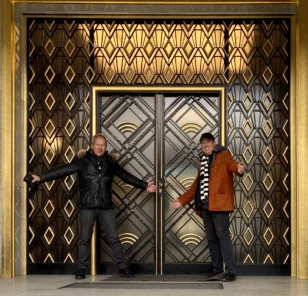
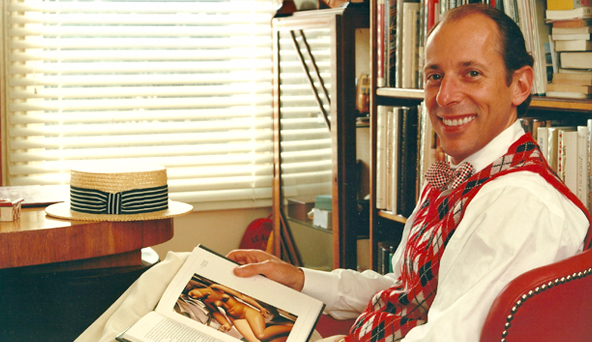
Sylvain Berkowitsch and the author
I met Sylvain Berkowitsch, of Au fil du temps a 2nd generation antique professional who was and still is the “expert” on Boch Frères, Catteau and many things from the Art Deco period.
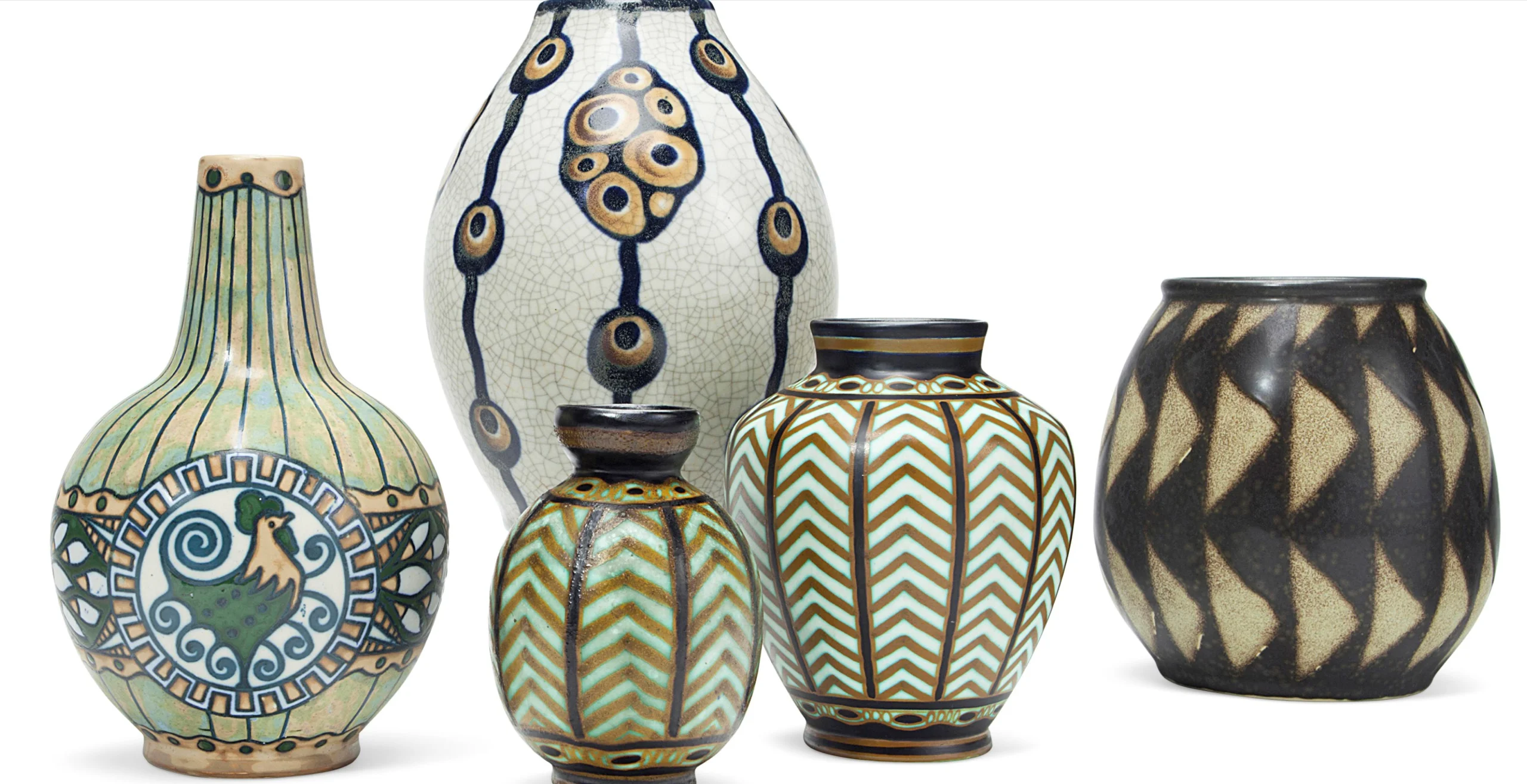
The internet opened up an entirely new opportunity to introduce American collectors to European decorative arts that had previously been difficult to find. I began buying more Boch ceramics, bringing them back to the United States, and developing a following among collectors who were discovering these remarkable pieces for the first time. Over the years, I have bought and sold a tremendous variety of examples, from relatively simple geometric and floral designs to elaborate cloisonné decoration, unusual forms, and rare stoneware pieces. What has always fascinated me is the incredible range of work produced under Catteau’s direction. When you bring several of these vases together, you begin to appreciate just how much experimentation went into the different shapes, colors, glazes, and decorative techniques. Even after all these years, I still find examples that surprise me, and that is one of the things that has kept my interest in Boch Frères ceramics alive.
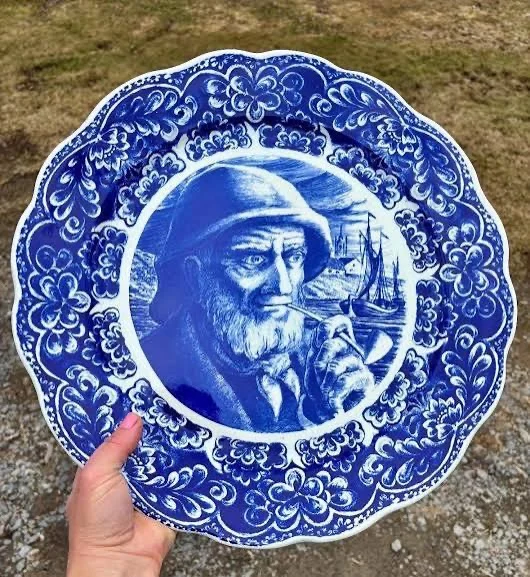
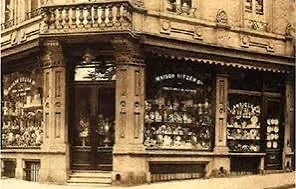
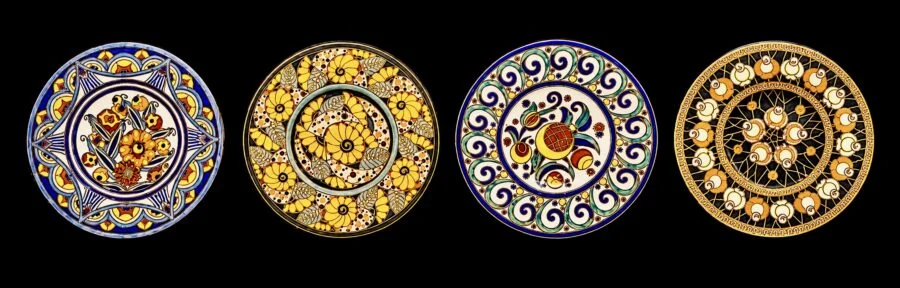 Four Large Boch Matt Presentation Plates and Historical Graphics from author’s collection
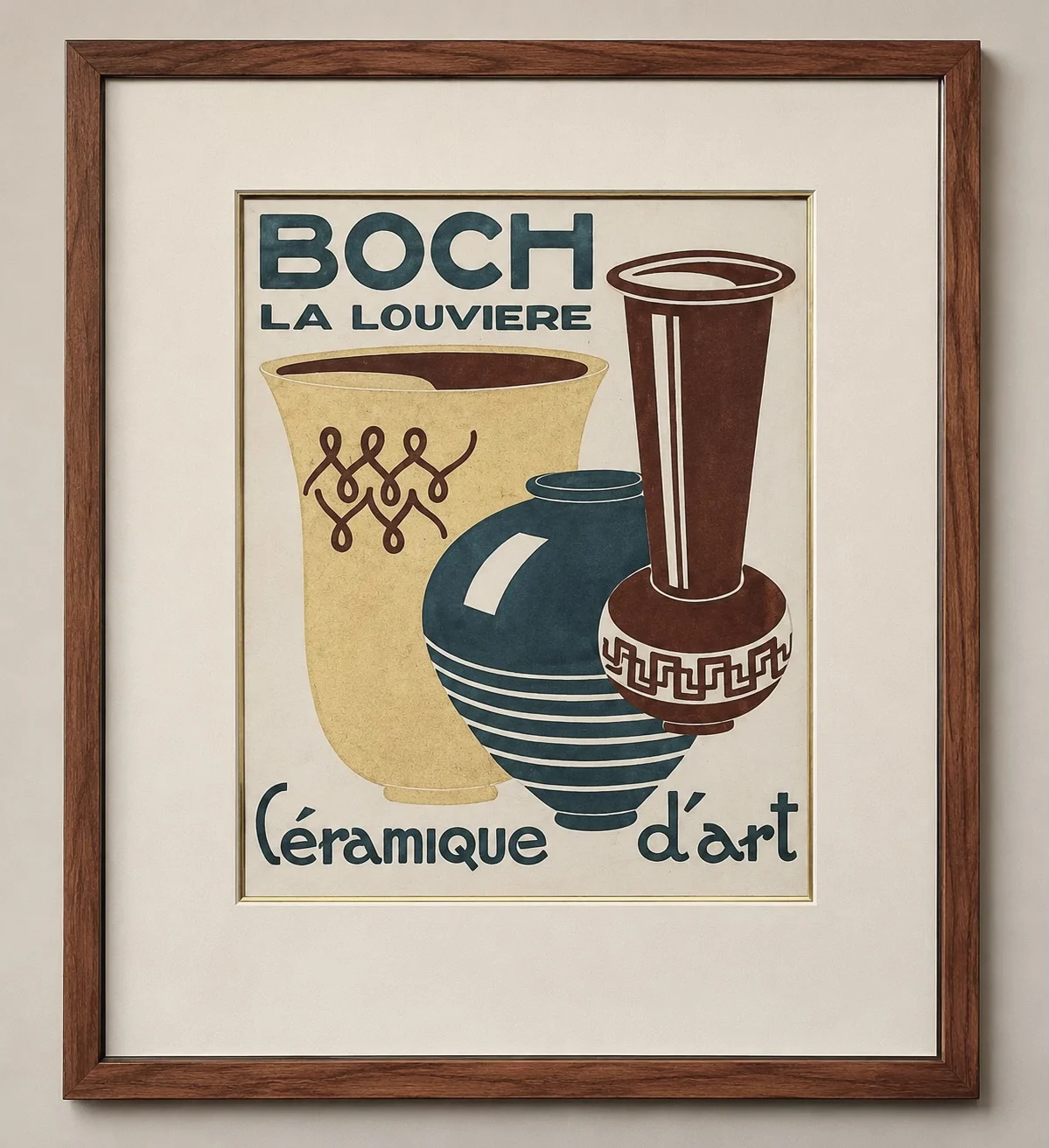
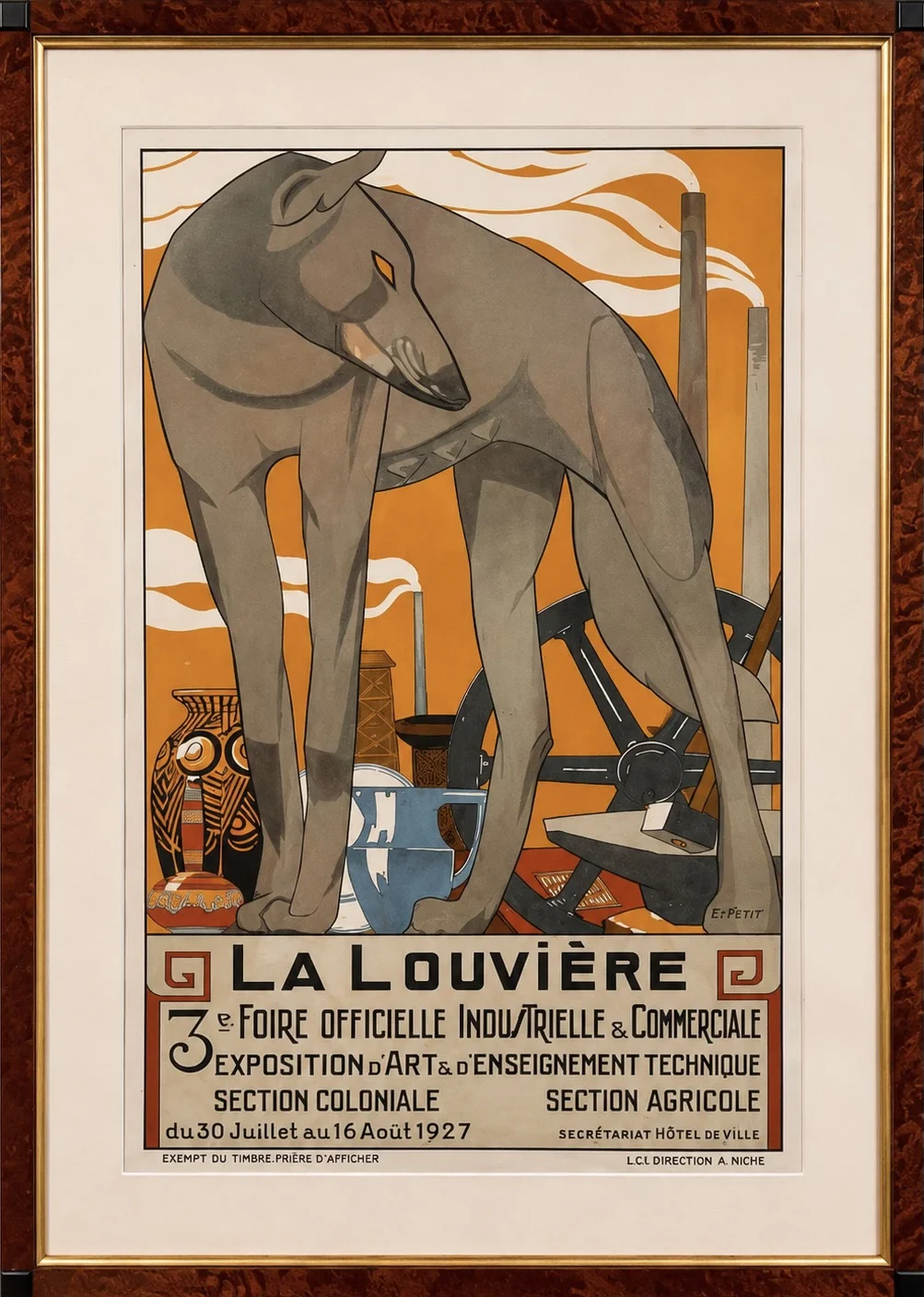
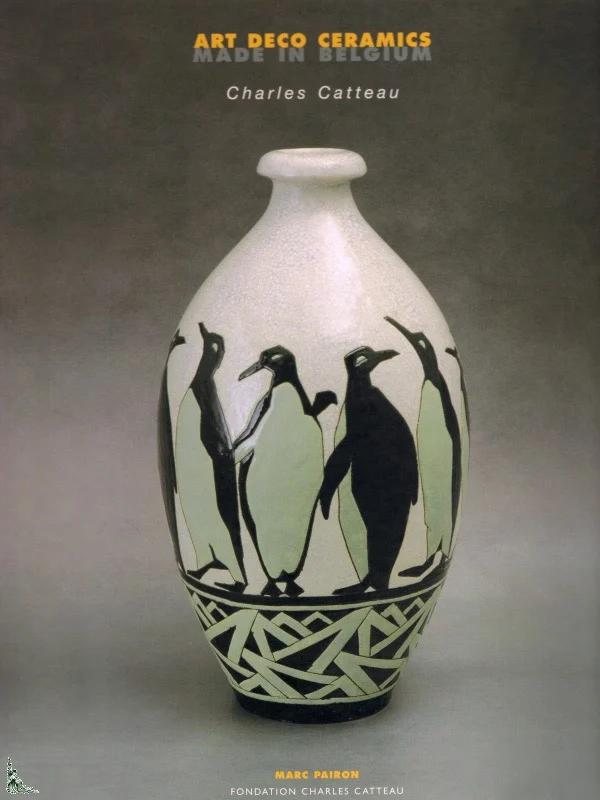
The Research and Dedication of Marc Pairon
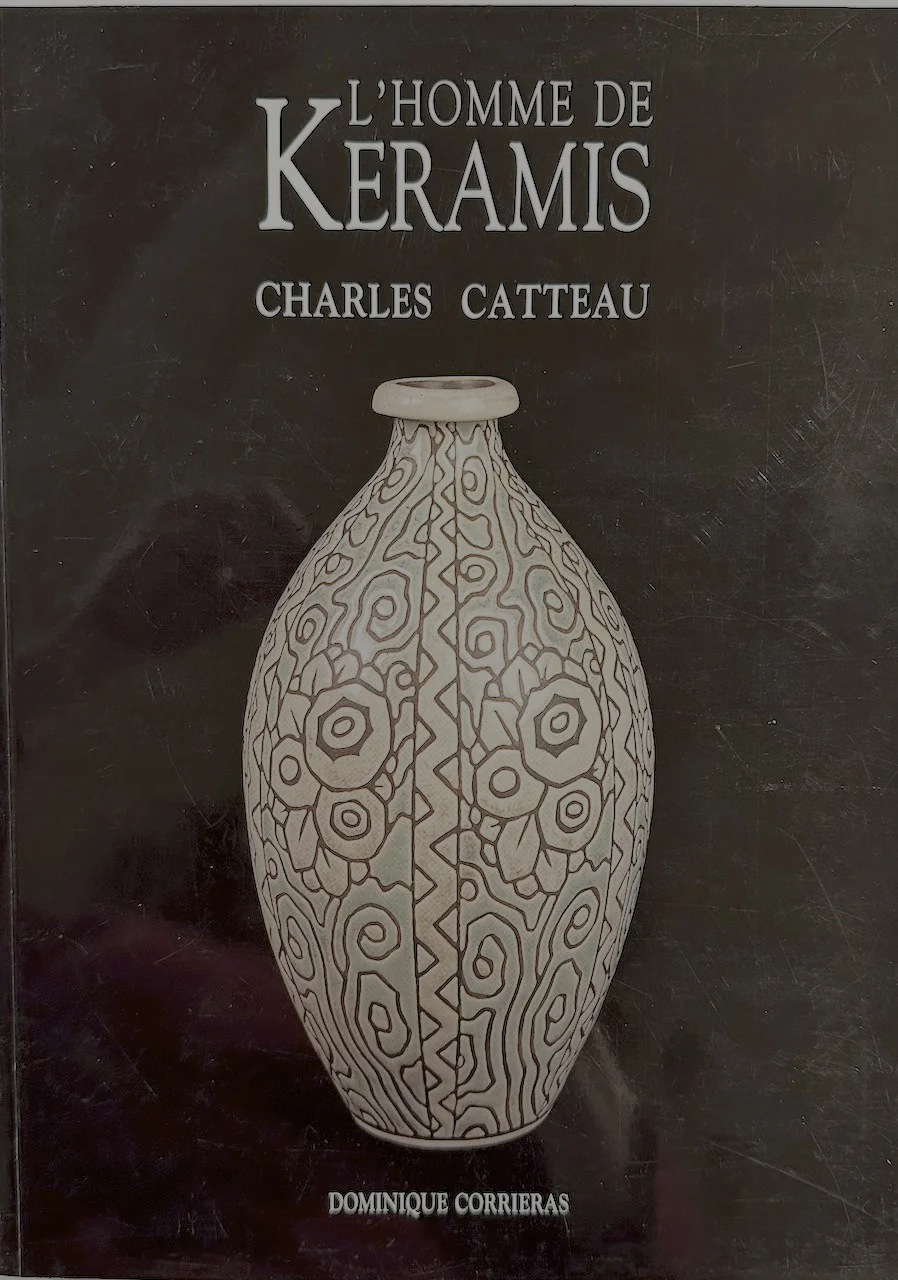
There have been many books and catalogues published over the years covering the history of Boch Frères and the work of Charles Catteau. In my opinion, the most comprehensive and authoritative reference is Marc Pairon’s Art Deco Ceramics Made in Belgium: Charles Catteau. Marc devoted years to purchasing pieces, researching original factory records, historical catalogues, design drawings, production techniques, and the extraordinary variety of models and decorative patterns created during the Catteau period.
His work goes well beyond identifying individual pieces, providing a detailed history of the factory, its artists and craftsmen, and the development of Boch Frères into one of Europe’s leading producers of Art Deco ceramics. Beautifully illustrated with hundreds of photographs, including rare examples and historical material, the book represents an enormous contribution to our understanding of this pottery. I have personally known Marc for over 20 years and have enjoyed meeting with him on many occasions during my buying trips to Belgium. We have spent considerable time discussing the pottery and its history, and I have always appreciated his knowledge and dedication to the subject. Having bought and sold Boch ceramics for more than 35 years, I know firsthand how extensive and complicated this field can be. For collectors, dealers, and anyone interested in these ceramics, I consider his book the essential reference and the most important work published on the subject.
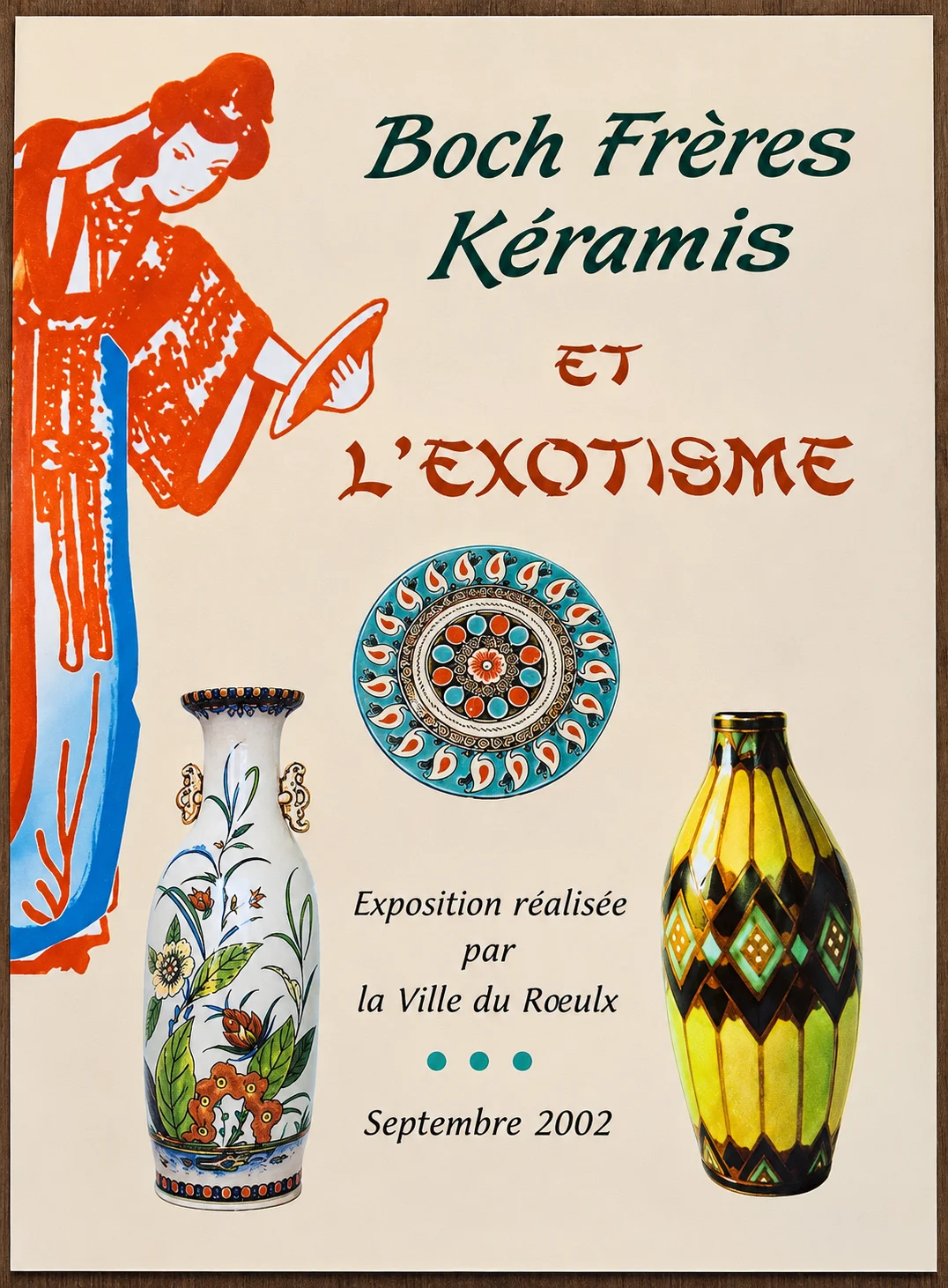
Further Reading
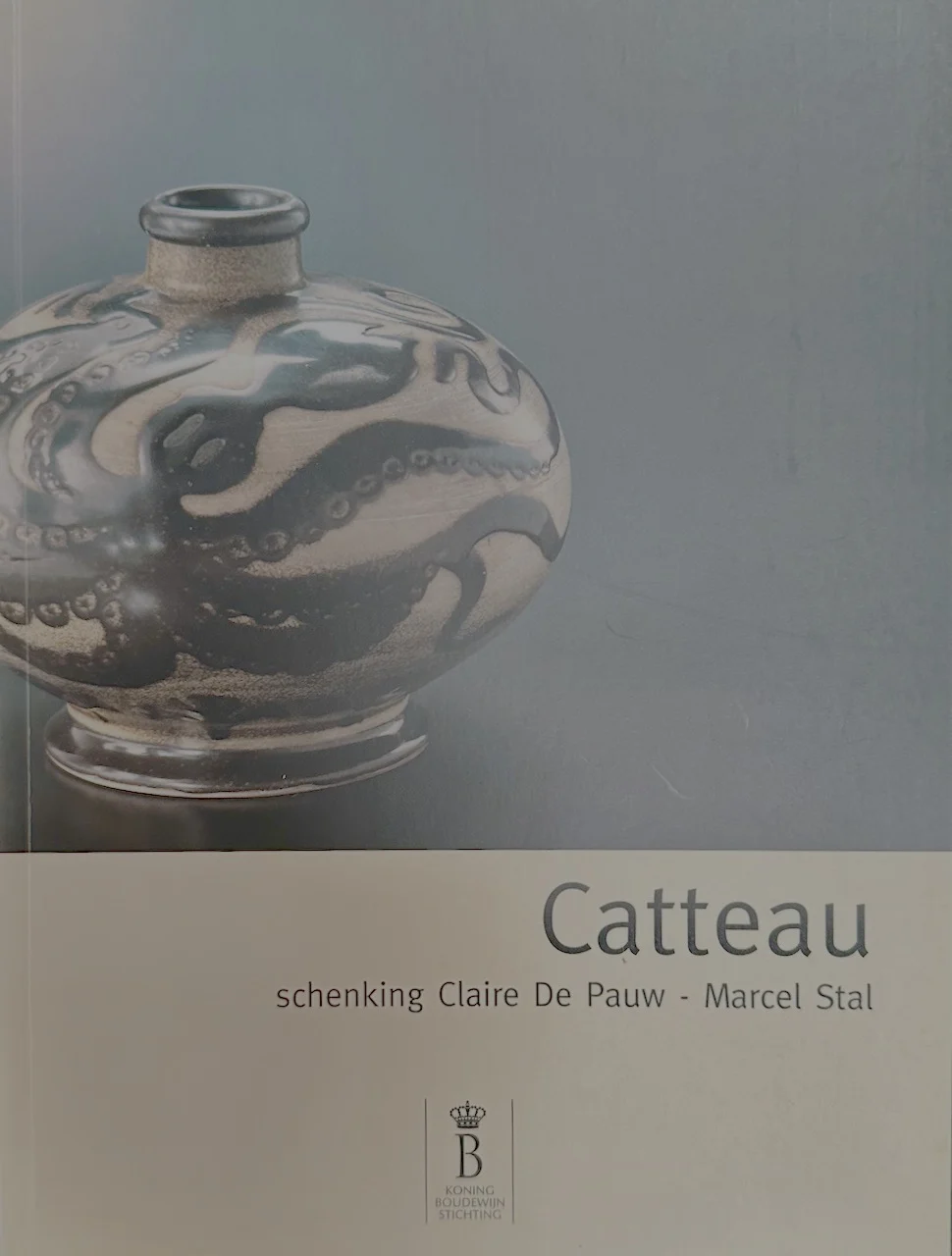
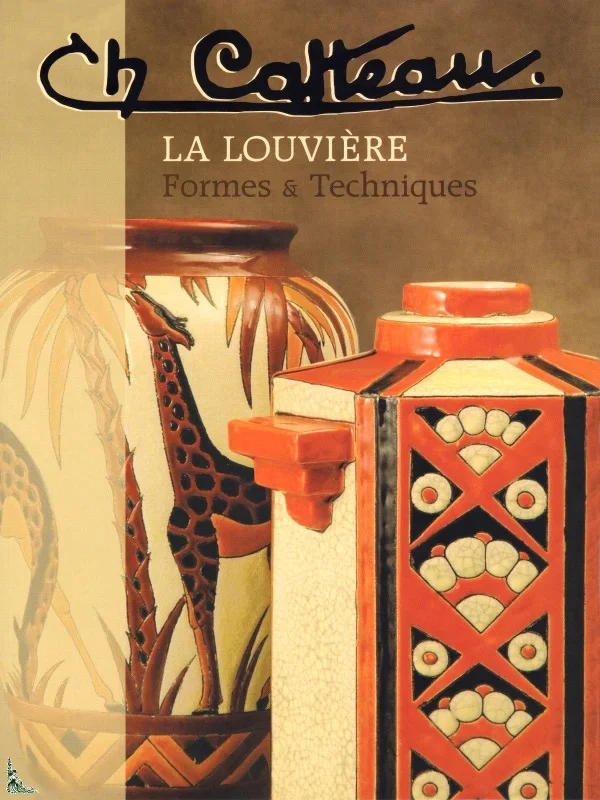
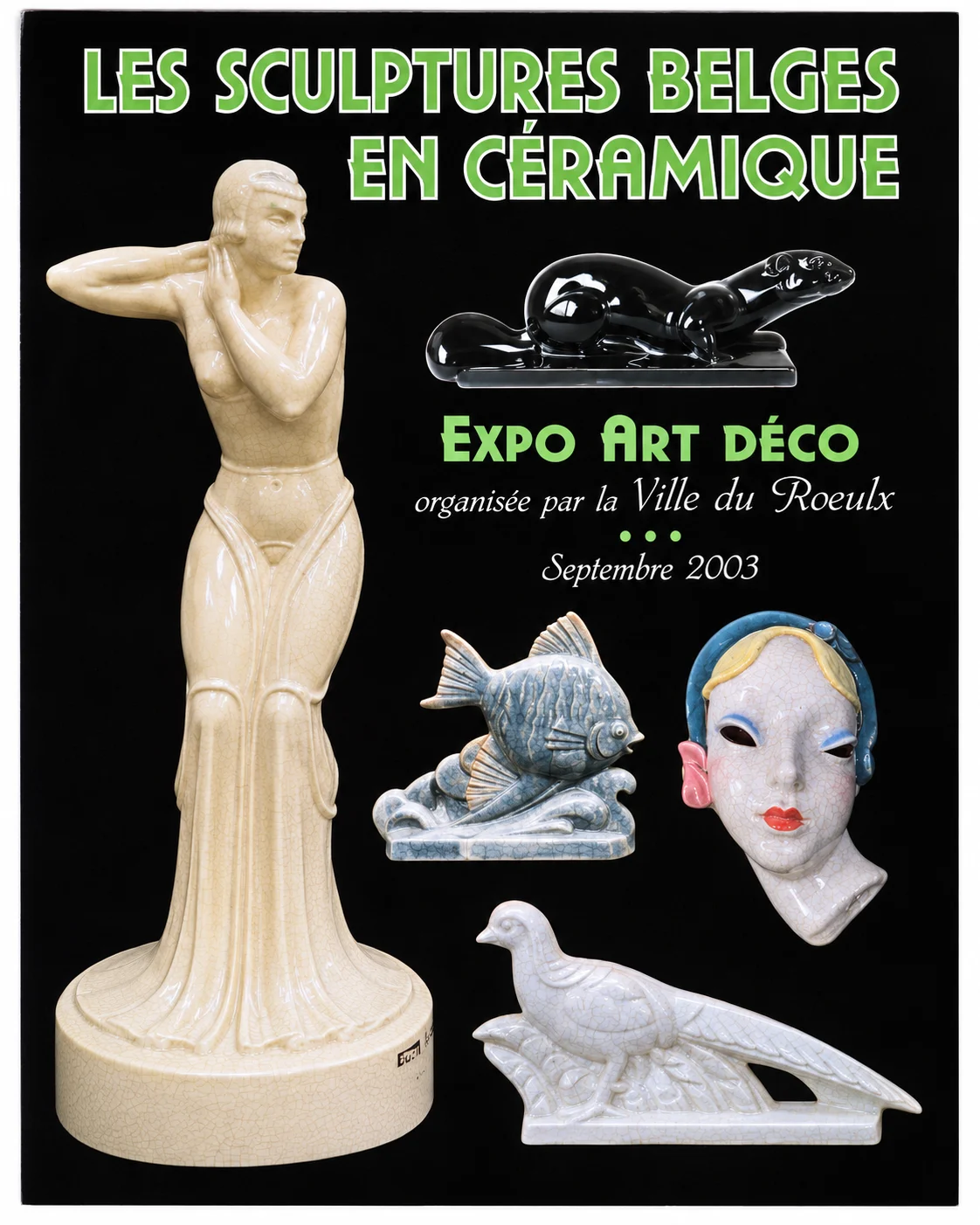
Beyond Catteau: Raymond Chevallier and the Next Chapter at Boch Frères
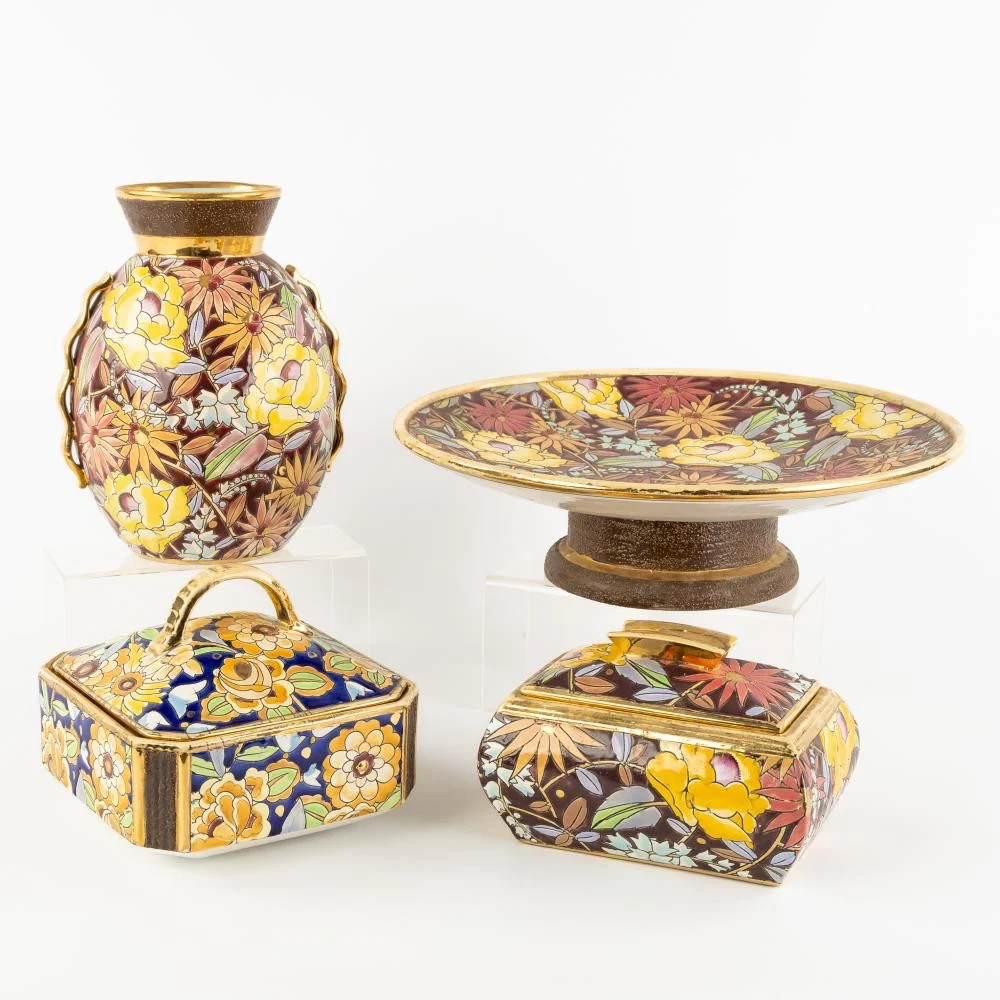
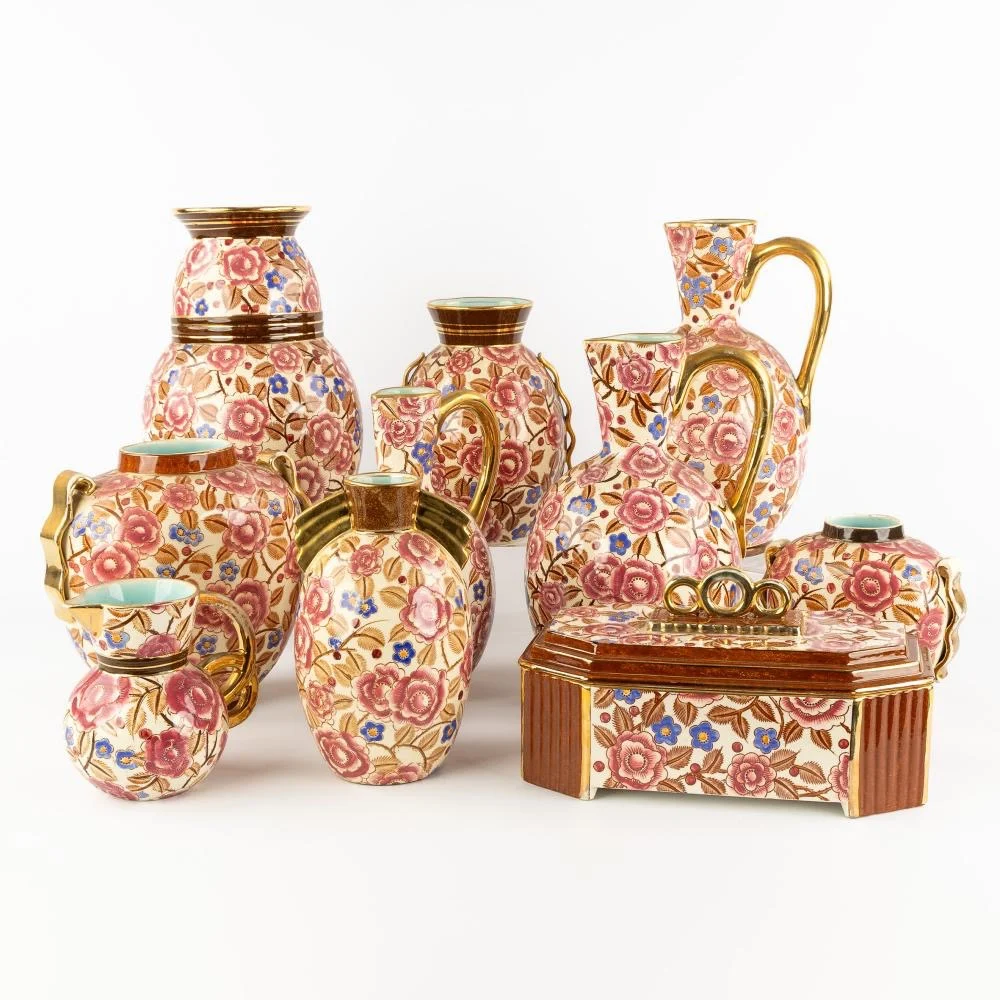
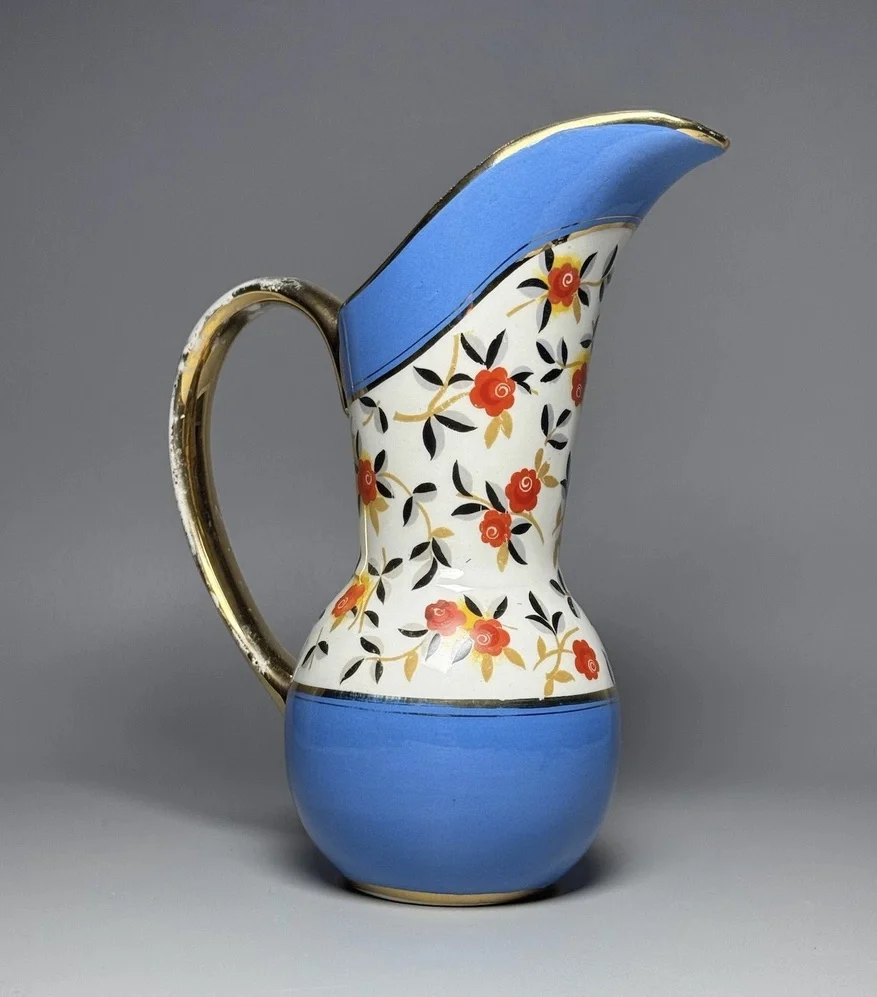 Another important figure in the history of Boch Frères was Raymond Henri Chevallier (1900–1959), who worked alongside Charles Catteau and eventually assumed artistic leadership following Catteau’s retirement in 1946. Born in Auxerre, France, Chevallier studied at the École des Beaux Arts in Lyon before joining the famous Longwy pottery, where he became head of the decorating department in 1924. Interestingly, he received a bronze medal at the 1925 Paris Exposition, the same exhibition where Catteau received his gold medal. After leaving Longwy and spending two years directing the Société Céramique de Bruxelles, Chevallier joined Boch Frères in 1937, bringing an entirely different artistic approach to the factory. His background at Longwy was particularly important, as he introduced elaborate cloisonné enamel treatments, richer combinations of color, gilded decoration, and contrasting matte and glossy finishes. While Catteau had become famous for his geometric patterns and stylized animals, Chevallier developed more elaborate floral compositions, exotic birds, mythological figures, and decorative subjects that often incorporated gold and unusual surface textures. He also created limited edition pieces and large ceramic murals, extending the artistic possibilities of the factory beyond its traditional production. His workshop continued producing both individually decorated pieces and commercial ceramics, maintaining the relationship between craftsmanship and industrial manufacturing that had made Boch so successful. Chevallier remained with the company until 1954, when Ernest D’Hossche became his successor. Although collectors today tend to associate Boch Frères primarily with Charles Catteau, Chevallier deserves considerable recognition for bringing his own artistic direction to the factory and for establishing an important connection between the celebrated enamel traditions of Longwy and the later development of Boch ceramics.

If you are interested in further stories of Art Deco design, collecting, and celebrating the artistry of early 20th Century:
Related Products from ArtDecoCollection.com