

Mid-Century Modern: Design for the Everyday
Architecture, Furniture, and Objects of the Modern Decades
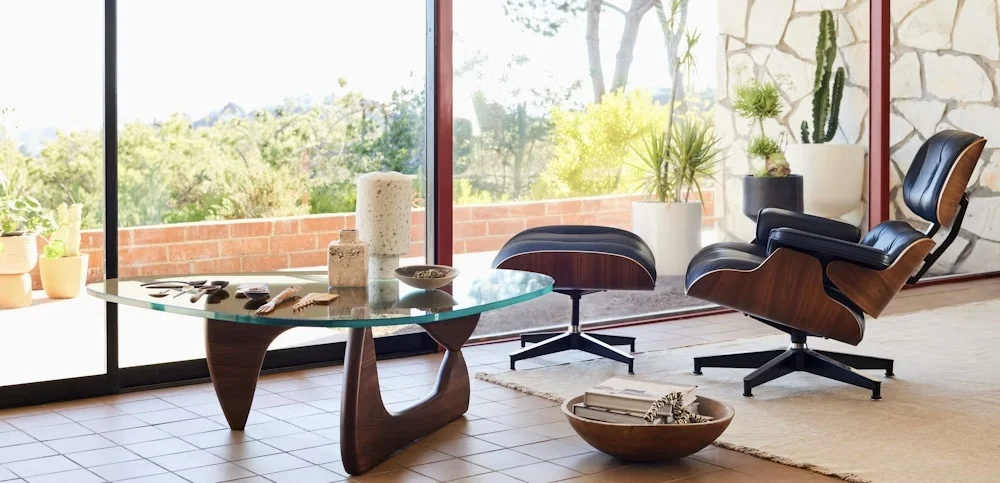
Few design movements have shaped the way we live as completely as Mid-Century Modern. It emerged in the years surrounding the Second World War and went on to touch nearly everything: the houses people built, the chairs they sat in, the dishes they ate from, and the way whole neighborhoods were planned. Its language was clean and confident. Straight lines, open space, honest materials, and an unmistakable sense of optimism gave the style a clarity that still feels modern today. For anyone drawn to the Art Deco designs of the 1920s and 1930s, Mid-Century Modern is not a foreign concept. It is the next chapter of a single, continuing story, the long search for a way of living that is modern in both form and feeling. The geometry, the respect for materials, and the belief that beauty and function belong together did not disappear when the prewar decades ended. They were carried forward, simplified, and given a fresh and hopeful voice. Mid-Century Modern is the moment when the modern idea finally became something an ordinary family could own and live inside.
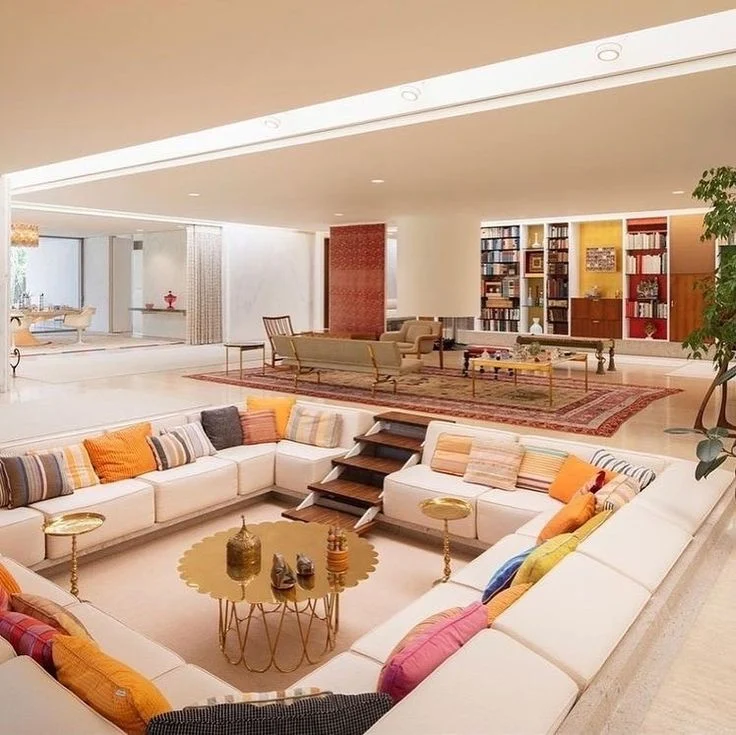
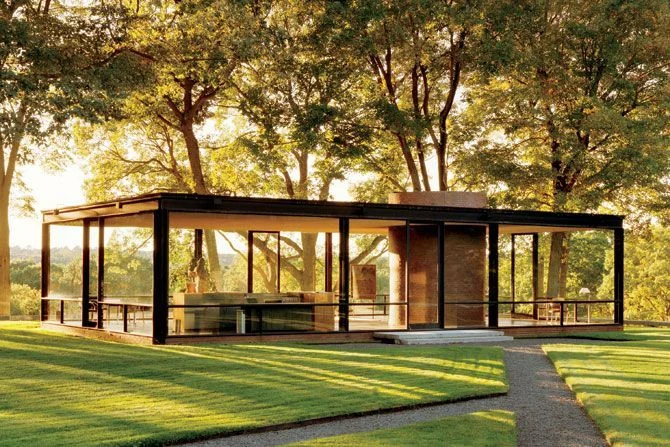
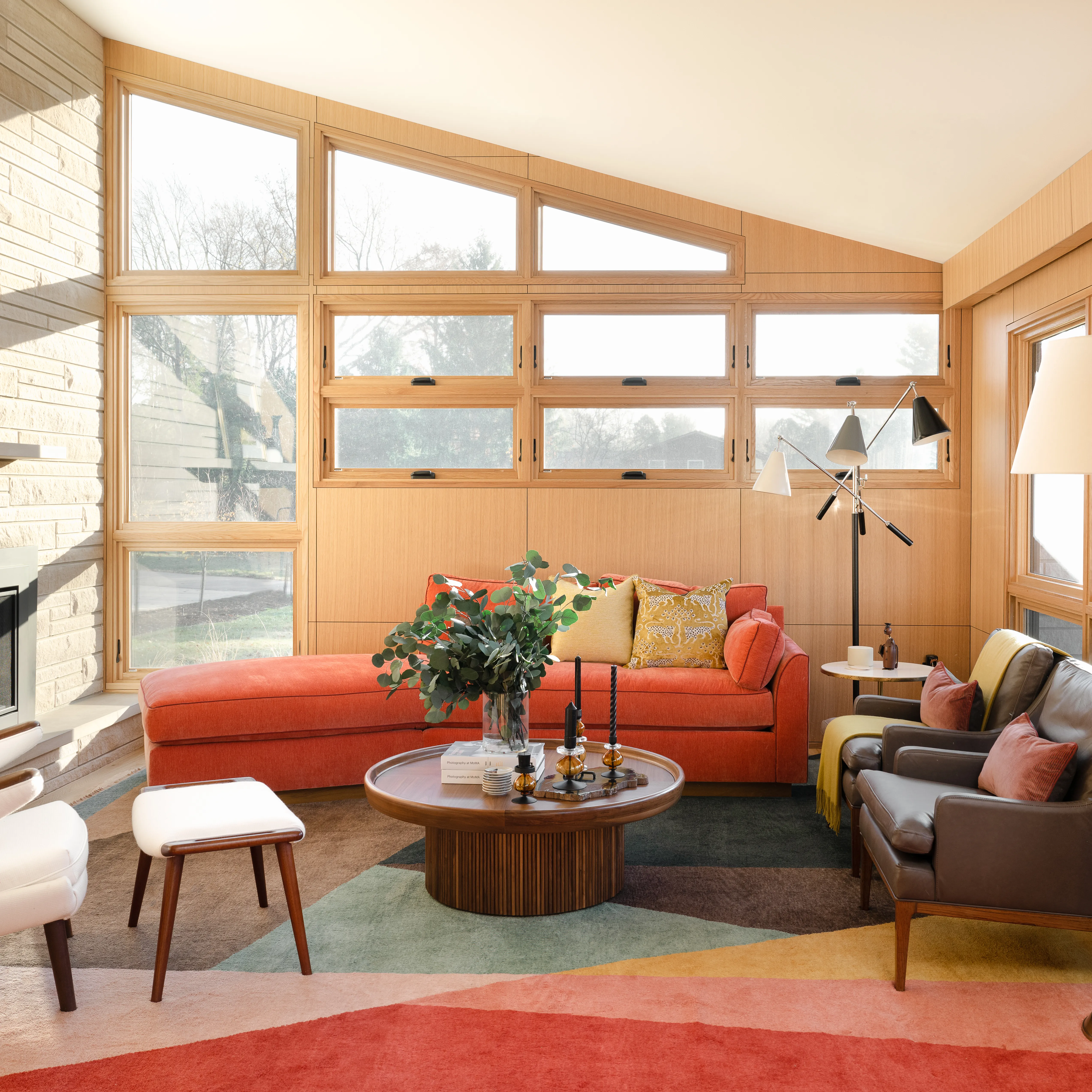
Left: Miller House, Columbus, Indiana. Eero Saarinen with interiors by Alexander Girard, 1957, Middle: Glass House, New Canaan, Connecticut. Philip Johnson, 1949, Right: Mid-century modern interior.
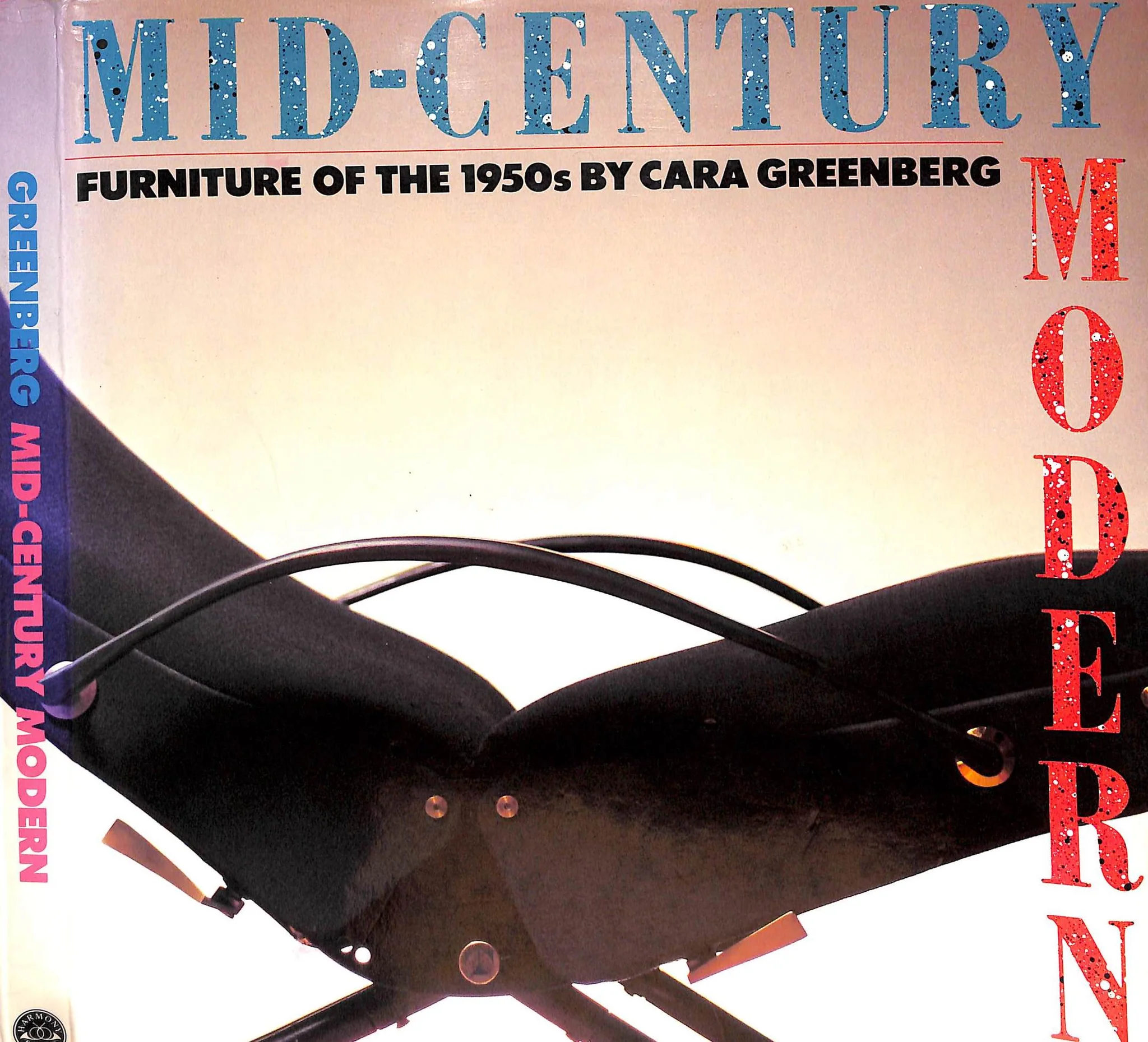
The style was born from a particular moment in history. The end of the war brought economic growth, relief, and a powerful appetite for optimism, and design responded with energy and speed. Millions of returning families needed homes, and the building boom that followed handed architects and manufacturers an enormous opportunity. The war years had also pushed technology and mass production forward, and the factories that had supplied the war effort were ready to turn their skills toward domestic life. Designers welcomed the change. They set out to create homes and objects that were uncluttered, practical, and connected to the natural world, suited to the more relaxed and informal life that Americans now wanted. Many of the guiding ideas had crossed the Atlantic with European designers such as Walter Gropius, Ludwig Mies van der Rohe, and Eliel Saarinen, who brought the lessons of the Bauhaus and the International Style to the United States. The movement did not yet have a name. The phrase Mid-Century Modern entered design conversation during the 1950s, but it was the writer Cara Greenberg who gave it lasting definition in her 1984 book Mid-Century Modern: Furniture of the 1950s, helping a later generation see the period as a coherent movement rather than a collection of dated objects. Today the term is used broadly, covering work from the early 1930s through the middle of the 1970s, with its clearest expression falling between 1945 and 1970.
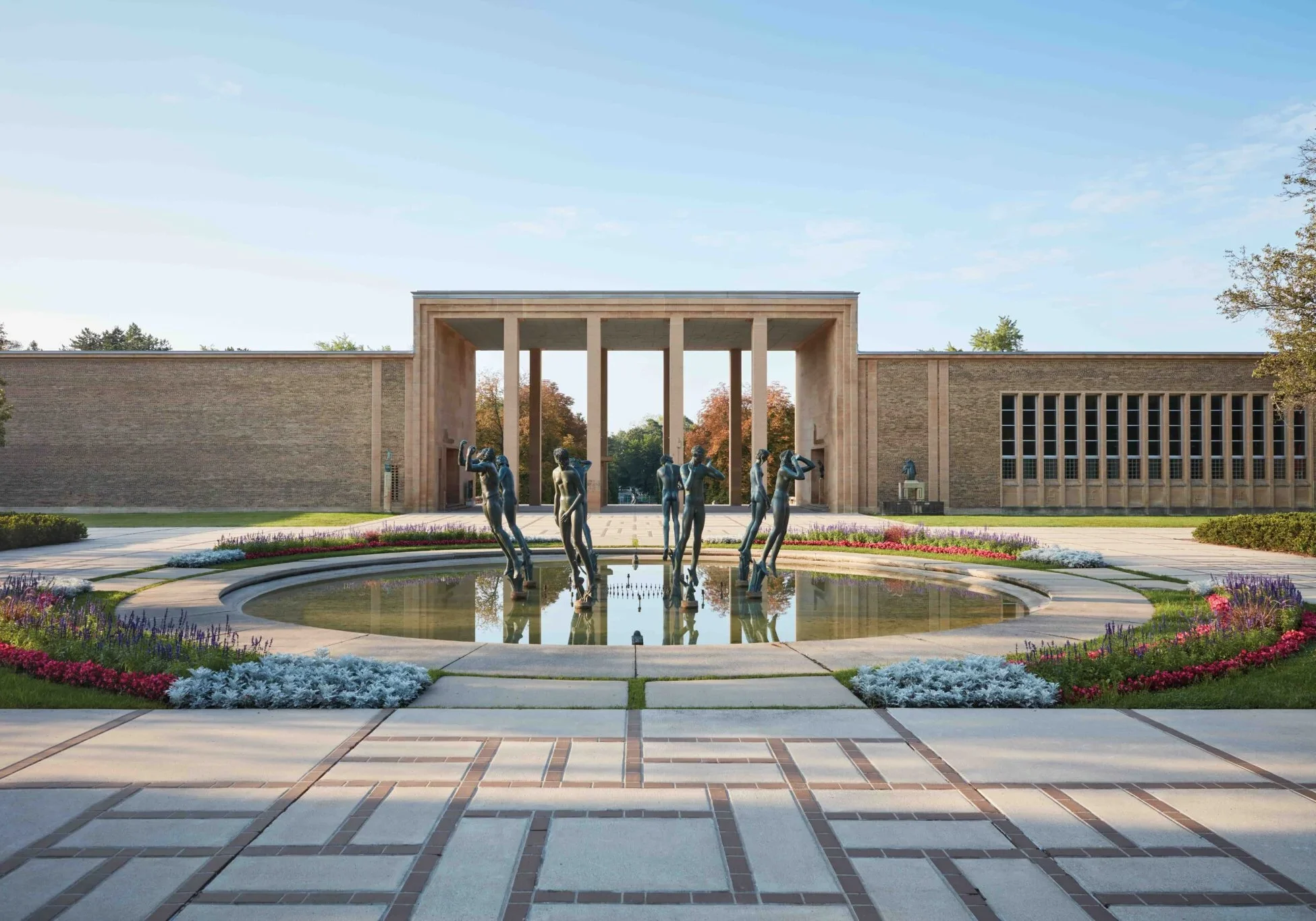

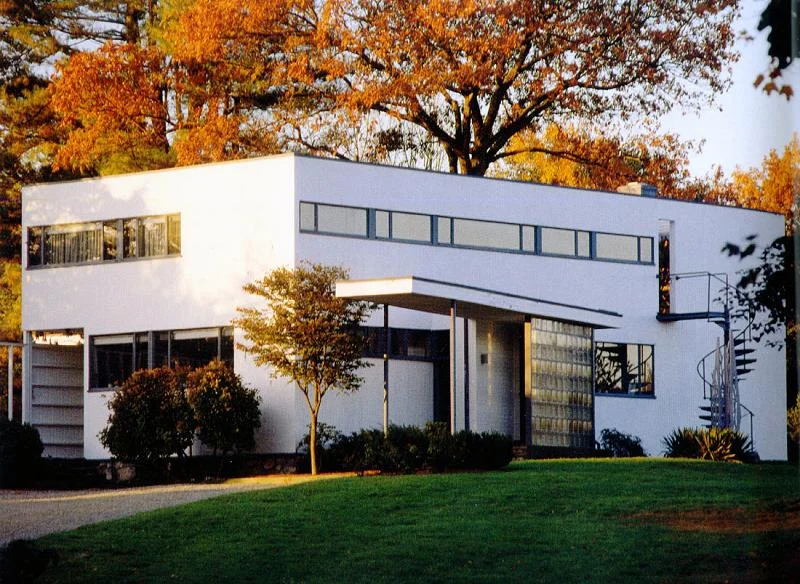
Left: Cranbrook Academy of Art, Bloomfield Hills, Michigan. Eliel Saarinen, architect. Orpheus Fountain by Carl Milles, Middle: Levittown, New York, 1947, Right: Gropius House, Lincoln, Massachusetts. Walter Gropius, 1938.
What held Mid-Century Modern together was not a single shape or color but a set of shared convictions about what good design should be. A modern object, the thinking went, should serve the real needs of modern life and express the spirit of its own time rather than imitate the past. It should take full advantage of new materials and new techniques, and it should let its form, texture, and color grow directly from its purpose. Honesty mattered above all. A material was meant to look like what it was, and construction was meant to be seen rather than hidden. An object made by machine never pretended to be the work of a hand. Simplicity was the natural result, since a well-resolved design revealed its structure plainly and needed no applied ornament. The movement also carried a social belief, the idea that the machine should be mastered for the benefit of people and that good design should reach as wide a public as possible, treating a modest budget as a worthy challenge rather than a limitation. Museums, and the Museum of Modern Art in New York, above all, did a great deal to promote this thinking and to teach the public how to see it. At its heart, the style rested on a simple and generous proposition: that a well-designed environment could improve the daily life of everyone who lived in it.
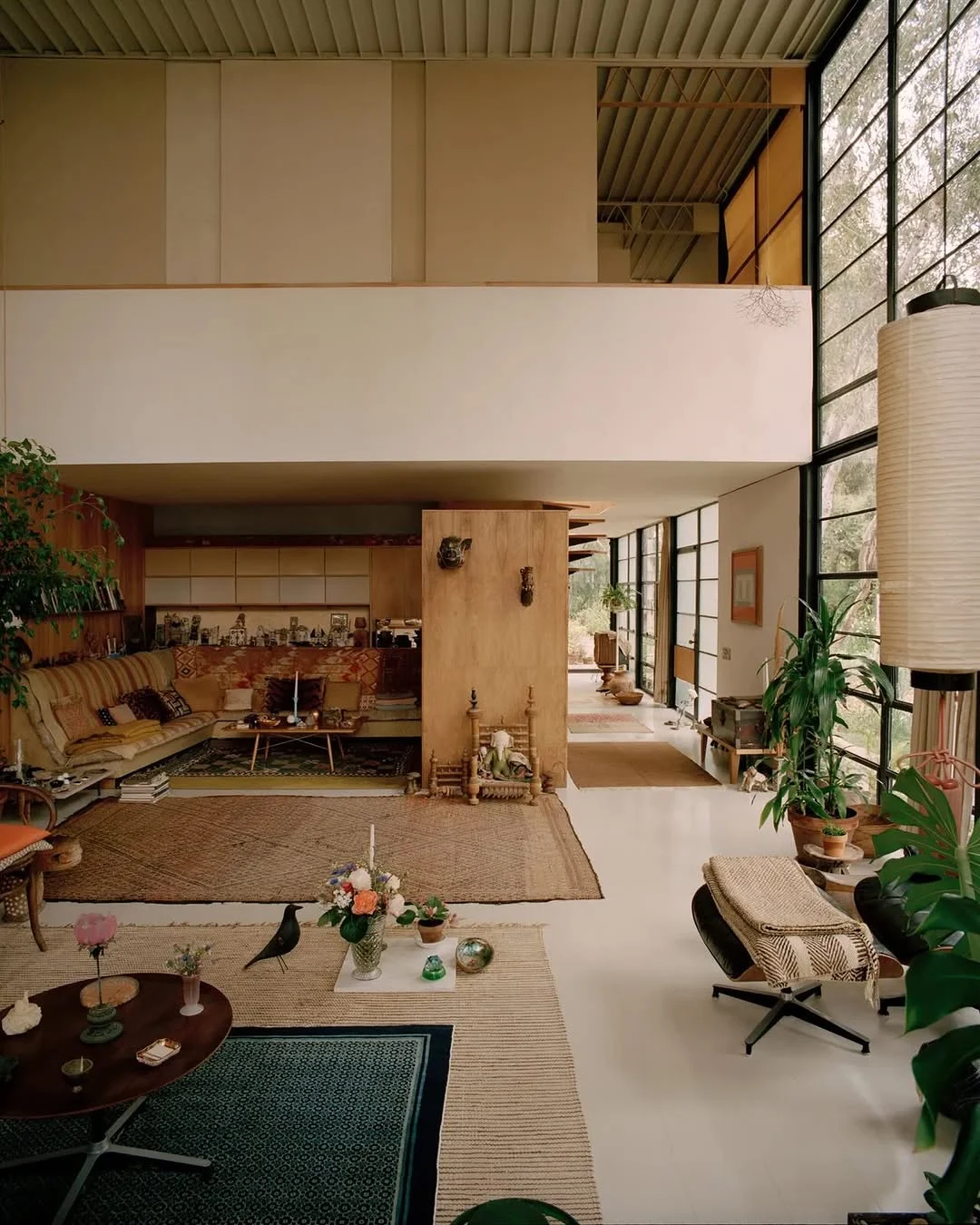
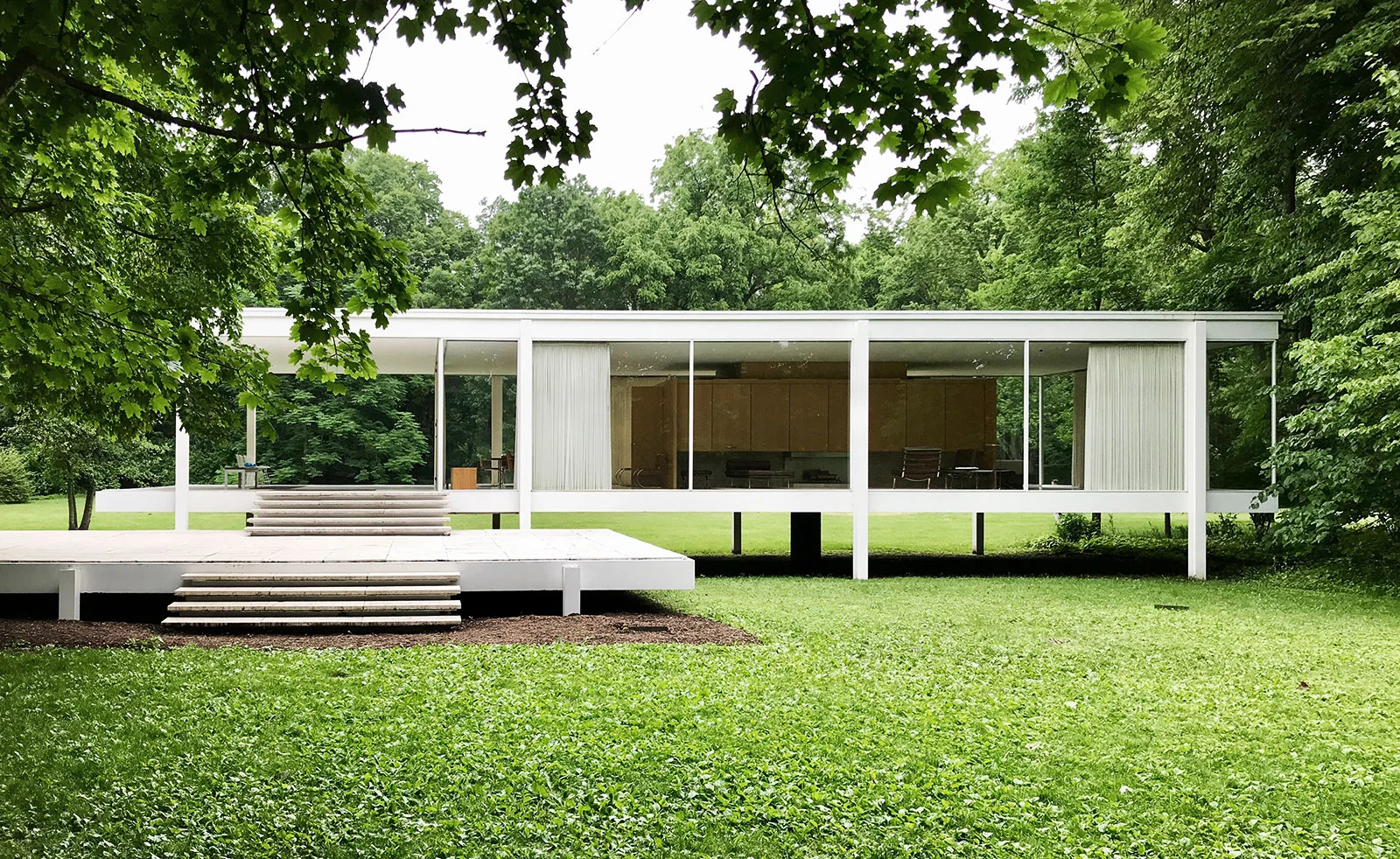
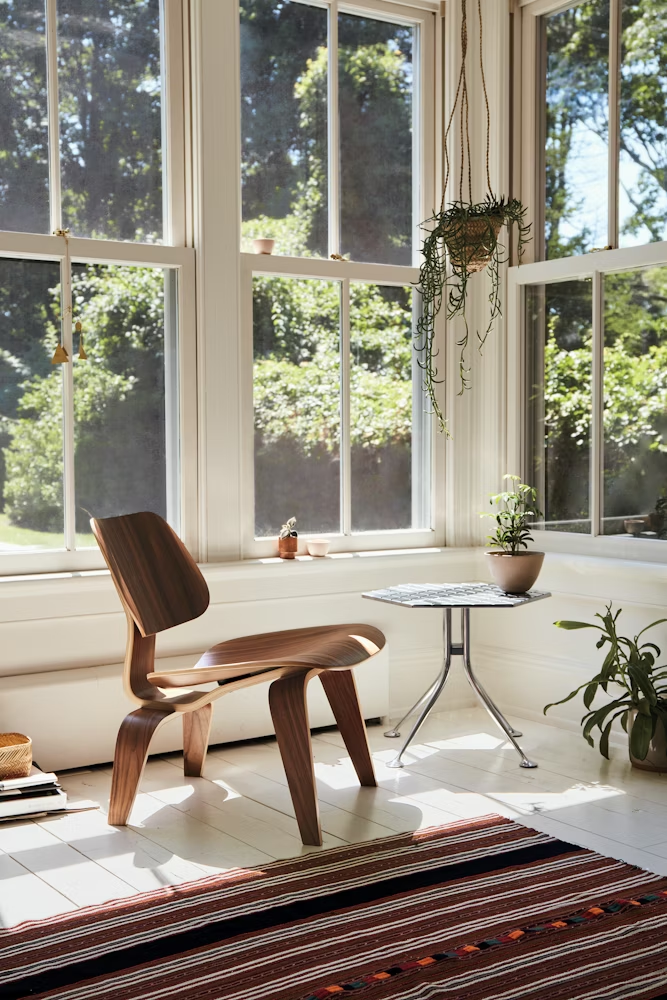
Left: Eames House (Case Study House No. 8), Pacific Palisades, California. Charles and Ray Eames, 1949, Middle: Farnsworth House, Plano, Illinois. Ludwig Mies van der Rohe, 1951, Right: Molded Plywood Lounge Chair (LCW), Charles and Ray Eames for Herman Miller, 1946.
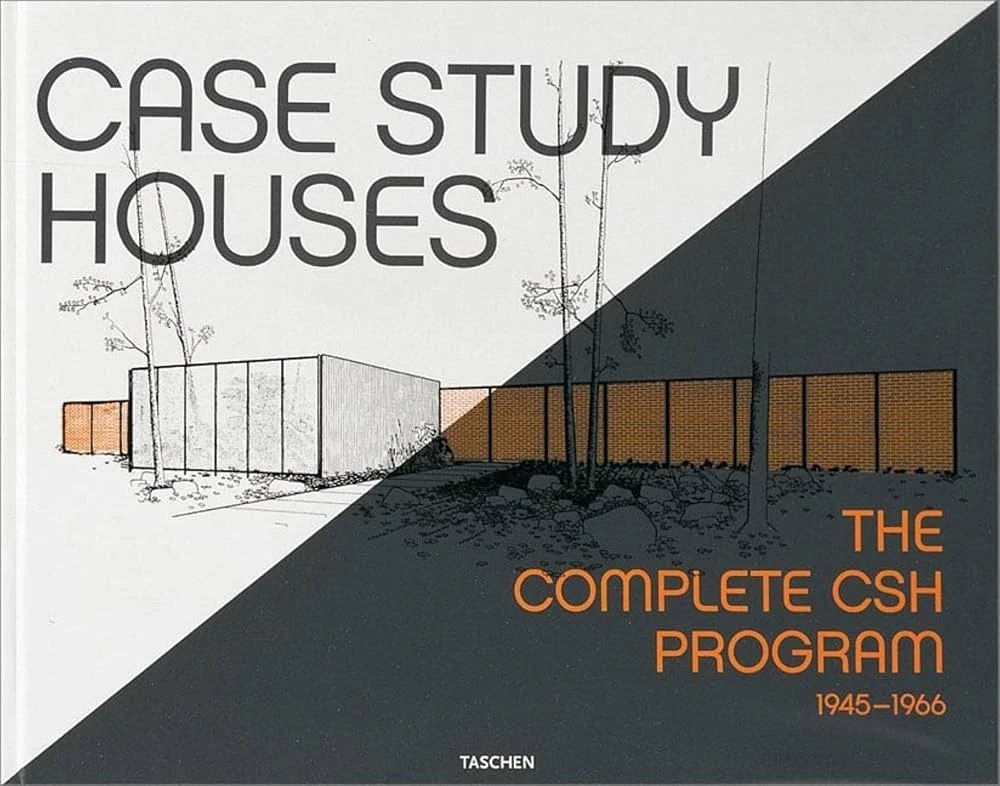
In architecture, these principles became something a person could walk through and live within. The classic Mid-Century Modern house sits low and wide on its lot, with a flat or gently sloping roof, deep eaves, and an exterior that often pairs natural wood or brick with broad planes of glass. Inside, the divided rooms of older homes gave way to open floor plans, and post-and-beam construction allowed the walls themselves to become windows, since the beams carried the weight that heavy walls once did. Floor-to-ceiling glass and sliding doors softened the line between the living room and the garden, drawing light, air, and landscape into the heart of the home. The needs of an ordinary family were treated as a serious design problem, and function was given the same weight as appearance. The most ambitious test of these ideas was the Case Study House program, which ran from 1945 to 1966 and asked architects such as Charles and Ray Eames, Pierre Koenig, and Richard Neutra to design affordable model homes, many of them recorded forever in the photographs of Julius Shulman. The builder Joseph Eichler carried the same vision into entire subdivisions across California, proving that modern architecture could be produced at scale for middle-class families. The desert city of Palm Springs gathered so many fine examples that it remains, to this day, one of the great showcases of the style.
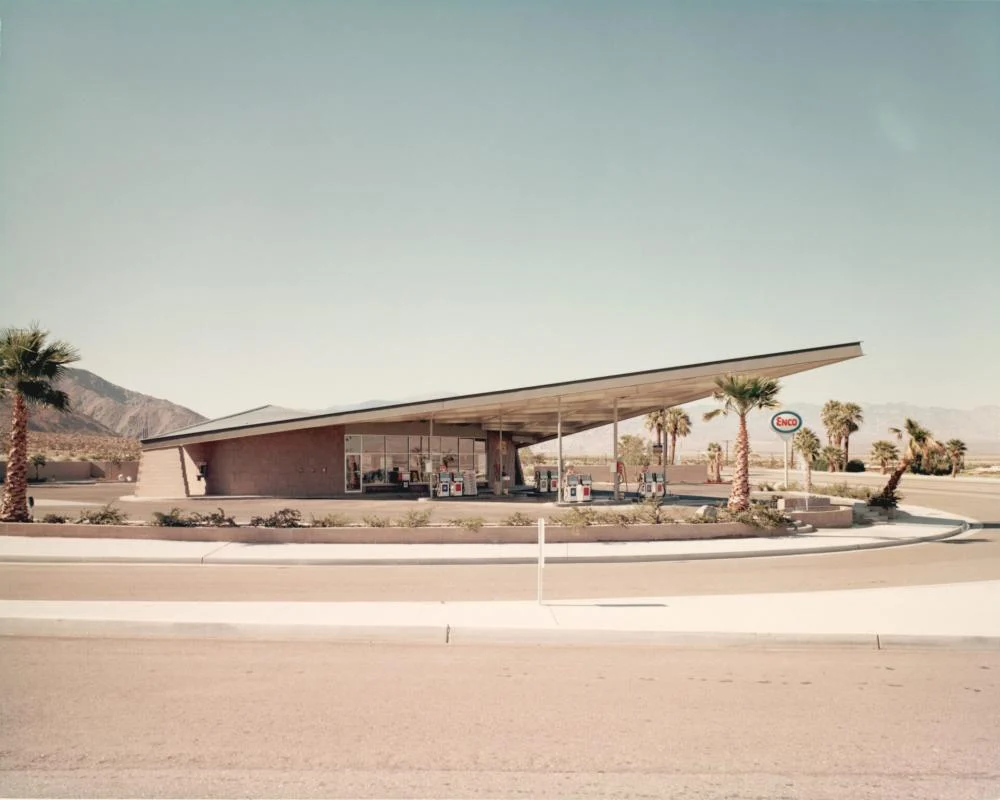
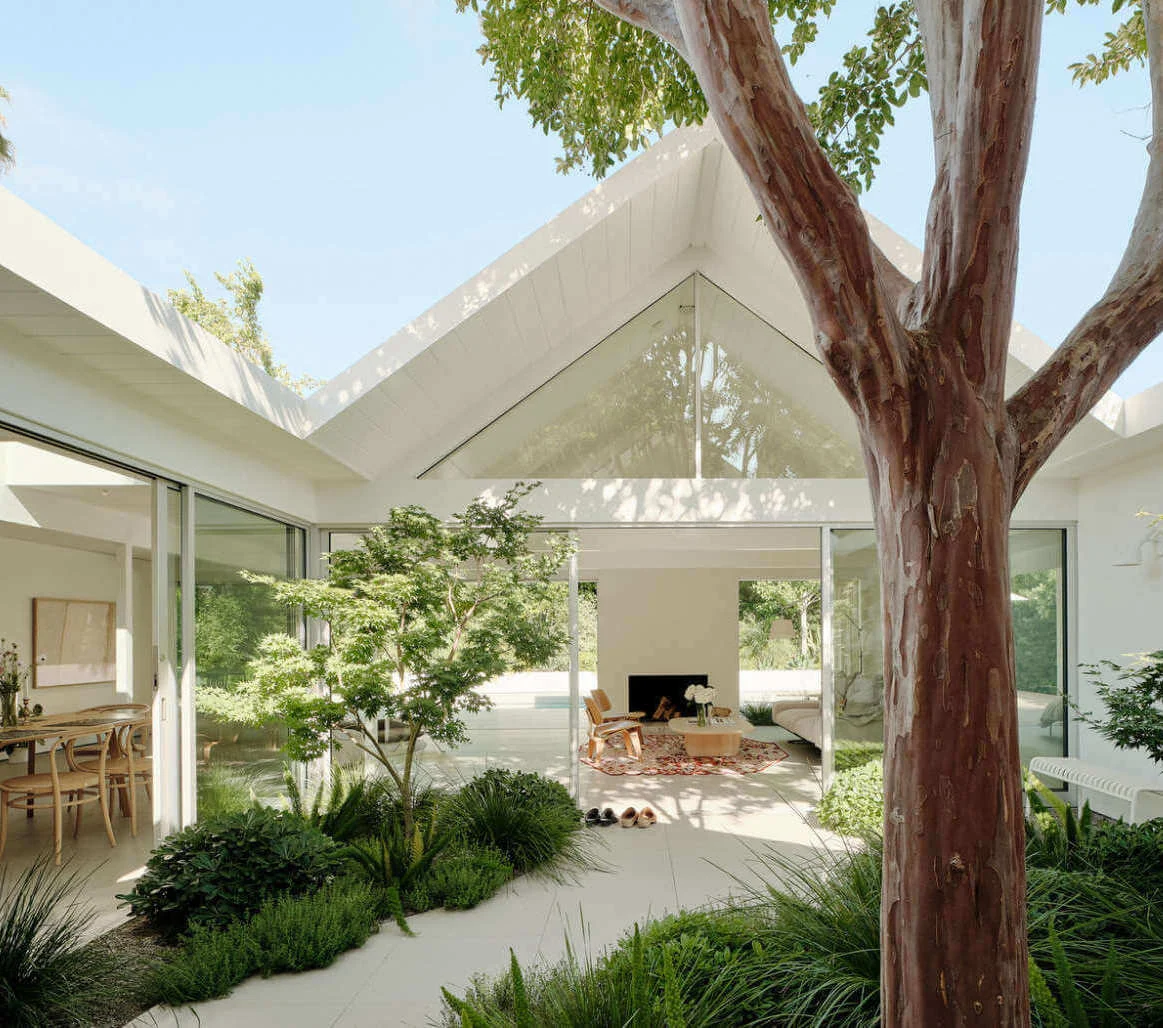
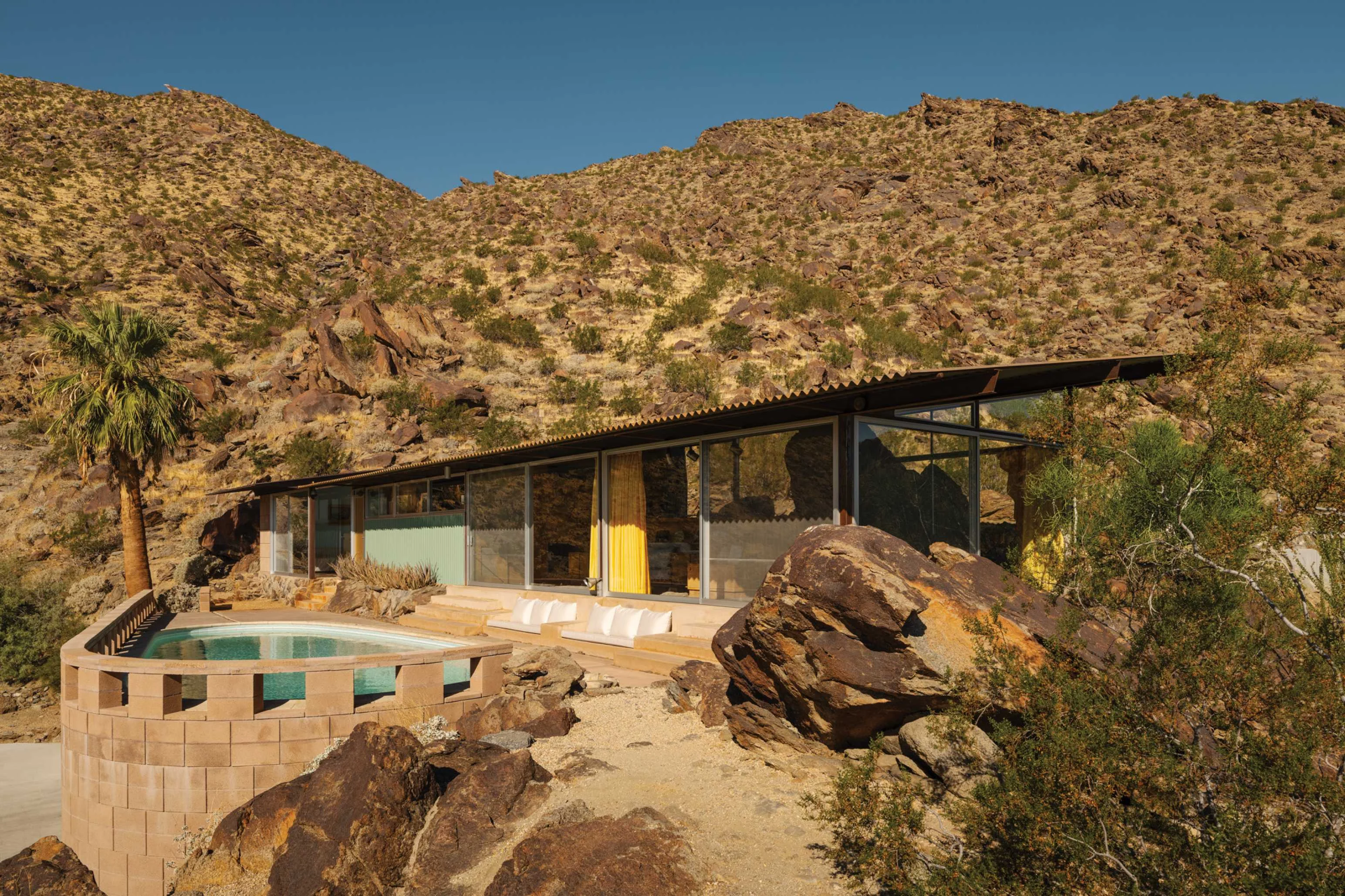
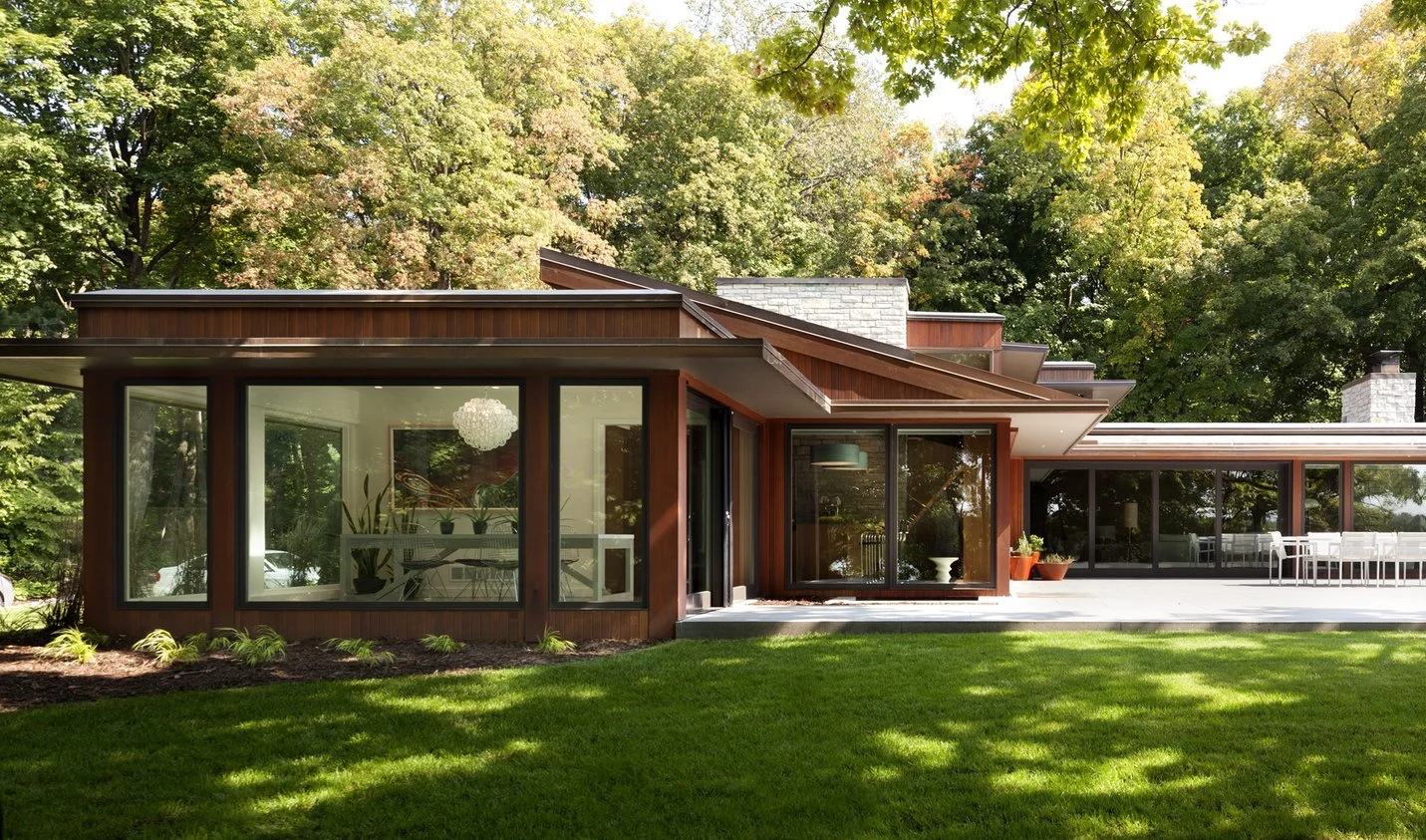
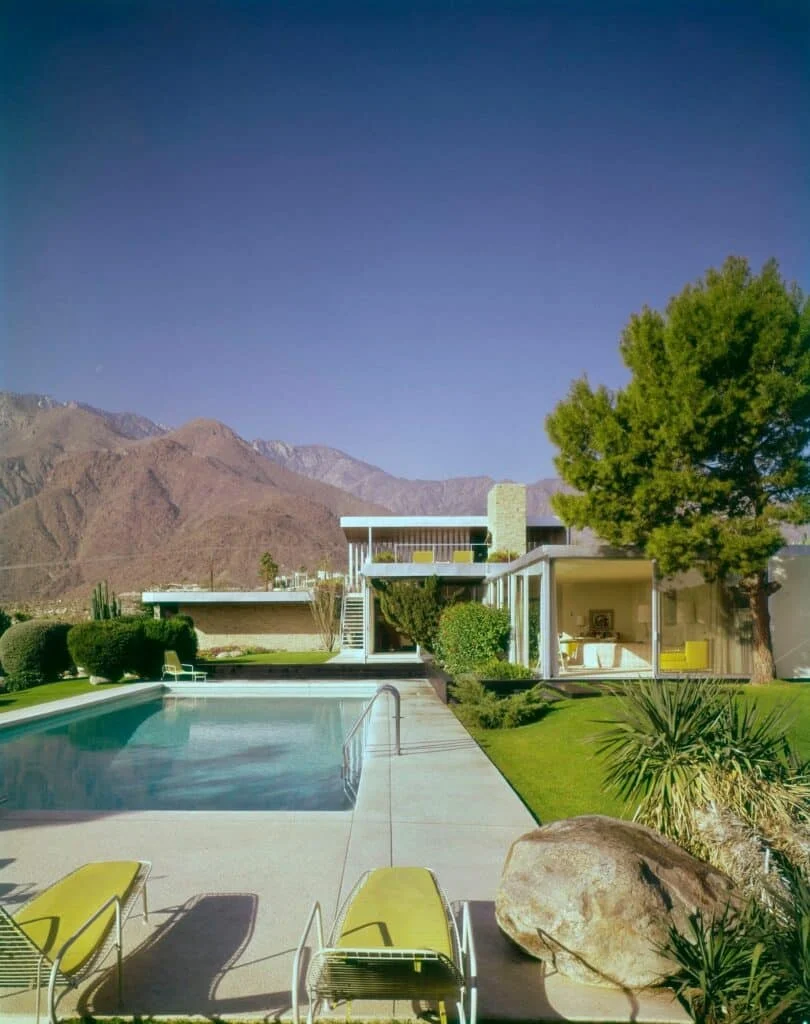
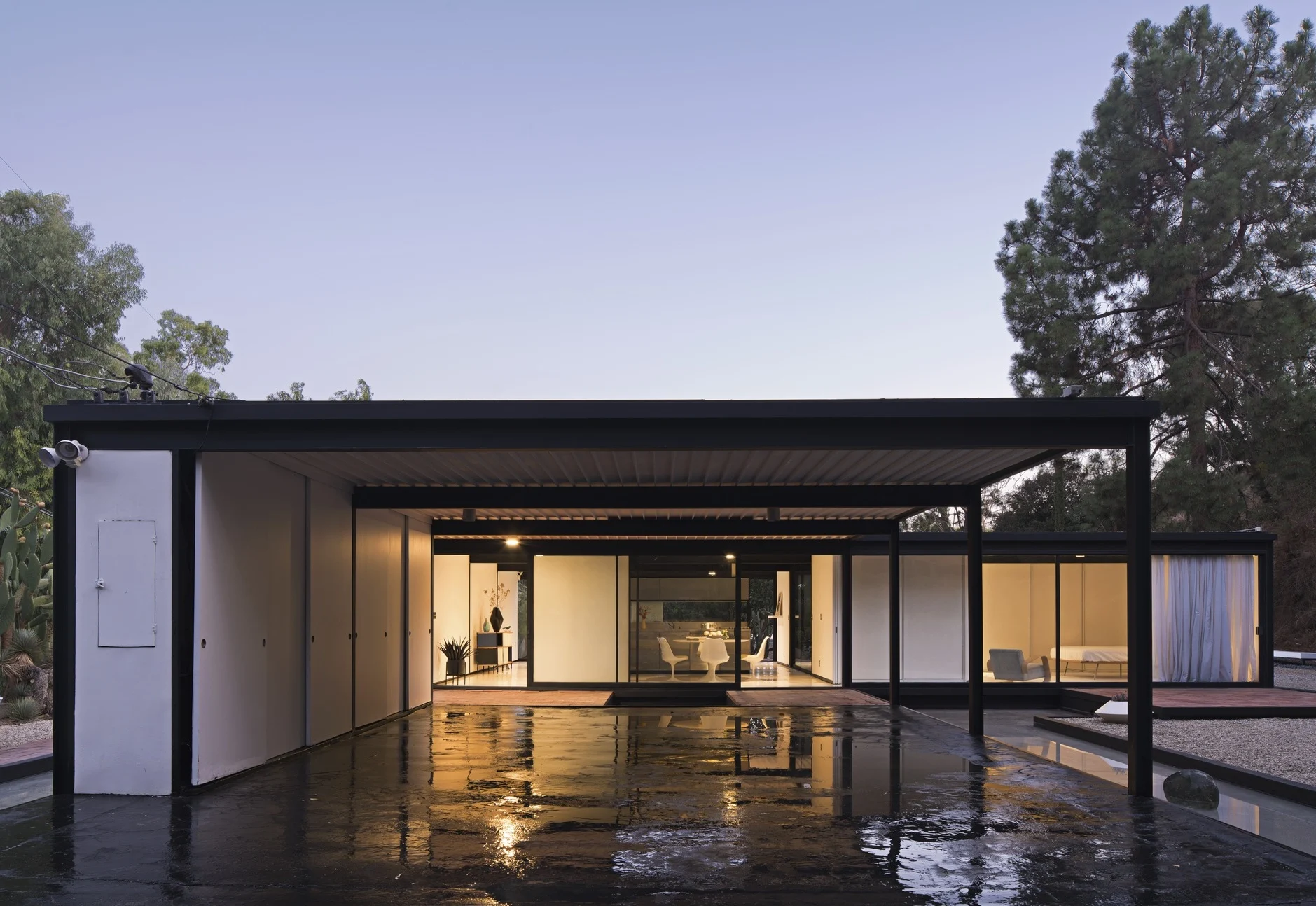
Top: Left: Tramway Gas Station, Palm Springs, California. Albert Frey and Robson Chambers, 1965, Middle: Eichler Home, Sunnyvale, California. A. Quincy Jones and Frederick Emmons, 1962, Right: Frey House II, Palm Springs, California. Albert Frey, 1964. Bottom: Left: Gleason Lake Residence, Wayzata, Minnesota. Thorshov & Cerny, 1948, Middle: Kaufmann Desert House, Palm Springs, California. Richard Neutra, 1946, Right: Case Study House No. 21 (Bailey House), Hollywood Hills, California. Pierre Koenig, 1958.
Mid-Century Modern was never a single nation’s achievement, and no region shaped it more deeply than Scandinavia. The designers of Denmark, Sweden, Finland, and Norway pursued a warm and humane version of modern design, one rooted in fine craftsmanship, natural materials, and a close relationship with nature. Where some strands of modernism could feel severe, Scandinavian Modern aimed for comfort and a sense of welcome, prizing well-made objects that were meant to last a lifetime. Teak and other rich woods were shaped into chairs of remarkable grace by designers such as Hans Wegner, Finn Juhl, Arne Jacobsen, and Børge Mogensen, while the Finnish architect Alvar Aalto brought a similar gentleness to bent plywood and to architecture itself. These were objects built with the patience of the workshop, even when they were produced in quantity. American audiences fell hard for them when the touring exhibition Design in Scandinavia traveled the United States beginning in 1954, introducing a public eager for furniture that felt both modern and inviting. Scandinavian design and American Mid-Century Modern soon blended so naturally that the two can be difficult to separate in the rooms of the period. The Nordic contribution gave the whole movement much of its warmth.
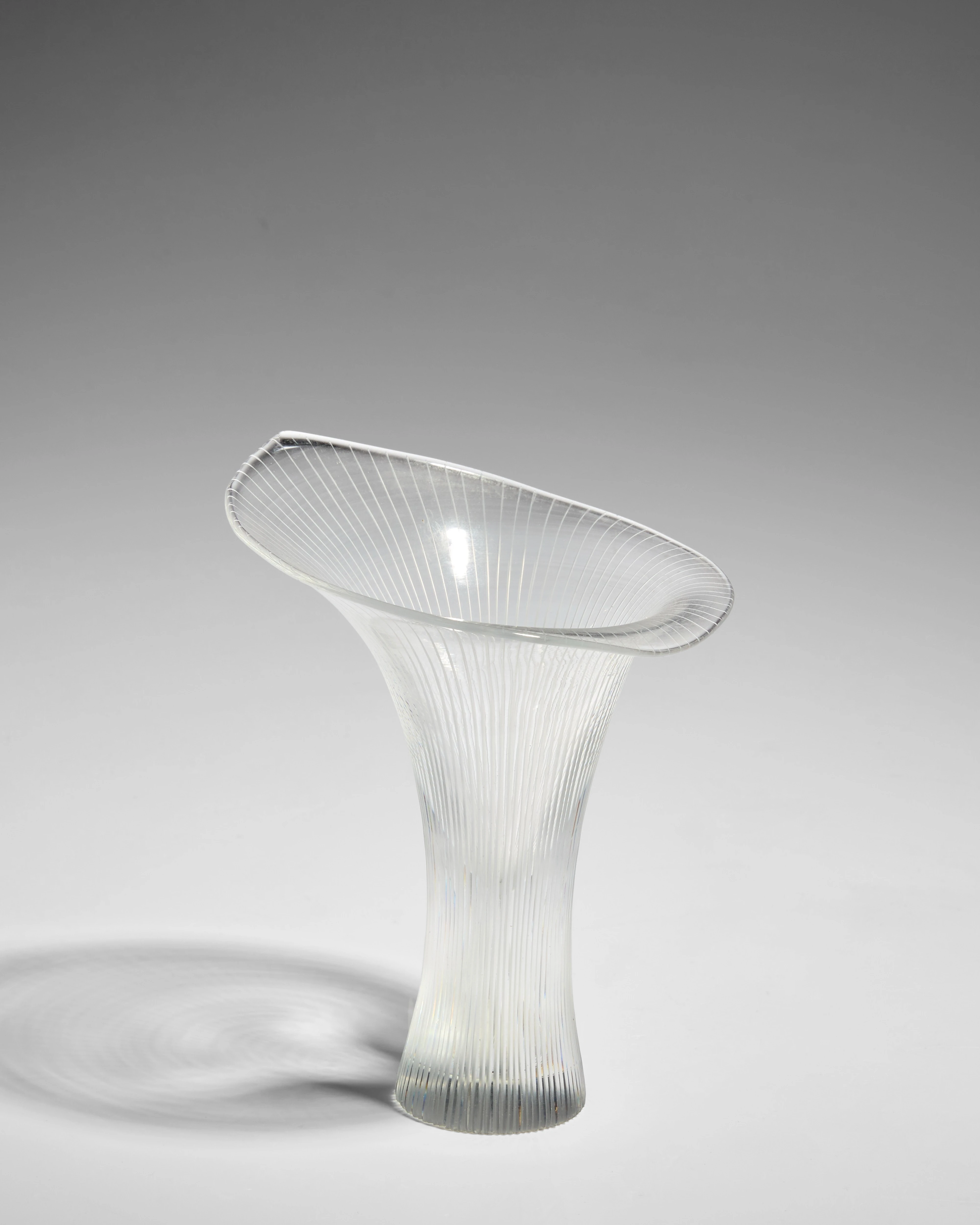

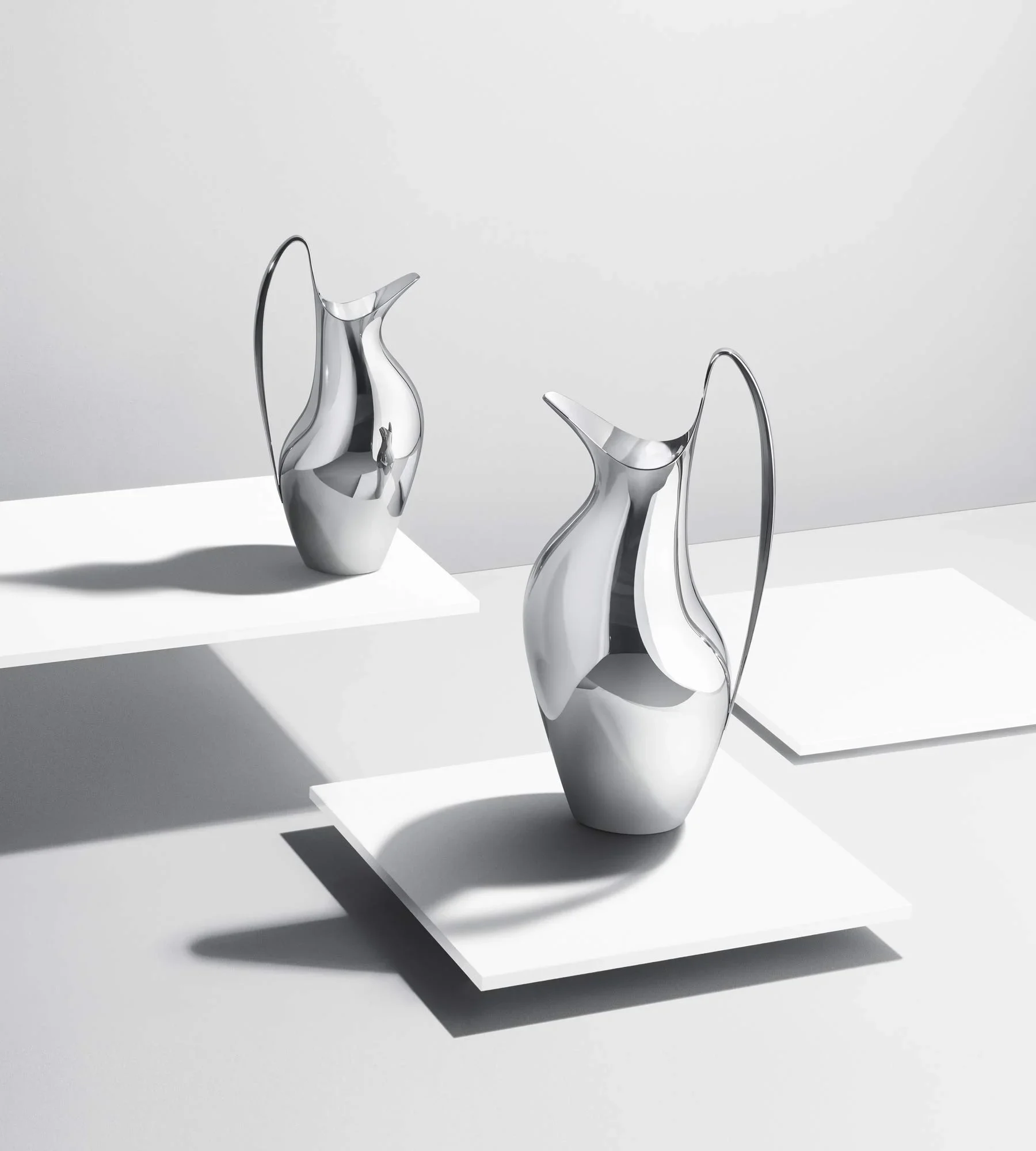
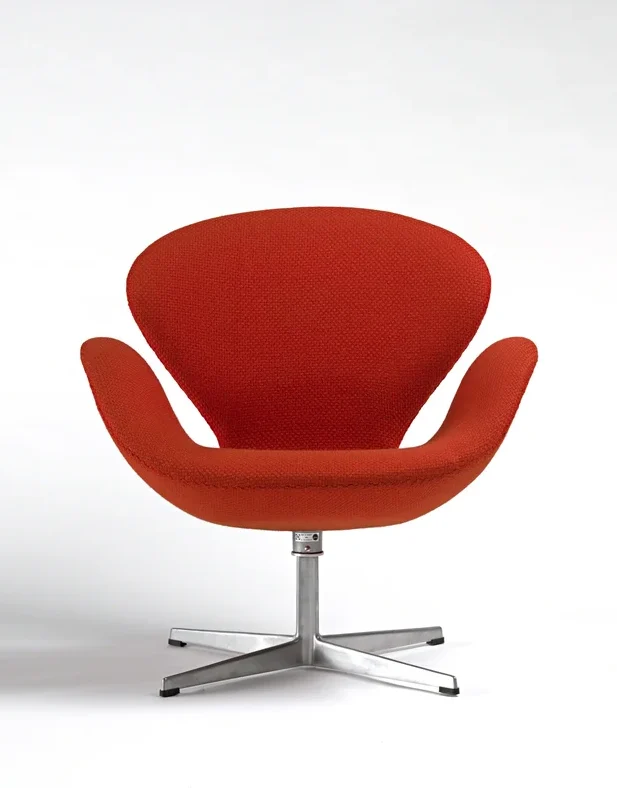
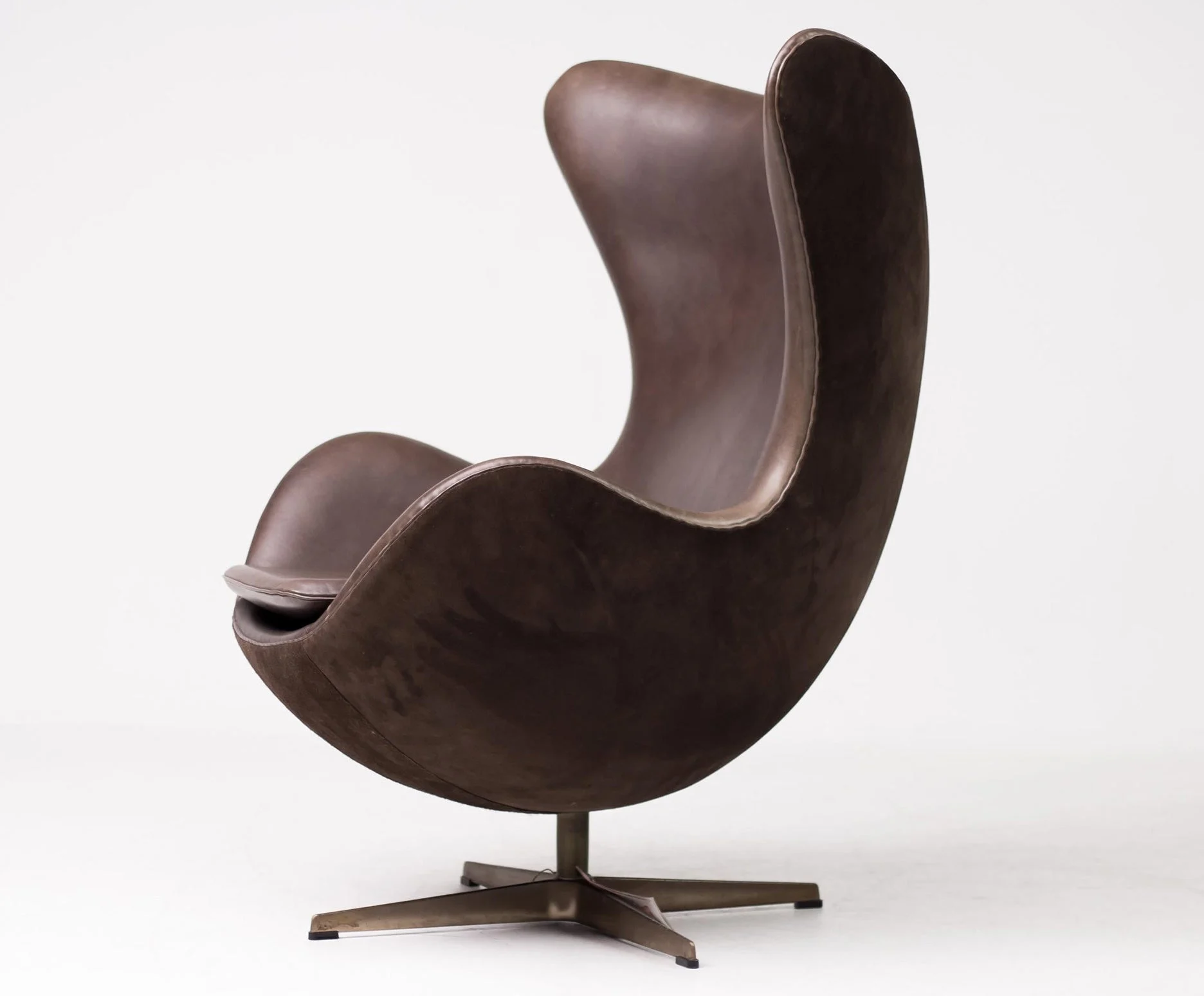
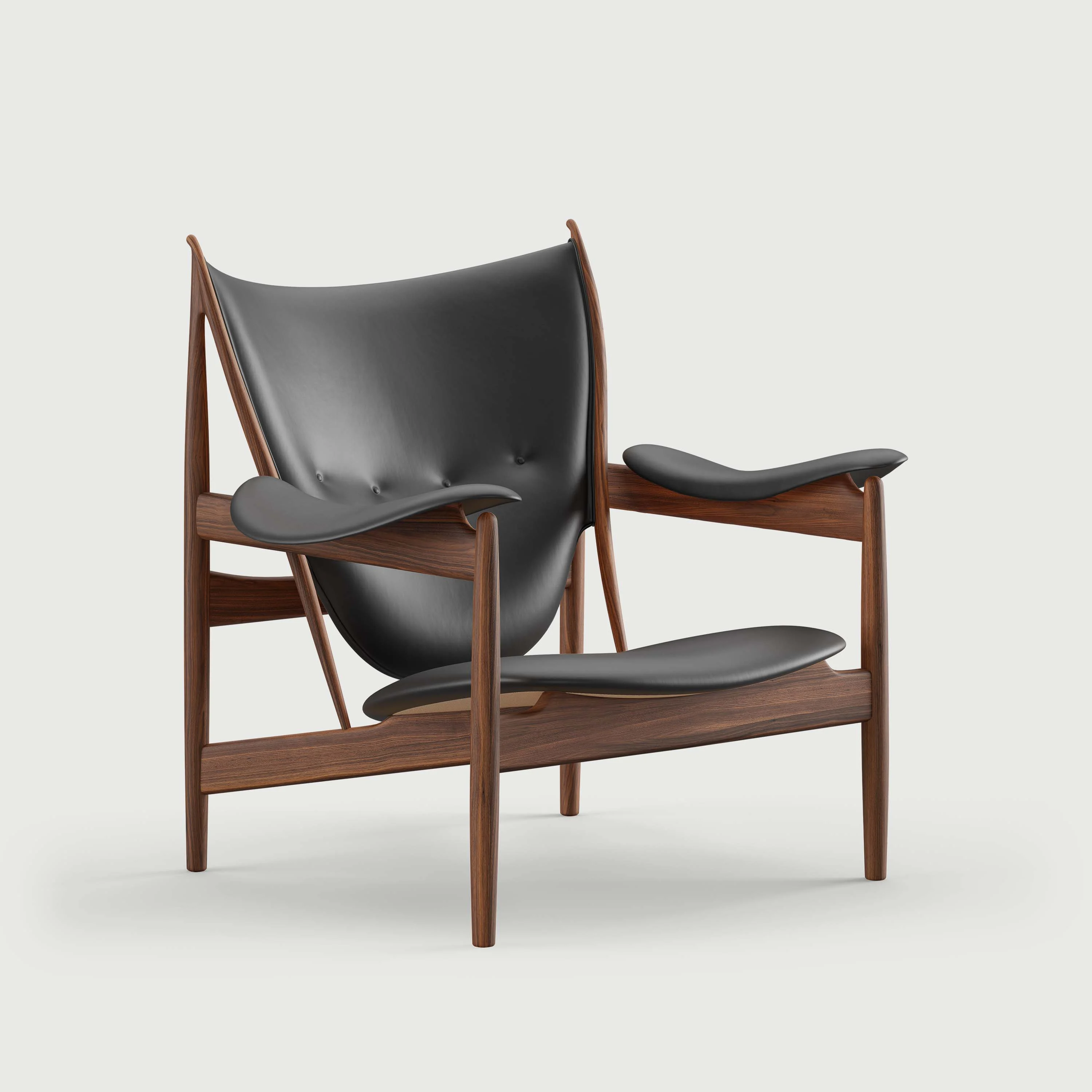
Top: Left: Kantarelli Vase, Tapio Wirkkala for Iittala, Finland, 1947, Middle: Poet Sofa, Finn Juhl, Denmark, 1941, Right: Pitcher, Henning Koppel for Georg Jensen, Denmark, 1952. Bottom: Left: Swan Chair, Arne Jacobsen, Denmark, 1958, Middle: Egg Chair, Arne Jacobsen, Denmark, 1958, Right: Chieftain Chair, Finn Juhl, Denmark, 1949.
Beyond Scandinavia, the style took on a distinct character wherever it traveled. In Brazil, the architect Oscar Niemeyer gave modernism some of its most sculptural and daring forms, and the nation went so far as to raise an entire new capital, Brasília, almost wholly in the modern idiom when it was inaugurated in 1961. Brazilian designers such as Lina Bo Bardi and Sergio Rodrigues added a tropical sensibility, marrying modern lines with native woods and a generous, relaxed comfort. Italy adapted the modern language with flair and a love of beautiful materials. Figures like Gio Ponti produced furniture and buildings that were light, elegant, and unafraid of style, laying the groundwork for the country’s later dominance in design. In Germany, where the Bauhaus had first taken root before its teachers scattered abroad, a rigorous and systematic strand of modern design took hold after the war, expressed in carefully reasoned household products and in the teaching of the Ulm School of Design. Japan brought a long tradition of simplicity, natural materials, and a flowing connection between indoors and out, ideas that had already influenced American designers and that found new modern form in pieces such as Sori Yanagi’s Butterfly Stool. Britain, recovering from the war, used the 1951 Festival of Britain to present a hopeful modern future to its own public. Each country received the same modern impulse and returned it changed, which is exactly how the great international styles had always traveled.

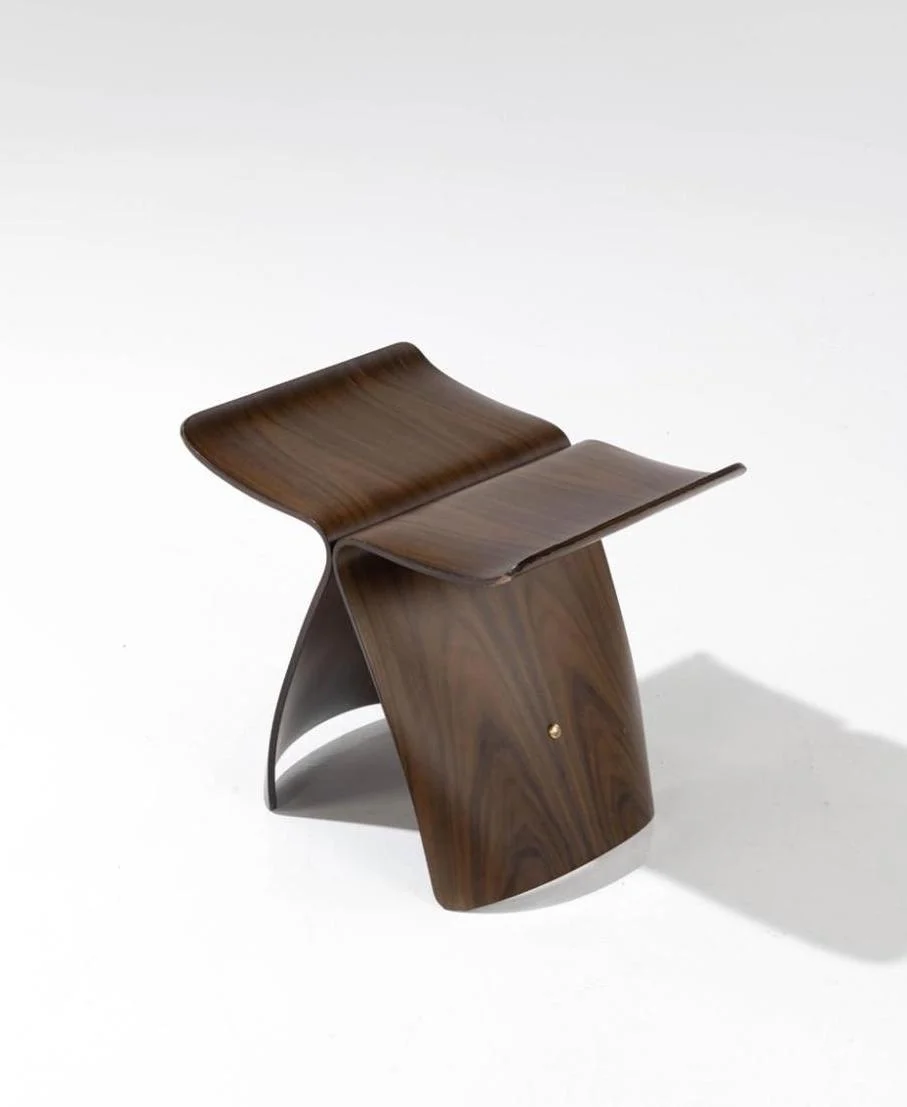
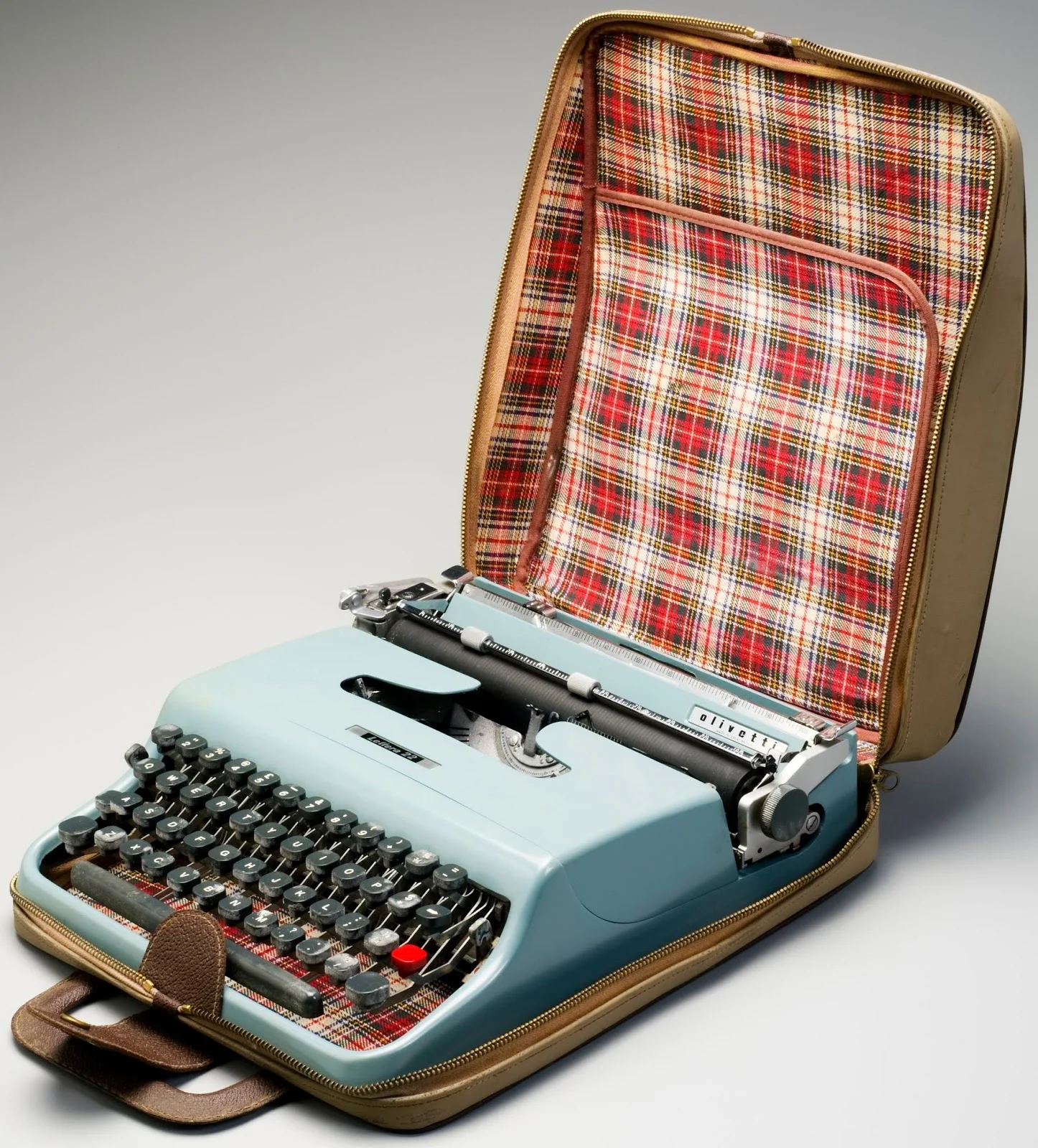
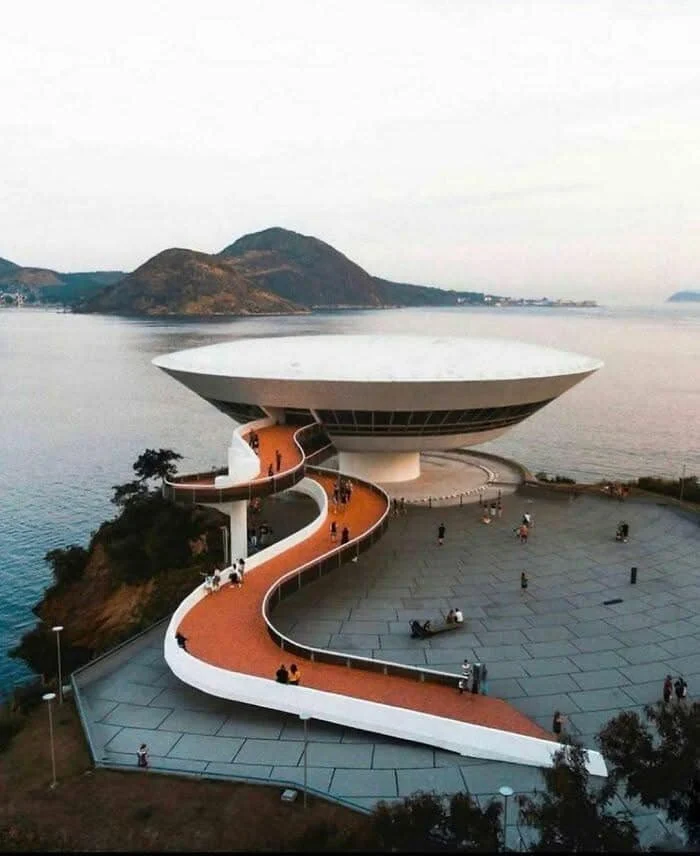
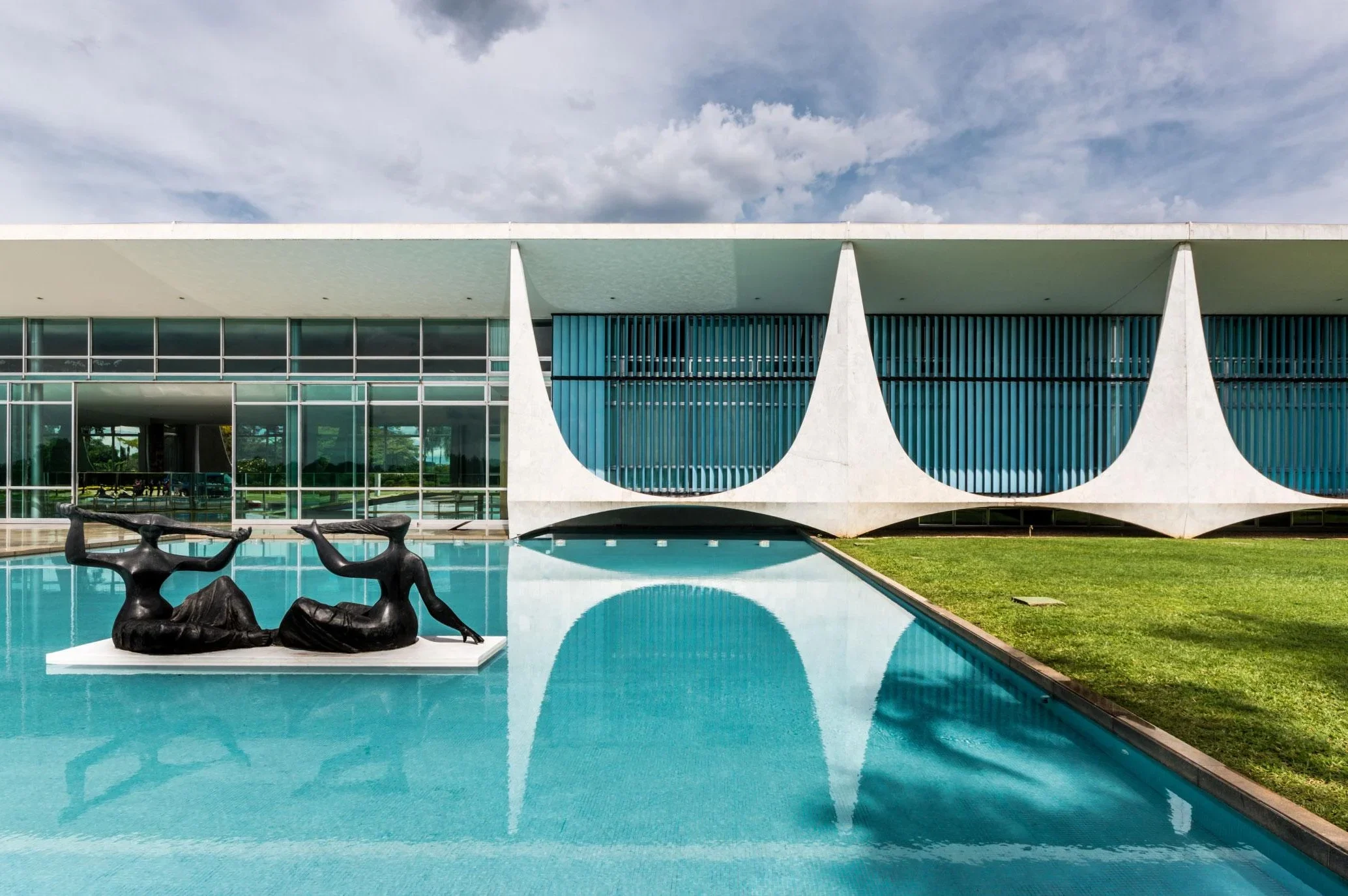
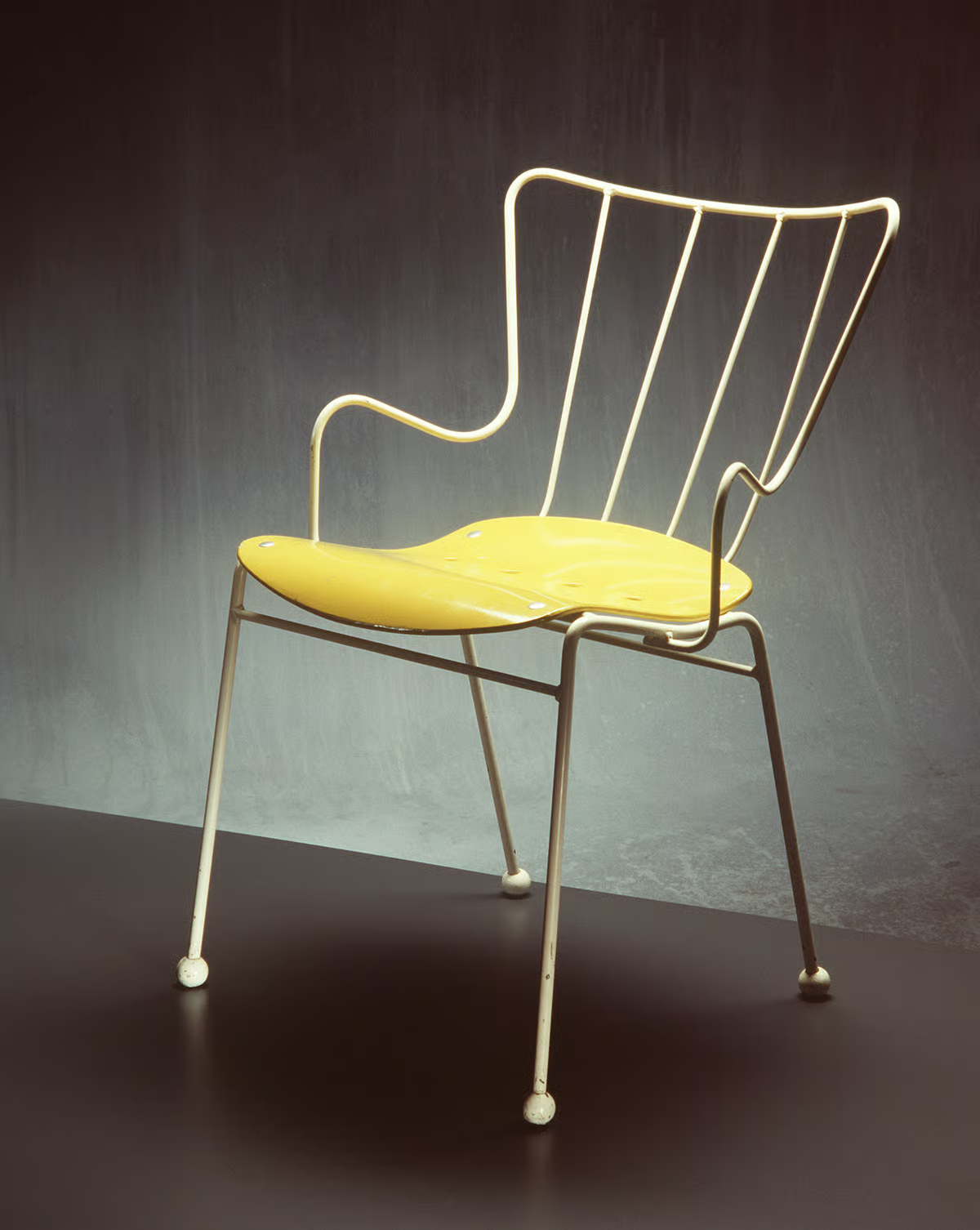
Top: Left: SK 5 Phonosuper, Dieter Rams and Hans Gugelot for Braun, Germany, 1962, Middle: Butterfly Stool, Sori Yanagi for Tendo Mokko, Japan, 1954, Right: Lettera 22, Marcello Nizzoli for Olivetti, Italy, 1950. Bottom: Left: Niterói Contemporary Art Museum, Oscar Niemeyer, Brazil, Middle: Palácio da Alvorada, Oscar Niemeyer, Brasília, Brazil, 1958, Right: Antelope Chair, Ernest Race, United Kingdom, 1951.
If a single category captures the spirit of the period, it is furniture. The chairs, tables, and storage pieces of these decades are among the most recognizable objects ever designed, and many are still being manufactured today. Charles and Ray Eames led the way, bending plywood and molding fiberglass into seating that was light, comfortable, and unlike anything that had come before, including the lounge chair and ottoman that became a symbol of the entire era. Eero Saarinen cleared away the tangle of table and chair legs with his Tulip designs and gave the period its most sheltering form in the Womb chair. Isamu Noguchi turned the coffee table into a piece of sculpture, Harry Bertoia wove seating from welded steel rods, and George Nelson and Florence Knoll brought modern order to cabinets, sofas, and the planning of the workplace. Behind many of these designers stood two great American manufacturers, Herman Miller and Knoll, which believed that serious modern design could also be good business. What united this generation was a refusal to separate how an object looked from how it worked. They treated comfort, structure, material, and proportion as a single problem, and they solved it with curves, organic shapes, and a confident economy of means.
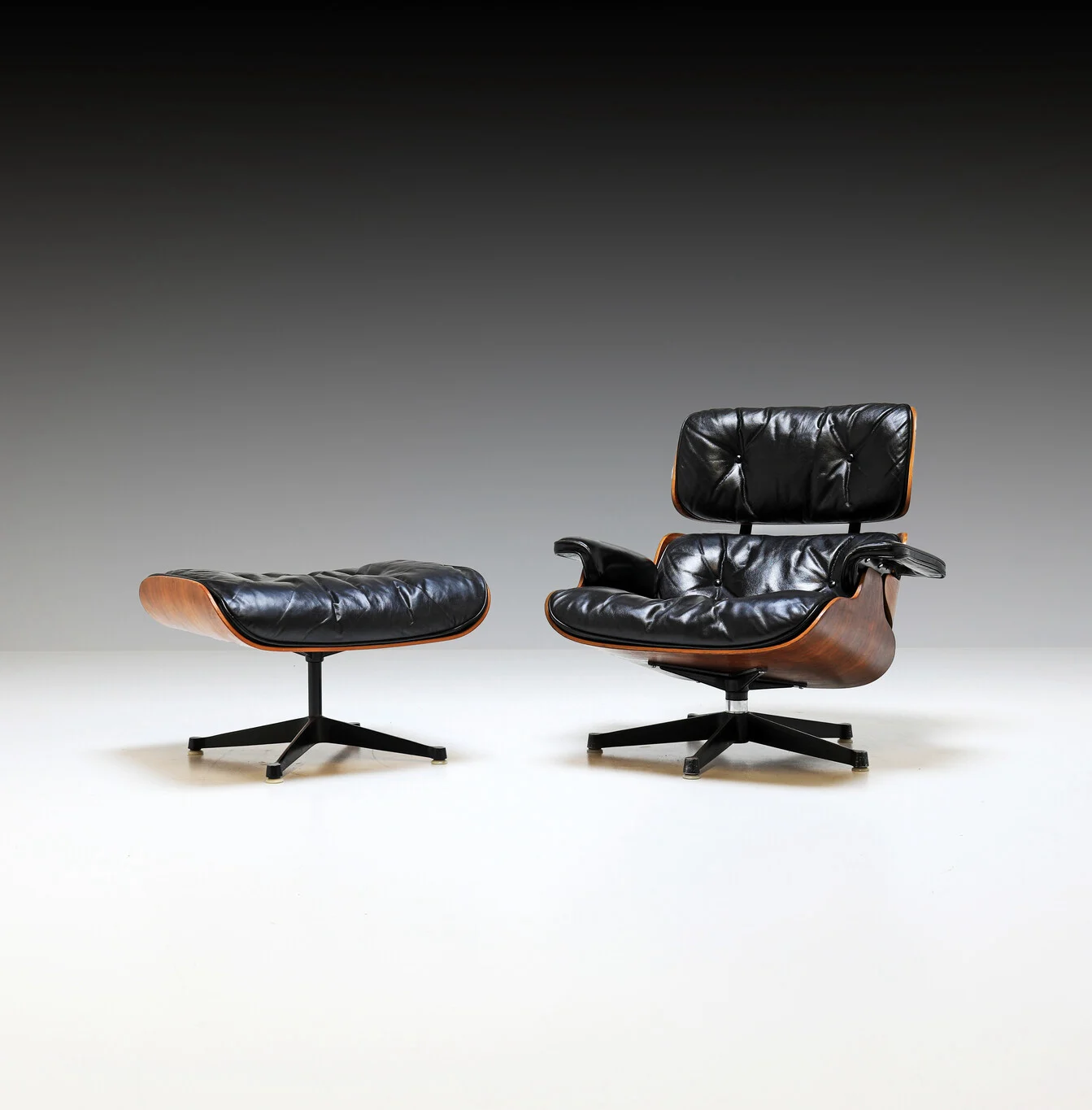

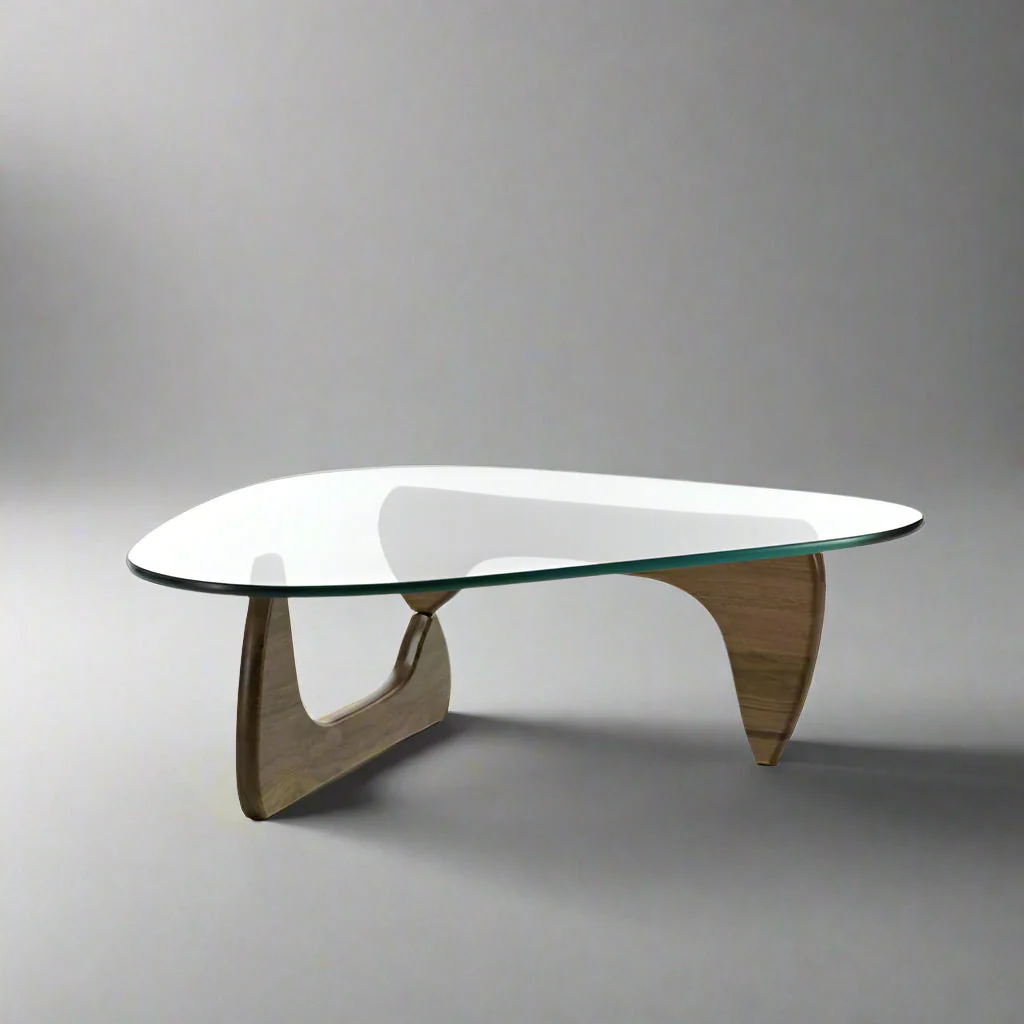
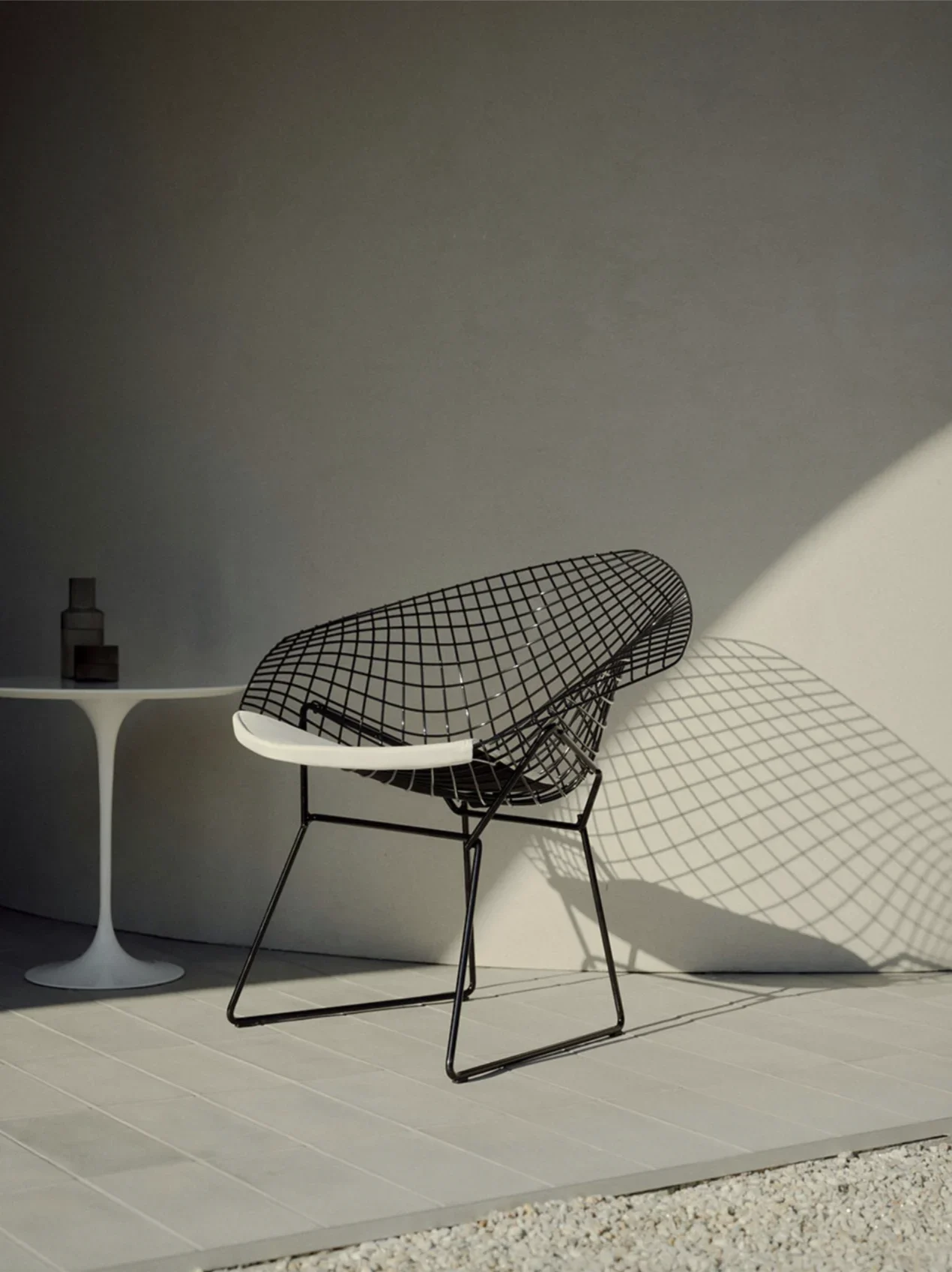
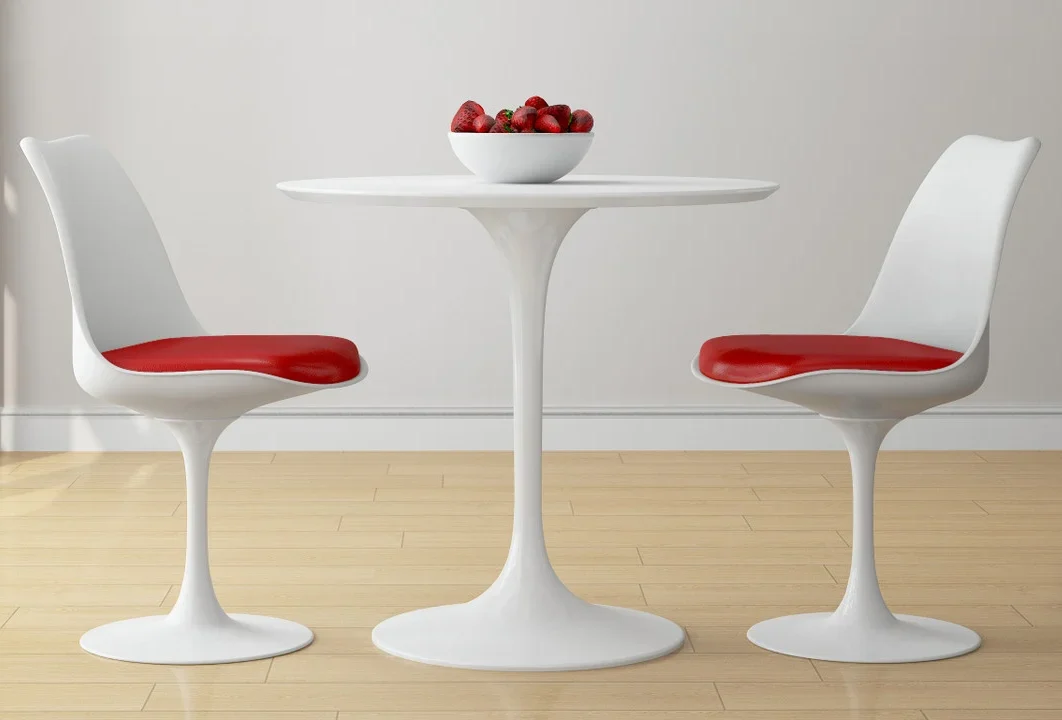
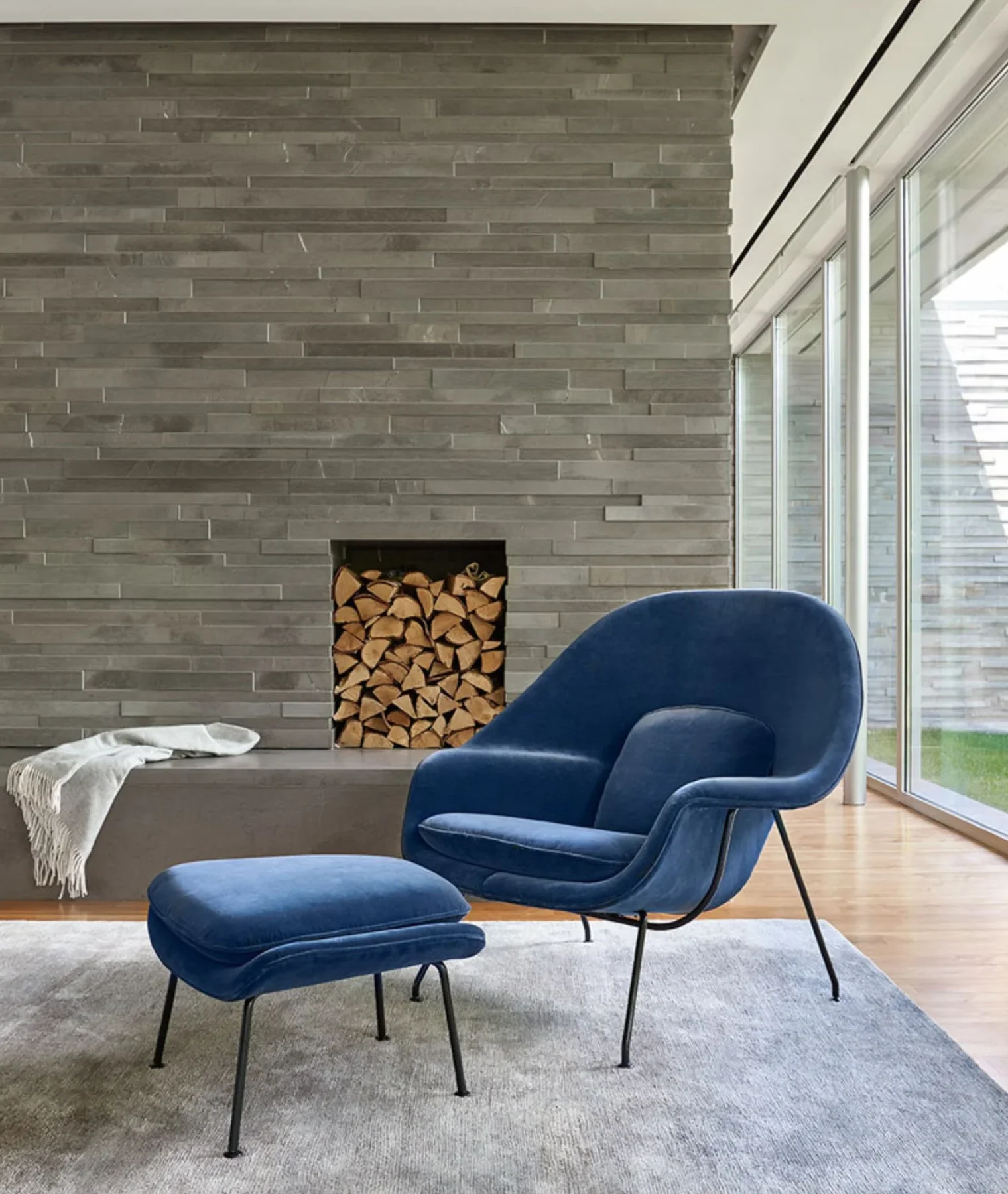
Top: Left: Eames Lounge Chair and Ottoman, Charles and Ray Eames for Herman Miller, 1956, Middle: Marshmallow Sofa, George Nelson Associates for Herman Miller, 1956, Right: Coffee Table, Isamu Noguchi for Herman Miller, 1944. Bottom: Left: Diamond Chair, Harry Bertoia for Knoll, 1952, Middle: Tulip Table and Chairs, Eero Saarinen for Knoll, 1956, Right: Womb Chair and Ottoman, Eero Saarinen for Knoll, 1948.
The materials of Mid-Century Modern furniture explain much of its lasting appeal. Designers favored richly grained woods, above all teak, rosewood, and oak, chosen for their warmth, their color, and their strength. They used these woods to greatest effect in case pieces such as credenzas, sideboards, low cabinets, desks, and dining tables. Wood, however, was rarely the whole story. The period took real pleasure in combining materials, setting a warm wood top on slender chrome legs or pairing an upholstered seat with a sculpted wooden frame, often letting two materials work in tension to striking effect. Color played a deliberate part as well, used as a bold accent or as the reason a single piece would stand apart in a room. Because these objects were built with genuine craftsmanship, a great many original examples have survived in fine condition, and they are now sought after and collected with real seriousness. Authentic pieces carry both lasting value and a certain rarity, and they appeal to collectors for their honesty, their sculptural presence, and the fact that so many were designed to do more than one job. A Mid-Century credenza, a teak lounge chair, or a well-made sideboard still earns its place in a contemporary room, which is rare for furniture of any age. To live with these pieces is to keep a piece of design history that continues to work.
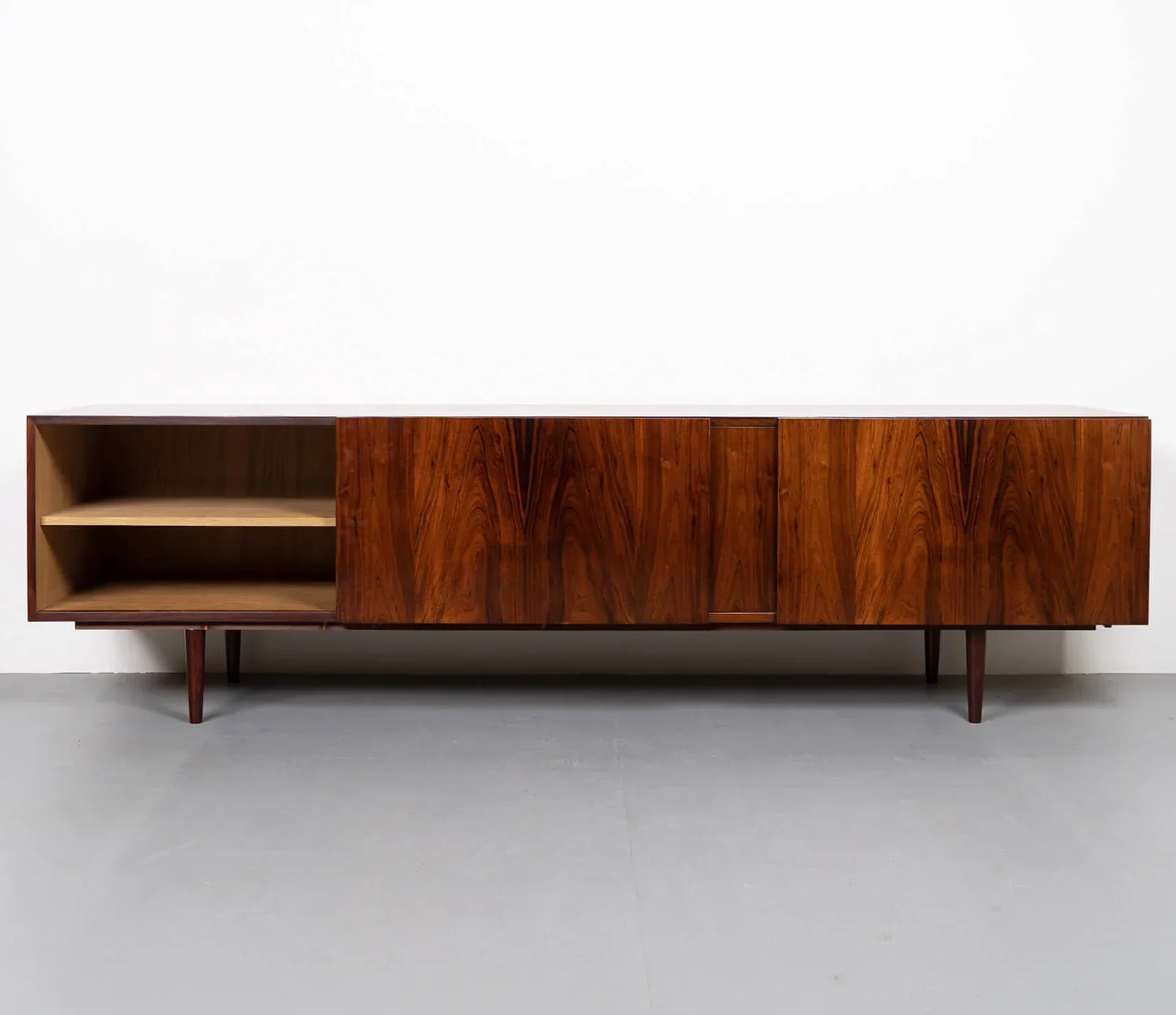
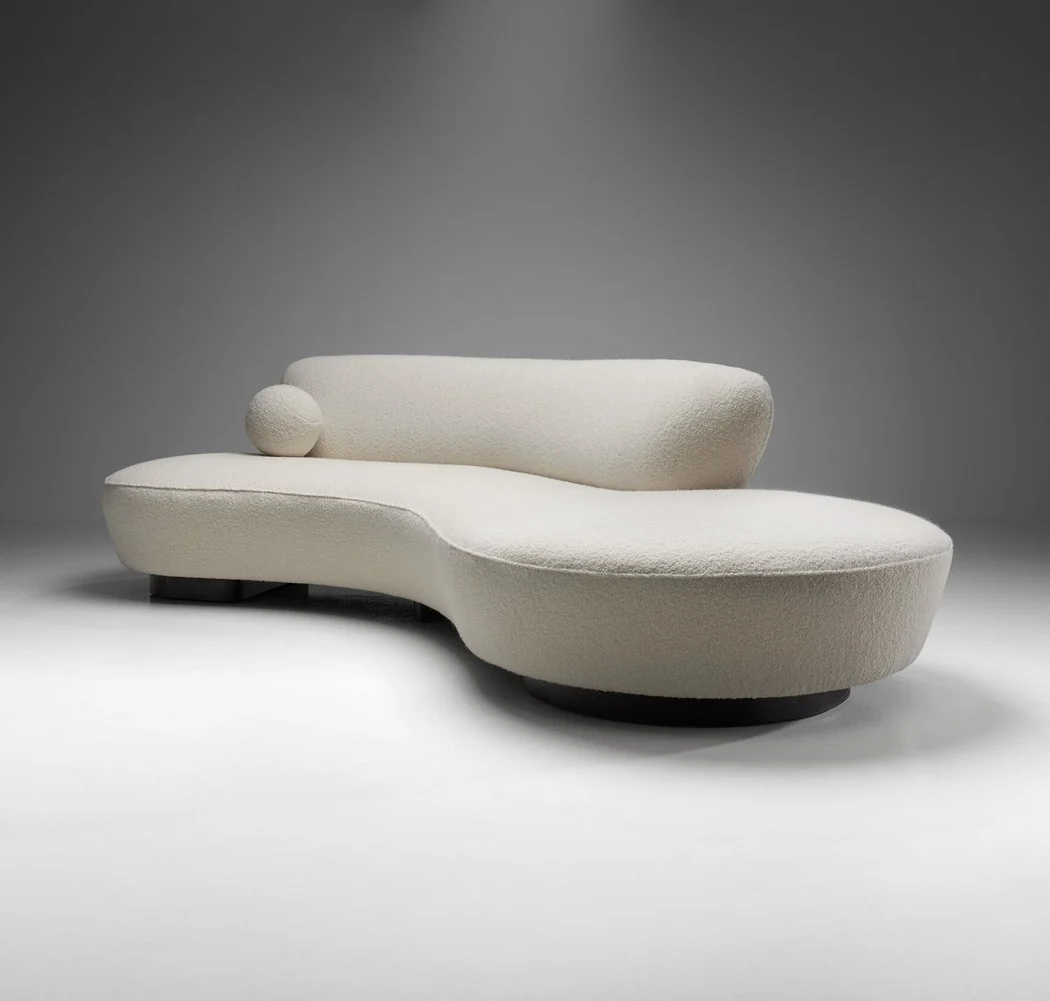
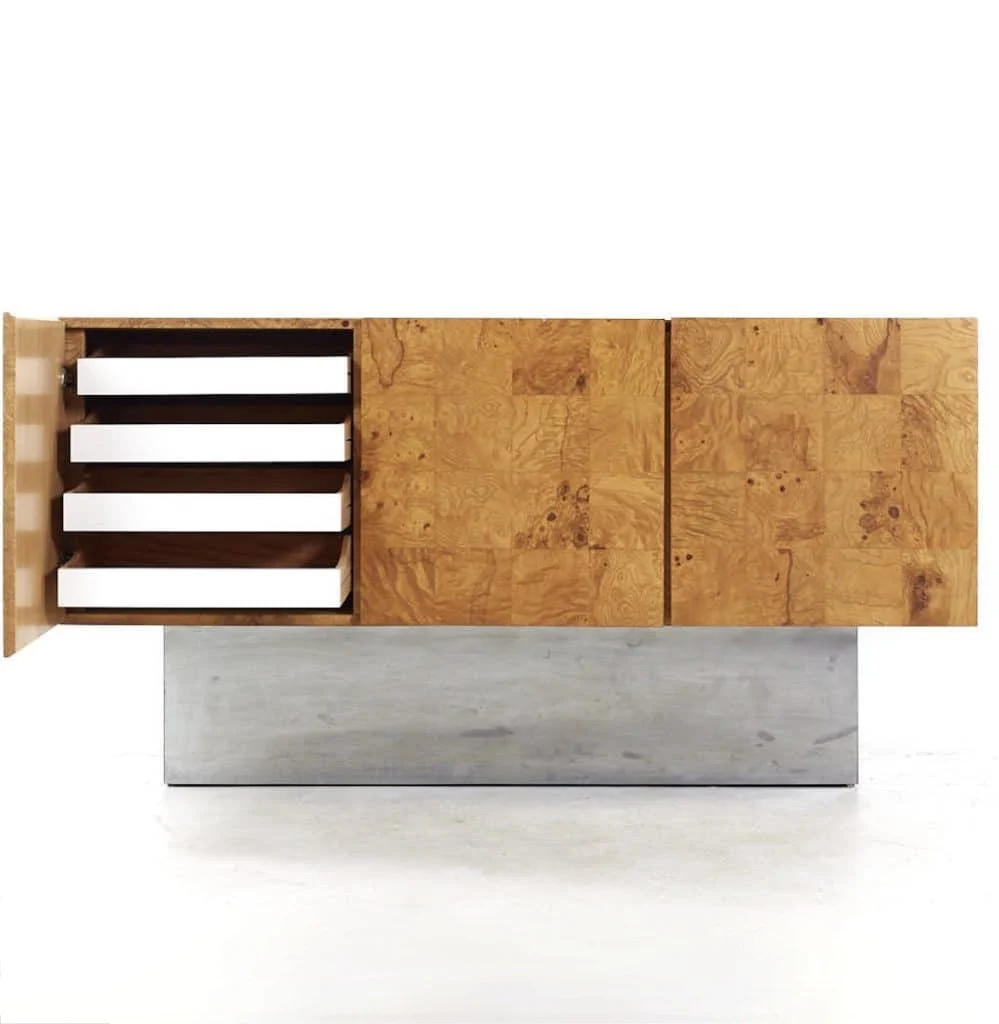
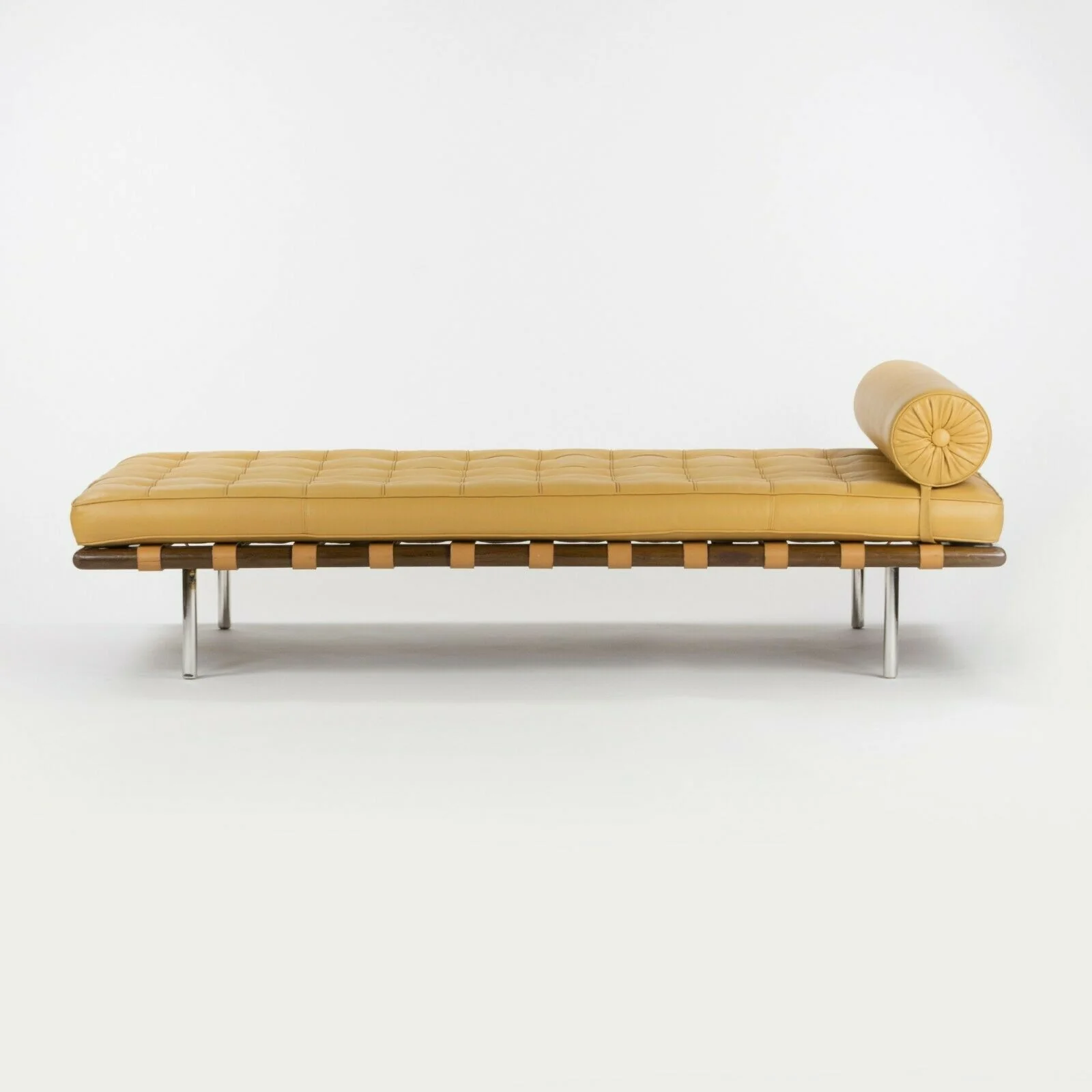
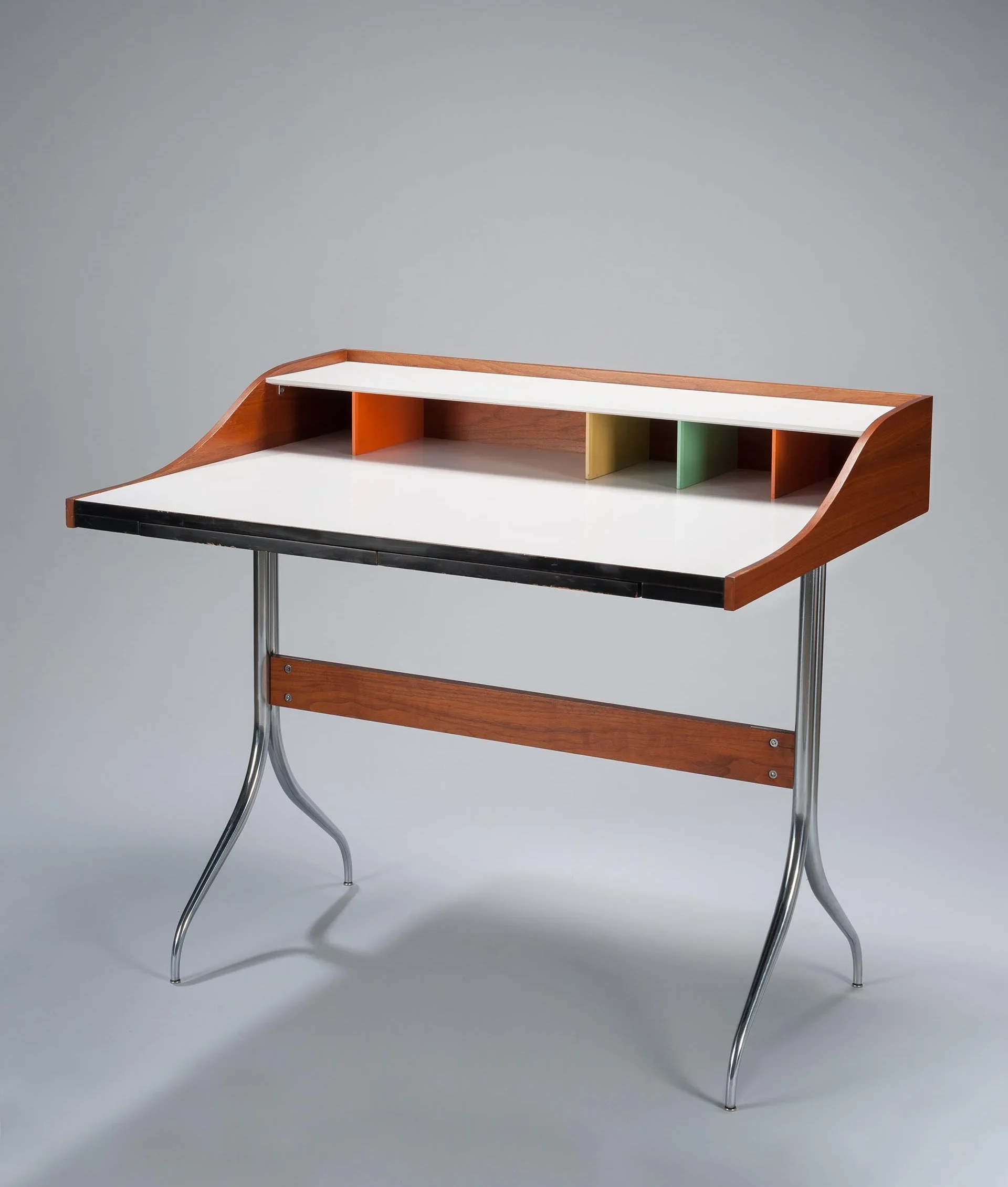
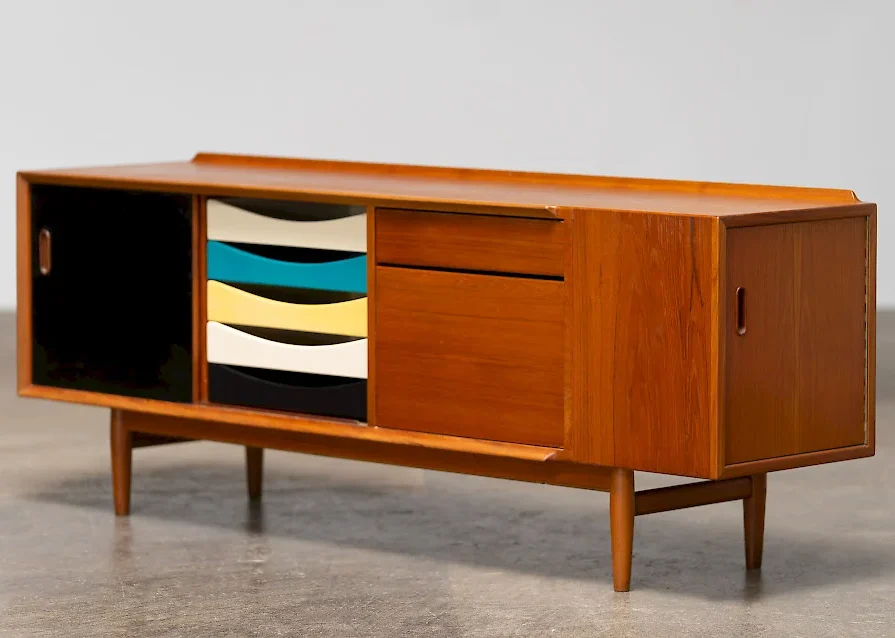
Top: Left: Rosewood Sideboard, Ib Kofod-Larsen for Faarup Møbelfabrik, Denmark, 1960s, Middle: Serpentine Sofa, Vladimir Kagan, 1950s, Right: Burlwood and Chrome Console, Milo Baughman for Thayer Coggin, 1970s. Bottom: Left: Barcelona Couch, Ludwig Mies van der Rohe for Knoll, Middle: Swag Leg Desk, George Nelson for Herman Miller, 1958, Right: Sideboard, Arne Vodder for Sibast, Denmark, 1960s.
The mid-century imagination reached well beyond architecture and furniture. Industrial design matured into a respected profession, and the same modern thinking shaped lighting, glass, ceramics, and the objects of the table. In California, the potter Edith Heath founded Heath Ceramics in 1948, and her Coupe dinnerware, with its soft glazes and clean profile, has remained in nearly continuous production ever since. In New Mexico, the firm Nambé introduced a line of cast alloy wares in 1953 that carried the gleam of silver and the weight of iron into modern shapes. On the East Coast, Russel and Mary Wright and the designer Eva Zeisel created flowing ceramics that made the smooth, organic curve a signature of the era. Scandinavia again played its part, contributing glass from Finland, finely made ceramics and silver, and the carefully considered lamps of designers such as Poul Henningsen. Even the printed material of the period, from brightly colored linen postcards to sleek advertising, reflected a culture enchanted by speed, progress, and the promise of a better future. These were objects of daily use, yet they were given the same care as a building or a chair, and they remain among the most collectible expressions of the style.
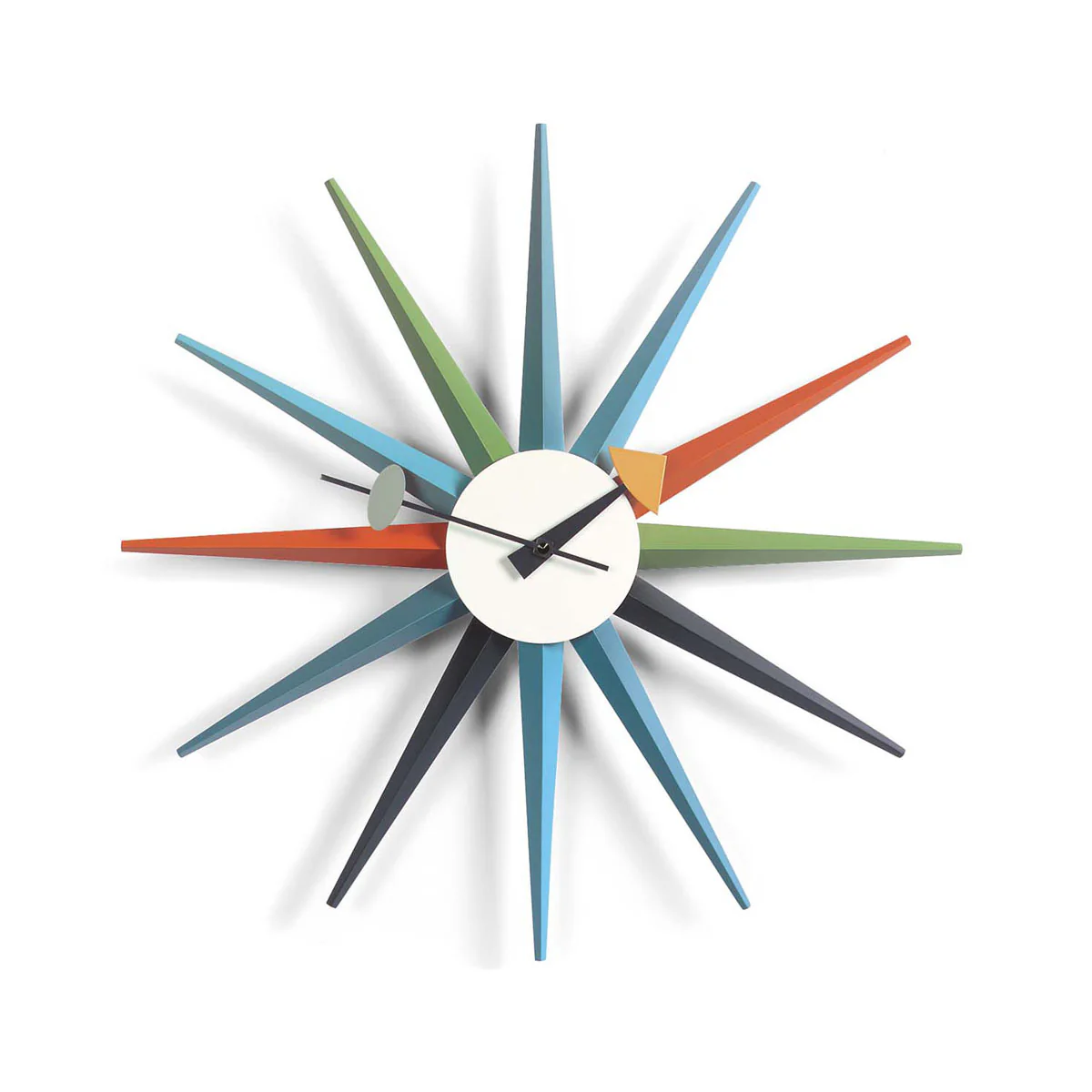
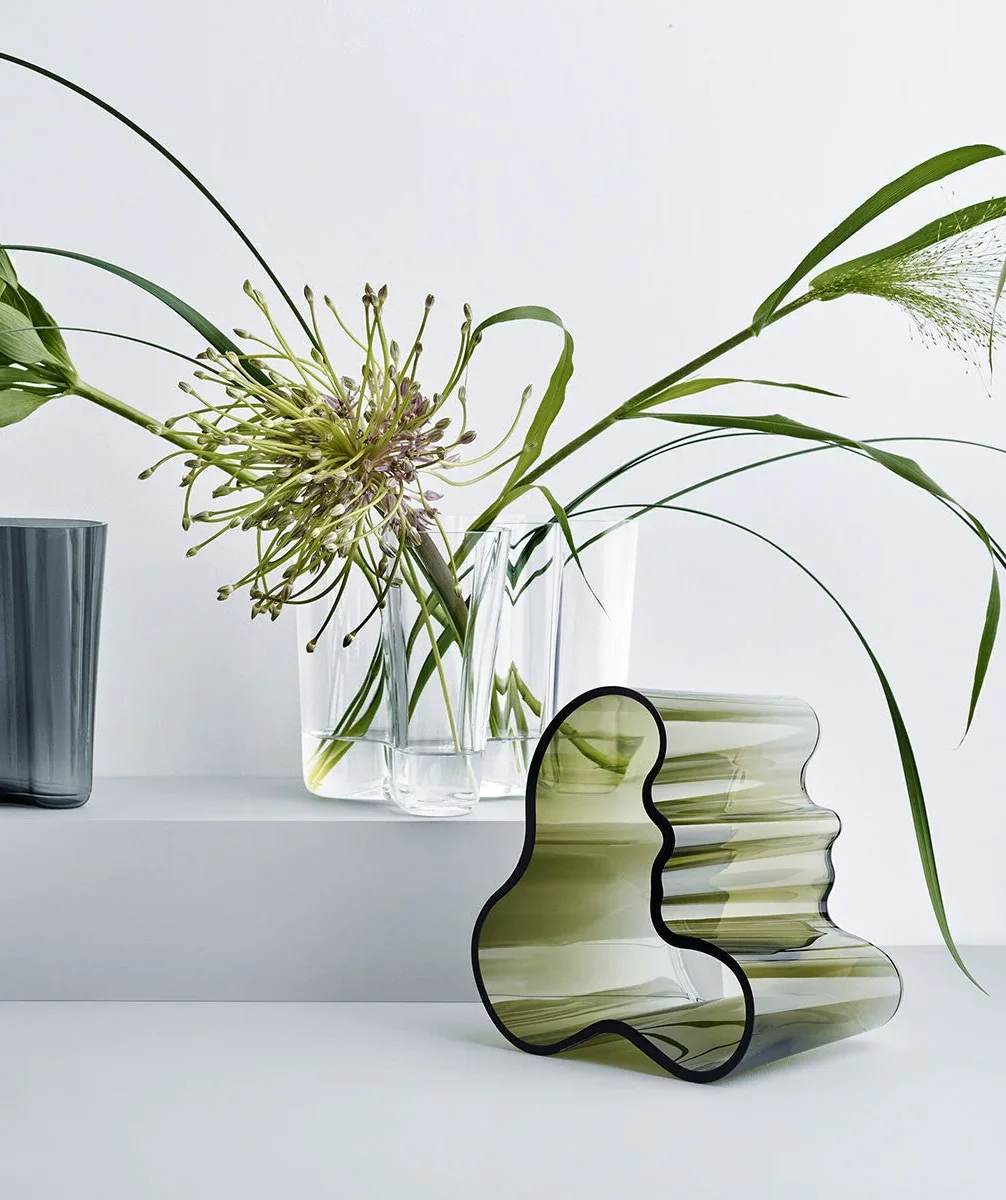
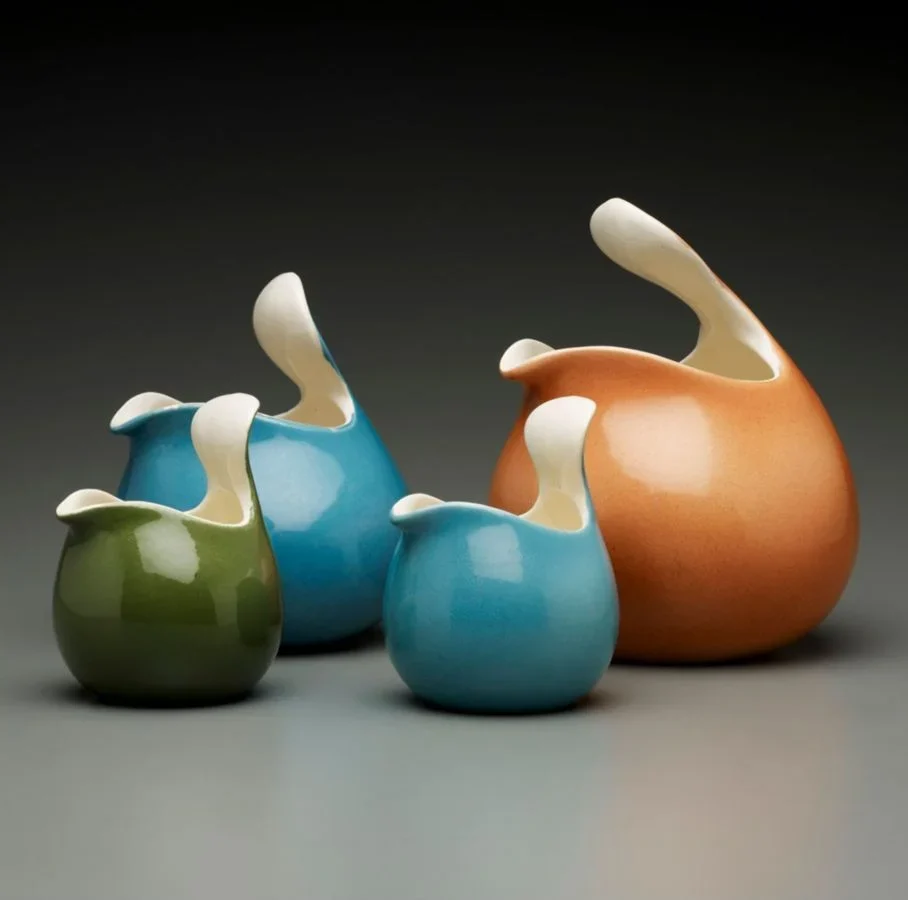
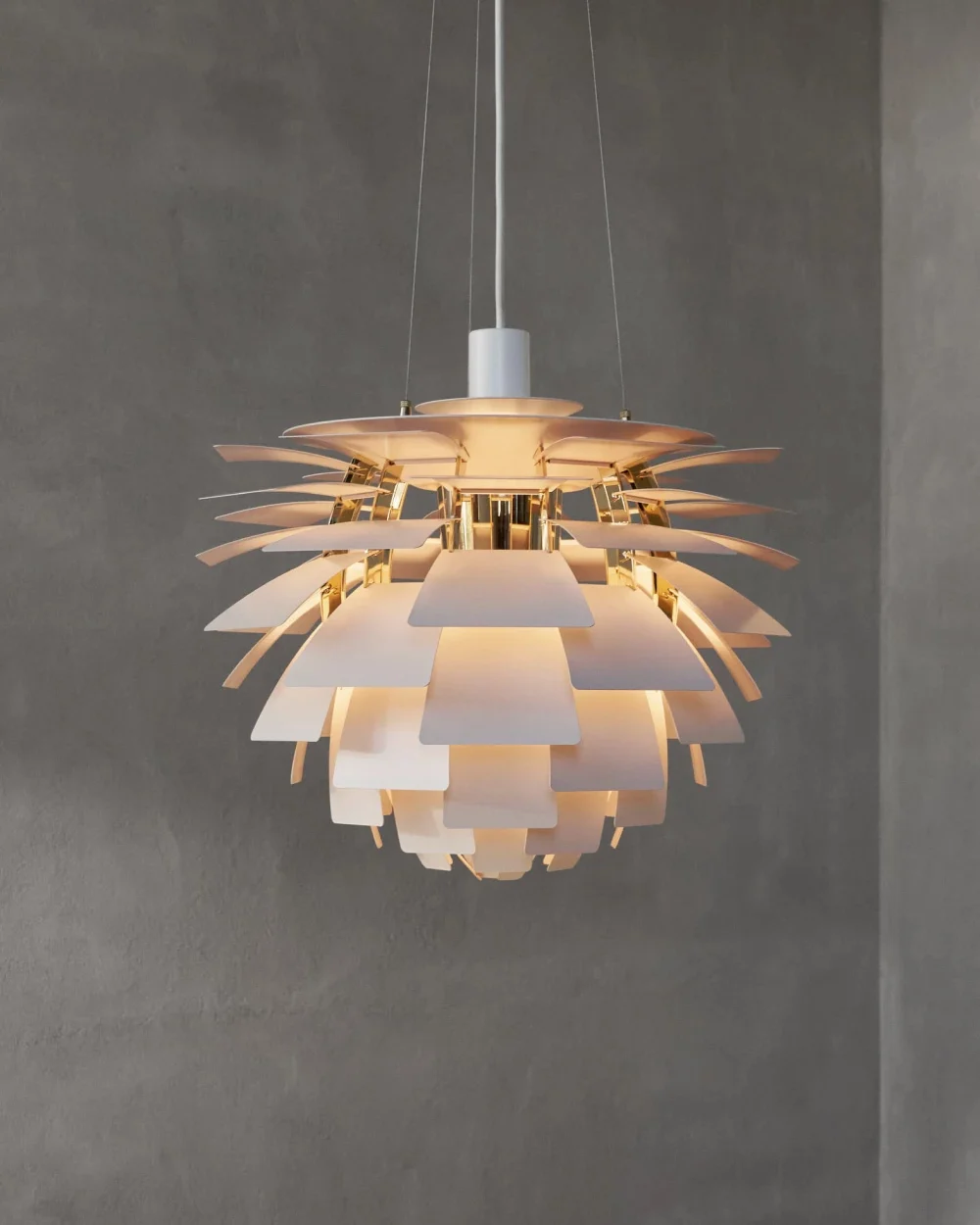
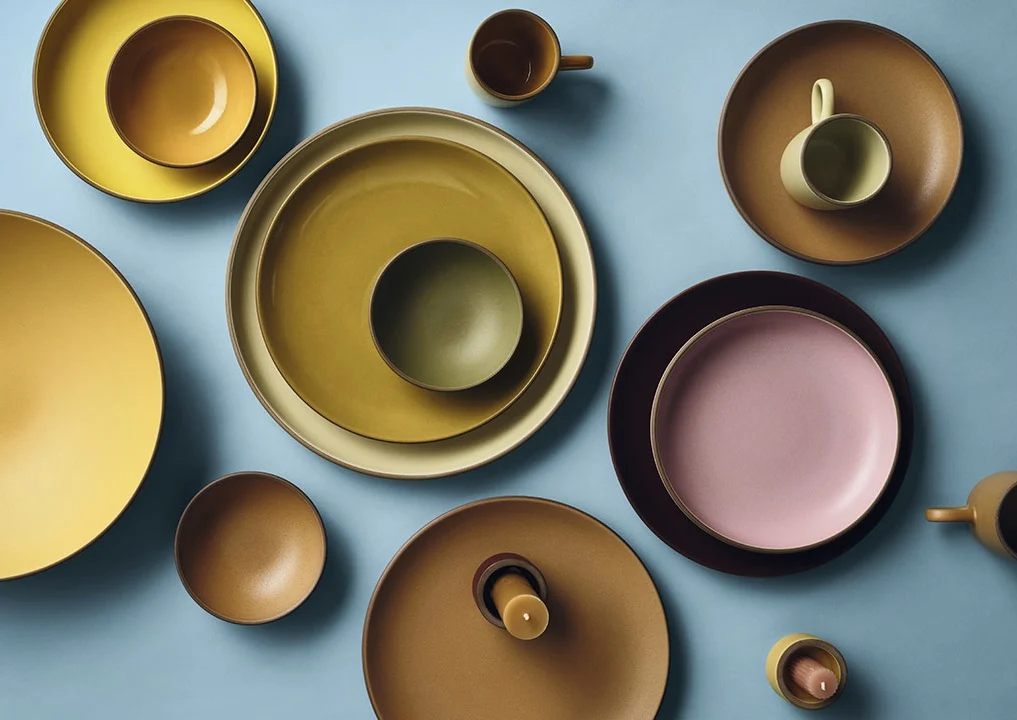
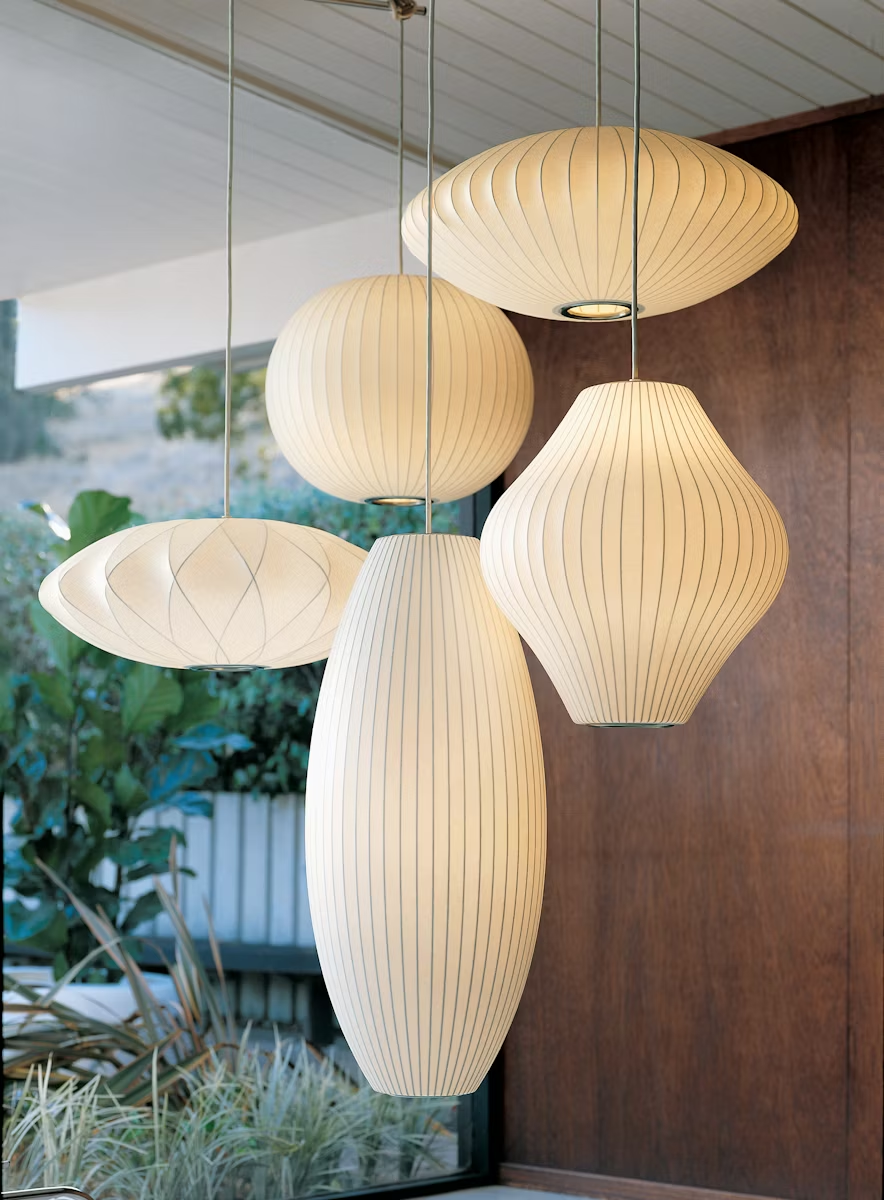
Top: Left: Sunburst Clock, George Nelson for Howard Miller, 1950s, Middle: Aalto Vase, Alvar Aalto for Iittala, Finland, 1936, Right: Town and Country Pitcher, Eva Zeisel for Red Wing Pottery, 1946. Bottom: Left: PH Artichoke, Poul Henningsen for Louis Poulsen, Denmark, 1958, Middle: Heath Ceramics Coupe Dinnerware, Edith Heath, Right: Bubble Lamp, George Nelson for Herman Miller, 1952.
Mid-Century Modern never truly faded, and since the late 1990s, it has enjoyed a strong and continuing revival. Part of its appeal is practical, because the well-built and often multipurpose furniture of the period suits the way people actually live. Part of it is something deeper. In a world crowded with noise and demand, the clean lines and uncluttered rooms of the style offer a sense of calm and order. The most rewarding interiors rarely treat it as a museum display, mixing Mid-Century pieces with furniture and objects from other periods so that a room feels gathered over time rather than staged. Of all the movements that preceded it, none pairs with Mid-Century Modern more naturally than Art Deco. The two movements share a devotion to geometry, fine materials, and the conviction that a well-made object should be as beautiful as it is useful. They emerged close enough in time that their finest pieces feel like chapters of a single story. A streamlined cabinet, a bold geometric rug, a sculptural Mid-Century chair, and a piece of art glass can belong to slightly different decades and still compose a single, coherent room. In the best rooms, the distance between them disappears entirely.
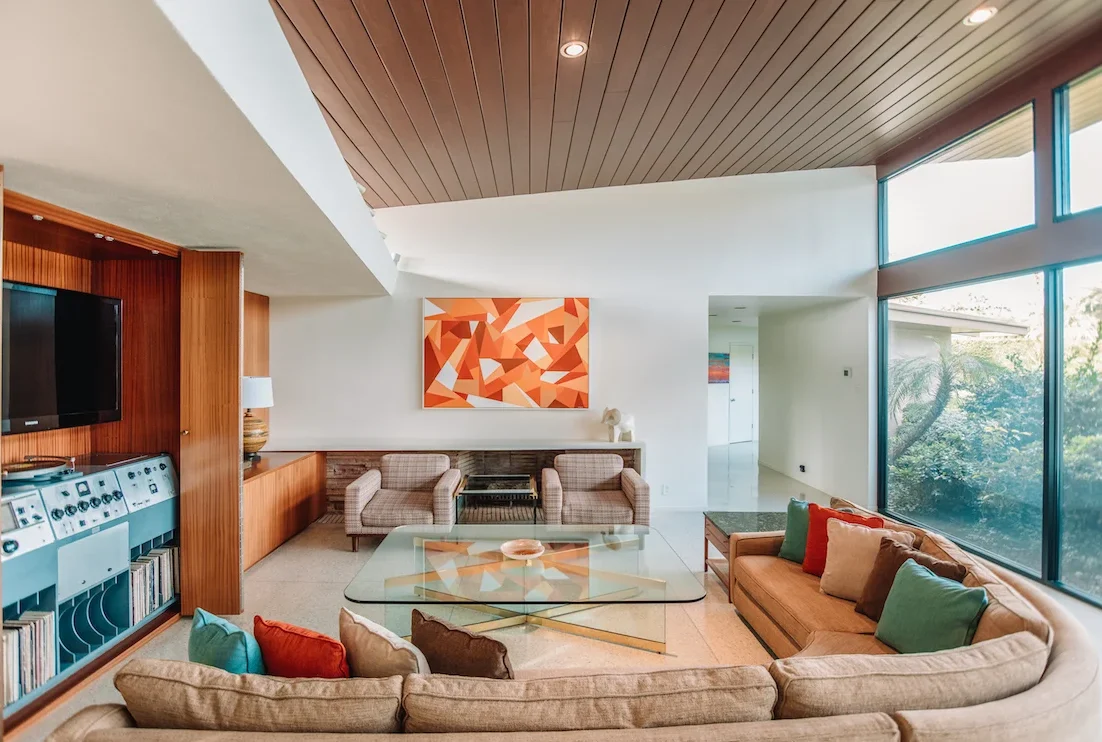
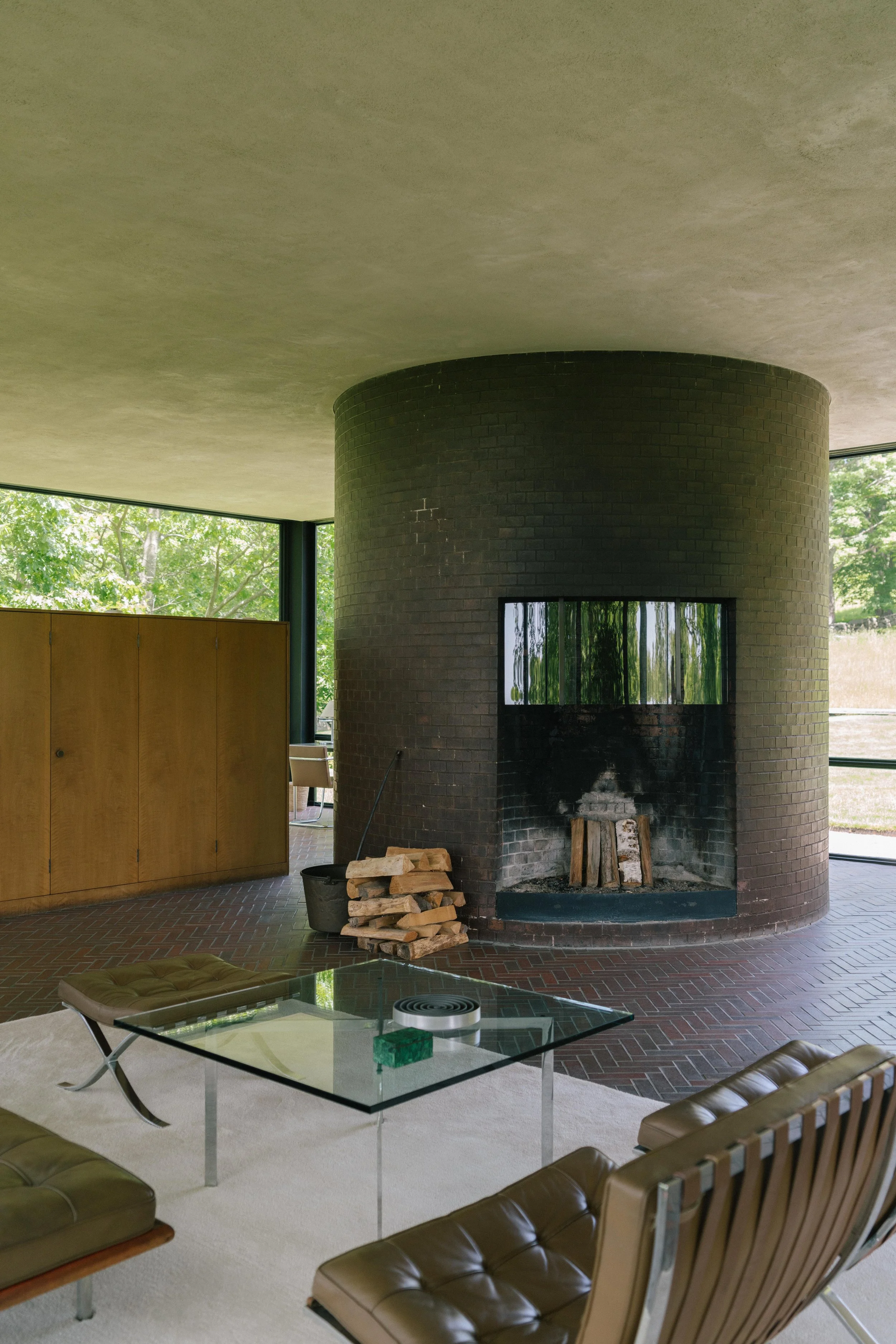
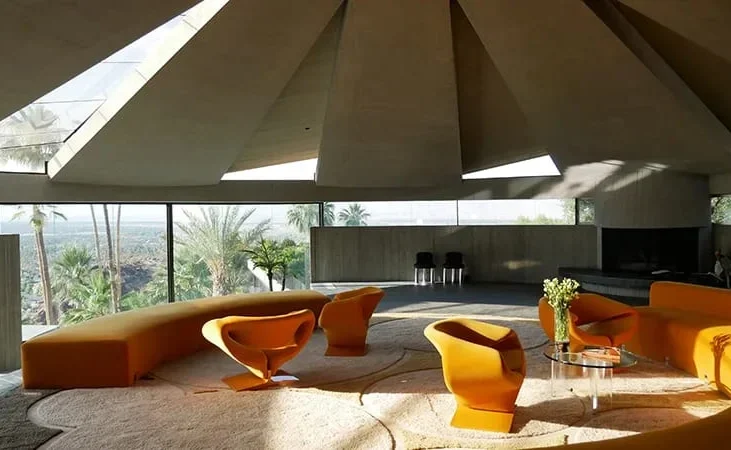
Left: Twin Palms Estate, Palm Springs, California. E. Stewart Williams, 1947, Middle: Glass House interior, New Canaan, Connecticut. Philip Johnson, 1949, Right: Elrod House, Palm Springs, California. John Lautner, 1968.
Mid-Century Modern endures because it answered a question that still matters to us. It asked how everyday life might be surrounded by good design, and it answered with honesty, clarity, optimism, and a real respect for the materials and methods of its time. Its houses opened themselves to light and landscape. Its furniture treated comfort and beauty as one and the same pursuit. Its everyday objects were granted the dignity of genuine design thinking. In all of this, the movement carried forward the modern ambition that had inspired the most creative decades of the early twentieth century, the belief that the way we build, furnish, and inhabit our spaces deserves our most serious attention. That is why the style is still studied, still collected, and still lived in, and why it sits so naturally beside the decorative arts that came before it. Mid-Century Modern is not a closed chapter of design history. It remains a living part of how we understand modern beauty, and an invitation to go on building rooms and lives around objects made with care.
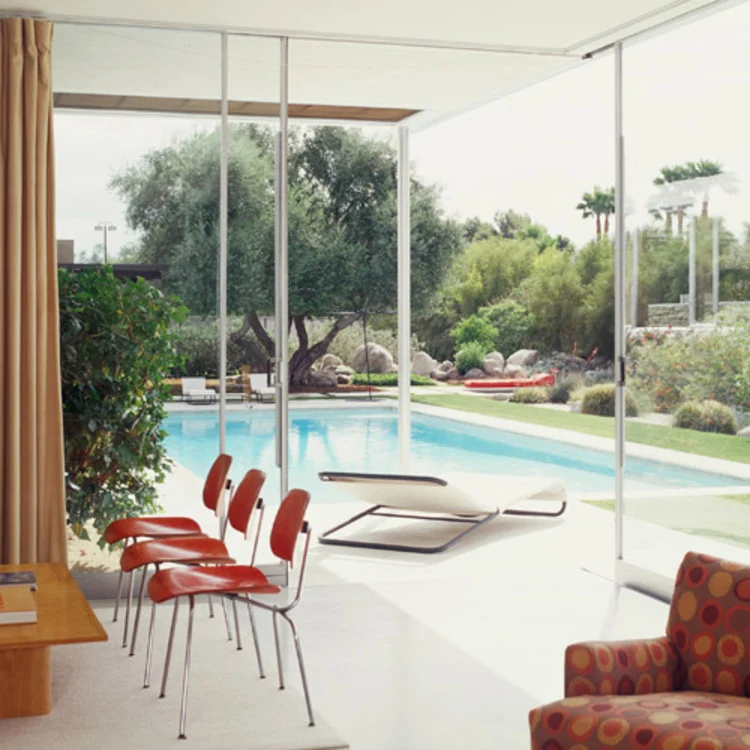
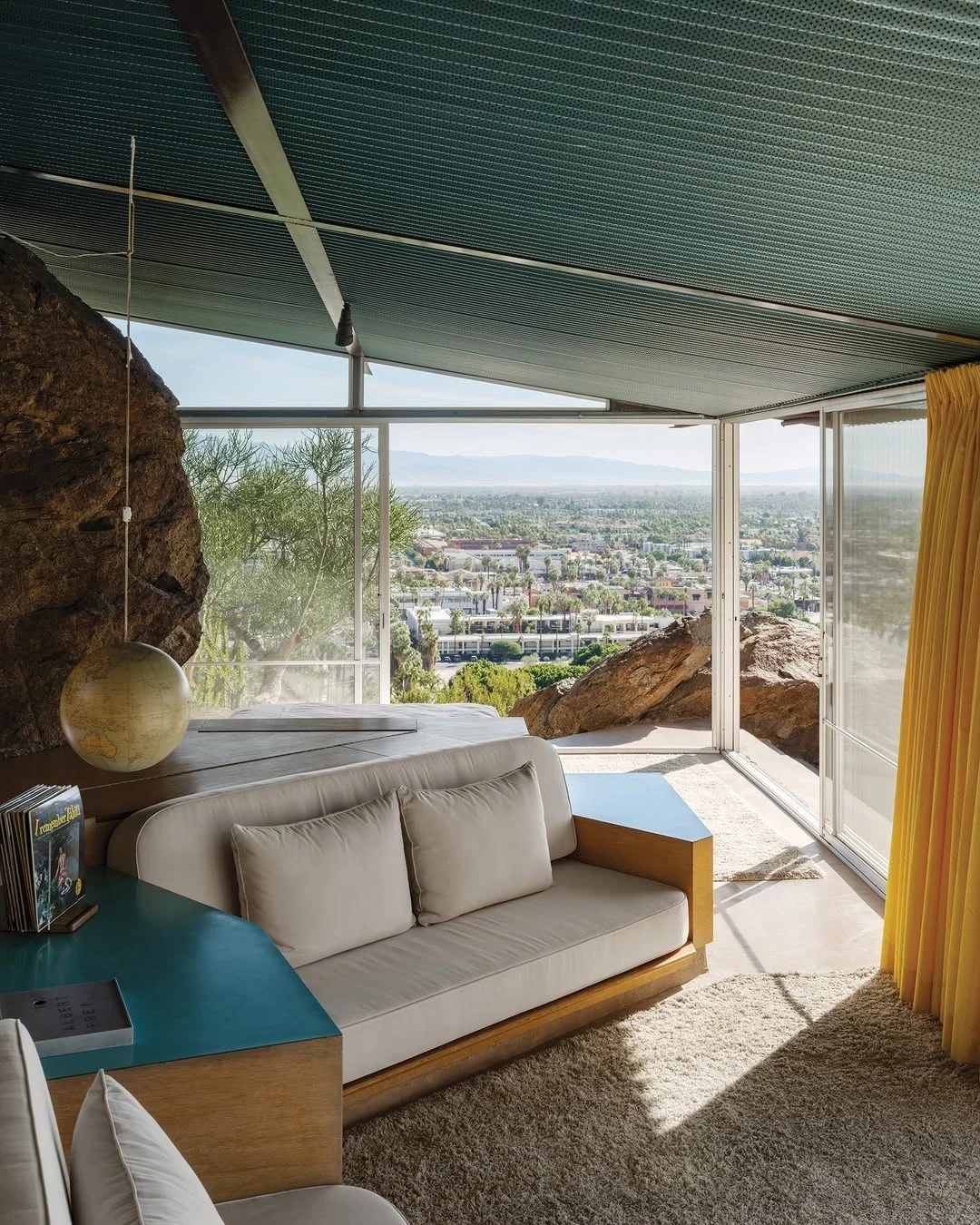
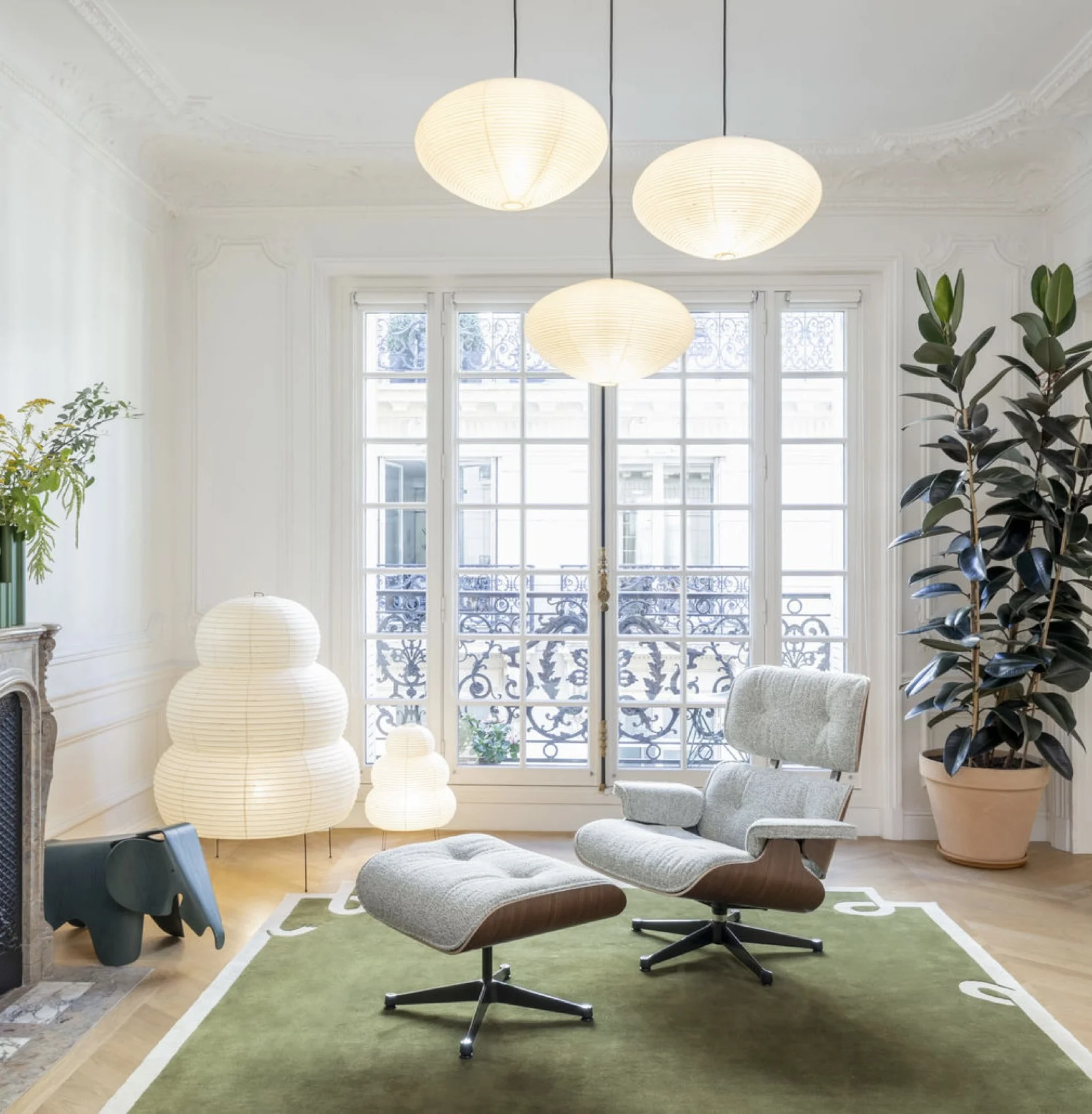
Left: Kaufmann Desert House, Palm Springs, California. Richard Neutra, 1946, Middle: Frey House II, Palm Springs, California. Albert Frey, 1964, Right: Akari Light Sculptures, Isamu Noguchi, 1951, and Eames Lounge Chair and Ottoman, Charles and Ray Eames for Herman Miller, 1956.
Recommended Reading
For those who want to explore the period more fully, three books stand apart as genuine companions to this subject. Cara Greenberg’s Mid-Century Modern: Furniture of the 1950s, first published in 1984, is the book that named the movement and remains the most widely read introduction to the design and furniture of the era. Elizabeth A.T. Smith’s Case Study Houses, published by Taschen, is the definitive account of the architecture program, illustrated throughout with Julius Shulman’s photographs of the houses as they were meant to be seen. Herman Miller: A Way of Living by Amy Auscherman, Sam Grawe, and Leon Ransmeier covers the designers and the company that brought the Eameses, Nelson, Girard, Bertoia, and Noguchi into production, telling the story of how modern ideas became objects that people could actually live with.

If you are interested in further stories of Art Deco design, collecting, and celebrating the artistry of early 20th Century:

Related Products from ArtDecoCollection.com