
Harry Bertoia
Harry Bertoia was born Arri Lorenzo Bertoia on March 10, 1915, in San Lorenzo d’Arzene, a small village in the Friuli region of Italy, about fifty miles north of Venice. At age 15, recognizing that his talent had outgrown the instruction available to him locally, he emigrated to Detroit to live with his older brother Oreste, where his name was Americanized to Harry. After studying art and design at Cass Technical High School and attending the Art School of the Detroit Society of Arts and Crafts in 1936, he earned a scholarship to the Cranbrook Academy of Art in 1937. Cranbrook proved a pivotal turning point, bringing him into contact with Walter Gropius, Eliel and Eero Saarinen, Charles and Ray Eames, and Florence Knoll. In 1940, he met Brigitta Valentiner, whose father, Wilhelm, director of the Detroit Institute of Arts and the foremost American expert on Rembrandt, introduced him to European modernists, including Paul Klee, Wassily Kandinsky, and Joan Miró. Harry and Brigitta married in 1943 and had three children. The toxic fumes from his beloved beryllium copper contributed to lung cancer, and Bertoia died peacefully at his home in Barto, Pennsylvania, on November 6, 1978. He is buried behind his Sonambient Barn beneath a one-ton double bronze gong.
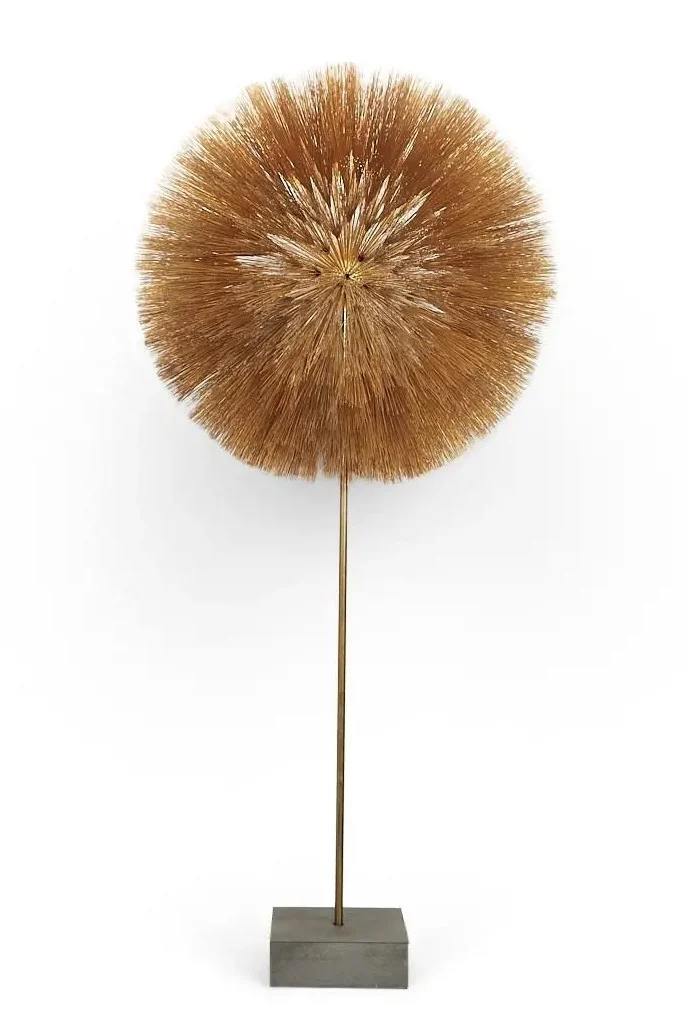
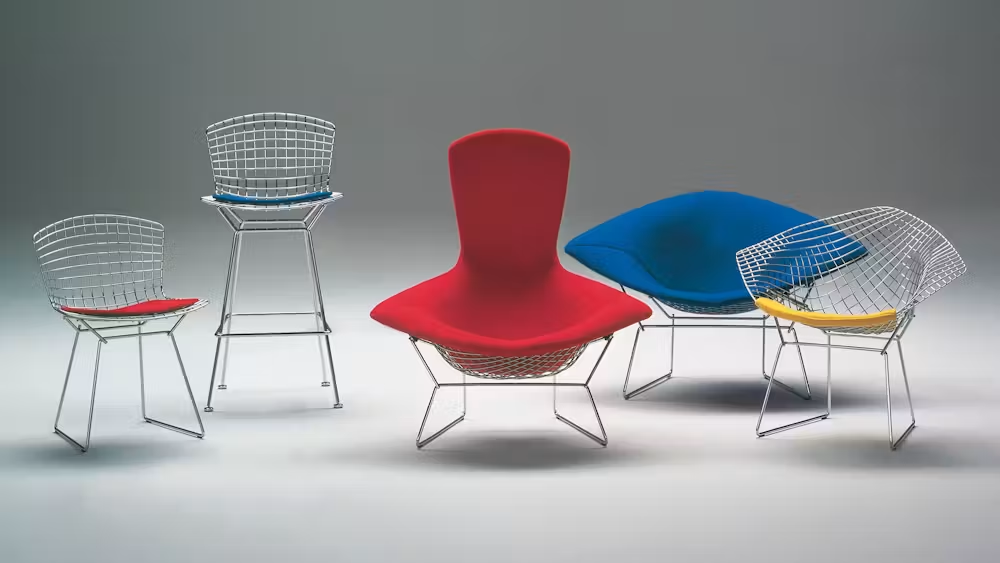
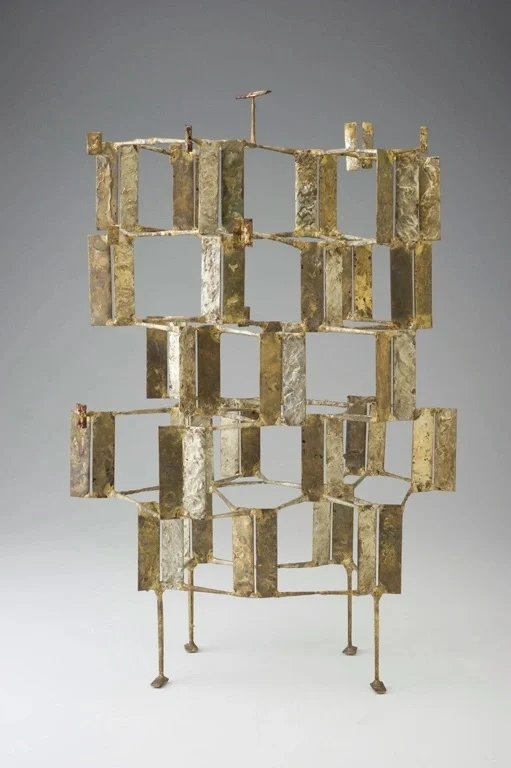
At Cranbrook, Eliel Saarinen asked the 24-year-old Bertoia to reopen the metalworking shop in 1939, where wartime metal shortages forced him to concentrate on jewelry, producing organic, finely detailed pieces whose forms would later evolve into his early sculptures. He simultaneously developed a body of one-of-a-kind prints known as monotypes, 100 of which he sent to the Guggenheim Museum, where acquisitions director Hilla Rebay purchased dozens for the museum and herself. He joined Charles and Ray Eames in California in 1943, contributing innovative solutions that made their molded plywood chairs producible at scale, though he received no credit for this work. In 1950 Florence Knoll invited him to Pennsylvania, where he designed the celebrated Bertoia Collection of wire chairs, introduced by Knoll in 1952. The commercial success of the Diamond chair, described by Bertoia as “mainly made of air, like sculpture,” gave him financial independence to devote himself to sculpture full time. His first architectural commission in 1953, for the General Motors Technical Center through his Cranbrook friend Eero Saarinen, launched a career of over 50 monumental public sculptures, including the altar piece for the MIT Chapel in 1955. After accidentally striking a wire rod and being transfixed by the sound, he began developing his Sonambient tonal sculptures in 1960, eventually recording eleven albums of their music in a converted barn on his Pennsylvania property.

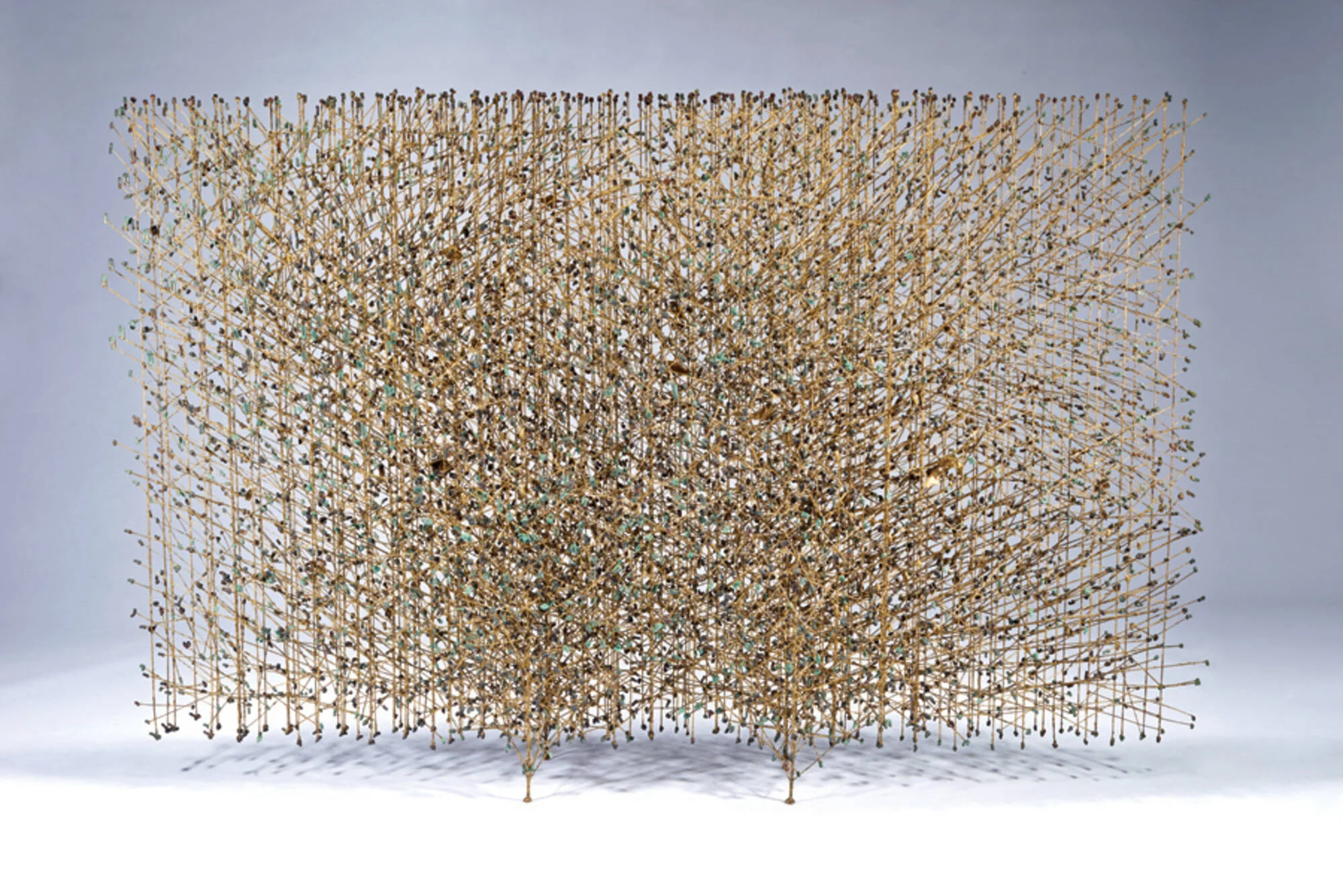
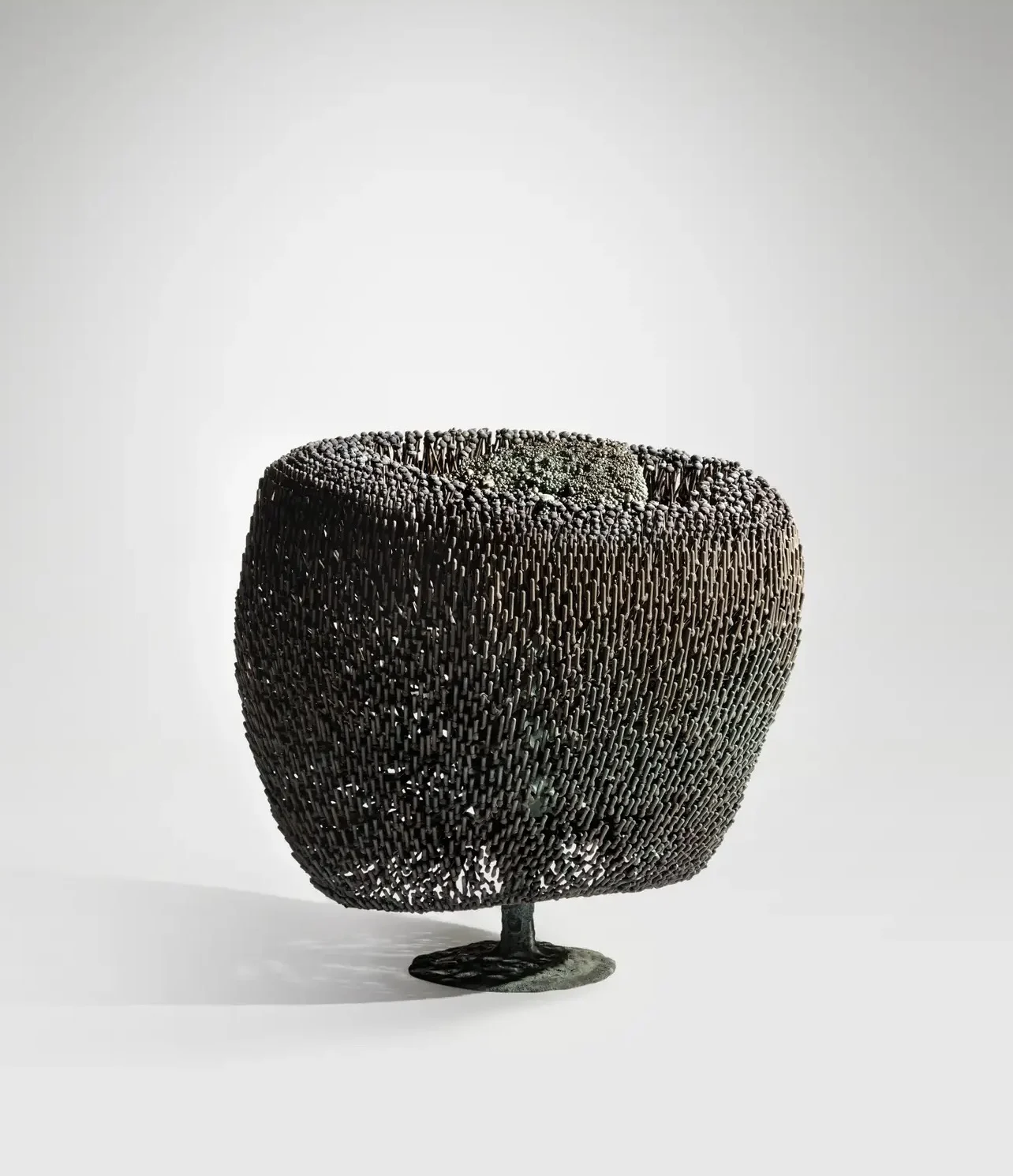
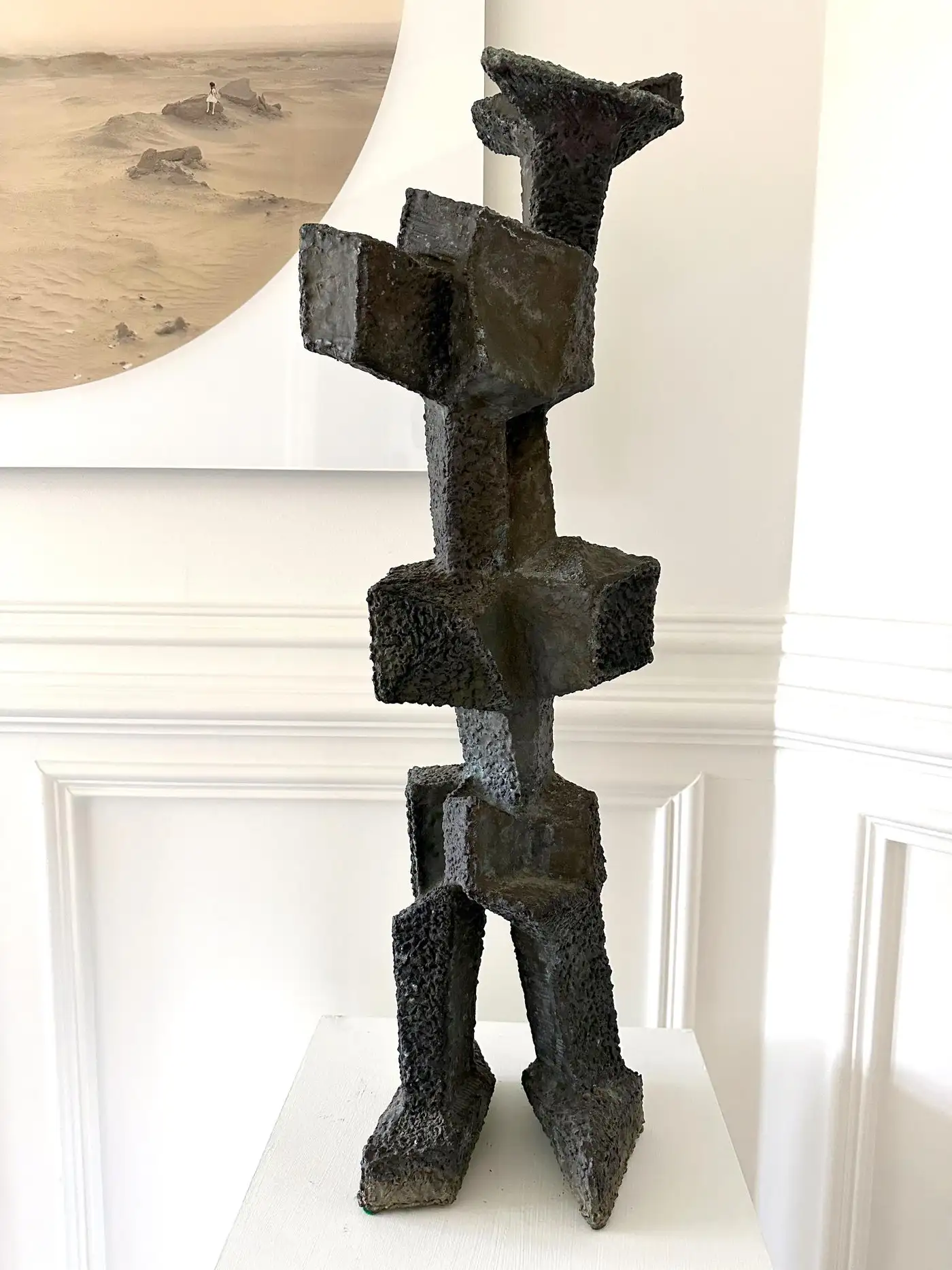

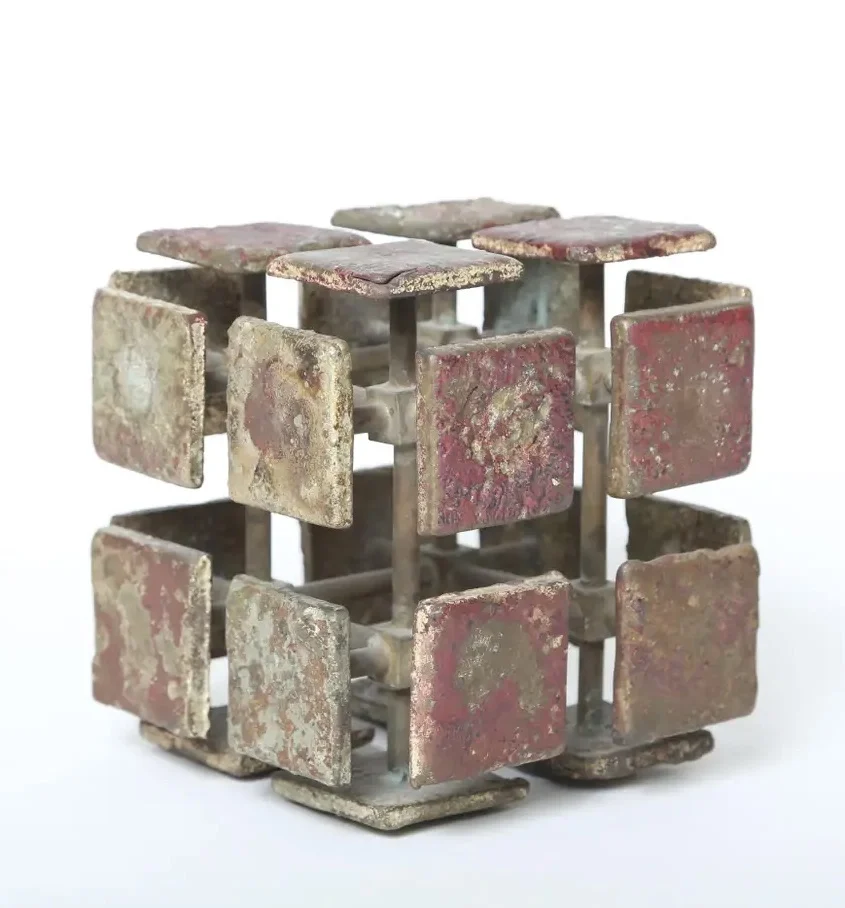
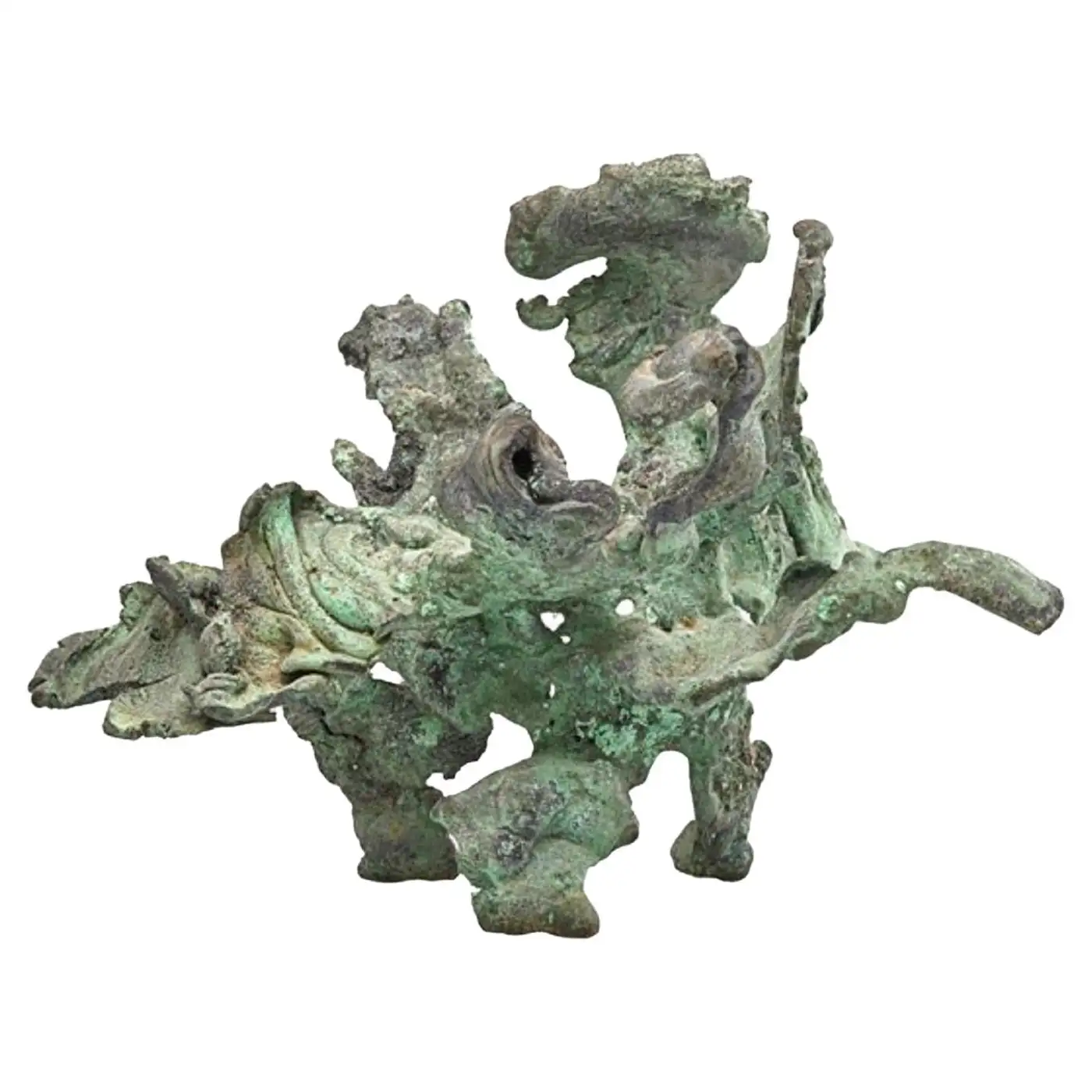
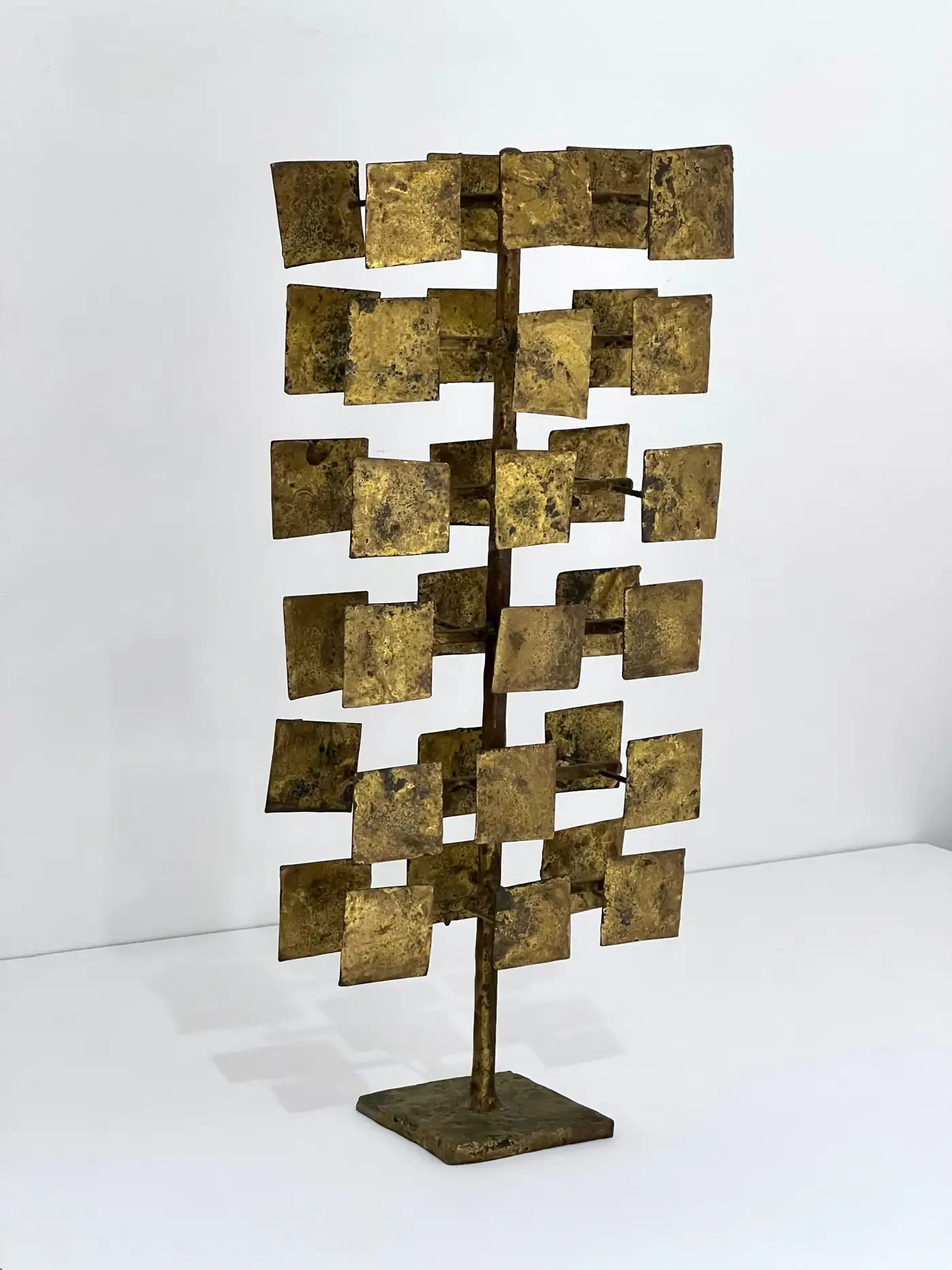
Bertoia worked across an extraordinary range of scales and media, from delicate fine wire jewelry to four-ton fountains, from intimate monotypes to towering architectural screens, yet maintained a consistent sensibility rooted in his belief that his art came from “the great Oneness” and needed no title or name to have its effect. His wire furniture and sculptures treated empty space as an active material, allowing light and air to pass through form rather than be displaced by it. His Sonambient sculptures added a temporal and acoustic dimension to this approach, making his work among the most radical explorations of the boundaries between visual art, music, and environment produced by any artist of his era.
Key Influences
- The Diamond Chair: His welded wire grid chairs for Knoll became icons of mid-century modern design and remain in continuous production, demonstrating that functional furniture and fine sculpture could be the same object.
- Sound Art: His Sonambient sculptures and eleven recorded albums established him as a pioneer of sound art decades before the field was widely recognized, influencing generations of artists working at the intersection of sculpture and music.
- Cranbrook and Modernist Networks: His deep connections to the Cranbrook community placed him at the center of the most significant network of American modernist designers of the mid-twentieth century, and his collaborations with Eero Saarinen, the Eameses, and Knoll shaped the visual culture of postwar America.
- Monumental Public Sculpture: His more than fifty architectural commissions, from the General Motors Technical Center to the MIT Chapel altarpiece, helped define the relationship between modernist sculpture and civic architecture in the postwar United States.
- Wire and Space: His treatment of wire as a primary sculptural medium, exploiting its capacity to define form through line rather than mass, expanded the vocabulary of sculpture and anticipated the minimalist and process art movements of the 1960s.
If you are interested in further stories of the artists who shaped Art Deco, return to our artists page to browse the full directory.

Related Products from ArtDecoCollection.com