





George Nelson
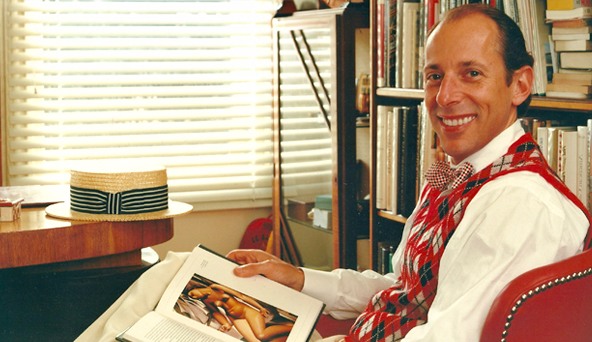
George Nelson was born on May 29, 1908, in Hartford, Connecticut, to Jewish parents who owned a drugstore. He stumbled upon architecture almost by accident when, as a Yale undergraduate, he ducked into a building during a rainstorm and discovered an exhibit of students’ architectural work. He graduated from Yale with a degree in architecture in 1928, followed by a Fine Arts degree in 1931, and in 1932 won the Rome Prize, a fellowship that provided two years of study in Rome with a generous stipend and palace accommodations. While based in Rome, he traveled through Europe interviewing the leading modernist architects of the day, including Mies van der Rohe and Le Corbusier, publishing his findings in Pencil Points magazine and in the process introducing European avant-garde design to the American design community. He joined Architectural Forum as associate editor in 1935 and remained affiliated with the magazine until 1949. He married Frances Hollister in Rome and later remarried to Jacqueline Griffiths in 1959. He became a scholar in residence at the Cooper-Hewitt Museum in 1984 and died in New York City on March 5, 1986.

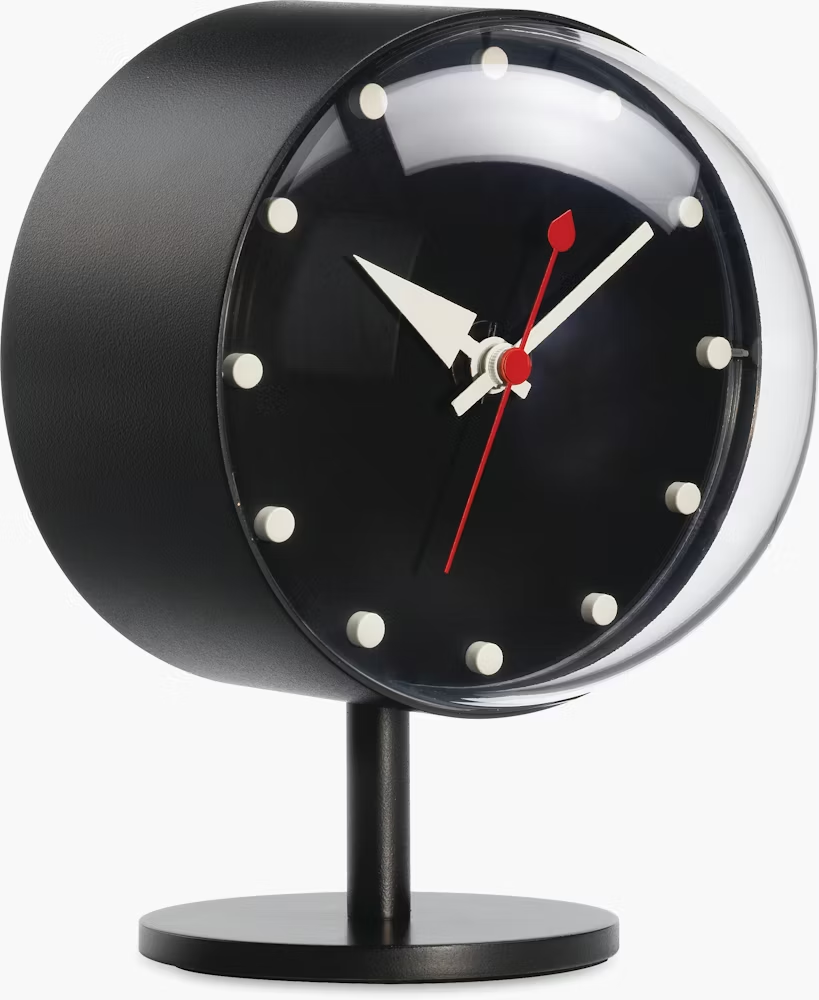

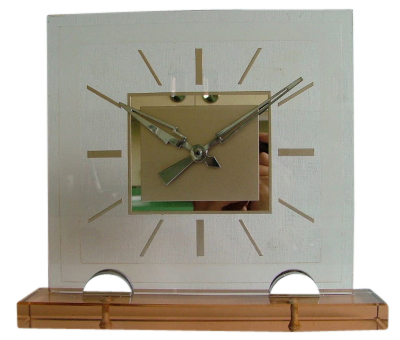
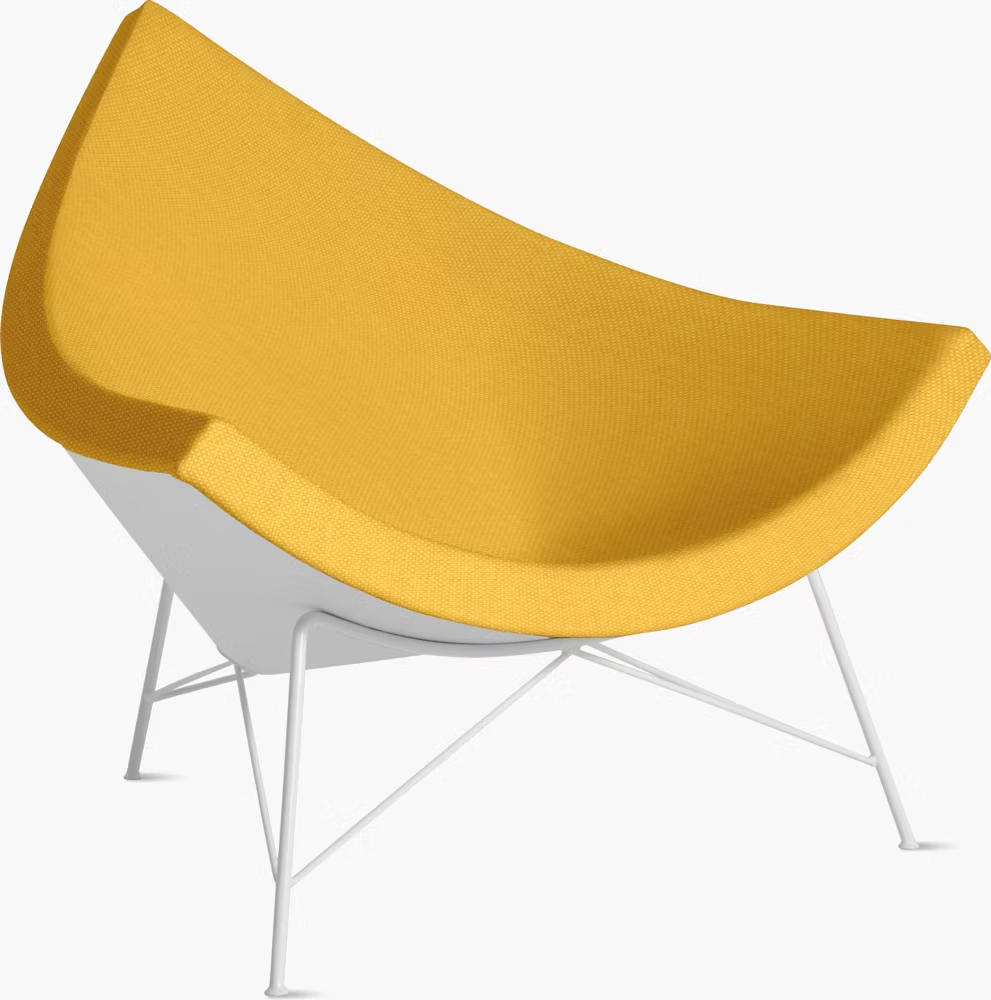
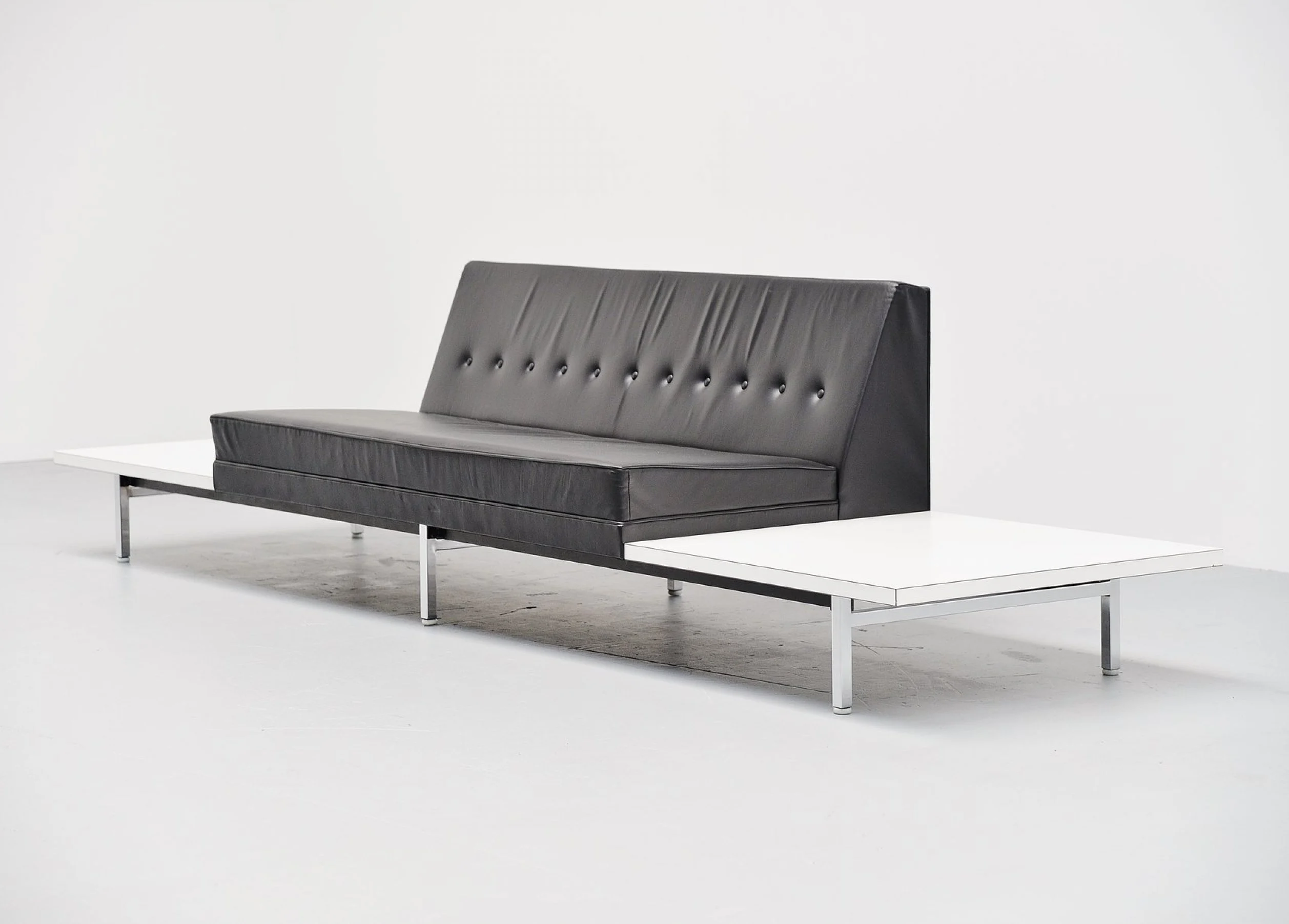
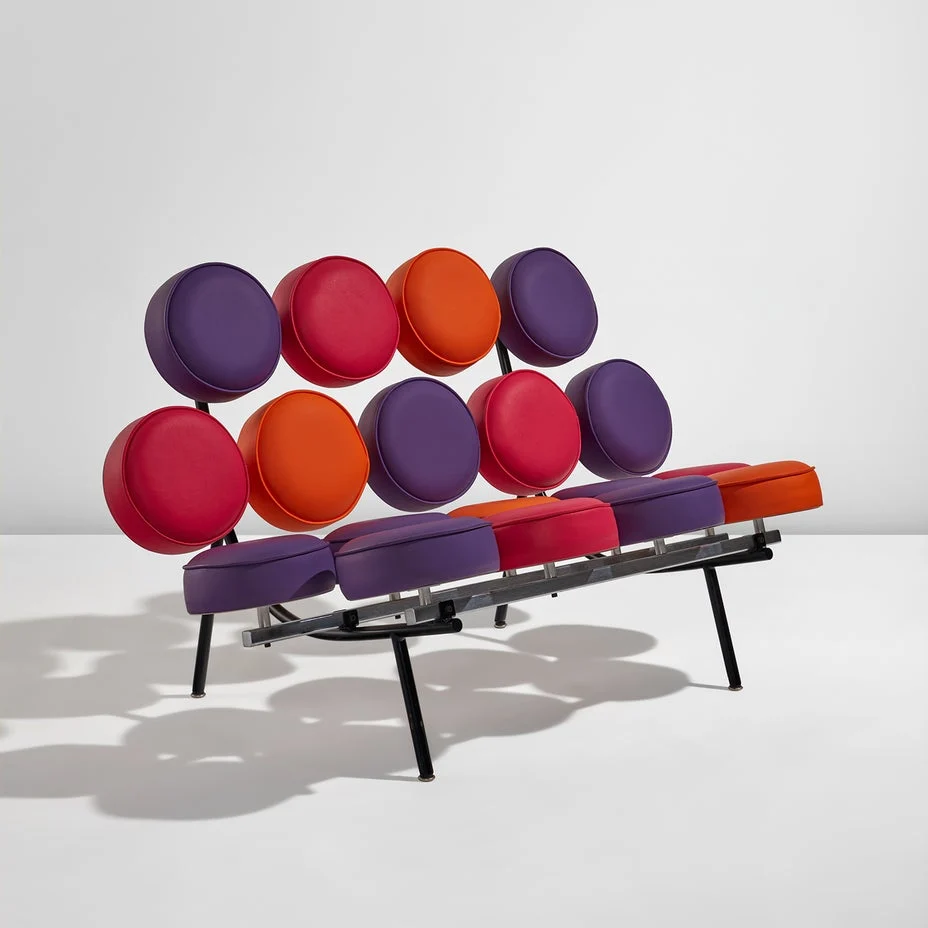
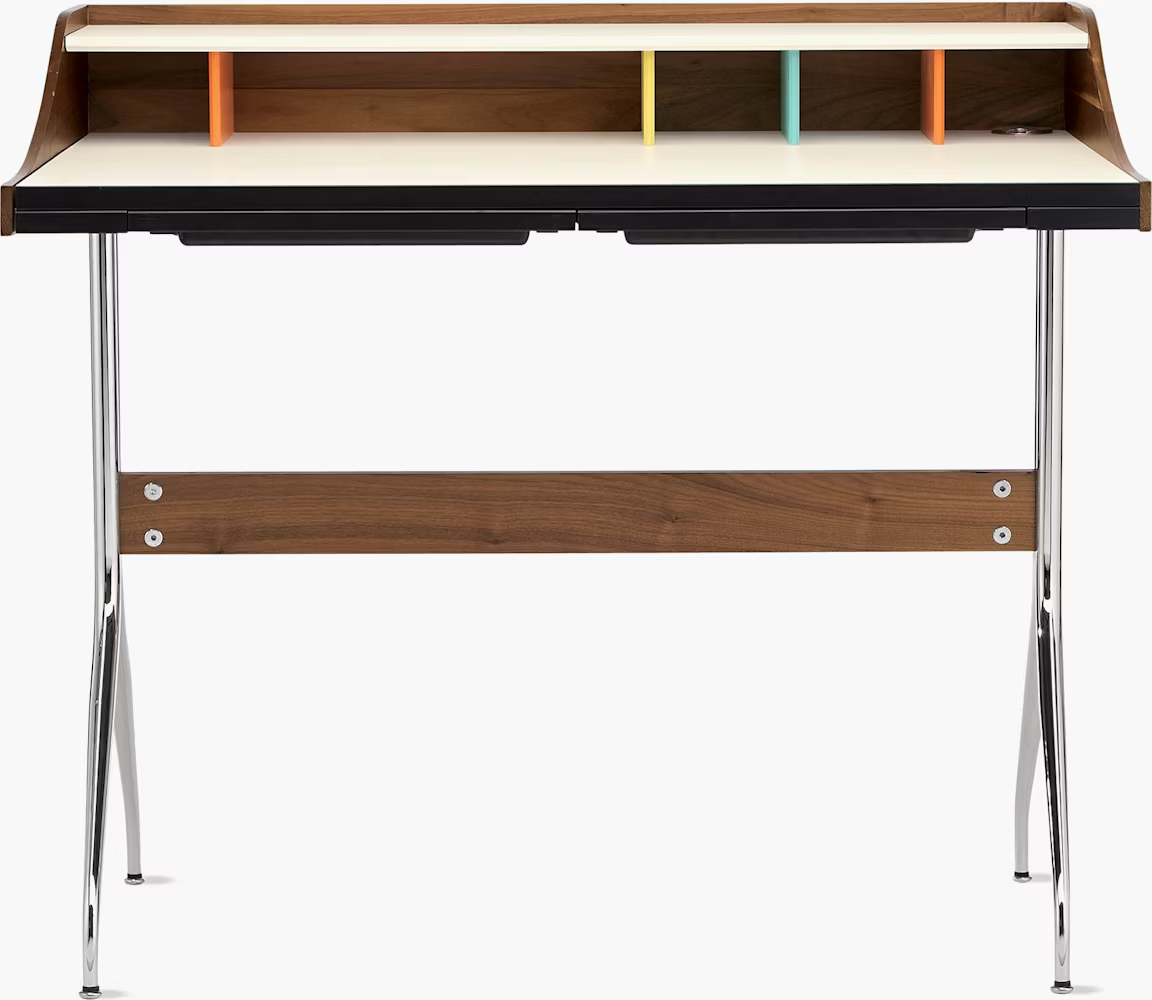
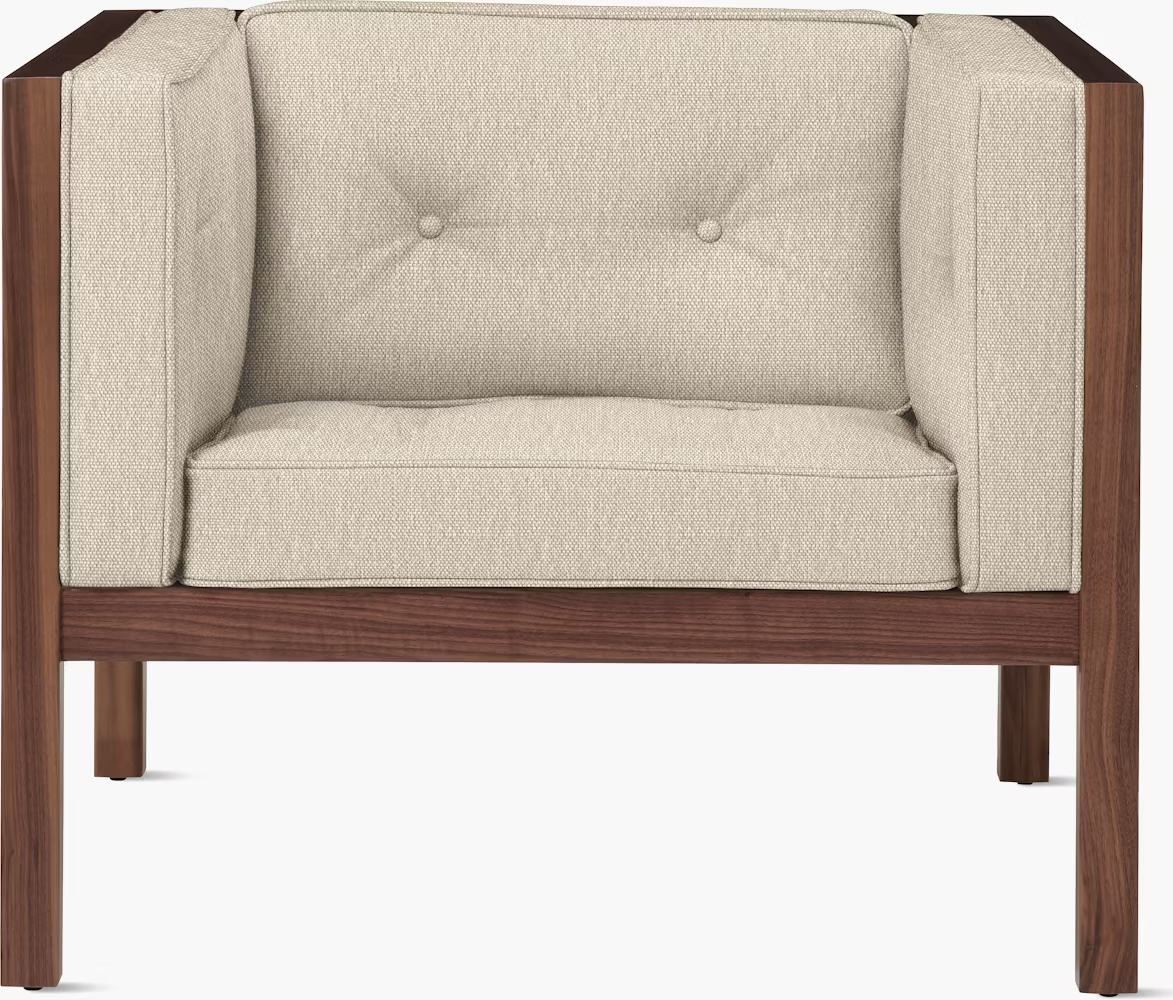
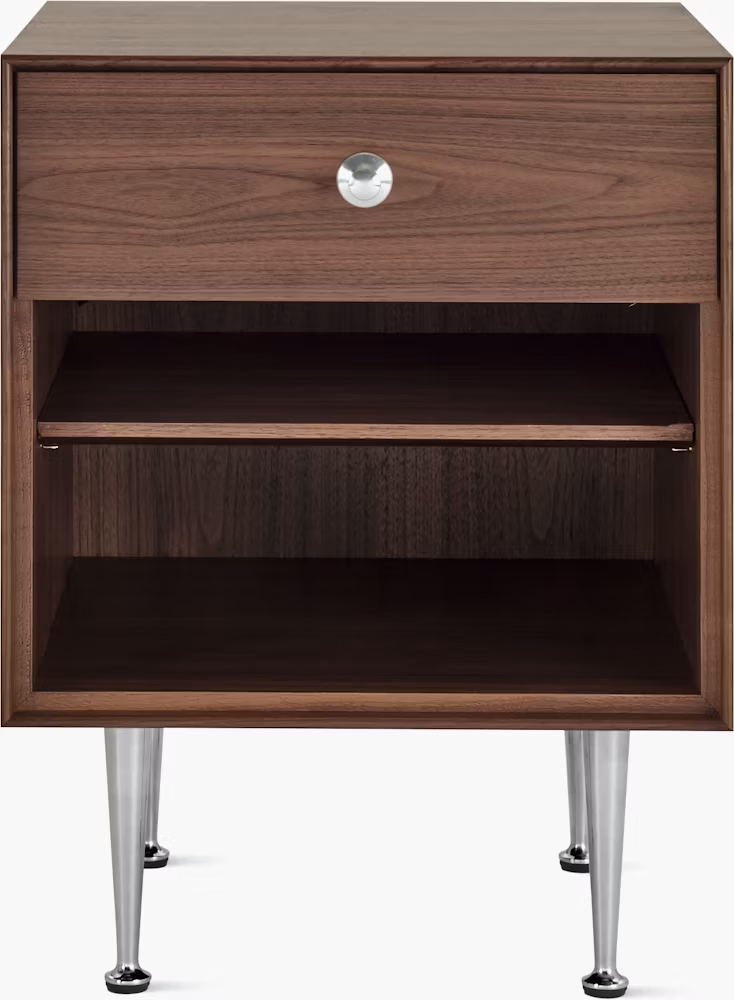
While writing for Architectural Forum in 1942, Nelson developed the concept of the downtown pedestrian mall while studying aerial photographs of blighted cities, a proposal later published in the Saturday Evening Post that helped lay the groundwork for urban revitalization thinking. His 1945 book Tomorrow’s House, co-authored with Henry Wright, introduced the concepts of the family room and the storage wall, the latter sparked by the realization that the space between walls was entirely unused. Herman Miller chairman D.J. DePree read the book and appointed Nelson Director of Design in 1947, a position he held until 1972. In 1947, Nelson also opened a design studio in New York City, incorporated in 1955 as George Nelson Associates, which brought together many of the top designers of the era and worked with Ray and Charles Eames, Harry Bertoia, Isamu Noguchi, and Richard Schultz under Nelson’s supervision. Among the studio’s most celebrated outputs were the Bubble Lamp, the Ball Clock, the Marshmallow Sofa, and the Coconut Chair. He served as lead designer for the American National Exhibition in Moscow in 1959. He worked with the Herman Miller Research Corporation in the mid-1960s to develop the Action Office I, the forerunner of the office cubicle, a project he later publicly disowned for its dehumanizing effects.


Nelson believed that design was a response to social change and that a designer dealing creatively with human needs must first make a radical, conscious break with all values he identifies as antihuman. He described his practice as total design, a process of relating everything to everything, which is why his output ranged so freely across furniture, lamps, clocks, graphics, exhibitions, architecture, and urban planning without ever seeming scattered. His work combined a characteristically American optimism and playfulness with a rigorous modernist intellectual framework, producing objects that were both formally innovative and warmly accessible.
Key Influences
- Introducing European Modernism to America: His articles in Pencil Points introduced Walter Gropius, Mies van der Rohe, Le Corbusier, and Gio Ponti to North American audiences, fundamentally shaping the trajectory of American design.
- Herman Miller and Mid-Century Design: His twenty-five-year tenure as Herman Miller’s Director of Design made the company a defining institution of mid-century modernism and produced some of the most iconic domestic objects of the twentieth century.
- The Storage Wall: His concept of the built-in storage wall, first published in Life in 1945, transformed thinking about domestic space and anticipated the modular furniture systems that would reshape interior design for decades.
- Corporate Identity and Exhibition Design: His studio’s pioneering work in corporate image management, graphic programs, and signage established design as a strategic tool for business communication.
- Design Ethics: His public rejection of the office cubicle and his insistence that designers are responsible for the human consequences of their work positioned him as one of the earliest and most articulate advocates for ethical, human-centered design practice.
If you are interested in further stories of the artists who shaped Art Deco, return to our artists page to browse the full directory.

Related Products from ArtDecoCollection.com