
Lou Woolf: Bakelite Radios, Toys, and Design
A Life Devoted to Restoring, Collecting and Preserving the Spirit of Modern Design
Collectors are vital to preserving our cultural and artistic heritage. Their passion transforms forgotten objects into living history, connecting past craftsmanship to present appreciation. At Art Deco Collection, we highlight these individuals because their devotion reflects scholarship, curiosity, and a desire to preserve beauty rather than pursue profit. True collectors act as stewards, driven by fascination, study, and the thrill of discovery. Featuring them in our Art Deco Resource Guide celebrates this enduring spirit of inquiry and passion that defines Art Deco itself, where design, innovation, and personal vision come together to create lasting legacies.
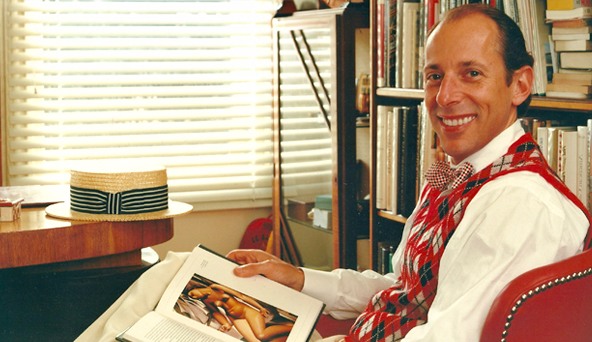
Lou Woolf stands among the most dedicated stewards of this collecting tradition. His background in restoring and trading vintage cars gave him the technical patience, mechanical understanding and hands-on craftsmanship needed to bring fragile objects back to life. He personally collects 1930s, 1940s, 1950s and 1960s vintage radios, Sci-fi toys and ray guns and related memorabilia.This journal presents both areas of his collection. He is internationally renowned as a restorer of antique radios. Each object has been carefully preserved, studied and placed within a broader story of design, technology and popular culture. Through his serious and sustained commitment, Woolf has created not only a remarkable private collection but a living archive that helps future generations understand the artistry, optimism and inventive spirt of the Art Deco and Machine Age eras.
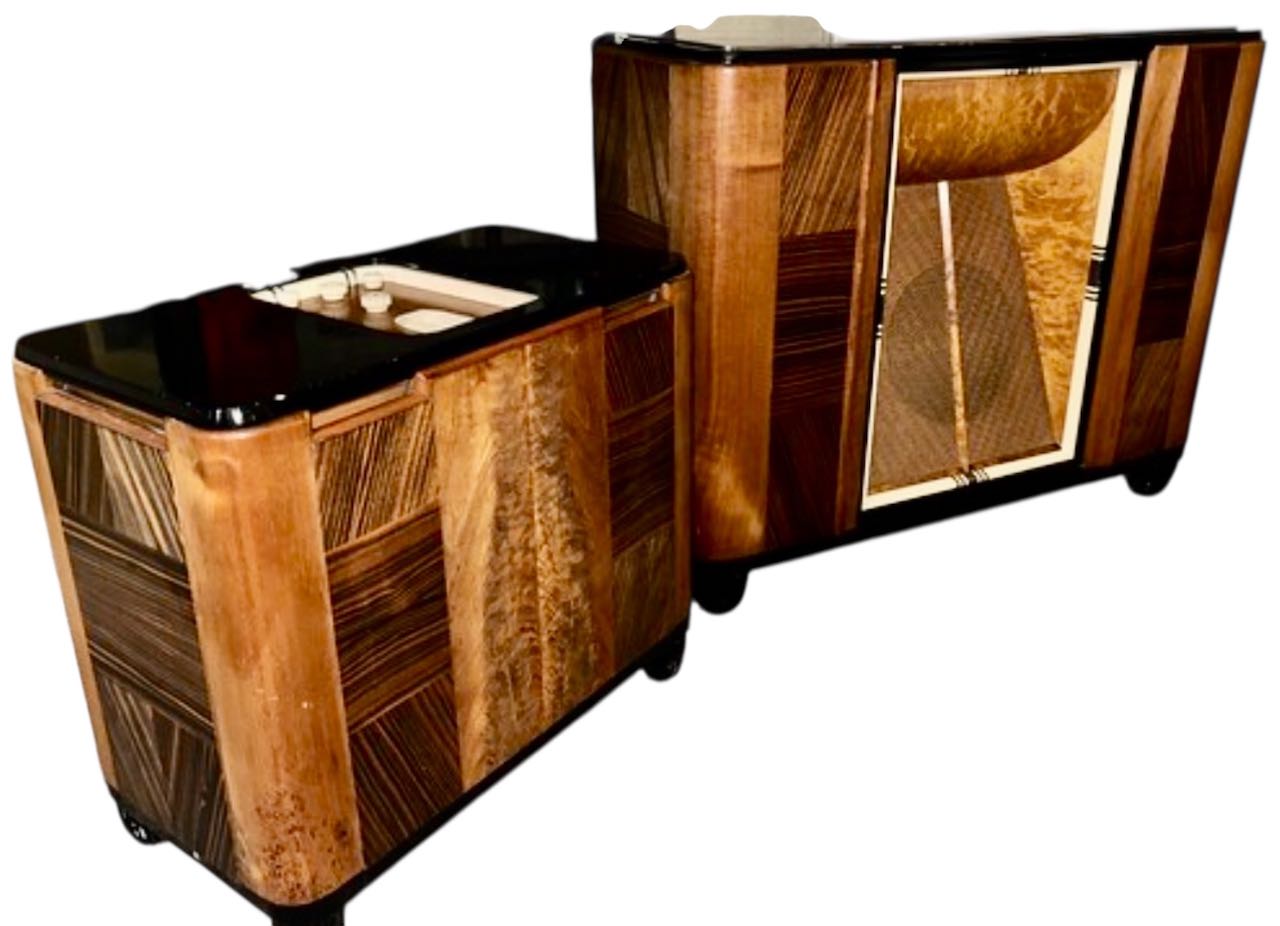
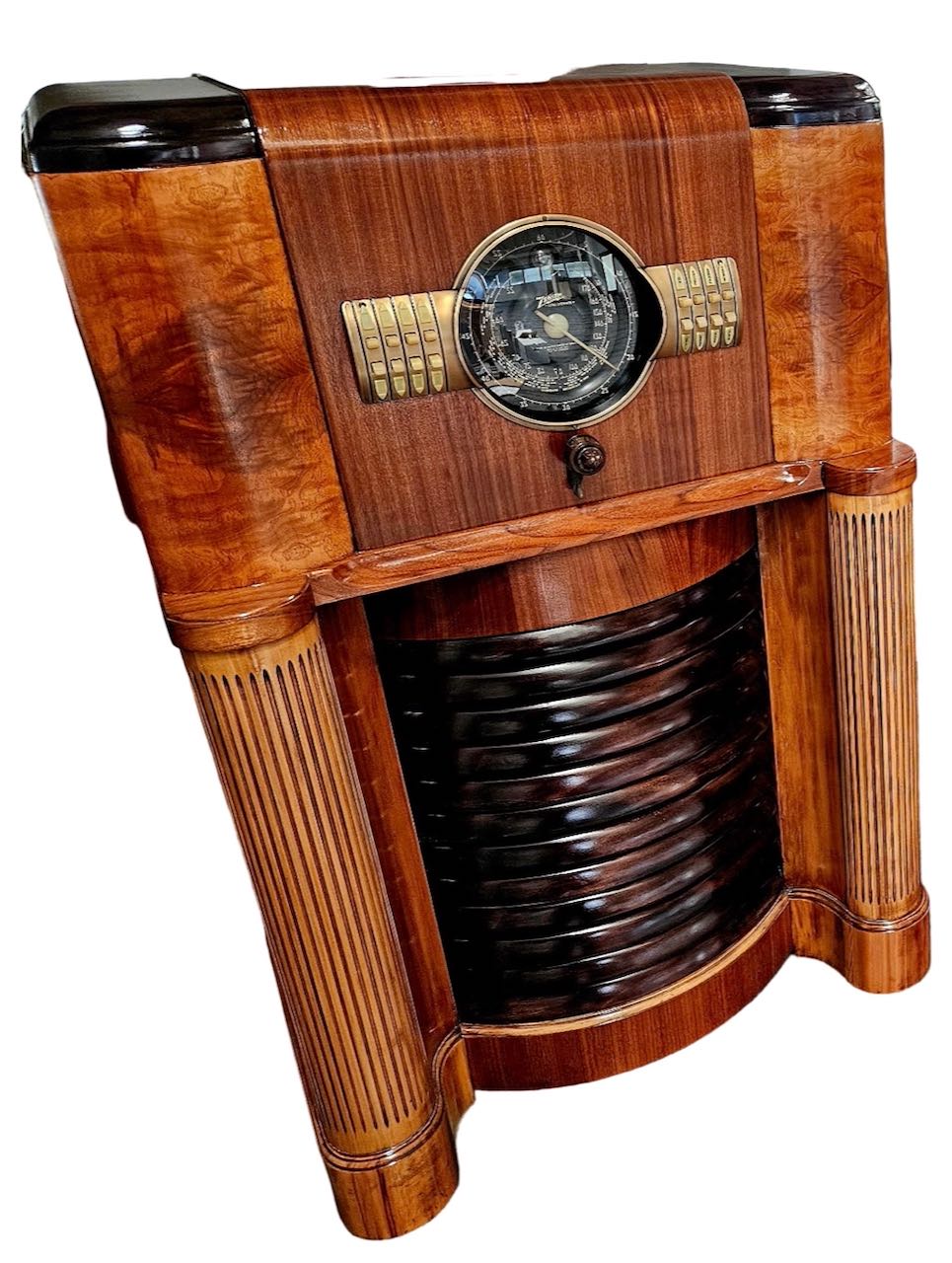
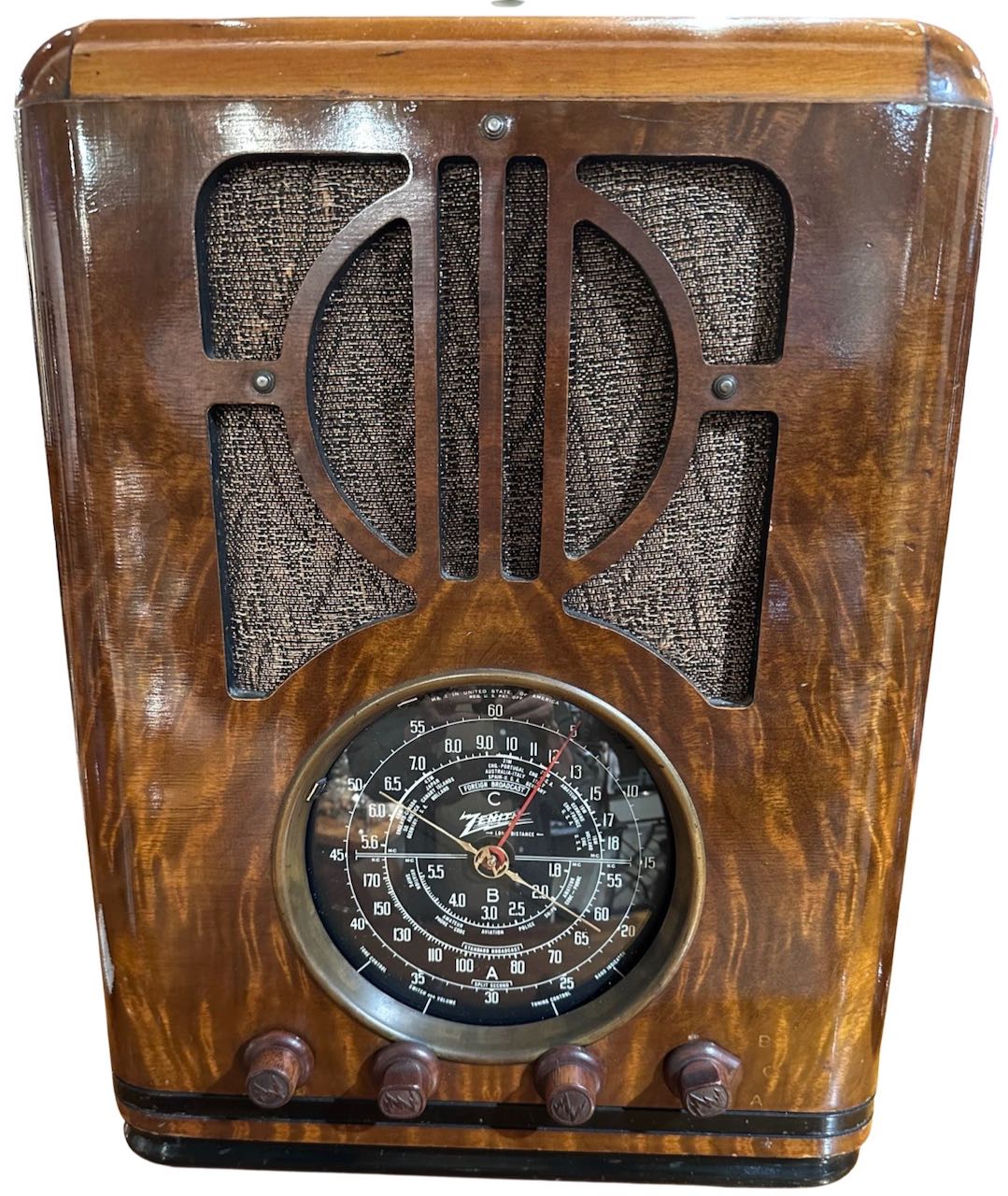
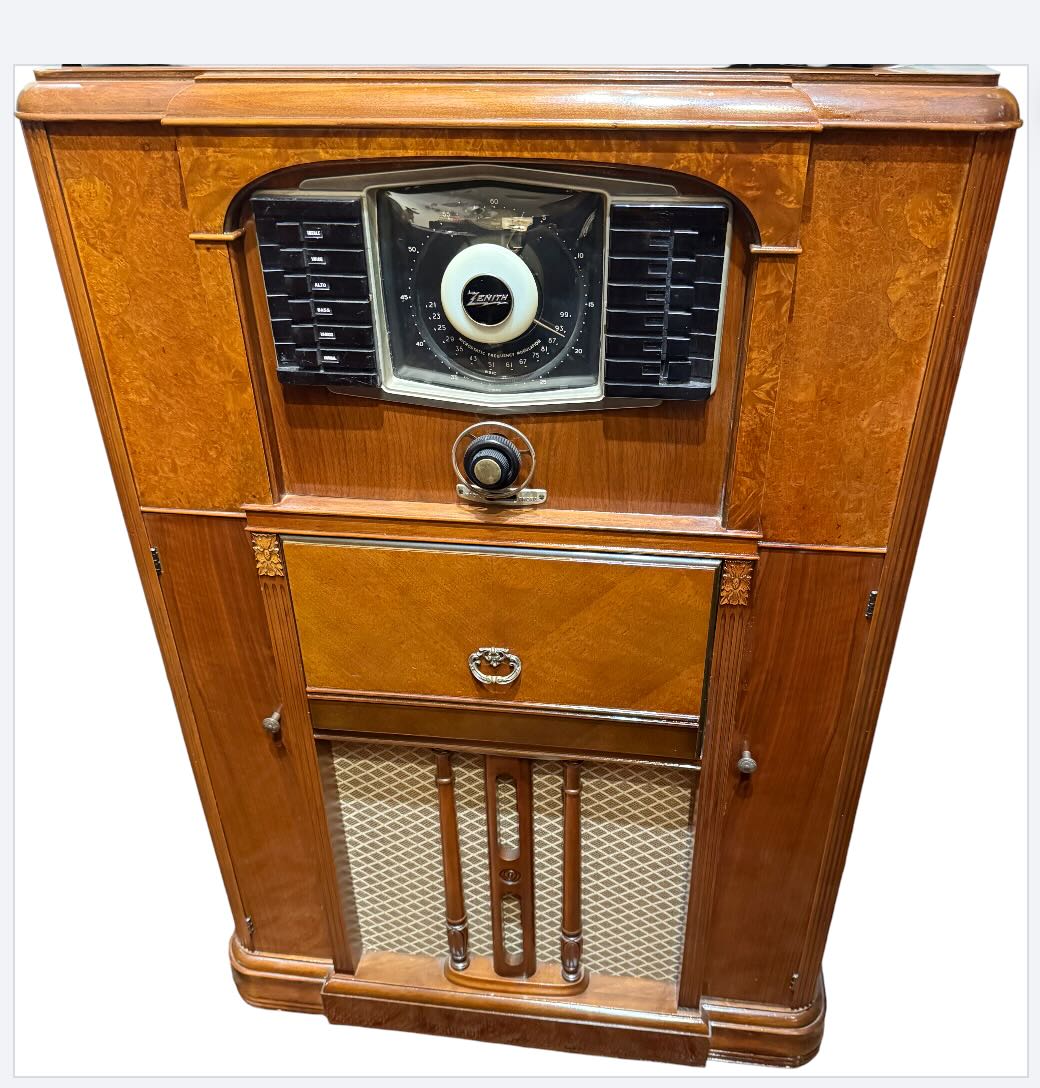
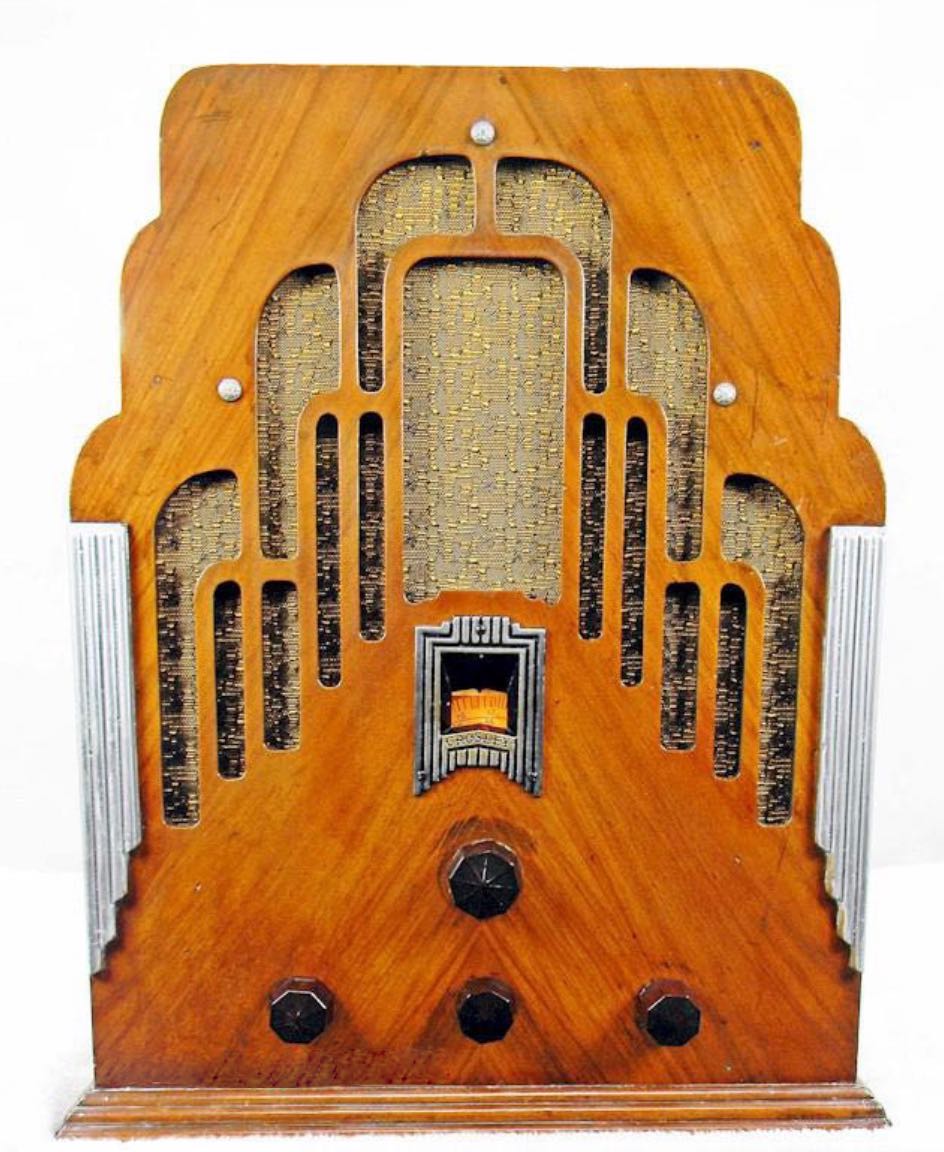
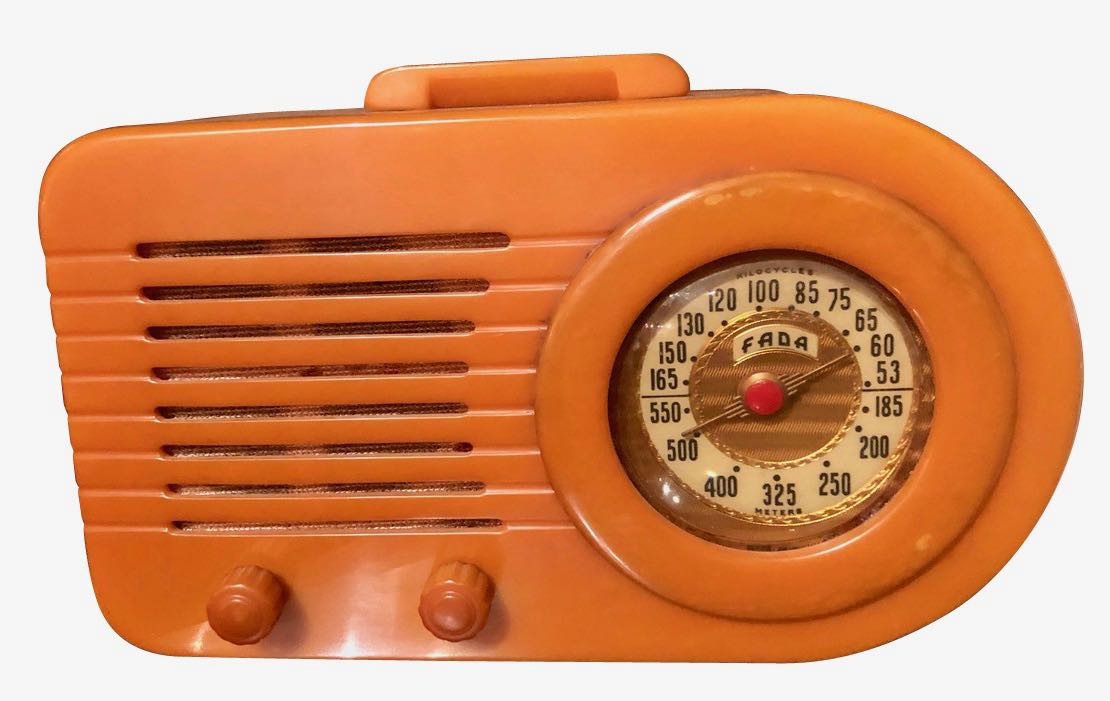
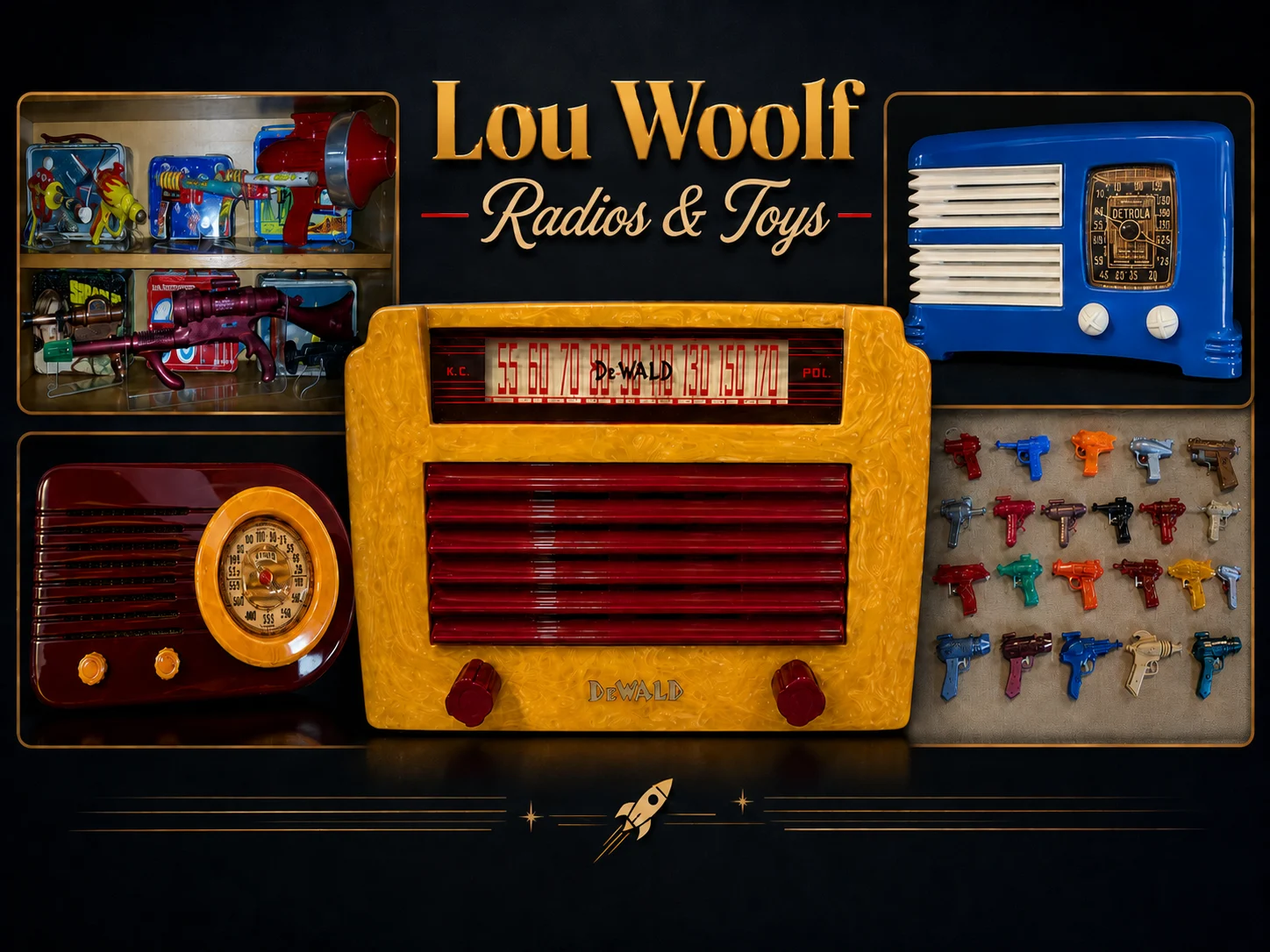
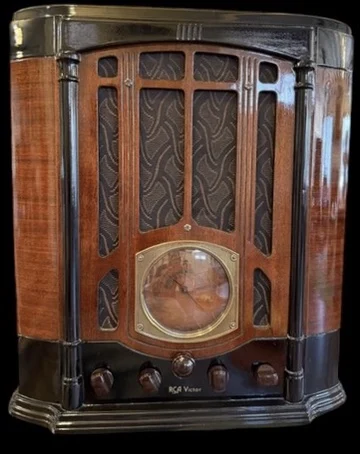
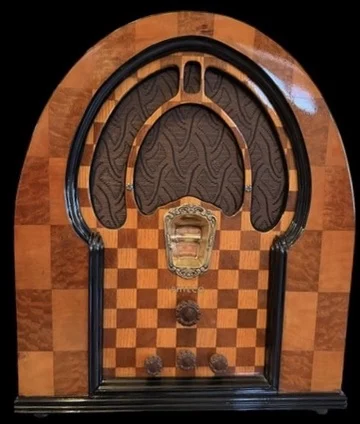
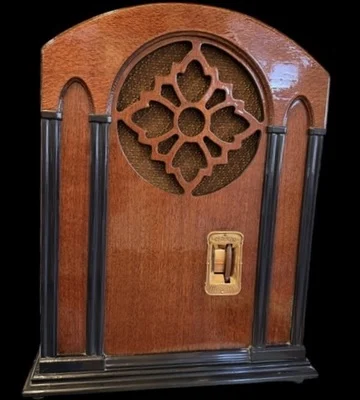
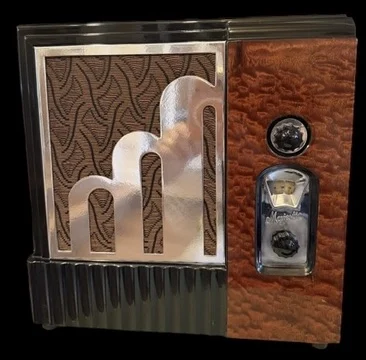
In this first section, we concentrate mainly on Woolf’s own collection of Bakelite and Catalin radios, which represent some of the most visually dramatic and materially important examples from his radio collection. He has also collected and restored many interesting wood radios, but the focus here is on the molded and colored radio cabinets that most directly connect to Art Deco, Machine Age, and early modern design.
This collection represents one of the great material stories of the 20th century. From the dark, durable Bakelite cabinets of the 1930s to the brilliant jewel like Catalin sets of the late Art Deco period, and finally to the lighter plastics of the postwar and Atomic Age years, these objects reveal how design, technology, and popular taste evolved together. Developments in chemistry played an important role. Bakelite allowed manufacturers to create strong, sculptural, Machine Age forms for the modern home, while Catalin introduced vivid color, translucency, and a level of visual drama that made certain radios as much decorative objects as functional appliances.
Presented alongside this radio story is Woolf’s collection of Sci Fi toys and ray guns, which forms an equally important part of this journal. These objects expand the discussion from radio design into the broader world of childhood fantasy, space travel, invention, and Atomic Age optimism. Seen together, the radios, toys, and ray guns reveal how modern materials, futuristic forms, and the excitement of new technology shaped both everyday life and the image of the 20th century.
A Glimpse Into the Lou Woolf Collection
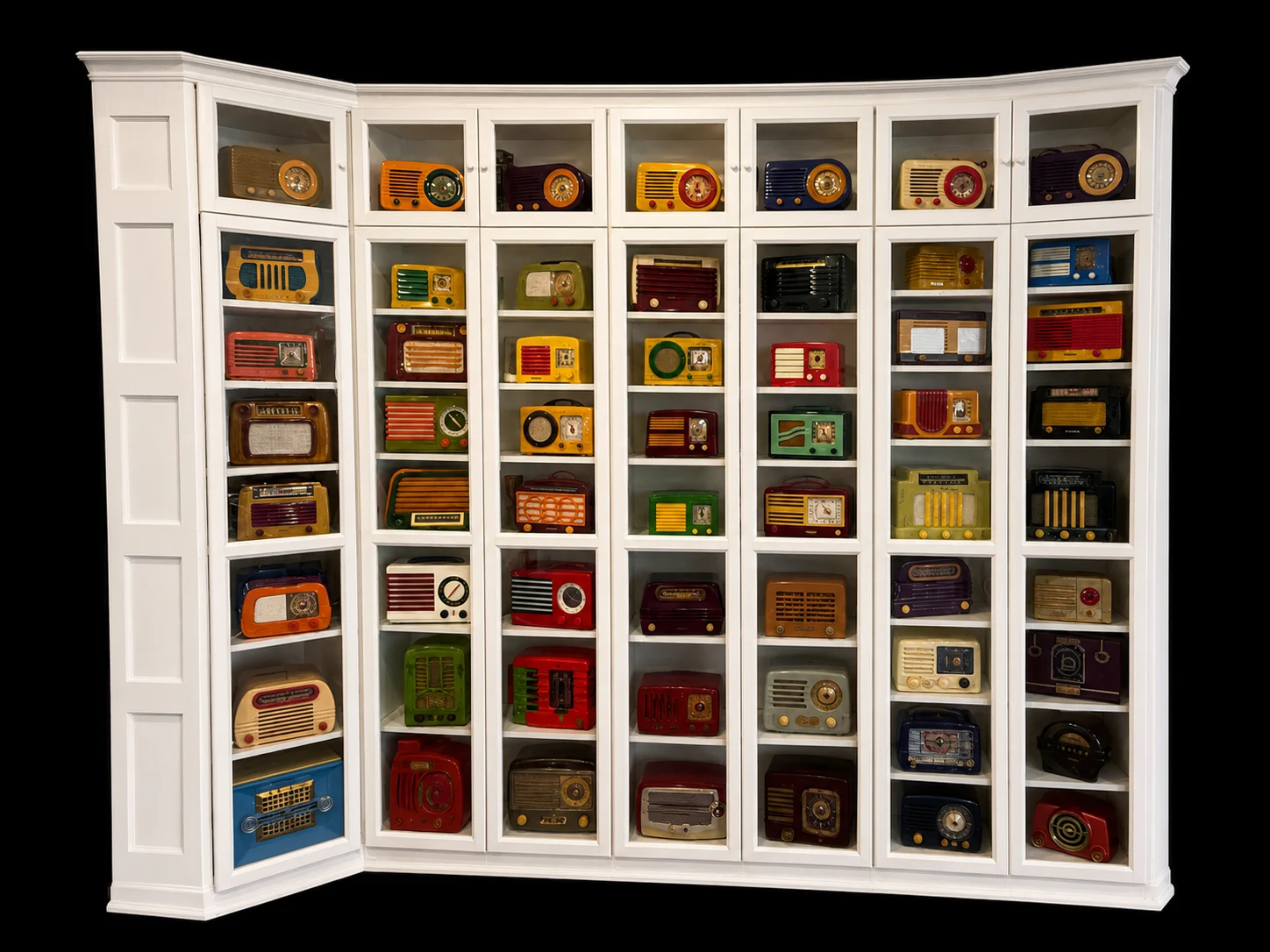
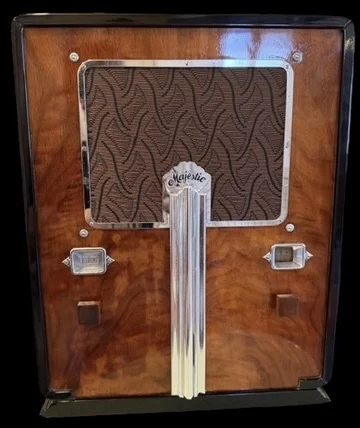
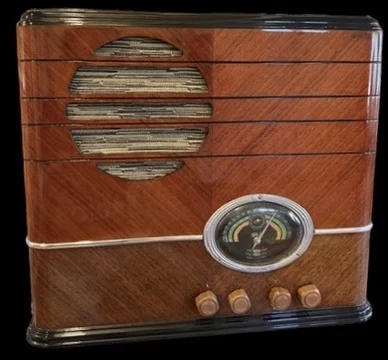
From about 1932 to 1960, radio cabinets changed dramatically as manufacturers moved from heavy wood furniture-style sets to colorful tabletop radios made from new industrial plastics. The most important materials along with wood and metal were Bakelite, Catalin, Plaskon, Beetle plastic, Tenite, and later Polystyrene and other molded plastics.
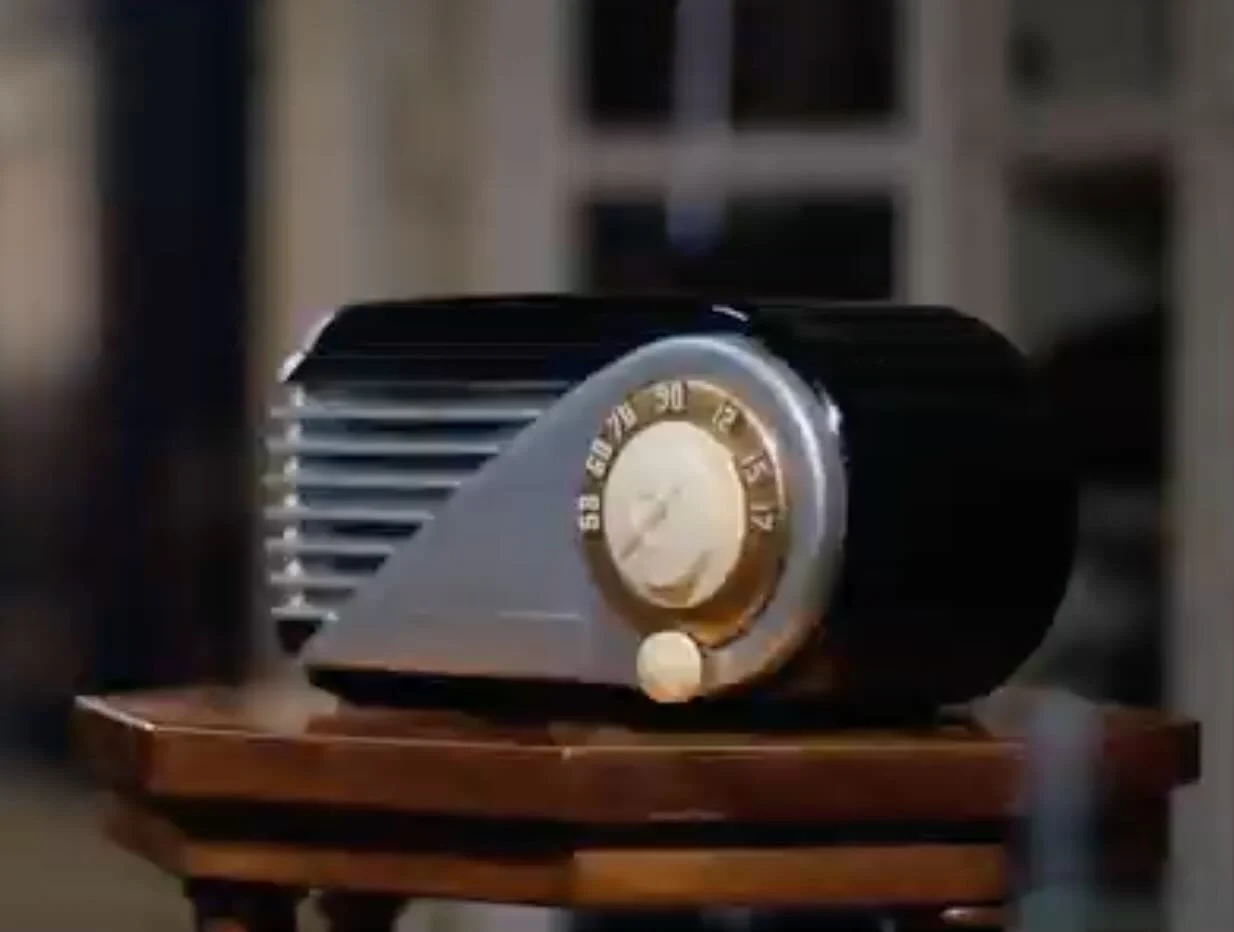
Bakelite radios were among the most common and important radios of the 1930s and 1940s. Bakelite is a phenolic resin, one of the first successful synthetic plastics. It was strong, heat-resistant, electrically insulating, and ideal for radio cabinets because it could be molded into smooth Art Deco and Machine Age shapes. Most Bakelite radios were dark brown, black, maroon, or mottled “walnut” colors because fillers such as wood flour, asbestos, or other fibers were often mixed into the resin. This made the material durable but limited the color range. Bakelite cabinets were usually compression molded, which allowed manufacturers to produce elegant curves, louvers, ribs, stepped and streamlined shapes at relatively low cost.
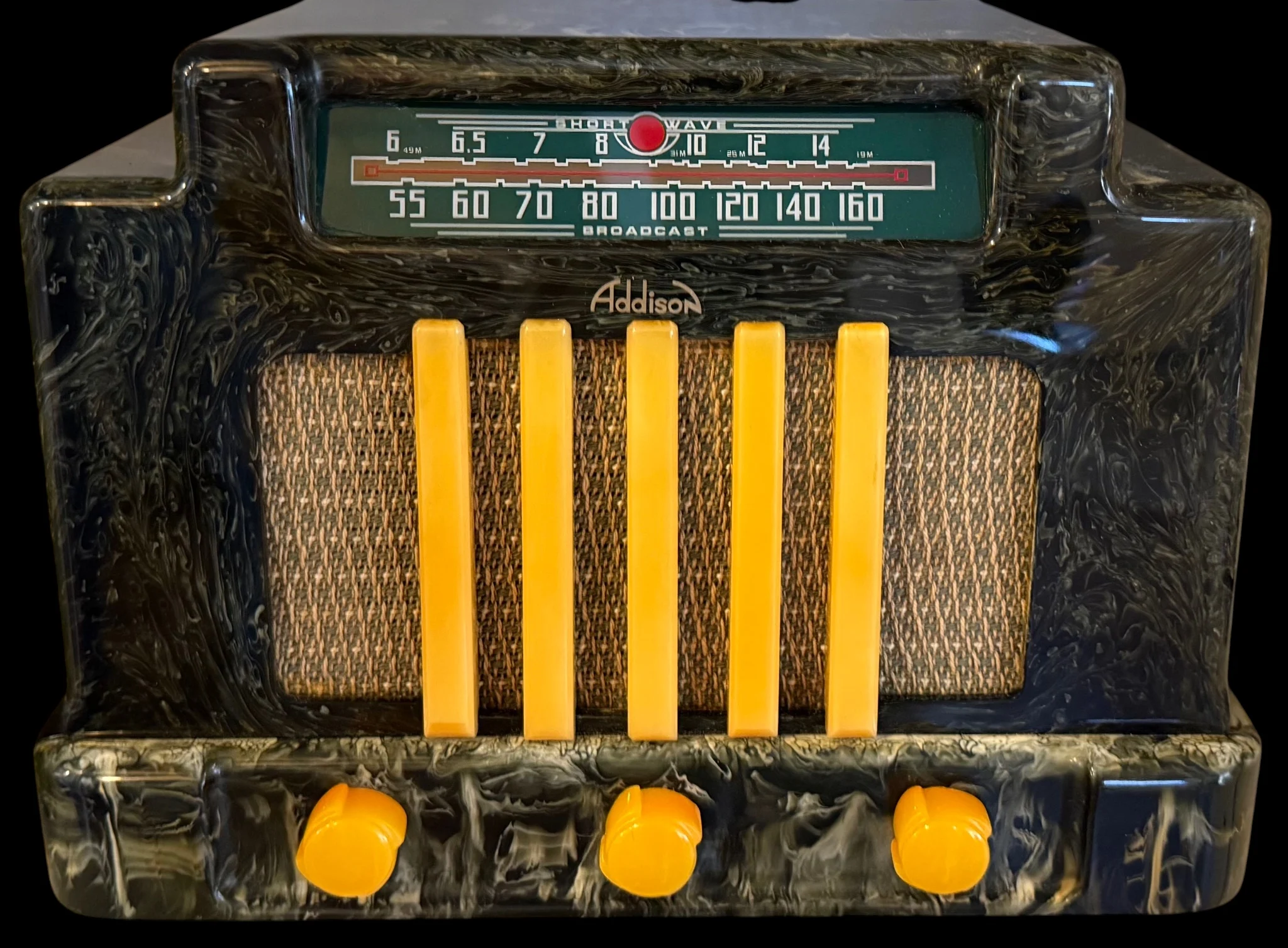
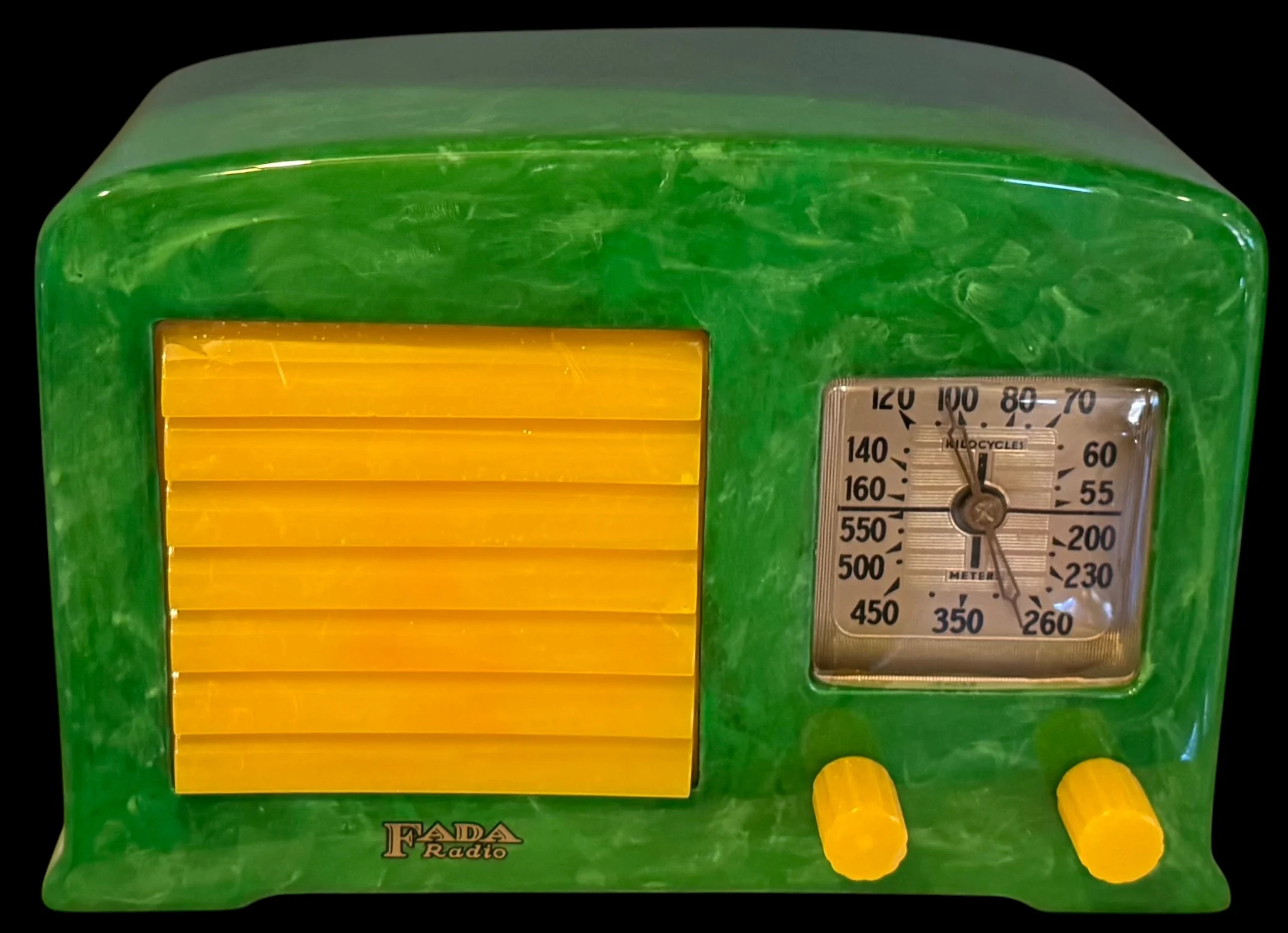
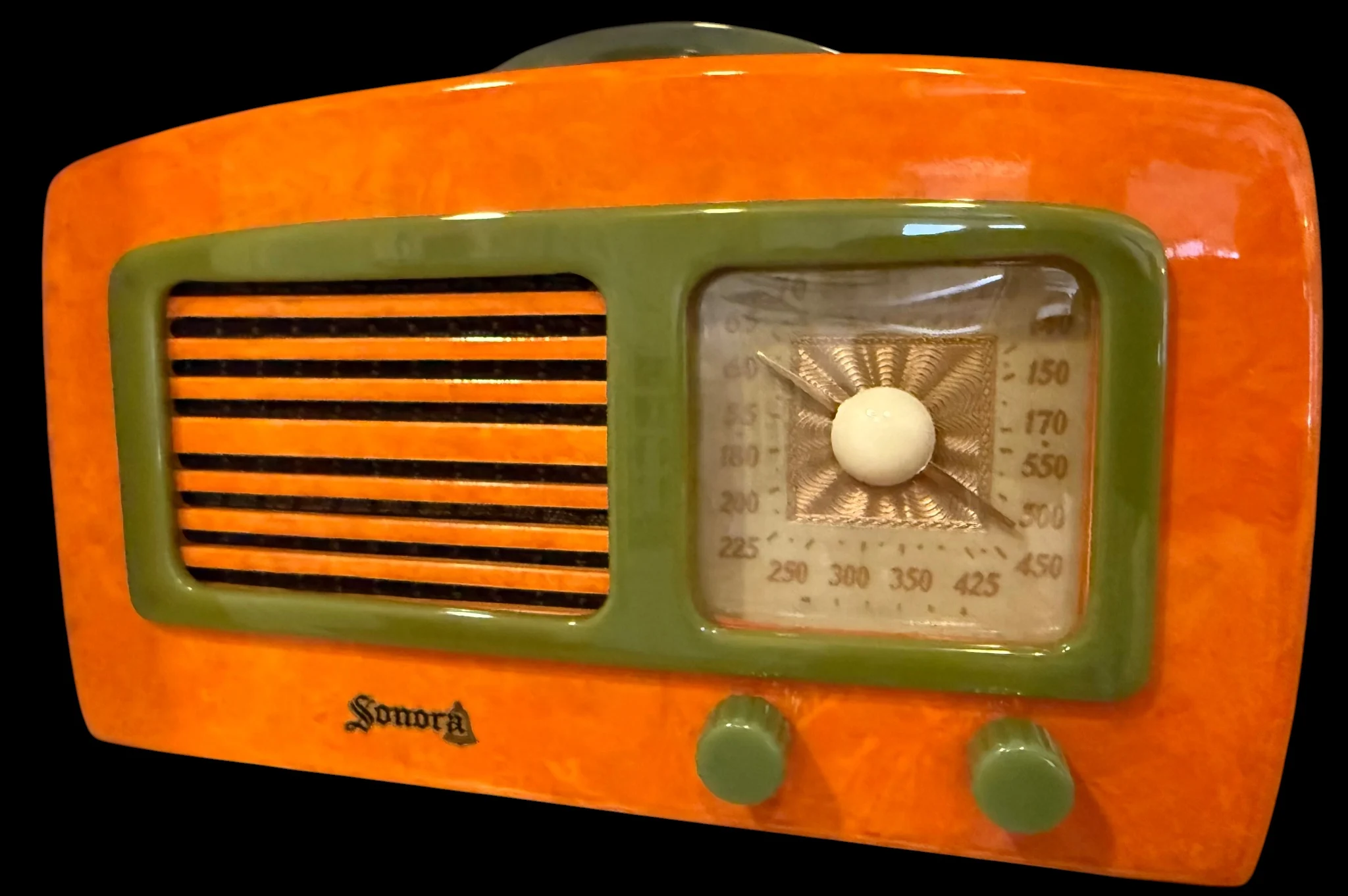
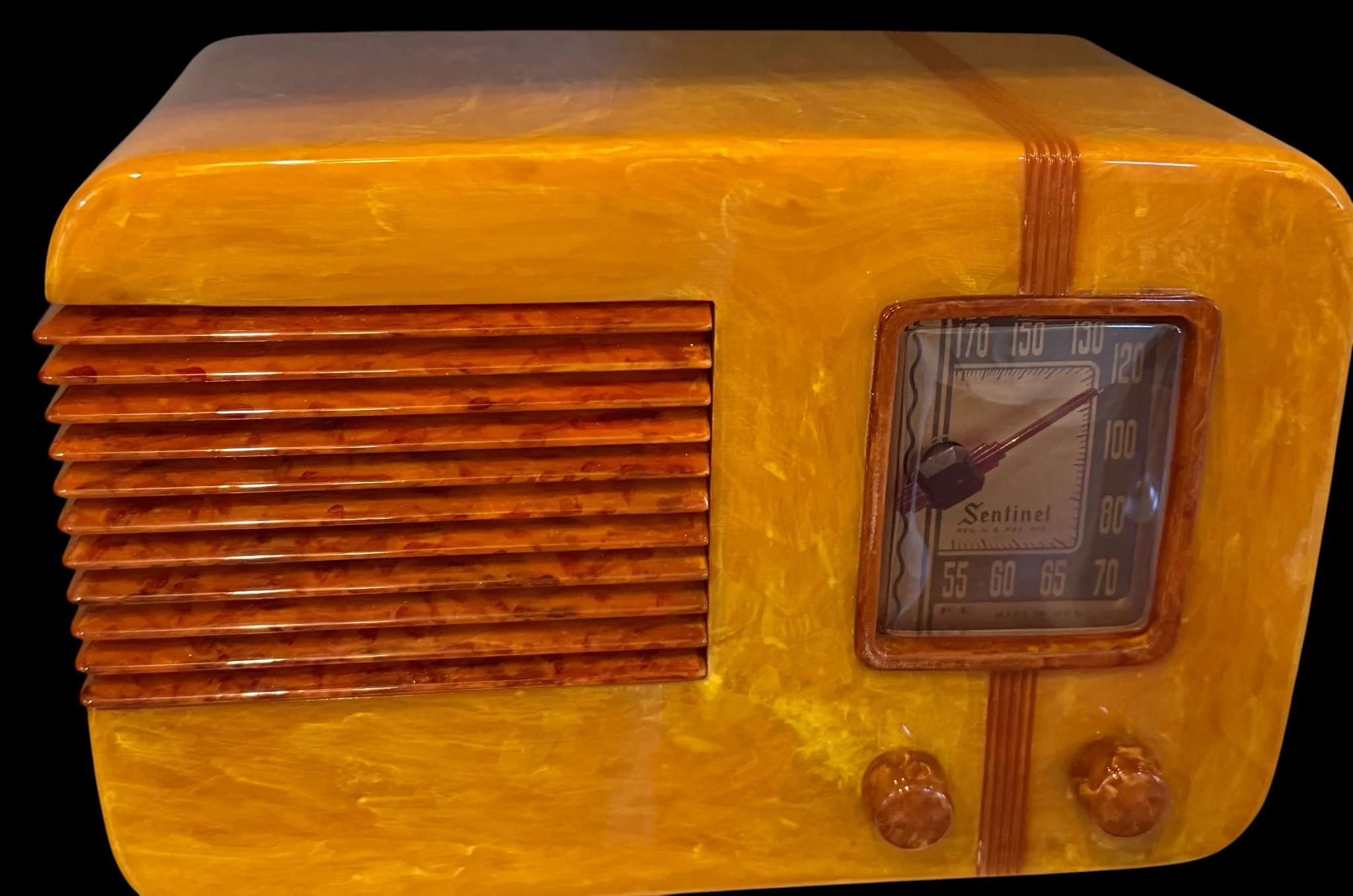
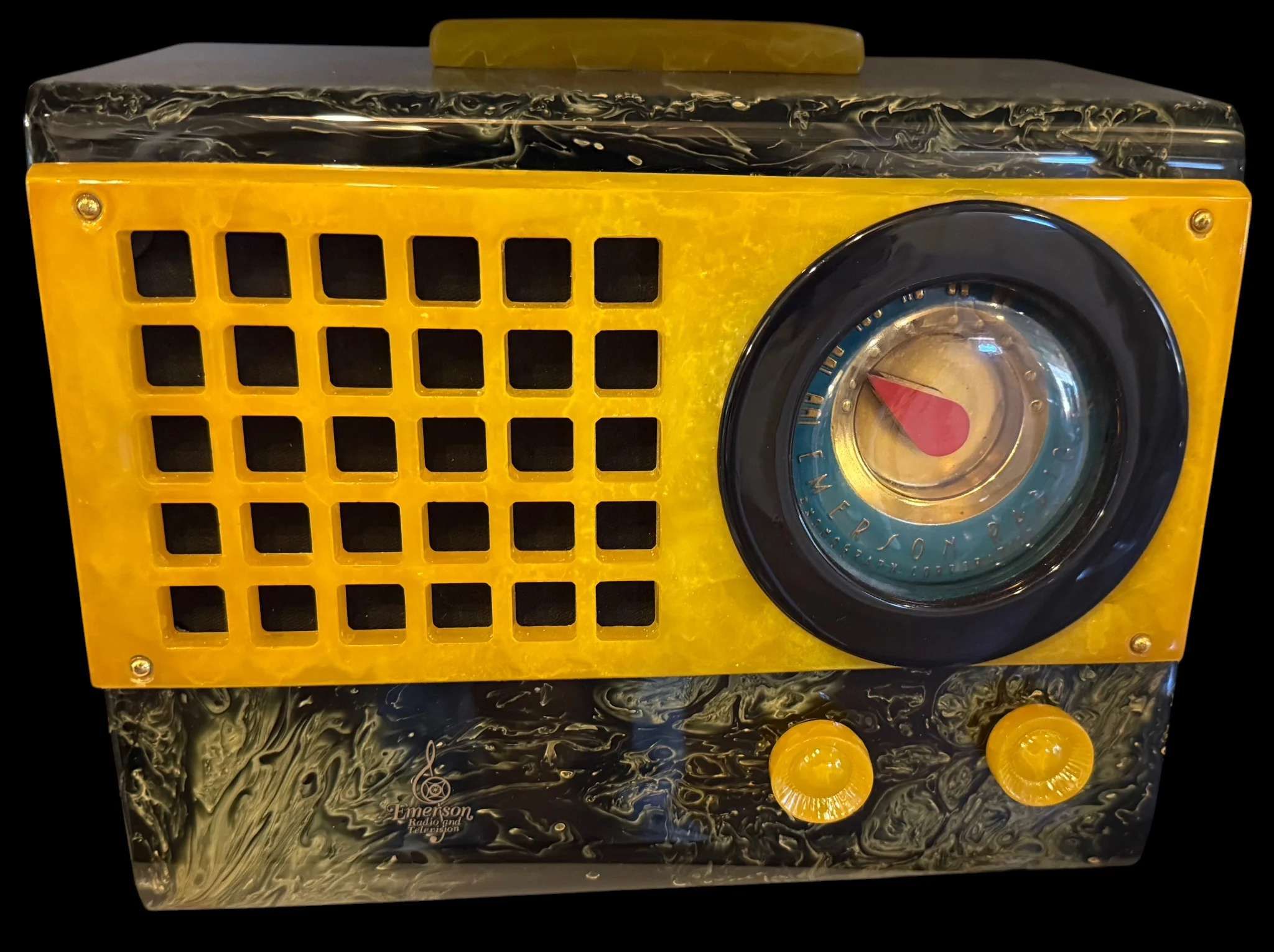
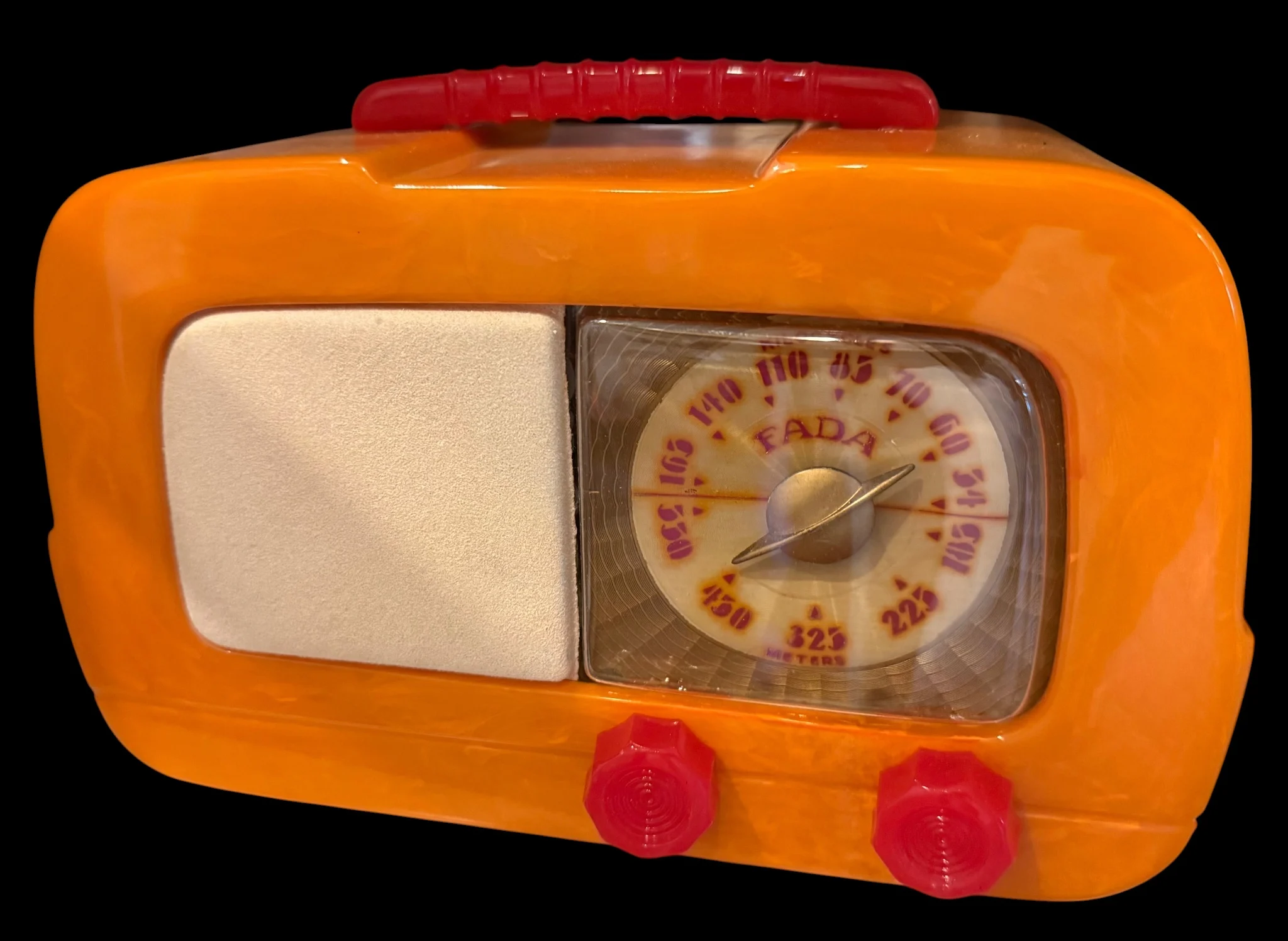
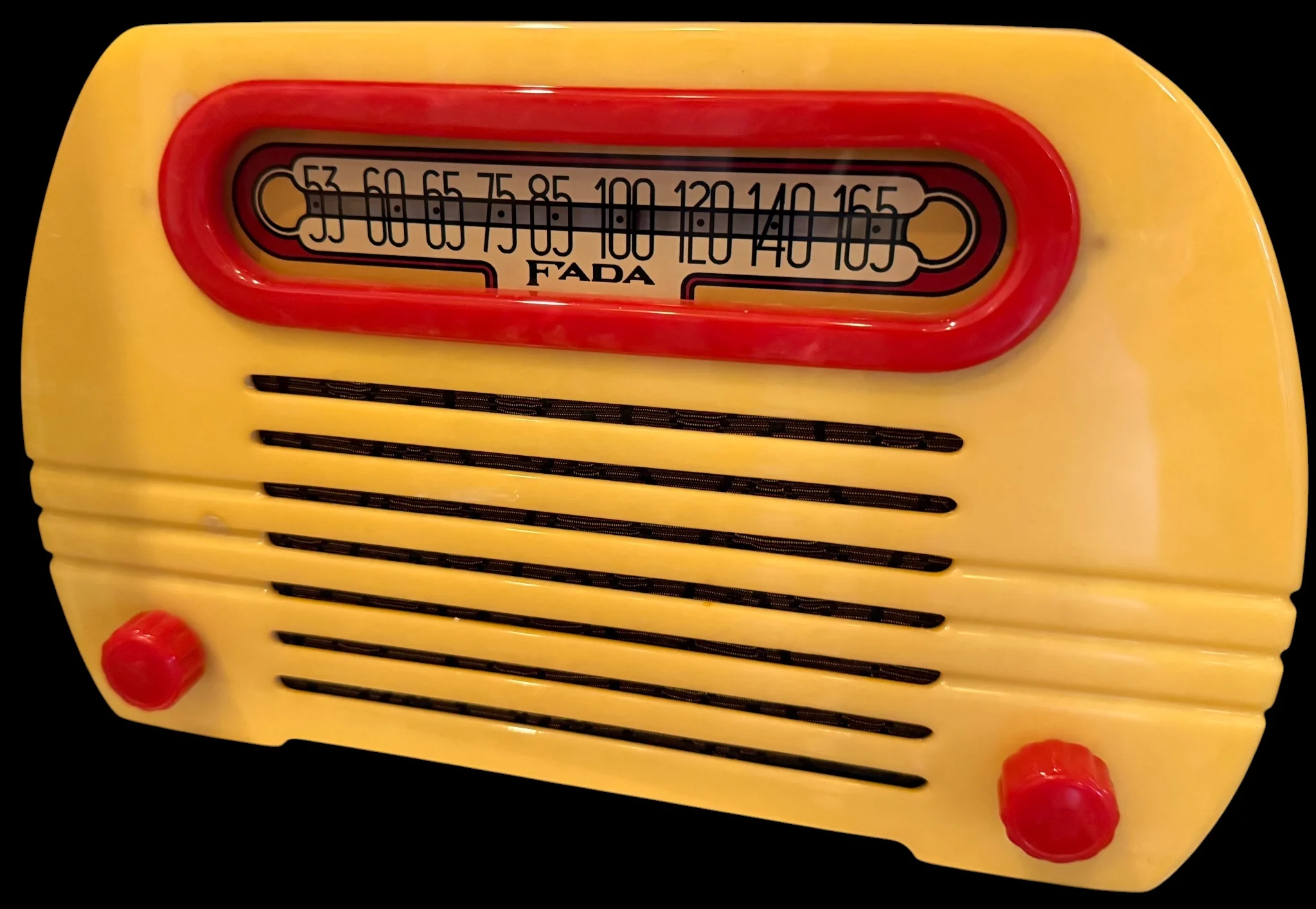
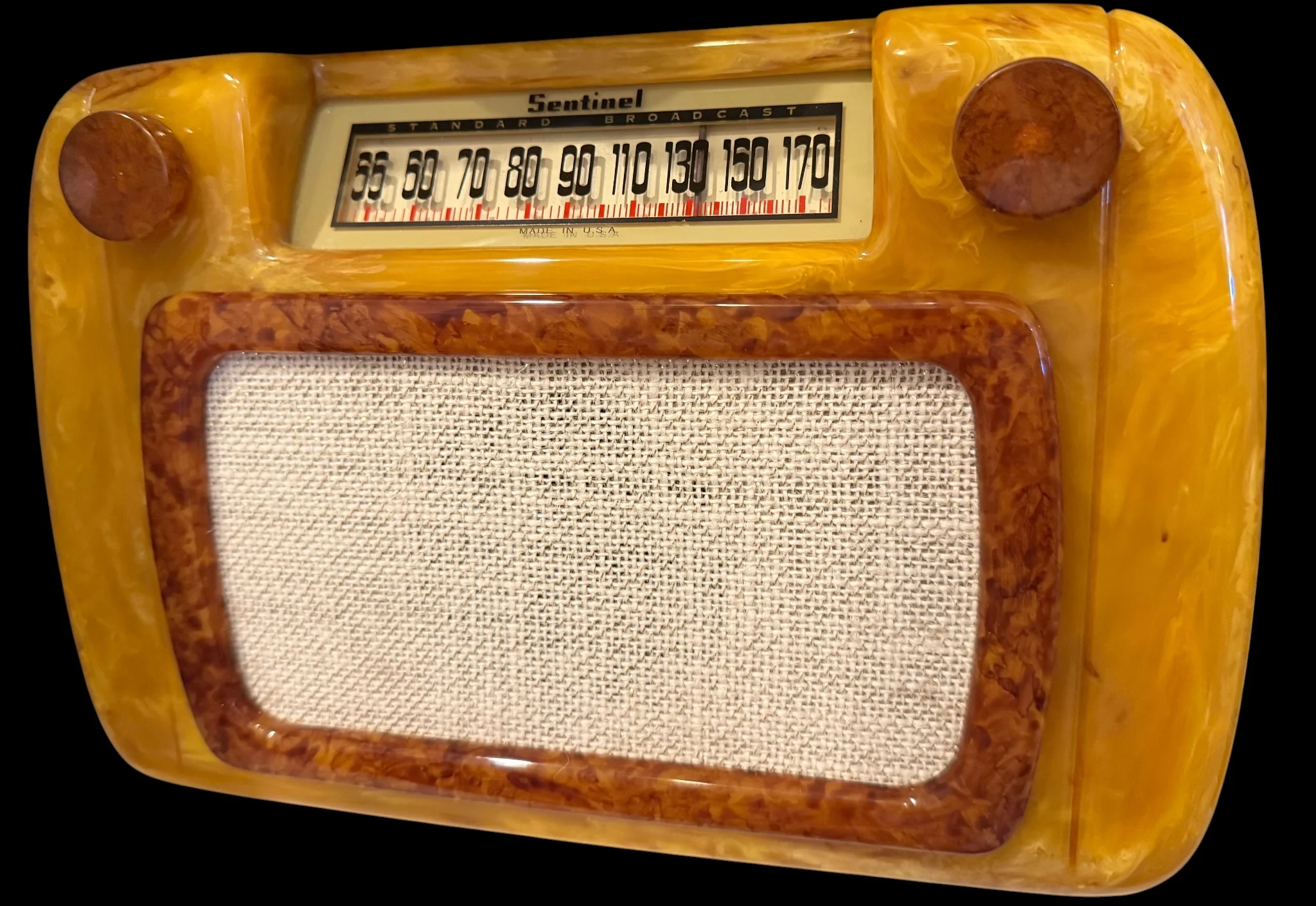
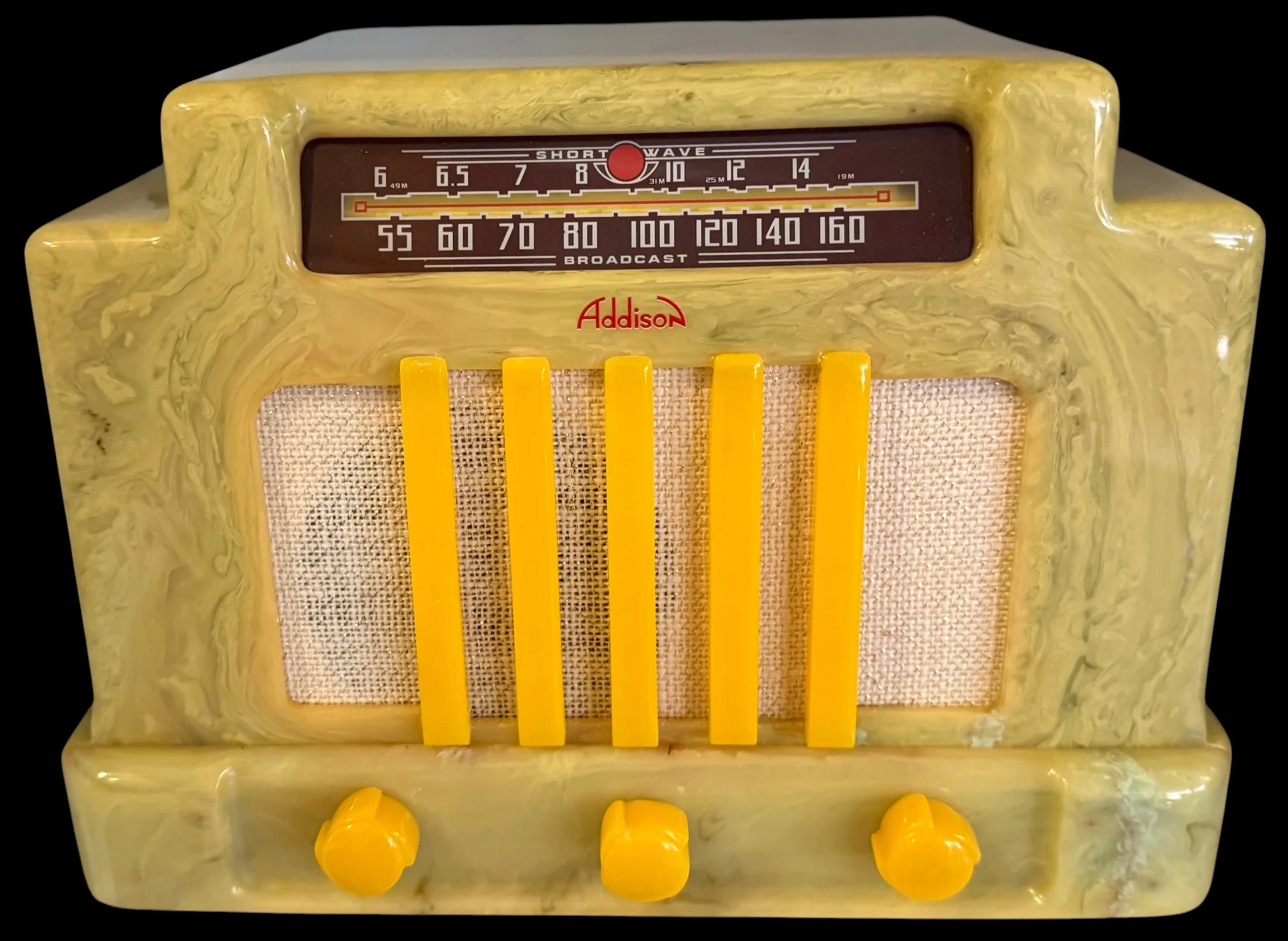
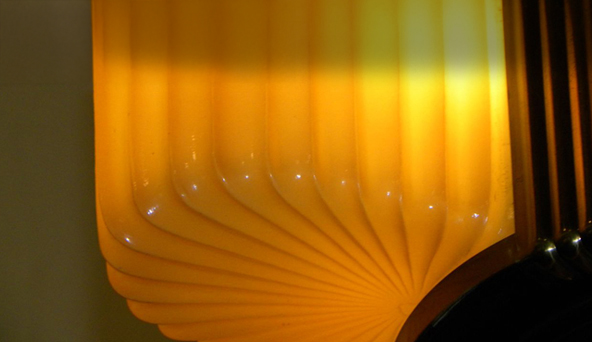
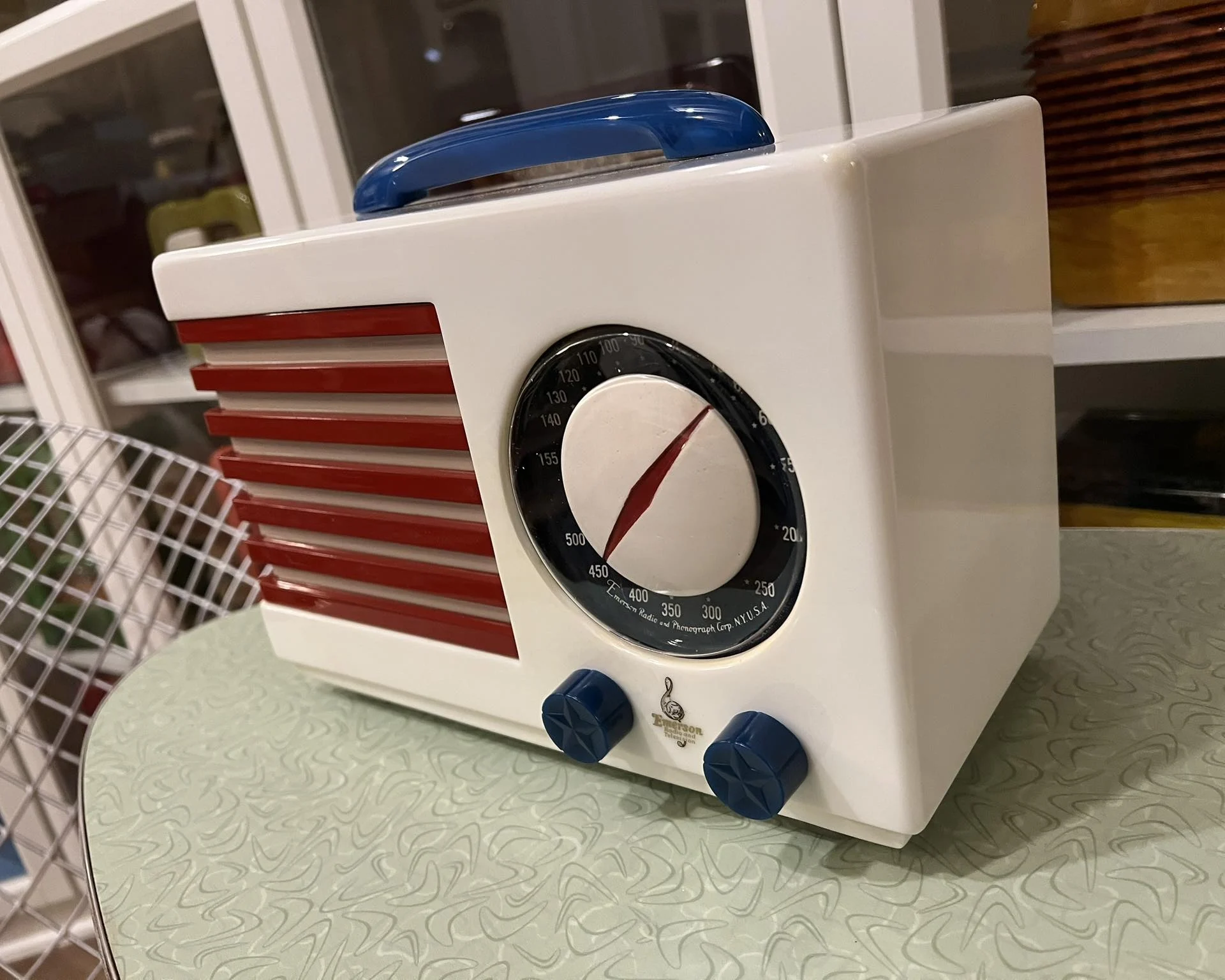
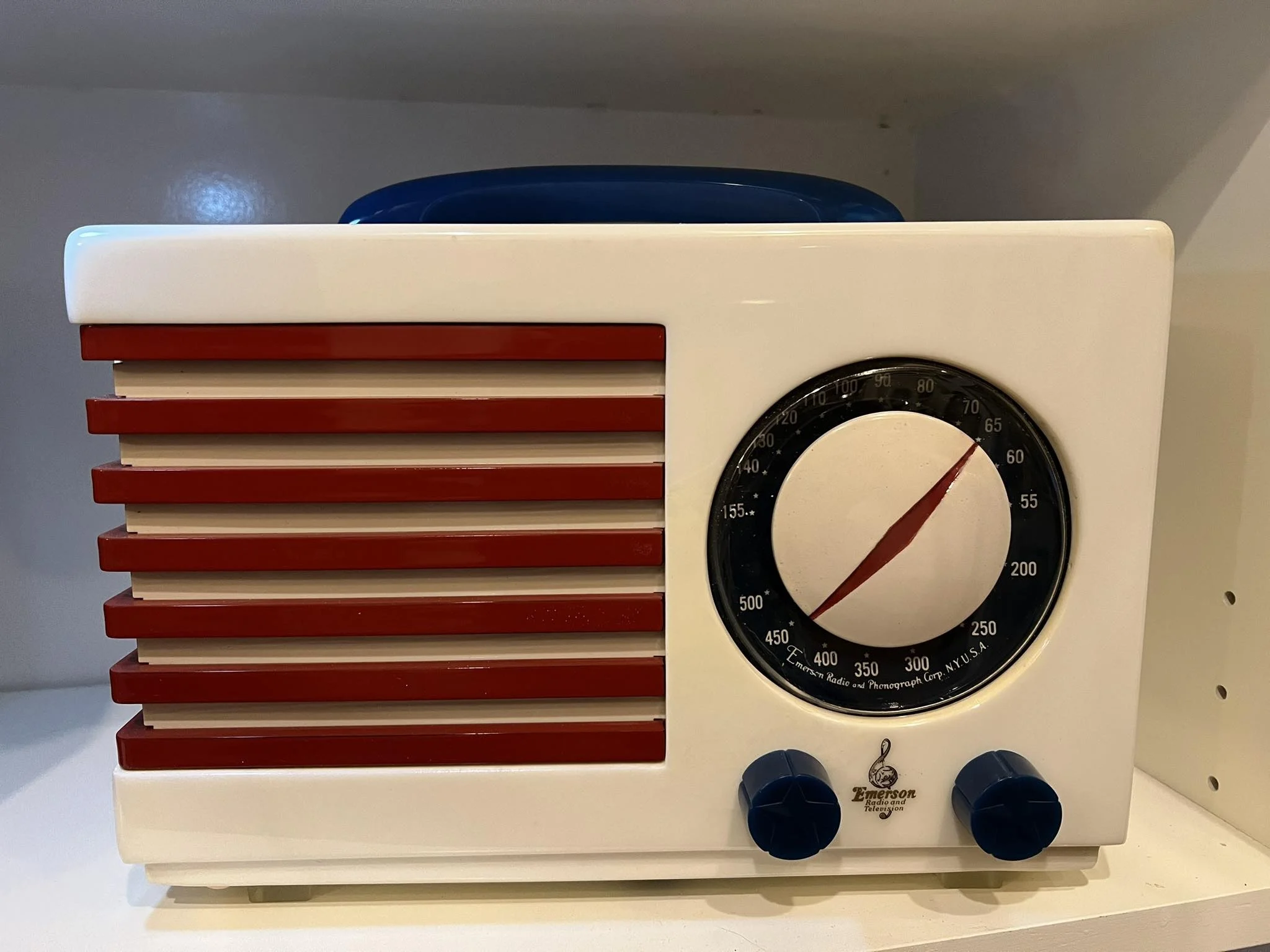
Catalin radios are often confused with Bakelite, but they are different and generally more collectible. Catalin is also a phenolic resin, but it was cast rather than compression molded and did not use the same dark fillers. Because of this, Catalin could be produced in vivid colors such as butterscotch yellow, red, green, blue, orange, ivory, and marbled combinations. It was especially popular in the late 1930s and early 1940s for high-style tabletop radios. Catalin was more expensive and labor-intensive than Bakelite. It had to be cast in blocks, cured, cut, machined, polished, and assembled. Over time, Catalin often changes color: white may turn butterscotch, blue may shift toward green, and bright colors may deepen or mellow. This aging is part of its appeal, but Catalin is also more fragile than Bakelite and can shrink, crack, warp, or stress around screws and inserts.
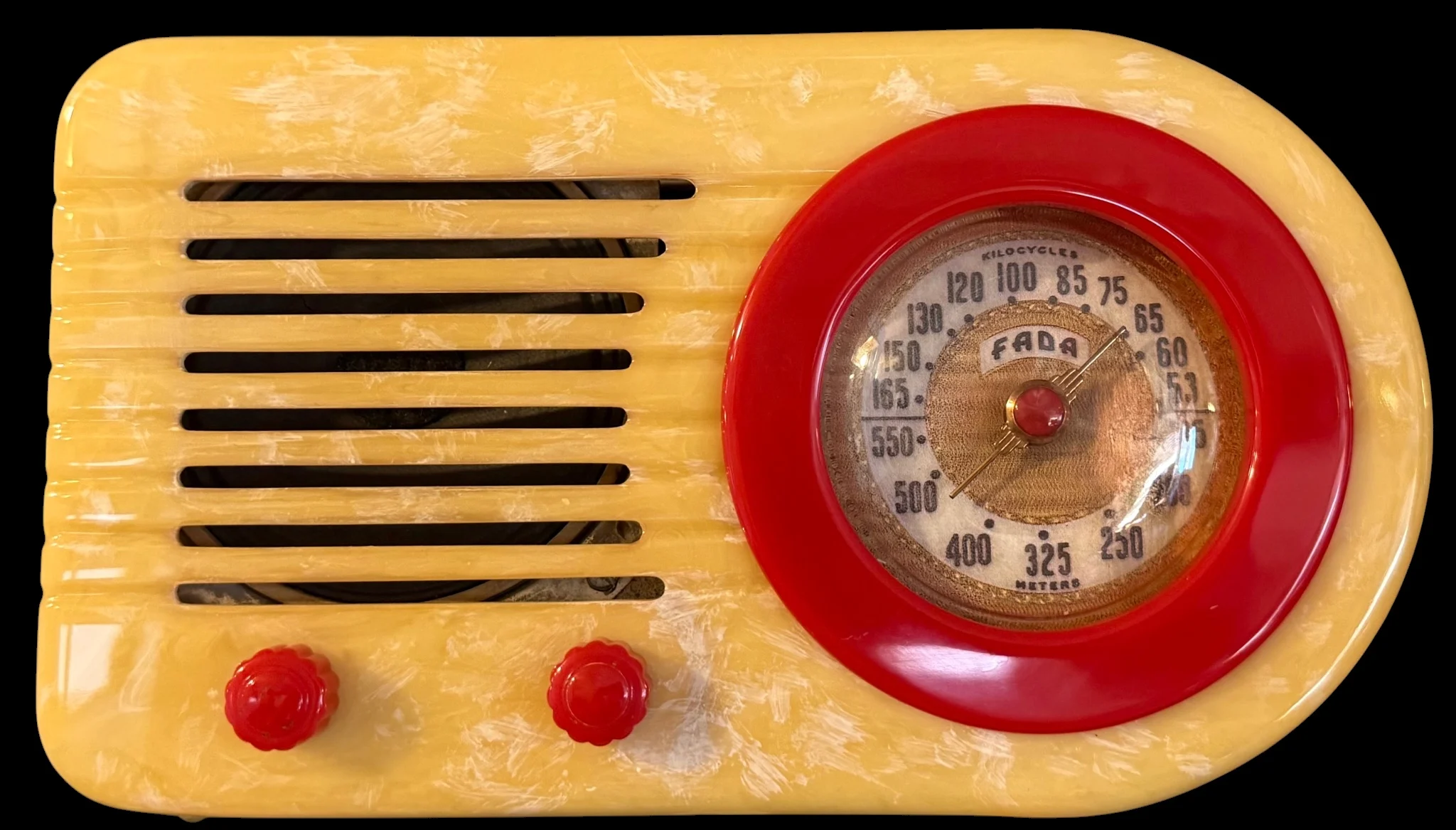
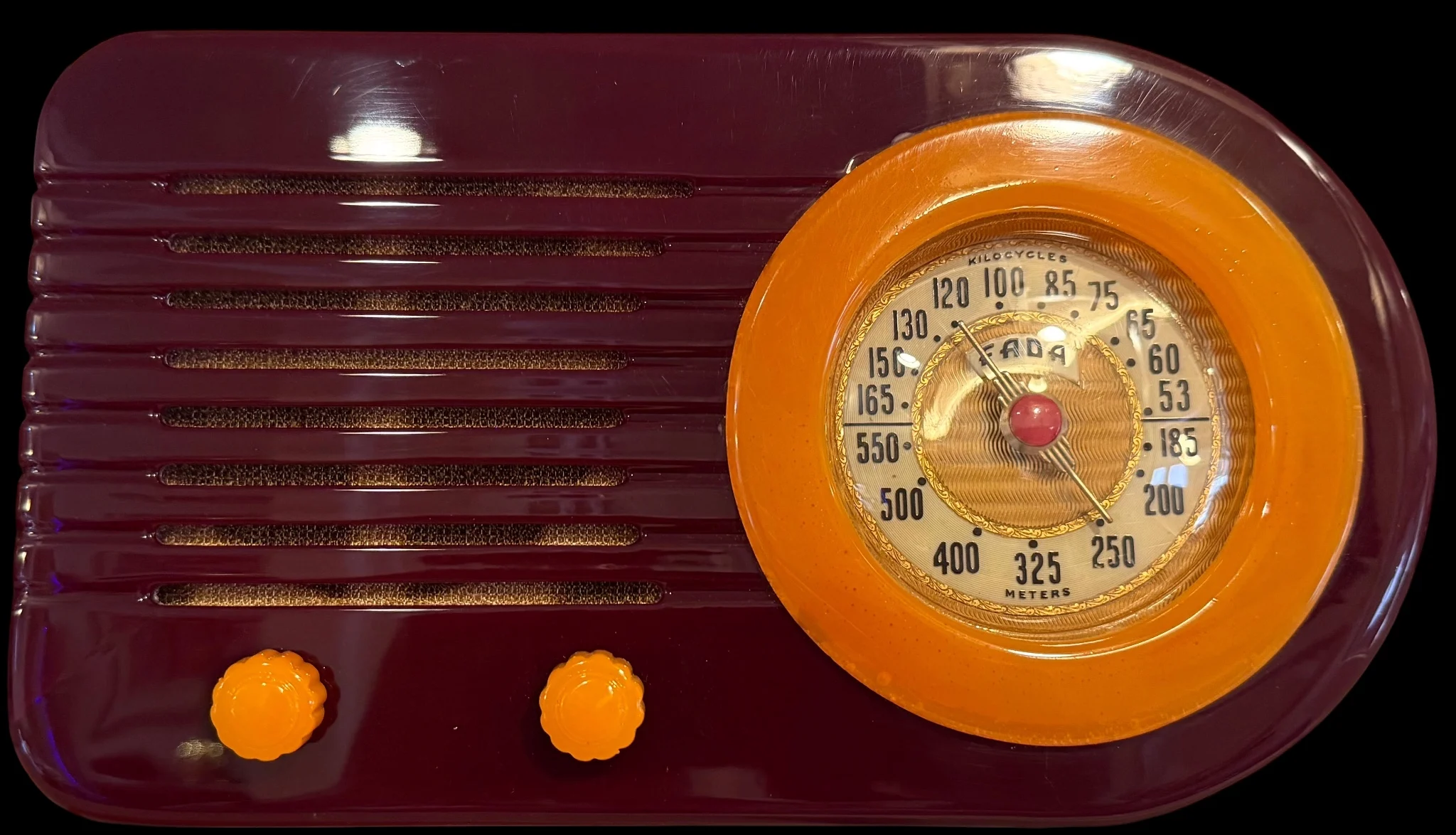
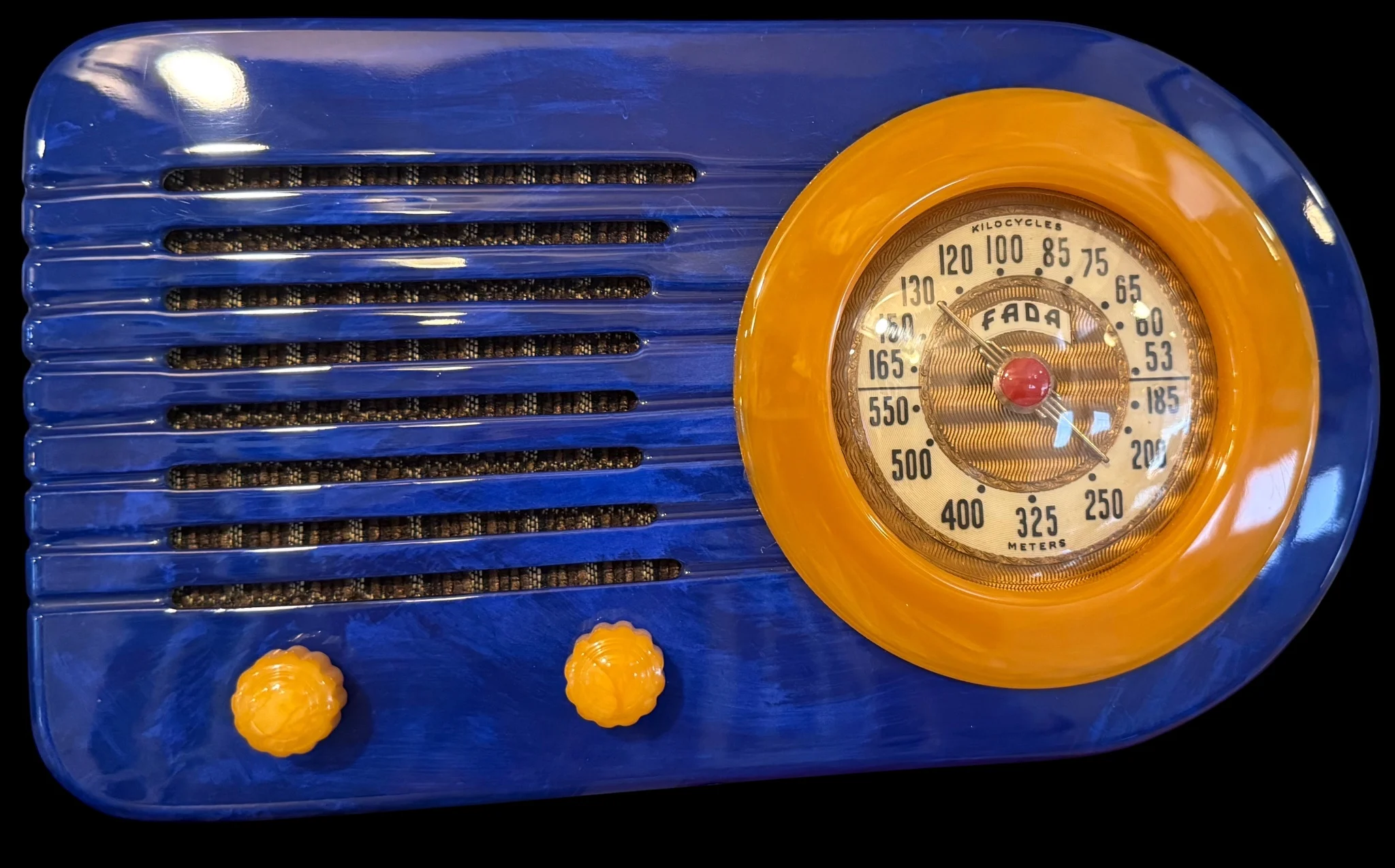
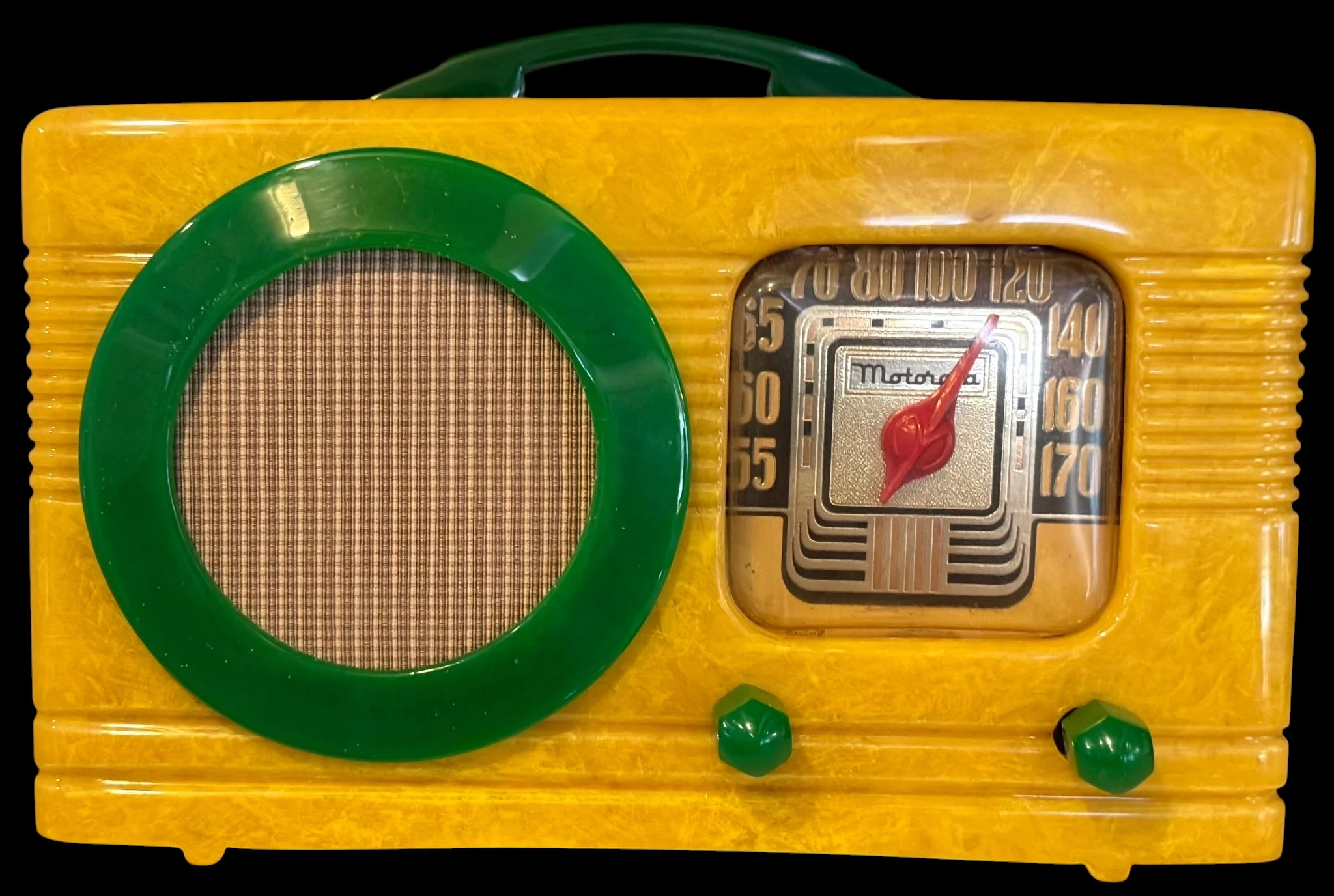
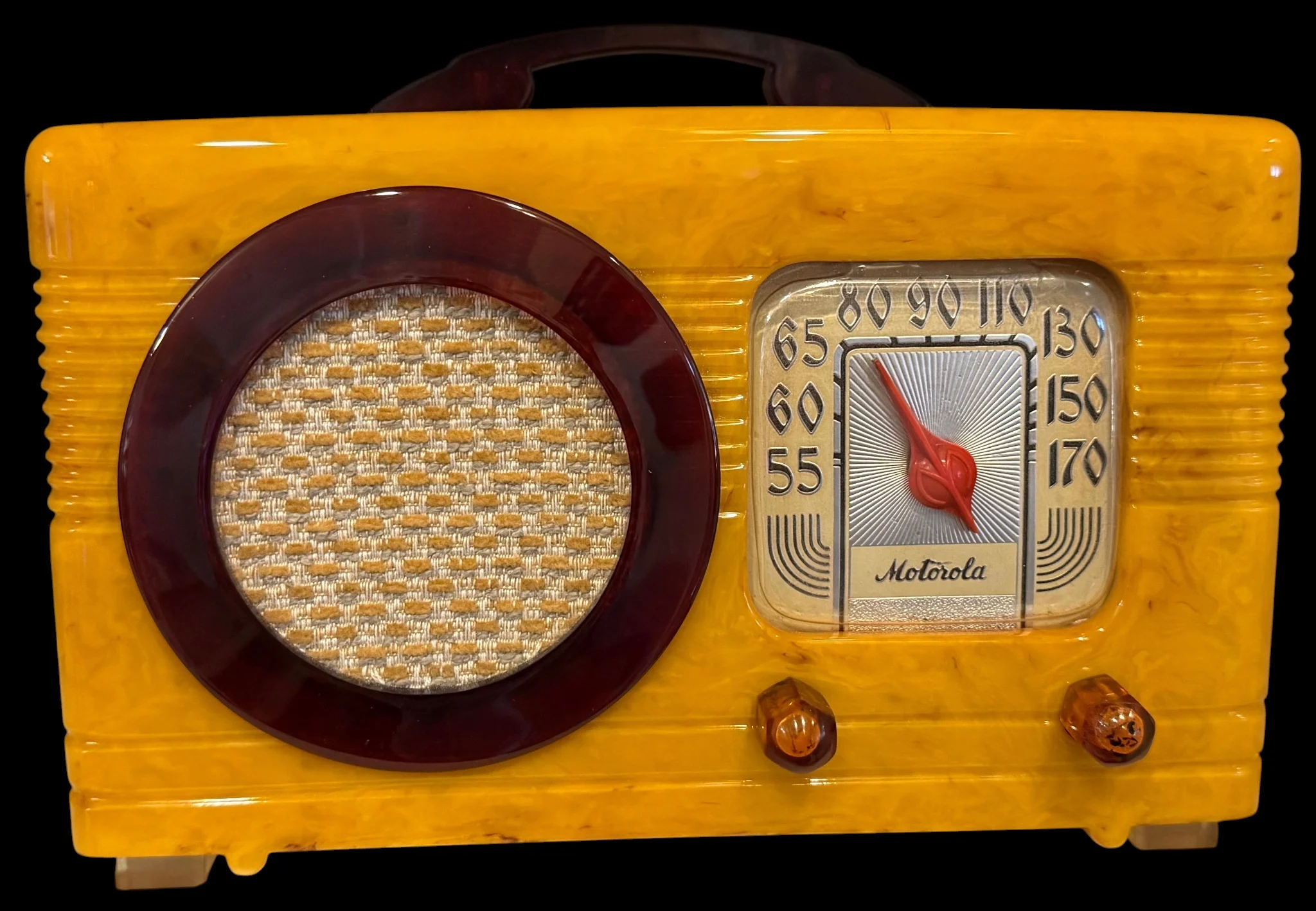
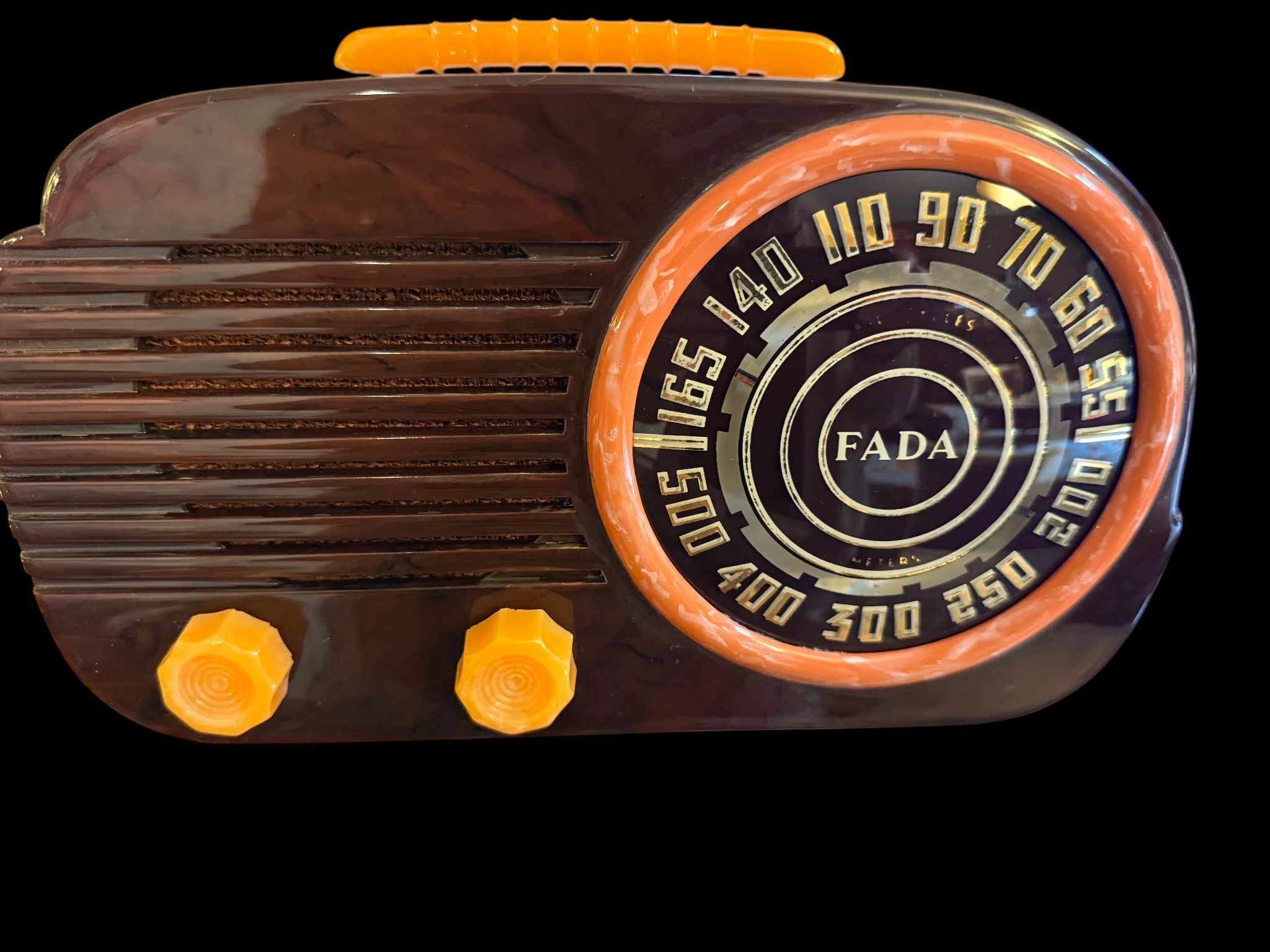
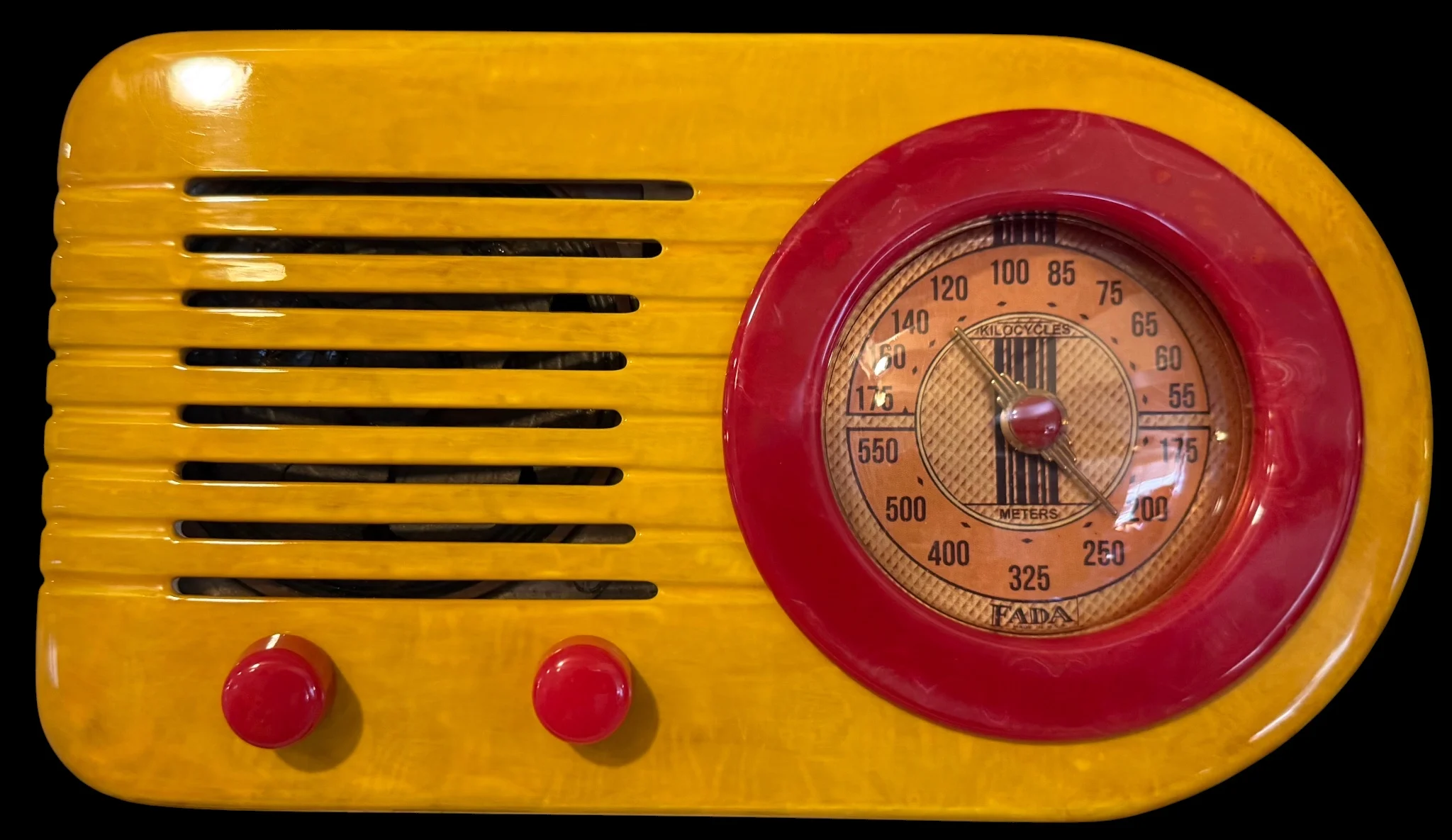
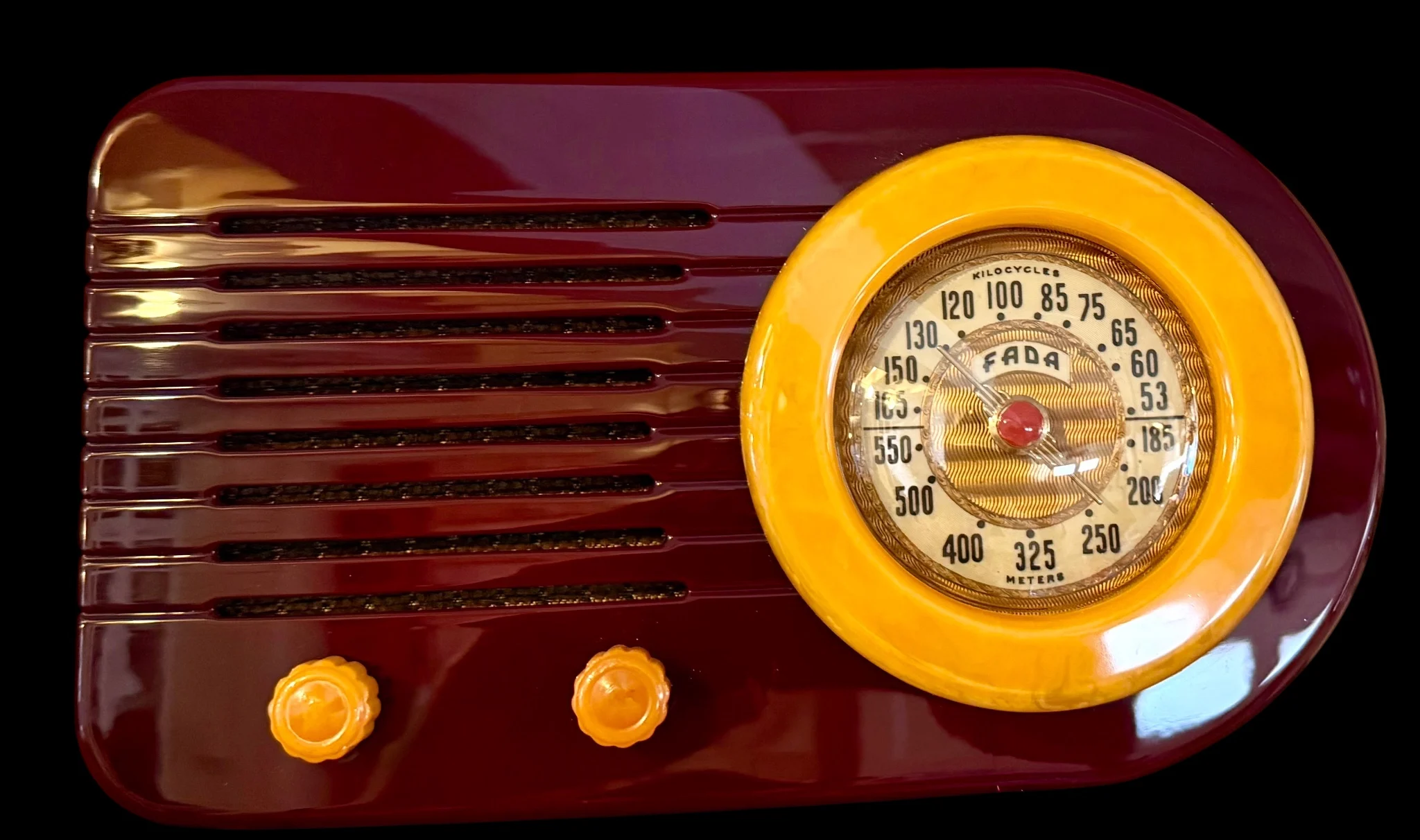
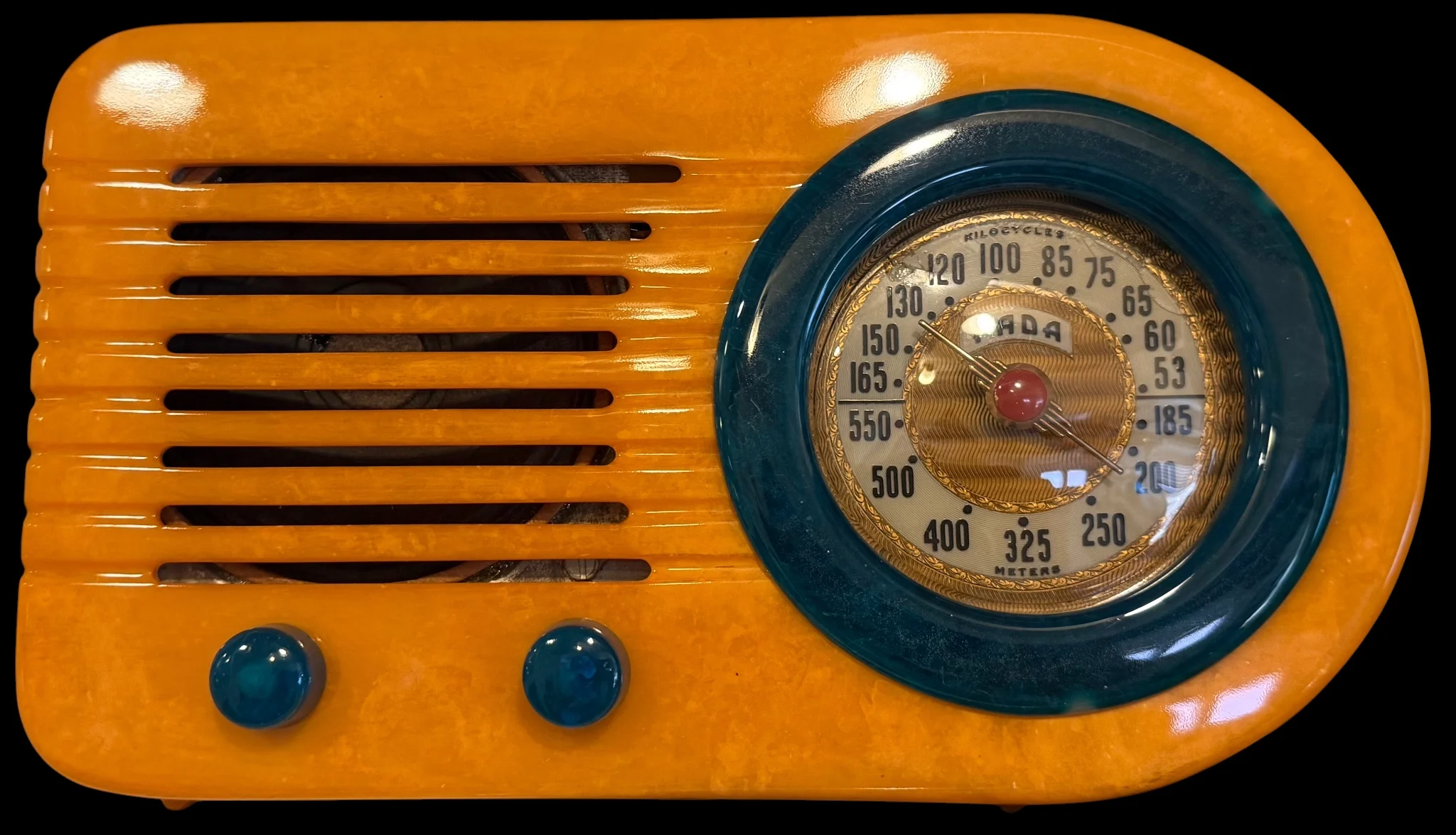
The easiest way to understand the difference is this: Bakelite was practical, durable, and mass-produced; Catalin was colorful, decorative, and luxurious. Bakelite radios often look dark, architectural, and machine-age. Catalin radios often look jewel-like, with translucent depth and marbled color. Both are deeply associated with Art Deco design, but Catalin radios tend to command higher collector interest because of their color, scarcity, and vulnerability.
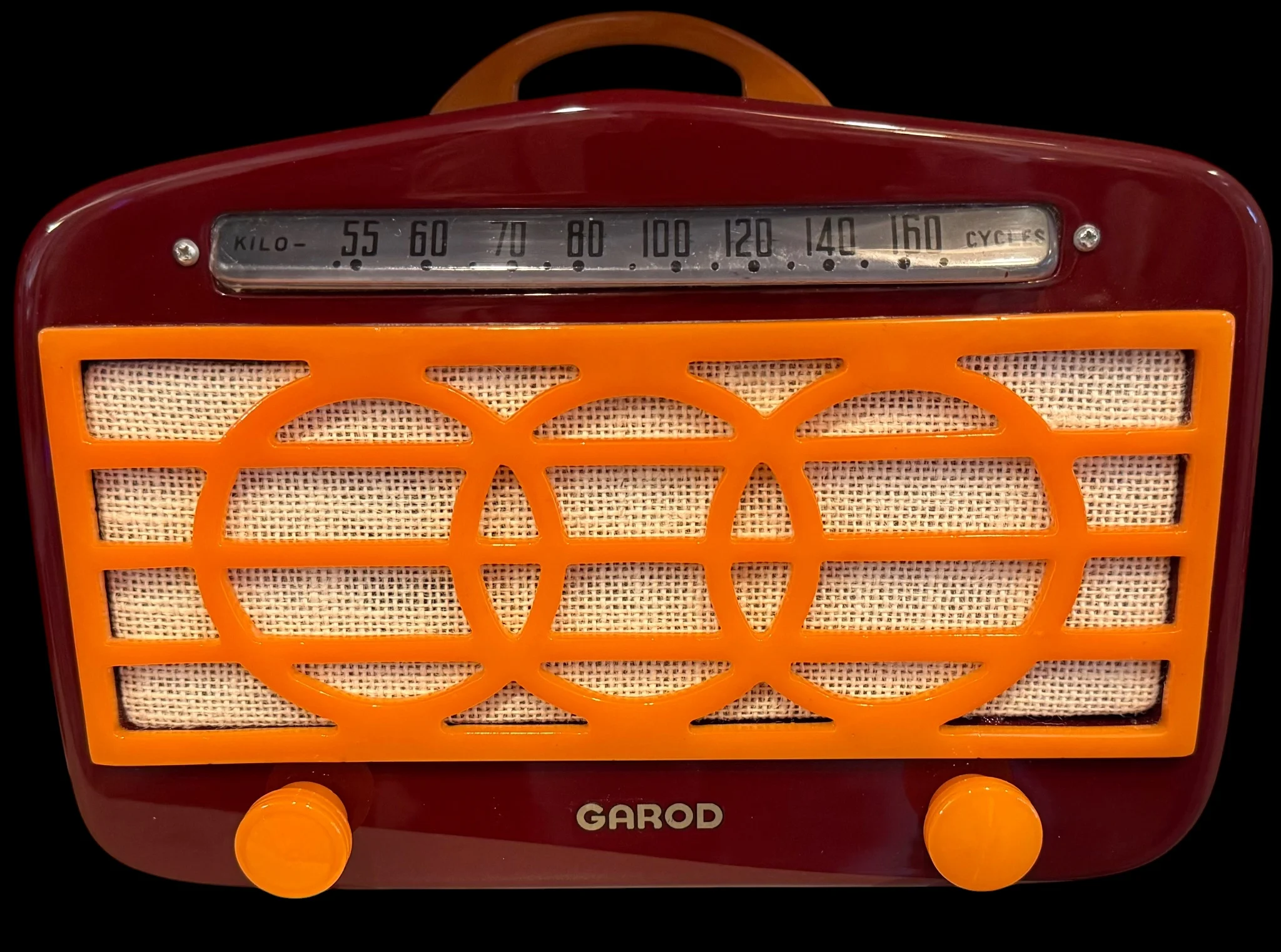
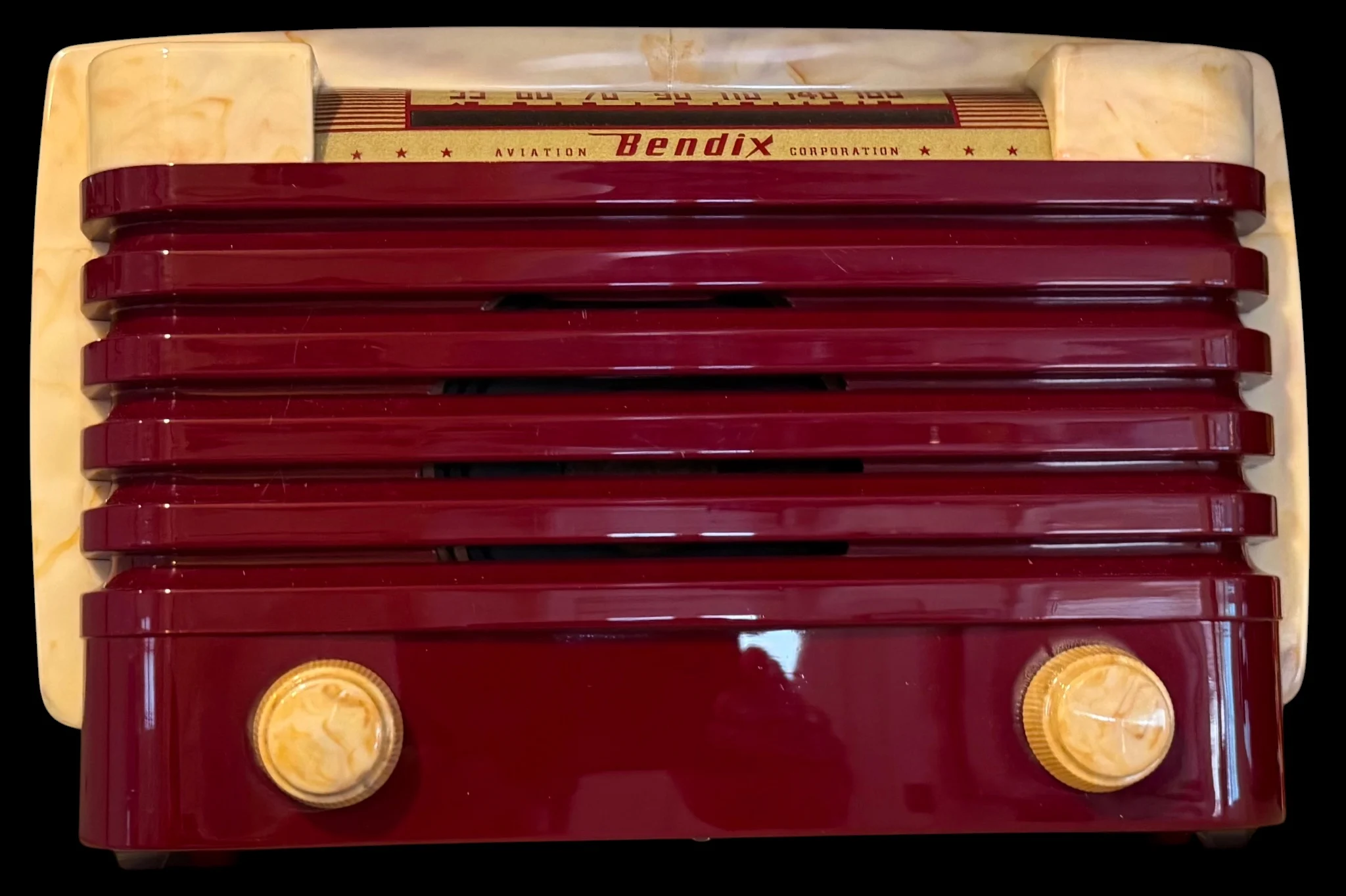
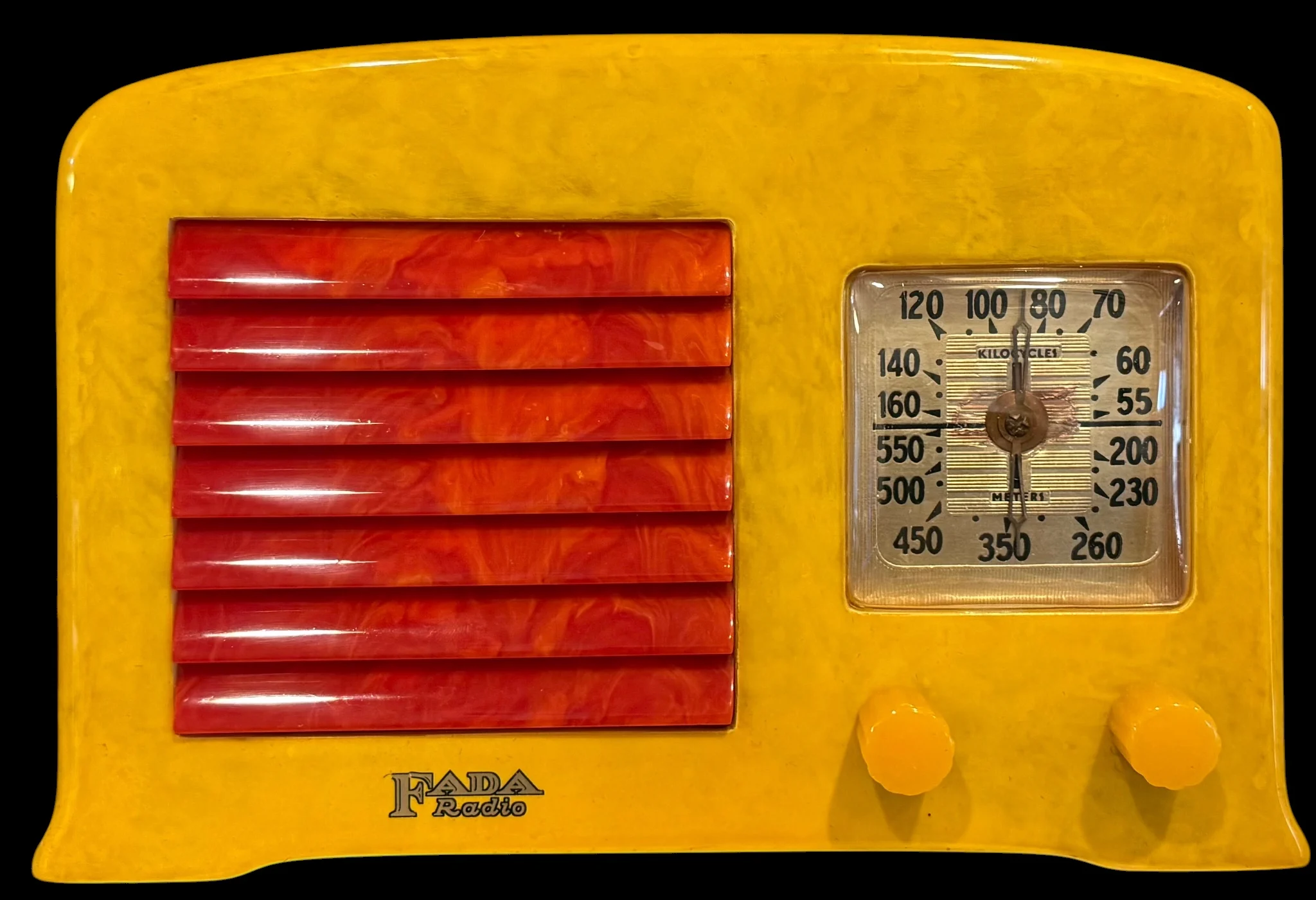
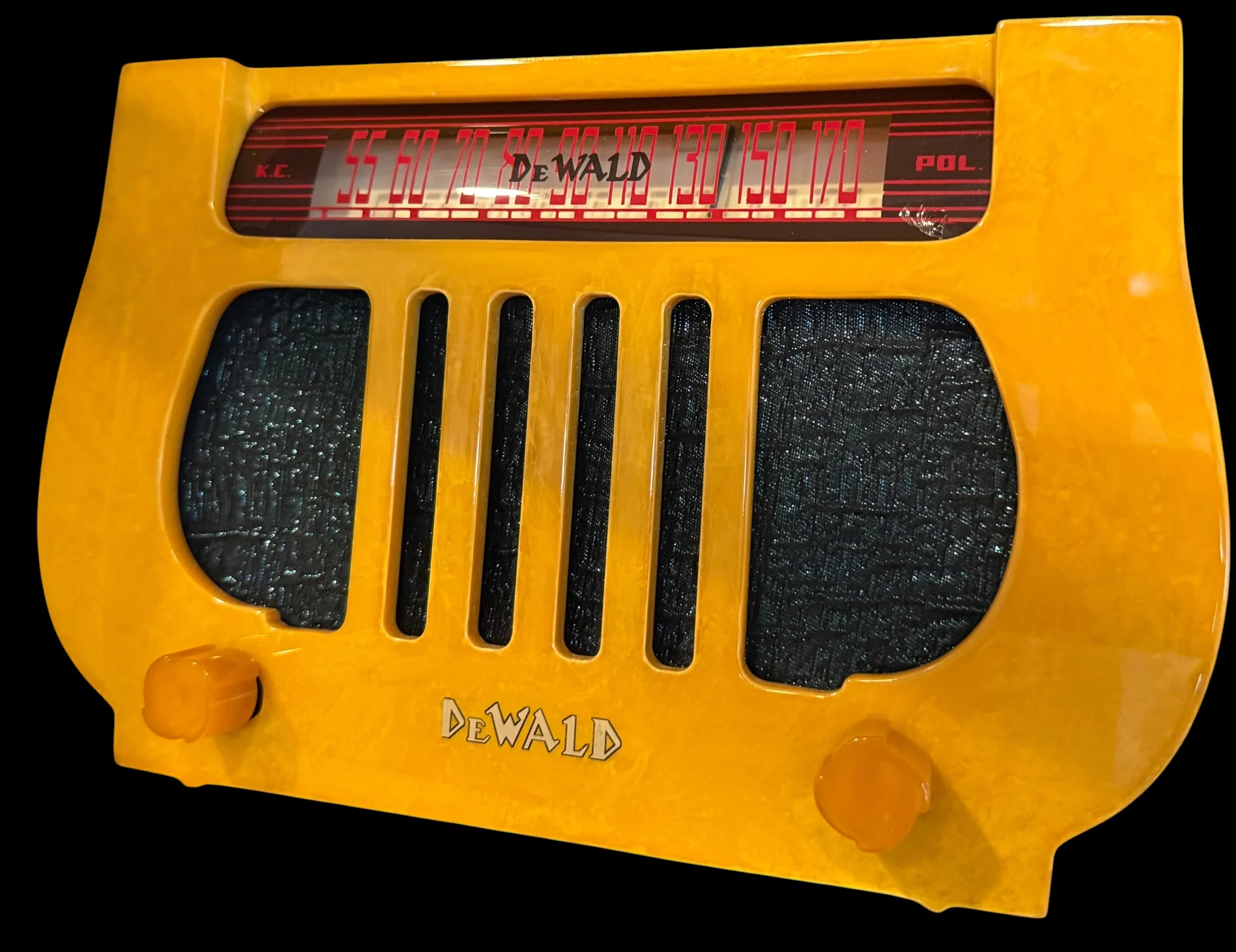
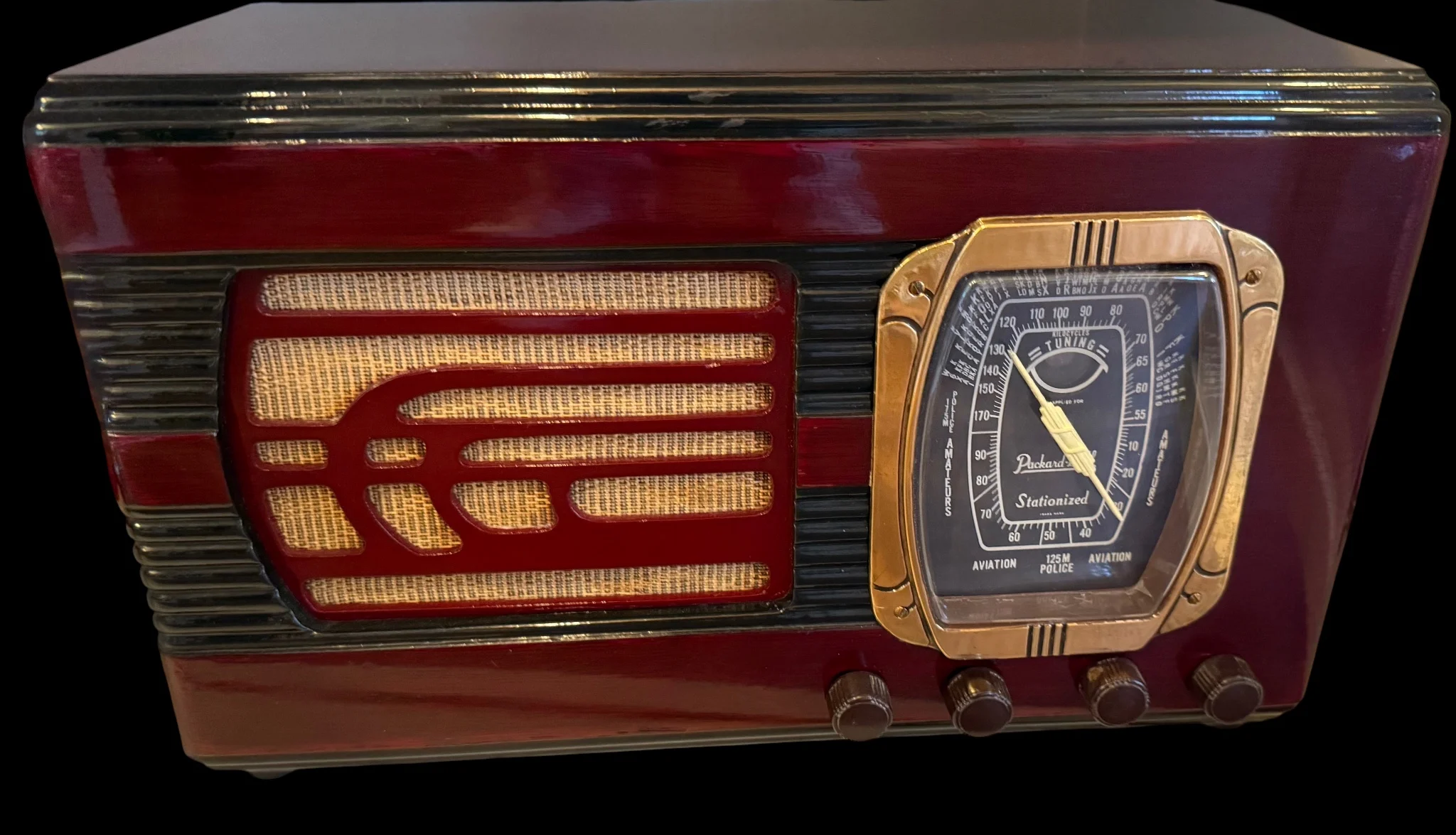
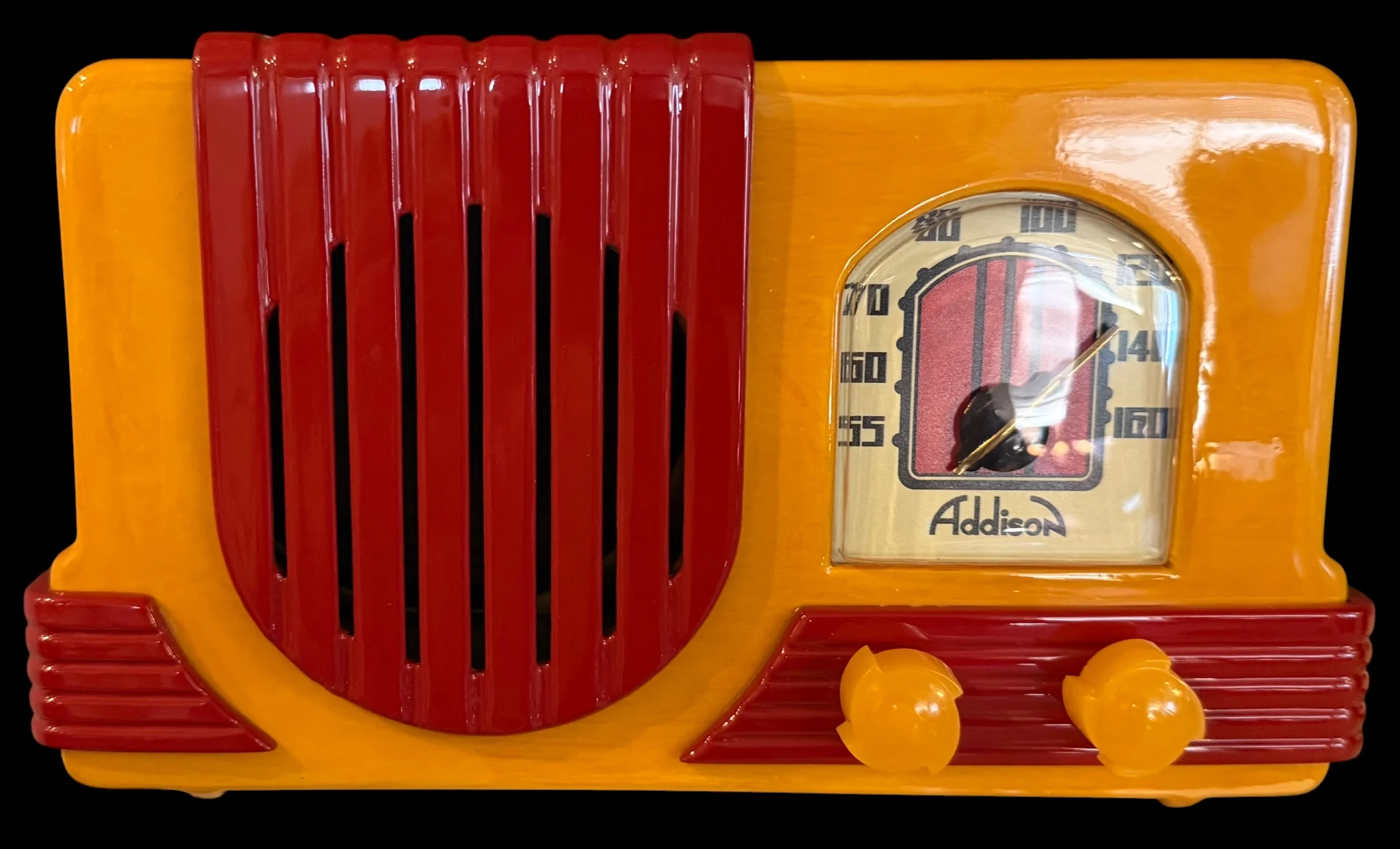
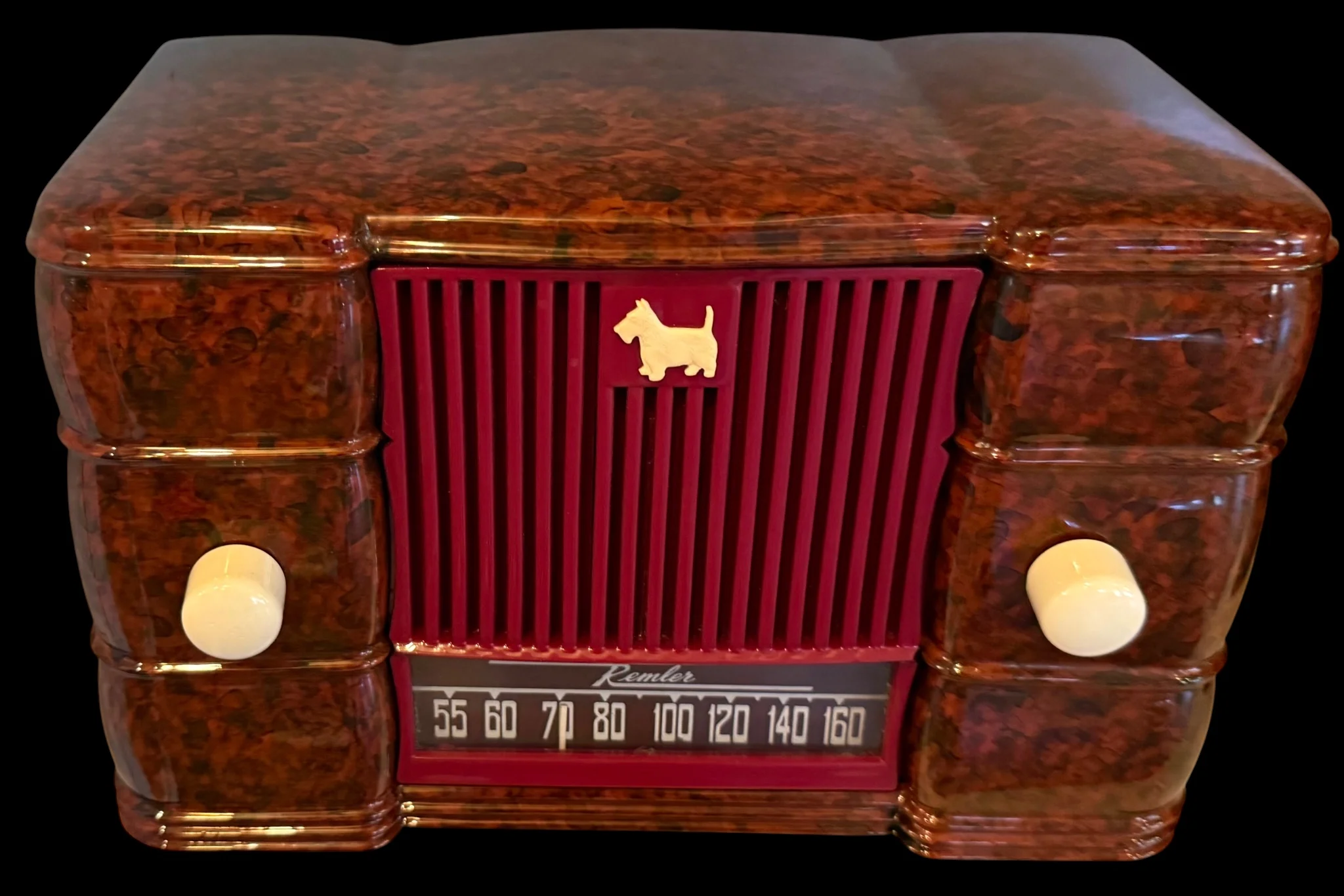
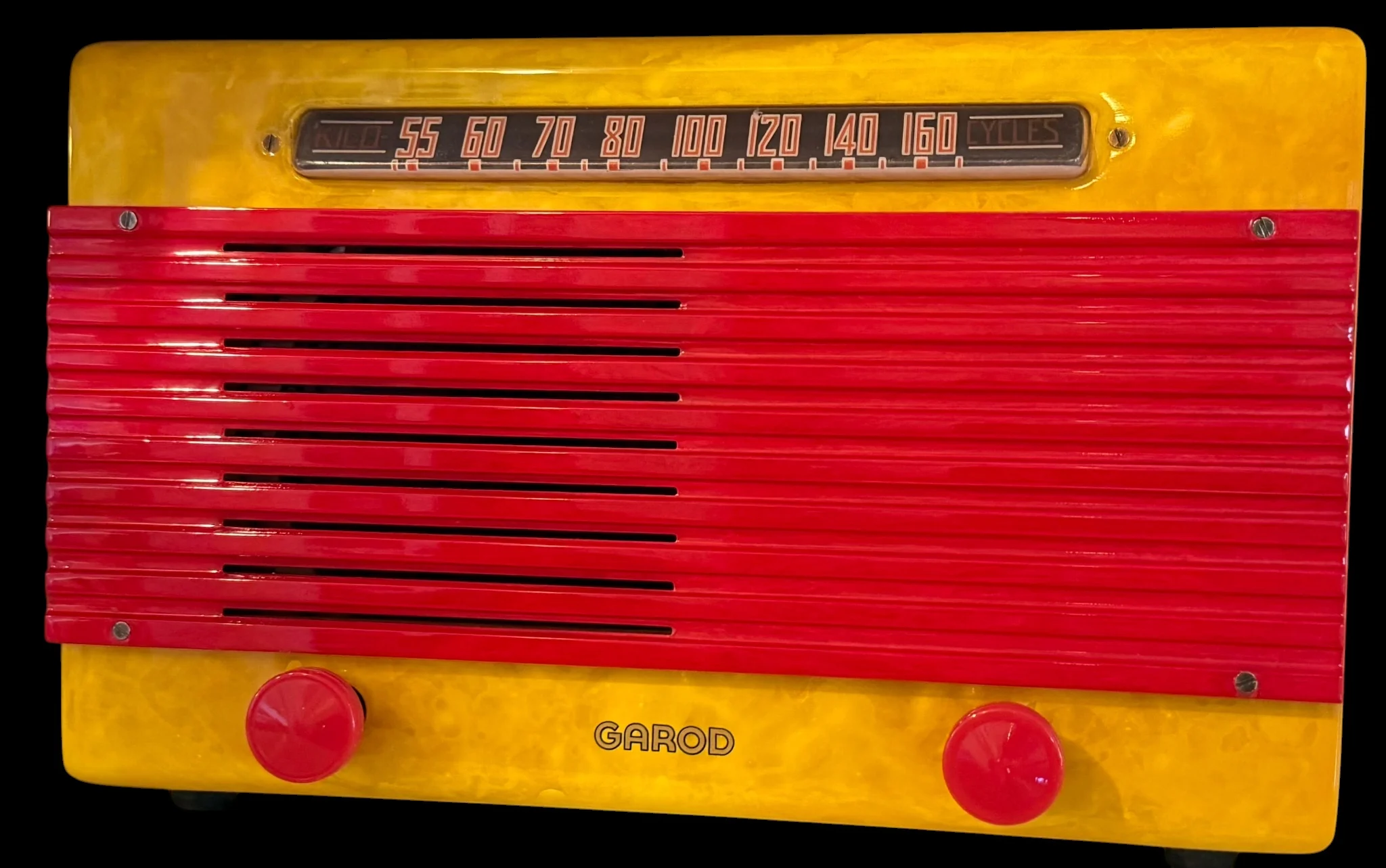
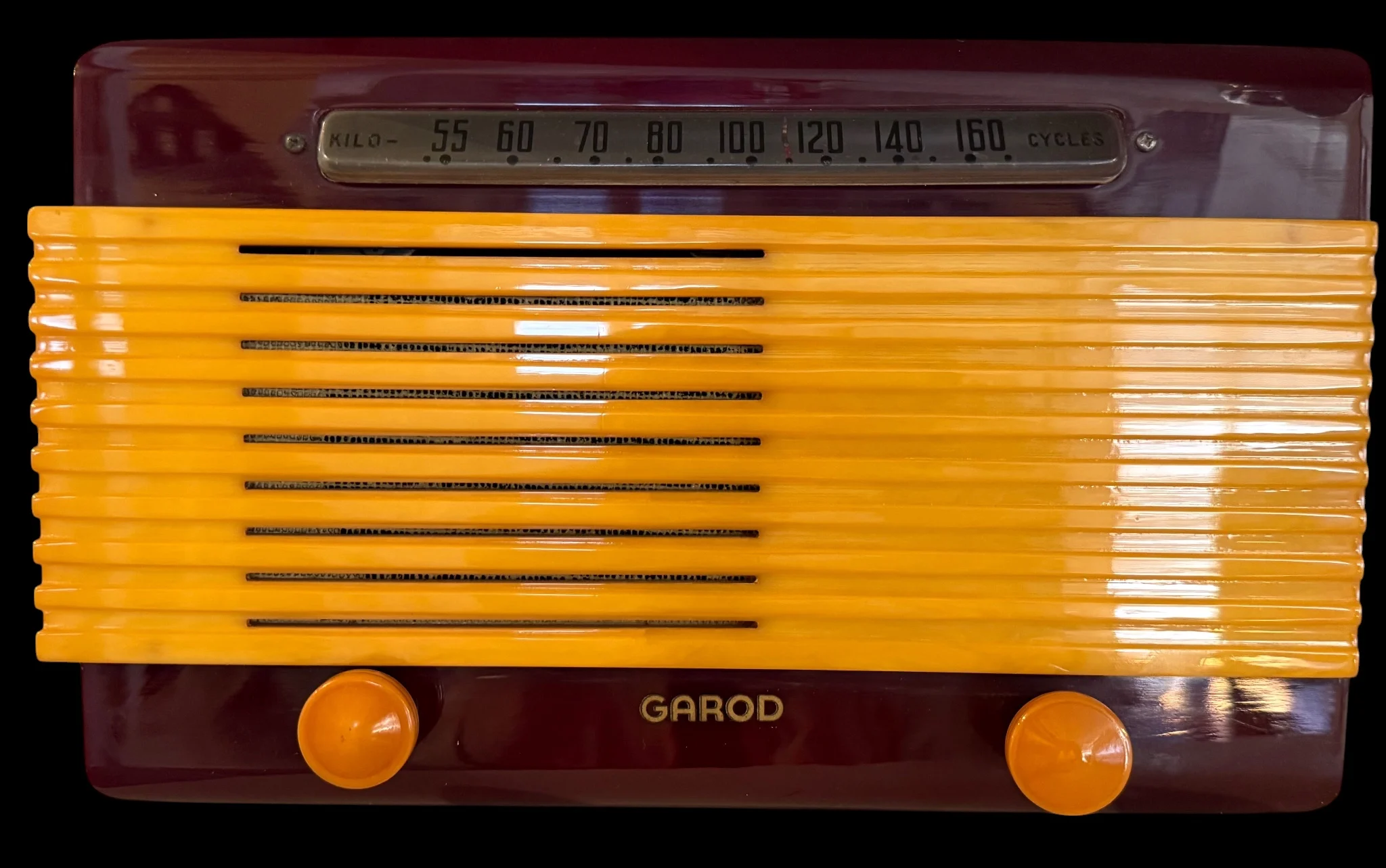
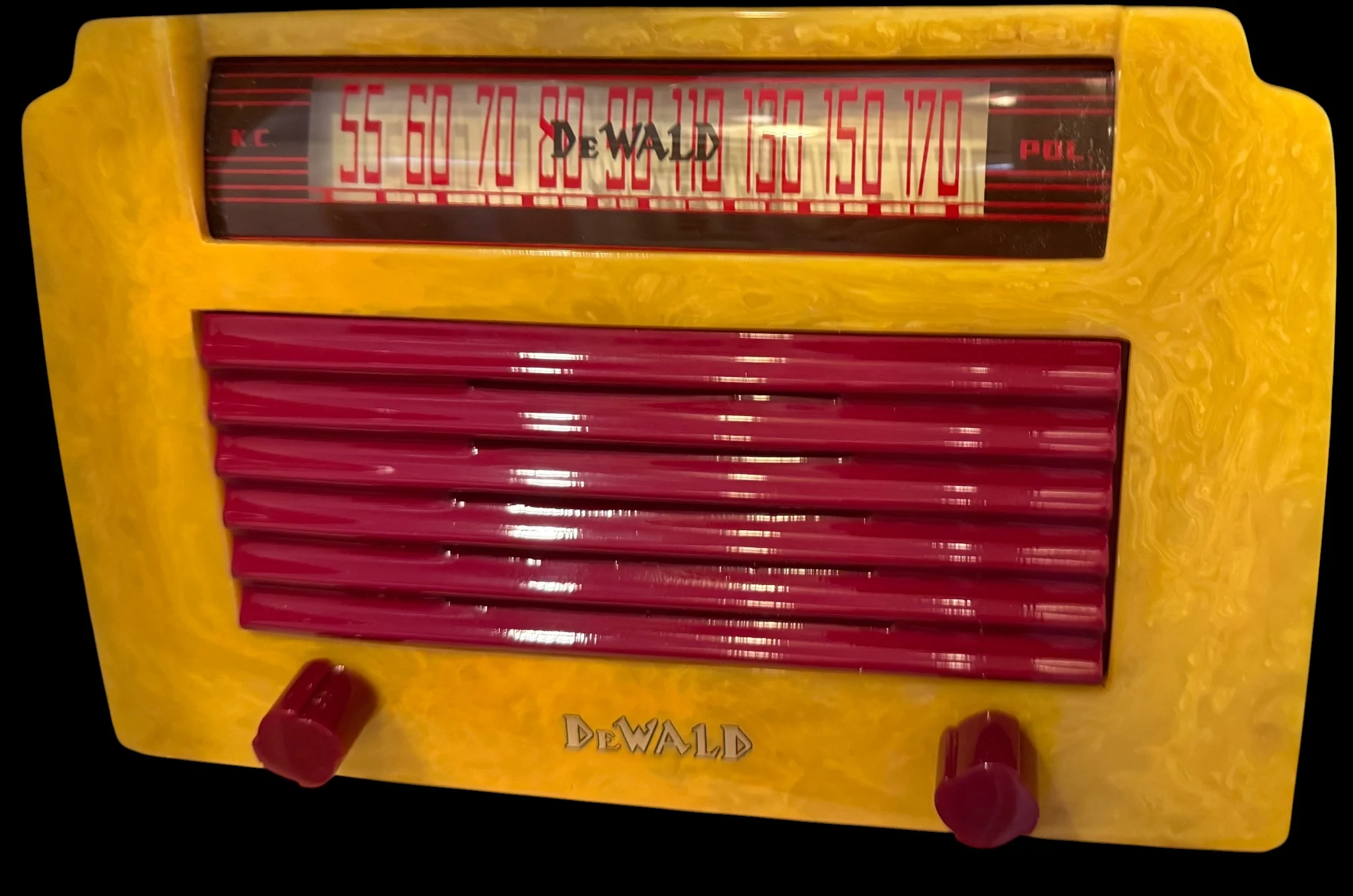
Several other plastics appeared alongside Bakelite and Catalin. Plaskon, a urea-formaldehyde plastic, was often used for lighter-colored cabinets in ivory, white, cream, and pastel tones. It was attractive but could be brittle. Beetle plastic, another urea-based material, was used for colorful molded parts and cabinets, sometimes with swirled effects. Tenite, a cellulose acetate plastic, was used for knobs, trim, and some cabinets, but it could shrink or distort over time. By the late 1940s and 1950s, manufacturers increasingly used Polystyrene and other thermoplastics, which were cheaper, lighter, and easier to mold in bright colors. These materials helped define the look of postwar radios, including many 1950s pastel, streamlined, and atomic-age designs.
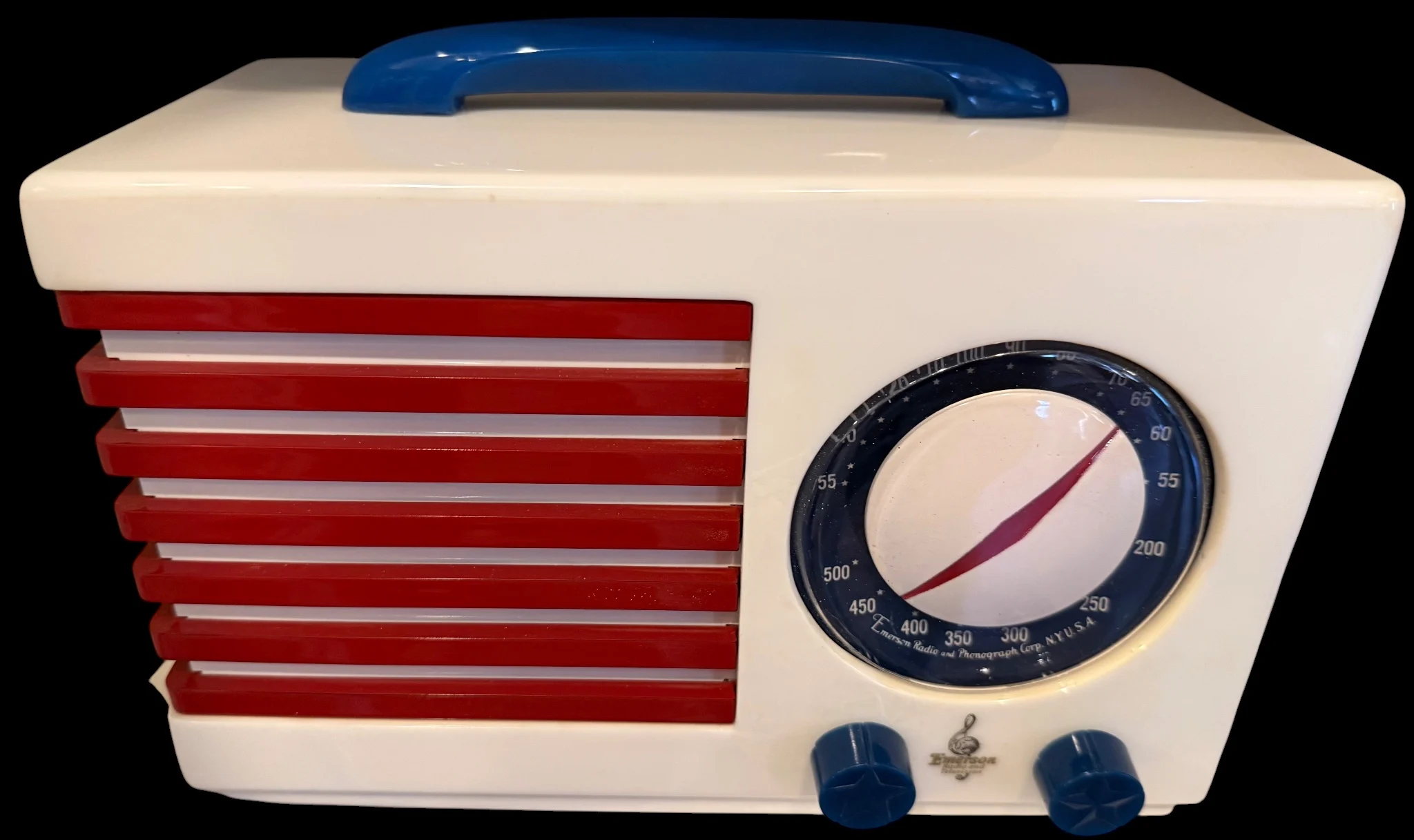
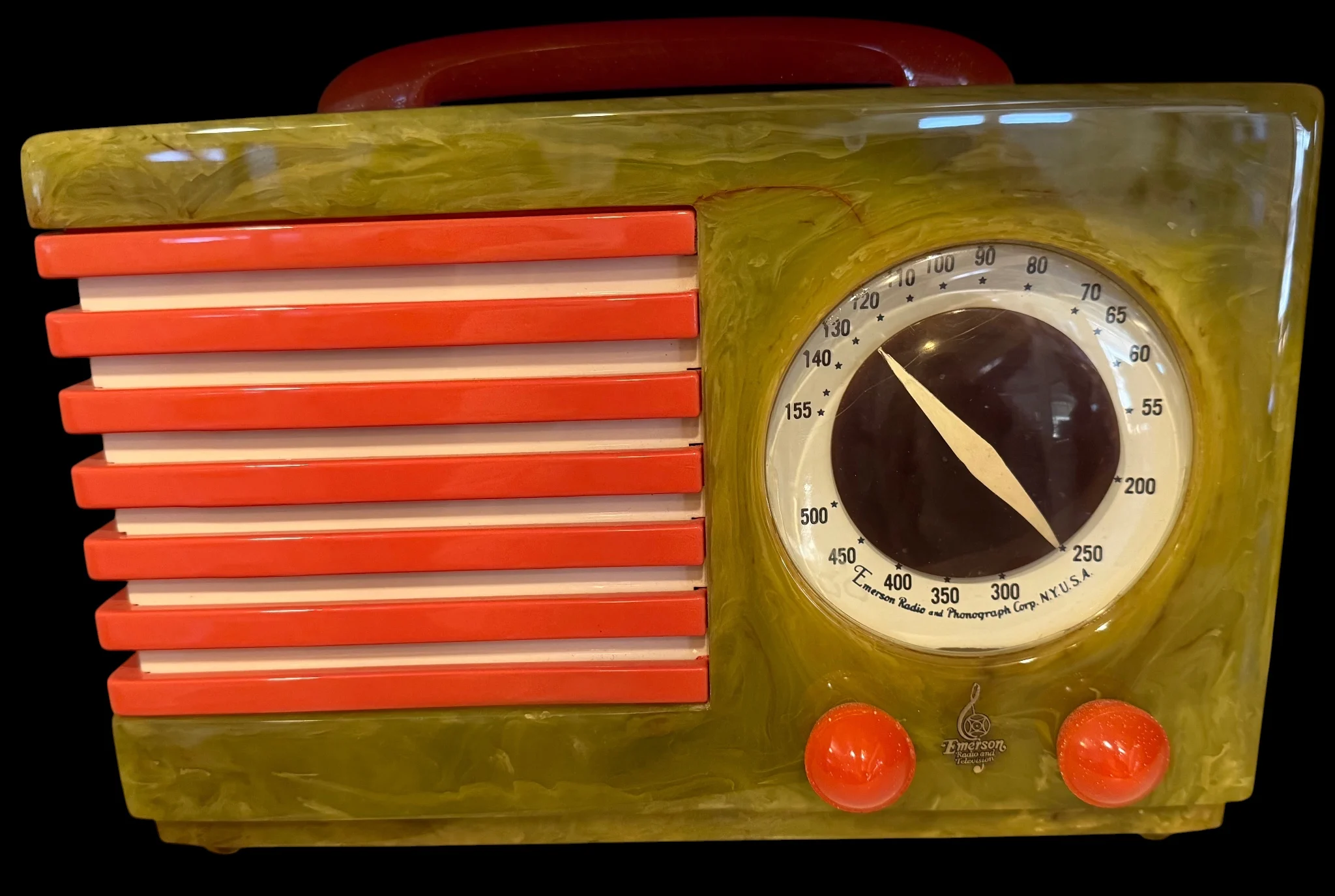
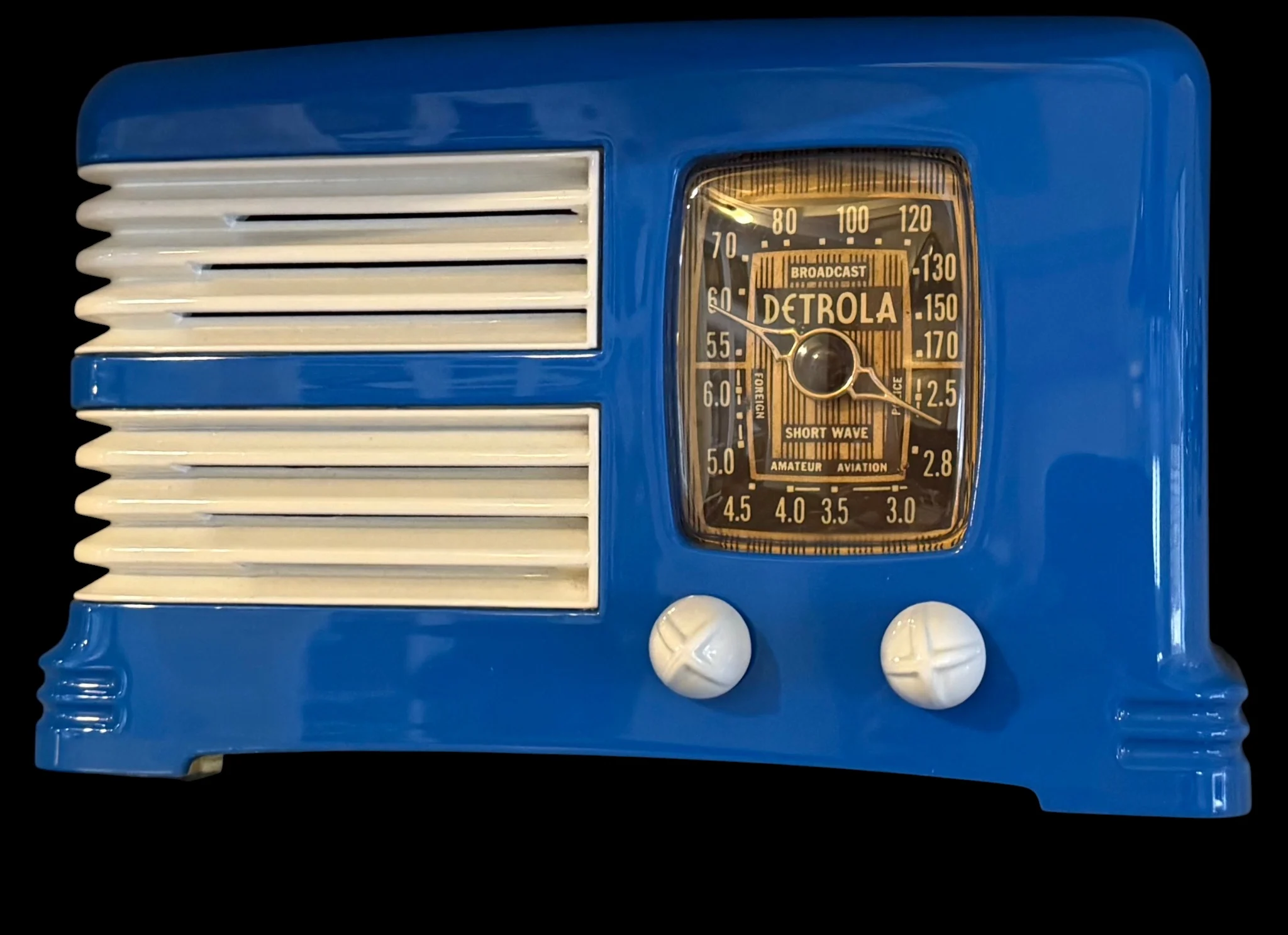
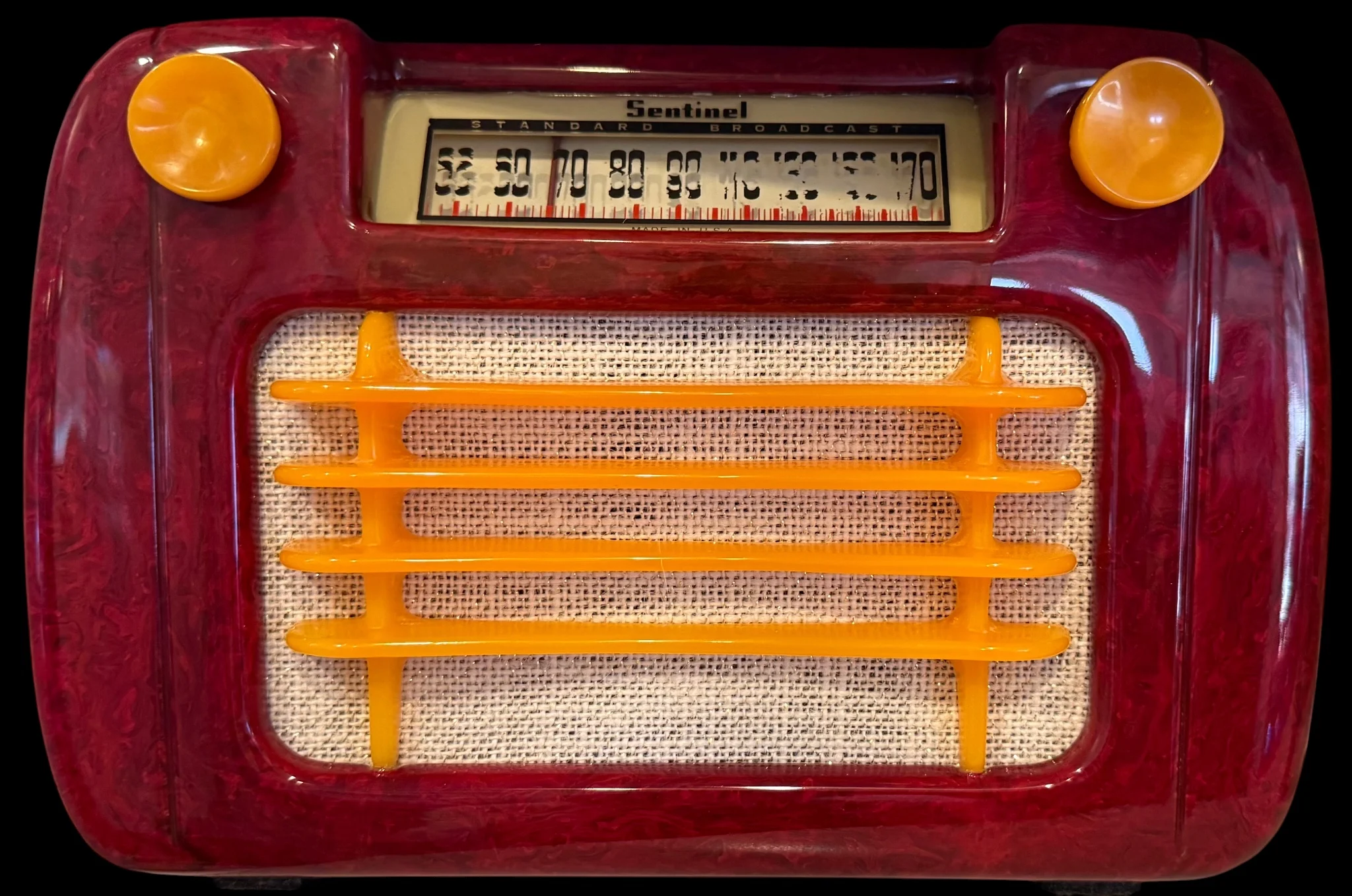
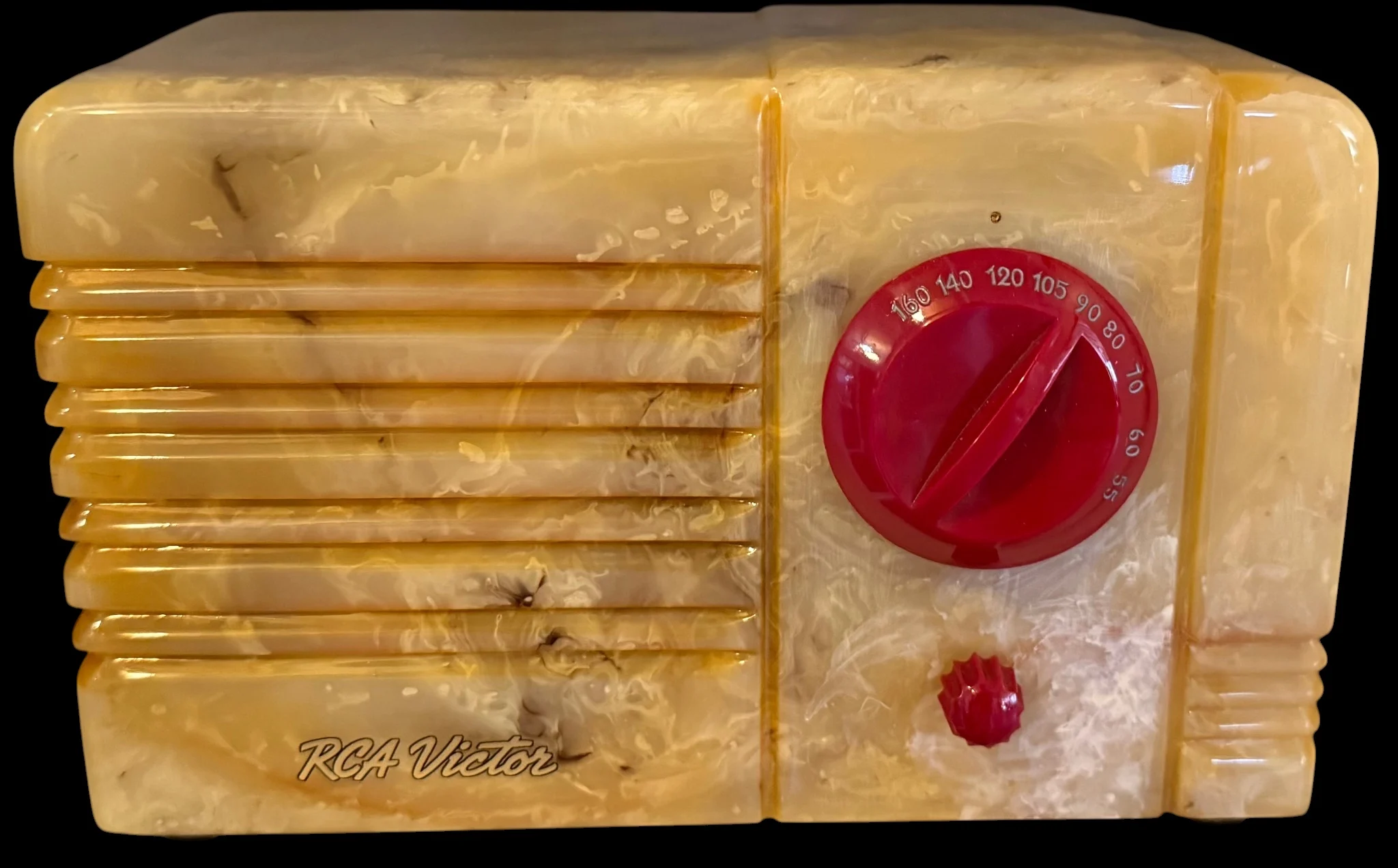
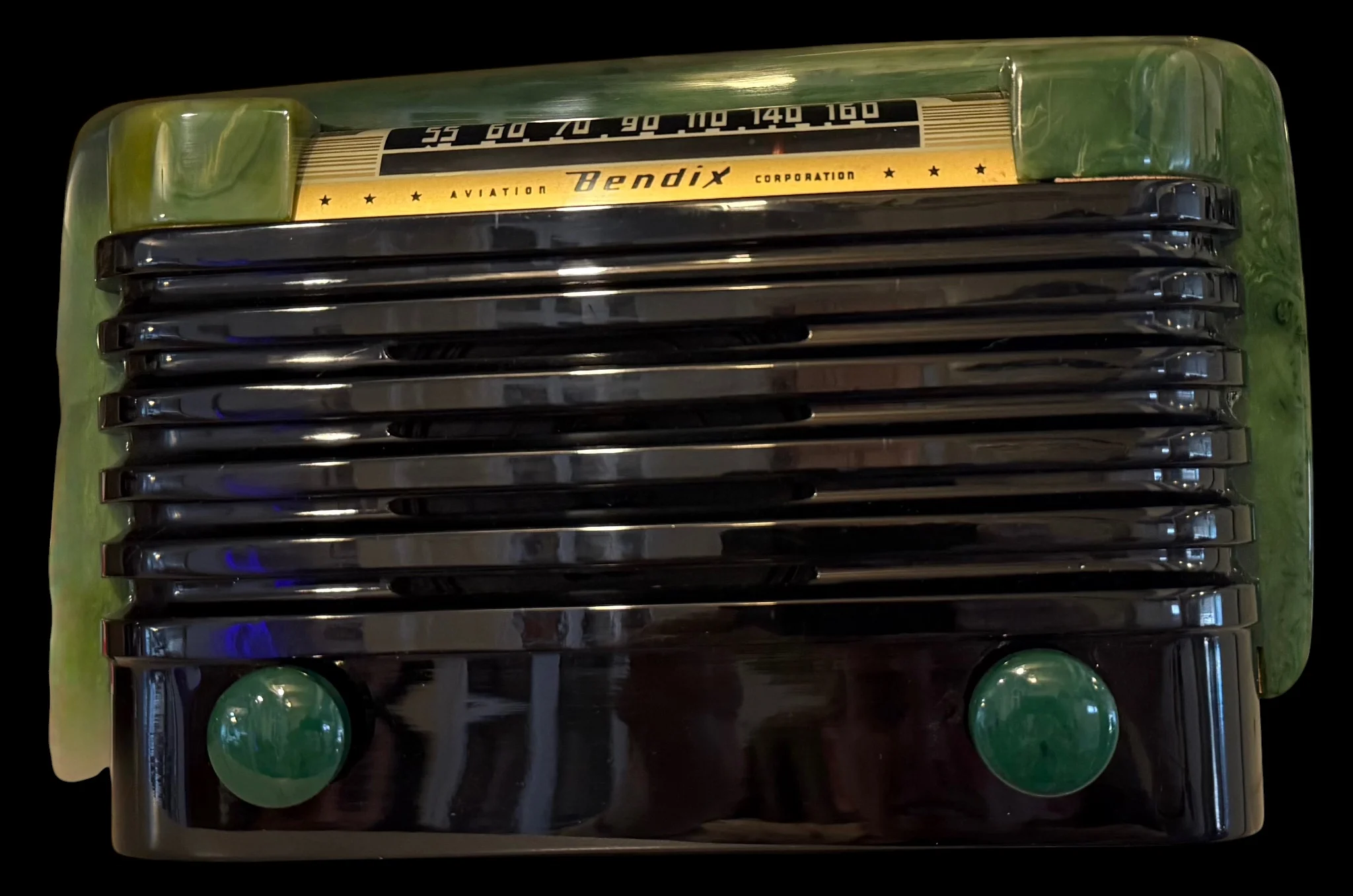
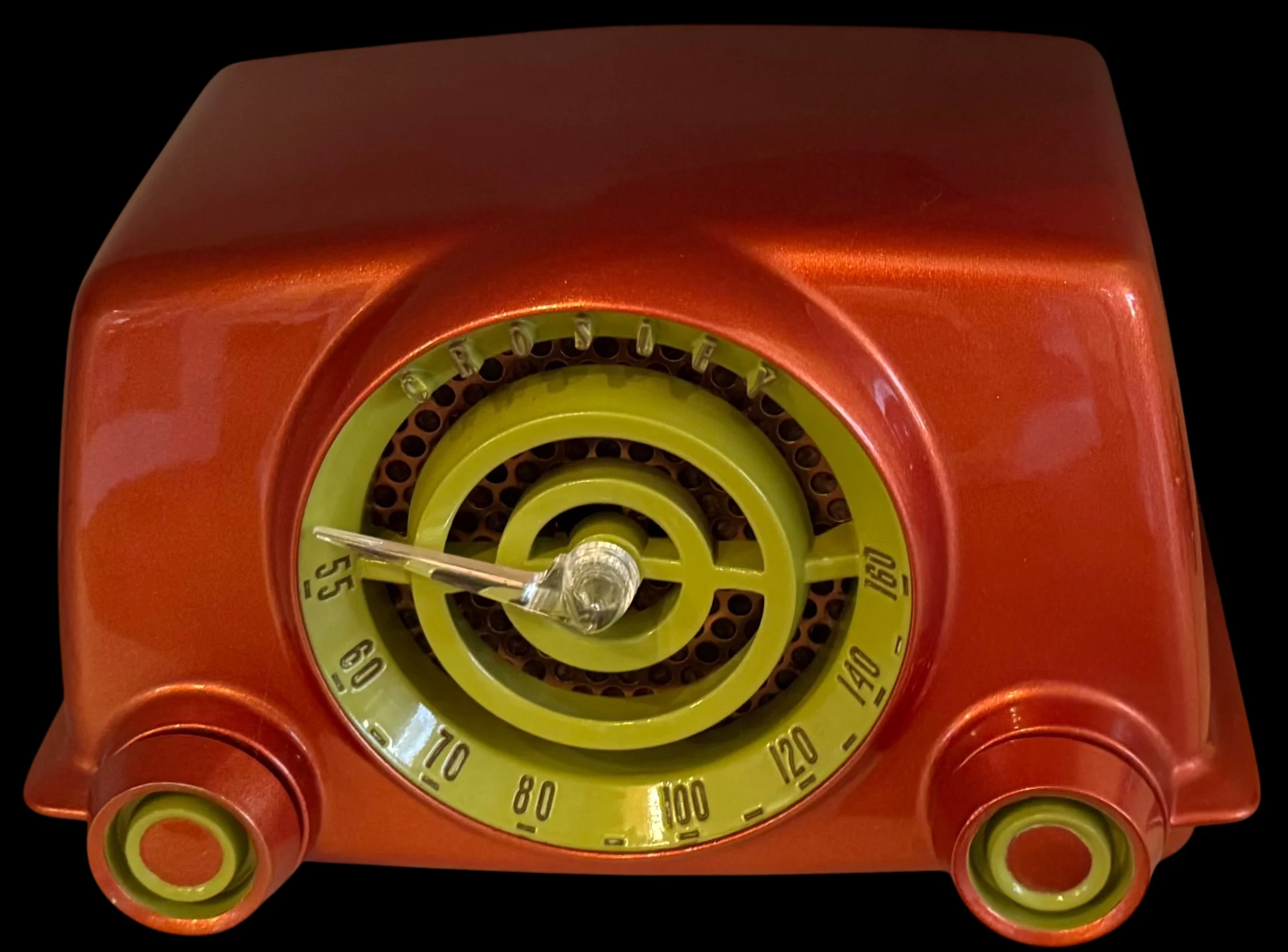
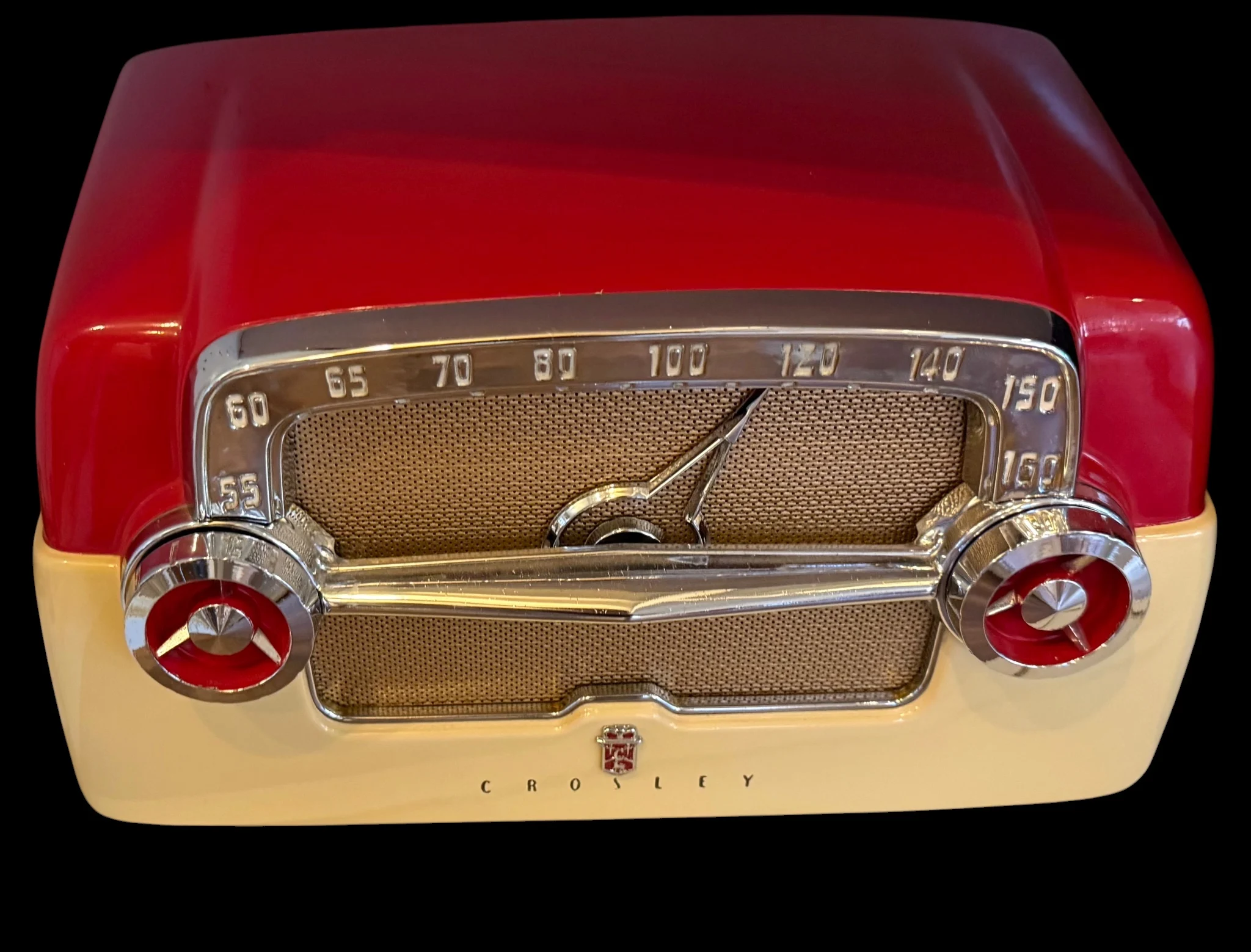
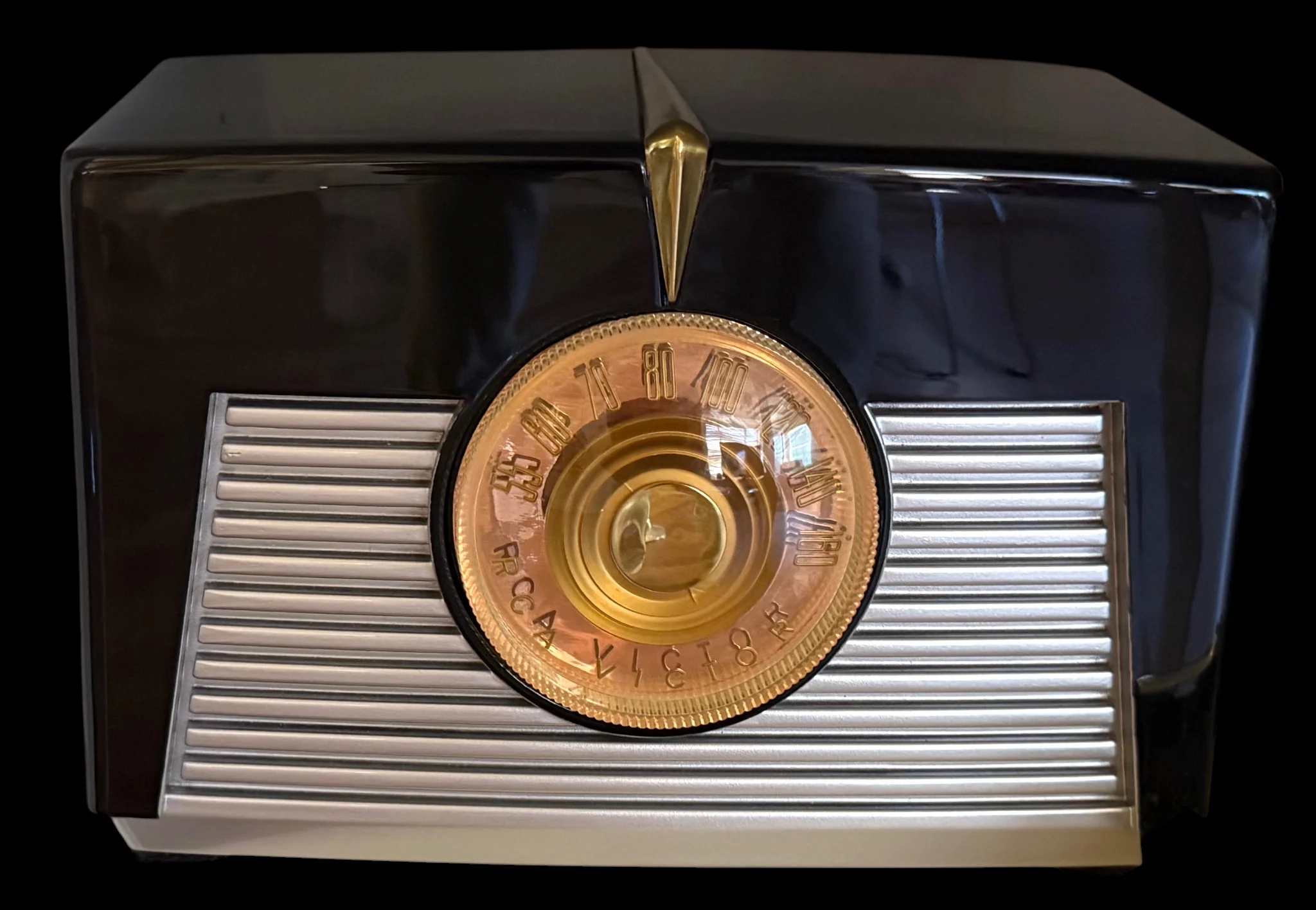
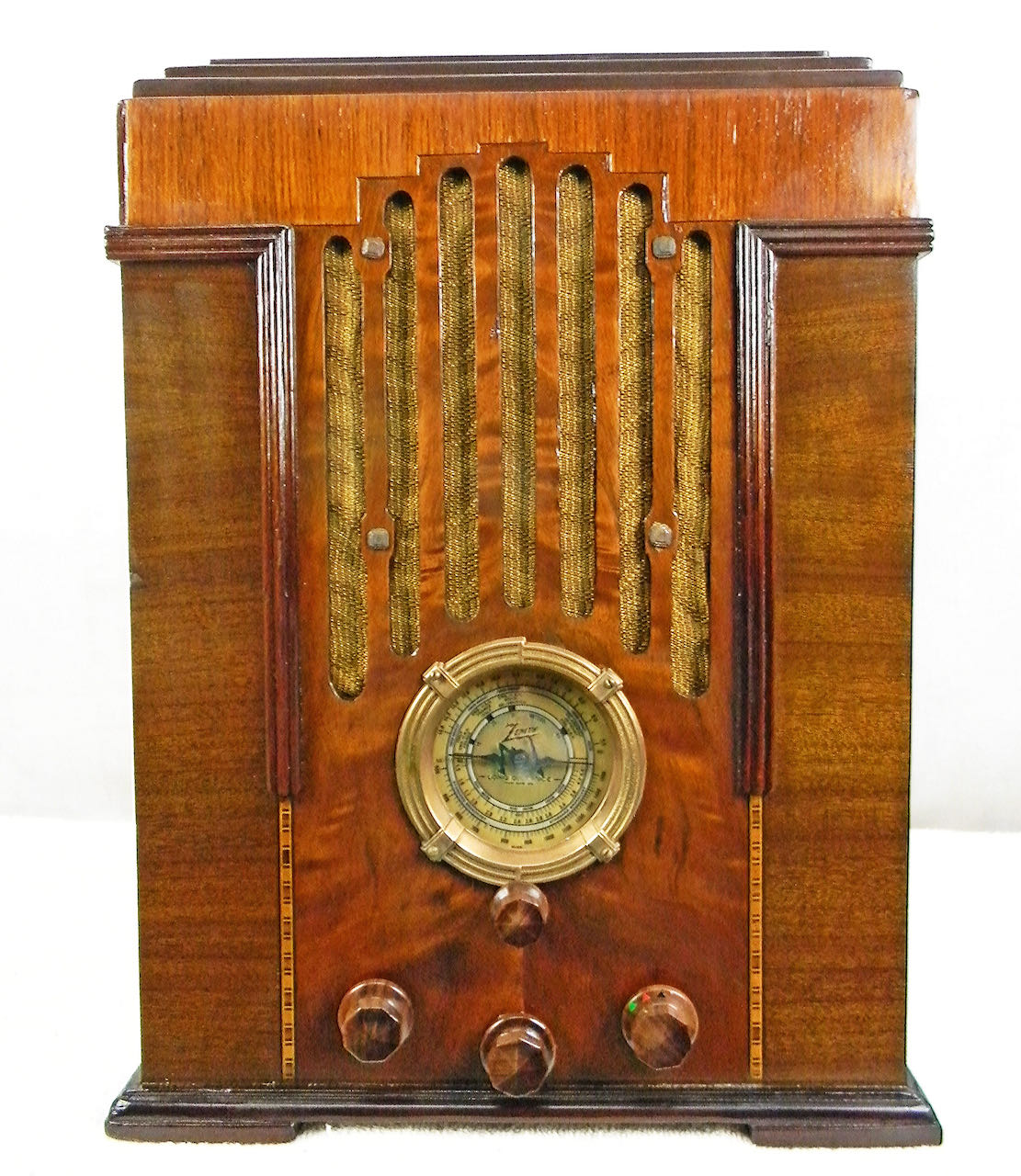
From 1932 to 1960, the radio cabinet tells a story of technology, design, and culture. Early 1930s radios often reflected Art Deco architecture, with stepped forms, geometric grilles, and rich wood or dark Bakelite. Late 1930s Catalin radios brought color, luxury, and sculptural beauty. Wartime production slowed civilian radio design, but after World War II, plastics became brighter, lighter, and more playful. By the 1950s, radios reflected the optimism of the Atomic Age, with bold colors, chrome accents, rounded corners, and space-age styling.
For collectors, the material matters because it affects rarity, condition, restoration, and value. Bakelite can often be cleaned and polished successfully, though cracks and chips are difficult to repair invisibly. Catalin requires more caution because aggressive polishing, heat, or pressure can damage it. Wood radios require cabinet restoration skills similar to furniture conservation. Later plastics may suffer from yellowing, warping, brittleness, or stress cracks. A serious collector or restorer must understand not only the look of the radio, but the chemistry and aging behavior of the material itself.
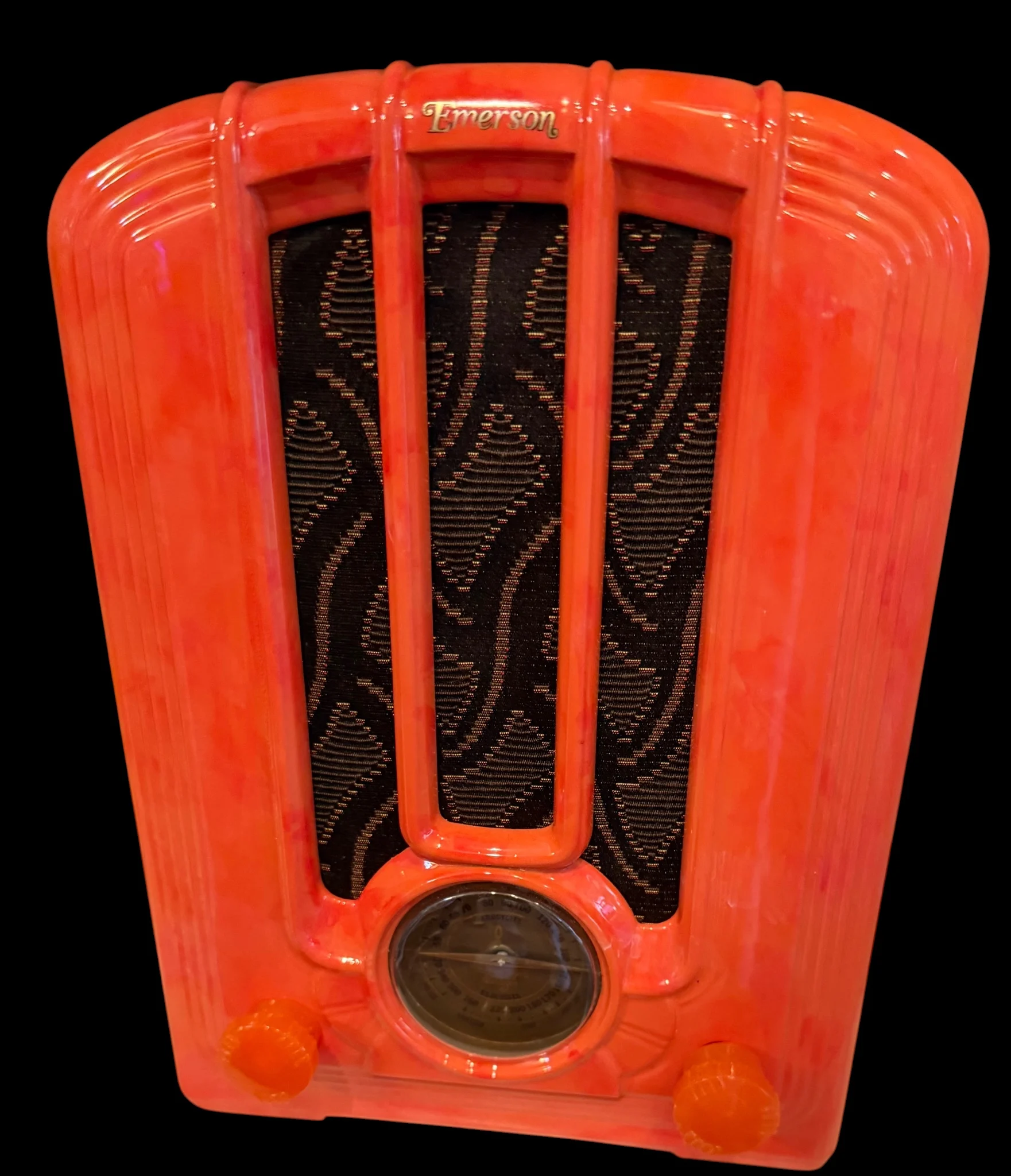
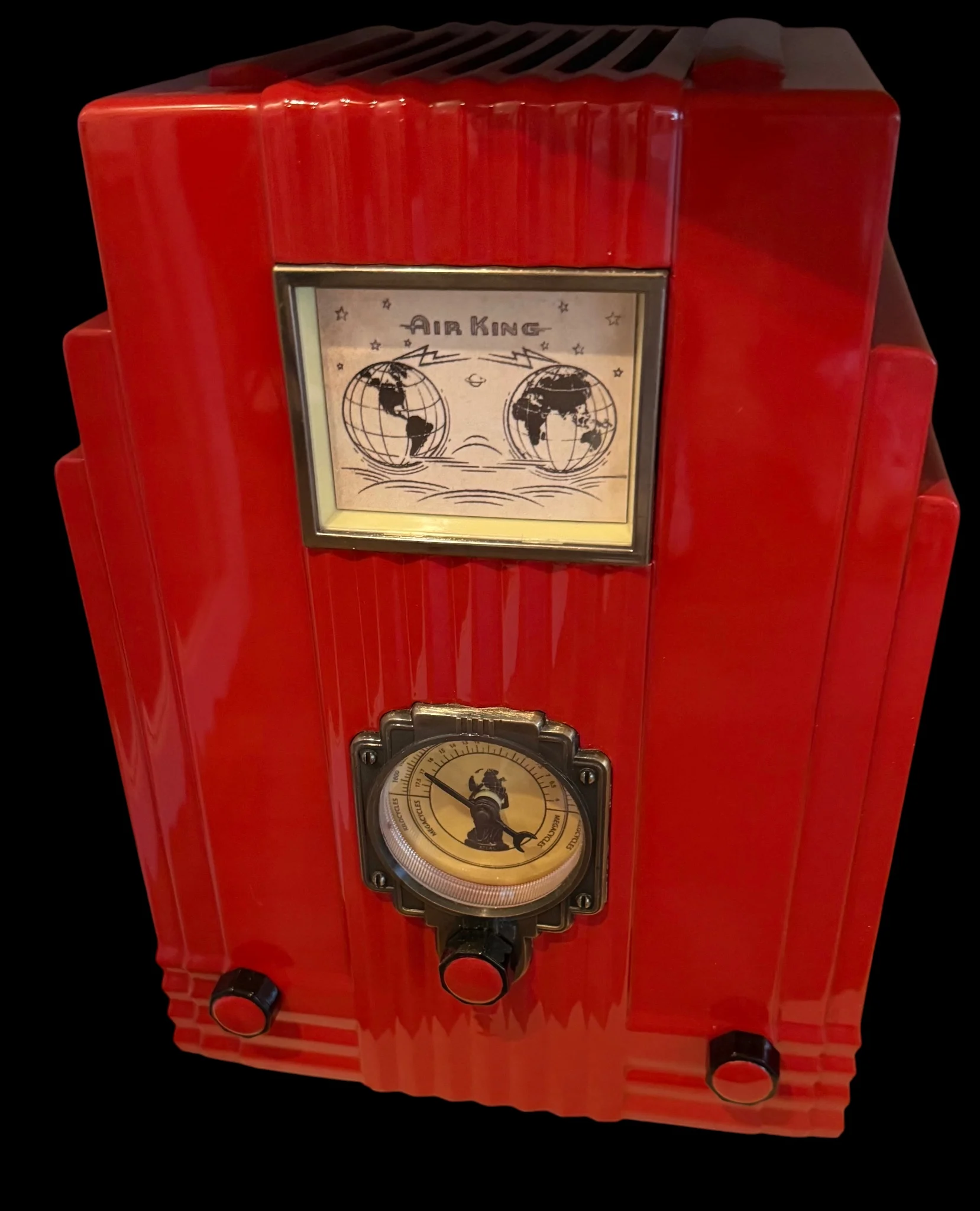
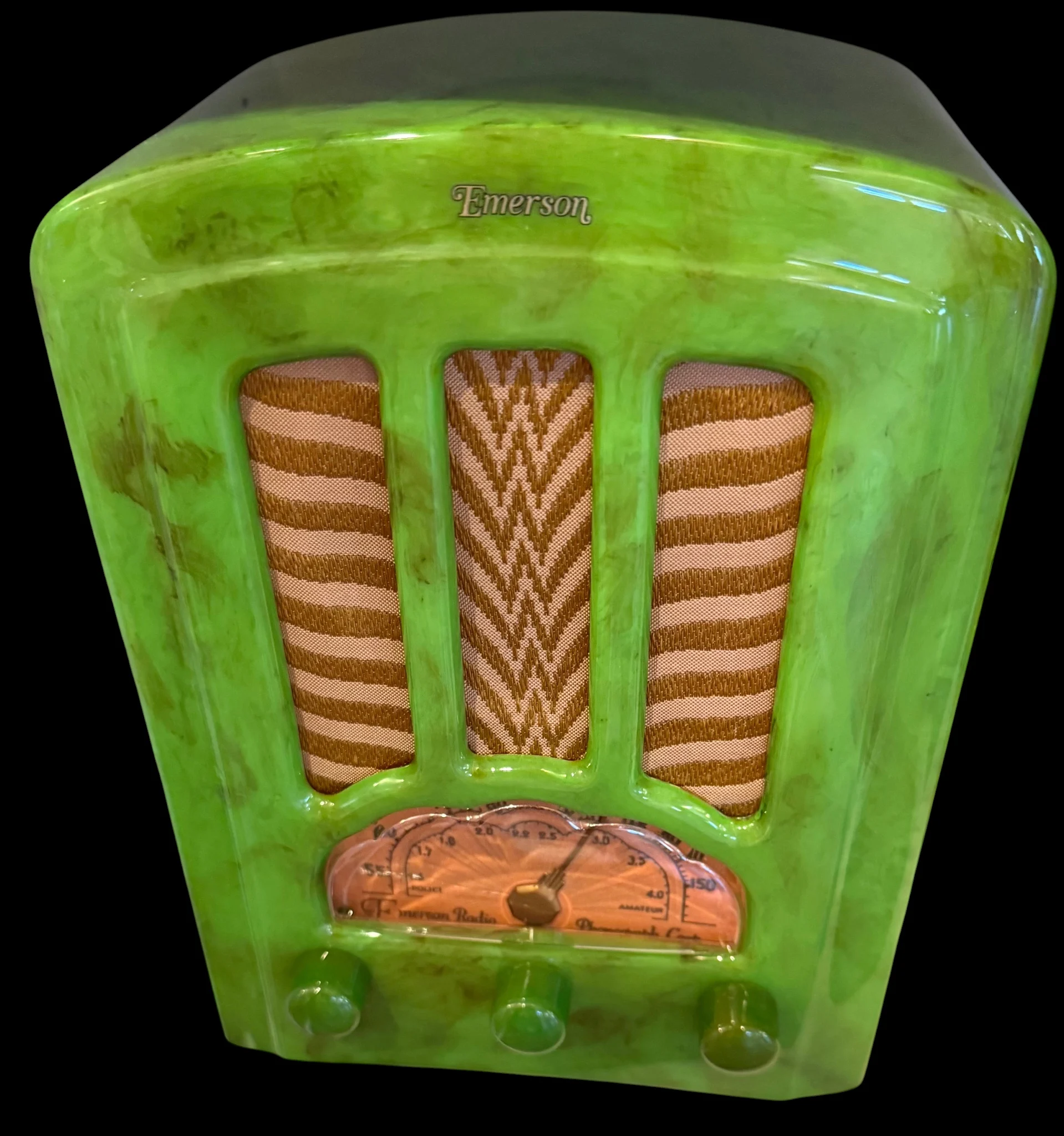
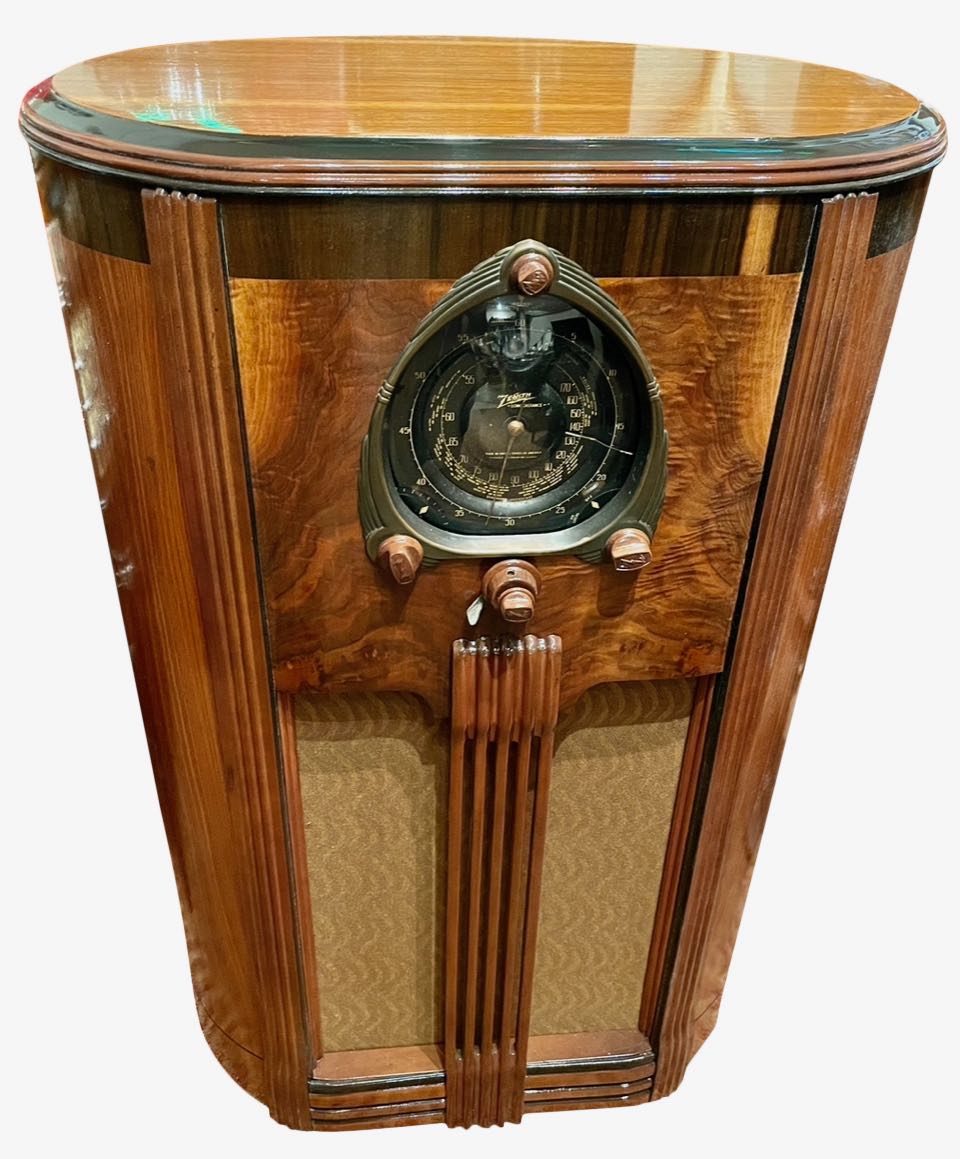
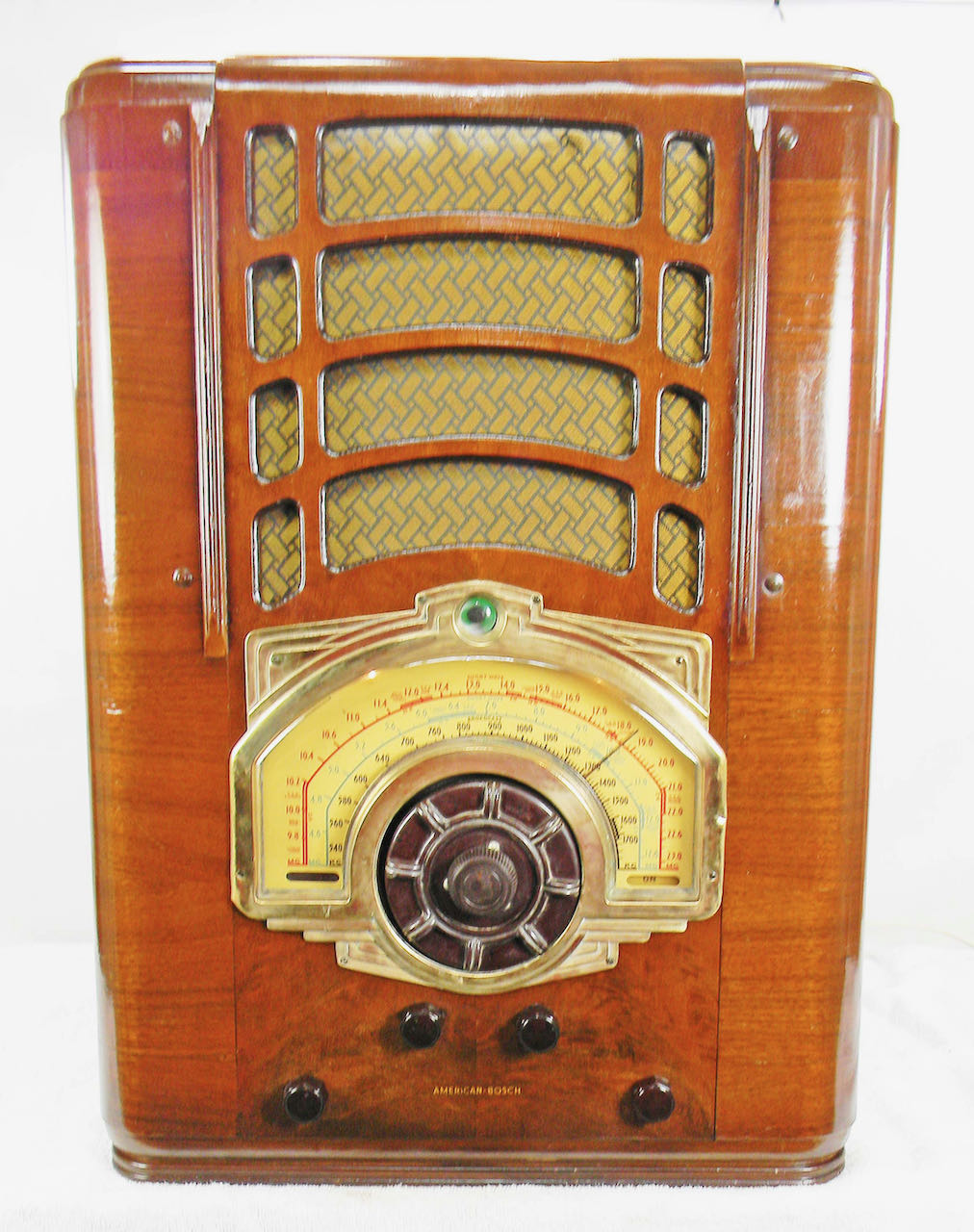
Other materials were also important. Wood remained common throughout the 1930s and 1940s, especially for console radios and larger tabletop sets. Wood cabinets used veneers such as walnut, mahogany, maple, and burl patterns, often combined with Art Deco inlays, waterfall edges, or bookmatched grain. Metal was used for chassis, speaker grilles, trim, and some cabinets, especially in industrial, military, or utilitarian sets. Chrome, brass, nickel, and painted steel appeared in knobs, dial surrounds, and decorative details.
The Restoration Process
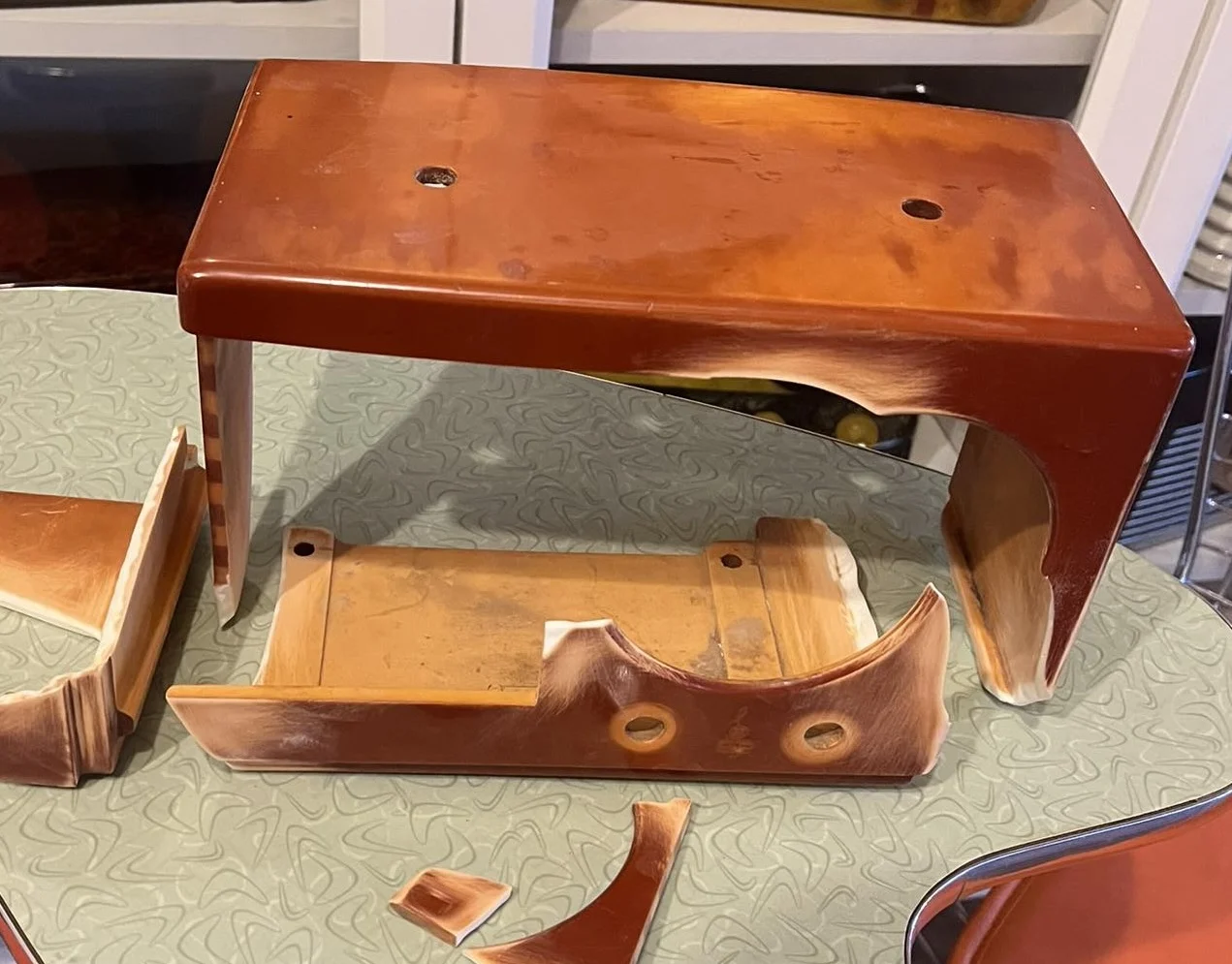
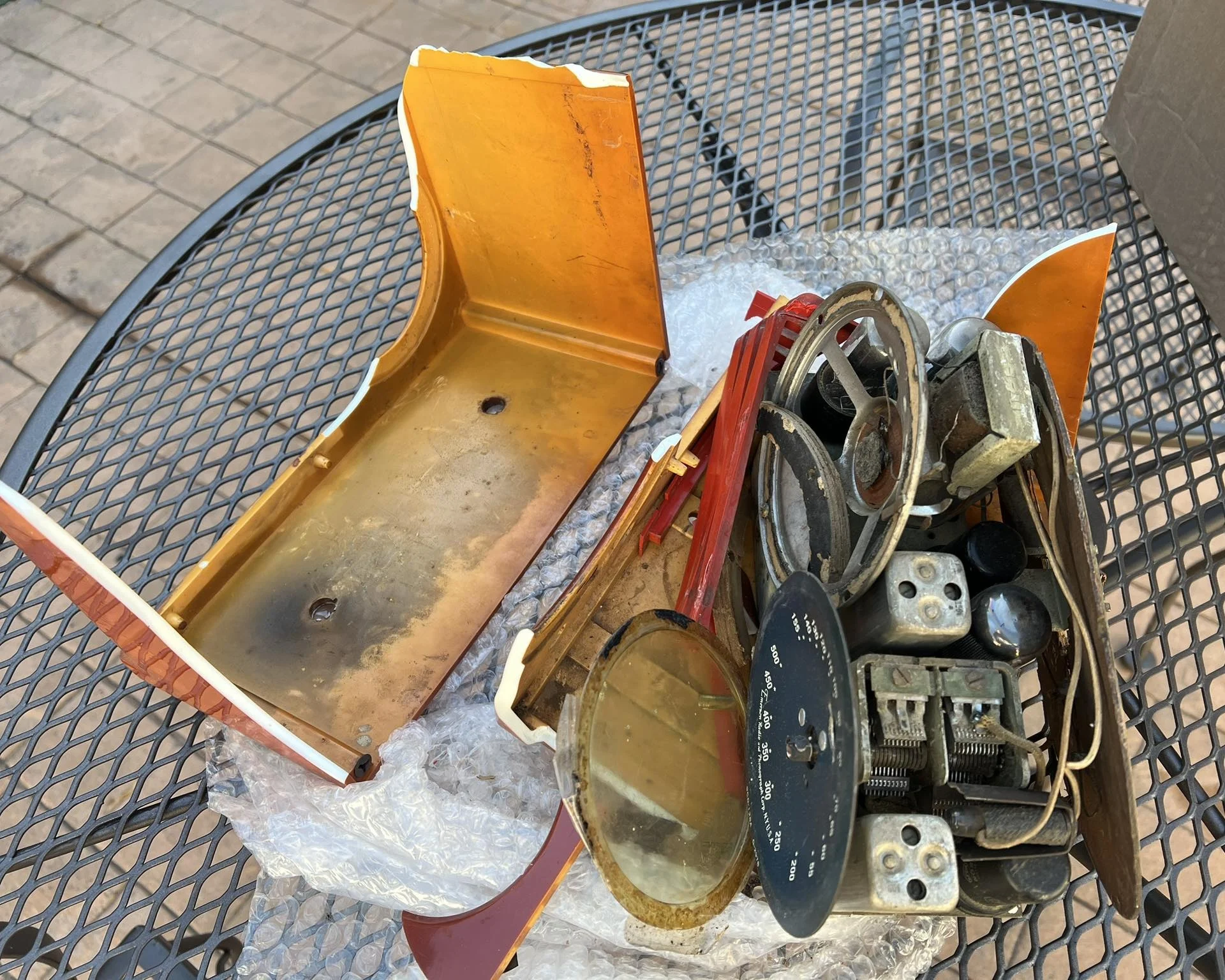
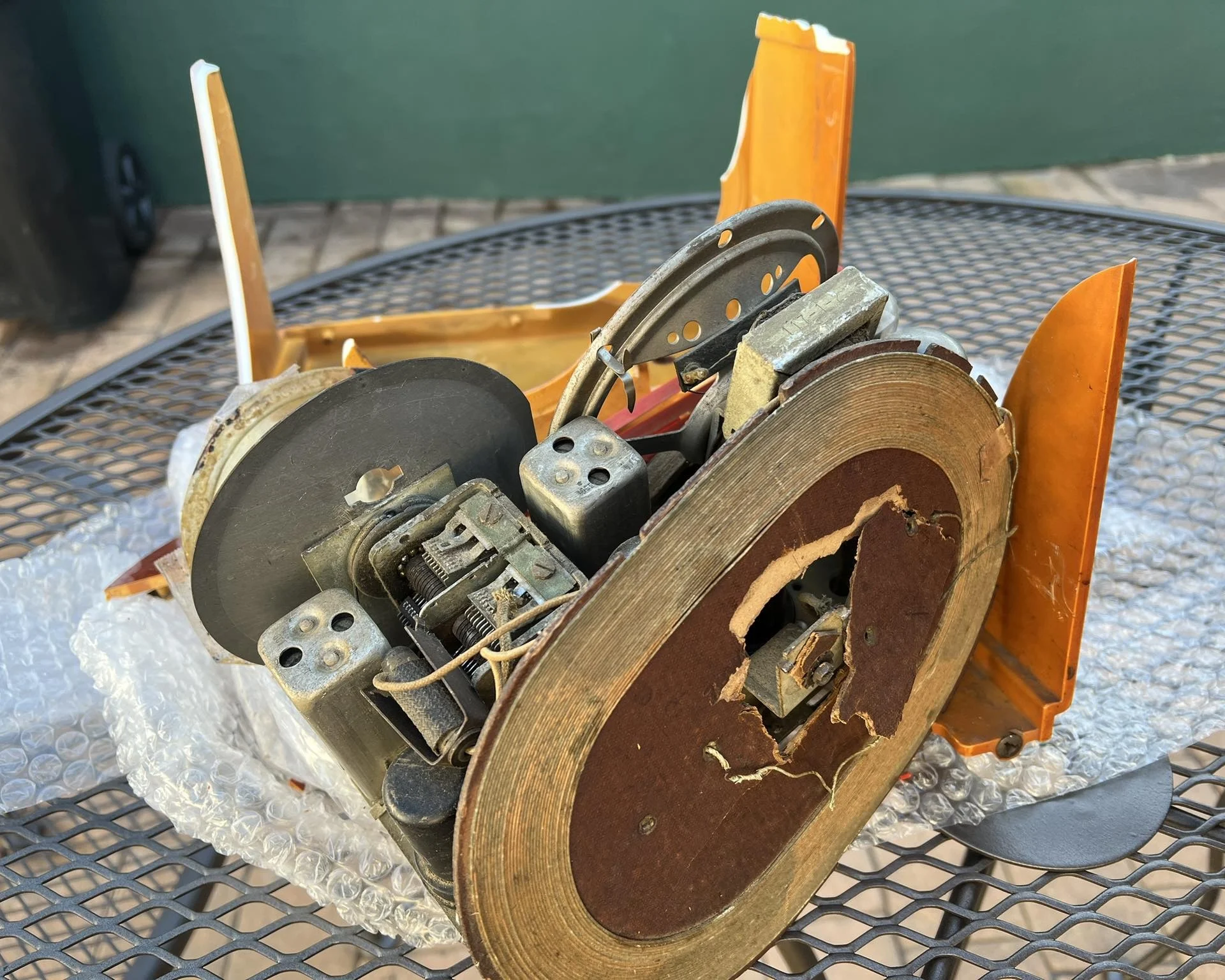
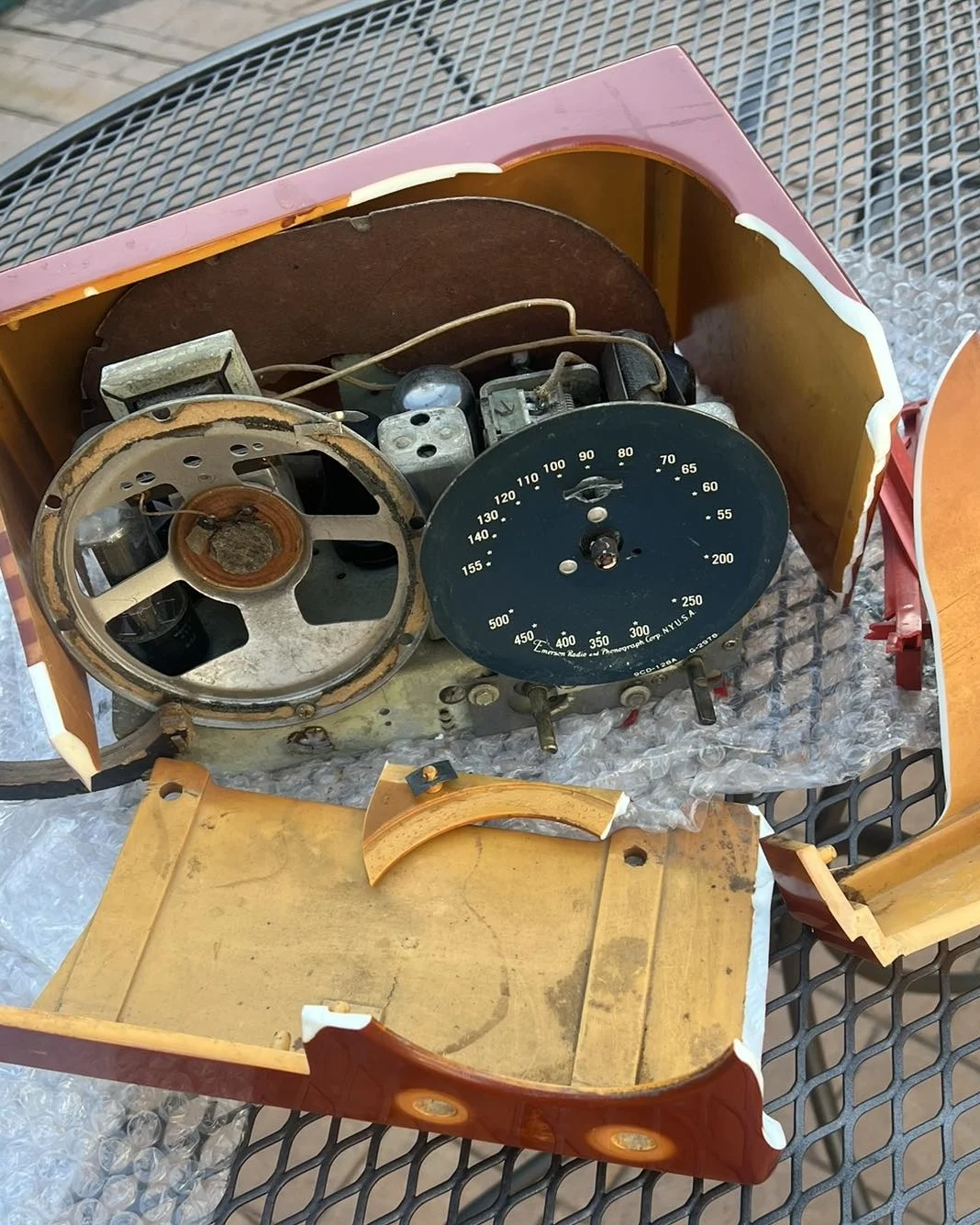
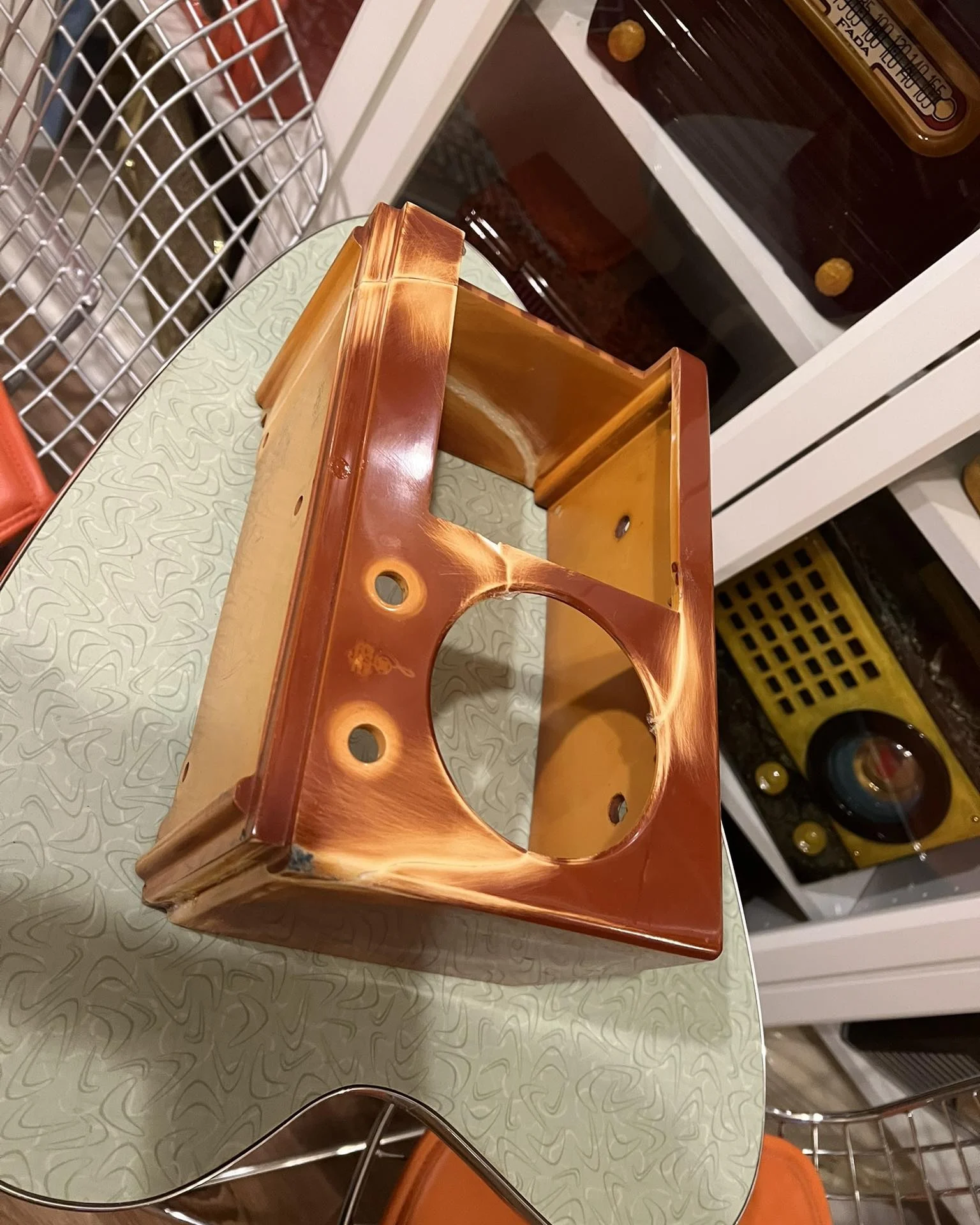
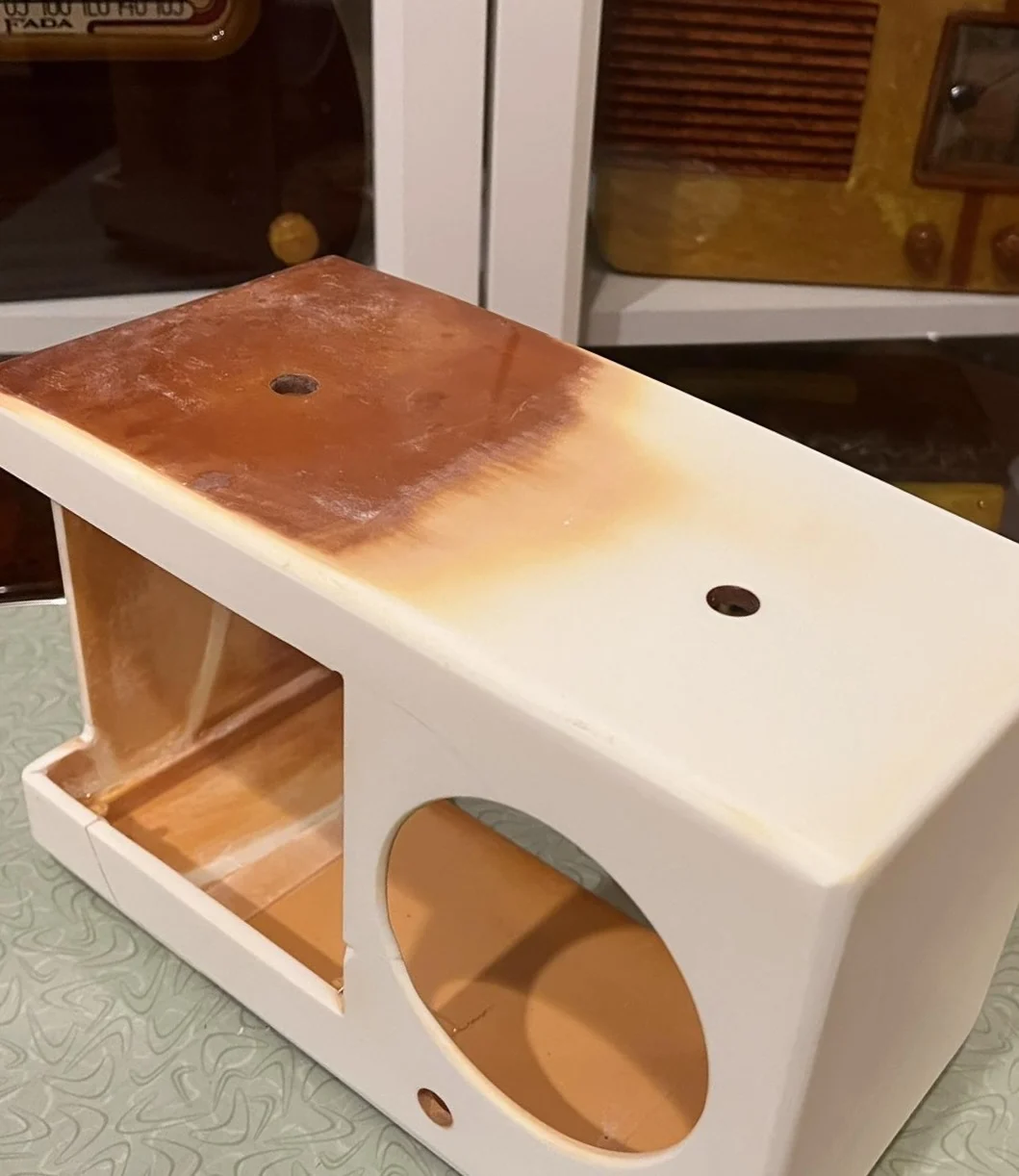
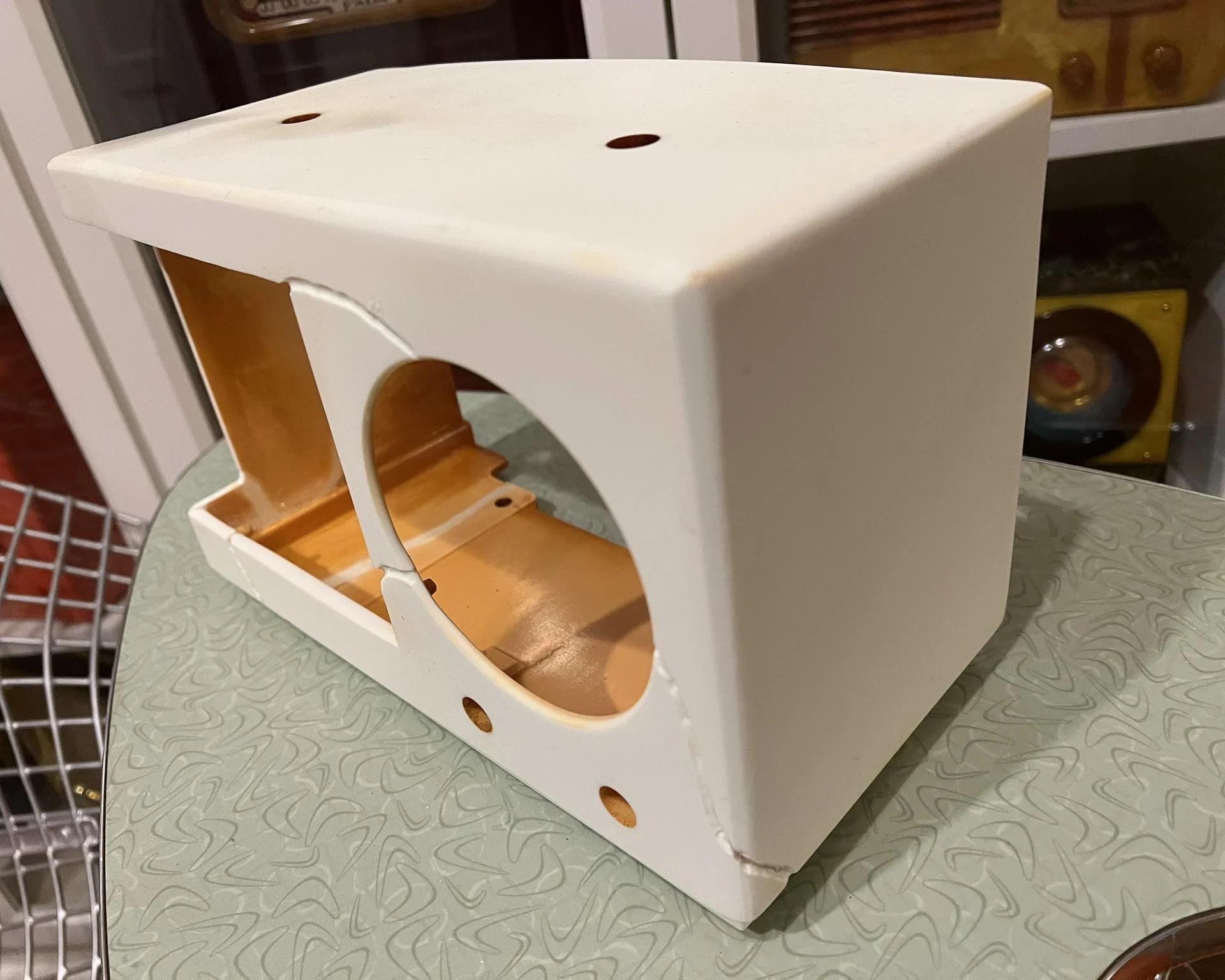
Restoring a vintage Catalin radio is painstaking work, requiring patience, experience and deep respect for the original object. Lou Woolf describes the process with humor, comparing it to “performrng surgery on Humpty Dumpty” since many radios arrive cracked, broken, discolored and incomplete. They can carry decades of wear from being stored in attics, garages and long forgotten corners of the home. The first step is determining whether the original cabinet can be saved. Each surviving piece must be inventoried, cleaned and prepared. Broken sections are carefully aligned and bonded with damaged areas opened slightly along the crack lines to be able to create a stronger repair. From there, the cabinet is slowly sanded and worked down in a process collectors call “cutting”. Eventually the original color begins to reveal itself beneath years of oxidation from sunlight and age.
One of the fascinating surprises of Catalin restoration is that many radios now described as “butterscotch” were not originally that color at all. Many began as a soft ivory shade known as alabaster, but decades of UV exposure transformed them into tones of caramel, pumpkin, orange, and deep amber. Lou’s work often involves carefully matching these colors with custom tinted resin, rebuilding missing or damaged sections so the cabinet once again appears visually complete. Once the cabinet has been stabilized and reshaped, the surface is sanded through progressively finer grades, protected with an automotive clear coat, wet sanded again, then hand polished with compounds and waxes until the radio regains its rich, glass like luster. A proper restoration can take more than a month from start to finish. In Lou Woolf’s hands, restoration becomes both a technical discipline and an act of preservation, bringing these extraordinary radios back to life while honoring the imagination that created them.

Sci-Fi Toys and the Atomic Age
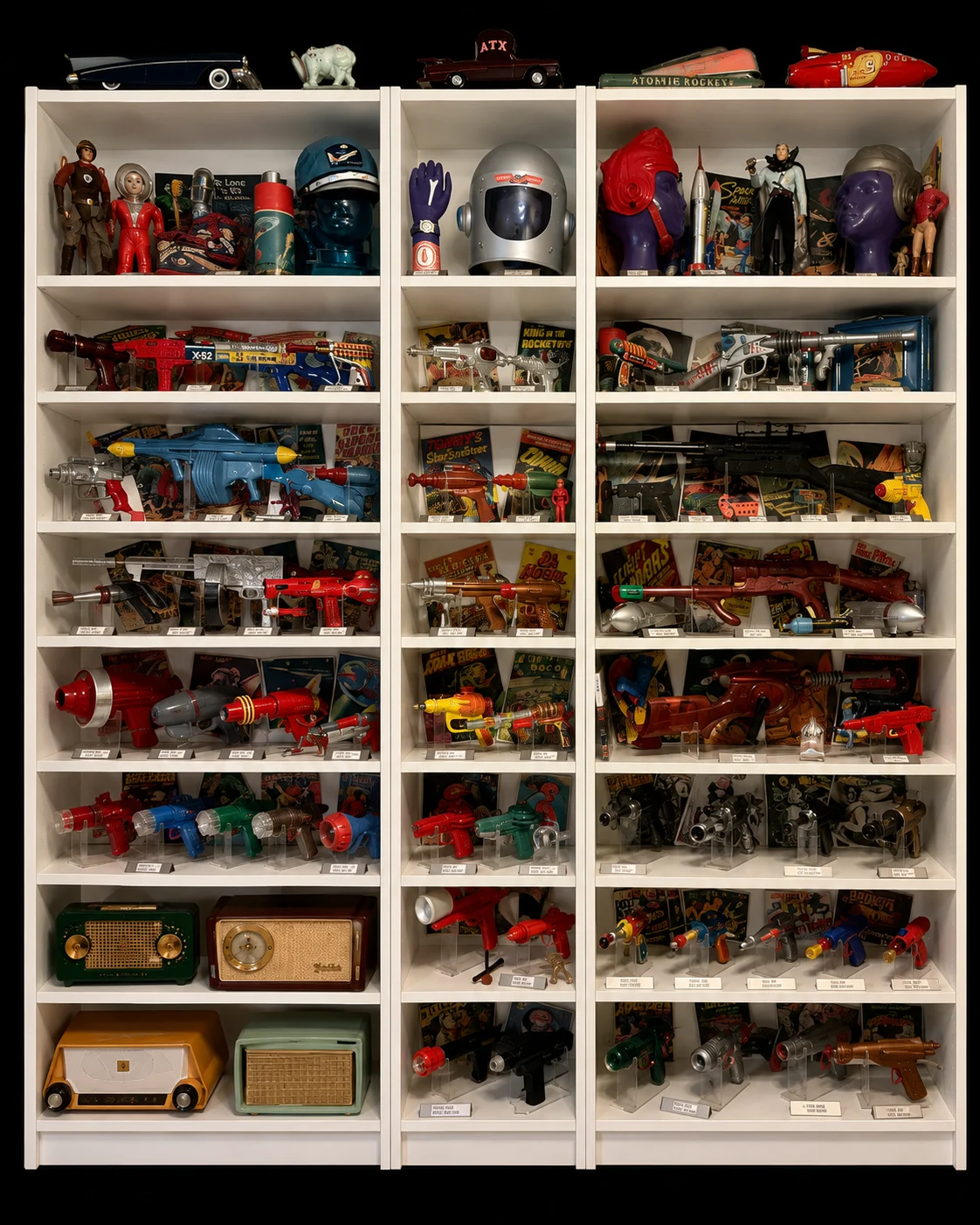
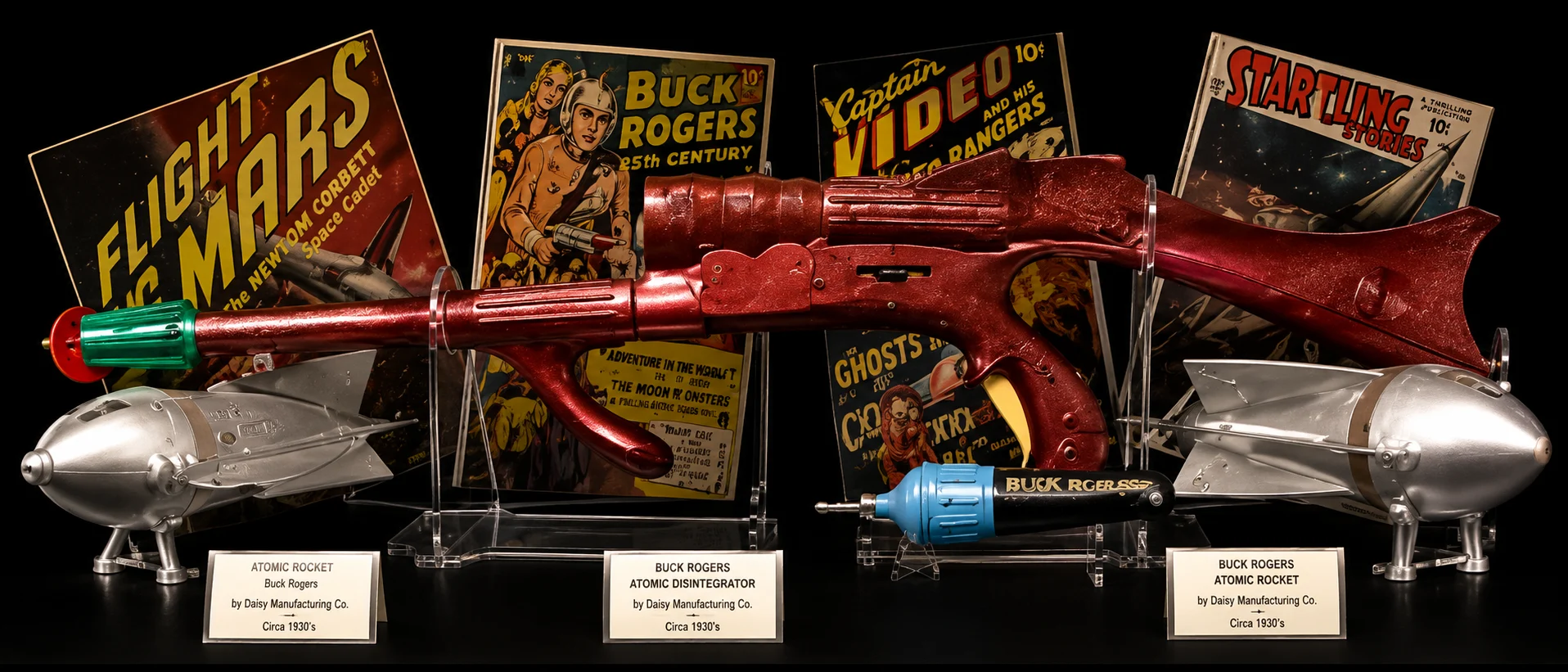
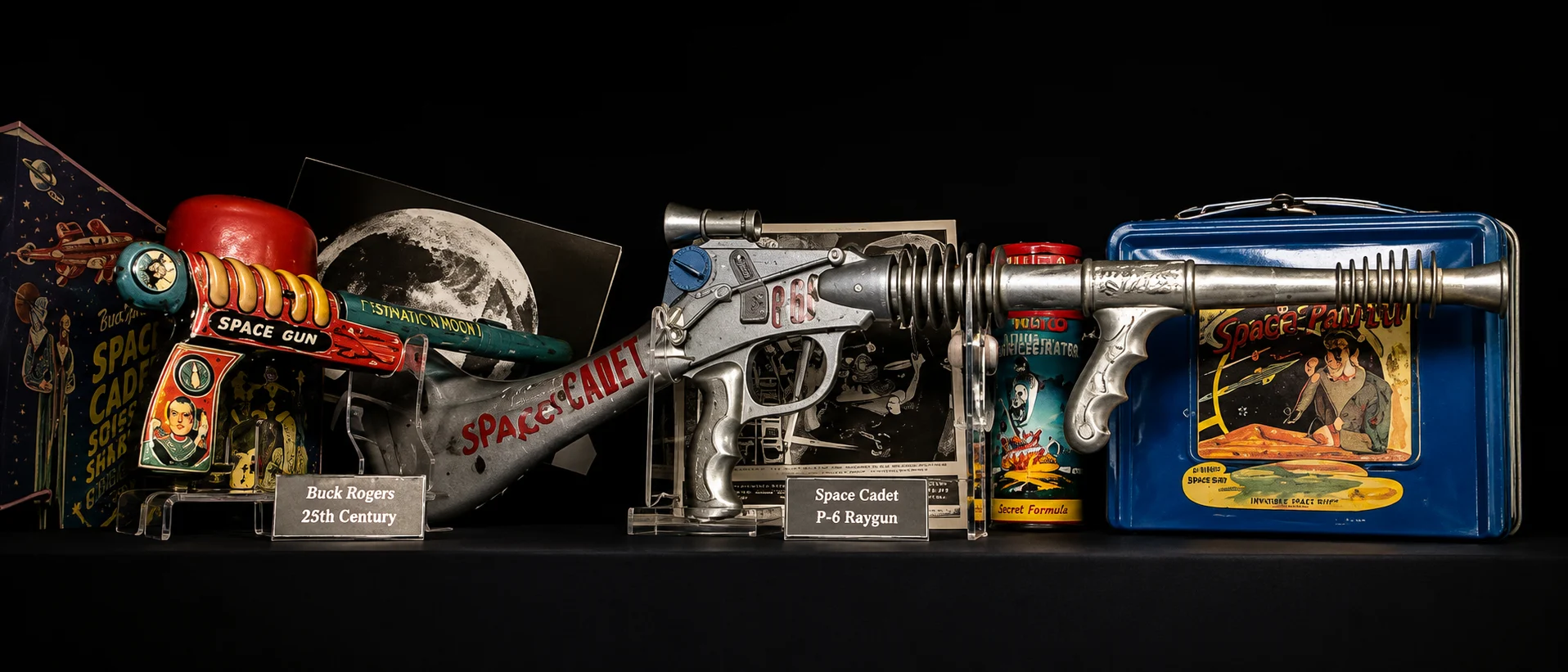
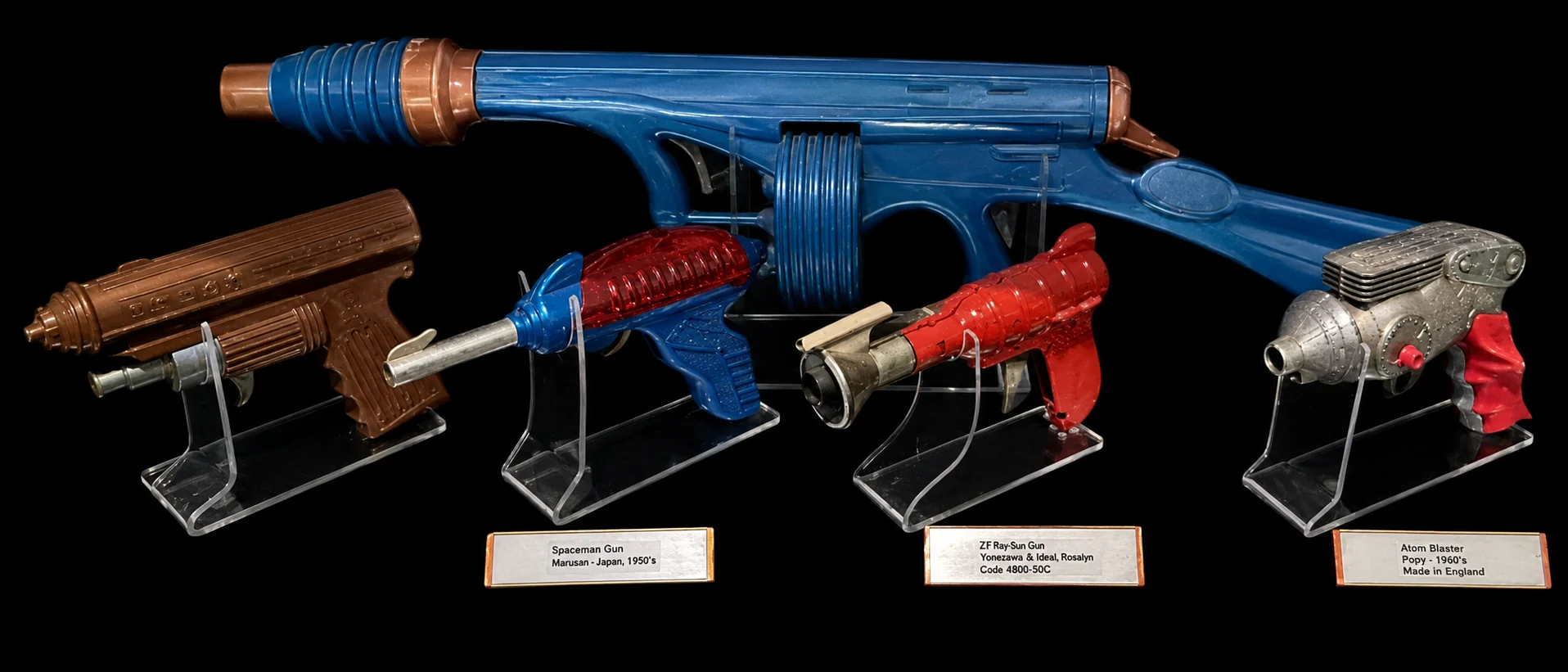
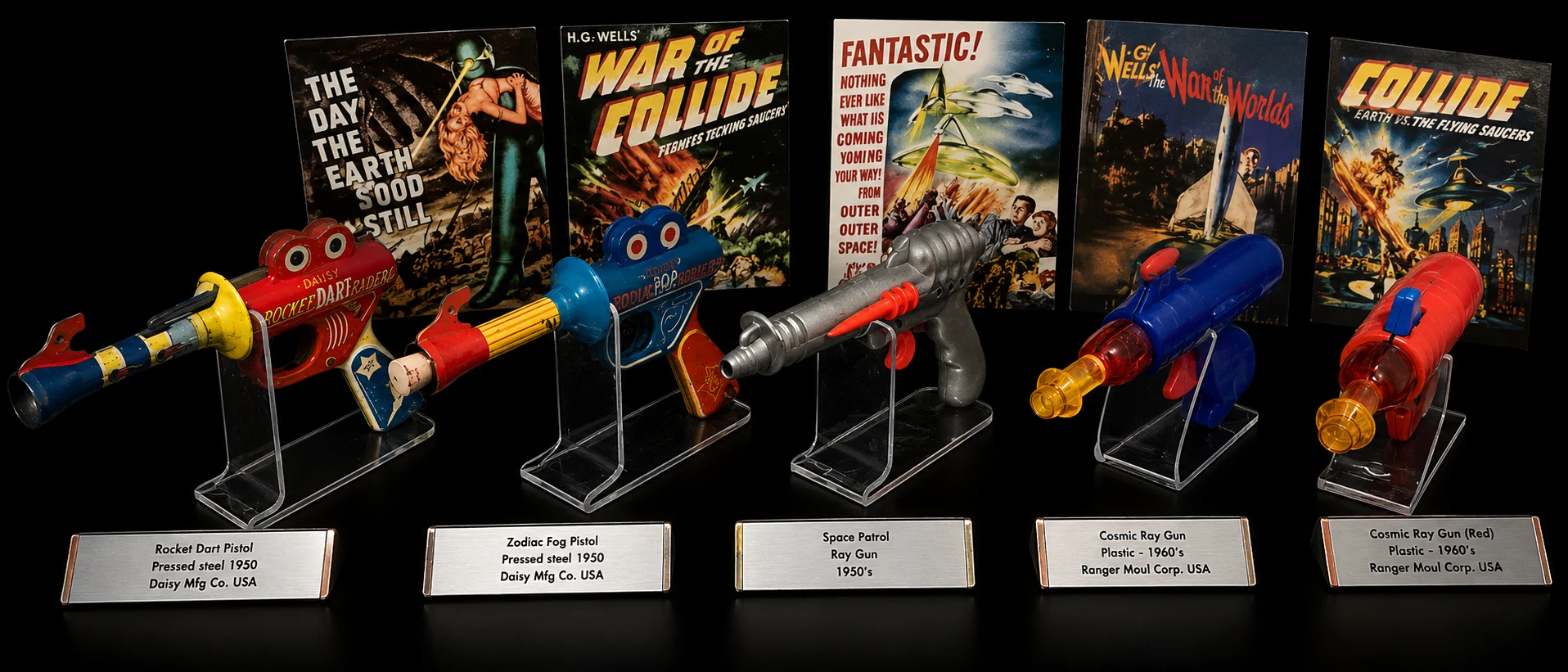
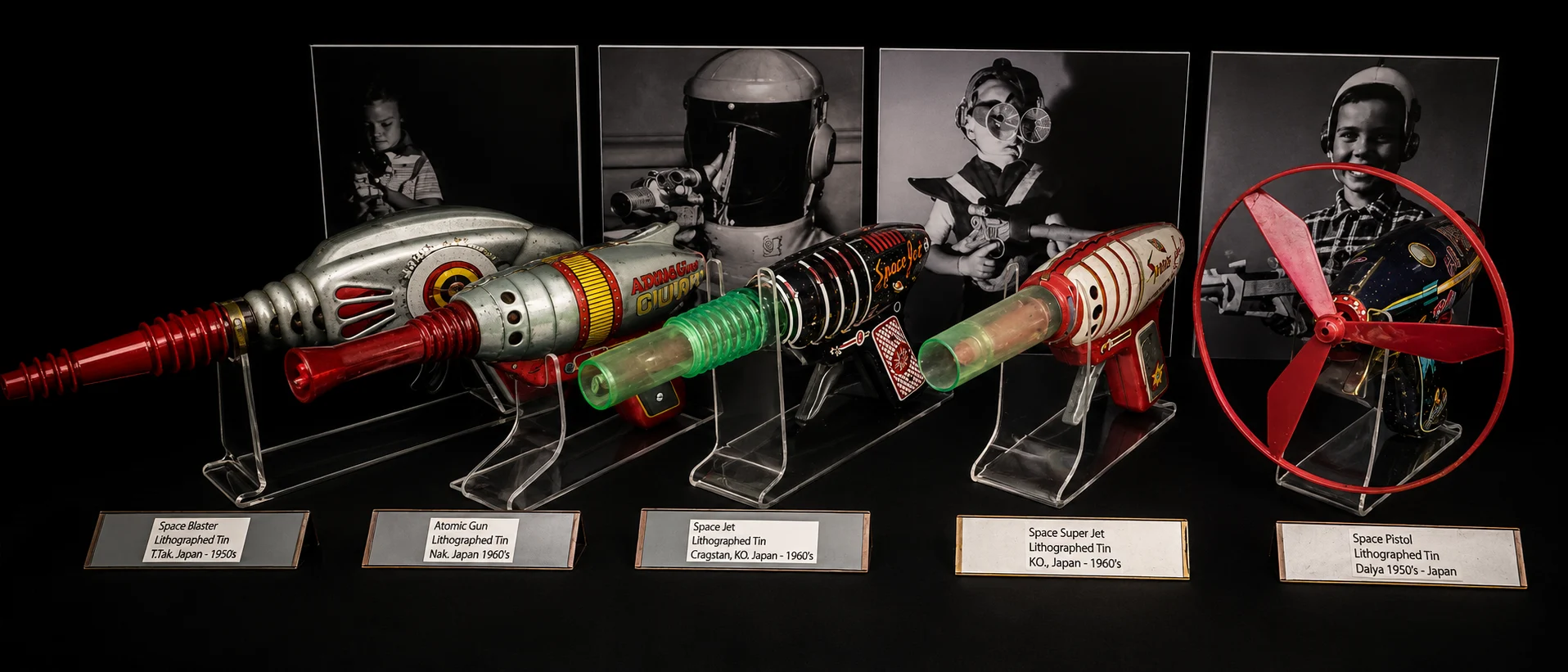
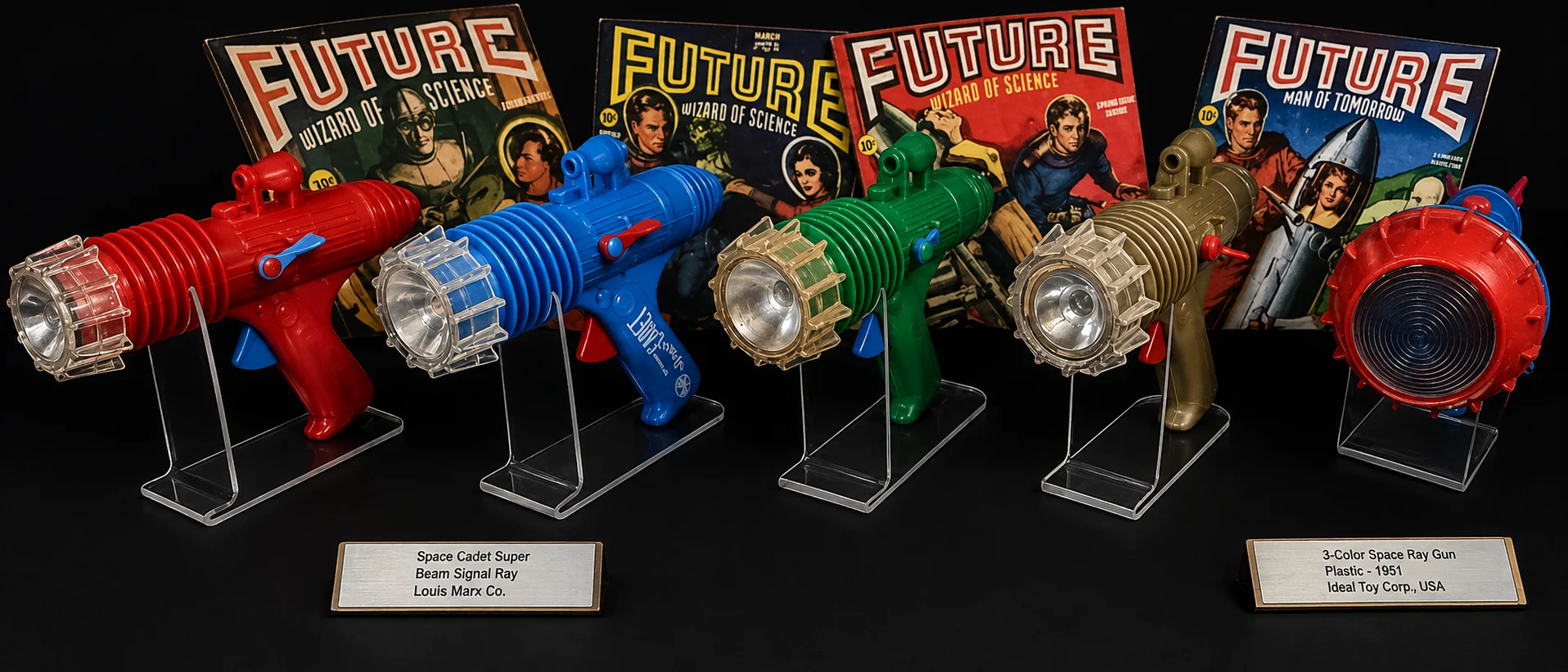
Lou Woolf’s collection, from brightly colored ray guns and space pistols to toys connected with comic books, television shows, movie serials, and later science fiction films, are organized in displays that capture a period when the future became part of everyday fantasy. Characters such as Buck Rogers, Flash Gordon, Space Patrol, and other futuristic heroes helped create a visual language of fins, cones, barrels, rings, bright colors, and imaginary technology.These objects were sold as playthings, but they also carried the excitement of invention. Rockets, robots, outer space, and worlds still unknown were made tangible. Much like his radios, they combine design and technology with fantasy and promotion of popular culture . These pieces are preserved not as disposable novelties, but as artifacts that tell us how children and adults once perceived the “world of tomorrow”. They were small sculptural objects that translated the dreams of the machine age into colorful, handheld form.

The materials are also an important part of the story. Plastic, pressed steel, lithographed tin, painted metal, and molded synthetic materials allowed manufacturers to create bold shapes that would have been difficult or too expensive in earlier periods. Like the radios in Woolf’s collection, these objects show how modern materials changed the look and feel of daily life. Plastic made color more intense, forms more aerodynamic, and production more affordable. These toys captured the excitement of new materials at a moment when the future seemed bright, mechanical, and endlessly inventive.
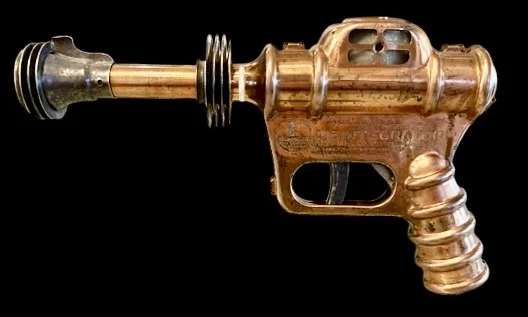
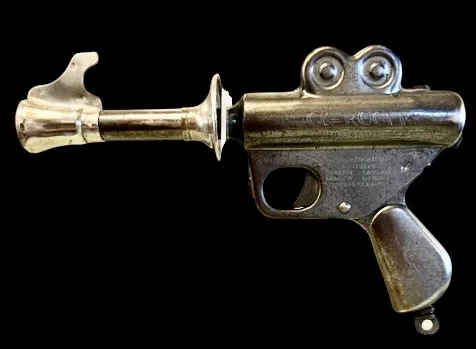
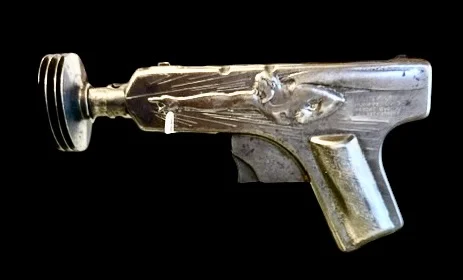



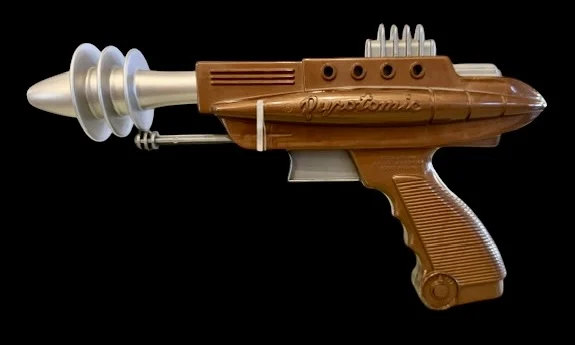
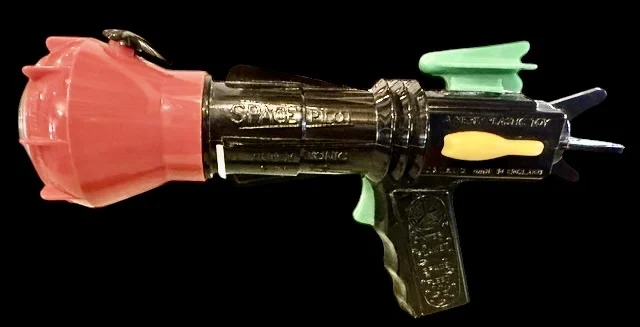
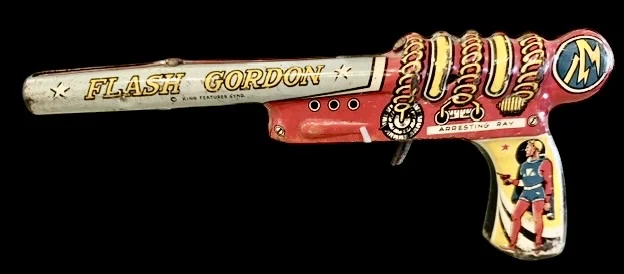
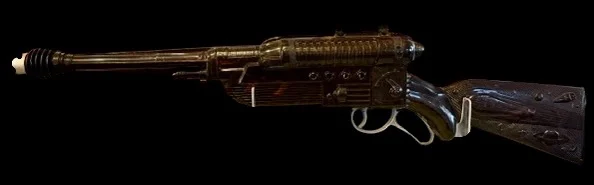
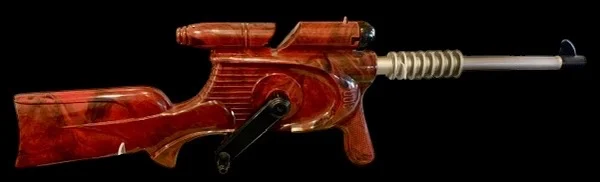
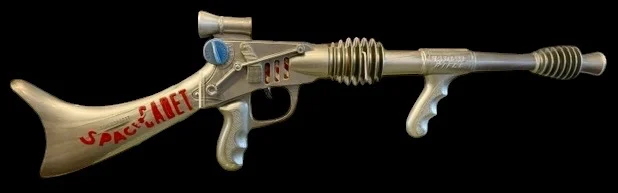

Lou Woolf’s space toy and ray gun collection reflects an international postwar fascination with the future. Many of the brightly lithographed tin ray guns were produced in Japan, where companies such as Nomura and Yoshiya became major exporters of imaginative space toys during the 1950s and 1960s. Similar toys were also made in Korea, while American makers such as Hubley produced cast metal atomic pistols for children growing up in the early Atomic Age. Together, these pieces show how Japan, Korea, Europe, and the United States transformed rockets, radiation, television heroes, and space travel into colorful objects of play, fantasy, and modern design

An Interview with Lou Woolf
So why vintage space toys?
Lou: About 25 years ago, someone gave me a book on vintage space toys, and I was immediately hooked. Those rockets, ray guns, robots, and space helmets had a look that was optimistic, futuristic, and wonderfully over the top. They reminded me of a time when people truly believed the future would include flying cars, space travel, and endless invention.
Of course, once I decided I needed one, eBay made the rest very easy. One toy became ten, and ten became, “Where are we going to put all this stuff?”
Was this inspired by growing up during the golden age of science fiction?
Lou: Absolutely. Saturday mornings were magical. We had Buck Rogers, Flash Gordon, Tom Corbett: Space Cadet, Space Patrol, and films like Forbidden Planet and The Day the Earth Stood Still. As a kid, sitting on the floor in pajamas, you simply had to own a ray gun if you expected to survive the coming alien invasion.
What fascinates me now is the artistry. Many of these ray guns were not just toys. They were miniature Art Deco and Atomic Age sculptures, with chrome details, fins, bold colors, and wonderful futuristic lines.
How large is the collection now?
Lou: Honestly, I stopped counting a long time ago, probably somewhere north of 1,000 pieces. The collection includes ray guns, robots, space helmets, tin wind up toys, space themed lunch boxes, and a lot of vintage science fiction memorabilia.
At this point, if NASA ever needs emergency backup equipment from 1957, I’m their guy.
What else have you collected over the years?
Lou: I used to collect classic cars. At different times I owned two 1957 Chevys, a 1963 Corvette, a 1964 Corvette, a 427 Cobra, an Austin Healey Sprite, and even a Ferrari Daytona that later appeared in the film Licorice Pizza. Eventually, I traded most of the big boy toys for something even better, a wonderful family.
These days I restore vintage radios, build wooden ship and airplane models, and still enjoy designing and building projects in my garage. There is something very satisfying about working with your hands, just you, your imagination, and maybe a table saw that is trying to kill you.
Why are you so drawn to the 1950s and early 1960s?
Lou: It was such an optimistic time in America. The Atomic Age had arrived, space travel felt close, and everyone seemed to believe the future was going to be exciting. My favorite year has always been 1957. The cars alone were spectacular, with giant fins, chrome everywhere, and dramatic styling.
Everything looked like it had been designed by people who were genuinely excited about the future. I’m still a motorhead at heart.
Space Helmuts
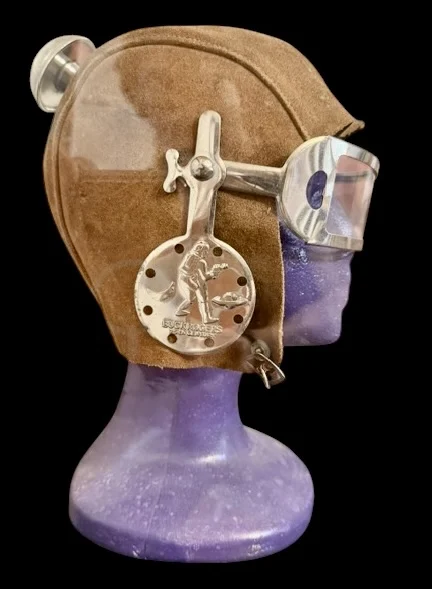
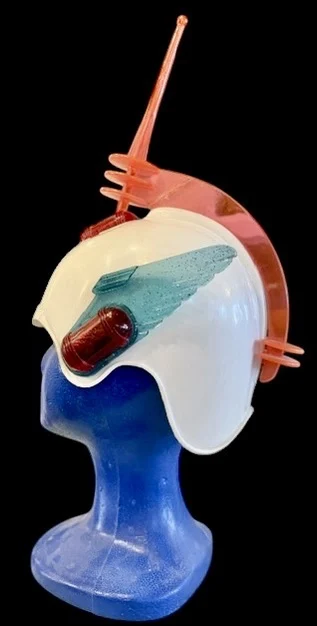
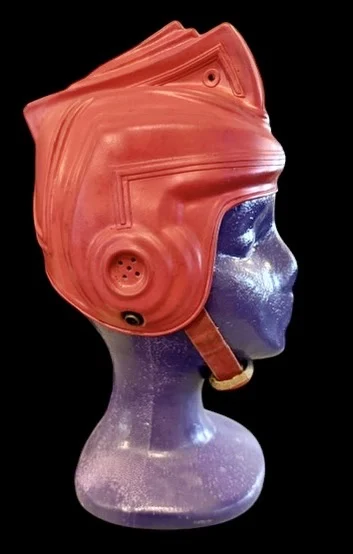
Seen within Lou Woolf’s larger collection, the toys and ray guns become part of a broader archive of modern life. His radios, space toys, comic related objects, television inspired pieces, and science fiction memorabilia all speak to the same fascination with sound, speed, transmission, invention, and the unknown. They remind us that design history is not only found in rare furniture, architecture, or fine art. It is also found in the objects children played with, the programs families watched, the heroes they imagined, and the futuristic shapes that helped define the spirit of the Atomic Age.
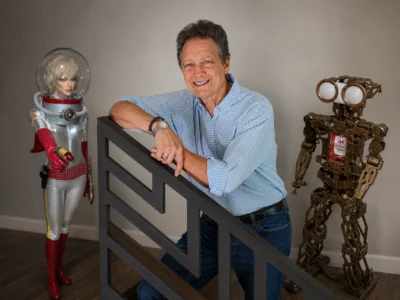
Lou Woolf has been a top-producing real estate agent in Los Angeles for over 40 years. But somewhere between negotiating deals and showing luxury homes, he became hopelessly infected with another passion entirely. Vintage space toys, Bakelite and Catalin radios, along with many other fun and entertaining items, are part of Lou Woolf’s remarkable collection. You can reach Lou through his website, where additional photos of his restored radios can also be viewed.: LouWoolf.com & GetWolf.org
Recommended Reading
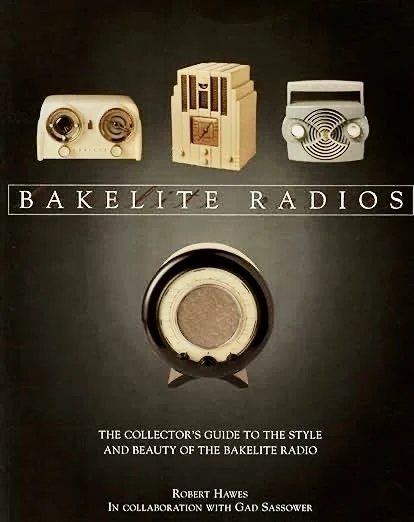
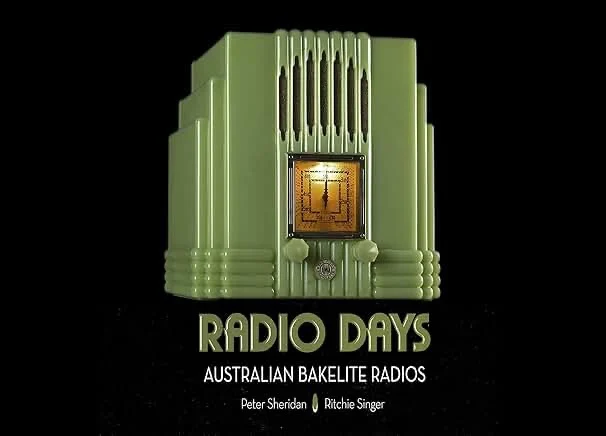
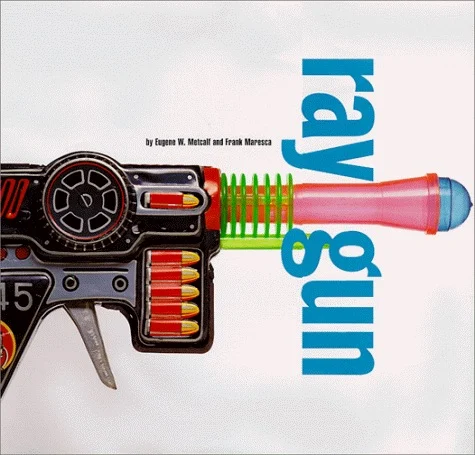
If you are interested in further stories of Art Deco design, collecting, and celebrating the artistry of early 20th Century:
Related Products from ArtDecoCollection.com