

What makes these fans worth collecting today is exactly what made them effective a century ago, they compress an entire era’s visual language, its typography, its palette, its confidence, onto an object small enough to fit in a coat pocket. A single fan can carry a store’s name, a product’s price, and an entire decade’s sense of style on a surface no bigger than a dinner plate, folded flat enough to slip into a handbag between errands. A handful of them, gathered together, tell the story of Art Deco advertising as completely as any poster ever could, and unlike a poster tacked to a wall, each one was made to be held, opened, and shown off in public, which may be exactly why so many of them survived in such good condition a century later.
✕
ART & STATUES
CERAMICS & GLASS

Art Deco Around The World
Paper Hand Fans: Miniature Art of the Art Deco Era
How Paris turned an everyday accessory into a pocket-sized piece of Jazz Age advertising art
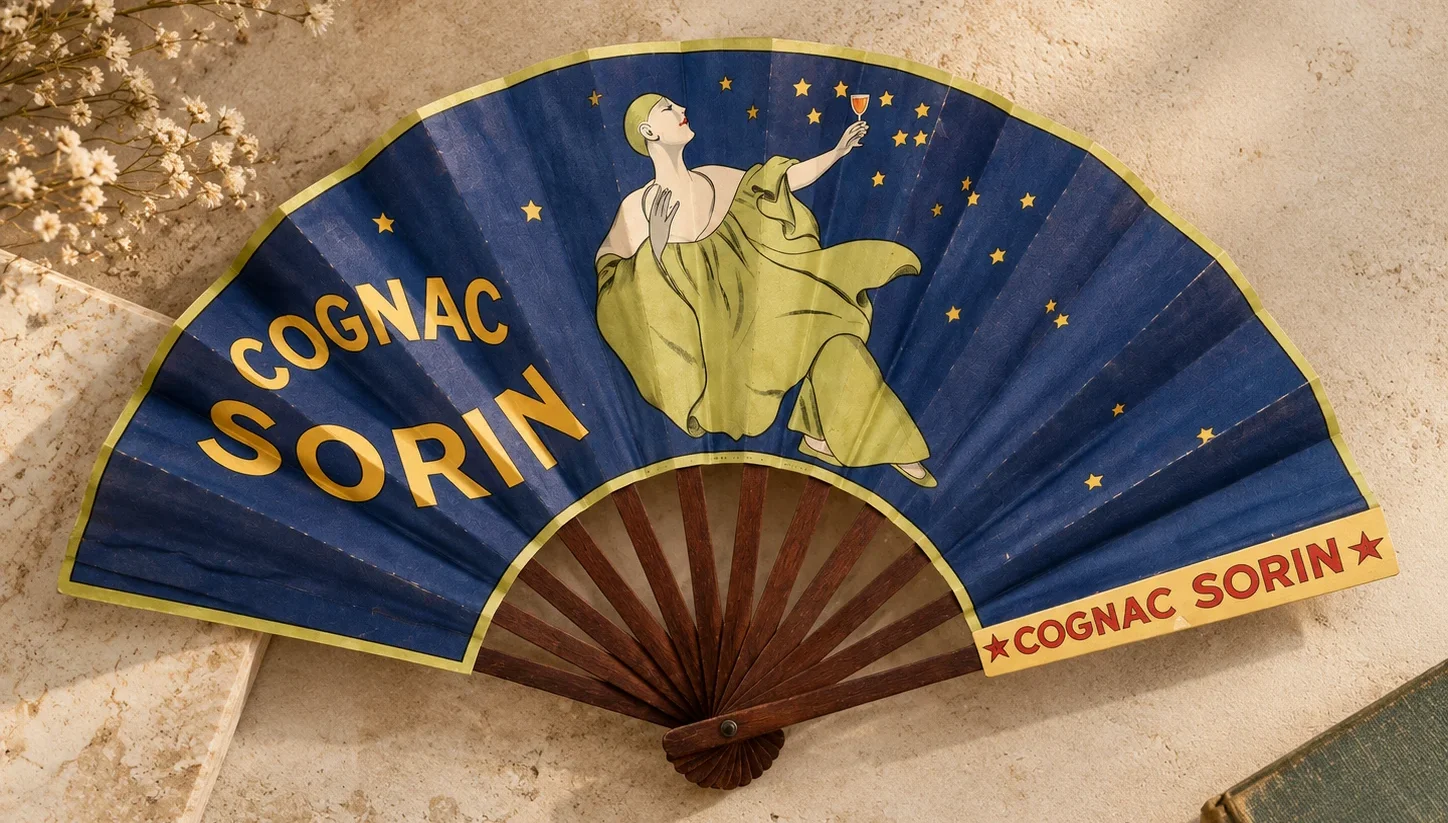
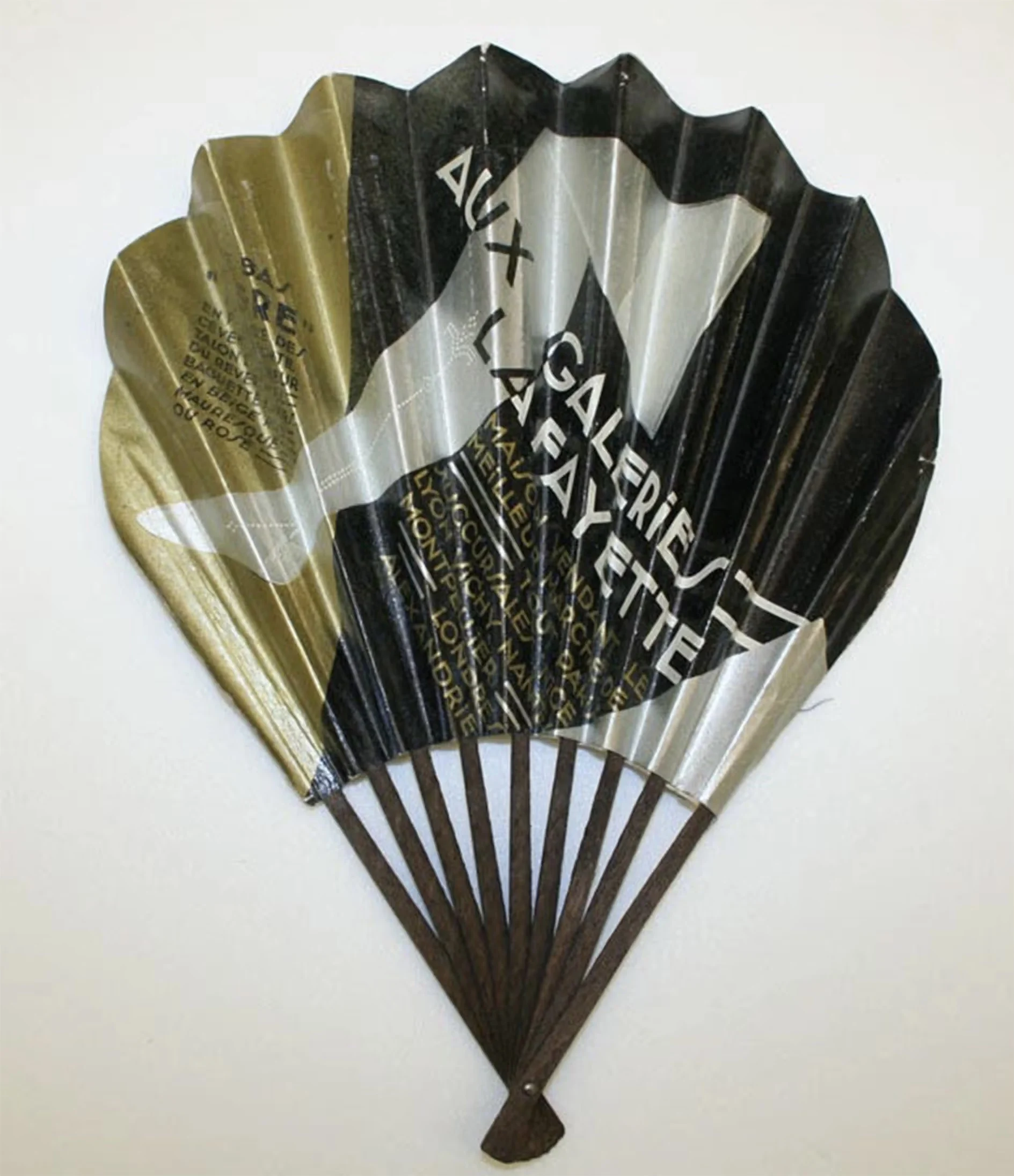 Paris in the second half of the nineteenth century gave the world the department store, and with it, a new kind of advertising battlefield. Le Bon Marché, Les Grands Magasins du Louvre, Le Printemps, La Samaritaine, and Galeries Lafayette all opened their doors within a few decades of one another, competing not just on merchandise but on spectacle, building grand interiors and window displays meant to turn shopping itself into an event. By the time these stores reached what the Musée des Arts Décoratifs calls their consecration at the 1925 International Exhibition of Modern Decorative and Industrial Arts, the same event that gave Art Deco its name, they had spent decades perfecting the art of putting their name in front of exactly the customer they wanted, the fashionable Parisian woman with money to spend.
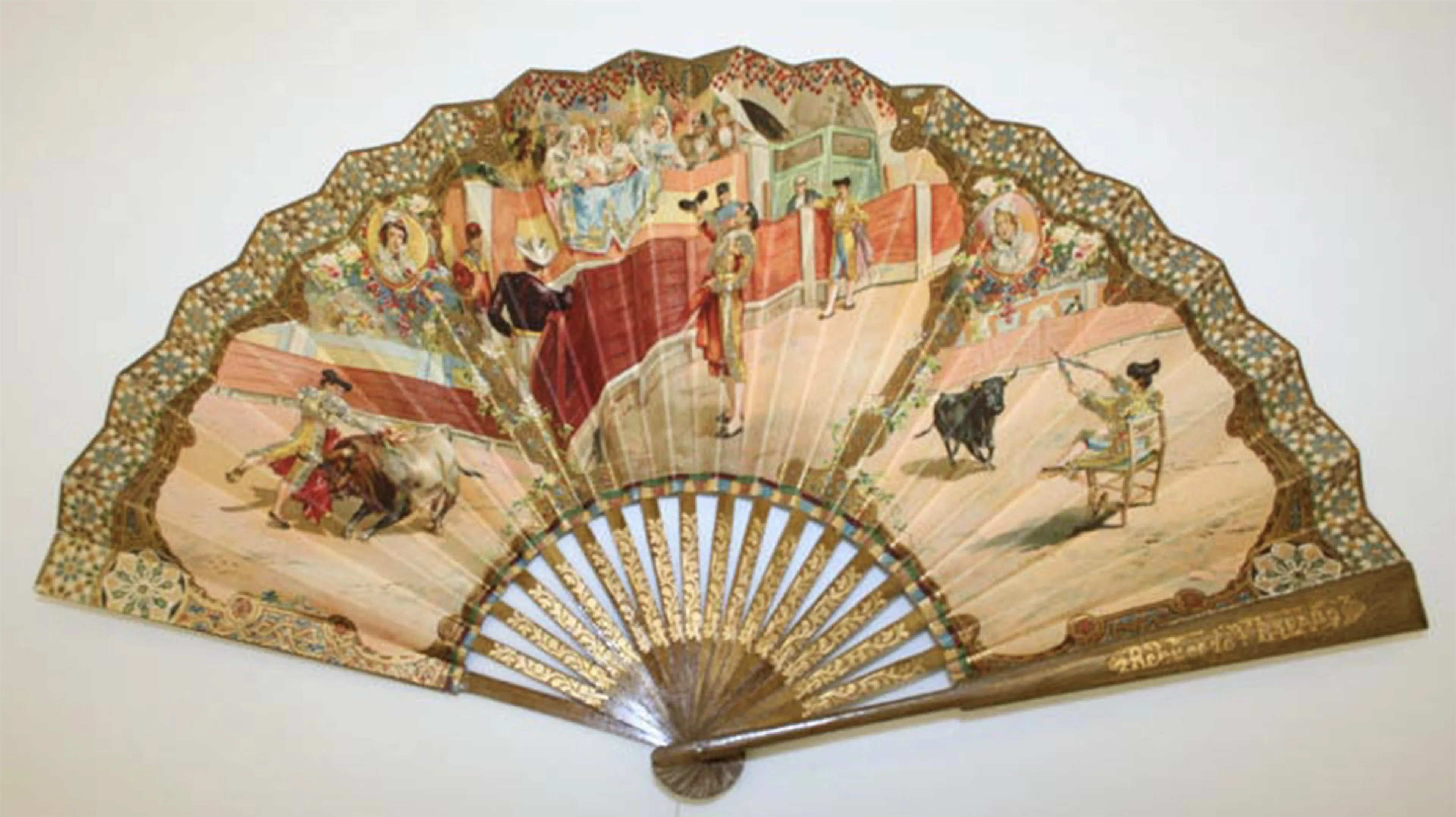
One of their favorite tools for doing it was the fan. Advances in printing technology in the late nineteenth century made fans cheap enough to give away by the thousands, and department stores seized on the format immediately, since a fan was not just an advertisement, it was a small, beautiful object a woman would actually carry, open, and be seen with. Early department store fans followed the flowing, floral lines of Art Nouveau, but that began to change in the years around the First World War, as illustrators working for the stores started reaching for something sharper.
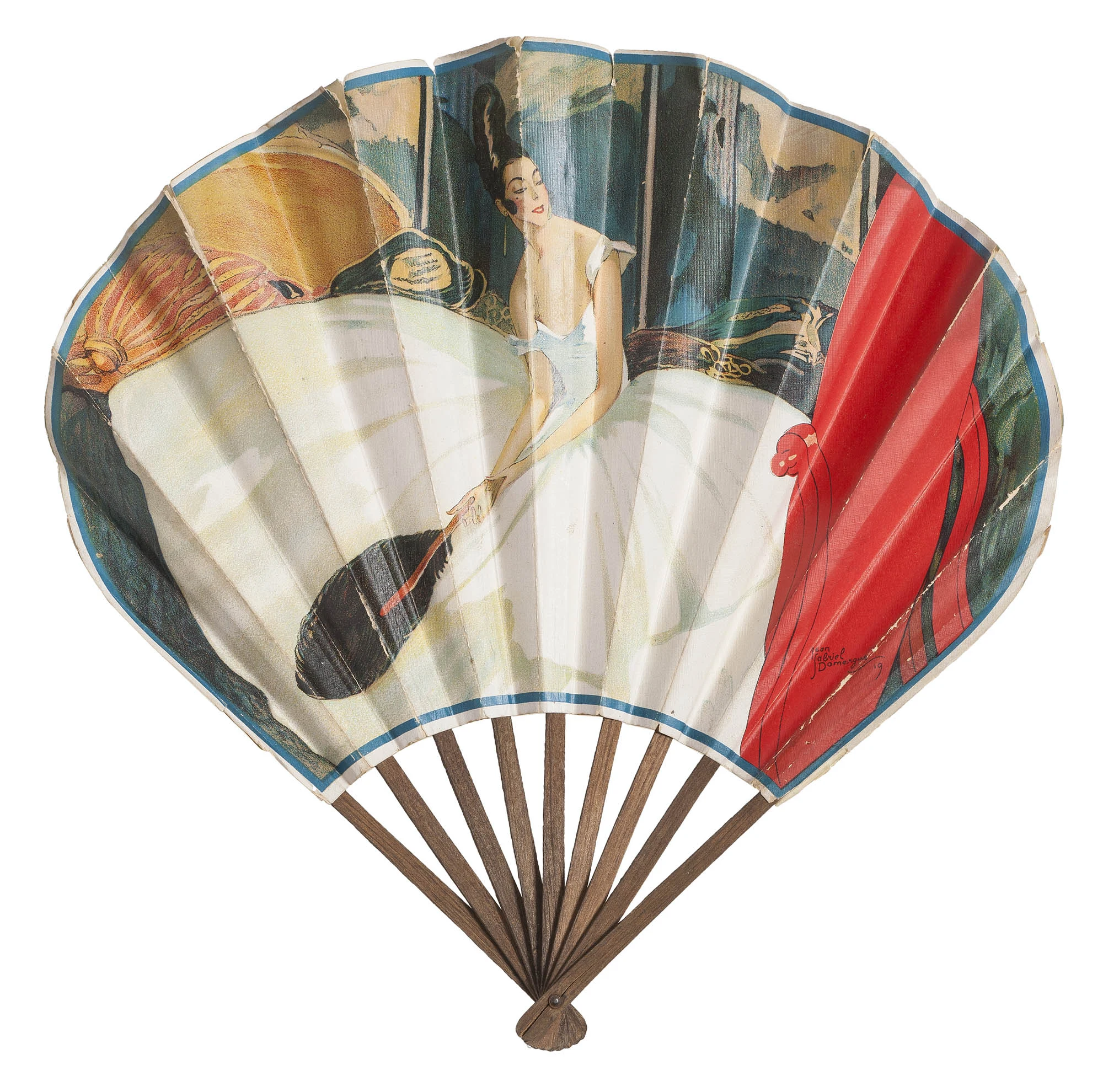
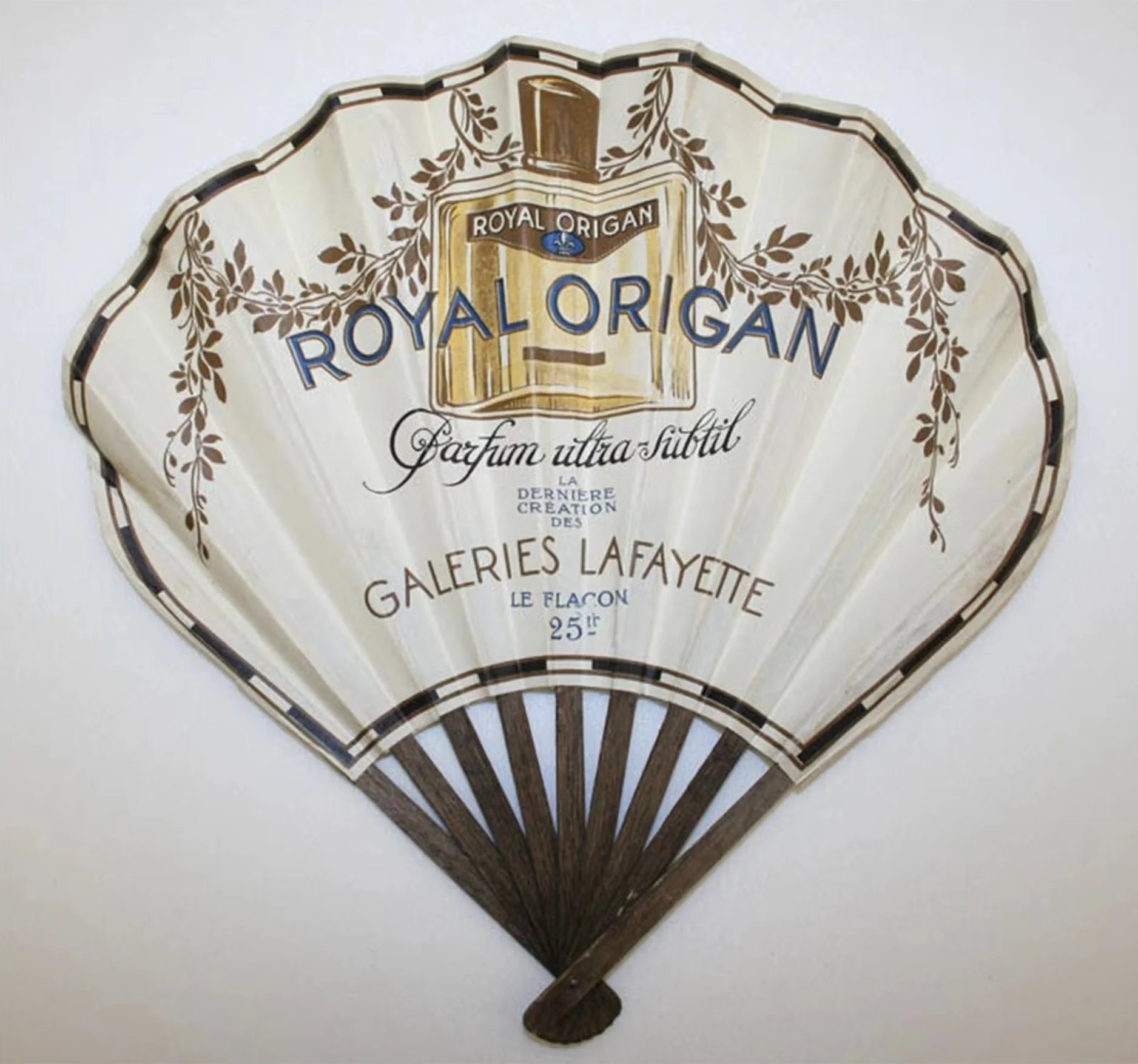
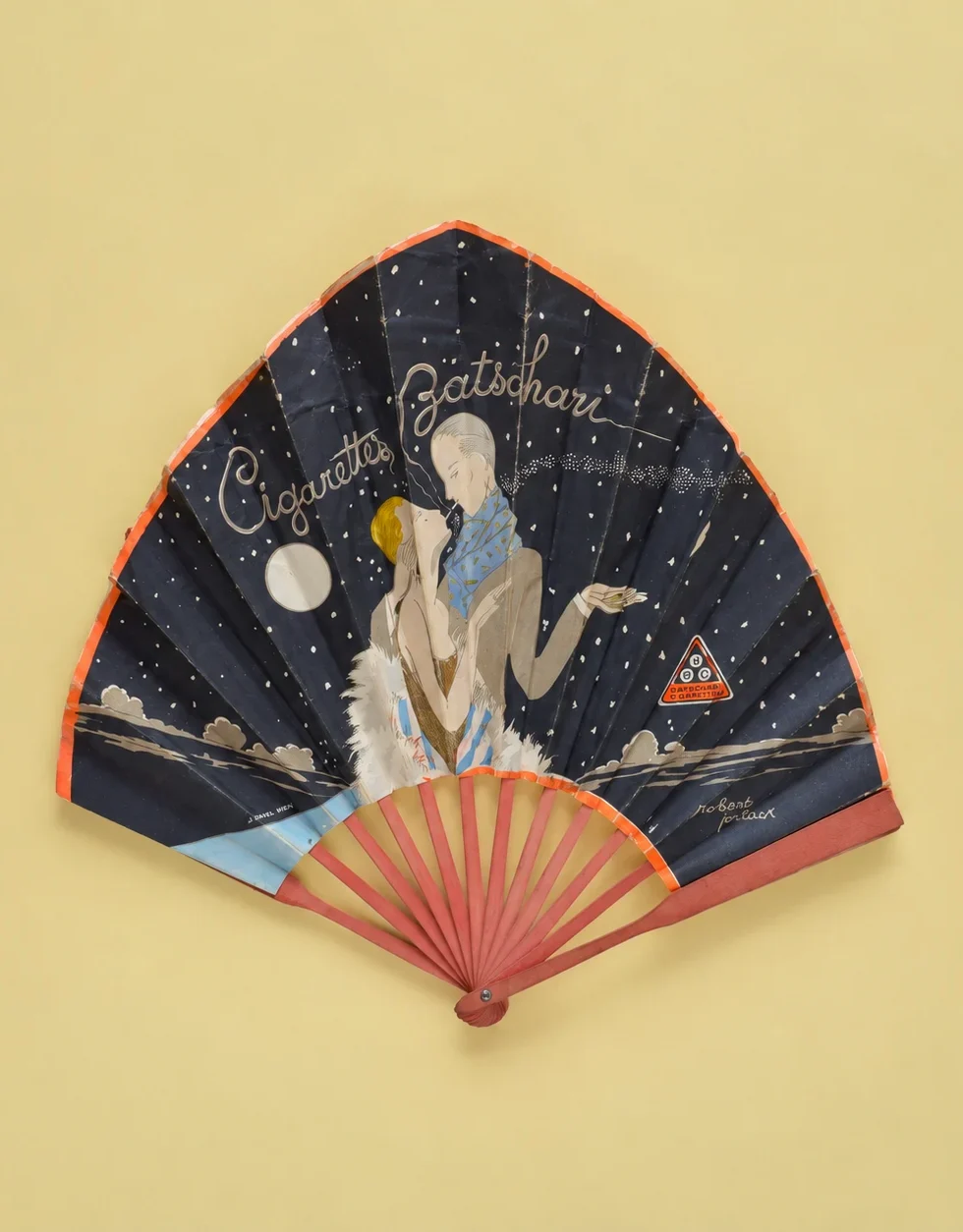
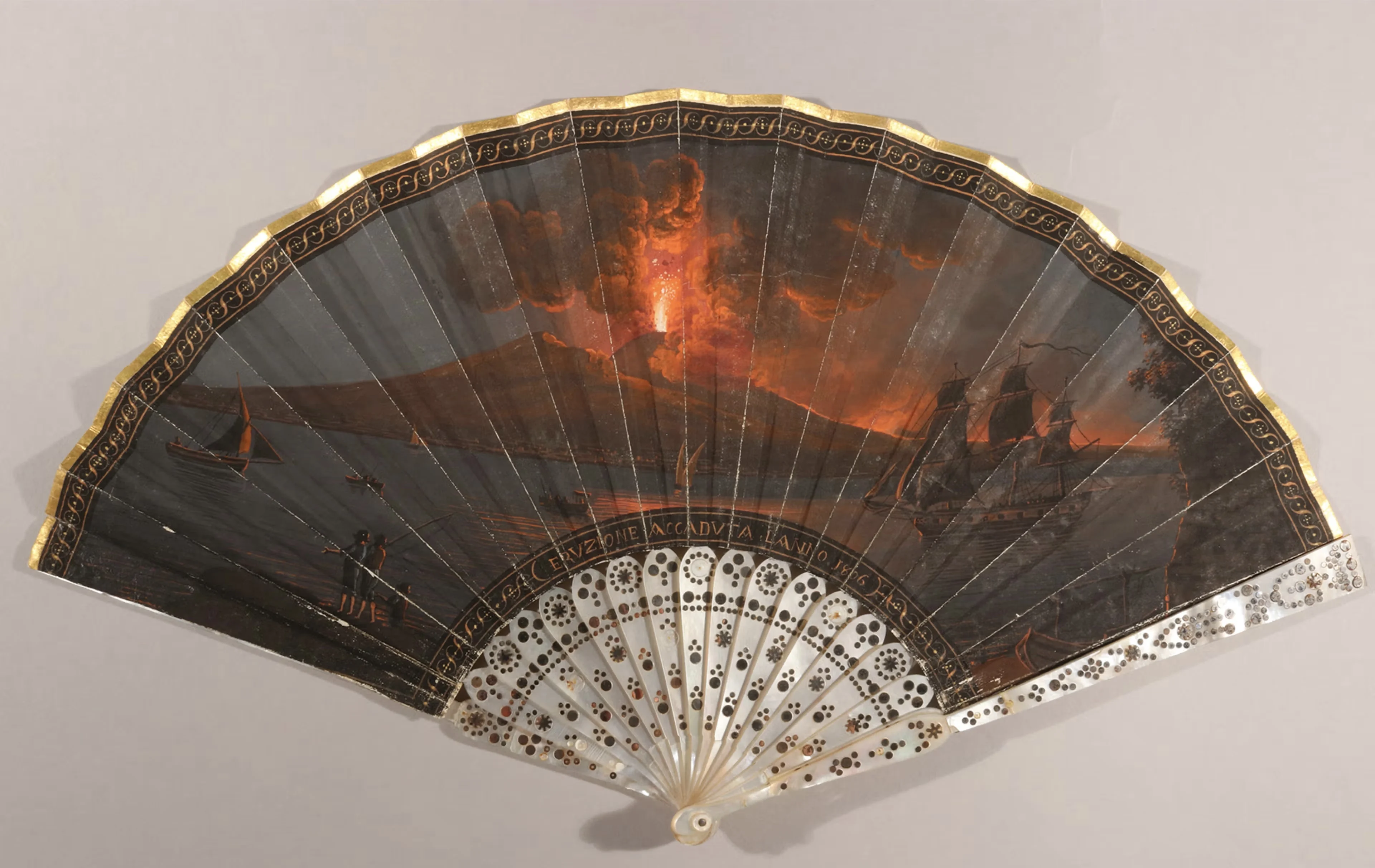
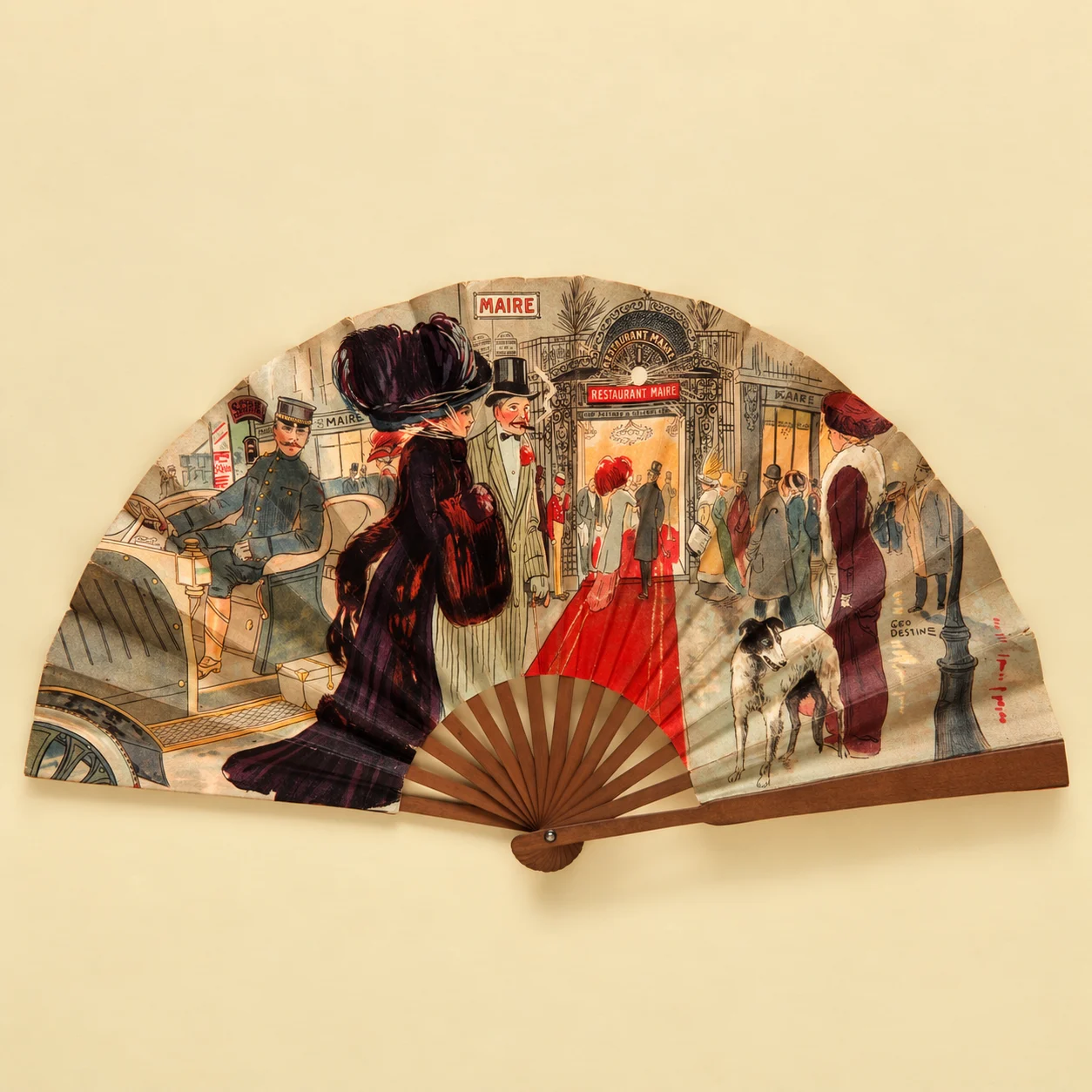
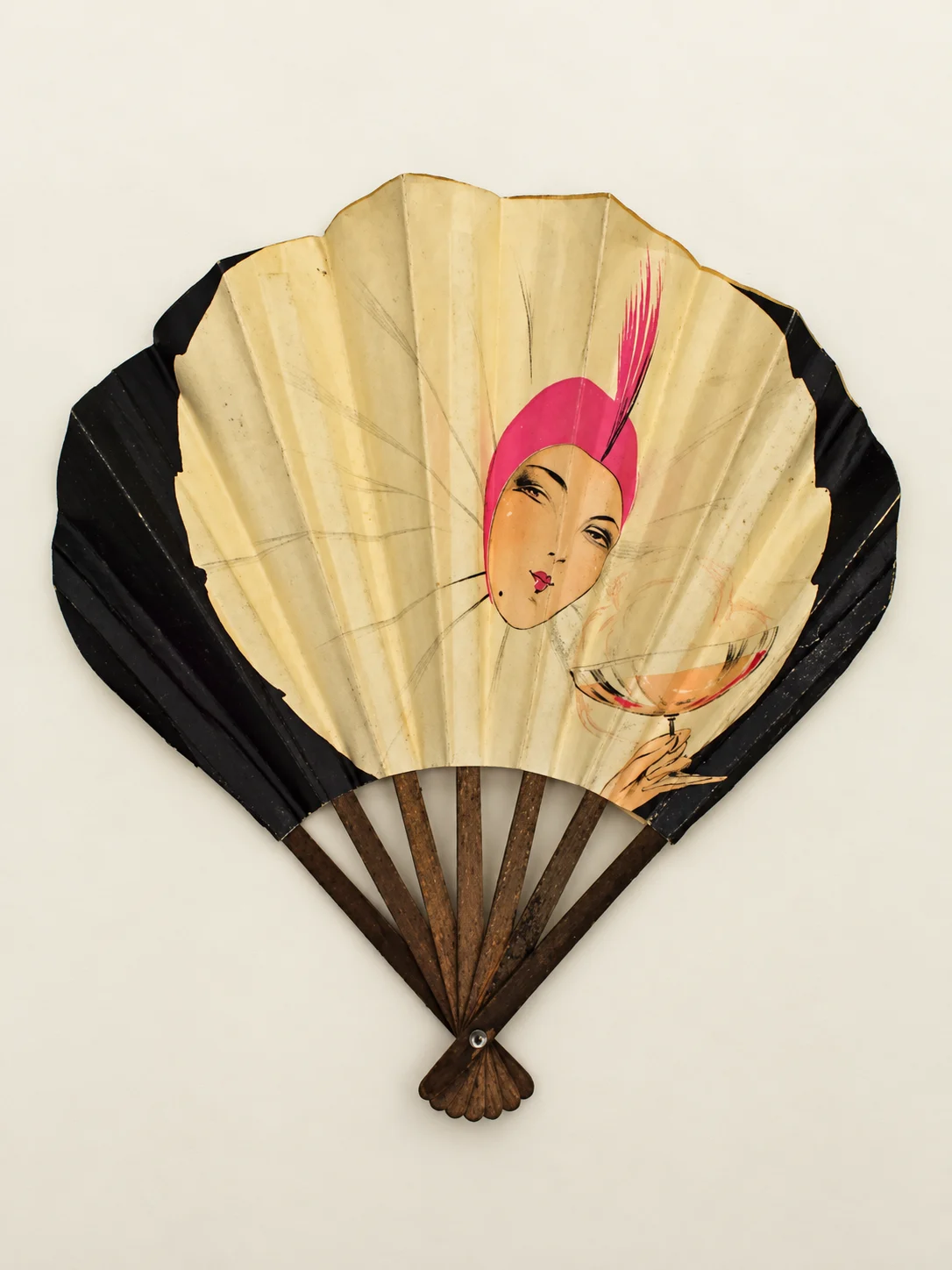 The clearest example of that shift sits in the Metropolitan Museum’s collection today, a 1927 fan advertising stockings at Galeries Lafayette. Its face carries bold, capitalized lettering cascading down a sharp black-and-gold background, a design the Met’s own curators describe as characteristic of Art Deco style outright. A related fan from around 1930 pushed the palette even further, setting a pair of pale stockinged legs against a riot of red, pink, orange, and gold, with two price points for stockings printed directly on the fan and a woman’s face on the reverse declaring, in French, that she bought everything at Galeries Lafayette. The illustrator Jean Gabriel Domergue worked this same territory for the store throughout the era, first with a 1919 fan for a stocking line called Le Bas Tigre, then with a 1921 design for Royal Origan perfume that surrounded a flapper with floating hats, gloves, and perfume bottles, an image of casual, effortless luxury built entirely to sell a specific bottle sitting just out of frame.
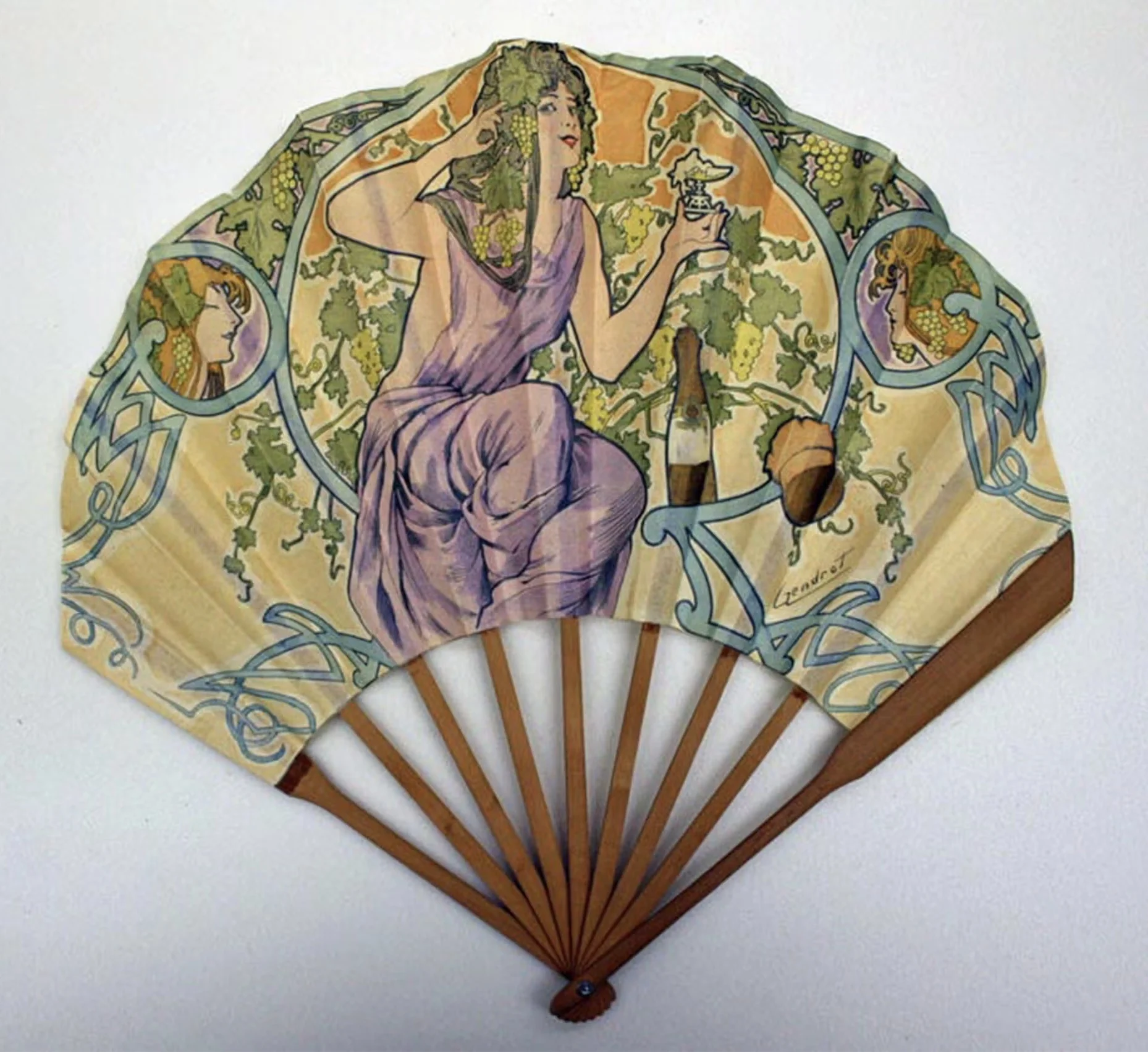
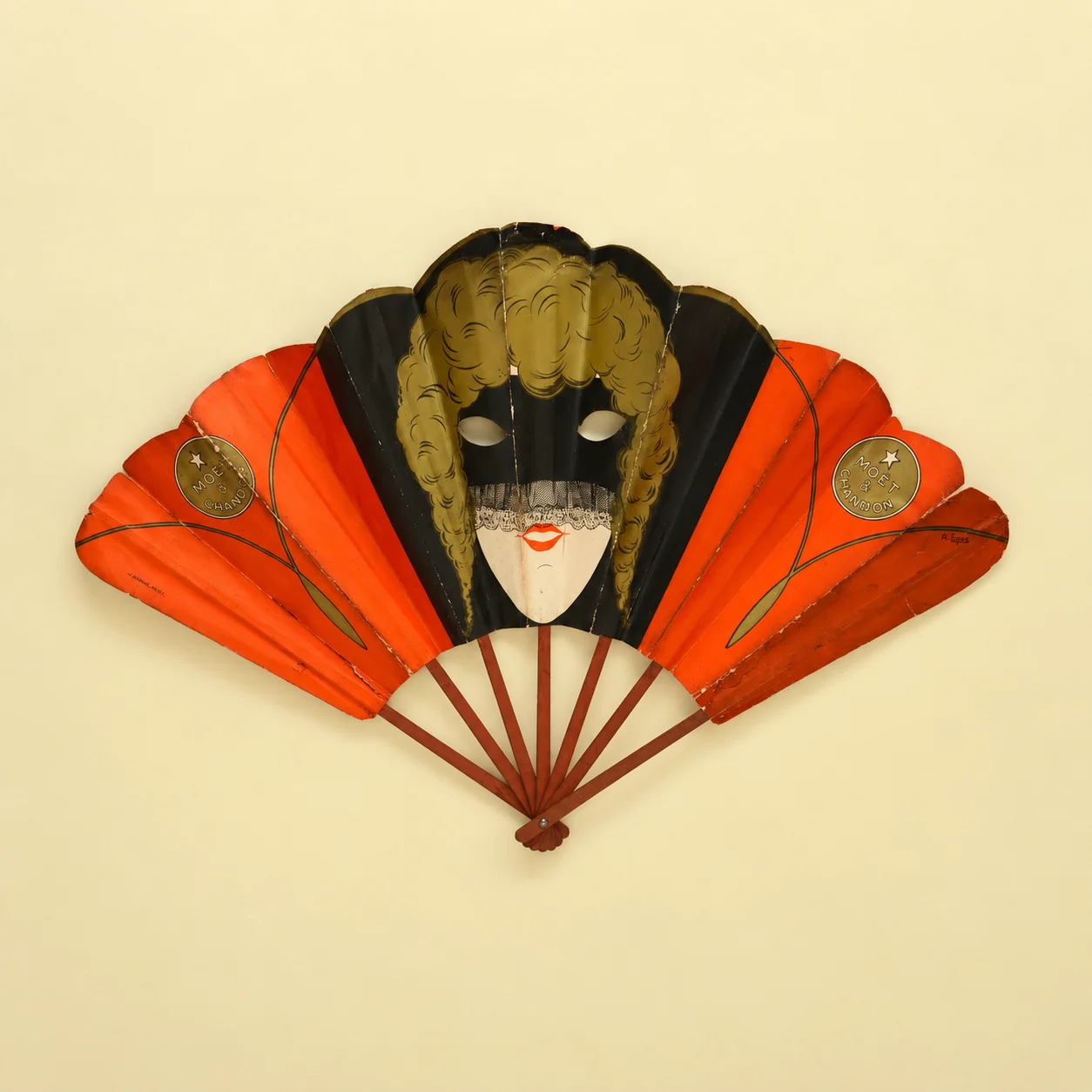
Department stores were not the only French businesses to discover the format. Champagne houses ran the same playbook throughout the 1920s, commissioning fans in the same bold Deco palette to travel in the handbags of the same well-off clientele. A Moët & Chandon fan from the decade, designed by E. Chambrelent, laid red poppies across a silver background on one side and the house’s name against a field of stars on the reverse, proof that the format traveled easily from stockings to champagne without losing any of its glamour. Whether selling hosiery or vintage, the underlying strategy was identical, put a beautiful, wearable object into a woman’s hand and let her carry the brand everywhere she went.
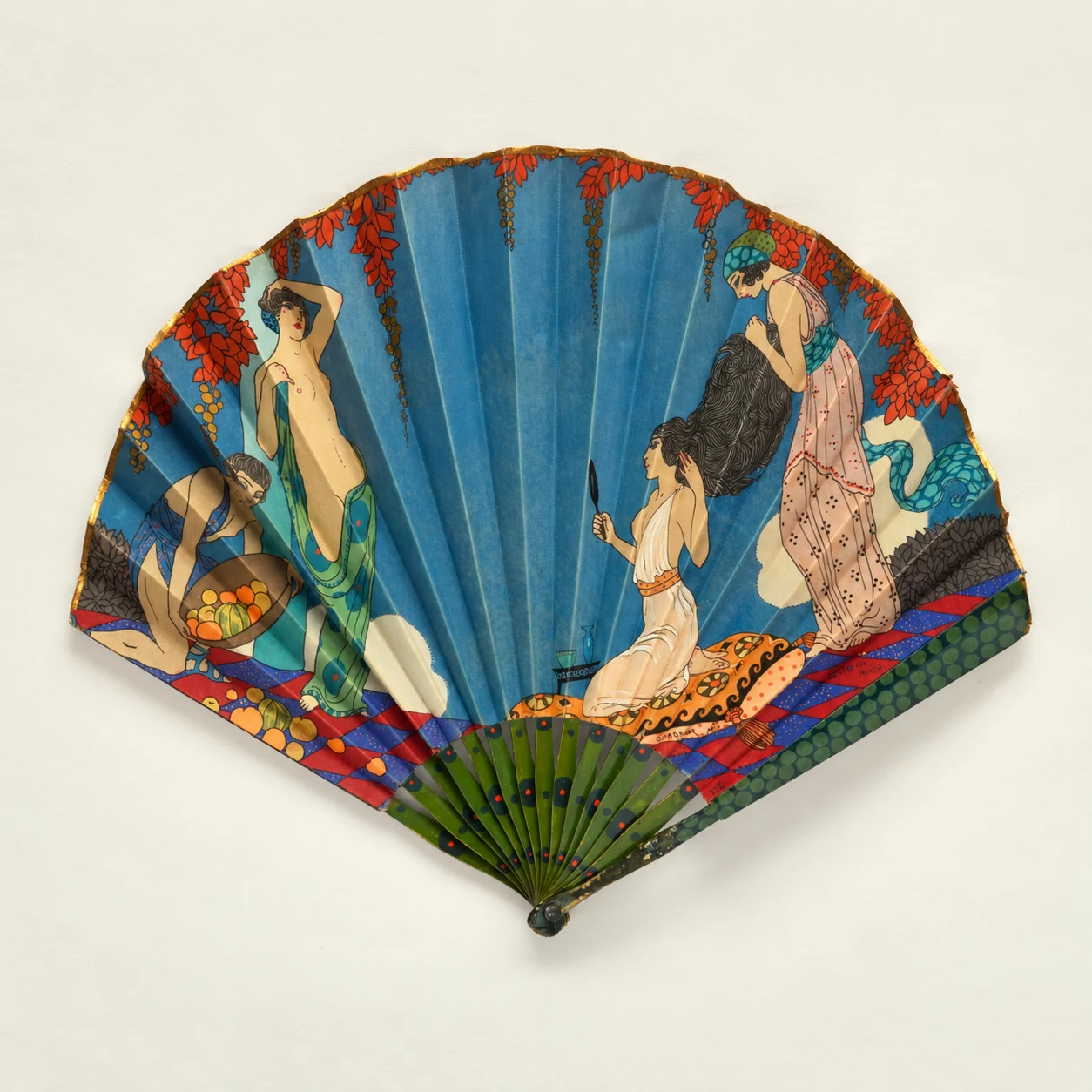
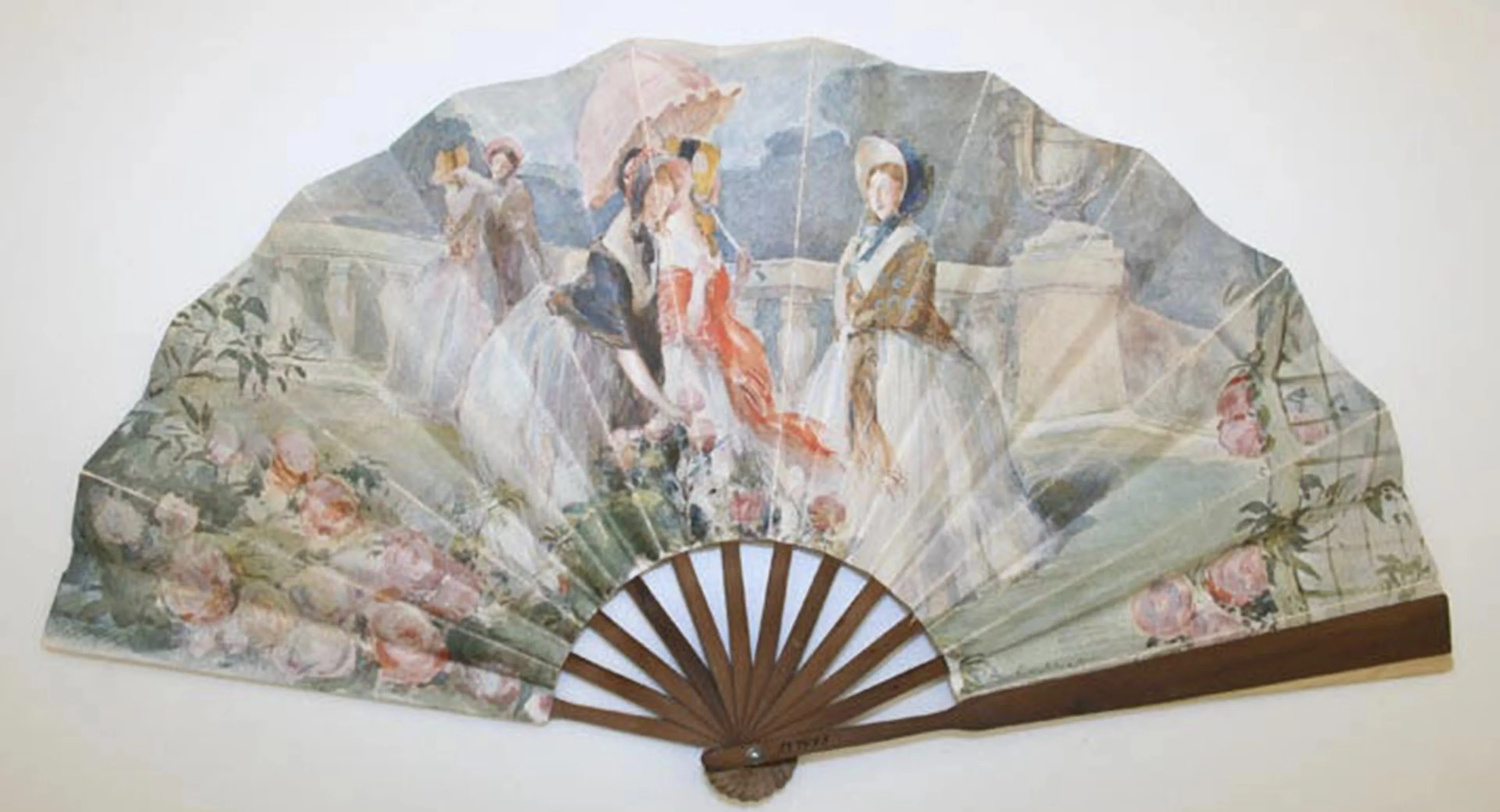
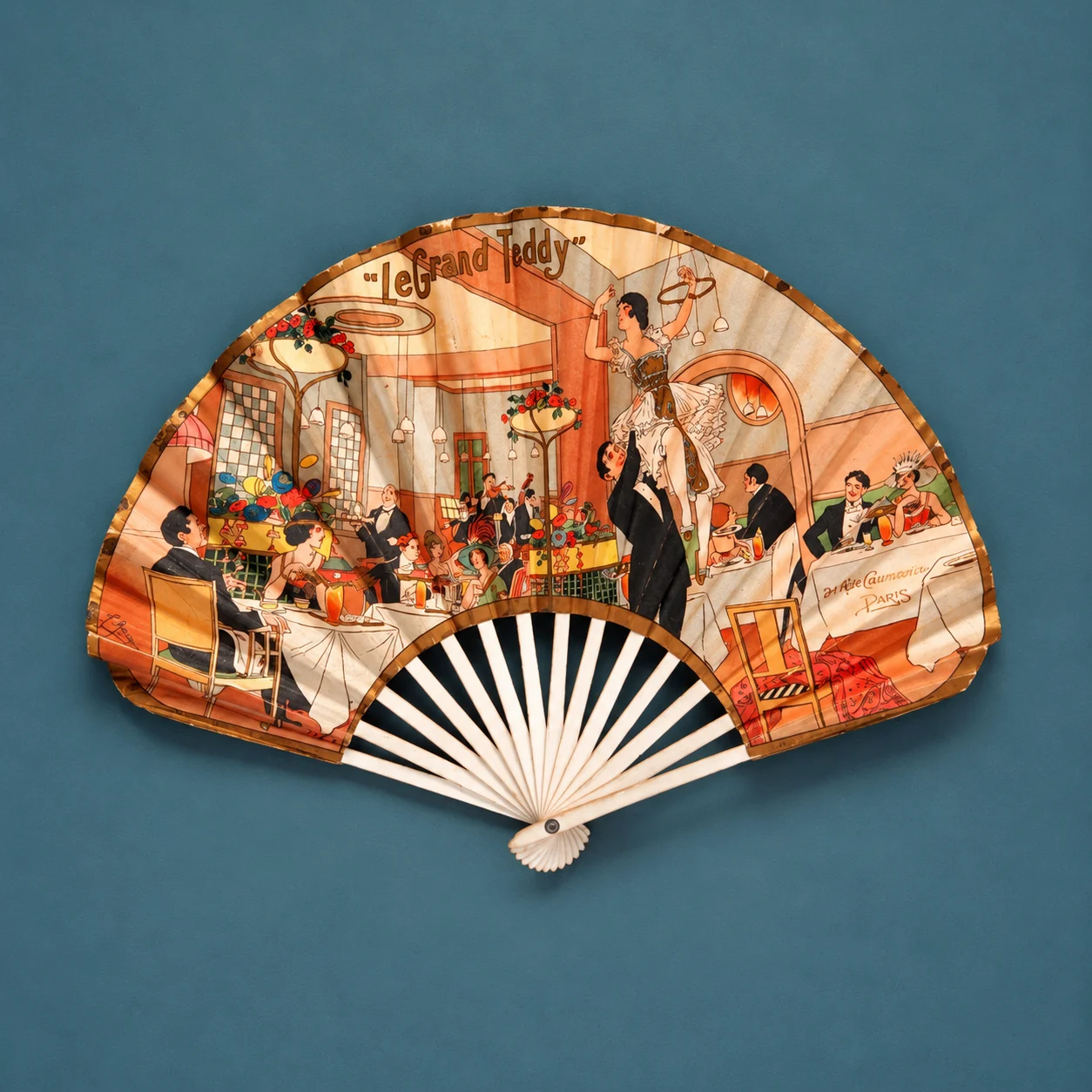
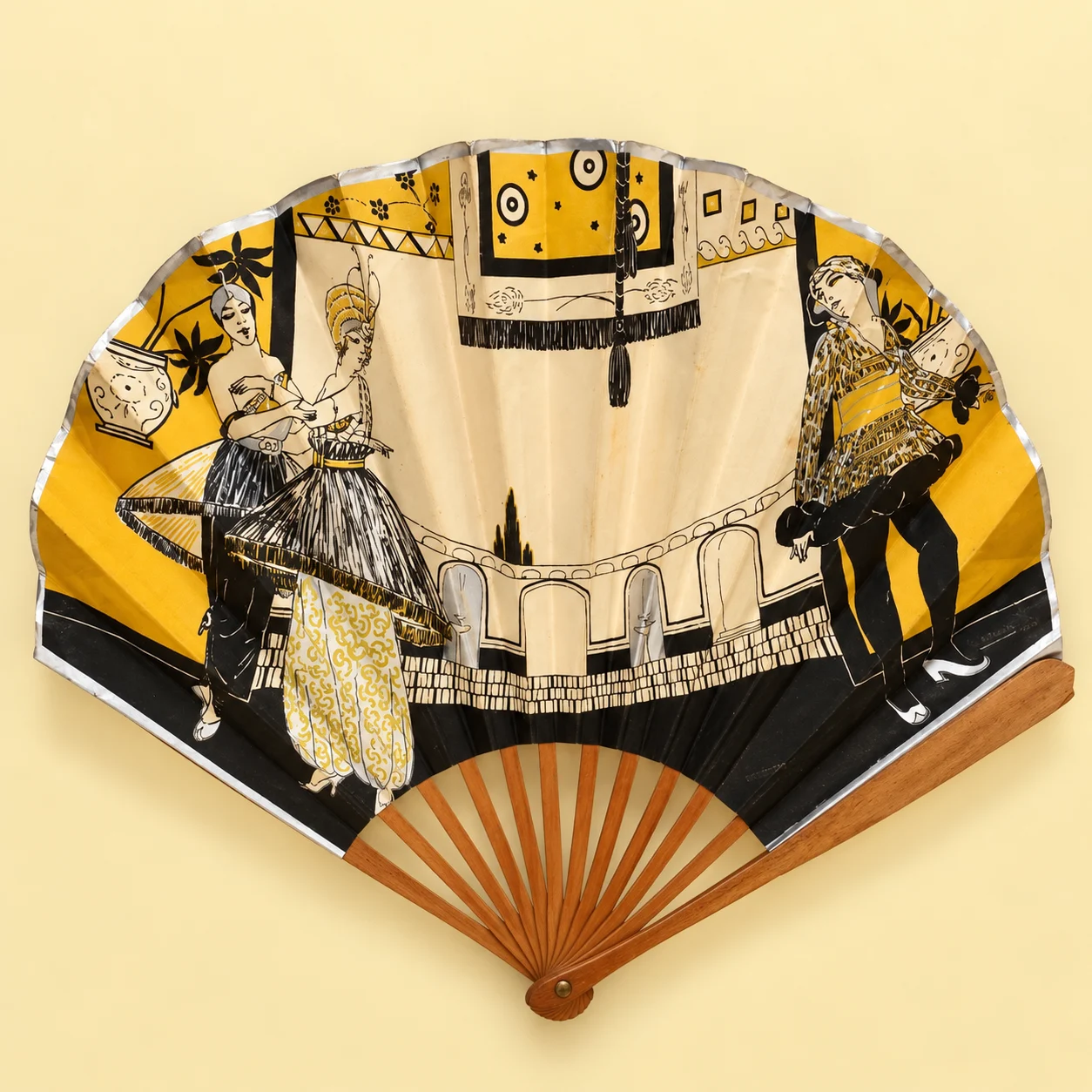
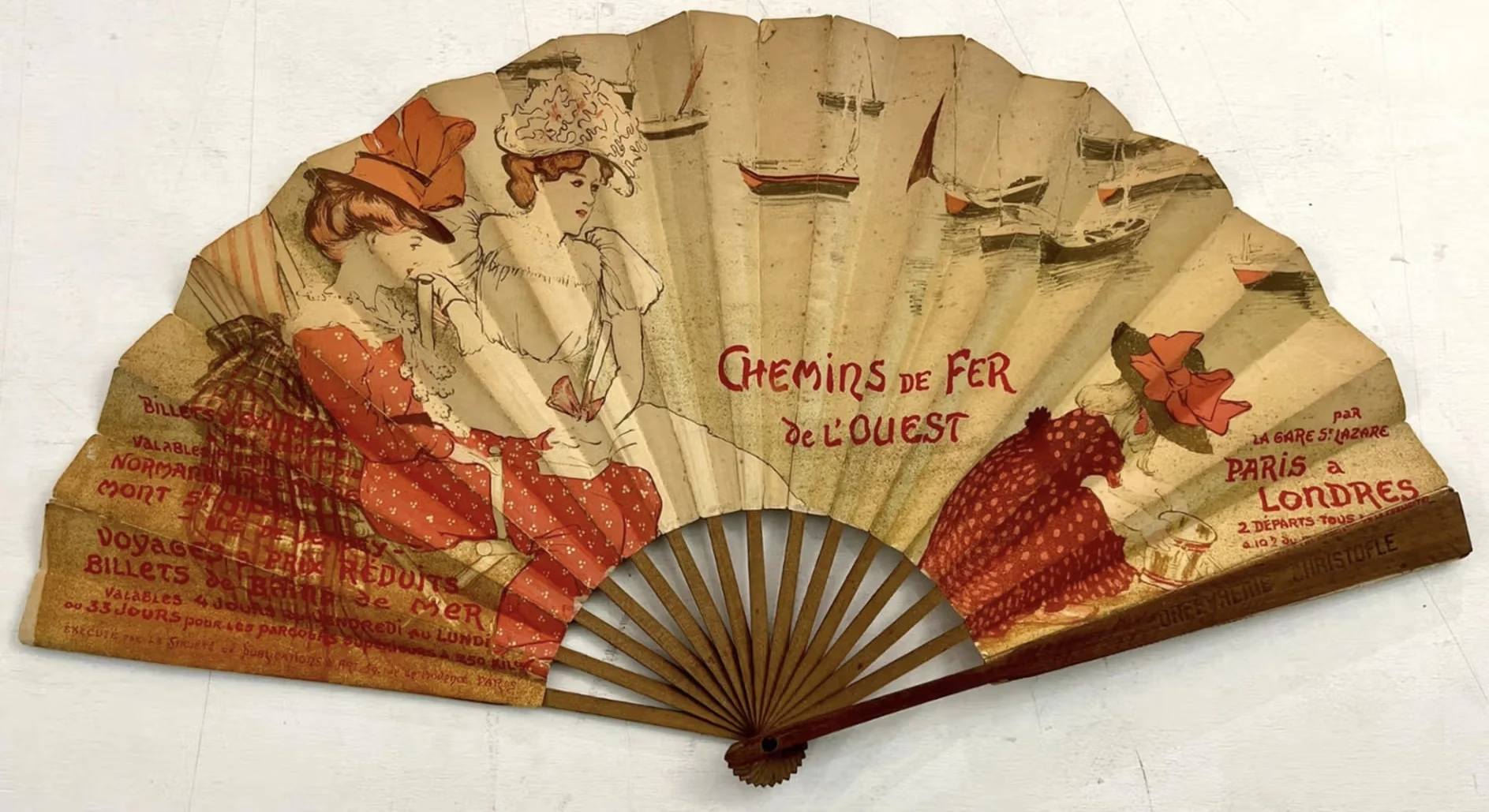
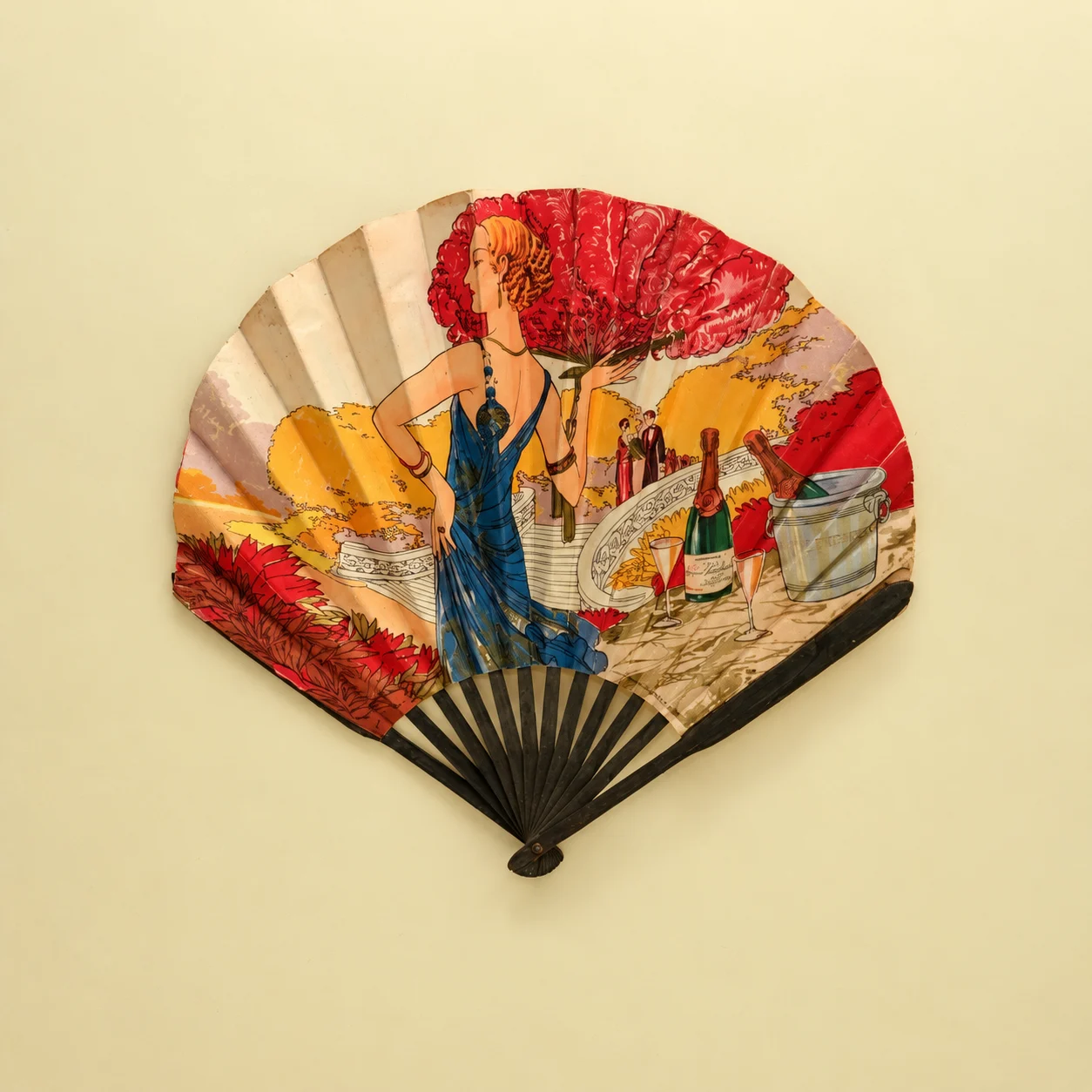
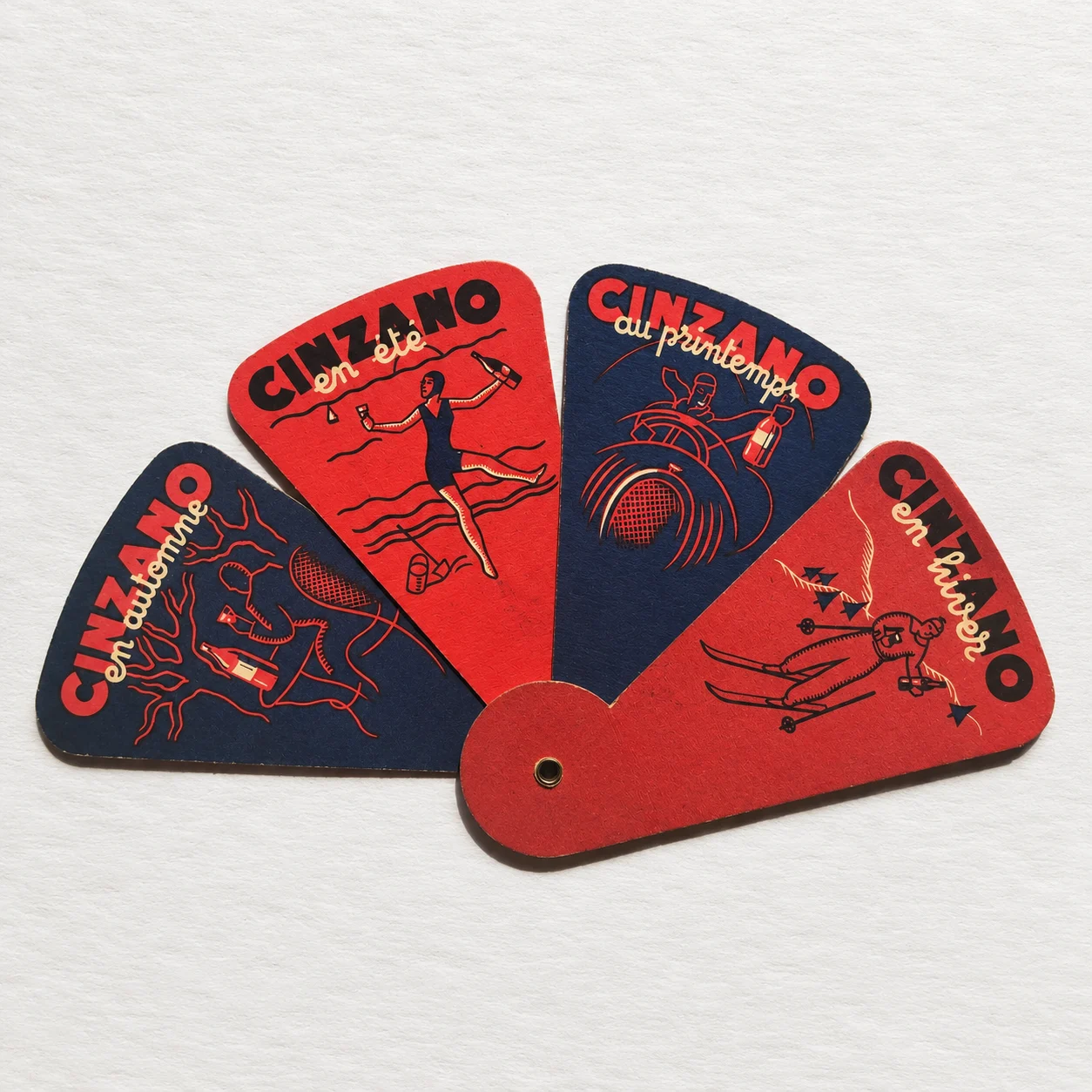
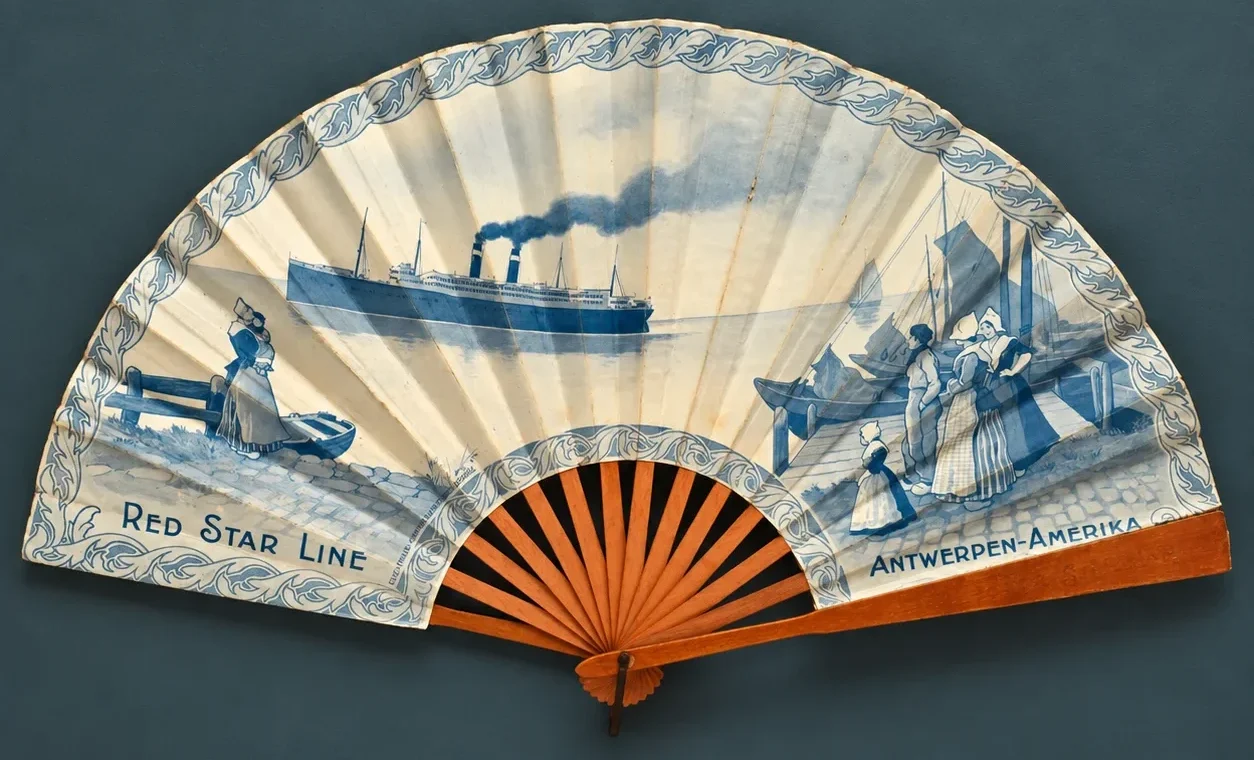
Featured at SFO Museum
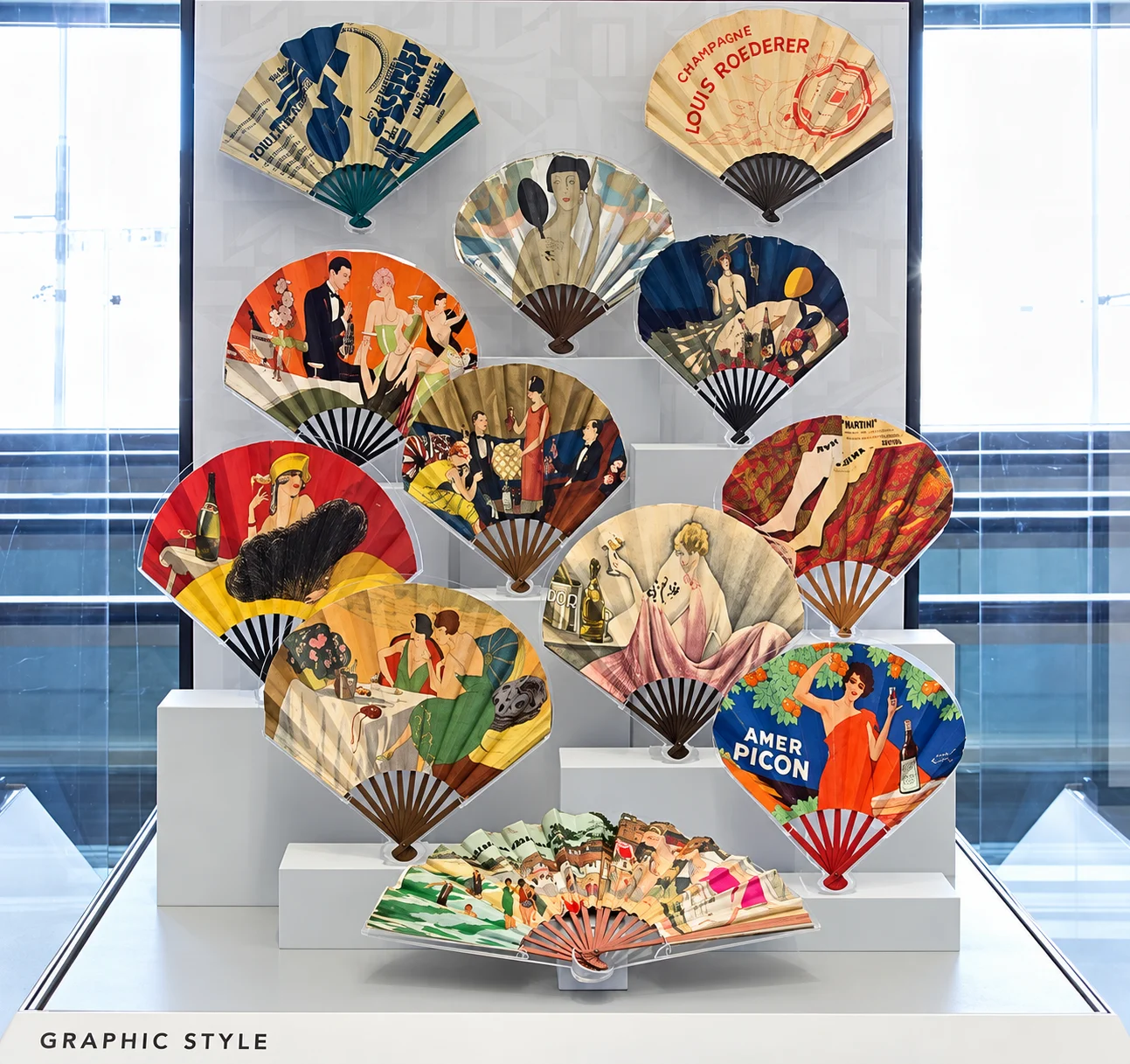
Fans like these had a place in Life and Style in the Age of Art Deco, the 2015 exhibition at San Francisco International Airport that spread across three dozen display cases and drew on the collection Art Deco Collection has spent years building. One case was devoted entirely to fans from Laurie Gordon’s own collection. The show ran for nine months in Terminal 3, giving Bay Area travelers an unexpected look at the vintage fans, radios, and barware that define the era. It’s covered in more depth in our journal entry on the event.
Related Products from ArtDecoCollection.com
French Paper Advertising Fan Cognac Sorin 1925

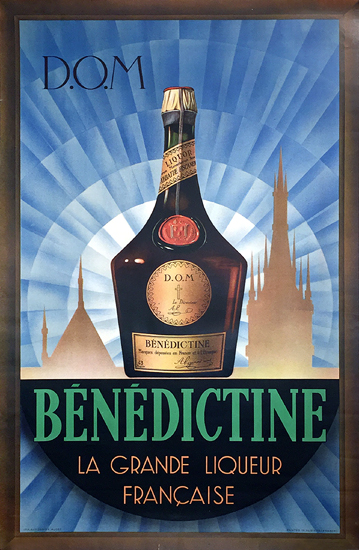
Art Deco Vintage French Poster for Benedictine Liqueur 1930, Original
Veramint French Advertising Fan

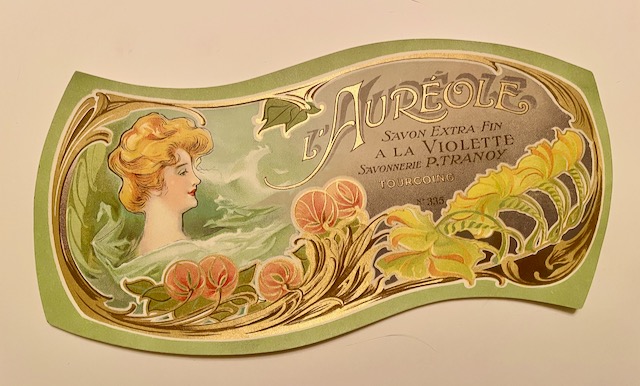
Art Nouveau French Soap Box Label
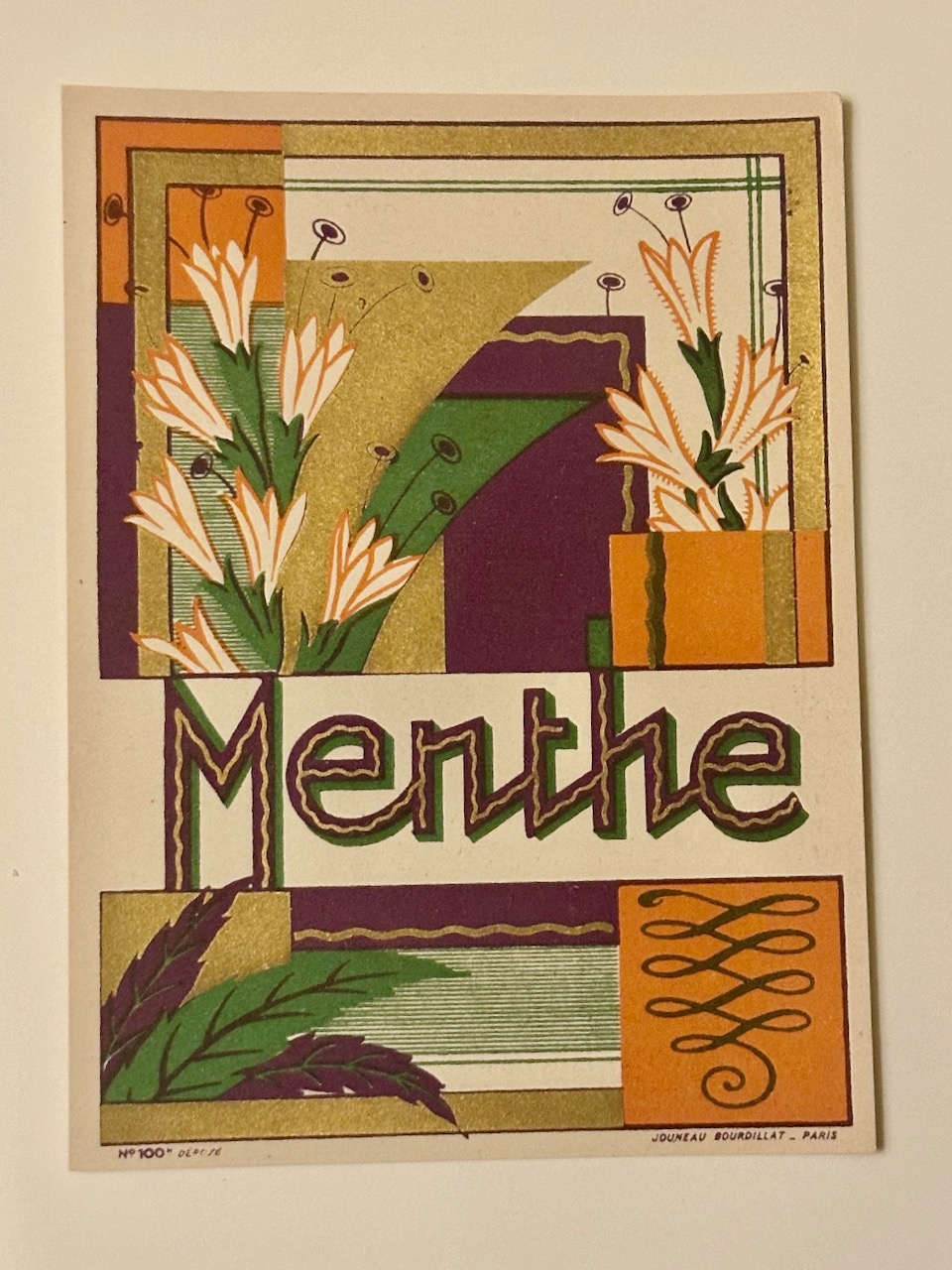
Art Deco French Creme de Menthe Liquor Label

ART & STATUES
CERAMICS & GLASS
© Copyright Art Deco Collection. 2026 All rights reserved. Site Map