
Jean Carlu
Jean Carlu was born on May 13, 1900, in Bonnières-sur-Seine, France, into a family of architects. His brother Jacques Carlu would later design the Palais de Chaillot in Paris, and Jean himself initially trained to enter the architectural profession, spending a brief period at the École des Beaux-Arts. At the age of eighteen, he was named Designer of the Year by a panel of judges headed by the famous graphic designer Cappiello, but on the same day he lost his right arm in a road accident. Although the loss meant a long period of retraining and readjustment, he refused to let it prevent him from pursuing a career in commercial art, and the image of the hand would recur throughout his later work as a quiet echo of the tragedy. He began his professional career as a poster designer in 1919, initially working as an illustrator before joining an advertising agency from 1919 to 1921. He chaired the Graphic Section of the 1937 Paris International Exhibition and traveled to the United States in 1939 to organize the French Information Service exhibition at the New York World’s Fair. With Paris captured by the Germans, he remained in America until 1953, when he returned to France. He served as president of the Alliance Graphique Internationale from 1945 to 1965 and died in 1997.
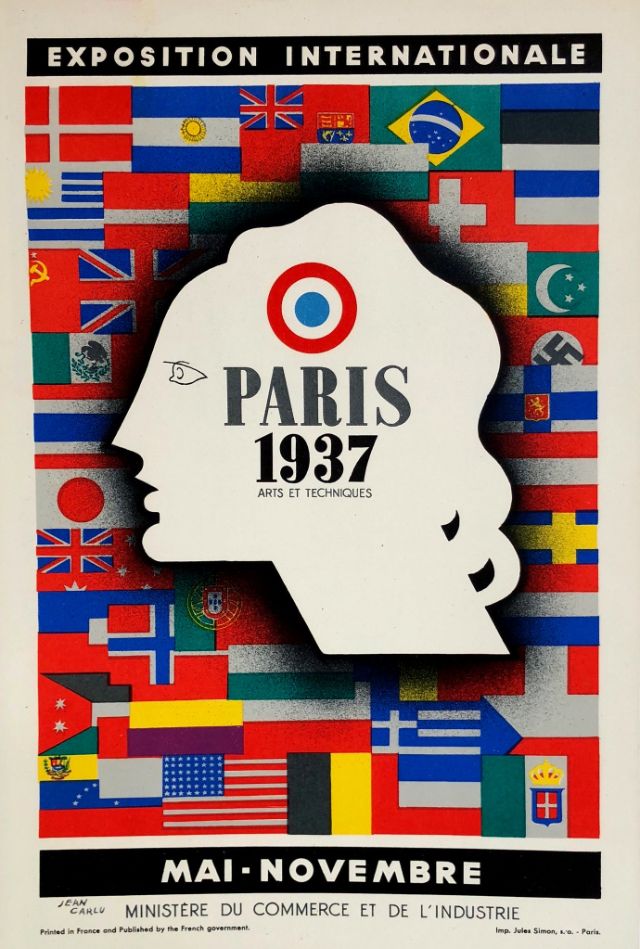
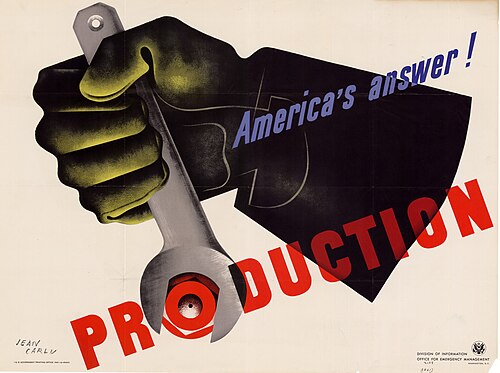
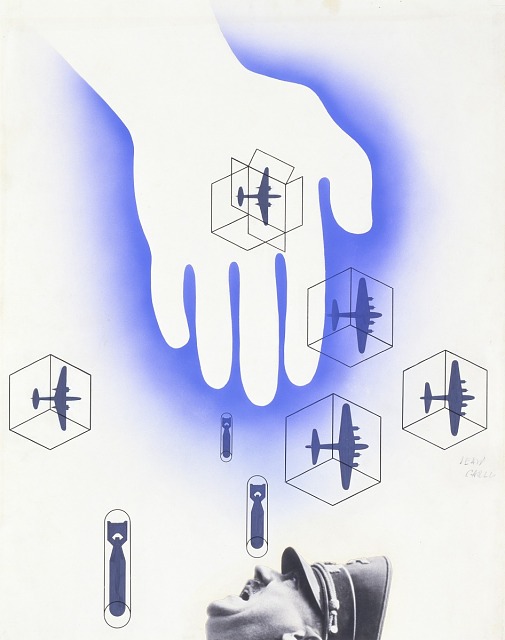
Carlu came to be known as one of “the Three C’s” of French Art Deco poster design, alongside A.M. Cassandre and Paul Colin. His early commissions included a poster for a Glycodont toothpaste competition in 1918 and one for Charlie Chaplin’s The Kid, his first work in the Art Deco style. Throughout the 1920s and 1930s, he produced a remarkable body of commercial work, including the iconic Mon Savon soap poster, a 1924 wine label for Mouton Rothschild, and designs for Théâtre Pigalle, the Monaco Aquarium, Dubonnet, and the Office National du Tourisme. He was a technical innovator who introduced photomontage to poster design with his 1932 work for the film Atlantis by Pabst, incorporated three-dimensional elements in La Grande Maison de Blanc in 1933, and even used electric lightbulbs in his 1937 Luminograph composition. From 1930 onward, he produced politically committed work for the peace movement and the struggle against National Socialism, including the famous Stop Hitler Now poster created in the United States in 1940. His America’s Answer! Production poster for the U.S. war effort earned him a New York Art Directors Medal and remains one of his best-known works. After returning to France, he designed for Firestone, Air France, and Pan American World Airways, continuing to produce influential commercial work into the postwar era.
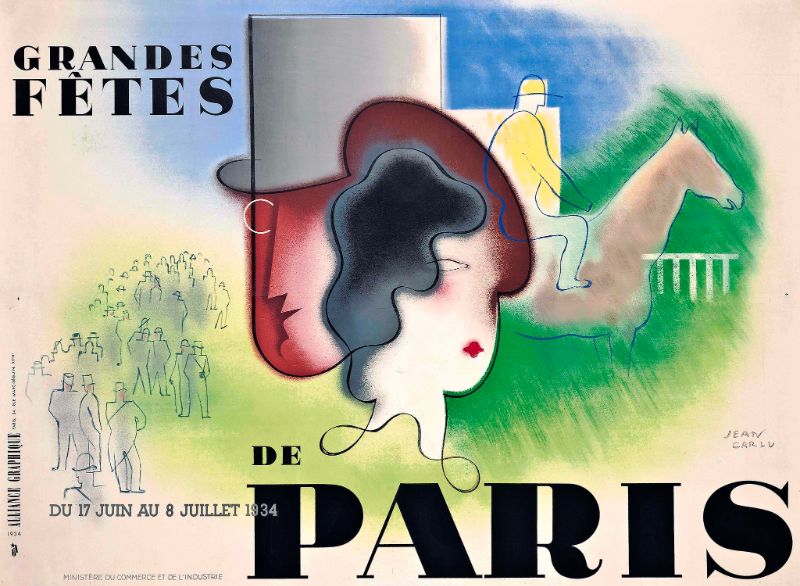
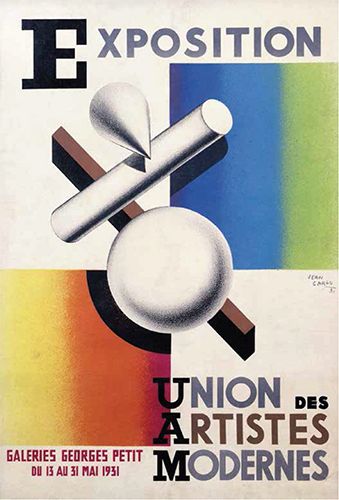
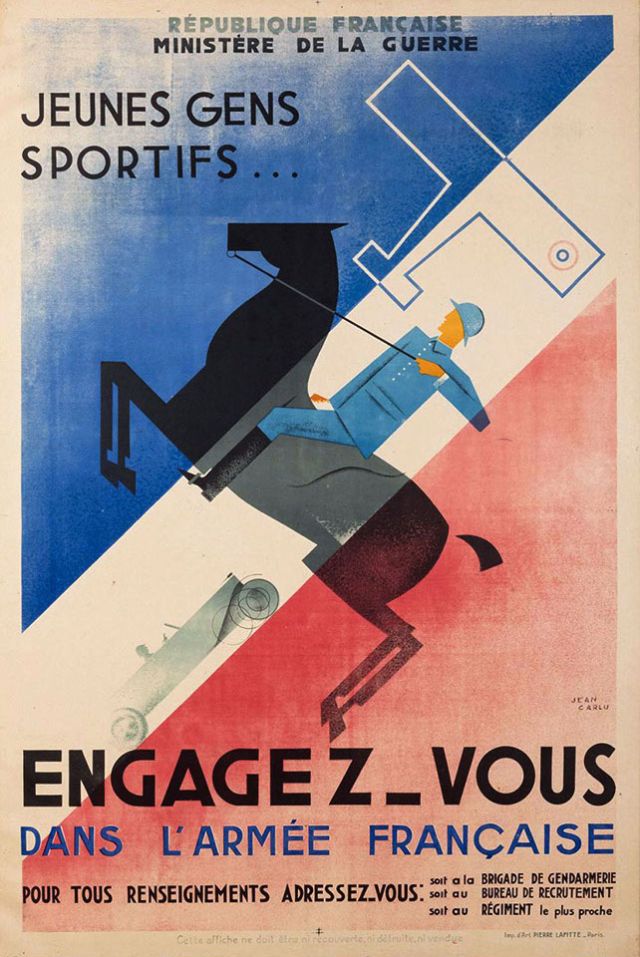
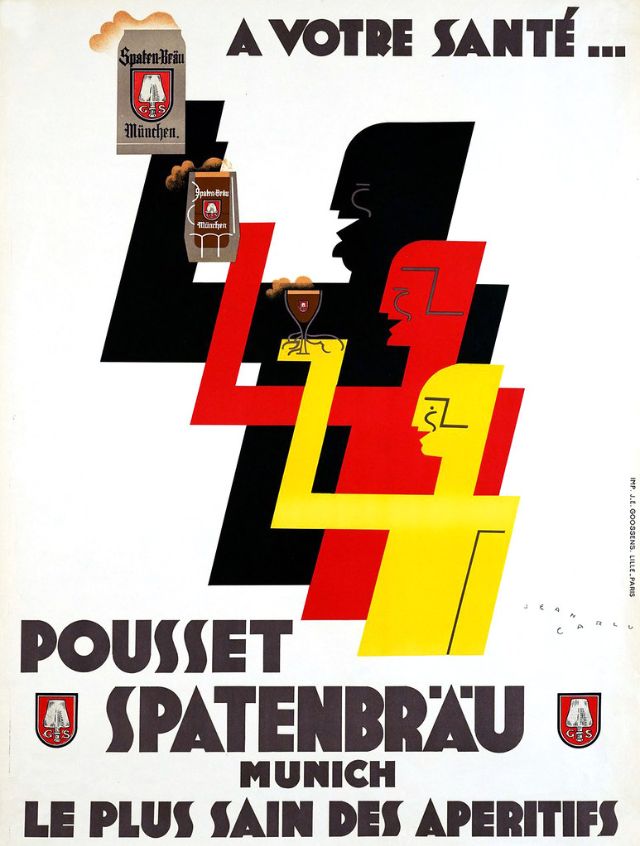
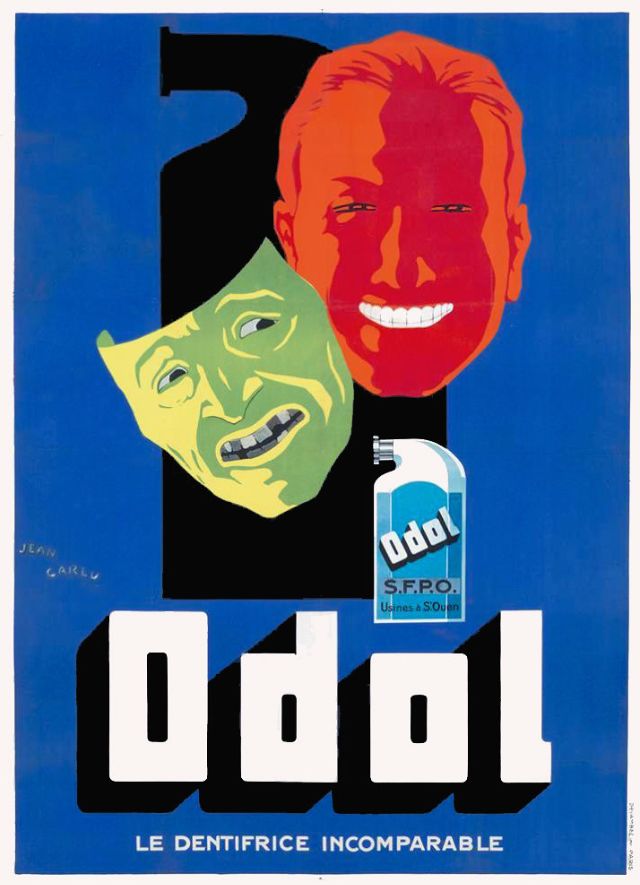
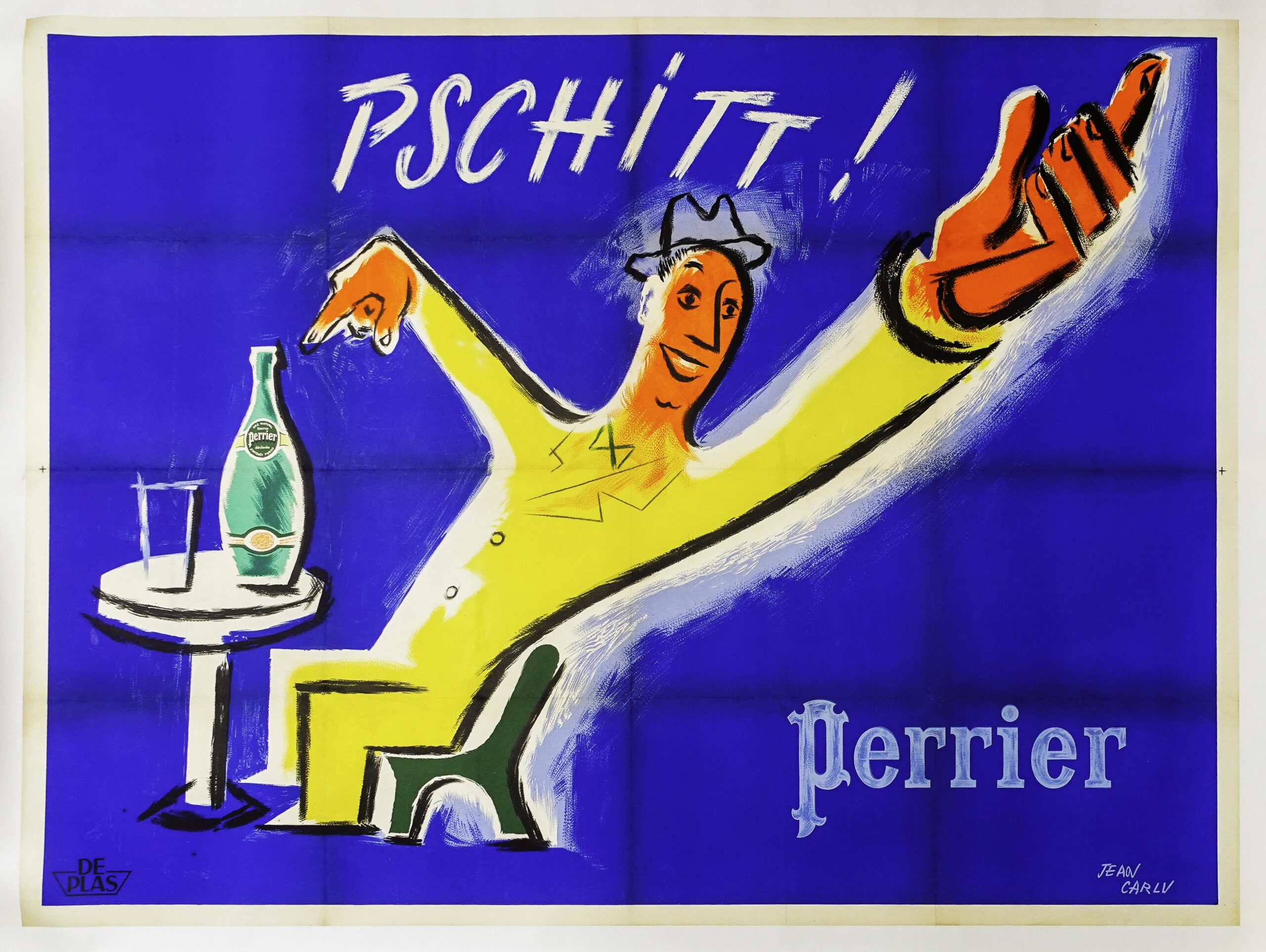
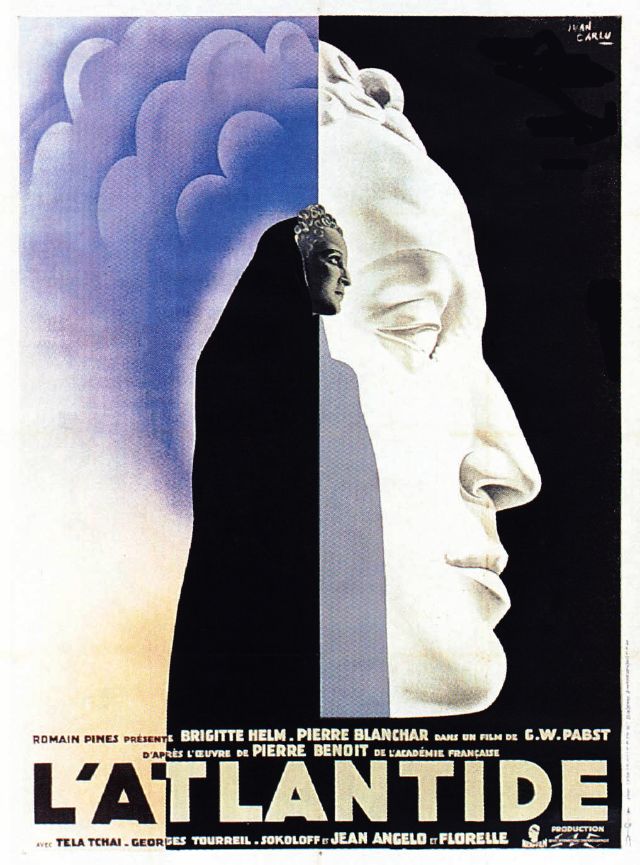
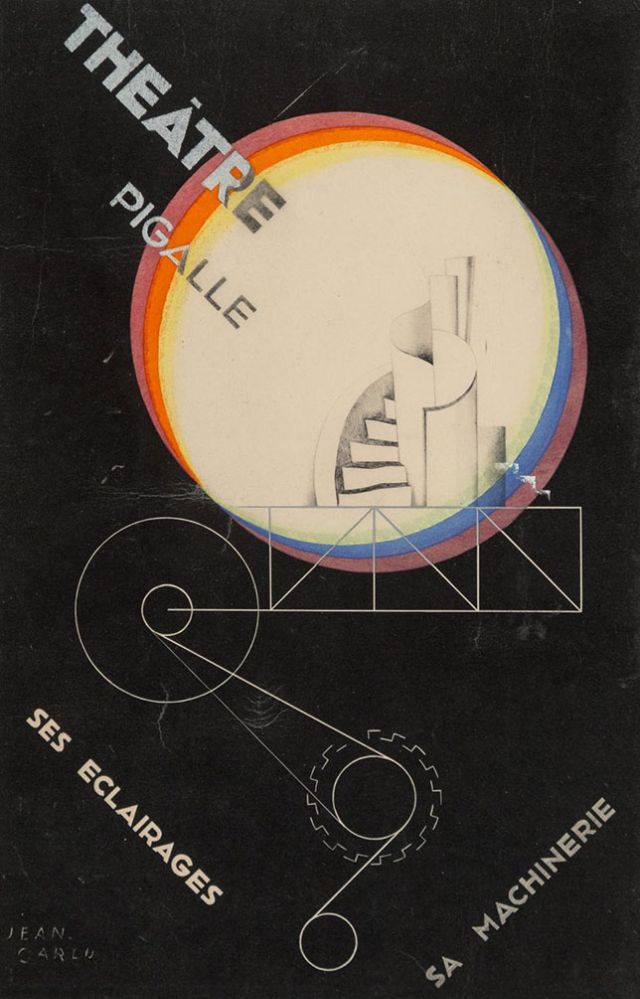
Carlu was deeply influenced by Cubism and the works of Juan Gris and Albert Gleizes, developing a symbolic visual language in which color, line, and content represented emotional values. His designs achieved a distinctive, streamlined economy of form, rarely incorporating narrative or illustrative elements and relying instead on bold geometric shapes, sharp profiles, and his recurring motif of the hand. He was one of the first graphic designers to recognize that fixing a brand image in the mind of the consumer required schematic forms and expressive colors working in concert.
Key Influences
- Cubism in Commercial Art: His translation of Cubist and Surrealist principles into accessible poster design helped bring avant-garde aesthetics into the daily visual environment of the European public.
- Brand Identity Theory: He was among the first to articulate the principle that schematic form and expressive color were essential to imprinting a trademark on the consumer’s mind, anticipating modern branding practice.
- Wartime Visual Communication: His American war production posters demonstrated the power of graphic design as a tool for mobilizing industrial and political action during global conflict.
- Technical Innovation: His pioneering use of photomontage, three-dimensional elements, and electric light in poster design expanded the technical possibilities of the medium for later generations.
- International Graphic Design: As longtime president of the Alliance Graphique Internationale, he helped shape graphic design as a recognized international profession in the postwar decades.
If you are interested in further stories of the artists who shaped Art Deco, return to our artists page to browse the full directory.
Related Products from ArtDecoCollection.com