
Paul Colin
Paul Colin was born on June 27, 1892, in Nancy, France, into a family that included the painter Alexandre-Marie Colin among its relatives. He apprenticed at a printing house in Nancy at the age of 15 and continued there through his teenage years before entering l’École des Beaux-Arts in 1913, where he achieved great academic success. He first entered the art world with the help of Eugène Vallin, a renowned furniture designer and architect, and Victor Prouvé, a sculptor, painter, and engraver. In 1923, he met André Daven, the new director of the Théâtre des Champs-Élysées, who was seeking talent and new shows, a meeting that would launch his career in Paris. He founded his own poster school, the École Paul Colin, in 1930, and taught there for over 40 years, training many of the next generation’s graphic artists and designers. Among his most prominent students were the painter Philippe Derome, the installation artist Louise Bourgeois, and the poster artist duo Lefor-Openo. Colin was awarded the Croix de Guerre for his bravery during the war and continued working until the 1970s. He died in Nogent-sur-Marne on June 18, 1985.

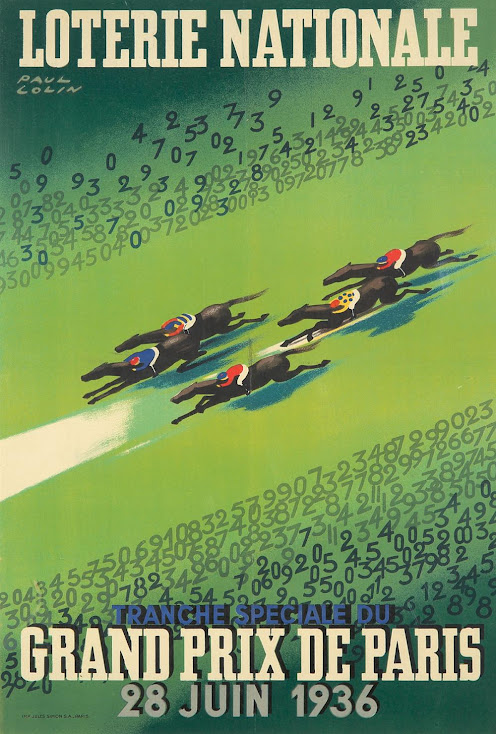
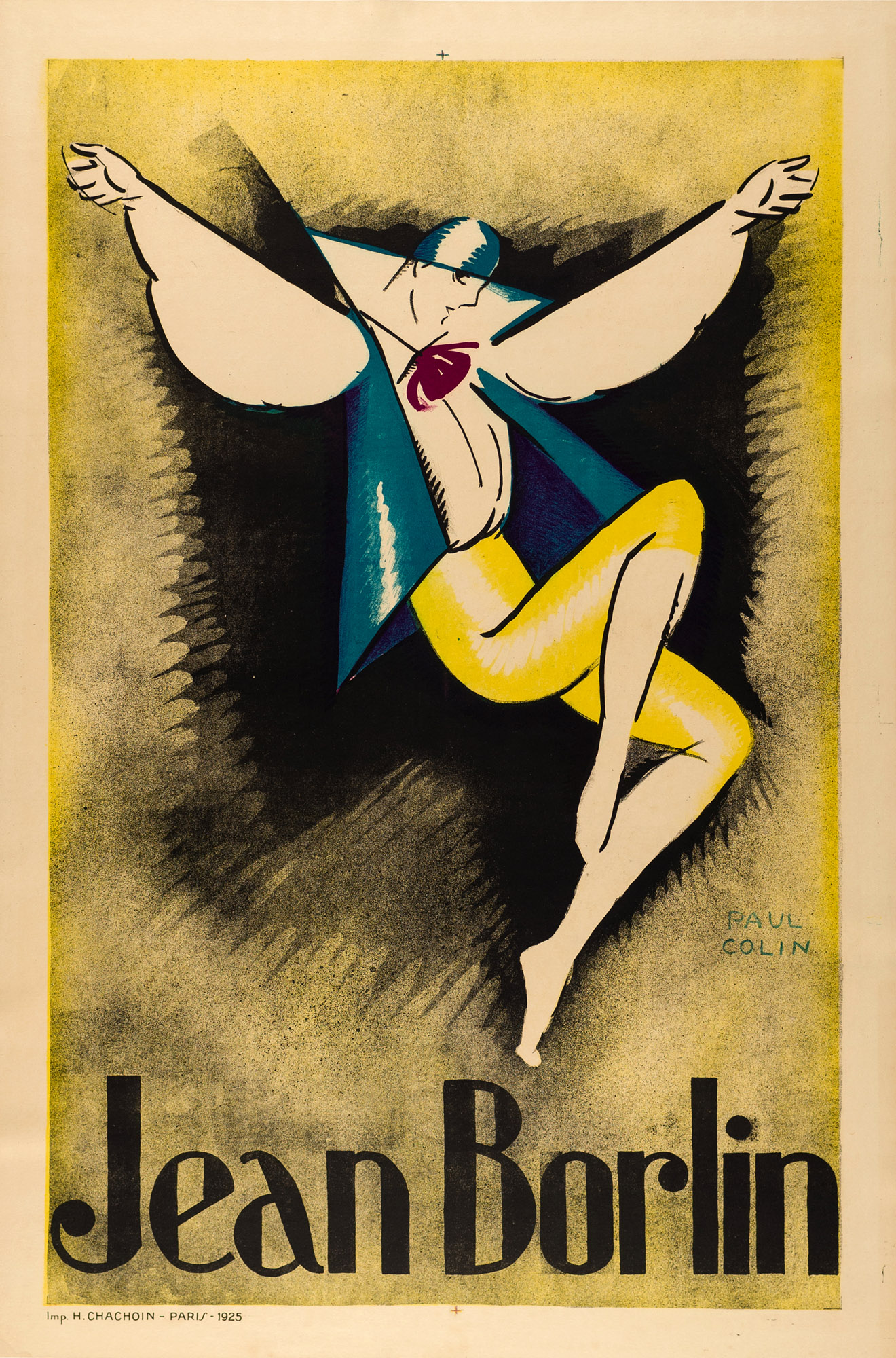
Over the course of his career, Colin created more than 1,900 posters and hundreds of stage sets, working in theater for more than 40 years. He designed posters for many of Paris’s most celebrated venues, including the Folies Bergère, the Moulin Rouge, and the Théâtre des Champs-Élysées, as well as for festivals, exhibitions, products, and companies. His breakthrough came in 1925, when he designed the poster for La Revue nègre, the show that introduced 19-year-old Josephine Baker to Paris and launched both of their careers simultaneously. The poster, executed in only red and black, featured a stylized portrait of Baker flanked by two caricatured figures and used Cubist distortion to capture the rhythm of jazz, which was new to France at the time. He followed this with Le Tumulte noir in 1929, a celebrated portfolio painted on stone and hand-colored using the time-consuming pochoir stencil technique, paying tribute to Baker and the African American performers who had brought the Jazz Age to Paris. Colin and Baker became lifelong friends after a brief romance, and in 1927, he illustrated her published memoir and organized the famous “Bal Nègre,” an event attended by some 3,000 Parisians. He also designed posters for French films such as Le Voyage Imaginaire and produced stage sets and costume designs that made him famous throughout Paris. An original Colin poster of Adelaide Hall advertising Blackbirds at the Moulin Rouge sold at Swann Auction Galleries in New York in 2003 for $167,500, a record high for his work.
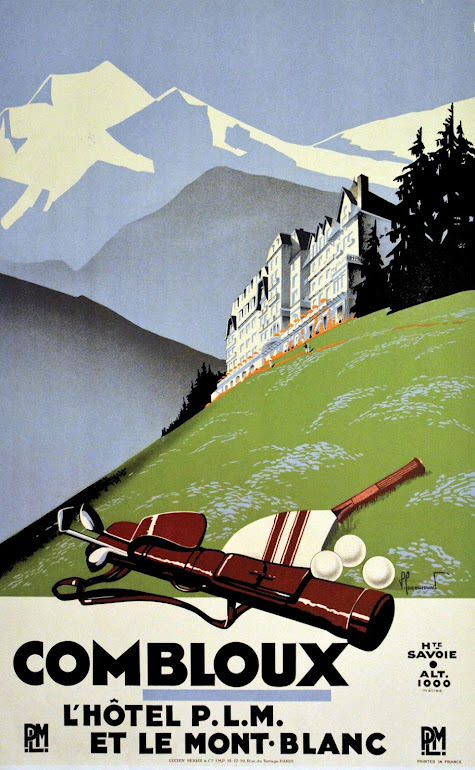
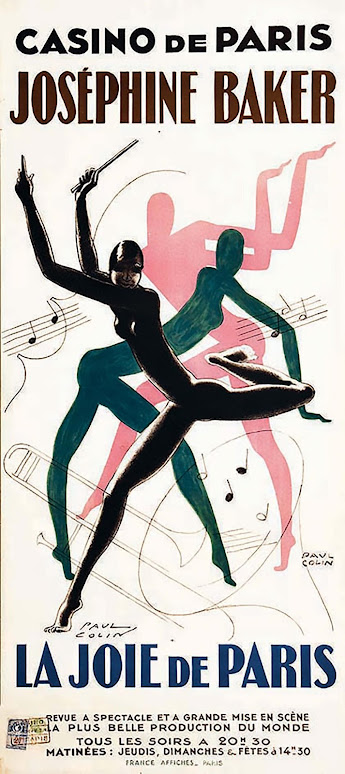
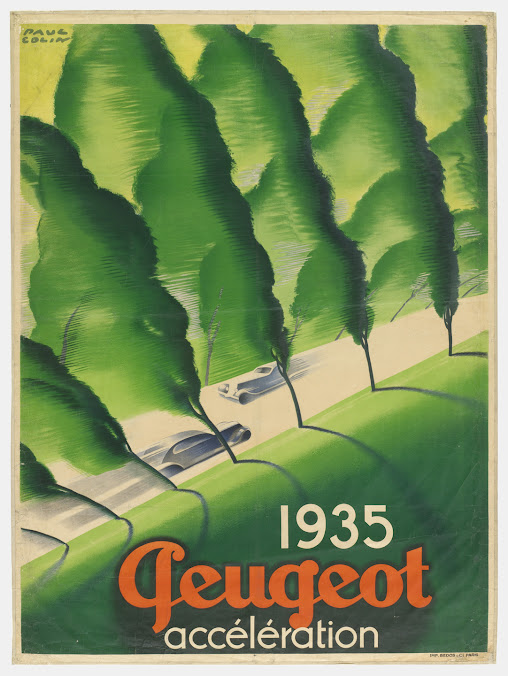
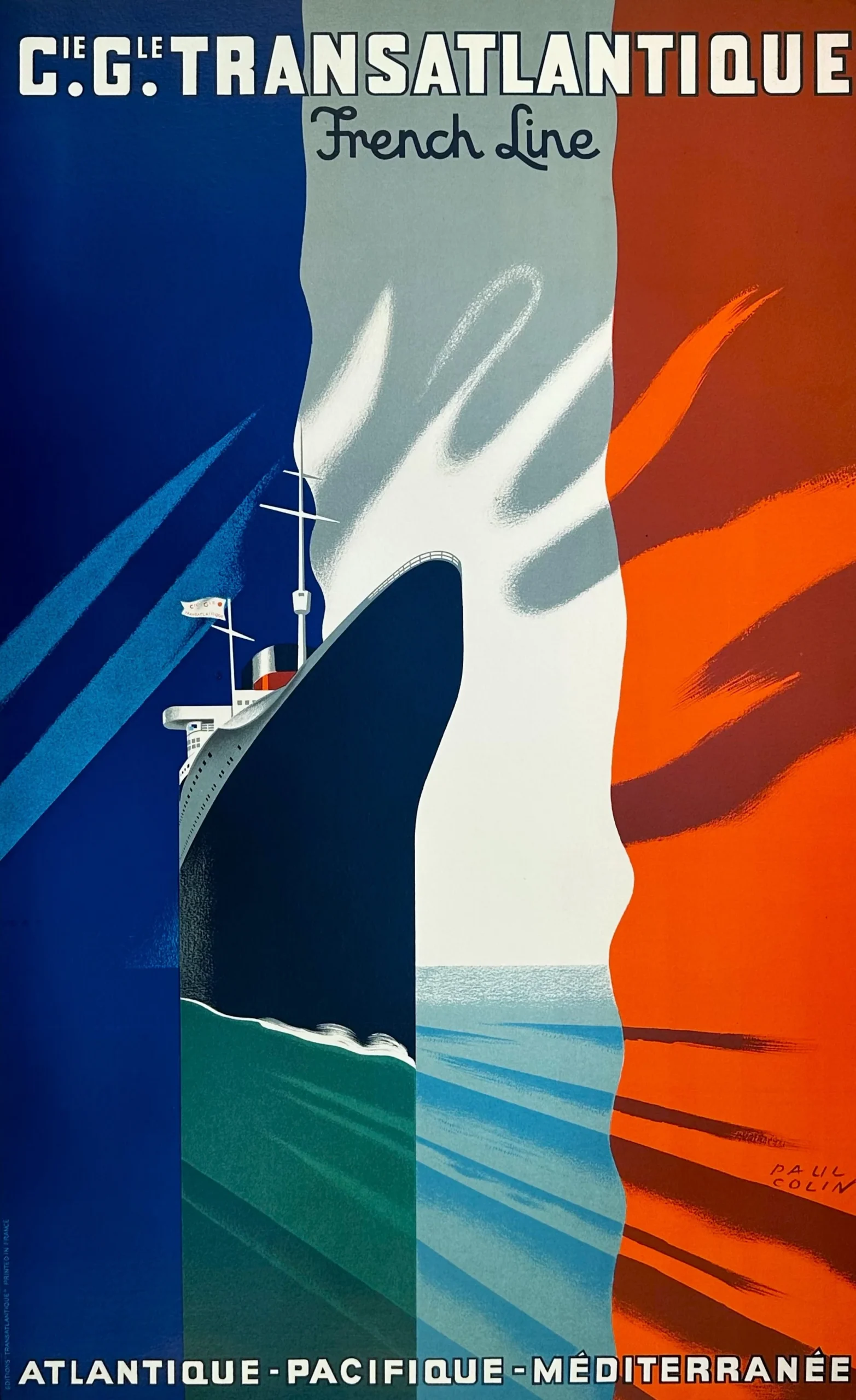
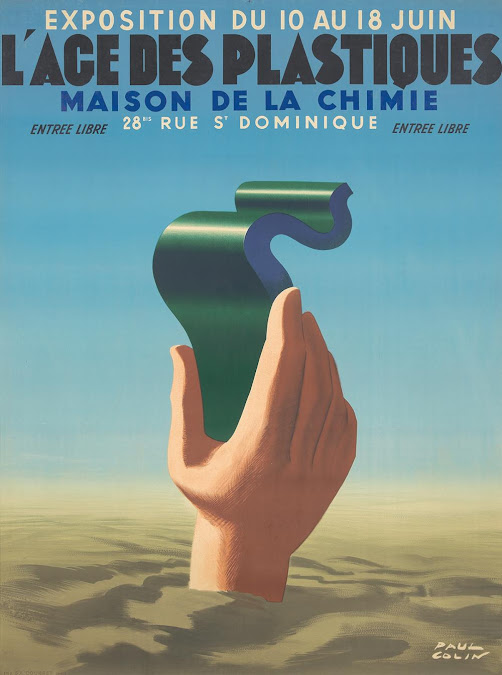

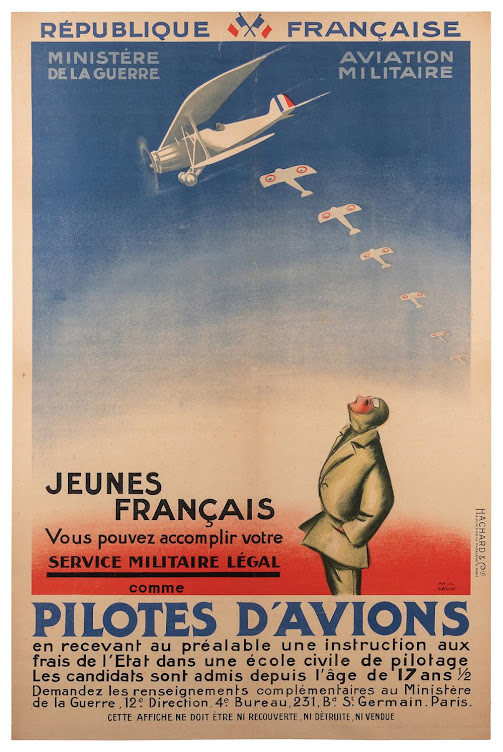
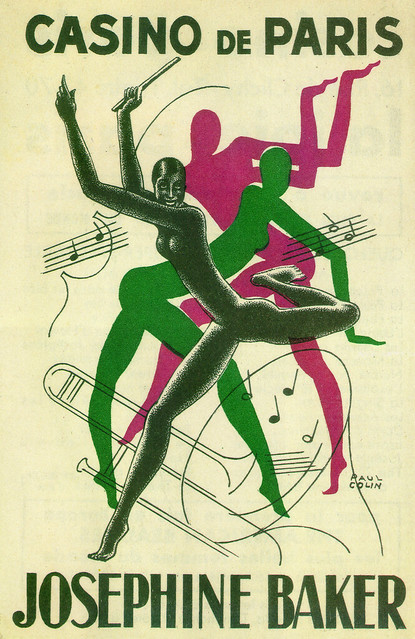
Colin’s work is praised for its perfect combination of organic and graphic themes with geometric forms, drawing influence from both Cubism and Surrealism through exaggerated shapes, striking colors, and highly stylized figures. He used a large palette to emphasize the energy and meaning of his subjects, often juxtaposing caricatured humanoid forms with geometrically overlapping objects in the manner of Cubist collage. His bold imagery, strong, clean lines, and brilliant colors became hallmarks of his work and showcased his exceptional command of visual communication.
Key Influences
- Jazz Age Visual Culture: His posters for La Revue nègre and Le Tumulte noir defined how the music, dance, and energy of the Jazz Age were visually represented in interwar Paris.
- Josephine Baker’s Image: His portraits and posters were instrumental in creating the iconic visual identity of Josephine Baker and shaping how she was perceived by French audiences and the wider world.
- Theater and Poster Design: His decades of work for major Parisian venues helped establish the poster as an essential element of theatrical promotion and identity in the 20th century.
- École Paul Colin: His school trained generations of graphic artists and designers, extending his influence on French commercial art well beyond his own output.
- Pochoir Technique: His use and popularization of the labor-intensive pochoir stencil method preserved a traditional craft technique within the modern decorative arts.
If you are interested in further stories of the artists who shaped Art Deco, return to our artists page to browse the full directory.
Related Products from ArtDecoCollection.com