

George Barbier
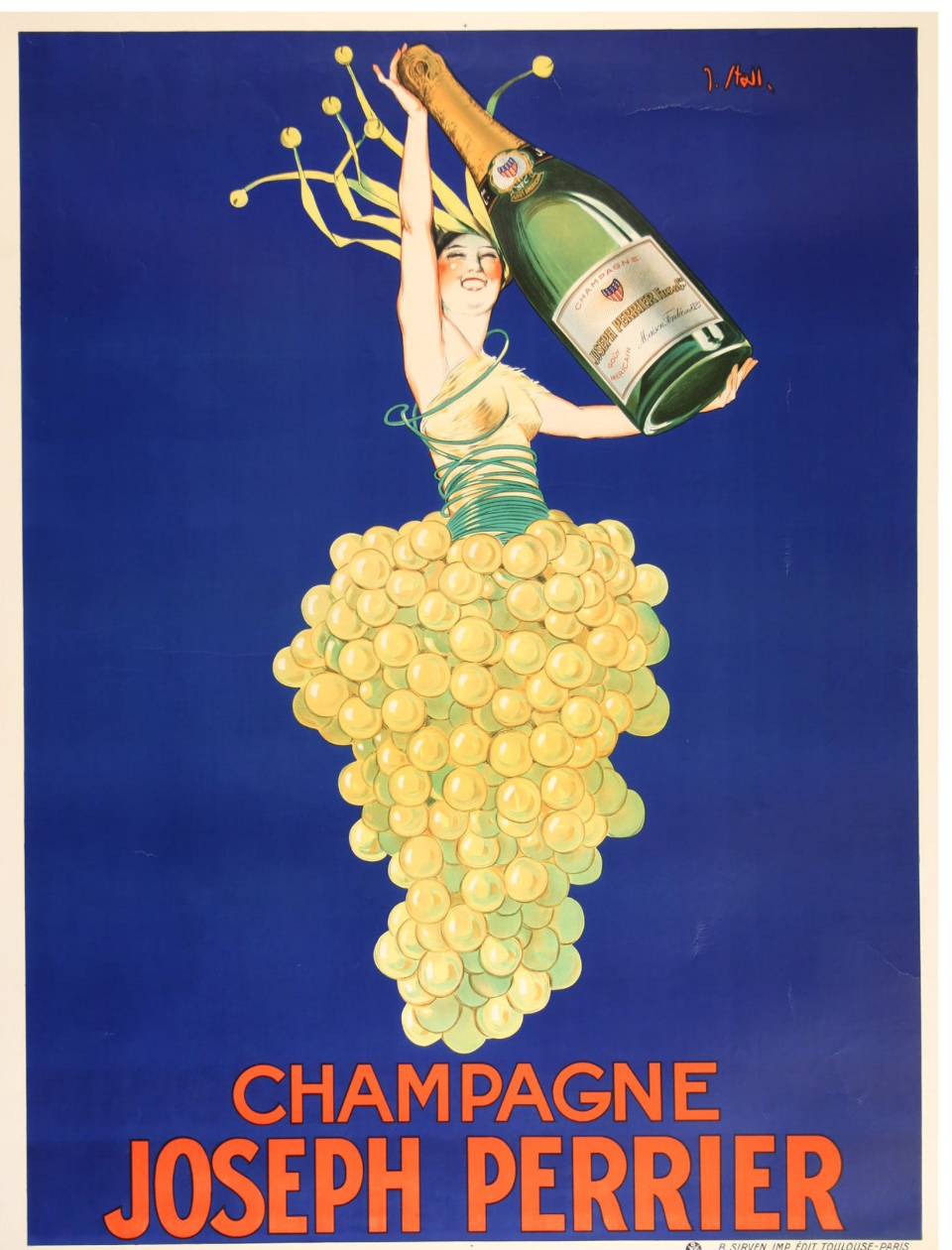
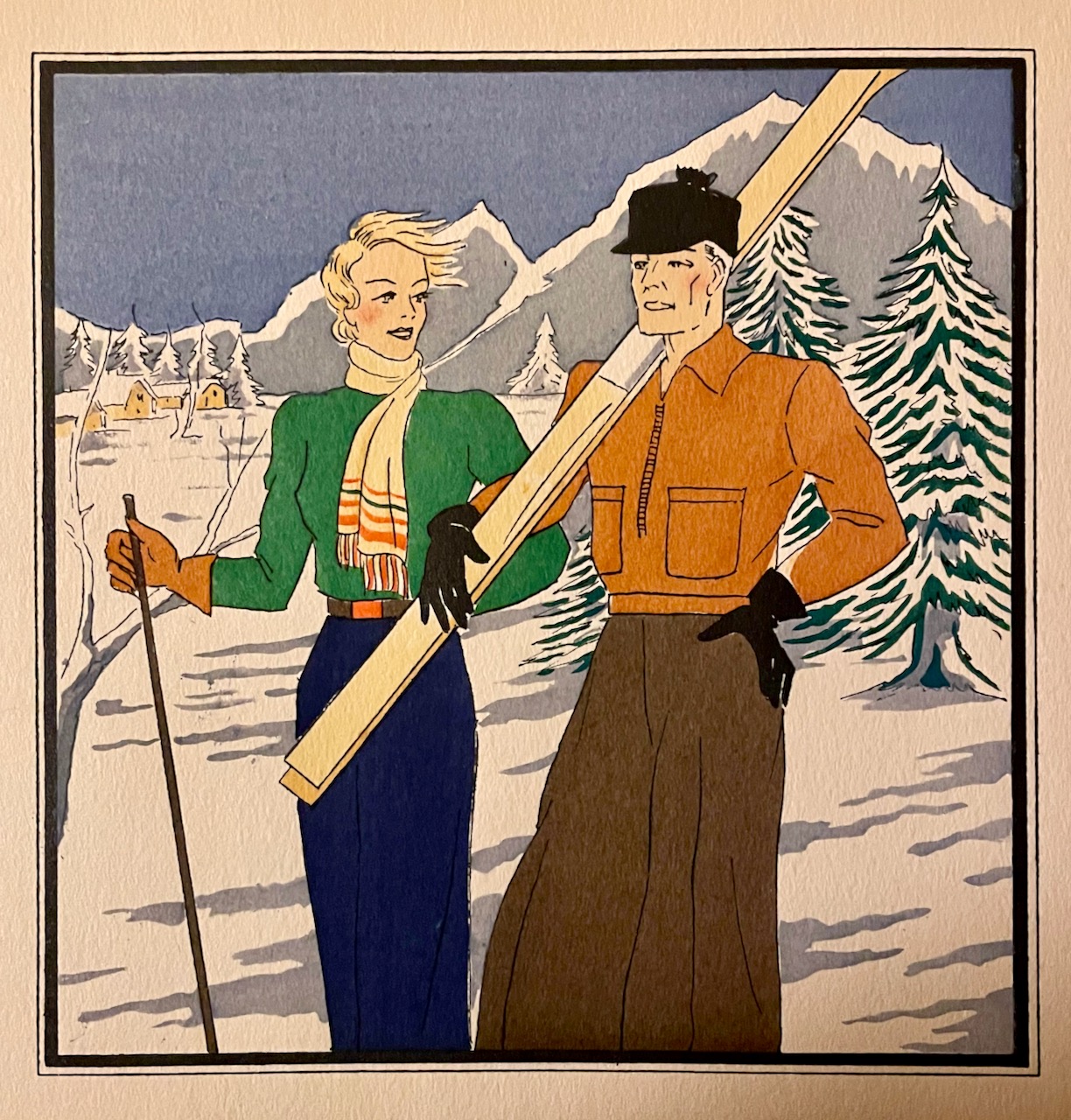
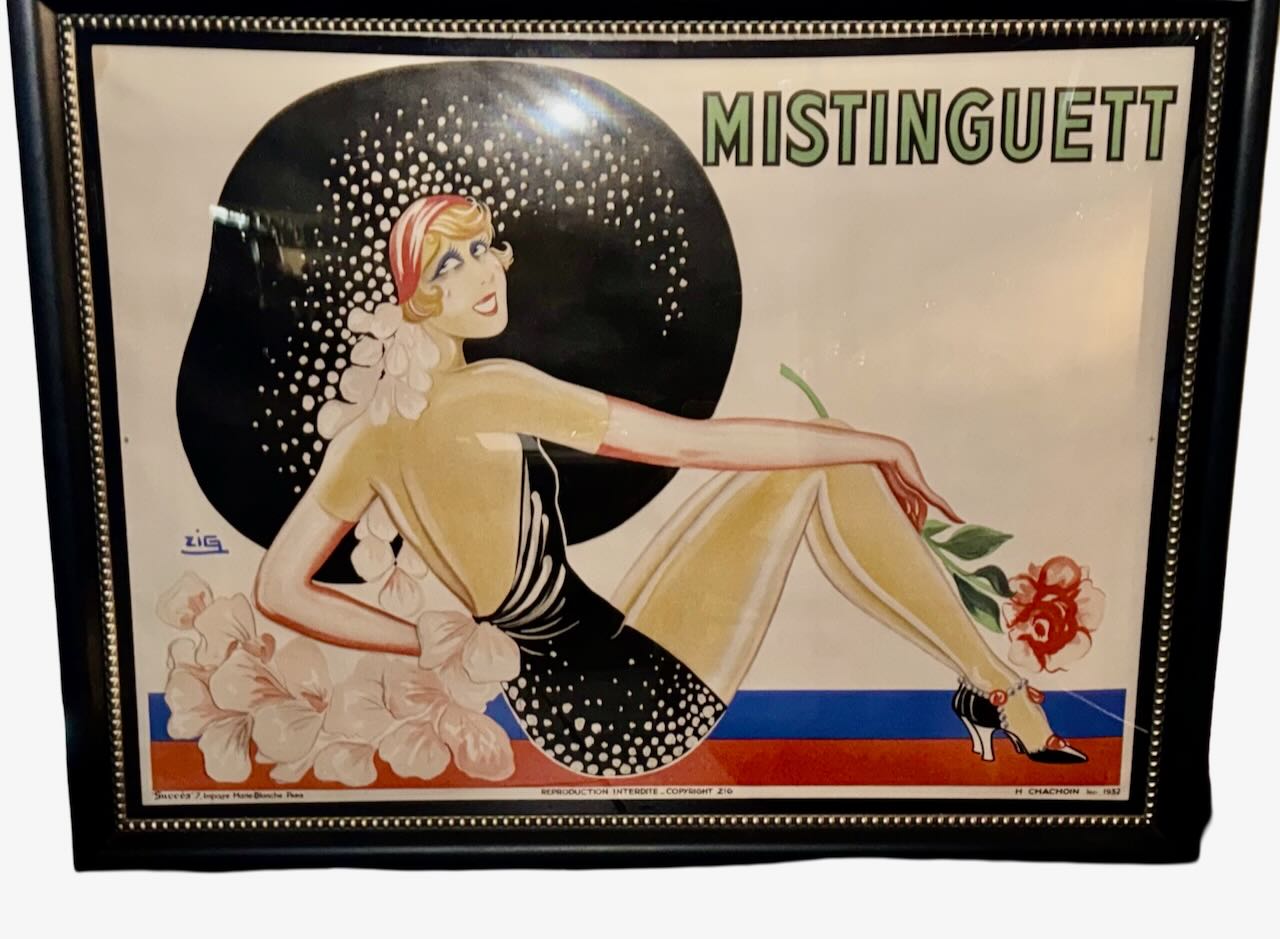
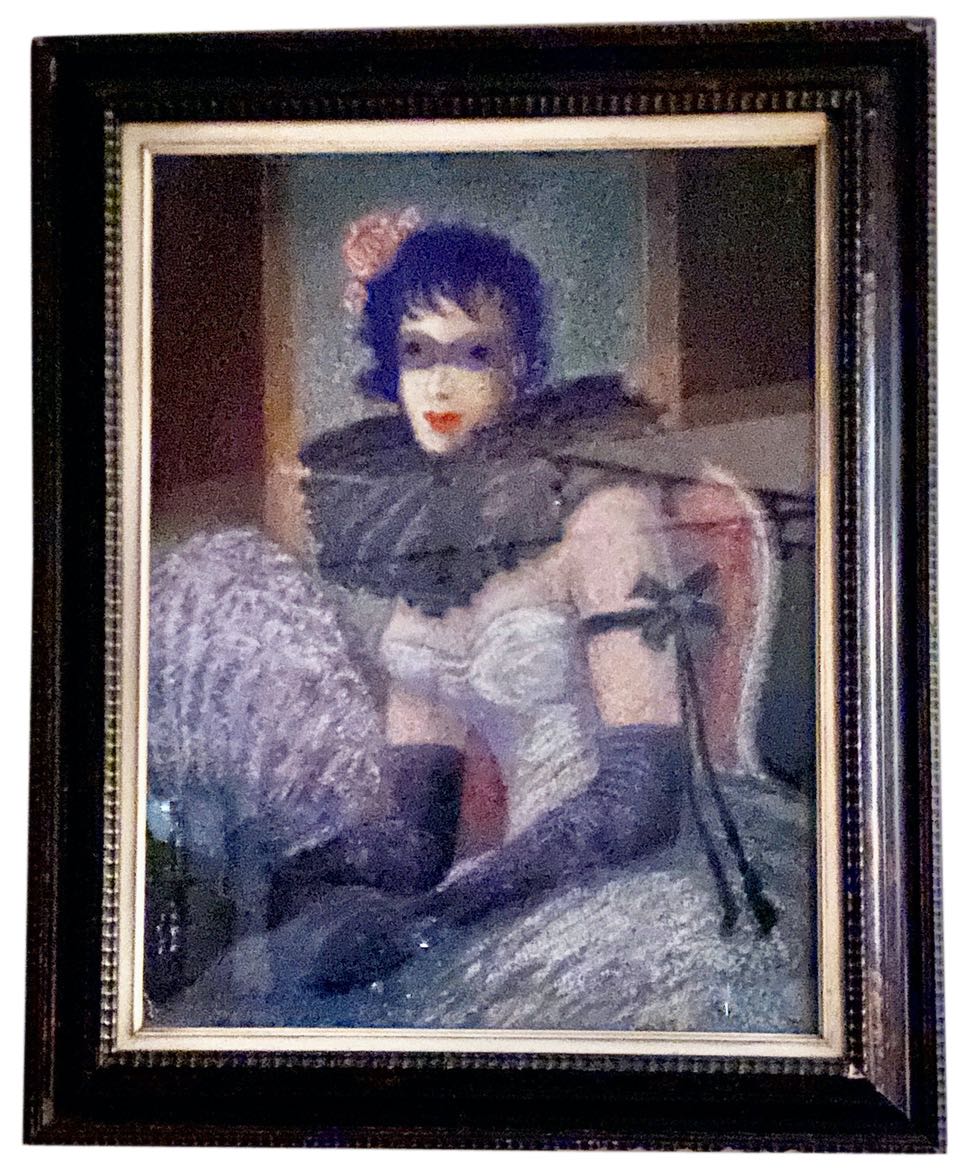
George Barbier was born Georges Augustin Barbier on October 16, 1882, in Nantes, France. He studied at the prestigious École des Beaux-Arts in Paris under Jean-Paul Laurens, where he absorbed a rich range of artistic influences. Barbier mounted his first exhibition in 1911 at the age of 29 and was immediately swept to the forefront of his profession with commissions to design theater and ballet costumes, illustrate books, and produce haute couture fashion illustrations. He led a group of artists from the École des Beaux-Arts, nicknamed by Vogue “The Knights of the Bracelet,” a tribute to their fashionable and flamboyant mannerisms and style of dress. This circle included his first cousins Bernard Boutet de Monvel and Pierre Brissaud, as well as Paul Iribe, Georges Lepape, and Charles Martin. Beyond illustration, Barbier turned his hand to jewelry, glassware, and wallpaper design, and contributed essays and articles to the prestigious Gazette du Bon Ton. In the mid-1920s, he collaborated with fellow Art Deco artist Erté to design sets and costumes for the Folies Bergère. Barbier died in 1932 at the very pinnacle of his success and is buried in Cemetery Miséricorde in Nantes.
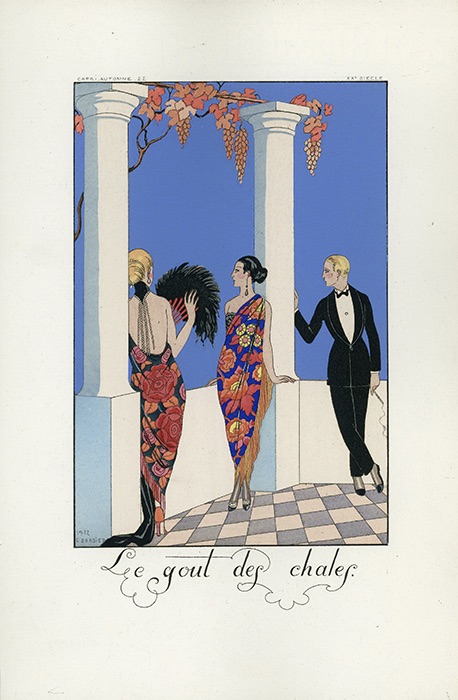

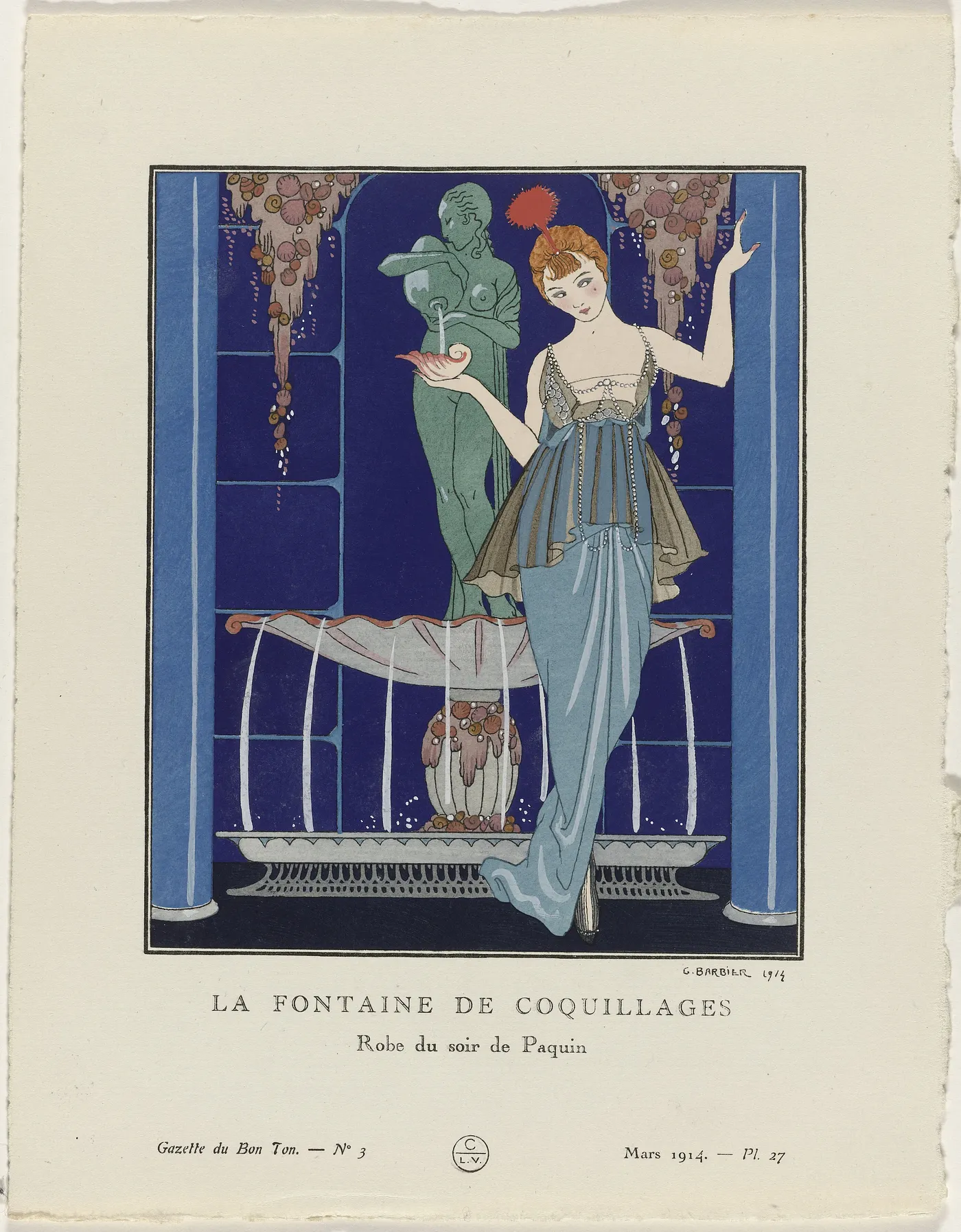
Barbier’s illustrations graced the pages of esteemed publications such as La Gazette du Bon Ton, a luxurious monthly magazine that epitomized the elegance and sophistication of the era, as well as Vogue and L’Illustration. He collaborated with leading figures in the fashion world, including Paul Poiret, known as the “King of Fashion,” jewelry house Cartier, and luxury brand Richard Hudnut. His explorations of classical antiquity at the Louvre, where he studied Greek pottery, Egyptian artifacts, Japanese prints, and Persian miniature paintings, left an indelible mark on his compositions. The Ballets Russes captivated him with its avant-garde performances, and he developed a deep admiration for its dancers, producing albums dedicated to celebrating their artistry. His passion for the stage extended to designing costumes for luminaries like prima ballerina Anna Pavlova. Many of Barbier’s works depicted intimacy between women, and his illustrations for Pierre Louÿs’s Songs of Bilitis drew clear influence from Archaic Greek art. He moved in circles with other queer artists in 1920s Paris, a city known for its increasingly liberal atmosphere. His commercial work extended to advertisements, catalogs, wallpapers, and textiles, establishing him as a figure whose output transcended traditional boundaries between fine and applied art.

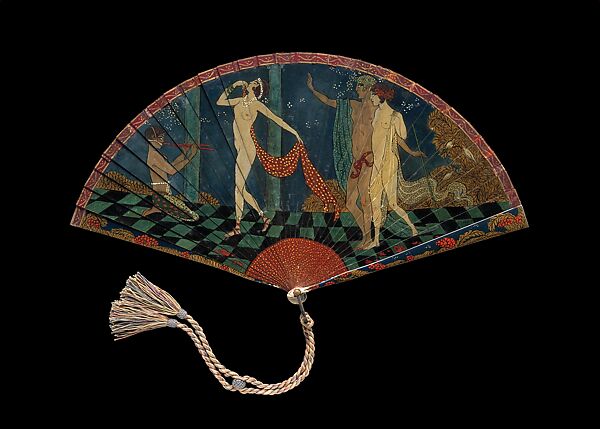
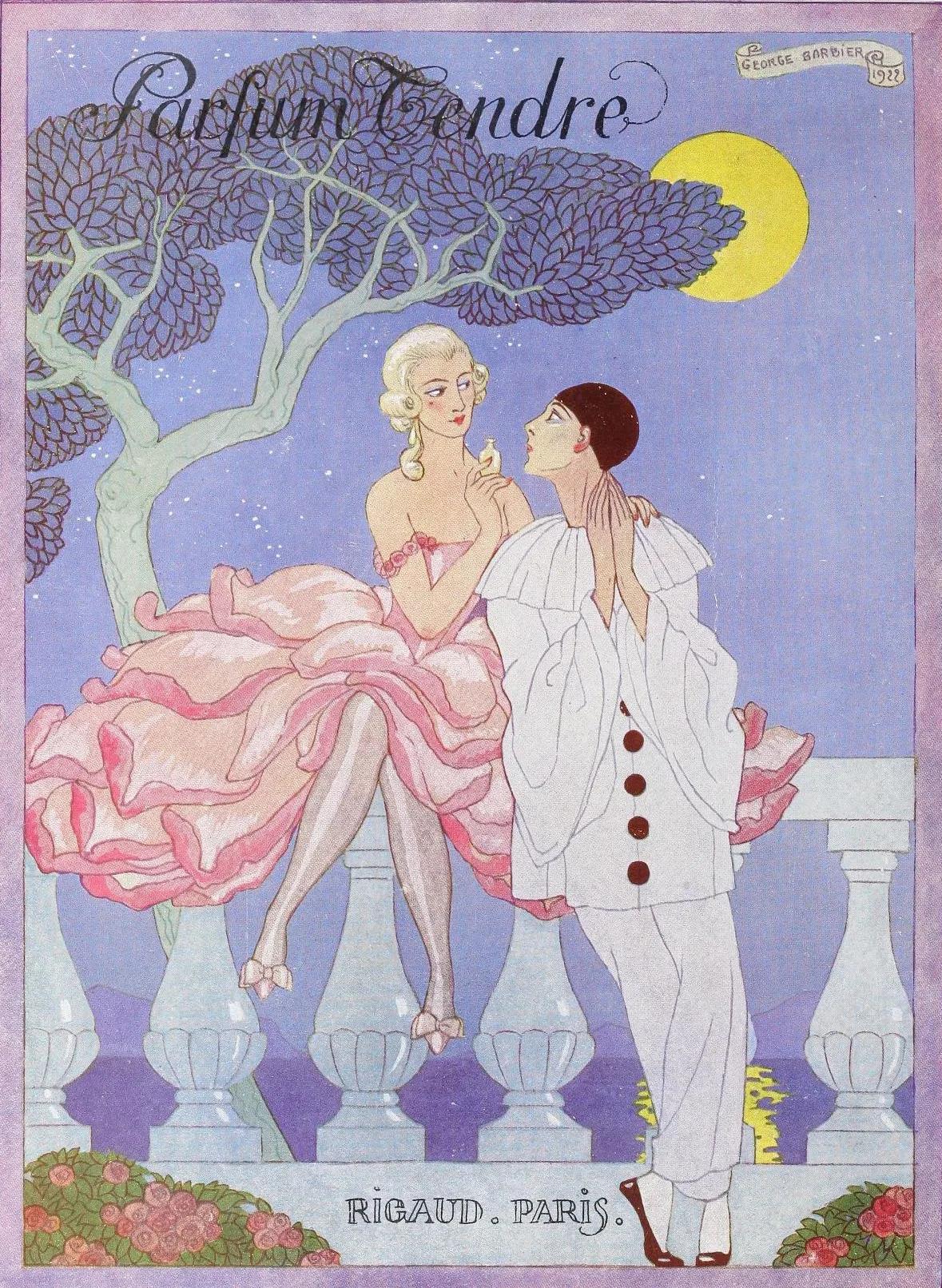

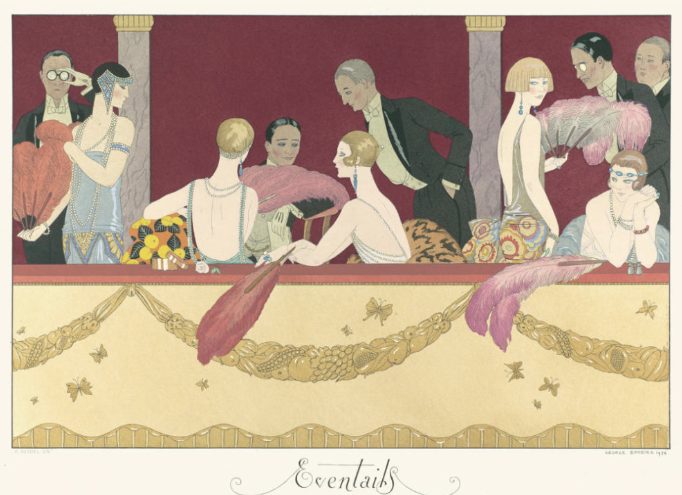
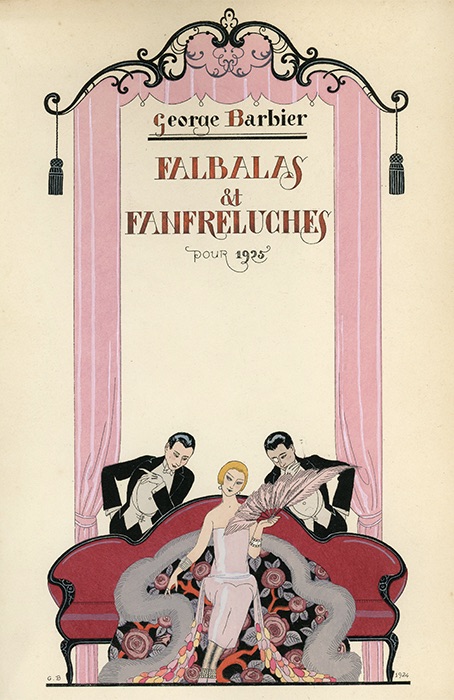
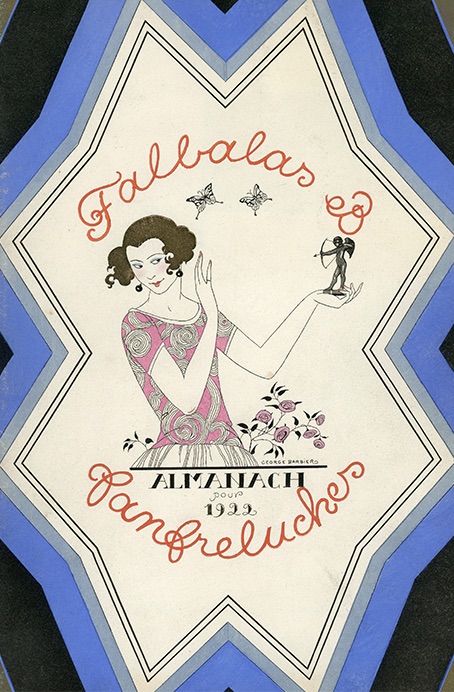
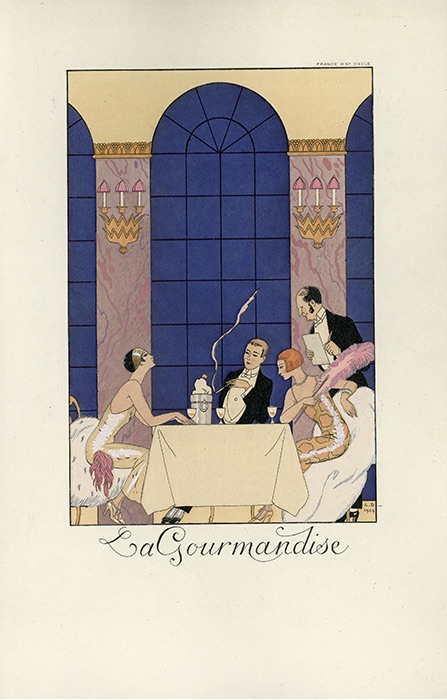
Barbier’s work was a fusion of Art Deco’s geometric modernity and the sensual allure of Art Nouveau, often layered with references to classical antiquity and ancient mythology. His illustrations featured jewel-toned palettes intricately built up with colors, patterns, and dynamic movement, creating miniature worlds of elegance and sophistication. His compositions drew freely from Greek, Egyptian, Japanese, and Persian visual traditions, blending them with the androgynous, boyish silhouettes and flowing evening gowns of 1920s fashion into a style that was unmistakably his own.
Key Influences
- Art Deco Aesthetic: As leader of “The Knights of the Bracelet,” Barbier and his circle helped define the visual language of the Art Deco period through their illustrations and personal style.
- Fashion Illustration: His work for publications like Gazette du Bon Ton and Vogue elevated fashion illustration to a recognized art form and set a standard for the genre throughout the 1920s.
- Queer Representation: His depictions of intimacy between women and his illustrations for Songs of Bilitis provided rare and sympathetic visibility for queer themes in early 20th-century art.
- Cross-Disciplinary Design: His movement between illustration, costume design, jewelry, glassware, and wallpaper demonstrated that artistic vision could unify diverse decorative disciplines.
- East-West Visual Fusion: His synthesis of European, Egyptian, Japanese, and Persian artistic traditions influenced how later illustrators and designers approached multicultural visual references.
If you are interested in further stories of the artists who shaped Art Deco, return to our artists page to browse the full directory.
Related Products