
Demetre Chiparus
Demétre Chiparus was born in Dorohoi, Romania in 1886 and studied first in Italy under Raffaello Romanelli before continuing his education at the École des Beaux-Arts in Paris. He arrived at a time when the city was the center of the decorative arts and quickly immersed himself in its creative energy. By 1914, he was exhibiting at the Salon, developing a reputation for precision, elegance, and an instinct for what captivated audiences. Chiparus understood the relationship between fine art and production, working with major foundries such as Etling and Lehmann to create editions across different price levels. This flexibility, along with his ability to adapt themes from the stage and modern life, helped his work reach a broad audience while maintaining artistic distinction. He used pseudonyms to protect his commissions and retain control over his output, which allowed him to explore new ideas without restriction. Throughout his life in Paris, Chiparus represented the vitality of the art-deco era, producing work that combined luxury, movement, and technical mastery. His commitment to craft and his understanding of cultural trends positioned him as one of the defining sculptors of his generation.
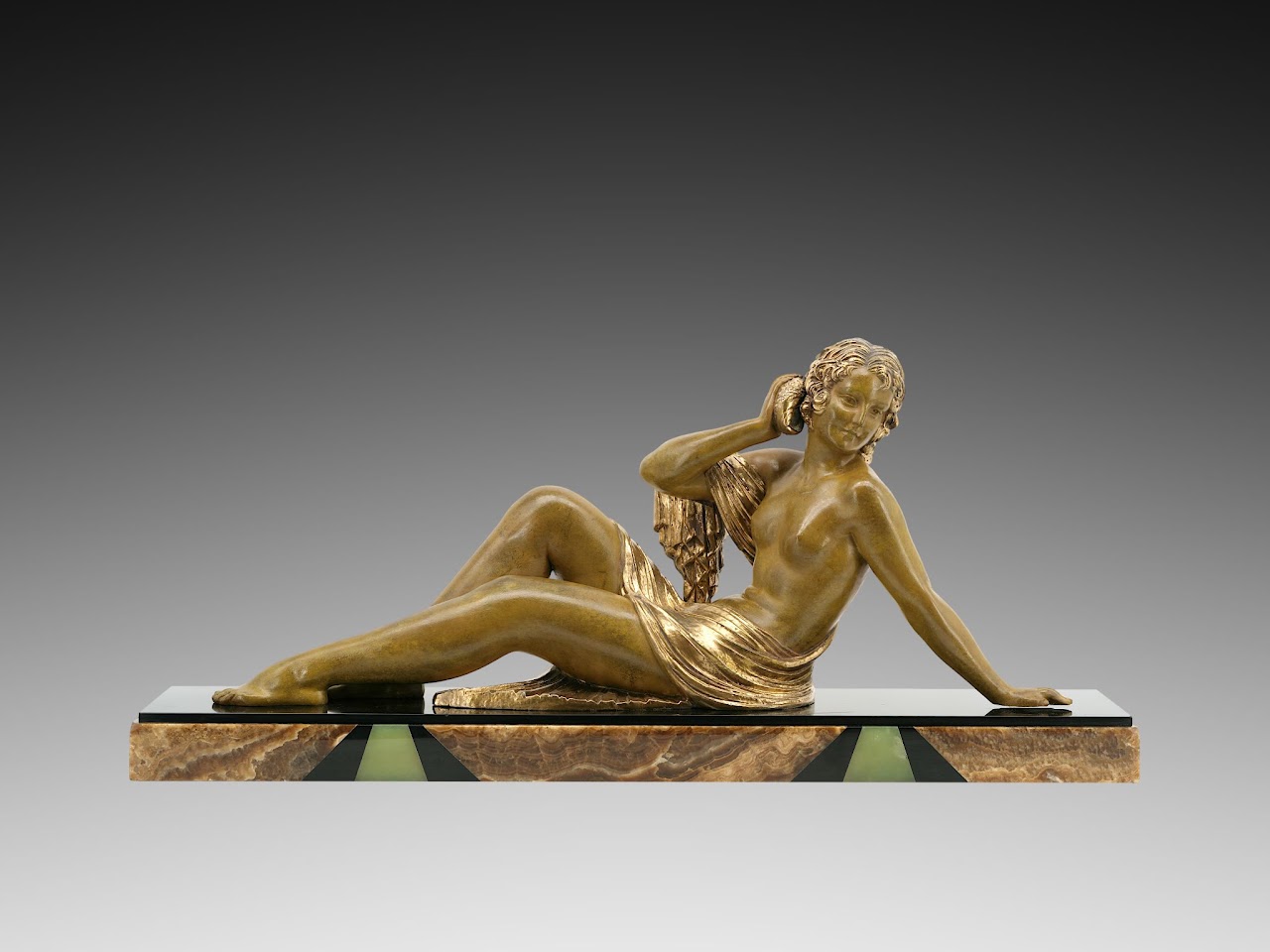


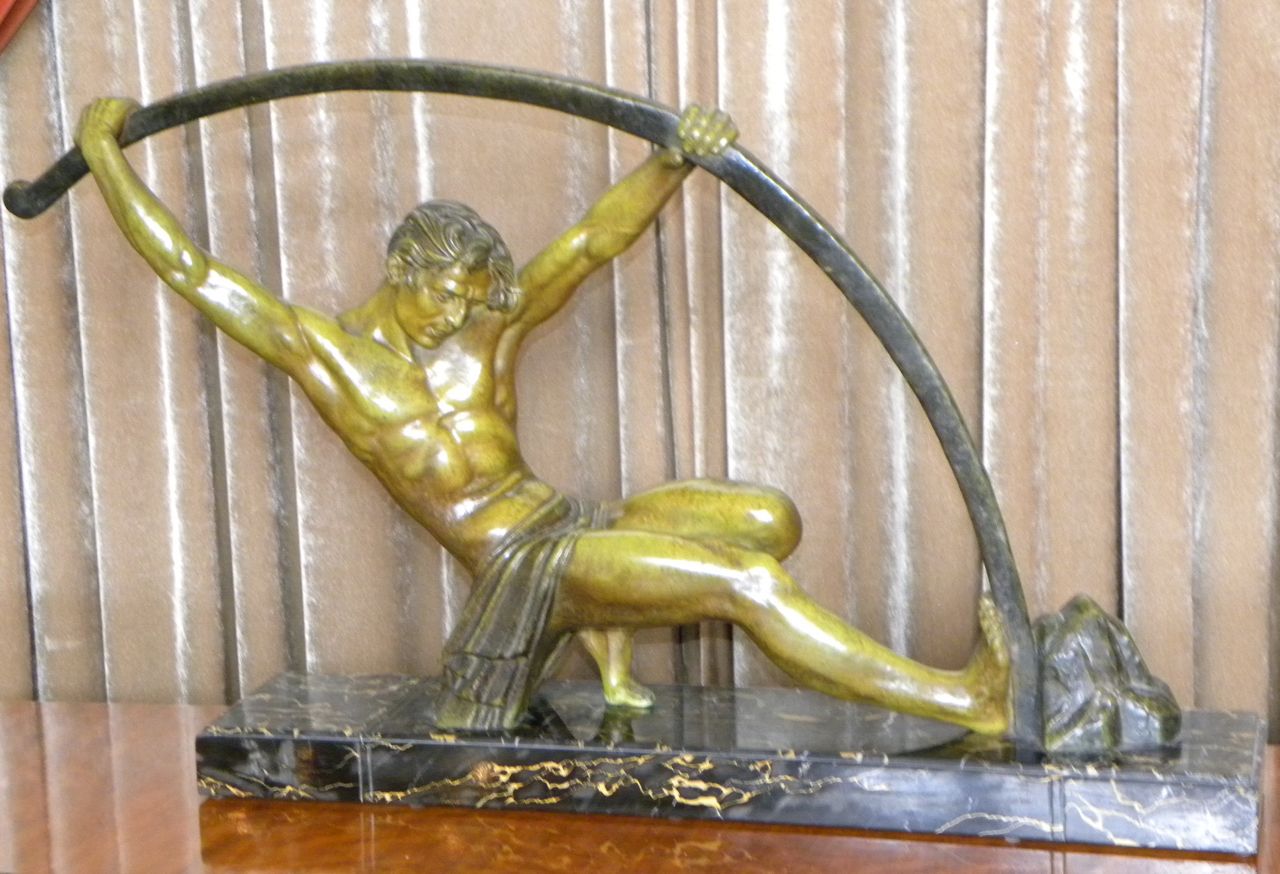
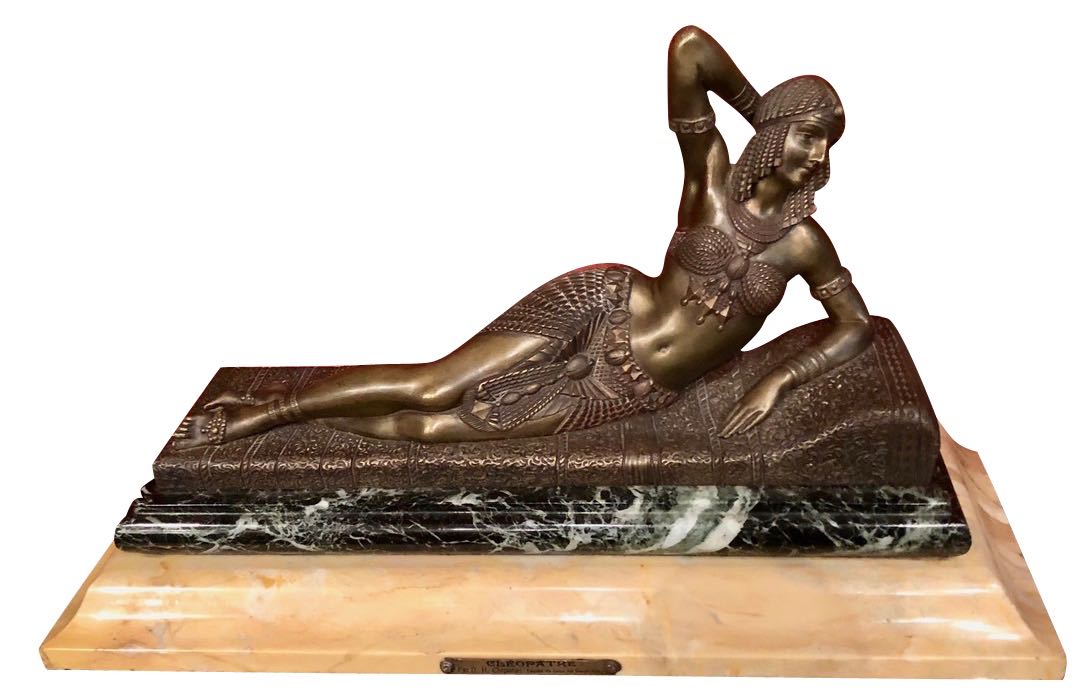
Chiparus’s sculptures are defined by their grace, symmetry, and theatrical sense of motion. He was best known for figures of dancers and performers, inspired by the Ballets Russes, Parisian theatre, and early cinema. His mastery of the chryselephantine technique, blending bronze with ivory to create vivid lifelike contrasts, gave his sculptures an unmatched presence. Each figure reflects both his academic training and his modern sensibility, with elongated lines and stylized anatomy that captured the rhythm of the age. Egyptian motifs entered his work after the discovery of Tutankhamun’s tomb, merging ancient imagery with the sleek geometry of art-deco design. Many of his finest pieces were produced between 1914 and 1933, during the height of Paris’s creative boom, and they continue to represent the optimism and refinement of that period. His art remains celebrated for its ability to combine technical innovation, expressive form, and the glamour of a world that still fascinates collectors today. Every sculpture by Chiparus, no matter the scale or material, reflects his belief that elegance and craftsmanship should never be separate from emotion and storytelling.


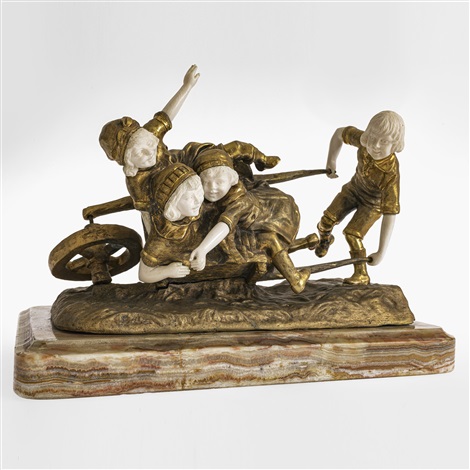


Chiparus’s style merges classical skill with the vitality of the modern stage. His figures are elegant and elongated, designed with a rhythmic balance that gives motion even to a still pose. He used refined contrasts of material, polished ivory for the skin and darkened bronze for costume, to enhance realism and elegance. Many of his models were issued in multiple versions, from elaborate bronze and ivory editions to more accessible castings, reflecting both his artistic range and his understanding of the market. His sculpture captures a sense of timeless poise, translating the drama of performance into a calm and enduring physical form.
Key Influences:
• Ballets Russes: The avant-garde choreography and dramatic costuming provided inspiration for pose, gesture, and movement.
• Chryselephantine technique: The union of bronze and ivory achieved visual warmth and precision that became his hallmark.
• Egyptian revival: After the 1922 discovery of Tutankhamun’s tomb, motifs of ancient Egypt infused his sculptures with new symbolism.
• Parisian theatre and early cinema: The glamour of performers and stage lighting translated into expressive and charismatic forms.
• Foundry collaboration and editions: Partnerships with Etling and Lehmann enabled high-quality casts in a range of materials and finishes.
If you are interested in further stories of the artists who shaped Art Deco, return to our artists page to browse the full directory.

Related Products from ArtDecoCollection.com