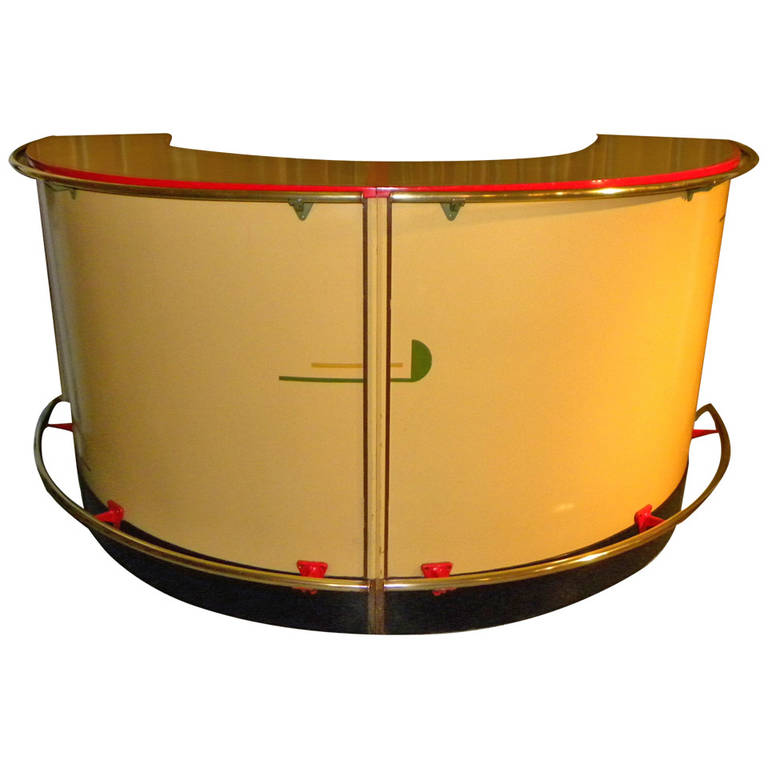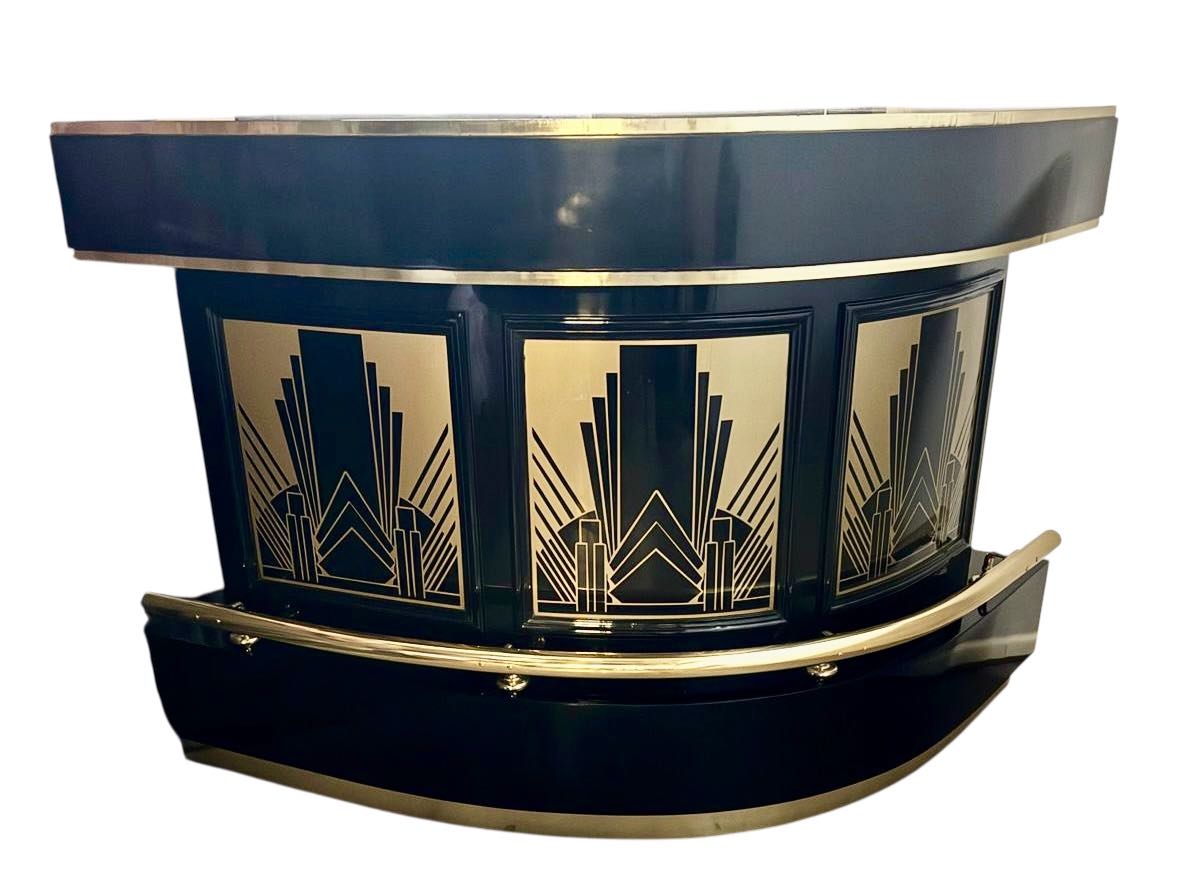

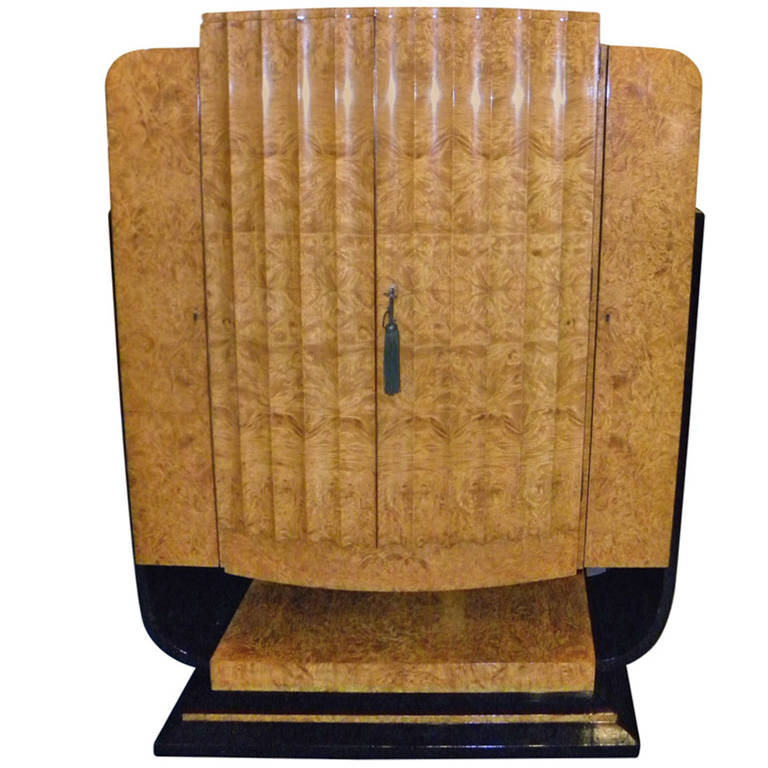
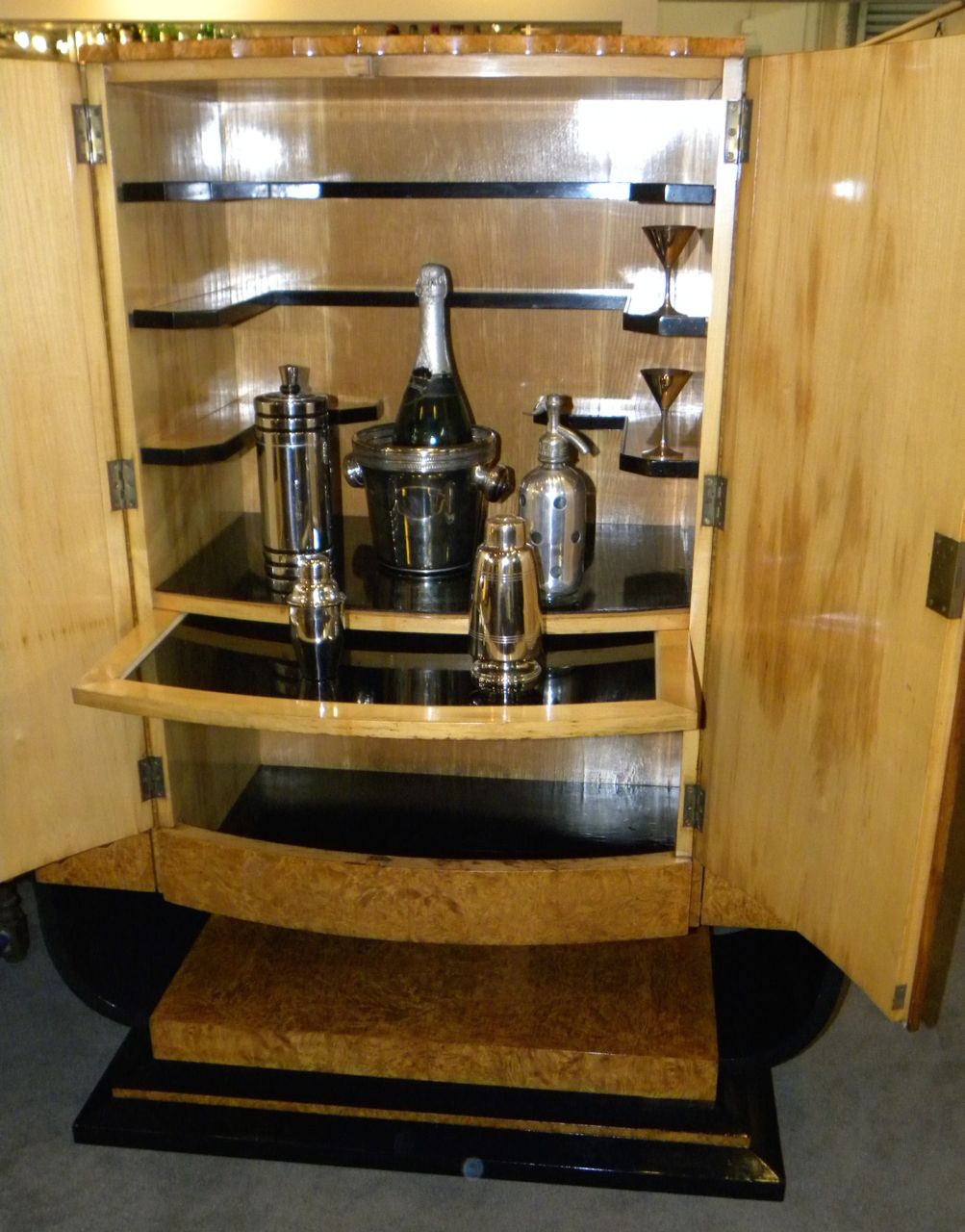
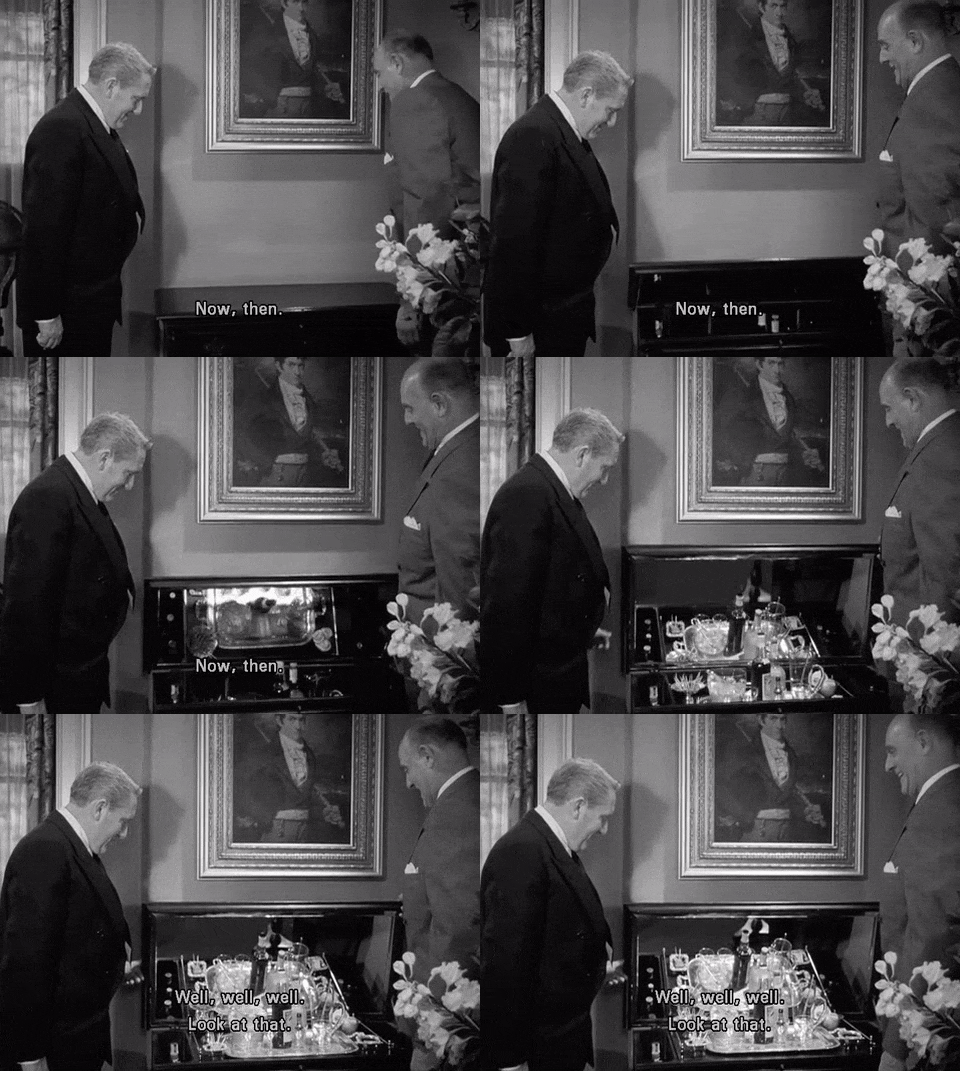
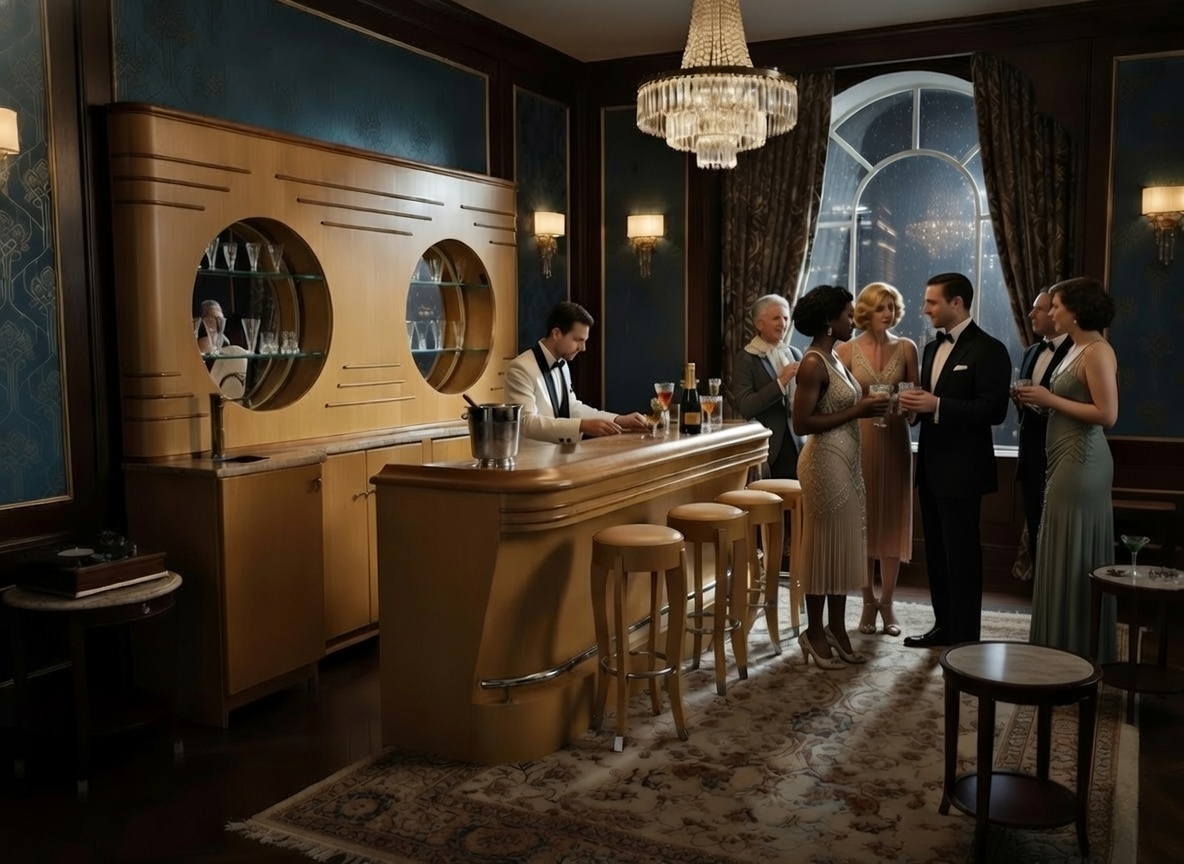
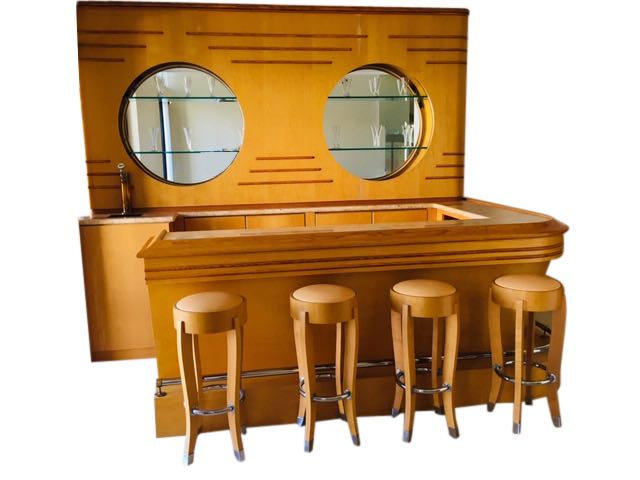
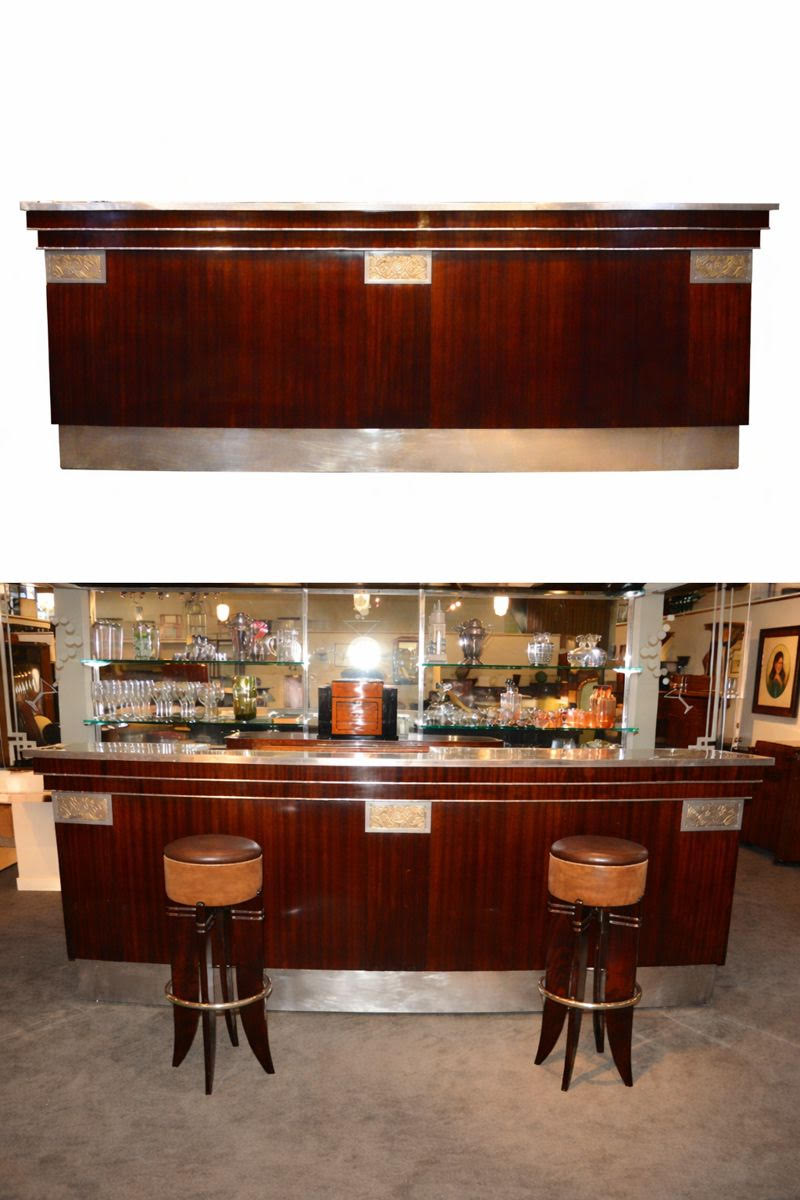
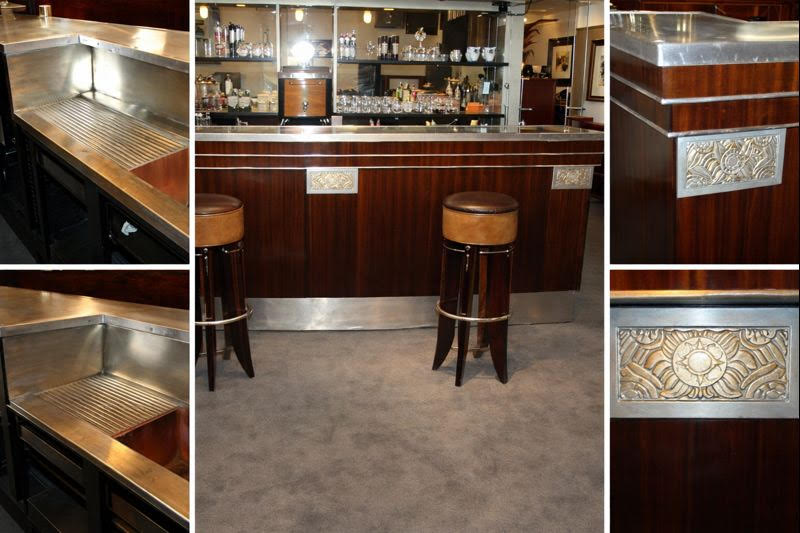
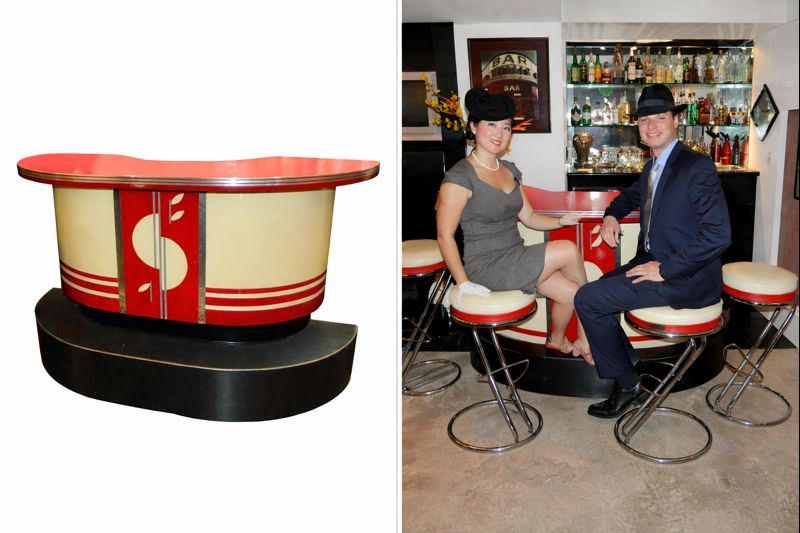
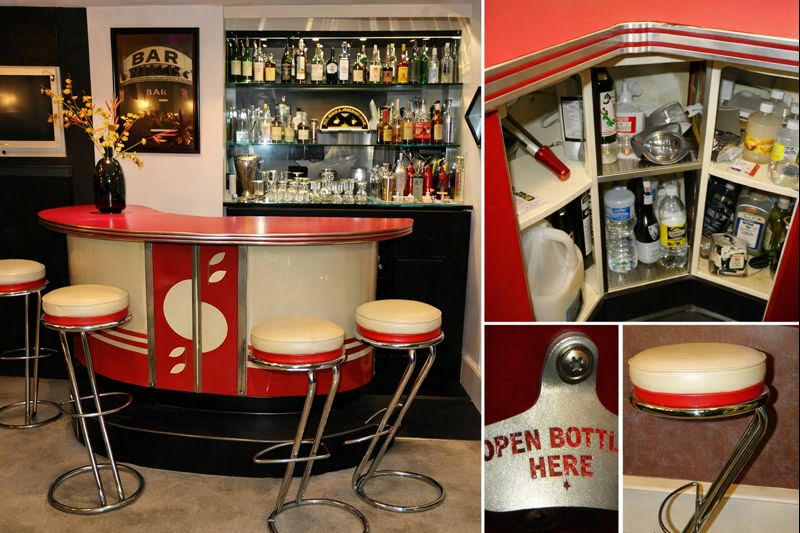
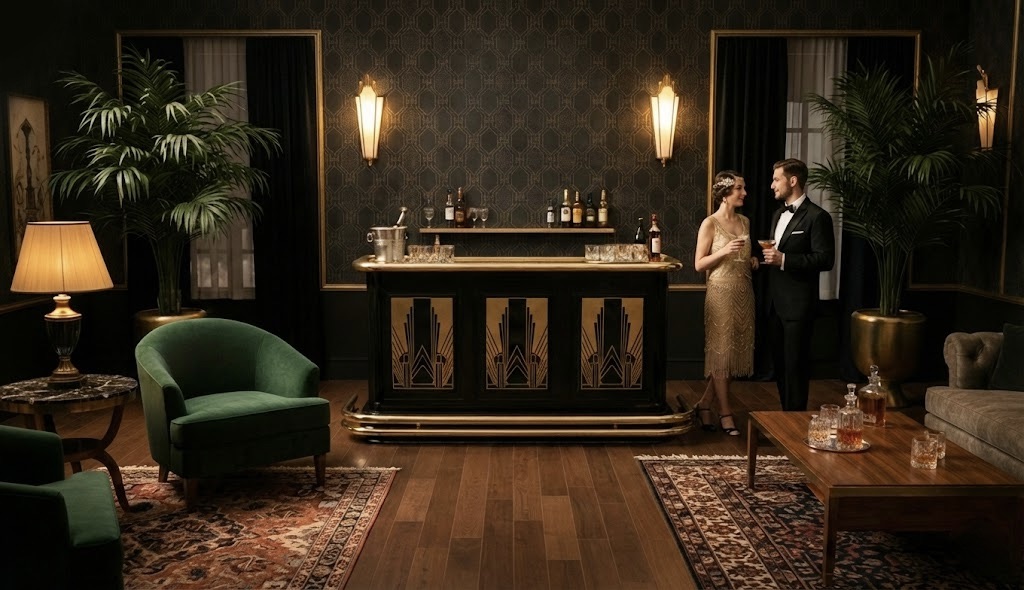
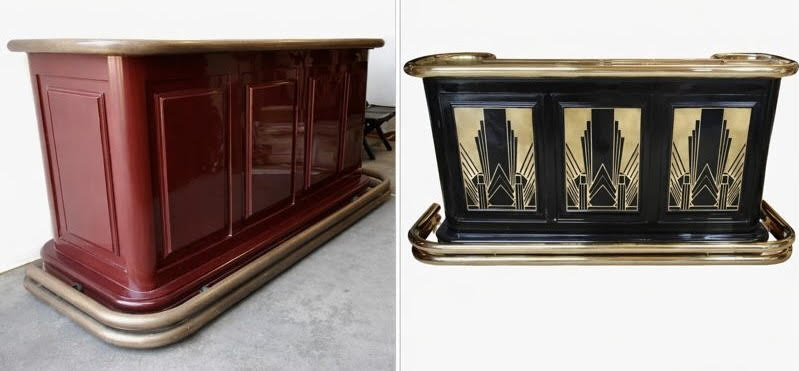
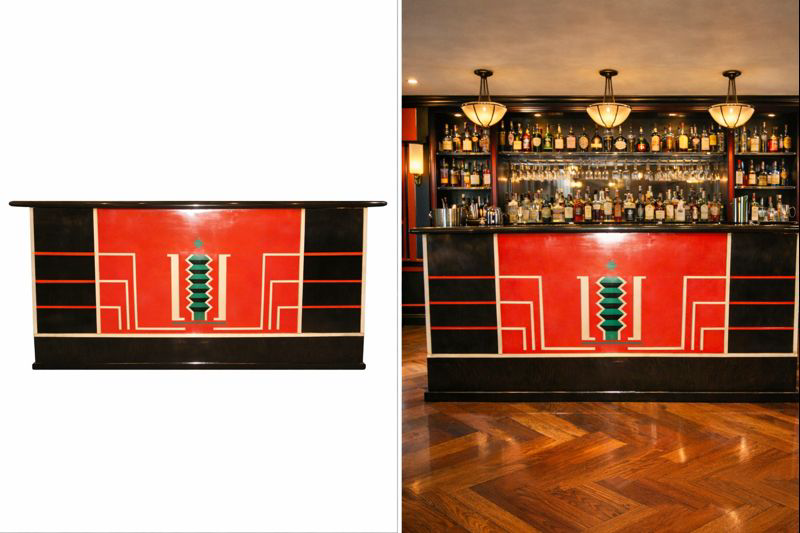
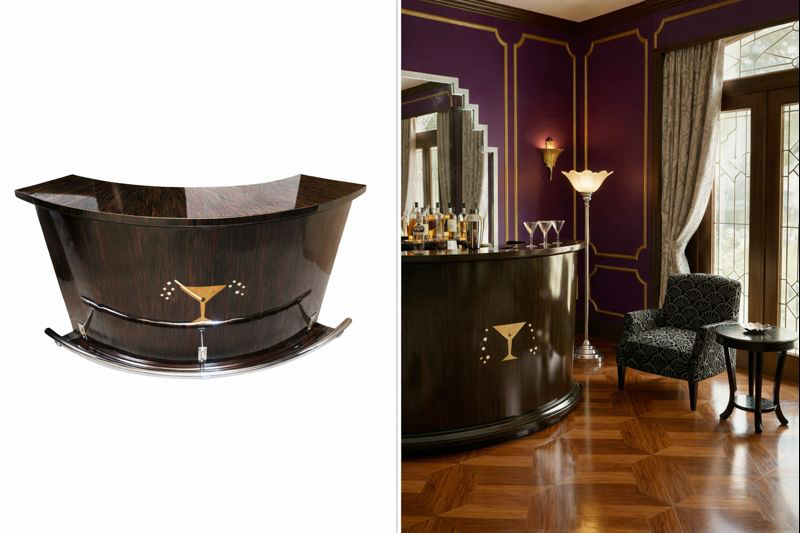
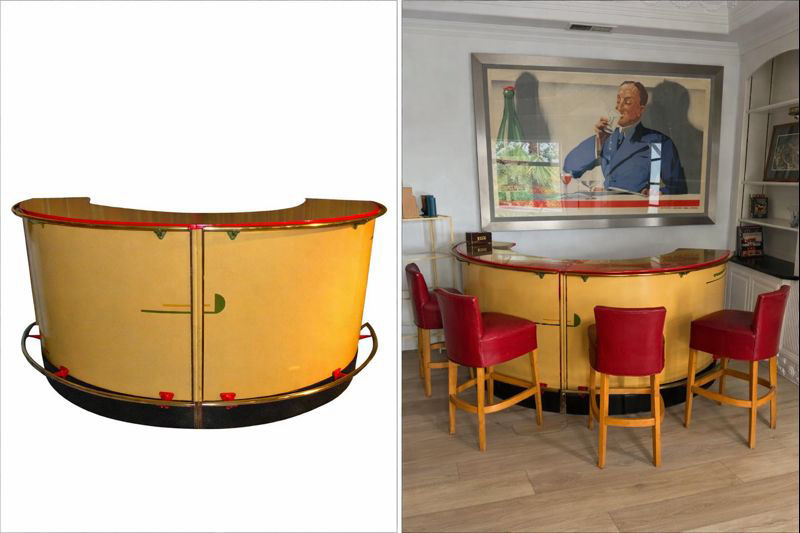
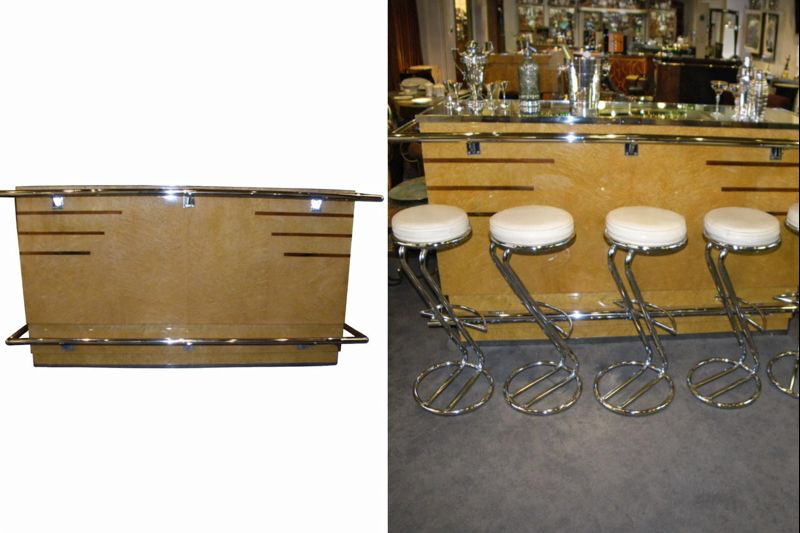
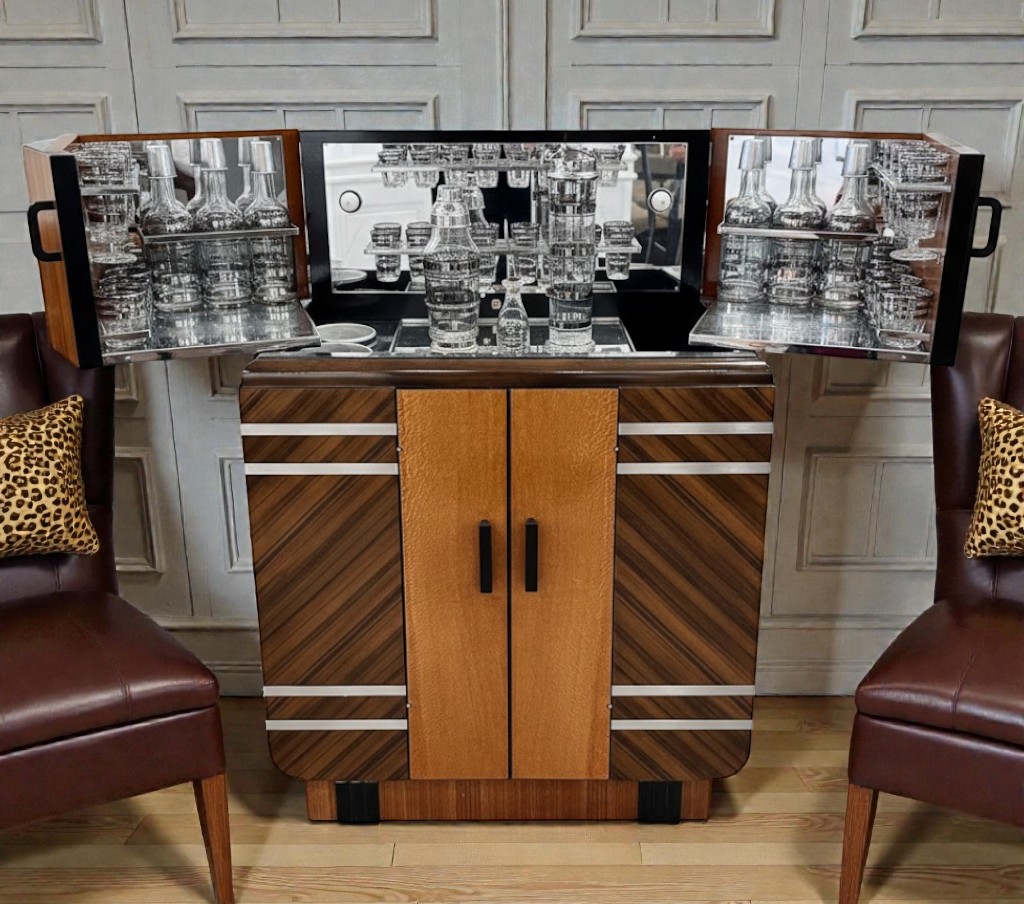
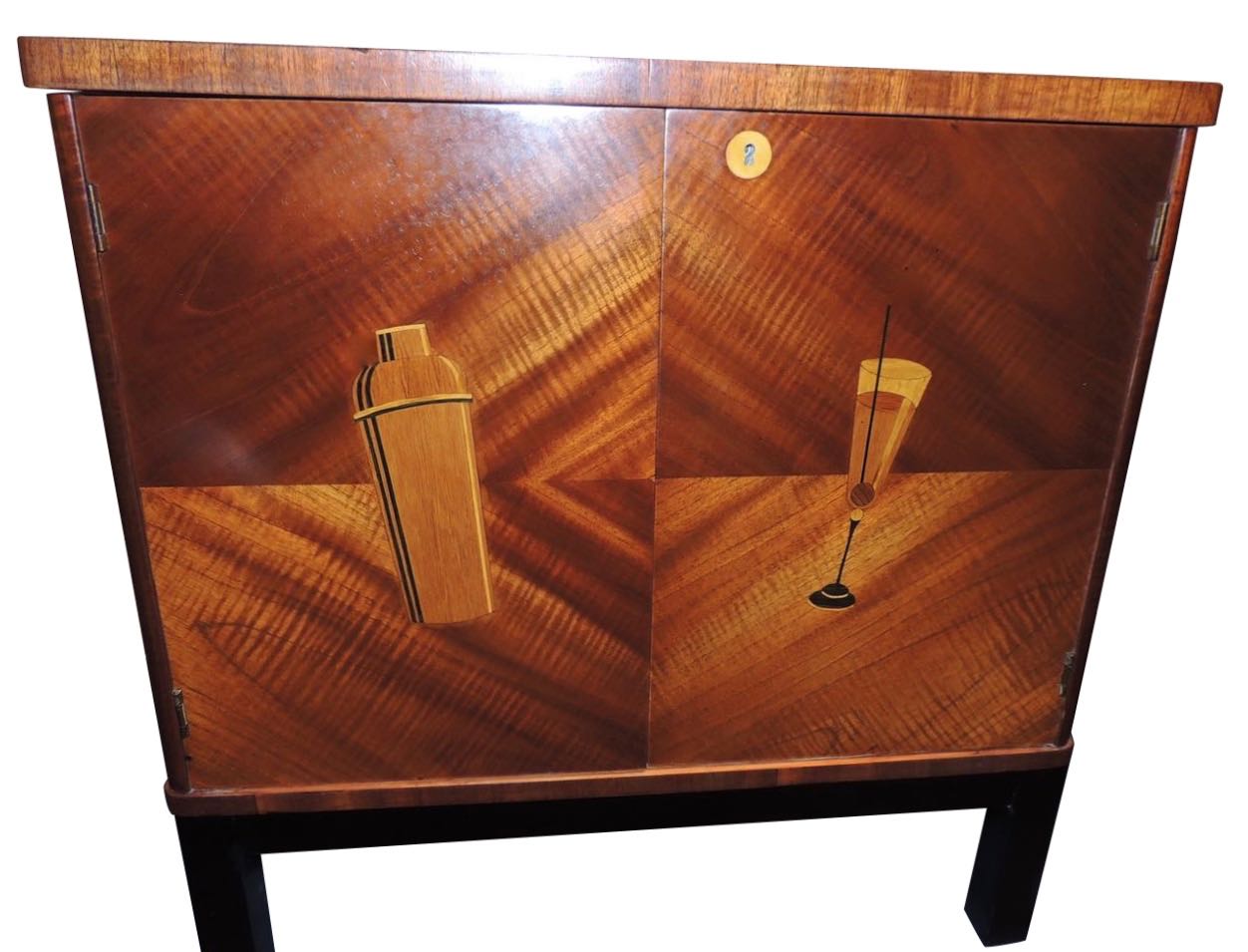
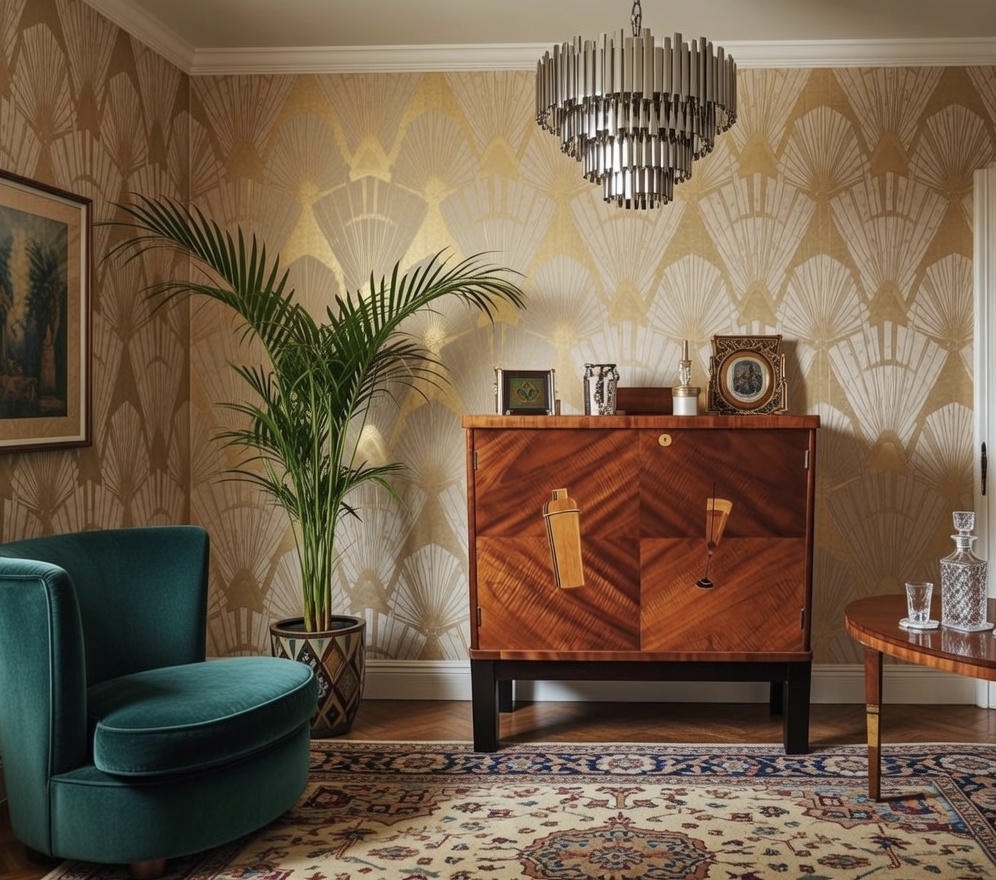
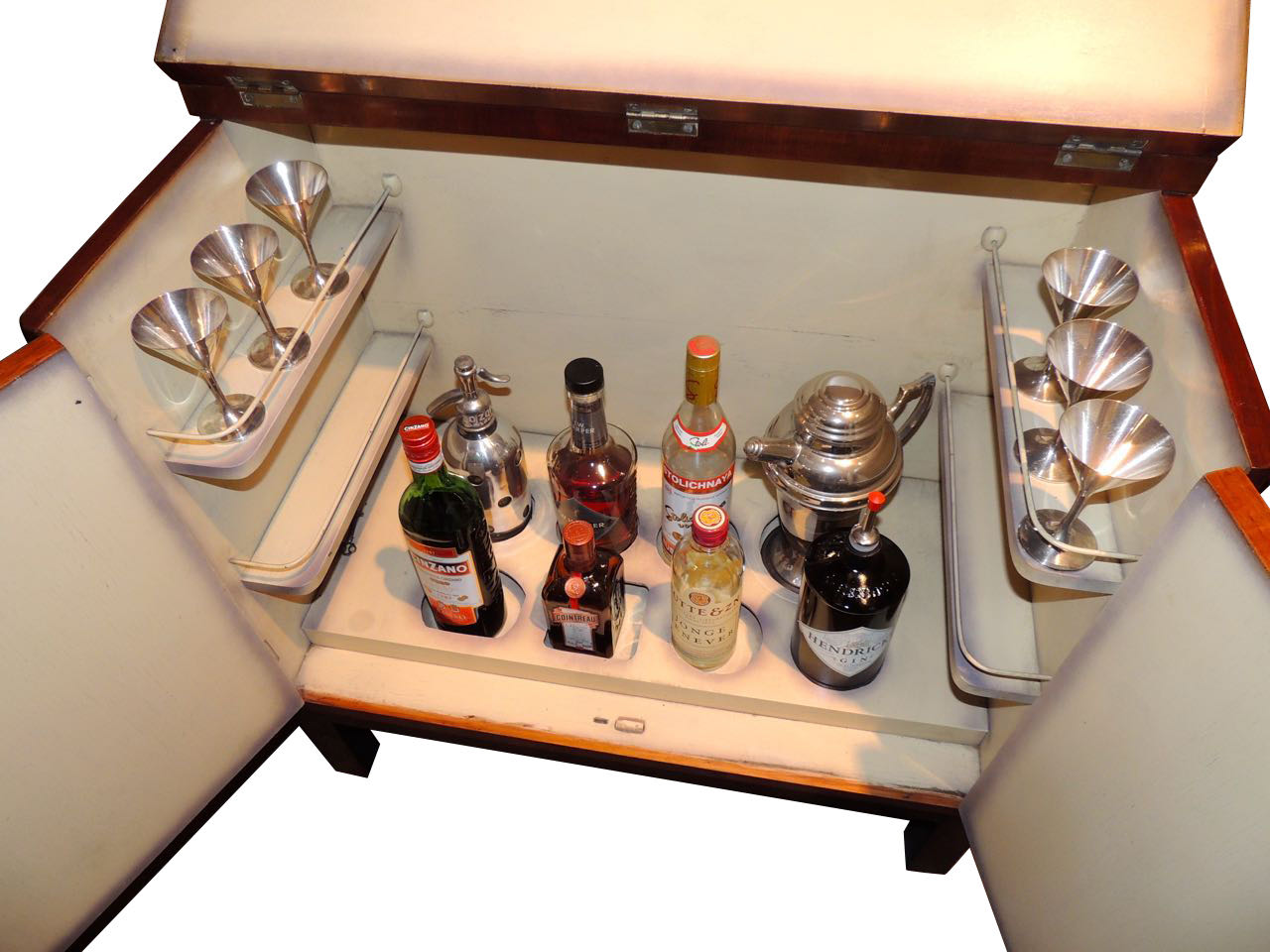
Small Art Deco bar with cocktail motif inlay on the doors, opening to a compact interior with shelves and bottle storage.
Preservation starts with structure, because alignment and movement are part of the design. Doors should hang true, hinges should hold, and the cabinet should open with confidence. Veneer and lacquer are identity, so conservation is preferred whenever original surfaces can be stabilized. Repairs succeed when grain, tone, and proportion are matched closely enough that the bar reads as one continuous object. Hardware and chrome need restraint, since aggressive polishing can soften edges and blur the lines that give Deco its precision. Glass and mirrors matter more than most people expect, because thickness, beveling, tint, and edge treatment change the feel of the interior. Lighting must be rewired safely, but the goal is still a contained warmth that looks period-appropriate. A thoughtful restoration does not chase newness; it restores legibility so the interior staging makes sense again. The best work is also reversible where possible, so future caretakers are not locked into a single modern choice. Documentation and careful photography help preserve the cabinet’s story, especially when small details are easy to lose over time. When the essentials are handled correctly, the bar regains its authority without looking overworked.