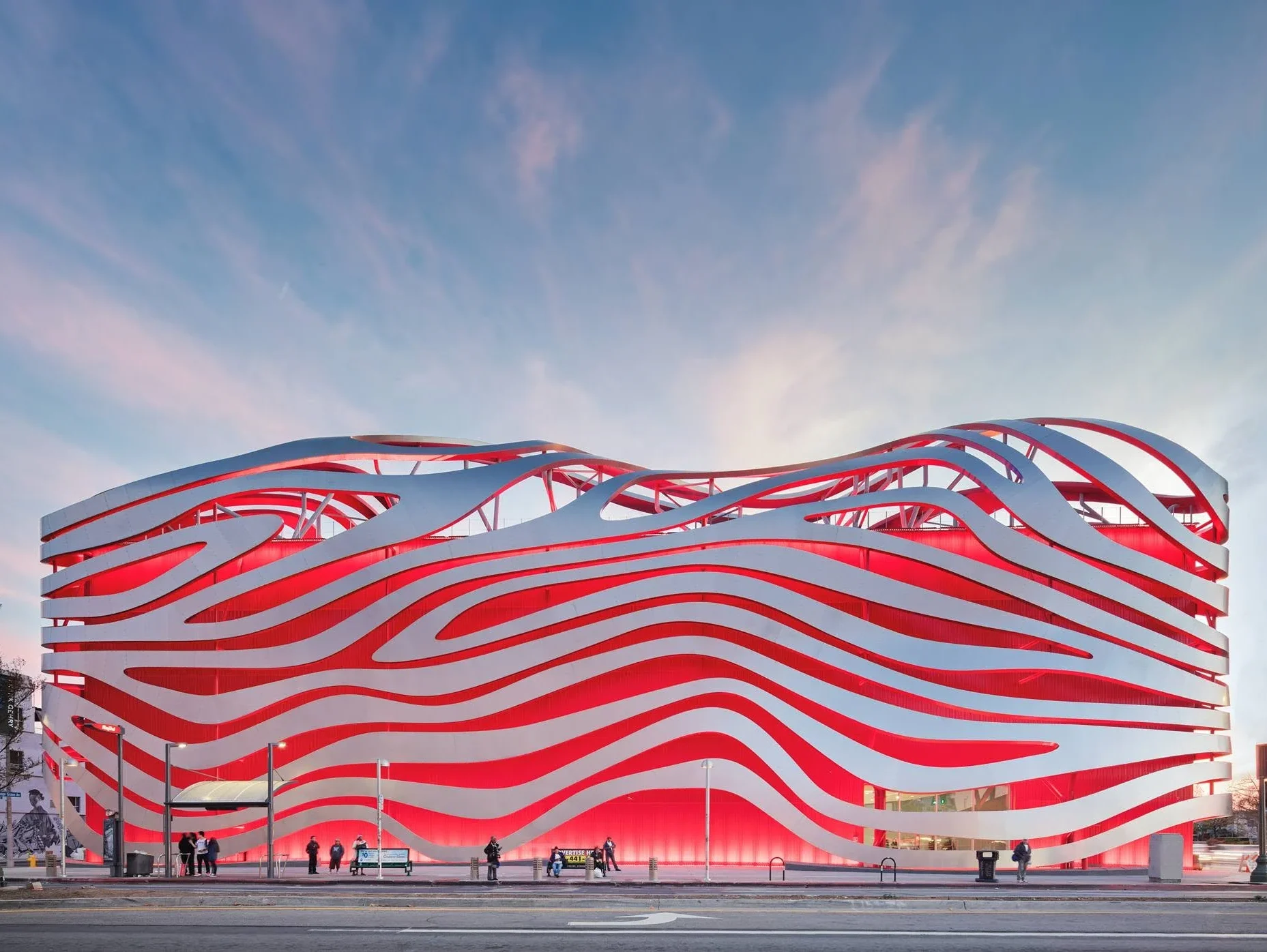
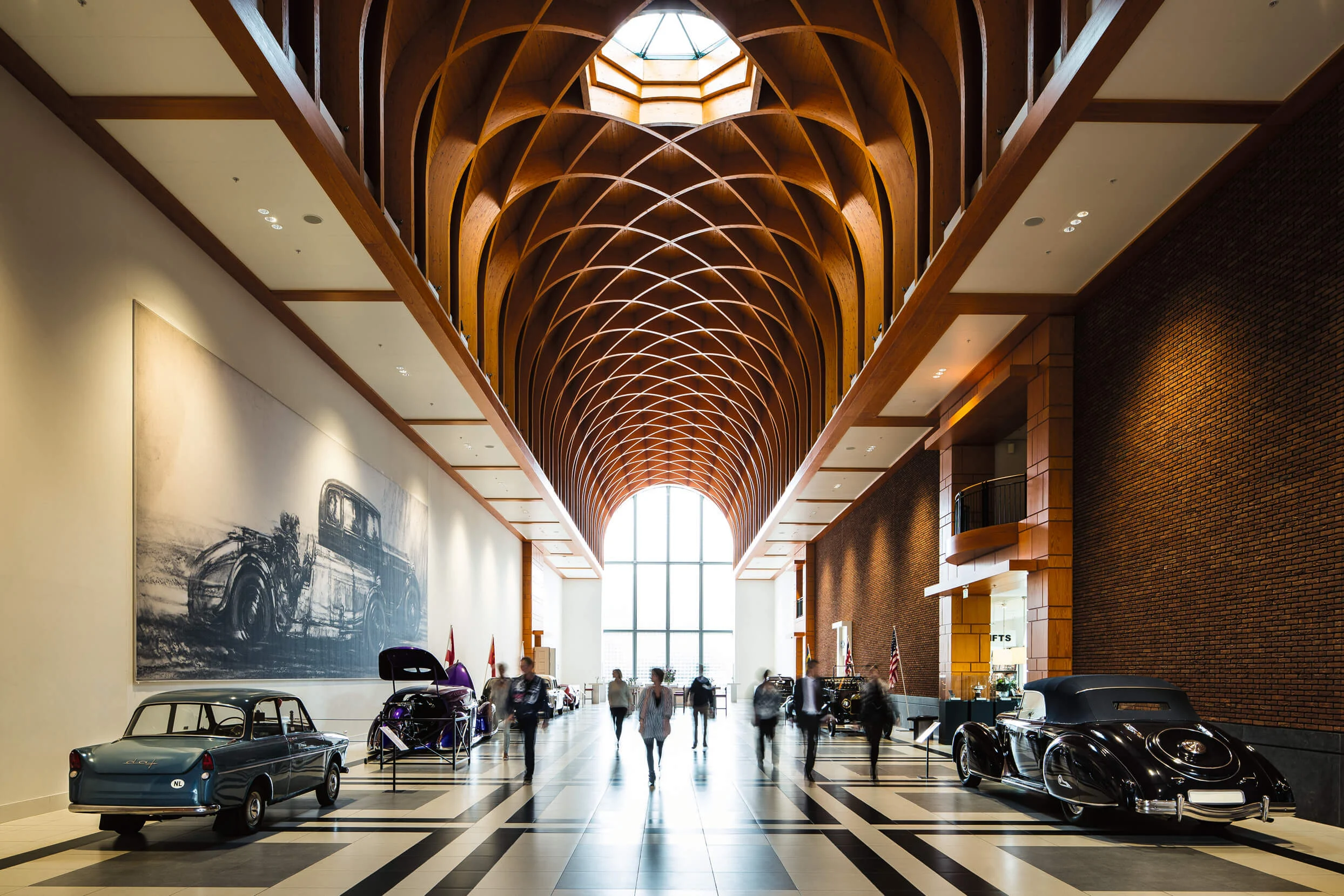
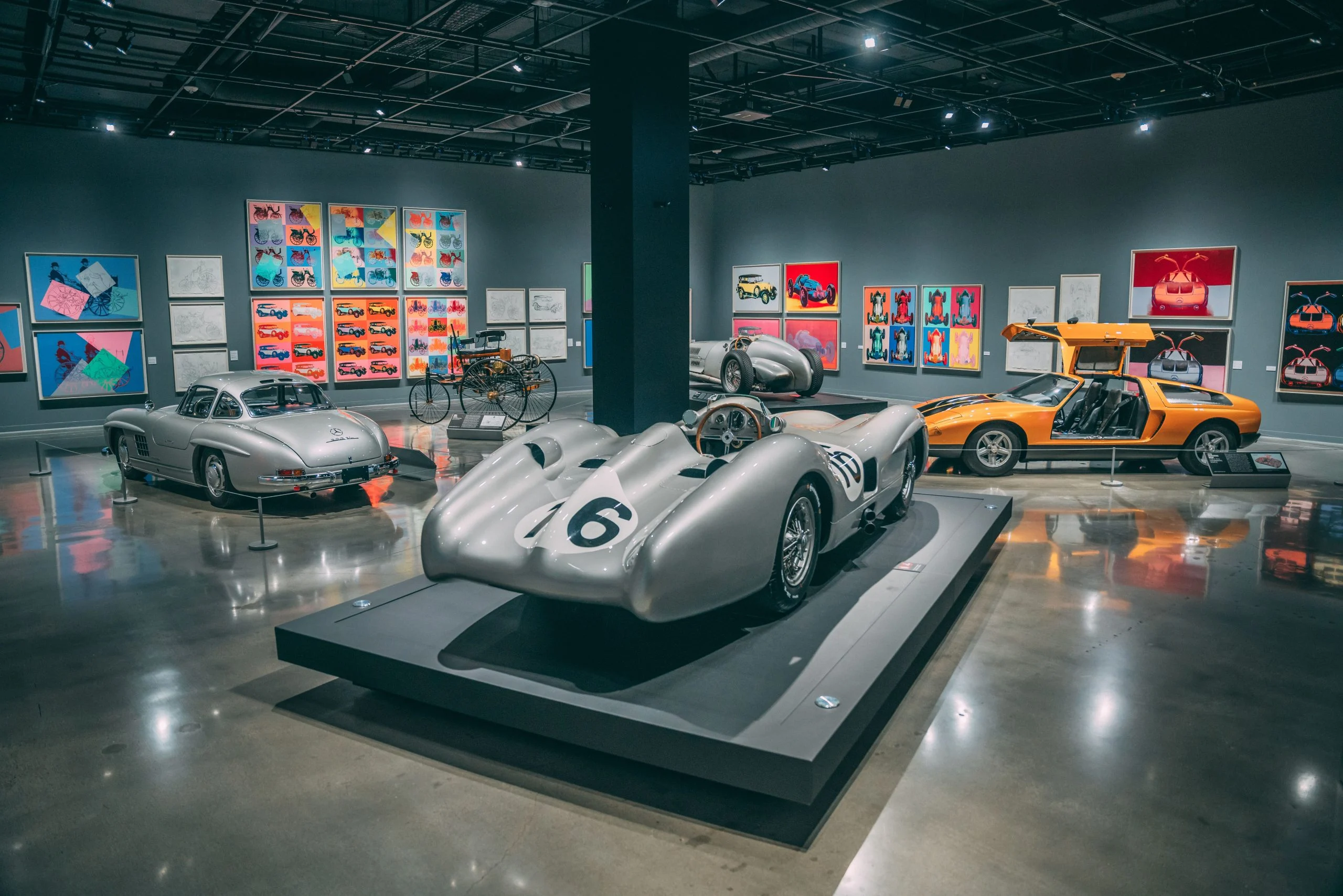
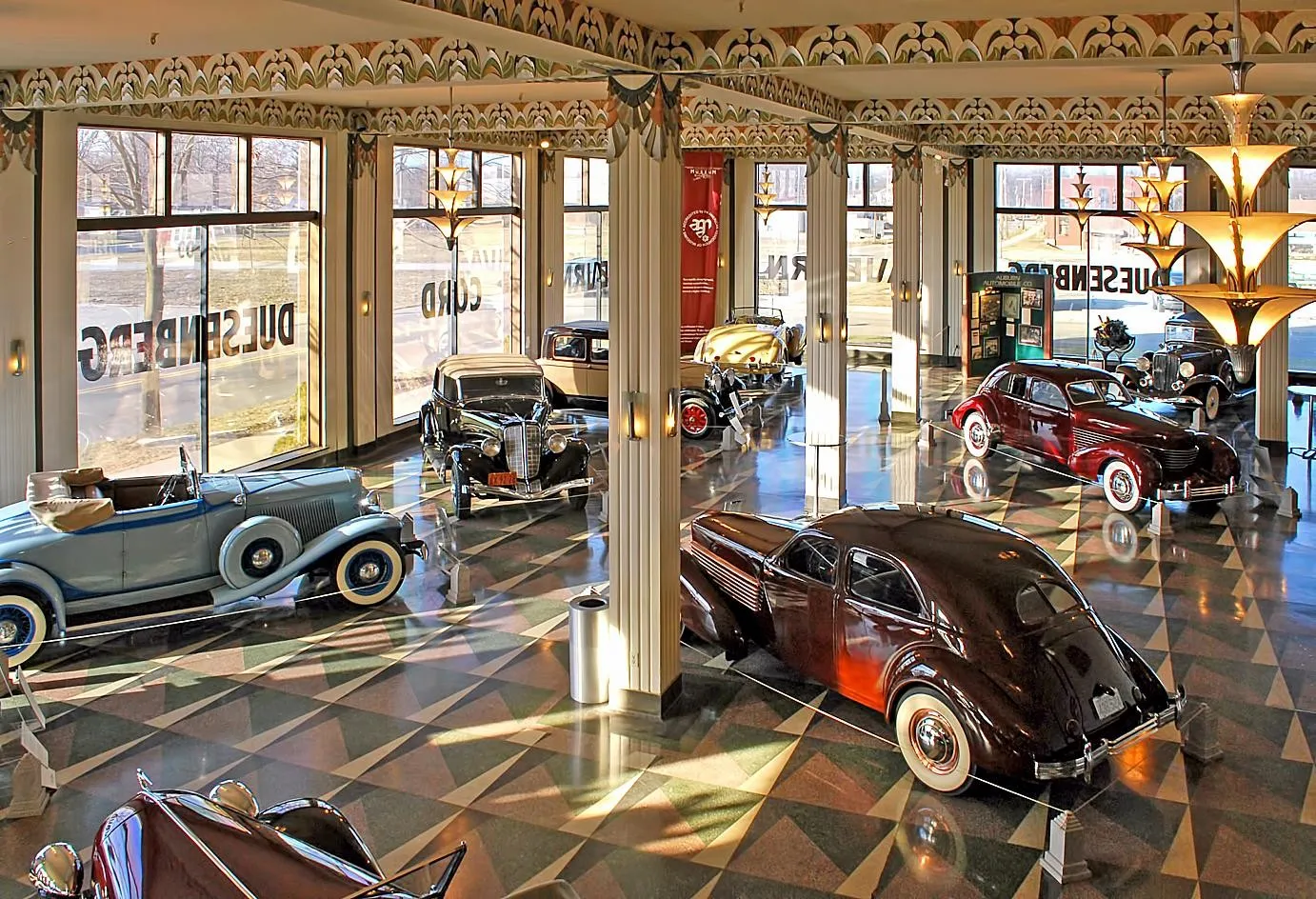
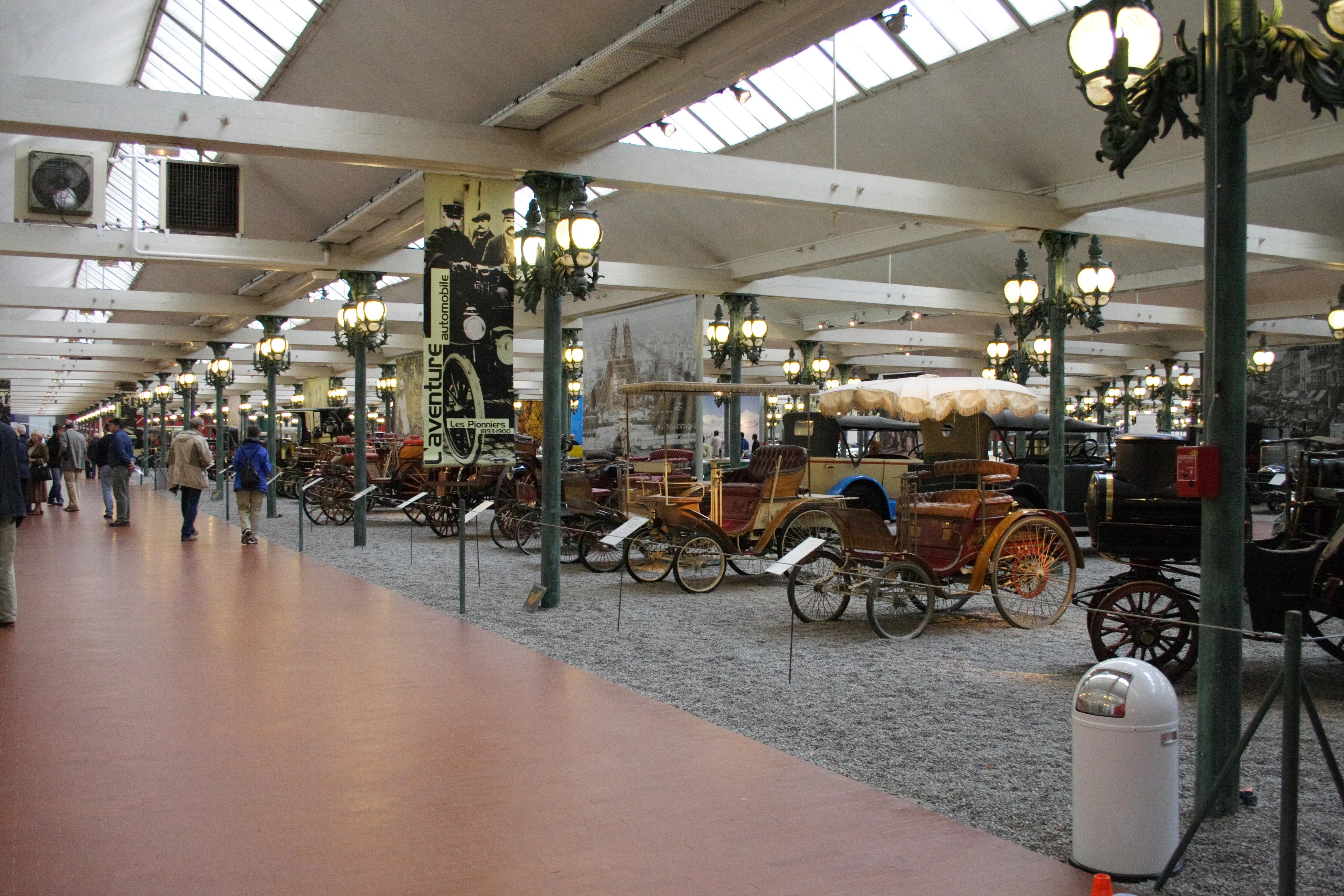
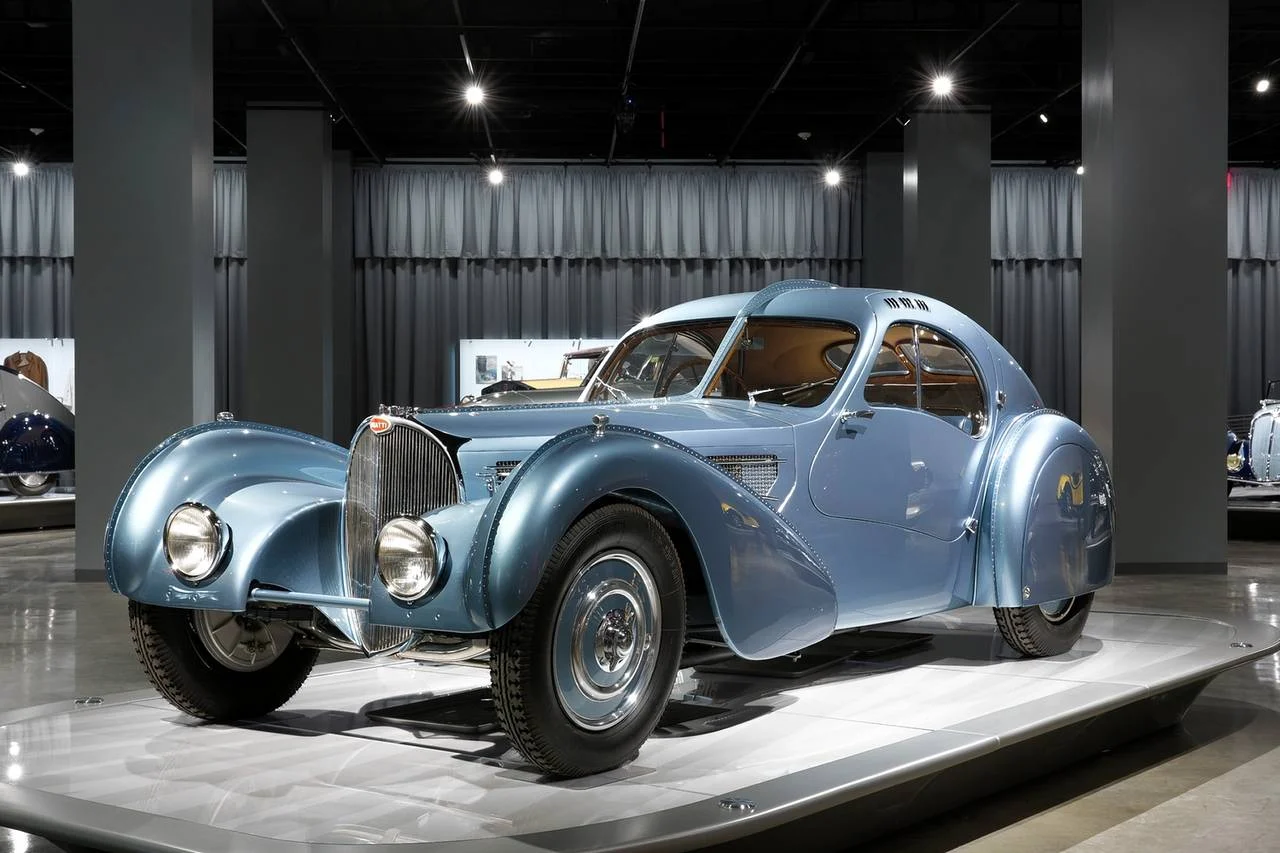
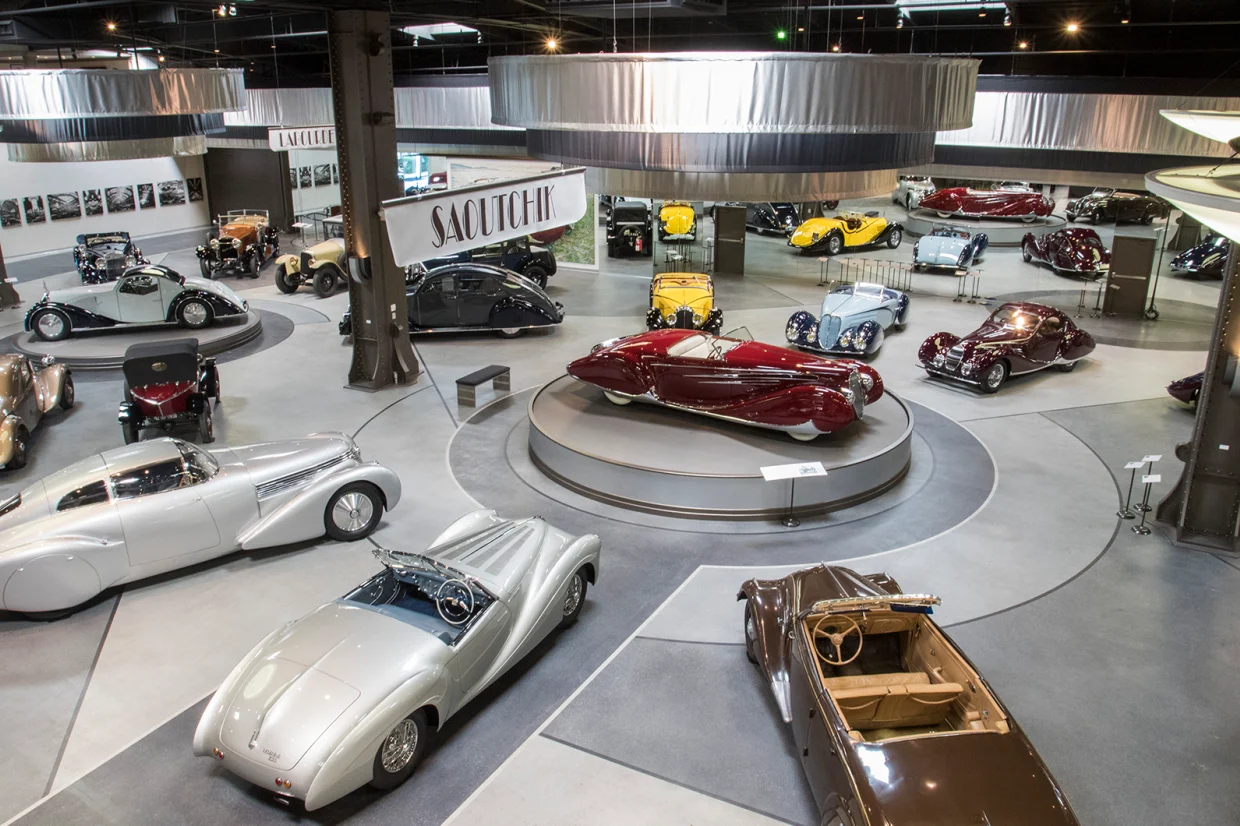
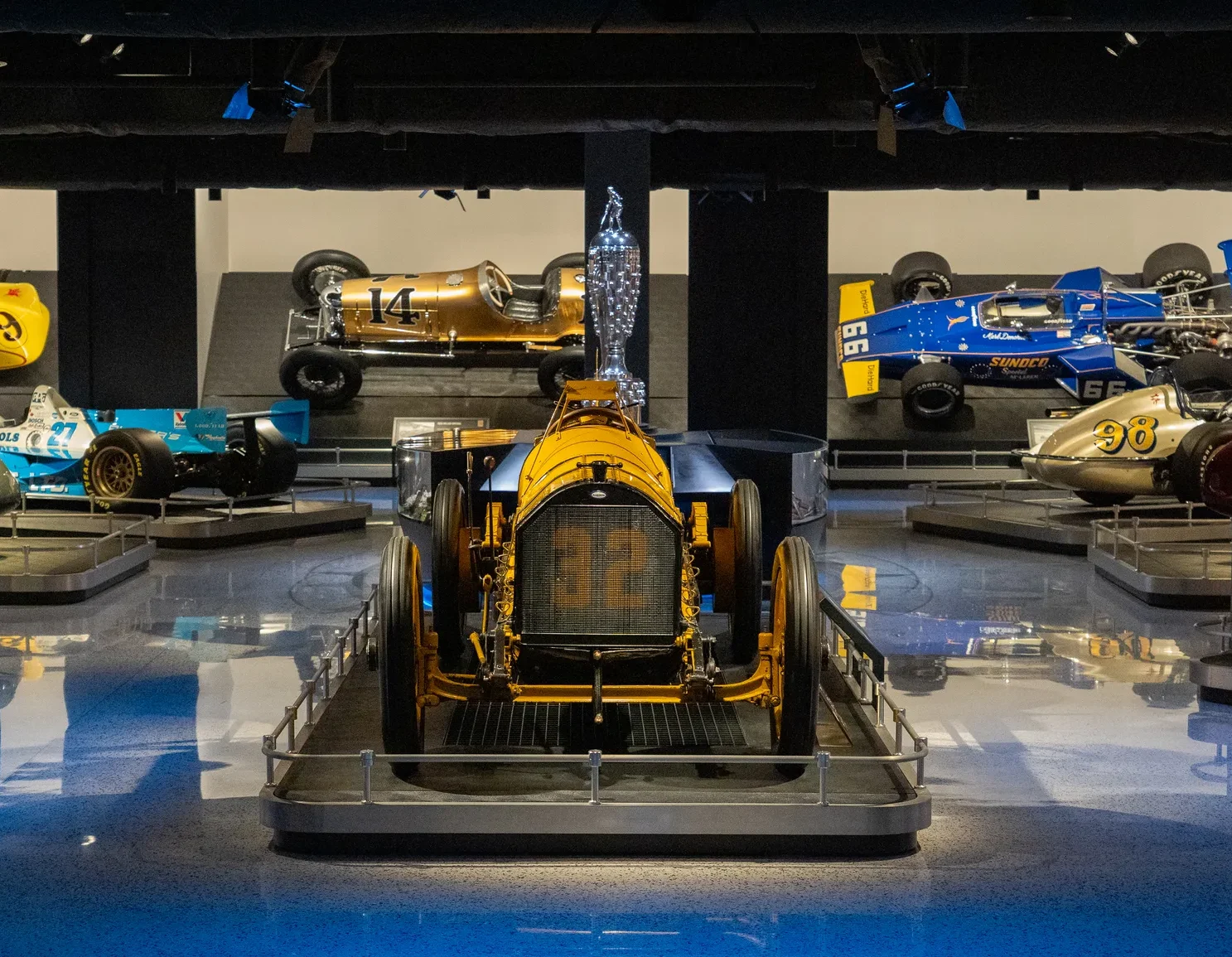
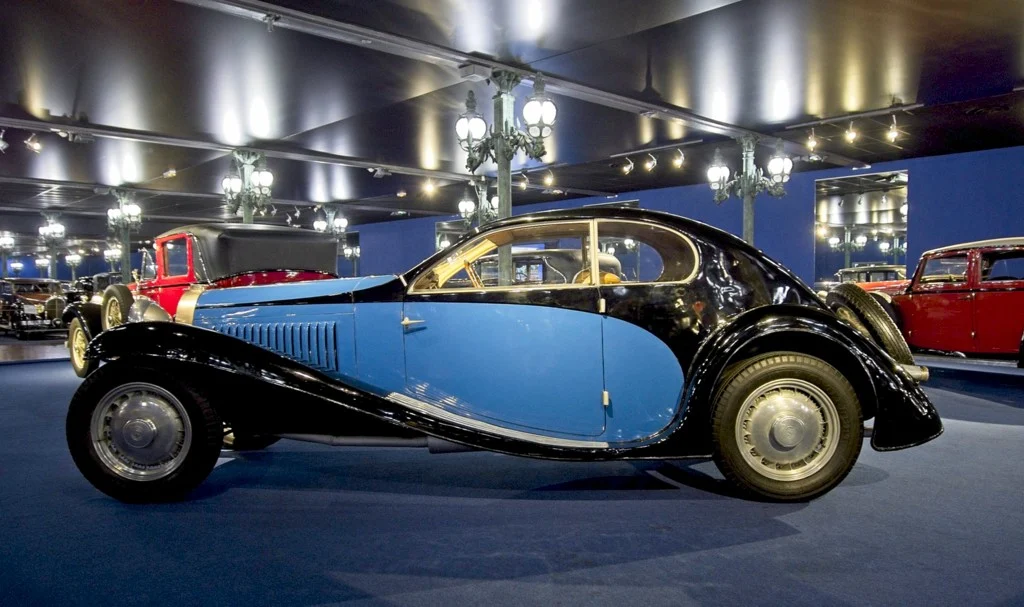
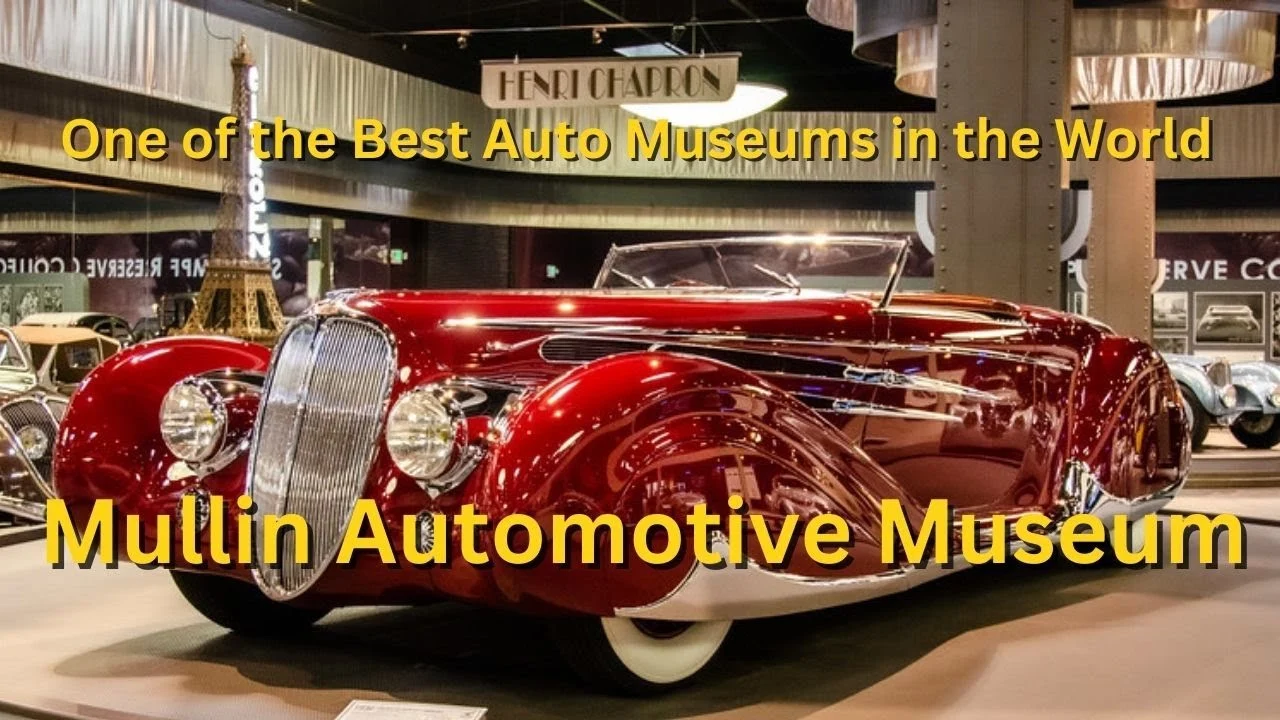
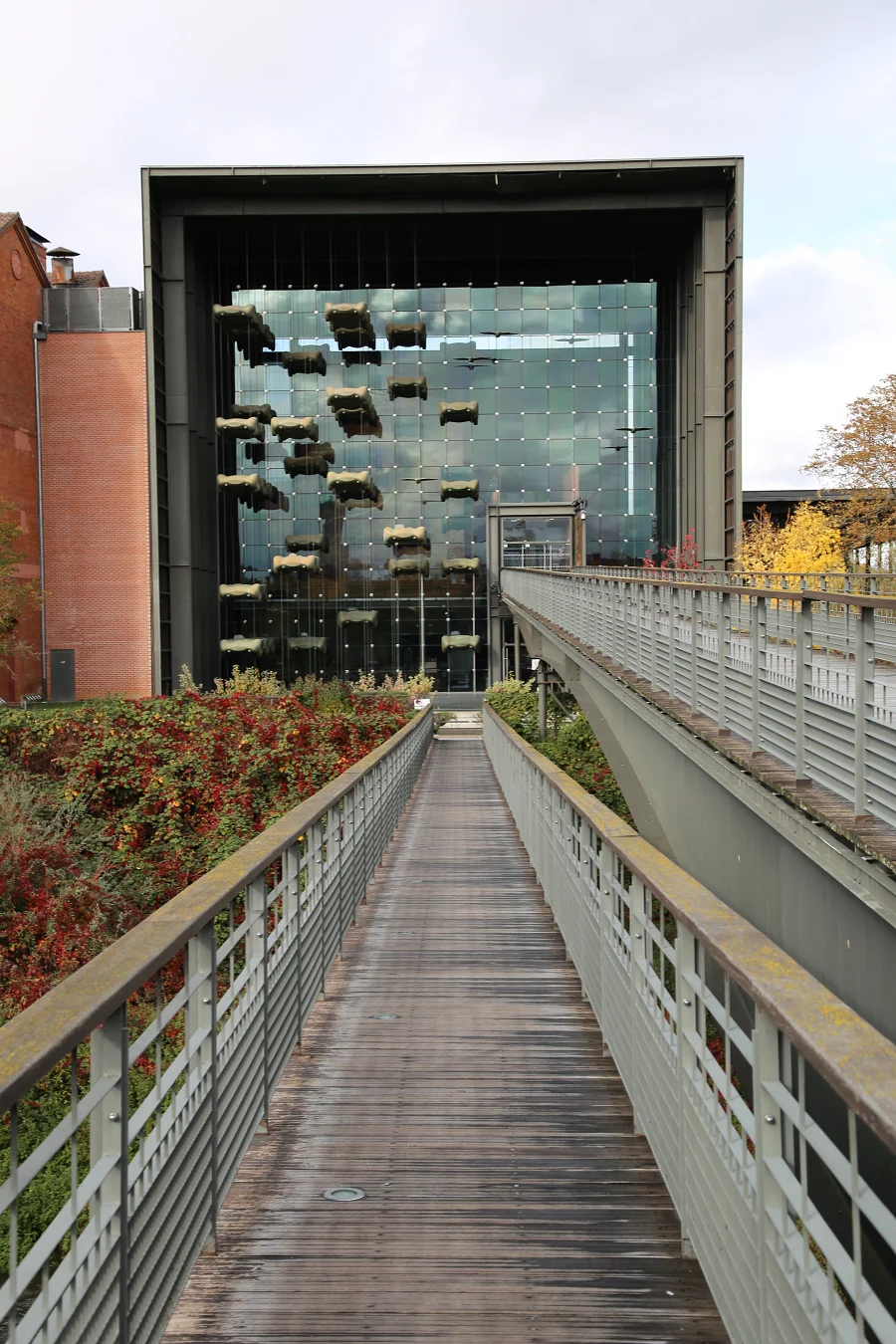
Top: Left: The Petersen Automotive Museum. Right: The Louwman Museum. Bottom: Left: The Louwman Museum’s Great Hall. Right: A Duesenberg II SSJ Roadster at the National Automobile Museum.
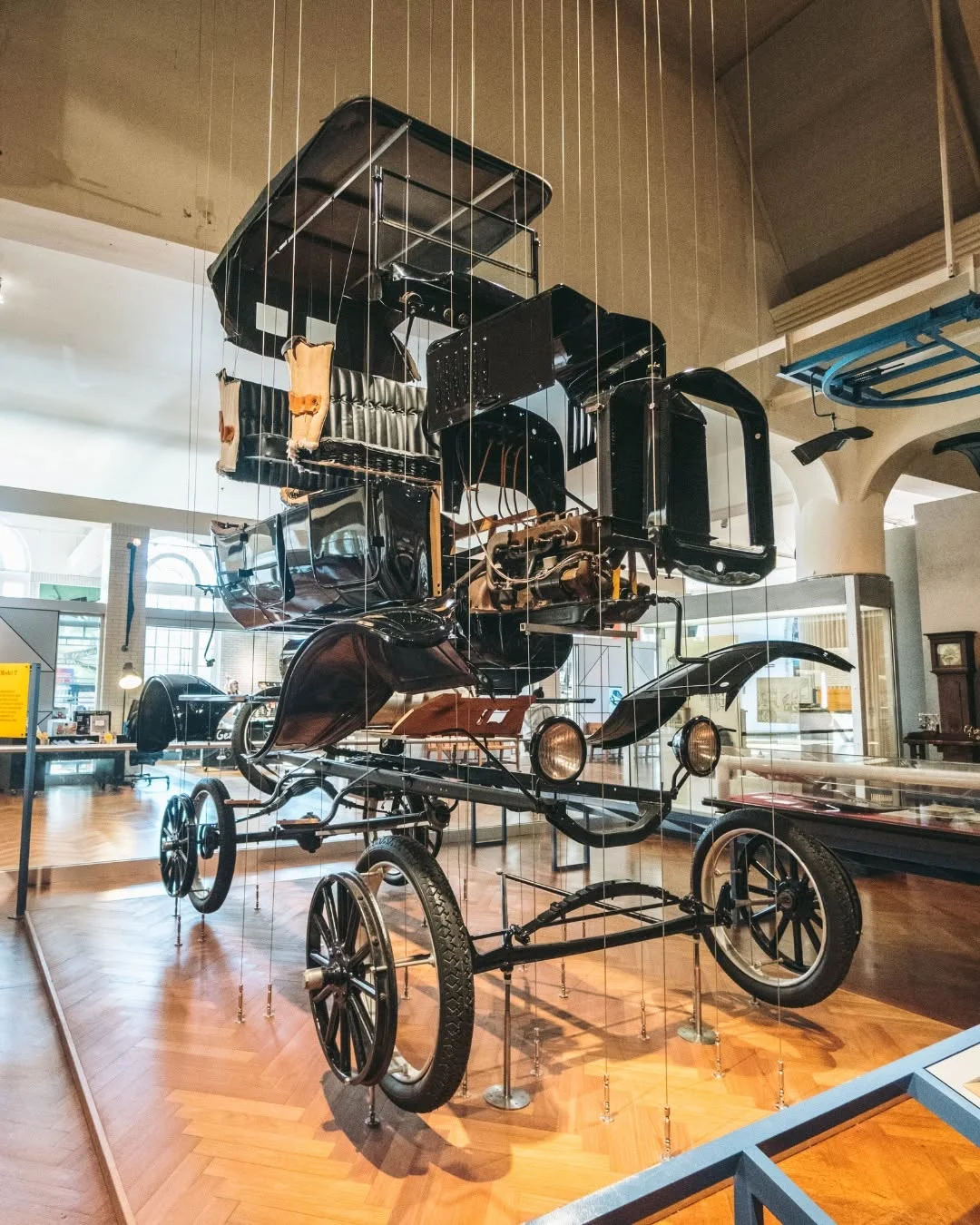 Beyond France, Art Deco automobiles tend to live inside museums with a much broader mandate, surfacing as highlights rather than as the organizing principle. The Petersen Automotive Museum in Los Angeles, housed behind a dramatic ribboned steel facade designed by Kohn Pedersen Fox, spans the entire history of the automobile across twenty-five galleries, and its interwar holdings, including several cars donated after the Mullin’s closure, sit alongside hot rods, film cars, and Formula 1 machinery rather than in a gallery of their own. The Henry Ford Museum in Dearborn, Michigan, takes a similarly wide view, pairing its streamline-era American cars with the broader story of industrial design that produced them, from Raymond Loewy’s locomotives to the appliances of the same period. Both institutions reward a visitor willing to look past the marquee exhibits for the quieter 1930s galleries, where the Deco connections are easiest to see. Neither museum calls itself an Art Deco collection, but both have more of the style on display than most visitors realize.
A handful of smaller, more specialized museums round out the picture for anyone chasing the style specifically. The Louwman Museum in The Hague holds one of the oldest car collections in the world and a strong run of 1930s European coachbuilt vehicles, offering a European counterpoint to the American focus of most Deco-era car writing. The National Automobile Museum in Reno, built from the personal collection of casino magnate Bill Harrah, leans heavily American but includes streamline-era Cords, Auburns, and Duesenbergs whose fully skirted fenders and chrome speed lines mirror what Figoni et Falaschi was doing in Paris at the same moment. The Indianapolis Motor Speedway Museum adds a racing dimension largely absent elsewhere, housing Grand Prix and Le Mans-era cars from the same manufacturers, Delahaye and Bugatti among them, whose competition success gave their glamorous coachwork real credibility. Together, these smaller collections fill in the regional and competitive context that the larger, more famous museums tend to leave out.



 No single building holds the story of the automobile the way the Chrysler Building holds the story of Art Deco New York, so the cars that defined the style’s most glamorous decade survive instead in museums scattered across two continents, each preserving a different piece of the picture. The best starting point, at least until recently, was the