

Delahaye itself did not survive the decade, merging with Hotchkiss in 1954 and ceasing car production shortly after, a quiet end for a marque that had spent barely twenty years at the top of French luxury motoring. What remains are the cars themselves, scattered across museums and private collections, each one a reminder that Art Deco was never confined to buildings and furniture. It found its way onto the road, streamlined and chromed, built one chassis at a time by Parisian ateliers who understood exactly what the era wanted to see moving through the streets. For fourteen years, some of the finest of those cars, including examples bodied by Figoni et Falaschi, found a home at the Mullin Automotive Museum in Oxnard, California, the collection Peter Mullin built around exactly this idea of the automobile as rolling sculpture, before it closed in 2024 following his death the previous year.
✕
ART & STATUES
CERAMICS & GLASS
Art Deco Around The World
Delahaye, France's Coachbuilt Art Deco Racer
How a French automaker best known for trucks became the chassis of choice for some of the most daring Art Deco automobile bodies ever built.
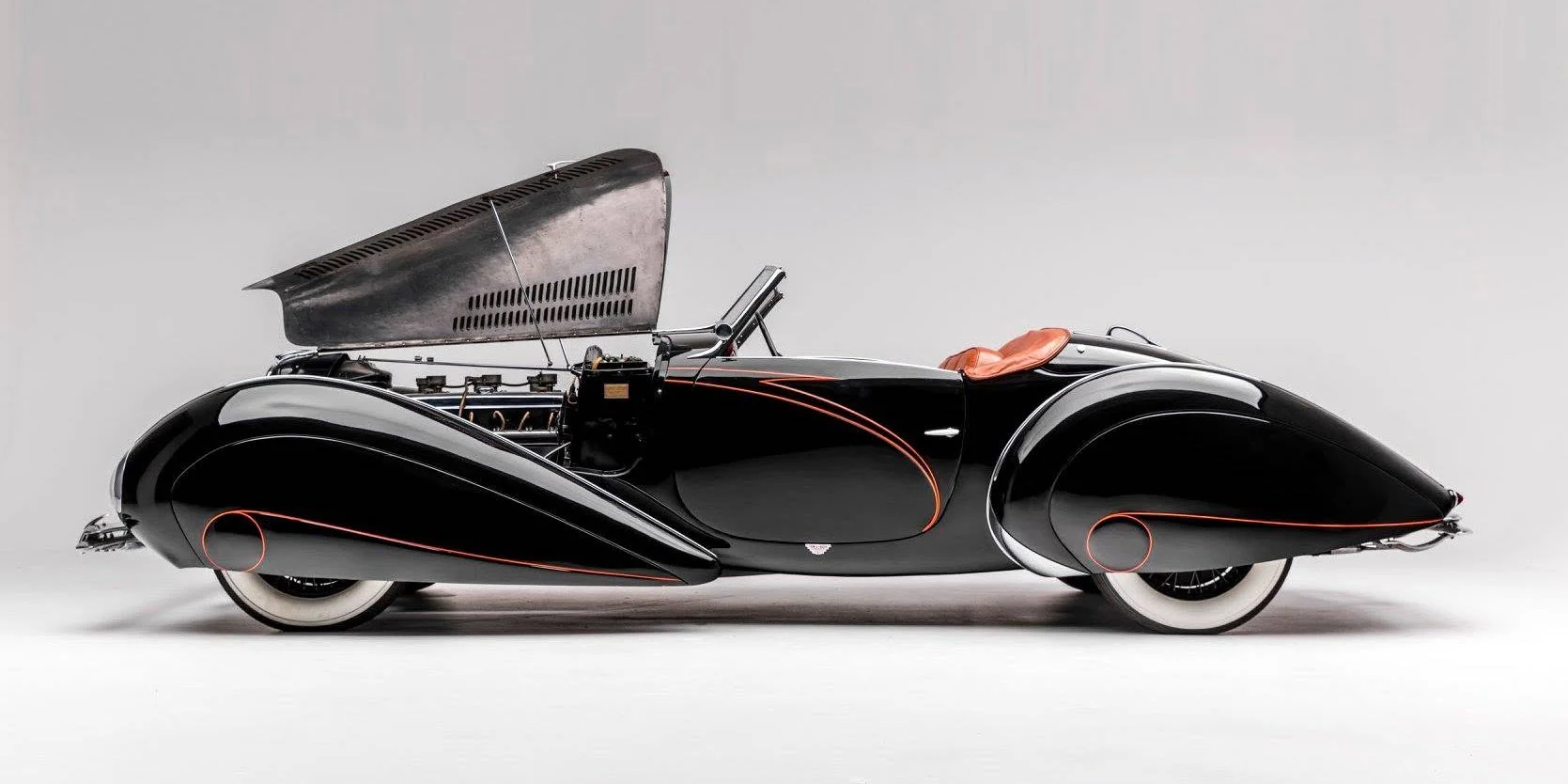
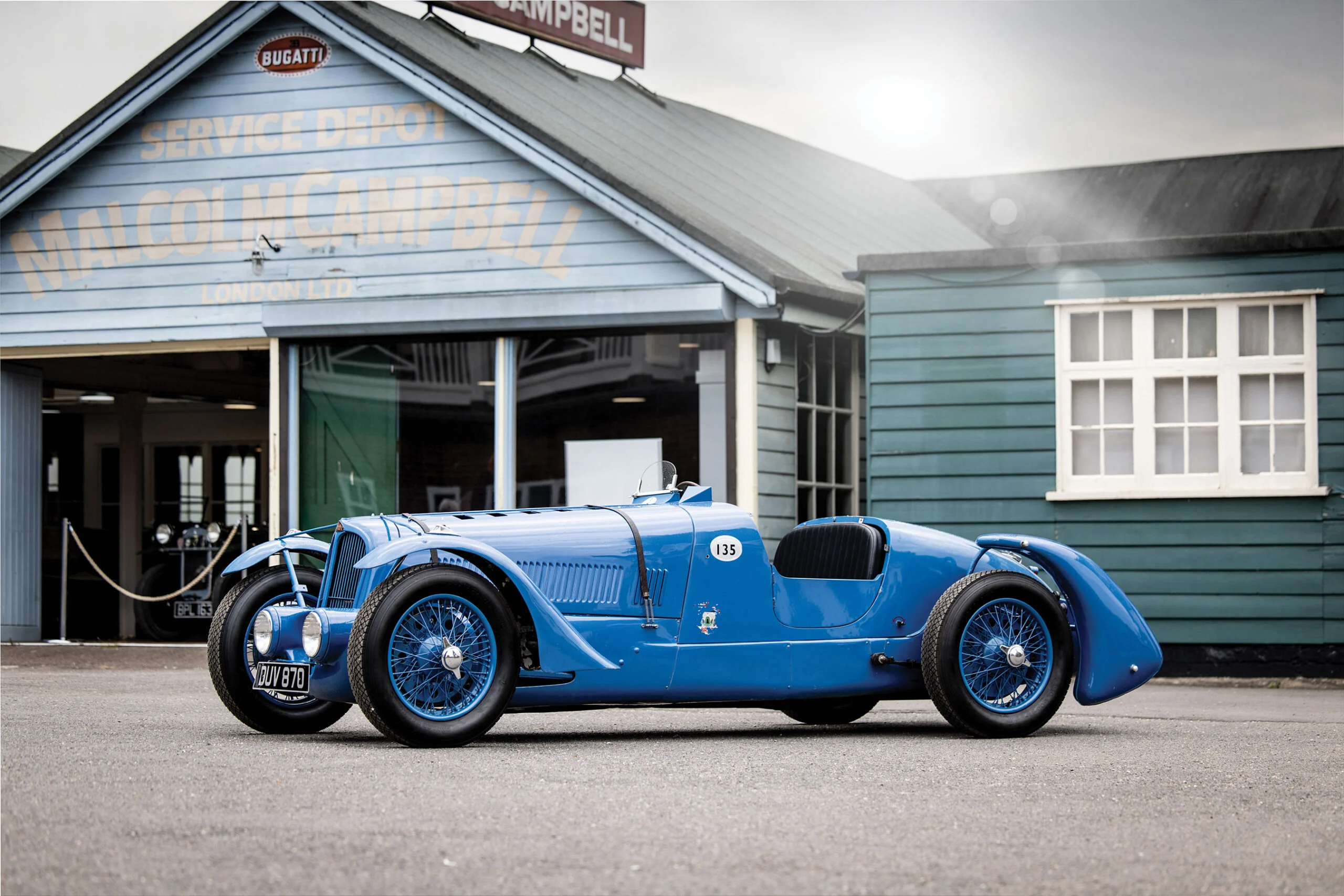
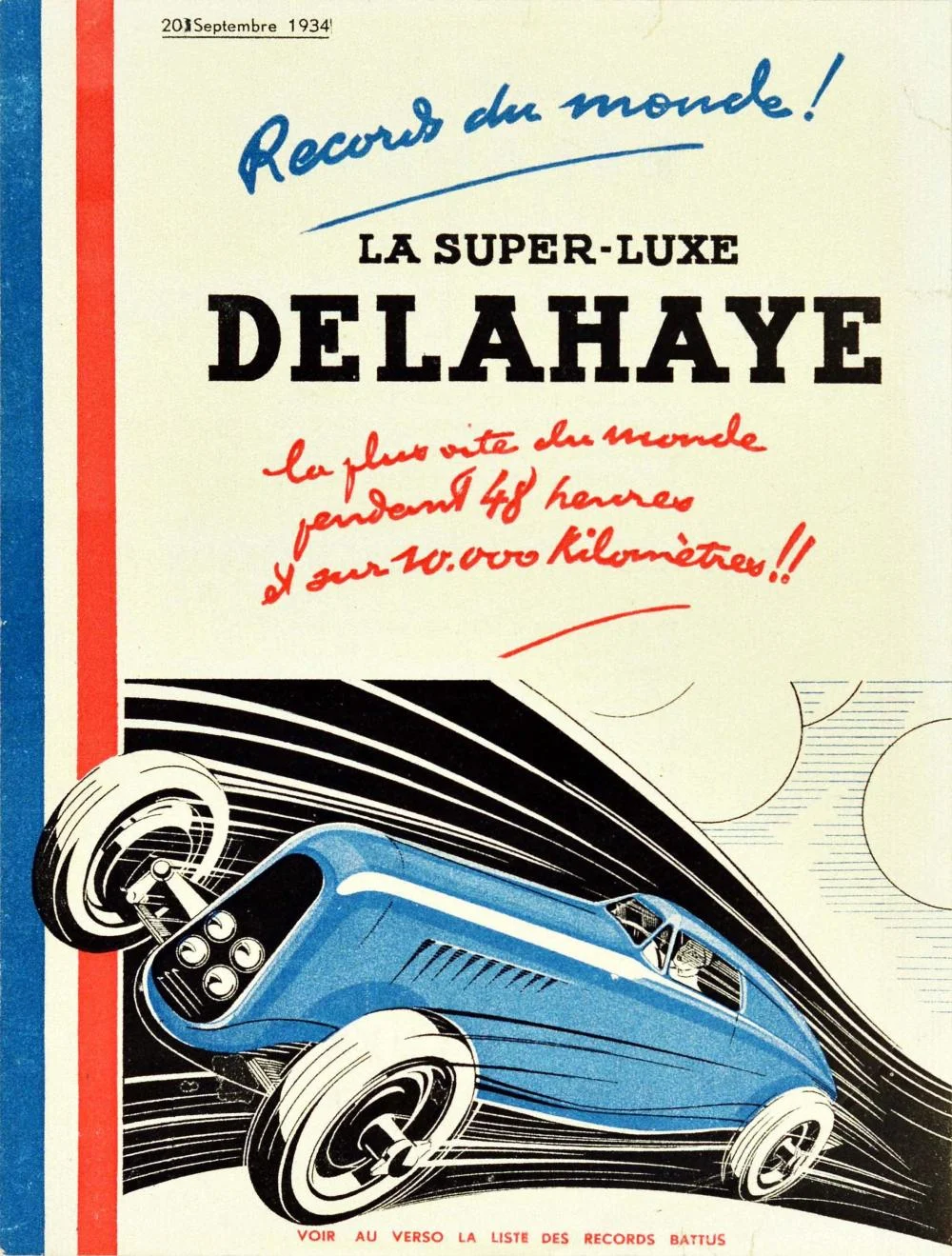 Delahaye began in 1894 as a builder of stationary engines and industrial machinery in Tours, France, a world away from the glamour it would later come to define. Founder Emile Delahaye moved the company into automobiles almost immediately, and by the time it relocated to Paris in 1901, it had built a reputation for solid, dependable cars and trucks. That changed under new ownership in the interwar years, as Delahaye’s leadership pushed deliberately toward the luxury market, chasing the prestige that Bugatti and Delage had already claimed. The turning point arrived in 1935 with the Type 135, a grand touring chassis engineered by Jean Francois that paired a lightweight, independently sprung frame with a robust straight-six engine. It proved itself almost immediately, winning the 1937 Monte Carlo Rally and taking outright victory at the 1938 24 Hours of Le Mans. But the 135’s real legacy was not written on a racetrack. It was written by the coachbuilders who wrapped it in some of the most striking automotive bodywork of the Art Deco era.
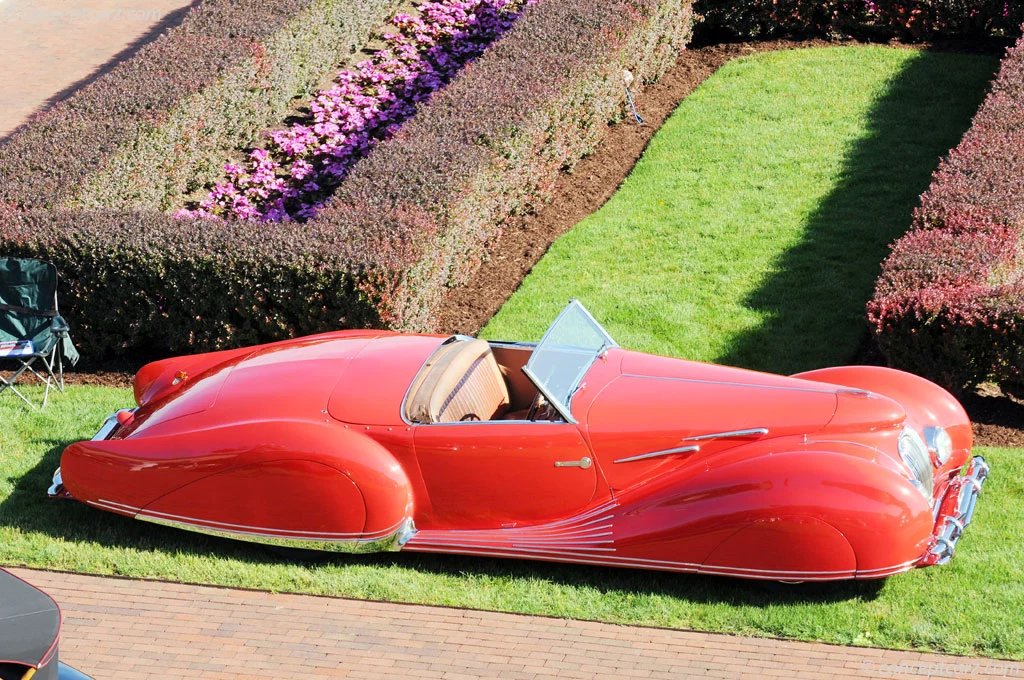
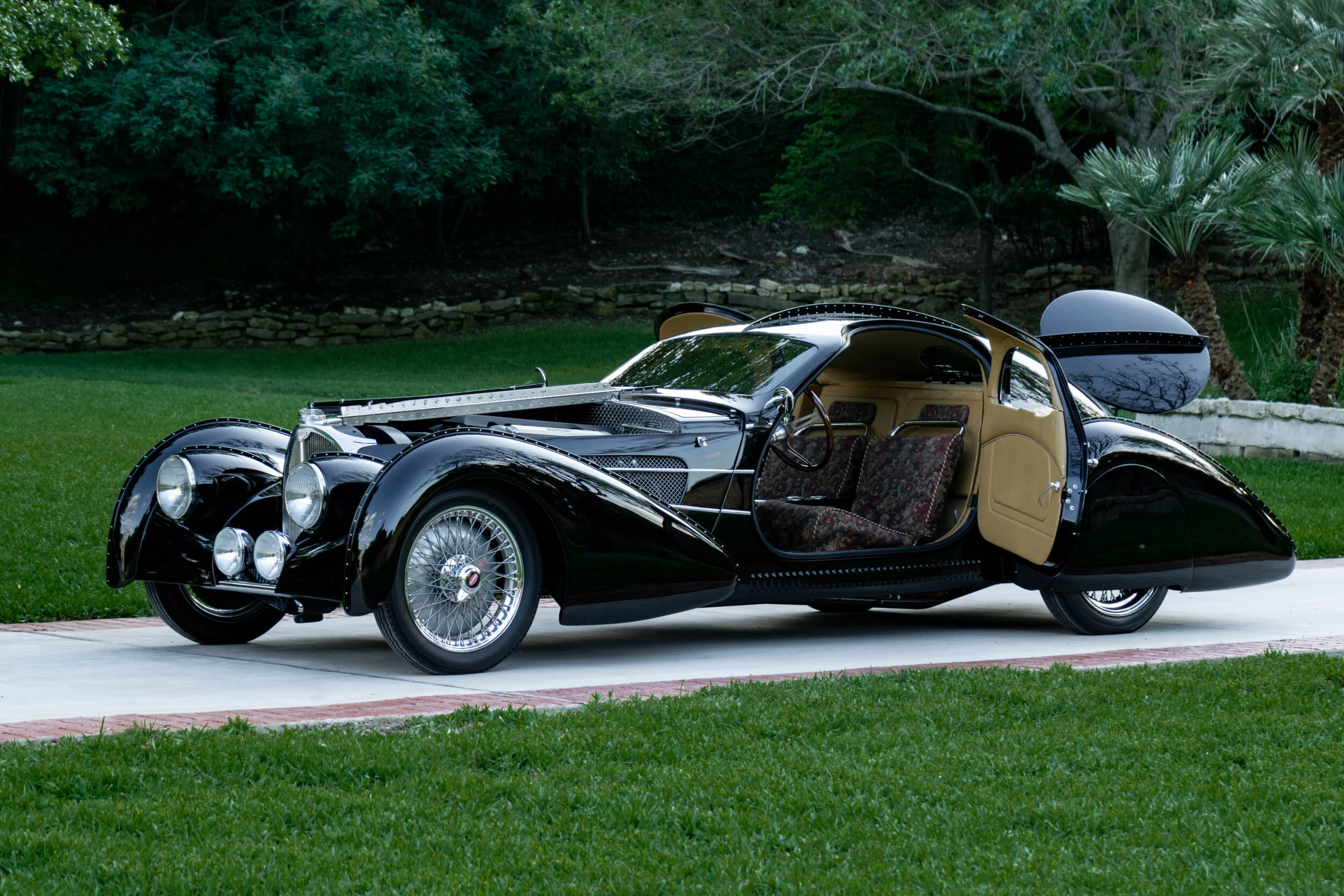
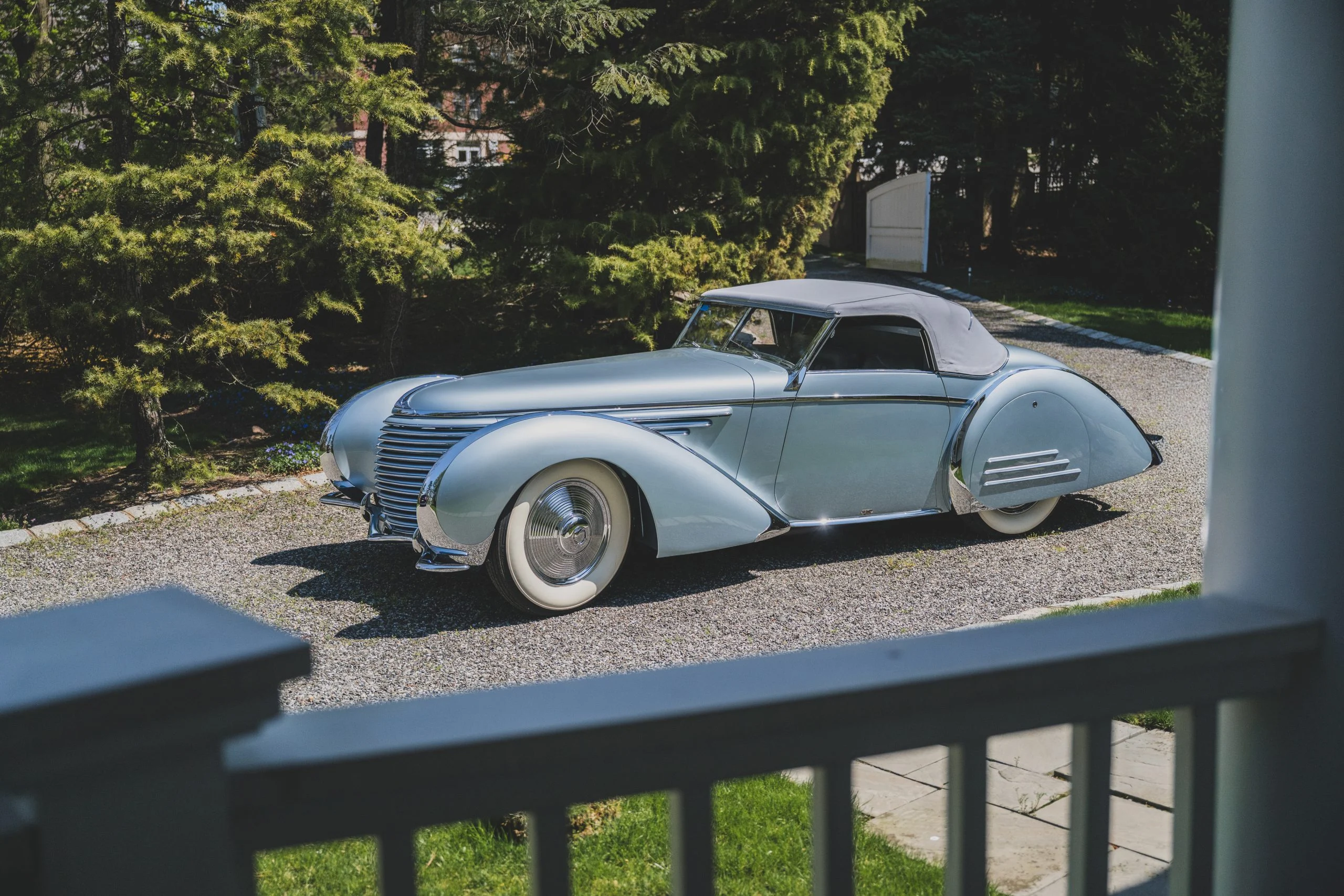
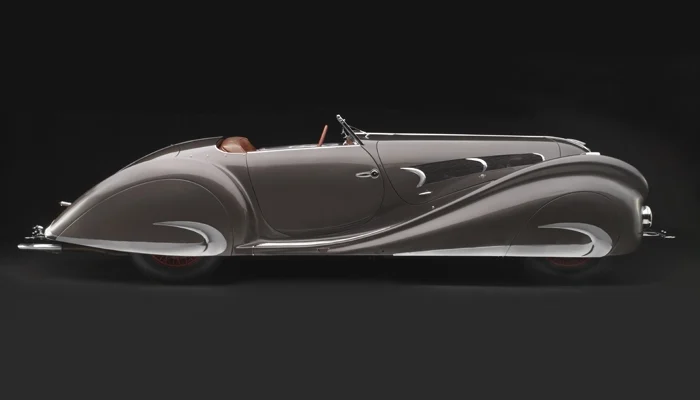
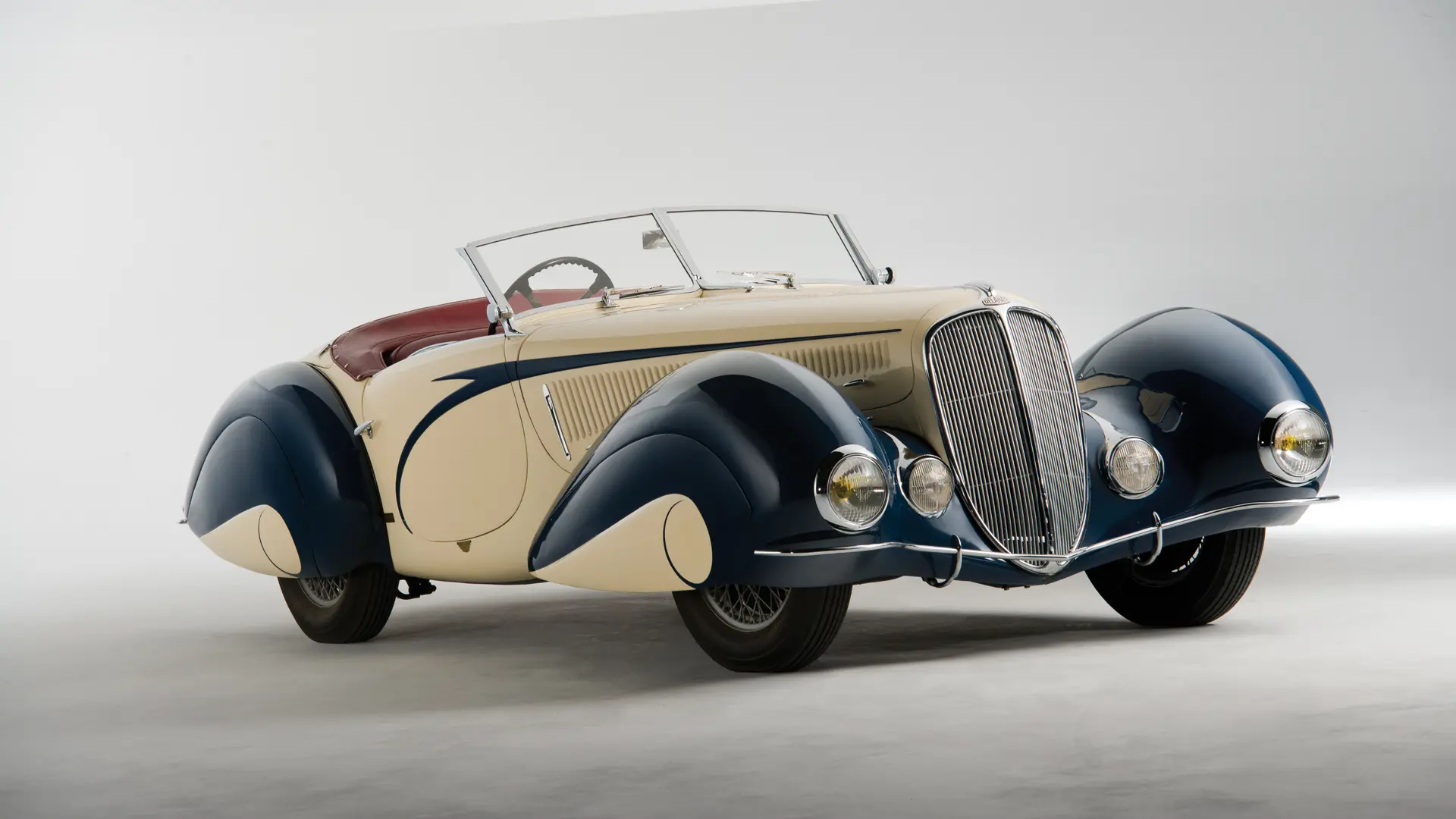
Unlike most manufacturers of the period, Delahaye sold its 135 largely as a bare, running chassis, leaving the body to be commissioned separately from independent Parisian coachbuilders. That arrangement turned the 135 into a canvas for the era’s most ambitious designers, chief among them Figoni et Falaschi, whose swooping, streamlined bodies became the visual signature of French Art Deco motoring. Joseph Figoni and his partner Ovidio Falaschi built cars that borrowed the geometric confidence of Deco architecture and applied it to sheet metal: fully skirted fenders that swept the wheels from view, chrome speed lines running the length of the hood, and tapering rear ends that echoed the period’s fascination with aerodynamics. Their most famous Delahaye design, nicknamed the Narval after the narwhal for its long, tusk-like nose, distilled that philosophy into a single unmistakable shape. Other Parisian houses worked the same chassis in their own idioms, including Henri Chapron’s Vedette cabriolet and Jacques Saoutchik’s flamboyant convertibles.
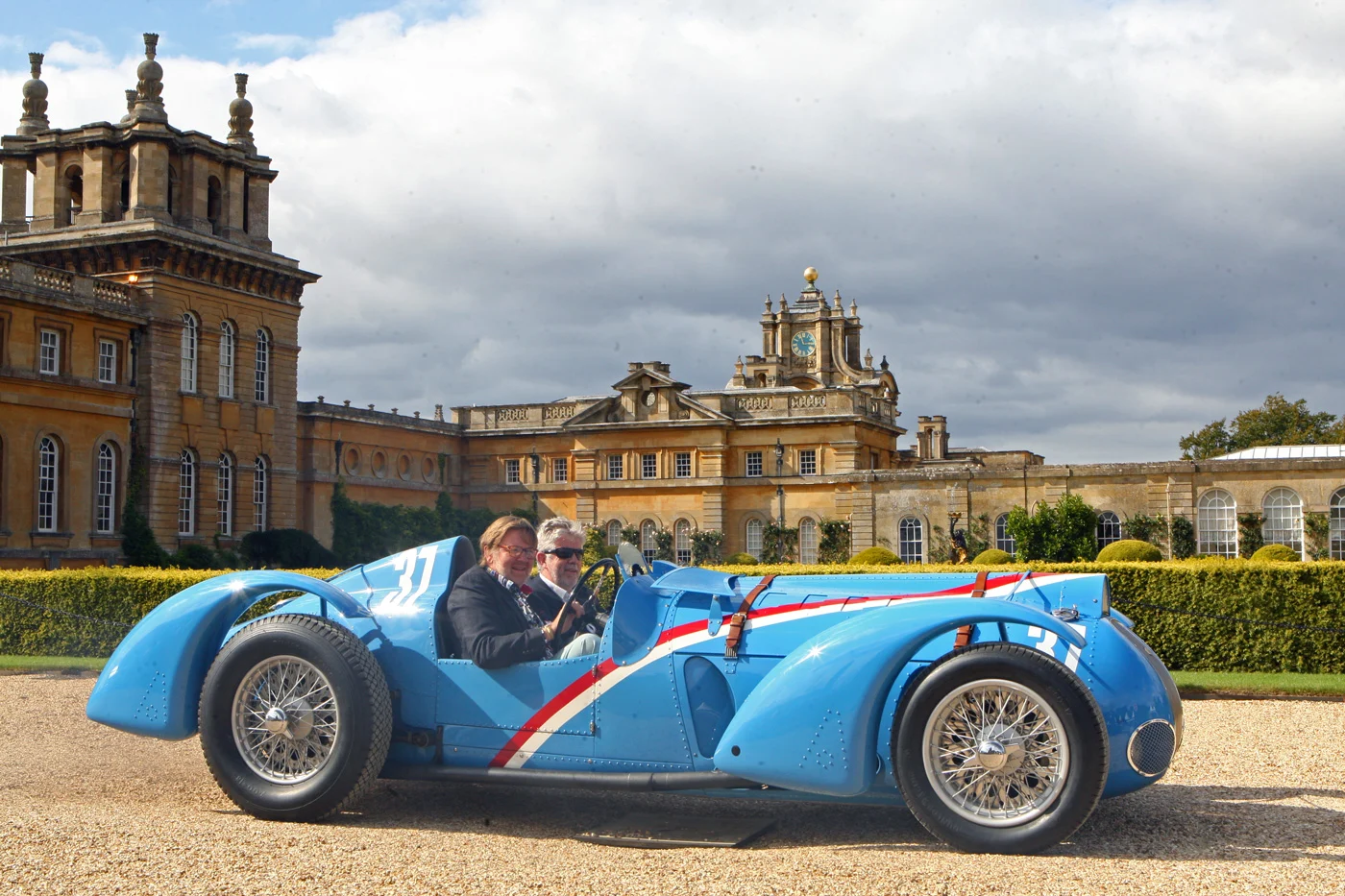
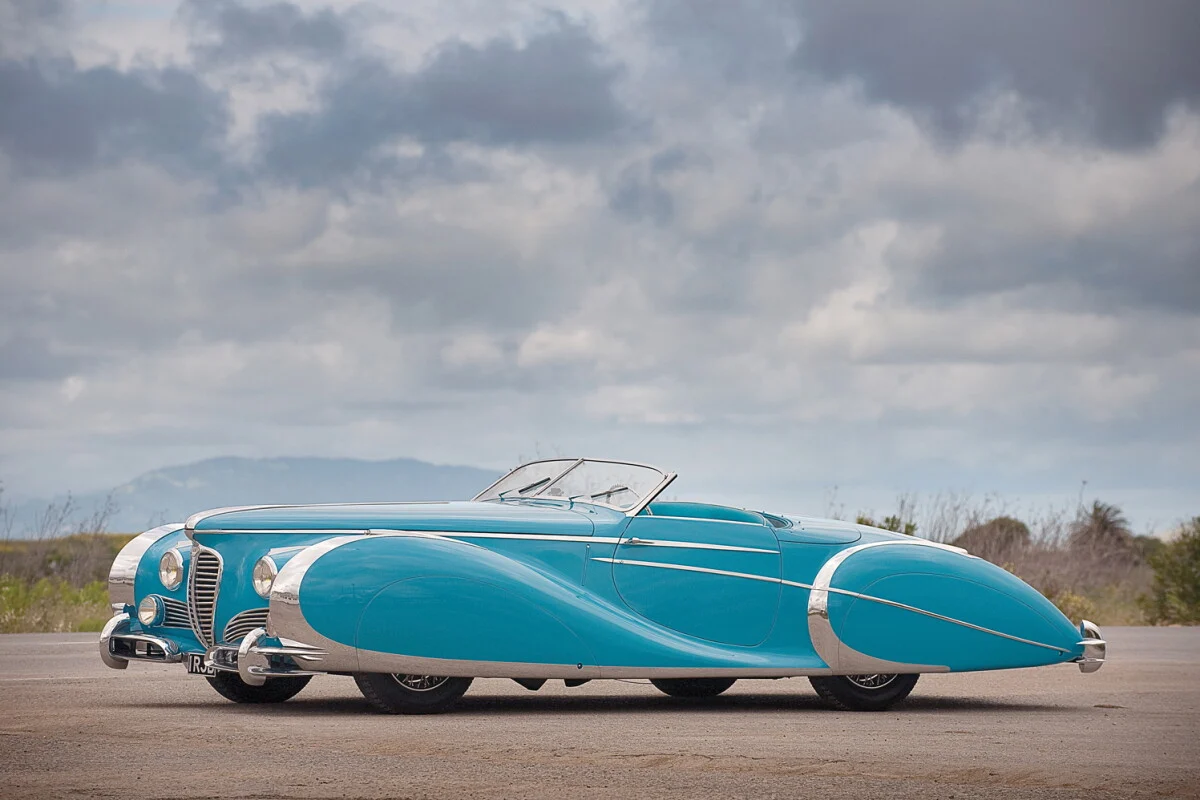
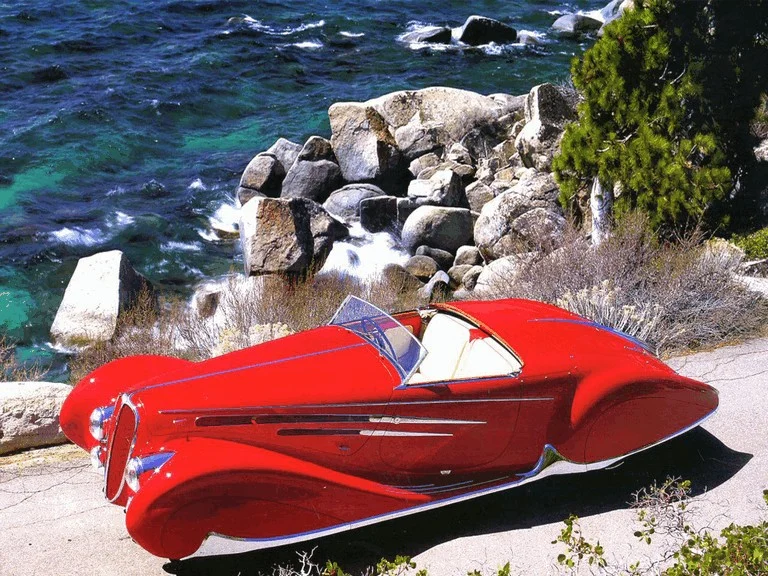
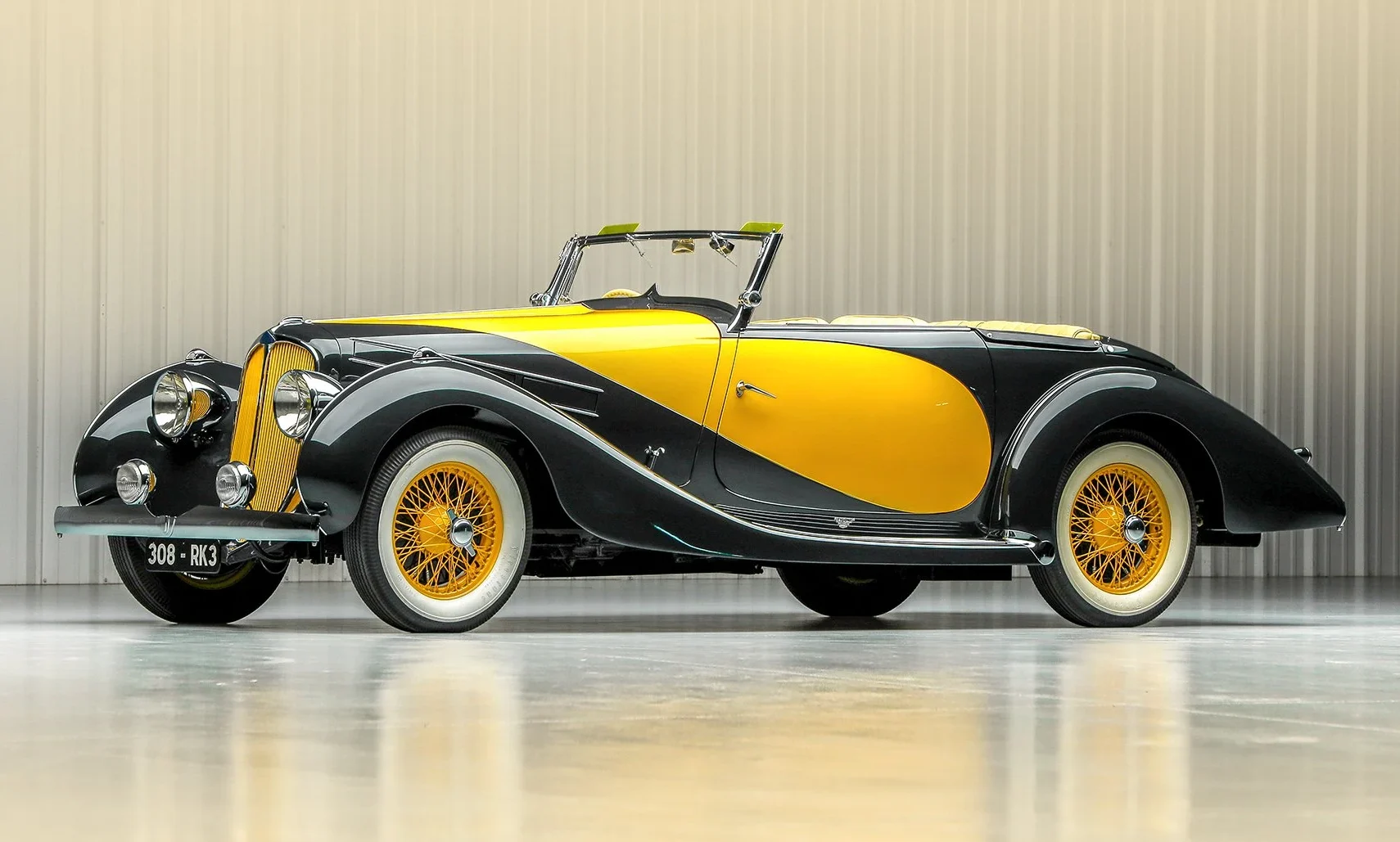
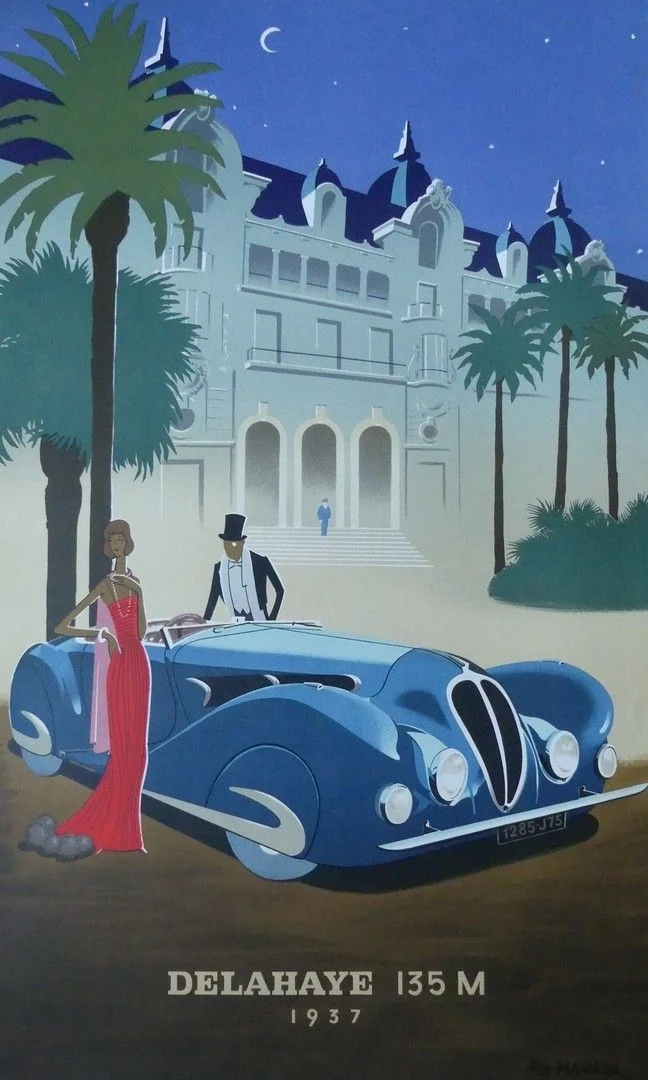 What made these coachbuilt Delahayes genuinely Art Deco, rather than simply fashionable for their moment, was how deliberately their designers borrowed from the era’s broader visual language. The elongated, teardrop fenders and sweeping chrome accents were not just ornamental flourishes; they were the same streamline principles that shaped Deco skyscrapers and ocean liners of the 1930s, applied to a vehicle body instead of a building facade. Figoni et Falaschi, in particular, treated each car as a sculptural object first and a machine second, smoothing every junction between fender, running board, and body into a single continuous line, the same instinct that led Deco architects to wrap a building’s setbacks and cornices into one unbroken silhouette. The results were often as impractical as they were beautiful. Fully enclosed wheel skirts made tire changes an ordeal, and low, raked windshields left little room for tall drivers, but no one commissioning one of these cars was thinking about practicality.
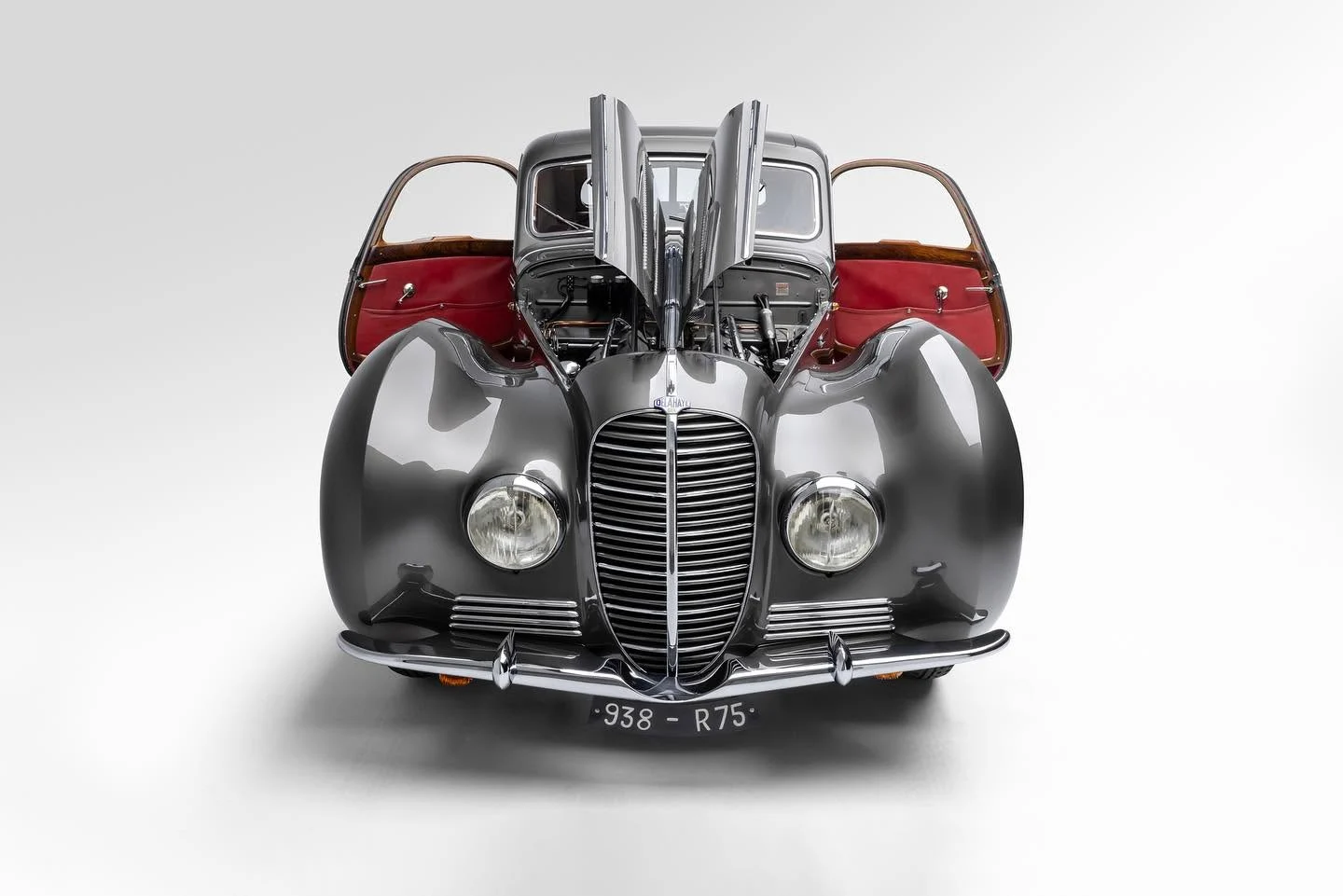
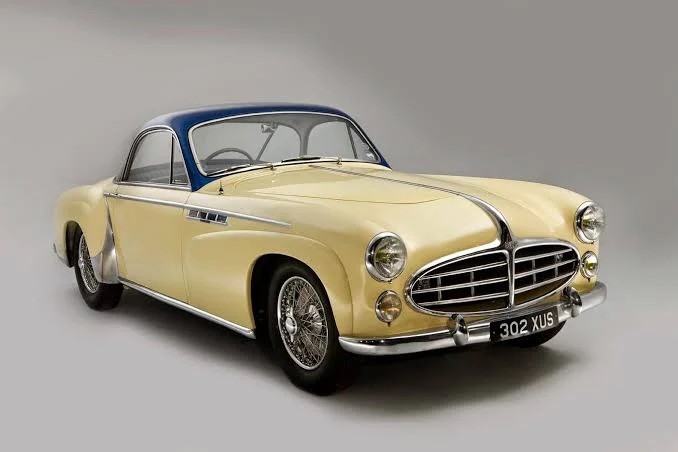
The clientele reflected the ambition of the design. Delahaye’s coachbuilt 135s found buyers among European royalty, film stars, and industrialists who wanted a car that announced its owner’s taste as loudly as its performance, and the marque’s Le Mans and Monte Carlo wins gave that performance real credibility. The Paris Motor Show became the unofficial stage for these creations each year, with coachbuilders competing on visual daring the way Delahaye’s engineers competed on the track, and a single chassis might appear in half a dozen wildly different bodies depending on which atelier a buyer commissioned. World War II interrupted the momentum, and the postwar 135, along with the later 175 and 235 models, continued the tradition on a smaller scale, but material shortages and changing tastes never quite recaptured the confidence of the prewar cars. Figoni et Falaschi built a final handful of Narval-bodied cars afterward, including a 1947 example that survives today.
ART & STATUES
CERAMICS & GLASS
© Copyright Art Deco Collection. 2026 All rights reserved. Site Map