
Susie Cooper
Susan Vera Cooper was born on October 29, 1902, in the Burslem area of Stoke-on-Trent, Staffordshire, the youngest of seven children. From an early age, she developed an interest in drawing and began her art education at night classes at the Burslem School of Art, where she studied under the influential Gordon Forsyth and was awarded a scholarship. Her initial ambition was fashion design, and she applied to the Royal College of Art in London, but was rejected for not working in a related industry. Forsyth suggested she work for a local potter to meet the entry requirements, which led her to A.E. Gray & Co. in 1922, though she ultimately abandoned her RCA ambitions to focus on the potteries in Stoke. A.E. Gray quickly recognized her talents, and in 1923 incorporated the words “Designed by Susie Cooper” into the factory mark, a trend-setting gesture that would become fashionable throughout the potteries during the 1930s. She was awarded the title of Royal Designer for Industry by the Royal Society of Arts in 1940, received an OBE in 1979, and counted the Princess Royal and Queen Elizabeth the Queen Mother among her customers. She retired to the Isle of Man in 1986 and died there on July 28, 1995.
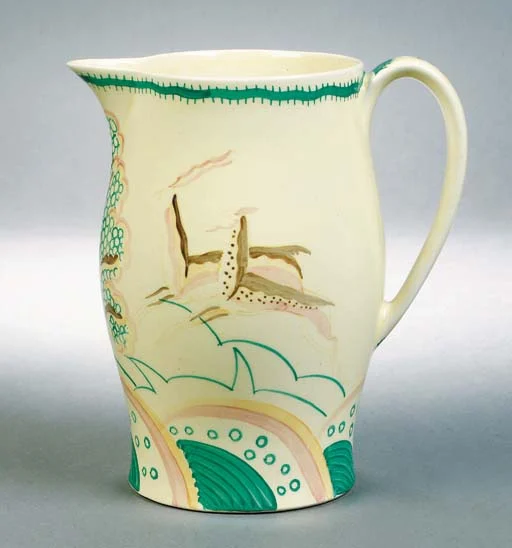
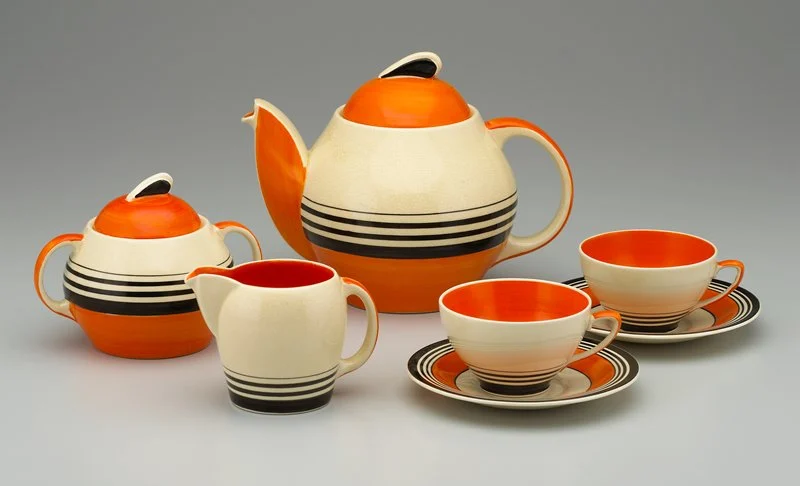
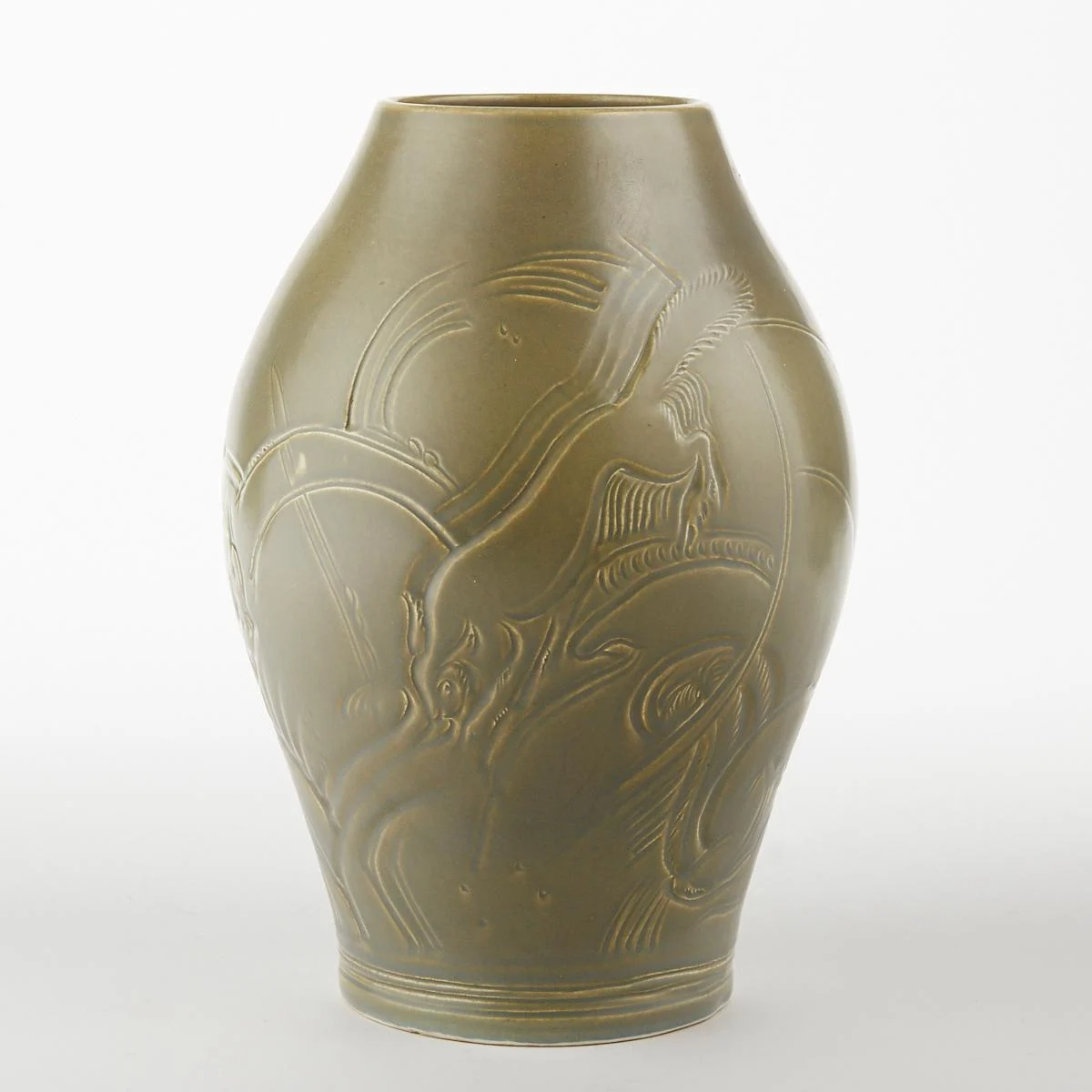
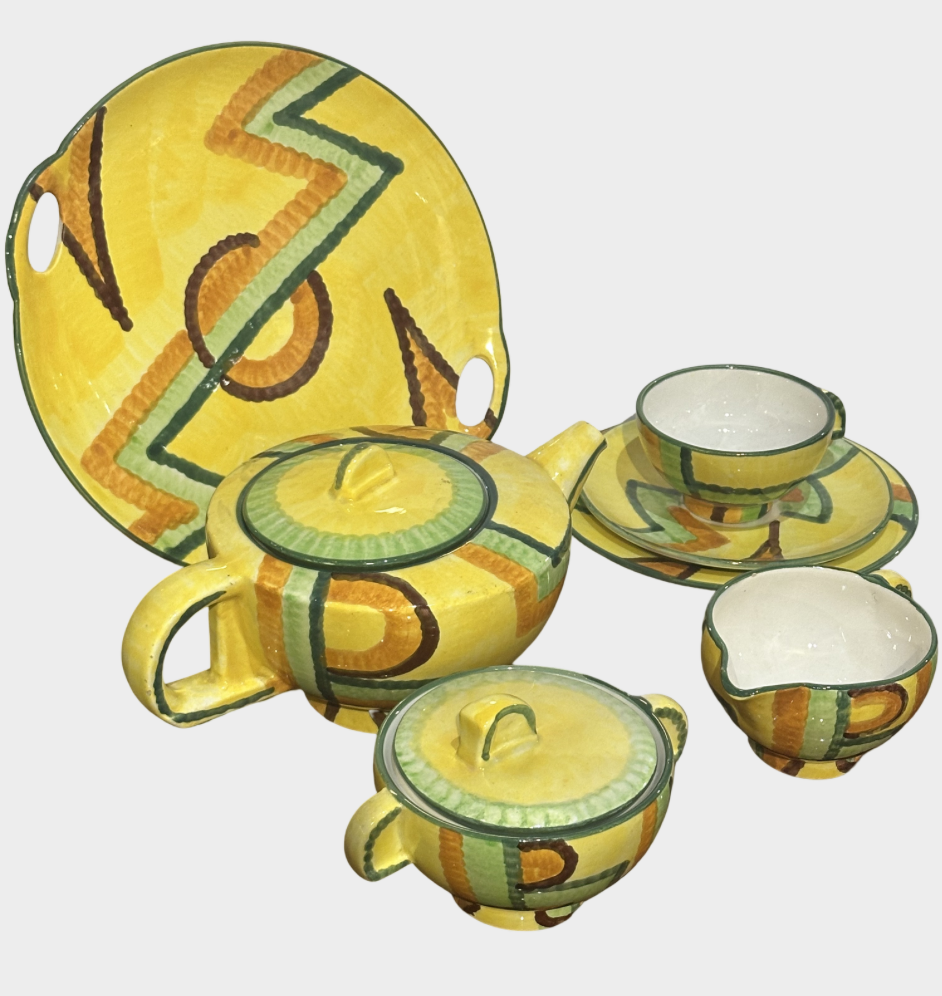
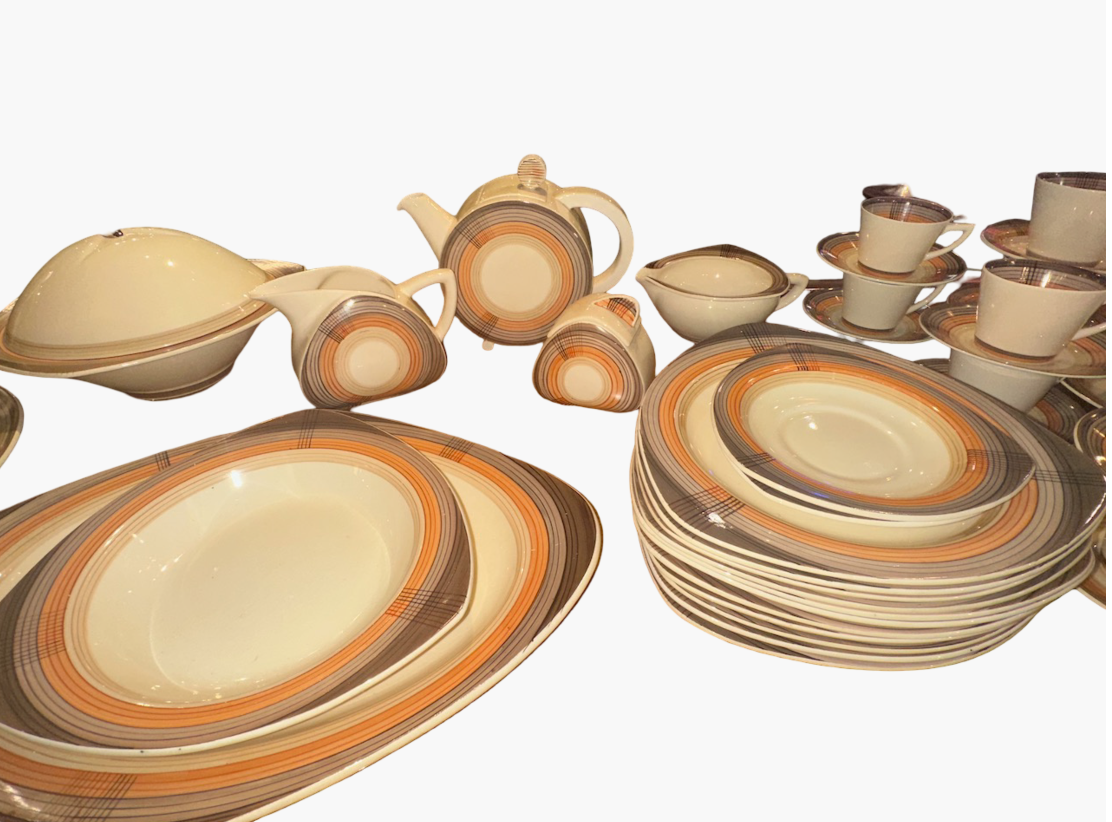
Cooper left A.E. Gray in 1929 to establish Susie Cooper Pottery with her brother-in-law, initially taking rooms at the George Street Pottery in Tunstall before relocating to the Chelsea Works in Burslem and then, in August 1931, to her famous Crown Works, which would remain the hub of her operation for fifty years. Her early independent production featured bright, floral, geometric, and modernist designs in bold hand-painted colors. In 1932, she launched the celebrated Kestrel shape, and in 1935, introduced her most famous lithograph pattern, Dresden Spray. A fire at Crown Works in May 1942 destroyed her stock of lithographs and forced the factory to close until 1945. In 1950, she acquired a bone china manufacturer, expanding beyond earthenware and designing the elegant Quail shape, and produced the Lion and Unicorn patterns for the 1951 Festival of Britain. A second fire in 1957 caused further disruption, and in 1966 the company became part of the Wedgwood Group, for whom she continued designing through the 1960s and 1970s before resigning as director in 1972 to work solely as a designer.
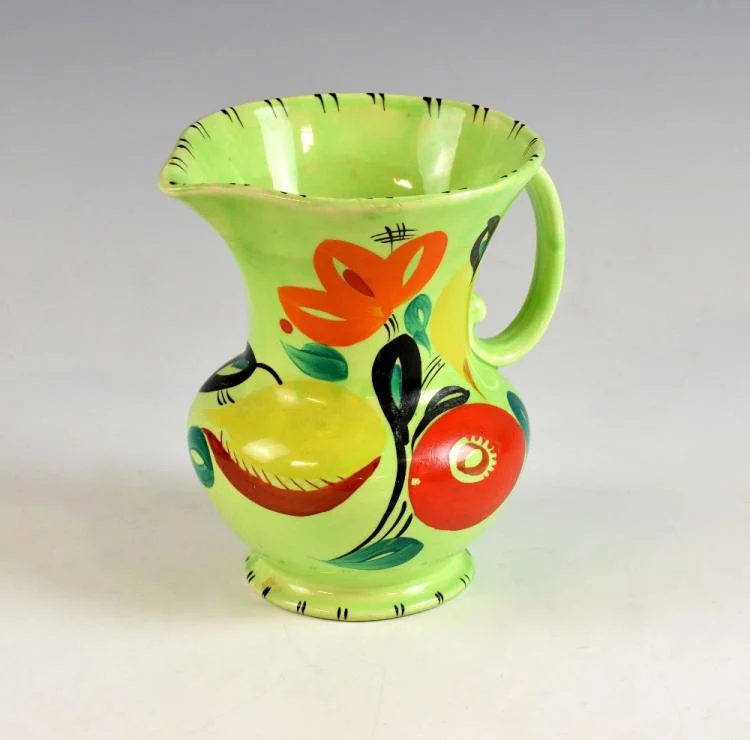
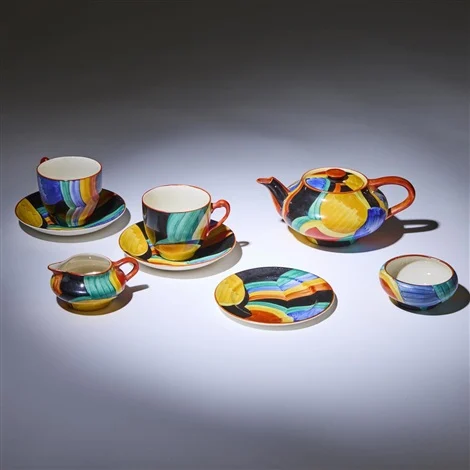
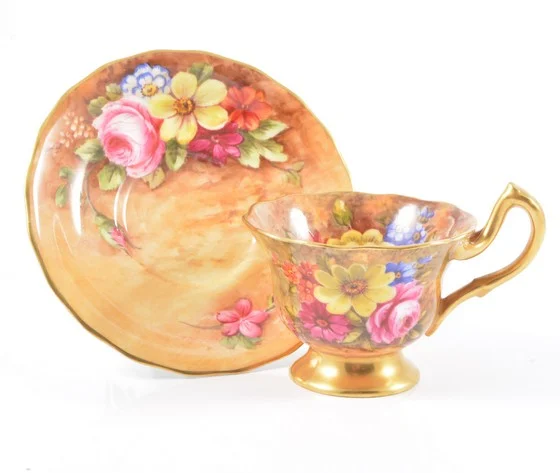
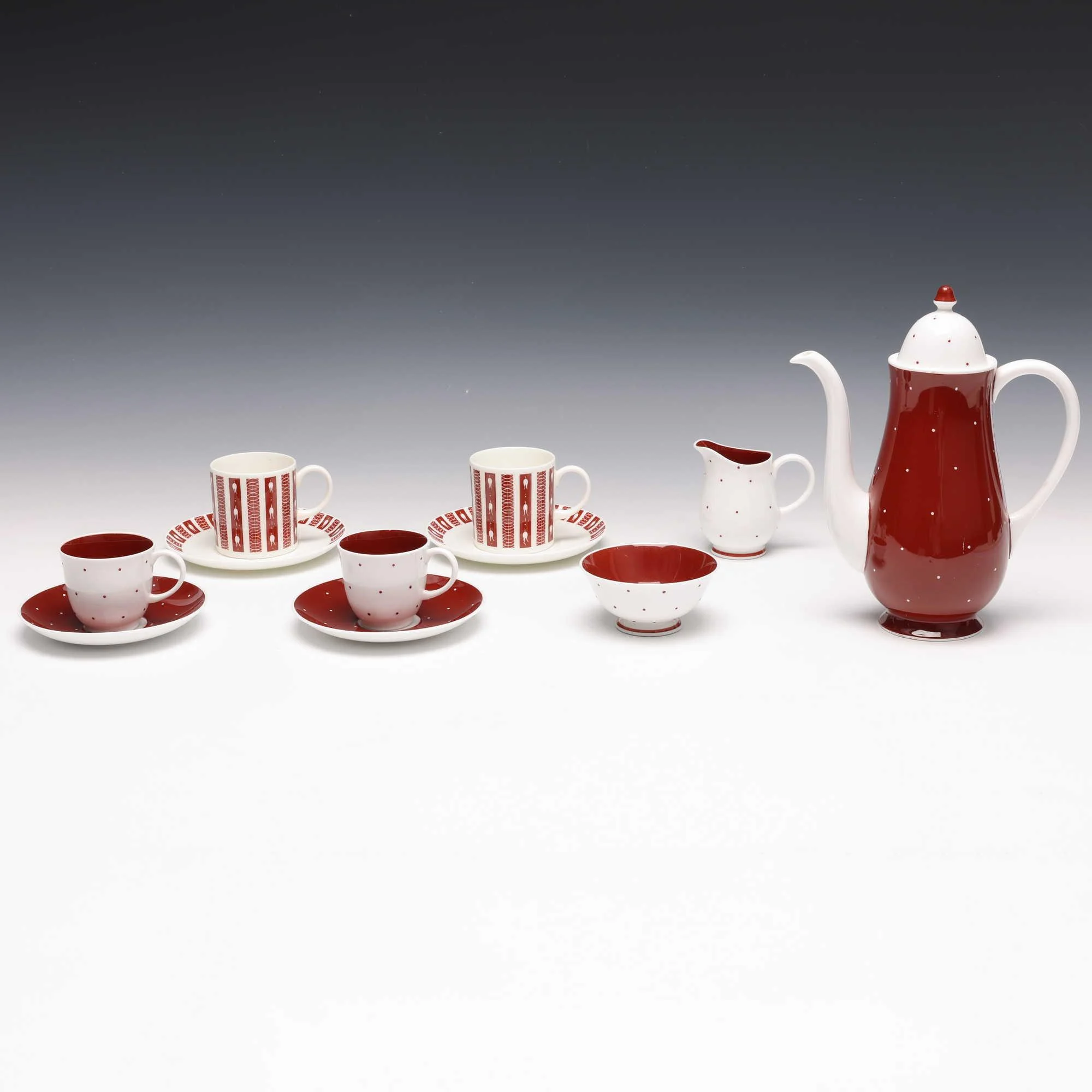
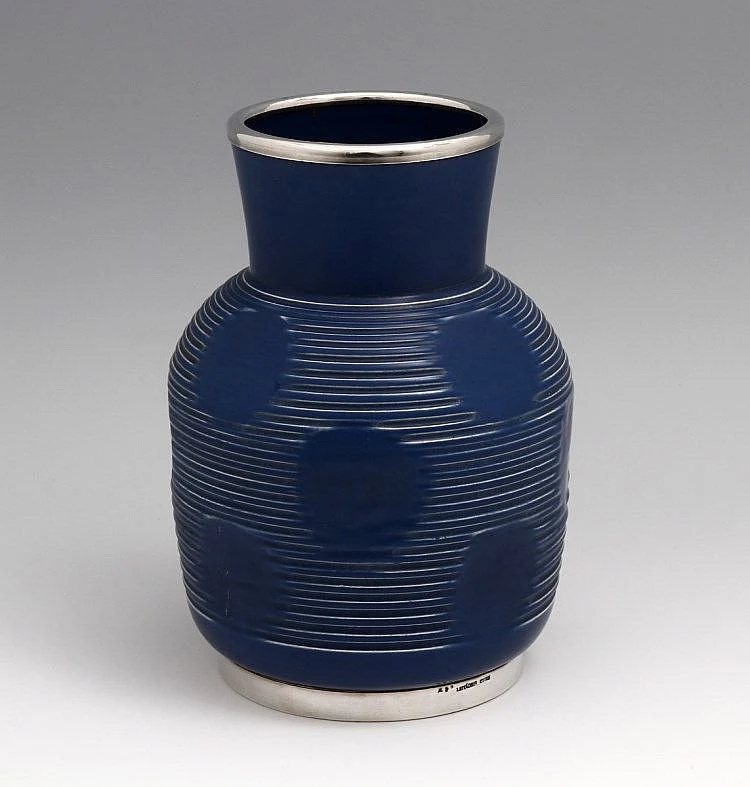
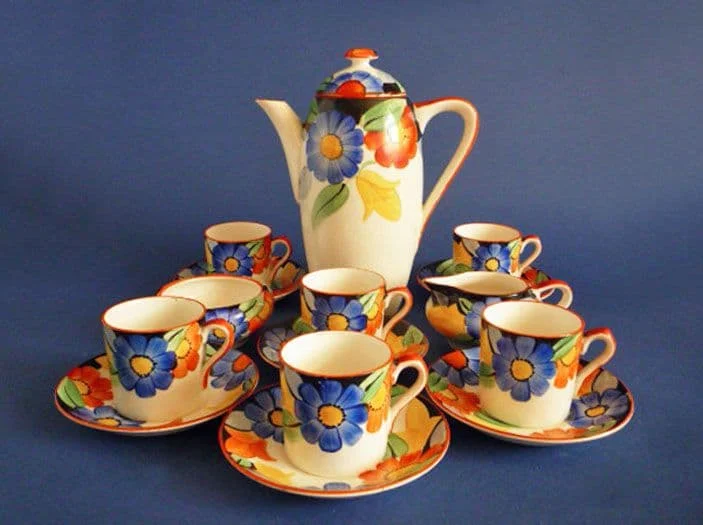
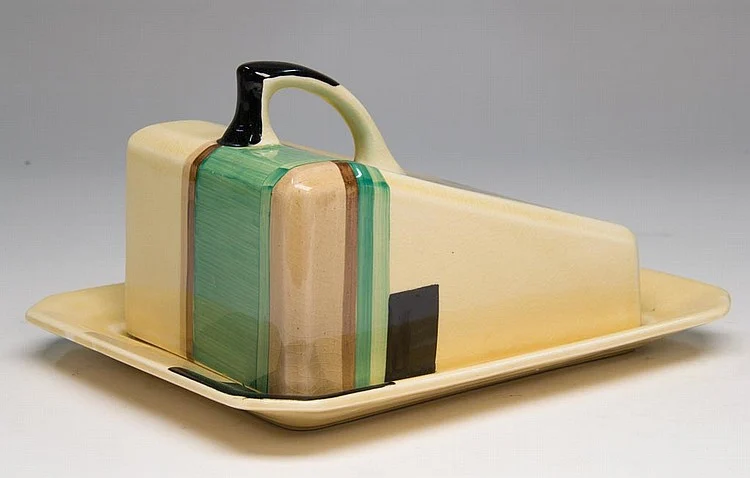
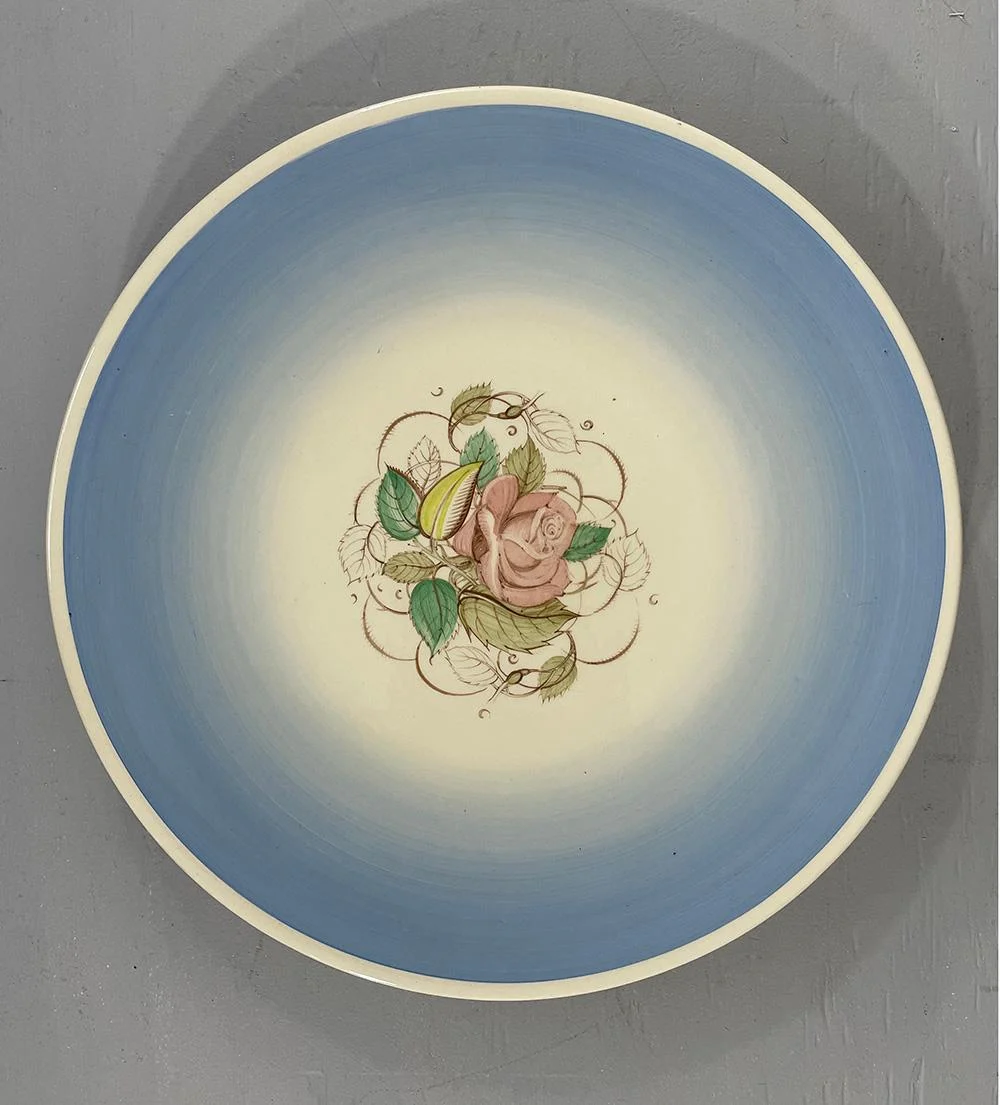
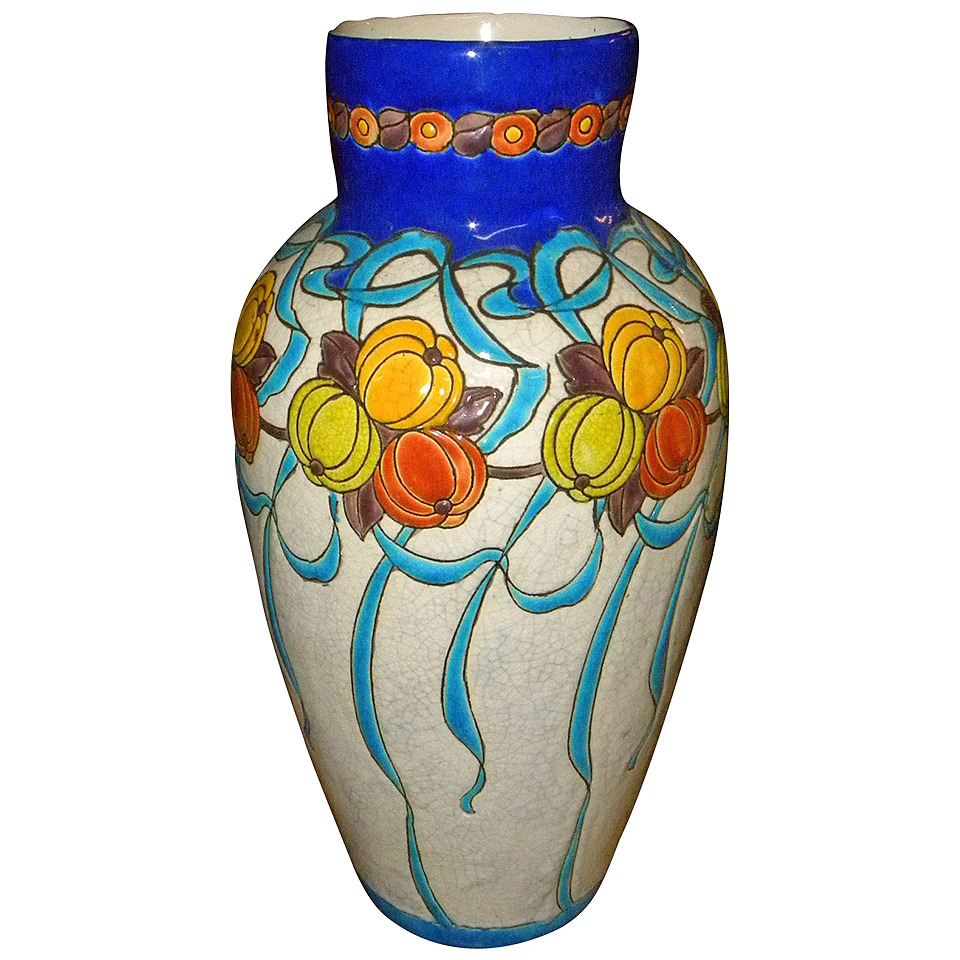
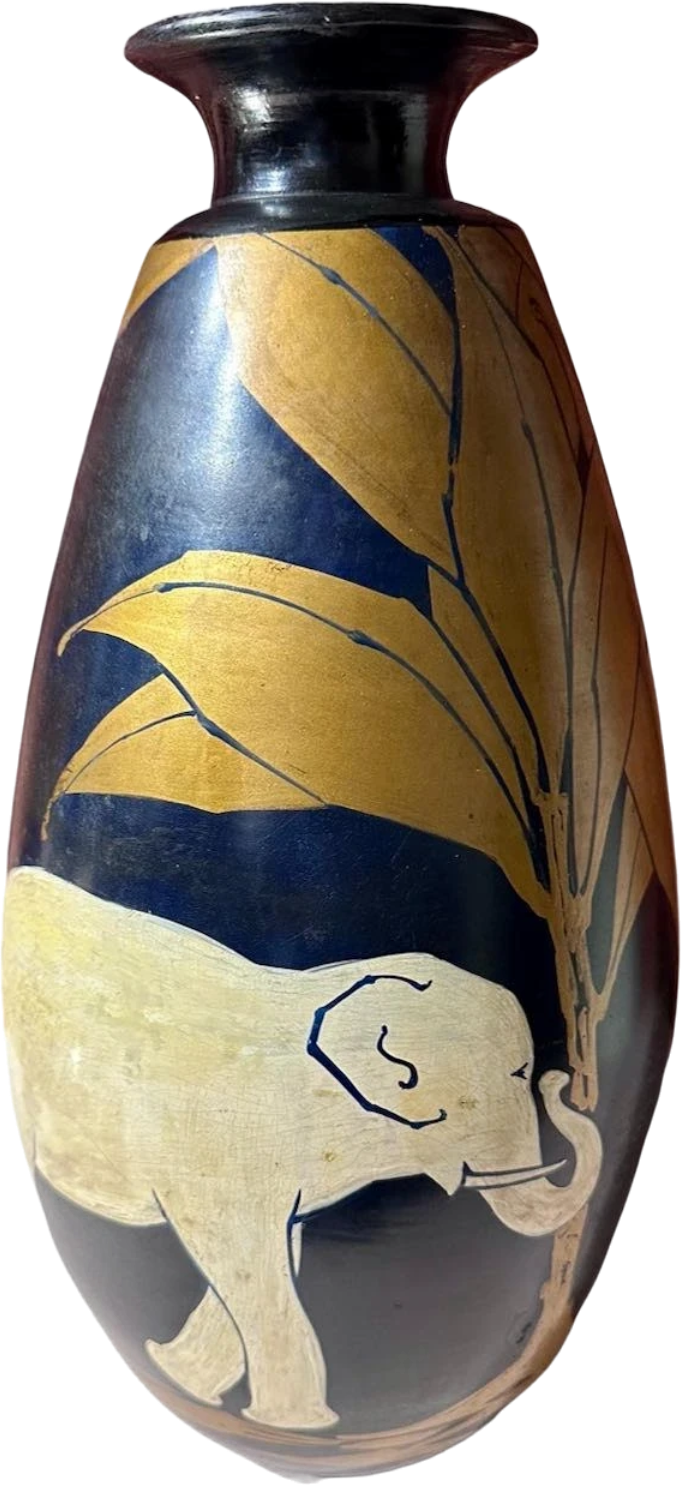
Cooper’s work was distinguished by modern, functional shapes adorned with stylized floral and geometric motifs adapted for British middle-class homes, occupying a distinctive space between Art Deco boldness and everyday practicality. Her decorative vocabulary ranged from bright hand-painted florals and geometric patterns in her early career to more restrained organic and plant-inspired forms in her postwar work, with sgraffito, aerographed decoration, and lithograph patterns all deployed across her long career. She consistently prioritized the relationship between shape and pattern, insisting on designing both as a unified whole rather than applying decoration to shapes designed by others.
Key Influences
- British Ceramic Design: As one of the leading figures of the British pottery industry for over six decades, she helped define a distinctly English approach to Art Deco and modern tableware design.
- Women in Industry: Running her own factory from 1931, she was one of the few women leading a significant British manufacturing enterprise of the era, becoming a model for women in the design professions.
- Functional Modernism: Her insistence on designing shapes as well as patterns helped shift British tableware away from purely decorative traditions toward a more integrated modernist sensibility.
- Designer Branding: A.E. Gray’s early incorporation of “Designed by Susie Cooper” into its factory mark was a pioneering act of designer attribution that helped establish the concept of the named designer in British ceramics.
- Wedgwood Legacy: Her long association with Wedgwood extended her influence into the mainstream of British ceramic production and ensured her designs reached the widest possible audience.
If you are interested in further stories of the artists who shaped Art Deco, return to our artists page to browse the full directory.
Related Products from ArtDecoCollection.com