
Friedrich Richard Roland Paris was born on March 18, 1894, in Vienna, Austria-Hungary, into the final decades of the Habsburg Empire. He attended the Grand-Ducal Realgymnasium before moving to Berlin as a young man, where he studied with Henry van de Velde, a founding figure of the Bauhaus movement whose influence on European modernism was already well established by the time Paris arrived. That training placed him at the intersection of two distinct sensibilities: the disciplined formal rigor associated with the emerging modernist schools and a personal appetite for theatricality and wit that would come to define his own artistic identity. Rather than settling into a single medium, Paris built a career that ranged unusually widely across sculpture, painting, graphic design, satirical verse, and woodcut printmaking, a versatility that reflected both his restless creative temperament and the eclectic demands of working as a commercial artist in Weimar and interwar Germany. He remained based in the country for the whole of his career, working through the cultural upheavals of the 1920s and 1930s and the eventual devastation of the Second World War. He died on May 4, 1945, in Swinemünde, Germany, just days before the war’s end in Europe, his life closing almost exactly as the era that had shaped his art came to its own violent conclusion.
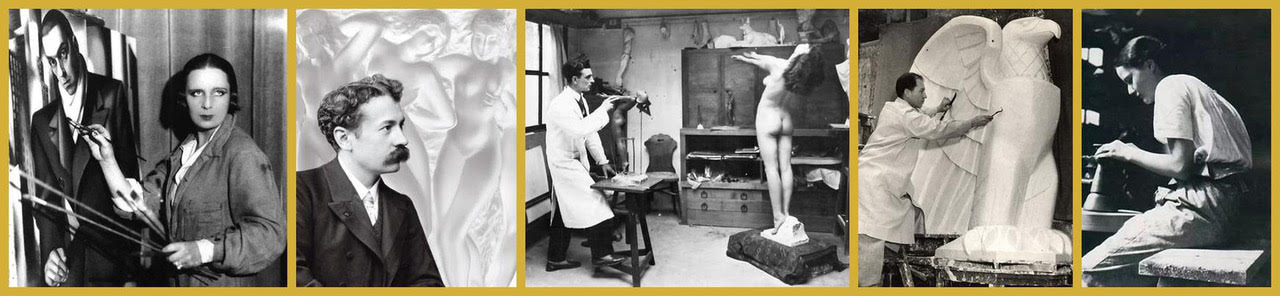
Roland Paris
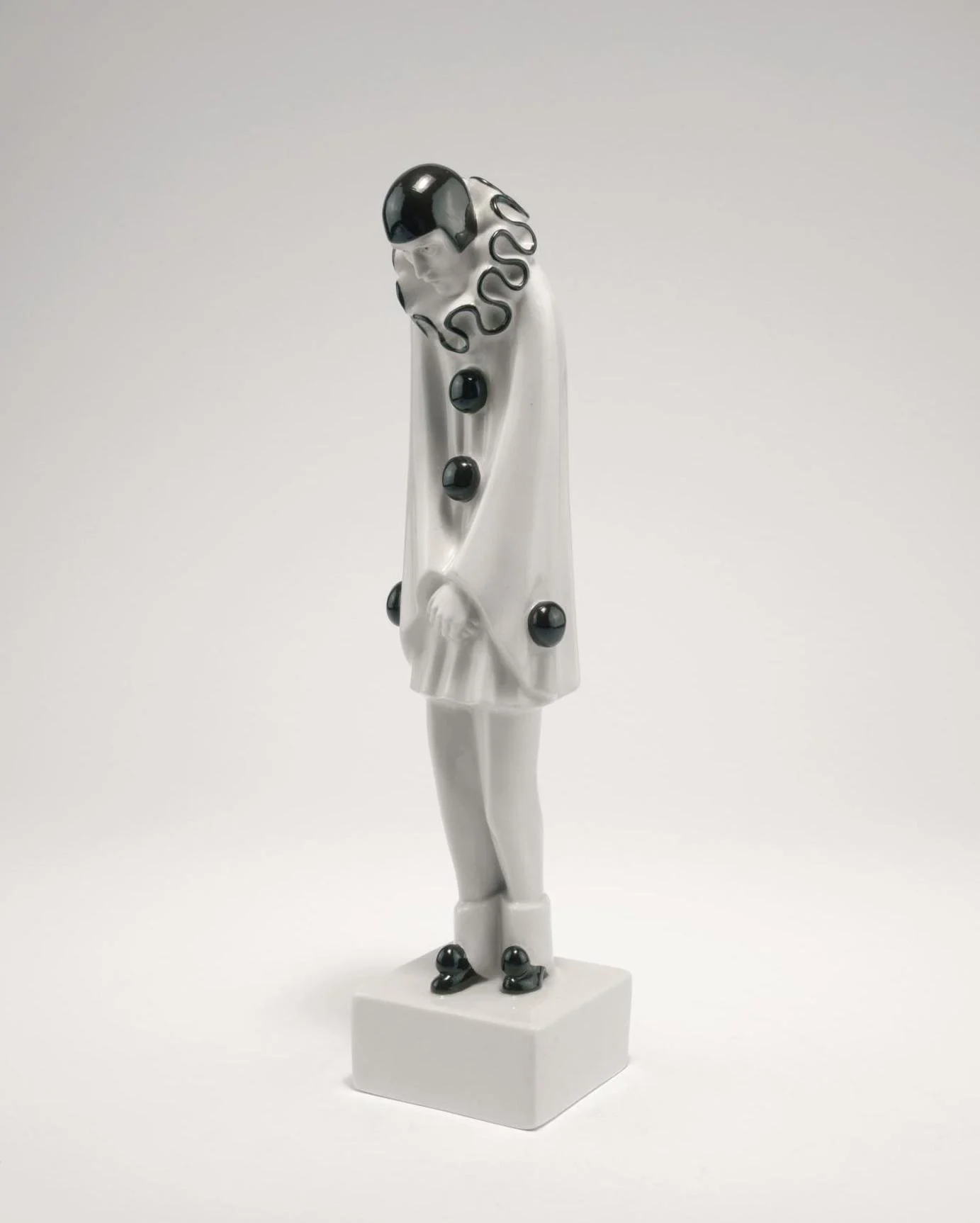
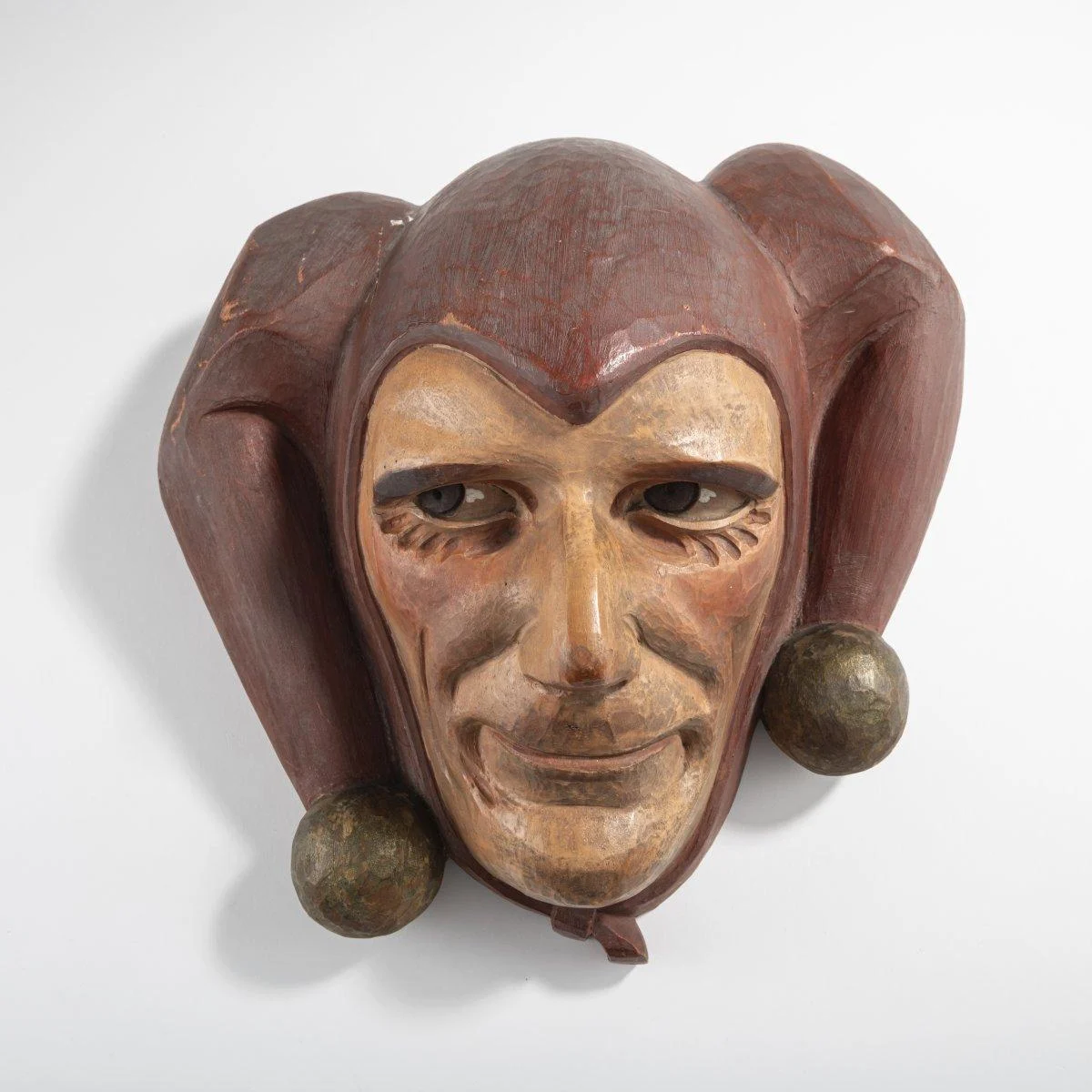
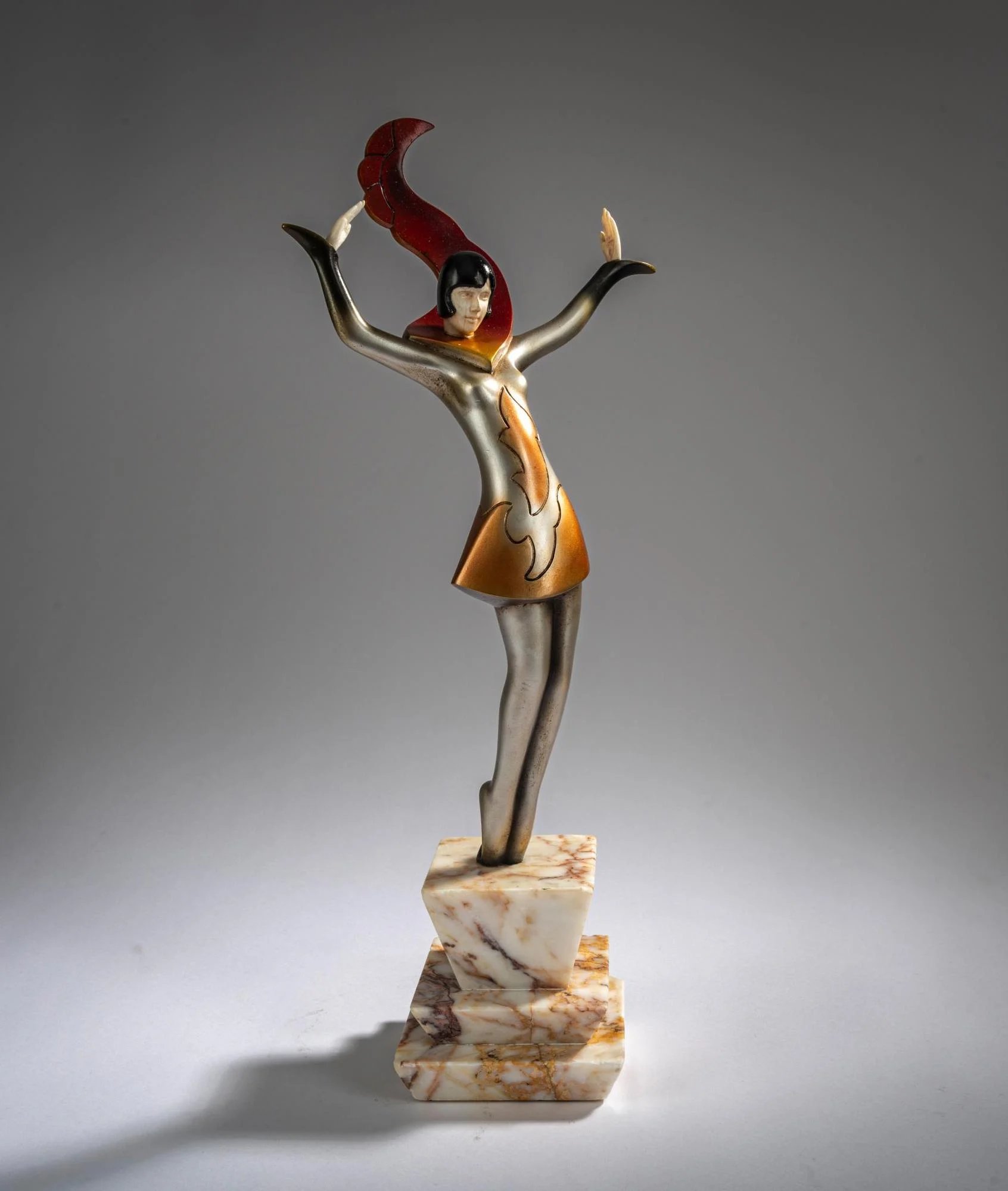
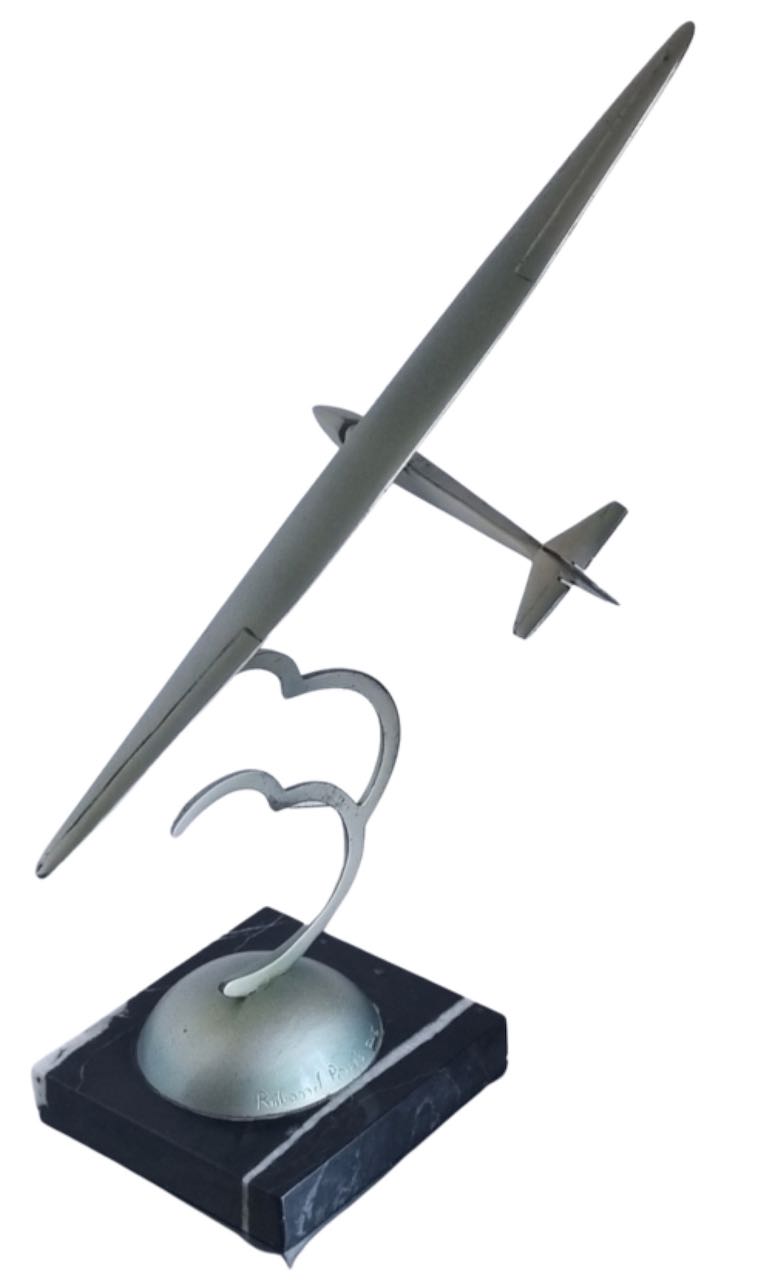
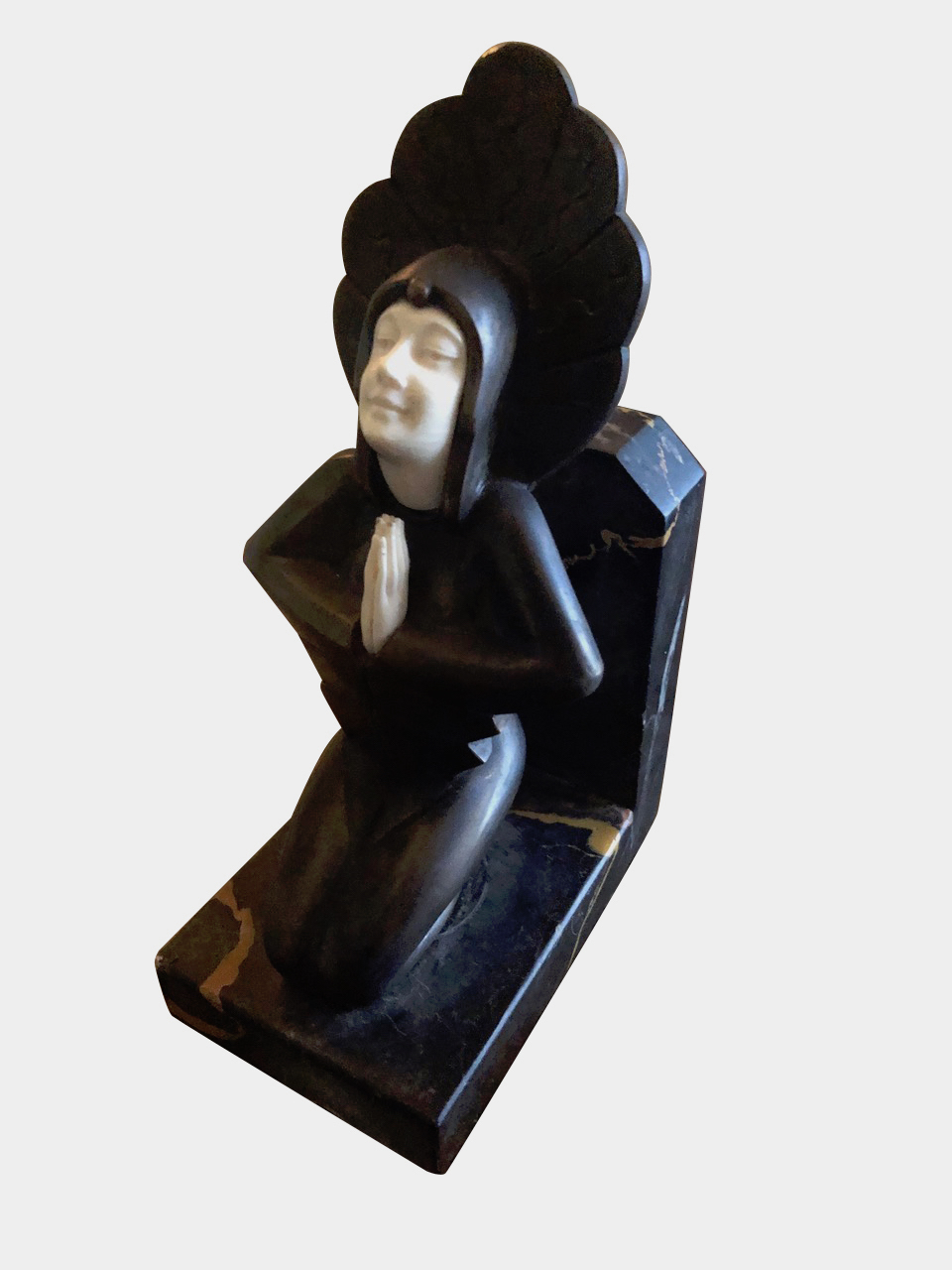
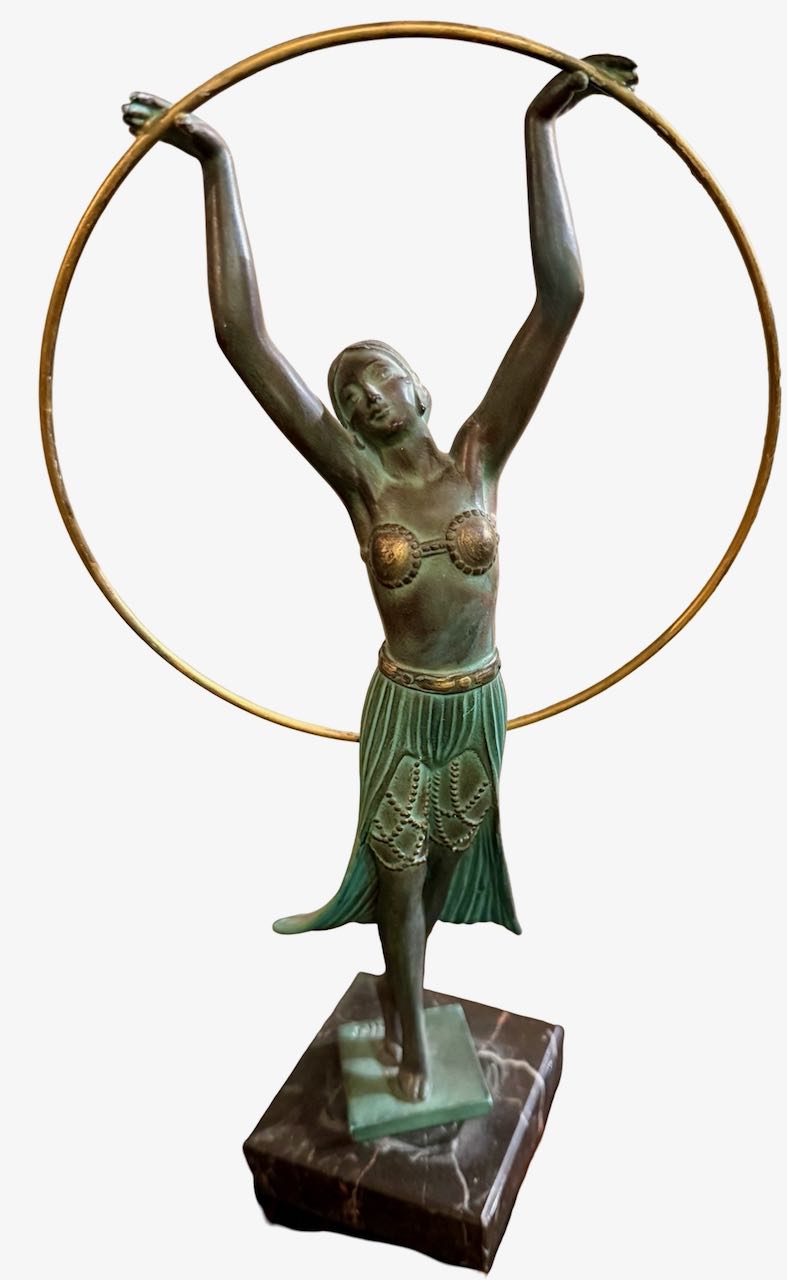
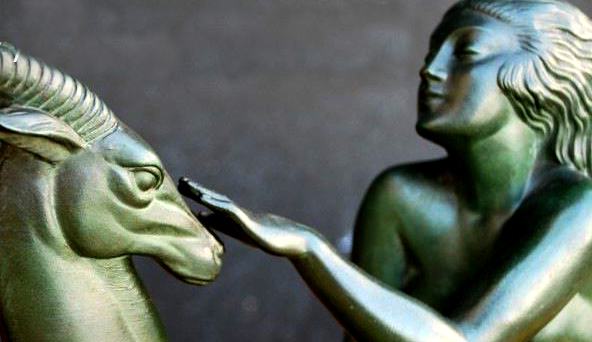
Paris became one of the most recognizable sculptors of the Art Deco period, producing figural works in bronze, marble, and ivory alongside chryselephantine pieces that combined bronze with carved bone or ivory. His subjects returned repeatedly to figures of performance and entertainment: jugglers, jesters, clowns, and dancers rendered with exaggerated gesture and theatrical flair, often incorporated into functional objects such as table lamps. He also produced a notable series of aviation-themed sculptures, including works depicting gliders in flight, one based on the Schneider Grunau Baby Glider of 1933, reflecting the era’s fascination with modern flight and speed. His female nude figures, executed in a streamlined modernist style, are counted among his most sought-after works today, alongside his court jesters and satirical caricature sculptures. His pieces remain in active circulation on the international art market and are held in private collections, with dealers frequently comparing his output to that of contemporaries such as Josef Lorenzl and Stefan Dakon.
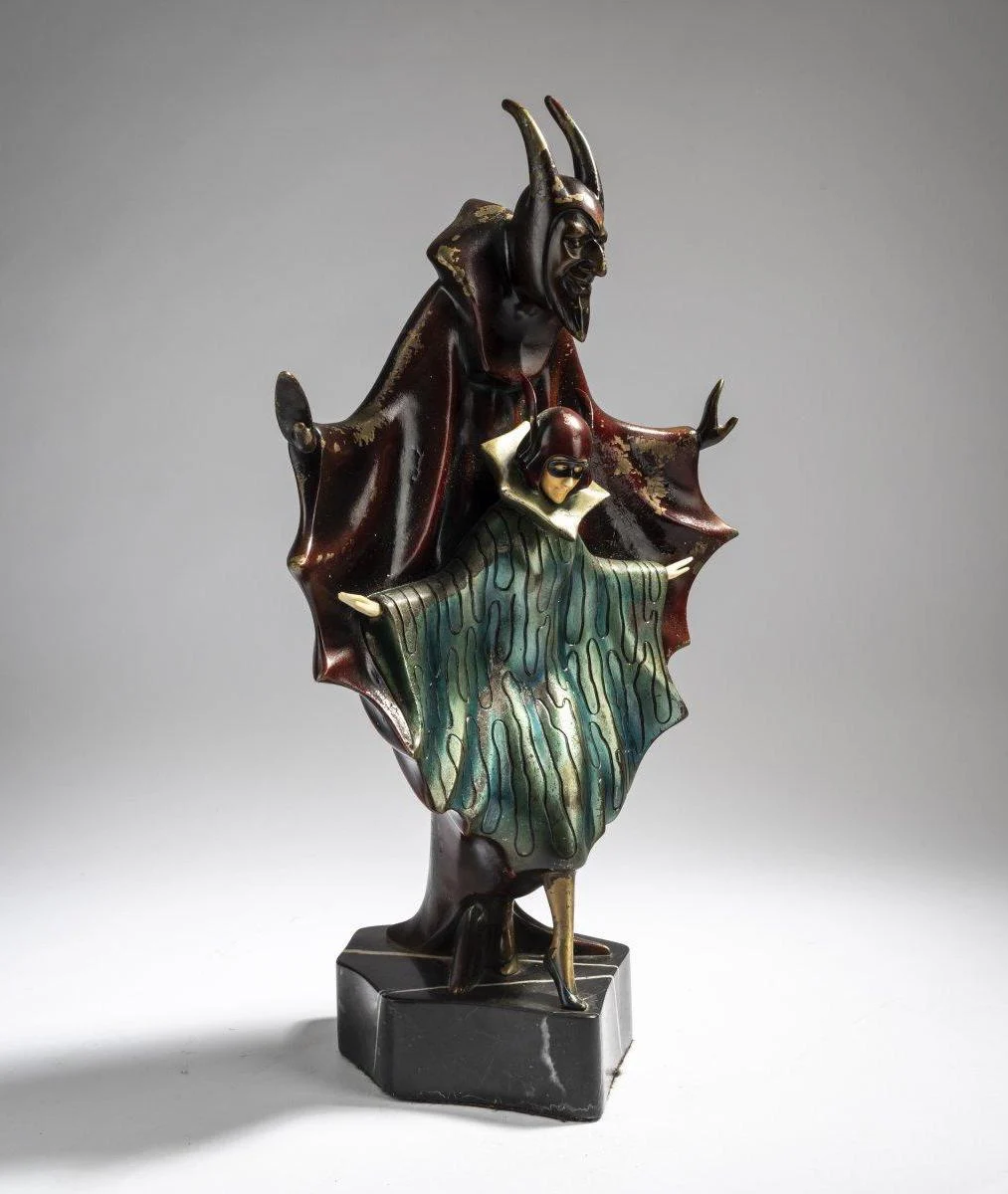

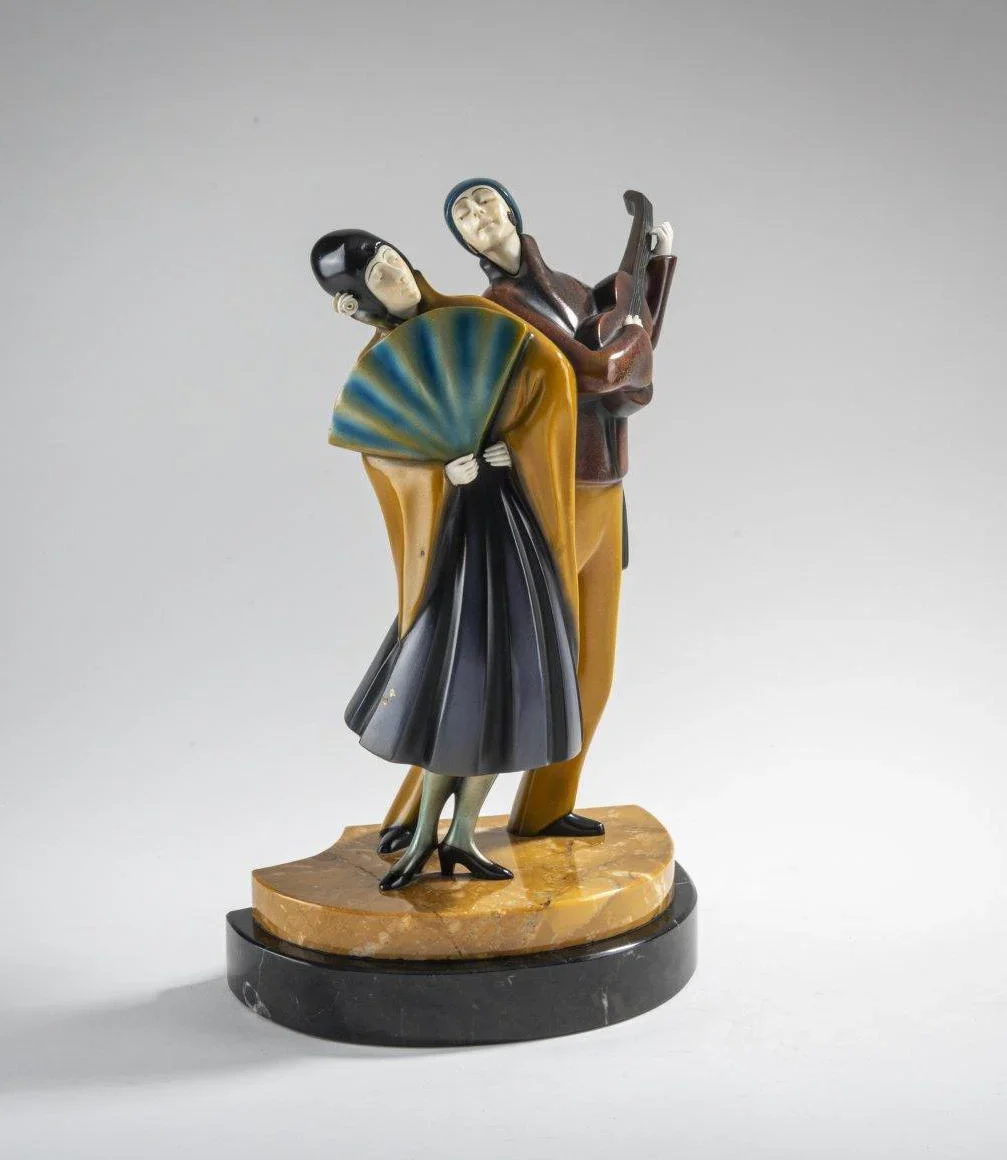
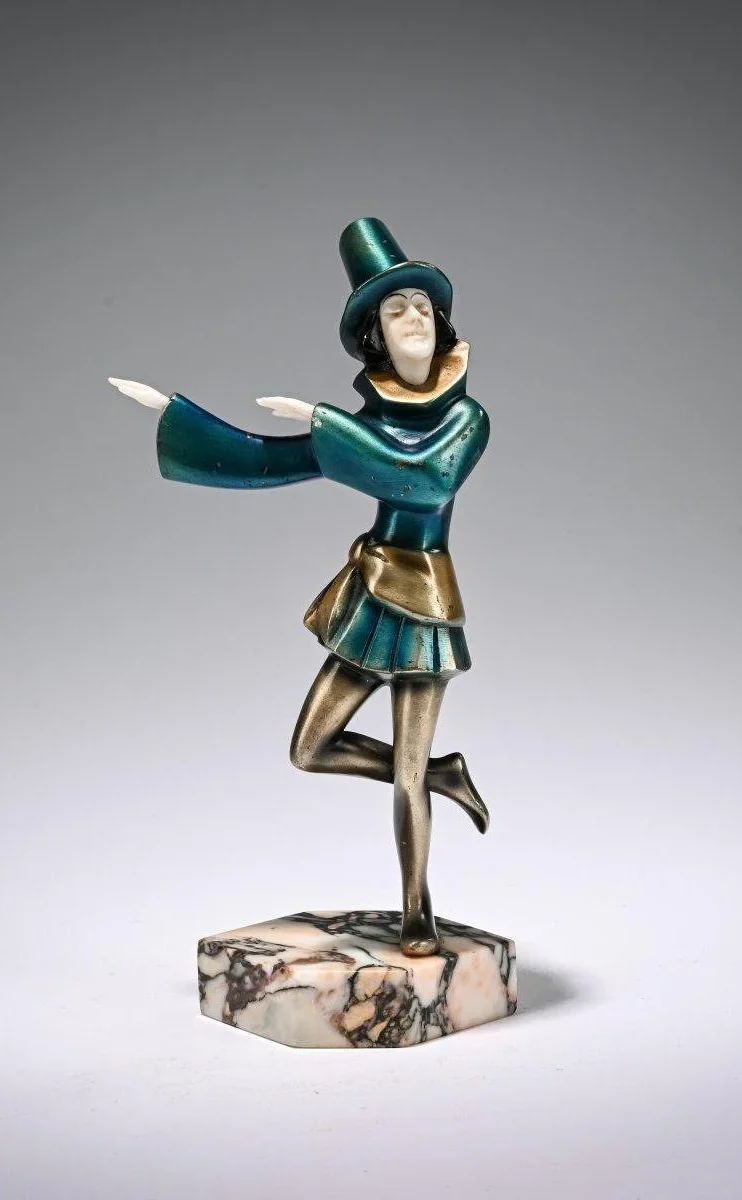
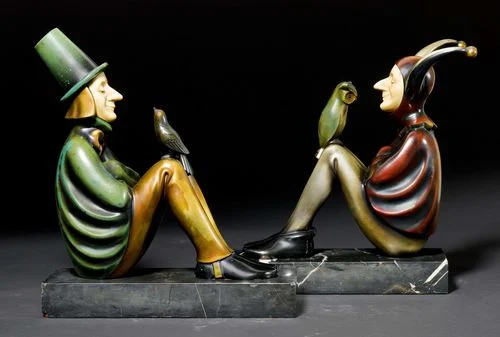
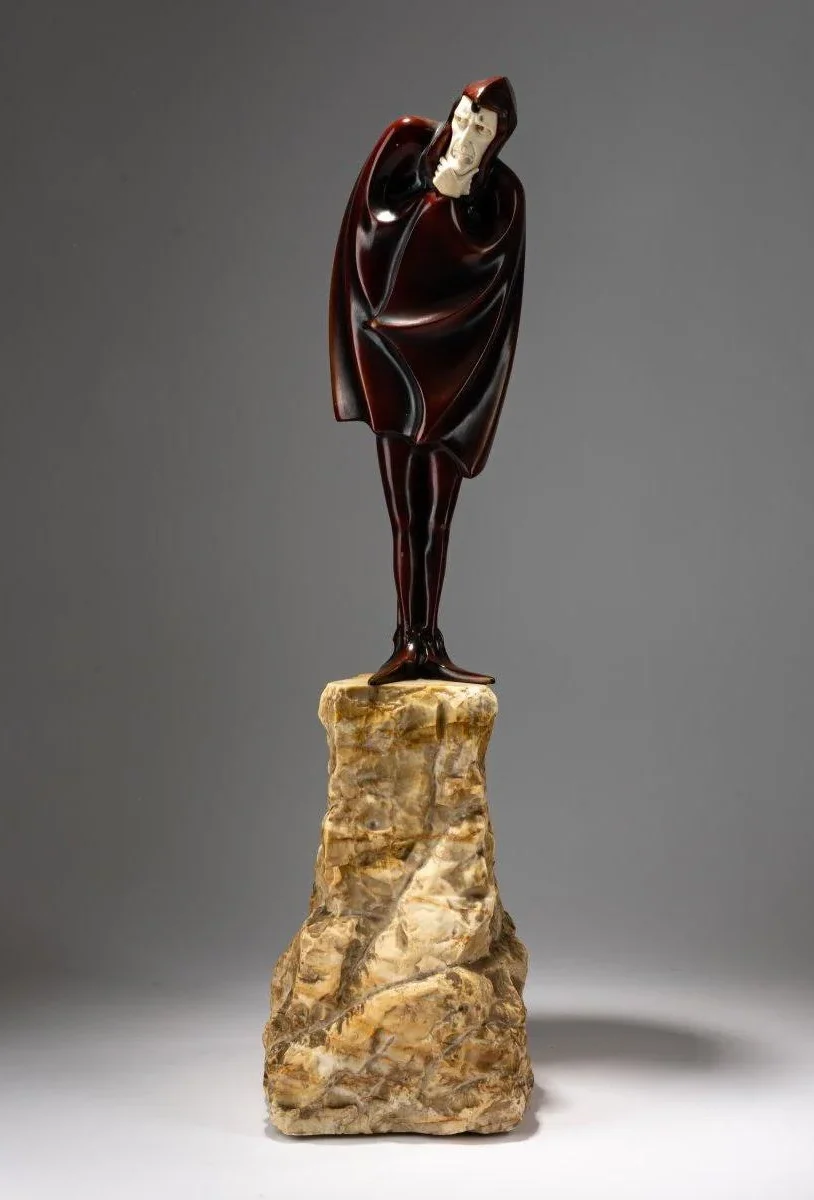
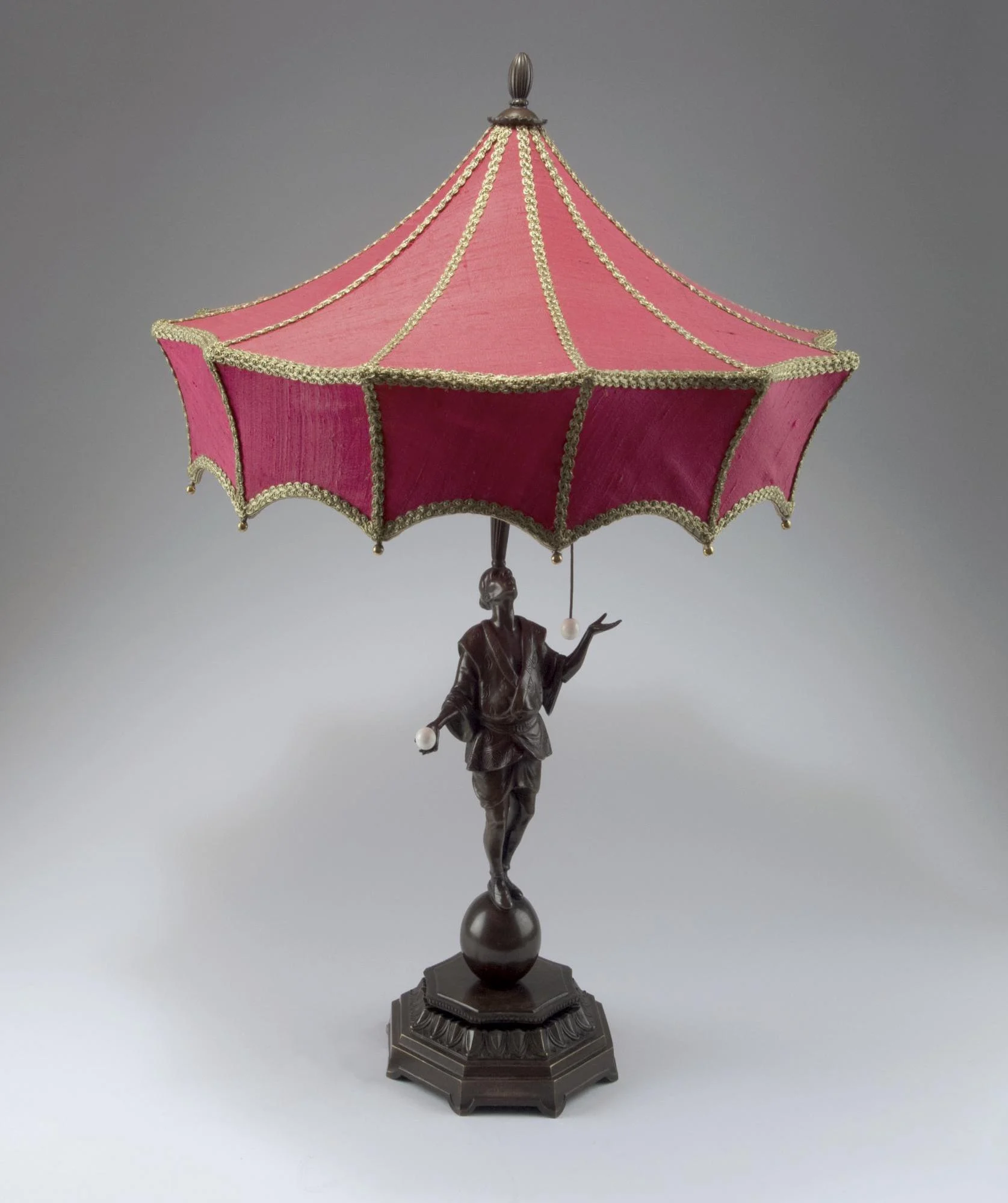
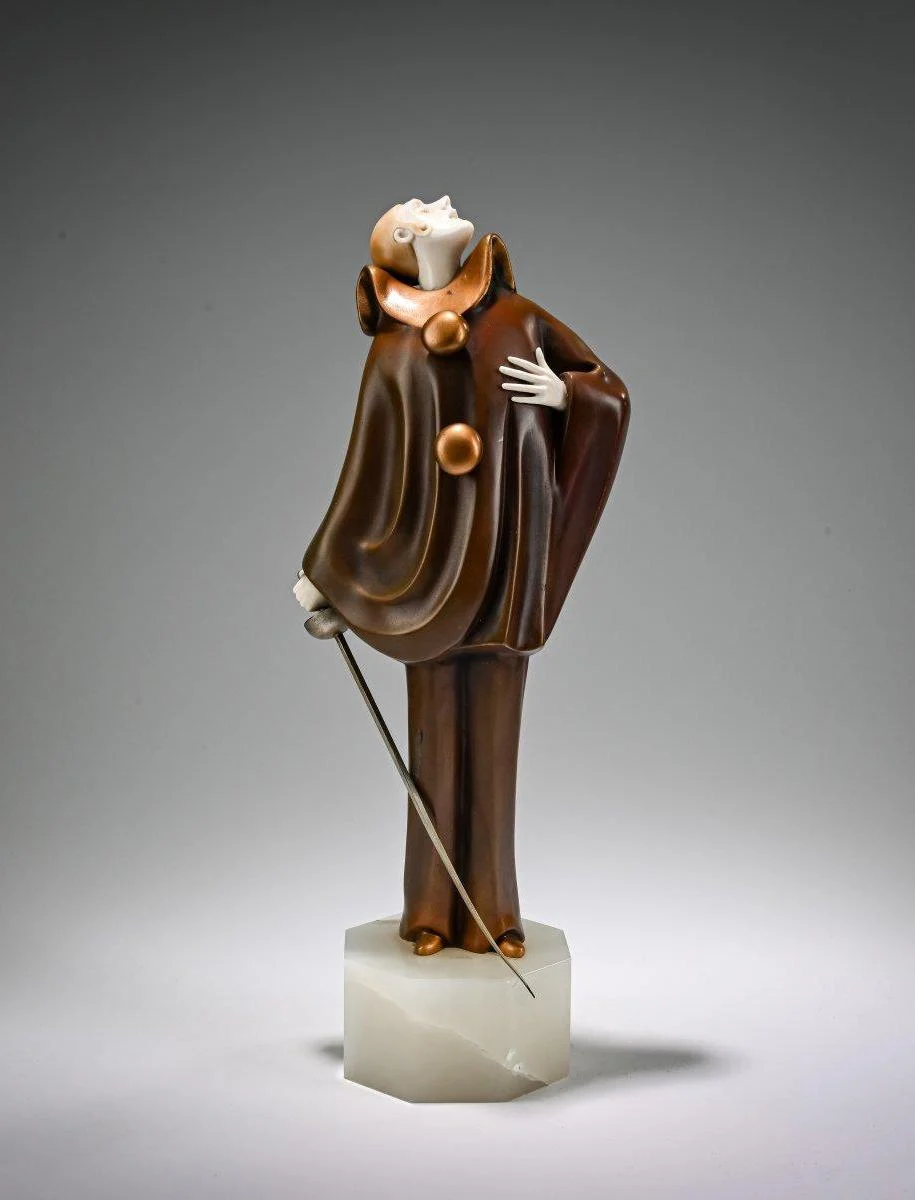
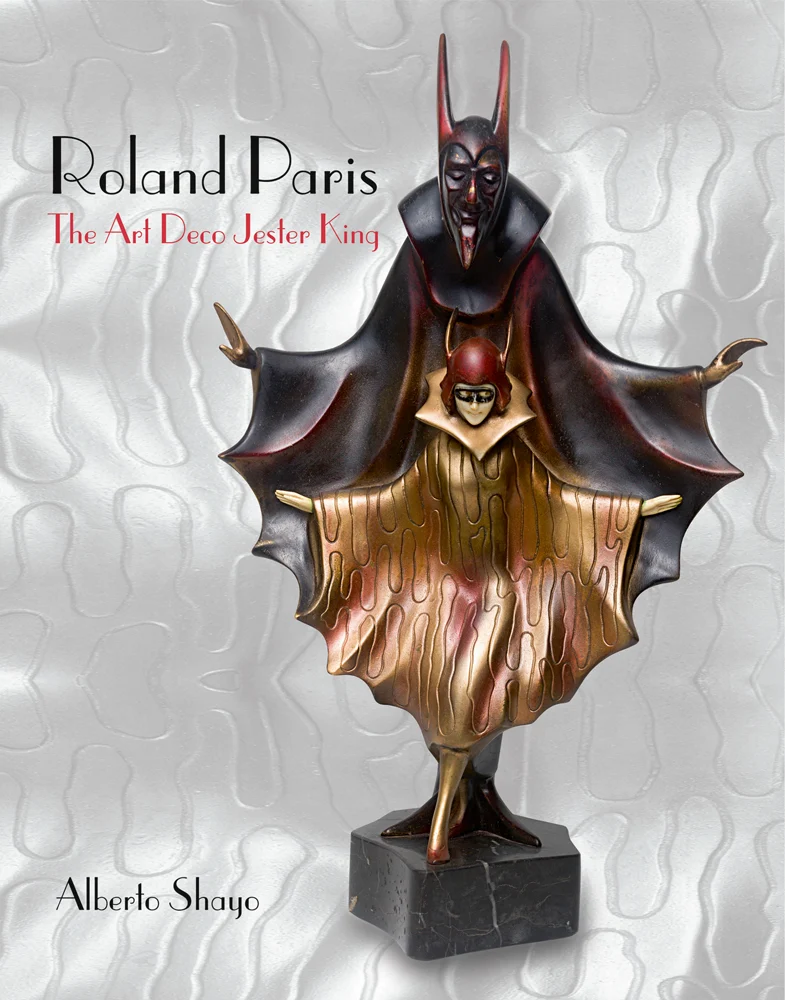
Paris specialized in humorous, sometimes satirical bronze and ivory figures, often distinguished by exaggerated facial expressions and theatrical poses that set his work apart from the more restrained elegance typical of much Art Deco figural sculpture. His pieces combined technical polish, crisp chiseling and finishing, with a distinctly playful sensibility, treating performers, jesters, and caricatured figures as vehicles for wit as much as for formal beauty. This combination of whimsy and craftsmanship gave his work a personality that has made it consistently identifiable within the broader field of interwar decorative bronze sculpture.
Key Influences
- Art Deco Figural Bronze: His prolific output of jesters, jugglers, and dancers helped define the playful, theatrical strand of Art Deco sculpture produced across Central Europe in the 1920s and 1930s.
- Chryselephantine Sculpture: His combination of bronze with carved ivory and bone placed him within the celebrated tradition of chryselephantine figures alongside contemporaries working in the same luxurious medium.
- Aviation in Decorative Art: His glider and flight-themed sculptures captured the era’s fascination with modern aviation, translating a symbol of technological progress into collectible decorative form.
- Bauhaus Connection: His training under Henry van de Velde linked him to the formative intellectual circles of early European modernism, even as his own output moved in a more theatrical, figurative direction.
- Collector’s Market: His works remain actively traded internationally today, sustaining interest in the whimsical, character-driven branch of Art Deco decorative sculpture.
If you are interested in further stories of the artists who shaped Art Deco, return to our artists page to browse the full directory.

Related Products from ArtDecoCollection.com