



Rockwell Kent
Rockwell Kent was born on June 21, 1882, in Tarrytown Heights, New York, to Sara Ann Holgate and Rockwell Kent Sr., into an affluent family whose homes spanned Manhattan, Long Island, and the Hudson River Valley. His father died in 1887 when Kent was only five, leaving the family in a diminished, though still genteel, financial circumstance. At thirteen, his aunt Josie Baker, herself an accomplished ceramic decorator, took him on a formative tour of Europe, exposing him early to a world of art and culture beyond his immediate surroundings. He studied architecture at Columbia University from 1900 to 1902, briefly working as an architectural illustrator before abandoning the field near the end of his degree to pursue art, studying under William Merritt Chase, Robert Henri, and Arthur Wesley Dow. His aunt also introduced him to the painter Abbott Thayer, who invited Kent to apprentice at his studio in Dublin, New Hampshire, where Kent became close friends with Thayer’s son and fellow artist Gerald, and later married Thayer’s niece, Kathleen Whiting, in 1908. A committed socialist and later Communist sympathizer from an early age, Kent saw his own artistic output as an extension of a broader respect for the working class, a conviction that would increasingly shape and complicate his career. He was the first American artist to have his work exhibited in the Soviet Union and received the Lenin Peace Prize in 1967. Kent died on March 13, 1971, in Plattsburgh, New York.
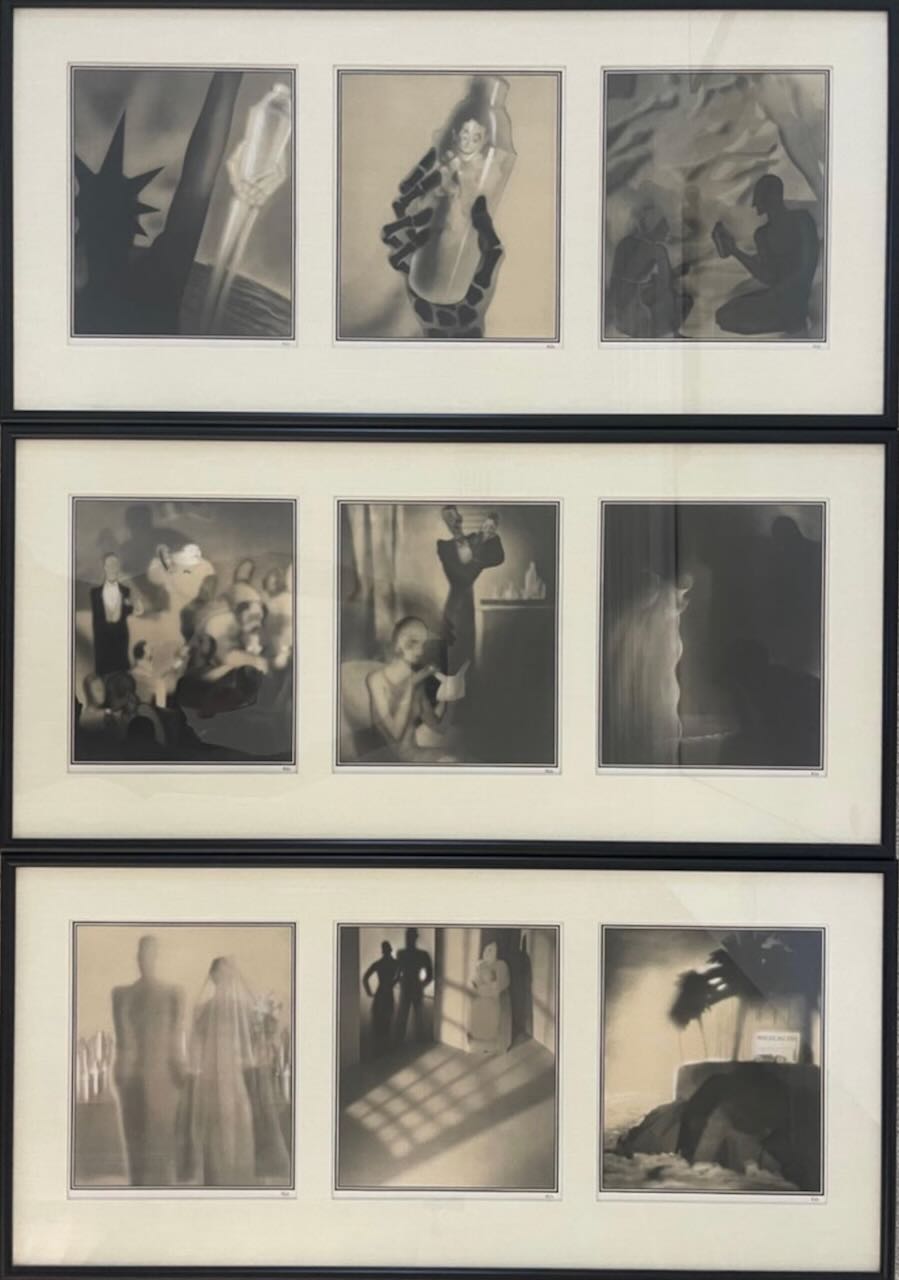
Kent first visited Monhegan Island off the coast of Maine in 1905, which became his permanent base until 1910 and remains closely associated with his name and artistic legacy to this day. He received his first taste of professional recognition in 1910 at the Exhibition of Independent Artists, where he showed four landscape paintings and befriended the show’s organizer, painter John Sloan, who praised him as “a fine energetic character, a big painter.” His travels took him and his young family to Brigus, Newfoundland, from 1914 to 1915, and in subsequent decades to Alaska, Tierra del Fuego, Greenland, and Copenhagen, each voyage feeding directly into his art and writing. He wrote and illustrated Wilderness in 1920 and Voyaging Southward in 1924, works many critics consider among the finest American books ever produced for their harmonious balance of text and image, and he is credited alongside Fritz Eichenberg as one of the two artists most responsible for the golden age of American book illustration in the first half of the twentieth century. His most celebrated illustrated volume remains his 1930 edition of Herman Melville’s Moby-Dick, a defining achievement of American book design. By the 1930s he had turned increasingly toward commercial illustration and advertising work, applying his bold, symbolic visual language to posters that often carried explicit political and social messages. His outspoken public stances on war, race, and communism led American institutions to grow wary of exhibiting his work, and in 1960 he donated a major portion of his personal collection to the Soviet Union, followed by further donations to public collections in Ukraine and Armenia.
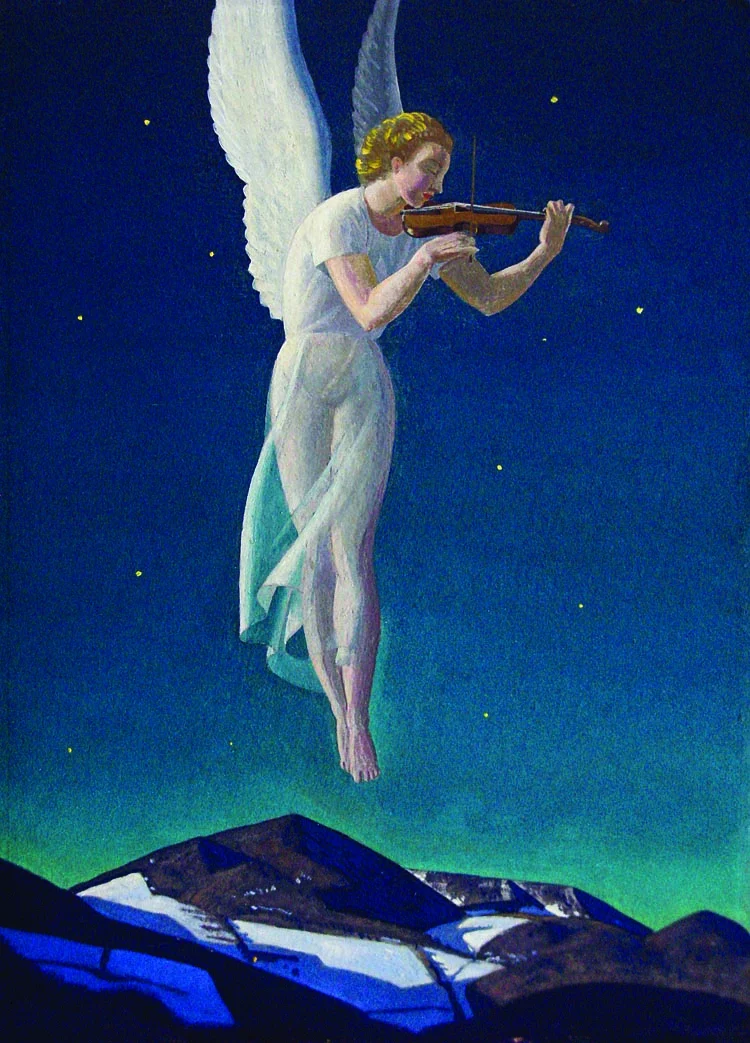
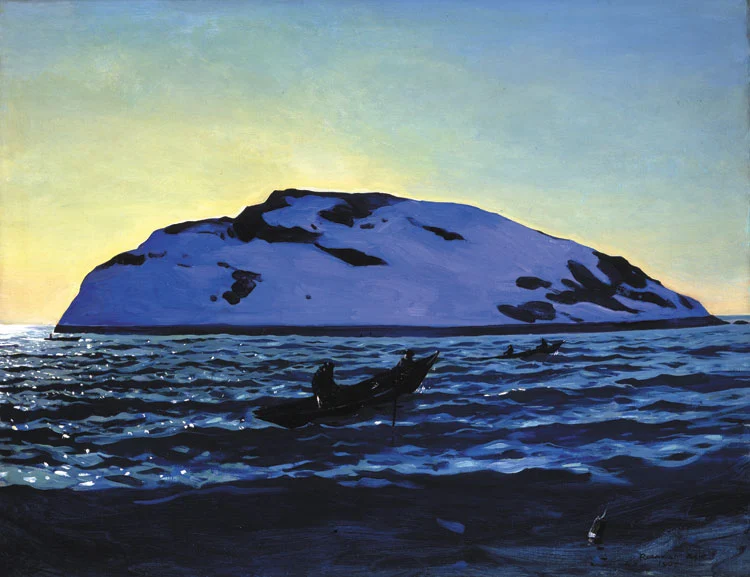
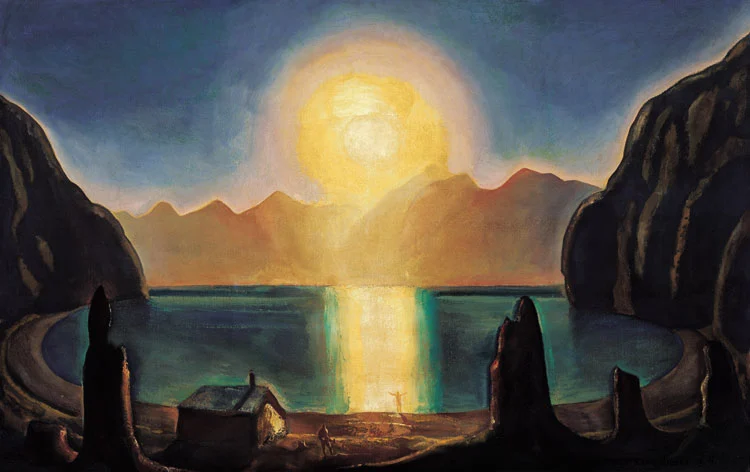
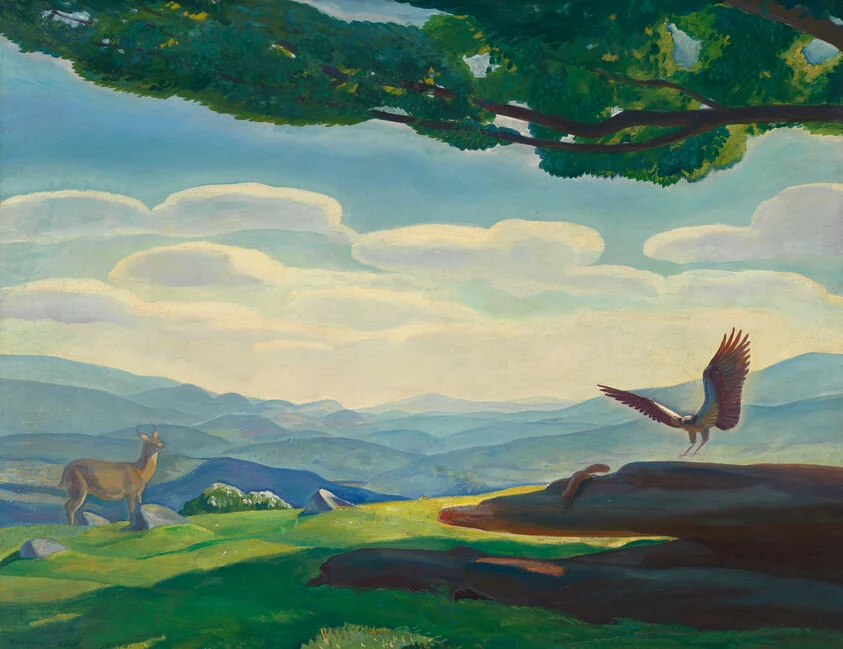
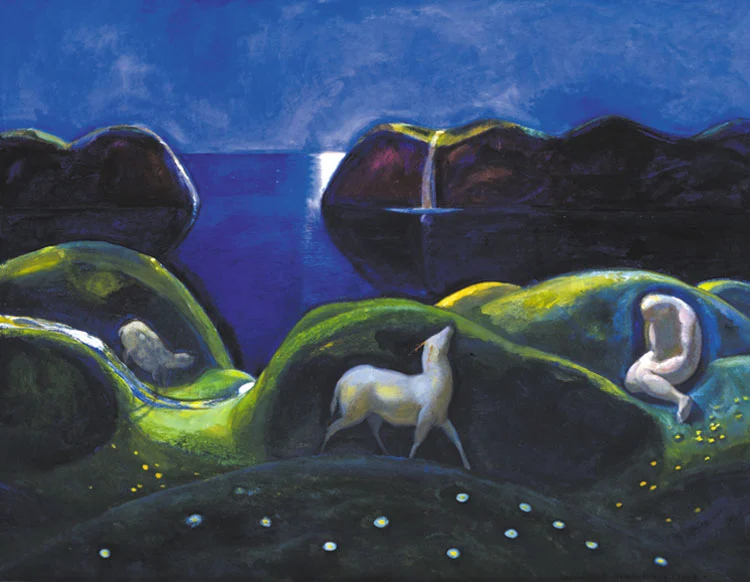
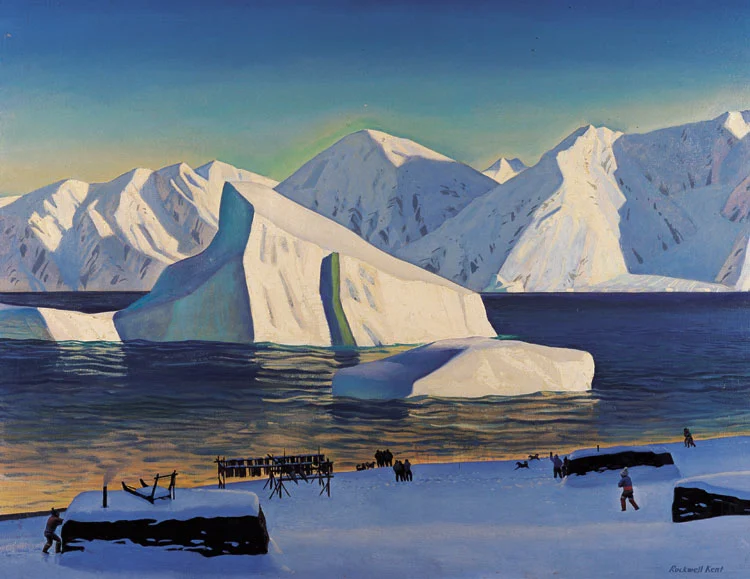
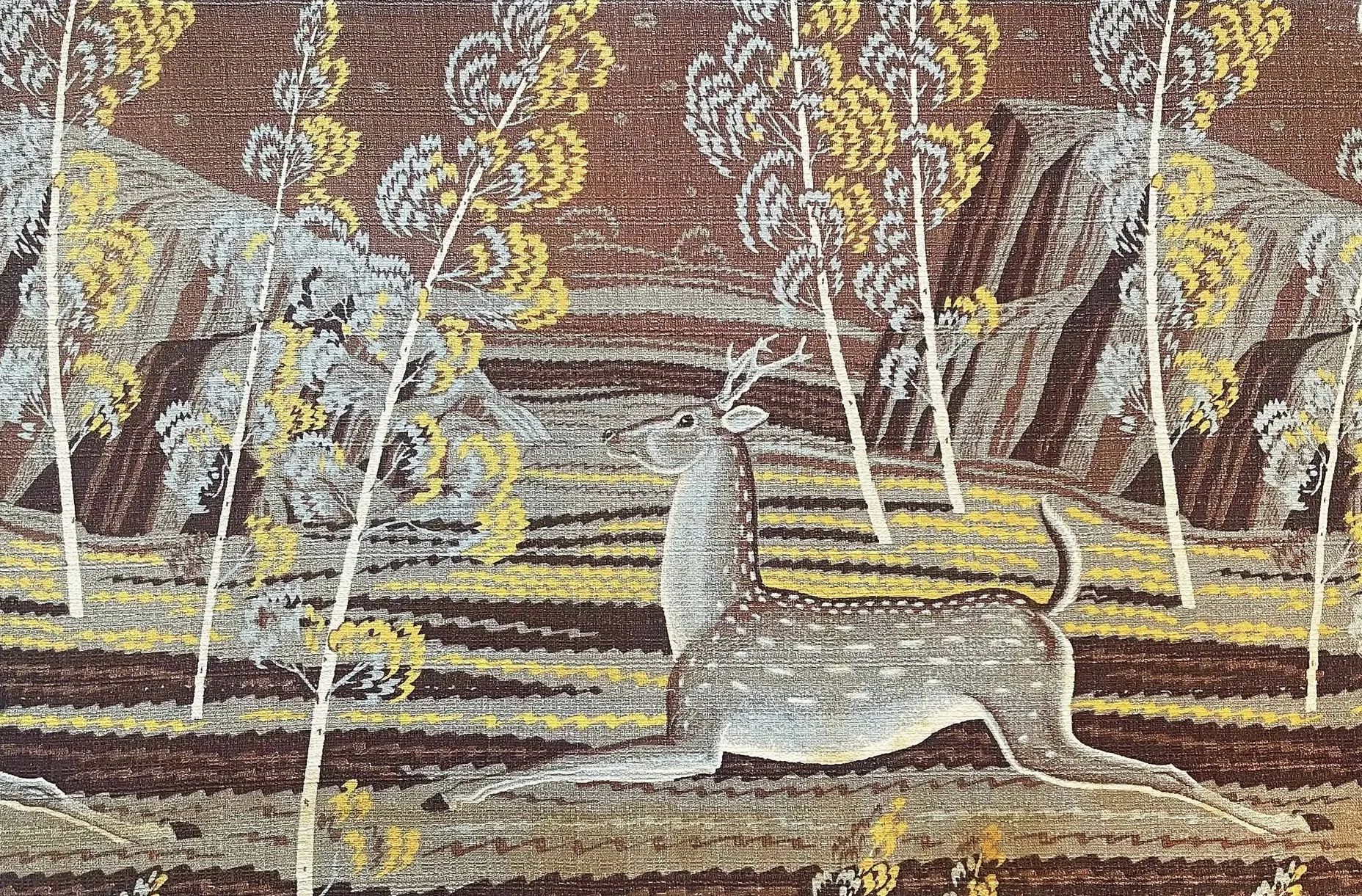
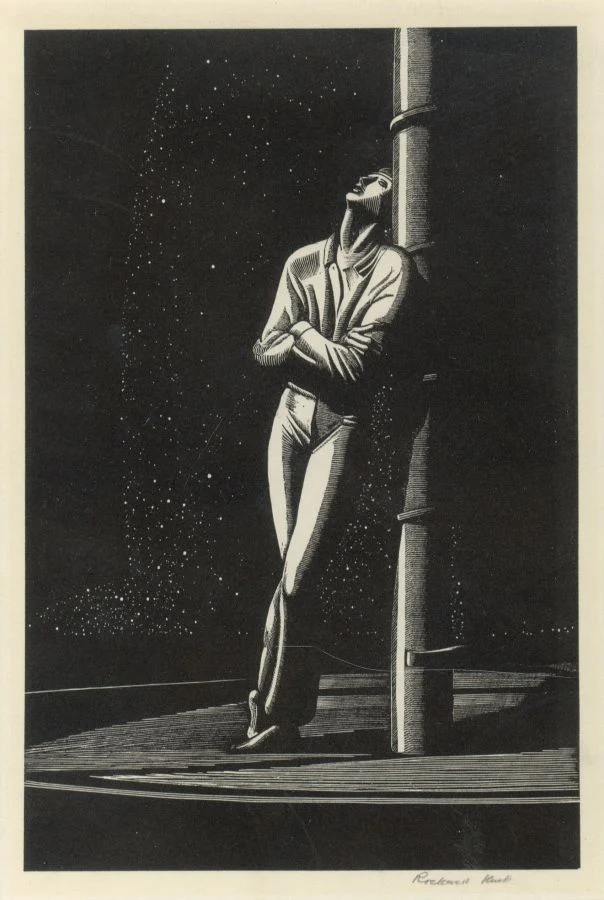
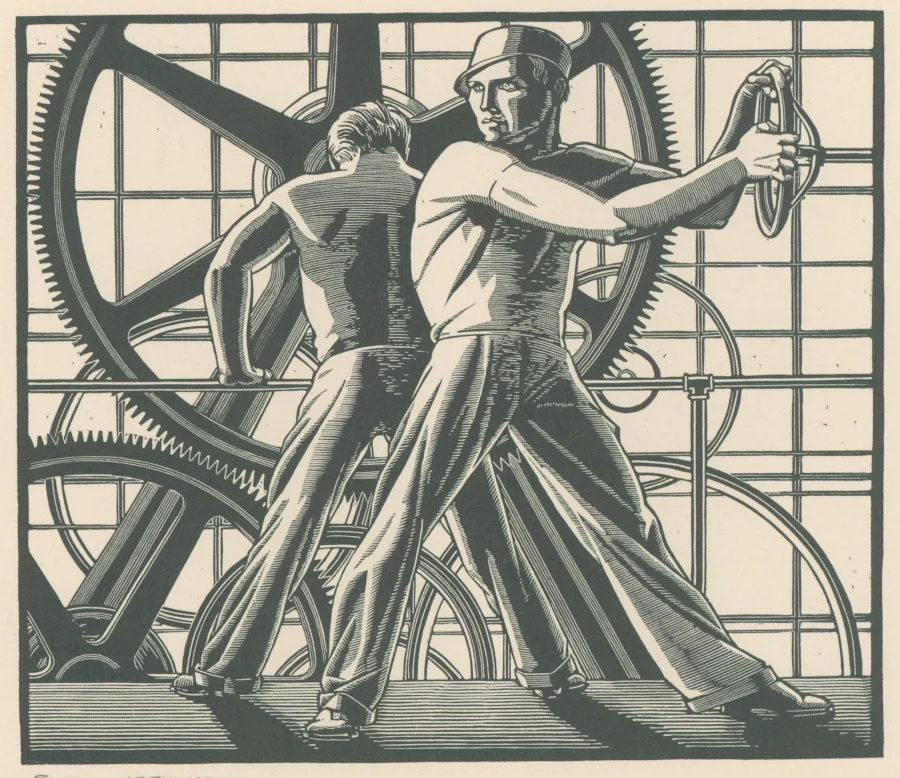
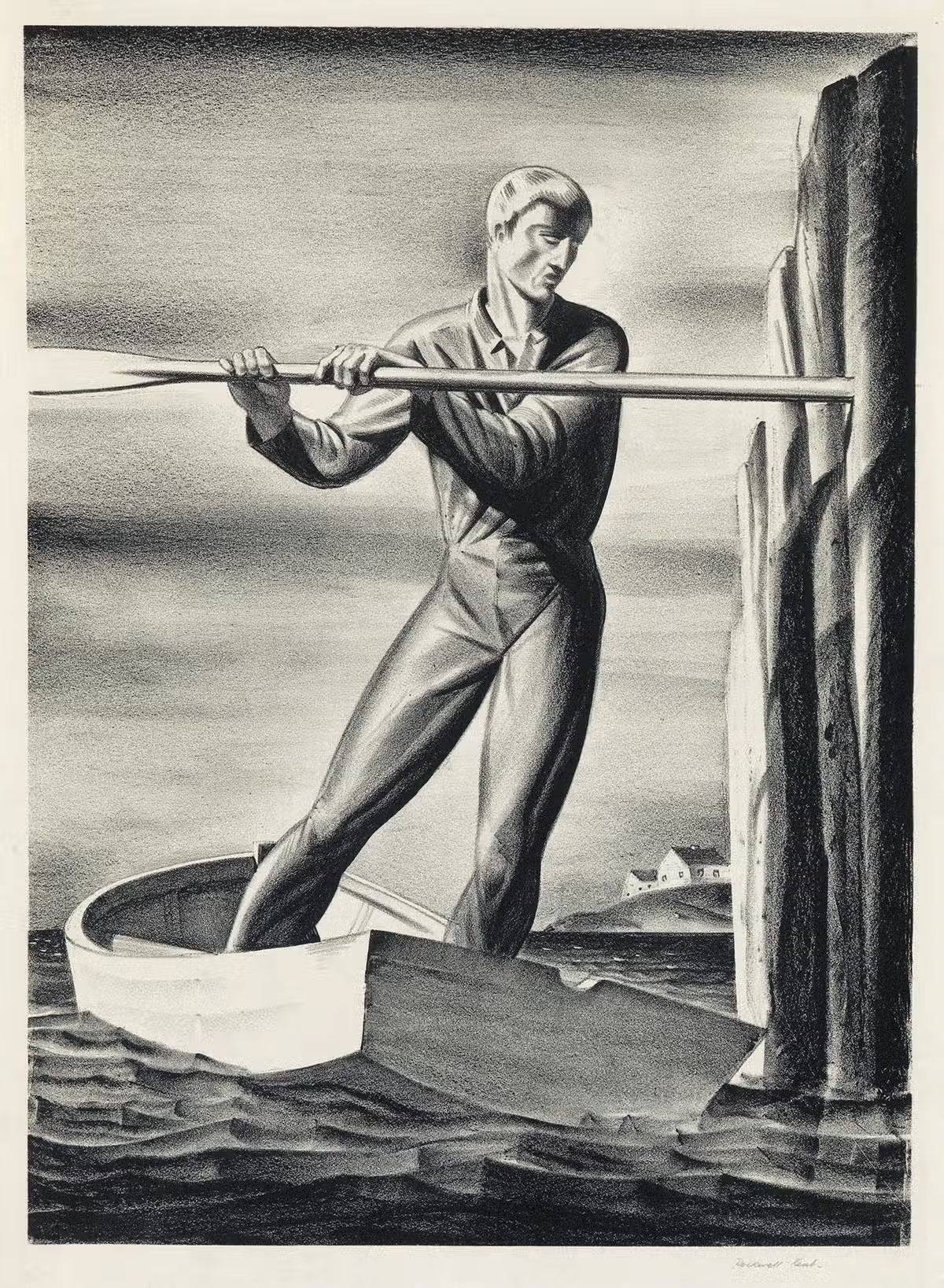
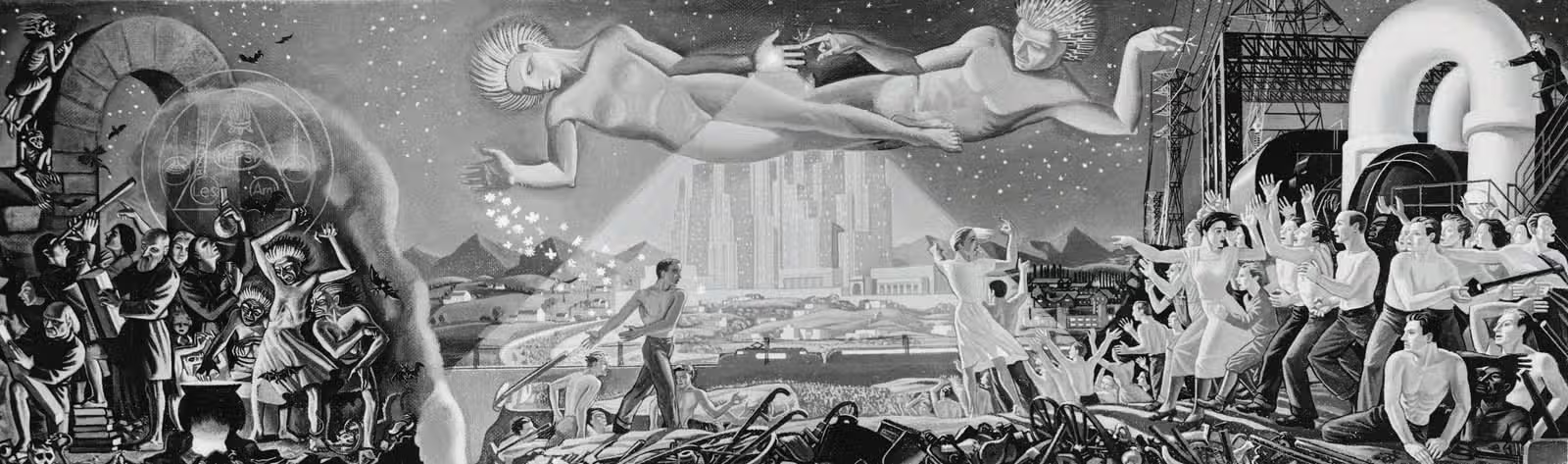
Kent’s paintings favored a precise, almost architectural rendering of form, built on strong contrasts of light and dark that gave his landscapes a crystalline, monumental clarity. Grounded in realism yet inflected by transcendentalist and mystic philosophy, his compositions frequently isolated one or two human figures amid the raw, elemental power of nature, rolling waves, rugged mountains, and vast, nearly invisible horizons. This combination of stark geometric design and spiritual reverence for wilderness gave his book illustrations in particular a visual authority that translated powerfully into the simplified, symbolic language of his later political posters.
Key Influences
- American Book Illustration: His illustrated editions, especially Moby-Dick, helped define the golden age of American book design and remain touchstones of the form.
- Artist as Voyager: His career modeled a new archetype of the traveling American artist who sought out remote landscapes, from Greenland to Tierra del Fuego, as both subject matter and lived experience.
- American Landscape Painting: His stylized, reverent treatment of wilderness directly influenced later generations of American landscape painters, including Jamie Wyeth, who cited Kent as the artist who most truly captured the spirit of Monhegan Island.
- Political Poster Design: His application of bold, symbolic visual language to explicitly socialist and anti-war causes expanded the role of fine artists in American political communication.
- Cultural Diplomacy: As the first American artist exhibited in the Soviet Union, his career became entangled with Cold War politics and demonstrated how art could cross ideological lines even amid intense domestic suspicion.
If you are interested in further stories of the artists who shaped Art Deco, return to our artists page to browse the full directory.

Related Products from ArtDecoCollection.com