
Egon Schiele
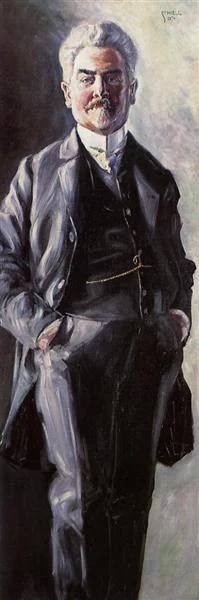
Egon Leo Adolf Ludwig Schiele was born on June 12, 1890, in Tulln, Lower Austria, the son of Adolf Schiele, a railway station master, and Marie Soukup. His childhood was shadowed by his father’s progressive syphilis, which left him mentally unstable and prone to fits of rage, and by the early deaths of three siblings. When Schiele was 14 his father died, leaving the family impoverished, and he became the ward of his uncle Leopold Czihaczek. He applied to the Kunstgewerbeschule in Vienna in 1906 before being sent to the more traditional Academy of Fine Arts, where his main teacher Christian Griepenkerl’s ultra-conservative style frustrated him so deeply that he left after three years. In 1907, he sought out Gustav Klimt, who mentored him generously, buying his drawings, arranging models, and introducing him to potential patrons and the Wiener Werkstätte. He founded the Neukunstgruppe with other dissatisfied students in 1909 and, in 1911, met Wally Neuzil, who became his model and companion. In 1915, he married Edith Harms and was drafted into military service three days later. Both Edith, who was six months pregnant, and Schiele himself died within three days of each other during the Spanish flu pandemic in October 1918. He was 28 years old.
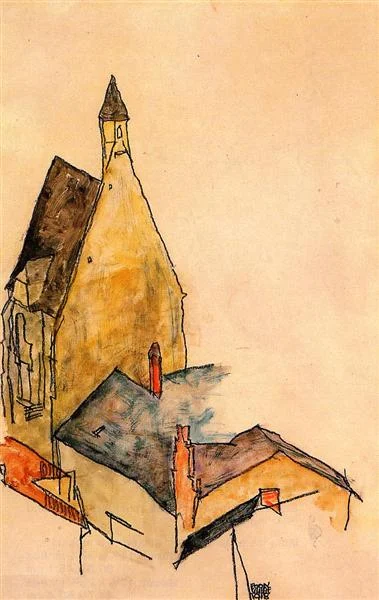
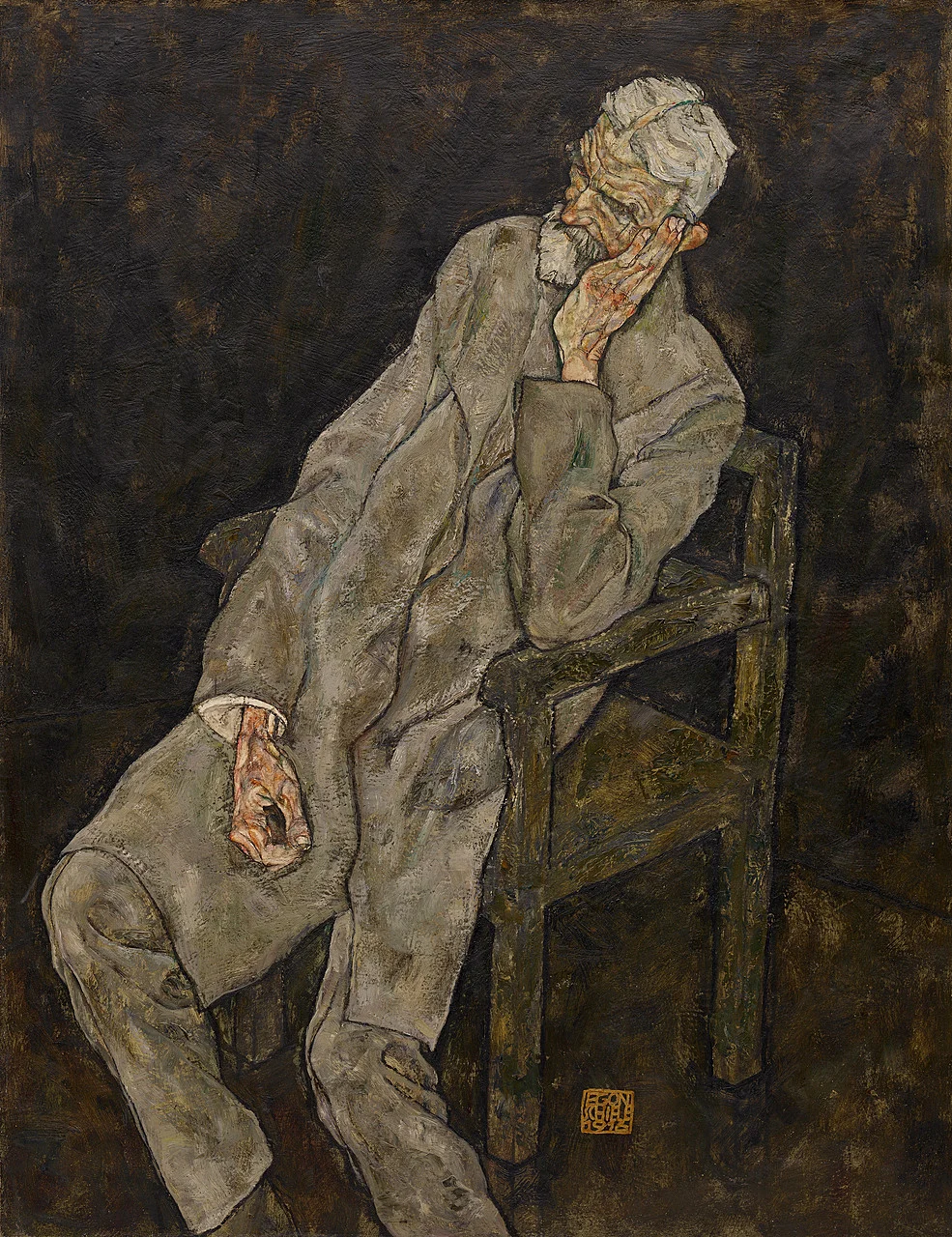
Schiele had his first exhibition in Klosterneuburg in 1908 and by 1910 was developing a definitive style featuring emaciated figures with strong sexual overtones. His arrest in April 1912 on suspicion of kidnapping and seducing a 13-year-old girl, followed by 24 days in prison, produced a celebrated series of paintings of his jail cell. His first solo show was mounted by the Galerie Hans Goltz in Munich in 1913, followed by a solo exhibition in Paris in 1914. He participated in group exhibitions across Europe throughout the war years, including Secessionist shows in Munich and exhibitions in Berlin, Zürich, Prague, and Dresden. His triumphant participation in the 49th Vienna Secession exhibition in 1918, where fifty of his works were displayed in the main hall, and he designed a poster depicting himself in the place of Jesus at the Last Supper, marked his full arrival as a major artist. The Leopold Museum in Vienna houses his most important collection, with over 200 works. Numerous Schiele works were looted from Jewish collectors under the Nazis, and the resulting restitution cases, including the celebrated Portrait of Wally dispute, settled in 2010 for US$19 million, have made him central to the ongoing international reckoning with Nazi-looted art.
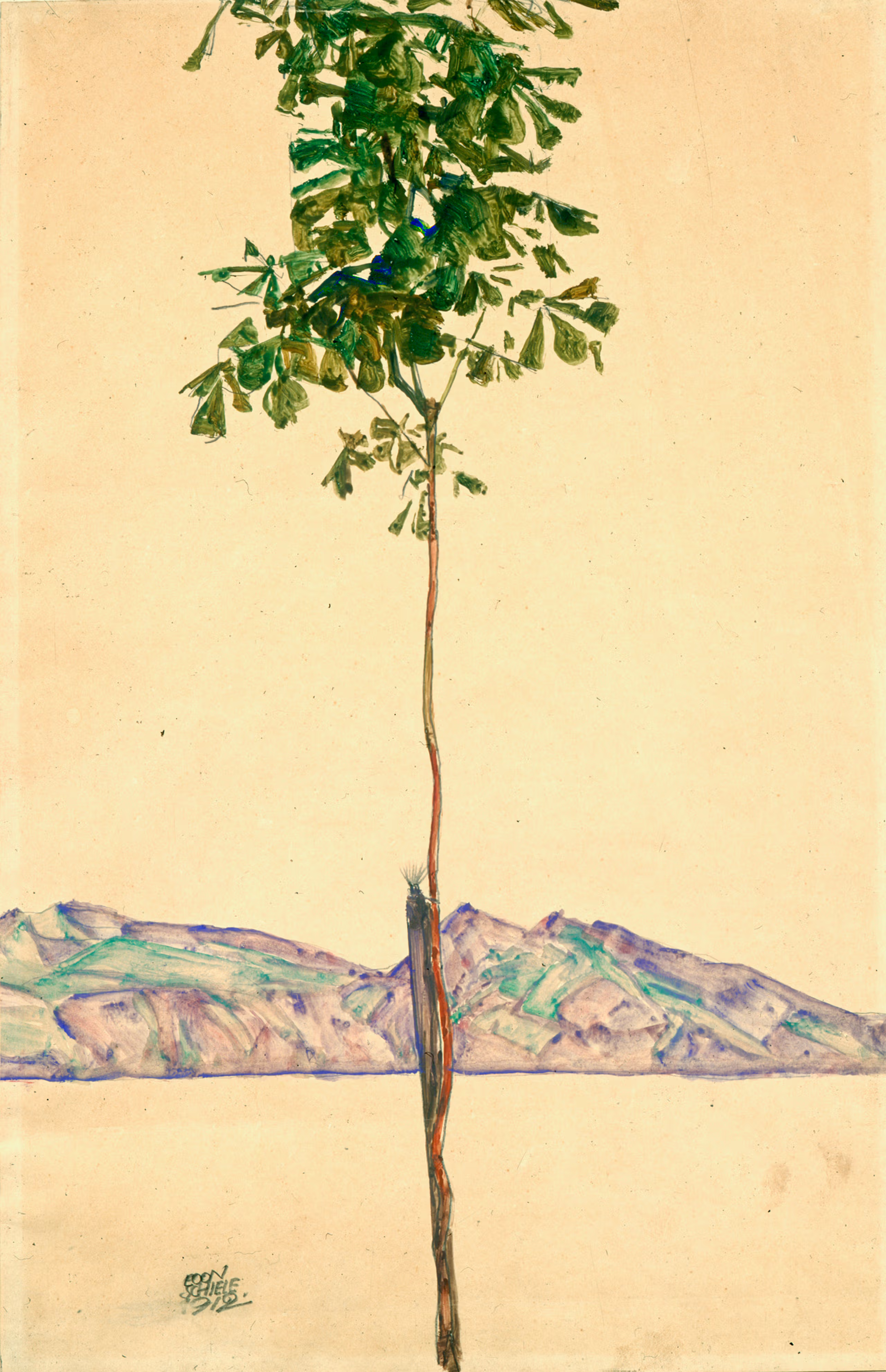
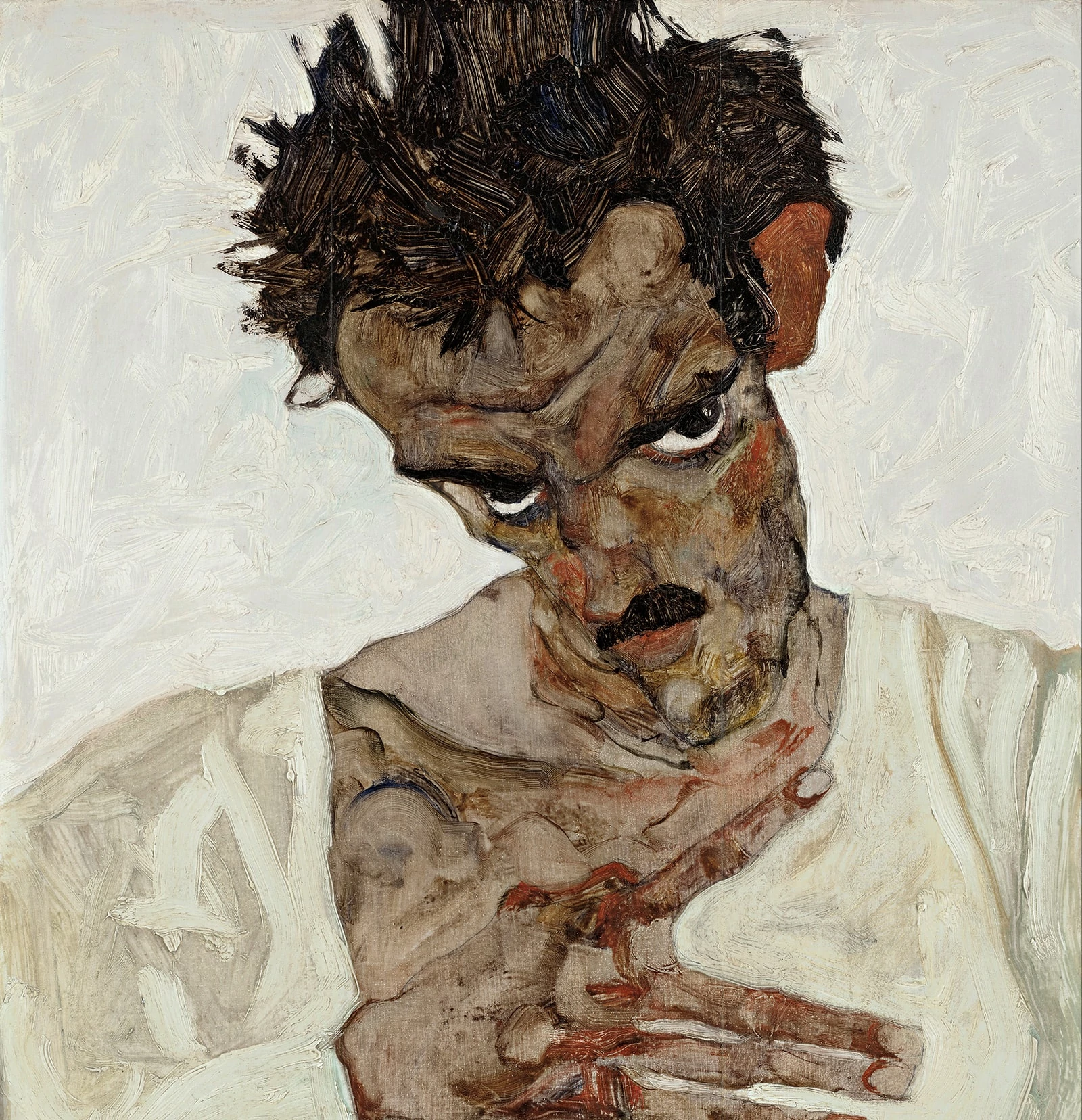
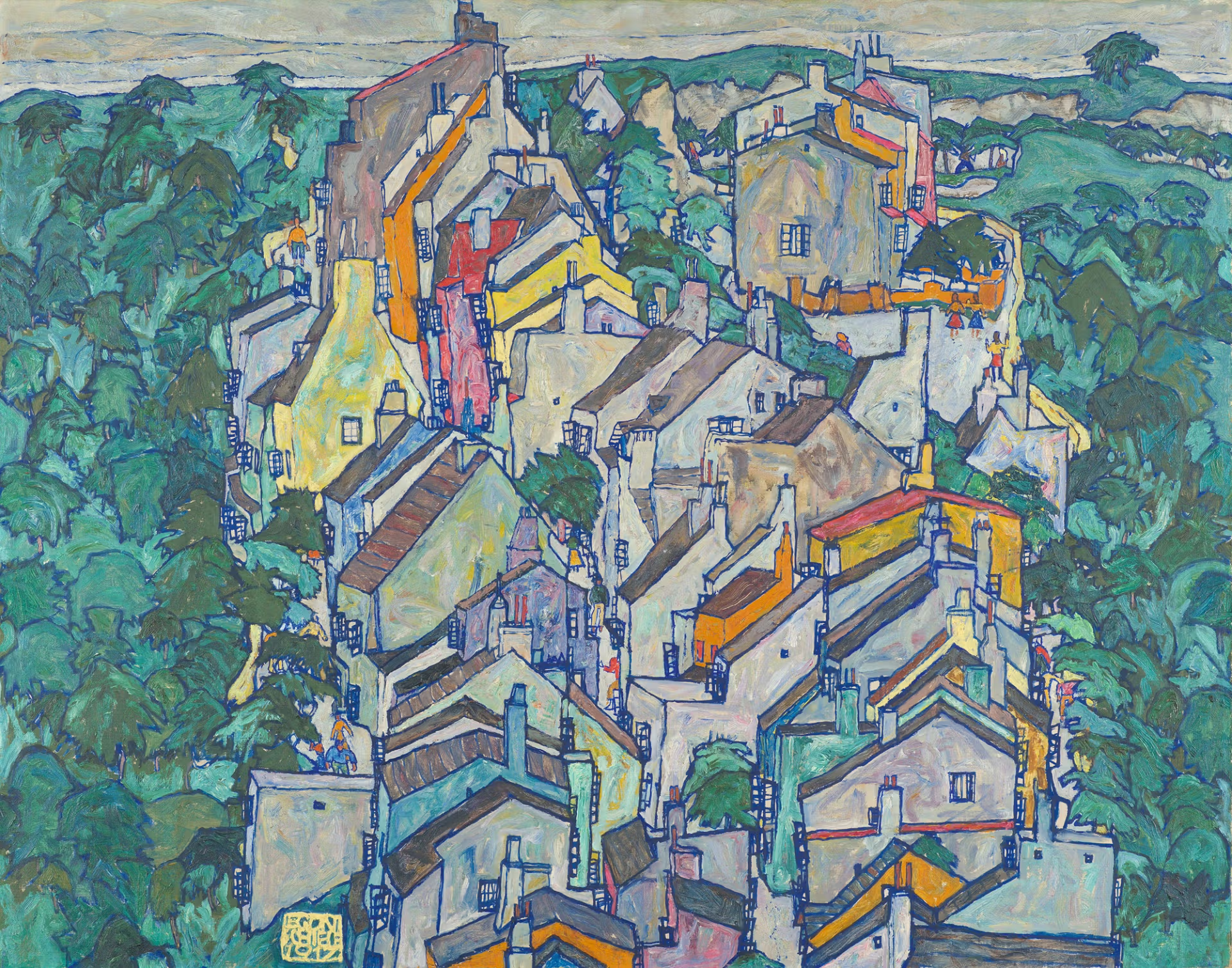
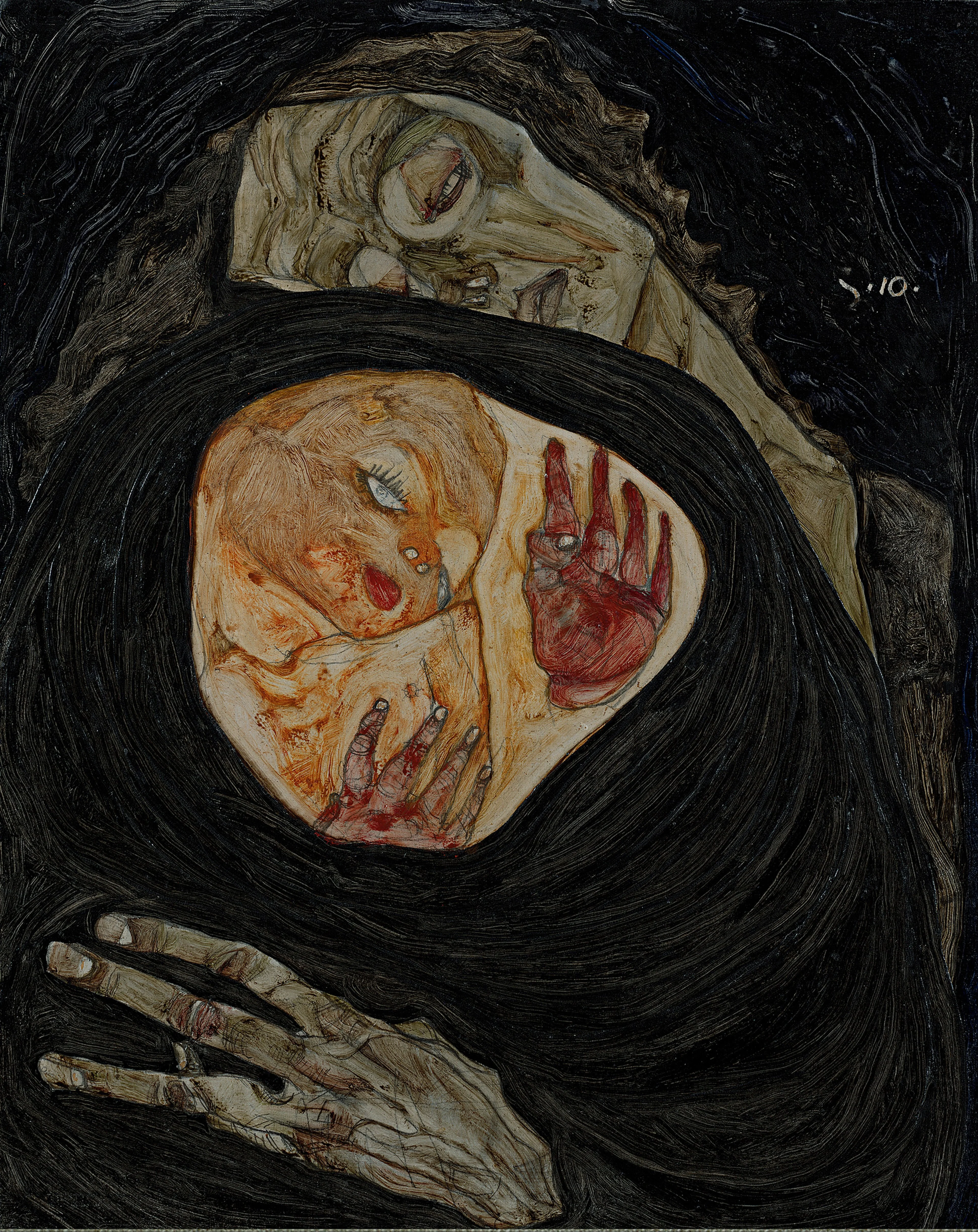
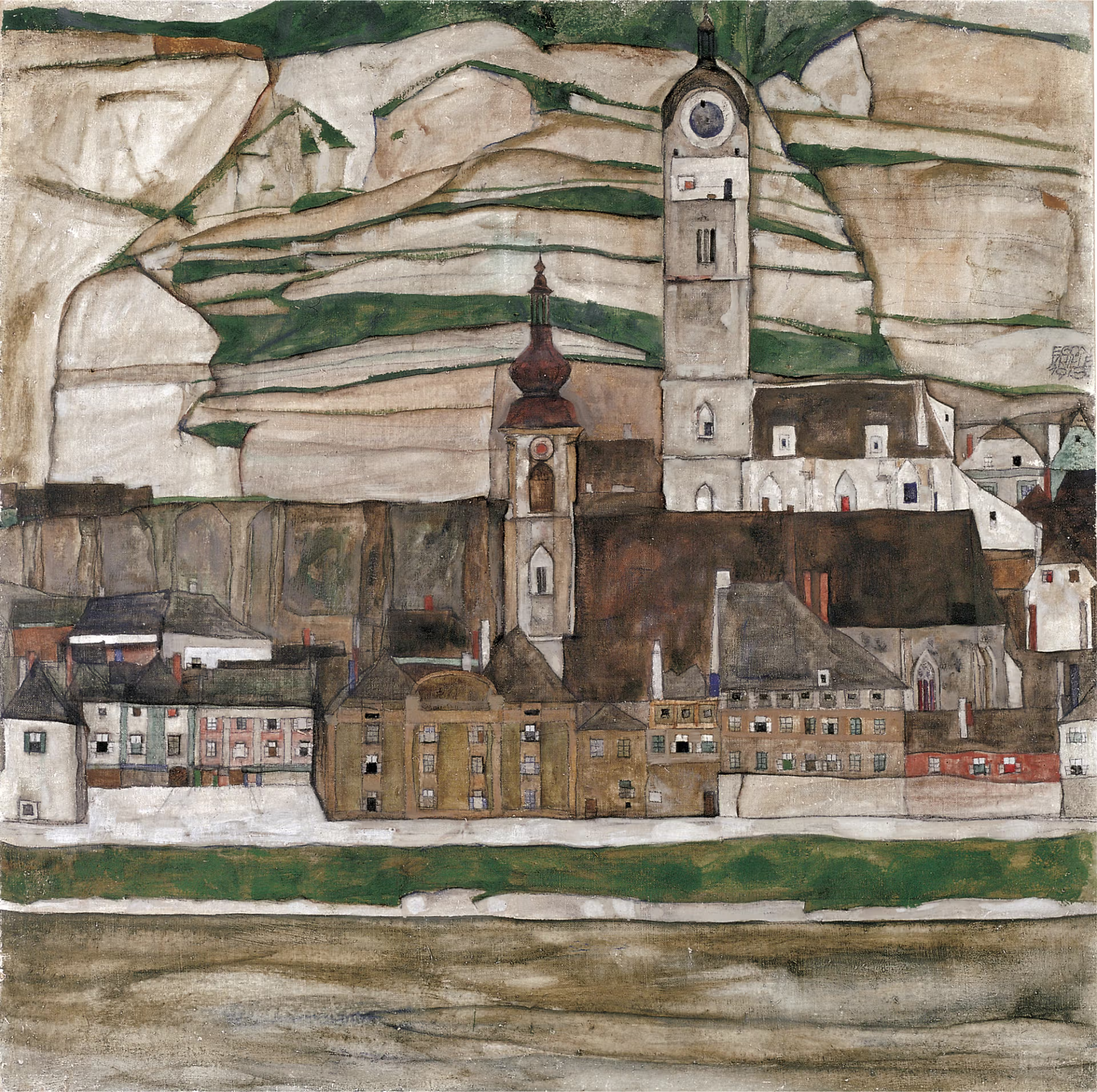
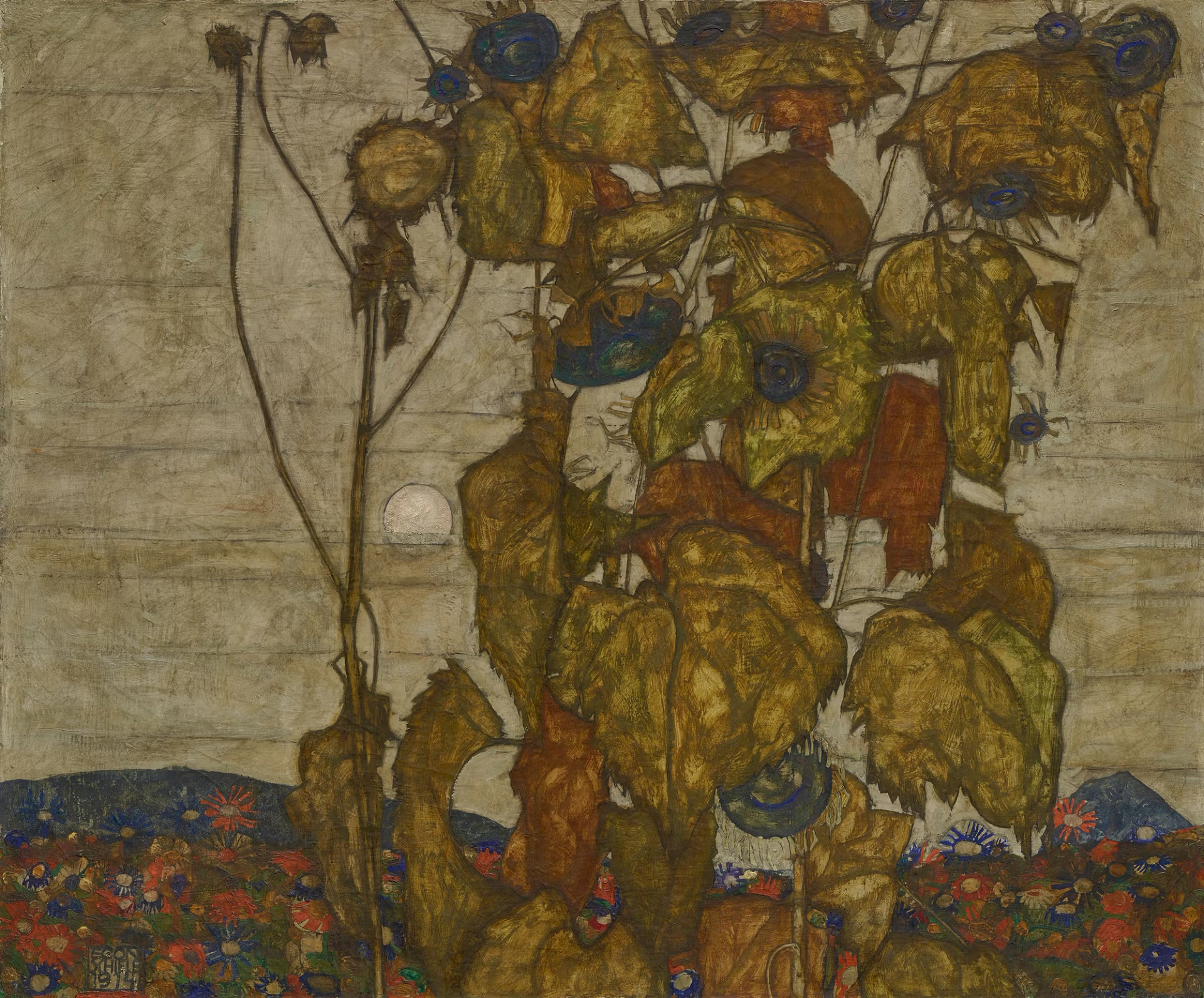
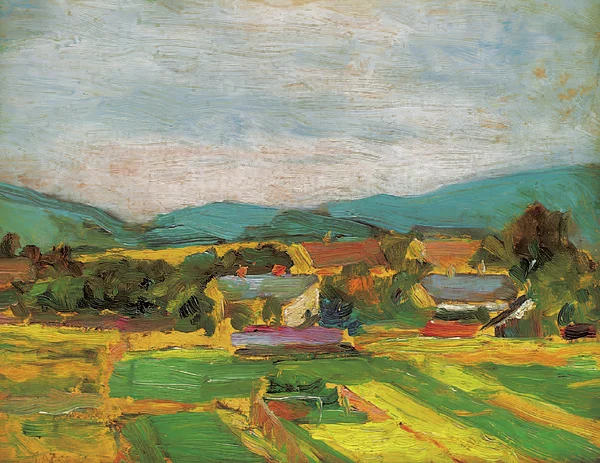
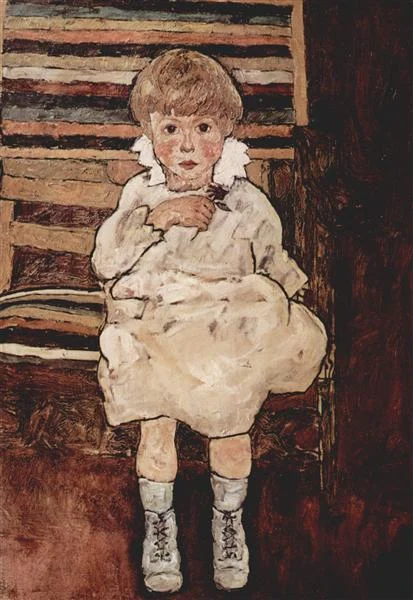
Schiele found his distinctive style very early, with the works of 1910 and 1911, produced when he was barely 20, already showing the twisted body shapes, manic expressive line, and raw sexuality that define his entire oeuvre. His figures are typically emaciated and sickly-colored, their contorted poses conveying psychological extremity rather than physical beauty, with sexuality and mortality treated as inseparable subjects. His prolific self-portraits are among the most searching and psychologically intense in the history of art, treating the artist’s own body as both subject and instrument of expression.
Key Influences
- Austrian Expressionism: His twisted figures and raw emotional intensity made him the defining voice of Austrian Expressionism and one of the most radical figurative artists of the early 20th century.
- Klimt’s Legacy: As Klimt’s most important protégé, he transformed his mentor’s decorative eroticism into something rawer and more psychologically confrontational, extending the Vienna Secession’s reach into Expressionism.
- Self-Portrait as Genre: His vast body of nude self-portraits radicalized the genre and established a model for self-examination in art that has influenced generations of figurative painters.
- Nazi Looting and Restitution: His popularity among Jewish collectors made his work central to postwar restitution battles, and the Portrait of Wally case became a landmark in international art law.
- Fashion and Popular Culture: His influence has extended continuously into fashion, music, and film, with David Bowie, Wes Anderson, and numerous designers citing his work as a direct reference.
If you are interested in further stories of the artists who shaped Art Deco, return to our artists page to browse the full directory.
Related Products from ArtDecoCollection.com