

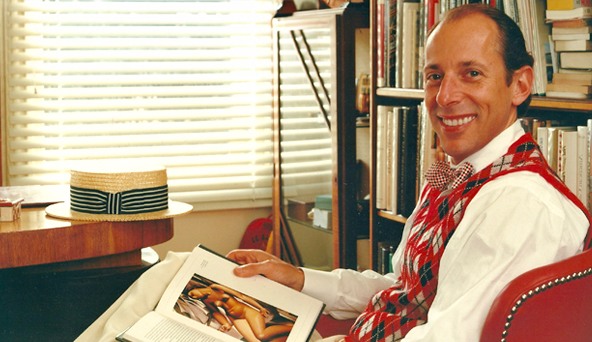
Edward McKnight Kauffer
Edward Leland Kauffer was born on December 14, 1890, in Great Falls, Montana, into a poor family. He grew up in Evansville, Indiana, where he spent two years in an orphanage after his father left and his mother sought employment. His precocious artistic talent led him to join a traveling theater company as a set painter at the age of 12 or 13, and he later worked in a bookstore in San Francisco while studying at the California School of Design from 1910 to 1912. Professor Joseph E. McKnight of the University of Utah became aware of his work and sponsored him to study in Europe, and in gratitude, Kauffer adopted his sponsor’s name as a middle name. On his way to Paris, he stopped in Chicago in 1912 and 1913, studying at the Art Institute of Chicago, where he witnessed the landmark Armory Show that introduced modernism to American viewers. He arrived in Paris in 1913 and studied at the Académie Moderne, but left for London at the outbreak of World War I in 1914. He remained in England until 1940, when the Second World War forced him to return to New York with textile designer Marion Dorn, whom he had met in 1923 and would later marry. Kauffer died in New York on October 22, 1954.
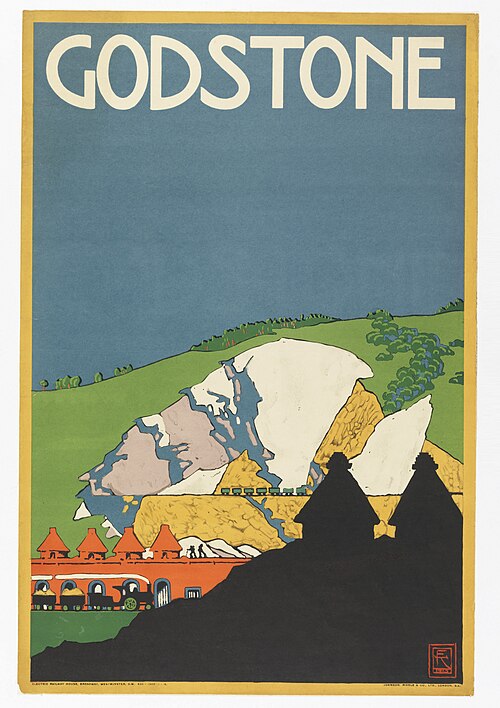
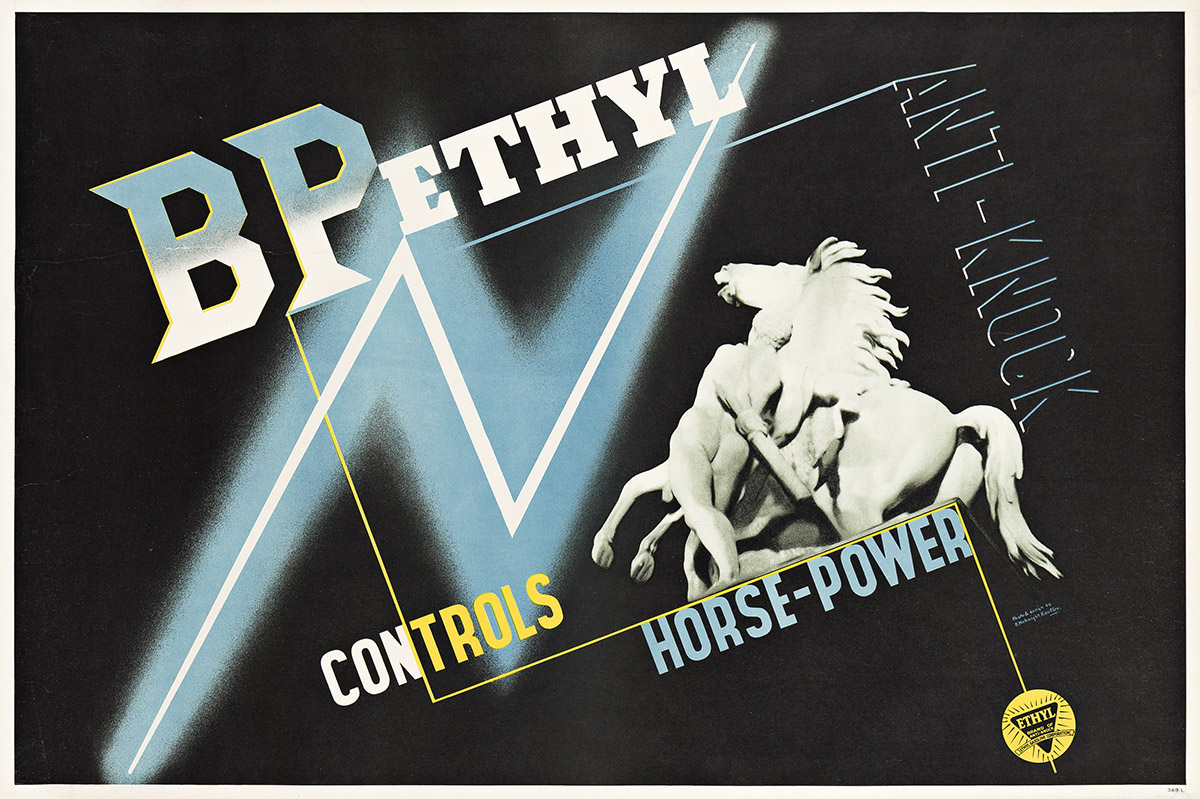
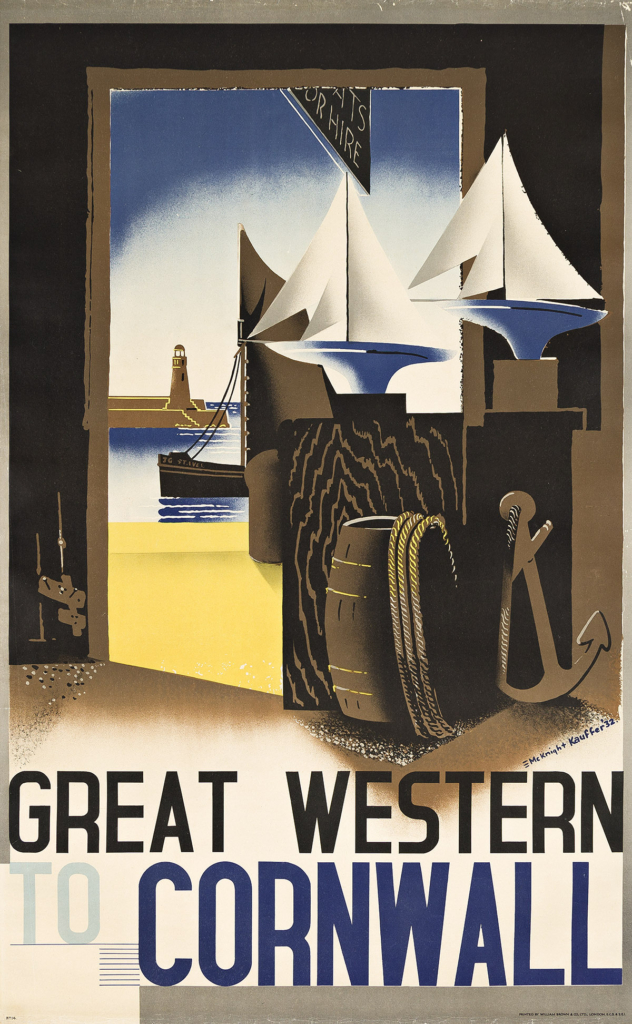
Kauffer’s first major commission came in 1915 from Frank Pick, the publicity manager for the Underground Electric Railways Company of London, who served as a great patron to the graphic arts. Over the next two decades, Kauffer designed 141 posters for the London Underground, redesigned subway stations, and installed murals. His commercial clients expanded to include the Empire Marketing Board, the Post Office, Great Western Railway, Shell, BP, Imperial Airways, Eno’s Fruit Salt, and W.A. Gilbey, with one client posting stickers reading “A New McKnight Kauffer Poster Will Appear Here Shortly” to mollify eager passersby. His practice extended well beyond posters to include book covers, rugs, theatrical productions, costume design, and film titles for Alfred Hitchcock’s The Lodger, as well as illustrations for T.S. Eliot’s Ariel poems and covers for novels by H.G. Wells, Aldous Huxley, and Ralph Ellison. He shared a darkroom with Man Ray and collaborated with figures across art, literature, performance, and film. After returning to America in 1940, he produced war propaganda posters and worked extensively for the Museum of Modern Art, Pan American Airlines, Stetson, and the New York Subways advertising company. Between 1946 and 1953, he designed more than 30 posters for American Airlines, his primary client in his final years. His 1952 dust jacket for Ralph Ellison’s Invisible Man is among his most enduring works, and the Cooper Hewitt Smithsonian Design Museum mounted the largest-ever retrospective of his career.
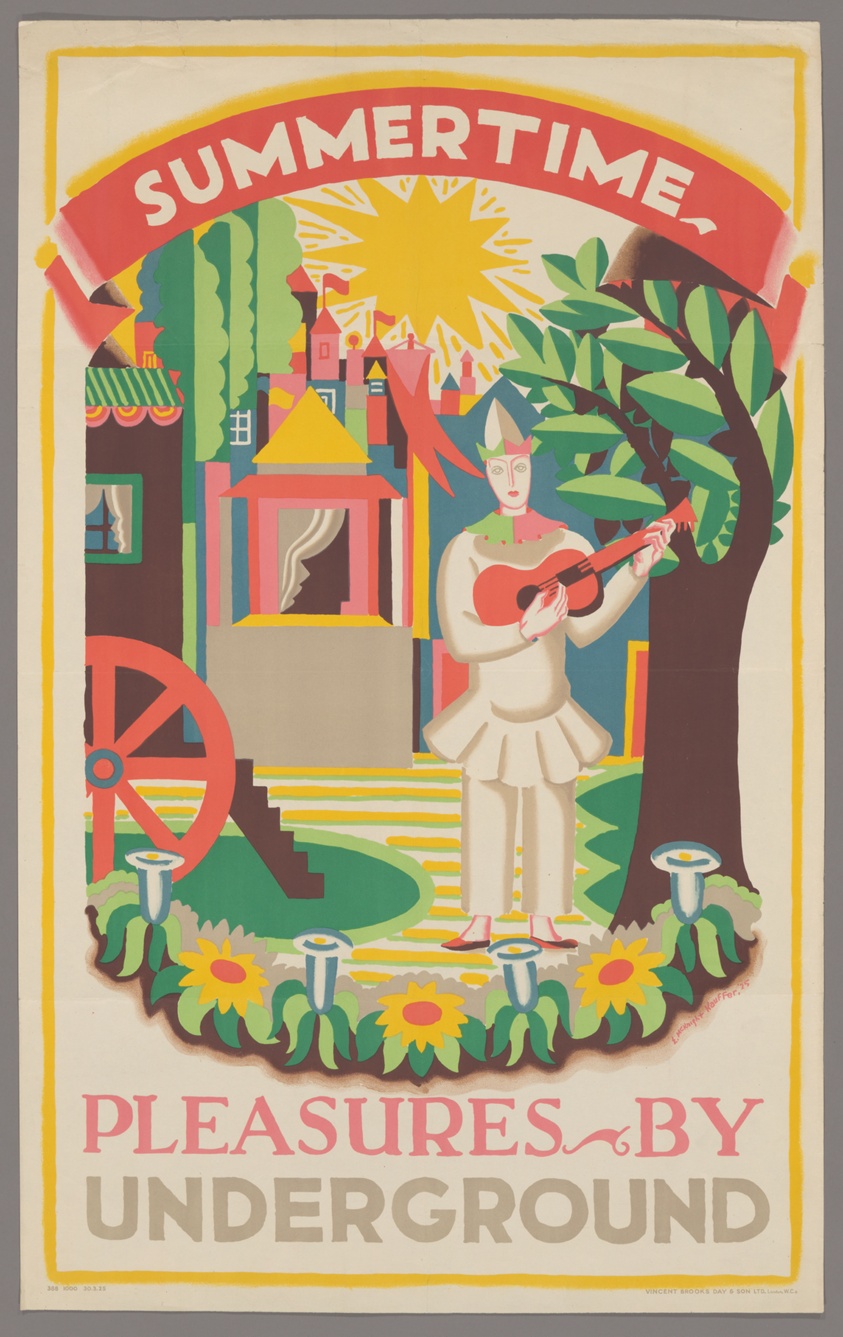
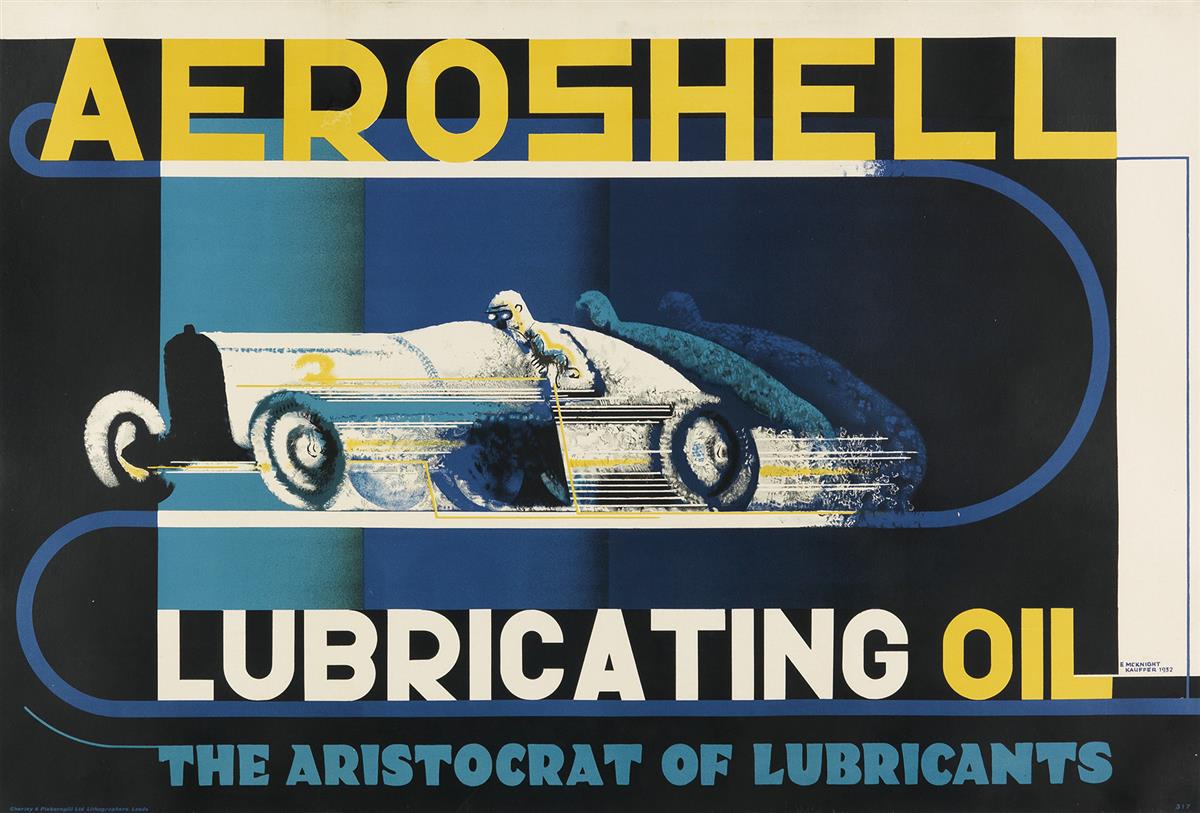
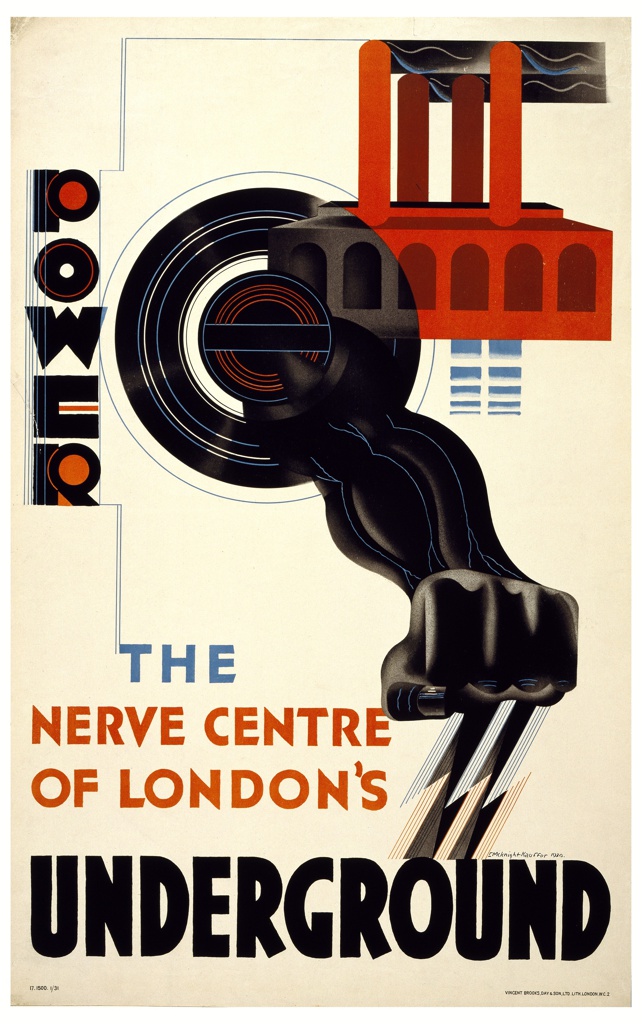
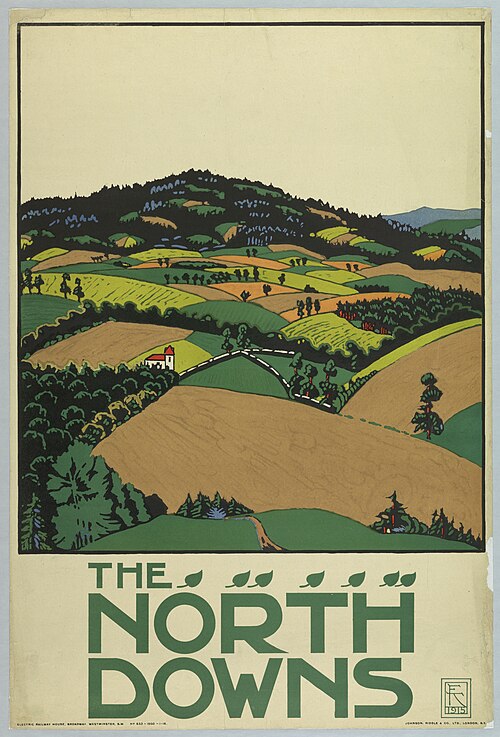
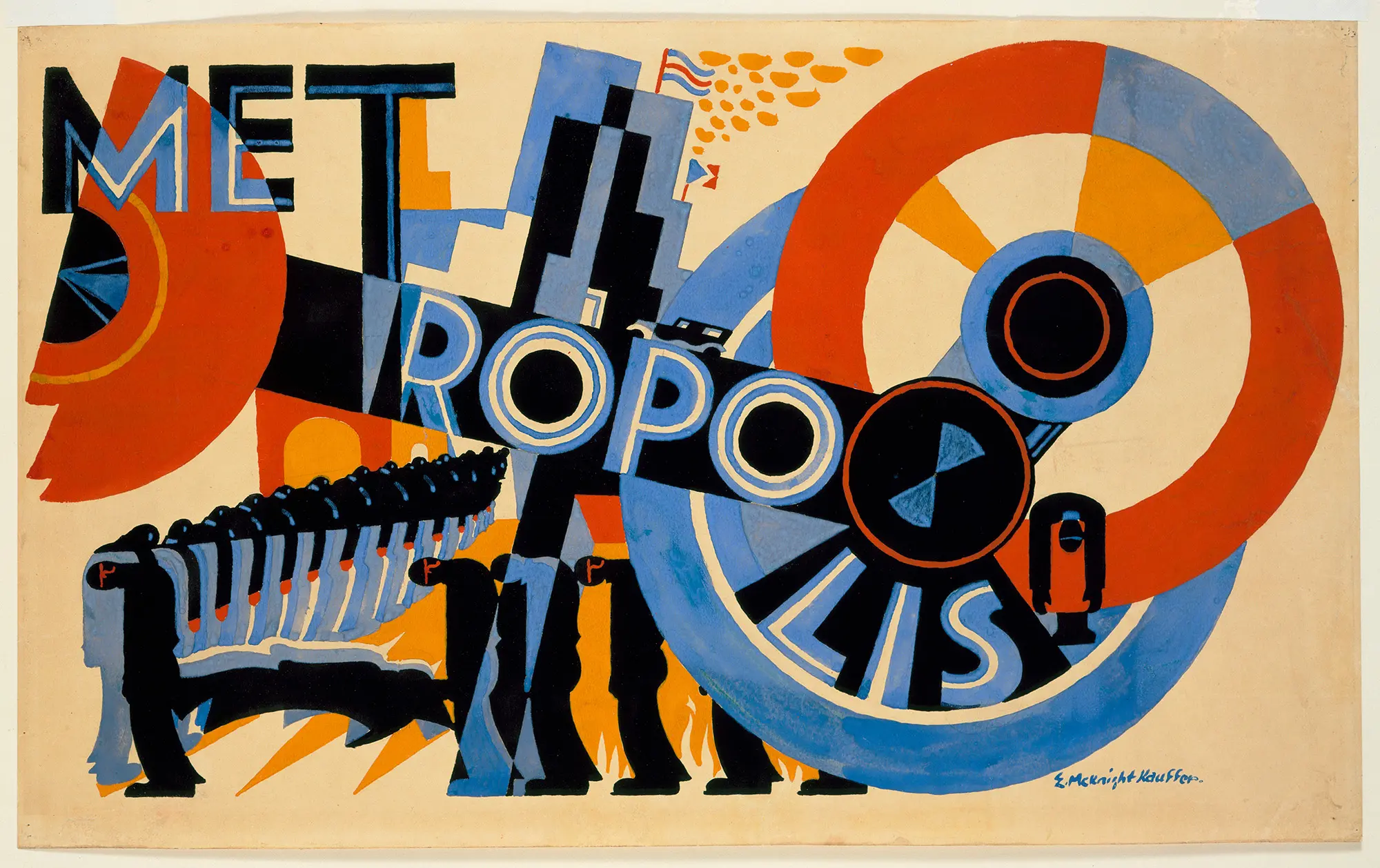
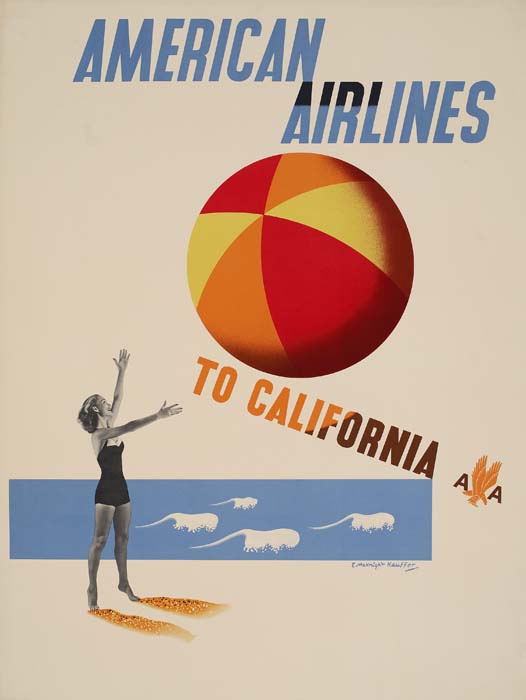
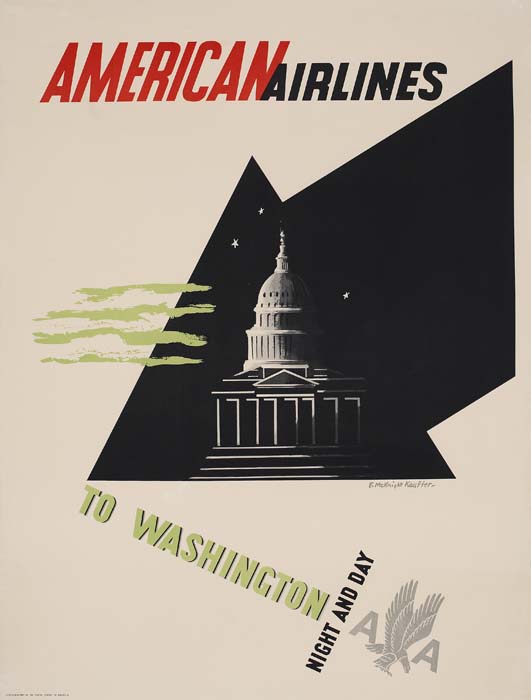
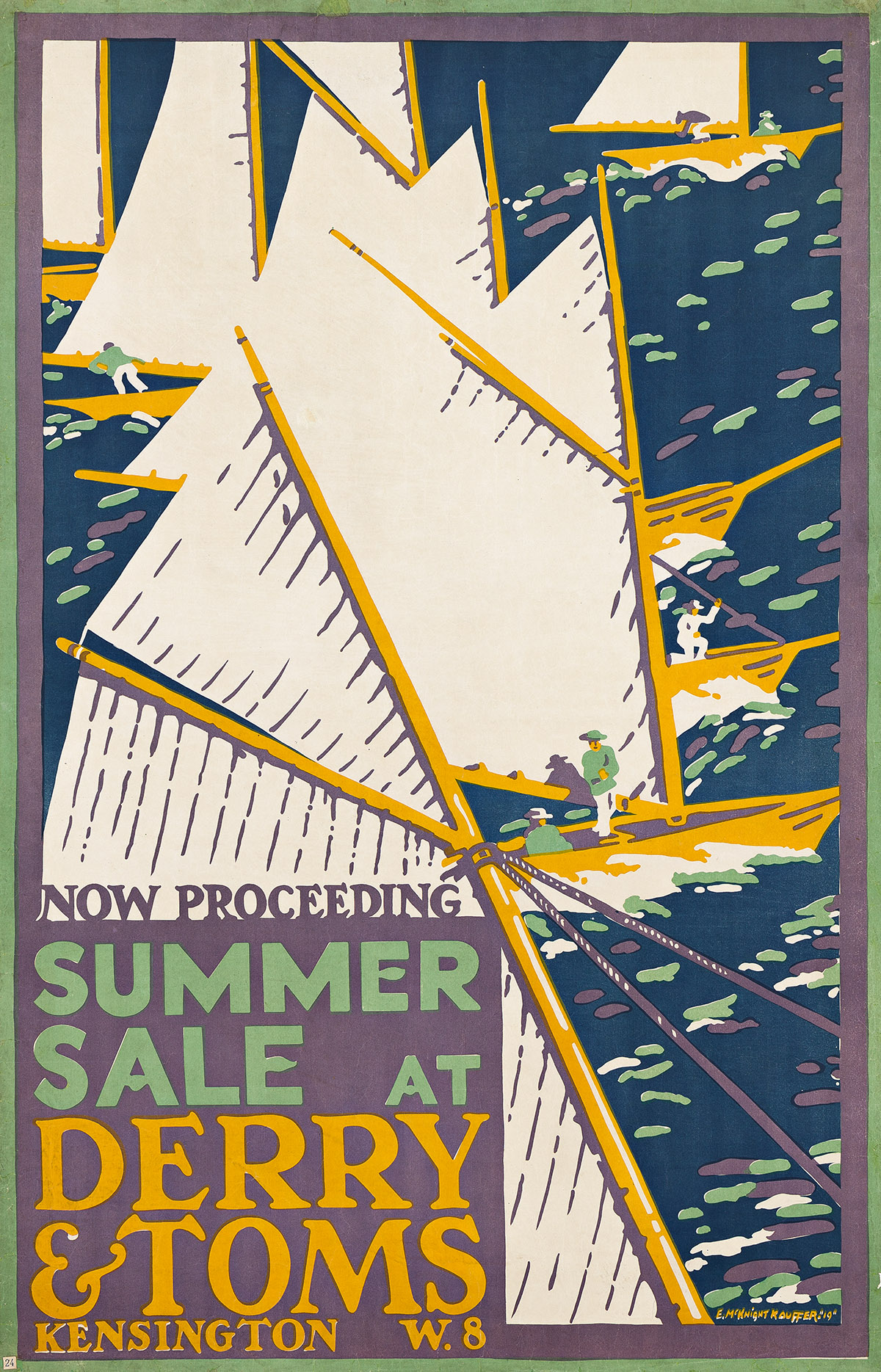
Kauffer translated the complicated language of the avant-garde into accessible commercial design, drawing on Cubism, Vorticism, Futurism, Surrealism, and Art Deco to create posters that introduced modernism to a mass public. His work mixed supple lines with geometric forms and employed warm, vibrating palettes, contrasting with the cold mechanization of contemporaries like A.M. Cassandre. He embraced new media throughout his career, experimenting with photomontage, airbrush, typography, and even photographic murals printed directly onto light-sensitive surfaces.
Key Influences
- Modernism for the Masses: His posters brought avant-garde visual language out of galleries and onto city streets, familiarizing a wide public with the conventions of modern painting.
- London Underground Identity: His decades of work for Frank Pick helped establish the London Underground as one of the most visually progressive public institutions of the 20th century.
- Graphic Design as Profession: His career helped define commercial art as a serious creative discipline, laying the groundwork for the modern profession of graphic design.
- Transatlantic Design Exchange: His move from London to New York in 1940 helped bring European modernist poster traditions to American advertising at a formative moment.
- Design as Social Responsibility: His belief that the artist in advertising had a duty to correct values and elevate civilization shaped how subsequent generations understood the ethical dimensions of commercial design.
If you are interested in further stories of the artists who shaped Art Deco, return to our artists page to browse the full directory.

Related Products from ArtDecoCollection.com