


Eduardo García Benito
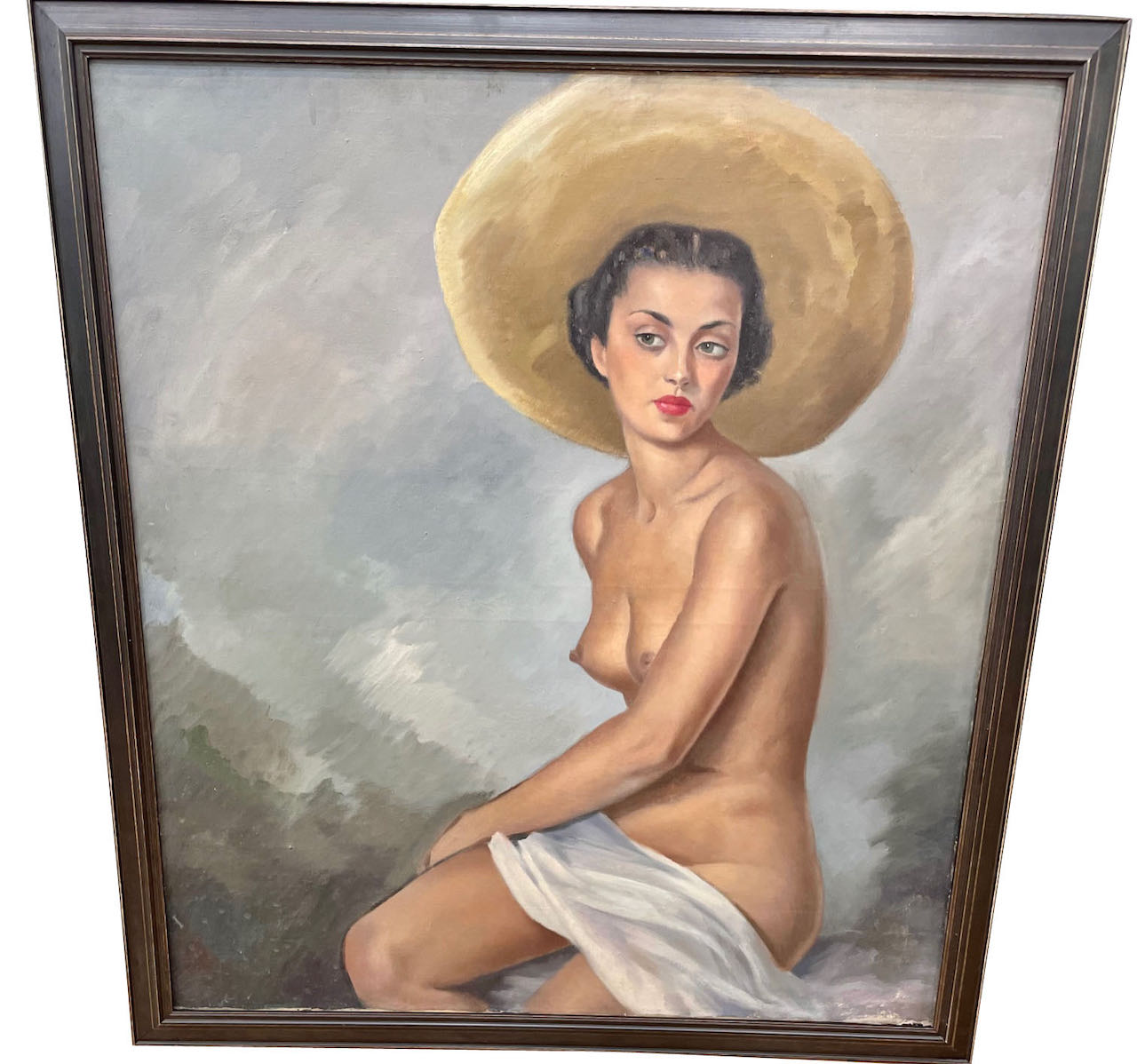
Eduardo García Benito was born in 1891 in the town of Valladolid, Spain, and showed artistic talent from a very early age. He studied at the Mignon studio and later trained under the guidance of Daniel Vierge. In 1912, he won a scholarship from the town council of Valladolid to study at l’École des Beaux-Arts in Paris, where he immersed himself in the city’s vibrant art and fashion scene. By 1915, he had participated in his first group exhibition at the Galerie du Faubourg Saint-Honoré, and over the next five years, he continued to exhibit his artwork. In 1921, he achieved the prestigious title of Sociétaire of the Salon. Benito made his living in Paris painting society portraits, including those of Paul and Denise Poiret, and illustrating fashions in the Gazette du Bon Ton, a Parisian fashion journal published by Lucien Vogel. He belonged to Vogel’s exclusive group of artist-illustrators known as the “Beaux Brummels of the Brush,” which also included Georges Barbier, Charles Martin, Bernard Boutet de Monvel, Pierre Brissaud, Georges Lepape, and André Marty. In addition to his fashion work, Benito was a skilled portrait painter whose subjects included King Alfonso XIII of Spain and members of the Chinese royal family.
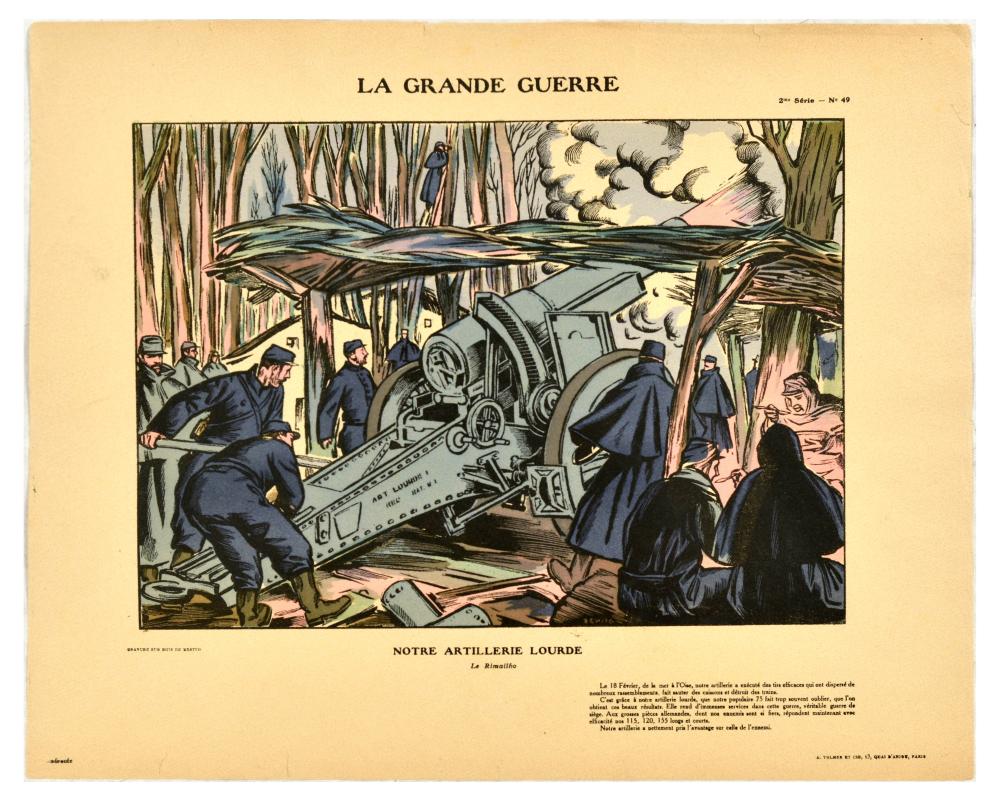
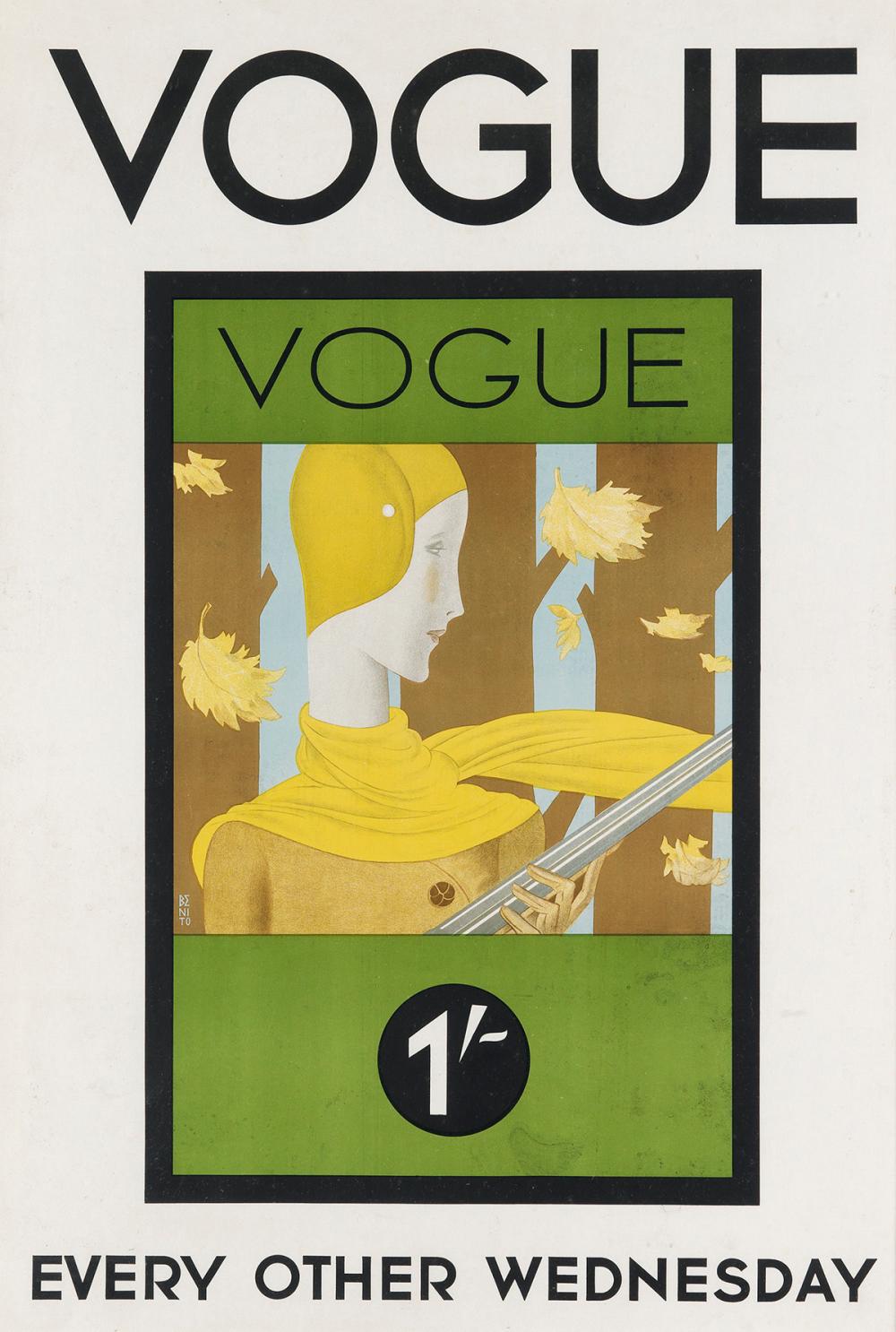
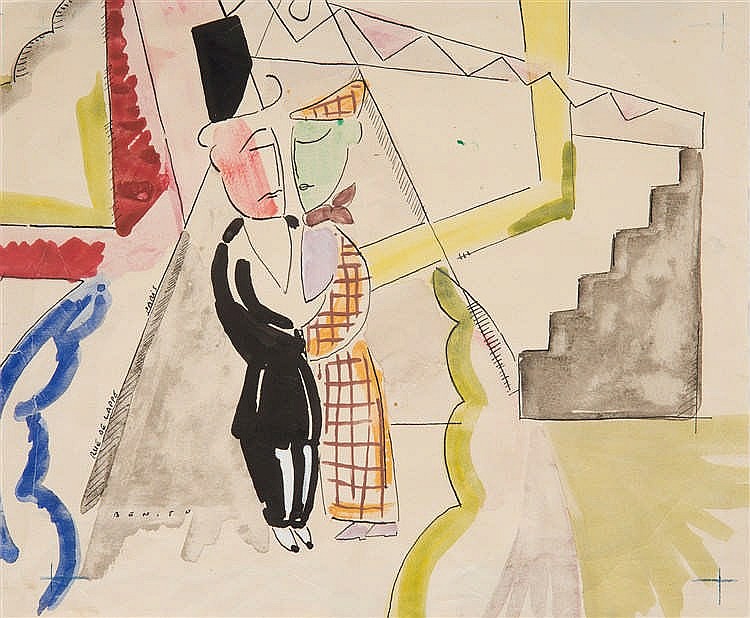
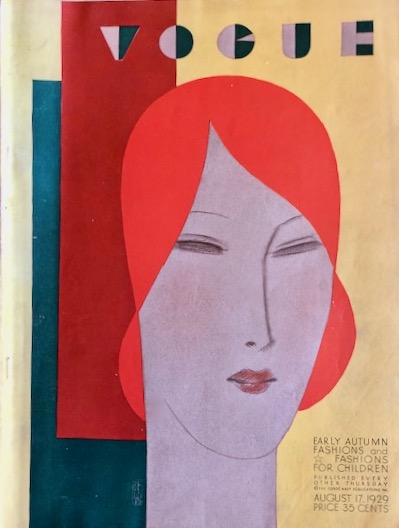
Condé Nast, the publishing company’s founder, had been keenly aware of Benito’s talent since the mid-1910s, but the two men did not meet until Paul Poiret threw one of his famous parties in 1920. Within a year, Benito became one of Vogue and Vanity Fair’s most important artists, a position he would hold for two decades. His covers for Vogue epitomized the Art Deco aesthetic, featuring highly stylized geometric forms that captured the look and spirit of the era. For Vanity Fair, he produced lighthearted sketches with added comic appeal, caricature, and satire that brought to life the events of civilized society. Benito’s work appeared alongside that of the most celebrated illustrators of the period through his association with the Gazette du Bon Ton and the broader Condé Nast stable of artists. His portraits of prominent figures such as the Poirets and King Alfonso XIII demonstrated his versatility beyond the fashion plate. He continued to exhibit fine art throughout his career, maintaining a presence in Parisian galleries and salons even as his commercial illustration work flourished. Benito’s dual identity as both a fine artist and a commercial illustrator placed him at the intersection of two worlds that were rapidly converging in early 20th-century Paris.
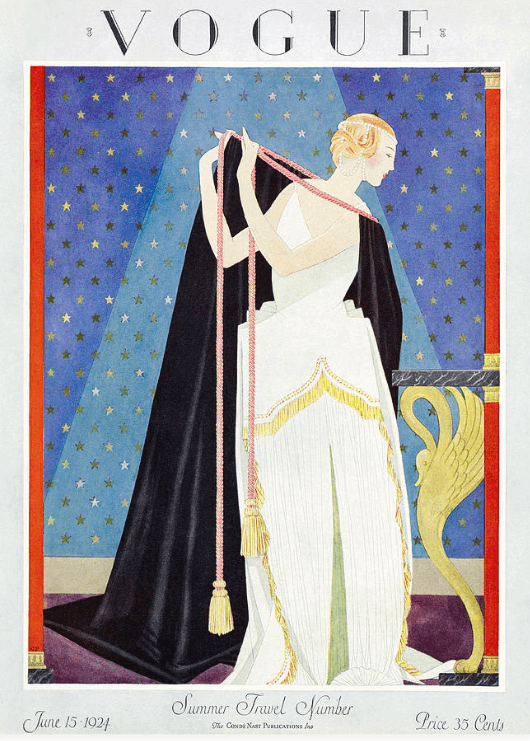
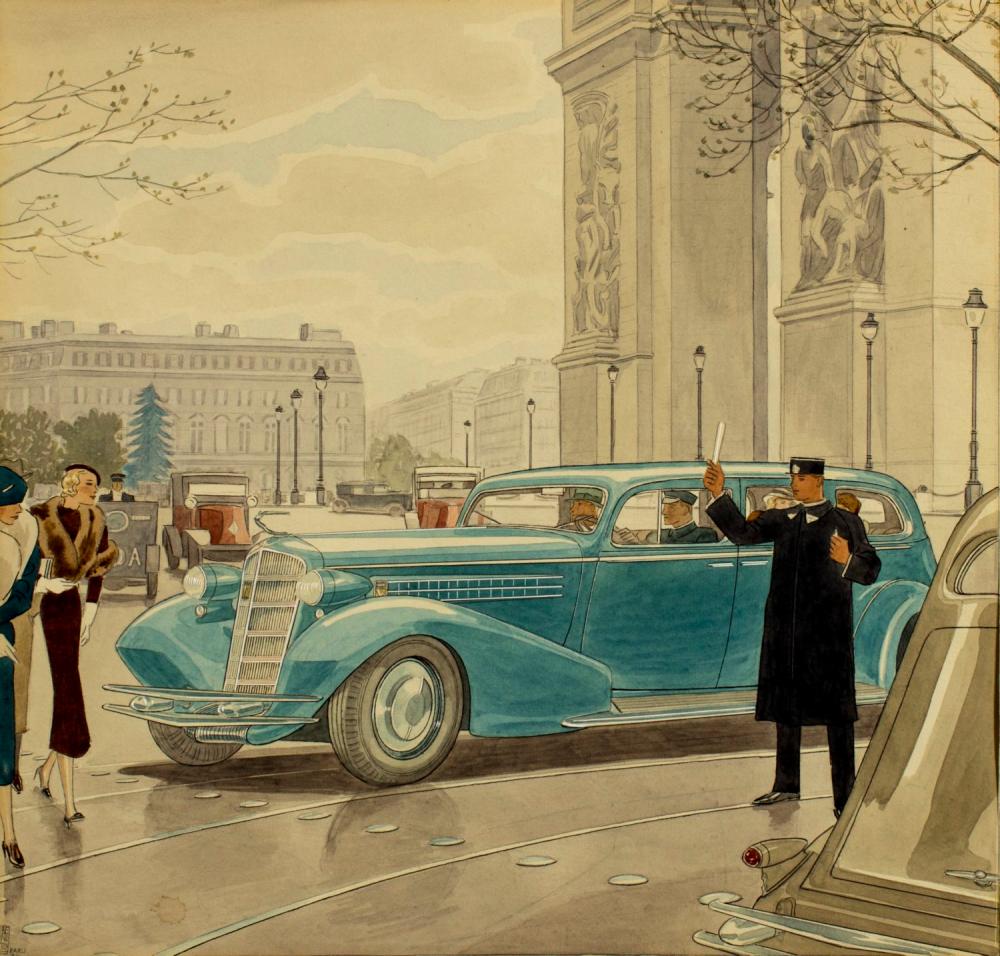
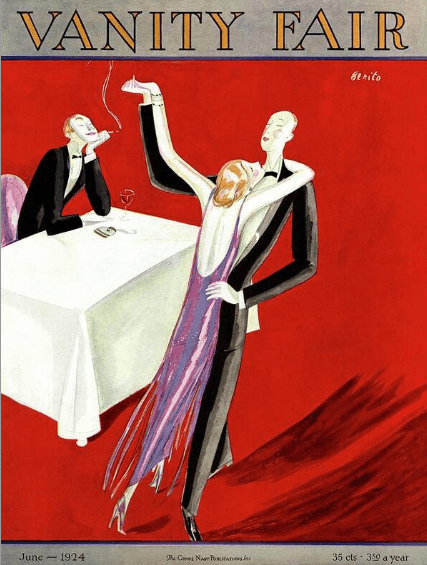
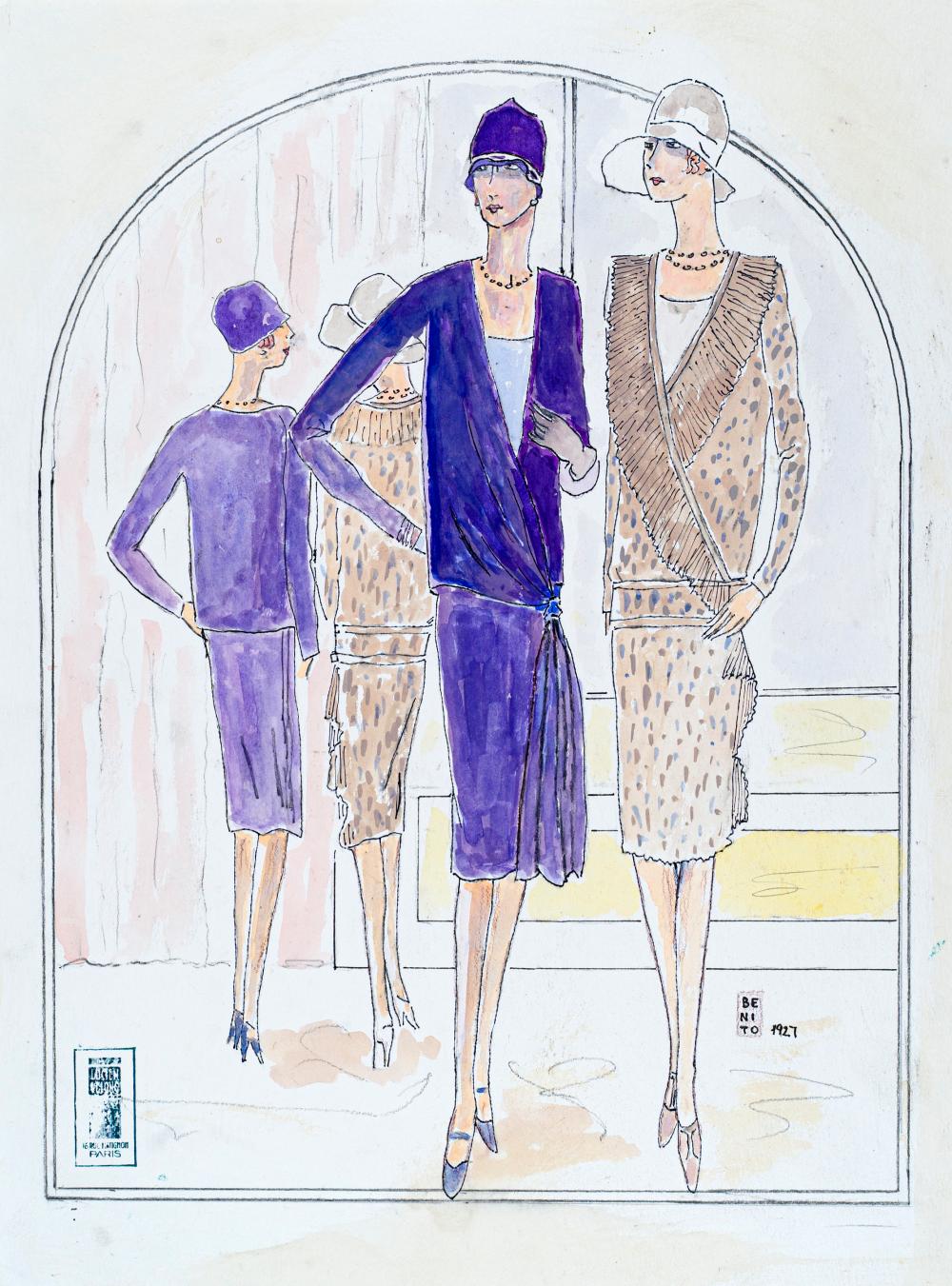
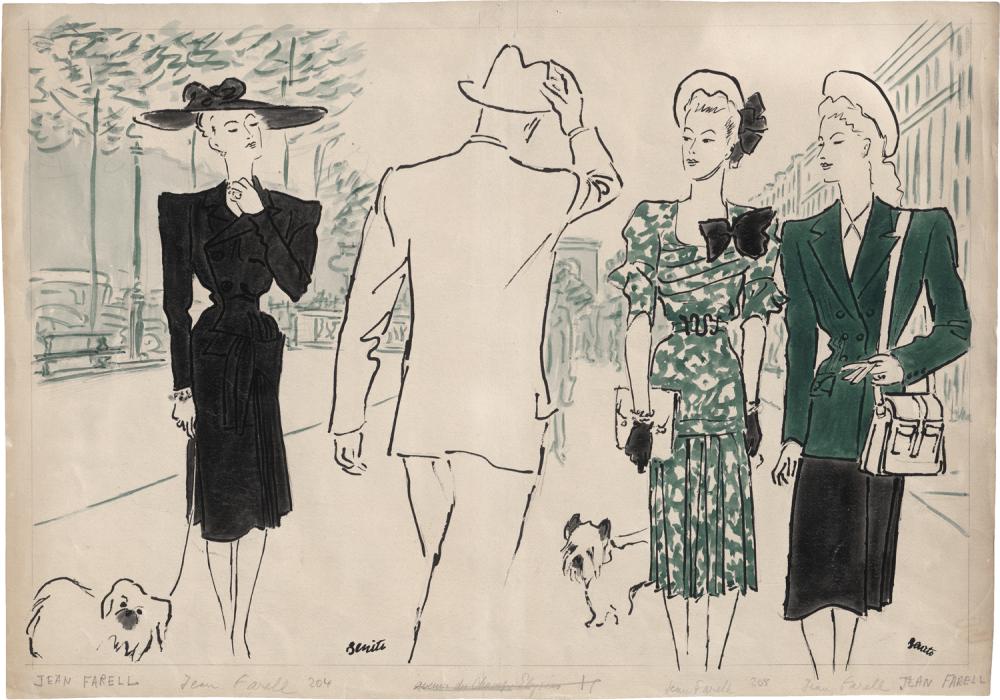
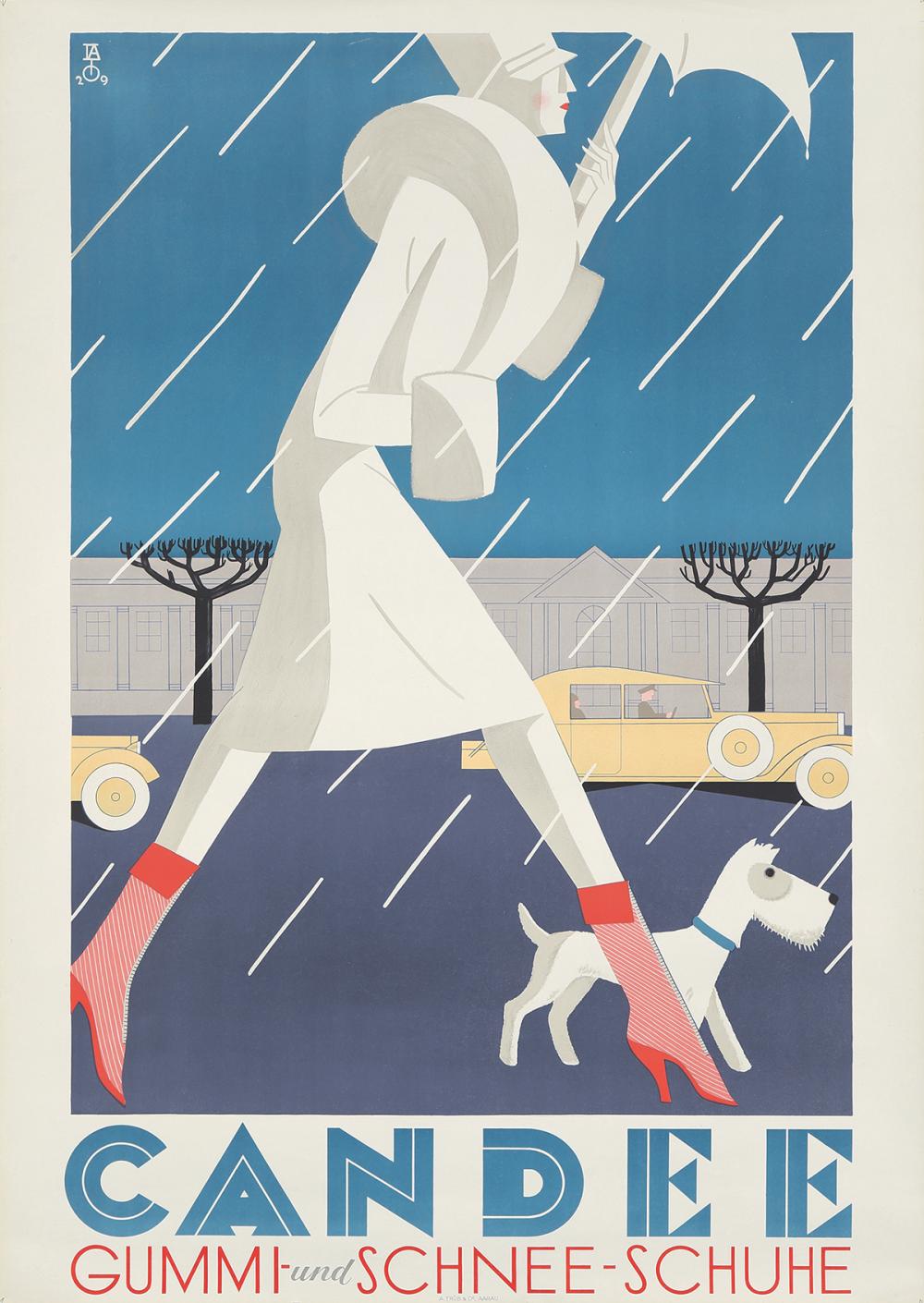
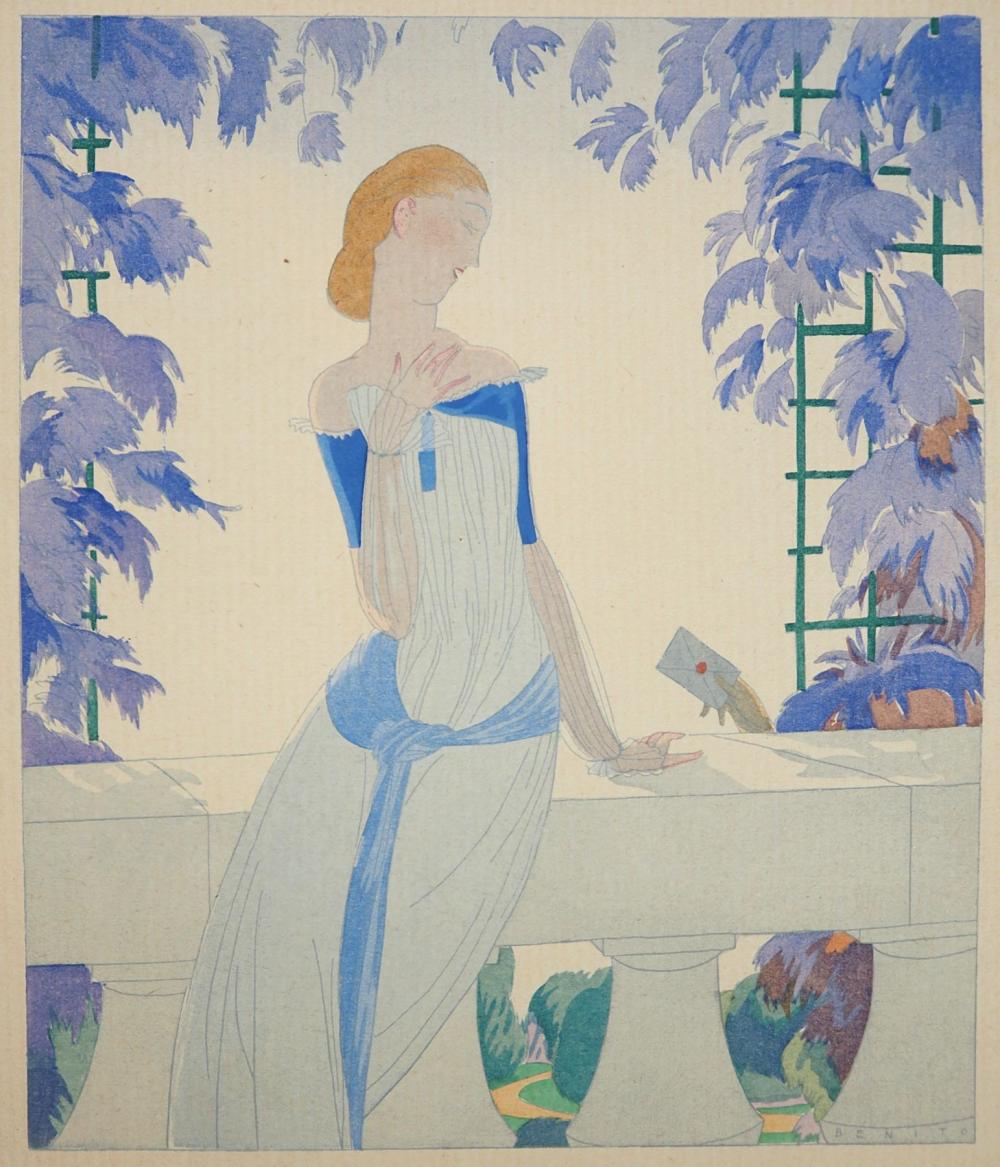
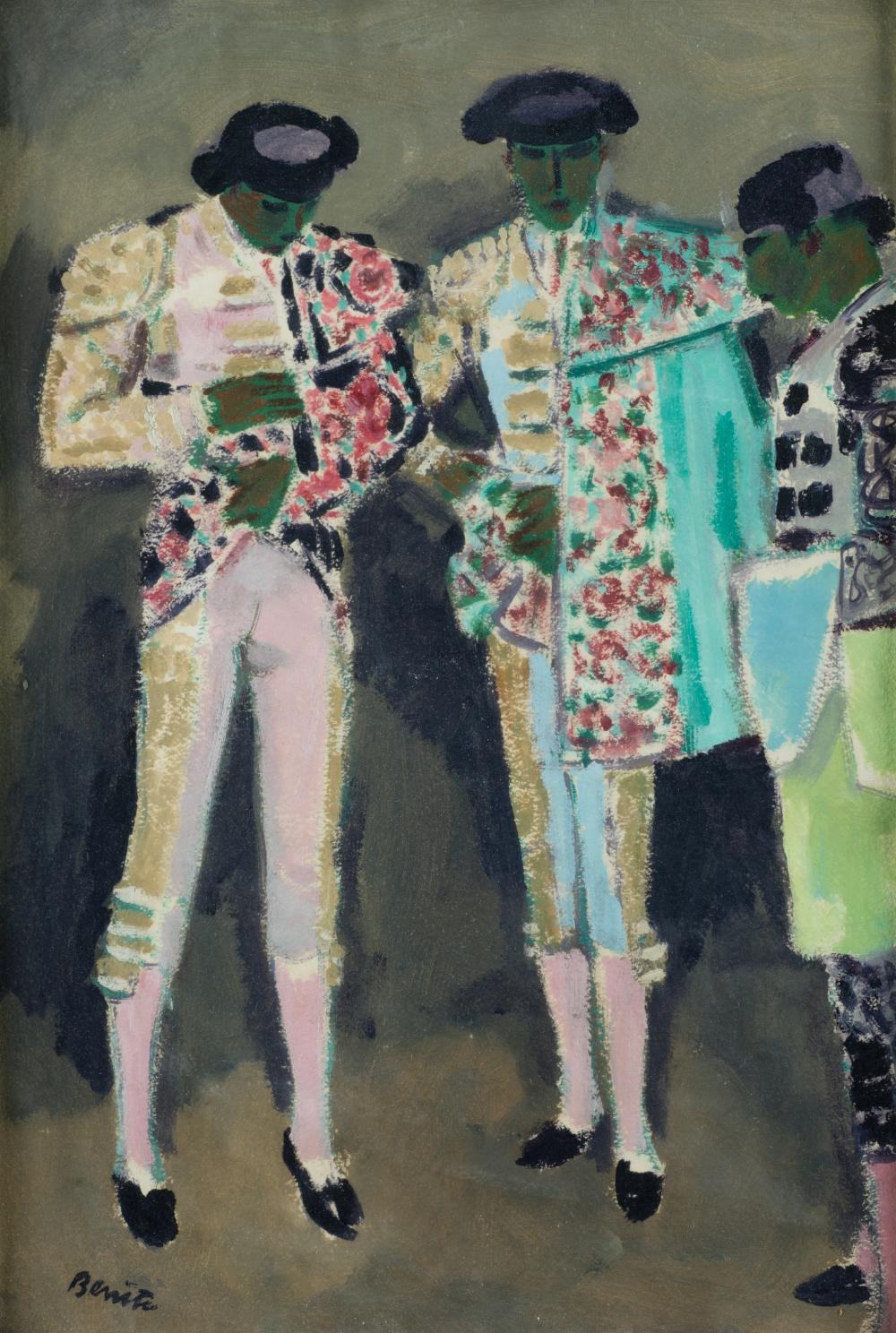
Benito’s signature approach, which Condé Nast referred to as the “Big Head,” reduced fashionable women to a few essential strokes of the pen, with long necks topped by heads recalling the elongated figures of his friend Amedeo Modigliani and the sculptural qualities of African art. Art movements of the day, such as Cubism and Constructivism, informed his iconic geometric forms, set against stark backgrounds with solid planes and few colors. His cartoon-like drawings for Vanity Fair offered a contrasting lightness and wit, matching the gay frivolity of the era with caricature and satire.
Key Influences
- Art Deco Fashion Illustration: His Vogue covers over two decades helped establish the visual vocabulary of Art Deco in mainstream fashion media and shaped how modernity was communicated to a broad audience.
- Geometric Figuration: His reductive “Big Head” style demonstrated that fashion illustration could function as a form of modernist abstraction, influencing generations of graphic artists.
- Condé Nast Visual Identity: As one of the publisher’s most important artists, he played a central role in defining the sophisticated aesthetic that distinguished Vogue and Vanity Fair throughout the interwar period.
- Fine Art and Commerce: His sustained presence in both Parisian salons and commercial publishing helped dissolve the boundary between fine art and fashion illustration as professional categories.
- Transatlantic Cultural Exchange: As a Spanish artist working between Paris and the American press, he served as a conduit for European avant-garde ideas reaching a wide popular audience through fashion media.
If you are interested in further stories of the artists who shaped Art Deco, return to our artists page to browse the full directory.
Related Products