
Édouard Marcel Sandoz
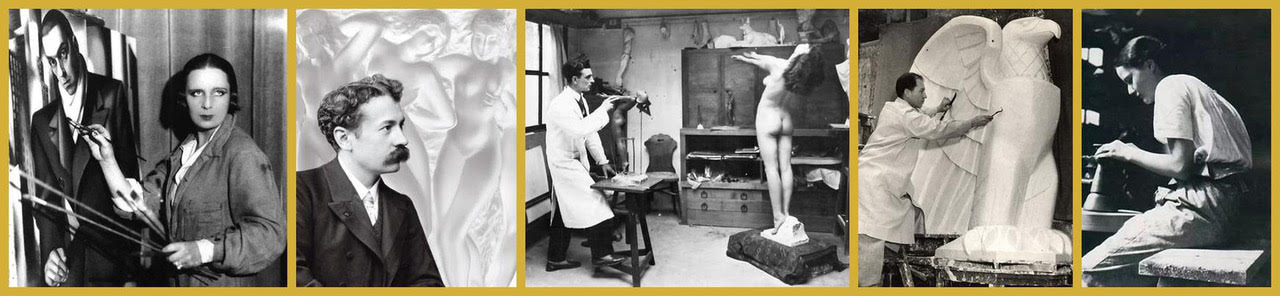
Édouard Marcel Sandoz was born in Basel in 1881 into a prominent Swiss family and showed an early aptitude for drawing and observation. His formative years were shaped by study in Château d’Oex under Dr. Favrod Coune, where he developed a disciplined approach to form and structure. From an early stage, he embraced the idea that sculpture already exists within the material, and that the artist’s role is to remove what is unnecessary. This philosophy would remain central to his work throughout his life. Between 1900 and 1903, he studied at the École des Arts Industriels in Geneva, where he refined his technical skills and absorbed the importance of tradition. He later continued his studies in Paris at the École des Beaux Arts under established academic sculptors. By 1906, he was exhibiting at major Paris Salons, marking his entry into the professional art world. These early experiences established him as a sculptor rooted in classical training but open to modern simplification.
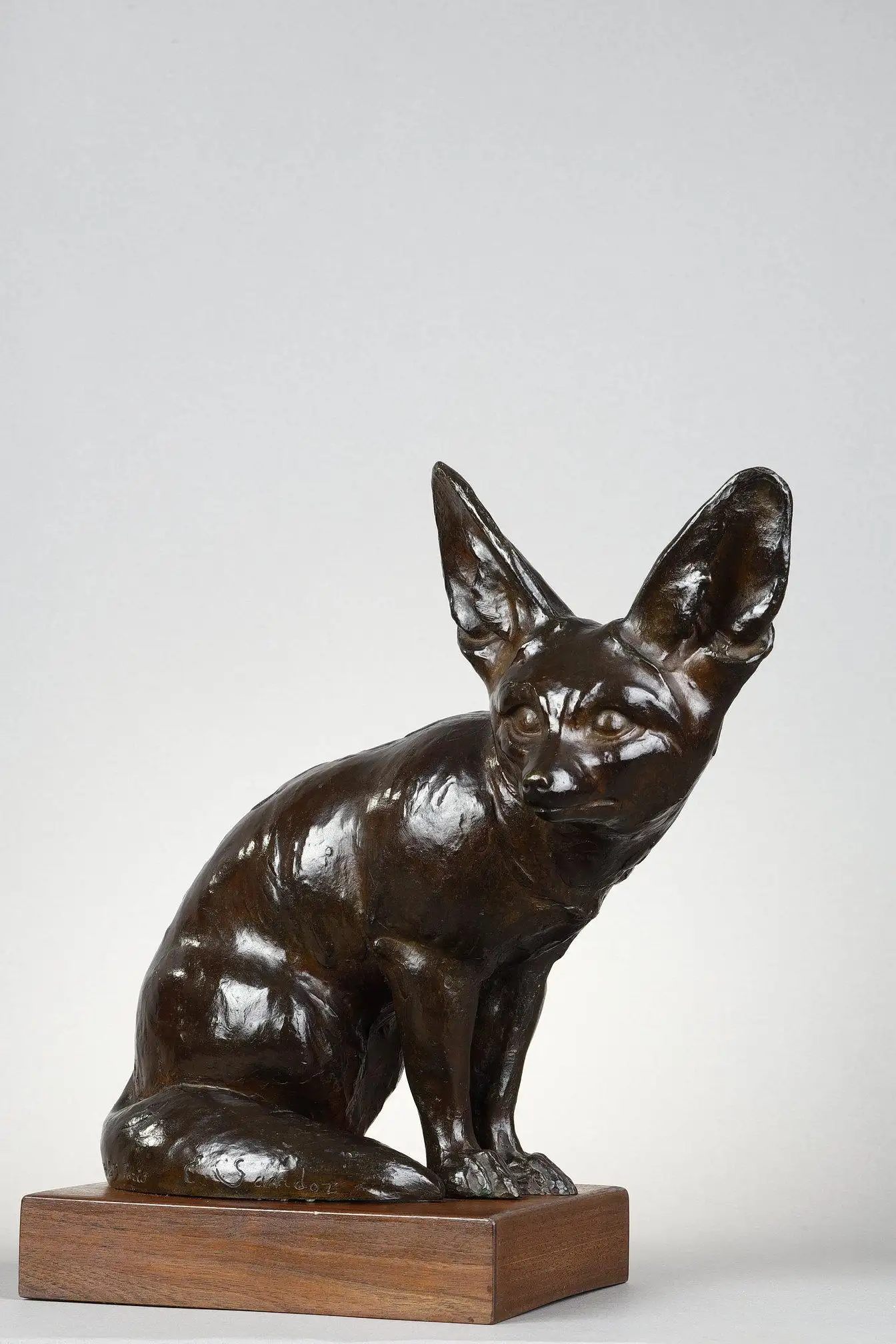
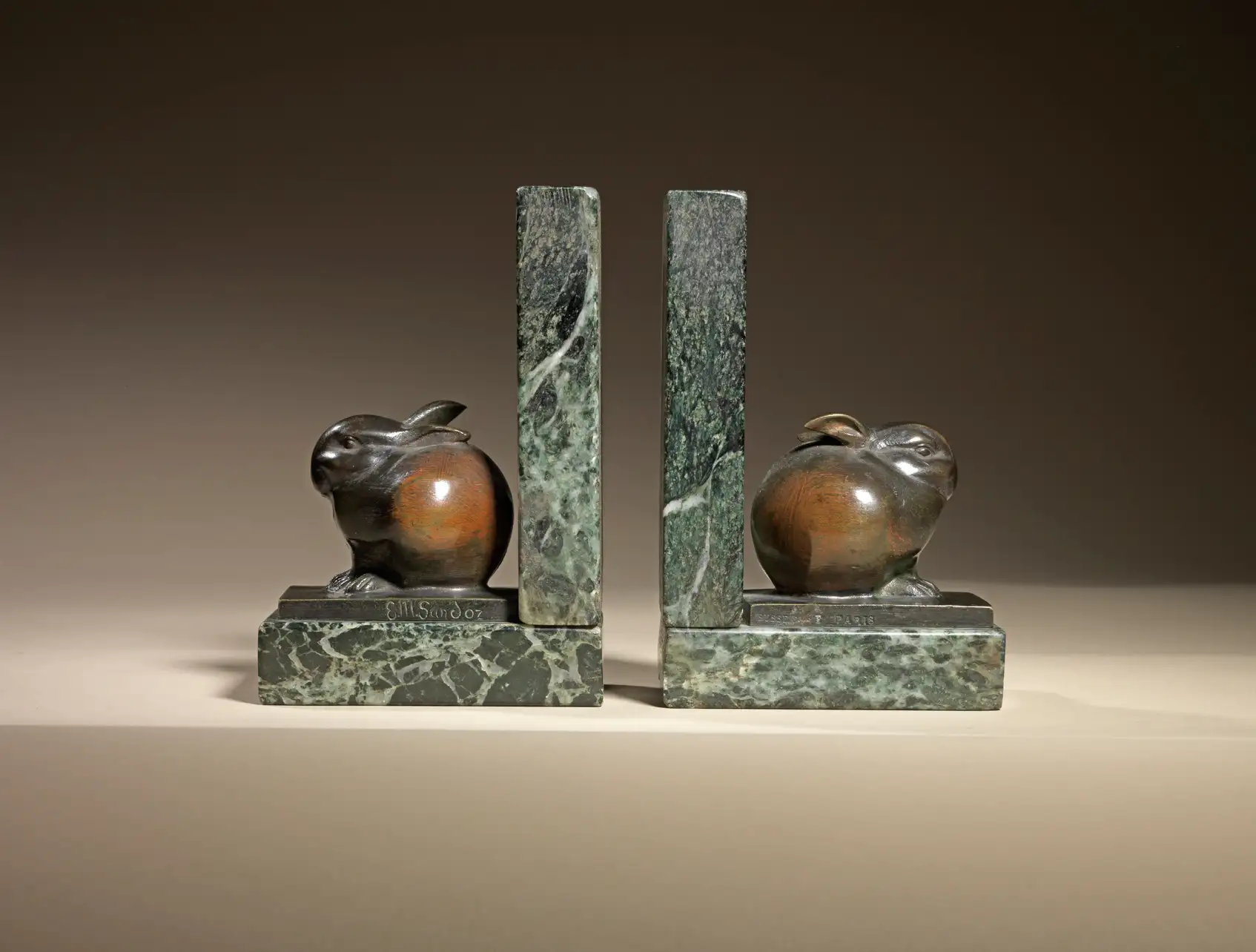
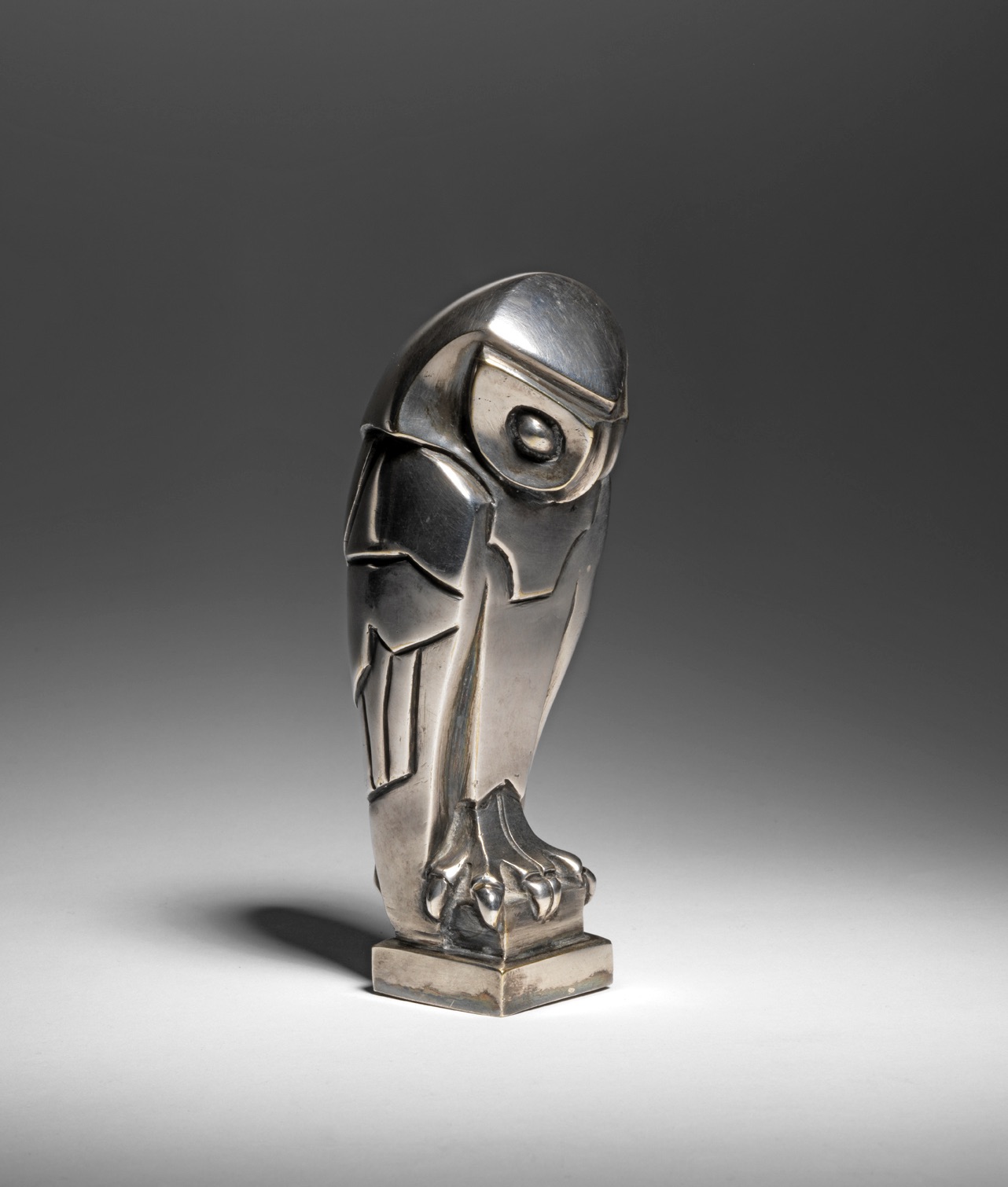
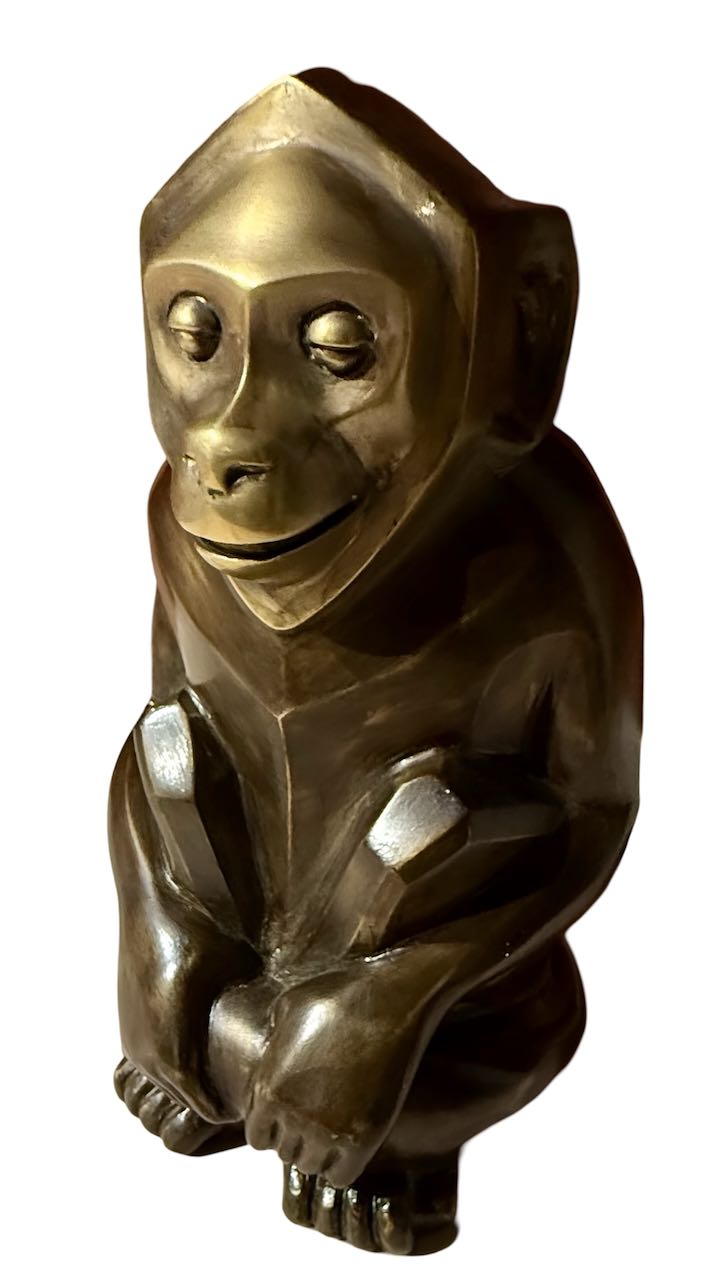
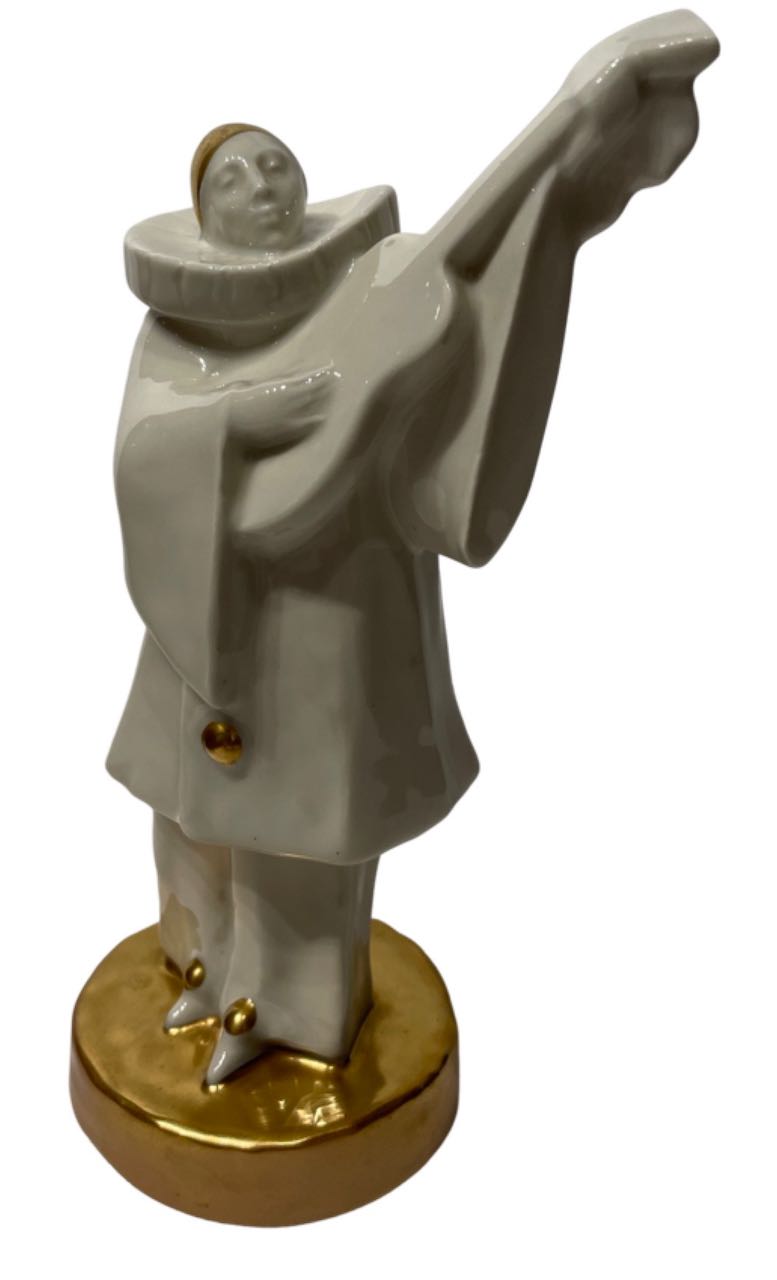
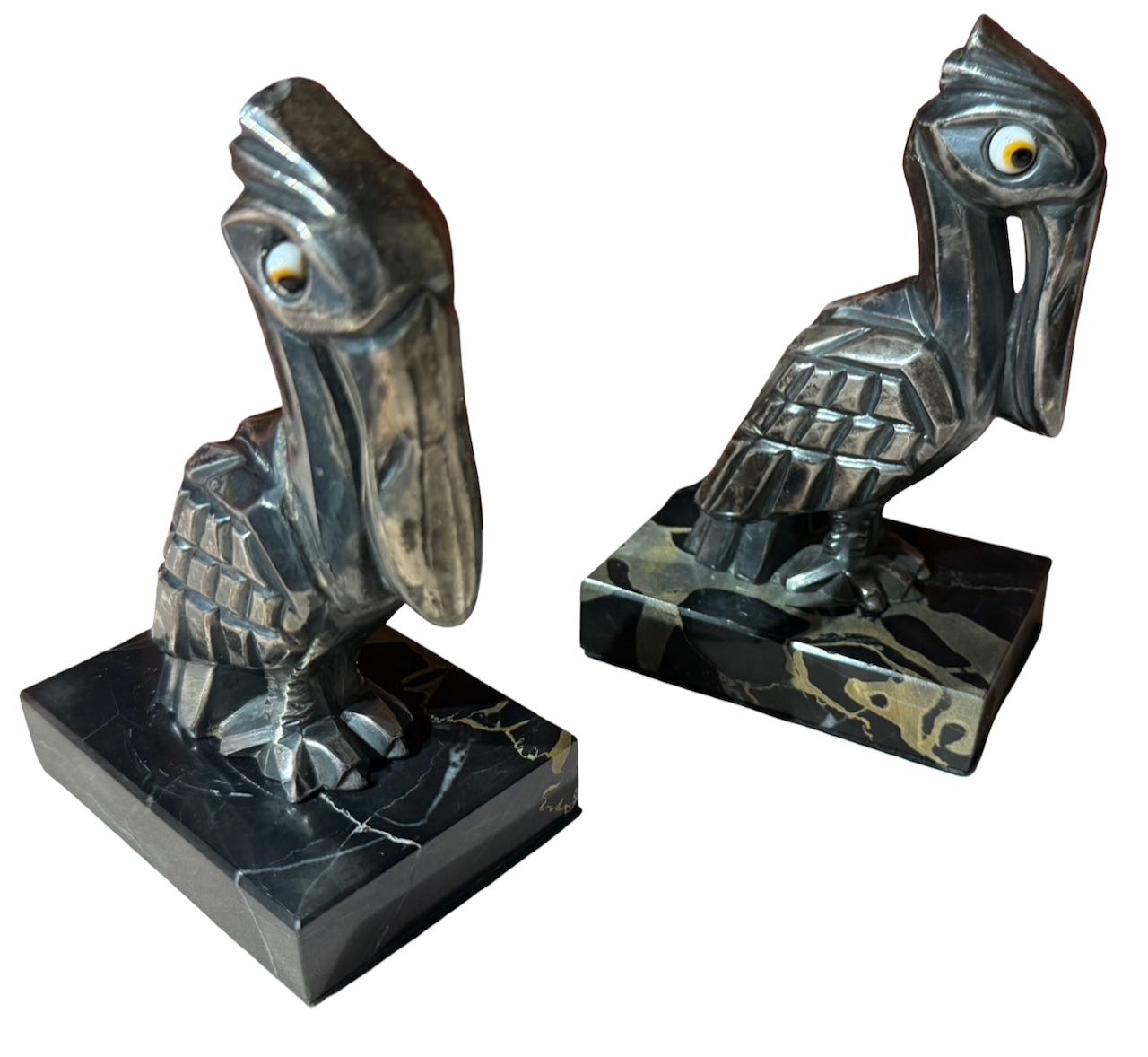
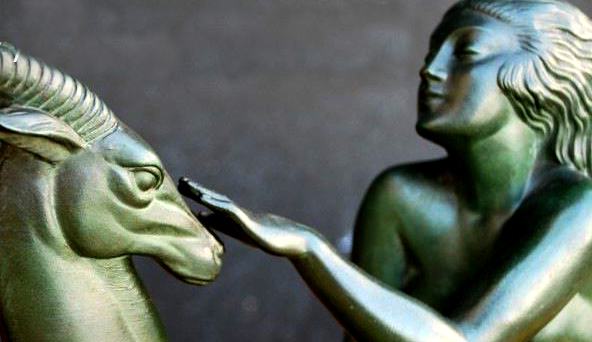
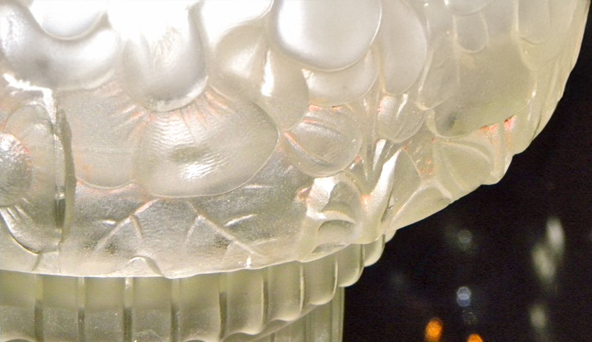
Sandoz became one of the most important animal sculptors of the twentieth century, bridging academic realism and modern stylisation. He worked extensively in series, returning repeatedly to birds, fish, monkeys, and other animals, each time refining form and rhythm. Many of his sculptures were conceived as both art objects and functional pieces, serving as bookends, bowls, candlesticks, or decorative vessels. His famous fish sculptures followed a period of scientific study in Monaco and combine anatomical accuracy with bold abstraction. Sandoz was equally adept working in bronze, stone, porcelain, glass, and semi-precious materials, choosing each medium carefully to suit the subject. During the interwar years, he exhibited internationally and received major awards, including Grand Prix distinctions and state honors. He showed work for both French and Swiss pavilions at the 1939 New York World’s Fair, solidifying his international reputation. He continued producing sculpture into the postwar period, leaving behind an exceptionally large and varied body of work.
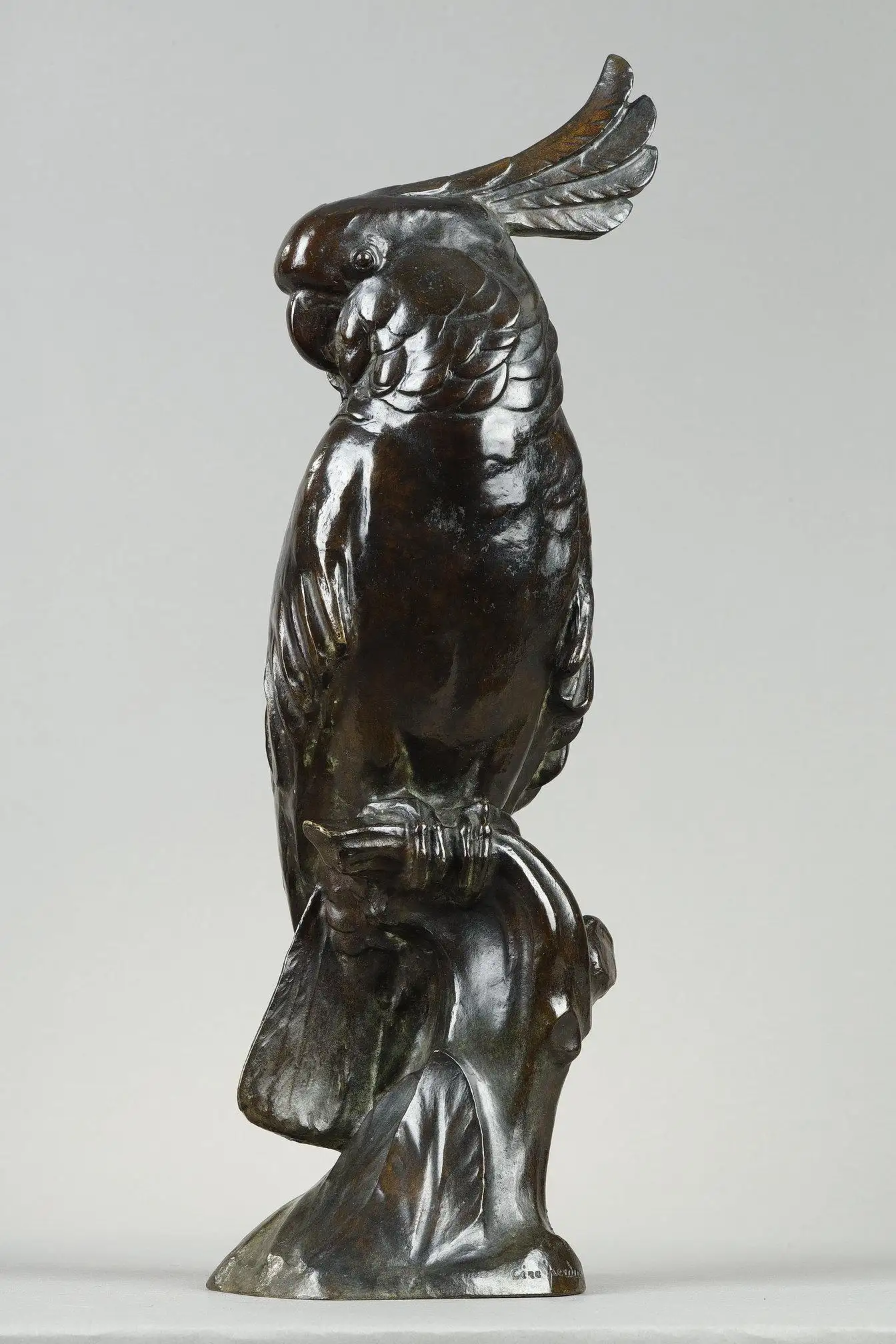
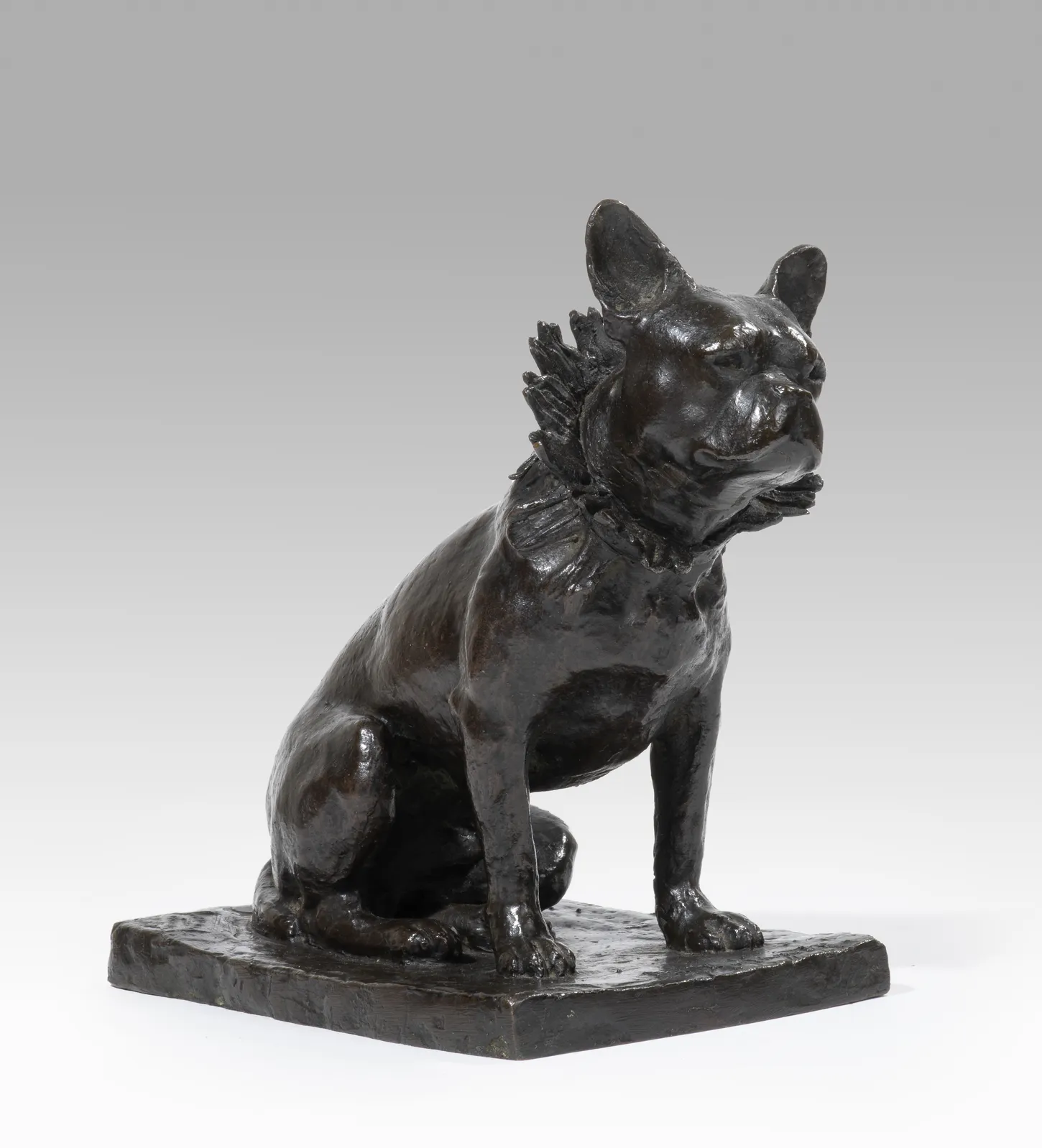
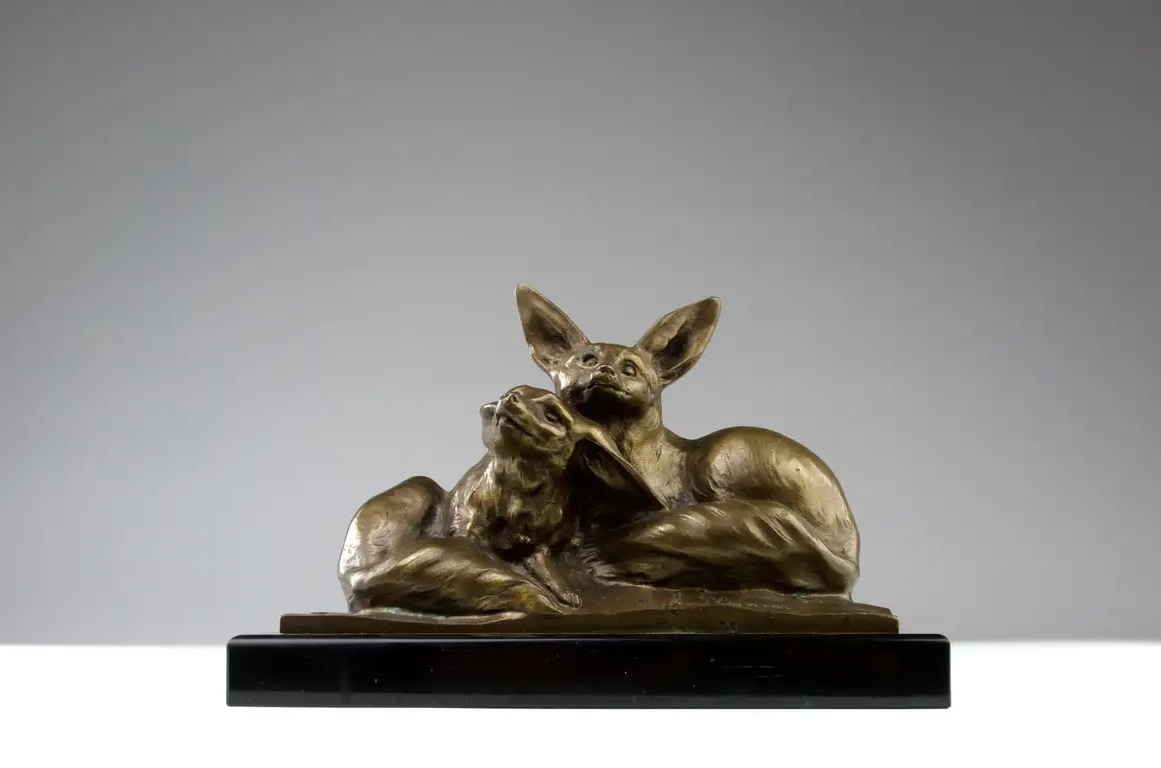
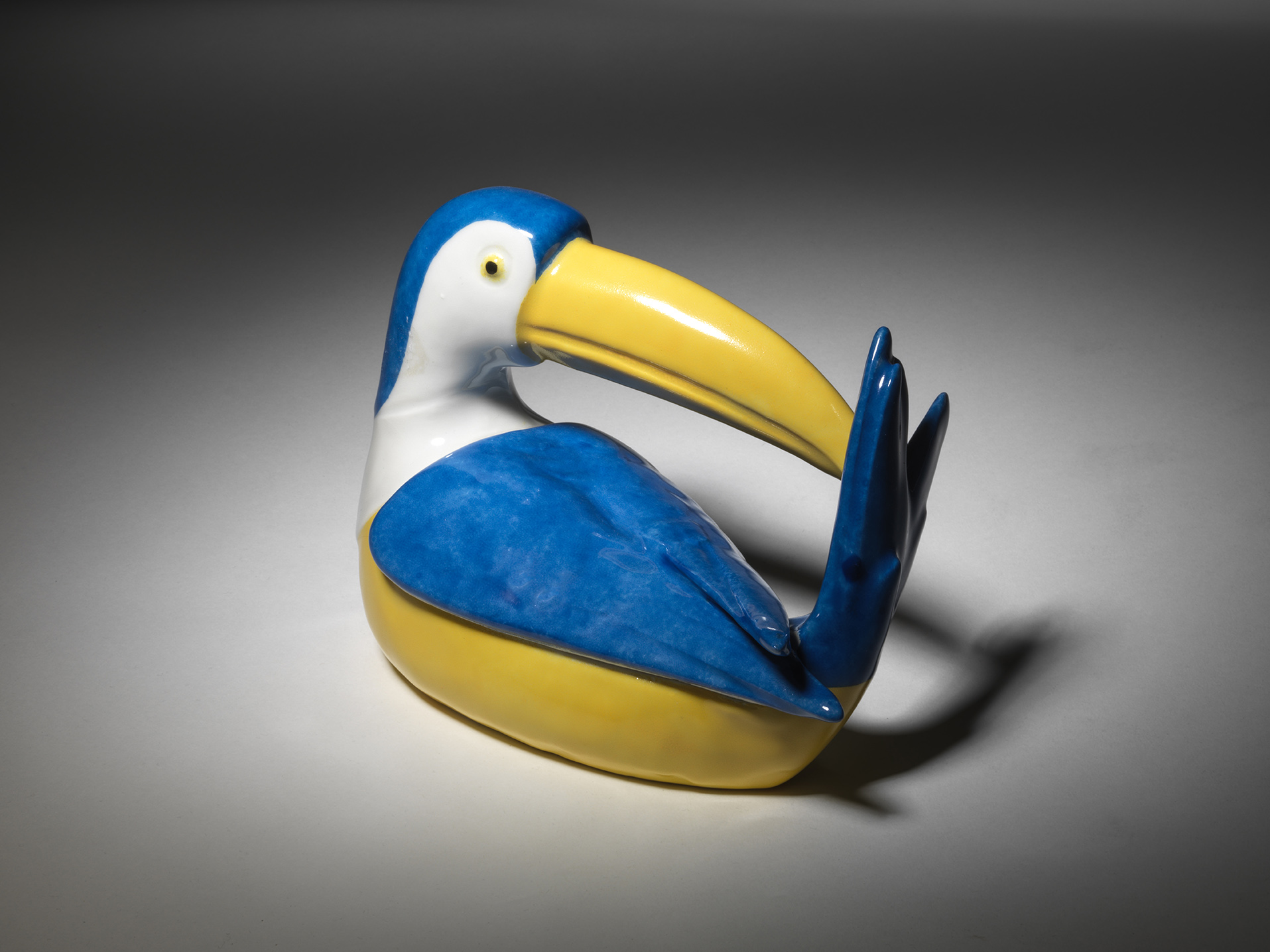
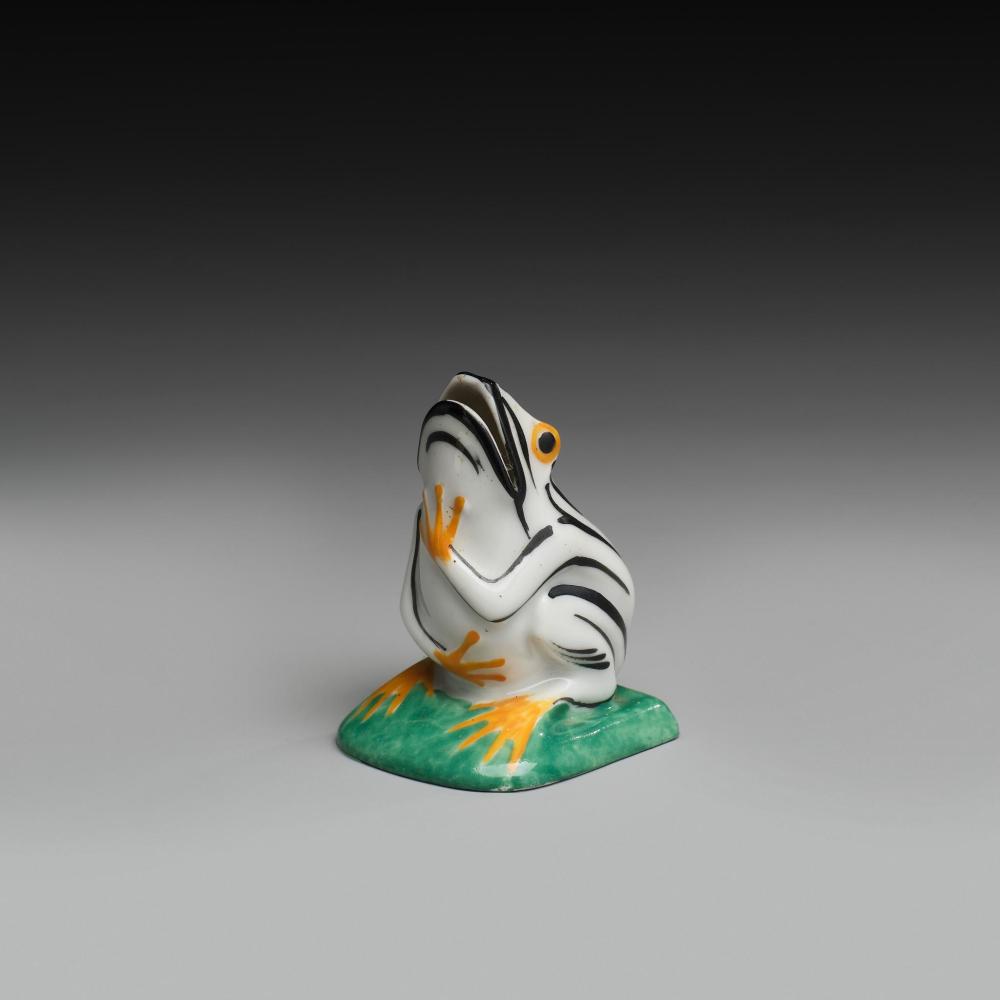
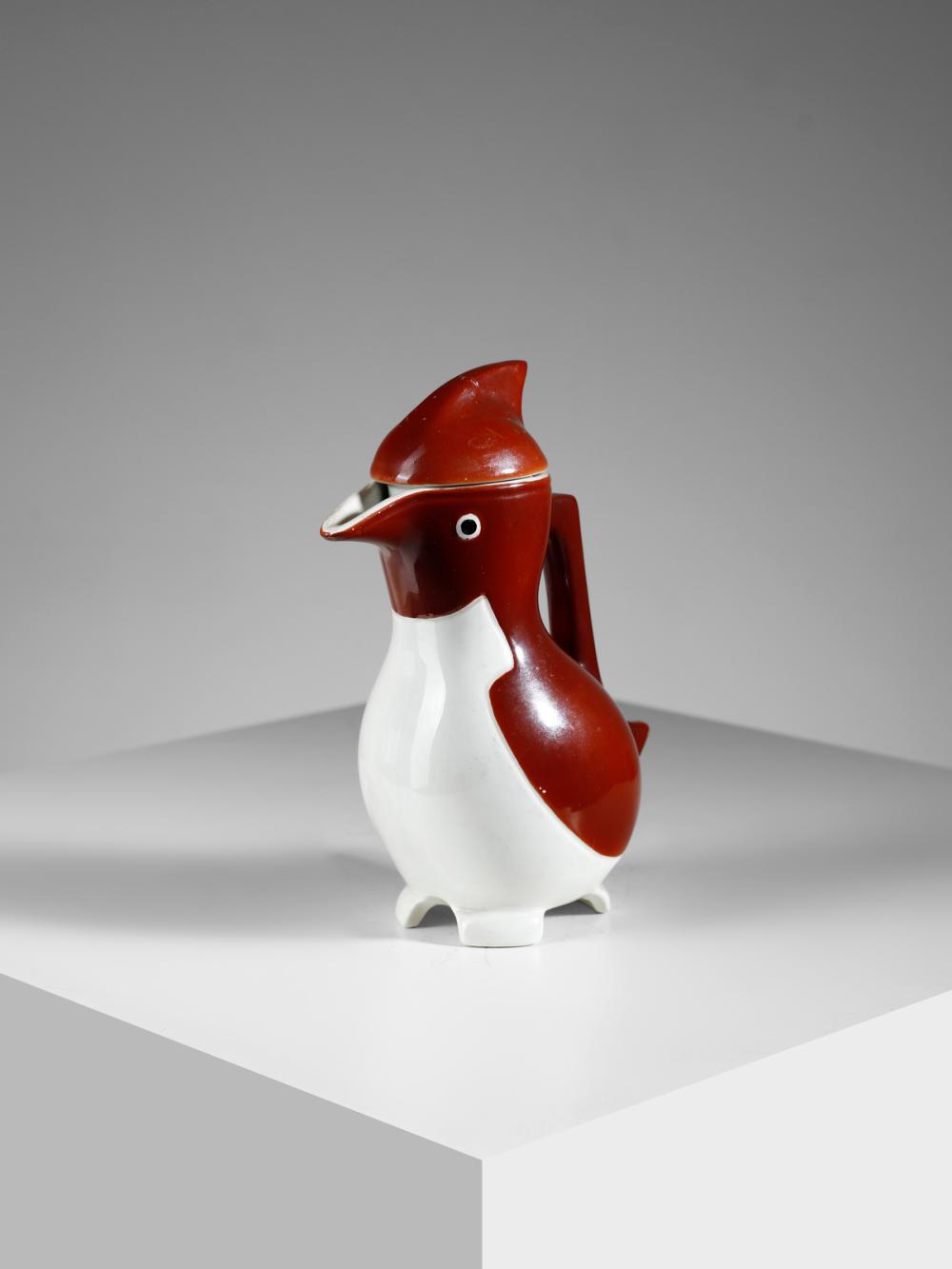
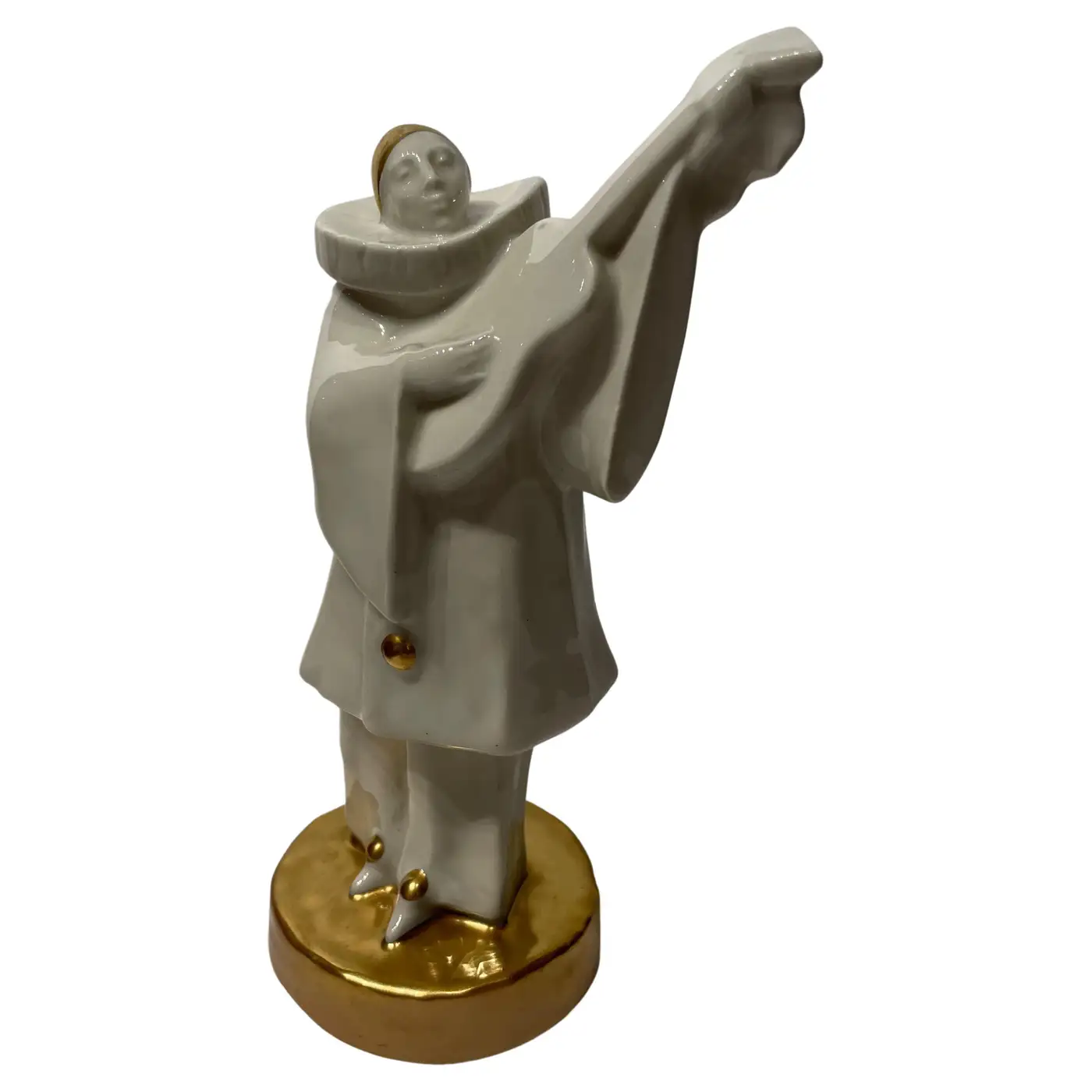
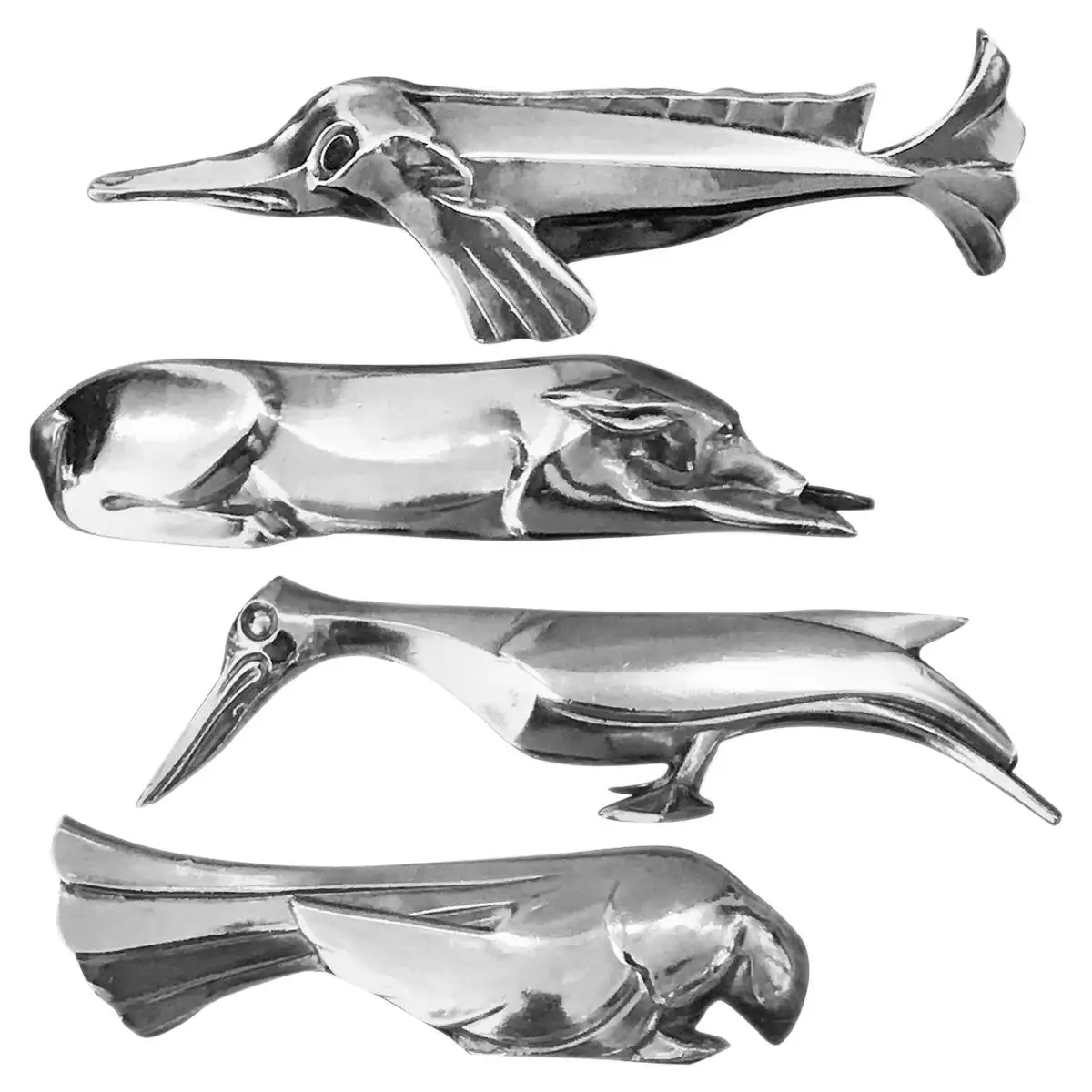
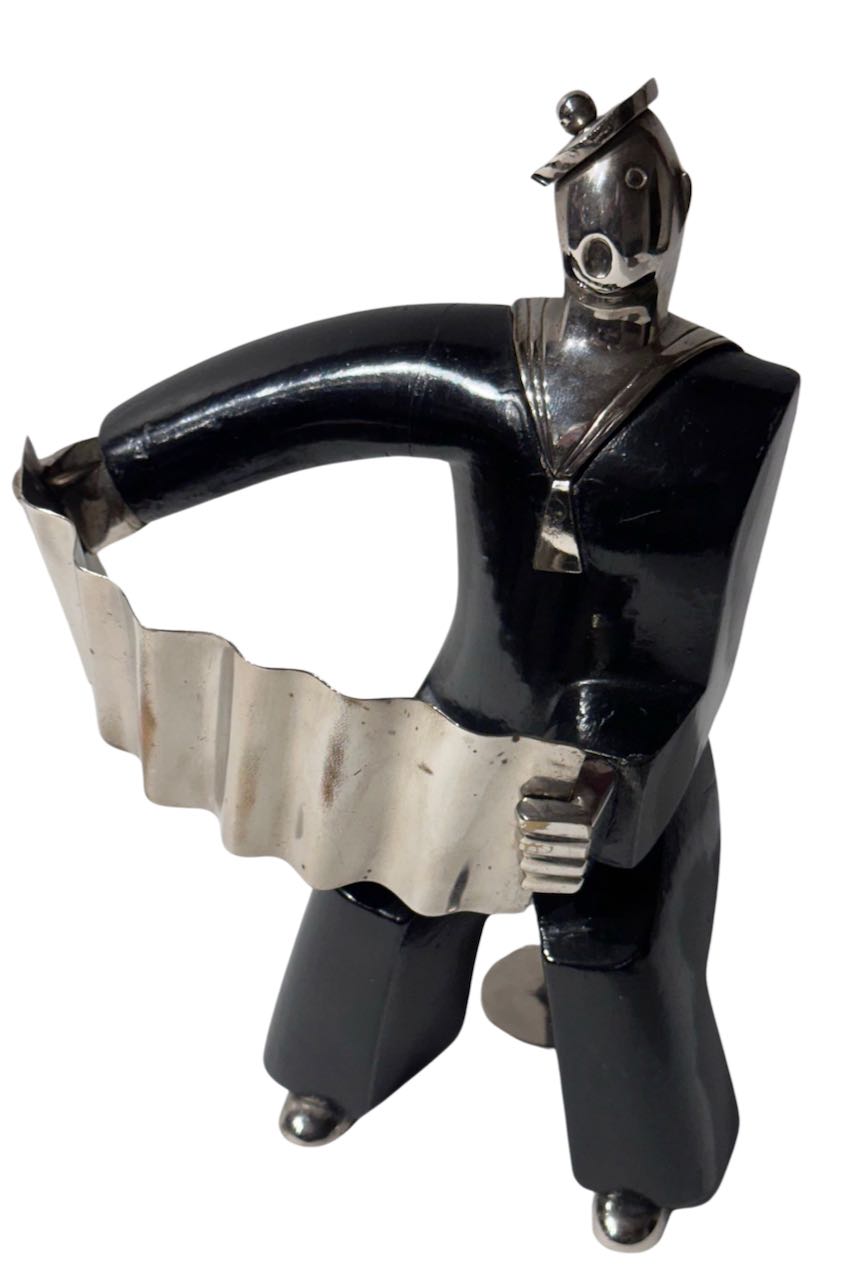
Sandoz’s style is defined by reduction and clarity rather than surface detail. His animals are simplified to their essential volumes while retaining a strong sense of movement and character. He avoided excessive realism in favor of rhythm, balance, and silhouette. Many works reflect Art Deco ideals through stylised geometry and controlled ornament. His approach feels both timeless and modern, positioned between natural observation and abstraction.
Key Influences
- Animal Observation: Close study of live animals shaped his understanding of movement and anatomy.
- Classical Sculpture Philosophy: The idea of revealing form by removing excess guided his entire practice.
- Modern Stylisation: Engagement with early twentieth-century modernism encouraged simplification of form.
- Material Sensitivity: Deep awareness of how stone, bronze, porcelain, and glass respond to carving and modeling.
- Decorative Arts Integration: Functional objects allowed sculpture to enter everyday life without losing artistic integrity.
If you are interested in further stories of the artists who shaped Art Deco, return to our artists page to browse the full directory.
Related Products from ArtDecoCollection.com